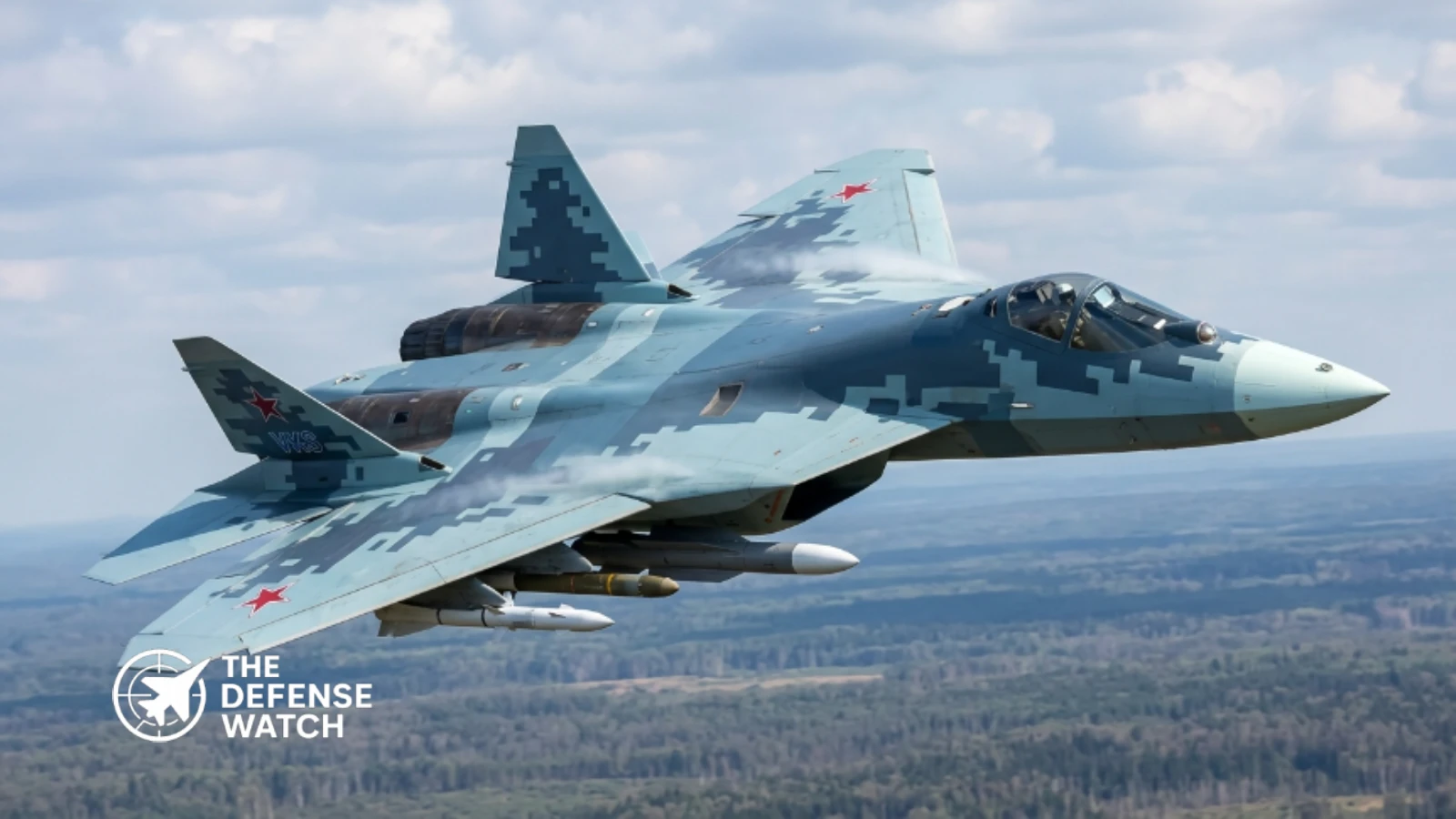
Executive Summary:
China has quietly become the only nation besides the United States to field two operational fifth-generation stealth fighter families simultaneously — the J-20 and J-35 — while a third prototype family, the sixth-generation J-36, completed its third test flight on Christmas Day 2025. Production rates, aerial intercept incidents, and satellite imagery of factory expansion all point to the same conclusion: China’s fighter fleet is no longer a future threat. It is a present one.
On February 18, 2026, roughly ten U.S. F-16s flying a training sortie over the Yellow Sea from Osan Air Base in South Korea found themselves facing an unknown number of Chinese fighters scrambled in response to their approach toward China’s Air Defense Identification Zone. Neither side crossed into the other’s airspace. Both forces disengaged quietly. South Korea’s Ministry of National Defense still lodged a formal complaint with U.S. Forces Korea.
That encounter — tense, wordless, contained — is a precise snapshot of where China’s air power story now sits. Not yet a shooting war. But a contest where the hardware margins are closing faster than most Western planners publicly admit.
The Fleet Today: Two Stealth Families, One Industrial Machine
China’s fighter inventory sat at roughly 1,800 aircraft as of early 2026, with approximately 700 of those being older third-generation platforms slated for retirement by 2030. The leading edge of the fleet is where the strategic picture shifts dramatically.
J-20 “Mighty Dragon”: The Vanguard
The Chengdu J-20 entered service in March 2017 as China’s first operational fifth-generation fighter. Nine years later, the aircraft is no longer a novelty — it is a maturing platform being fielded at industrial scale.
By September 2025, the J-20 fleet had officially crossed 300 aircraft, distributed across more than thirteen PLAAF regiments and all five theater commands. Jane’s Defence estimated annual production at between 70 and 80 aircraft as recently as mid-2024, but RUSI analyst Justin Bronk reported that a single recent year saw nearly 120 aircraft delivered. If that pace holds, the J-20 fleet could approach 1,000 aircraft by 2030.
The aircraft is not standing still. Ongoing upgrades include integration of the domestic WS-15 turbofan (replacing early WS-10 powerplants), refined aerodynamics, AI-enabled beyond-visual-range decision support, and full adoption of the twin-seat J-20S variant — the world’s first twin-cockpit stealth fighter — which is assessed as a future command node for manned-unmanned teaming with combat drones.
A U.S. Air Force general confirmed in March 2022 that USAF F-35s had already encountered J-20s over the East China Sea. These were not hypothetical training scenarios. They were real intercepts, in contested airspace, between fifth-generation jets.
J-35 “Blue Shark”: The Naval Dimension
On September 3, 2025, Chinese state media confirmed what analysts had expected: the Shenyang J-35 and its land-based sibling, the J-35A, were formally inducted into the PLA Navy and PLAAF respectively, making China the second country — after the United States — to simultaneously operate two types of fifth-generation stealth fighters.
The J-35’s headline achievement came weeks later. On September 22, 2025, the PLAN announced that the J-35 had been certified for CATOBAR operations from the Fujian carrier, making it the first stealth fighter in history to complete electromagnetic catapult-assisted launch and arrested recovery at sea — a milestone the U.S. Navy’s F-35C had not yet matched aboard Gerald R. Ford-class carriers at the time.
The naval J-35 features folding wings, reinforced landing gear, a catapult bar, and an arresting hook. The land-based J-35A uses a single nose wheel and revised wing for conventional runway operations. On May 1, 2026, AVIC unveiled the J-35AE export variant, with Pakistan moving toward an order of up to 40 aircraft — which would make Islamabad the first international customer.
The Shenyang production complex supporting J-35 output covers more than 370,000 square metres, with its own 3,660-metre dedicated flight test runway. Low-rate initial production is already shifting toward full-scale manufacturing.
Data Block: China’s Fighter Fleet vs. U.S. and Allied Airpower (2026)
Aircraft Generation Operator Fleet Size (2026 Est.) Annual Production Unit Cost (Est.) Key Role Chengdu J-20 5th Gen PLAAF ~320–350 100–120/yr ~$110M USD Air superiority, precision strike Shenyang J-35 / J-35A 5th Gen PLAN / PLAAF ~50–80 (early production) Ramping ~$80–90M USD Carrier ops, multirole Shenyang J-16 4.5th Gen PLAAF ~450 (cumulative) ~100/yr ~$70M USD Strike, EW, backbone platform F-22 Raptor 5th Gen USAF 187 0 (out of production) ~$143M USD (2009) Air superiority F-35A/B/C 5th Gen USAF / USN / USMC + Allies 1,000+ (global) ~156–190/yr ~$80–110M USD Multirole, strike, stealth Chengdu J-36 6th Gen (prototype) PLAAF (development) 3 prototypes flying N/A Classified Air superiority, strike, C2 Boeing F-47 (NGAD) 6th Gen USAF (development) 0 (first flight 2028) N/A Classified Air dominance successor to F-22 Sources: Jane’s Defence, RUSI, Mitchell Institute, CASI, open-source satellite analysis.
The Sixth-Generation Sprint: J-36 and J-50
This is where China’s air power story moves from impressive to genuinely unprecedented.
On December 26, 2024, a massive tailless aircraft with the number “36” stenciled on its nose lifted off from Chengdu Aircraft Corporation’s test field, escorted by a twin-seat J-20S chase plane. It was the first public sighting of what analysts designated the J-36 — China’s sixth-generation fighter prototype.
In the twelve months that followed, the pace was relentless. A second prototype with redesigned 2D thrust-vectoring exhaust nozzles, revised DSI side intakes, and an overhauled landing gear layout flew in October 2025. A third prototype — minus the pitot tube from the radome, indicating increased flight envelope confidence — flew on Christmas Day 2025, escorted this time by a J-10. Multiple prototypes were simultaneously in the air. That is not a technology demonstrator program. That is a production engineering schedule.
The J-36’s confirmed characteristics are significant. It is a trijet — three engines, an extremely rare configuration providing both maximum internal volume for weapons bays and redundancy in contested environments. The aircraft features a tailless flying-wing design, side-by-side two-seat cockpit arrangement (each with a dedicated HUD), a broad nose with large electro-optical aperture windows, and three internal weapons bays. The second prototype’s 2D thrust-vectoring nozzles drew immediate comparisons to the F-22 Raptor’s exhaust system.
USAF officials have quietly acknowledged that the J-36 could achieve initial operational capability before American sixth-generation programs, specifically before the Boeing F-47’s projected first flight in 2028.
Shenyang’s parallel sixth-generation design, designated J-50, is a smaller, twin-engine tailless platform assessed as a future carrier-based asset. While less visually documented than the J-36, the J-50 appeared in the September 3, 2025 Beijing military parade alongside confirmed sixth-generation designations, and new imagery from early 2026 suggests active flight testing has begun.
China is running two sixth-generation programs simultaneously, at two separate facilities, on compressed timelines. No other nation is doing this.
The Tactical Encounter Pattern: What Intercepts Actually Tell Us
The February 2026 Yellow Sea standoff was not an isolated incident. It sits in a pattern that stretches back years.
A U.S. Air Force B-52 flying international airspace over the South China Sea in October 2023 was intercepted by a Chinese fighter that flew within ten feet of the bomber. In April 2025, Chinese state media released footage from a PLAN documentary showing a J-15 in dangerously close proximity to what analysts identified as a U.S. Navy F/A-18. In mid-2025, Japanese patrol aircraft were intercepted by Chinese fighters launched from the eastern side of the First Island Chain — Beijing accused Tokyo of “dangerous actions” that interfered with PLA carrier training.
The pattern is not accidental. It is doctrine.
China’s PLAAF has been exercising what strategists call “gray zone air operations” — coercive proximity without crossing the legal threshold of hostile action. The intent is to condition adversaries to Chinese presence, test response protocols, gather electronic intelligence on radar and communications signatures, and establish behavioral norms in contested airspace that favor Beijing.
The Crossover Angle: How China Plays the Meta
In competitive esports — specifically real-time strategy and tactical shooters — there is a concept called “industrial advantage”: the team that produces resources faster does not need to win every engagement. They only need to not lose them, while their opponent’s attrition accumulates.
China’s PLAAF strategy maps to this template almost exactly.
The J-20 does not need to defeat the F-22 in a one-on-one engagement to be strategically relevant. With a potential fleet of 1,000 by 2030 against 187 permanently capped F-22s, China forces the U.S. to fight a numbers battle on a platform the U.S. chose to stop producing in 2011. The F-35 remains the numerical counterweight, with over 1,000 delivered globally and 156+ annual production, but the F-35 program is multi-nation, multi-mission — not a China-specific tool.
Meanwhile, China’s AVIC production infrastructure has expanded past 743,000 square metres across major aerospace facilities — larger than Lockheed Martin’s F-35 complex in Fort Worth, Texas. Analyst J. Michael Dahm, presenting at the 2026 Air & Space Forces Association Warfare Symposium, assessed that AVIC could achieve annual output of 300 to 400 fighter aircraft including fourth- and fifth-generation models.
That is not matching the U.S. qualitatively. That is building around it quantitatively — the same approach China used to outbuild the U.S. Navy in surface combatants over the past decade.
“In a great-power conflict, networked mass and reach could trump boutique capability. The key unknowns are how fast J-35 scales, whether J-36 and J-50 are early prototypes or near-operational, and whether Beijing can outbuild the U.S. F-47 before it enters service.” — National Security Journal, November 2025
The Honest Ledger: Where China Still Falls Short
Lockheed Martin CEO James Taiclet stated that the J-20 is not equivalent to the F-35 in overall capability. Western analysts largely concur — though they note the gap has narrowed.
The qualitative deficits are real. China’s stealth coatings and materials remain less mature than U.S. equivalents. The WS-15 engine, while improved, has not yet demonstrated the reliability and thrust-specific fuel consumption of the F135. China’s pilot corps, while growing in quality, lacks the decades of adversarial dissimilar air combat training that U.S. and allied aviators accumulate through Red Flag, exercises with F-22 aggressors, and sustained combat deployments.
The U.S. also retains deep advantages in the broader network: Link 16, MADL, satellite-fed targeting, and the F-35’s role as a flying sensor node across allied fleets. Japan, South Korea, Australia, and Singapore are all F-35 operators, training alongside U.S. forces. That is an alliance datalink China cannot replicate.
But here is the counterpoint that rarely appears in reassuring Washington briefings: the U.S. has 187 F-22s. China will have over 400 J-20s by the time the F-47 flies for the first time. The qualitative edge is real. The quantitative math is uncomfortable.
Conclusion: The Race Is No Longer Theoretical
In 2017, China had roughly 50 J-20s and no carrier-capable stealth aircraft. By the end of 2026, it will have 350+ J-20s, an operational dual-variant J-35 family, a carrier-certified electromagnetic catapult stealth fighter, and three sixth-generation prototypes actively flying — the most advanced of which is already into its second major hardware iteration.
The U.S. retains the most capable individual platforms and the deepest alliance network in history. But the window in which American air power could operate in the Indo-Pacific with low attrition assumptions is closing. The Davidson Window — the 2027 timeline named after Admiral Philip Davidson, by which China was expected to be ready for a Taiwan contingency — was never just about amphibious landing craft. It was always about whether China could contest the air above them.
The answer, in 2026, is that China is building toward exactly that capability at a pace no defense planner in 2010 would have found credible.
The J-36 did not appear over Chengdu by accident on December 26, 2024 — the birthday of Mao Zedong. In Beijing, timing is always a message. The question is whether the intended audience is listening.
Executive Summary:
The 108-day Iran war resulted in more than 7,000 fatalities, extensive military losses, and major disruptions to global energy markets. Analysts estimate the conflict reduced global economic output by approximately $2.2 trillion while increasing pressure on U.S. military resources and Middle East infrastructure. The war also highlighted the strategic vulnerability of the Strait of Hormuz and the economic risks associated with prolonged regional conflict.
Iran War Delivers Massive Economic And Strategic Consequences
The 108-day Iran war has emerged as one of the most costly and consequential Middle East conflicts in recent years, producing significant military, economic, and geopolitical repercussions across the region and beyond.
According to assessments cited by the Council on Foreign Relations, The New York Times, and regional economic studies, the conflict resulted in more than 7,000 deaths across Iran, Israel, Lebanon, and neighboring Gulf states. The war also disrupted energy markets, strained military inventories, and generated substantial reconstruction requirements.
Beyond the battlefield, the conflict demonstrated how regional instability can rapidly evolve into a global economic challenge, particularly when critical energy transit routes are threatened.
Human Cost Exceeds 7,000 Fatalities
The conflict’s human toll was severe.
Reported figures indicate that more than 3,375 people were killed in Iran, including approximately 170 schoolchildren. Israel reported 26 fatalities linked to the conflict, while casualties in Lebanon approached 3,700.
Additional deaths were reported across Gulf states, including the deaths of three Indian sailors in an incident near Oman.
The casualty figures underscore how modern regional conflicts increasingly affect civilian populations, critical infrastructure, and commercial activities far beyond the immediate combat zone.
United States Faces Significant Military And Economic Costs
The United States incurred an estimated economic burden of approximately $132 billion during the conflict.
Direct military expenditures reportedly reached roughly $29 billion, reflecting extensive operational activity, force deployments, missile launches, and air defense operations.
Military assessments indicate that approximately 20 U.S. military facilities in the region experienced some form of impact during the conflict. Additionally, 42 aircraft were reportedly destroyed or damaged.
The conflict also consumed substantial portions of U.S. precision-guided munitions inventories. Reports indicate that more than 1,000 Tomahawk cruise missiles and over 1,500 air defense interceptors were used, including a significant share of available Patriot missile stocks.
Analysis: Strategic Inventory Concerns
One of the most important lessons from the war is the rate at which advanced munitions can be consumed during high-intensity combat operations.
The reported use of thousands of precision weapons over just 108 days highlights ongoing concerns within U.S. defense planning circles regarding industrial production capacity and stockpile replenishment. Similar concerns have been raised in recent conflicts involving Ukraine and Red Sea security operations.
If accurate, estimates suggesting multi-year replenishment timelines for certain missile inventories could influence future procurement priorities and defense budget planning.
Strait Of Hormuz Disruption Sends Shockwaves Through Energy Markets
A major strategic consequence of the conflict was disruption to traffic through the Strait of Hormuz.
The waterway normally carries roughly 20 percent of globally traded oil supplies, making it one of the world’s most critical maritime chokepoints.
During the conflict, uncertainty surrounding maritime security pushed crude oil prices sharply higher. At one point, benchmark oil prices reportedly approached $120 per barrel.
American consumers were also affected. Higher fuel prices reportedly added approximately $60 billion in costs, equivalent to roughly $460 per household.
Fertilizer markets experienced additional volatility, with prices increasing by approximately 47 percent as supply chains and energy costs came under pressure.
Global Economy Suffers Estimated $2.2 Trillion Hit
Economic assessments suggest the Iran war generated one of the largest regional conflict-related economic shocks in recent decades.
According to estimates reported by The National, the conflict could reduce global economic output by approximately $2.2 trillion annually.
Analysts estimate global economic growth slowed to roughly 2.5 percent, while economic growth projections across the Middle East fell significantly.
Regional growth forecasts reportedly declined from approximately 4.5 percent before the conflict to around 1.3 percent during the crisis period.
Analysis: Why The Global Impact Was So Large
The scale of economic disruption reflects the Middle East’s central role in global energy markets, shipping routes, petrochemicals, and international trade.
Unlike localized conflicts with limited economic spillover effects, any prolonged disruption involving the Gulf region directly affects fuel prices, transportation costs, manufacturing sectors, and financial markets worldwide.
The conflict serves as another reminder that geopolitical instability around key energy corridors remains a major risk factor for the global economy.
Gulf States And Iran Face Long Reconstruction Efforts
The economic burden extended throughout the region.
Gulf countries collectively sustained estimated losses of approximately $58 billion. Iran faces the largest reconstruction challenge, with rebuilding costs estimated at up to $300 billion.
Infrastructure damage assessments vary significantly, but estimates suggest:
- Iran suffered between $80 billion and $350 billion in infrastructure losses.
- Qatar experienced damages ranging from $15 billion to $60 billion.
- Saudi Arabia and Israel each faced potential losses reaching $60 billion.
- The United Arab Emirates recorded estimated losses between $3 billion and $35 billion.
- Oman sustained comparatively smaller losses ranging from $500 million to $5 billion.
Economic forecasts indicate Iran’s economy could contract by 15 percent under a sustained ceasefire scenario and as much as 25 percent if hostilities resume.
Alternative Energy Routes Reduce Some Pressure
Despite disruptions around the Strait of Hormuz, Gulf producers implemented mitigation measures to preserve exports.
Saudi Arabia and the United Arab Emirates reportedly restored approximately 7 million barrels per day of oil exports through alternative pipeline networks.
These contingency capabilities helped limit further disruptions to global energy supplies and prevented even larger price spikes in international markets.
Strategic Lessons From The 108-Day Iran War
The Iran war demonstrated how rapidly a regional military confrontation can evolve into a multidimensional crisis affecting defense readiness, energy security, global trade, and economic growth.
For military planners, the conflict highlighted the importance of missile defense capacity, munitions stockpiles, resilient basing strategies, and maritime security.
For policymakers, it reinforced the strategic significance of the Strait of Hormuz and the economic risks associated with prolonged instability in the Gulf region.
While ceasefire arrangements have reduced immediate tensions, the conflict’s economic and military consequences are likely to influence regional security planning and defense spending decisions for years to come.
Executive Summary:
In 2026, the global naval balance is undergoing its most significant realignment since the Cold War. The United States Navy retains unmatched qualitative supremacy with 7.168 million tonnes of aggregate displacement and 11 nuclear-powered carriers. China’s People’s Liberation Army Navy, now operating three carriers and over 370 major combat vessels, is closing the gap faster than any Western intelligence estimate predicted five years ago. Below is The Defense Watch’s definitive ranking of the ten most powerful navies on Earth — assessed by fleet size, tonnage, carrier aviation, submarine force, power-projection reach, and 2026 modernization trajectory.
Why Fleet Metrics Matter More Than Ever in 2026
Measuring naval power has never been straightforward. Raw ship counts flatter navies that rely on coastal patrol craft — North Korea, for example, operates one of the numerically largest fleets on Earth but falls well outside any credible top-ten by combat power. The most analytically rigorous assessments — including the World Directory of Modern Military Warships (WDMMW) TrueValueRating (TvR), the Global Firepower index, and aggregate displacement tonnage — all weight factors such as carrier aviation, blue-water range, submarine force quality, missile payloads, and logistics sustainability.
The rankings below integrate all of those dimensions. The result is a picture of the most powerful navies in the world in 2026 that goes well beyond counting hulls in harbor.
Quick Comparison
Rank Navy Total Vessels (approx.) Aircraft Carriers Submarines Destroyers/Frigates Total Displacement (est.) Primary Strength 1 United States ~296 battle force 11 68 ~76 / 1+ ~7.17M tonnes Global blue-water projection 2 China (PLAN) ~370+ major (~1,000 total) 3 (+1 U/C) 73 31+ / 32+ ~3.5M tonnes (major) Rapid expansion & A2/AD 3 Russia ~477 total 1 (limited) 81 10 / 19 ~1.5M tonnes Submarines & hypersonics 4 India ~145-297 total 2 18 9 / 15+ ~632K tonnes Indian Ocean dominance 5 Japan (JMSDF) ~155 0* (4 light) 22 28 / 6 ~798K tonnes Quiet submarines & Aegis 6 United Kingdom ~63-75 commissioned 2 10 6 / 9 ~600K tonnes High-end carrier strike 7 France ~100+ 1 (nuclear) 10 2 / 13 ~487K tonnes Independent global reach 8 South Korea ~155 0* (CVX planned) 22 12 / 12 ~428K tonnes Aegis destroyers & domestic build 9 Italy ~185-285 2 (STOVL) 8 2 / 6 ~300K+ tonnes Balanced Mediterranean force 10 Indonesia ~280+ 0 5 0 / 10+ ~200K-325K tonnes Archipelagic choke-point control ¦ KEY FACTS AT A GLANCE- › The U.S. Navy leads with 7.168 million tonnes of aggregate displacement and 11 nuclear-powered aircraft carriers — the largest carrier fleet in history.
- › China’s PLAN commissioned its third carrier, CNS Fujian (Type 003 CATOBAR), in November 2025, cementing its status as the world’s second-largest carrier operator.
- › The PLAN launched at least 21 major combatants in 2025 alone — roughly a quarter million tonnes of new steel — and plans a 7% PLA budget increase in 2026.
- › Russia’s navy remains a credible deterrent force anchored on its submarine fleet, though Western sanctions and the Ukraine war have strained surface fleet readiness.
- › India, Japan, and South Korea are consolidating a counter-axis of Indo-Pacific naval power, with India’s INS Vikrant, Japan’s F-35B-equipped Izumo-class, and South Korea’s Aegis destroyer fleet all reaching new operational milestones in 2025–2026.
Why Fleet Metrics Matter: Blue-Water vs. Green/Brown-Water Navies in 2026
Raw ship counts can mislead. A true assessment of the most powerful navies in the world 2026 prioritizes blue-water capabilities (global reach beyond coastal waters), total tonnage/displacement, carrier aviation for power projection, advanced submarines (SSNs/SSBNs), missile payloads, and logistics. Coastal-focused (brown-water/green-water) fleets excel in regional A2/AD zones but lack sustained high-seas dominance.
#1 — United States Navy (USN)
Fleet Size: ~296 commissioned warships | Displacement: 7.168 million tonnes | Carriers: 11 nuclear-powered CVNs | Submarines: 68 (14 SSBNs, 54 SSNs)
No navy on Earth comes close to matching the breadth, depth, and global reach of the United States Navy. Its 11 Nimitz- and Ford-class carriers — each displacing over 100,000 tonnes and capable of operating 75-plus aircraft — give Washington a mobile airpower network that no adversary can replicate on a realistic budget timeline. The Arleigh Burke-class destroyer fleet, now exceeding 70 hulls and incorporating the latest Flight III Aegis Baseline 10 combat management system, anchors the surface escort layer. The Virginia-class attack submarine program continues its steady drumbeat of commissioning, strengthening undersea dominance.
The U.S. Navy’s WDMMW TvR score of 323.9 is the highest achievable under the current methodology — a reflection not merely of numbers but of breadth across every warship category, combined with unmatched logistical infrastructure spanning Diego Garcia, Yokosuka, Bahrain, and Rota.

Analysis: The USN’s principal vulnerability heading into the late 2020s is not adversarial but industrial. Shipyard throughput, a persistent recruitment shortfall, and the delayed Constellation-class frigate program (first ship not expected until 2028) suggest the fleet could contract modestly in overall hull count even as individual platforms grow more capable. For now, qualitative supremacy remains overwhelming.
Category Details Rank #2 Fleet Size ~370+ major combat vessels (1,000+ with auxiliaries) Carriers 3 operational + Type 004 under construction Submarines 73 (6–10 SSNs, 6–8 SSBNs) Key Assets 10+ Type 055 cruisers, rapid shipbuilding Notes Targeting 9 carriers by 2035 #2 — People’s Liberation Army Navy (PLAN), China
Fleet Size: ~370+ major combat vessels (1,000+ including auxiliaries) | Carriers: 3 operational (Liaoning, Shandong, Fujian) + Type 004 under construction | Submarines: 73 (including 6–10 SSNs, 6–8 SSBNs)
The PLAN’s trajectory is the defining naval story of this decade. The commissioning of CNS Fujian — China’s first electromagnetic catapult (CATOBAR) carrier — at Yulin Naval Base on November 5, 2025 marked a genuine strategic inflection point. Beijing is now a three-carrier nation capable of sustaining concurrent carrier task force deployments across the Western Pacific. The Pentagon’s December 2025 annual report warned that China is targeting a nine-carrier fleet by 2035, with construction of the nuclear-powered Type 004 already underway at Dalian. In 2025 alone, the PLAN commissioned at least 21 major combatants, including five Type 055 Renhai-class cruisers (10 now in service, four more fitting out), eight destroyers, and five Type 054B stealth frigates. The submarine force is in rapid transition toward nuclear primacy: the Office of Naval Intelligence estimated in March 2026 that between six and eight Type 093B SSGNs are now operational, each equipped with 24-cell vertical launch systems for YJ-18 and YJ-20 hypersonic anti-ship missiles.

Analysis: The PLAN’s Achilles’ heel remains operational experience. It has never fought a peer naval battle, and crew proficiency gaps — particularly in carrier air wing integration and anti-submarine warfare — are genuine limiting factors. Yet the speed of China’s shipbuilding output, estimated at roughly 200 times U.S. capacity by some assessments, means those gaps could narrow faster than Western planners prefer to acknowledge.
Category Details Rank #2 Fleet Size ~370+ major combat vessels (1,000+ with auxiliaries) Carriers 3 operational + Type 004 under construction Submarines 73 (6–10 SSNs, 6–8 SSBNs) Key Assets 10+ Type 055 cruisers, rapid shipbuilding Notes Targeting 9 carriers by 2035 #3 — Russian Navy
Fleet Size: ~747 vessels (including coastal and reserve) | Key Assets: Ballistic missile submarines (SSBNs), Kilo-class SSKs, Admiral Gorshkov-class frigates | Carriers: 1 (Admiral Kuznetsov — repeatedly under repair)
Russia’s naval power in 2026 sits at an uncomfortable junction: its submarine force, particularly the Borei-A SSBN class and Yasen-M SSGNs, remains a credible strategic deterrent and a genuine operational threat. However, the prolonged war in Ukraine, Western sanctions on dual-use microelectronics, and the chronic non-readiness of Admiral Kuznetsov have degraded the surface fleet’s blue-water credibility. New Admiral Gorshkov-class frigates armed with Kalibr cruise missiles and Zircon hypersonic anti-ship missiles give the Russian Navy asymmetric strike reach that outpaces its platform tonnage. Russia retains roughly eight SSBNs, preserving its second-strike nuclear role at sea.
Category Details Rank #3 Fleet Size ~747 vessels (incl. coastal & reserve) Carriers 1 (Admiral Kuznetsov – often under repair) Submarines Significant SSBN/SSGN force (Borei-A, Yasen-M) Key Assets Admiral Gorshkov frigates with Kalibr & Zircon Notes Focus on asymmetric sea denial Analysis: Russia’s naval strategy has deliberately pivoted toward asymmetric sea denial rather than fleet-on-fleet power projection. In the near term, this makes its submarine force a disproportionate threat relative to overall fleet size, particularly in the North Atlantic and Arctic — theaters where acoustic conditions favor Russian SSNs operating closer to their home waters.
#4 — Indian Navy
Fleet Size: ~140+ commissioned vessels | Carriers: 2 (INS Vikramaditya + INS Vikrant, India’s first indigenous carrier) | Submarines: 16–18 (including 2 Arihant-class SSBNs)
India is the undisputed dominant naval power in the Indian Ocean Region (IOR) in 2026, and INS Vikrant — commissioned in 2022 and now fully operational — has significantly expanded New Delhi’s carrier strike capability. India operates two aircraft carriers, nuclear-powered ballistic missile submarines, and a growing fleet of P-8I maritime patrol aircraft for long-range anti-submarine coverage. The indigenous Advanced Medium Combat Aircraft (AMCA) program, alongside continued inductions of MH-60R Romeo helicopters, is expanding naval aviation depth. India’s strategic geography — flanking critical choke points including the Strait of Hormuz, the Strait of Malacca, and the Nine Degree Channel — gives its navy outsized influence relative to its aggregate tonnage.
Category Details Rank #4 Fleet Size ~140+ commissioned vessels Carriers 2 (Vikramaditya + indigenous Vikrant) Submarines 16–18 (incl. 2 Arihant SSBNs) Key Assets P-8I aircraft, MH-60R helicopters Notes Dominant in Indian Ocean Region #5 — Japan Maritime Self-Defense Force (JMSDF)
Fleet Size: ~155 vessels | Carriers (de facto): 2 Izumo-class helicopter destroyers, now F-35B capable | Submarines: 22 advanced diesel-electric (Sōryū and Taigei-class)
Japan’s navy has undergone a quiet but consequential transformation. The Izumo-class vessels, redesignated as multi-purpose destroyers but functionally operating as light STOVL carriers through their F-35B integration, give the JMSDF a fixed-wing carrier capability for the first time since World War II. The JMSDF’s diesel-electric submarine fleet is widely regarded as among the most acoustically quiet in the world, providing unparalleled anti-submarine warfare potential in the contested waters of the East China Sea and Western Pacific. Japan’s participation in the Quad alliance and its emerging security agreements with Australia and the United Kingdom amplify its effective naval reach beyond its own hulls.
Category Details Rank #5 Fleet Size ~155 vessels Carriers 2 Izumo-class (F-35B capable) Submarines 22 (Sōryū & Taigei-class diesel-electric) Key Assets World-class quiet submarines Notes Strong ASW & Quad alliance partner 
#6 — Royal Navy (United Kingdom)
Fleet Size: ~75 commissioned warships | Carriers: 2 (HMS Queen Elizabeth, HMS Prince of Wales) | Submarines: 10 (4 Vanguard-class SSBNs, 6 Astute-class SSNs)
The Royal Navy’s strength is almost entirely about quality. Its two Queen Elizabeth-class carriers — each displacing 65,000 tonnes and operating F-35B Lightning II jets — give Britain a genuine carrier strike capability that most NATO allies cannot match. The Astute-class SSN fleet is regarded as one of the most capable attack submarine platforms in operation, and the UK’s AUKUS partnership with the U.S. and Australia will eventually see British submarine technology underpin the Australian SSN program. The Type 26 City-class frigate program is now in production, with HMS Glasgow fitting out ahead of commissioning. The Royal Navy’s global basing footprint — from Gibraltar to Cyprus to the Falklands — extends operational reach disproportionately to fleet size.

Analysis: The Royal Navy’s persistent structural challenge is numbers. With fewer than 20 deployable surface combatants, it struggles to sustain concurrent commitments across multiple theaters without allied support. Budget pressure and an ongoing competition for defense spending against Army and RAF requirements remain long-term risks to fleet regeneration.
Category Details Rank #6 Fleet Size ~75 commissioned warships Carriers 2 (Queen Elizabeth & Prince of Wales) Submarines 10 (4 Vanguard SSBNs, 6 Astute SSNs) Key Assets F-35B carriers, Type 26 frigates Notes High quality, limited numbers #7 — French Navy (Marine Nationale)
Fleet Size: ~100+ vessels | Carriers: 1 (Charles de Gaulle — nuclear-powered, Europe’s only CATOBAR carrier) | Submarines: 10 (4 Triomphant-class SSBNs, 6 Barracuda-class SSNs)
France operates Europe’s only nuclear-powered aircraft carrier, and the Charles de Gaulle remains the continent’s most capable power-projection platform. The Marine Nationale is purpose-built for independent global deployability, supporting France’s overseas territories across the Pacific, Indian Ocean, and Caribbean. The recently commissioned Barracuda-class SSNs — the Suffren, Duguay-Trouin, and follow-on hulls — represent a generational upgrade in French undersea capability. France is also a key participant in the FCAS sixth-generation combat aircraft program, which will eventually redefine its naval aviation wing.

Category Details Rank #7 Fleet Size ~100+ vessels Carriers 1 (Charles de Gaulle – nuclear CATOBAR) Submarines 10 (4 Triomphant SSBNs, 6 Barracuda SSNs) Key Assets Independent global deployment Notes Europe’s only nuclear carrier #8 — Republic of Korea Navy (ROKN)
Fleet Size: ~155+ vessels | Key Assets: KDX-III Aegis destroyers, KSS-III ballistic missile submarines | Carrier Program: CVX carrier program advancing toward 40,000–70,000 tonnes
South Korea’s navy punches well above its weight class in 2026. Its KDX-III Sejong the Great-class Aegis destroyers field radar and combat management systems broadly comparable to the U.S. Arleigh Burke. The KSS-III submarine — South Korea’s first domestically designed and built submarine class — incorporates air-independent propulsion (AIP) for extended submerged endurance and can launch submarine-launched ballistic missiles, giving Seoul a nascent second-strike deterrent capability. The CVX carrier program, currently in the design refinement phase with a target displacement of up to 70,000 tonnes, would elevate the ROKN into elite carrier-operating status if funded to completion. South Korea’s world-class domestic shipbuilding industry — producing the same vessels it operates — is a strategic advantage few navies can claim.
Category Details Rank #8 Fleet Size ~155+ vessels Carriers CVX program (in design, 40k–70k tonnes) Submarines KSS-III class (AIP + SLBM capable) Key Assets KDX-III Aegis destroyers Notes Advanced domestic shipbuilding #9 — Italian Navy (Marina Militare)
Fleet Size: ~285 vessels | Carriers: 2 (ITS Cavour + ITS Giuseppe Garibaldi, both F-35B compatible) | Key Assets: FREMM multi-mission frigates
Italy’s Marina Militare is one of the most balanced and deployable medium-sized navies on Earth. Operating two carriers capable of F-35B operations and a fleet of advanced FREMM frigates shared with France, Italy sustains meaningful blue-water presence in the Mediterranean, Red Sea, and beyond. The FREMM platform, integrating Aster 30 surface-to-air missiles and MU-90 torpedoes, is widely considered one of the finest multi-role frigate designs currently in production. Italy’s consistent participation in EU and NATO maritime operations gives the Marina Militare real-world interoperability experience that is strategically valuable beyond raw ship counts.
Category Details Rank #9 Fleet Size ~285 vessels Carriers 2 (Cavour & Giuseppe Garibaldi – F-35B) Submarines Not detailed Key Assets FREMM multi-mission frigates Notes Strong Mediterranean & NATO presence 
#10 — Indonesian Navy (Tentara Nasional Indonesia Angkatan Laut — TNI-AL)
Fleet Size: ~280+ vessels | Key Assets: Scorpène-class submarines on order, Arrowhead 140-derived frigates, SIGMA-class corvettes
Indonesia’s inclusion in this ranking reflects geography as much as hardware. As the world’s largest archipelagic state, controlling choke points including the Strait of Malacca, Lombok Strait, and Sunda Strait, Indonesia commands maritime corridors through which roughly 40% of global seaborne trade transits annually. The TNI-AL’s “Minimum Essential Force” modernization plan has accelerated fleet recapitalization, with locally built frigates based on the Arrowhead 140 design supplementing the Scorpène-class submarine acquisition. While Indonesia is not a blue-water power in the USN or PLAN sense, its strategic chokepoint presence gives it an outsized role in the global naval calculus — particularly in any Indo-Pacific conflict scenario.
Category Details Rank #10 Fleet Size ~280+ vessels Carriers None Submarines Scorpène-class on order Key Assets Arrowhead 140 frigates, SIGMA corvettes Notes Key chokepoint control in archipelagic waters The Bigger Picture: What 2026 Naval Rankings Actually Tell Us
Three structural dynamics define the 2026 naval environment in ways that a simple ranking cannot fully capture.
The Bipolar Race Is Accelerating. The U.S.-China naval competition is now the central organizing fact of global maritime security. Washington retains decisive qualitative advantages in carrier mass, nuclear submarine proficiency, and battle-tested logistics networks. Beijing is closing the quantitative gap at a pace that Western shipyards, currently struggling with workforce and supply chain constraints, cannot mirror. The U.S. Constellation-class frigate program’s repeated delays are a symptom of a deeper industrial challenge.
The Indo-Pacific Axis Is Consolidating. Japan, India, South Korea, and Australia are quietly forming the architecture of a counter-weight maritime coalition. Their individual naval investments are increasingly complementary — Japan’s anti-submarine excellence pairs with India’s IOR dominance, South Korea’s Aegis surface layer, and Australia’s incoming SSN capability under AUKUS. The combined tonnage and reach of these four navies represents a credible, if informal, balancing force against PLAN expansion.
Unmanned and Undersea Are the New Frontier. Every top-ten navy is investing heavily in unmanned surface and underwater vehicles. China’s Type 095 guided-missile submarine, the ONI-assessed threat of Chinese unmanned underwater vehicles for mining and surveillance, and the U.S. Navy’s own Large Unmanned Surface Vessel (LUSV) program signal that the next decade’s naval competition will be won or lost as much below the surface as above it.
Frequently Asked Questions (FAQs)
Which navy has the most ships in the world in 2026?By raw hull count, China’s PLAN leads with over 370 major combat vessels and more than 1,000 total naval units including auxiliaries. The U.S. Navy leads on aggregate tonnage and qualitative combat capability.
How many aircraft carriers does China have in 2026?China operates three active aircraft carriers — Liaoning (Type 001), Shandong (Type 002), and Fujian (Type 003, commissioned November 2025). A fourth nuclear-powered Type 004 carrier is under construction.
Is the U.S. Navy still the most powerful in the world?Yes. By every composite metric — aggregate displacement, carrier aviation, nuclear submarine force, logistics reach, and combat experience — the U.S. Navy remains the world’s preeminent naval force in 2026. China is the only credible long-term challenger.
Which European navy is the strongest in 2026?The Royal Navy, by combined capability of its carrier strike groups, Astute SSNs, and AUKUS alliance leverage. France’s Marine Nationale is a close second, particularly given its possession of the continent’s only nuclear-powered CATOBAR carrier.
What is the fastest-growing navy in the world?China’s PLAN is universally assessed as the world’s fastest-growing navy by both ship count and tonnage, commissioning 21 major combatants in 2025 alone.
EXECUTIVE SUMMARY:
Yes — the United States bombed Iran. On June 22, 2025, U.S. Air Force B-2 Spirit stealth bombers and Navy submarine-launched Tomahawk cruise missiles struck three Iranian nuclear facilities in a unilateral operation codenamed Operation Midnight Hammer. The strikes triggered a broader conflict lasting into early 2026, which ended in a fragile ceasefire and a memorandum of understanding signed on June 19, 2026. Iran’s nuclear program has been set back by an indeterminate period, its Strait of Hormuz leverage has been tested, and formal peace negotiations remain ongoing.
Yes, the U.S. Bombed Iran — Here Is the Complete Record
The short answer to “did the U.S. bomb Iran” is an unambiguous yes. On the night of June 21–22, 2025, the United States executed Operation Midnight Hammer, a coordinated air and sea strike against Iran’s three most critical nuclear infrastructure nodes. The operation followed 12 days of Israeli strikes under Operation Rising Lion, during which the Israeli Air Force systematically dismantled Iran’s surface air defenses, missile production sites, and senior military leadership — but lacked the ordnance to destroy deeply buried enrichment halls.
Washington provided what Jerusalem could not: the GBU-57A/B Massive Ordnance Penetrator, a 30,000-pound precision-guided bomb designed specifically to defeat hardened underground facilities. Seven B-2 Spirit stealth bombers, each carrying two of those weapons, took off from Whiteman Air Force Base, Missouri, flew a round-trip mission of approximately 6,700 miles, and released 14 MOPs against Fordow and Natanz in a 25-minute window. A guided-missile submarine simultaneously launched more than two dozen Tomahawk cruise missiles at above-ground processing infrastructure at Isfahan.
That single night fundamentally altered the trajectory of Iranian nuclear ambitions — and set off a chain of events that culminated in a broader regional war now moving toward a formal diplomatic settlement.
¦ KEY FACTS AT A GLANCE- The U.S. conducted Operation Midnight Hammer on June 22, 2025, deploying seven B-2 Spirit stealth bombers and a guided-missile submarine against three Iranian nuclear sites: Fordow, Natanz, and Isfahan.
- Fourteen GBU-57 Massive Ordnance Penetrator bunker-buster bombs were dropped in a 25-minute engagement window between 2:10 and 2:35 a.m. local time — the largest single use of that weapon in history.
- Iran retaliated the following day, firing 14 ballistic missiles at U.S. forces at Al Udeid Air Base in Qatar — causing no casualties. Full-scale conflict resumed on February 28, 2026.
- The IAEA confirmed “enormous damage” to all three sites. U.S. officials assessed Iran’s nuclear program set back by roughly two years; a leaked DIA report put the figure at only a few months.
- As of June 19, 2026, the U.S. and Iran have signed a memorandum of understanding. A 60-day negotiating window is open on nuclear stockpile disposition, sanctions relief, and the Strait of Hormuz.
The Three Targets: What the U.S. Hit and Why
Fordow Fuel Enrichment Plant
Fordow sits beneath a mountain near the holy city of Qom, with centrifuge halls estimated at 80 to 90 meters of rock and reinforced concrete overhead. Israeli F-35s and F-15s could not penetrate it. The GBU-57 MOP, with its 5,300-pound warhead and hardened penetrating casing, is the only non-nuclear weapon capable of threatening such a facility.
According to the Institute for Science and International Security, commercial satellite imagery following the strikes showed filled-in impact craters and active stabilization efforts around the Fordow perimeter — indicating structural disruption significant enough to halt enrichment operations, but not necessarily complete collapse of all underground halls. The IAEA’s Director General confirmed “a direct kinetic impact” on Fordow and stated that the vibration-sensitive nature of advanced centrifuges meant “very significant damage is expected to have occurred.”
Natanz Nuclear Facility
Natanz, Iran’s flagship uranium enrichment complex, received two MOP strikes on June 22 targeting its underground halls — following earlier Israeli strikes on above-ground power transformers and generator buildings. The combination of Israeli precision targeting of surface infrastructure and American deep-penetration munitions against underground centrifuge cascades created a layered denial effect that neither partner could have achieved independently.
U.S. officials assessed Natanz as “destroyed.” Israeli intelligence was more cautious, assessing damage as severe but the overall nuclear program as not fully eliminated.
Isfahan Nuclear Technology Center
The Isfahan complex, which handles uranium conversion rather than enrichment, presented a different challenge: its critical infrastructure was largely above ground. Tomahawk cruise missiles from a submerged U.S. Navy platform struck processing buildings at Isfahan, ending conversion activities and cutting off feed material for whatever enrichment capacity might eventually be restored at the other sites.
Iran’s Response: Escalation, Ceasefire, and the 2026 War
Iran’s immediate retaliatory strike on June 23, 2025, targeted Al Udeid Air Base in Qatar with 14 ballistic missiles. The attack caused no U.S. casualties. President Trump, in an unusual diplomatic move, publicly thanked Tehran for providing advance notification through back-channel communications — a signal that neither side initially sought full-scale conflict.
A ceasefire was announced on June 24. However, the strategic landscape deteriorated through the remainder of 2025 and into early 2026. Iran’s economy entered freefall, its currency collapsing under the weight of pre-existing sanctions, new Treasury Department designations targeting oil shipping networks, and the physical destruction of energy-adjacent infrastructure. Domestic protests, suppressed by force, further undermined regime legitimacy.
On February 28, 2026, following the failure of diplomatic talks and a U.S.-Israeli decision to resume pressure, coordinated strikes eliminated Supreme Leader Ali Khamenei. Iran responded by closing the Strait of Hormuz, triggering a global energy shock and a U.S. naval blockade beginning April 13, 2026.
Pakistan brokered a ceasefire on April 8, 2026. The blockade continued in parallel as leverage. After further escalation in May — including U.S. strikes on Iranian military sites in southern Iran and Tehran following Iranian targeting of U.S. warships — a memorandum of understanding was announced on June 14, 2026, and formally signed on June 19, 2026.
What the MOU Covers: The June 19, 2026 Deal
The June 2026 memorandum of understanding opens a 60-day negotiating window covering the core issues driving the conflict. Per reporting by NPR and the Center for Strategic and International Studies, the primary agenda items include:
Iran’s nuclear stockpile. Iran holds approximately 440.9 kilograms of uranium enriched to 60% purity — a short technical step from the 90% threshold required for weapons-grade material, per IAEA data. The disposition of this stockpile is the first and most contentious issue on the table. In an interview with The New York Times, President Trump indicated Iran may be permitted low-level enrichment under a new framework, walking back previous demands for complete dismantlement.
Sanctions relief and frozen assets. Iran is seeking access to billions of dollars in frozen overseas assets and a rollback of economic sanctions — the same incentive structure that anchored the 2015 JCPOA. The U.S. Treasury imposed additional sanctions on Iran’s military oil sales arm even as deal language was being finalized, signaling continued economic pressure as a negotiating instrument.
Strait of Hormuz. Freedom of navigation through the strait — through which roughly 20% of global seaborne oil transits — is a foundational demand. Iran used Hormuz closure as its primary economic retaliatory lever; the U.S. naval blockade was the counter-lever. Reopening must be formalized and verifiable under any durable settlement.
Analysis: What the Strikes Achieved — and What They Did Not
The U.S. bombing of Iran in June 2025 was the most consequential American military strike since the 2003 invasion of Iraq. Whether it achieved its stated objective — the destruction or severe degradation of Iran’s nuclear program — remains genuinely contested across intelligence agencies and independent technical bodies.
The divergence is significant. U.S. officials claimed the strikes set Iran’s weapons timeline back roughly two years. A leaked Defense Intelligence Agency preliminary report assessed the setback at only a few months, arguing Iran had pre-positioned much of its enriched uranium stockpile before the attacks. CIA Director John Ratcliffe subsequently disputed that assessment, claiming new intelligence revealed damage requiring years to remediate. The IAEA, occupying the most credible analytical position, stated only that the sites “suffered enormous damage” — declining to quantify rebuild timelines.
What the strikes definitively did not achieve was the permanent elimination of Iranian nuclear ambitions. Iran’s centrifuge expertise, its scientific talent pool, and its institutional knowledge of weapons design cannot be destroyed by conventional munitions. The Bulletin of the Atomic Scientists noted this directly in its post-strike assessment: any military-only approach imposes a delay, not a termination.
The strategic trade-off is equally difficult to score. The strikes triggered a regional war that inflicted genuine costs on Iran — economic collapse, the death of the Supreme Leader, and isolation from Gulf Arab states, several of which were subjected to Iranian retaliatory missile barrages. But those same strikes also foreclosed the possibility of a negotiated resolution to the nuclear file at a moment when indirect talks had already been underway.
What Washington ultimately purchased was time — measured in months or years depending on which intelligence assessment one credits — at the cost of a regional conflict, a global energy disruption, and a diplomatic process that now must resolve, under ceasefire conditions, the same nuclear file the bombs failed to permanently close.
The Road Ahead: 60 Days That Define the Outcome
The June 19, 2026 MOU sets the clock for a 60-day negotiating sprint. CSIS analysts note that the technical complexity of Iran’s nuclear file — the last successful comprehensive agreement took two years to negotiate, even under favorable conditions — makes a durable deal within that window extremely difficult.
Tehran has signaled it will resist full dismantlement demands and will attempt to play for time, calculating that President Trump faces political constraints in resuming military operations ahead of November midterm elections. Washington’s continued imposition of Treasury sanctions alongside deal discussions suggests the administration intends to maintain maximum economic pressure even while negotiating — a strategy with precedent but significant risks of collapse.
The Strait of Hormuz remains the most immediate variable. Any breakdown in talks that returns Iran to Hormuz closure tactics would trigger another oil price shock and potentially another round of military confrontation. That mutual deterrence is currently the strongest argument for the deal’s durability.
FAQs
When exactly did the U.S. bomb Iran?The primary U.S. strike, Operation Midnight Hammer, occurred on June 22, 2025. Additional U.S. strikes on Iranian military targets were conducted on May 7, 2026, during the 2026 Iran war.
What weapons did the U.S. use to bomb Iran?Seven B-2 Spirit stealth bombers dropped 14 GBU-57 Massive Ordnance Penetrator bunker-buster bombs against Fordow and Natanz. A U.S. Navy guided-missile submarine launched more than two dozen Tomahawk cruise missiles against Isfahan. The operation involved over 125 aircraft in total.
Did the U.S. destroy Iran’s nuclear program?Significant damage was confirmed at all three targeted facilities. U.S. officials assessed a two-year setback; a leaked DIA report suggested only a few months; the IAEA confirmed “enormous damage.” Iran’s scientific expertise and enrichment knowledge cannot be destroyed by conventional munitions, making a permanent elimination impossible through military means alone.
Is the U.S. still at war with Iran?As of June 19, 2026, a ceasefire is in place and a memorandum of understanding has been signed. A 60-day window of formal negotiations is open. The conflict has not formally ended, and the U.S. continues to impose economic sanctions on Iran in parallel with diplomatic engagement.
What is the current status of Iran’s nuclear stockpile?Per IAEA reporting, Iran holds approximately 440.9 kilograms of uranium enriched to 60% purity. The disposition of this stockpile is the primary issue under negotiation in the June 2026 MOU framework.
Did Iran retaliate for the U.S. bombing?Yes. Iran launched 14 ballistic missiles at Al Udeid Air Base in Qatar on June 23, 2025, causing no casualties. Iran subsequently closed the Strait of Hormuz, launched strikes on U.S. forces and regional allies across the Gulf, and targeted U.S. warships, triggering the broader 2026 Iran war.
Executive Summary:
Britain’s frontline fighter fleet stands at 158 aircraft in mid-2026 — 111 Eurofighter Typhoons and 47 F-35B Lightning IIs — down from a peak Typhoon order of 137 jets as older Tranche 1 airframes get scrapped. The RAF’s next decade hinges on how fast a stalled second F-35 order and the 2035 Tempest program can replace that shrinking number.
Britain’s entire frontline fighter force could fit inside two and a half US Air Force fighter wings. As of mid-2026, the Royal Air Force fields 158 fast jets — 111 Eurofighter Typhoons and 47 F-35B Lightning IIs. That’s the real number behind a question that gets asked constantly and answered inconsistently.
The confusion is understandable. Older figures still circulating online cite 137 Typhoons, which was the total fleet size before the Ministry of Defence began scrapping early-model aircraft in 2025. The current, accurate count is lower — and shrinking further before it grows again.
The Deep Dive: Typhoon and F-35B, By the Numbers
The Typhoon force was built across three procurement “tranches,” each representing a capability jump over the last. The original order totaled 160 aircraft for the UK, of which 137 were ultimately delivered and entered service: 30 Tranche 1, 67 Tranche 2, and 40 Tranche 3 airframes.
That number is now smaller. In September 2025, Defence Minister Maria Eagle told Parliament that 26 of the 30 Tranche 1 Typhoon aircraft have been scrapped as of that July, with the remaining four held back purely for Quick Reaction Alert duty defending the Falkland Islands until 2027. That leaves the RAF’s active Typhoon count at 111: four aging QRA jets, plus 67 Tranche 2 and 40 Tranche 3 aircraft slated to keep flying until 2040.
The F-35B side of the ledger is more straightforward. The UK’s first procurement batch of 48 Lightning IIs finished delivery in March 2026, eight years after the type first arrived at RAF Marham. One aircraft, BK18, was lost off HMS Queen Elizabeth in 2021, leaving an active fleet of 47. Those jets fly with 617 “Dambusters” Squadron, the Royal Navy’s 809 Naval Air Squadron, and the 207 Squadron training unit — all based at Marham.
A second F-35 order remains stuck in procurement limbo. London’s 2025 Strategic Defence Review confirmed plans for 27 more jets — 15 F-35Bs and, notably, 12 F-35As to restore Britain’s air-delivered nuclear strike role for the first time since the Cold War. None of those 27 have been contracted yet; they’re waiting on the long-delayed Defence Investment Plan.
UK Fast Jet Fleet at a Glance — Mid-2026
Metric Eurofighter Typhoon FGR4 F-35B Lightning II Active RAF fleet 111 aircraft 47 aircraft Generation 4.5 (non-stealth) 5th-gen, stealth Unit flyaway cost ~$90M–$120M (tranche-dependent) ~$109M (UK pays ~$115M incl. premiums) Top speed Mach 2.0 Mach 1.6 Flight-hour cost ~$20,000–$25,000 ~$33,000–$38,000 Primary role Air defense, QRA, strike Carrier strike, stealth ISR/strike Squadrons 7 frontline + OCU/OEU 617 Sqn, 809 NAS, 207 Sqn (OCU) Planned retirement 2040 Active into the 2040s/50s (Block 4 upgrades pending) Total UK programme costs put this in perspective. Defence Equipment & Support lists the Typhoon’s approved production and in-service support bill at £31.1 billion, with the UK covering roughly 37% of the four-nation Eurofighter consortium’s shared costs. The F-35B side has already cost the UK over $4 billion just for the first 35 jets, before sustainment.
The Crossover Angle: Why Numbers, Not Just Tech, Win Fights
Competitive shooter teams don’t win on raw aim alone — they win on role balance. An entry player pushes first, gathers information, and creates chaos before the enemy team can react. An anchor holds the position, absorbs the counterattack, and closes out the round with firepower the entry role was never built to carry.
That’s almost exactly how the RAF talks about its own fleet. Pilots nickname the F-35B the “Assassin” and the Typhoon the “Thug.” The F-35B goes in first — stealthy, sensor-fused, mapping the battlespace and taking the first quiet shot. The Typhoon follows with the missile capacity, the cannon, and the raw speed to finish what the F-35B started.
The parallel breaks down at scale, though, and that’s the real lesson. A five-person esports roster can field one entry and one anchor and still field a full team. An air force needs dozens of each role available simultaneously — for homeland QRA, NATO air policing, and two active carrier strike groups — or the doctrine collapses under its own math. Britain’s 158 jets are stretched thin precisely because there’s no bench depth behind them.
A fighter fleet’s real strength isn’t which single jet wins a one-on-one dogfight. It’s whether a country can sustain QRA, NATO commitments, and carrier strike group coverage at the same time, for months, without running out of available airframes.
Where the UK’s Jets Rank Globally
The “best fighter jet in the world” debate in 2026 usually comes down to four aircraft: the F-22 Raptor, F-35 Lightning II, J-20 Mighty Dragon, and Su-57 Felon. The UK operates none of the first and exactly one of the second — and that’s not an accident.
Aircraft Operator Est. Active Units (2026) Generation Export Status F-35 (all variants) US-led coalition, 20+ nations ~1,300 5th, stealth Widely exported F-22 Raptor United States ~185–195 5th, stealth Export banned J-20 Mighty Dragon China ~250–300 5th, stealth Export banned Su-57 Felon Russia ~30 5th (debated stealth) Limited interest Eurofighter Typhoon UK, Germany, Italy, Spain + export 600+ worldwide 4.5, non-stealth Widely exported The F-22 is generally judged the superior pure air-superiority dogfighter, but the United States has never sold a single one abroad. That makes the F-35 the practical ceiling for any US ally, the UK included — and explains why London bet its entire fifth-generation strategy on the Lightning II rather than waiting on a jet it could never legally buy.
China’s J-20 outnumbers Russia’s entire Su-57 program roughly tenfold, a gap that says more about industrial capacity than airframe design. Moscow’s struggles to scale Su-57 production past 30 aircraft despite years of development is the same constraint that shapes the UK’s own Typhoon-to-F-35 transition: building a great jet on paper means little if you can’t build enough of them.
The Takeaway
The UK’s fighter fleet sits at 158 jets today, with 111 Typhoons drawing down toward 2040 and 47 F-35Bs waiting on a stalled second order to bring real fifth-generation depth. The aircraft themselves are credible — the F-35B ranks among the world’s most capable fighters by most 2026 assessments, and the upgraded Typhoon still holds its own in regional air defense.
The open question isn’t capability. It’s whether Britain can field enough airframes to use that capability when it actually matters — across home defense, NATO commitments, and two aircraft carriers, all at once, with no real reserve left to call on.
Executive Summary:
The United States and Iran electronically signed a 14-point memorandum of understanding on June 14-15, 2026, ending more than 100 days of direct warfare and setting conditions to reopen the Strait of Hormuz. President Trump, Vice President Vance, and Iranian Parliament Speaker Mohammad Bagher Ghalibaf signed the document ahead of a formal ceremony scheduled for Friday in Switzerland, but the text defers the war’s hardest questions — the fate of Iran’s enriched uranium stockpile and the size of the U.S. military footprint in the region — to a 60-day negotiating window that both sides acknowledge could collapse.
A Wartime Ceasefire Becomes A Negotiating Framework
The US Iran memorandum of understanding, formally titled the “Islamabad Memorandum of Understanding between the United States of America and the Islamic Republic of Iran,” surfaced in full text Wednesday after Defense News obtained a copy of the document, which had circulated only in summary form since its signing days earlier. The agreement includes a 60-day ceasefire and the reopening of the Strait of Hormuz, and it paves the way for sanctions relief and a $300 billion reconstruction incentive for Iran contingent on a final deal being agreed.
Trump and Vance electronically signed the accord Sunday, ahead of a formal ceremony scheduled for Friday in Switzerland, with Vance expected to lead the American delegation alongside special envoy Steve Witkoff and Jared Kushner. The Swiss government identified the venue as the Bürgenstock resort, with the location proposed jointly by Pakistani and Qatari mediators. On the Iranian side, the document was signed by Parliament Speaker Mohammad Bagher Ghalibaf, the country’s chief negotiator.

The memorandum caps the deadliest phase of confrontation between the two countries since the 1979 revolution. U.S. and Israeli strikes that began February 28, 2026 killed Supreme Leader Ali Khamenei and senior negotiator Ali Larijani, triggering a 109-day war that closed the Strait of Hormuz, stranded more than 1,500 commercial vessels at its peak, and pushed global energy markets through their sharpest disruption in decades.
What The 14 Points Actually Commit Both Sides To Do
The agreement leaves the most difficult points of contention — including the fate of Iran’s nuclear program — to a second phase of negotiations. The table below summarizes the operative content of each paragraph.
Paragraph Core Commitment 1 Permanent end to hostilities on all fronts, including Lebanon; mutual non-aggression pledge 2 Mutual respect for sovereignty, territorial integrity, and non-interference in internal affairs 3 Final deal to be negotiated within 60 days, extendable by mutual consent 4 U.S. naval blockade lifted in phases, fully ended within 30 days; U.S. forces to withdraw from Iran’s proximity within 30 days of a final deal 5 Iran to restore safe, toll-free commercial passage through Hormuz within 30 days, pending demining; future strait administration to be negotiated with Oman and Gulf littoral states 6 U.S. to coordinate a minimum $300 billion reconstruction and development plan for Iran, financing mechanism finalized within 60 days 7 U.S. to terminate UNSC, IAEA Board, and unilateral sanctions on a schedule set in the final deal 8 Iran reaffirms no nuclear weapons procurement or development; enriched stockpile disposition to be resolved via on-site IAEA-supervised down-blending as the baseline method; enrichment levels to be negotiated 9 Status quo pending final deal: Iran freezes its nuclear program at current levels; U.S. imposes no new sanctions or additional regional deployments 10 Immediate Treasury waivers for Iranian crude oil exports and associated banking, insurance, and transport services 11 Release of frozen Iranian funds and assets, with procedures to be agreed during negotiations 12 Joint executive mechanism established to monitor MOU implementation and future compliance 13 Full negotiations on remaining paragraphs begin once paragraphs 1, 4, 5, 10, and 11 are underway 14 Final deal to be endorsed by a binding UN Security Council resolution The structure is sequential by design: financial and maritime measures move first and quickly, while the nuclear and sanctions questions that sank prior rounds of negotiation are pushed into a 60-day window that, dated from the June 14 signing, runs into mid-August.
Why The Pentagon Isn’t Drawing Down Yet
The memorandum’s silence on immediate U.S. force reductions is itself a signal. Defense officials confirmed the Pentagon intends to hold its current regional posture — an estimated 50,000 troops and two carrier strike groups built around USS Abraham Lincoln and USS George H.W. Bush — through the entire 60-day negotiating period, with any drawdown contingent on a final deal and verified Iranian compliance. Defense Secretary Pete Hegseth framed the logic bluntly, telling CBS the posture would be whatever is needed to keep Iran “compelled” to honor the memorandum’s terms.
That decision matters for force-readiness planning beyond the Middle East. At the war’s height, roughly a third of the Navy’s deployed surface combatants and a third of the Arleigh Burke-class destroyer fleet were committed to the CENTCOM theater, alongside extended carrier deployments that pushed maintenance cycles and crew rotations to their limits. Continuing that posture through August — rather than beginning a phased withdrawal now — extends the strain on a fleet already managing a contested Indo-Pacific tempo, and it telegraphs to Tehran, and to Moscow and Beijing, that Washington views the memorandum as reversible rather than settled.
The Nuclear Paragraph Is The Deal’s Real Test
Paragraph 8’s “minimum methodology” — on-site down-blending of Iran’s enriched uranium under IAEA supervision — sounds more conclusive than it is. The IAEA’s last verified count placed Iran’s 60-percent-enriched stockpile at roughly 441 kilograms, a quantity for which the technical work remaining to reach 90-percent weapons-grade material is a small fraction of the effort already invested. Down-blending that material with natural or depleted uranium would reverse the enrichment process and reduce its proliferation value, mirroring a technique Iran itself used to draw down its stockpile under the 2015 nuclear deal before later shipping the bulk of that material to Russia.
Three complications separate this paragraph from a resolved outcome. First, Iran suspended IAEA inspector access and removed monitoring equipment from its declared facilities earlier this year, and a verified dilution process cannot proceed without restored access — a precondition the memorandum does not itself secure. Second, nonproliferation analysts assess that a large share of the pre-war 60-percent stockpile is likely buried beneath rubble at the Fordow, Natanz, and Esfahan sites struck during the war, meaning its physical condition and recoverability remain unconfirmed; Trump himself told reporters at the G7 summit that he did not consider the buried material urgent, since “nobody’s touching it” for the time being. Third, the memorandum sets no enrichment cap, no centrifuge limits, and no single-site restriction — all features of the 2015 deal it is informally being compared to — leaving Iran’s underlying enrichment infrastructure intact pending the 60-day talks.
Strait Of Hormuz: A Slow Reopening, Not A Switch
The waterway through which roughly one-fifth of the world’s oil and LNG normally moves has not snapped back to normal. Pre-war traffic ran 130 to 140 vessels a day; throughout the spring it fell to a trickle of five to ten. In the days immediately following the MOU’s signing, tracking data showed only marginal movement — a handful of Iranian-flagged tankers exiting the U.S. blockade zone near the eastern approaches, while the bulk of laden tankers anchored off Kharg Island remained in place. Shipowners are reportedly waiting for the formal signing and clarity on mine-clearance and transit rules before committing vessels to the central shipping lanes rather than the safer southern route past Oman.
That caution is rational. The memorandum requires Iran to demine the strait and restore safe passage within 30 days, but mine-clearance is a methodical, multi-week naval engineering task, not a diplomatic formality, and the legal framework for the strait’s longer-term administration — including whether Iran can levy “service fees” on passing vessels — is left to a separate dialogue with Oman and other Gulf states. Energy analysts expect global oil flows to take months, not weeks, to normalize even with a durable ceasefire.
Israel’s Quiet Break With Washington
The memorandum’s silence on Lebanon enforcement has opened a visible rift with Israel. Israeli Defense Minister Israel Katz said Israel expects Trump to uphold the principle of preventing Iran from acquiring nuclear weapons “and additional principles in the realm of missiles and terrorist proxies,” while vowing Israeli forces would not withdraw from Lebanon, Syria, Gaza, or the northern West Bank regardless of the U.S.-Iran agreement. Members of Netanyahu’s cabinet have since called for continued strikes on Hezbollah, arguing Israel is not bound by a document it did not sign. The dynamic underscores a structural feature of the deal: Washington negotiated bilaterally with Tehran, while Israel’s war aims — particularly on Lebanon and on enrichment — were never formally incorporated into the text.
Congress, for its part, has signaled it expects a more active oversight role. The Senate failed Tuesday to advance a war powers resolution that would have required congressional authorization for further U.S. action against Iran, but several senators, including Armed Services Committee members, have said they expect a classified briefing and likely a future vote on any final deal — a process that will test how much latitude the executive branch retains over an agreement negotiated almost entirely inside the White House and Treasury.
The Wider Strategic Read
For U.S. defense planners, the memorandum’s bilateral structure is itself notable. Unlike the 2015 nuclear deal, which bound the United States together with the U.K., France, Germany, Russia, and China, this framework excludes every other power with a stake in Iran’s nuclear trajectory — including Moscow, which fabricates fuel for Iran’s Bushehr reactor and has historically received Iran’s surplus enriched material. Iran’s survival of a war that killed its supreme leader, combined with its ability to extract a $300 billion reconstruction commitment and a phased sanctions rollback without Russian or Chinese diplomatic cover, will likely be read in both Moscow and Beijing as evidence that Tehran no longer needs their backing to negotiate with Washington — a data point worth weighing against Russia’s continued non-intervention on Iran’s behalf throughout the conflict.
The deal’s enforceability ultimately rests on incentives that cut against follow-through in all three capitals. Iran’s new leadership has reasons to accept a narrow, transactional arrangement rather than a comprehensive deal requiring new verification regimes it has resisted for years. Israel has shown it will act unilaterally regardless of Washington’s framework. And the United States has historically struggled to sustain the diplomatic patience that complex nuclear-verification deals require. Absent a credible mechanism to keep all three aligned through August, the memorandum is best understood — as several Middle East analysts have noted — as a codified ceasefire rather than a peace settlement.
Executive Summary:
The battle rifle vs carbine debate reflects the changing demands of modern warfare, balancing long-range firepower against mobility and adaptability. Battle rifles offer superior range and stopping power through full-size cartridges, while carbines provide lighter weight, reduced recoil, and greater effectiveness in close to medium-range combat. Modern militaries increasingly employ both weapon types to address diverse operational requirements across conventional, urban, and expeditionary battlefields.
The debate over battle rifle vs carbine remains one of the most important discussions in military small arms history. From the battlefields of the Cold War to modern conflicts in Ukraine, Iraq, and Afghanistan, armies have continuously balanced firepower, range, and mobility when selecting infantry weapons.
Historically, soldiers carried full-powered battle rifles chambered in cartridges designed for long-range engagements. However, changing combat realities pushed militaries toward lighter, more compact carbines firing intermediate cartridges. This shift transformed infantry doctrine and influenced weapons such as the M16 rifle, MK18 rifle, and SCAR rifle.
Today, the distinction between battle rifles and carbines remains relevant as NATO forces modernize while preparing for potential high-intensity conflicts against near-peer competitors such as Russia and China.
Battle Rifle vs Carbine Specifications Comparison
Specification Battle Rifle Carbine Typical Cartridge 7.62×51mm NATO 5.56×45mm NATO Effective Range 600-800 m 300-500 m Average Weight 8.5-11 lbs 5.5-7.5 lbs Barrel Length 18-22 inches 10-16 inches Recoil High Moderate Ammunition Carry Capacity Lower Higher Typical Role Long-range infantry combat Close to medium-range engagements Examples M14, FN FAL, HK G3, SCAR-H M4, M16 rifle, MK18 rifle, SCAR-L Service Introduction 1950s-1960s 1960s-present Combat Environment Open terrain, long-range warfare Urban combat, mechanized warfare What Is a Battle Rifle?
A battle rifle is generally defined as a shoulder-fired infantry weapon chambered for a full-power rifle cartridge such as the 7.62×51mm NATO round.
Classic examples include:
- M14
- FN FAL
- HK G3
- FN SCAR-H
These weapons emerged during the early Cold War when military planners expected large-scale conventional warfare across Europe. Engagement distances were believed to exceed 500 meters, requiring powerful cartridges capable of penetrating cover and maintaining energy at long range.
Battle rifles deliver superior terminal performance and longer effective range but typically generate greater recoil and weight.
What Is a Carbine?
A carbine is a shorter and lighter rifle designed for improved mobility. Modern military carbines usually fire intermediate cartridges such as 5.56×45mm NATO.
Common examples include:
- M4 Carbine
- M16 rifle variants
- MK18 rifle
- FN SCAR-L
The rise of mechanized warfare, airborne operations, and urban combat increased demand for compact weapons that could be easily carried inside vehicles, helicopters, and confined spaces.
Carbines sacrifice some long-range performance but provide greater maneuverability and reduced soldier fatigue.
Design and Technology: Battle Rifle vs Carbine
Battle Rifle Design Philosophy
Battle rifles were built around maximum battlefield effectiveness at extended distances.
Key characteristics include:
- Long barrels for increased muzzle velocity
- Robust receivers
- Full-power ammunition
- Enhanced penetration against barriers
Weapons such as the M14 and FN FAL reflected lessons learned during World War II, where infantry often engaged targets across open terrain.
The modern SCAR rifle family continues this philosophy through the SCAR-H variant, which uses the 7.62×51mm NATO cartridge while incorporating modern materials and modular accessories.
Carbine Design Philosophy
Carbines emphasize mobility and adaptability.
Modern carbines feature:
- Shorter barrels
- Lightweight materials
- Accessory rails
- Optical sights
- Suppressor compatibility
The MK18 rifle, developed for U.S. Special Operations Forces, exemplifies this approach. Its compact 10.3-inch barrel makes it highly effective in close-quarters combat and urban operations.
Similarly, the M16 rifle family evolved into shorter configurations that ultimately led to the M4 carbine becoming the standard U.S. infantry weapon.
Firepower and Performance
Battle Rifle Firepower
Battle rifles excel in:
- Long-range engagements
- Barrier penetration
- Suppression at extended distances
- Higher retained energy
The 7.62×51mm NATO cartridge delivers significantly greater energy than 5.56mm ammunition. This makes battle rifles particularly valuable in mountainous terrain and open battlefields.
Modern designated marksmen frequently employ battle-rifle platforms because of their superior range and accuracy.
Carbine Firepower
Carbines prioritize controllability and volume of fire.
Advantages include:
- Faster follow-up shots
- Lower recoil
- Increased ammunition capacity
- Improved handling
The M16 rifle became famous during the Vietnam War partly because soldiers could carry substantially more ammunition than those armed with battle rifles.
The MK18 rifle further optimized performance for special operations missions involving close engagements and rapid target acquisition.
Operational Range and Mobility
Battle Rifle Range Advantages
Battle rifles maintain effectiveness beyond 600 meters and can engage targets at distances that challenge most carbines.
This capability remains important in:
- Mountain warfare
- Open desert operations
- Long-range patrol missions
- Designated marksman roles
Weapons like the SCAR-H continue to serve special operations units because they provide greater reach against distant threats.
Carbine Mobility Advantages
Modern combat often occurs in urban environments where engagement distances are significantly shorter.
Carbines offer:
- Faster movement through buildings
- Easier vehicle operations
- Reduced fatigue
- Better close-quarters handling
The MK18 rifle became especially popular among U.S. special operations units because its compact size is ideal for ship boarding, hostage rescue, and urban warfare.
Combat Effectiveness in Modern Warfare
Battle Rifles in Contemporary Conflicts
Although many armies transitioned away from battle rifles as standard infantry weapons, they never disappeared entirely.
Recent conflicts have highlighted their continued relevance.
In Afghanistan, coalition forces often encountered enemies engaging from distances beyond the effective range of standard carbines. This renewed interest in 7.62mm weapons and designated marksman rifles.
The war in Ukraine has also demonstrated the importance of long-range infantry engagements, reinforcing demand for more powerful cartridges.
Carbines in Modern Combat
Carbines remain the dominant infantry weapon worldwide.
Reasons include:
- Most engagements occur within 300 meters
- Increased mobility for soldiers
- Compatibility with modern optics
- Reduced logistical burden
The U.S. military’s widespread adoption of the M4 carbine reflects these realities.
Modern optics, lasers, and suppressors have further enhanced carbine effectiveness, allowing compact weapons to perform beyond their traditional limitations.
M16 Rifle vs MK18 Rifle vs SCAR Rifle
M16 Rifle
The M16 rifle revolutionized military small arms by introducing lightweight construction and the 5.56mm cartridge.
Strengths:
- Excellent accuracy
- Lightweight
- High ammunition capacity
Weaknesses:
- Longer overall length compared to carbines
- Less maneuverable in confined spaces
MK18 Rifle
The MK18 rifle is optimized for close-quarters combat.
Strengths:
- Extremely compact
- Ideal for special operations
- Excellent urban warfare performance
Weaknesses:
- Reduced effective range
- Lower muzzle velocity
SCAR Rifle
The SCAR rifle family offers both light and heavy variants.
Strengths:
- Modular design
- Multi-role capability
- Available in both 5.56mm and 7.62mm configurations
Weaknesses:
- Higher procurement cost
- More complex logistics compared to standard service rifles
Cost and Export Value
Battle Rifles
Battle rifles generally cost more to operate due to heavier ammunition and increased wear from more powerful cartridges.
However, many countries continue to purchase modern 7.62mm systems for specialized roles.
The SCAR-H has attracted interest among special operations forces seeking greater long-range effectiveness.
Carbines
Carbines remain more economical for large-scale military procurement.
Benefits include:
- Lower ammunition costs
- Reduced transportation burden
- Simpler training requirements
- Greater suitability for mass infantry forces
This explains why most NATO members continue to field 5.56mm carbines as their primary service weapons.
Battle Rifle vs Carbine: Which Has the Edge?
The answer depends entirely on mission requirements.
Battle rifles offer:
- Superior range
- Better penetration
- Greater stopping power
Carbines offer:
- Better maneuverability
- Lower recoil
- Higher ammunition capacity
- Greater versatility in urban combat
The U.S. military increasingly employs a mixed approach. Standard infantry units rely primarily on carbines, while designated marksmen and specialized personnel use battle-rifle platforms when extended range is required.
This layered strategy provides flexibility across diverse operational environments.
Conclusion
The battle rifle vs carbine debate reflects the changing nature of warfare rather than a clear winner. Battle rifles continue to provide unmatched long-range performance and terminal effectiveness, while carbines dominate modern infantry operations through superior mobility and ease of use.
Weapons such as the M16 rifle, MK18 rifle, and SCAR rifle demonstrate how military small arms have evolved to meet different battlefield requirements. As future conflicts increasingly combine urban combat with long-range engagements, both categories are likely to remain essential components of modern military arsenals.
For most conventional infantry missions, carbines retain the advantage. For extended-range combat and specialized roles, battle rifles still offer capabilities that lighter weapons cannot fully replace.
FAQ: Battle Rifle vs Carbine
What is the main difference between a battle rifle and a carbine?A battle rifle typically fires a full-power cartridge such as 7.62×51mm NATO, while a carbine usually fires an intermediate cartridge like 5.56×45mm NATO and features a shorter barrel.
Is the M16 rifle a battle rifle or a carbine?The M16 rifle is generally classified as a service rifle firing an intermediate cartridge. It shares many characteristics with modern carbines but has a longer barrel than most carbine designs.
Why do special forces use the MK18 rifle?The MK18 rifle is highly compact and optimized for close-quarters combat, making it ideal for urban warfare, direct action missions, and maritime operations.
Is the SCAR rifle a battle rifle?The SCAR family includes both variants. The SCAR-L is a carbine-style rifle chambered in 5.56mm, while the SCAR-H is considered a modern battle rifle chambered in 7.62mm NATO.
In a battle rifle vs carbine comparison, which weapon wins?Neither wins in every scenario. Battle rifles dominate at long range and against hard targets, while carbines excel in mobility, urban combat, and general infantry operations.
Executive Summary:
The U.S. Army’s adoption of the XM7 rifle marks the most significant infantry weapons transition since the M16 entered service in the Vietnam era. Combined with new ammunition, optics, suppressors, and fire-control systems, the program aims to increase lethality against modern armored threats while redefining how infantry squads fight on tomorrow’s battlefields.
The U.S. Army is replacing a rifle family that has dominated battlefields for more than half a century.
The XM7 rifle, formerly known as the XM5 during development, is at the center of the Army’s Next Generation Squad Weapon (NGSW) program. It is not simply a replacement for the M4 carbine. It represents a broader shift in how the Pentagon views infantry combat against near-peer adversaries equipped with advanced body armor, drones, electronic warfare systems, and longer-range weapons.
For the first time in decades, the Army is accepting higher weapon weight, increased ammunition costs, and greater logistical complexity in exchange for substantially improved range and terminal performance.
The decision signals a recognition that the battlefield environment of the 2030s will look very different from the counterinsurgency campaigns that shaped U.S. small arms doctrine after 2001.
Technical Analysis: Why The XM7 Rifle Exists
The XM7 rifle was selected alongside the XM250 automatic rifle as part of the NGSW effort led by SIG Sauer. The weapon fires the new 6.8×51mm cartridge, delivering significantly greater energy than the 5.56×45mm NATO round used by the M4 and the M27 Infantry Automatic Rifle.
The Army’s concern was straightforward. Potential adversaries are increasingly fielding advanced body armor capable of reducing the effectiveness of existing intermediate-caliber ammunition at longer ranges.
The XM7 addresses that challenge through a combination of higher chamber pressures, advanced ammunition design, and increased ballistic performance.
Unlike earlier modernization efforts, the program also integrates suppressors and advanced fire-control optics from the outset. The result is a weapon system rather than a standalone rifle.
How It Compares To Legacy Platforms
Weapon System Caliber Effective Range Primary Role Approx. Weight M4 Carbine 5.56×45mm NATO 500 m Standard Infantry Rifle 6.4 lbs XM7 Rifle 6.8×51mm 600+ m Next Generation Service Rifle 8.4 lbs M27 Infantry Automatic Rifle 5.56×45mm NATO 600 m Squad Automatic Weapon 7.9 lbs M110 SASS Marksman Rifle 7.62×51mm NATO 800+ m Designated Marksman 15+ lbs XM8 Rifle (Cancelled) 5.56×45mm NATO 500 m Proposed M4 Replacement 6.2 lbs The increased power of the XM7 comes with tradeoffs. Soldiers carry heavier ammunition and experience stronger recoil than with the M4 platform.
Army planners appear willing to accept those drawbacks because future combat scenarios are expected to involve engagements at longer distances, particularly in Eastern Europe, the Indo-Pacific, and other open terrain environments.

The XM8 Rifle Lesson
The XM7 is not the first attempt to replace the M4.
The XM8 rifle program emerged in the early 2000s as a lightweight modular weapon derived from the German G36. Despite promising testing results, the project ultimately collapsed amid procurement disputes, changing operational priorities, and concerns about cost versus capability gains.
The XM8 failed largely because it offered evolutionary improvements.
The XM7 survived because it offers a revolutionary increase in lethality.
That distinction matters. Military modernization programs rarely succeed unless they provide a dramatic battlefield advantage that justifies replacing entrenched systems and retraining entire forces.
Where The M27 Infantry Automatic Rifle Fits
The U.S. Marine Corps followed a different path.
Rather than pursuing an entirely new cartridge, the Marines expanded use of the M27 Infantry Automatic Rifle, based on the Heckler & Koch HK416 platform. The M27 improved accuracy, reliability, and controllability while retaining NATO-standard 5.56mm ammunition.
The Marine Corps prioritized precision and distributed firepower.
The Army prioritized penetration and range.
These contrasting decisions highlight two different interpretations of future infantry combat. One focuses on enhanced marksmanship within existing logistics networks. The other embraces a new caliber and weapon architecture to overcome emerging battlefield threats.
What Happens To The M110 SASS?
The M110 Semi-Automatic Sniper System helped bridge the gap between standard infantry rifles and dedicated sniper platforms.
However, the increased reach of the XM7 is beginning to blur traditional distinctions between riflemen and designated marksmen.
While the M110 SASS remains valuable for long-range precision engagements, the Army’s modernization effort effectively pushes more firepower down to the squad level. Infantry formations can now engage targets at ranges that previously required specialized marksman rifles.
This shift reflects a broader trend toward distributed lethality across small combat units.
The Insight: Why Gamers And Defense Analysts Should Pay Attention
Military modernization often mirrors concepts familiar to competitive gaming communities.
In tactical shooters, players frequently balance mobility, recoil control, damage output, and engagement range. The XM7 reflects the same tradeoff calculation.
The M4 was comparable to a highly versatile assault rifle build optimized for speed and adaptability.

The XM7 resembles a battle rifle configuration designed to dominate medium and long-range engagements, sacrificing some mobility for greater stopping power.
The comparison is useful because both environments reward optimization around expected threats.
The Army is effectively redesigning its infantry loadout for a different meta.
Future adversaries are expected to wear better armor, operate drones at scale, and engage from longer distances. The XM7 is a direct response to that changing combat environment.
The XM7 is not merely a new rifle. It is a signal that the U.S. Army believes future infantry battles will be fought farther away, against better-protected opponents, and under far more demanding conditions than the wars of the last two decades.
Conclusion & Takeaway
The XM7 rifle represents one of the most ambitious U.S. infantry modernization efforts in generations.
Unlike the cancelled XM8 rifle program, the XM7 delivers a measurable leap in range, penetration, and battlefield effectiveness. Its adoption also reshapes the relationship between traditional service rifles, automatic rifles, and designated marksman weapons such as the M110 SASS.
Whether the program ultimately achieves its long-term goals will depend on operational performance, logistics, and affordability. Yet one reality is already clear.
The era of incremental upgrades is ending. The U.S. Army’s new army rifle is part of a broader transformation that seeks to prepare infantry forces for a battlefield where range, protection, and lethality matter more than ever before.
Executive Summary:
For thirteen days in October 1962, the United States and the Soviet Union stood at the edge of nuclear annihilation — not as an abstraction, but as a live military situation with armed missiles, combat-ready bombers, and a Soviet submarine that nearly launched a nuclear torpedo without Moscow’s authorization. The Cuban Missile Crisis was the only moment in Cold War history when both superpowers simultaneously placed their strategic nuclear forces on maximum alert. Its resolution depended less on formal diplomacy than on a chain of individual decisions — some brilliant, some terrifyingly close to catastrophic — made under near-total uncertainty.
October 14, 1962. A U-2 reconnaissance aircraft flying at 72,000 feet over western Cuba points its cameras at a stretch of cleared jungle near the village of San Cristóbal. The images it captures will reach the White House the following morning — and trigger the most dangerous thirteen days in recorded history.
The crisis was not born that morning. It had been assembling quietly since July, when Soviet freighters began delivering crated R-12 Dvina medium-range ballistic missiles under the cover of agricultural equipment manifests. By the time American analysts annotated the San Cristóbal photographs, Soviet engineers were already grading launch pads for 24 R-12 launchers capable of placing a one-megaton warhead on Washington, D.C. in under ten minutes.
What followed was not a diplomatic dance. It was a live nuclear confrontation — with armed missiles, DEFCON 2 bombers circling fail-safe points, and a Soviet submarine commander who nearly fired a 10-kiloton torpedo at a U.S. Navy carrier group without Moscow’s knowledge.
The Hardware: What Khrushchev Actually Sent to Cuba
Understanding the crisis requires understanding the weapons at its center. Operation Anadyr — the Soviet codename for the deployment — was not improvised. It was a calculated strategic move to close a missile gap that ran decisively in America’s favor.
In 1962, the United States held approximately 27,000 nuclear warheads against the Soviet Union’s 3,600. Washington also enjoyed a decisive advantage in delivery systems — Minuteman ICBMs in hardened silos, Polaris submarines, and NATO forward-basing across Western Europe. Khrushchev’s response was to collapse the geographic buffer. Missiles in Cuba would put every major American city within a five-to-ten minute flight time, effectively negating U.S. early warning systems.
The primary weapon was the R-12 Dvina (NATO designation: SS-4 Sandal). The first truly mass-produced Soviet ballistic missile, the R-12 carried a 2.3-megaton thermonuclear warhead — roughly 150 times the yield of the Hiroshima bomb — to a range of 2,000 kilometers. Three regiments with 24 launchers were deployed. Alongside them, two regiments were preparing to receive the longer-legged R-14 Chusovaya (SS-5 Skean), an 86-metric-ton intermediate-range missile with a 4,500-kilometer reach that would have put Seattle and Los Angeles in its targeting envelope.
The R-14s never made it. The crisis broke before their launchers were assembled. But 36 nuclear warheads for the R-12 were already on the island when Kennedy went on television on October 22.

Image Creative commons What U.S. intelligence did not know — and would not learn for decades — was that Soviet General Issa Pilyev also had authority to employ nine Luna tactical nuclear missiles against any American invasion force, and that 98 additional tactical nuclear warheads were dispersed across the island. A U.S. amphibious assault on Cuba would have been walking into a nuclear kill zone.
The Missiles: A Technical Comparison
System NATO Code Range Warhead Yield Launch Prep Time Deployed to Cuba R-12 Dvina SS-4 Sandal 2,000 km 2.3 Mt 3–4 hours (cold) 24 launchers R-14 Chusovaya SS-5 Skean 4,500 km 1–2.3 Mt ~4 hours (cold) 0 (warheads arrived; missiles cancelled) Luna (FROG-3) FROG 65 km 10 kt tactical ~1 hour 9 launchers Jupiter IRBM (U.S., Turkey) — 2,400 km 1.44 Mt 15 min (pre-fueled) 15 (Cigli AB, Turkey) Thor IRBM (U.S., UK) — 2,400 km 1.44 Mt 15 min (pre-fueled) 60 (UK bases) The symmetry is notable: Khrushchev’s deployment of R-12s in Cuba mirrored, almost precisely, the American deployment of Jupiter IRBMs at Cigli Air Base in Turkey — a fact that would quietly determine the crisis’s endgame.
The Timeline: Day by Day
Pre-Crisis: July – October 13, 1962
Operation Anadyr moves in plain sight — hidden by audacity. Soviet cargo ships unload military equipment at Cuban ports, officially described as agricultural and industrial goods. U.S. intelligence tracks a general Soviet arms buildup, including IL-28 jet bombers, but the missile sites remain undetected. On September 4, Kennedy issues a public warning against offensive weapons in Cuba. The Soviets continue construction.
By early October, the first R-12 site at San Cristóbal is nearly complete. Warheads are stored at three separate facilities — some as far as 300 miles from their assigned launchers. In the event of a launch order, Soviet troops would require 14 to 24 hours simply to transport warheads across Cuban roads to the missiles.
Day 1 — October 16
Kennedy is briefed at 8:45 a.m. on the U-2 photographs. The images are unambiguous: MRBM launch sites under active construction, with missile erectors, fuel tankers, and blast deflectors visible. Two options immediately surface within the Executive Committee (ExComm): an air strike to destroy the sites before they become operational, or a naval quarantine.
The Joint Chiefs unanimously recommend airstrikes followed by invasion. Kennedy is skeptical. An air strike, he notes, cannot guarantee 100% destruction — and any surviving missile could still hit an American city.
Days 2–5 — October 17–20
ExComm deliberates in secret while Kennedy maintains his public schedule to avoid tipping off Moscow. The hawks, led by Air Force Chief of Staff General Curtis LeMay, push hard for military action. LeMay tells Kennedy that a blockade “would be seen as a greater defeat than the Bay of Pigs.” Kennedy holds the line.
By October 20, the first R-12 site reaches operational status — eight launchers ready. Kennedy formally decides on a naval quarantine, framed as a “quarantine” rather than a “blockade” to sidestep the legal definition of an act of war under international law.
Day 7 — October 22
Kennedy addresses the nation in a televised broadcast at 7 p.m. He reveals the existence of the missile sites, announces a naval quarantine of Cuba effective at 10 a.m. the following morning, and demands the removal of all Soviet offensive weapons. He explicitly warns that any nuclear missile fired from Cuba against any nation in the Western Hemisphere will be treated as an attack by the Soviet Union on the United States — requiring “a full retaliatory response.
The Strategic Air Command immediately elevates to DEFCON 2. It is the only time in history SAC reaches that alert level. Over 1,400 bombers and 145 ICBMs are placed on maximum readiness. B-52s begin continuous airborne alert patrols.
Khrushchev’s initial response is defiant. Soviet ships — 25 of them, some likely carrying additional military equipment — continue toward Cuba.
Day 8 — October 23
The Organization of American States unanimously endorses the quarantine. Kennedy signs Proclamation 3504, formally establishing the naval exclusion zone at a radius of 500 nautical miles from Cape Maisí, Cuba.
Simultaneously, CIA Director John McCone informs Kennedy that four Soviet Foxtrot-class submarines have left their Kola Bay base and are tracking toward Cuba. Each carries one nuclear-armed torpedo. Kennedy does not know this. Neither does he know that the B-59, one of those submarines, is already positioned near the quarantine line with a 10-kiloton torpedo ready for launch.
Day 9 — October 24: “Eyeball to Eyeball”
At 10 a.m., the quarantine takes effect. Soviet ships approach the line. The world watches in real time. Then — one by one — Soviet vessels stop or reverse course. Secretary of State Dean Rusk turns to McGeorge Bundy and says: “We’re eyeball to eyeball, and I think the other fellow just blinked.”
It is not the whole story. Khrushchev orders the ships to halt because he needs time — not because he is backing down. Construction on the missile sites in Cuba continues around the clock. By October 25, two additional R-12 sites reach operational status. All 24 R-12 launchers are functional by the evening of October 27.
Days 10–11 — October 25–26
U.S. Ambassador Adlai Stevenson confronts Soviet Ambassador Valerian Zorin at the UN Security Council, demanding he deny the missiles exist. Zorin stonewalls. Stevenson presents the U-2 photographs live on the Security Council floor. It is one of the most dramatic intelligence disclosures in diplomatic history.
On the night of October 26, Khrushchev sends Kennedy a long, uncharacteristically personal letter — drafted without the input of the Politburo — proposing a deal: the Soviets will remove the missiles if the United States pledges not to invade Cuba. Kennedy sees an opening. Then, the following morning, a second, harsher letter arrives from Moscow — this one almost certainly written by hardliners — adding a new condition: the United States must also remove its Jupiter missiles from Turkey.
Day 12 — October 27: Black Saturday
The most dangerous day of the crisis — arguably the most dangerous day of the 20th century — begins before dawn.
At 9:12 a.m., a U-2 reconnaissance aircraft piloted by Major Rudolf Anderson is shot down over Cuba by a Soviet SA-2 surface-to-air missile. Anderson becomes the only combat fatality of the crisis. The Joint Chiefs immediately recommend retaliatory strikes. Kennedy refuses.
Simultaneously, another U-2 conducting an unrelated Arctic sampling mission strays into Soviet airspace over Chukotka. Soviet MiGs scramble; American F-102 interceptors armed with nuclear-tipped Falcon air-to-air missiles launch to escort the errant U-2 home. A midair miscalculation could have triggered war without either head of state’s knowledge.
That evening, beneath the Atlantic, the situation aboard B-59 reaches its breaking point. The Foxtrot-class submarine has been submerged for days, evading U.S. Navy ASW forces. Internal temperatures have reached 45°C (113°F). The batteries are nearly depleted. Cut off from communications with Moscow, Captain Valentin Savitsky concludes that war has already begun.
Savitsky orders the nuclear torpedo armed and prepared for launch.
Under Soviet Navy procedures aboard B-59, launch required the consent of three officers: the captain, the political officer, and the brigade commander. The first two agreed. The third — Flotilla Commander Vasili Arkhipov — refused.
Arkhipov argued, calmly, that the depth charges dropping around them were signaling devices, not attack weapons. He persuaded Savitsky to surface. B-59 breached the water surrounded by eleven U.S. destroyers and the carrier USS Randolph. The torpedo was never fired. The Americans had no idea the submarine was nuclear-armed. They would not find out for forty years, when the Soviet archives were opened.
That same night, Robert Kennedy meets secretly with Soviet Ambassador Anatoly Dobrynin. The terms are conveyed: the Soviets withdraw their missiles from Cuba; the United States publicly pledges not to invade, and privately commits to removing its Jupiter missiles from Turkey within several months. The Turkey component is to remain secret.
Day 13 — October 28: Resolution
At 9 a.m. Moscow time, Radio Moscow broadcasts Khrushchev’s announcement: the Soviet Union will dismantle and remove all offensive weapons from Cuba. Soviet technicians begin tearing down the launch sites within hours. The world steps back from the edge.
The public resolution looks clean. The private one is more complicated. The secret Jupiter deal — a genuine concession that gave Khrushchev political cover to stand down without appearing to capitulate — would remain classified for over 25 years. When it was finally disclosed in the late 1980s, the clean narrative of American resolve forcing Soviet retreat required significant revision.
Aftermath: November–December 1962
The quarantine is not lifted immediately. Kennedy addresses the nation on November 2, confirming the dismantling of Soviet missile sites. Soviet ships depart Cuba between November 5–9, each visually inspected as it crosses the blockade line. The removal of IL-28 bombers requires additional negotiations, finally resolved by December 6.
The U.S. officially ends the quarantine at 6:45 p.m. on November 20, 1962. The Jupiter missiles in Turkey are removed the following April, framed publicly as a routine “modernization” of NATO forces.
One lasting institutional legacy: on June 20, 1963, the United States and Soviet Union establish the Moscow–Washington hotline — the direct teletype link between the Kremlin and the White House — specifically to prevent a future crisis from being resolved via broadcast radio and back-channel intermediaries.
The Structural Lesson: What the Crisis Actually Proved
“The nuclear age requires a new way of thinking. It is not enough to be strong; you must also be able to communicate that strength without triggering the very war you are trying to prevent.” — Derived from Kennedy’s post-crisis address, November 1962
The Cuban Missile Crisis is typically framed as a triumph of American resolve. That framing is incomplete. Kennedy did not simply outface Khrushchev — he gave him something real in return, and kept it secret precisely because public acknowledgment would have collapsed the narrative of victory for both sides.
The crisis also demonstrated that the greatest danger in nuclear confrontation is not deliberate first strikes. It is autonomous decision-making at the tactical level, severed from strategic command. B-59’s near-launch was not authorized by Moscow. The SA-2 that downed Major Anderson’s U-2 was fired on Cuban initiative, not Soviet orders. The straying U-2 over Chukotka was a navigational error. Any of these incidents, in isolation, could have been the tripwire.
The architecture of modern crisis management — hotlines, deconfliction channels, formalized command-and-control protocols — was built on the wreckage of Black Saturday. So was the doctrine of ensuring no single tactical commander can initiate a strategic nuclear exchange. Those lessons remain entirely current.
Conclusion: Why October 1962 Still Defines the Nuclear Age
The Cuban Missile Crisis did not end the arms race. Khrushchev’s political humiliation accelerated Soviet military investment; by the late 1960s, the USSR had achieved rough strategic parity. The crisis did not make the world safe. It made the world conscious — for the first time — of how close the logic of deterrence can bring two rational actors to mutual annihilation.
Sixty years later, the structural conditions that produced the crisis — geographic proximity, second-strike anxiety, miscommunication under stress, and the terrifying autonomy of tactical commanders — have not been engineered out of nuclear strategy. They have been replicated in new theaters.
The thirteen days of October 1962 are not history. They are the template.
Executive Summary:
German defense company Diehl Defence has introduced the IRIS-T SLS MK 4, a new mobile short-range air defense system designed for NATO users. The platform integrates radar, command-and-control, and missile launchers on a single vehicle, improving mobility, responsiveness, and force protection against modern aerial threats.
Diehl Defence Unveils IRIS-T SLS MK 4 Mobile Air Defense System
Diehl Defence has revealed the IRIS-T SLS MK 4, the latest version of its short-range ground-based air defense system, ahead of the ILA Berlin Air Show 2026. The new configuration is designed as a highly mobile, all-in-one air defense solution capable of protecting maneuvering forces and critical infrastructure against a growing range of aerial threats.
According to the company, the IRIS-T SLS MK 4 combines surveillance radar, command-and-control functions, and missile launchers on a single vehicle platform. This integrated architecture reduces deployment complexity while enabling rapid reaction times in dynamic battlefield conditions.
-
Key Capabilities Of The IRIS-T SLS MK 4
The fourth-generation IRIS-T SLS system offers an engagement range of up to 12 kilometers and can intercept targets at altitudes reaching 6 kilometers. It is intended to provide close-range protection against aircraft, helicopters, cruise missiles, drones, and other low-flying threats.
A notable enhancement is the system’s increased missile capacity. The IRIS-T SLS MK 4 carries eight ready-to-fire interceptors, improving its ability to counter multiple threats before requiring reloads. The system also features a high degree of automation, reducing manpower requirements while accelerating target engagement timelines.
Diehl states that the platform retains the combat-proven IRIS-T missile as its primary interceptor. Future upgrades are expected to enable a “fire-on-the-move” capability, allowing missile launches while the vehicle remains in motion. Additional effectors, including counter-drone interceptors such as the CICADA system, can also be integrated depending on customer requirements.
Why The System Matters For NATO
The introduction of the IRIS-T SLS MK 4 reflects growing demand across NATO for highly mobile short-range air defense systems capable of countering drones, loitering munitions, cruise missiles, and low-altitude aircraft.
Recent conflicts have demonstrated that traditional air defense architectures often require additional layers of protection closer to frontline forces. Mobile SHORAD systems are increasingly viewed as essential for protecting maneuvering units against low-cost aerial threats that can evade higher-tier missile defenses.
The IRIS-T SLS MK 4 directly addresses this requirement by consolidating detection, command, and engagement functions into a single platform. This approach reduces logistical burdens and shortens deployment times, making the system suitable for expeditionary and rapidly moving operations.
From an operational perspective, the system fills an important gap between very short-range air defense assets and medium-range systems such as the IRIS-T SLM. NATO members continue to invest heavily in layered air defense architectures, particularly as drone warfare and precision-guided weapons become increasingly prevalent on modern battlefields.
Integration Into Diehl’s Layered Air Defense Architecture
Diehl Defence says the IRIS-T SLS MK 4 is fully integrated into its broader layered air defense portfolio. The company continues to expand the IRIS-T family, which includes the short-range SLS, medium-range SLM, and future long-range SLX variants.
The new MK 4 version has been developed to meet NATO standards and operational requirements while maintaining flexibility for different vehicle platforms and customer-specific configurations. The vehicle-independent design allows users to adapt the system to national military requirements without altering the core combat capabilities.
Growing Demand For European Air Defense Systems
The unveiling comes amid sustained European investment in air and missile defense capabilities. Demand for the IRIS-T family has increased significantly in recent years, driven by heightened security concerns and lessons learned from ongoing conflicts in Europe. Diehl Defence has previously announced plans to expand production capacity for IRIS-T air defense systems and associated missiles to meet rising international demand.
As NATO nations seek to strengthen protection against drones, cruise missiles, and other airborne threats, systems such as the IRIS-T SLS MK 4 are positioned to play an increasingly important role within future layered air defense networks.