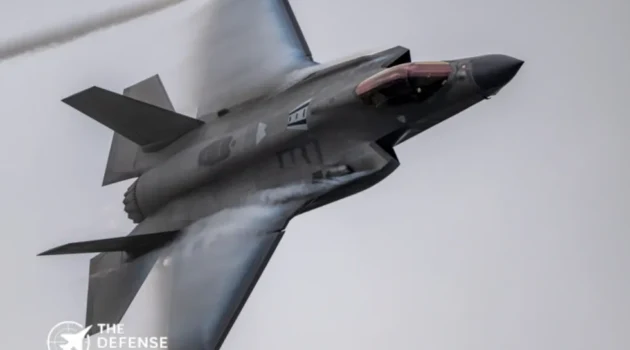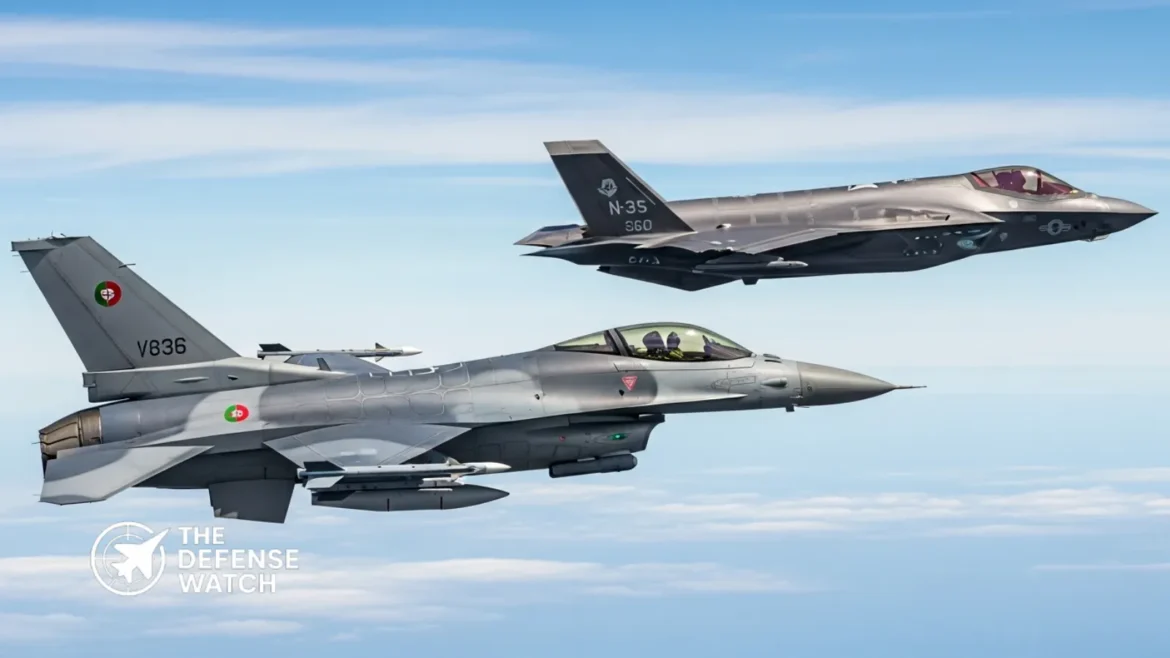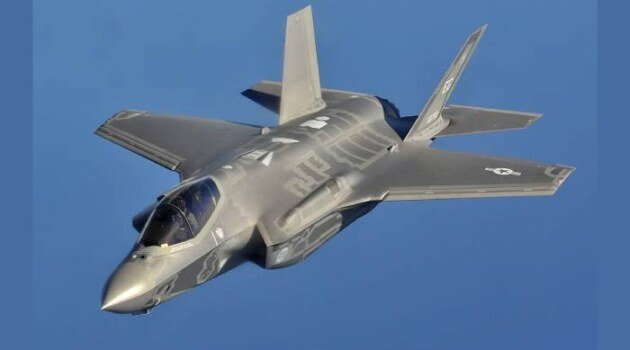
- â–º The US ambassador to Portugal publicly urged Lisbon to consider acquiring F-35 fighter jets.
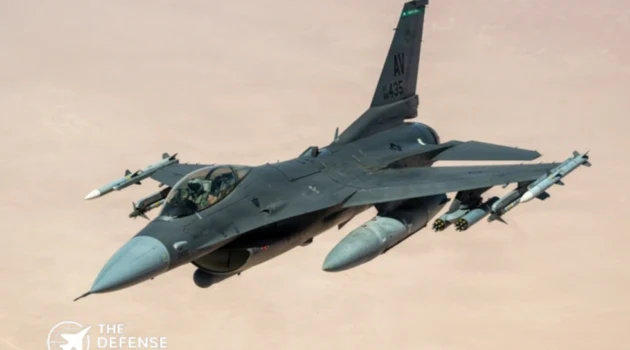
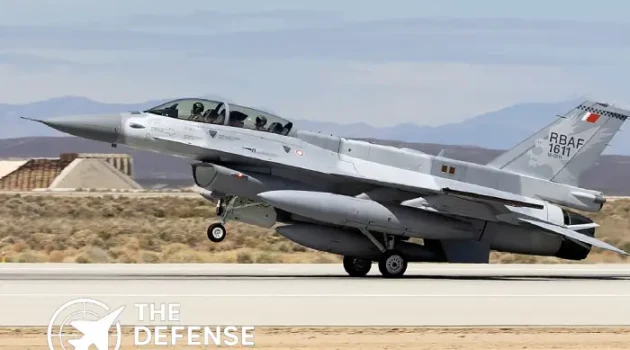
- â–º Portugal currently operates F-16 aircraft that are approaching long term replacement planning.
- â–º The F-35 is operated by multiple NATO allies across Europe, including Italy, the Netherlands, and the UK.
- â–º Washington framed the proposal as strengthening NATO interoperability and airpower integration.
- â–º Lisbon has not announced a formal fighter replacement decision.
US Ambassador Urges Portugal To Buy F-35 Fighter Jets
The F-35 fighter jets are at the center of renewed defense discussions between Washington and Lisbon, after the US ambassador to Portugal publicly encouraged the country to consider joining what he described as the top tier of allied air forces.
According to a report by Reuters, the ambassador said Portugal should look at acquiring the F-35 Lightning II as it evaluates the future of its combat aviation fleet. The remarks come as Portugal continues to operate upgraded F-16 Fighting Falcon aircraft, which will eventually require replacement or deep modernization.
While no formal procurement decision has been announced, the public nature of the comments underscores Washington’s interest in aligning Portuguese airpower with the broader NATO shift toward fifth generation platforms.
Strategic Context Behind The F-35 Fighter Jets Push
The F-35 fighter jets have become the backbone of NATO’s next generation airpower strategy. European operators now include Italy, the Netherlands, Norway, Denmark, Poland, Belgium, Finland, Germany, Switzerland, and the United Kingdom. Many of these countries are either replacing legacy F-16 fleets or supplementing Eurofighter and other fourth generation aircraft.
From a US perspective, expanding F-35 adoption enhances interoperability. The aircraft’s sensor fusion, secure data links, and low observable design enable joint operations across air, land, sea, cyber, and space domains. For smaller NATO air forces such as Portugal’s, integration into this network could offer operational advantages that go beyond basic air policing.
Portugal’s air force has relied on F-16s since the 1990s. Though upgraded under Mid Life Update programs, the aircraft will face structural and capability limits over the coming decade. Any replacement program would require long term financial planning and parliamentary approval.
Budget Realities And Political Considerations
Defense spending remains a central factor. Portugal, like several southern European allies, has faced pressure to meet NATO’s two percent of GDP defense spending benchmark. A fleet of F-35 fighter jets would represent one of the largest defense investments in the country’s recent history.
Acquisition costs, sustainment expenses, infrastructure upgrades, pilot training, and industrial participation agreements would all shape the debate. The F-35 program also involves strict security and data handling requirements, which may influence national policy discussions.
Lisbon could also examine European alternatives, such as advanced Eurofighter variants or participation in future European sixth generation fighter programs. However, those programs remain years from operational deployment, while the F-35 is already fielded at scale.
NATO Interoperability And Operational Impact
The core argument advanced by US officials centers on interoperability. F-35 fighter jets are designed to operate as information nodes within a coalition network. In a NATO scenario, Portuguese F-35s could seamlessly share targeting data with allied aircraft, naval vessels, and ground based air defense systems.
This network centric capability has been tested in multinational exercises across Europe. According to NATO officials, fifth generation aircraft have played increasing roles in Baltic Air Policing missions and joint exercises aimed at deterring Russian aggression.
For Portugal, whose strategic location includes Atlantic sea lanes and proximity to Africa, modern airpower also supports maritime security and expeditionary commitments.
What Happens Next
There is no confirmed procurement timeline. The Reuters report indicates the ambassador’s remarks were advisory rather than linked to an active contract negotiation. Any move toward F-35 fighter jets would require a structured defense review, cost analysis, and formal request through the US Foreign Military Sales process.
Still, the public endorsement reflects broader geopolitical dynamics. As NATO modernizes in response to the war in Ukraine and evolving security threats, alliance members are under increasing pressure to align capabilities.
Whether Portugal ultimately selects the F-35 or another platform, the discussion signals that Lisbon’s next fighter decision will carry strategic weight well beyond national borders.
â– KEY FACTS AT A GLANCE- â–º United Kingdom joins European initiative focused on low cost air defence weapons.
- â–º Effort aims to counter mass drone attacks and cheaper cruise missile threats.
- â–º Focus on scalable, affordable interceptors rather than high cost missile systems.
- â–º Supports NATO wide efforts to strengthen layered air and missile defense.
- â–º Reflects lessons from Ukraine conflict on cost imbalance in modern air warfare.
UK Low Cost Air Defence Weapons Initiative Gains Momentum
The UK low cost air defence weapons initiative is moving forward as London joins a wider European effort to develop affordable interceptors against drones and missile threats.
The United Kingdom has aligned itself with a European push to accelerate development of lower cost air defense systems designed to counter mass drone swarms and saturation attacks. The move reflects growing concern across NATO about the rising use of inexpensive unmanned systems in modern conflicts.
European governments are increasingly focused on closing what defense planners describe as a cost imbalance. In recent conflicts, including the war in Ukraine, relatively cheap drones and loitering munitions have forced defenders to rely on high cost surface to air missiles to intercept them. That exchange ratio is not sustainable over time.
The UK decision signals recognition that future air defense architecture must include scalable and affordable options.
Lessons From Ukraine Drive Policy Shift
The conflict in Ukraine has reshaped air and missile defense thinking across Europe. Both Russia and Ukraine have used large numbers of drones and cruise missiles in repeated strikes against infrastructure and military targets.
Intercepting a low cost drone with a multi million dollar missile presents an obvious economic challenge. Senior NATO officials have repeatedly warned that allies need more cost effective intercept solutions to handle persistent drone campaigns.
The UK low cost air defence weapons effort is directly tied to these lessons. Rather than relying solely on advanced systems such as long range missile batteries, the focus is on adding cheaper interceptors and complementary technologies that can engage slower, smaller aerial threats.
This does not replace high end systems. Instead, it reinforces a layered defense model.
Strengthening NATO’s Layered Air Defense
NATO’s integrated air and missile defense concept depends on multiple layers. High altitude ballistic missile defense, medium range systems, and short range air defense must work together.
The European initiative aims to strengthen the lower and middle tiers of that structure. These layers are critical for countering drones, loitering munitions, and certain cruise missiles.
The UK low cost air defence weapons participation suggests closer coordination with European partners on procurement and industrial development. Shared development could reduce unit costs, increase production capacity, and improve interoperability across allied forces.
Interoperability remains central. NATO air defense systems rely on shared data links and integrated command and control networks. Any new system must plug into existing architecture.
Industrial And Strategic Implications
For the United Kingdom, joining this push carries both military and industrial significance.
The UK defense sector has deep experience in missile development and air defense technologies. Expanding into affordable intercept solutions offers opportunities for domestic industry while supporting broader alliance needs.
It also aligns with ongoing UK modernization plans. London has committed to strengthening homeland defense and supporting NATO’s eastern flank. Affordable air defense capabilities could be deployed to protect bases, critical infrastructure, and expeditionary forces.
From a strategic standpoint, this move reflects a wider European reassessment of air defense priorities. For years, many European states reduced short range air defense inventories after the Cold War. The return of high intensity conflict in Europe has reversed that trend.
Addressing The Cost Imbalance
At its core, the UK low cost air defence weapons initiative seeks to solve a simple problem. Modern warfare has made it easier and cheaper to launch aerial attacks than to stop them.
Commercially derived drones can be adapted for military use at relatively low cost. State actors can also produce cruise missiles at scale. Defenders must respond without exhausting high value missile stocks.
Affordable interceptors, rapid production lines, and complementary systems such as electronic warfare and directed energy weapons are now central to air defense planning.
The UK’s decision to join this European effort signals that London sees the issue as long term rather than temporary.
Broader European Security Context
The initiative comes amid heightened security concerns across Europe. NATO members have increased defense spending and accelerated procurement programs since 2022.
European Union efforts such as joint procurement frameworks and collaborative defense projects have aimed to streamline acquisitions and reduce duplication. Although the UK is no longer an EU member, it continues to cooperate closely with European partners on defense.
Participation in a shared low cost air defense initiative strengthens that cooperation. It also reinforces NATO’s collective deterrence posture.
Outlook
Details on specific systems, funding levels, or timelines remain limited in public reporting. However, the policy direction is clear.
The UK low cost air defence weapons effort reflects a shift toward sustainable air defense models built around layered, affordable, and scalable capabilities.
If successfully implemented, it could help address one of the most pressing operational challenges facing NATO forces today: defending against large numbers of relatively cheap aerial threats without depleting strategic missile inventories.
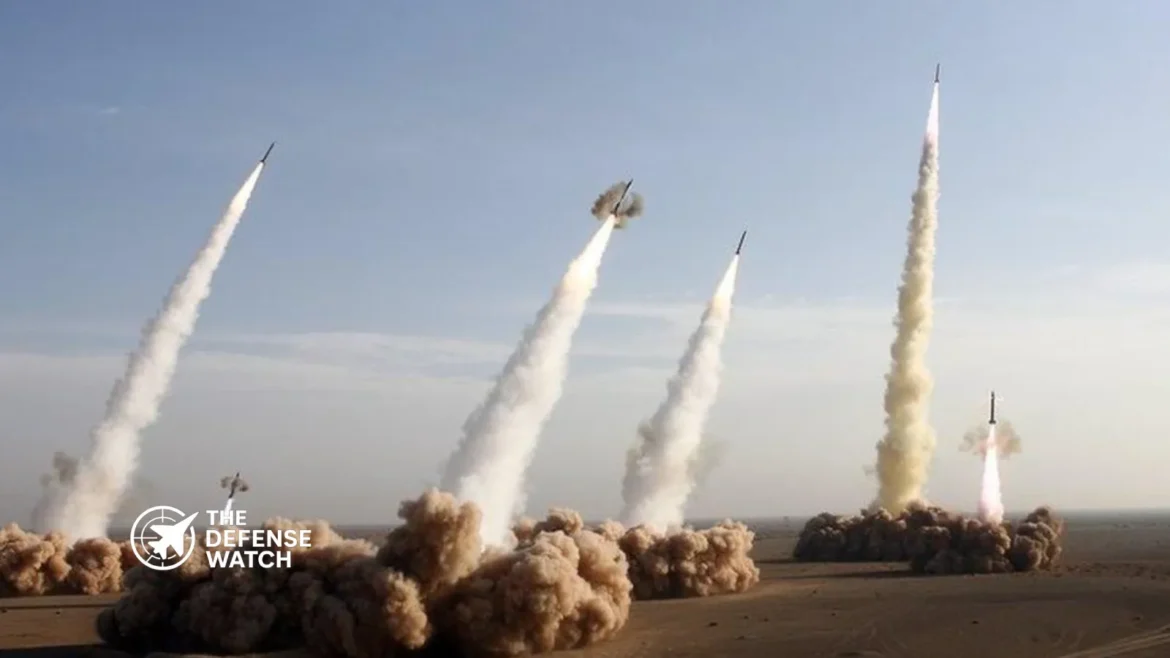
â– KEY FACTS AT A GLANCE- â–º The United Kingdom has formally joined NATO ballistic missile defence, integrating national capabilities into the alliance framework.
- â–º The move strengthens NATO integrated air and missile defence amid rising concerns over long range missile threats in Europe.
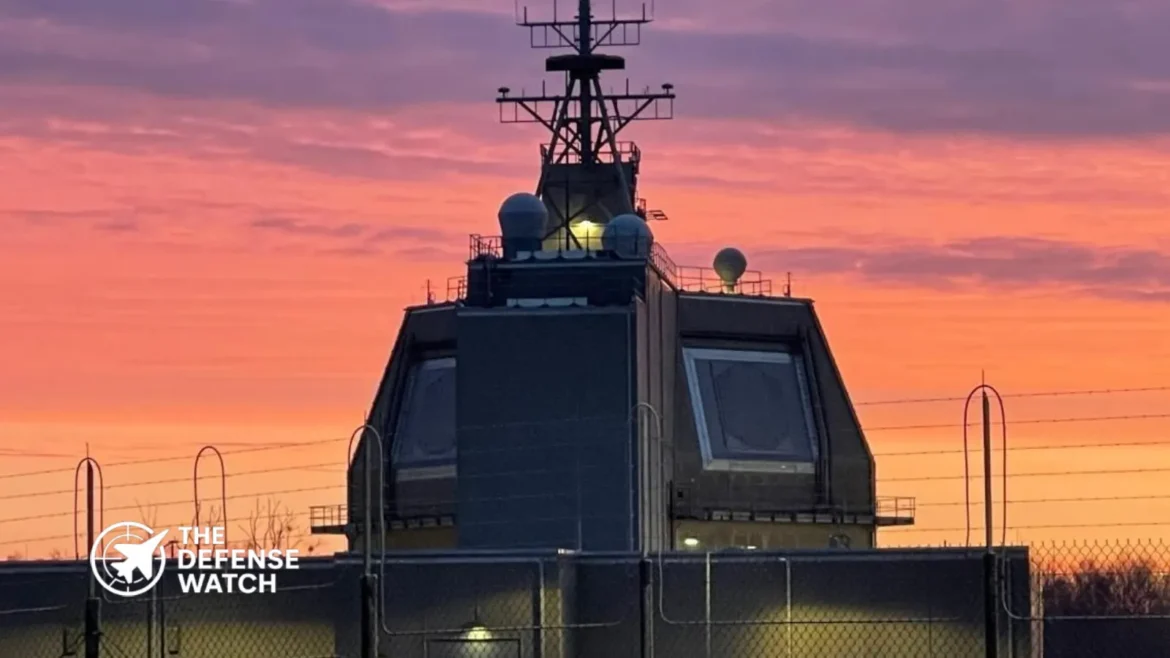
- â–º NATO missile defence architecture includes Aegis Ashore sites, advanced radar systems, and US Navy Aegis destroyers.
- â–º The decision enhances interoperability, data sharing, and collective deterrence under NATO Article 5 commitments.
- â–º UK participation signals deeper alliance cohesion as Europe adapts to evolving ballistic missile and air defence challenges.
UK Joins NATO Ballistic Missile Defence Effort
The UK joins NATO ballistic missile defence effort in a significant move that formally integrates British capabilities into the alliance’s collective missile shield.
The decision positions the United Kingdom more deeply within NATO’s evolving missile defence architecture at a time of heightened concern over long range missile threats across Europe.
The step reinforces NATO’s integrated air and missile defence network, which is designed to detect, track, and intercept ballistic missile attacks against allied territory.
Strengthening NATO’s Missile Shield
NATO’s ballistic missile defence system, developed over more than a decade, is built to counter threats originating outside the Euro Atlantic area. The framework was formally agreed at the 2010 Lisbon Summit and has since expanded through a series of capability upgrades.
Key components of NATO’s missile defence architecture include:
- Aegis Ashore sites in Romania and Poland
- US Navy Aegis equipped destroyers forward deployed to Europe
- Advanced early warning radar systems
- NATO command and control networks
By joining NATO ballistic missile defence more directly, the UK aligns its national capabilities with this broader defensive structure. This integration enhances collective situational awareness and strengthens the alliance’s ability to respond to ballistic missile threats.
The move reflects NATO’s ongoing adaptation to an increasingly complex threat environment.
The Broader Strategic Context
NATO Secretary General Mark Rutte has repeatedly emphasized the need to strengthen integrated air and missile defence across the alliance. Following Russia’s full scale invasion of Ukraine in 2022, European allies accelerated investments in air defence, including systems such as Patriot and SAMP T.
The UK’s decision to join NATO ballistic missile defence should be viewed within this broader modernization trend.
The alliance is moving toward a layered defence model that combines:
- Short range air defence
- Medium and long range interceptors
- Ballistic missile tracking radars
- Space based surveillance
This layered approach reflects lessons learned from recent conflicts, particularly the scale and frequency of missile and drone attacks.
By embedding more fully within NATO’s missile defence network, the UK strengthens both national and allied resilience.
Implications For European Security
The integration of the UK into NATO ballistic missile defence carries both operational and political weight.
Operationally, it improves command and control integration, data sharing, and response coordination across allied forces. Missile defence requires near real time data fusion from multiple sensors. Expanding participation increases the reliability and coverage of that network.
Politically, the move underscores the UK’s continued central role in European security despite its departure from the European Union. London remains one of NATO’s leading military powers and a top defence spender within the alliance.
It also sends a clear signal of unity at a time when NATO is reinforcing deterrence along its eastern flank.
Analysis: A Measured But Significant Step
While this announcement does not represent the deployment of a new standalone British missile shield, it marks a structural shift in how the UK aligns its capabilities within NATO’s ballistic missile defence framework.
Missile defence is not a single system. It is an interconnected network of sensors, interceptors, command systems, and allied contributions.
By joining NATO ballistic missile defence more formally, the UK enhances alliance cohesion and reduces gaps in coverage. In practical terms, this contributes to deterrence by denial, making it harder for adversaries to calculate a successful missile strike against NATO territory.
Given the rapid evolution of missile technologies, including maneuverable reentry vehicles and hypersonic glide systems, NATO’s missile defence architecture will likely continue evolving.
The UK’s integration signals recognition that collective defence in the missile domain requires deeper coordination, not parallel national efforts.
KEY FACTS AT A GLANCE■KEY FACTS AT A GLANCE- ► A U.S. source told Middle East Eye that Washington questioned Saudi Arabia’s need to pursue Turkey’s KAAN fighter.
- â–º U.S. pressure reportedly included concerns over a potential Saudi purchase of the Pakistan China JF 17 fighter.
- â–º Saudi officials have indicated they will not proceed with acquiring JF 17 aircraft.
- â–º Riyadh has not signaled withdrawal from participation in the KAAN program led by Turkish Aerospace Industries.
- â–º Saudi analyst Hisham El Gannam warned that continued pressure could produce unintended consequences.
The White House KAAN warning to Riyadh signals rising tension in U.S.–Saudi defense ties at a moment of strategic transition in the Gulf.
According to reporting by Middle East Eye, U.S. officials privately questioned why Saudi Arabia would need to pursue Turkey’s next generation KAAN fighter if Washington is already meeting its defense requirements. The message, delivered to Saudi interlocutors, reportedly extended beyond Turkey’s aircraft to include concerns over the Pakistan China jointly produced JF 17.
While Saudi officials have indicated they will not proceed with the JF 17 purchase, they have not provided assurances that they will withdraw from participation in the KAAN program led by Turkish Aerospace Industries.
The episode matters because it touches on more than a single fighter platform. It reflects competition over influence, industrial alignment, and the long term future of Gulf airpower.
Why Washington Is Concerned About KAAN
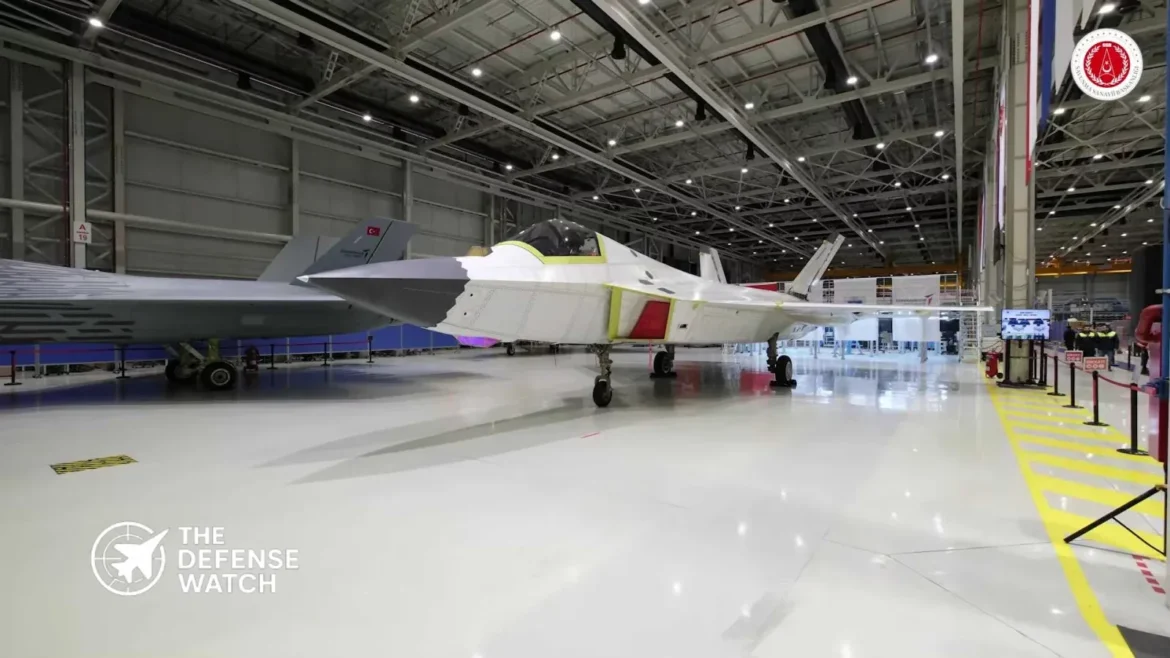
The KAAN fighter, previously known as TF X, is Turkey’s fifth generation combat aircraft project. Ankara positions it as a stealth capable, twin engine platform designed to replace its F 16 fleet and reduce reliance on Western suppliers.
For the United States, Saudi participation in KAAN presents three core concerns.
First, technology alignment. Gulf air forces, particularly Saudi Arabia’s, are deeply integrated with U.S. systems. The Royal Saudi Air Force operates F 15 variants and relies on American weapons, maintenance pipelines, and training infrastructure. Introducing a Turkish designed fifth generation platform would diversify supply chains and potentially reduce Washington’s leverage.
Second, precedent. If Riyadh joins KAAN as an industrial partner or future customer, it signals that advanced U.S. fighters such as the F 35 are not the only pathway for modernization. That could encourage other regional actors to hedge.
Third, geopolitical signaling. Turkey has pursued a more independent defense policy in recent years, including closer ties with non Western partners. A major Saudi investment in KAAN would elevate Ankara’s role as a defense exporter and strategic actor in the Gulf.
The JF 17 Factor and China’s Shadow
The reported U.S. pressure also extended to the JF 17, co produced by Pakistan and China. While Saudi Arabia has now indicated it will not move forward with that purchase, the episode highlights broader U.S. sensitivity to Chinese defense penetration in the Middle East.
The JF 17 is not a fifth generation platform. It is a lightweight, lower cost fighter designed for affordability and flexibility. For Saudi Arabia, it would likely have served niche roles rather than replacing high end assets.
However, from Washington’s perspective, any expansion of Chinese aerospace influence in a core U.S. security partner raises concerns about data security, interoperability, and long term alignment.
The U.S. has consistently warned partners about integrating Chinese systems into Western linked networks. In the Gulf, where missile defense and air surveillance are increasingly interconnected, platform choices have alliance wide implications.
Operational Impact for the Royal Saudi Air Forc
From an operational standpoint, Saudi Arabia faces a modernization question.
Its F 15SA fleet remains highly capable, with advanced radar and electronic warfare suites. Yet regional competition is evolving. Iran continues to expand its missile and drone capabilities. Israel operates the F 35I. The UAE has pursued next generation options, though its F 35 acquisition has stalled.
If Riyadh seeks a true fifth generation aircraft with stealth, advanced sensor fusion, and network centric capability, the U.S. F 35 remains the benchmark in Western markets. The KAAN program, while ambitious, is still in development and will take years to reach operational maturity.
That timeline matters. Committing to KAAN now would be a long term industrial and political bet rather than a near term capability fix.
Industrial and Budget Dimensions
For Saudi Arabia, fighter procurement is not only about performance. It is also about industrial participation.
Under Vision 2030, Riyadh aims to localize defense production. Turkish Aerospace Industries has shown flexibility in technology transfer arrangements with partners. That may appeal to Saudi planners seeking domestic aerospace growth.
The United States, by contrast, tightly controls technology transfer on its most advanced platforms. Even close allies face restrictions.
This creates a structural tension. Washington offers the most mature fifth generation aircraft but with limits. Ankara offers partnership and potential co production but with higher developmental risk.
Budget pressures also play a role. Next generation fighters are expensive not only to buy but to sustain. Saudi Arabia must balance airpower modernization with investments in missile defense, naval expansion, and domestic economic transformation.
Regional Security Context
The Gulf security environment is shifting.
Iran’s strategy relies heavily on ballistic missiles, cruise missiles, and drones rather than high end manned aviation. That challenges traditional air superiority models.
At the same time, Israel’s qualitative military edge remains a central U.S. policy pillar. Any sale of advanced fighters to Arab states must account for that framework.
Turkey’s emergence as a defense exporter complicates the picture. Ankara has gained credibility through drone exports and now seeks to move into the high end fighter segment. A Saudi stake in KAAN would deepen Turkish influence in Arab defense markets.
For Washington, maintaining interoperability across Gulf Cooperation Council air forces has long been a strategic objective. Divergent procurement paths risk fragmenting that architecture.
Strategic Assessment
The White House KAAN warning reflects a broader recalibration in U.S.–Saudi defense relations.
Impact on regional power balance: If Saudi Arabia were to fully commit to KAAN, it would not immediately shift the military balance. The aircraft is years from operational deployment. However, over time it could reduce U.S. dominance in Gulf airpower supply chains and increase Turkey’s strategic footprint.
Deterrence implications: The signal value may be more important than the platform itself. Saudi diversification suggests hedging behavior. That can weaken perceptions of tight U.S. Gulf alignment, potentially emboldening competitors or complicating deterrence messaging toward Iran.
Budget and procurement signals: Riyadh appears to be using competition to expand its options. By engaging Ankara, it gains leverage in discussions with Washington. The cancellation of the JF 17 plan indicates Saudi leaders are responsive to U.S. concerns but not willing to abandon diversification outright.
Alliance dynamics: The episode highlights friction but not rupture. The United States remains Saudi Arabia’s primary defense partner. Yet the relationship is no longer exclusive. Gulf states increasingly pursue multi vector defense ties.
Escalation risks: If U.S. pressure becomes public or punitive, it could accelerate Saudi efforts to broaden partnerships. As analyst Hisham El Gannam warned, sustained pressure can produce counterproductive outcomes.
What happens next will likely depend on whether Washington offers a credible pathway for Saudi fifth generation access, whether through the F 35 or an alternative framework. Absent that, Riyadh will continue exploring options.
Why This Matters Now
This development comes at a time when U.S. defense policy is under scrutiny in the Middle East. Washington is balancing competition with China, support for Israel, and a desire to avoid deeper regional entanglement.
Fighter aircraft decisions are long term strategic commitments. They shape training, logistics, and political alignment for decades.
The White House KAAN warning is therefore not simply about one aircraft. It is about who sets the terms of Gulf airpower modernization in the next generation.
â– KEY FACTS AT A GLANCE- â–º The United States plans to send additional missile launchers to the Philippines under alliance cooperation frameworks.
- â–º The deployment follows earlier use of the U.S. Army Typhon mid range capability during joint exercises.
- â–º China has publicly criticized the move, calling it destabilizing for regional security.
- â–º The Philippines has expanded U.S. access to military sites under the Enhanced Defense Cooperation Agreement.
- â–º The move comes amid ongoing maritime confrontations in the South China Sea.
US To Send More Missile Launchers To The Philippines
The United States will send more missile launchers to the Philippines, expanding its military presence in the Indo Pacific despite strong objections from China, according to report.
The move builds on earlier deployments under joint exercises and signals deeper U.S. Philippines defense cooperation as tensions persist in the South China Sea.
Washington has framed the decision as part of routine alliance coordination. Beijing, however, has warned that the deployment risks destabilizing the region.
Expanding U.S. Missile Presence In Southeast Asia
The decision to send more missile launchers to the Philippines follows the earlier deployment of the U.S. Army’s Typhon mid range capability system during 2024 exercises.
The Typhon system, also known as the Mid Range Capability, can launch Standard Missile 6 and Tomahawk land attack cruise missiles. Its presence marked the first time the United States positioned a ground based system of that range in the region since the end of the Intermediate Range Nuclear Forces Treaty.
According to Defense News, U.S. officials indicated that additional launchers will rotate into the Philippines as part of continuing cooperation with Manila.
The deployments are being conducted under the framework of the Enhanced Defense Cooperation Agreement, which allows expanded U.S. access to Philippine military bases.
Manila’s Strategic Shift
Under President Ferdinand Marcos Jr., the Philippines has moved to strengthen defense ties with Washington. Manila has granted U.S. forces access to additional sites, some located near Taiwan and contested waters in the South China Sea.
Philippine defense officials have described the missile deployments as defensive in nature, aimed at improving deterrence and joint readiness.
The United States and the Philippines are treaty allies under the 1951 Mutual Defense Treaty. In recent years, both governments have emphasized closer interoperability amid increased Chinese maritime activity.
Beijing’s Response
China has repeatedly criticized the presence of U.S. missile systems in the Philippines. Officials in Beijing argue that such deployments heighten regional tensions and risk turning the Southeast Asian nation into a frontline state in strategic competition.
The Chinese government has also warned Manila against deepening military alignment with Washington, especially in areas close to Taiwan.
Tensions between China and the Philippines have escalated over disputed features in the South China Sea, including repeated confrontations between coast guard vessels.
Strategic Context
The move to send more missile launchers to the Philippines aligns with broader U.S. Indo Pacific strategy. Washington has sought to distribute combat power across allied territory to complicate potential adversary planning.
Ground based long range missile systems are seen by U.S. planners as a key component of deterrence, particularly in scenarios involving maritime access denial.
Defense analysts note that rotational deployments allow the United States to maintain presence without establishing permanent bases, which can be politically sensitive in host nations.
Alliance Implications
The expansion of missile capabilities in the Philippines underscores the deepening U.S. Philippines defense partnership. It also reflects Manila’s recalibration of foreign policy in response to maritime friction.
While Washington maintains that the deployments are defensive and alliance focused, China continues to frame them as destabilizing.
The coming months are likely to see further joint exercises and operational coordination as both allies refine how missile systems integrate into regional contingency planning.
Northrop Grumman And Thales In Belgium Strengthen NATO Industrial Cooperation
Northrop Grumman and Thales in Belgium have expanded their partnership to better support NATO customers and strengthen the European defense industrial base, according to an official company announcement.
The agreement links U.S. defense prime Northrop Grumman with Thales Belgium to enhance cooperation across missile systems, ammunition, and related technologies aimed at European and NATO requirements. The move reflects growing transatlantic defense coordination as allies increase spending and accelerate modernization programs.
The companies said the partnership will focus on industrial collaboration that supports both European customers and the broader NATO alliance.
Expanding Transatlantic Industrial Integration
The expanded agreement builds on existing cooperation between Northrop Grumman and Thales in Belgium, particularly in advanced propulsion systems and defense manufacturing.
Northrop Grumman, a major supplier of missile systems, air and missile defense technologies, and advanced aerospace platforms, has sought to deepen its industrial footprint in Europe. The latest partnership step aligns with NATO’s push to strengthen supply chain resilience and increase production capacity across allied nations.
Thales in Belgium brings established expertise in propulsion systems for rockets and missiles. The company has long supported European and allied defense programs with energetic materials and advanced rocket motor technologies.
By integrating industrial capabilities more closely, both companies aim to enhance responsiveness to NATO member requirements and support regional production.
Supporting NATO Readiness And European Security
The Northrop Grumman and Thales in Belgium cooperation comes as NATO allies face sustained demand for missile systems, munitions, and air defense capabilities. Since 2022, European governments have significantly increased defense budgets in response to the war in Ukraine and broader security concerns across the continent.
The United States remains NATO’s largest contributor, but European nations are expanding domestic production capacity. Partnerships like this are designed to ensure that allied nations can access advanced systems while strengthening local industry.
According to Northrop Grumman, closer collaboration with European partners enhances interoperability and ensures that systems meet NATO operational standards. For NATO customers, industrial cooperation inside Europe can reduce lead times and support lifecycle sustainment.
Industrial Cooperation Across Missile And Propulsion Systems
While specific program details were not disclosed, the partnership is expected to support missile propulsion and related subsystems that align with NATO capability priorities.
Northrop Grumman has a broad missile portfolio that includes air defense interceptors, precision strike systems, and rocket propulsion technologies. Thales in Belgium specializes in small to medium caliber rocket motors and energetic materials, making it a key supplier in European missile programs.
The companies indicated that their collaboration will focus on providing scalable production capacity for European and NATO markets.
In practical terms, that could mean joint work on propulsion subsystems, co production arrangements, or expanded supplier relationships for allied missile programs. Such cooperation aligns with European Union and NATO efforts to reduce dependence on external supply chains while maintaining interoperability with U.S. systems.
Strategic Context: NATO And European Defense Spending
The Northrop Grumman and Thales in Belgium partnership reflects broader trends in transatlantic defense cooperation.
NATO Secretary General officials have repeatedly emphasized the need for allies to increase industrial output, particularly in munitions and missile systems. The alliance has also encouraged multinational procurement and joint production initiatives.
At the same time, European defense firms are seeking partnerships with U.S. primes to access advanced technologies while maintaining local manufacturing roles.
Belgium plays a strategic role within NATO. It hosts NATO headquarters in Brussels and remains an active participant in alliance modernization programs. Strengthening Belgium based industrial capacity supports both national and alliance level objectives.
Reinforcing Supply Chain Resilience
Defense supply chains have faced strain in recent years due to high operational demand and global disruptions. Increasing production capacity inside Europe is viewed by policymakers as a way to enhance resilience and reduce bottlenecks.
By expanding cooperation with Thales in Belgium, Northrop Grumman can leverage local expertise and facilities to support NATO customers more efficiently.
Industrial partnerships also support political and economic objectives. European governments increasingly require industrial participation and technology cooperation when procuring major defense systems.
This model allows U.S. primes to remain competitive in European markets while contributing to allied industrial strength.
Broader Implications For Transatlantic Defense
The Northrop Grumman and Thales in Belgium initiative underscores how U.S. defense companies are adapting to a changing security environment in Europe.
Rather than operating solely as exporters, major U.S. contractors are embedding themselves within European industrial ecosystems. This approach supports alliance cohesion and addresses concerns about supply chain autonomy.
For NATO, the outcome is intended to be improved readiness, faster delivery timelines, and stronger interoperability across allied forces.
For Belgium and other European states, partnerships like this can sustain high value manufacturing jobs and reinforce domestic defense capabilities.
Looking Ahead
The companies did not disclose financial terms or specific program timelines. However, the partnership signals sustained U.S. industry commitment to European security requirements.
As NATO continues to prioritize air and missile defense, long range fires, and munitions stockpile replenishment, industrial collaboration will remain central to alliance strategy.
The Northrop Grumman and Thales in Belgium cooperation fits within that broader framework. It reflects a shift toward integrated, multinational production models designed to meet sustained demand across NATO member states.
Russia Threatens Military Response As NATO Launches Arctic Mission
Russia threatens military response as NATO launches Arctic mission, signaling a sharp escalation in competition over one of the world’s most strategic regions. Moscow’s warning came after the alliance formally introduced its Arctic Sentry mission, aimed at boosting situational awareness, deterrence, and coordination among NATO members operating in the High North.
The statement reflects growing concern within the Kremlin over Western military activity near Russia’s northern flank, particularly in and around Greenland, which Moscow views as a critical geographic gateway between the Arctic and the North Atlantic.
Russian Foreign Minister Sergei Lavrov delivered the warning during a session of the State Duma, Russia’s lower house of parliament, making clear that any move to militarize Greenland or deploy infrastructure directed at Russia would trigger what he described as military technical countermeasures.
Moscow Responds To NATO’s Arctic Sentry Mission
NATO’s Arctic Sentry mission marks the alliance’s most structured Arctic focused initiative to date. According to NATO statements, the mission is designed to improve maritime and air domain awareness, enhance early warning capabilities, and support freedom of navigation across Arctic sea lanes that are becoming increasingly accessible due to climate change.
Russia sees the initiative differently. Lavrov told lawmakers that Western states were steadily transforming the Arctic into a zone of military rivalry, undermining previous commitments to keep the region stable and predictable.
He emphasized that Greenland, an autonomous territory within the Kingdom of Denmark, holds particular strategic importance. Its location enables control over key air and maritime routes linking North America, Europe, and the Arctic Ocean.
Greenland’s Strategic Role In Arctic Security
Greenland has long played a quiet but decisive role in transatlantic security. The United States operates Thule Space Base in northwest Greenland, a critical node for missile warning, space surveillance, and ballistic missile defense. While the base has existed for decades, Russia argues that any expansion of military infrastructure on the island would alter the regional balance.
As NATO increases coordination among Arctic allies such as the United States, Canada, Norway, and Denmark, Moscow has repeatedly warned against what it calls the creeping militarization of the region.
Russian defense analysts point to Greenland as a forward operating location that could support air operations, missile defense assets, and naval logistics in a crisis involving Russia’s Northern Fleet.
Russia’s Arctic Military Posture
Russia maintains the largest military footprint in the Arctic, including a network of reopened Soviet era bases, modernized airfields, radar installations, and air defense systems stretching from the Kola Peninsula to the Chukchi Sea.
The Northern Fleet, now designated as a separate military district, operates Russia’s most capable nuclear submarines and a significant portion of its sea based nuclear deterrent. Moscow argues that its Arctic deployments are defensive and necessary to protect economic interests, including energy projects and the Northern Sea Route.
However, NATO officials have consistently highlighted Russia’s growing Arctic capabilities, including long range bombers, hypersonic weapons, and advanced air defense systems, as a driver behind the alliance’s increased focus on the region.
NATO’s Rationale For Expanded Arctic Operations
NATO officials describe Arctic Sentry as a response to changing security dynamics rather than a provocation. The alliance notes that melting sea ice is opening new shipping routes and increasing military and commercial activity, raising the risk of accidents or miscalculation.
The mission builds on existing national efforts and multinational exercises, such as Cold Response and Dynamic Mongoose, by providing a more persistent framework for information sharing and operational coordination.
With Finland and Sweden now full NATO members, the alliance controls a larger share of Arctic territory, a shift that has further unsettled Moscow.
Escalating Rhetoric And Strategic Signaling
Russia’s warning of military technical countermeasures is deliberately vague, a common feature of Moscow’s strategic messaging. Such measures could range from additional troop deployments and missile systems to expanded naval and air patrols in the Arctic and North Atlantic.
Western defense officials are closely watching how rhetoric translates into action. Previous periods of tension have seen Russia conduct snap exercises, deploy advanced weapons systems, and increase bomber flights near NATO airspace.
The risk, analysts warn, lies not only in deliberate escalation but also in the potential for incidents involving aircraft or naval vessels operating in close proximity.
Implications For Arctic Stability
The Arctic has traditionally been viewed as a zone of cooperation, governed by institutions such as the Arctic Council. That framework has weakened since Russia’s invasion of Ukraine, with most Western states suspending cooperation with Moscow.
As military activity increases, the absence of robust dialogue mechanisms raises concerns about crisis management and transparency.
Defense experts argue that confidence building measures, communication channels, and clear rules of engagement will be critical to preventing miscalculation as NATO and Russia operate more frequently in overlapping areas.
What Comes Next
For now, NATO shows no sign of reversing course on Arctic Sentry, while Russia appears determined to signal resolve without crossing immediate red lines. The coming months will likely see increased exercises, surveillance activity, and political messaging from both sides.
Whether this competition remains contained or evolves into a more confrontational posture will depend on how both NATO and Russia balance deterrence with restraint in an increasingly accessible and contested Arctic.
US NATO Command Transfer Signals Shift In Alliance Leadership
The US NATO command transfer marks a significant adjustment in alliance leadership, as Washington prepares to hand over two major NATO headquarters to European officers. According to Reuters, the United States will relinquish command roles at NATO posts in Naples, Italy, and Norfolk, Virginia, in a move aligned with the Trump administration’s push for a more European led NATO.
The decision reflects growing US pressure on European allies to assume greater responsibility for their own defense, while maintaining NATO’s core mission of collective security. A military source cited by Reuters confirmed the plan, emphasizing that the change affects leadership roles rather than NATO’s overall command structure or commitments.
Which NATO Commands Are Being Transferred
The two commands involved play central roles in NATO operations and strategy.
In Naples, Allied Joint Force Command Naples oversees NATO operations in southern Europe, the Mediterranean, and parts of the Middle East and Africa. The command has been critical in coordinating maritime security, crisis response, and deterrence activities along NATO’s southern flank.
In Norfolk, Allied Command Transformation is responsible for NATO’s future force development, doctrine, and training. It plays a key role in shaping how NATO adapts to emerging threats, including cyber warfare, space operations, and high end conventional conflict.
Both commands have traditionally been led by US officers. Under the new plan, European officers will assume command, marking a notable shift in long standing leadership patterns.
Strategic Rationale Behind A European Led NATO
US officials have repeatedly argued that European NATO members must carry a larger share of the defense burden, especially as Washington balances commitments in Europe with priorities in the Indo Pacific. The US NATO command transfer is a concrete step toward that goal.
By placing European officers in charge of major NATO headquarters, Washington signals confidence in allied military leadership while reinforcing expectations for higher defense spending and operational responsibility. NATO data shows that while European defense budgets have risen steadily since 2014, capability gaps remain in areas such as air defense, logistics, and high readiness forces.
The leadership shift also aligns with broader debates inside NATO about strategic autonomy and burden sharing, without altering the alliance’s collective defense obligations under Article 5.
Implications For NATO Operations And Readiness
Military officials stress that the command transfer will not disrupt NATO operations. The commands will continue to operate under NATO’s integrated military structure, with US forces remaining deeply involved across the alliance.
In Naples, a European commander may bring regional perspectives shaped by ongoing security challenges in the Mediterranean, North Africa, and the Black Sea region. In Norfolk, European leadership at Allied Command Transformation could influence how NATO prioritizes modernization efforts, including interoperability, multi domain operations, and emerging technologies.
Analysts note that the effectiveness of the transition will depend on continuity, staff expertise, and sustained political support from both sides of the Atlantic.
European And Alliance Reactions
European officials have long called for a stronger role within NATO decision making and command structures. While public reactions have been measured, the move is widely seen as a sign of increased trust in European military leadership.
NATO itself has not announced changes to its overall command structure, and alliance officials emphasize that the US remains NATO’s largest military contributor. The transfer of command posts is therefore viewed as an evolution rather than a withdrawal.
Reuters reports that the timing and specific appointments will be coordinated within NATO processes, ensuring a smooth transition.
What This Means For US And European Defense Policy
The US NATO command transfer underscores a broader policy trend toward shared leadership within the alliance. For Washington, it supports efforts to rebalance global military commitments. For Europe, it brings greater responsibility and visibility within NATO’s military hierarchy.
As security challenges intensify across Europe’s eastern and southern flanks, the success of a European led NATO command approach will be closely watched. The move reinforces the idea that NATO’s strength lies not only in US leadership, but in collective capability, shared responsibility, and credible deterrence.
AUKUS Nations Advance Autonomous Maritime Technology Plans For 2026
The AUKUS autonomous maritime systems program is set to expand in 2026 as the United Kingdom, United States, and Australia intensify trilateral trials focused on uncrewed and autonomous technologies. According to official Royal Navy releases, the initiative will build on 2025 experiments through live training events, collaborative command and control development, and integrated testing environments designed to strengthen naval interoperability.
The effort falls under AUKUS Pillar II and the Maritime Big Play program, which emphasizes rapid experimentation and operational integration of emerging technologies across maritime forces.
AUKUS Pillar II Drives Expansion Of Uncrewed Maritime Systems
The AUKUS partnership continues to focus heavily on uncrewed naval capabilities, with the AUKUS autonomous maritime systems initiative aiming to create a cohesive trilateral fleet capable of operating across surface, air, and underwater domains.
Officials stated that exercises scheduled over the coming year will simulate real world combat environments, reflecting an increased emphasis on operational readiness and joint capability development.
Key objectives for 2026 include:
- Development of a shared command and control software architecture
- Creation of a common autonomous technology baseline
- Establishment of a joint testing and simulation environment
These initiatives aim to reduce duplication across the three partner nations while improving the ability to coordinate complex multinational operations.
Maritime Big Play Program Accelerates Technology Integration
The Maritime Big Play program continues to serve as the primary mechanism for integrating autonomous capabilities into operational fleets. Royal Navy officials noted that trilateral collaboration allows partners to accelerate the development of robotic systems and bring them closer to deployment readiness.
The program’s scope includes anti submarine warfare, maritime strike operations, and seabed warfare technologies.
Previous exercises conducted across Australia, Poland, Portugal, and the United States laid the groundwork for expanded activities in 2026 by validating new operational concepts and enhancing joint experimentation.
Lessons From 2025 Trials Shape Future Exercises
Recent AUKUS experiments demonstrated growing operational maturity in autonomous maritime technology. During Exercise Talisman Sabre, personnel in Australia remotely operated an extra large autonomous underwater vehicle located in the United Kingdom, highlighting the partnership’s ability to control assets across global distances.
Additional trials at the REPMUS exercise in Portugal evaluated command and control frameworks for crewless systems, while Coalition Warrior Interoperability Exercise testing focused on improving data sharing between allied forces.
The ability to remotely launch uncrewed aerial systems through secure communication networks was also demonstrated, contributing to improved situational awareness and targeting data collection for participating forces.
Growing Emphasis On Autonomous Naval Warfare
The expansion of the AUKUS autonomous maritime systems initiative reflects a broader trend toward integrating uncrewed technologies into naval operations. Defense analysts and naval leadership have increasingly emphasized autonomous platforms as force multipliers capable of enhancing fleet size, persistence, and operational reach.
Joint experimentation across the AUKUS partnership has already tested underwater drones for infrastructure protection and seabed warfare missions, highlighting the operational value of these systems in real world scenarios.
The focus on interoperability and shared standards is expected to enable more seamless coordination among allied forces during complex maritime missions.
Strategic Importance Of The AUKUS Partnership
The trilateral AUKUS agreement remains a central pillar of defense cooperation among the United States, United Kingdom, and Australia. Beyond advanced technologies, the partnership also includes nuclear powered submarine development and industrial collaboration aimed at strengthening deterrence and alliance interoperability.
Under Pillar II, the emphasis on advanced capabilities such as artificial intelligence, autonomous systems, and cyber technologies reflects the evolving character of modern naval warfare.
Joint training programs and personnel exchanges continue to expand the partnership’s operational foundation, preparing allied forces for future combined operations in both the Indo Pacific and Euro Atlantic regions.
Operational Outlook For 2026 And Beyond
As the AUKUS partners move into 2026, the continued development of the AUKUS autonomous maritime systems program is expected to produce increasingly complex exercises and demonstrations. The shared testing environment and unified command and control architecture are designed to improve decision making speed and enable integrated multi domain operations.
Future experimentation is likely to focus on enhancing interoperability between crewed and uncrewed assets, a critical capability for modern naval forces facing evolving threats across maritime theaters.
Officials emphasized that the ultimate goal is to transition emerging technologies from experimental phases into operational deployments, ensuring that allied navies maintain a technological advantage in contested environments.
Sweden Assumes First NATO Air Policing Leadership Role in Iceland
Six Swedish JAS 39 Gripen fighters arrived at Keflavik Air Base, Iceland, on February 4, 2026, marking Sweden’s first leadership of a NATO air policing rotation since joining the Alliance in March 2024. The deployment represents a significant milestone in Sweden’s operational integration within NATO and reinforces Allied air defense over the strategically vital Greenland-Iceland-United Kingdom (GIUK) gap.
The Swedish contingent, comprising more than 110 personnel from Skaraborg Air Wing F 7, replaced Belgium’s 350th Fighter Squadron and its F-16AM Fighting Falcons, assuming responsibility for the 55th rotation of Iceland’s air policing mission. Lieutenant Colonel Johan Legardt, the contingent commander, emphasized the operation’s strategic importance given current international security conditions.
The mission will continue until mid-March 2026, with Swedish forces operating under NATO’s Combined Air Operations Centre at Uedem, Germany. French aerial refueling support was provided during the deployment, with a French A330 MRTT tanker conducting joint operations with four Swedish Gripens between the Norwegian coast and Iceland to ensure the fighters reached their operational base.
Strategic Significance of Swedish Participation
Iceland’s location between Greenland and the United Kingdom positions it at a critical chokepoint where the Arctic Ocean and Norwegian Sea feed into the Atlantic Ocean. During the Cold War, this passage served as the primary route for Soviet submarines accessing the Atlantic from northern bases. Today, the GIUK gap remains essential for monitoring Russian naval and aerial movements in the region.

Image Source : NATO Sweden’s deployment builds on experience gained during its participation in NATO air operations in Poland in 2025, which served as an initial test of interoperability, command integration, and procedural alignment with Allied air forces. Major General Jonas Wikman, Chief of the Swedish Air Force, previously noted that the Poland deployment demonstrated Sweden’s capability to operate effectively under NATO leadership.
Since accession in March 2024, Stockholm has committed to meeting the Alliance’s 2% of GDP defense investment guideline by 2026, announced fighter deployments to Poland for enhanced air policing, and pledged naval and airborne surveillance assets to reinforce maritime security in the Baltic Sea.
JAS 39 Gripen Capabilities for Arctic Operations
The Saab JAS 39 Gripen is a single-engine, multirole fighter optimized for northern European conditions, combining a delta-canard airframe with a modern radar and mission system. The Gripen C/D variant in Swedish service can carry approximately 6.5 tonnes of external stores across multiple hardpoints, in addition to an internal 27mm Mauser BK-27 cannon used for visual-range engagements and warning shots during air policing scenarios.
For the Icelandic mission, the aircraft are expected to carry beyond-visual-range air-to-air missiles such as the AIM-120 AMRAAM or the ramjet-powered MBDA Meteor, paired with short-range infrared-guided missiles for close-quarters intercepts. The Gripen’s advanced sensors, data links, and ability to operate in austere environments make it particularly suited for extended patrols over remote oceanic expanses.
More than 70 Gripens are in service or on order with the Swedish Air Force, and the type has proved to be both capable and cost-effective. The aircraft’s short takeoff capabilities and agility are particularly valuable for operations from Keflavik Air Base.
NATO Iceland Air Policing Mission Framework
Iceland, as a founding NATO member without armed forces, has relied on Alliance air policing support since 2008. When Iceland signed the Treaty in 1949, it did not have and still does not have armed forces, though it maintains a Coast Guard, national police forces, an air defense system and a voluntary expeditionary peacekeeping force.
The air policing mission typically rotates Allied aircraft three to four times annually for several-week deployments. Participating nations provide airborne surveillance, identification of unknown tracks, and rapid interception of aircraft that fail to file flight plans, lose radio contact, or approach Alliance airspace in non-compliant manner.

Image Source : NATO Integrated into NATO’s Air Policing system, the Swedish detachment will contribute to continuous radar coverage, operating under control of the Combined Air Operations Centre in Uedem and supported when required by NATO E-3 AWACS. The mission forms part of a layered detection and interception chain proven effective against various military and civilian incidents over the North Atlantic.
Rapid NATO Integration Following Accession
Sweden’s participation in the Iceland air policing mission demonstrates the rapid pace of its NATO integration. Sweden flew its first NATO-controlled air defense mission in October 2024, with JAS 39 Gripen C combat aircraft tasked to defend allied airspace as part of the NATO Joint Incident Response Force.
The deployment creates an operational link between the Baltic-Nordic region, where Sweden and Finland bring substantial capabilities, and transatlantic reinforcement routes vital in any major crisis. Iceland’s Foreign Minister Þorgerður KatrÃn Gunnarsdóttir stated that Sweden’s participation demonstrates how NATO membership strengthens defense cooperation and security.
Weather permitting, Swedish forces are expected to conduct training flights to alternate airports in Akureyri and Egilsstaðir in early February, ensuring familiarity with Iceland’s airfield infrastructure and operational procedures across the island nation.
Broader Nordic Defense Cooperation
The Swedish deployment aligns with enhanced Nordic defense cooperation initiatives. The Nordic countries entered into cooperation to promote access to Denmark, Finland, Iceland, Norway and Sweden’s airspace for NATO’s air operations, with Swedish Defense Minister PÃ¥l Jonson noting that deepening airspace cooperation strengthens military integration while giving NATO access to larger contiguous areas for deterrence, exercises and training.
This coordination is particularly significant given the Arctic’s growing geopolitical importance. Rising global temperatures have increased commercial opportunities in the region, including the Northern Sea Route connecting Europe and Asia, while Russia maintains its Northern Fleet and the majority of its nuclear missile-carrying strategic submarines in Arctic waters.
The Swedish Air Force’s assumption of leadership responsibility in one of NATO’s most strategically sensitive regions demonstrates the Alliance’s confidence in Sweden’s operational capabilities and commitment to collective defense. As the newest NATO member on the northern flank, Sweden’s active participation in air policing missions reinforces Allied deterrence and interoperability during a period of heightened geopolitical tensions.