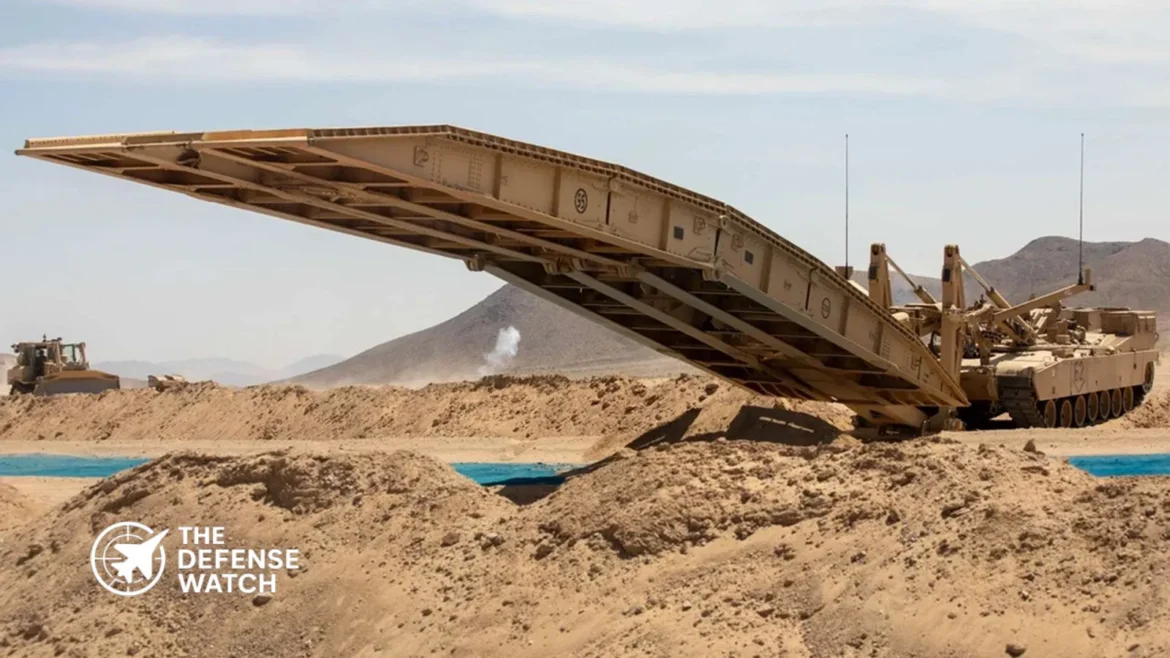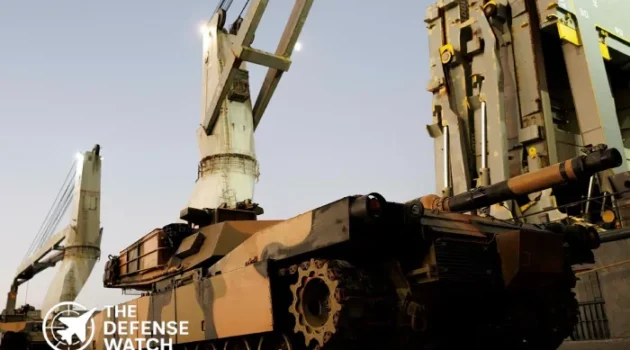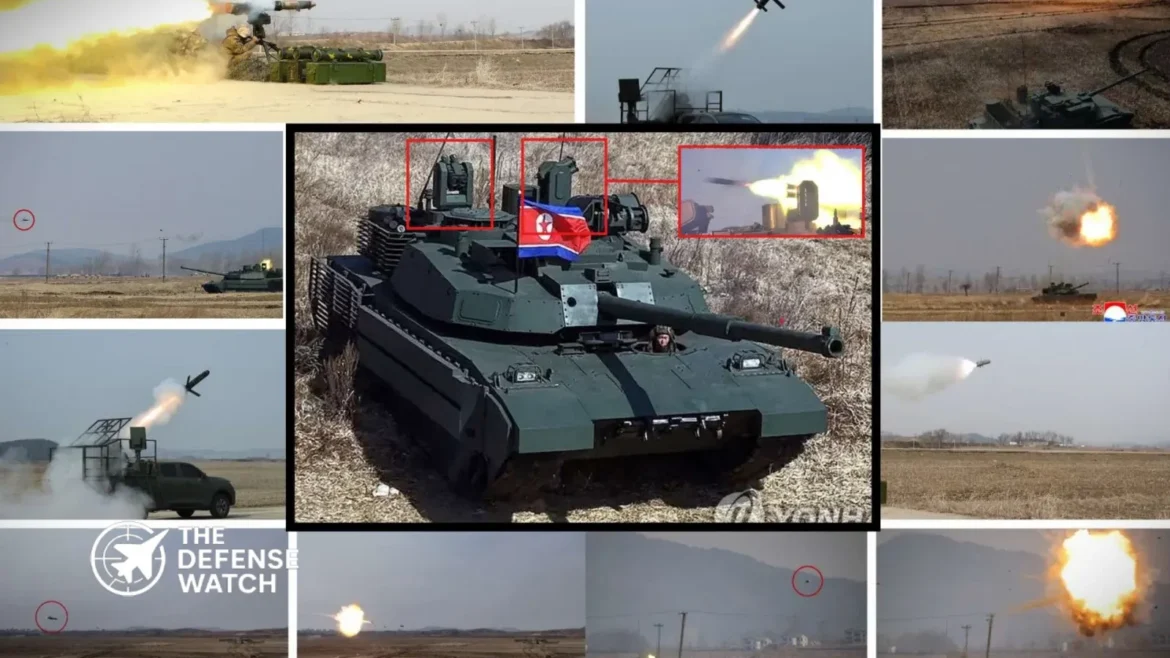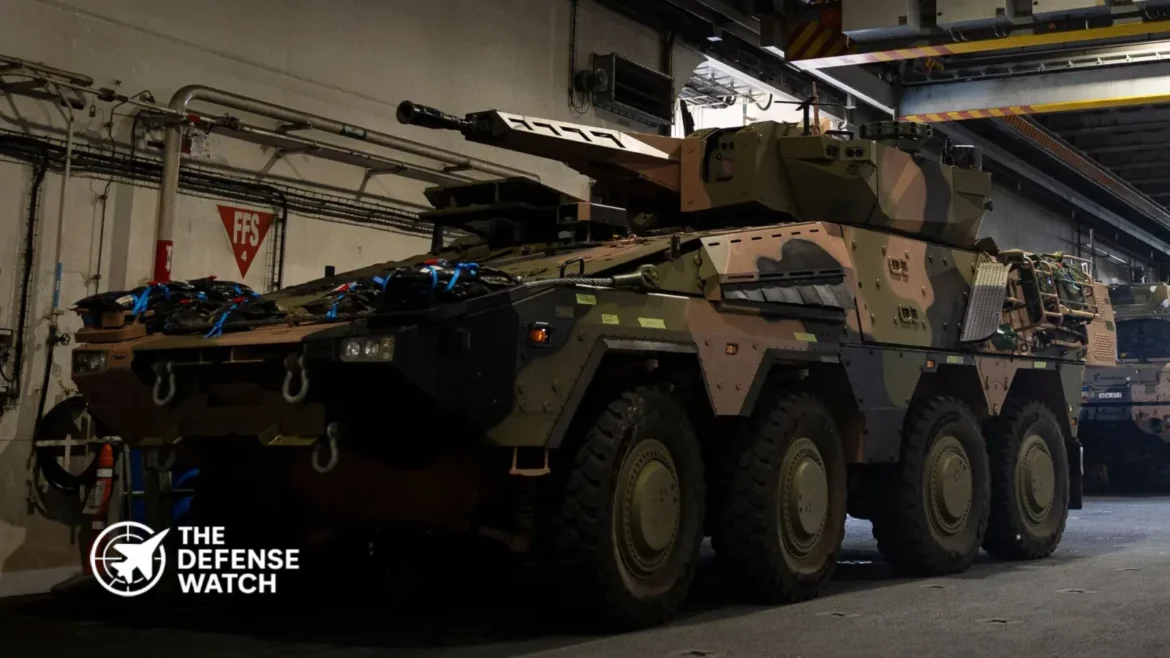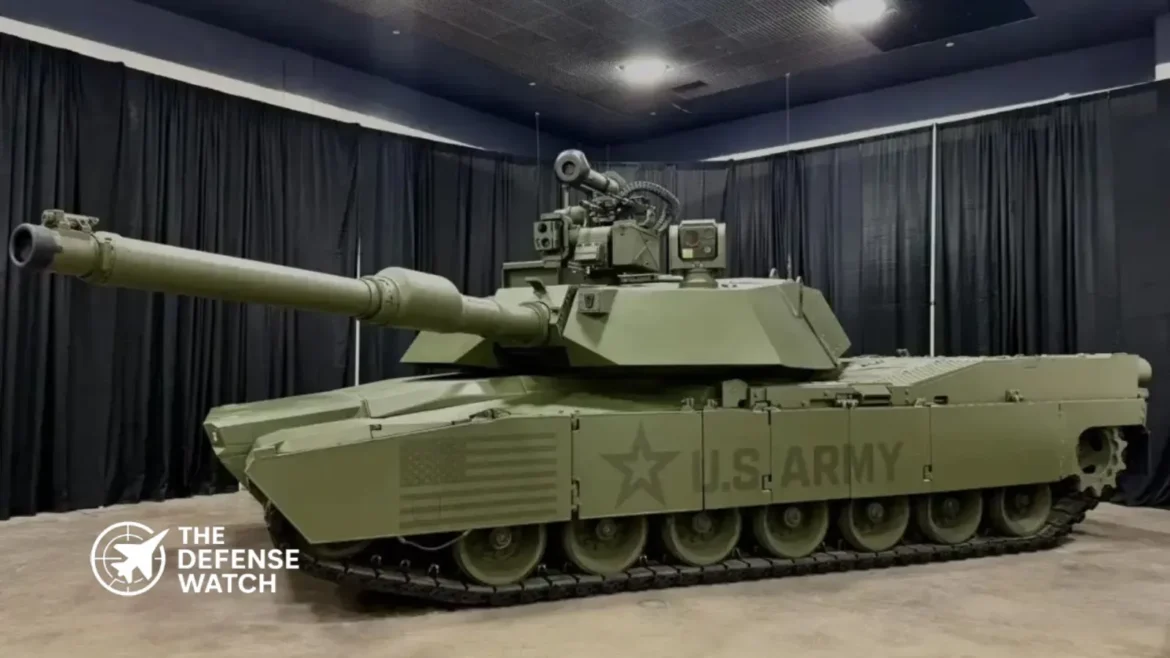
- U.S. Army plans to begin M1E3 Abrams prototype operational testing in summer 2026.
- The M1E3 focuses on reduced weight, improved survivability, and enhanced digital architecture.
- Program reflects broader U.S. shift toward more agile and deployable armored forces.
- Testing phase will validate performance before future production and fielding decisions.
- M1E3 represents a major evolution of the Abrams platform rather than a clean-sheet replacement.
M1E3 Abrams Operational Testing Marks Next Phase Of U.S. Army Modernization
The M1E3 Abrams operational testing is set to begin in summer 2026, as the United States Army advances development of its next-generation main battle tank variant. The effort signals a shift toward a lighter, more survivable, and digitally integrated armored platform designed for future high-intensity conflict.
The Big Picture
U.S. armored modernization has entered a critical transition phase. Rather than pursuing an entirely new tank, the Army is evolving the proven M1 Abrams platform into a more adaptable system that can operate effectively in contested environments.
This approach reflects lessons from recent conflicts, including the importance of mobility, logistics sustainability, and survivability against advanced anti-tank threats such as loitering munitions and top-attack weapons.
The M1E3 program aligns with broader Pentagon priorities focused on force redesign, rapid deployment, and integration of advanced technologies across multi-domain operations.
What’s Happening
The U.S. Army will initiate operational testing of M1E3 Abrams prototypes in summer 2026. These tests aim to evaluate the platform under realistic battlefield conditions.
The testing phase will focus on validating key performance improvements, including survivability enhancements, weight reduction, and updated onboard systems.
The program follows a redesign strategy that moves away from incremental upgrades seen in earlier variants like the M1A2 SEP v3 and v4. Instead, the M1E3 introduces structural and architectural changes intended to improve long-term adaptability.
Operational testing will likely involve Army units in controlled environments to assess combat effectiveness, reliability, and maintainability.
What’s Happening
The U.S. Army will initiate operational testing of M1E3 Abrams prototypes in summer 2026. These tests aim to evaluate the platform under realistic battlefield conditions.
The testing phase will focus on validating key performance improvements, including survivability enhancements, weight reduction, and updated onboard systems.
The program follows a redesign strategy that moves away from incremental upgrades seen in earlier variants like the M1A2 SEP v3 and v4. Instead, the M1E3 introduces structural and architectural changes intended to improve long-term adaptability.
Operational testing will likely involve Army units in controlled environments to assess combat effectiveness, reliability, and maintainability.
Strategic Implications
The introduction of the M1E3 will influence U.S. military readiness by improving the deployability and sustainability of armored forces.
Lighter and more efficient tanks reduce logistical strain, particularly in regions like the Indo-Pacific, where infrastructure constraints complicate heavy equipment movement. This could enhance the Army’s ability to project power in geographically dispersed theaters.
Improved survivability features also strengthen deterrence. A tank that can better withstand modern anti-armor threats increases battlefield resilience and reduces vulnerability in high-intensity conflict scenarios.
The program reinforces the U.S. commitment to maintaining technological superiority in armored warfare, even as competitors invest heavily in their own next-generation platforms.
Competitor View
China and Russia are likely to interpret the M1E3 development as part of a broader U.S. effort to modernize legacy systems rather than replace them outright.
China continues to advance its Type 99 and next-generation armored concepts, focusing on digital integration and active protection systems. Russia, despite industrial constraints, promotes platforms like the T-14 Armata as a leap in armored design.
The U.S. approach differs by emphasizing evolutionary upgrades combined with modularity. This strategy may appear less revolutionary but offers faster fielding timelines and lower technical risk.
From a competitive standpoint, the M1E3 signals that the U.S. prioritizes adaptability and operational readiness over experimental designs that may face delays.
What To Watch Next
The summer 2026 operational testing phase will serve as a key milestone for the M1E3 program.
Observers should track:
- Performance results from field evaluations
- Decisions on production timelines
- Integration of new protection and sensor systems
- Budget allocations in upcoming defense cycles
The Army’s feedback from operational units will likely shape final design adjustments before any large-scale procurement.
Capability Gap
The M1E3 addresses several known limitations in current Abrams variants.
Weight remains a central issue. Existing models exceed 70 tons, creating logistical challenges and limiting deployment flexibility. The M1E3 aims to reduce this burden without sacrificing protection.
Another gap involves survivability against emerging threats. Modern battlefields feature drones, precision-guided munitions, and advanced anti-tank systems. The M1E3 incorporates design changes intended to counter these threats more effectively.
However, trade-offs are inevitable. Reducing weight while maintaining armor protection requires advanced materials and design compromises. The effectiveness of these solutions will depend on real-world testing outcomes.
The Bottom Line
The M1E3 Abrams operational testing marks a decisive step in reshaping U.S. armored forces for future high-intensity warfare.
- Rolls Royce Power Systems and ZF will jointly develop a hybrid propulsion system for the MGCS main battle tank program.
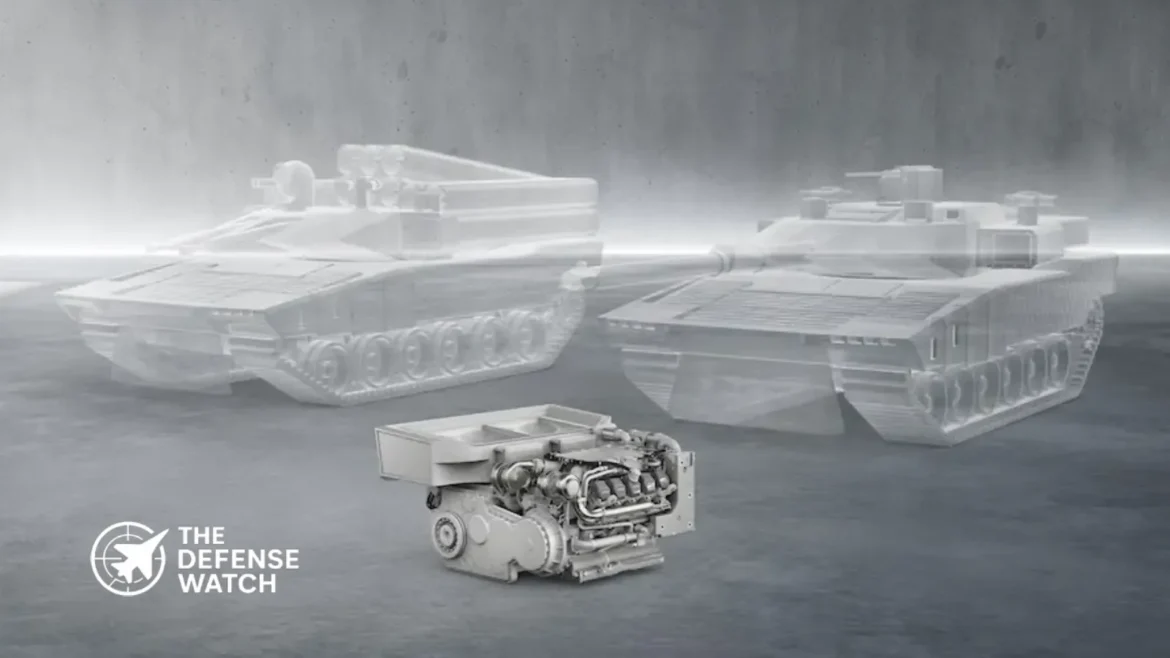
- The powerpack is expected to deliver more than 1,400 kW of system output using a new mtu 10V 199 engine and electrified transmission.
- MGCS is the joint German and French program intended to replace Leopard 2 and Leclerc tanks.
- Early propulsion prototypes could be tested before the end of the 2020s, with potential production beginning in the early 2030s.
- The hybrid system aims to improve mobility, energy efficiency, and electrical power generation for future digital battlefields.
MGCS Hybrid Propulsion System Marks Major Step In Europe Next Generation Tank
The MGCS hybrid propulsion system is set to power Europe next generation main battle tank under a new development effort involving Rolls Royce Power Systems and ZF. The German Federal Office of Bundeswehr Equipment, Information Technology and In Service Support has tasked Rolls Royce with developing the drive system for the Main Ground Combat System, while ZF will provide an electrified steering transmission.
The propulsion package will form a core mobility component for the MGCS platform, a Franco German defense program intended to replace existing Leopard 2 and Leclerc tanks in the coming decades.
The Big Picture
European governments are accelerating defense modernization programs as NATO members reassess land warfare capabilities after Russia invasion of Ukraine and broader geopolitical tensions across Europe.
Heavy armored platforms remain central to NATO ground combat strategy. However, modern tanks now require far greater electrical power than legacy systems to operate advanced sensors, active protection systems, networked communications, and digital battlefield management tools.
The MGCS program represents Europe effort to design a next generation combat system rather than simply a new tank. The platform will integrate manned and unmanned systems, advanced networking, improved protection technologies, and enhanced battlefield awareness.
A hybrid propulsion architecture supports this shift by providing both mechanical power for mobility and electrical power for increasingly complex onboard systems.
What Is Happening
Rolls Royce Power Systems will act as the prime contractor for the MGCS propulsion system, delivering a hybrid powerpack centered around a newly developed mtu 10V 199 engine.
The engine is expected to produce roughly 1,100 kW of mechanical output and contribute to a total system output exceeding 1,400 kW when combined with the hybrid architecture.
ZF will supply an electrified powershift steering transmission known as the eLSG 5000. The transmission incorporates by wire drive, braking, and steering functions along with energy recovery capabilities designed to improve efficiency and maneuverability.
The hybrid configuration will operate in a parallel architecture. In this setup, the conventional engine and electric components work together to deliver power and improve vehicle responsiveness.
Engineers designed the system to operate under extreme load conditions typical of armored warfare while maintaining compatibility with multiple fuel types, a critical requirement for military logistics.
Initial prototypes of the propulsion system could begin testing before the end of the decade, while large scale production may start in the early 2030s if the broader MGCS platform development progresses on schedule.
Why It Matters
Hybrid propulsion systems are emerging as a major technological shift in armored vehicle design.
Traditional tank engines primarily deliver mechanical power to tracks and onboard systems. Future vehicles, however, must also support high energy demands from sensors, electronic warfare equipment, autonomous functions, and active protection systems.
Hybrid systems provide several operational advantages.
They can increase overall efficiency, reduce fuel consumption, and generate additional onboard electrical power. Hybrid configurations can also enable silent movement or silent watch modes where the vehicle operates using battery power without running the main engine.
These capabilities improve survivability on the modern battlefield by reducing acoustic and thermal signatures while allowing vehicles to power sensors and communication equipment for extended periods.
Strategic Implications
The MGCS hybrid propulsion system reflects a broader shift toward electrified military mobility.
European armed forces increasingly prioritize platforms that can support network centric warfare, integrated sensor systems, and advanced defensive technologies. These systems require significantly higher power output than previous armored vehicles.
A hybrid powerpack also allows designers to integrate additional electronic systems in the future without redesigning the vehicle architecture.
For NATO forces, this flexibility supports long term modernization strategies. Tanks developed today must remain operational for decades, meaning they must accommodate future technologies not yet fully defined.
The propulsion system therefore becomes a foundational component for the next generation of European armored warfare.
Competitor View
Russia and China are also exploring advanced propulsion concepts for armored vehicles, though most operational systems still rely on traditional diesel engines.
Chinese armored modernization programs increasingly emphasize hybrid electric technologies for future ground combat systems, particularly for unmanned or optionally crewed platforms.
Russia has experimented with advanced propulsion concepts in programs such as the Armata family, though large scale deployment remains limited.
European development of a hybrid propulsion system for heavy tracked vehicles signals growing technological competition in land warfare mobility.
Hybrid architecture could eventually become a standard feature in next generation armored fleets worldwide.
What To Watch Next
The MGCS program still faces several development milestones.
Engineers must complete testing of the hybrid powerpack and validate its performance under military operating conditions. Integration with the broader MGCS vehicle architecture will follow.
European defense ministries will also need to finalize requirements for the complete system, which includes the vehicle platform, weapon systems, sensors, and command networks.
If development proceeds as planned, prototype vehicles could appear in the late 2020s with production vehicles entering service in the early 2030s.
Capability Gap
Modern armored vehicles face growing electrical power requirements that traditional propulsion systems struggle to meet.
Advanced sensors, radar systems, electronic warfare suites, and active protection technologies all demand large amounts of electrical energy.
Hybrid propulsion addresses this capability gap by combining mechanical power generation with onboard electrical generation and energy recovery.
However, hybrid systems introduce additional complexity. They require robust thermal management, advanced power electronics, and reliable battery technologies capable of operating under extreme battlefield conditions.
Ensuring durability and maintainability in combat environments remains a key engineering challenge.
The Bottom Line
The MGCS hybrid propulsion system represents a critical technological step toward electrified armored warfare and the next generation of European main battle tanks.
- ► Israel MOD signed an agreement with Ashot Ashkelon worth approximately $42 million.
- ► The deal covers rehabilitation and supply of Merkava tank transmissions.
- ► Work is part of a broader framework for 1,500 and 1,200 horsepower transmissions for Merkava and Namer platforms.
- ► Cumulative orders under the project now total about $82 million.
- ► The contract supports Israel’s effort to expand its domestic defense production base.
Israel MOD Signs $42 Million Merkava Tank Transmission Deal
The Israel MOD Merkava transmission deal marks another step in strengthening the operational readiness of Israel’s main battle tank fleet while reinforcing domestic defense manufacturing capacity.
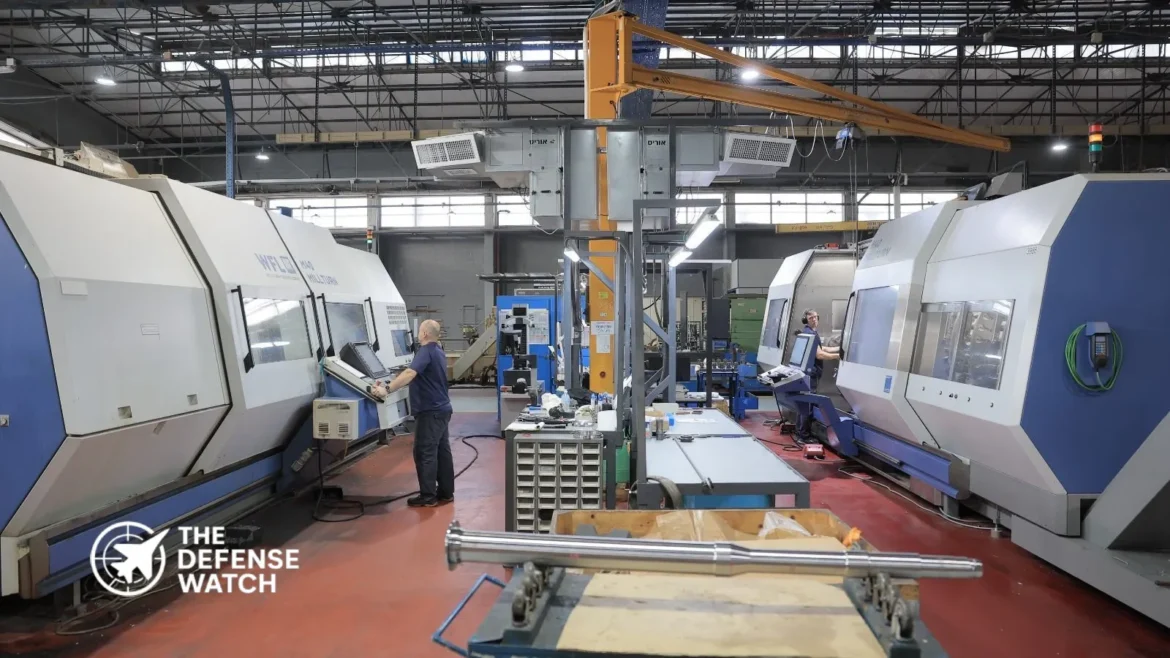
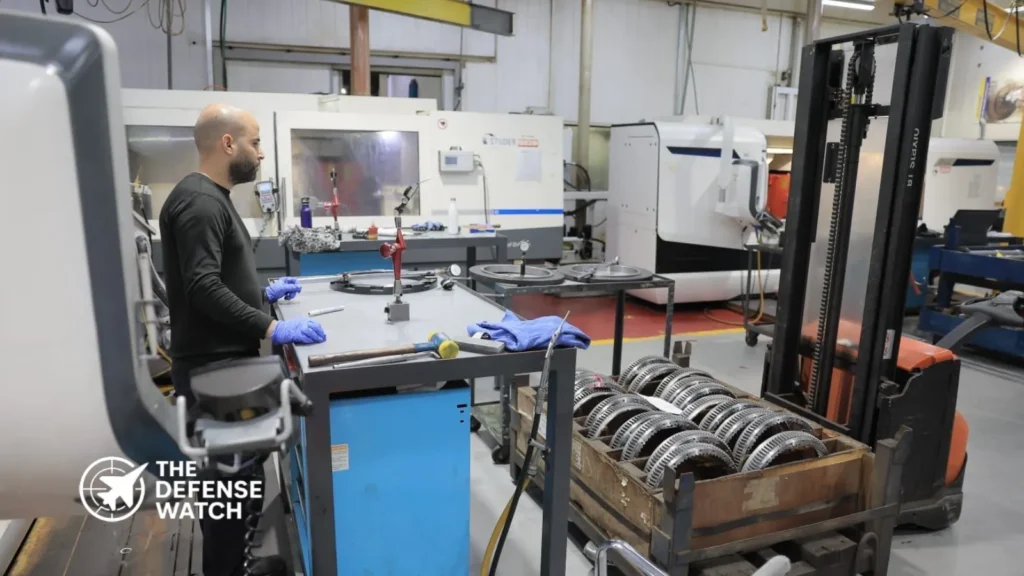
The Defense Procurement Directorate within the Israel Ministry of Defense announced the signing of a contract valued at approximately $42 million with Ashot Ashkelon Industries Ltd. The agreement covers the rehabilitation and supply of transmissions for Merkava tanks operated by the Israel Defense Forces.
According to the ministry, the contract is part of a broader strategy led by Defense Minister Israel Katz and IMOD Director General Maj. Gen. Amir Baram, aimed at expanding Israel’s defense production base and supporting ongoing force buildup initiatives.
Scope Of The Merkava Tank Transmission Deal
Under the terms of the agreement, Ashot Ashkelon will rehabilitate transmissions used in the Merkava main battle tank. The total contract value exceeds NIS 130 million, equivalent to roughly $42 million at current exchange rates.
The project falls within a larger framework covering both 1,500 horsepower and 1,200 horsepower transmissions for the Merkava tank and the Namer armored personnel carrier. To date, cumulative orders under this broader program have reached approximately $82 million, or around NIS 253 million.

Ashot Ashkelon specializes in propulsion systems, transmissions, and other complex mechanical components for armored vehicles. Its portfolio includes key subsystems for the Merkava tank family and the Namer APC, both central to the IDF’s armored maneuver formations.
Why Transmission Rehabilitation Matters
The Israel MOD Merkava transmission deal underscores the often overlooked but critical role of sustainment in armored warfare.
Modern main battle tanks are complex systems that rely heavily on reliable propulsion and drivetrain components. The Merkava, designed and produced domestically in Israel, is built to operate in demanding terrain and high tempo combat scenarios. Transmission performance directly affects mobility, acceleration, and battlefield survivability.
Rehabilitating existing transmissions rather than procuring entirely new systems can reduce lifecycle costs and shorten turnaround times. For a military operating under sustained operational demands, maintaining fleet readiness is as important as acquiring new platforms.
Industry data and military logistics studies consistently show that maintenance, repair, and overhaul activities account for a significant share of total ownership costs for armored fleets. By investing in domestic rehabilitation capacity, Israel reduces dependency on external suppliers and strengthens supply chain resilience.
Broader Context: Industrial Expansion And Force Buildup
The Israel MOD Merkava transmission deal comes amid a series of contracts aimed at expanding the country’s defense industrial base.
Israel’s armored forces remain central to its ground maneuver doctrine. The Merkava tank, developed after lessons from earlier conflicts, emphasizes crew protection, survivability, and integration with advanced sensors and active protection systems. Maintaining this fleet in high readiness is a strategic priority.
The Namer APC, based on the Merkava chassis, forms the backbone of Israel’s heavy infantry brigades. Shared propulsion and transmission components between the Merkava and Namer platforms create economies of scale in sustainment and logistics.
From a policy perspective, the contract aligns with a broader trend among advanced militaries to localize critical defense production. Recent global supply chain disruptions and heightened regional tensions have reinforced the importance of domestic manufacturing depth.
According to official statements from the Israel Ministry of Defense, the new agreement is designed not only to support immediate operational needs but also to strengthen long term industrial capacity.
Implications For Regional Defense Posture
While the contract focuses on maintenance rather than new tank production, it carries strategic weight.
Sustainment investments signal intent to preserve and potentially expand armored capabilities. In the Middle East security environment, ground maneuver forces remain essential for deterrence and rapid response operations.
The Merkava fleet has undergone successive upgrades over the years, including improvements in fire control systems, protection suites, and digital integration. Ensuring that propulsion systems remain reliable is foundational to enabling these advanced capabilities.
For U.S. observers and defense planners, the Israel MOD Merkava transmission deal highlights a shared emphasis on readiness and industrial resilience. The U.S. Army, for example, has similarly prioritized maintenance and modernization efforts for the M1 Abrams fleet rather than pursuing entirely new tank designs in the near term.
Industrial Role Of Ashot Ashkelon
Ashot Ashkelon has long been a key supplier within Israel’s defense ecosystem. The company produces high precision gear systems, propulsion components, and mechanical assemblies for both domestic and export markets.
Its involvement in the Merkava and Namer programs reflects its position as a core subcontractor in armored vehicle production and sustainment. The new contract further consolidates that role.
By channeling funds into domestic companies, the Israel Ministry of Defense supports high skill manufacturing jobs and preserves specialized engineering expertise. In a sector where technical know how can erode without continuous production activity, steady contract flow is critical.
Looking Ahead
The Israel MOD Merkava transmission deal, valued at $42 million, may not represent a new platform acquisition. However, it reinforces a key reality of modern defense planning: readiness depends as much on sustainment as on procurement.
With cumulative orders under the broader transmission framework now reaching $82 million, Israel appears committed to ensuring long term mobility and reliability across its armored fleet.
As regional security dynamics continue to evolve, maintaining operational availability of heavy armored units remains central to Israel’s military doctrine. Contracts such as this one reflect a deliberate approach to force buildup, grounded in industrial capacity and lifecycle management.
- ► Bangladesh Army has received a new batch of Chinese VT-5 light tanks.
- ► The total VT-5 fleet in Bangladesh now stands at 44 vehicles.
- ► The tank is armed with a stabilized 105 mm main gun and modern fire control systems.
- ► Modular armor and a low-weight design support operations in diverse terrain.
- ► The acquisition is part of Bangladesh’s broader armored force modernization.
VT-5 Light Tank Delivery Boosts Bangladesh Army Armored Fleet
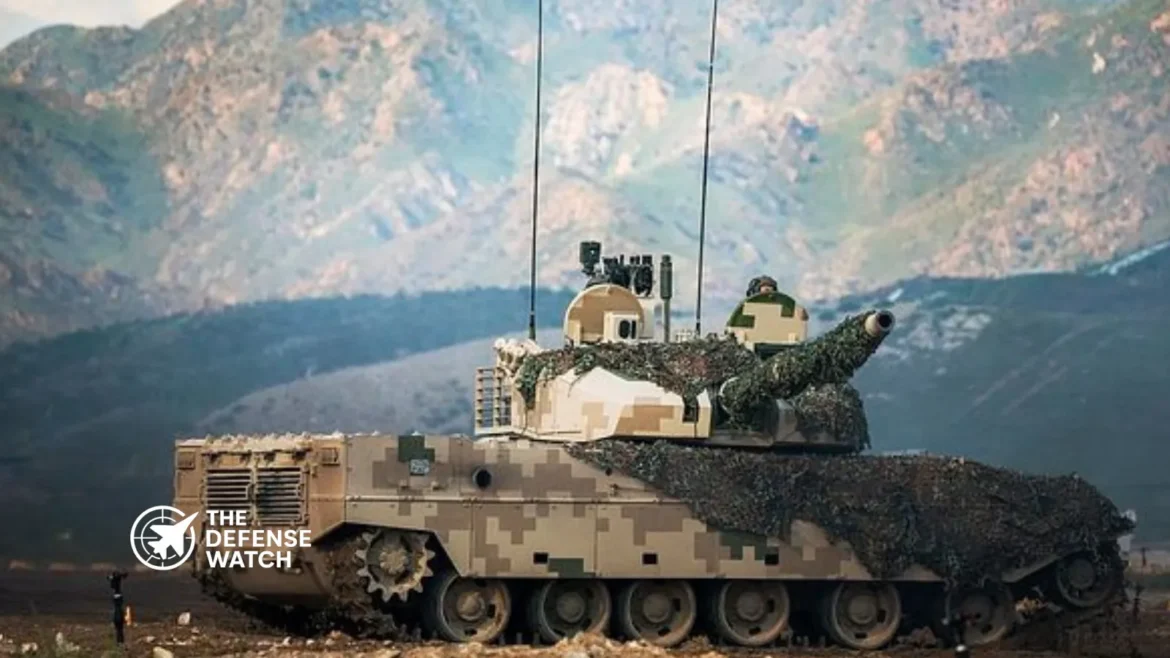
The VT-5 light tank fleet in Bangladesh has grown to 44 vehicles following the arrival of a new batch from China, according to official Bangladeshi military sources and regional defense reporting.
The delivery marks another step in the Bangladesh Army’s ongoing armored modernization effort. The Chinese-built VT-5 is designed for rapid deployment and operations in terrain where heavier main battle tanks may face mobility limits.
Bangladesh first inducted the VT-5, also known as the Type 15 export variant, from China’s state-owned defense manufacturer Norinco as part of a broader push to upgrade mechanized capabilities.
Designed For Mobility And Firepower
The VT-5 light tank combines firepower typically associated with heavier platforms with a reduced combat weight. The vehicle is armed with a fully stabilized 105 mm rifled main gun capable of firing armor piercing and high explosive rounds. It is also equipped with a coaxial machine gun and a roof mounted machine gun for close range defense.
Its digital fire control system includes thermal imaging, laser range finding, and stabilized sights, allowing day and night engagement capability. These features place the VT-5 light tank within the modern class of network capable armored systems designed for high tempo operations.
The tank’s modular armor package allows operators to adjust protection levels depending on mission requirements. This approach supports both strategic mobility and tactical flexibility.
Operational Context In Bangladesh
For the Bangladesh Army, the VT-5 light tank fills a specific operational niche. Bangladesh’s terrain includes riverine areas, soft ground, and infrastructure constraints that can limit the movement of heavier main battle tanks.
A lighter armored platform offers advantages in mobility and rapid maneuver. The expansion to 44 vehicles suggests the platform is becoming an established component of Bangladesh’s armored brigades.
Bangladesh has steadily modernized its ground forces over the past decade, incorporating new armored vehicles, artillery systems, and air defense assets. The VT-5 light tank program aligns with this broader procurement strategy.
See also: Bangladesh’s ongoing mechanization and force restructuring efforts under its long term defense development plans.
China Expands Defense Footprint In South Asia
The delivery also reflects China’s continued role as a key defense supplier to Bangladesh. Beijing has supplied naval vessels, aircraft, air defense systems, and armored vehicles to Dhaka over the years.
The VT-5 light tank is one of China’s primary light tank export offerings. It is derived from the Type 15 light tank in service with the People’s Liberation Army, adapted for export customers.
Through companies such as Norinco, China has positioned itself as a competitive supplier in emerging defense markets, offering integrated packages that include training and sustainment support.
For Bangladesh, the procurement underscores its effort to diversify and modernize its equipment inventory while maintaining operational readiness.
Technical Overview Of The VT-5 Light Tank
Open source defense assessments indicate the VT-5 light tank typically weighs between 30 and 36 tons, depending on armor configuration. It is powered by a diesel engine designed to provide a high power to weight ratio.
Key features include:
- 105 mm stabilized main gun
- Automatic transmission
- Advanced fire control with thermal sights
- Modular composite armor
- Potential integration of active protection systems
This configuration is intended to deliver main battle tank level lethality in a lighter, more deployable form factor.
Strategic Implications
While the delivery is primarily a force modernization step, it also reflects broader trends in regional defense procurement. South Asian militaries continue to invest in mobile, networked, and flexible armored platforms suited for diverse terrain.
The VT-5 light tank program demonstrates how lighter armored vehicles are gaining traction as complementary assets alongside heavier main battle tanks.
For Bangladesh, the expanded fleet strengthens armored maneuver capability and supports combined arms operations.
UK Rules Out Buying Light Tank Capability As Army Focuses On Heavy Armor
The UK rules out buying light tank capability, confirming that the British Army has no plans to procure a dedicated light tank platform as part of its current modernization strategy.
According to reporting by the UK Defence Journal, the British government stated that there are no active programs or funded requirements to acquire a light tank. The clarification came in response to parliamentary questions about whether the Army would pursue a lighter armored vehicle to complement or replace elements of its existing heavy armor fleet.
Instead, London is concentrating on upgrading and restructuring its core armored forces, particularly through the Challenger 3 main battle tank program.
- ► The UK has confirmed it will not pursue a dedicated light tank capability for the British Army.
- ► The decision was outlined in a formal government response to parliamentary questions.
- ► The Army’s armored modernization strategy centers on upgrading 148 Challenger 2 tanks to the Challenger 3 standard.
- ► Challenger 3 will feature a new turret, 120 mm smoothbore gun, enhanced protection, and digital systems aligned with NATO standards.
- ► The UK is prioritizing heavy armor modernization over introducing a new light tracked gun platform.
- ► Budget pressures and broader defense priorities influenced the decision not to launch a light tank procurement program.
- ► The move aligns with the UK’s focus on high intensity NATO deterrence missions in Europe.
No Dedicated Light Tank Requirement
The decision effectively ends speculation that the British Army might follow other NATO members in fielding a lighter tracked gun platform designed for rapid deployment or expeditionary operations.
In a formal response, the government indicated that there is no current requirement for a light tank capability within the Army’s force structure. Officials emphasized that modernization efforts are centered on enhancing lethality, survivability, and integration across existing armored units rather than introducing a new vehicle class.
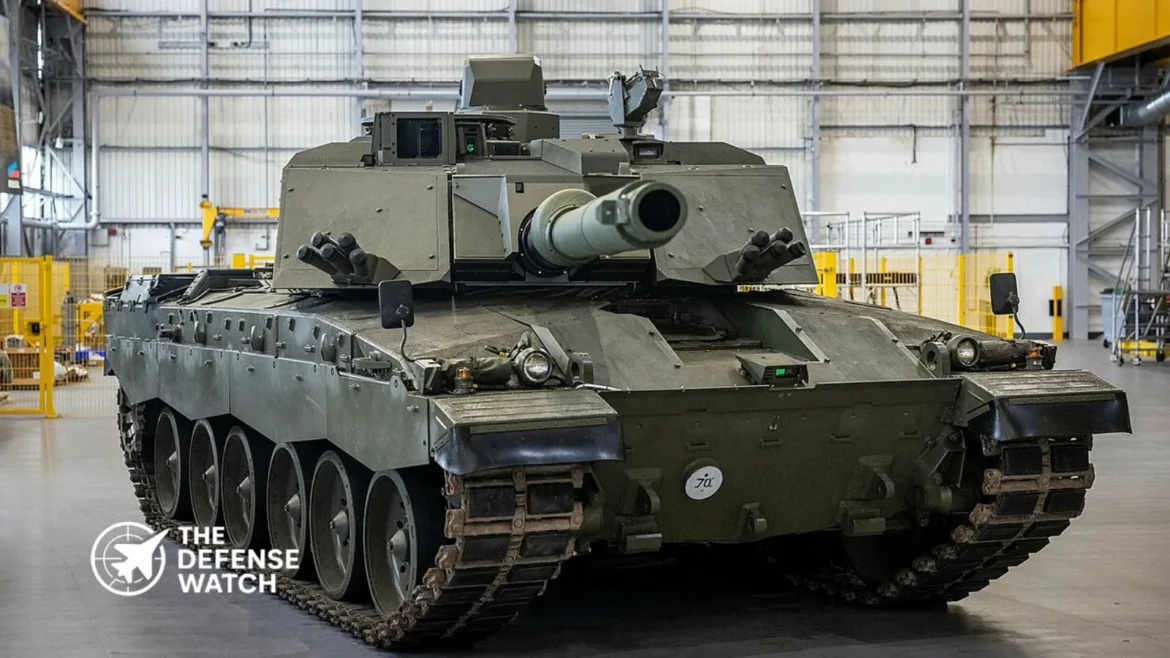
The British Army currently operates the Challenger 2 main battle tank, which is being upgraded to the Challenger 3 standard under a contract awarded to Rheinmetall BAE Systems Land. The Challenger 3 program will introduce a new turret, a 120 mm smoothbore gun, improved protection, and digital systems aligned with NATO standards.
Focus On Challenger 3 And Armored Modernization
The Challenger 3 upgrade remains the centerpiece of the UK’s heavy armor strategy. The Ministry of Defence has committed to modernizing 148 Challenger 2 tanks to the new standard, ensuring that the Army retains a credible armored warfare capability well into the 2030s and beyond.
This approach signals a continued emphasis on heavy tracked formations rather than lighter, more deployable armored gun systems. While some allies have invested in platforms often described as light tanks or mobile protected firepower vehicles, the UK appears to view its future armored needs through the lens of high-intensity, peer-level conflict.
British defense policy documents in recent years have increasingly focused on deterrence in Europe, particularly in light of Russia’s invasion of Ukraine. Heavy armor, including main battle tanks, has re-emerged as a central element of land warfare in such scenarios.
Strategic Context And NATO Considerations
Several NATO members are reassessing their armored fleets based on lessons from Ukraine, where both heavy tanks and lighter armored vehicles have played significant roles. The British decision not to pursue a light tank capability suggests confidence that its existing structure, supported by allied capabilities, is sufficient.
The Army’s future force design, outlined in previous defense reviews, emphasizes brigade-level combat teams built around armored and mechanized infantry units. Rather than adding a new light tank fleet, the UK is investing in upgraded tanks, infantry fighting vehicles, and supporting enablers such as long-range fires and air defense.
Defense analysts note that introducing a light tank would require significant funding, logistics support, training pipelines, and industrial arrangements. In a constrained budget environment, such a move could have required trade-offs elsewhere in the force.
Budget Pressures And Procurement Priorities
The UK’s defense budget has faced sustained pressure from inflation, equipment cost growth, and competing priorities across air, maritime, cyber, and space domains. In this context, the decision to avoid launching a new light tank program may reflect broader fiscal discipline.
Recent British defense initiatives have prioritized nuclear deterrence, combat air development under the Global Combat Air Programme, naval recapitalization, and armored modernization centered on Challenger 3.
By ruling out buying light tank capability, the government narrows its land procurement focus and reduces the risk of overextension across multiple armored programs.
Implications For Industry
The absence of a light tank requirement also limits near-term opportunities for domestic or foreign manufacturers seeking to enter the UK tracked vehicle market with a lighter platform.
Rheinmetall BAE Systems Land remains the primary industrial partner for heavy armor modernization through Challenger 3. Without a light tank competition, there will be no parallel procurement process that could introduce additional tracked gun systems into British service.
From an industrial perspective, this consolidates resources around existing upgrade programs rather than opening a new acquisition pathway.
Operational Trade-Offs
The debate over light tanks typically centers on deployability versus protection. Lighter platforms can be easier to transport by air or sea and may be better suited to certain expeditionary missions. However, they generally offer less armor protection and survivability compared to main battle tanks.
By choosing not to pursue such a capability, the UK signals that it values heavy armor’s protection and firepower advantages for its anticipated operating environments.
This does not eliminate the Army’s ability to deploy lighter forces. The British Army operates a range of wheeled and tracked armored vehicles for reconnaissance, infantry support, and rapid response. But none are designed as direct light tank equivalents with a large-caliber main gun in a lighter chassis.
Alignment With Broader Defense Strategy
The decision that the UK rules out buying light tank capability aligns with a broader trend of streamlining force structures around defined priorities.
British defense policy since the Integrated Review and its subsequent refresh has emphasized readiness, resilience, and interoperability with NATO allies. Heavy armored units equipped with Challenger 3 are expected to contribute to deterrence and collective defense missions in Europe.
By maintaining a smaller but more modernized tank fleet rather than diversifying into additional vehicle classes, the Army appears focused on delivering depth and quality within constrained resources.
Conclusion
The confirmation that the UK rules out buying light tank capability marks a clear policy choice in the British Army’s modernization path. Rather than introducing a new category of armored vehicle, London is doubling down on upgrading its existing heavy armor and refining its force structure for high-intensity operations.
As European security dynamics continue to evolve, the effectiveness of this approach will depend on how well upgraded Challenger 3 units integrate with mechanized infantry, long-range fires, and allied forces across NATO.
For now, the UK’s position is unambiguous: no light tank program is planned, and heavy armor remains the core of its tracked combat capability.
Romania Otokar Armored Vehicle Dispute Escalates
The Romania Otokar armored vehicle dispute has intensified after Romanian authorities demanded an additional 230.2 million Lei from Turkish defense contractor Otokar, citing delays in the project’s local production schedule.
The new payment request comes weeks after Romania imposed a separate penalty of 191.8 million Lei on January 16, increasing financial pressure on the company and raising questions about the future of the armored vehicle program.
According to statements released by Otokar and Romanian officials, negotiations remain ongoing as both sides seek a path forward for the contract.
Background Of The Contract
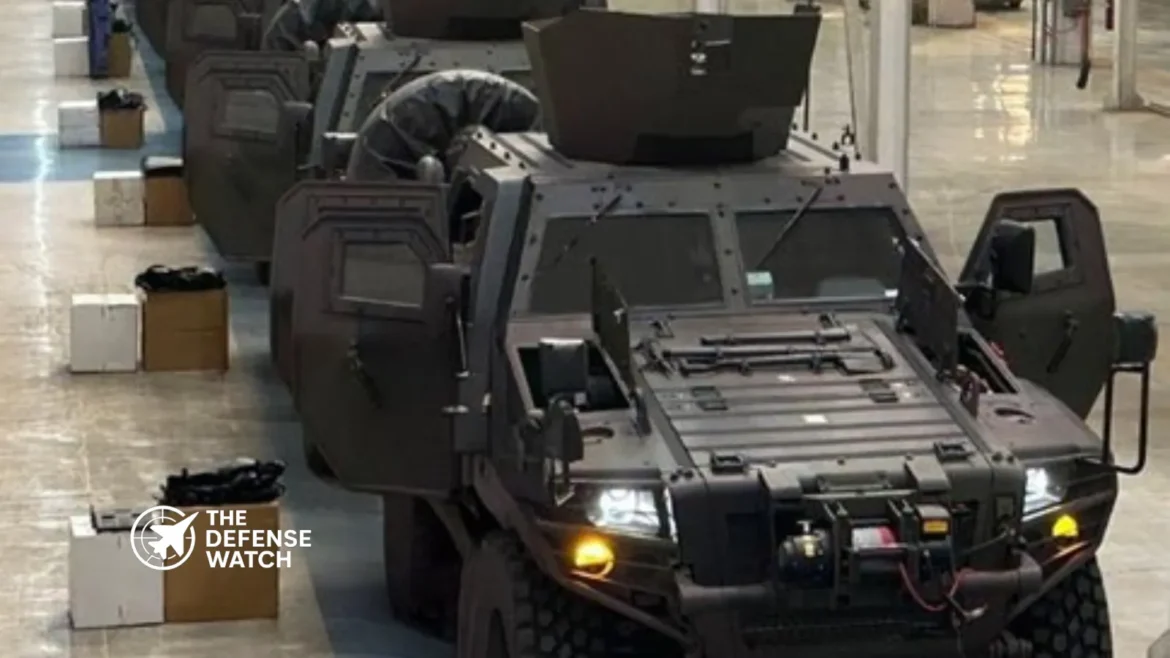
Otokar, a subsidiary of Turkey’s Koç Group, secured a contract with Romania to supply armored vehicles and establish local production capabilities. The agreement included provisions for domestic assembly and technology transfer, a key priority for Romania as it modernizes its land forces.
Romania, a NATO member on the alliance’s eastern flank, has accelerated defense procurement since 2022. The country has expanded acquisitions across air defense, artillery, and armored platforms in response to shifting regional security dynamics.
Under the terms of the armored vehicle agreement, Otokar committed to meeting defined production milestones within Romania. Authorities in Bucharest now argue those timelines were not met, triggering contractual penalty clauses.
Second Financial Claim Filed
The latest demand of 230.2 million Lei follows a previous penalty of 191.8 million Lei imposed earlier this year. Combined, the financial claims exceed 420 million Lei.
Romanian officials cited delays in the local production schedule as the basis for both penalties. The Ministry of National Defense has not publicly detailed the specific milestones in question but maintains that contractual obligations must be enforced.
Otokar confirmed it has made the requested payment while formally objecting to the decision. The company is preparing to file a lawsuit seeking annulment of the penalty, arguing that the claims lack sufficient contractual justification.
Otokar Moves To Stabilize Operations
Between the two penalty decisions, Otokar acquired its local Romanian partner, consolidating control over in-country operations. The move was seen as an effort to streamline management, accelerate production adjustments, and address compliance issues linked to the project.
Industry analysts note that acquiring a local partner can reduce coordination friction and allow faster decision making. However, such steps do not automatically resolve contractual disputes tied to prior timelines.
Otokar has stated that it remains committed to the Romanian program and to fulfilling its contractual obligations.
Legal And Contractual Implications
The Romania Otokar armored vehicle case now appears headed toward legal review. By filing a lawsuit for annulment, Otokar seeks to challenge the validity of the imposed penalties under Romanian and international contract law.
Defense procurement contracts often include strict milestone clauses tied to payments, delivery schedules, and local industrial participation requirements. Delays can trigger automatic penalties, particularly in government-to-industry agreements involving domestic production commitments.
Romania has increasingly emphasized local industrial participation in major defense acquisitions, aligning with broader European Union objectives to strengthen domestic defense manufacturing capacity.
If the court sides with Romanian authorities, Otokar may face sustained financial exposure. If the penalties are overturned, it could reset negotiations and ease tension around the project’s continuation.
Strategic Context For Romania
Romania has steadily increased its defense spending in recent years, meeting NATO’s two percent GDP target and committing to further increases. The country has invested in platforms such as the Patriot air defense system and advanced artillery systems as part of a broader modernization push.
Armored vehicles remain central to Romania’s ground force transformation strategy, particularly for mechanized infantry and rapid reaction units.
Delays in local production can affect readiness timelines and industrial planning, especially when projects are structured around technology transfer and workforce development.
Impact On Otokar
For Otokar, Romania represents a significant European market opportunity. The company has pursued expansion across NATO countries and Eastern Europe, positioning its armored vehicle platforms for international export.
The Romania Otokar armored vehicle dispute introduces both financial and reputational risk. While contractual disagreements are not uncommon in large defense programs, repeated penalty actions may complicate future bidding processes in European markets.
Otokar has emphasized its intent to continue negotiations and resolve the matter within legal frameworks. The company has not indicated any suspension of production activities.
What Happens Next
Negotiations between Otokar and Romanian authorities are ongoing. Legal proceedings, if formally initiated, could take months to resolve depending on the scope of judicial review.
Key factors to monitor include:
- Court acceptance of Otokar’s annulment request
- Potential restructuring of production milestones
- Revised delivery timelines
- Any amendment to penalty clauses
Neither side has announced termination of the contract, suggesting both remain interested in preserving the program despite current tensions.
Broader Lessons For Defense Contracts
The Romania Otokar armored vehicle case highlights several recurring themes in modern defense procurement:
- Strict enforcement of milestone-based payments
- Growing emphasis on local industrial participation
- Legal recourse as a standard dispute resolution tool
- Increased scrutiny on delivery timelines in high-priority programs
As NATO members expand military capabilities, defense contractors face tighter oversight and reduced tolerance for schedule deviations.
Conclusion
The Romania Otokar armored vehicle dispute has entered a critical phase following a second financial claim of 230.2 million Lei. With total penalties now exceeding 420 million Lei, Otokar’s legal challenge will play a central role in determining the program’s future trajectory.
Both sides continue negotiations, signaling that while tensions are high, the contract remains active.
The outcome will likely influence how future European defense contracts balance local production commitments with delivery timelines.
US Army Fields M109A7 Self-Propelled Howitzers To 1st Armored Division
The US Army has fielded the M109A7 self-propelled howitzers to the 1st Armored Division, marking another step in its ongoing artillery modernization effort.
The upgraded howitzers have been delivered to units within the division as part of the service’s broader plan to enhance firepower, survivability, and digital integration across armored brigade combat teams.
The move aligns with the Army’s long-term modernization priorities, which emphasize long-range precision fires and improved operational readiness.
Modernizing The Paladin Fleet
The M109A7 self-propelled howitzers are the latest evolution of the Paladin artillery system. Developed under the Paladin Integrated Management program, the platform replaces the older M109A6 variant with upgraded chassis components, electrical systems, and survivability enhancements.
Manufactured by BAE Systems, the M109A7 incorporates a new hull based on Bradley Fighting Vehicle components, improving commonality and sustainment efficiency across armored formations.
The howitzer retains the 155mm cannon but integrates a modernized power generation system capable of supporting future digital and networked capabilities. This allows better compatibility with advanced targeting systems and command networks used by armored brigade combat teams.
Enhanced Survivability And Reliability
The M109A7 self-propelled howitzers feature improved armor protection and upgraded suspension. These enhancements aim to increase survivability in contested environments where counter-battery fire and drone surveillance are growing threats.
The new electric drive and power distribution architecture also support more reliable operations. By addressing obsolescence issues present in earlier models, the Army reduces maintenance burdens and improves readiness rates.
The Army has stated in previous modernization updates that recapitalizing legacy artillery systems is essential to maintaining overmatch against peer and near-peer adversaries. The M109A7 forms a key part of that effort.
Integration Within Armored Brigade Combat Teams
Fielding the M109A7 self-propelled howitzers to the 1st Armored Division ensures artillery units can operate seamlessly alongside upgraded armored vehicles and digital mission command systems.
The 1st Armored Division, based at Fort Bliss, plays a central role in testing and deploying modernized ground combat systems. Integrating the M109A7 strengthens the division’s ability to provide responsive, high-volume indirect fire support during large-scale combat operations.
The howitzer is paired with the M992A3 ammunition carrier vehicle, also upgraded under the Paladin Integrated Management effort, enabling sustained operations and faster resupply cycles.
Part Of A Broader Fires Strategy
The delivery of M109A7 self-propelled howitzers reflects the Army’s broader fires modernization roadmap. While the service is investing in extended-range cannon artillery and precision strike missiles, it continues to upgrade core tube artillery systems that form the backbone of brigade-level fires.
The M109A7 provides incremental but critical improvements in mobility, protection, and digital connectivity. These upgrades ensure compatibility with evolving battlefield requirements while maintaining proven 155mm firepower.
As the Army prepares for multidomain operations, modernized artillery units such as those equipped with the M109A7 will play a central role in shaping the battlefield, suppressing enemy defenses, and enabling maneuver forces.
The fielding to the 1st Armored Division underscores the service’s commitment to maintaining credible and ready armored formations capable of operating in high-intensity conflict scenarios.
Export Talks Gain Momentum For Challenger 3 Main Battle Tank
The Challenger 3 export talks are progressing, the United Kingdom Ministry of Defence has confirmed, though officials have offered few details on who might buy the upgraded main battle tank. Defence Minister Luke Pollard told the UK Parliament that the department has made “significant progress” exploring international interest in the British Army’s next-generation armored vehicle.
In a written response to a question from Conservative MP Ben Obese-Jecty, Pollard said the export efforts remain underway, but the MoD declined to disclose specific countries or buyers, saying that revealing details would risk “commercial sensitivities.”
What UK Officials Are Saying
Pollard’s written answer did not name any prospective customers. Officials reiterated that the department continues to probe export opportunities while developing Challenger 3 as the British Army’s new main battle tank.
Industry analysts note that the lack of named buyers could mean the export push is still in preliminary stages rather than formal negotiations. No export contracts have been publicly announced.
Challenger 3 Program In Context
The Challenger 3 programme is an extensive modernisation of the British Army’s Challenger 2 fleet. It replaces the older turret with a new design, upgrades electronics and fire control systems, and fields a NATO-standard 120 mm smoothbore cannon. The upgrade aims to extend the tank’s operational life and align it with modern battlefield requirements.
Rheinmetall BAE Systems Land, a UK-German joint venture, is building the vehicle under a contract worth more than £800 million. The plan is to upgrade 148 Challenger 2 tanks to the Challenger 3 standard, with initial operating capability expected in 2027 and full capability by 2030.
Export Challenge And Market Factors
The Challenger 3 export push comes as European and NATO countries renew focus on heavy armour capabilities. Main battle tanks remain central to deterrence and ground combat doctrine, but international demand is uneven and depends on interoperability with existing fleets, logistics support, and industrial sustainment. Industry sources have also highlighted the emerging European Main Armoured Tank of Europe (MARTE) programme as a long-term alternative platform that could affect export dynamics.
Some analysts say that potential buyers for Challenger 3 could include nations that already operate Challenger 2 tanks or are looking to modernise existing armour fleets. Official UK statements so far offer no confirmation.
Industry And Strategic Implications
For the UK defence industry, securing export contracts could help sustain domestic production lines and broader industrial capacity tied to armoured vehicles. Export deals can also spread development costs and strengthen long-term support networks for complex platforms like main battle tanks.
However, without named customers or formal agreements, it is too early to assess which markets might commit to Challenger 3 purchases. UK officials continue to emphasise exploration rather than concluded sales.
FNSS Showcases TEBER II TMT Weapon Turret On KAPLAN Light Tank
FNSS has showcased its TEBER II TMT weapon turret mounted on the hull of the KAPLAN light tank, underlining Turkiyes focus on modular armored vehicle design and scalable combat systems. The configuration brings together medium caliber firepower, modern sensors, and survivability systems in a compact, unmanned turret layout suited for light and medium armored platforms.
The display places the TEBER II TMT weapon turret as a key element in FNSS efforts to offer flexible solutions for armies seeking high lethality without the weight and crew burden of traditional manned turrets.
Turret Armament And Firepower
The TEBER II TMT weapon turret is armed with a 30mm automatic cannon as its primary weapon. This caliber is widely used by NATO and allied forces and offers a balance between armor penetration, effective range, and ammunition variety. The main gun is supported by a coaxial machine gun for engaging soft targets and suppressive fire.
In addition, the turret integrates two ready to fire anti tank guided weapons mounted externally. These provide the KAPLAN light tank with the ability to engage heavily armored targets at extended ranges, significantly expanding its mission set beyond reconnaissance and fire support.
According to FNSS, the turret is designed to support different missile options depending on customer requirements, reinforcing its modular and export oriented approach.
Sensor Suite And Situational Awareness
A notable feature of the TEBER II TMT weapon turret is its advanced sensor package. The turret incorporates day and thermal sights, laser rangefinding, and stabilized electro optical systems for both the gunner and commander. This setup enables hunter killer engagement capability, allowing targets to be detected, tracked, and engaged rapidly, even while the vehicle is on the move.
The sensor architecture supports all weather and day night operations, a requirement for modern armored warfare environments. FNSS has emphasized that the turret can be integrated with battlefield management systems, improving situational awareness and coordination with other units.
Active Protection And Survivability
The showcased configuration also includes an active protection system, highlighting FNSS attention to crew and platform survivability. While specific technical details were not disclosed, the integration of active protection reflects a broader trend in armored vehicle design as anti tank threats proliferate on modern battlefields.
In addition to active protection, the unmanned design of the TEBER II TMT weapon turret removes the crew from the turret structure, reducing risk and allowing for a lower overall vehicle profile. This approach aligns with evolving operational lessons from recent conflicts, where survivability against top attack and guided munitions has become critical.
KAPLAN Light Tank Platform
The KAPLAN light tank serves as the base platform for this turret integration. Designed for high mobility and deployability, the KAPLAN family targets roles such as rapid reaction forces, expeditionary units, and operations in terrain where heavier main battle tanks face limitations.
By mounting the TEBER II TMT weapon turret, FNSS positions the KAPLAN light tank as a multi role combat system capable of direct fire support, anti armor missions, and security operations. The combination of a light chassis with a well armed turret offers a cost effective alternative for forces seeking credible combat power without the logistics burden of heavier platforms.
Industry And Market Context
FNSS has steadily expanded its turret portfolio, with the TEBER family designed to cover a range of calibers and mission needs. The TEBER II TMT weapon turret reflects growing demand for unmanned systems that can be integrated across different vehicle types, from infantry fighting vehicles to light tanks.
Defense analysts note that such modular turret solutions are increasingly attractive to countries modernizing legacy fleets or developing new armored units with limited budgets. The ability to tailor weapons, sensors, and protection systems allows manufacturers like FNSS to address diverse operational requirements across regions.
Strategic Significance
The showcasing of the TEBER II TMT weapon turret on the KAPLAN light tank reinforces Turkiyes broader push to strengthen its domestic defense industry and expand its footprint in global armored vehicle markets. FNSS continues to present itself as a supplier capable of delivering complete systems rather than standalone components.
For potential users, the configuration demonstrates how modern firepower, protection, and situational awareness can be combined on a lightweight platform suited for contemporary combat environments.
UK And Norway Join CAVS Armoured Vehicle R&D Agreement
The United Kingdom and Norway have formally joined the multinational Common Armoured Vehicle System (CAVS) armoured vehicle research and development agreement led by Finland, marking an expansion of the 6×6 vehicle effort and strengthening European defence cooperation. The move makes Britain and Norway the sixth and seventh partners in the programme.
Short, shared defence projects like CAVS aim to cut costs, boost interoperability, and give partners access to a tested vehicle architecture developed around the Patria 6×6 platform.
What CAVS Is
The CAVS initiative centres on developing a common wheeled armoured vehicle system, with Patria of Finland as prime developer. It began in 2020 with Finland and Latvia and has steadily grown to include Sweden, Germany and Denmark before the UK and Norway joined.
Patria’s 6×6 armoured personnel carrier and variants are designed for troop transport and modular roles (such as command vehicles or support configurations) with scalable protection and NATO interoperability.
What Joining Means
By signing the research and development agreement, the UK and Norway gain access to existing design work and may take part in further development efforts under the CAVS framework, subject to their own national approvals and requirements.
This also opens industrial pathways for local work share, supply chain participation and potential domestic assembly or production under national arrangements with Patria or partner firms.
Programme Growth And Context
CAVS has grown into one of Europe’s most active armoured vehicle cooperation efforts:
Finland, Latvia, Sweden, Germany and Denmark already participate, with orders placed for hundreds of Patria 6×6 vehicles for national forces.
Sweden recently ordered more than 90 additional vehicles, and member nations have configured the core platform for multiple roles, reflecting a push for commonality across armies.
Industrial partners such as Kongsberg Defence have deals in place to supply standard remote weapon stations across the fleet, underscoring supplier integration within CAVS.
Strategic Implications
The expansion of CAVS membership aligns with broader trends in European defence cooperation, where pooled procurement and shared development reduce duplication while strengthening collective capabilities among NATO allies.
For the UK, participation reinforces ties with European land systems partners and offers a path to modernised protected mobility capability that can integrate into joint operations or replacement timelines for legacy fleets.
For Norway, the agreement gives access to a scalable armoured vehicle family that can be tailored to its force structure and operate within multinational contingents.
What’s Next
Both countries will proceed with national assessments and planning work through 2026, with further decisions on procurement, variants and industrial programmes expected as planning matures.