France is offering Switzerland an industrial partnership alongside the purchase of the SAMP/T NG air defense system, seeking to strengthen its position against Israel’s competing Barak MX proposal.
French Defence Minister Catherine Vautrin promoted the Franco-Italian system during discussions with Swiss officials on November 27, 2026. She argued that selecting SAMP/T NG could allow Switzerland to establish domestic maintenance capabilities, reduce long-term dependence on foreign support and participate in developing future system upgrades.
According to Reuters, Vautrin also indicated that the first deliveries could begin as early as 2029, depending on when Switzerland places an order.
The proposal comes as Switzerland reassesses its ground-based air defense requirements following delays affecting its planned acquisition of the American Patriot system. Bern is considering an additional long-range capability, with a decision between SAMP/T NG and Barak MX expected in early 2027.
Switzerland’s procurement decision involves more than missile performance
Switzerland’s search for another long-range ground-based air defense system is partly driven by concerns about the delivery schedule of its Patriot procurement.
On May 29, 2026, the Swiss Federal Office for Defence Procurement, armasuisse, confirmed that it had received technical and commercial information from manufacturers in four countries: Germany, France, Israel and South Korea.
The Swiss government said the additional procurement was intended to strengthen national air defense and reduce dependence on individual supply chains. It also expressed a preference for a system produced in Europe, although that preference does not automatically exclude non-European technology manufactured within Europe.
The evaluation therefore involves several considerations beyond the interceptor itself:
- Ability to defend against aircraft, cruise missiles and ballistic threats.
- Delivery schedules and availability of operational equipment.
- Integration with Switzerland’s existing and planned air defense architecture.
- Long-term maintenance and technical support.
- Industrial participation and supply-chain independence.
The Swiss government has not publicly established a final selection or announced a contract award.
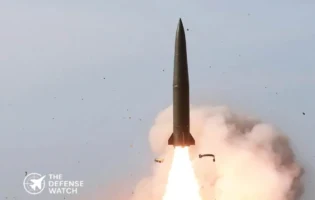
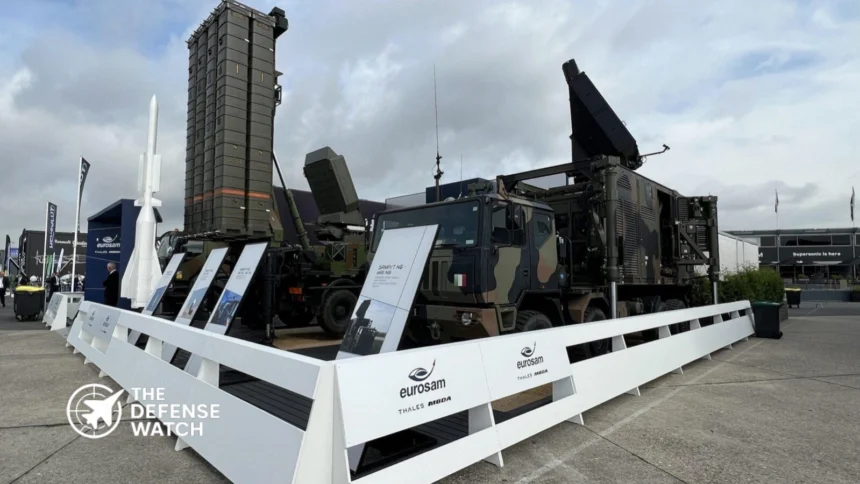
SAMP/T NG is the next-generation version of the European SAMP/T surface-to-air missile system, developed through cooperation between France and Italy.
The program is managed by Eurosam, a consortium involving MBDA France, MBDA Italy and Thales. Its architecture combines mobile launch units, command-and-control equipment and modern multifunction radar technology.
The system is designed to provide protection against multiple categories of aerial threats, including aircraft, cruise missiles and ballistic missiles.
Its main technological components include:
- ASTER interceptors: The system is designed to use the ASTER 30 family, including the advanced ASTER B1NT interceptor.
- Ground Fire 300 radar: Developed by Thales, this multifunction active electronically scanned array radar provides 360-degree coverage.
- Mobile launchers: The firing units can carry multiple ready-to-fire interceptors.
- Integrated command system: The engagement architecture coordinates radar information, target tracking and missile launches.
MBDA describes SAMP/T NG as a mobile air and missile defense system intended to operate within national and allied air defense networks. Its technical architecture is designed to address increasingly complex threats, including maneuvering ballistic missiles and saturation attacks.
These are manufacturer-described capabilities, not evidence that every advertised performance characteristic has been independently demonstrated in operational conditions.
The industrial offer is central to France’s campaign
France is not presenting SAMP/T NG solely as a missile procurement option. Vautrin is emphasizing the possibility of a longer-term industrial relationship that would give Swiss companies a role in supporting and potentially developing the system.
She told the Swiss newspaper Neue Zürcher Zeitung that Switzerland could build maintenance capabilities within its own territory. She also suggested that Swiss industry could contribute to future upgrades, including the integration of new sensors.
This proposal is relevant because Switzerland has an established defense and precision-engineering industry. Participation in maintenance, component production and future development could provide economic benefits while reducing reliance on foreign contractors for routine support.
However, the precise industrial arrangements have not been publicly established. Vautrin declined to disclose detailed guarantees concerning domestic servicing during the ongoing discussions.
The distinction matters. A political offer of industrial participation is not the same as a signed technology-transfer agreement or a guaranteed Swiss maintenance contract.
SAMP/T NG versus Barak MX
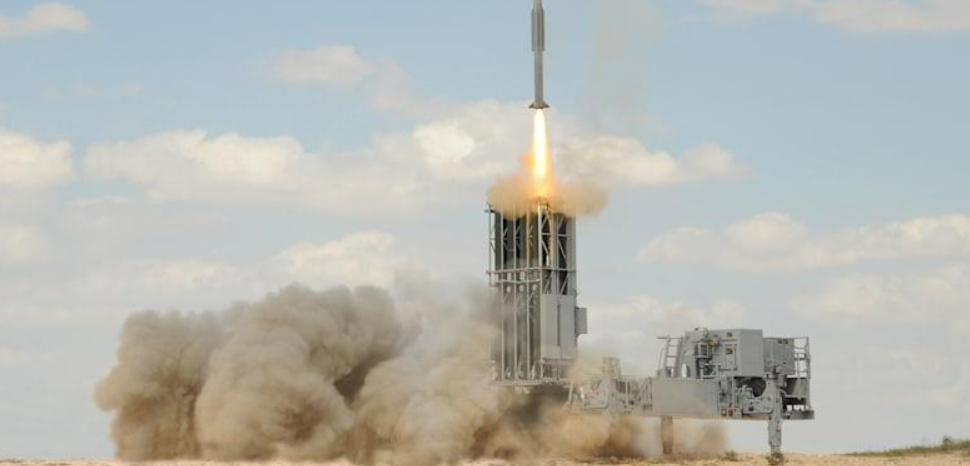
The Israeli Barak MX is the principal alternative identified in the current Swiss competition.
Developed by Israel Aerospace Industries, Barak MX is a modular air defense system designed to engage different types of aerial threats using a networked radar, command-and-control architecture and interceptor missiles.
The two candidates offer Switzerland different industrial and strategic relationships:
- SAMP/T NG: A Franco-Italian program supported by Eurosam, MBDA and Thales, with the potential for closer cooperation with European defense industries.
- Barak MX: An Israeli-developed system offering another procurement route outside the Franco-Italian industrial framework.
Both are being considered for Switzerland’s additional ground-based air defense requirement. However, publicly available information does not provide a sufficiently detailed, independently verified comparison of their proposed Swiss configurations, prices, delivery schedules or contractual conditions.
Consequently, it would be premature to declare either system technically superior for Switzerland. The final assessment will depend on the Swiss military’s requirements, the offered configuration, integration arrangements, delivery commitments and lifecycle costs.
The competition also illustrates how European countries are seeking greater control over defense supply chains while maintaining access to non-European technologies.
Patriot delays increase the pressure on Bern
The additional procurement has become more urgent because Switzerland’s planned US Patriot acquisition has encountered serious delivery problems.
In October 2026, Reuters reported that Swiss procurement chief Urs Loher described the Patriot deliveries as massively delayed. Washington had prioritized Germany for units originally intended for Switzerland, creating uncertainty around the Swiss delivery schedule.
Loher also said that obtaining another air defense system was difficult to avoid if Switzerland wanted to establish operational capability before 2030.
The issue is significant for a country whose defense planning relies heavily on a relatively limited number of major air defense acquisitions.
Patriot and SAMP/T NG would offer Switzerland a European alternative for strengthening its long-range ground-based defense architecture. However, selecting another system would not automatically resolve the existing Patriot procurement problems or guarantee that both systems could be integrated without additional expenditure and technical work.
Switzerland would need to consider radar coordination, command-and-control integration, personnel training, ammunition supply, maintenance arrangements and the costs of operating separate missile defense fleets.
The procurement decision is therefore also a force-structure question, not simply a competition between two missile manufacturers.
A Swiss referendum adds another industrial consideration
Another issue surrounding the French proposal is Switzerland’s November 29, 2026 referendum on amendments to its War Materiel Act.
The proposed changes would give the Swiss Federal Council greater flexibility in authorizing certain weapons exports, including exports to partner countries involved in armed conflicts, subject to neutrality requirements and Switzerland’s foreign and security policy interests.
The referendum does not directly determine whether Switzerland can purchase SAMP/T NG. Its potential importance lies in the wider industrial relationship.
If Swiss companies participate in international defense supply chains, restrictions on exporting military components or transferring equipment can affect their ability to cooperate with foreign manufacturers.
Vautrin warned that a vote against easing the restrictions could reduce opportunities for industrial collaboration.
The distinction is important because Switzerland’s potential participation in SAMP/T NG development would require arrangements that work within its domestic export-control framework.
France and Switzerland are also expected to sign a declaration of intent covering defense and space cooperation, according to Reuters. That agreement could provide a wider framework for bilateral discussions beyond the immediate air defense competition.
What Switzerland needs to establish before selecting a system
The French proposal gives Bern an opportunity to examine whether a European air defense acquisition could provide both military capability and a stronger domestic industrial role.
There are still several unanswered questions:
- What delivery schedule can Eurosam guarantee under a Swiss contract?
- How much maintenance and technical support could be transferred to Swiss facilities?
- Would Swiss companies receive formal participation in future SAMP/T NG development?
- How would the selected system operate alongside Patriot and Switzerland’s existing air surveillance infrastructure?
- What would the total procurement and lifecycle costs be?
France’s proposed 2029 delivery window is an indication from the French defence minister, not a confirmed Swiss delivery commitment.
The SAMP/T NG has an established European development program, while the Swiss procurement process remains open. Bern’s eventual choice will depend on whether the competing offers satisfy its operational requirements, delivery priorities and long-term support needs.
For France and Italy, a Swiss selection would extend the system’s customer base and create another opportunity for European industrial cooperation. For Switzerland, the decision will determine whether its next air defense investment also delivers greater control over maintenance, technology and future upgrades.
Enjoying our coverage?
Make The Defense Watch a preferred source on Google to see more of our geopolitical and defense insights when relevant to you.