Ukraine Says Strike Damaged Five Russian Aircraft at Savasleyka Air Base
Ukraine’s military says it damaged five Russian combat aircraft in a strike against Savasleyka Air Base in Russia’s Nizhny Novgorod region, targeting aircraft associated with Russian missile and airstrike operations against Ukrainian territory.
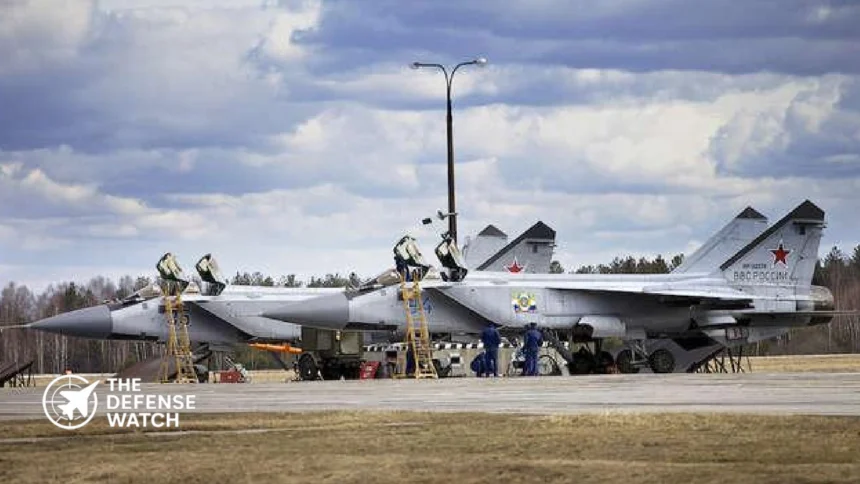
The Ukrainian General Staff announced on November 25 that the operation took place on November 24 and continued overnight into November 25. According to its preliminary assessment, three MiG-31 aircraft and two Su-34 fighter-bombers were hit.
The Ukrainian military said the damaged aircraft would remain unable to fly for some time. It did not provide detailed information about the weapons used, the precise damage sustained or the aircraft’s individual operational status.
Russia had not immediately commented on the reported damage, according to Reuters. The aircraft losses and damage figures have not been independently confirmed.
Savasleyka Air Base and Its Role in Russian Air Operations
Savasleyka is a Russian military airfield in the Nizhny Novgorod region, east of Moscow. Its importance to the ongoing war is linked partly to the presence of MiG-31 aircraft configured to carry the Kh-47M2 Kinzhal air-launched missile.
Russia uses the MiG-31K variant as an airborne launch platform for the Kinzhal, an air-launched ballistic missile employed in attacks against Ukrainian military facilities and infrastructure.
The aircraft allows Russian forces to launch missiles from an airborne platform rather than relying exclusively on ground-based launch systems.
Targeting the airfield therefore offers Ukraine an opportunity to disrupt the infrastructure supporting Russian long-range strike operations.
However, damaging aircraft at an airfield does not necessarily eliminate the associated missile capability. Russia operates other aircraft and launch platforms, and the actual operational impact depends on the extent of the damage, repair timelines and the availability of replacement aircraft.
Three MiG-31s and Two Su-34s Reportedly Hit
The Ukrainian General Staff identified two different aircraft types in its initial damage assessment.
MiG-31 interceptor
Three MiG-31 aircraft were reportedly hit.
The MiG-31 is a supersonic interceptor originally developed during the Soviet period. Its principal military role has involved intercepting aircraft and cruise missiles over large areas.
The MiG-31K modification has a different operational emphasis. It is adapted to carry the Kinzhal air-launched missile, giving Russian forces an airborne platform for conducting long-range missile attacks.
Damage to these aircraft could temporarily reduce the number of available launch platforms, depending on their individual configurations and the severity of the reported damage.
The Ukrainian General Staff specifically identified the MiG-31 aircraft as part of the strike assessment. However, it did not establish whether all three damaged aircraft were MiG-31K missile carriers.
Su-34 fighter-bomber
Two Su-34 fighter-bombers were also reportedly damaged.
Developed by Sukhoi, the Su-34 is a two-seat combat aircraft designed primarily for air-to-ground missions. Its operational responsibilities include attacking ground targets and infrastructure using guided and unguided weapons.
The Russian aircraft has played an important role in the country’s air campaign against Ukraine, particularly through the employment of guided bombs and other air-to-ground weapons.
According to the manufacturer’s description, the aircraft is designed to operate against ground and air targets in different weather conditions and contested environments.
The reported damage to both aircraft types is operationally relevant because they perform different functions within Russian military aviation.
The MiG-31K supports long-range missile operations, while the Su-34 provides a platform for conventional air-to-ground attacks.
Ukraine’s Wider Campaign Against Russian Military Infrastructure
The Savasleyka operation was not the only military target identified in the Ukrainian General Staff’s November 25 announcement.
According to the Ukrainian military, its forces also struck a Russian P-18 radar station near Karavan-Solodkyi in the occupied Luhansk region.
The P-18 is a surveillance radar designed to detect aerial targets and provide information supporting air defense operations.
The General Staff additionally reported attacks against fuel, ammunition and logistics facilities in occupied parts of eastern Ukraine.
These included:
- Two fuel and lubricants depots near Novosvitlivka in Luhansk region.
- A logistics depot in the same area.
- Another logistics facility near Rozpasiivka.
- A fuel depot near Ahronomichne in Donetsk region.
- An ammunition depot near Novyi Svit.
The Ukrainian military said damage assessments for these facilities were continuing. These additional strike results have also not been independently established.
The selection of targets indicates an operational emphasis on disrupting several parts of Russia’s military support network, including aviation, surveillance, fuel storage and ammunition distribution.
For Ukraine, attacks against logistics infrastructure can complement strikes on frontline positions by creating additional pressure on the systems that sustain Russian military operations.
Savasleyka Has Been Targeted Before
The latest reported attack follows earlier Ukrainian operations against the same airfield.
On June 9, 2025, Ukraine’s General Staff announced that Ukrainian forces had struck Savasleyka and initially reported damage to two Russian aircraft.
The military identified the possible aircraft as a MiG-31 and either a Su-30 or Su-34, while stating that the results were still being assessed.
Savasleyka was also targeted in August 2024. Ukrainian military intelligence sources subsequently claimed that attacks had destroyed and damaged several aircraft at the facility. Those figures were reported by Ukrainian media but were not independently verified in the available reporting.
Repeated attacks against the installation demonstrate that Ukraine has continued to include Russian military airfields among its long-range strike priorities.
Airfields are particularly important targets because they concentrate aircraft, maintenance facilities, fuel infrastructure and supporting equipment in relatively limited areas.
However, the effectiveness of an attack depends on whether aircraft are destroyed, temporarily disabled or able to return to service following repairs.
What the Strike Could Mean for Russian Military Aviation
The reported damage to three MiG-31s and two Su-34s could create additional maintenance and operational demands for Russian military aviation.
The MiG-31 component is particularly relevant because of the aircraft’s association with Kinzhal missile operations.
Russia has used Kinzhal missiles during attacks against Ukrainian targets, making the availability of suitable launch aircraft an important part of its wider missile employment capability.
If the three reported MiG-31s include operational MiG-31K aircraft, their temporary withdrawal could reduce the number of available launch platforms at Savasleyka.
The reported damage to Su-34 aircraft could also affect the availability of aircraft assigned to conventional strike missions.
Nevertheless, five damaged aircraft do not automatically translate into a sustained reduction in Russian air operations.
The operational consequences will depend on several factors:
- The severity of damage to individual aircraft.
- Whether the affected aircraft can be repaired.
- The availability of replacement aircraft.
- Russia’s ability to relocate aircraft between airfields.
- The protection of other military aviation facilities against further attacks.
The available information does not establish how long the affected aircraft will remain out of service.
Damage Assessment Remains Incomplete
Ukraine’s November 25 announcement provides an initial account of the strike, but several important details remain unavailable.
The General Staff has not published a complete technical assessment of the aircraft damage or established whether additional aircraft were affected.
Russia has also not provided an official account of the reported damage.
Independent confirmation through satellite imagery or other verifiable evidence would help establish the extent of the damage and whether the aircraft can be repaired.
For now, the reported strike represents another Ukrainian attempt to target Russian military aviation infrastructure beyond the immediate battlefield.
Its longer-term operational impact will depend on the actual damage at Savasleyka and Russia’s ability to restore the affected aircraft to service.
Enjoying our coverage?
Make The Defense Watch a preferred source on Google to see more of our geopolitical and defense insights when relevant to you.