A proposed $150 million investment from South Korean conglomerate Base Group could provide a financial lifeline to Foundation Future Industries, a U.S. robotics startup developing humanoid machines for industrial and military applications.
The potential investment is significant because Foundation has been facing financial difficulties, including reported interruptions to employee payments. The company is also pursuing a place in the emerging market for military humanoid robots, where defense organizations are exploring ways to use autonomous machines for logistics, reconnaissance and other tasks that could reduce personnel exposure.
Reuters reported on November 19, 2026, that Base Group was preparing the investment, citing internal emails from Foundation Chief Executive Sankaet Pathak. Base confirmed that it was considering an investment but did not announce a completed transaction or disclose definitive financing terms.
The distinction matters. The proposed financing could help Foundation continue development and expand manufacturing, but the company has not yet demonstrated that its military robotics ambitions can translate into sustained commercial or defense procurement.
Foundation’s Financial Position Becomes a Critical Issue
Foundation Future Industries, established in 2024, is developing humanoid robots under its Phantom product line.
The company’s ambitions extend beyond conventional industrial automation. Its stated interests include military applications, particularly machines capable of performing physical tasks in environments where sending human personnel could involve substantial risk.
However, its immediate challenge appears to be financial rather than technical.
According to Reuters, Foundation stopped paying employees in recent weeks, with internal communications indicating that the company was relying on anticipated funding from Base Group.
In an November 8 email to employees, Pathak characterized the payroll situation as a timing issue rather than an existential threat to the business.
A Base Group spokesperson confirmed that the South Korean company was considering an investment, citing the long-term potential of humanoid robotics. Neither Foundation nor Pathak provided Reuters with a response to its additional questions.
Foundation had previously raised approximately $11 million from investors, including Tribe Capital, Defined and Gaingels, according to investment information cited by Reuters.
A proposed $150 million investment would therefore represent a substantial change in the company’s financial position. Nevertheless, the amount should not be treated as secured capital until the transaction is formally completed.
Why Base Group Is Interested in Humanoid Robotics
The proposed arrangement appears to extend beyond a conventional financial investment.
Pathak told employees in a November 12 email that Base Group Chairman Kim Seong-jip viewed humanoid robots as a potential solution to labor constraints across the conglomerate’s businesses.
The proposed partnership would also involve establishing a joint venture to supply aluminum for robot manufacturing and lithium for batteries.
That industrial connection could be important.
Humanoid robotics requires more than artificial intelligence software and mechanical engineering. Commercial production also depends on reliable access to actuators, structural materials, batteries, sensors, computing hardware and other components.
A partnership involving aluminum and lithium could potentially give Foundation a closer relationship with parts of its manufacturing supply chain.
However, the proposed joint venture’s production capacity, investment allocation, operating structure and delivery schedule have not been publicly established.
For Base Group, the arrangement could also provide exposure to a developing robotics market with potential applications across manufacturing, logistics and defense.
Phantom MKII Brings Military Applications Into Focus
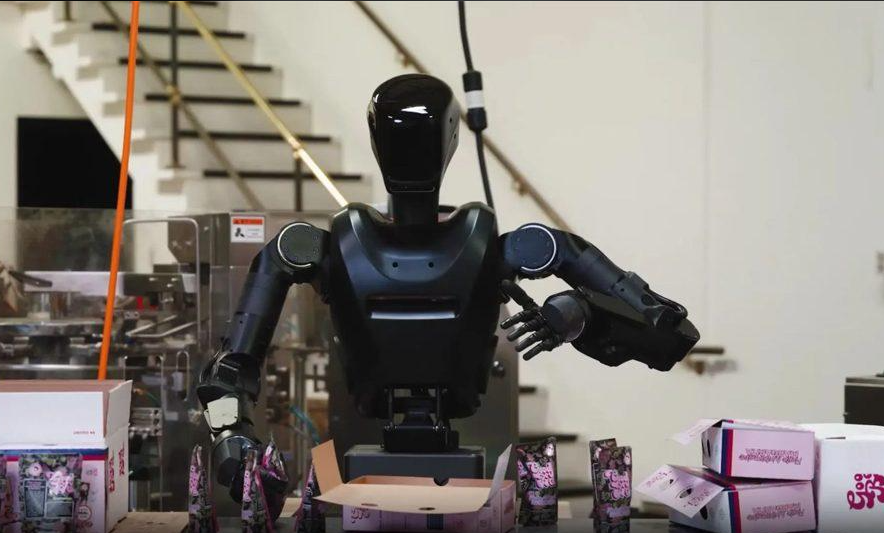
Foundation’s investment prospects are closely connected to its development of the Phantom humanoid robot.
The company has been positioning its machines for industrial environments while exploring defense-related applications, including material handling and reconnaissance.
In July 2026, Reuters reported that Foundation had partnered with AMD to use AMD computing technology in the next-generation Phantom MK-2.
The collaboration involves the Ryzen AI Embedded X100 processor family, designed for computing-intensive applications at the edge, including robotics and industrial automation. The processors combine CPU, graphics and neural processing capabilities on an embedded platform.
Foundation subsequently brought its Phantom MKII development into greater public focus.
A November 18 report by Fast Company described the new humanoid as capable, according to the company’s claims, of carrying a 200-pound payload and operating in rain, snow and dusty conditions. Its development also includes Cortex II, an artificial intelligence system intended to control robot movement and physical tasks.
These are company-reported capabilities, not independently established military performance results.
The military relevance is primarily associated with the ability to perform physical work in difficult environments.
Potential applications include:
- Moving equipment and supplies in hazardous locations.
- Supporting reconnaissance and inspection activities.
- Handling materials in military logistics facilities.
- Performing selected tasks in industrial and maintenance environments.
- Reducing personnel exposure during certain ground operations.
These applications are different from deploying a fully autonomous armed robot.
Foundation has discussed the possibility of weaponized humanoid systems, but public reporting does not establish that Phantom has demonstrated autonomous lethal engagement capability or entered operational military service.
That distinction is important when assessing the company’s position in the defense market.
The Manufacturing Challenge Behind Military Humanoid Robots
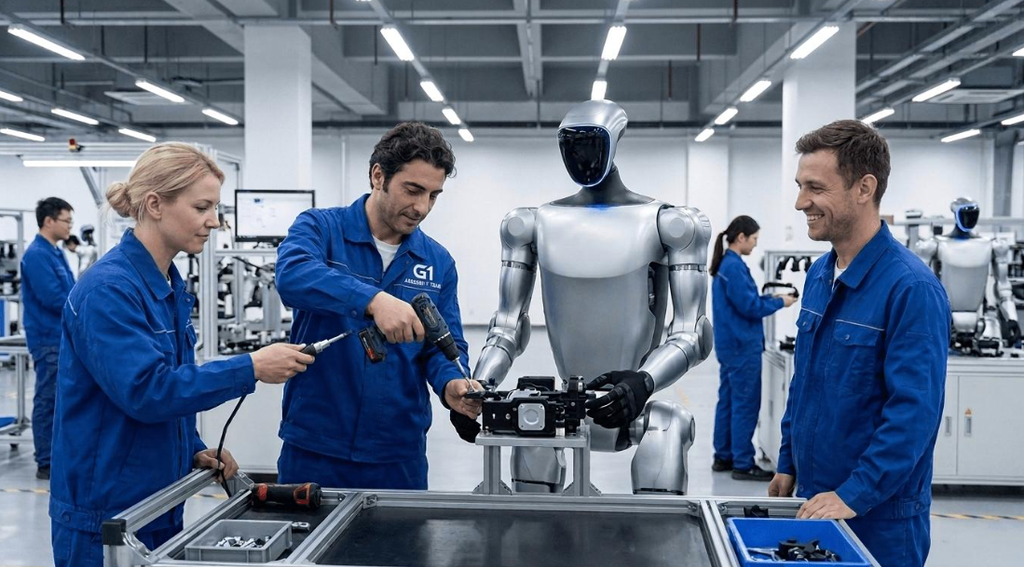
Even with additional financing, Foundation would face a difficult industrial challenge.
Humanoid robots combine mechanical systems, electric actuators, batteries, onboard computing, sensors and software. Each component must operate reliably while the machine maintains balance, manipulates objects and responds to changing surroundings.
Military environments introduce further complications.
A robot designed for a controlled factory floor may encounter uneven terrain, damaged infrastructure, dust, water, temperature changes, communications interference and unpredictable obstacles during field operations.
Reliability is particularly important for military logistics. A robot that requires frequent human intervention or specialist maintenance may offer limited advantages over existing unmanned ground vehicles.
There is also a question of cost.
Reuters previously reported that Foundation was marketing industrial-use robots through leasing arrangements and developing defense versions for government customers. However, public information does not establish a large-scale military procurement program or a sustained operational deployment.
The company therefore needs to demonstrate that its technology can move beyond prototypes and limited trials into dependable, repeatable production.
Trump Family Connections Add Political and Regulatory Scrutiny

Foundation’s financing discussions also carry a political dimension.
Eric Trump, son of U.S. President Donald Trump, is an investor in the startup and serves as its chief strategy adviser.
His involvement has attracted attention because Foundation operates in a defense technology market where companies may eventually compete for U.S. government contracts.
Base Group also has existing business relationships with the Trump family.
According to Reuters, a subsidiary of the South Korean conglomerate secured an agreement to import Trump Winery products in 2017. The Trump Organization subsequently announced a partnership with Base Group for a golf course project in South Korea.
The financial relationship has already attracted congressional scrutiny.
On August 6, 2026, Democratic Senators Elizabeth Warren, Richard Blumenthal and Andy Kim questioned Base Group over a reported $2 million payment to a Trump-related business in 2025.
The lawmakers sought clarification about whether the payment was connected to the company’s efforts to obtain relief from U.S. aluminum tariffs. Their letter raised concerns about potential conflicts of interest and the appearance of improper influence. These were allegations and oversight questions, not a finding of wrongdoing.
The proposed Foundation investment adds another dimension to those questions because the company is developing technology that could eventually seek government defense business.
There is no publicly established evidence that the proposed investment was made in exchange for government contracts, favorable defense decisions or trade concessions.
Nevertheless, the relationship between foreign investment, political connections and defense procurement is likely to remain an area of scrutiny.
What the Investment Could Mean for U.S. Defense Robotics
The United States is increasingly interested in autonomous systems that can support military operations without exposing personnel to unnecessary risks.
Unmanned aerial vehicles have already demonstrated their importance in reconnaissance, surveillance, logistics and combat. Ground-based robotics presents a different engineering challenge because machines must navigate physical terrain and manipulate objects while maintaining stability.
Humanoid robots offer one possible approach because their physical design could allow them to use equipment, access buildings and operate in spaces originally designed for people.
However, humanoid platforms are not automatically superior to wheeled, tracked or purpose-built unmanned ground vehicles.
Traditional robotic platforms can be simpler, less expensive and better suited to specialized military tasks. A humanoid design must demonstrate a practical advantage to justify its mechanical complexity and maintenance requirements.
For Foundation, securing additional capital would provide an opportunity to address these engineering and manufacturing challenges.
It would not, by itself, establish military readiness, operational effectiveness or a competitive advantage over established defense contractors and autonomous systems developers.
The proposed Base Group financing therefore represents a potentially important development for a young robotics company, but its actual defense significance will depend on whether Foundation can convert investment into reliable products, verified performance and identifiable government customers.
Until the transaction is completed and the company demonstrates those capabilities, its military robotics ambitions remain a development-stage proposition.
Enjoying our coverage?
Make The Defense Watch a preferred source on Google to see more of our geopolitical and defense insights when relevant to you.