
The U.S. Department of War has made measurable progress toward its long-standing financial accountability target, with 14 of its 25 standalone reporting entities receiving clean audit opinions for fiscal year 2026. However, the department has yet to secure an unqualified audit opinion across its entire organization, leaving a substantial financial management challenge ahead of the December 2028 congressional deadline.
The latest results show that entities receiving clean opinions account for 56% of the department’s assets and 86% of its liabilities. That represents an improvement over fiscal year 2025, when 11 reporting entities passed their individual audits.
The progress was disclosed in connection with the department’s latest financial audit reporting. It indicates that improvements are reaching a majority of individual reporting entities, although the broader accounting and information technology problems affecting the Pentagon remain unresolved.
According to reporting by Reuters on November 16, 2026, the department’s fiscal year 2026 audit results also include the first clean audit opinion for its Medicare-Eligible Retiree Health Care Fund.
More Pentagon Reporting Entities Receive Clean Audit Opinions
The increase from 11 to 14 successful reporting entities provides a measurable indication of progress in the Pentagon’s financial management efforts.
A clean audit opinion, formally known as an unmodified opinion, means auditors have sufficient appropriate evidence to conclude that financial statements are fairly presented in accordance with applicable accounting requirements.
However, individual component-level audit results should not be confused with a department-wide clean audit.
The Pentagon operates through a large network of military services, defense agencies, funds and supporting organizations. Each has different financial records, accounting processes and systems. Problems in one organization can complicate the consolidation and verification of department-wide financial statements.
The fiscal year 2026 results are particularly relevant because the reporting entities receiving clean opinions now represent a majority of the department’s assets.
The Medicare-Eligible Retiree Health Care Fund also achieved its first clean opinion, adding another component to the list of organizations meeting independent audit requirements.
Nevertheless, the department-wide financial statements have not yet received an unmodified opinion.
Legacy Financial Systems Remain a Major Obstacle
One of the Pentagon’s most persistent financial management problems is its fragmented information technology infrastructure.
Reuters reported that the department has approximately 149 financial management systems, many of which are outdated or inadequate. Some rely on computer technology and code developed decades ago.
These systems create difficulties when financial information must be collected, reconciled and verified across different military services and defense organizations.
The challenge extends beyond accounting software. Incomplete asset records, inconsistent transaction information, weaknesses in internal controls and difficulties tracking government property can prevent auditors from obtaining sufficient evidence.
For a department responsible for an extensive inventory of aircraft, ships, vehicles, weapons, infrastructure and other government assets, accurate financial records are important to more than administrative compliance.
Reliable information can help defense officials understand what equipment the military owns, where resources are allocated, whether financial transactions are properly recorded and how taxpayer funding is being used.
The Government Accountability Office (GAO) has repeatedly identified Defense Department financial management as a high-risk area.
In its May 13, 2026, report, DOD Financial Management: Questions Associated with New Financial Audit Approach, GAO acknowledged improvements but warned that significant challenges remain.
The oversight agency specifically identified concerns involving information technology, material weaknesses, fraud risks, workforce capacity and the sustainability of the department’s revised audit strategy.
War Data Platform Supports a Different Audit Strategy
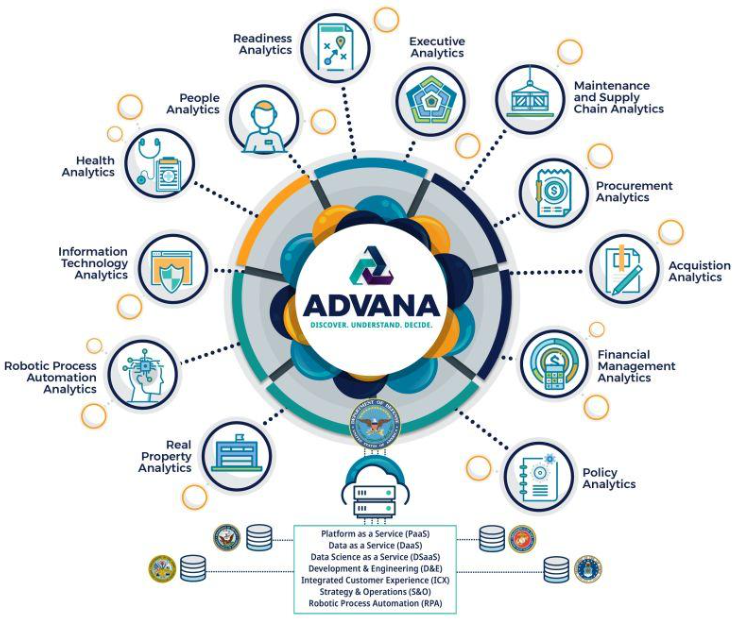
Rather than depending entirely on its older financial management systems, the department is increasingly using centralized data infrastructure to support audit work.
According to Reuters, Pentagon officials used information drawn from 61 core systems through the cloud-based War Data Platform to support the fiscal year 2026 audit process.
The platform provides a consolidated environment for accessing and examining financial information from different parts of the department.
The approach is intended to help auditors obtain reliable evidence without relying exclusively on the fragmented legacy systems that have complicated previous audits.
The department has also introduced artificial intelligence tools from Palantir and xAI alongside internally developed applications.
These tools are being used to automate financial reconciliations and documentation, potentially allowing auditors and financial management personnel to examine larger volumes of information.
The technology does not independently establish that financial statements are accurate. Its value depends on the quality of underlying records, the reliability of automated processes and the ability of auditors to verify the results.
The department previously announced another milestone on September 3, 2026, when its War Data Platform received an unmodified System and Organization Controls (SOC) 1 Type 2 examination opinion covering the period from November 17, 2025, through June 30, 2026.
That examination assessed the platform’s internal controls relevant to financial reporting. It was a separate assurance milestone, not a clean audit opinion for the entire Department of War.
Pentagon Changes Its Approach to Achieving a 2028 Audit
The department has also revised how it intends to reach the congressional deadline.
Under its earlier approach, financial management efforts placed considerable emphasis on correcting internal control deficiencies throughout individual organizations.
The revised strategy places greater emphasis on validating material financial statement balances through supporting documentation and evidence.
This represents a change in how the department prioritizes its audit work.
GAO described several elements of the new approach:
- Centralized coordination instead of a largely decentralized response.
- Greater attention to material financial statement balances.
- More direct testing of financial records and supporting documentation.
- Increased use of technology, automation and artificial intelligence.
The strategy is designed to help the department obtain a clean opinion within the available timeframe rather than waiting for every longstanding control deficiency to be resolved.
However, GAO has raised questions about the risks associated with this approach.
The oversight agency warned that concentrating on material balances could leave important internal control deficiencies insufficiently addressed during the push toward 2028.
It also cautioned that the process could require substantial resources and personnel, while creating challenges for maintaining reliable financial management after the deadline.
These concerns are important because passing an audit in a particular year does not automatically demonstrate that an organization has established sustainable financial controls.
A New Reporting Structure Prepares the Department for FY2027
Another part of the reform effort involves consolidating financial reporting across the department.
A March 20, 2026, memorandum from the Office of the Under Secretary of War (Comptroller) and the Department’s Inspector General outlined changes to financial statement presentation and the audit process.
Under the revised structure, the Defense Working Capital Fund will receive greater attention as a consolidated reporting entity.
The department’s stated objective is to obtain a clean opinion on the Defense Working Capital Fund financial statements in fiscal year 2027 before pursuing an unmodified opinion on its agency-wide financial statements in fiscal year 2028.
The memorandum also established plans to use an independent public accounting firm for the consolidated Defense Working Capital Fund and agency-wide audits beginning in fiscal year 2027.
This arrangement is intended to provide additional audit capacity while maintaining the Inspector General’s independent oversight responsibilities.
The planned sequence gives the Pentagon an intermediate milestone before its final department-wide deadline.
However, success will depend on whether the consolidated financial statements can be supported by sufficient documentation and whether underlying weaknesses can be addressed without compromising the reliability of the audit process.
Why Financial Audit Progress Matters to U.S. Military Readiness
Financial audits are often treated as administrative exercises, but their implications extend into military operations and defense procurement.
The Department of War manages an enormous portfolio of government resources, including military equipment, facilities, contracts, inventories and operational funding.
Weak financial records can make it harder to establish the condition, ownership and location of assets. They can also limit the department’s ability to identify inefficient spending, detect irregular transactions and make informed resource allocation decisions.
For example, accurate inventory information is important when military organizations assess equipment availability, maintenance requirements and replacement priorities.
Similarly, reliable contract and payment records help officials monitor procurement spending and identify discrepancies between financial commitments and recorded expenditures.
The GAO has previously identified practical benefits from defense financial audits, including improved visibility over assets and inventory, system improvements, and cost savings or avoidances.
These benefits can support better management decisions and strengthen the department’s ability to direct resources toward military requirements.
The issue also carries broader significance as the Pentagon pursues major defense modernization programs and increased military spending.
Without reliable financial information, overseeing a growing procurement portfolio becomes more difficult.
A successful audit process would not guarantee that every defense program is efficient or that every procurement decision is sound. It would, however, provide a stronger financial foundation for oversight by department leadership and Congress.
The 2028 Deadline Remains the Main Test
Congress established December 31, 2028, as the deadline for the department to achieve an unmodified financial statement audit opinion under the National Defense Authorization Act for Fiscal Year 2024.
The latest progress provides evidence that the Pentagon is improving the auditability of individual reporting entities.
But the remaining challenge is substantially larger than increasing the number of components receiving clean opinions.
The department must demonstrate that its consolidated financial statements can be supported by reliable records, that its revised audit process produces defensible results and that improvements can be maintained beyond the statutory deadline.
The fiscal year 2027 Defense Working Capital Fund audit will therefore be an important intermediate test.
For now, 14 successful reporting entities represent tangible progress, but the Pentagon’s broader financial accountability problem remains unresolved. A department-wide clean opinion by the end of 2028 will require not only better data and automated processes, but also lasting improvements to the financial systems and controls supporting the U.S. military.
Enjoying our coverage?
Make The Defense Watch a preferred source on Google to see more of our geopolitical and defense insights when relevant to you.