Iceye’s €2 Billion Avio Bid Targets Europe’s Space and Defense Industrial Base
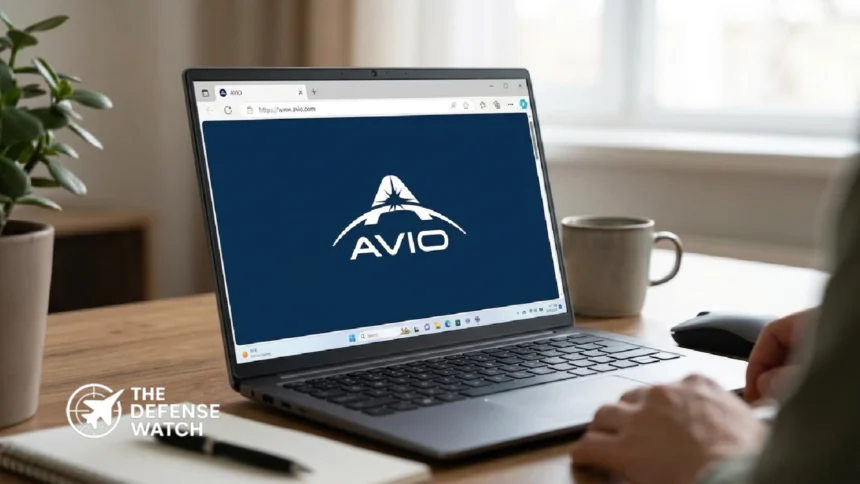
Finland’s Iceye has launched a €2 billion cash takeover offer for Italian aerospace manufacturer Avio, seeking to bring satellite production, space-based intelligence, rocket propulsion and launch capabilities under one corporate group.
The proposed acquisition would give Iceye control of an established European launch-vehicle manufacturer while expanding its position in the defense and intelligence satellite market. The company also plans to invest another €1 billion in Italy over five years if the transaction is completed.
Announced on November 17, 2026, the offer values Avio at €41 per share. Iceye intends to make the acquisition through Iris 2, its wholly owned Italian subsidiary, and ultimately remove Avio from the Milan stock exchange.
The proposal is significant because it links two different parts of Europe’s space industrial base: the ability to manufacture and operate intelligence satellites and the ability to produce launch vehicles and propulsion systems.
However, the offer is still a proposed transaction. Avio’s board has begun reviewing it, and regulatory approval, particularly from the Italian government, remains an important hurdle.
What Iceye Is Offering for Avio
The proposed transaction is structured as an all-cash voluntary public tender offer for Avio’s ordinary shares.
| Offer detail | Announced terms |
|---|---|
| Acquirer | Iceye Oy, Finland |
| Target | Avio S.p.A., Italy |
| Offer price | €41 per share |
| Estimated transaction value | Approximately €2 billion |
| Offer vehicle | Iris 2 S.p.A. |
| Payment | Cash |
| Premium to November 16 closing price | 21.3% |
| Premium to three-month average | 34.8% |
| Additional Italian investment | €1 billion over five years |
| Intended outcome | Acquisition and delisting |
The €41 offer price represents a 21.3% premium over Avio’s November 16 closing price, according to the transaction announcement. Iceye plans to finance the acquisition using a combination of cash and debt.
The acquisition proposal also includes a commitment to preserve Avio’s Italian industrial identity, existing workforce and management. Iceye says it will continue the company’s planned investments in the United States and maintain commitments to existing European and American customers.
The distinction between the purchase price and the additional investment is important. The €1 billion industrial commitment is separate from the approximately €2 billion acquisition offer and would be implemented over five years after completion.
Why Iceye Wants a Rocket Manufacturer
Iceye has built its business around synthetic aperture radar (SAR) satellites, which collect radar imagery rather than relying exclusively on visible-light photography.
SAR technology allows satellites to collect useful imagery at night and through cloud cover, smoke and other conditions that can restrict conventional optical observation. This makes the technology relevant to military surveillance, intelligence collection, maritime monitoring and disaster response.
The company supplies satellite imagery and related capabilities to government and defense customers. Its involvement in Ukraine has also demonstrated the growing military relevance of commercially operated radar satellite services.
Avio brings a different industrial capability.
The Italian company develops and manufactures propulsion systems and launch vehicles, including the Vega family of rockets. Its business gives the proposed combined group access to launch-vehicle engineering, propulsion manufacturing, testing infrastructure and established relationships with European space institutions.
Combining these capabilities could give Iceye greater influence over the chain connecting satellite manufacturing to deployment in orbit.
Rather than relying entirely on external launch providers, a vertically integrated company could coordinate satellite production, launch planning and mission operations within the same industrial organization.
That does not automatically mean Iceye would gain exclusive access to Avio launches or eliminate its dependence on other launch providers. Launch availability, customer commitments, technical compatibility and government procurement arrangements would continue to shape how the two businesses operate.
The proposed integration is therefore primarily an industrial and supply-chain strategy, rather than an announcement of a new military satellite or rocket system.
Avio’s Vega Program Is Central to the Investment Plan
Avio is an established participant in Europe’s space launch industry.
Its Vega launch vehicle family serves the market for placing smaller payloads into orbit. The Vega program is particularly relevant to European efforts to maintain independent access to space for institutional, scientific and commercial missions.
Iceye has identified increasing the launch cadence of the Vega rocket as one of the objectives behind its proposed additional investment in Italy.
Higher launch frequency could help improve the availability of European launch services, particularly for satellite operators seeking alternatives to launch providers outside the continent.
However, launch cadence is not determined by investment alone. It depends on production throughput, propulsion-system availability, testing, launch-site scheduling, reliability, customer demand and the ability to maintain a sustainable order book.
The €1 billion commitment could support manufacturing capacity, research and development, testing infrastructure, intellectual property and integration with Italian suppliers.
Iceye’s formal transaction documentation also identifies the potential creation of up to 400 highly skilled jobs in Italy, subject to completion of the acquisition and implementation of its industrial plans.
The Deal Faces Multiple Government Approvals
The most difficult part of the transaction may be securing regulatory approval.
Avio operates in strategically sensitive areas, including space launch systems and propulsion technologies used in defense applications. Italy’s Golden Power legislation gives the government authority to review, impose conditions on or block certain transactions involving companies considered strategically important.
Iceye’s formal offer documentation goes beyond Italian approval. It identifies several additional conditions:
- Italy: Approval under the country’s Golden Power foreign investment screening framework.
- France and the United Kingdom: Foreign investment approvals.
- European Union: Approval under the EU Foreign Subsidies Regulation.
- United States: Review by the Committee on Foreign Investment in the United States (CFIUS).
- U.S. defense security: Notification to the Defense Counterintelligence and Security Agency (DCSA) concerning foreign ownership, control or influence.
- Export controls: Compliance with U.S. International Traffic in Arms Regulations (ITAR), including the required notification period.
The offer also requires Iceye to secure at least 66.67% of Avio’s share capital, although the bidder reserves certain rights to waive or modify conditions where legally permitted.
Leonardo, Italy’s major aerospace and defense group, holds an 18.04% stake in Avio, according to the transaction documentation. Its position will therefore be important to the ownership outcome.
Leonardo’s chief executive said the company was pleasantly surprised by the proposal and would examine it in coordination with the Italian government, Reuters reported.
There is also an important distinction between preliminary political consultations and formal regulatory clearance. Reuters separately reported on November 17 that Italian government sources said Rome had not yet received a formal notification of the proposed transaction. The government was therefore not in a position to assess it at that stage.
Why the Acquisition Matters Beyond Commercial Launches
Europe has been seeking greater control over its space infrastructure, particularly as military forces become increasingly dependent on satellite-based intelligence, communications and surveillance.
The war in Ukraine has demonstrated the operational value of commercial satellite services. Radar imagery can help monitor military activity, assess infrastructure damage and maintain observation during weather conditions that restrict optical satellites.
Iceye already operates in this market. Its SAR constellation serves both civilian and defense customers, while its sovereign satellite offerings allow governments to obtain greater control over their own space-based intelligence infrastructure.
Avio adds an industrial capability that satellite operators cannot easily develop independently. Launch vehicles and propulsion systems require specialized manufacturing facilities, testing infrastructure, engineering expertise and long-term institutional relationships.
The combination could help address two connected industrial challenges: ensuring sufficient launch capacity and maintaining a dependable supply of satellites for government customers.
There is also a defense industry dimension that extends beyond the Vega program. Avio’s published technical documentation describes its involvement in solid rocket motor production for European and American missile programs, alongside its space propulsion activities.
This means the proposed acquisition concerns an industrial supplier with links to both commercial space transportation and defense-related propulsion. That makes government scrutiny understandable, particularly where existing defense contracts, sensitive technical information and export-control obligations are involved.
For the United States, the proposed transaction also has an industrial dimension. Avio is developing a manufacturing facility in Virginia, which Reuters reported is expected to be completed in late 2028. Iceye has said it intends to continue Avio’s planned American investments.
Maintaining those commitments could preserve an important transatlantic industrial relationship, although the acquisition would still require appropriate U.S. security and regulatory arrangements.
What Remains Unresolved
The proposed acquisition has a clear industrial objective, but its success will depend on execution rather than the headline transaction value.
Three questions will be particularly important:
1. Regulatory acceptance: Can Iceye satisfy Italian, European and U.S. security requirements without major restrictions on Avio’s defense-related activities?
2. Industrial investment: Can the additional €1 billion translate into measurable increases in production capacity, testing infrastructure and launch availability?
3. Customer confidence: Will European governments and existing international customers remain comfortable with Avio’s ownership structure and commitments to established programs?
Iceye’s promises to retain Avio’s workforce, management and Italian industrial identity address some potential concerns. However, those commitments will need to be assessed alongside the final transaction conditions and the requirements imposed by government authorities.
For now, the proposal remains an acquisition offer rather than a completed consolidation of Europe’s space industry. Its eventual impact will depend on whether Iceye can secure the necessary approvals and turn its proposed investment into additional industrial capacity.