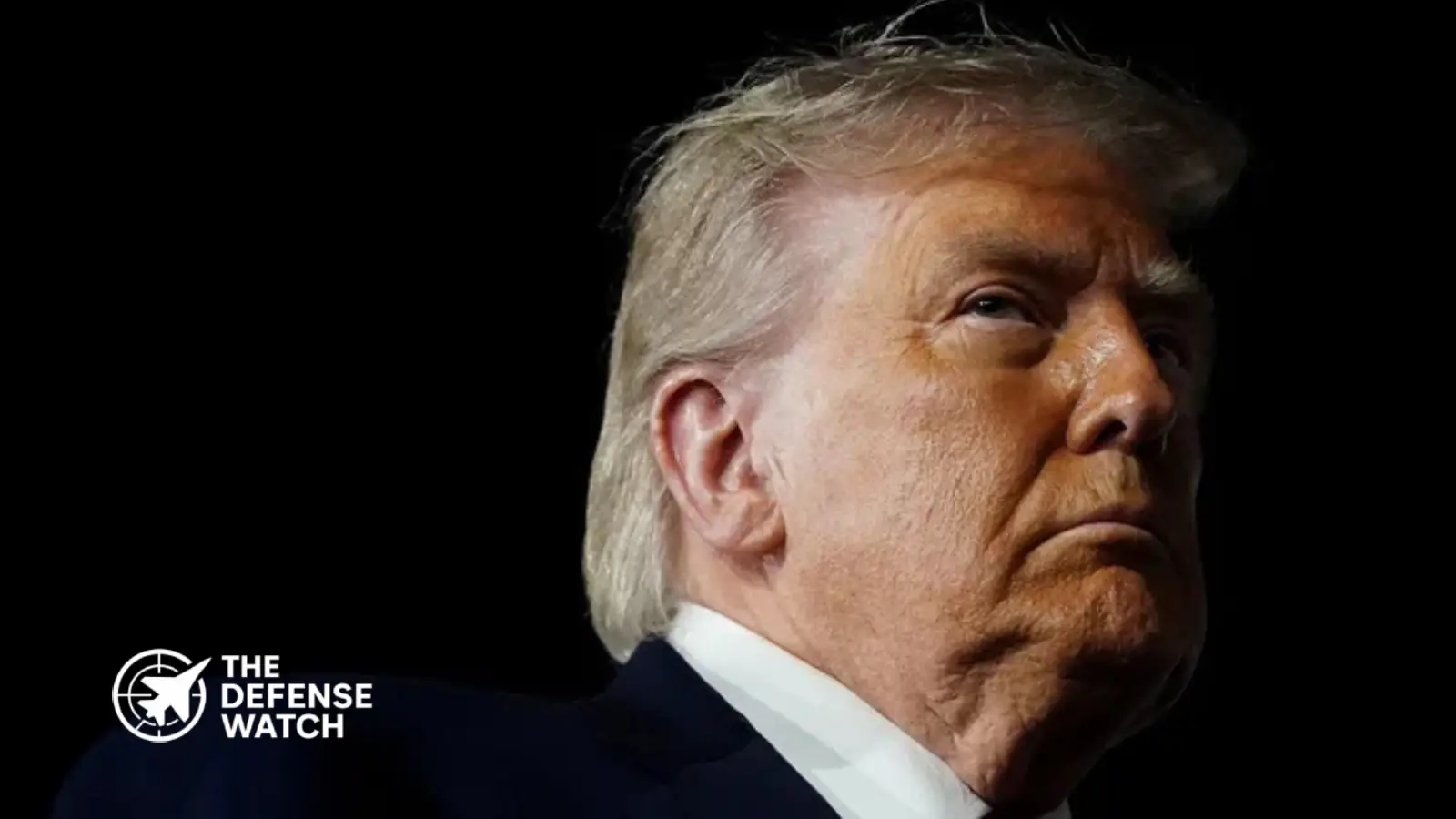
U.S. President Donald Trump is heading to Asia for a series of high-level diplomatic meetings at a time when domestic political setbacks and growing scrutiny of U.S. technology exports are complicating Washington’s approach to China.
The November 16-19 trip will take Trump to Manila in the Philippines before he travels to Shenzhen, China, for the Asia-Pacific Economic Cooperation (APEC) leaders’ meeting. His schedule includes discussions with Southeast Asian leaders, a meeting with Chinese President Xi Jinping and planned trilateral talks involving Russian President Vladimir Putin. Reuters reported the diplomatic agenda and the political pressures surrounding the visit.
The meetings carry implications beyond trade and diplomatic relations. Semiconductor export controls, Taiwan’s defense requirements, regional military cooperation and the credibility of U.S. security commitments are all connected to the outcome of Washington’s engagement with Beijing.
Domestic Political Pressure Complicates Washington’s China Policy
Trump arrives in Asia following significant Republican losses in the November midterm elections, weakening his political position ahead of the next congressional session.
Democrats are expected to take control of both chambers of Congress in January, creating additional obstacles for the administration on foreign policy, trade and national security issues.
According to the Associated Press, the election results have increased scrutiny of Trump’s international engagements, particularly his willingness to negotiate with leaders of countries that Washington considers strategic competitors.
The political environment also matters for U.S. policy toward China.
A president negotiating with Beijing must balance economic interests, technology restrictions and military commitments in the Indo-Pacific. A more assertive approach could create additional pressure on China, but it could also trigger retaliation against American companies and supply chains.
Conversely, concessions made to preserve economic stability could generate criticism from lawmakers concerned about China’s military modernization and regional ambitions.
This creates a difficult negotiating environment for the White House, particularly as congressional oversight of China policy is expected to intensify.
Nvidia Allegations Put Semiconductor Security Under Greater Scrutiny
One of the most sensitive issues surrounding the visit involves allegations connected to Nvidia CEO Jensen Huang and a suspected Chinese intelligence operative.
Reuters reported that Huang had been accused of having an affair with a suspected Chinese spy, while allegations also emerged concerning the diversion of restricted semiconductor technology to Chinese customers.
The Associated Press separately reported that Huang had resigned after admitting to an affair with an alleged Chinese government agent. Beijing has denied involvement in the matter. These allegations should not be treated as proof that Chinese intelligence obtained classified information or that a confirmed technology transfer occurred.
The controversy has nevertheless increased political scrutiny of American semiconductor exports.
Advanced graphics processing units and other high-performance computing components are important to artificial intelligence development, military research, intelligence processing and advanced computing infrastructure.
For the U.S. defense establishment, controlling access to advanced computing technology is increasingly connected to maintaining a technological advantage over China.
AI applications can support military activities including intelligence analysis, autonomous systems development, battlefield decision-making and advanced simulation. Access to computing hardware therefore has implications beyond the commercial technology sector.
Reuters reported that U.S. House Speaker Mike Johnson had pointed to growing congressional support for additional restrictions on China’s access to advanced semiconductors. Democrats are also expected to examine the administration’s decisions concerning technology exports after taking control of Congress.
China, meanwhile, has rejected the espionage narrative and characterized it as an attempt to justify further technological restrictions.
The dispute creates a potential contradiction for the Trump administration. Washington wants to preserve American leadership in artificial intelligence while maintaining commercial relationships with major technology companies. At the same time, it must prevent sensitive computing capabilities from strengthening a strategic competitor.
Taiwan Arms Package Becomes a Key Security Issue
Taiwan’s defense requirements remain another major issue in the negotiations between Washington and Beijing.
A proposed $14 billion U.S. arms package for Taiwan remains stalled following Trump’s May 2026 meeting with Xi in Beijing.
Reuters reported that Trump had described the package as a negotiating instrument in his dealings with China. Beijing continues to oppose American arms transfers to the island, which it claims as part of its territory.
Taiwanese Defense Minister Wellington Koo has said existing U.S. arms sales and defense cooperation remain unchanged. However, the stalled package illustrates the uncertainty surrounding future decisions.
The Associated Press reported that Taiwan was continuing discussions with Washington over individual arms transactions despite the delay.
The issue has direct military significance.
U.S. arms transfers contribute to Taiwan’s ability to maintain defensive capabilities against potential military pressure from the People’s Liberation Army (PLA).
The island’s defense requirements include air defense, precision strike capabilities, surveillance, command and control, and the ability to sustain military operations during a crisis.
Any prolonged delay in procurement decisions could complicate Taiwan’s defense planning, particularly when deliveries and military modernization programs already face production and scheduling challenges.
The dispute also matters to other U.S. partners in the Indo-Pacific.
Japan, the Philippines and Australia have strategic interests in maintaining regional stability. They will be watching whether Washington continues to support Taiwan’s defensive capabilities while pursuing closer diplomatic engagement with Beijing.
For U.S. allies, the question is not simply whether Washington maintains formal policy commitments. It is whether American security cooperation remains predictable when those commitments conflict with negotiations involving China.
Manila Meetings Put Indo-Pacific Partnerships on the Agenda
Trump’s first major stop is Manila, where he is scheduled to meet Southeast Asian leaders before traveling to China.
The Philippines occupies an important position in U.S. regional security planning because of its location near major maritime routes and contested areas of the South China Sea.
The visit also includes a planned meeting with Quad leaders from the United States, Australia, India and Japan.
The Quad is an important framework for regional cooperation involving maritime security, technology, infrastructure and broader Indo-Pacific stability.
According to the Council on Foreign Relations, Southeast Asian governments are also watching Washington’s trade policies and its approach to regional defense cooperation. Some regional partners remain concerned about tariffs and changes in U.S. security support.
For the Philippines, maintaining a credible U.S. security relationship is particularly important amid continuing tensions with China in the South China Sea.
The diplomatic challenge for Washington is to reassure regional partners without allowing its engagement with Beijing to appear to come at their expense.
This is especially relevant to the U.S. military posture along the First Island Chain, which includes Japan, Taiwan and parts of the Philippines and Indonesia.
The Congressional Research Service noted that the January 2026 National Defense Strategy identifies strengthening a denial defense along the First Island Chain as a U.S. defense objective.
That framework is intended to prevent an adversary from establishing military dominance across the strategically important western Pacific.
Consequently, the Manila meetings carry security implications that extend beyond diplomatic protocol.
Trump-Xi-Putin Talks Raise Questions About Nuclear Security
The proposed three-way discussions involving Trump, Xi and Putin could become one of the most closely watched elements of the visit.
Trump has expressed interest in nuclear arms control discussions involving the United States, China and Russia.
However, meaningful negotiations could face significant obstacles.
The United States and Russia possess substantially larger nuclear arsenals than China, giving Beijing different strategic incentives when considering limits on nuclear weapons.
Chinese participation in a trilateral arms-control framework would therefore require addressing differences in nuclear force size, deterrence requirements and strategic priorities.
Reuters reported that Chinese analysts consider the proposed arrangement difficult because China’s nuclear stockpile is considerably smaller than those of Washington and Moscow.
The talks also raise broader questions about how major powers manage security disagreements.
A meeting between three nuclear-armed countries could create opportunities for diplomatic communication. However, any meaningful agreement would require detailed negotiations, verification arrangements and commitments that extend beyond a leaders’ meeting.
There is also a regional concern.
Security decisions made by major powers can affect countries that are not directly involved in negotiations. Taiwan, Ukraine and U.S. Indo-Pacific partners will be particularly interested in whether discussions produce understandings that affect their security interests.
No confirmed nuclear arms-control agreement has been announced ahead of the planned discussions.
The Trade Truce Remains an Important Part of the Negotiations
Despite the political and security disagreements, both Washington and Beijing have economic reasons to avoid another major confrontation.
The existing trade arrangement has helped prevent an immediate escalation of tariffs and export restrictions.
Reuters reported that the current U.S.-China trade truce is scheduled to expire on January 10, 2027, making its possible extension an important subject for the Shenzhen discussions.
The Congressional Research Service has also documented how the two governments have increasingly used tariffs, export controls and restrictions on critical supply-chain inputs as negotiating instruments.
China’s control over important rare-earth materials gives Beijing additional economic leverage, while American restrictions on advanced semiconductor technology provide Washington with another source of pressure.
These dependencies make a complete economic separation difficult.
For the defense industry, the consequences extend beyond commercial trade.
Semiconductors, advanced manufacturing equipment, rare-earth materials and specialized electronic components support military production and modernization programs.
Disruptions to these supply chains could affect defense electronics, communications equipment, sensors and other technologies used by modern armed forces.
Maintaining access to reliable supply chains is therefore an important national security concern for both countries.
What the Visit Means for Indo-Pacific Security
Trump’s Asia visit is taking place at a sensitive point in U.S.-China relations.
Washington wants to maintain economic stability while limiting China’s access to technologies that could strengthen its military and industrial capabilities. Beijing, meanwhile, wants to reduce American pressure on trade and technology while securing greater diplomatic flexibility over Taiwan.
These objectives are difficult to reconcile.
For regional allies, the most important issue may be whether the United States can maintain a consistent security policy while pursuing diplomatic agreements with China.
The outcome will also depend on decisions made after the meetings, particularly regarding Taiwan arms transfers, semiconductor export restrictions, rare-earth supplies and the future of the bilateral trade arrangement.
The political changes expected in Washington in January could further complicate negotiations by increasing congressional scrutiny of agreements reached during the visit.
The central test for the Trump administration is whether it can preserve strategic stability with Beijing without weakening the defense commitments and technology protections that underpin the U.S. position in the Indo-Pacific.