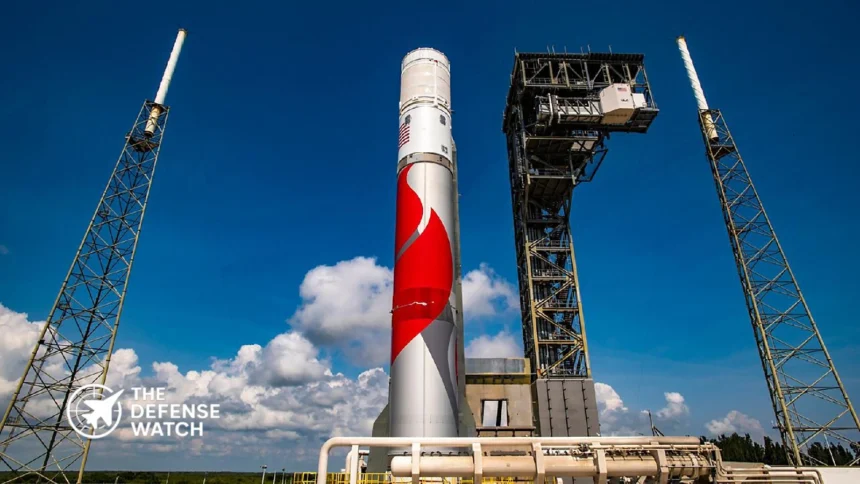
United Launch Alliance’s (ULA) Vulcan rocket failed approximately 10 minutes after liftoff from Florida on November 15, destroying all 40 Amazon Leo broadband satellites aboard and delivering a significant setback to the company’s commercial launch program.
The vehicle launched from Space Launch Complex 41 at Cape Canaveral Space Force Station at approximately 12:40 p.m. Eastern Time. ULA subsequently confirmed that an in-flight anomaly prevented the rocket from delivering its payload into the planned orbit.
The failure marks the first outright mission loss in ULA’s history since the company was established in 2006 as a joint venture between Boeing and Lockheed Martin.
The precise technical cause remains undetermined. ULA said it would work with Amazon and other relevant organizations to investigate the incident, identify the failure mechanism and establish corrective measures before returning the rocket to flight.
What Happened During the Vulcan Launch?
The mission, designated Leo Vulcan 1 (LV-01), was intended to begin ULA’s 38-launch partnership with Amazon for deploying its Leo satellite constellation.
The rocket carried 40 satellites designed to provide broadband internet connectivity through a network in low Earth orbit.
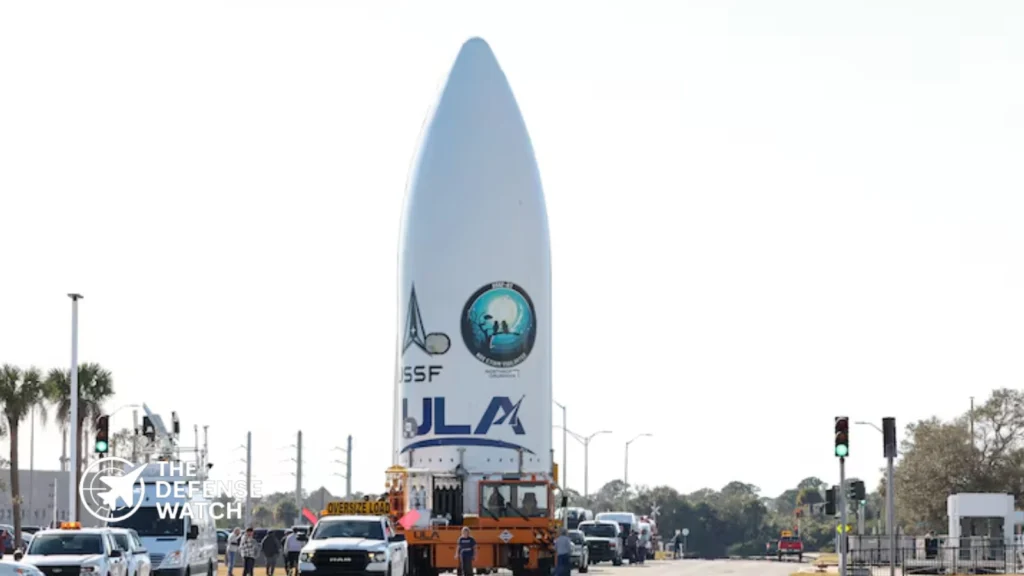
According to ULA, information received by its launch director confirmed that the vehicle experienced an anomaly approximately 10 minutes after liftoff and failed to complete the mission.
In its initial statement, the company said:
We will work closely with our customer and other appropriate organizations to find the cause, determine the appropriate corrective action and return to flight as quickly as possible.
The available reporting indicates that the initial solid rocket booster phase appeared to proceed normally. However, subsequent flight events did not follow the expected mission profile.
CBS News reported that the first-stage engines appeared to operate longer than anticipated and that the Centaur upper stage subsequently encountered problems during its planned engine firing.
These observations provide useful context, but they do not establish the precise cause of the failure. ULA has not publicly identified a failed component or confirmed a specific technical malfunction. CBS News+1
Why the Failure Matters for ULA’s Vulcan Program
The failure is particularly significant because Vulcan had only completed four previous missions before its November 15 flight.
Introduced as ULA’s next-generation launch vehicle, Vulcan is intended to replace the company’s Atlas V and Delta IV launch systems.
The rocket is also important to U.S. national security space operations. Its planned missions include deploying military communications, navigation, missile-warning and other government satellites.
Before the Amazon mission, Vulcan had experienced technical problems involving its solid rocket booster nozzles on two earlier flights.
During an October 2024 mission, one booster experienced a nozzle-related anomaly. A similar problem occurred during the February 12, 2026, USSF-87 mission for the U.S. Space Force.
Although both earlier missions successfully delivered their payloads, the recurring issue prompted additional technical reviews.
The Space Force subsequently paused national security launches aboard Vulcan while ULA investigated the booster problem and developed corrective measures.
ULA announced in October 2026 that it had identified several potential contributors to the earlier solid rocket booster anomaly and introduced nozzle design and manufacturing process improvements.
The November mission was intended to demonstrate the updated configuration during Vulcan’s return to flight.
Importantly, early reporting from the November 15 launch indicated that the solid rocket boosters appeared to perform normally. This means the latest mission failure should not automatically be attributed to the earlier nozzle problem.
The investigation will need to establish whether the failure involved the first-stage propulsion system, the Centaur upper stage, vehicle guidance or another component.
Amazon Leo Loses Its First Vulcan Satellite Delivery
For Amazon, the failed launch represents the loss of an important batch of satellites intended to accelerate the deployment of its broadband internet network.
Previously known as Project Kuiper, Amazon Leo is designed to compete with established low Earth orbit internet services, particularly SpaceX’s Starlink.
Amazon had selected multiple launch providers to deploy the constellation, including ULA, Arianespace, Blue Origin and SpaceX.
The November mission was particularly important because it represented the first Vulcan launch carrying Amazon Leo satellites.
According to Amazon’s November 9 announcement, ULA is contracted to conduct 38 Vulcan missions for the program, with the rocket expected to deploy more than 1,500 first-generation Leo satellites.
The company had also invested in dedicated launch infrastructure at Cape Canaveral to support more frequent Vulcan missions.
Amazon said the infrastructure would allow ULA to prepare two Vulcan missions simultaneously and potentially reduce turnaround times between launches to days or weeks under suitable conditions.
Losing 40 satellites does not eliminate Amazon’s broader deployment effort, but it removes a substantial payload from a program that depends on maintaining a regular launch schedule.
Amazon also expressed confidence in its launch partner following the incident, acknowledging the risks associated with inaugural missions.
The company will now need to account for the investigation and any resulting changes to ULA’s launch schedule.
ULA’s Failure Adds Pressure to an Already Competitive Launch Market
The incident has implications beyond the immediate loss of Amazon’s satellites.
ULA occupies an important position in the U.S. launch industry, particularly for missions requiring access to demanding orbital destinations and national security payloads.
Its Vulcan rocket was developed to provide a modern launch option for commercial and government customers following the retirement of older launch vehicles.
However, repeated technical problems can affect customer confidence, launch availability and the ability to maintain contracted schedules.
The latest failure also comes at a difficult time for the broader U.S. launch market.
SpaceX has established a high launch cadence through its Falcon 9 program, while Blue Origin is working to expand its New Glenn operations.
Amazon’s decision to distribute satellite launches across several providers was intended to reduce dependence on a single rocket system.
Its launch portfolio includes:
- United Launch Alliance: 38 contracted Vulcan missions.
- Blue Origin: 24 New Glenn missions.
- Arianespace: 24 Ariane 6 missions.
- SpaceX: 13 Falcon 9 missions.
These arrangements give Amazon multiple routes to deploy its constellation, although the availability and operational readiness of each launch vehicle remain important considerations.
For ULA, the challenge is to determine whether the latest anomaly represents an isolated failure or a broader technical issue requiring additional changes to the Vulcan system.
Implications for U.S. National Security Space Launches
The Vulcan failure also deserves attention from the U.S. Department of Defense and Space Force because of the rocket’s role in the National Security Space Launch program.
ULA and SpaceX are the two primary providers certified to launch the most sensitive U.S. national security payloads.
The earlier Vulcan grounding had already forced the Space Force to adjust parts of its launch manifest.
According to Air & Space Forces Magazine, several missions originally scheduled for Vulcan were reassigned to SpaceX vehicles, including Falcon 9 and Falcon Heavy.
The latest failure could complicate the process of restoring confidence in Vulcan, particularly if the investigation identifies a problem that requires substantial redesign or additional flight testing.
However, a commercial launch failure does not automatically establish that the rocket is permanently unsuitable for military missions.
The Space Force will need to examine the investigation findings, corrective actions and subsequent flight performance before determining when Vulcan can resume national security launches.
That process is particularly important for military spacecraft that support missile warning, satellite communications, navigation and space surveillance.
Investigation Will Determine Vulcan’s Return-to-Flight Timeline
ULA has not announced a confirmed return-to-flight date following the November 15 failure.
The company must first establish the cause of the anomaly and determine whether corrective engineering work, component replacements or additional testing will be required.
The investigation will also be important for Amazon, which needs predictable access to launch vehicles to expand its satellite network.
The failed mission demonstrates that resolving one technical problem does not necessarily establish the reliability of an entire launch vehicle. Vulcan’s earlier booster issues had prompted extensive corrective work, but the latest failure occurred during a separate mission and requires its own technical assessment.
For now, the central question is whether ULA can identify and correct the problem without creating further delays for its commercial and national security customers.
Until the company releases more technical information, the precise failure mechanism and the impact on future Vulcan missions remain uncertain.