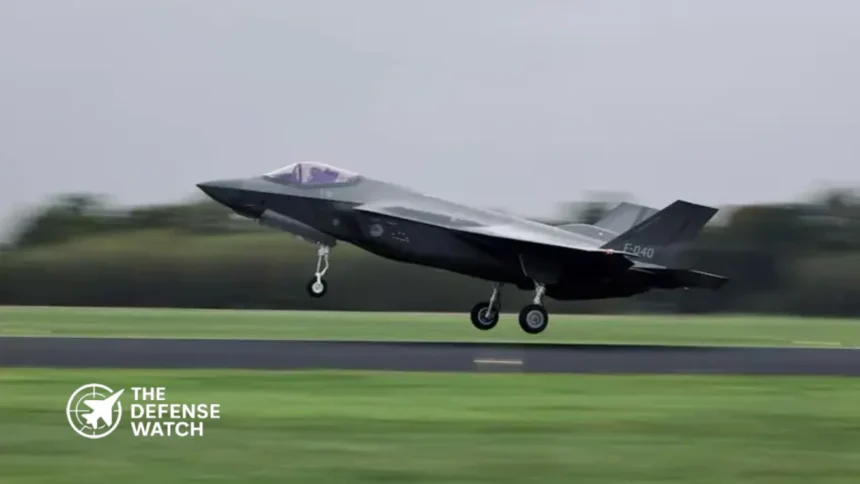
The Netherlands has committed F-35A Lightning II fighters to NATO’s Steadfast Noon 2026 nuclear deterrence exercise, which began in Italy on October 13. The annual training brings together aircraft and personnel from 17 NATO member countries to rehearse procedures supporting the alliance’s nuclear mission.
The Dutch Ministry of Defence confirmed the country’s participation on October 13, identifying the F-35 as its aircraft for the nuclear mission. NATO said the exercise is intended to maintain readiness and test deterrence procedures, with no live weapons used during the training.
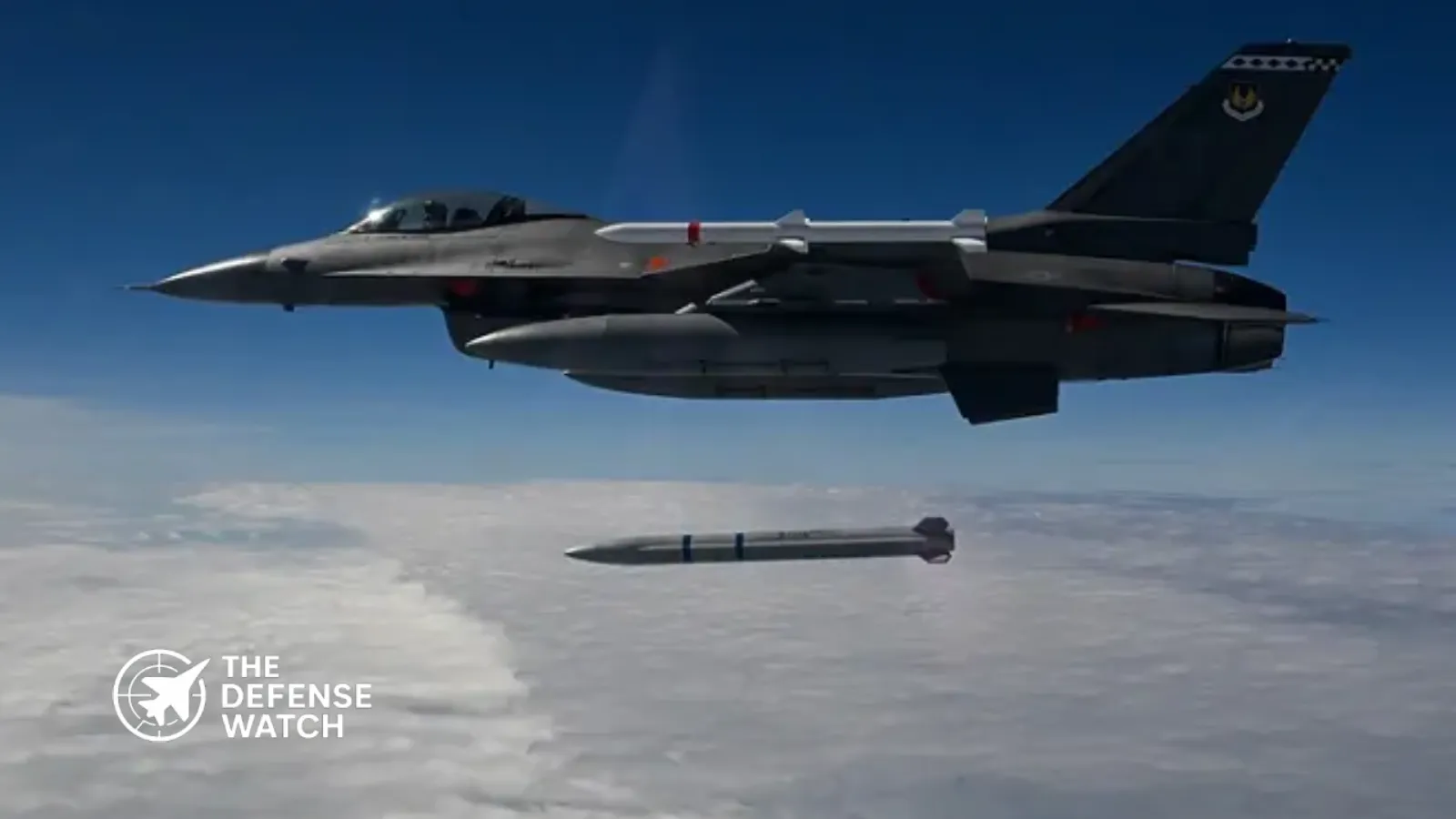
The deployment reflects the Netherlands’ transition from the F-16 Fighting Falcon to the F-35A for its contribution to NATO’s nuclear deterrence arrangements. It also places the aircraft within a multinational training framework that depends on coordinated air operations, trained personnel and common procedures.
Why the Dutch F-35A matters to NATO’s nuclear mission
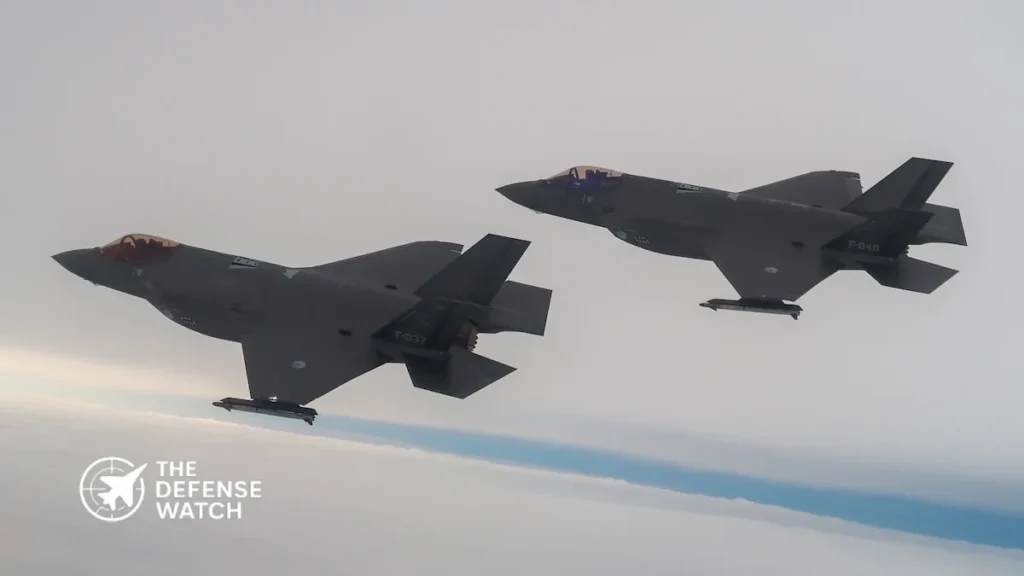
The F-35A is a conventional multirole fighter that has also been certified for the Netherlands’ assigned nuclear role within NATO. Aircraft capable of performing both conventional and nuclear missions are known as dual-capable aircraft, or DCA.
According to the Dutch Ministry of Defence, the F-35 took over the Netherlands’ nuclear mission from the F-16 on June 1, 2024, following a testing and certification process. The Netherlands became the first European country to transition to the F-35 for this NATO role. Volkel Air Base is the home base for the Dutch squadron assigned to the mission.
That transition matters because nuclear deterrence involves more than the aircraft itself. The participating forces must maintain the personnel qualifications, security arrangements, planning procedures and coordination needed to support the mission.
The F-35’s advanced sensors, data-sharing capabilities and low-observable design also give it a different conventional combat profile from the older F-16. However, these characteristics should not be confused with proof of a specific nuclear mission capability. The Netherlands’ official certification and NATO exercise participation establish its assigned role, while detailed operational procedures remain outside the public information available.
Steadfast Noon tests procedures, not live nuclear weapons
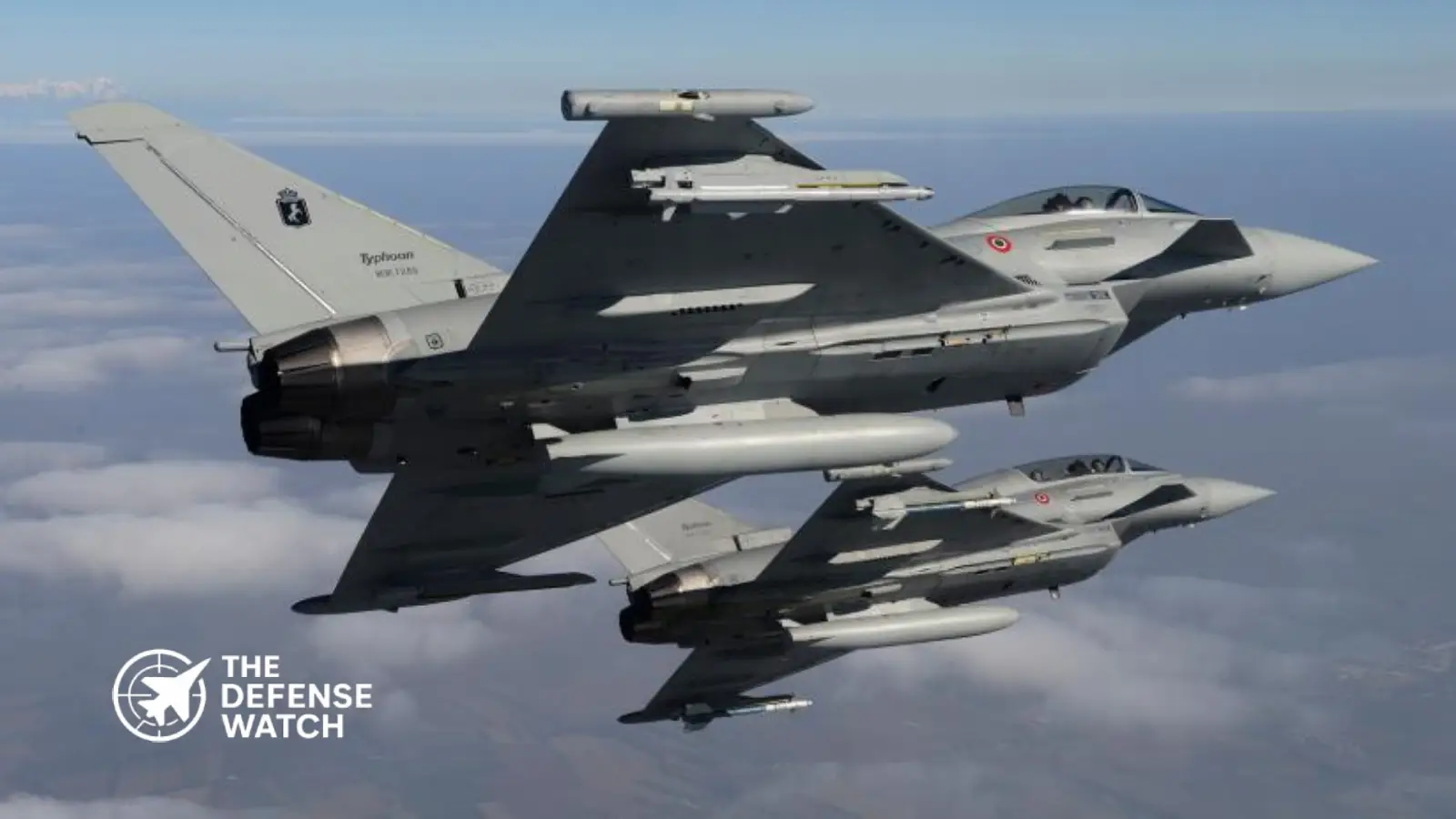
Steadfast Noon is NATO’s recurring nuclear deterrence exercise, held annually to rehearse the alliance’s readiness and coordination. Its 2026 edition is hosted in Italy and involves 17 nations, according to NATO and the Dutch Ministry of Defence. Both organizations describe the exercise as routine training that is not directed against a particular country.
The exercise does not involve live nuclear weapons. Instead, participating forces rehearse scenarios and procedures associated with the alliance’s deterrence mission. This distinction is important: participation demonstrates involvement in training, not that nuclear weapons have been deployed on participating aircraft.
NATO’s nuclear deterrence arrangements combine several elements, including US nuclear forces stationed in Europe, allied dual-capable aircraft and conventional support capabilities. Air-to-air refueling, surveillance, command and control, and other supporting activities help make complex multinational operations possible.
Steadfast Noon provides an opportunity to test how those elements work together. Its practical value lies in rehearsing coordination and readiness under exercise conditions rather than demonstrating a live nuclear strike.
What the deployment says about European air power
The Dutch contribution illustrates how European NATO members are adapting their air forces to maintain established alliance commitments while replacing older aircraft with newer platforms.
The F-35 transition also links conventional air combat modernization with the Netherlands’ nuclear deterrence responsibilities. The same aircraft family supports multiple mission sets, although the equipment, certification and procedures required for each role differ.
For NATO, the operational challenge is not simply having compatible aircraft. The alliance must ensure that national forces can coordinate across airbases, command structures and mission requirements. Exercises such as Steadfast Noon give participating countries a setting in which to practice those arrangements.
The Netherlands’ participation should nevertheless be viewed in proportion. One country’s contribution does not, by itself, establish a change in NATO’s overall nuclear posture or demonstrate a new operational capability. The publicly available announcements do not disclose the number of Dutch aircraft assigned to this year’s exercise, individual flight schedules or detailed mission scenarios.
A continuing role for the Dutch F-35 fleet
The Netherlands’ F-35A fleet now supports both conventional air operations and the country’s assigned contribution to NATO’s nuclear deterrence mission. The 2026 Steadfast Noon exercise continues that role through multinational training in Italy.
The confirmed facts are straightforward: the Netherlands is participating with F-35 fighters, the exercise involves 17 NATO countries, and no live nuclear weapons are used. The operational value lies in maintaining the training and coordination required for a complex alliance mission, rather than in any publicly announced change to nuclear deployment policy.