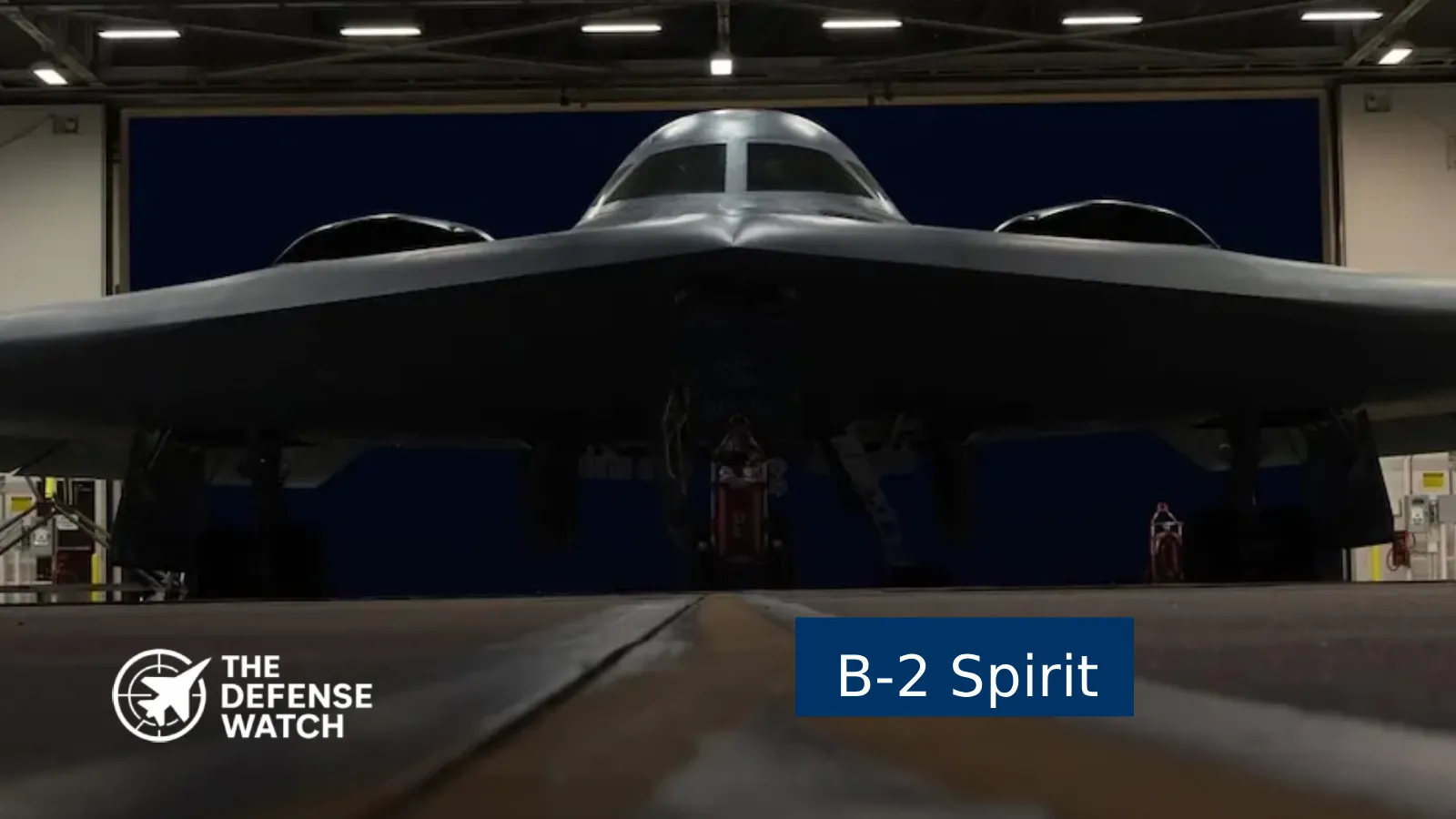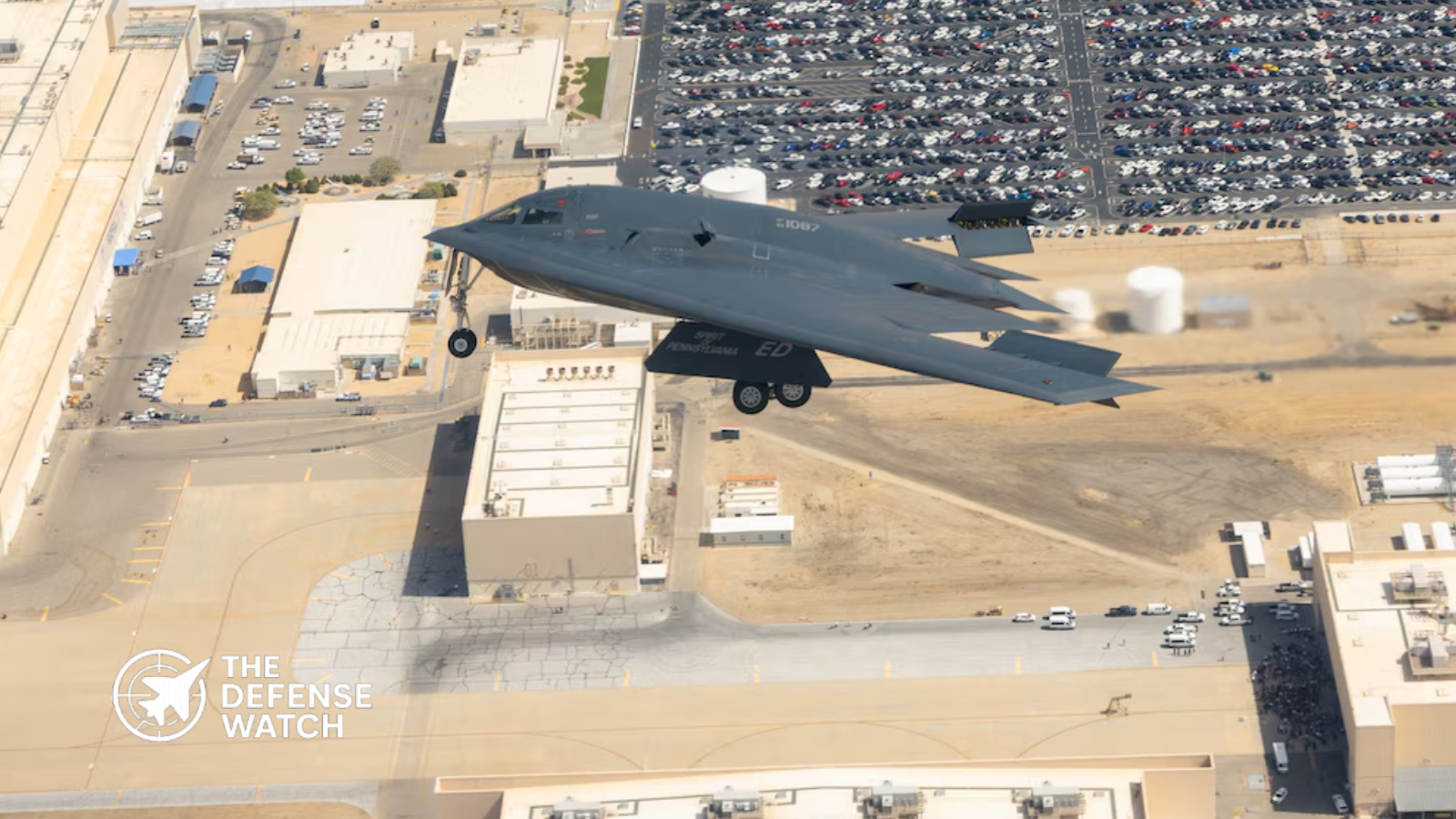
The U.S. Air Force’s B-2 Spirit of Kitty Hawk returned to Whiteman Air Force Base, Missouri, on October 7, 2026, following scheduled depot maintenance by Northrop Grumman that included structural repairs and restoration of the bomber’s low-observable surfaces, according to Defence Industry Europe.
The aircraft underwent maintenance at Air Force Plant 42 in Palmdale, California, where Northrop Grumman supports the B-2 fleet. Its return restores another aircraft to the Air Force’s maintenance and modernization pipeline, although the return itself does not establish that the bomber is immediately available for operational missions.
Defence Industry Europe reported that the Air Force plans to send the aircraft through the 509th Bomb Wing’s modification line for additional low-observable and communications upgrades during October. The specific work schedule and completion status of those upgrades have not been independently confirmed in the available official sources.
Why the overhaul matters for B-2 readiness
The B-2’s stealth characteristics depend on more than its distinctive flying-wing shape. Its low-observable performance combines aircraft geometry, composite materials and specialized coatings to reduce its signatures and complicate detection by air-defense systems.
The U.S. Air Force explains that the bomber’s low observability involves reduced radar, infrared, acoustic, electromagnetic and visual signatures. Many details of the technology remain classified.
Maintaining these characteristics requires specialized inspection and repair. Damage, surface deterioration and imperfections around access panels can affect the aircraft’s low-observable condition, making restoration an important part of sustaining the fleet rather than a cosmetic refurbishment.
The Air Force’s previous descriptions of B-2 maintenance show how demanding the process can be. In October 2024, Air Force Global Strike Command reported that the bomber Spirit of Nebraska completed programmed depot maintenance in 379 days, compared with a historical average of approximately 470 days. The service said the work included extensive low-observable restoration.
Those figures provide context for the maintenance burden, but they should not be applied directly to Spirit of Kitty Hawk. No verified duration for the latest overhaul has been established in the available reporting.
A small bomber fleet makes each return relevant
The B-2 fleet is limited in size, which makes aircraft availability an important consideration for U.S. long-range strike planning.
The Air Force has previously described a fleet of 20 B-2 aircraft. The aircraft supports both conventional strike missions and the nuclear mission, giving it a role in U.S. strategic deterrence as well as long-range conventional operations.
With a fleet this small, depot maintenance can temporarily reduce the number of aircraft available for training, deployments and operational tasking. Returning an aircraft to its home base is therefore a useful readiness milestone, although it does not reveal how many bombers are fully mission-capable at any given time.
The Air Force has not publicly established, in the sources reviewed here, the current number of operationally available B-2s or the effect of this particular return on fleet-wide readiness.
Maintenance and modernization go together
The B-2 sustainment effort extends beyond restoring its external surfaces. The Air Force is also working to improve the aircraft’s communications, mission systems and survivability as potential adversaries develop more capable air-defense networks.
In a June 2025 report, the Air Force Nuclear Weapons Center described modernization efforts intended to improve the B-2’s beyond-line-of-sight satellite communications and its ability to process and exchange mission information. The same report discussed work on low-observable materials and systems intended to improve survivability in contested environments.
These upgrades address different but related requirements. Low-observable maintenance helps preserve the aircraft’s designed signature characteristics, while communications and mission-system improvements support the exchange of information needed to plan and conduct long-range missions.
However, the available reporting does not establish which specific communications or survivability modifications have been installed on Spirit of Kitty Hawk during its latest depot period. The planned modification work should not be confused with equipment already installed or certified for operational use.
The B-2’s role as the Air Force develops the B-21
The B-2 remains part of the U.S. Air Force’s long-range strike force while the service develops the B-21 Raider as its next-generation stealth bomber.
The two programs occupy different stages of their service lives. The B-2 is an established operational aircraft requiring continued maintenance and upgrades, while the B-21 is intended to modernize the bomber force for future missions. The Air Force’s continued investment in B-2 sustainment reflects the need to preserve existing capabilities while the newer aircraft progresses toward operational service.
Northrop Grumman’s role in maintaining the B-2 is consequently important beyond individual aircraft returns. The company must support a specialized aircraft with complex low-observable materials and maintenance requirements while the Air Force continues to modernize its long-range strike capabilities.
The return of Spirit of Kitty Hawk is a maintenance milestone, not evidence of a new combat capability or a change in the bomber’s performance. Its operational significance will depend on the completion of any remaining modifications, subsequent inspections and the Air Force’s determination of its mission readiness.