Executive Summary
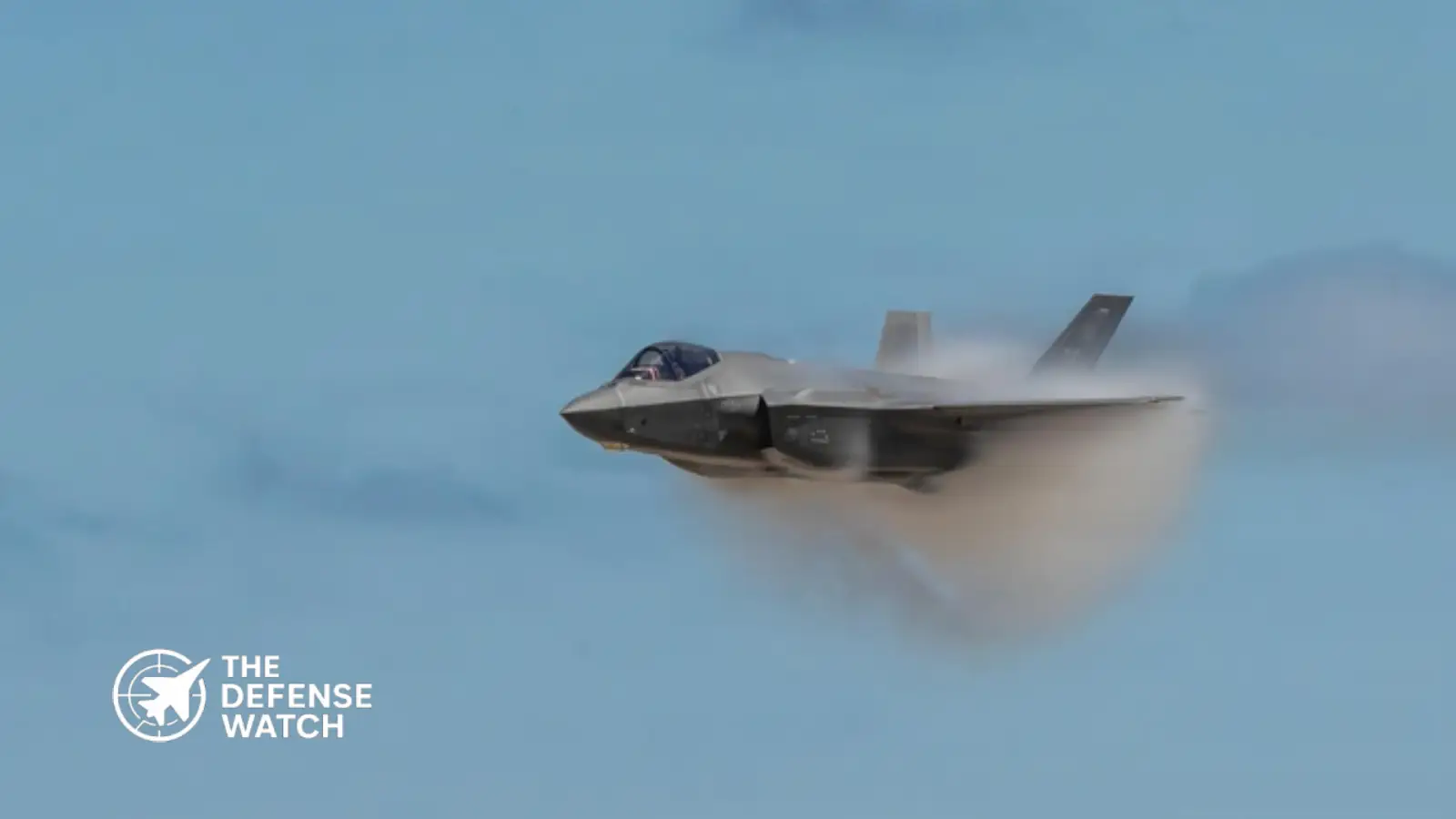
- Finland presented its first two F-35A Lightning II fighters at Rovaniemi on October 1, marking the start of domestic F-35 training and integration after the aircraft arrived in Finland on September 18.
- Finland is acquiring 64 F-35A aircraft under its Hornet replacement program. Initial operational capability is planned for early 2028, with the F/A-18 and F-35 fleets operating in parallel until full operational capability is scheduled for the end of 2030.
- The transition has significance beyond fighter replacement. Finland is building its F-35 force around Arctic operations, NATO air defense, cooperation with neighboring F-35 operators and a distributed support network intended to sustain operations in northern Europe.
Finland Begins F-35 Transition With NATO and Arctic Focus
Finland has formally begun the domestic phase of its transition to the Lockheed Martin F-35A Lightning II, presenting the first aircraft at Rovaniemi Air Base in Lapland on October 1. The milestone follows the September 18 arrival of aircraft JF-510 and JF-512, which became the first Finnish F-35s to reach home soil.
The arrival does not represent the immediate replacement of Finland’s Boeing F/A-18C/D Hornet fleet. Instead, it begins a phased capability transition that combines aircraft deliveries, pilot conversion, maintenance training, weapons integration, information systems and NATO interoperability.
Finland plans to operate the F-35 alongside the Hornet through the transition period. The Lapland Air Wing is scheduled to reach initial operational capability with the F-35 in early 2028, while the Karelia Air Wing is expected to begin receiving the aircraft during 2028. Full operational capability is planned by the end of 2030.
From Hornet Replacement to a New Air Combat Architecture
Finland selected the F-35A in December 2021 to replace its F/A-18 fleet. The procurement covers 64 F-35A Block 4 aircraft, together with weapons, training, maintenance equipment, information systems and sustainment arrangements.
The original Finnish government decision established a long-term replacement program rather than a simple aircraft purchase. The F-35 system was selected to provide air defense, intelligence and reconnaissance functions, and support for Finnish land and maritime forces through its sensors and networked architecture.
That distinction is important because Finland’s transition is taking place while the operational environment around the Nordic region is changing.
Finland joined NATO in April 2023. Its accession connected Finnish air defense planning with a broader Allied command structure spanning the Baltic Sea, Nordic region, North Atlantic and Arctic approaches.
The F-35 therefore enters Finnish service as both a national combat aircraft and a platform designed to operate within a larger Allied information and airpower network.
Rovaniemi Places the F-35 at the Center of Finland’s Arctic Posture
Rovaniemi is particularly significant because the Lapland Air Wing is responsible for Finland’s northern air operations.
The Arctic operating environment imposes requirements that go beyond aircraft performance. Finland must maintain surveillance, aircraft readiness, maintenance capacity and dispersed operating options across a large northern territory where weather, infrastructure and distances affect military operations.
NATO has also increased its focus on the Arctic and High North. The Alliance established Arctic Sentry in 2026 and created a multinational Forward Land Forces presence in Finland, while a NATO Combined Air Operations Centre in Bodø, Norway, provides an additional command node for air operations across the Nordic and High North region.
This creates a wider operational framework in which Finnish F-35s can contribute to Allied air awareness and defensive operations.
The strategic value is therefore not simply the F-35’s individual combat capability. It is the combination of the aircraft, Finnish basing, NATO command arrangements and cooperation with neighboring F-35 operators.
Finland’s F-35 Transition Timeline
| Milestone | Planned or confirmed timing |
|---|---|
| Finland selects F-35A | December 2021 |
| 64 F-35A aircraft procurement authorized | December 2021 |
| First Finnish aircraft enter U.S. training pipeline | 2025-2026 |
| First F-35As arrive in Finland | September 18, 2026 |
| First two aircraft presented at Rovaniemi | October 1, 2026 |
| Domestic maintenance training begins | Late 2026 |
| Finnish pilot training at Rovaniemi | January 2027 |
| Lapland Air Wing F-35 initial operational capability | Early 2028 |
| Karelia Air Wing begins F-35 deliveries | 2028 |
| Full Finnish F-35 operational capability | End of 2030 |
The schedule illustrates why Finland is retaining the Hornet during the transition. The country cannot treat aircraft delivery as equivalent to operational capability.
A modern fighter fleet requires trained pilots, maintainers, mission planners, weapons personnel, information systems, maintenance infrastructure and established operating procedures before it can replace an existing combat capability at scale.
The Training Pipeline Is as Important as the Aircraft
Finland’s first eight F-35s are being used for training at Ebbing Air National Guard Base in Arkansas. Finnish personnel are being trained in areas that include flying, maintenance, information systems, logistics and mission support.
The U.S. training phase provides the initial cadre of personnel needed to establish the Finnish F-35 training system.
The next stage moves that knowledge to Finland. Domestic maintenance training begins at Rovaniemi later in 2026, while Finnish pilot training is scheduled to begin in January 2027.
The process illustrates a central issue in fifth-generation fighter procurement. The aircraft represents only one part of the capability.
The supporting digital infrastructure, technical workforce and mission preparation system are essential to converting an F-35 fleet into an operational force.
NATO Integration Is Becoming a Practical Capability
Finland’s NATO integration is also moving beyond political membership toward routine military interoperability.
In September 2026, Finland deepened cooperation with Norway, Denmark, the Netherlands, Belgium and the United States around F-35 operations. The Capacity on Call framework provides mechanisms for sharing aircraft, personnel and weapons-related resources among participating European F-35 operators.
This matters because the Nordic region is developing a relatively concentrated community of F-35 users.
Norway and Denmark already operate the aircraft, while Finland is now entering the same ecosystem. Sweden, although operating a different fighter fleet, also plays a major role in Nordic air defense and NATO regional operations.
For Finland, access to a wider F-35 support and training network can reduce the degree to which its new fighter capability has to operate as a standalone national system.
It also creates opportunities for common training, cross-servicing and logistics arrangements, particularly during periods when individual countries face aircraft availability or maintenance constraints.
The F-35 Changes How Finland Uses Fighter Aviation
The F/A-18 has provided Finland with a capable multirole fighter force for decades. The F-35 introduces a different approach centered on low observability, integrated sensors, information sharing and networked operations.
Finland’s government has described the F-35’s role in terms of counter-air operations, situational awareness and the ability to generate and share target information for other forces.
That creates an important difference in how the aircraft should be assessed.
The F-35 is not simply a newer aircraft replacing an older aircraft on a one-for-one basis. Its value within the Finnish defense system depends on how effectively its sensors, communications, weapons and information systems connect with other elements of the force.
This is particularly relevant for Finland, where air operations must support land and maritime forces as well as defend national airspace.
F/A-18 to F-35 Transition
| Area | F/A-18C/D Hornet | F-35A Lightning II |
|---|---|---|
| Primary Finnish role | Multirole fighter and air defense | Multirole fighter, air defense and networked sensing |
| Generation | Fourth generation | Fifth generation |
| Finnish transition | Legacy fleet | Replacement fleet |
| NATO environment | Increasingly integrated after Finland joined NATO | Designed for extensive interoperability with NATO F-35 users |
| Finnish basing transition | Existing Hornet infrastructure | New F-35 infrastructure and support system |
| Fleet transition | Phased retirement through 2030 | Full operational capability planned by end of 2030 |
The table should not be interpreted as a direct measure of combat effectiveness. Actual operational performance depends on training, weapons, support assets, mission planning, availability and the wider defense network.
Arctic Operations Favor a Distributed Approach
Finland’s northern geography makes survivability and continuity of operations important considerations.
The F-35’s integration into Finland’s existing operating concept will therefore need to work alongside infrastructure, dispersed operations and ground-based air defense rather than operating as an isolated fighter capability.
Finland’s defense ministry has previously described the F-35 as part of a wider defense system that includes cooperation with land and maritime forces.
That approach is particularly relevant in the High North, where airfields and support infrastructure can become critical operational constraints.
NATO’s expanding Arctic posture adds another layer. The Alliance is increasing its ability to coordinate activity across northern Europe, while Allied F-35s from several nations have already operated from Finnish locations during multinational exercises.
The practical implication is that Finland’s F-35 force is entering service inside an increasingly interconnected Nordic airpower structure.
Industrial Participation Adds a Second Layer of Strategic Value
Finland’s F-35 program also includes domestic industrial participation.
Patria is establishing Finnish capability to assemble and later maintain and repair F135 engines. The company has said final assembly of the first Finnish F135 engines began at its Linnavuori facility, with production planned through 2030.
This is significant for Finland because fighter availability depends not only on aircraft deliveries but also on the ability to maintain engines, components and supporting equipment.
Industrial participation can therefore contribute to security of supply while creating domestic technical expertise around the aircraft fleet.
The Finnish government also structured the original F-35 procurement around security of supply and industrial cooperation requirements.
What Happens Between 2026 and 2030
The next four years will determine whether Finland can move from aircraft delivery to a mature operational capability on schedule.
Three areas deserve particular attention.
1. Domestic Training Capacity
Finland must expand the number of qualified pilots, maintainers and support personnel while transferring expertise from the U.S. training pipeline into its own bases.
2. Fleet Availability
The F-35 fleet must be integrated while the F/A-18 remains operational. Maintaining two fighter fleets creates additional training, maintenance and infrastructure demands during the transition.
3. NATO Interoperability
Finland will increasingly need to demonstrate that its F-35 force can operate with neighboring F-35 fleets, NATO command structures, shared support arrangements and common weapons practices.
The success of the transition will therefore be measured less by how many aircraft arrive in Finland and more by how quickly those aircraft become part of a sustainable combat system.
Strategic Outlook
Finland’s F-35 transition marks a major change in the country’s airpower architecture, but the most consequential element may be the network surrounding the aircraft.
The 64-aircraft fleet will be distributed between Finland’s fighter wings, with the Lapland Air Wing becoming the first Finnish formation to operate the F-35 exclusively once initial operational capability is reached.
At the same time, Finland is becoming part of a larger European F-35 community that includes Norway, Denmark, the Netherlands, Belgium and other NATO operators.
For Finland, that creates a potential operational advantage in interoperability and access to a wider support ecosystem. It also makes the country’s air defense increasingly connected to NATO’s northern airpower structure.
The immediate priority remains straightforward: convert aircraft deliveries into a trained, sustainable and operationally integrated fighter force without creating a capability gap during the Hornet-to-F-35 transition.
With the first Finnish F-35s now at Rovaniemi, that process has moved from preparation into domestic implementation.