Executive Summary
- Ukrainian defense technology adviser Serhii Beskrestnov reported that Russia used a specialized KRSN cumulative-cutting warhead on a jet-powered drone for the first time on September 30, 2026.
- Beskrestnov described the payload as containing a 40-kilogram main warhead and four additional strike modules. Those specifications have not been independently confirmed by Russian or Western primary sources.
- The reported design focus is significant because shaped and cutting charges are intended to concentrate explosive energy against structural materials. If the Ukrainian assessment is accurate, Russia would be adapting jet-powered UAVs for more specialized attacks against electricity transmission infrastructure and other steel structures.
Russia Uses Reported KRSN Warhead on Jet-Powered Drone
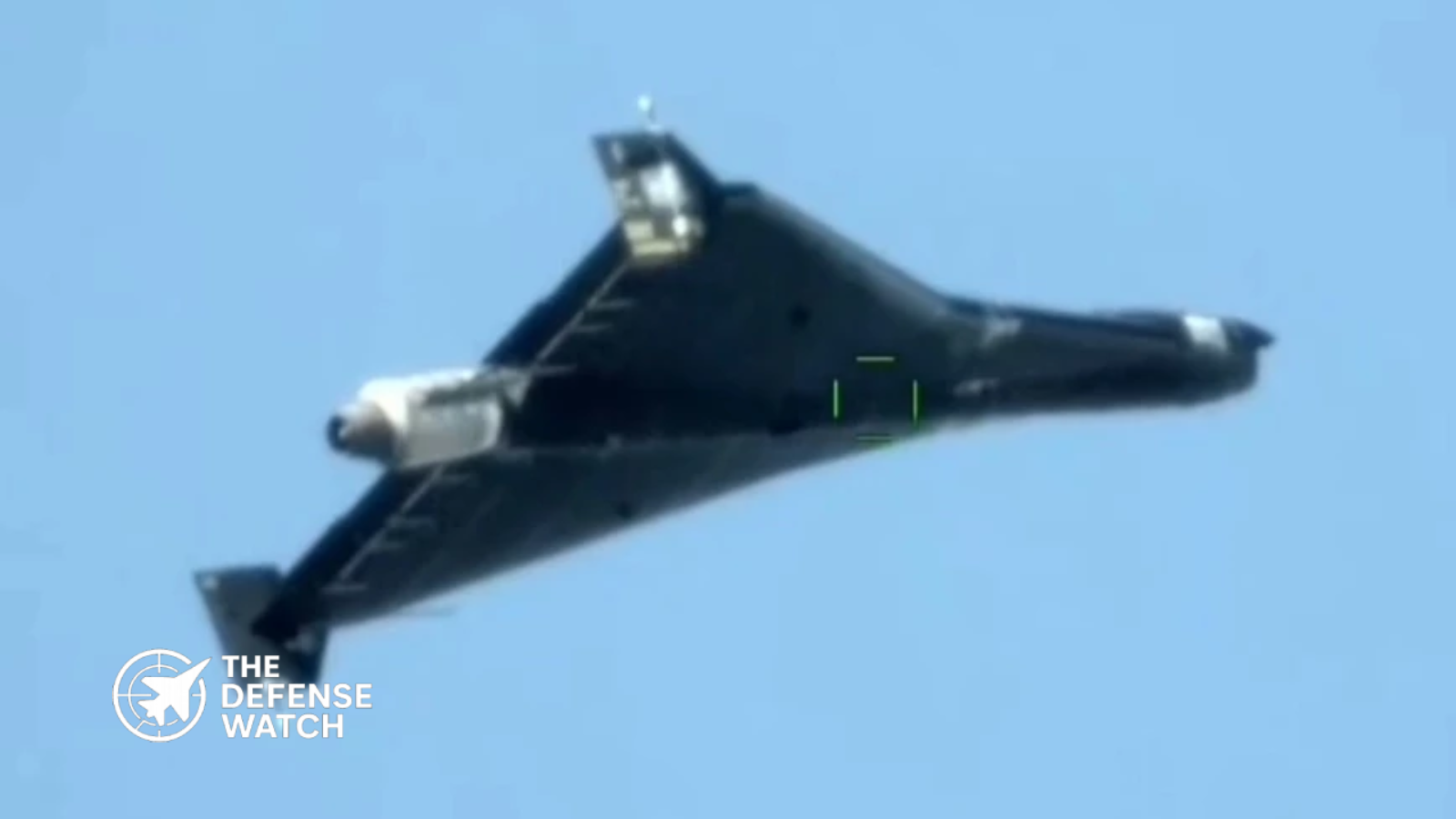
Russia reportedly used a new type of specialized warhead on a jet-powered unmanned aircraft during attacks against Ukraine on September 30, with the Ukrainian defense technology adviser Serhii Beskrestnov saying the payload was designed to damage high-voltage transmission towers and steel bridge structures. The report comes as Russia continues a large-scale campaign using drones and missiles against Ukrainian energy infrastructure ahead of the 2026-27 winter season.
Beskrestnov said the weapon, identified as KRSN, is a cumulative-cutting special payload consisting of a 40-kilogram main warhead and four additional strike modules. He said the system was used for the first time on a jet-powered UAV on September 30 and suggested that future attacks could focus on important high-voltage power lines.
There is an important qualification. The available reporting is based primarily on Beskrestnov’s assessment and does not yet provide independent confirmation of the KRSN designation, its construction, the exact drone used, or the measured damage produced by the payload. Those details should therefore be treated as reported rather than established specifications.
What Is the KRSN Warhead?
The KRSN has been described as a cumulative-cutting warhead, a concept related to shaped charges that concentrate explosive energy into a narrow area rather than relying primarily on broad blast effects.
The basic technology is well established. U.S. Army documentation describes shaped charges as devices that concentrate explosive force in a particular direction, forming a high-velocity jet from a liner that can penetrate metal and other hard materials. The Army also lists shaped charges among demolition systems used to create holes or cuts in metal, masonry and concrete.
That distinction matters for infrastructure attacks. A conventional blast warhead is generally intended to distribute destructive energy over a wider area, while a cutting or shaped charge concentrates its effect against a structural element.
Beskrestnov’s description suggests that the reported Russian payload is optimized for this second effect. However, there is not enough publicly verified information to determine how the four additional modules function, how they are arranged, or whether they are intended to produce simultaneous or sequential effects.
Reported KRSN Characteristics
| Characteristic | Reported information | Verification status |
|---|---|---|
| Payload designation | KRSN | Reported by Ukrainian sources |
| Warhead type | Cumulative-cutting special payload | Reported by Beskrestnov |
| Main warhead | 40 kg | Unverified outside Ukrainian reporting |
| Additional modules | Four strike modules | Unverified outside Ukrainian reporting |
| Intended targets | High-voltage pylons and steel bridge structures | Reported assessment |
| First reported use on jet-powered UAV | September 30, 2026 | Reported by Ukrainian sources |
| Exact UAV type | Not publicly established | Unconfirmed |
| Measured structural effects | Not publicly established | Unconfirmed |
The distinction between confirmed and reported information is particularly important because no Russian technical documentation has been publicly identified in the reporting reviewed for this article.
Why Targeting Power Transmission Structures Matters
Electricity transmission networks present a different military problem from conventional fixed facilities.
A generating station or substation can be a large and hardened target, while transmission infrastructure is distributed across a much wider geographic area. High-voltage towers and associated lines connect those nodes, creating a network in which localized damage can have effects beyond the immediate point of impact.
Ukraine has already experienced extensive Russian attacks against its energy system. The Institute for the Study of War reported that Russian forces conducted a major combined drone and missile strike on the night of September 29-30, primarily targeting energy infrastructure in and around Kyiv. Ukrenergo also reported outages caused by Russian attacks against energy infrastructure in several Ukrainian regions on September 30.
The reported KRSN payload would represent a further specialization of that campaign if its intended use is confirmed.
Rather than simply delivering explosive energy against an energy facility, a dedicated structural-cutting payload could be intended to damage specific components of the transmission network. The military value would depend on whether the weapon can reliably produce meaningful outages and how quickly damaged infrastructure can be repaired.
Jet-Powered Drones Add Another Layer
The reported KRSN deployment is also notable because it was carried by a jet-powered UAV.
Ukraine’s Air Force reported that Russia used large numbers of jet-powered drones during the September 29-30 attack period. The Institute for the Study of War, citing Ukrainian Air Force reporting, said 188 Shahed-type and related drones were launched overnight, including 86 jet-powered systems. During the day on September 30, another 285 strike drones were reported, including 174 jet-powered aircraft.
This indicates that jet-powered unmanned aircraft are becoming a meaningful component of Russia’s broader strike campaign rather than remaining an isolated experimental capability.
For Russia, combining a faster UAV platform with specialized payloads could support a wider effort to diversify the effects produced by mass drone attacks. The key question is not simply whether a new warhead exists, but whether specialized payloads can be produced and integrated at sufficient scale to alter the operational burden placed on Ukraine’s air defenses and repair infrastructure.
From General-Purpose Strike Drones to Specialized Payloads
The reported KRSN system fits a broader pattern in the evolution of long-range UAV warfare.
Early generations of one-way attack drones were largely valued for their ability to deliver relatively inexpensive explosive payloads against fixed targets. Over time, both Russia and Ukraine have increasingly adapted unmanned systems for different missions, including reconnaissance, decoy operations, electronic warfare and specialized strike effects.
A specialized structural-cutting warhead would represent another step in that process.
| Approach | Primary effect | Infrastructure implication |
|---|---|---|
| Conventional blast payload | Broad explosive effect | Damage to facilities and equipment |
| Fragmentation payload | Fragment effects over an area | Personnel and exposed equipment |
| Penetrating payload | Concentrated penetration | Hardened or protected targets |
| Reported KRSN concept | Concentrated structural cutting | Steel towers and bridge structures |
This does not establish that KRSN is more effective than conventional warheads. Its usefulness would depend on target geometry, weapon accuracy, payload reliability, target defenses and the ability of Ukrainian repair teams to restore damaged infrastructure.
The Air Defense Challenge
The reported development could also complicate Ukraine’s air-defense planning.
A specialized warhead does not necessarily make a drone harder to intercept. The primary defensive problem remains detecting, tracking and defeating the aircraft before it reaches its target.
However, Russia’s increasing use of different UAV configurations and payloads can complicate the task of determining what each incoming aircraft is intended to do.
Ukraine therefore faces a layered problem. It must defend critical infrastructure against missiles and large numbers of drones while also determining which threats are carrying specialized payloads and which are intended to saturate defenses or create other effects.
The September 30 attack illustrates the scale of that challenge. Ukrainian Air Force reporting cited by ISW described hundreds of drones launched during the overnight and daytime attack periods, including substantial numbers of jet-powered systems.
What the KRSN Report Does Not Yet Prove
Several important questions remain unanswered.
First, the exact technical configuration of the KRSN has not been independently documented. The 40-kilogram figure and four-module configuration come from Beskrestnov and have not been confirmed through a Russian technical document or an independently examined weapon recovery.
Second, the identity of the jet-powered UAV carrying the payload has not been conclusively established in the available reporting.
Third, there is no independently verified public assessment yet showing how effectively the payload damaged a transmission tower or bridge structure.
Finally, the report does not by itself demonstrate that Russia has begun a sustained campaign against Ukraine’s high-voltage transmission network using KRSN-equipped drones. Beskrestnov’s warning about future attacks is an assessment, not confirmation of a future Russian operational plan.
These distinctions are important because specialized weapons often receive attention before their production scale, reliability and battlefield effectiveness become clear.
Strategic Implications for Ukraine’s Energy Defense
If additional KRSN-equipped drones appear in future attacks, Ukraine could face pressure to strengthen protection around vulnerable transmission infrastructure rather than focusing protection only on major generation and distribution facilities.
That could increase demand for several defensive measures, including improved detection, distributed air-defense coverage, rapid repair capability and greater redundancy within the electrical network.
The infrastructure problem is therefore larger than the warhead itself. A transmission tower is one component within a larger electrical system, and the operational impact of destroying individual structures depends on network configuration, available alternate routes and the speed of repair.
For Russia, specialized warheads could offer another way to attack the physical links that keep Ukraine’s energy system connected. For Ukraine, the response is likely to involve both physical protection and continued efforts to make the grid resilient enough that individual strikes do not produce prolonged disruption.
What to Watch Next
The most important indicators will be operational rather than promotional.
First, additional confirmed uses. Repeated employment of the KRSN payload would provide stronger evidence that the September 30 incident was not an isolated test or limited deployment.
Second, recovered components. Independent examination of a complete or substantially intact payload could clarify the KRSN configuration, explosive arrangement and intended structural effect.
Third, target selection. A sustained pattern of attacks against transmission towers or bridge structures would provide stronger evidence that the reported payload is being used according to the mission described by Beskrestnov.
Fourth, production scale. The strategic significance of the system will ultimately depend on whether Russia can manufacture specialized warheads and integrate them with jet-powered UAVs in meaningful numbers.
For now, the KRSN report is best understood as an indication of continued Russian experimentation and specialization in long-range drone warfare, rather than proof of a fully established new strike capability.
Bottom Line
The reported first use of a KRSN cumulative-cutting warhead on a Russian jet-powered UAV is significant because it points toward greater specialization in the payloads carried by Russia’s expanding unmanned strike fleet.
Beskrestnov’s reported specifications, including the 40-kilogram main warhead and four additional modules, remain independently unverified. The underlying concept, however, is technically established: shaped charges can concentrate explosive energy against metal structures, making the reported focus on transmission towers and steel bridge structures technically plausible.
The more important question is whether Russia can turn this reported capability into a repeatable operational system. If further evidence confirms repeated KRSN use against Ukrainian infrastructure, the development would indicate a shift toward more specialized unmanned strike effects aimed not only at facilities, but at the structural components that connect critical infrastructure networks.