U.S. Navy Reveals ARAV-6 Launch During Pacific Dragon 2026
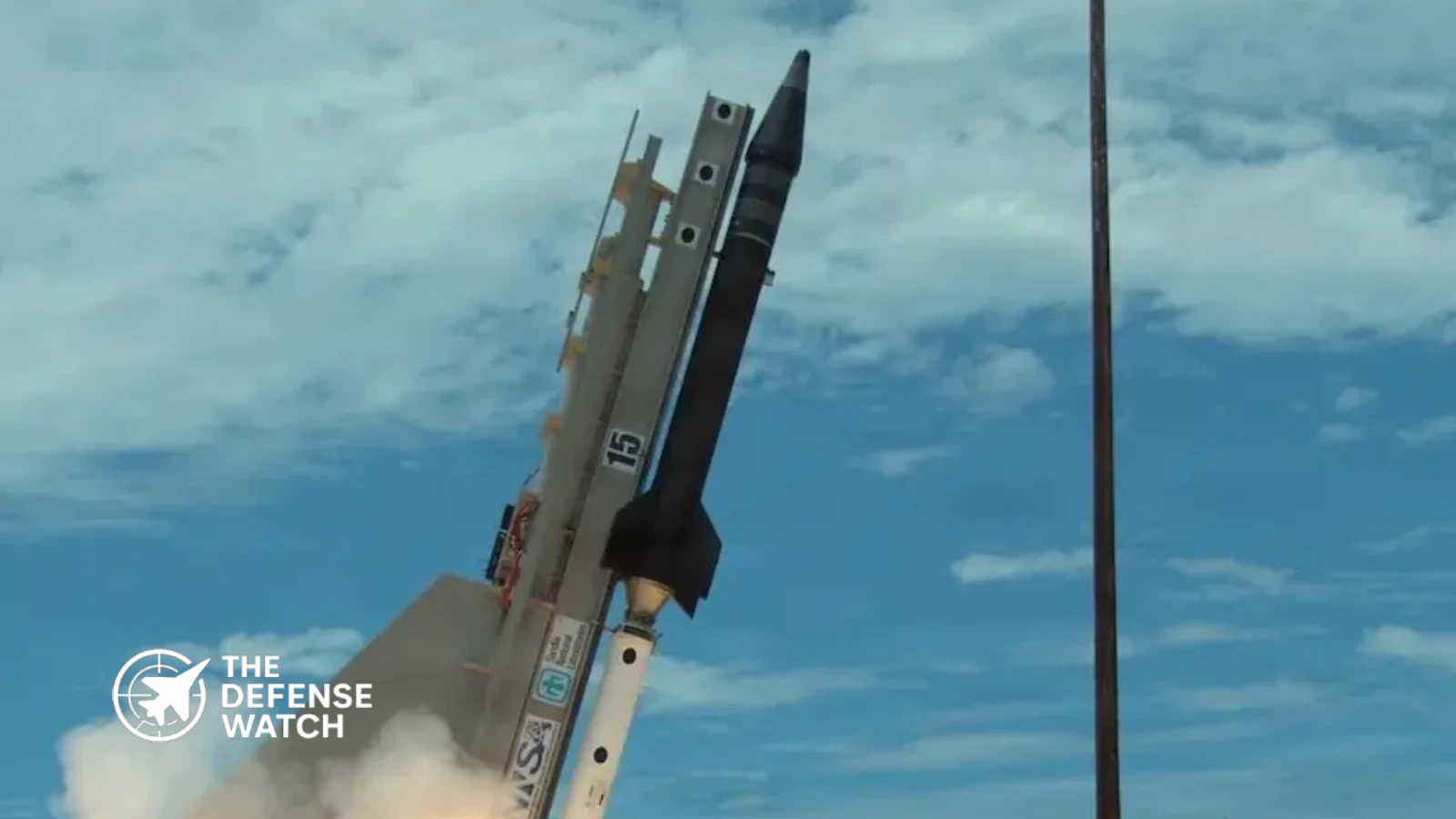
The ARAV-6 launch during Pacific Dragon 2026 provided a visible demonstration of the target activity supporting a multinational ballistic missile defense exercise around Hawaii. The U.S. Navy released imagery showing an Aegis Readiness Assessment Vehicle Six launching from the Pacific Missile Range Facility on August 6, during the latest iteration of Pacific Dragon.
Takeaways
The ARAV-6 launch supported a multinational missile defense exercise in Hawaii.
1. ARAV-6 Launched In Hawaii
The Aegis Readiness Assessment Vehicle Six launched from Pacific Missile Range Facility in Hawaii on August 6, 2026, during Pacific Dragon 2026.
2. Exercise Focused On Missile Defense
Pacific Dragon 2026 was designed to improve allied and partner capabilities to detect, track and report integrated air and missile defense targets.
3. Seven Nations Participated
The exercise brought together forces from the United States, Australia, Chile, Italy, Japan, the Republic of Korea and Spain.
4. Tactical Data Sharing Was Central
Participants used shared tactical data links and coordinated ballistic missile defense operations to improve interoperability among maritime forces.
5. Aegis Testing Benefits From Live Targets
The exercise gave the Missile Defense Agency an opportunity to collect live tracking data, assess sensor performance and support evaluation of Aegis ballistic missile defense capabilities in a realistic multinational setting.
The image was taken by U.S. 3rd Fleet personnel during the exercise and was subsequently published through the Defense Visual Information Distribution Service. The imagery is identified as public domain by the U.S. Department of Defense distribution platform.
The launch occurred as participating forces trained to improve their ability to detect, track and coordinate responses to ballistic missile targets. Pacific Dragon is conducted every two years by U.S. 3rd Fleet with support from the U.S. Missile Defense Agency.
ARAV-6 Launch Supports Ballistic Missile Defense Training
The ARAV-6, or Aegis Readiness Assessment Vehicle Six, serves as a target vehicle for missile defense training and assessment. Its launch allows participating forces to work against a representative ballistic target while exercising sensors, tactical data links, command and control processes and missile defense procedures.
The Pentagon and Missile Defense Agency have long used realistic target launches as part of the broader missile defense testing process. MDA describes flight testing as an important source of data for evaluating the operational effectiveness, suitability and survivability of missile defense systems.
The ARAV-6 launch Pacific Dragon 2026 therefore formed part of a larger training and assessment framework rather than representing an operational ballistic missile launch. The vehicle was used to support the exercise’s missile defense objectives.
That distinction is important because Pacific Dragon combines elements of operational training and missile defense assessment. The exercise is intended to improve how participating forces operate together against air and missile threats while providing data and experience that can be used to refine tactics and procedures.
Pacific Dragon 2026 Brings Seven Nations Together
Pacific Dragon 2026 took place in waters around the Hawaiian Islands from August 6 through August 13, according to the U.S. Navy. Other reporting from U.S. military sources places the broader exercise activity through August 15, including events around Kauai and the Pacific Missile Range Facility.
The exercise included the United States and six partner nations: Australia, Chile, Italy, Japan, the Republic of Korea and Spain. Chile and Spain were participating for the first time in Pacific Dragon, according to information released following the exercise.
The multinational composition is significant because ballistic missile defense increasingly depends on the ability of different military forces to share information quickly and maintain a common operational picture.
Pacific Dragon addresses that requirement through tactical data link information sharing and coordinated ballistic missile defense activities. The U.S. Navy said the exercise helped participating forces refine tactics, techniques and procedures for integrated air and missile defense.
Aegis System Remains Central To Naval Missile Defense
The exercise also provided an opportunity to operate and evaluate elements associated with the Aegis ballistic missile defense architecture.
The Missile Defense Agency describes Aegis BMD as the sea-based component of the U.S. missile defense system. U.S. Navy destroyers equipped with Aegis use the system’s sensors, combat system, command and control architecture and Standard Missile family to conduct ballistic missile defense missions.
Aegis BMD is designed to support engagements against ballistic missile threats across different phases of flight. The system incorporates SM-3 interceptors for midcourse ballistic missile defense and SM-6 capabilities for terminal defense against certain short-range ballistic missile threats.
That architecture makes realistic target activity particularly important. A missile defense network is not dependent on an interceptor alone. Sensors must detect and track a target, information must be exchanged among participating units, and command systems must process the data quickly enough to support an engagement.
Pacific Dragon places those functions into a multinational environment.
Why The ARAV-6 Launch Matters
The operational value of the ARAV-6 launch Pacific Dragon 2026 extends beyond the launch itself. The more important objective is the information and coordination generated by the event.
A ballistic missile defense scenario requires multiple systems to work together. Ships and shore-based facilities must establish tracks, exchange data and maintain accurate information about the target. Allied forces must also understand how information generated by one nation’s systems can be used by another nation’s forces.
Pacific Dragon provides a recurring venue for practicing those processes.
The U.S. Navy said the 2026 exercise improved interoperability through shared tactical data links and coordinated ballistic missile defense operations. The service also said the exercise helped refine the tactics and procedures needed for regional integrated air and missile defense.
For the Missile Defense Agency, the exercise provided another opportunity to support warfighters while gathering live tracking data and evaluating sensor performance. The agency also used the exercise environment to help assess and refine Aegis ballistic missile defense capabilities.
Hawaii Provides A Realistic Missile Defense Test Environment
The Pacific Missile Range Facility on Kauai plays an important role in U.S. missile defense testing and training.
MDA identifies the Aegis Ashore Missile Defense Test Complex at the Pacific Missile Range Facility as a test and evaluation center supporting development of Aegis capabilities.
The location also provides access to the broader Hawaiian operating area and Pacific test ranges. That allows missile defense exercises to combine land-based facilities with maritime forces operating offshore.
The setting has been used for earlier Pacific Dragon exercises as well. During Pacific Dragon 2024, for example, an Aegis Readiness Assessment Vehicle Group B was launched from Pacific Missile Range Facility as part of the multinational exercise.
Earlier iterations also included ballistic missile tracking and missile defense training involving U.S. forces and allied navies.
Multinational Interoperability Is A Key Objective
One of the clearest themes of Pacific Dragon 2026 was interoperability.
The exercise was not limited to testing individual weapon systems. Instead, it focused on how multiple nations can connect sensors, data links, command systems and operational procedures during a missile defense scenario.
That requirement is increasingly important for U.S. forces operating with allies across the Indo-Pacific. A regional missile defense network can involve ships from several navies, shore-based sensors and command centers separated by significant distances.
The ability to exchange accurate information quickly can determine whether participating forces maintain a shared understanding of an incoming target.
Vice Adm. Marc Miguez, commander of U.S. 3rd Fleet, said the exercise strengthened interoperability, information sharing and the tactics and procedures required for integrated air and missile defense.
The participation of Australia, Japan and South Korea also continues a pattern of multinational missile defense cooperation in the Pacific. Chile and Spain added new participants to the 2026 exercise, broadening the number of partners involved.
ARAV-6 Launch Highlights Broader Missile Defense Approach
The newly released image of the ARAV-6 launch offers only one snapshot of Pacific Dragon 2026, but it illustrates an important part of the exercise’s structure.
The target launch provided participating forces with a realistic ballistic missile defense event. The larger exercise then connected that event to tactical data sharing, sensor tracking, command and control and multinational coordination.
That combination is central to modern integrated air and missile defense.
The U.S. Navy has described Pacific Dragon as a biennial exercise designed to improve participating forces’ ability to detect, track and report integrated air and missile defense targets. The 2026 edition continued that mission while expanding participation to seven nations.
The ARAV-6 launch Pacific Dragon 2026 also reinforces the continuing importance of live targets in missile defense training. Exercises using realistic target vehicles can expose gaps in procedures and information sharing that may not become apparent during simulations alone.
For the United States and its Indo-Pacific partners, the value lies not simply in launching or tracking a target, but in demonstrating that multiple forces can process the same threat information and coordinate their response.
Pacific Dragon 2026 concluded after another cycle of multinational ballistic missile defense training around Hawaii. The release of the ARAV-6 launch imagery now provides a clear visual record of one of the exercise’s key target events.