RAF Rivet Joint Deployment Adds ISR Capacity in Norway
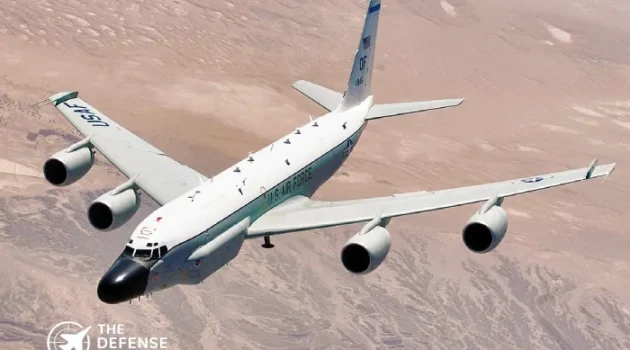
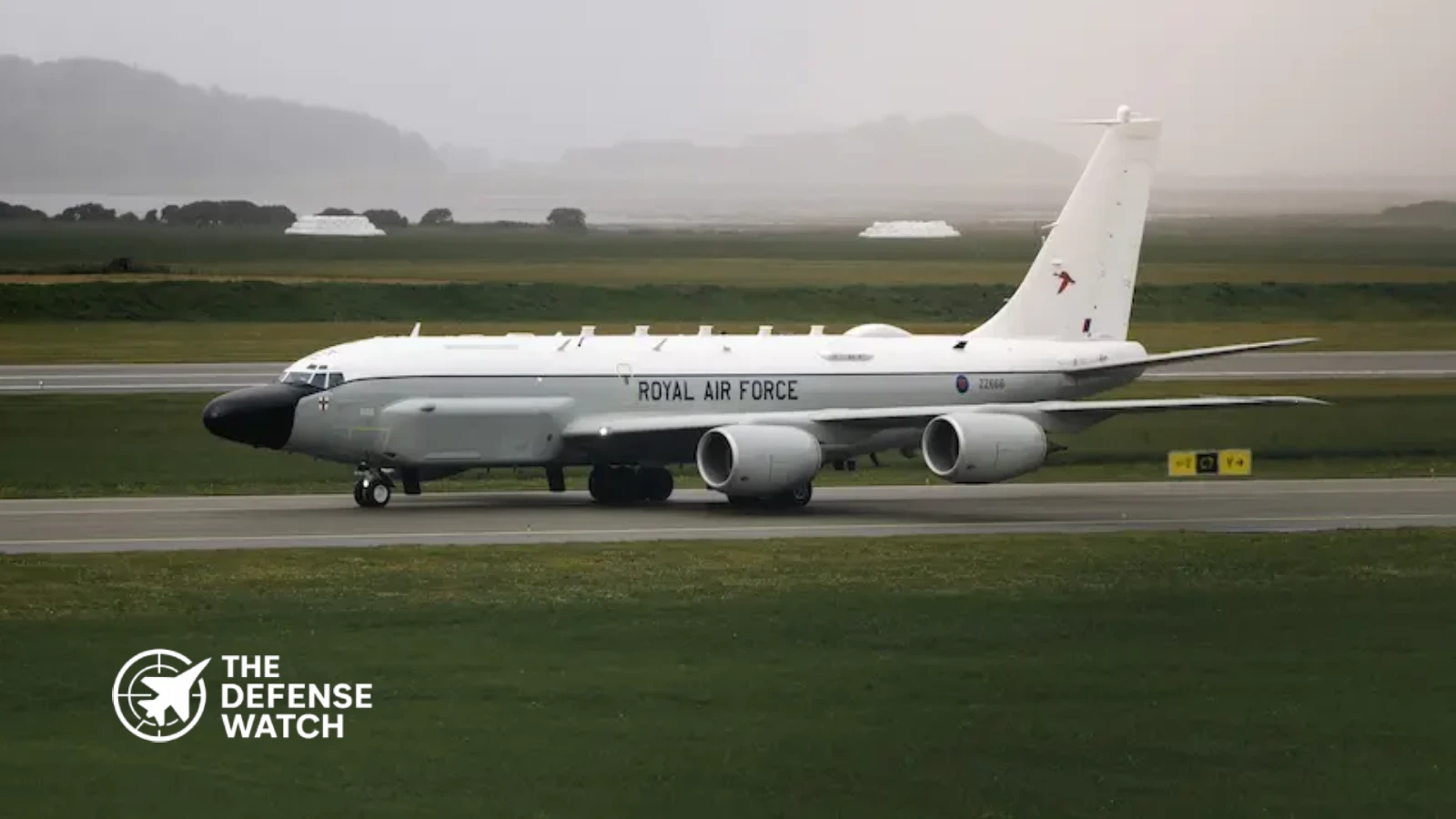
The RAF Rivet Joint Norway deployment adds a specialized airborne intelligence capability to an increasingly active NATO operating environment in the High North. The Royal Air Force has confirmed that 51 Squadron has deployed an RC-135W Rivet Joint to Ørland Air Base in Norway during 2026, using the deployment to demonstrate the aircraft’s ability to operate from a dispersed location with limited support.
Takeaways
The RAF is expanding airborne intelligence support for Allied operations in Norway and the High North.
1. Rivet Joint Deploys to Norway
The RAF has deployed an RC-135W Rivet Joint to Norway as part of its wider effort to operate from dispersed locations and support Allied activity in the High North.
2. Electronic Intelligence Is Central
The aircraft specializes in collecting and analyzing communications intelligence and electronic signals intelligence, providing information that can improve Allied situational awareness.
3. Norway Is a Key NATO Air Hub
NATO has strengthened its Arctic posture through Arctic Sentry, while Norway hosts important air command, surveillance and fighter operations supporting the Alliance’s northern flank.
4. Rivet Joint Complements F-35A Operations
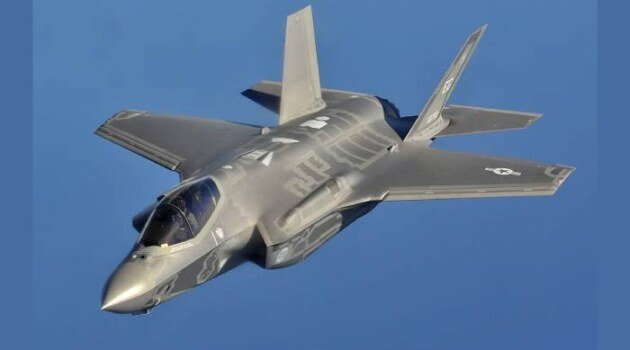
F-35A aircraft provide advanced sensing and combat capabilities, while Rivet Joint contributes specialized electronic intelligence that can add depth to the wider operational picture.
5. High North ISR Is Becoming More Integrated
The deployment fits a broader NATO effort to combine national aircraft, command centers, space systems, maritime platforms and uncrewed systems across the Arctic and North Atlantic.
The deployment comes as NATO increases its focus on Arctic security and integrates more Allied airpower across northern Europe. NATO launched Arctic Sentry in February 2026, bringing national military activities in the Arctic and High North into a broader Alliance framework led by Joint Force Command Norfolk.
The result is a more connected operating environment in which intelligence collection, air operations, command and control, and fifth-generation fighter activity increasingly need to function together.
What the RAF Rivet Joint Brings to the High North
The RC-135W Rivet Joint is an airborne intelligence, surveillance and reconnaissance platform operated by RAF 51 Squadron.
Its primary mission is different from that of a fighter aircraft. Rather than providing direct combat power, the aircraft collects and analyzes electronic information, including communications and other signals, to build a clearer picture of activity in the operating environment. The RAF describes the aircraft as a specialized ISR platform capable of collecting, analyzing and sharing electronic signals intelligence and communications intelligence.
That distinction is important in the Arctic, where geography, distance and limited infrastructure create significant challenges for persistent surveillance.
An airborne intelligence aircraft can operate over large areas and contribute information to commanders without needing to rely exclusively on fixed ground-based sensors. Its value therefore extends beyond the aircraft itself, because the information it produces can support wider intelligence and command networks.
Norway’s Growing Role in NATO Arctic Operations
Norway has become an increasingly important operating location for NATO’s northern posture.
NATO describes the Arctic and High North as critical to collective defense because the region connects North America and Europe through important air, maritime and communications routes. Seven of the eight Arctic states are now NATO members, with Finland and Sweden adding significant geographic depth to the Alliance’s northern posture.
The Alliance opened a Combined Air Operations Centre in Bodø in October 2025. NATO says the center oversees air operations across the Nordic region, Baltic Sea, North Atlantic and Barents Sea, providing additional operational awareness and flexibility for the northern flank.
This command infrastructure gives deployments such as the RAF Rivet Joint mission greater relevance. Intelligence aircraft operating in Norway can contribute to a broader architecture that links airborne sensors with national and NATO command structures.
F-35A Integration Adds a Fifth-Generation Layer
The Rivet Joint deployment also fits with the expanding use of F-35A aircraft in northern Europe.
During Cold Response 26, U.S. Air Force F-35A aircraft from the 48th Fighter Wing operated from Ørland in Norway alongside Norwegian F-35s. U.S. Air Forces in Europe said the exercise tested Allied interoperability in demanding Arctic conditions, including complex night operations.
The integration continued during Ramstein Flag 2026. F-35 aircraft from Denmark, Italy, Norway and the United States operated from multiple northern European locations, with the exercise testing integrated air and missile defense, intelligence sharing, counter-A2/AD operations and Agile Combat Employment.
The combination of these platforms is significant because they perform complementary functions.
Capability Primary Contribution Operational Value RAF RC-135W Rivet Joint Electronic and communications intelligence Builds awareness of electromagnetic activity F-35A Lightning II Stealth, sensing and combat operations Provides advanced tactical sensing and strike capability NATO command centers Command and control Fuse information and coordinate Allied air operations Space-based systems Persistent regional observation and communications Extends surveillance and connectivity Maritime and uncrewed systems Additional sensing and monitoring Broadens multi-domain awareness The value is therefore not simply the presence of one more aircraft. It is the ability to connect different sensors and platforms into a common operational picture.
Why Electronic Intelligence Matters in the Arctic
The High North presents a difficult surveillance problem.
The region covers enormous distances, contains relatively sparse infrastructure and imposes severe environmental demands on aircraft, personnel and ground systems. NATO therefore identifies ISR as one of the capabilities required to strengthen its Arctic posture.
Electronic intelligence can provide information that conventional visual surveillance cannot easily obtain.
Signals collected from communications and electronic systems can help analysts understand activity, identify patterns and support wider intelligence assessments. The information can then be combined with data from fighters, maritime platforms, satellites, uncrewed systems and other intelligence sources.
NATO describes Joint Intelligence, Surveillance and Reconnaissance as a core element of Alliance operations because it brings together information from national and NATO assets across air, land, maritime, space and cyber domains.
For the High North, this approach is particularly important because no single sensor can provide complete coverage across such a large and complex area.
Agile Deployment Is Another Part of the Mission
The RAF’s June 2026 deployment to Ørland also demonstrated an operational concept beyond intelligence collection.
The service said 51 Squadron used the deployment to show that the Rivet Joint could operate from a location with minimal support. The exercise was part of an Agile Combat Employment activity intended to improve the RAF’s ability to operate from different locations alongside NATO partners.
This matters because fixed operating locations can become vulnerabilities during a high-intensity conflict.
Dispersing aircraft across multiple locations can complicate an adversary’s targeting problem and provide commanders with additional options for sustaining operations. In northern Europe, that concept has particular importance because NATO is working to operate across a large geographic area while maintaining access to reinforcement routes between North America and Europe.
The RAF has also demonstrated multinational tanker and intelligence interoperability. In June 2026, an RAF Rivet Joint participated in a three-nation air-to-air refueling activity involving a French A330 MRTT Phénix and a U.S. TC-135 used for training.
Arctic Sentry Provides the Wider NATO Framework
The Rivet Joint deployment should also be viewed within NATO’s broader Arctic Sentry activity.
NATO launched Arctic Sentry in February 2026 to strengthen deterrence and defense across the Arctic and High North. The activity is led by Joint Force Command Norfolk and coordinates with Allied Command Transformation, NORAD, U.S. Northern Command and U.S. European Command.
That command relationship is particularly relevant for the United States.
The Arctic is simultaneously connected to the European theater and the defense of North America. Intelligence collected in the High North can therefore have relevance for NATO’s European command structure as well as the wider North American security architecture.
The challenge is increasingly one of information integration. Multiple national forces are operating aircraft and other sensors across the same geographic area, making data sharing, command relationships and common operating pictures as important as individual platform performance.
Implications for U.S. and Allied Airpower
For the United States, the RAF deployment reinforces a broader trend toward greater Allied responsibility in the northern approaches.
U.S. forces remain deeply involved in Arctic exercises. During Cold Response 26, U.S. Air Force F-35As operated alongside Norwegian F-35s from Ørland, while other U.S. aircraft supported operations from additional Norwegian locations. More than 25,000 personnel from more than a dozen NATO nations participated across Norway, Sweden and Finland.
This creates an increasingly integrated northern airpower network.
The operational benefit is not simply additional aircraft. It is the ability to combine specialized capabilities. F-35s can contribute advanced sensing and combat power, Rivet Joint can collect electronic intelligence, tankers can extend aircraft endurance, command centers can coordinate operations, and space and maritime systems can add information from other domains.
That layered approach is consistent with NATO’s broader move toward multi-domain operations in the Arctic.
The Bigger Strategic Picture
NATO’s Arctic posture has changed significantly with the addition of Finland and Sweden, the creation of Arctic Sentry and the development of additional command and surveillance infrastructure.
The RAF’s Rivet Joint deployment is one element of that larger shift.
Its immediate contribution is specialized airborne intelligence collection. Its broader significance is the demonstration that Allied ISR aircraft can deploy into Norway, work alongside partner forces and feed information into a multinational operating framework.
For U.S. and European defense planners, that integration is increasingly important as NATO seeks to maintain awareness across the northern flank while ensuring that air, maritime, land, space and cyber capabilities can operate together.
The High North is becoming less of a peripheral theater and more of a connected part of NATO’s overall defense architecture. The continued integration of Rivet Joint, F-35A and other Allied capabilities shows how the Alliance is building that architecture around shared intelligence, distributed operations and multinational command and control.