Pakistan Fighter Jets Saudi Arabia Deployment Expands Strategic Air Cooperation
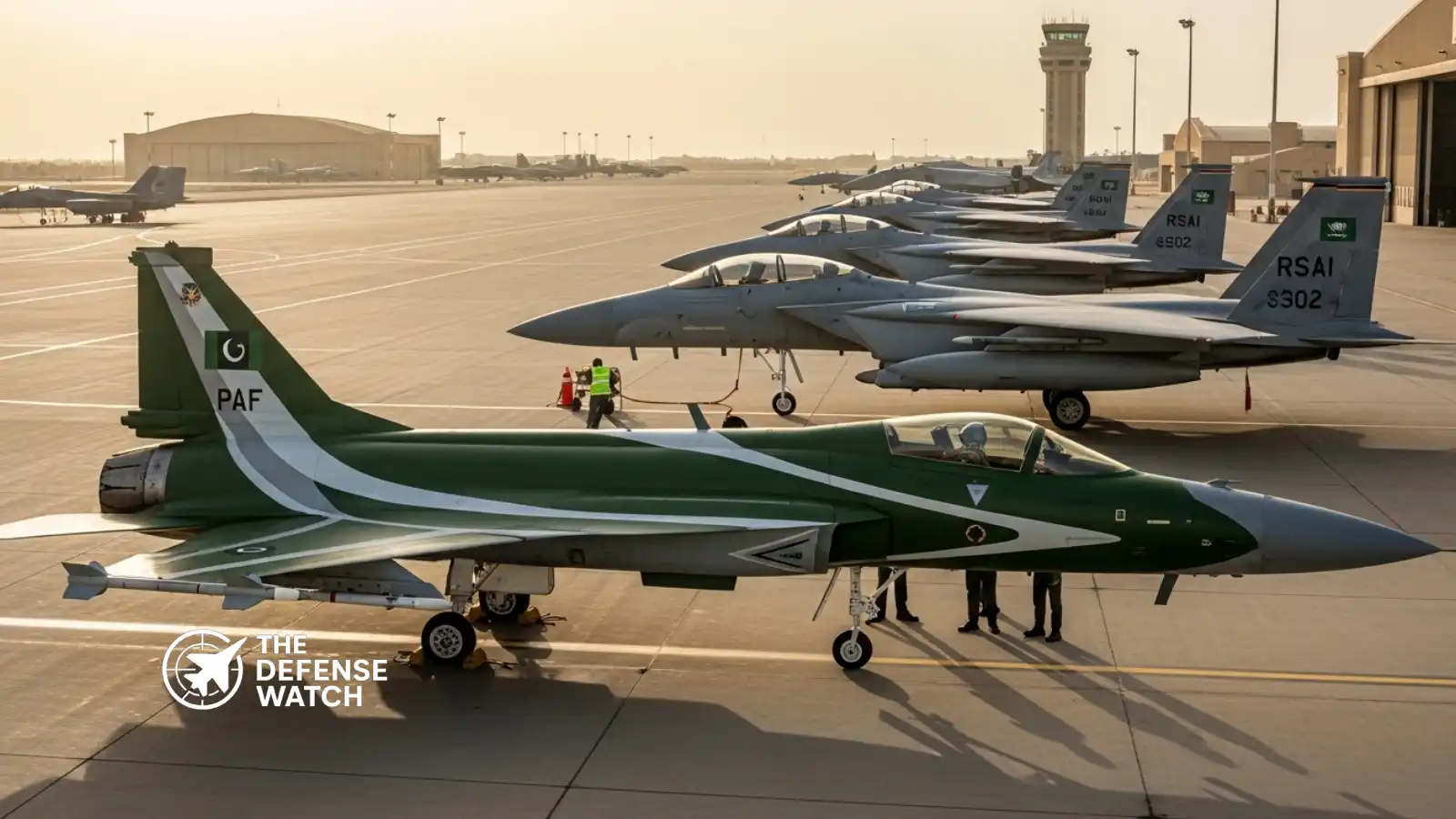
Pakistan fighter jets Saudi Arabia deployment marks a renewed phase in long-standing defense cooperation between Islamabad and Riyadh, with both sides emphasizing continuity rather than escalation.
Saudi Arabia confirmed that Pakistan has sent fighter aircraft along with air force personnel to the kingdom under an existing bilateral defense agreement. The deployment underscores a pattern of military collaboration that has historically included training missions, advisory roles, and joint exercises.
- Saudi Arabia confirmed Pakistan has deployed fighter jets to the kingdom under an existing bilateral defense pact.
- The deployment includes Pakistan Air Force personnel to support operational and training roles.
- The move comes amid heightened regional security concerns in the Middle East.
- Pakistan and Saudi Arabia have a decades-long defense cooperation framework, including training and advisory missions.
- Officials framed the deployment as routine cooperation rather than a response to a specific conflict.
Saudi officials described the move as part of routine cooperation, aimed at enhancing operational readiness and interoperability between the two air forces.
Longstanding Defense Ties Between Islamabad And Riyadh
Pakistan and Saudi Arabia have maintained close military relations for decades, particularly in the domain of air power. The Pakistan Air Force has previously deployed personnel to the kingdom for pilot training, technical support, and advisory roles.
This latest Pakistan fighter jets Saudi Arabia deployment reflects continuity rather than a departure from established policy. Analysts note that such arrangements often remain low-profile but play a critical role in maintaining readiness and strengthening bilateral trust.
Historically, Pakistan has supported Saudi defense infrastructure by providing experienced pilots and maintenance crews. These deployments have helped the kingdom sustain operational capabilities during periods of regional tension.
Operational And Strategic Implications
While officials stress that the deployment is routine, the timing aligns with a complex regional security environment. The Middle East continues to face evolving threats, including missile proliferation, drone warfare, and shifting geopolitical alignments.
From an operational perspective, the presence of Pakistan fighter jets in Saudi Arabia could enhance:
- Air defense coverage and rapid response capability
- Joint training and tactical integration
- Maintenance and operational support for existing fleets
The Pakistan fighter jets Saudi Arabia deployment may also provide valuable real-world experience for Pakistani personnel operating in a different strategic theater.
Air Power Cooperation In A Volatile Region
The Middle East remains one of the most contested air defense environments globally, with increasing emphasis on integrated air and missile defense systems. Saudi Arabia has invested heavily in advanced platforms, including U.S.-supplied fighter aircraft and missile defense systems.
Pakistan’s contribution, while limited in scale, adds a layer of operational flexibility. It also reflects Islamabad’s ability to project air power expertise beyond its immediate region.
Defense analysts point out that such deployments can serve dual purposes. They enhance host nation capabilities while also allowing the contributing country to strengthen diplomatic and military ties.
Political And Strategic Signaling
Although both governments have downplayed any direct link to ongoing conflicts, the Pakistan fighter jets Saudi Arabia deployment carries strategic signaling value.
For Riyadh, it reinforces partnerships with trusted allies at a time of regional uncertainty. For Islamabad, it demonstrates its role as a security partner in the broader Islamic world while maintaining balanced relations across competing regional actors.
Importantly, officials have avoided framing the move as a response to any specific threat. This suggests an effort to maintain stability and avoid escalating tensions in an already sensitive environment.
Continuity Over Escalation
The framing of the deployment as routine cooperation is consistent with past practice. Pakistan has periodically contributed military support to Saudi Arabia without direct involvement in combat operations.
This approach allows both countries to deepen defense ties while minimizing the risk of entanglement in regional conflicts.
The Pakistan fighter jets Saudi Arabia deployment, therefore, should be viewed as part of an enduring security relationship rather than a short-term tactical response.
Outlook For Bilateral Defense Cooperation
Looking ahead, Pakistan-Saudi defense cooperation is expected to remain focused on:
- Training and capacity building
- Air force interoperability
- Strategic consultation on regional security
As regional threats evolve, such partnerships are likely to gain importance, particularly in areas like air defense integration and counter-drone operations.
The Pakistan fighter jets Saudi Arabia deployment highlights how established defense relationships continue to adapt to changing geopolitical realities without fundamentally altering their core structure.