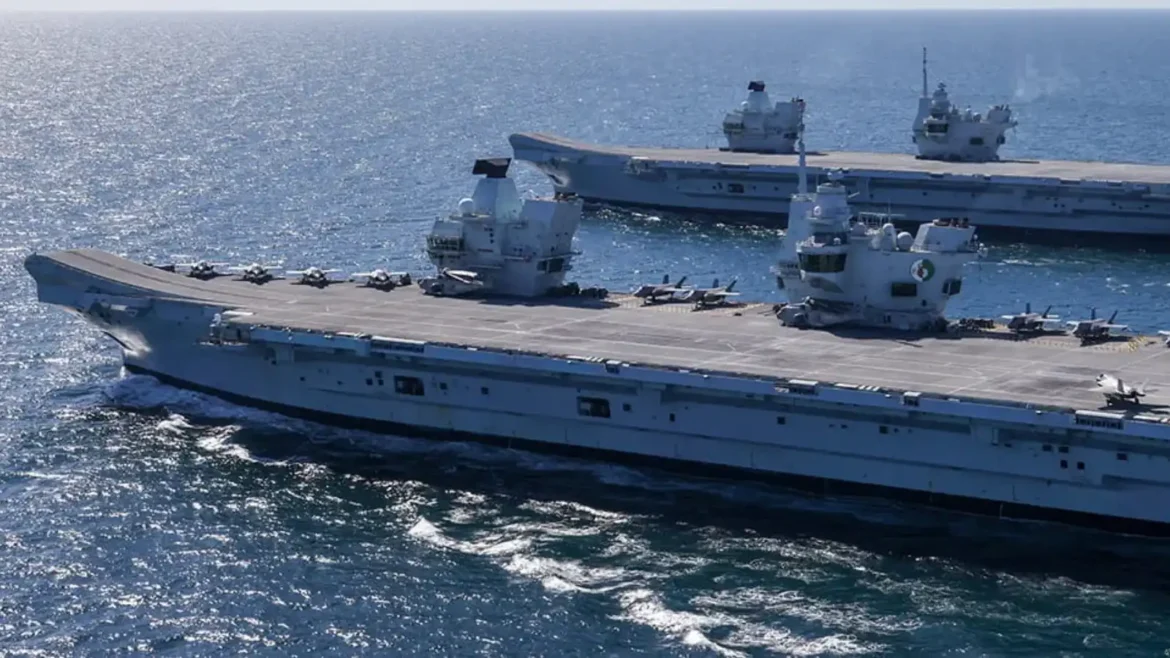
HMS Queen Elizabeth Back At Sea After Rapid Turnaround
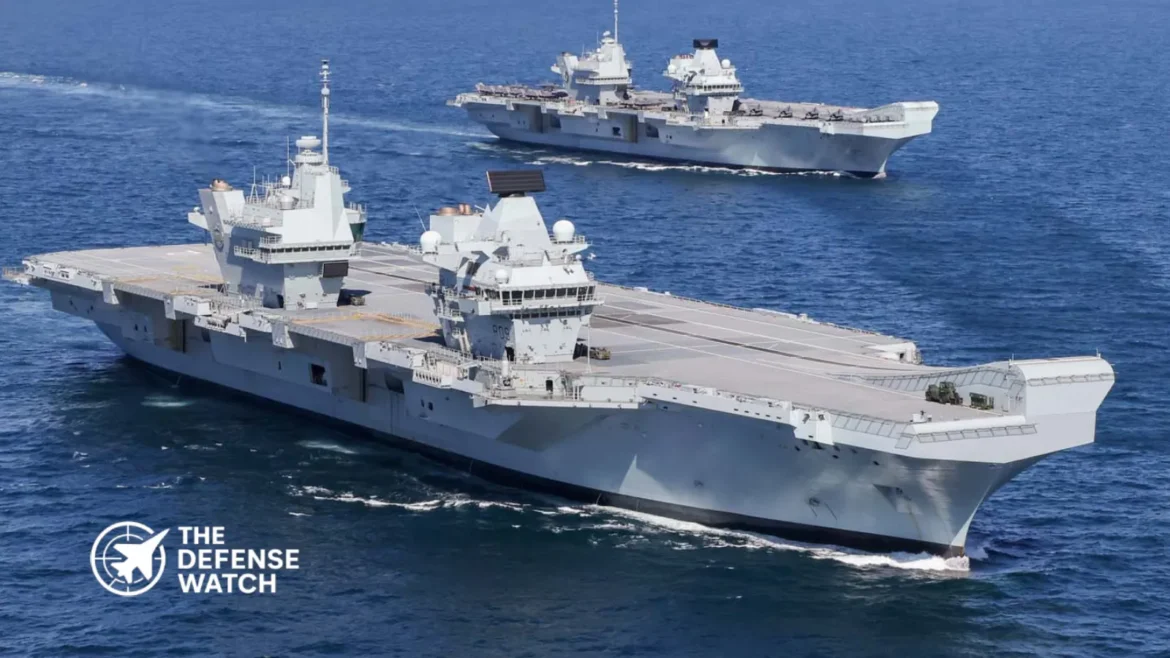
HMS Queen Elizabeth back at sea marks another visible sign that the Royal Navy is maintaining a high operational tempo for its carrier force. Britain’s flagship aircraft carrier departed Portsmouth only days after arriving, returning quickly to maritime duties following recent training activity.
The 65,000 ton warship had recently completed a 10 day training period involving Royal Air Force Chinook helicopters, naval aviation elements, and escort integration drills. Exercises also included cooperation with the Type 23 frigate HMS St Albans before the vessel re-entered port.
- HMS Queen Elizabeth has departed Portsmouth and returned to sea after a short port stop.
- The carrier recently completed training with Royal Air Force Chinook helicopters and escort units.
- The deployment highlights sustained Royal Navy readiness and rapid turnaround capability.
- HMS Queen Elizabeth is one of two 65,000 ton Queen Elizabeth class aircraft carriers.
- The ship can operate F-35B fighter jets, Merlin helicopters, and support carrier strike missions.
The quick turnaround is notable because large deck carriers require significant logistics support, maintenance coordination, and crew management even during short port visits. Returning to sea within days suggests the Royal Navy is emphasizing readiness rather than routine harbor downtime.
Why This Matters For Britain’s Naval Strategy
The British aircraft carrier force centers on two ships, HMS Queen Elizabeth and HMS Prince of Wales. Unlike larger navies with multiple carrier groups, the UK relies on rotating availability between these two vessels. That makes every deployment, sea trial, and training cycle strategically important.
A rapid redeployment can serve several purposes:
- Sustain pilot and deck crew proficiency
- Maintain escort integration with frigates and support ships
- Demonstrate NATO maritime readiness
- Preserve availability for crisis response
- Prepare for future global deployments
For London, carrier presence remains one of the clearest symbols of expeditionary military power. Whether operating in the North Atlantic, Mediterranean, Indo-Pacific, or on NATO tasking, these ships give Britain options beyond land-based airpower.
Capability Of The Queen Elizabeth Class
The Queen Elizabeth class carriers are among the largest warships ever built for the Royal Navy. Each vessel measures roughly 284 meters in length and can carry up to around 40 aircraft depending on mission profile. Their air wing can include F-35B Lightning II fighters and Merlin helicopters for anti-submarine warfare and airborne surveillance roles.
The ski-jump flight deck design allows short takeoff and vertical landing operations, enabling flexible use without catapult systems. This keeps the carrier optimized for the F-35B concept while reducing some technical complexity compared with CATOBAR carriers.
Original Analysis: Readiness Is The Real Message
The most important signal from HMS Queen Elizabeth back at sea may not be combat power alone. It is readiness discipline.
Modern carriers are expensive national assets, and critics often measure them only by wartime scenarios. In peacetime, however, value is often shown through availability, training output, alliance presence, and deterrence signaling. Sailing repeatedly, even for short periods, helps crews remain sharp and systems validated.
For allies, this shows the UK can still generate credible maritime power. For rivals, it signals Britain’s carrier fleet is active, not ceremonial.
USS Abraham Lincoln Anchors New US Pressure Campaign
The USS Abraham Lincoln blockade mission has become the centerpiece of a wider US maritime operation aimed at increasing pressure on Iran and controlling access to regional sea lanes. Multiple open source and media reports indicate the Nimitz-class aircraft carrier is operating in or near the Arabian Sea with escorts from Carrier Strike Group 9.
- USS Abraham Lincoln is reported to be leading US carrier operations tied to an Iran maritime blockade.
- More than a dozen US naval vessels and over 100 aircraft are reportedly supporting enforcement efforts.
- US destroyers, surveillance aircraft, and support ships are central to interception and sea control missions.
- Additional carrier and mine countermeasure forces are reportedly moving toward the region.
- The deployment raises pressure on Tehran while securing key shipping lanes near the Strait of Hormuz.
The deployment reflects a strategic shift from airpower alone toward sustained naval coercion. Carrier groups can remain on station for long periods, generate continuous air sorties, and project force without relying on host nation bases. That gives Washington a flexible tool during periods of regional instability.
Why USS Abraham Lincoln Matters
USS Abraham Lincoln is one of the US Navy’s most proven nuclear-powered carriers. It typically embarks a mix of strike fighters, electronic warfare aircraft, airborne early warning platforms, and helicopters. Previous reporting tied the ship to Carrier Air Wing 9, including F/A-18 Super Hornets, EA-18G Growlers, E-2D Hawkeyes, and rotary-wing detachments.
That matters because a carrier strike group can perform several missions at once:
- Air defense over fleet units
- Maritime surveillance across large sea areas
- Strike operations ashore
- Escort and deterrence patrols
- Rapid response to Iranian naval moves
In practical terms, USS Abraham Lincoln gives US commanders a floating air base that can reposition quickly.
Destroyers And Escorts Are Doing The Hard Work
While the carrier draws headlines, destroyers are often the workhorses of blockade enforcement. Recent reporting says Arleigh Burke-class destroyers are central to screening, boarding support, missile defense, and ship interception tasks.
These ships bring advanced radar, vertical launch missile cells, helicopters, and endurance. In a blockade environment, they are often the first ships to challenge approaching vessels, monitor suspicious traffic, and maintain constant patrol lines.
That suggests the operation is less about symbolic carrier presence and more about layered sea control.
Strait Of Hormuz Remains The Strategic Center
Any major US Iran naval operation inevitably points toward the Strait of Hormuz, one of the world’s most important maritime chokepoints. A large share of global energy shipments normally transits the waterway.
By massing naval power near the area, Washington gains leverage beyond the immediate Iran crisis. It reassures commercial shipping, signals resolve to regional partners, and preserves freedom of navigation options if tensions rise further.
This is why minesweepers, reconnaissance aircraft, and logistics ships matter as much as combat vessels. A carrier cannot sustain pressure alone. It needs a network.
Strategic Analysis: What Comes Next
The current posture suggests three likely US objectives:
- Economic pressure on Iran through maritime restrictions
- Deterrence against missile or swarm boat attacks
- Readiness for rapid escalation if diplomacy fails
For Tehran, direct confrontation at sea would carry high risk. Iran may instead rely on indirect pressure, drone threats, proxy activity, or legal and political messaging.
That means the naval contest could become a battle of endurance rather than a traditional fleet clash.
Broader Defense Implications
The USS Abraham Lincoln deployment also highlights how aircraft carriers remain relevant despite modern missile threats. Critics often question carrier survivability, yet Washington continues to use them first during crises because they combine mobility, airpower, command capability, and visible deterrence in one platform.
In that sense, the operation is also a message to rivals beyond the Middle East: the US still uses carrier strike groups as frontline instruments of state power.
USS Gerald R. Ford Departs Croatia, Continues European Operations
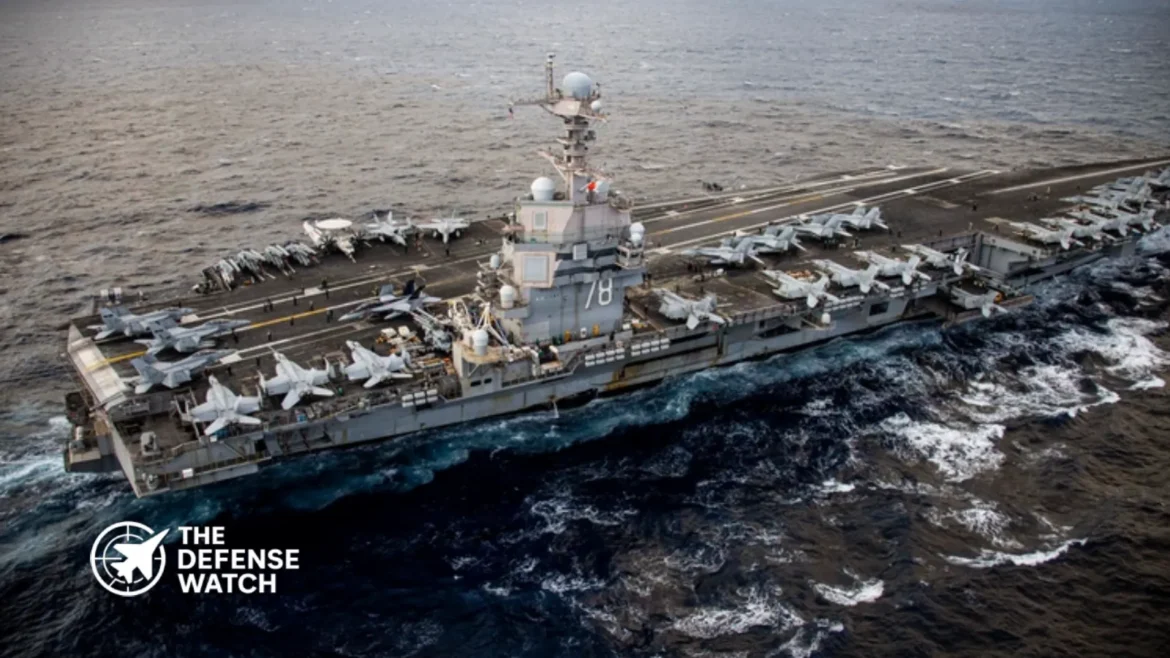
The USS Gerald R. Ford deployment in Europe entered its next phase as USS Gerald R. Ford departed Croatia following a scheduled port visit, reinforcing U.S. naval presence in the region.
The port call, conducted in the Adriatic Sea, formed part of ongoing U.S. Navy efforts to strengthen cooperation with NATO allies and regional partners. According to defense reporting from Defence Industry Europe, the visit provided an opportunity for logistical resupply, crew rest, and diplomatic engagement.
- USS Gerald R. Ford departed Croatia following a scheduled port visit in early April 2026.
- The visit supported U.S. Navy engagement with regional allies and partners in the Adriatic Sea.
- The carrier continues its deployment in the U.S. Sixth Fleet area of responsibility.
- USS Gerald R. Ford is the lead ship of the Ford-class, featuring advanced electromagnetic launch systems.
- The deployment underscores sustained U.S. naval presence in Europe amid evolving security conditions.
Strategic Role In European Theater
The USS Gerald R. Ford deployment remains central to U.S. maritime strategy in Europe. Operating under the U.S. Sixth Fleet, the carrier strike group supports deterrence, joint exercises, and rapid response capabilities across the region.
Port visits such as the one in Croatia serve more than logistical purposes. They signal sustained U.S. commitment to European security, particularly along NATO’s southern flank. The Adriatic Sea, while less contested than the Baltic or Black Sea, plays a supporting role in alliance mobility and maritime security.
From an operational standpoint, the Ford-class carrier offers increased sortie generation rates and reduced crew requirements compared to legacy Nimitz-class carriers. These features enable more efficient power projection during extended deployments.
Advanced Capabilities Of Ford-Class Carrier
The USS Gerald R. Ford deployment highlights the capabilities of the Navy’s newest carrier class. Key systems include the Electromagnetic Aircraft Launch System (EMALS) and Advanced Arresting Gear, both designed to improve aircraft launch efficiency and reduce maintenance demands.
These technologies allow the carrier to support a broader range of aircraft operations while maintaining a higher operational tempo. The ship also integrates improved radar systems and enhanced survivability features, reflecting evolving requirements for high-end naval warfare.
In practical terms, these upgrades translate into greater flexibility for commanders operating in complex maritime environments, including contested regions near Eastern Europe and the Mediterranean.
Regional Security Context
The USS Gerald R. Ford deployment comes at a time when European security dynamics remain fluid. While the Adriatic region is relatively stable, broader tensions across the continent continue to shape NATO force posture.
U.S. carrier presence in Europe provides a visible and flexible deterrent. Unlike land-based forces, a carrier strike group can reposition quickly, offering policymakers options across multiple theaters without permanent basing requirements.
The departure from Croatia does not mark a reduction in activity. Instead, it reflects the mobility inherent in carrier operations. The Ford and its strike group are expected to continue exercises and patrols across the Sixth Fleet area.
Operational Impact And Analysis
The USS Gerald R. Ford deployment underscores a shift toward sustained, high-readiness naval operations in Europe. Rather than short-duration deployments, the U.S. Navy is increasingly maintaining continuous presence through rotational carrier strike groups.
This approach enhances interoperability with allies while ensuring rapid response capability. It also aligns with broader U.S. defense strategy, which prioritizes forward presence and integrated deterrence.
Importantly, port visits like the one in Croatia contribute to soft power alongside military capability. Engagement with local authorities and allied navies reinforces diplomatic ties that underpin NATO cohesion.
Looking Ahead
As the USS Gerald R. Ford deployment continues, its movements will likely focus on joint exercises, maritime security operations, and deterrence missions. The carrier’s advanced systems and operational flexibility position it as a key asset in U.S. naval strategy.
With evolving security challenges across Europe, the presence of a Ford-class carrier provides both reassurance to allies and a credible deterrent to potential adversaries.
- France unveiled the 78,000-ton nuclear aircraft carrier France Libre as part of its next-generation naval program.
- The carrier is designed to operate around 40 aircraft, including next-generation fighter jets.
- The platform strengthens France’s global power projection and NATO maritime capabilities.
- The program is expected to replace the Charles de Gaulle carrier in the 2030s.
- The ship reflects Europe’s push toward strategic autonomy in high-end naval warfare.
France Libre Nuclear Aircraft Carrier Advances French Naval Power
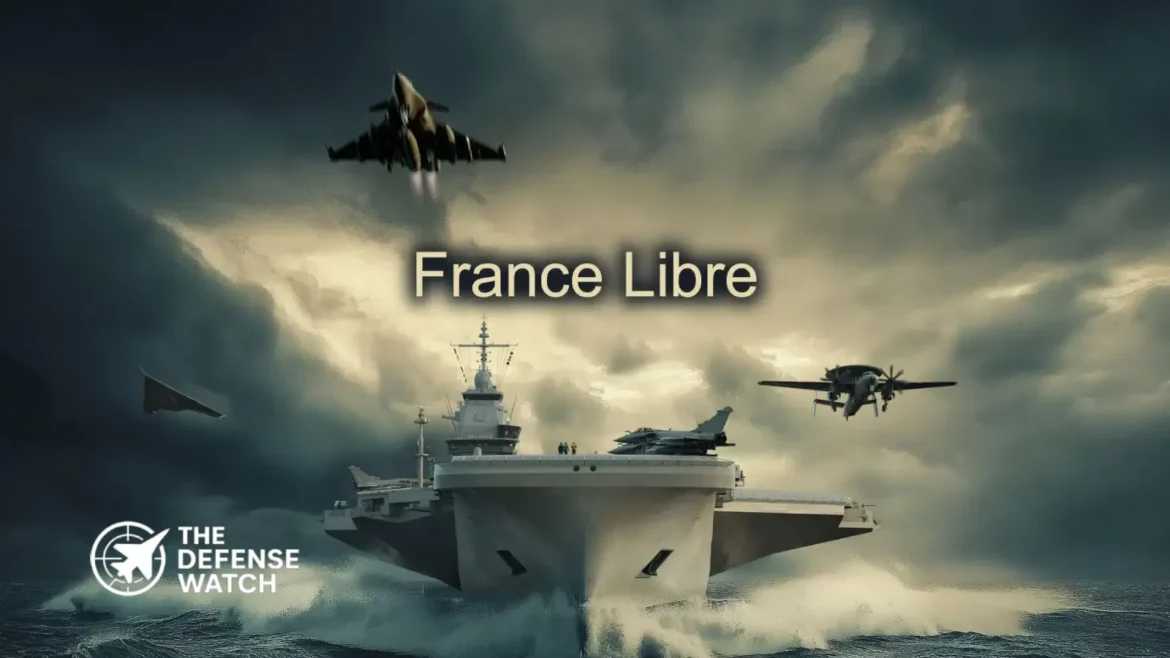
France Libre nuclear aircraft carrier marks a major step in France’s naval modernization, introducing a 78,000-ton platform designed to carry around 40 aircraft and replace the aging Charles de Gaulle in the next decade.
The Big Picture
France is moving to sustain its status as Europe’s only nation operating a nuclear-powered aircraft carrier. The France Libre program reflects broader trends in NATO maritime strategy, where high-end naval assets are increasingly central to deterrence and expeditionary operations.
The United States continues to dominate carrier aviation with its Nimitz and Ford-class fleets, while China is expanding its own carrier force. France’s decision to invest in a next-generation nuclear carrier ensures it remains a credible blue-water navy capable of independent operations.
European defense policy has also shifted toward strategic autonomy. France Libre aligns with that objective by maintaining sovereign carrier strike capabilities without reliance on allied platforms.
What’s Happening
France has revealed details of the France Libre nuclear aircraft carrier, a next-generation platform expected to enter service in the 2030s.
The ship will displace approximately 78,000 tons, making it significantly larger than the current Charles de Gaulle, which displaces about 42,000 tons. The new carrier will feature nuclear propulsion, enabling extended deployments without the need for frequent refueling.
The air wing is expected to include around 40 aircraft, likely incorporating next-generation fighters developed under the Future Combat Air System program, alongside airborne early warning and support aircraft.
French defense authorities intend for the platform to serve as the backbone of the country’s naval aviation capability for decades.
Why It Matters
France Libre addresses several operational limitations of the current French carrier fleet.
Charles de Gaulle has provided France with a unique European capability, but its size limits sortie generation and aircraft capacity. The new carrier’s larger displacement allows for increased operational tempo, improved deck operations, and enhanced survivability.
The integration of next-generation aircraft and advanced launch systems will also improve interoperability with allied forces, particularly the United States Navy.
Nuclear propulsion remains a critical advantage. It allows sustained high-speed operations and reduces logistical constraints, enabling France to deploy globally without dependence on forward basing.
Strategic Implications
France Libre strengthens NATO’s maritime posture by adding a modern, high-end carrier to the alliance’s collective capabilities.
Carrier strike groups remain essential for power projection, sea control, and crisis response. France’s ability to deploy such a platform independently provides NATO with greater flexibility, particularly in contested regions such as the Mediterranean, Indo-Pacific, and North Atlantic.
The platform also enhances deterrence. A nuclear-powered carrier with advanced air assets signals sustained combat capability and operational reach.
France’s investment may also influence other European nations to expand their naval ambitions, particularly in carrier aviation and expeditionary warfare.
What To Watch Next
Program development milestones will shape the trajectory of France Libre over the next decade.
Observers should track design finalization, shipyard construction timelines, and integration of next-generation aircraft systems. The development of electromagnetic or advanced catapult systems will be particularly important for operational effectiveness.
Initial sea trials and air wing integration in the early 2030s will determine the carrier’s readiness for full operational deployment.
Budgetary stability and industrial capacity will also remain key factors influencing delivery timelines.
Capability Gap
France Libre directly addresses the limitations of operating a single, smaller carrier.
The current fleet structure creates gaps in availability during maintenance cycles. A larger and more capable platform improves sortie generation but does not fully eliminate the structural limitation of having only one carrier.
The ship’s scale and complexity also introduce risks, including cost overruns and technical challenges associated with nuclear propulsion and advanced launch systems.
Despite these challenges, the platform significantly enhances France’s ability to sustain high-intensity naval aviation operations.
The Bottom Line
France Libre nuclear aircraft carrier positions France to maintain credible, independent carrier strike capability in an increasingly competitive maritime environment.
- Fire aboard USS Gerald R. Ford lasted nearly 30 hours before being contained.
- Over 600 crew members lost access to normal living spaces during the incident.
- Extended deployment of 10 months contributed to operational strain on personnel.
- Dozens of sailors reported smoke inhalation related health issues.
- Incident may temporarily impact US Navy carrier readiness and maintenance cycles.
USS Gerald R. Ford Fire Incident
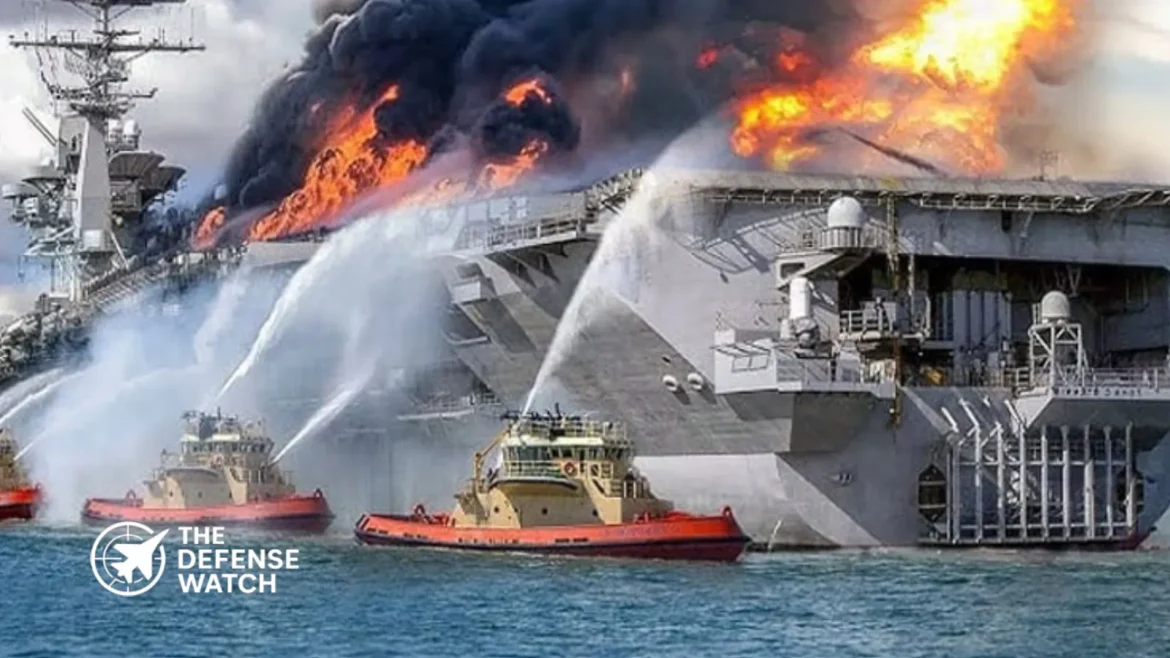
The USS Gerald R. Ford fire incident underscores the risks faced by deployed US Navy carriers, after a prolonged onboard blaze disrupted operations and affected hundreds of sailors.
The Big Picture
The US Navy aircraft carrier fleet remains central to American power projection, particularly in contested regions such as the Indo Pacific and the Middle East. The USS Gerald R. Ford, the lead ship of its class, represents the most advanced carrier design, incorporating electromagnetic aircraft launch systems, advanced radar, and improved sortie generation capabilities.
Sustained deployments have become more common as the US Navy balances global commitments with a limited number of available carriers. This operational tempo places increasing pressure on both platforms and personnel.
The incident highlights a persistent challenge. Even the most advanced platforms remain vulnerable to onboard hazards such as fires, especially during extended deployments where maintenance cycles are compressed.
What’s Happening
Reports from major US outlets, including The New York Times, indicate that a significant fire broke out aboard the USS Gerald R. Ford during ongoing operations at sea.
The fire lasted approximately 30 hours before crews brought it under control. During that period:
- More than 600 sailors lost access to their berthing areas
- Crew members were forced to sleep on floors and workspaces
- Dozens experienced breathing issues due to smoke exposure
The carrier had reportedly been deployed for nearly 10 months, conducting missions and training activities. US Navy officials confirmed that once the fire was extinguished, safety checks and repair efforts began immediately.
No fatalities have been reported, but the scale and duration of the fire indicate a serious onboard emergency.
Why It Matters
The USS Gerald R. Ford fire incident matters because it directly affects operational readiness at a time when US carrier presence is in high demand.
Aircraft carriers function as mobile airbases. Any disruption, especially one lasting more than a day, can degrade sortie generation rates, delay missions, and reduce overall combat effectiveness.
Crew fatigue adds another layer of concern. Sailors operating under sleep deprivation and stress are more likely to face reduced performance, increasing risks during flight operations and damage control scenarios.
The incident also raises questions about maintenance intervals. Extended deployments often delay routine inspections, which can increase the likelihood of technical failures or onboard hazards.
Strategic Implications
The US Navy relies on a limited number of carriers to maintain global presence. A temporary reduction in availability, even from a single ship, can ripple across multiple theaters.
The USS Gerald R. Ford fire incident may force adjustments in deployment schedules or require other carriers to fill operational gaps. This could strain the broader fleet, particularly as older Nimitz class carriers approach retirement.
The event also highlights the importance of damage control training. US Navy crews are known for strong firefighting capabilities, and successfully containing a 30 hour fire demonstrates resilience. However, the duration suggests the complexity of the incident and the challenges posed by modern carrier systems.
Competitor View
China and Russia closely monitor US carrier operations as indicators of American naval readiness.
China, in particular, is expanding its own carrier fleet and may view such incidents as evidence of operational strain within the US Navy. Beijing continues to invest in anti access and area denial systems designed to challenge US carriers in the Western Pacific.
Russia may interpret the event through a different lens, focusing on maintenance and deployment sustainability issues within the US fleet.
While a single incident does not alter the balance of power, repeated operational disruptions could influence perceptions of US naval reliability.
What To Watch Next
The immediate focus will remain on damage assessment and repair timelines aboard the USS Gerald R. Ford.
Key developments to monitor include:
- Official US Navy investigation into the cause of the fire
- Duration of repairs and any required port visits
- Impact on the carrier’s deployment schedule
- Crew recovery and rotation measures
The Navy may also review safety protocols and maintenance procedures, particularly for carriers on extended deployments.
Capability Gap
The USS Gerald R. Ford fire incident highlights a broader capability gap related to sustained operations at sea.
The US Navy aims to maintain continuous global presence, but limited carrier numbers force longer deployments. This increases wear on systems and personnel.
Modern carriers are highly complex platforms. While advanced systems improve combat capability, they also introduce new maintenance challenges. Fires remain one of the most dangerous onboard threats, capable of disrupting operations regardless of technological sophistication.
The incident reinforces the need for balanced deployment cycles, adequate maintenance windows, and continued investment in crew resilience.
The Bottom Line
The USS Gerald R. Ford fire incident reveals how even advanced US Navy carriers face operational strain during extended deployments, with direct implications for readiness and global naval posture.
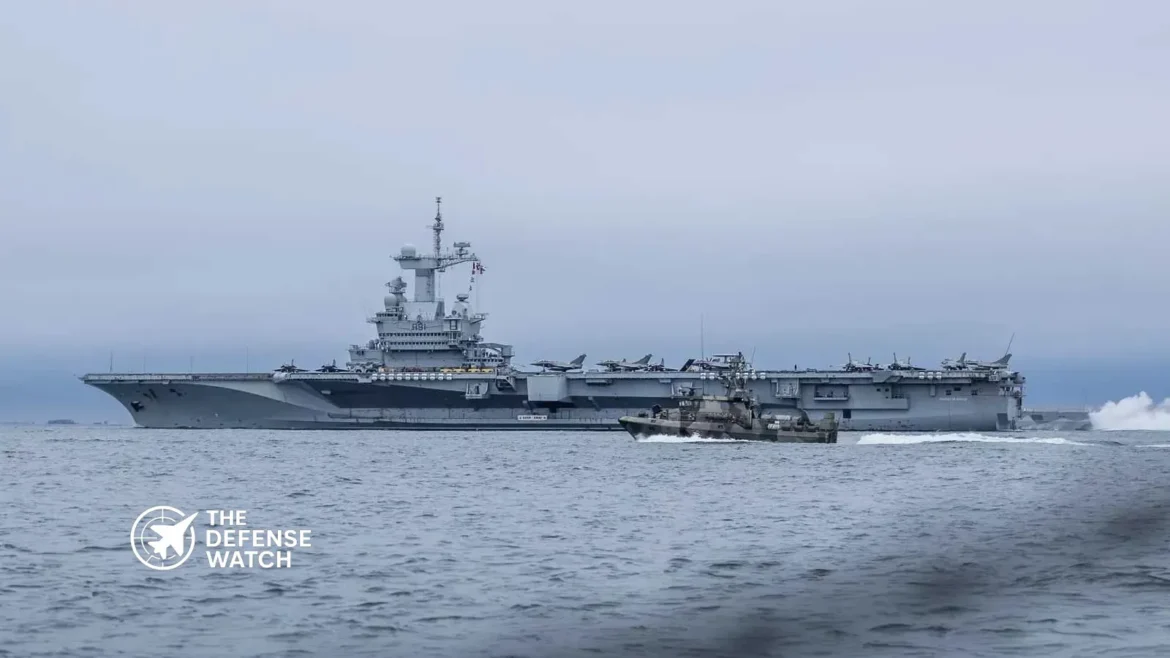
■ KEY FACTS AT A GLANCE- ► France has redeployed the Charles de Gaulle carrier strike group to the Middle East amid the expanding US Iran war.
- ► The nuclear powered aircraft carrier carries Rafale M fighters, E 2C Hawkeye early warning aircraft, and escorting frigates.
- ► Deployment signals Paris commitment to protecting regional stability and allied maritime routes.
- ► Move follows intensified US military operations and growing risk of broader regional escalation.
- ► French naval presence strengthens European role in Gulf security at a critical moment.
France Redeploys Charles De Gaulle Carrier Strike Group As Regional Conflict Widens
France has redeployed the Charles de Gaulle carrier strike group to the Middle East as the US Iran war expands, marking one of the most significant European naval movements in the current crisis.
The decision reflects mounting concern in Paris over regional stability and the security of maritime trade routes as US operations against Iranian targets intensify.
The deployment centers on the nuclear powered aircraft carrier French aircraft carrier Charles de Gaulle, the flagship of the French Navy. The carrier strike group includes multi mission frigates, an air defense destroyer, and support vessels designed to sustain long range operations.
Strategic Signal Beyond Symbolism
The redeployment of the France Charles de Gaulle carrier strike group is not merely symbolic.
As the only nuclear powered aircraft carrier in Europe, Charles de Gaulle provides France with independent power projection capability. Its air wing typically includes Rafale M fighter jets capable of strike, air superiority, and reconnaissance missions, alongside E 2C Hawkeye airborne early warning aircraft.
In the context of the expanding US Iran war, this capability provides Paris with options. It can conduct air patrols, intelligence missions, and if required, precision strike operations without relying on regional bases.
French officials have consistently emphasized freedom of navigation and the protection of commercial shipping through critical chokepoints such as the Strait of Hormuz. The renewed carrier presence reinforces that posture.
Coordinating With US Forces
The redeployment comes as the United States has increased its own naval and air presence in the region. Carrier strike groups traditionally operate in coordination with allied forces for air defense integration, intelligence sharing, and maritime security operations.
While France maintains strategic autonomy, its naval deployments frequently align with NATO and US objectives when interests converge. In past operations against extremist groups in Iraq and Syria, Charles de Gaulle operated alongside US forces, launching combat sorties from the eastern Mediterranean and the Gulf.
In the current environment, the French aircraft carrier Middle East deployment strengthens allied deterrence without formally merging command structures.
Risk Management And Escalation Control
From a strategic perspective, the France Charles de Gaulle carrier strike group serves two parallel purposes.
First, it deters hostile actions against French assets, European shipping, and regional partners. Second, it provides Paris with rapid response capability if French nationals or interests are threatened.
However, carrier deployments in contested waters also carry risk. Iranian anti ship missile systems, drones, and fast attack craft remain a persistent concern in the Gulf. Naval planners must account for layered air defense and electronic warfare measures to mitigate potential threats.
France modernized the carrier and its combat systems in recent years, enhancing radar, communications, and interoperability. The escorting frigates provide anti submarine, anti air, and anti surface warfare coverage, forming a layered defensive bubble around the strike group.
European Stake In Gulf Security
The redeployment underscores a broader point. The Middle East conflict is not solely a US Iran confrontation. European economies remain heavily dependent on Gulf energy flows and maritime trade routes.
By sending the France Charles de Gaulle carrier strike group, Paris signals that European security interests are directly engaged.
France has longstanding defense relationships with Gulf states and maintains regional military facilities, including bases in the United Arab Emirates. A visible naval presence reinforces those ties while demonstrating readiness.
At the same time, French leaders have traditionally balanced deterrence with diplomatic engagement. Naval deployments can serve as leverage in parallel diplomatic efforts aimed at containing escalation.
Operational Capabilities At Sea
The Charles de Gaulle carrier strike group typically embarks:
- Rafale M multirole fighters
- E 2C Hawkeye airborne early warning aircraft
- Helicopters for anti submarine and search and rescue missions
- Guided missile frigates and a fleet tanker
The carrier nuclear propulsion allows sustained high speed operations without the need for refueling, a significant advantage in extended deployments.
This mobility is central to its role in the US Iran war naval deployments environment, where rapid repositioning may be required in response to emerging threats.
What Comes Next
Much will depend on how the conflict evolves. If hostilities remain contained, the French presence may focus on deterrence and maritime security. If escalation continues, the carrier strike group provides France with credible military options.
For now, the France Charles de Gaulle carrier strike group stands as one of the most powerful European naval assets in the theater.
Its return to the Middle East signals that the strategic stakes have risen beyond bilateral confrontation. European naval power is now visibly in play.
■ KEY FACTS AT A GLANCE- ► China’s newest aircraft carrier is the Fujian, also known as the Type 003 carrier.
- ► Unlike earlier carriers, Fujian uses an electromagnetic aircraft launch system instead of a ski jump ramp.
- ► Analysts question whether its conventional power plant can sustain high sortie rates during intensive operations.
- ► Deck layout and aircraft handling efficiency are also under scrutiny.
- ► The carrier is central to China’s long term blue water naval strategy.
China’s New Aircraft Carrier Design Flaw Raises Operational Concerns
China’s new aircraft carrier design flaw is drawing growing attention among naval analysts, as the PLA Navy pushes forward with its most advanced flattop to date. The vessel in question, widely known as the Fujian, represents a major technological leap for China’s carrier program. Yet structural and operational questions continue to surface, potentially limiting the ship’s long term effectiveness.
The discussion centers on how design decisions, particularly involving the carrier’s launch system and deck configuration, may affect sortie generation rates, aircraft handling efficiency, and overall survivability in high intensity conflict scenarios.
From Ski Jump to Catapult: A Major Transition
China’s earlier carriers, Liaoning and Shandong, used ski jump ramps for launching aircraft. While simpler, that configuration limits takeoff weight, reducing fuel and weapons loads for carrier borne fighters.

With Fujian, Beijing moved to an electromagnetic aircraft launch system, similar in concept to the EMALS technology deployed on the U.S. Navy’s USS Gerald R. Ford. This transition was intended to boost launch efficiency, support heavier aircraft, and enable fixed wing airborne early warning platforms.
However, integrating such a system into a conventionally powered hull introduces complexity. Unlike U.S. nuclear powered carriers, Fujian must rely on conventional propulsion to generate sufficient electrical power. That dynamic may constrain sustained high tempo flight operations.
The Core Design Concern
At the center of the China’s new aircraft carrier design flaw debate is how power generation, deck layout, and structural design interact.
Reports suggest that electrical output margins may be tighter than optimal for prolonged catapult intensive operations. In practical terms, this could limit the rate at which aircraft are launched during surge scenarios. In a peer level conflict, sortie rate often determines combat effectiveness more than platform count alone.
Another concern relates to deck space and aircraft handling. Modern carriers depend on carefully optimized deck choreography. Small inefficiencies compound rapidly during combat. If deck movement patterns are constrained by layout compromises, operational tempo suffers.
While Beijing has not acknowledged any issues publicly, the absence of extensive at sea operational history leaves open questions about long term reliability under sustained stress.
Implications for PLA Navy Strategy
The People’s Liberation Army Navy views aircraft carriers as central to extending maritime influence beyond the first island chain. Fujian is expected to operate the carrier variant of the Shenyang J-15, and potentially a next generation stealth aircraft derived from the Shenyang FC-31.
If launch rates or electrical reliability limit sustained air operations, the carrier’s deterrent value could be reduced. Power projection missions depend on endurance, not just initial capability.
That said, early generation design friction is not unusual. The U.S. Navy faced well documented integration challenges during the early deployment of USS Gerald R. Ford. Over time, engineering refinements improved performance.
China may follow a similar trajectory, using Fujian as a stepping stone toward a future nuclear powered carrier class.
Analysis: A Transitional Platform or Structural Constraint?
There are two ways to interpret the China’s new aircraft carrier design flaw issue.
First, it may reflect a transitional stage in China’s naval modernization. Shifting from ski jump carriers to advanced catapult systems in a single generational leap is ambitious. Technical friction is expected. If so, the lessons learned could inform the design of China’s next carrier, potentially rumored to be nuclear powered.
Second, if the flaw stems from deeper structural compromises in hull design or power architecture, correcting it may require significant redesign in future vessels. That would delay China’s timeline for achieving carrier parity with the United States.
It is also important to consider doctrine. China’s carriers may initially operate under protective layers of land based anti ship missile systems and long range aviation, rather than independently projecting power globally. In that scenario, slightly lower sortie rates may be operationally acceptable in the near term.
Still, long term ambitions clearly point toward blue water capability. For that, reliability and sustained operational tempo are non negotiable.
The Broader Naval Balance
The evolution of China’s carrier fleet has strategic implications for the Indo Pacific balance of power. The United States currently operates eleven nuclear powered aircraft carriers. China operates two ski jump carriers and is preparing Fujian for full operational deployment.
Even if Fujian faces limitations, its existence marks a significant shift in regional naval capability. It enhances Beijing’s ability to conduct joint operations, support amphibious forces, and project air power farther from mainland bases.
The question is not whether China can field carriers. It already has. The question is how effective those carriers will be in contested, high intensity scenarios.
If the design flaw proves manageable, Fujian could become the foundation for a more capable future fleet. If not, it may highlight the difficulty of compressing decades of carrier development into a single technological jump.
Conclusion
China’s new aircraft carrier design flaw underscores the complexity of modern naval aviation. The Fujian represents a bold technological advance for the PLA Navy, but ambition alone does not guarantee operational success.
As sea trials continue and air wing integration progresses, clearer data will emerge about sustained launch rates, electrical resilience, and combat readiness. Until then, analysts will continue to scrutinize how design decisions made today shape China’s maritime power tomorrow.
FAQs
What is the name of China’s newest aircraft carrier?China’s newest carrier is the Fujian, also known as the Type 003 aircraft carrier.
What is the main design concern with Fujian?Analysts question whether its power generation and deck configuration can sustain high sortie rates using electromagnetic catapults.
How does Fujian differ from earlier Chinese carriers?Unlike Liaoning and Shandong, Fujian uses an electromagnetic catapult system instead of a ski jump ramp.
Does this flaw make the carrier ineffective?Not necessarily. It may limit sustained operations, but long term improvements could address current constraints.
Will China build nuclear powered carriers next?Many analysts expect China to eventually field nuclear powered carriers to improve endurance and power generation capacity.
■ KEY FACTS AT A GLANCE- ► Filming activity reported at Rosyth dockyard involving a Royal Navy aircraft carrier.
- ► HMS Prince of Wales currently undergoing maintenance and preparation cycles.
- ► Rosyth remains a central hub for UK carrier sustainment and industrial support.
- ► The UK’s Queen Elizabeth class carriers are key to NATO maritime power projection.
- ► Activity underscores long term investment in British naval modernization.
Royal Navy Aircraft Carrier Filming At Rosyth Draws Attention To UK Naval Power
Royal Navy aircraft carrier activity at Rosyth has drawn renewed attention to the United Kingdom’s maritime capabilities, following reports of filming taking place at the dockyard.
According to Royal Navy, cameras were spotted at the Rosyth facility in Scotland, where one of the Royal Navy’s flagship carriers is currently alongside. The activity appears linked to media or documentary production rather than operational changes, but it has nonetheless placed focus on Britain’s carrier fleet.
Rosyth dockyard, operated by Babcock International, plays a central role in the maintenance and sustainment of the Royal Navy’s largest surface combatants. The site was instrumental in assembling sections of the Queen Elizabeth class aircraft carriers and remains critical for through life support.
HMS Prince Of Wales At Rosyth
The vessel at Rosyth is understood to be HMS Prince of Wales, one of two Queen Elizabeth class aircraft carriers in service with the Royal Navy.
HMS Prince of Wales has undergone periods of maintenance and technical updates since entering service. These cycles are standard for complex warships, particularly aircraft carriers that integrate aviation systems, propulsion, combat management, and logistics at scale.
The Queen Elizabeth class, which also includes HMS Queen Elizabeth, represents the largest warships ever built for the Royal Navy. Each carrier displaces around 65,000 tonnes and is designed primarily to operate the F-35B Lightning II stealth fighter.
Why Rosyth Matters
Rosyth is more than a maintenance facility. It is a symbol of the UK’s carrier strike regeneration after a decade long gap in fixed wing carrier aviation.
The UK retired its Invincible class carriers in the early 2010s, creating a period during which Britain lacked a conventional carrier strike capability. The introduction of the Queen Elizabeth class restored that capacity and aligned the UK more closely with U.S. and NATO carrier operations.
The Rosyth facility anchors the industrial backbone behind this effort. Carrier sustainment requires a continuous pipeline of skilled labor, dock capacity, and supply chain integration. Without that infrastructure, carrier availability would degrade quickly.
In that context, even routine filming at Rosyth highlights something larger. It reflects the political and strategic importance attached to the UK’s carrier force.
Carrier Strike In A NATO Framework
The Royal Navy aircraft carrier force operates as the centerpiece of the UK Carrier Strike Group. This formation typically includes Type 45 destroyers, Type 23 frigates, support vessels from the Royal Fleet Auxiliary, and allied warships.
During its 2021 deployment to the Indo Pacific, HMS Queen Elizabeth led a multinational task group that included U.S. and Dutch vessels. The deployment signaled the UK’s intent to maintain a global maritime presence.
Today, carrier operations are increasingly tied to NATO planning, particularly in the North Atlantic and European theaters. As tensions persist with Russia and instability continues in other regions, carrier strike groups provide flexible response options.
From a U.S. perspective, British carrier capability complements U.S. Navy force posture. Interoperability with the F 35B, shared data links, and joint training enhance coalition effectiveness.
Media Spotlight And Strategic Messaging
Filming activity at Rosyth may appear routine, but defense communications matter. Public visibility reinforces domestic support for large capital ships that require significant budget allocations.
Aircraft carriers are expensive to build and sustain. Their value lies not only in combat power but also in deterrence and diplomacy. Port visits, exercises, and media coverage all contribute to that role.
By showcasing a Royal Navy aircraft carrier in dock, media projects can help illustrate the scale and complexity of the program. For taxpayers and policymakers, visibility supports accountability and transparency.
At the same time, the operational reality remains unchanged. There has been no indication of new deployments or mission shifts tied to the filming itself.
Industrial And Strategic Implications
The Queen Elizabeth class carriers represent one of the largest defense investments in modern British history. Their lifecycle will extend decades, requiring sustained funding and modernization.
Rosyth’s ongoing role ensures that the UK retains sovereign industrial capacity for major naval platforms. That factor is significant as European nations reassess defense industrial resilience.
For Washington, London’s ability to field a credible carrier strike group strengthens transatlantic burden sharing. The U.S. Navy remains the dominant carrier force globally, but allied contributions matter in contested environments.
As global maritime competition intensifies, platforms like HMS Prince of Wales serve both operational and symbolic functions.
The recent Royal Navy aircraft carrier activity at Rosyth, though centered on filming, underscores the enduring importance of Britain’s carrier program. It also highlights the industrial foundation that sustains it.
■ KEY FACTS AT A GLANCE- ► US Navy awards approximately 10 million contract for 123 E 2D Hawkeye intercom systems.
- ► Upgrade supports carrier based airborne early warning and battle management missions.
- ► Enhances crew coordination and communications resilience inside the E 2D cockpit.
- ► Part of broader Navy effort to sustain and modernize the Advanced Hawkeye fleet.
- ► Reinforces carrier air defense posture amid evolving aerial and missile threats.
US Navy Orders 123 E 2D Hawkeye Intercom Systems To Reinforce Carrier Air Defense
The US Navy E 2D Hawkeye intercom systems upgrade marks a focused investment in the survivability and effectiveness of the carrier air wing’s airborne command and control aircraft.
According to reporting by Army Recognition, the US Navy has awarded a contract valued at roughly 10 million dollars for the procurement of 123 intercommunication systems for the E-2D Advanced Hawkeye fleet. The E 2D serves as the Navy’s primary airborne early warning and battle management platform, operating from nuclear powered aircraft carriers across the globe.
While the contract amount may appear modest compared to major airframe or radar upgrades, the operational role of these systems is significant. In high tempo carrier strike group operations, secure and reliable internal communications are essential for mission execution.
Why The Intercom Upgrade Matters
The E 2D Advanced Hawkeye acts as the airborne nerve center of the carrier strike group. It detects and tracks aircraft, cruise missiles, and surface contacts at extended ranges using its AN APY 9 radar and advanced mission systems. It also manages air defense assets and coordinates with fighter aircraft, including the F-35C Lightning II and F/A-18E/F Super Hornet.
In this environment, cockpit and cabin communication clarity is not a secondary issue. It directly affects mission success. The four to five crew members onboard the E 2D must process large volumes of sensor data while coordinating with surface ships, fighters, and joint forces.
Modern intercom systems provide improved audio clarity, reduced interference, and stronger resilience against electromagnetic disruption. As carrier groups face more advanced electronic warfare threats, hardened internal communication systems reduce vulnerabilities.
This contract therefore supports the integrity of the entire air defense network centered around the Hawkeye.
Supporting Carrier Air Wing Readiness
The US Navy E 2D Hawkeye intercom systems purchase also reflects a broader sustainment strategy. The Navy continues to expand and modernize its Advanced Hawkeye fleet, which replaced older E 2C variants over the past decade.
The E 2D’s enhanced radar and mission systems enable Cooperative Engagement Capability operations, allowing sensor data sharing across ships and aircraft. According to the U.S. Navy, the platform is central to integrated air and missile defense and distributed maritime operations.
Upgrading avionics subsystems such as intercom units ensures that legacy components do not become single points of failure. In carrier aviation, reliability rates are closely tied to sortie generation and deployment cycles. Even relatively small subsystems can ground aircraft if not modernized in time.
The contract for 123 units suggests fleet wide distribution, potentially covering both operational squadrons and training aircraft.
Strategic Context: Carrier Defense In A High Threat Era
Carrier strike groups are operating in increasingly contested environments. Peer competitors have invested heavily in long range anti ship cruise missiles, ballistic missiles, and electronic warfare systems designed to disrupt command and control.
In this context, the E 2D is not just a surveillance aircraft. It is the airborne command node that links sensors, shooters, and commanders. Its ability to maintain uninterrupted communications inside the aircraft and across networks is critical.
The US Navy E 2D Hawkeye intercom systems upgrade therefore supports layered defense against complex threats. Improved internal coordination enhances reaction times during saturation attacks or high density airspace operations.
From a doctrinal perspective, the Navy’s Distributed Maritime Operations concept depends on resilient communication architectures. While much attention focuses on satellite links and tactical data networks, internal aircraft systems remain foundational.
Industrial And Contracting Implications
Although Army Recognition reported the award, the Navy routinely issues such avionics contracts through established defense suppliers specializing in aerospace communication systems.
Smaller targeted contracts often receive less public attention than major aircraft procurement deals. However, they represent steady investment in readiness and life cycle management.
Given the E 2D’s projected service life into the 2040s, incremental upgrades will continue to play a key role in keeping the fleet relevant. Sustainment spending ensures that high end assets remain mission capable without requiring costly structural overhauls.
Operational Outlook
The E 2D Advanced Hawkeye currently deploys aboard Nimitz class and Ford class aircraft carriers. As the Navy integrates next generation systems, including advanced networks and unmanned platforms, the Hawkeye’s battle management role is expected to expand.
Ensuring robust onboard communications is a practical but essential step in that evolution.
The US Navy E 2D Hawkeye intercom systems order may not reshape the fleet overnight. But it strengthens the backbone of carrier air defense at a time when operational margins are tightening.
■ KEY FACTS AT A GLANCE- ► Indonesia has approved a $450 million deal to acquire the aircraft carrier Giuseppe Garibaldi from Italy.
- ► The Italian Navy decommissioned the carrier in October 2023 after nearly 40 years of service.
- ► The 14,000 ton ship features a ski jump deck designed for short takeoff aircraft.
- ► It can operate up to 16 AV 8B Harrier II attack aircraft or 18 helicopters.
- ► The move signals a significant step in Indonesia naval modernization efforts.
Indonesia Approves Purchase Of Aircraft Carrier Giuseppe Garibaldi
Indonesia has approved the purchase of the aircraft carrier Giuseppe Garibaldi in a $450 million agreement with Italy, marking a major step in Jakarta efforts to expand its maritime and naval aviation capabilities.
The vessel, formerly operated by the Italian Navy, was formally decommissioned in October 2023 after nearly four decades of service. The decision to transfer the ship reflects growing defense ties between Rome and Jakarta and Indonesia broader push to modernize its armed forces.
According to official Italian defense statements at the time of decommissioning, Giuseppe Garibaldi served as the flagship of the fleet and participated in multiple NATO and international missions throughout its operational life.
Ship Specifications And Capabilities
The aircraft carrier Giuseppe Garibaldi displaces approximately 14,000 tons and features a ski jump flight deck optimized for short takeoff aircraft. The configuration enables the ship to operate up to 16 AV 8B Harrier II attack jets or as many as 18 helicopters, depending on mission requirements.
Originally commissioned in 1985, the carrier was designed during the Cold War to provide Italy with a flexible sea based air capability. Over the years, it supported operations in the Balkans, Afghanistan, and the Mediterranean.
Its aviation facilities, combined with onboard command and control systems, allow it to function as both a strike platform and a flagship for maritime task groups.
Strategic Implications For Indonesia
The Indonesia aircraft carrier purchase represents a notable shift in the country maritime posture. Indonesia, the world largest archipelagic state, has long prioritized sea lane security and territorial defense across its vast maritime domain.
While the Indonesian Navy currently operates amphibious and helicopter capable vessels, the addition of a fixed wing capable aircraft carrier would expand options for air cover, disaster response, and regional presence operations.
Defense analysts note that operating a ski jump carrier requires not only pilot training and aircraft acquisition but also significant logistical and maintenance infrastructure. Jakarta future plans regarding embarked aircraft have not been formally disclosed.
Italian Navy Transition
The decommissioning of Giuseppe Garibaldi followed the induction of newer assets into Italian service, including the aircraft carrier Cavour and the amphibious assault ship Trieste. These platforms are designed to operate advanced aircraft, including the F 35B short takeoff and vertical landing variant.
The transfer of Giuseppe Garibaldi allows Italy to streamline its fleet while providing Indonesia with a ready made capital ship.
Regional Context
Indonesia has steadily increased defense spending in recent years, approving multiple procurement programs across air, land, and sea domains. The Indonesia aircraft carrier purchase adds a high visibility platform to that effort.
Given Southeast Asia strategic maritime routes and growing regional naval capabilities, the acquisition is likely to draw close attention from neighboring states.
At this stage, no delivery timeline or refit details have been publicly confirmed.