Best Aircraft Carriers in the World 2026, Why It Matters
The best aircraft carriers in the world in 2026 matter because they remain the clearest measure of global naval power. These ships project airpower far from home ports, support allies, deter rivals, and shape crisis response. As competition sharpens in the Indo Pacific, the Atlantic, and the Middle East, carrier capability is no longer about prestige. It is about who can sustain combat power at sea.
How the Ranking Assessment Was Made
The ranking assessment looks at how well each aircraft carrier can perform real world combat and sustained operations in 2026, not just how large or new the ship is. Key factors include the size and capability of the air wing, launch and recovery systems, power generation, survivability, and how often the carrier can generate sorties during high intensity operations. Operational experience also matters. Navies with decades of carrier deployments score higher because training, maintenance, and command integration are proven under stress. Finally, the assessment weighs how each carrier fits into its nation’s wider naval strategy, including escort ships, logistics support, and alliance interoperability. This approach gives a clearer picture of actual combat value rather than paper specifications alone.
What follows is a fresh analysis of the top aircraft carriers shaping naval balance in 2026, written for TheDefenseWatch.com audience.
1. Gerald R. Ford Class, United States
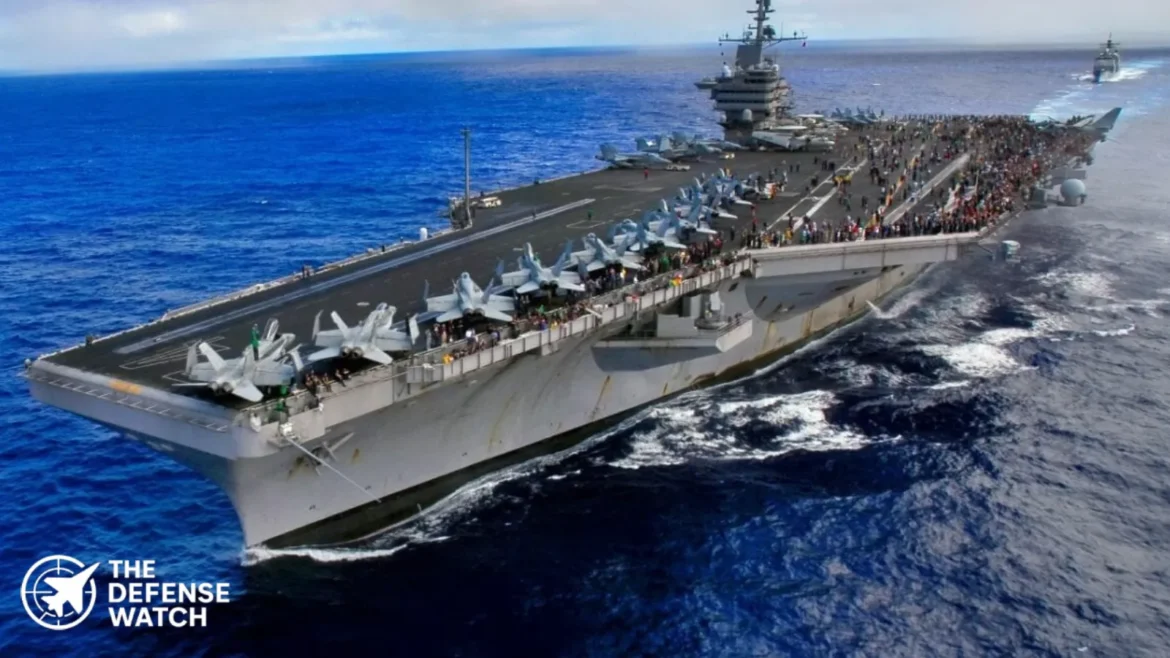
The Gerald R. Ford class remains the benchmark for modern aircraft carriers. These nuclear powered ships are the largest warships ever built and represent a generational leap over the older Nimitz class.
Why It Leads the Ranking
Ford class carriers introduce electromagnetic catapults, advanced arresting gear, and a redesigned flight deck. These changes increase sortie rates while reducing crew workload. The class is built to operate modern aircraft like the F 35C alongside legacy platforms.
Strategic Impact
In 2026, USS Gerald R. Ford and USS John F. Kennedy anchor U.S. carrier strike groups in the Atlantic and Pacific. Their ability to generate sustained air operations gives Washington unmatched reach. No other navy can deploy comparable power at similar scale or tempo.
2. Nimitz Class, United States
Even as newer ships enter service, the Nimitz class remains a core pillar of U.S. naval power. Several of these carriers will remain active into the 2030s.
Still Relevant in 2026
Despite their age, Nimitz class carriers have received major upgrades. Improved radars, combat systems, and air wings keep them combat credible. Their nuclear propulsion allows long deployments without refueling.
Operational Value
Nimitz class carriers continue to shoulder much of the U.S. Navy’s global presence mission. From freedom of navigation patrols to crisis response, these ships remain central to American maritime strategy.
3. Fujian, China
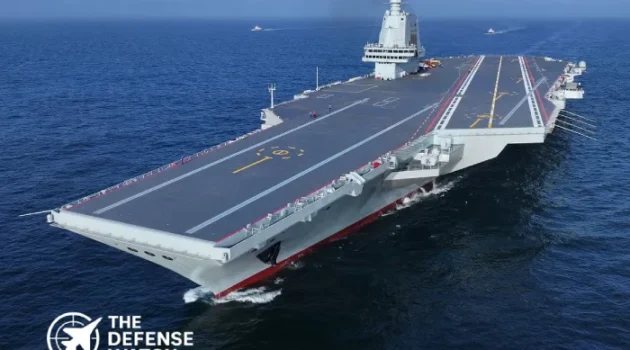
China’s Fujian aircraft carrier marks a turning point for the People’s Liberation Army Navy. It is Beijing’s first carrier designed from the start with electromagnetic catapults.
A Leap Forward for China
Unlike earlier Chinese carriers, Fujian is not based on Soviet era designs. It is larger, more capable, and better suited for high tempo flight operations. This allows China to operate heavier aircraft with greater range and payload.
Regional Consequences
While Fujian does not yet match U.S. carriers in experience or integration, its entry into service signals China’s intent to operate blue water carrier groups. In the Western Pacific, this adds pressure on U.S. and allied naval planners.
4. HMS Queen Elizabeth, United Kingdom
The United Kingdom’s Queen Elizabeth class focuses on flexibility rather than raw size. These carriers operate short takeoff and vertical landing aircraft, primarily the F 35B.
Strength Through Integration
HMS Queen Elizabeth and HMS Prince of Wales are designed to operate closely with NATO allies, especially the United States. U.S. Marine Corps F 35Bs routinely deploy aboard British carriers, creating combined air wings.
Strategic Role
In 2026, British carriers support NATO operations, reinforce presence in the Indo Pacific, and provide London with independent strike options. Their strength lies in coalition warfare rather than solo power projection.
5. Charles de Gaulle, France
France’s Charles de Gaulle remains Europe’s only nuclear powered aircraft carrier. Though smaller than U.S. carriers, it packs significant capability.
Compact but Capable
The ship operates CATOBAR systems, allowing it to launch heavier aircraft than STOVL carriers. Its air wing includes Rafale M fighters with nuclear strike capability.
Global Reach
Charles de Gaulle gives France an independent global strike option. Regular deployments to the Indo Pacific and Middle East underline Paris’s role as a global naval actor.
Comparing Carrier Capabilities in 2026
Size vs Effectiveness
Bigger is not always better, but size still matters. Larger decks allow more aircraft, higher sortie rates, and better sustainment. This remains a U.S. advantage.
Technology and Training
Catapult systems, aircraft integration, and crew experience often matter more than displacement. The U.S. Navy still leads in operational knowledge built over decades.
Numbers Matter
The United States operates more aircraft carriers than the rest of the world combined. Even as rivals improve individual ships, overall capacity remains uneven.
Analysis, What This Ranking Tells Us
The best aircraft carriers in the world in 2026 reflect a shifting but still U.S. led naval order. China’s progress is real and should not be dismissed. However, experience, integration, and logistics remain decisive advantages for the United States and its allies.
European carriers show a different model. They focus on alliance operations and crisis response rather than sustained high intensity conflict alone. This complements U.S. strategy and spreads risk across partners.
For Washington, the message is clear. Maintaining carrier readiness matters as much as building new hulls. For rivals, closing the gap will take more than hardware. It will require decades of training and operational learning.
FAQs
Which country has the best aircraft carriers in 2026?The United States operates the most capable and numerous aircraft carriers in the world in 2026.
Is China close to matching U.S. aircraft carriers?China is improving rapidly, but it still lacks the operational experience and global reach of the U.S. Navy.
Why are aircraft carriers still important?They provide mobile airpower, deterrence, and rapid response without relying on foreign bases.
Do smaller carriers still matter?Yes. British and French carriers play key roles in coalition operations and regional security.

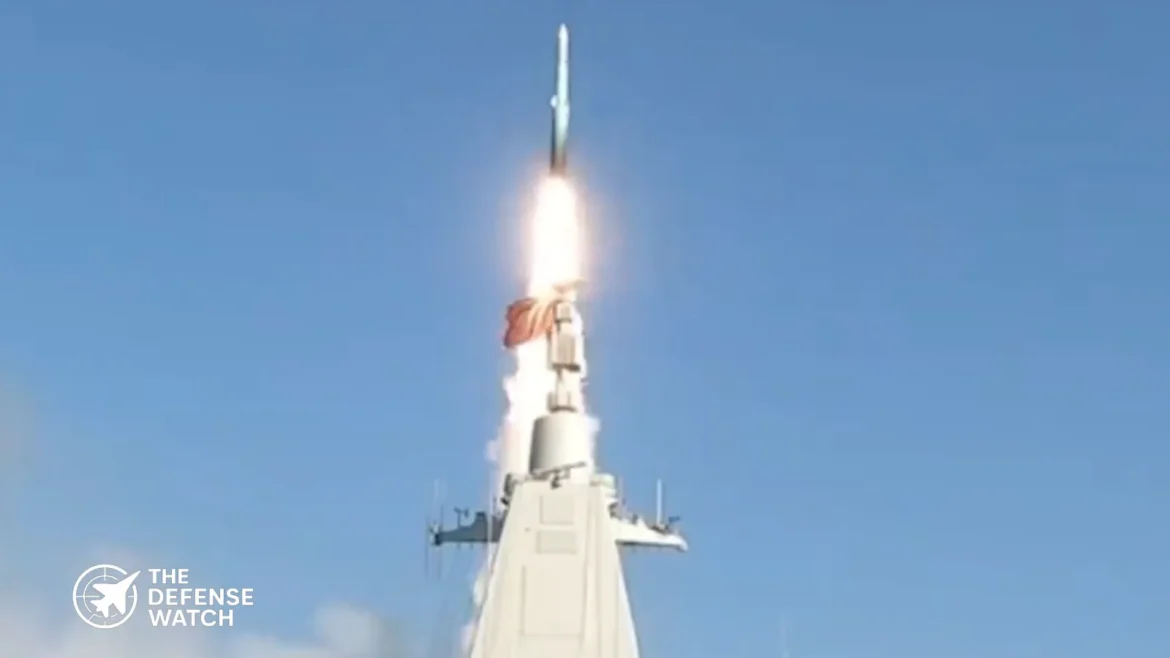
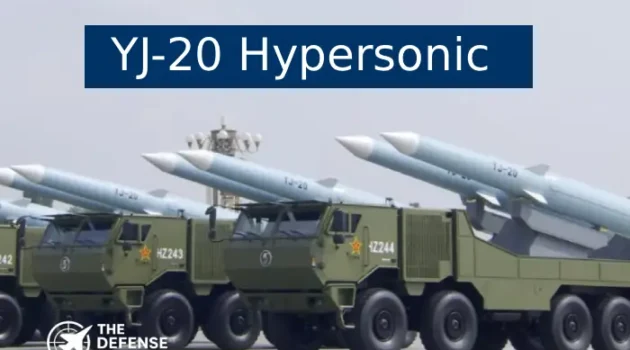
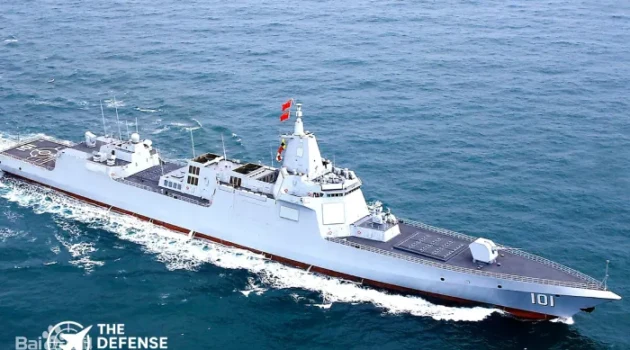
China’s recent test of the YJ-20 hypersonic anti-ship missile aboard a Type 055 destroyer matters because it shows how Beijing is pushing ahead with high-speed strike capability that could challenge Western naval power at range. This test, and the broader push into hypersonic weapons, adds a new layer to strategic competition between China, the United States, and allied navies in the Indo-Pacific and beyond. The main keyword here is China YJ-20 hypersonic missile.
What It Is
China YJ-20 Hypersonic Missile
The YJ-20 hypersonic missile is a Chinese anti-ship weapon designed to fly faster than five times the speed of sound and maneuver in flight. This gives it a harder-to-intercept path compared to traditional cruise missiles.
Type 055 Destroyer
The Type 055 is a large modern surface combatant in the PLA Navy. With advanced sensors and vertical launch systems, it serves as a key element of China’s effort to project naval power. The recent test shows the YJ-20 firing from one of these vertical launch cells aboard the destroyer.
How It Works
A hypersonic missile like the YJ-20 uses a rocket booster and a glide vehicle that travels at hypersonic speeds. Its maneuverability and speed reduce the time for an enemy to react and make interception difficult. In the footage released by Chinese sources, the missile was launched from a vertical cell and destroyed its test target.
Compared with older anti-ship missiles such as the Russian P-800 Oniks or the US Harpoon, the YJ-20’s hypersonic speed and terminal maneuvering aim to overcome layered naval defenses. This type of capability is similar in concept to Russia’s Kinzhal, though the platforms, guidance systems, and shipboard integration differ.
Information on precise range and guidance is limited publicly and should be treated as speculative, based on expert commentary in open sources and comparisons to similar systems.
Why It Matters in Strategic Competition
Regional Power Balance
A sea-launched China YJ-20 hypersonic missile expands China’s ability to strike moving naval targets at long range. That matters for Taiwan Strait, South China Sea, and broader Indo-Pacific security dynamics. U.S. and allied navies rely on layered air and sea defenses to protect carrier strike groups and amphibious forces. A credible hypersonic threat complicates these defenses.
Naval Strategy Evolution
Western navies have invested in integrated air-and-missile defense, electronic warfare, and layered surface-to-air missiles to counter advanced threats. Hypersonic weapons change this calculus because their speed compresses decision cycles. Analysts have noted that navies must rethink how they detect, track, and intercept these fast threats, much like the shift after anti-ship cruise missiles first appeared in the 1970s.
Broader Military Technology Race
China is pushing hypersonics across domains, including land and air launched variants. This fits into broader competition with the United States over future strike systems, missile defense, and control of key sea lanes. The U.S. has its own hypersonic programs, but operational deployment at sea remains limited. The PLA’s testing feeds Beijing’s goal to build deterrence and, if needed, anti-access capabilities.
Strategic Impact for Major Actors
China
This test underscores China’s focus on modernizing the PLA Navy with advanced strike tools. It strengthens deterrence and supports Beijing’s maritime strategy, which aims to secure territorial claims and expand influence in adjoining seas.United States
The test highlights a gap U.S. forces must address in layered defense. It could accelerate U.S. investment in hypersonic defenses and countermeasures, affecting force posture in the Pacific.Allied Navies
Japan, Australia, India, and European partners will watch closely. They may deepen cooperation on missile defense, ISR (intelligence, surveillance, reconnaissance), and joint operations to counter advanced strike weapons.
China’s military expansion is increasing U.S. security risks, the Pentagon said in its latest report on the People’s Liberation Army. The assessment highlights Beijing’s accelerated growth of nuclear weapons, aircraft carriers, and strategic capabilities.
The Department of Defense report describes China’s recent military buildup as historic, estimating six additional aircraft carriers by 2035, bringing its total fleet to nine, just behind the U.S. count of 11.
China’s nuclear stockpile, while in the low 600s at the end of 2024, is projected to surpass 1,000 warheads by 2030. The PLA has also advanced early-warning and counterstrike capabilities, allowing potential retaliatory strikes before incoming warheads detonate.
President Xi Jinping’s push for a “world-class” military reflects his goal to challenge U.S. global dominance by 2049. China’s official defense budget rose 5.2 percent in real terms from 2023 to 2024, though the Pentagon notes that actual spending likely exceeds the reported figures.
The report also highlights Beijing’s strategic ties with Russia, driven by shared interest in countering the U.S., but tempered by mutual distrust. Xi has directed forces to prepare for a potential Taiwan operation by 2027, learning lessons from Russia’s conflict in Ukraine regarding operational planning and modernization.
Amid rising tensions, U.S.-China diplomatic engagement continues. Former President Trump accepted an invitation from Xi to visit China in April 2026 and extended an invitation for a state visit to the U.S., emphasizing ongoing dialogue between the two powers.
China Showcases GJ-11 Stealth Drone with J-20 Fighter in Public Flight
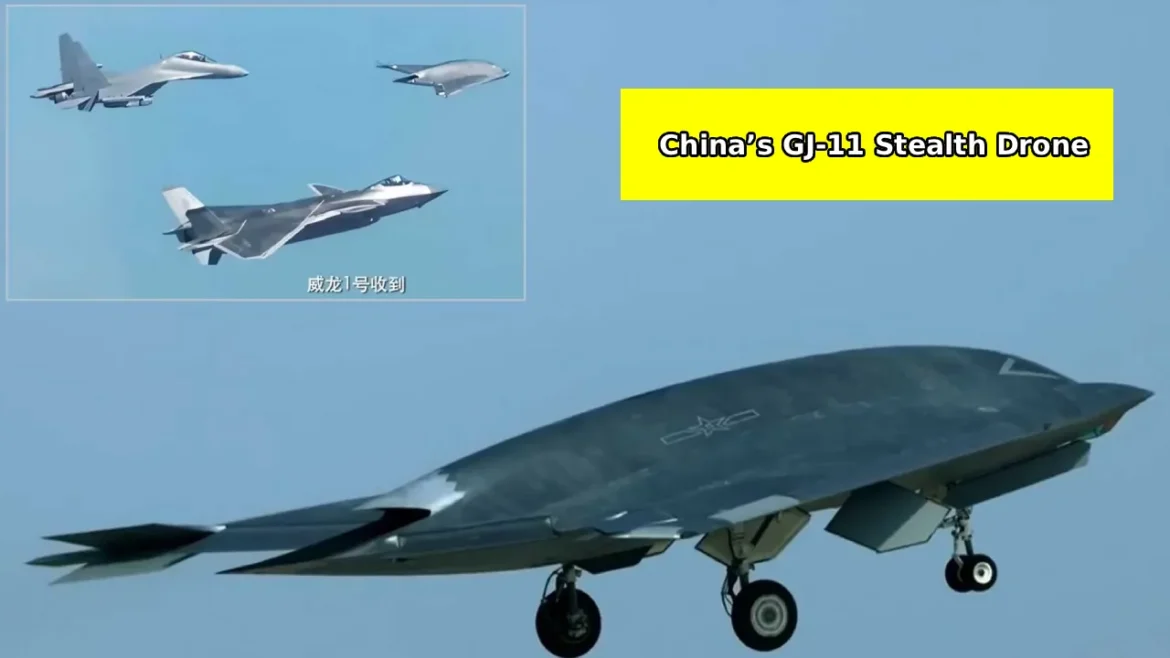
In a significant development for China’s military aviation sector, the GJ-11 stealth drone conducted its first publicly observed flight in formation with the J-20 fifth-generation fighter. The flight occurred during a demonstration at a Chinese airbase, highlighting Beijing’s ongoing focus on integrating unmanned aerial vehicles (UAVs) with manned combat aircraft.
Background on the GJ-11 and J-20 Integration
The GJ-11, also known as the “Sharp Sword,” is China’s advanced stealth combat drone designed for autonomous strike and reconnaissance missions. Developed under the auspices of the Chengdu Aircraft Industry Group, the GJ-11 features low-observable technology, internal weapon bays, and advanced avionics, enabling it to operate in contested airspace alongside manned aircraft such as the J-20 fighter.
The J-20, China’s flagship fifth-generation fighter, is a long-range stealth platform capable of air superiority and strike missions. Pairing the GJ-11 with the J-20 reflects China’s strategy to develop “loyal wingman” drones, which can accompany piloted aircraft to enhance situational awareness, extend reach, and provide additional strike capabilities without endangering human pilots.
Chinese GJ-11 Stealth Drone – Full Specifications
- Maximum Speed: ~1,000 km/h
- Endurance: ~6–8 hours
- Operational Range: 1,500+ km
- Payload Capacity: ~400–500 kg
Flight Demonstration Details
During the demonstration, the GJ-11 flew in close formation with the J-20, signaling progress in autonomous flight coordination between manned and unmanned systems. Observers noted the drone maintained stable flight alongside the fighter jet, demonstrating its navigation and flight control capabilities.
While specific performance data was not released, analysts suggest the GJ-11’s internal weapons bays and stealth profile indicate its potential for precision strikes while evading radar detection. Reports also highlight the drone’s modular payload capability, which could allow it to carry a variety of munitions, including air-to-ground precision-guided bombs and advanced electronic warfare equipment.
Expert Analysis and Strategic Implications
Military analysts view the public display as a clear signal of China’s growing capabilities in UAV technology and autonomous combat systems. Professor Zhang Wei, an aerospace analyst at the Beijing Institute of Technology, stated, “The GJ-11’s flight with the J-20 demonstrates a maturing of China’s UAV integration concept. It represents a shift towards more sophisticated joint operations between manned and unmanned platforms.”
The deployment of stealth drones such as the GJ-11 may also influence regional air power dynamics, offering China a means to project force while minimizing pilot risk. Autonomous drones capable of operating in high-threat environments could complement the J-20 fleet, extending operational flexibility in complex scenarios, including contested maritime and border regions.
Looking Forward: Next Steps in Drone Development
China’s demonstration of the GJ-11 alongside the J-20 reflects broader trends in modern air combat, where “loyal wingman” drones are increasingly seen as force multipliers. Future developments may include enhanced artificial intelligence for autonomous target recognition, cooperative swarm operations, and integration with other Chinese stealth platforms such as the J-31 fighter.
The demonstration also underscores Beijing’s investment in dual-use UAV technology, which has implications for both military strategy and regional security. Analysts expect the GJ-11 will continue testing and gradual integration into operational air units in the coming years, complementing the existing manned fighter fleet.
TOKYO — Japan is shifting from a posture of strategic ambiguity toward a formalized readiness to defend Taiwan in the event of Chinese coercion or military action, according to a recent analysis in the National Security Journal. The development raises a central question: if Japan commits, will the United States step up to parallel that pledge? The stakes are being heightened today amid growing concern over the Taiwan Strait situation and the implications for the Japan–U.S. alliance.
Background
The strategic context for this evolution rests on several pillars. Japan’s defense policy in recent years has recognized that peace and stability in the Taiwan Strait is a “matter of national survival”, with Japan’s 2022 National Security Strategy declaring Taiwan “an extremely important partner and a precious friend” of Tokyo.
Meanwhile, the Self‑Defense Forces (SDF) of Japan have been authorized since 2015 to exercise the right of collective self-defense under certain conditions, marking a shift in legal interpretation from Japan’s pacifist post-war posture.
On the U.S. side, the Center for a New American Security and the Council on Foreign Relations have issued reports emphasizing the urgent need for the U.S.-Japan alliance to prepare contingencies for a Taiwan crisis—including scenarios short of a full invasion, such as a blockade or economic strangulation of Taiwan.
Tokyo’s Shift in Posture
The key argument of the article in National Security Journal is that Japan appears to be moving from vague language toward explicit commitment in the event of Chinese coercion aimed at Taiwan. According to the piece:
- Japan is increasingly treating a Chinese blockade or embargo of Taiwan—not only an amphibious invasion—as a plausible scenario.
- Tokyo’s more pointed rhetoric—highlighting the proximity of Taiwan, the importance of tech supply chains (particularly semiconductors) and the risk to Japan’s own security—signals that Japan may deem interference with Taiwan as having a material impact on its national security.
- The article suggests that such a stance implies prior consultation with Washington and raises the question whether the U.S. would align with Japan in that scenario.
Scenario: Blockade vs Invasion
The journal article breaks down two possible types of Chinese action against Taiwan:
- A full-scale amphibious invasion requiring large cross-strait logistical efforts (often compared to the Allied landings in Sicily/Normandy) — a scenario many analysts view as less likely in the near term.
- A blockade or economic strangulation effort (for instance, sealing sea lanes or logistics) which is operationally easier and might attract less immediate global attention — yet would severely impact Taiwan, and by extension, Japan and global supply chains.
Japan’s new posture appears particularly attentive to the latter scenario, which would place pressure on Tokyo to act even if Taiwan is not physically invaded.
U.S. Alignment: The Crucial Question
While Japan’s shifting stance has drawn attention, the critical uncertainty lies in Washington’s willingness and readiness to respond in parallel. Several analysts and policy studies point to enduring ambiguities:
- The 1960 U.S.-Japan Security Treaty obliges the U.S. to defend Japan if Japanese territory is attacked, but it does not obligate Japan to defend U.S. territory or commit to specific contingencies involving Taiwan.
- In the 2022 CFR report “Enhancing U.S.-Japan Coordination for a Taiwan Conflict”, the authors note that Japan may provide “rear-area support” (logistics, basing) rather than front-line combat unless Tokyo defines a Taiwan contingency as a “survival-threatening situation” for Japan.
- The USNI article “The United States Needs Japan in a Fight for Taiwan” argues that U.S. strategy must ensure Tokyo’s contribution is clearly defined and integrated, including base access, intelligence sharing and joint planning.
In short, while the U.S.-Japan alliance is robust, the mechanics of how and when Tokyo and Washington might act together in a Taiwan emergency remain unresolved.
Expert or Policy Perspective
From a policy-perspective viewpoint, Japan’s move reflects growing strategic compulsion. Analysts argue that Tokyo faces a dual threat: China’s military rise and economic influence, and the potential erosion of U.S. deterrence credibility in the region. By signalling willingness to defend Taiwan, Japan is calibrating its role as both regional stabiliser and key U.S. ally.
At the same time, U.S. policymakers view Japan as indispensable: Washington cannot realistically defend Taiwan without Japanese basing and logistical support due to geography and force posture in the Indo-Pacific. The two countries’ challenge is synchronising legal, operational and political frameworks so that Tokyo’s stated willingness can translate into actual contingency planning.
Yet major hurdles remain: constitutional constraints in Japan (Article 9), domestic political sensitivity about engaging in another country’s defence, and U.S. strategic ambiguity about the thresholds triggering military commitment to Taiwan. These factors combine to produce a scenario where Japan might act first or more visibly, but the U.S. may still hold back depending on political, operational or treaty factors.
Closing: Impact and What’s Next
The implications of Japan signalling readiness to defend Taiwan are profound both regionally and globally. For Japan, it marks a step toward a more active defence role beyond its own territory. For the U.S., it raises the benchmark of allied burden-sharing and complicates strategic calculus in the Indo-Pacific.
The next stage to watch includes:
- whether Tokyo issues a formal policy declaration clarifying when it would intervene in a Taiwan contingency;
- how Tokyo and Washington update bilateral plans, joint exercises and base access protocols to reflect this shift;
- how Beijing responds—both diplomatically and militarily—to Japan’s evolving posture;
- and whether U.S. leadership clarifies its own threshold for engaging in a Taiwan theatre, especially given Japan’s closer involvement.
As Japan narrows the gap between strategic ambiguity and explicit commitment over Taiwan, the U.S.-Japan alliance enters a new phase in which credible planning and coordination will determine whether deterrence holds or a crisis becomes a test of alliance credibility and regional stability.

New imagery released by Chinese social platforms on 3 November 2025 reveals significant updates to China sixth-generation fighter prototypes, signaling an uncommonly rapid pace toward a formal test campaign. According to reports, the heavy tailless jet associated with Chengdu Aircraft Corporation now sports angular two-dimensional exhausts and a distinctive three-engine layout, raising pressures on the United States’ counterpart development effort under the Next Generation Air Dominance (NGAD) umbrella.
Background
The race for air superiority among peer rivals has moved firmly into the sixth-generation fighter domain—aircraft designed beyond the fifth-generation features of stealth, supersonic cruise and advanced sensors. China has long invested in stealth fighters such as the Chengdu J‑20 and is now advancing a next step, while the U.S., through its NGAD initiative, seeks to field a “family of systems” centred around a new manned fighter plus unmanned wing-mates.
In that context, any visible jump in China’s prototyping can disturb existing expectations about timing, capability-parity and strategic deterrence.Latest Developments
The 4 November 2025 report by Army Recognition states that Chinese images show a second prototype of the heavy tailless design tied to Chengdu. This version adds a three-engine configuration and “angular, two-dimensional style” exhausts—changes from earlier sightings.
That speed of change—about ten months after the first public sightings—suggests China is accelerating toward full-scale testing.
A separate analysis notes that China’s broader move into sixth-generation systems reflects a shift toward high-end manufacturing, domestic supply-chains, and self-sufficiency in key technologies such as advanced propulsion and sensors.
On the U.S. side, a recent market-report document highlights that the Navy’s prospective sixth-generation fighter, the F/A‑XX, was already facing budget constraints and shifting priority lines in 2025 — and can affect the broader NGAD timeline.
Taken together, observers note that the U.S. may be under pressure not only to deliver capability, but to maintain schedule and quantity of fighters in a contested environment.Expert/Policy Perspective
While neither side has officially confirmed many of the design details of the Chinese prototype, Western analysts interpret the visible changes—three-engine layout, tailless heavy design, advanced exhausts—as indicative of a focus on high thrust, low observable signature, and high survivability in contested airspace. The deployment of such aircraft could affect the air-dominance calculus in the Indo-Pacific region.
From a U.S. policy view, senior airpower officials have publicly acknowledged concerns about an “air superiority gap” should adversary platforms mature faster than current U.S. ones.
Analyst commentary suggests that while China may still lag in operational readiness, the symbolic effect of accelerated testing means U.S. planners may have to reassess timelines, force-structure assumptions and allied integration.Implications and What’s Next
The acceleration of China’s sixth-generation fighter development raises several implications:
- If China indeed fields a viable sixth-generation fighter ahead of the U.S., the balance of air superiority in the Asia-Pacific could tilt, at least in perception.
- The U.S. might need to hasten its NGAD fighter and associated unmanned-wingman systems, or invest even more in existing fifth-generation platforms as bridge capabilities.
- Allies in the region may adjust procurement strategies, basing decisions and air-defence posture to account for rapidly shifting threat vectors.
- The industrial base in both countries may become contested: advanced materials, propulsion, sensors, avionics and manufacturing pipelines will be critical bottlenecks.
For China, the next visible step will be a formal prototype test campaign—public sightings, flight-test activity and perhaps release of state-media footage. For the U.S., budget decisions and contract awards for NGAD and related systems in the coming fiscal years will indicate how seriously the pressure is being addressed.
Closing
In the evolving air-superiority race, the visible progress of China’s sixth-generation fighter places the United States’ next-generation jet development under sharper scrutiny. As both nations mobilize advanced aerospace technologies, the timelines, cost commitments and strategic assumptions of air-dominance may be entering a new era of competition and urgency.
Older Posts