

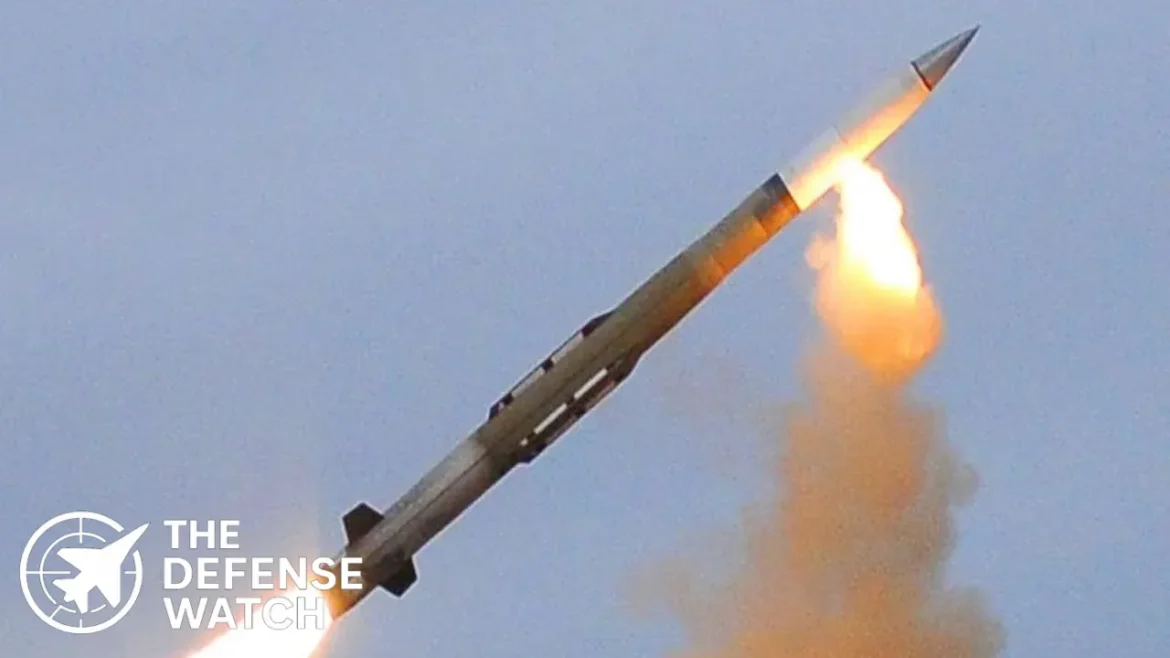
Boeing Moves to Triple PAC-3 Seeker Output Amid Record Demand
Boeing announced during the Dubai Air Show 2025 that it will triple production of Patriot PAC-3 missile seekers, responding to accelerating demand from European NATO members and global partners replenishing stockpiles following the war in Ukraine. The expansion is anchored by a new 40,000-square-foot manufacturing facility built specifically to break long-standing supply bottlenecks in seeker production.
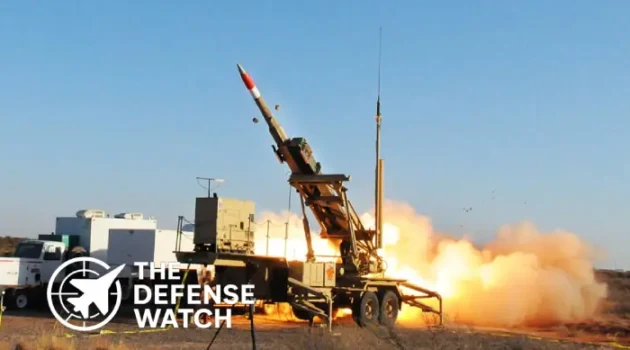
The move positions Boeing at the center of one of the most stressed supply chains in Western missile defense, as the Patriot PAC-3 interceptor remains the most widely deployed ballistic missile defense asset across NATO, the Middle East, and Asia-Pacific.
Background: Patriot Demand Soars After Ukraine War
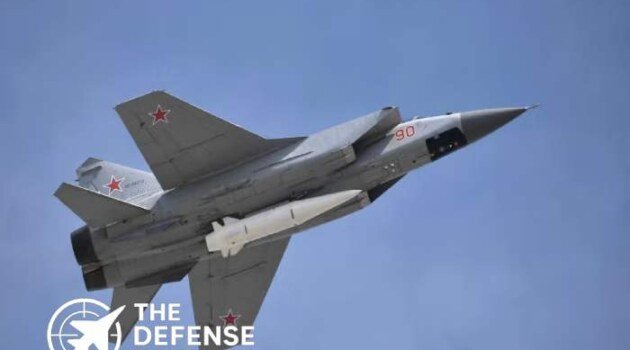
The Patriot system has experienced unprecedented global demand since Russia’s full-scale invasion of Ukraine in 2022. Ukraine’s successful use of Patriot batteries to intercept Kinzhal hypersonic missiles and other ballistic threats reshaped European defense planning and triggered one of the largest missile procurement surges since the Cold War.
European nations—among them Germany, Poland, Romania, the Netherlands, Spain, Sweden, and Greece—are simultaneously:
- Supplying interceptors and batteries to Ukraine
- Rebuilding their own depleted stocks
- Preparing for potential high-intensity conflict scenarios on NATO’s eastern flank
This surge exposed a critical industrial bottleneck: insufficient production of PAC-3 seekers, the highly specialized guidance component manufactured solely by Boeing.
Inside the Expansion: Boeing’s New Seeker Production Facility
A Strategic Early Investment
Steve Parker, head of Boeing Defense, Space & Security, told reporters that Boeing anticipated the demand spike years earlier and began investing in new production capacity before customers formally placed orders.
“We saw this coming and had to build ahead of the need,” Parker said at Dubai Air Show, emphasizing that waiting for contracts would have put the entire Patriot industrial ecosystem at risk.
The result was a dedicated, state-of-the-art center in Huntsville, Alabama, focused on eliminating bottlenecks in:
- precision electronics
- micro-machining
- sensor assembly
- final integration and testing
The new capacity has already helped Boeing push production beyond 500 PAC-3 seekers in 2024, with further increases expected in 2025.
Critical Link in a Three-Company Ecosystem
The Patriot supply chain relies on a tri-partner model:
- Raytheon → ground radar and fire control
- Lockheed Martin → PAC-3 and PAC-3 MSE interceptors
- Boeing → Ka-band active radar seeker
Of these, the seeker has become the pacing item for global production. NATO officials have acknowledged that increasing missile output was impossible without expanding seeker manufacturing first.
What the PAC-3 Seeker Does—and Why It Matters
The Missile’s “Eye and Brain”
The Boeing-built seeker enables the PAC-3 interceptor’s hit-to-kill capability, distinguishing it from earlier Patriot generations that relied on semi-active homing.
Key advantages:
- Ka-band radar offers ultra-fine resolution
- Actively acquires and tracks targets in terminal flight
- Enables the missile to identify a warhead among debris or decoys
- Permits the ground radar to engage multiple threats simultaneously
This is vital against:
- maneuvering ballistic missiles
- hypersonic glide vehicles
- cruise missiles
- saturation attacks
Combat-Proven Performance
PAC-3 interceptors equipped with Boeing seekers have demonstrated real-world effectiveness in Ukraine, intercepting:
- Kinzhal hypersonic missiles
- Iskander ballistic missiles
- Shahed drones
- Russian cruise missiles
The Pentagon describes these intercepts as “operational proof” that Western missile defense systems can counter advanced Russian designs.
Industrial Strain and Labor Issues
Boeing’s expansion comes as the company grapples with a prolonged labor dispute at its St. Louis plant, where workers producing military aircraft and MQ-25 drones launched a strike after contract negotiations stalled.
Although the PAC-3 seeker line is based in Alabama, Parker said the St. Louis stoppage highlights “how thin the industrial margin for error has become” across the defense sector.
Defense analysts warn that any sustained disruption could ripple across multiple weapons programs at a time when demand for U.S. systems is at a generational peak.
Strategic and Policy Implications for NATO
1. Europe’s Missile Defense Plans Depend on U.S. Industry
NATO’s future integrated air and missile defense (IAMD) plans—especially Germany’s European Sky Shield Initiative (ESSI)—assume accelerated PAC-3 interceptor deliveries through the late 2020s.
Without Boeing’s seeker expansion, European plans would face multi-year delays.
2. U.S. Arsenal Needs Rebuilding
The United States has transferred interceptors and full Patriot batteries to Ukraine, drawing down its own stockpiles. Pentagon officials privately acknowledge that replenishing U.S. inventories will take years.
3. Rising Threat From Russia and China
Both Russia and China continue developing:
- maneuvering reentry vehicles (MaRVs)
- hypersonic glide vehicles
- stealthier cruise missiles
- electronic warfare countermeasures
Tripling PAC-3 seeker output ensures the U.S. and allies can field interceptors capable of engaging next-generation threats.
What’s Next: A Race to Restore Stockpiles
Boeing’s new seeker facility is part of a broader incentive package worth roughly $2.7 billion aimed at easing pressure on PAC-3 production lines over the next five years.
Defense officials say the first major capacity increase will become visible between 2026 and 2027, when NATO expects a noticeable rise in available interceptors.
For European allies, the metric that matters is simple: full missile canisters and ready Patriot batteries on the eastern flank.
Conclusion: A Pivotal Test for U.S. Missile Defense Industry
Boeing’s decision to triple PAC-3 seeker production marks one of the most significant industrial moves in the Western missile defense sector since the Cold War. As NATO accelerates rearmament and the U.S. refills critical inventories, the PAC-3 seeker will remain a decisive pacing factor for the Alliance’s ability to deter and defeat ballistic and hypersonic threats.
The next five years will test whether U.S. industry can expand fast enough to meet the demands of modern high-intensity warfare—while sustaining the global network of partners that rely on Patriot as their primary shield.
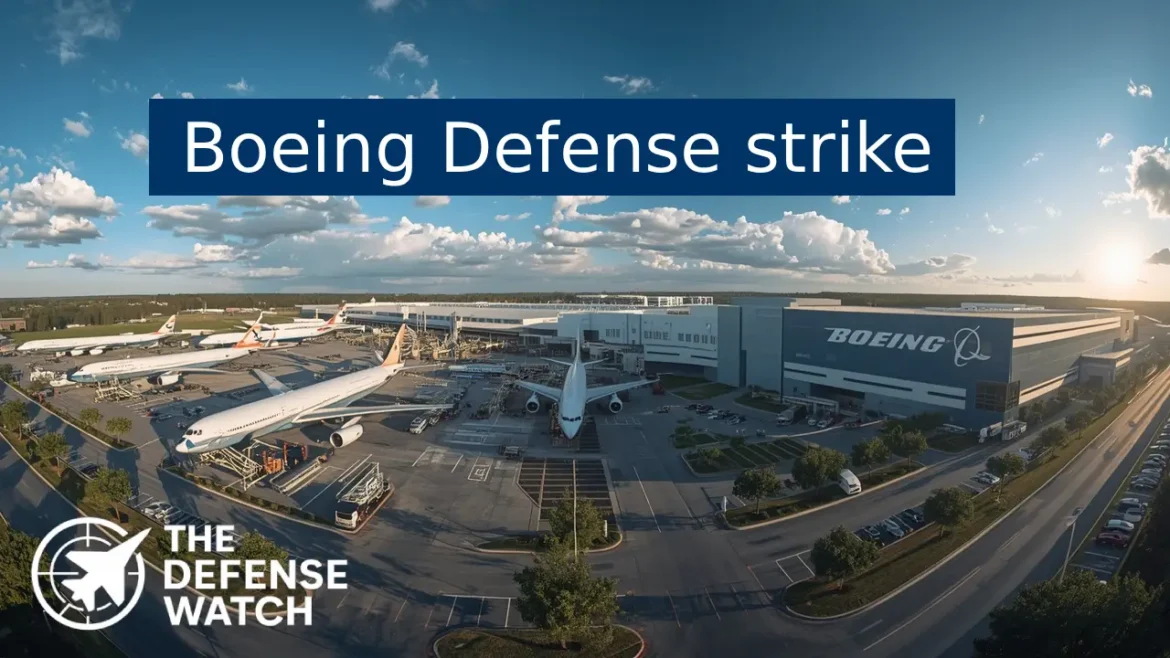
The Boeing Defense strike officially ended this week after St. Louis–area workers voted to approve a new labor contract, concluding a 101-day walkout that stalled production of multiple U.S. military aircraft, weapons, and advanced defense systems. The agreement brings nearly 1,200 employees back to work at Boeing’s defense facilities in Missouri and Illinois, where the company manufactures platforms such as the F-15EX, F/A-18 Super Hornet components, the MQ-25 Stingray, and other classified systems.
Background: A Disruption Across U.S. Defense Manufacturing
The strike began in early August when Boeing Defense workers, represented by the International Association of Machinists and Aerospace Workers (IAM), rejected a previous contract offer over wage provisions, retirement contributions, and overtime policies. The work stoppage quickly scaled into one of the longest labor disruptions in the modern U.S. defense sector, halting production lines at a time when the Pentagon is pushing to accelerate aircraft deliveries, expand munitions output, and strengthen industrial resilience.
Boeing’s St. Louis operations are central to several major U.S. military procurement programs. Any prolonged delay risked slowing U.S. Air Force modernization timelines, Navy carrier air wing sustainment, and foreign military sales commitments.
Contract Details and Workforce Return
The newly approved proposal includes wage increases, expanded retirement benefits, and revised shift and overtime structures. According to IAM representatives, the deal was accepted by a majority vote after weeks of negotiations and two failed earlier proposals.
Boeing confirmed that operations will resume “immediately and safely” as workers rejoin production lines. While the company did not disclose specific cost impacts, it acknowledged that the Boeing Defense strike caused schedule disruptions to several programs.
“We value the highly skilled workforce in St. Louis and are pleased to bring our teams back to full operation,” a Boeing spokesperson said in a statement. “This agreement reflects our commitment to competitive pay and long-term stability.”
Union leaders also emphasized the significance of the revised wage structure. “Our members held the line to secure a fair contract,” an IAM representative said. “Their work is critical to America’s defense capability.”
Impact on Defense Production and Delivery Timelines
The Boeing Defense strike slowed work across major lines, including:
- F-15EX Eagle II — The Air Force’s next-generation air superiority aircraft.
- T-7A Red Hawk — The Air Force’s new jet trainer, already facing certification delays.
- MQ-25 Stingray — The Navy’s carrier-based aerial refueling drone.
- Precision weapons and classified programs tied to future combat air systems.
While Boeing has not detailed specific delays, defense officials have been monitoring the strike due to rising concerns about production bottlenecks across the U.S. aerospace industrial base.
The Pentagon is expected to coordinate with Boeing in the coming weeks to revise delivery timelines, especially for F-15EX units slated for deployment in the Indo-Pacific.
Industry and Policy Perspective
Defense analysts note that prolonged labor disputes in the aerospace sector carry implications beyond a single company. The Boeing Defense strike underscored how thinly stretched the U.S. defense industrial base has become. Many facilities depend on niche workforces with specialized manufacturing skill sets that cannot be easily replaced.
“The industrial workforce is now a strategic asset,” said Dr. Emily Hartwell, a defense-industrial policy scholar. “A 101-day strike at one of Boeing’s key plants creates ripple effects across U.S. force readiness and foreign military sales commitments.”
Analysts also point to increased congressional pressure on major defense suppliers to improve resilience, modernize production lines, and reduce systemic delays.
What’s Next for Boeing Defense
With employees returning to work, Boeing intends to ramp up production to recover schedule margins across its fighter jet and drone programs. The company is also expected to provide updated delivery forecasts to the U.S. Department of Defense and allied customers in the coming weeks.
Longer-term, industry observers say the contract resolution may influence future labor negotiations across the defense manufacturing sector, especially as production surges continue for munitions, strike systems, and airframes.
For Boeing, the end of the Boeing Defense strike removes a major near-term operational challenge but highlights broader industrial pressures—both labor and supply-chain—that continue to shape U.S. defense readiness.
Why the F-15 Fighter Jet Still Matters
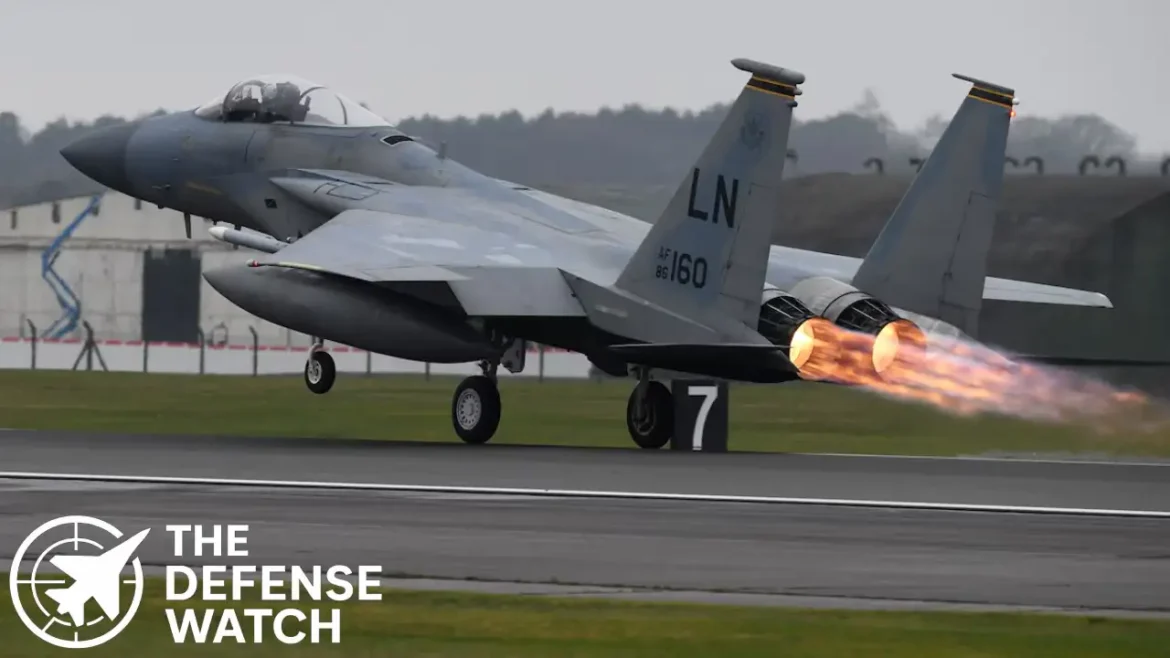
Few combat aircraft have achieved the reputation of the F-15 fighter jet, a platform that has defined U.S. and allied airpower since the mid-1970s. Developed by McDonnell Douglas (now Boeing), the F-15 was designed as a pure air superiority fighter to ensure the U.S. Air Force could defeat Soviet aircraft during the Cold War.
Half a century later, the aircraft is still in frontline service, upgraded and adapted for new missions ranging from strike to electronic warfare. Its latest variant, the F-15EX Eagle II, represents an effort to extend the aircraft’s relevance into the next generation, balancing payload and survivability against stealth-centric designs like the F-35.
Origins of the F-15 Fighter Jet
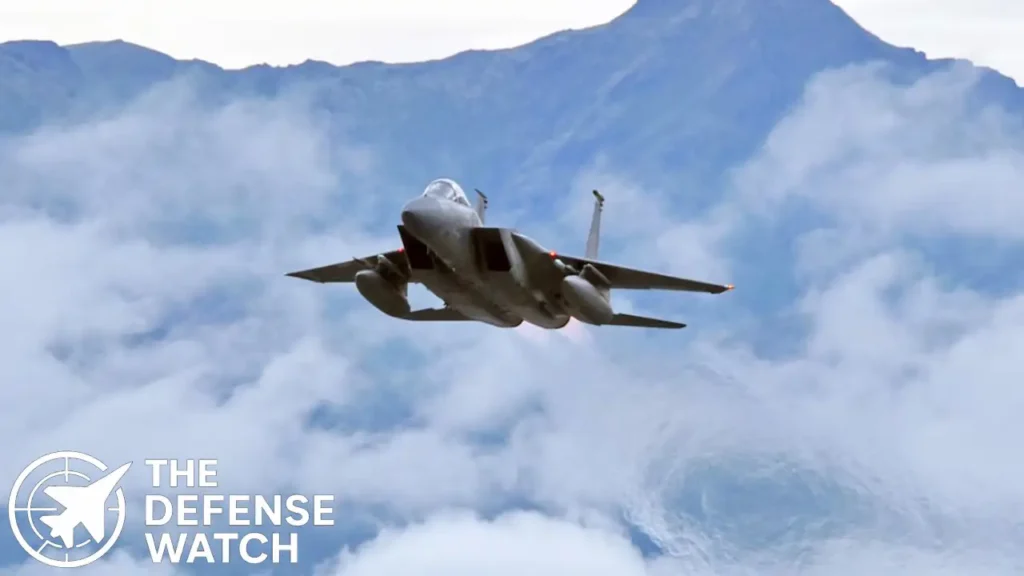
The program for the F-15 began in the late 1960s after the U.S. Air Force sought a dedicated air superiority fighter following lessons from Vietnam. McDonnell Douglas won the contract in 1969, and the first flight took place in 1972.
When it entered service in 1976, the F-15 Eagle was revolutionary: twin-engine reliability, a large radar aperture, and a thrust-to-weight ratio greater than 1:1, allowing it to accelerate while climbing vertically.
From the outset, the F-15’s motto was clear: “Not a pound for air-to-ground.” It was built to dominate the skies, a role in which it still boasts a remarkable combat record.
Combat Record and Legacy
The F-15 fighter jet has accumulated one of the most impressive records in aerial combat: over 100 air-to-air kills with zero losses in air-to-air engagements, largely credited to Israeli, Saudi, and U.S. Air Force operations.
- Israel first used the F-15 in combat in 1979, scoring dozens of kills over Syrian aircraft in Lebanon.
- Saudi F-15s achieved kills during the Iran–Iraq War and later in Desert Storm.
- The U.S. Air Force relied heavily on the F-15C for air dominance during Operation Desert Storm (1991), where it achieved the majority of coalition air-to-air kills.
This legacy gave the F-15 a reputation as one of the most successful fighter designs ever fielded.
Evolution of the F-15 Variants
Over time, the F-15 family expanded to meet changing requirements:
- F-15A/B (1970s) – Original single- and two-seat versions for air superiority.
- F-15C/D (1980s) – Improved avionics, conformal fuel tanks, and extended range.
- F-15E Strike Eagle (1988 onward) – A dual-role fighter capable of precision strike and deep interdiction, with two-seat cockpit for pilot and weapons officer.
- F-15SA / F-15QA – Advanced export variants with digital flight controls, modern avionics, and expanded payloads for Saudi Arabia and Qatar.
- F-15EX Eagle II (2020s) – The newest U.S. variant with advanced electronic warfare systems, modern cockpit displays, fly-by-wire controls, and hypersonic weapon compatibility.
The F-15EX: Future of the Eagle
The U.S. Air Force ordered its first F-15EX Eagle II aircraft in 2020 to replace aging F-15C/D fleets.
Key features include:
- Payload capacity: up to 29,500 lbs, the heaviest among U.S. fighters.
- Weapons carriage: 12 AMRAAM-class missiles or a mix of bombs, missiles, and hypersonics.
- EPAWSS electronic warfare suite for survivability in contested airspace.
- Digital backbone enabling faster software updates and integration with unmanned systems.
- Two-seat design adaptable for collaborative combat with drones.
Unlike stealth aircraft, the F-15EX is designed to carry heavy payloads and serve as a “weapons truck,” complementing stealth fighters in large-scale operations.
Global Operators of the F-15 Fighter Jet
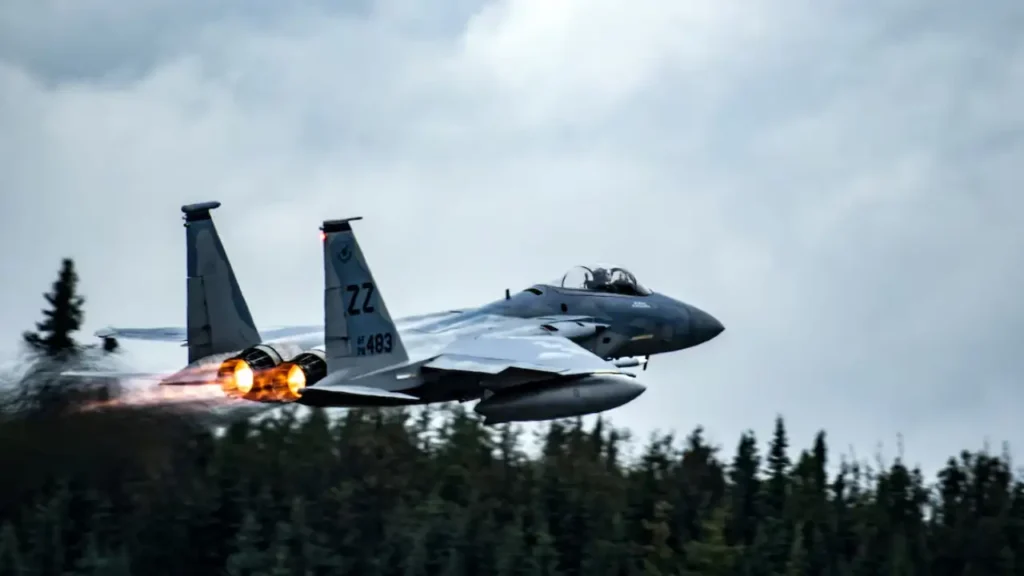
The F-15 remains in use across several air forces:
- United States – Operates F-15C/D, F-15E Strike Eagle, and now F-15EX.
- Israel – One of the earliest and most effective operators.
- Saudi Arabia – Fields one of the largest F-15 fleets, including advanced F-15SA.
- Japan – Locally produced under license; now upgrading to F-15JSI standard.
- Qatar – Fields the latest F-15QA variant.
- South Korea & Singapore – Both operate the Strike Eagle variant.
These nations highlight the F-15’s continued relevance, with several investing in modernization programs rather than retiring the type.
Analysis: The F-15’s Place in the Modern Era
Despite its legacy, the F-15 fighter jet competes in an era dominated by stealth, network-centric warfare, and emerging sixth-generation projects. Critics argue that in heavily defended airspace, its non-stealth profile limits survivability.
Yet, the F-15 offers advantages:
- unmatched payload capacity,
- proven range and reliability,
- ability to integrate future weapons like hypersonics.
For the U.S. and allies, the F-15EX provides a cost-effective bridge between legacy fourth-generation aircraft and future sixth-generation systems like NGAD (Next Generation Air Dominance). Its role as a complement — not competitor — to stealth platforms gives air forces flexibility in planning strike packages.
FAQs
Its combination of speed, power, and payload has made it one of the most successful fighters in history, with an undefeated air-to-air record.
The F-15EX Eagle II, now entering U.S. Air Force service.
The F-15 can reach speeds of Mach 2.5 (around 1,650 mph).
At least eight countries, including the U.S., Israel, Japan, Saudi Arabia, South Korea, Qatar, and Singapore.
Yes. With upgrades and new variants like the F-15EX, the fighter is expected to remain operational well into the 2040s.

The US Air Force has selected Boeing’s F-47 as its “latest fighter jets in USA” and “newest fighter jet” under the sixth-generation fighter umbrella. The announcement marks a significant shift in aerial warfare strategy, as the F-47 is poised to replace the F-22 Raptor and usher in a future defined by manned–unmanned teaming and enhanced stealth capabilities.
Overview of the F-47 Program
Under the Next Generation Air Dominance (NGAD) initiative, the F-47 is being developed by Boeing to deliver unprecedented air superiority. USAF officials confirm prototypes have been flying since 2020 and that they plan to field the aircraft by the end of this decade.
Design Goals and Performance
- Range & Speed: Anticipated top speed of Mach 2 and a combat radius exceeding 1,000 nautical miles.
- Supportability: Designed to be more sustainable and adaptable than fifth-generation jets, requiring less manpower and infrastructure.
- Advanced Stealth & Systems: Promises next-level stealth and compatibility with collaborative combat aircraft (drones).
Strategic Shift: Boeing’s Breakthrough
The F-47 contract, worth over $20 billion for development, signals a major win for Boeing, challenging Lockheed Martin’s longstanding dominance in stealth fighters. Some reports suggest the total lifecycle value may exceed $50 billion.
This shift reflects a realignment of defense priorities, focusing on affordability, scale, and technological innovation—key as emerging threats from near-peer rivals intensify.
Program Timeline
The Air Force expects the F-47 to be operational between approximately 2025 and 2029, with plans to procure at least 185 units. Budget documents for FY 2025 allocate around $3.3 billion to NGAD development, with $2.7 billion designated for the manned fighter and $557 million for related collaborative drone.
Context & Strategic Significance
The F-47 is a pivotal leap forward in American fighter aviation, reflecting an evolving combat environment where stealth, networked multi-domain operations, and unmanned systems integration are paramount. Compared to its predecessor, the fifth-generation F-35, the F-47 emphasizes range, flexibility, and teaming capability.
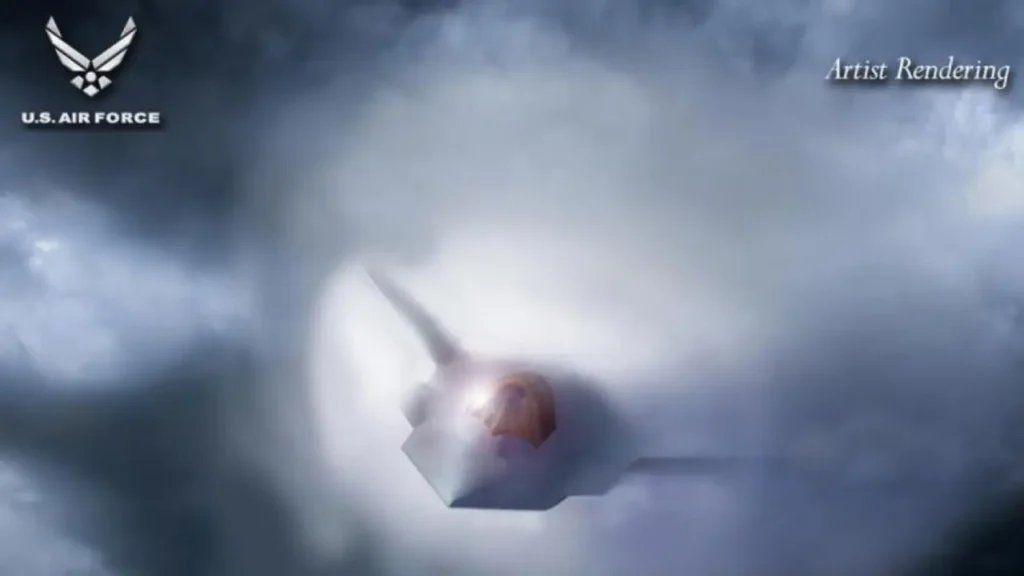
Moreover, the program underscores the USAF’s commitment to staying ahead in the face of rising Chinese and Russian aerospace advancements—a calculated response to global security challenges.
Implications for Lockheed and the Defense Industry
Lockheed Martin’s absence from the F-47 project signals a notable shake-up—Boeing’s successful bid positions it as the new leader in next-gen air combat design.
While Lockheed continues to explore “fifth-generation-plus” concepts like the proposed F-55, cost and feasibility concerns cast uncertainty over their timeline.
Outlook & Analysis (Extra Value)
The F-47’s development reflects a broader move toward systems-of-systems warfare. By enabling manned aircraft to serve as networked “quarterbacks” for drone wingmen, the USAF is leveraging scalable, flexible warfare architectures. These will adapt faster to future threats and allow distributed operations across contested environments.
However, questions remain regarding production timelines, integration of drone systems, affordability, and technical challenges of fielding a sixth-generation, crewed fighter on schedule.
FAQs
he Boeing-built sixth-generation fighter jet selected by the USAF under NGAD, intended to replace the F-22.
It’s expected to be fielded between 2025 and 2029, per USAF projections.
It offers longer range, faster speeds (Mach 2+), advanced stealth, integrated drone support, and lower sustainment burdens.
Boeing’s proposal may have aligned better with USAF priorities for cost, production scale, and innovation—marking a strategic shift in the aerospace sector.