Executive Summary:
Honeywell and a local Polish defense industry partner will establish a new AGT1500 engine maintenance center in Poland to support the country’s M1 Abrams tank fleet. The move is designed to improve operational readiness, reduce sustainment timelines, and strengthen NATO-aligned armored capabilities on Europe’s eastern flank.
Honeywell Expands Abrams Tank Support Infrastructure In Poland
The AGT1500 engine maintenance center in Poland marks another major step in Warsaw’s long term effort to sustain and modernize its armored forces around the American-made M1 Abrams platform.
Honeywell announced it will partner with a local Polish company to establish maintenance, repair, and overhaul capabilities for the AGT1500 gas turbine engine that powers the Abrams main battle tank. The facility will support Poland’s growing fleet of M1A1 Abrams and newer M1A2 SEPv3 variants acquired from the United States.
The development comes as Poland rapidly expands its defense spending and military modernization programs amid heightened security concerns across Eastern Europe following Russia’s invasion of Ukraine.
According to Honeywell, the new maintenance center is expected to improve fleet readiness while reducing dependence on overseas engine servicing. Localized sustainment infrastructure is increasingly viewed as essential for NATO frontline states operating advanced Western combat systems.
Strategic Importance Of The AGT1500 Engine Maintenance Center
The AGT1500 engine maintenance center is strategically important because the Abrams platform relies on a highly specialized turbine propulsion system that differs significantly from conventional diesel-powered tanks used across Europe.
The AGT1500 gas turbine engine delivers high acceleration and operational mobility for the Abrams platform, but it also requires advanced maintenance expertise and dedicated logistics support. Establishing this capability inside Poland could significantly shorten repair cycles and reduce operational downtime for frontline armored units.
Poland has become one of the largest international Abrams operators after signing multiple procurement agreements with the United States. Warsaw ordered 250 M1A2 SEPv3 Abrams tanks in 2022 and later acquired 116 refurbished M1A1 Abrams tanks as an interim capability enhancement.
These acquisitions are part of a broader Polish defense modernization strategy focused on deterring potential aggression along NATO’s eastern flank.
The establishment of local sustainment infrastructure also aligns with wider NATO goals emphasizing readiness, interoperability, and regional industrial resilience.
Poland’s Expanding Role In NATO Armored Defense
Poland is rapidly emerging as one of NATO’s leading land warfare powers in Europe.
In addition to the Abrams fleet, Poland is procuring South Korean K2 Black Panther tanks, K9 self-propelled howitzers, HIMARS rocket artillery systems, Patriot air defense batteries, and F-35 fighter aircraft. The country has also significantly increased defense spending, targeting expenditures above NATO’s 2% GDP benchmark.
The addition of an AGT1500 engine maintenance center supports this broader force expansion by ensuring long term sustainment capacity for high-end armored systems.
Military analysts increasingly note that sustainment and logistics infrastructure are becoming just as critical as procurement itself. Modern armored warfare places heavy demands on maintenance networks, spare parts availability, and industrial support chains.
By developing domestic maintenance capability, Poland reduces potential vulnerabilities tied to international transport delays or external repair bottlenecks during periods of crisis or conflict.
Honeywell Strengthens European Defense Sustainment Presence
For Honeywell, the agreement further expands the company’s role in European defense sustainment operations.
The AGT1500 engine has powered Abrams tanks for decades and remains one of the most recognizable turbine propulsion systems in armored warfare. Honeywell has continued upgrading and supporting the engine as Abrams fleets remain operational across the U.S. Army and allied nations.
The company has increasingly focused on localized defense partnerships in Europe as NATO members accelerate rearmament and modernization efforts.
Defense industrial cooperation between American firms and European partners has expanded sharply since 2022, particularly in areas involving maintenance, munitions production, and sustainment infrastructure.
The new Polish facility may also position the country as a future regional maintenance hub for Abrams operators in Central and Eastern Europe if additional allied fleets emerge in the region.
Operational Readiness And Long Term Sustainment
The AGT1500 engine maintenance center could provide Poland with greater operational independence while improving long term fleet availability.
Abrams tanks are among the most capable armored combat systems in NATO service, but sustaining advanced platforms requires specialized technical support and trained personnel. Building domestic expertise around turbine engine maintenance represents an important capability multiplier for the Polish Armed Forces.
The initiative also reflects broader lessons from the war in Ukraine, where logistics, sustainment, and repair capacity have proven decisive factors in maintaining combat effectiveness over prolonged operations.
As NATO members continue modernizing their armored formations, localized maintenance infrastructure is likely to become an increasingly important element of alliance defense planning.
Executive Summary:
Redwire Corporation has secured a multi year NATO contract to deliver Penguin Mk3 tactical uncrewed aircraft systems for intelligence, surveillance, and reconnaissance missions. The agreement strengthens NATO’s tactical drone capabilities as allied militaries continue expanding battlefield awareness and rapid deployment operations across Europe.
Redwire Wins NATO Contract For Penguin Mk3 Tactical UAV Systems
The Redwire Penguin Mk3 tactical uncrewed aircraft system has been selected under a new multi year NATO contract aimed at enhancing allied intelligence, surveillance, and reconnaissance capabilities. The agreement marks another step in NATO’s ongoing effort to modernize tactical drone operations amid evolving security requirements across Europe and other operational theaters.
According to the announcement, the contract covers the supply of Penguin Mk3 tactical uncrewed aircraft systems, including associated support and operational capabilities. The system is designed for ISR missions, target acquisition, situational awareness, and battlefield reconnaissance in contested environments.
The contract highlights growing demand among NATO members for smaller, deployable UAV platforms capable of operating in harsh weather conditions and austere environments while maintaining low logistical requirements.
Penguin Mk3 Expands NATO Tactical ISR Capability
The Penguin Mk3 tactical UAV system has been widely recognized for its compact design and operational flexibility. Developed for military and security missions, the aircraft can be rapidly deployed by small teams and supports multiple mission profiles, including:
- Tactical reconnaissance
- Border surveillance
- Force protection
- Maritime observation
- Artillery spotting
- Infrastructure monitoring
The aircraft features autonomous flight capabilities and can operate in environments where larger UAV systems may be impractical or cost prohibitive.
The Redwire Penguin Mk3 tactical drone also provides real time ISR data to ground operators, helping commanders improve operational awareness during fast moving missions. NATO’s increasing focus on distributed operations and rapid battlefield intelligence has elevated demand for systems in this category.
Industry analysts note that tactical UAV platforms now represent one of the fastest growing segments of the defense drone market due to their comparatively lower acquisition costs and operational flexibility.
NATO Continues Expanding Drone And ISR Investments
The NATO contract reflects broader alliance efforts to strengthen ISR networks and unmanned systems integration. Since the start of heightened regional tensions in Europe, allied governments have accelerated procurement programs involving tactical drones, electronic warfare systems, and networked battlefield sensors.
Many NATO members are prioritizing systems that can provide persistent surveillance while reducing risk to personnel. Tactical UAVs like the Penguin Mk3 are increasingly viewed as critical force multipliers for frontline units and rapid response formations.
The conflict in Ukraine has also reinforced the operational value of tactical drone systems in modern warfare. Small and medium sized UAVs have demonstrated significant utility for reconnaissance, targeting support, and real time battlefield coordination.
Defense planners across NATO have responded by expanding investments in tactical ISR platforms that can be deployed quickly and integrated into broader command and control networks.
Redwire Strengthens Defense And Space Portfolio
The NATO agreement further expands Redwire’s position within the defense and aerospace sector. The company has steadily increased its focus on national security technologies, combining expertise in space infrastructure, digital engineering, and autonomous systems.
While Redwire is primarily known for space related capabilities, the Penguin Mk3 tactical UAV program demonstrates the company’s broader push into defense modernization programs and ISR technologies.
The contract could also strengthen Redwire’s long term position in Europe, where defense spending continues rising across NATO member states. Several European governments have announced major increases in military procurement budgets since 2022, particularly in air defense, drones, ISR systems, and electronic warfare capabilities.
Tactical UAV Demand Continues Rising Across NATO
The Redwire Penguin Mk3 tactical UAV contract comes as NATO militaries continue adapting to evolving operational requirements. Modern military planners increasingly require systems that can deliver rapid intelligence gathering, flexible deployment options, and lower sustainment costs.
Compared with larger MALE and HALE drone platforms, tactical UAV systems can often be deployed closer to frontline operations and operated with smaller support teams. This makes them particularly valuable for expeditionary operations, border monitoring missions, and distributed combat environments.
The Penguin Mk3’s selection under the NATO contract indicates continued allied interest in scalable and modular ISR platforms capable of supporting both conventional and hybrid warfare scenarios.
As NATO accelerates modernization efforts, tactical drone systems are expected to remain central to alliance surveillance, reconnaissance, and battlefield networking strategies over the coming decade.
Executive Summary:
BAE Systems has received a $535.6 million contract from the U.S. Army for additional M109A7 self-propelled howitzers and related support vehicles. The award supports ongoing artillery modernization efforts aimed at improving battlefield survivability, mobility, and operational readiness for U.S. armored brigade combat teams.
The M109A7 Paladin remains central to the U.S. Army’s long-term artillery modernization strategy, and the latest contract awarded to BAE Systems reinforces that priority. The new $535.6 million award covers the production of additional M109A7 self-propelled howitzers and accompanying field artillery ammunition support vehicles.
According to the contract announcement, the agreement was issued by the U.S. Army as part of its continuing effort to modernize armored combat formations with improved fire support capabilities. The work will be performed at multiple facilities in the United States, with completion expected over the coming years.
The M109A7 program represents the latest evolution of the long-serving Paladin artillery system, integrating upgraded chassis components, improved survivability features, enhanced electrical power generation, and digital networking systems designed to support modern battlefield operations.
U.S. Army Continues Artillery Modernization Push
The latest procurement highlights the Army’s continuing emphasis on maintaining mobile and survivable indirect fire systems capable of supporting high-intensity combat operations.
The M109A7 platform is designed to replace older M109A6 Paladin systems while improving commonality with the M2 Bradley family of armored vehicles. By leveraging Bradley-derived chassis and powertrain components, the Army aims to simplify logistics, reduce sustainment burdens, and improve operational readiness across armored formations.
The M109A7 also introduces upgraded onboard power systems capable of supporting future electronic warfare, communications, and targeting technologies. Defense planners increasingly view power generation and digital integration as critical requirements for modern combat platforms operating in contested environments.
The accompanying ammunition support vehicle, known as the M992A3 Carrier Ammunition Tracked vehicle, is intended to improve resupply efficiency and maintain operational tempo during sustained artillery operations.
Strategic Importance Of Mobile Artillery Systems
The contract comes amid growing global focus on conventional artillery capabilities following lessons observed in recent conflicts, particularly in Europe and the Middle East. Military planners worldwide have increasingly emphasized the importance of long-range fires, survivable artillery platforms, and rapid ammunition resupply capabilities.
Self-propelled artillery systems such as the M109A7 provide armored maneuver units with protected indirect fire support while retaining the mobility needed to reposition quickly after firing missions. That capability has become increasingly important as counter-battery radar systems, drones, and precision-guided munitions continue to evolve.
Compared with towed artillery, tracked self-propelled systems offer greater survivability in high-threat environments and can operate alongside armored formations during fast-moving combat operations. The Army’s investment in upgraded Paladin systems reflects broader NATO interest in strengthening conventional deterrence capabilities.
The M109A7 is not a completely new platform, but rather a substantial modernization effort intended to extend operational relevance while the Army evaluates future long-range artillery concepts.
Production And Industrial Base Impact
For BAE Systems, the award strengthens its position as a major supplier of armored combat systems for the U.S. military. The company has remained deeply involved in tracked combat vehicle production, sustainment, and modernization programs for decades.
The contract also supports the broader U.S. defense industrial base, particularly in armored vehicle manufacturing and artillery system production. Maintaining active production lines is increasingly viewed as strategically important as Western governments seek to replenish inventories and sustain long-term defense readiness.
Industry analysts have noted that steady procurement contracts allow manufacturers to preserve skilled labor, maintain supplier networks, and reduce production disruptions that can occur when major programs experience gaps in funding or procurement schedules.
The Army’s continued investment in the M109A7 may also help sustain future modernization pathways involving advanced fire control systems, automation technologies, and precision-guided artillery integration.
Operational Role In Future Conflicts
The M109A7 self-propelled howitzer is expected to remain a key component of U.S. armored brigade combat teams for years to come. Its modernization package aims to ensure compatibility with evolving battlefield command networks and future sensor-to-shooter systems.
Although newer long-range artillery programs continue to receive attention, conventional tracked howitzers remain essential for sustained combat operations requiring responsive and mobile fire support.
The Army’s broader modernization strategy increasingly focuses on balancing next-generation technologies with upgrades to proven legacy systems that can continue delivering operational value at scale. The M109A7 program reflects that approach by combining existing combat experience with targeted technological improvements.
As global military competition intensifies, artillery modernization programs are expected to remain a major priority across NATO and allied armed forces.
Executive Summary:
Saab has secured a SEK 460 million contract from Lithuania for Carl-Gustaf M4 weapons and training systems, with deliveries running through 2029. The deal strengthens Lithuania’s infantry modernization efforts while deepening long-term defense cooperation between Vilnius and the Swedish defense company.
Saab Carl-Gustaf M4 Order Strengthens Lithuania’s Infantry Capabilities
Saab has received a new order from Lithuania for the Carl-Gustaf M4 recoilless rifle system and associated training equipment, marking another step in the Baltic nation’s ongoing military modernization program.
The contract is valued at approximately SEK 460 million, or roughly $48 million, with deliveries scheduled between 2026 and 2029. The agreement forms part of a broader ten-year framework contract between Saab and Lithuania that could reach a total value of SEK 640 million if additional options are exercised.
The order includes Carl-Gustaf M4 weapon systems, sub-calibre adapters for training ammunition, and Carl-Gustaf Outdoor Trainers designed to improve combat readiness and live-fire preparation.
According to Saab, the agreement also incorporates cooperation with Lithuania’s domestic defense industry in line with national industrial participation regulations.
Long-Term Defense Cooperation Expands
The latest procurement reflects Lithuania’s sustained investment in land warfare capabilities amid continued security concerns across Eastern Europe and the Baltic region.
Lithuania has accelerated defense spending in recent years, prioritizing anti-armor systems, air defense, armored mobility, and infantry modernization. The Saab Carl-Gustaf M4 order aligns with NATO efforts to improve frontline readiness and strengthen deterrence capabilities near the alliance’s eastern flank.
In a statement, Görgen Johansson, head of Saab’s Dynamics business area, said the company remains committed to supporting Lithuanian forces with advanced battlefield capabilities and training systems.
The Carl-Gustaf platform has become widely adopted across NATO and allied militaries because of its modular design, portability, and multi-role flexibility. The system is capable of engaging armored vehicles, structures, and enemy personnel using a broad family of ammunition types.
Carl-Gustaf M4 Continues Global Expansion
The Carl-Gustaf M4 is the latest generation of Saab’s shoulder-fired recoilless rifle family. Compared with earlier variants, the M4 introduces a lighter design, improved ergonomics, digital compatibility, and enhanced integration with modern battlefield systems.
Weighing less than previous versions, the weapon is intended to improve mobility for dismounted infantry units operating in urban environments and contested terrain.
The Carl-Gustaf system remains in service with numerous NATO members and partner nations, including the United States, United Kingdom, Poland, and Sweden.
Its growing adoption reflects a broader trend among Western militaries toward portable, highly flexible infantry weapons capable of countering armored threats without relying exclusively on heavier anti-tank missile systems.
The Saab Carl-Gustaf M4 order also highlights the increasing importance of integrated training ecosystems alongside frontline weapon procurement. Modern military buyers are placing greater emphasis on simulation systems and realistic field training to improve readiness while reducing ammunition costs and safety risks.
Training Systems Included In The Agreement
A key aspect of the Lithuanian agreement is the inclusion of advanced training solutions.
The Carl-Gustaf Outdoor Trainer enables soldiers to rehearse tactical engagements and firing procedures in realistic operational conditions without requiring full live-fire exercises. Sub-calibre adapters further allow lower-cost training using reduced-caliber ammunition while maintaining operational familiarity with the launcher.
This integrated training approach helps units sustain proficiency levels while minimizing wear on operational weapons and reducing logistical burdens.
The focus on readiness is particularly important for smaller frontline NATO states that require highly capable reserve and active-duty forces able to mobilize quickly during regional crises.
Baltic Defense Spending Continues To Rise
Lithuania’s latest Saab procurement comes as Baltic nations continue expanding defense budgets and accelerating acquisitions of Western military equipment.
Regional governments have prioritized interoperability with NATO forces, modernization of legacy Soviet-era systems, and increased investment in domestic defense resilience.
The inclusion of Lithuanian defense industry cooperation in the agreement also reflects a wider European trend toward strengthening sovereign industrial participation and local sustainment capacity within major defense contracts.
For Saab, the Lithuanian agreement reinforces the company’s strong position in the European infantry weapons market at a time of rising demand for portable anti-armor and multi-role infantry systems.
Executive Summary:
GE Aerospace has received a U.S. Air Force contract to continue development of the GE426 engine for future autonomous combat aircraft programs. The effort supports the Pentagon’s push to field lower-cost, high-performance Collaborative Combat Aircraft capable of operating alongside crewed fighters in contested environments.
GE Aerospace Advances GE426 Engine For Autonomous Combat Aircraft
GE Aerospace has secured a new U.S. Air Force contract to further develop the GE426 propulsion system for future autonomous combat aircraft, marking another step in the Pentagon’s expanding Collaborative Combat Aircraft (CCA) initiative.
The contract focuses on advancing engine technologies designed for a new generation of autonomous platforms expected to operate alongside crewed fighters such as the F-35 Lightning II and F-47 family of systems.
The GE426 engine is being positioned as a propulsion option for autonomous combat aircraft requiring high thrust, fuel efficiency, and lower lifecycle costs.
The U.S. Air Force’s CCA effort is one of the Pentagon’s most important modernization programs. The initiative aims to field autonomous aircraft that can perform missions including electronic warfare, strike operations, intelligence gathering, and air combat support while reducing risk to human pilots.
Focus On Affordable Mass And Combat Flexibility
The GE426 program reflects a broader shift in U.S. military aviation strategy toward affordable mass, where larger numbers of lower-cost autonomous systems complement smaller fleets of highly advanced crewed aircraft.
Senior U.S. defense officials have repeatedly emphasized that future air warfare will depend on a mix of manned and unmanned platforms capable of operating in highly contested environments. Autonomous combat aircraft are expected to extend sensor coverage, carry additional weapons, conduct decoy missions, and support distributed operations across large theaters.
The GE426 engine is designed to support those operational requirements through a compact propulsion architecture optimized for autonomous aircraft performance demands.
While detailed technical specifications remain limited, the engine reportedly builds on GE Aerospace’s existing military propulsion experience, including adaptive cycle technologies, advanced thermal management, and modular sustainment concepts aimed at reducing operational costs.
That affordability factor remains central to the CCA concept. The U.S. Air Force has stated in previous budget and acquisition discussions that Collaborative Combat Aircraft must remain significantly less expensive than traditional fighter platforms to allow procurement at meaningful scale.
Competition Intensifies In Autonomous Airpower Sector
The new contract also highlights growing competition among U.S. aerospace companies to secure positions in the emerging autonomous combat aviation market.
Alongside Anduril Industries and General Atomics, major propulsion suppliers are racing to establish technologies that could power future autonomous fleets.
The U.S. Air Force has increasingly accelerated work on autonomous systems as geopolitical competition with China intensifies in the Indo-Pacific region. Pentagon planners view autonomous systems as critical for maintaining operational resilience against advanced air defense networks and long-range missile threats.
The CCA program is expected to complement the broader U.S. Air Force Next Generation Air Dominance strategy, which seeks to integrate stealth aircraft, autonomous systems, sensors, and advanced networking into a unified combat ecosystem.
Engine development remains a key challenge for the sector. Autonomous combat aircraft require propulsion systems that balance speed, endurance, thermal efficiency, survivability, and reduced maintenance burdens while remaining affordable enough for large-scale production.
GE Aerospace Expands Military Propulsion Portfolio
For GE Aerospace, the GE426 effort expands its growing portfolio of advanced military propulsion programs.
The company continues to support several major U.S. military aviation platforms, including engines used on helicopters, fighters, and transport aircraft. The autonomous combat aircraft market could become a major long-term growth area as the Pentagon prioritizes unmanned systems across multiple services.
Industry analysts expect the Department of Defense to invest heavily in autonomous aviation capabilities throughout the next decade, particularly in areas tied to artificial intelligence, electronic warfare integration, and distributed combat operations.
The Air Force has already indicated that future combat aviation fleets will likely include hundreds, potentially thousands, of autonomous aircraft operating alongside smaller numbers of crewed fighters.
That strategic direction is reshaping procurement priorities across the aerospace sector, with propulsion, autonomy software, sensors, and secure communications emerging as major areas of competition.
Why The GE426 Contract Matters
The GE426 autonomous combat engine program underscores how propulsion technology is becoming a central element of future airpower competition.
While public attention often focuses on stealth airframes or artificial intelligence, propulsion systems remain essential for determining aircraft range, survivability, payload capacity, and mission flexibility.
For the U.S. Air Force, securing reliable and scalable propulsion options for Collaborative Combat Aircraft will be critical if the service intends to deploy autonomous systems at operational scale across future conflict zones.
The contract also signals continued Pentagon commitment to autonomous combat aviation despite budget pressures and ongoing modernization demands across other military domains.
Executive Summary: The U.S. Army has awarded Boeing a $396.7 million contract modification for CH-47F Block I Chinook helicopters destined for South Korea and Spain under the Foreign Military Sales program. The award expands ongoing allied rotary-wing modernization efforts as NATO and Indo-Pacific partners continue investing in heavy-lift aviation capacity and logistics resilience.
The U.S. Army Contracting Command at Redstone Arsenal, Alabama, announced the award to Boeing for the procurement of CH-47F Block I aircraft under Foreign Military Sales (FMS) cases supporting South Korea and Spain. The modification, identified as PZ0001 to contract W58RGZ-23-F-0395, carries a value of $396.8 million and increases the cumulative contract total to approximately $793.5 million.
According to the Department of Defense announcement, work locations and funding allocations will be assigned with each individual order, with overall completion projected for April 30, 2027.
Deep Technical & Strategic Context Analysis
The CH-47F Chinook remains one of the most heavily utilized heavy-lift rotorcraft in Western military service, particularly as NATO and Indo-Pacific operators place renewed emphasis on distributed logistics, rapid troop movement, and survivable battlefield sustainment. Originally developed during the Cold War, the tandem-rotor platform has evolved into a digitally integrated transport helicopter capable of carrying artillery systems, armored vehicles, ammunition pallets, engineering equipment, and large troop contingents across austere operating environments.
The Block I CH-47F configuration incorporates upgraded avionics, a digital automatic flight control system, improved airframe survivability measures, and enhanced cargo handling capabilities compared with legacy Chinook variants. Although Boeing is concurrently advancing the more capable Block II modernization effort for the U.S. Army and select export customers, Block I aircraft continue to represent a major capability enhancement for international operators transitioning from older CH-47D fleets.
For South Korea, the procurement aligns with broader efforts to strengthen rapid mobility and island defense logistics capabilities amid heightened regional security tensions in Northeast Asia. Heavy-lift helicopters play a critical role in reinforcing dispersed forces, transporting missile units, and sustaining operations in mountainous terrain across the Korean Peninsula.
Spain’s acquisition supports NATO interoperability objectives and broader European military readiness initiatives. European operators increasingly view heavy-lift aviation as essential for expeditionary deployments, humanitarian response, and high-tempo alliance logistics operations. The Chinook’s established NATO support infrastructure and operational maturity remain major advantages over introducing entirely new heavy-lift platforms.
From a procurement perspective, the award represents a “definitization” modification, meaning the Pentagon finalized pricing and contractual terms for work that had previously been authorized under undefinitized conditions. Such mechanisms are commonly used to accelerate production timelines for urgent or strategically important defense acquisitions before final negotiations conclude. This approach helps reduce schedule risk in complex aerospace manufacturing programs, particularly when supporting allied deliveries through the FMS framework.
Contract Breakdown & Details
Contract Overview
- Contractor: Boeing
- Business Unit Location: Ridley Park, Pennsylvania
- Contract Value: $396,755,001
- Contract Modification: PZ0001
- Contract Number: W58RGZ-23-F-0395
- Total Contract Value After Modification: Approximately $793.5 million
- Contracting Authority: U.S. Army Contracting Command at Redstone Arsenal
- Program Type: Foreign Military Sales (FMS)
Aircraft and Mission Profile
The CH-47F Chinook is designed for:
- Heavy-lift troop transport
- Artillery and vehicle movement
- Combat resupply missions
- Medical evacuation
- Disaster relief and humanitarian operations
- Special operations support
The aircraft’s tandem-rotor design eliminates the need for a tail rotor, enabling greater lift efficiency and improved stability during external cargo operations.
Participating Foreign Customers
South Korea
- Expanding heavy-lift and rapid reinforcement capabilities
- Supporting distributed operations and mountainous terrain logistics
- Enhancing interoperability with U.S. forces in the Indo-Pacific
Spain
- Modernizing rotary-wing transport aviation
- Supporting NATO readiness and expeditionary logistics
- Replacing or supplementing older transport helicopter inventories
Production and Schedule
- Completion Date: April 30, 2027
- Work Locations: To be assigned per delivery order
- Funding Structure: Allocated incrementally through individual FMS orders
Industrial and Strategic Implications
The contract further stabilizes Boeing’s Chinook production line at a time when several international customers are extending or modernizing heavy-lift helicopter fleets rather than pursuing entirely new development programs. Continued export demand has become increasingly important for sustaining the Chinook industrial base as the U.S. Army gradually transitions toward selective Block II upgrades instead of large-scale new-build procurement.
The award also reflects the continued strategic relevance of heavy-lift helicopters in modern warfare. Conflicts in Europe and evolving operational concepts in the Indo-Pacific have reinforced the importance of resilient tactical air mobility, particularly for moving supplies and personnel when fixed infrastructure is degraded or under threat.
Executive Summary: The U.S. Navy has awarded Boeing a $251 million contract to deliver a comprehensive P-8A Poseidon training ecosystem for Germany, including operational simulators, maintenance trainers, mission systems instruction, and logistics support through 2031.
The effort supports Berlin’s rapidly expanding maritime surveillance and anti-submarine warfare capability while also incorporating shared software development with Canada’s future P-8A fleet program.
According to the U.S. Department of Defense, the contract was awarded by the Naval Air Warfare Center Training Systems Division on behalf of Germany under the Foreign Military Sales (FMS) framework. The award covers procurement, software integration, installation, testing, and long-term support for a broad suite of P-8A Poseidon training systems.
The contract, valued at $251.06 million, was issued to The Boeing Company on a combination firm-fixed-price and cost-plus-fixed-fee basis. Work will primarily occur in St. Louis, Missouri, with additional activity in Nordholz, Germany, and is scheduled for completion by August 2031.
Deep Technical & Strategic Context Analysis
Germany’s acquisition of the Boeing P-8A Poseidon represents one of the most consequential maritime patrol modernization efforts currently underway within NATO. Berlin selected the P-8A to replace its aging P-3C Orion fleet, seeking a platform capable of persistent anti-submarine warfare (ASW), anti-surface warfare, intelligence collection, and long-range maritime surveillance missions across the North Atlantic and Baltic regions.
The P-8A, derived from the Boeing 737-800ERX commercial airframe, integrates advanced sensors including the AN/APY-10 maritime surveillance radar, acoustic processing systems for sonobuoy operations, electro-optical targeting systems, and secure networked communications architecture. The aircraft has become the de facto NATO maritime patrol standard, already operated or ordered by the United States, United Kingdom, Norway, New Zealand, South Korea, India, Canada, and Germany. Its growing adoption significantly improves interoperability among allied naval aviation forces, particularly in tracking increasingly active Russian submarine deployments in the North Atlantic and Arctic approaches.
The training architecture covered by this contract is strategically important because modern ASW operations are software-intensive and highly dependent on mission crew proficiency. Unlike legacy maritime patrol aircraft, the P-8A relies on integrated mission computing, sensor fusion, tactical data links, and coordinated multi-domain targeting workflows. As a result, operational conversion training requires sophisticated synthetic environments capable of replicating acoustic tracking, electronic warfare conditions, and multi-ship coordination scenarios.
The contract structure itself is also notable. The firm-fixed-price element places cost responsibility on Boeing for clearly defined deliverables, while the cost-plus-fixed-fee portion allows more flexible reimbursement for complex software development and integration tasks where technical requirements may evolve during execution. This hybrid approach is common in advanced defense training programs involving evolving mission software baselines and multinational interoperability requirements.
An additional strategic dimension is the inclusion of shared software development costs tied to Canada’s future P-8A training ecosystem. By aligning portions of the software architecture across allied operators, the U.S. Navy and Boeing can reduce duplicate development expenditures while improving long-term compatibility between NATO and Five Eyes maritime patrol communities.
Contract Breakdown & Details
Training Systems Included
The contract covers delivery and integration of multiple P-8A training and mission support systems, including:
- Operational and weapons tactics trainers
- Mission systems trainers
- Maintenance training devices
- Electronic classroom infrastructure
- Briefing and debriefing stations
- Integrated support systems for mission rehearsal
- Software development and systems integration
- Engineering, logistics, and technical support services
Contract Structure
- Total Contract Value: $251,063,227
- Contract Type: Firm-fixed-price and cost-plus-fixed-fee
- Awarding Authority: Naval Air Warfare Center Training Systems Division
- Contracting Activity Location: Orlando, Florida
- Prime Contractor: The Boeing Company
- Competition Status: Not competitively awarded
Funding Breakdown
- Foreign Military Sales funding obligated at award: $228,783,604
- Customer Nation: Germany
- Funds expiring at fiscal year end: None
Workshare Distribution
- St. Louis, Missouri: 90%
- Nordholz, Germany: 10%
Program Timeline
- Contract Completion Target: August 2031
Germany’s Expanding Maritime Patrol Strategy
Germany initially ordered five P-8A aircraft before later expanding the procurement to strengthen NATO maritime surveillance capacity. The fleet is expected to operate from Naval Air Wing 3 at Nordholz, replacing capabilities lost through the retirement of the P-3C Orion.
The timing of the training contract aligns with a broader resurgence in European ASW modernization efforts. NATO naval planners have increasingly prioritized undersea domain awareness following sustained Russian submarine activity near critical Atlantic sea lanes and subsea infrastructure corridors. Maritime patrol aircraft such as the P-8A now serve as central nodes in alliance-wide ISR and undersea warfare networks, often operating alongside surface combatants, submarines, and unmanned systems.
By establishing a dedicated sovereign training capability within Germany, the program reduces long-term dependence on external training pipelines while accelerating operational readiness for German naval aircrews and maintenance personnel.
Executive Summary: Northrop Grumman has secured a potential $697 million Marine Corps contract to provide long-term sustainment, engineering, logistics, and software support for expeditionary radar systems through 2031.
The agreement supports the operational readiness and modernization of critical U.S. Marine Corps radar capabilities, including lifecycle upgrades, technical refresh efforts, and future software integration.
The U.S. Marine Corps Systems Command, acting through the Portfolio Acquisition Executive for the Marine Corps in Quantico, Virginia, has awarded Northrop Grumman a maximum ceiling $697 million basic ordering agreement (BOA) to continue sustainment engineering and logistics services for the Program Manager Expeditionary Radars portfolio.
According to the Department of Defense contract announcement, the award combines firm-fixed-price and cost-plus-fixed-fee elements and will support Marine Corps expeditionary radar systems through May 2031. No funding was obligated at the time of award, with task orders expected to incrementally fund future work packages.
Deep Technical & Strategic Context Analysis
The contract is closely tied to the long-term sustainment and modernization of the Marine Corps’ expeditionary radar enterprise, particularly the AN/TPS-80 Ground/Air Task Oriented Radar (G/ATOR), one of the service’s most important air surveillance and air defense sensor systems. Developed by Northrop Grumman, G/ATOR replaces several legacy radar systems with a single multi-mission platform capable of air surveillance, air defense, counter-battery detection, and air traffic control support.
The radar has become increasingly important as the Marine Corps restructures around distributed expeditionary operations and Force Design modernization concepts. In contested Indo-Pacific operating environments, Marine units are expected to deploy in smaller, dispersed formations across island chains and austere forward locations. Expeditionary radars like G/ATOR provide critical sensor coverage for detecting aircraft, cruise missiles, unmanned systems, and indirect fire threats while supporting joint targeting and integrated air and missile defense networks.
The sustainment agreement reflects a broader Pentagon trend toward preserving readiness and extending capability through software-driven modernization rather than replacing entire sensor fleets. The contract specifically includes technical refresh activities, software support, and mitigation of diminishing manufacturing sources and material shortages (DMSMS), an increasingly urgent issue across the defense industrial base as aging electronic components become obsolete or unavailable.
The hybrid contract structure is also notable. Firm-fixed-price elements place cost risk largely on the contractor for defined deliverables, while cost-plus-fixed-fee provisions are typically used for engineering tasks where technical uncertainty remains high. This approach is common for radar sustainment programs involving software evolution, configuration changes, and ongoing integration into evolving command-and-control architectures.
Contract Breakdown & Details
Scope of Work
The agreement covers a broad range of sustainment and modernization activities for Marine Corps expeditionary radar systems, including:
- Engineering changes and technical modifications
- Contractor logistics support
- Depot-level lifecycle sustainment
- Software support activity services
- Technical refresh and modernization
- DMSMS mitigation support
- Operational spares procurement
- Studies, analyses, and future software development
Contract Structure
- Contract Type: Combination of firm-fixed-price and cost-plus-fixed-fee
- Maximum Ceiling Value: $697 million
- Contract Vehicle: Basic Ordering Agreement (BOA)
- Period of Performance: Through May 14, 2031
- Contracting Activity: Marine Corps Systems Command, Quantico, Virginia
- Awardee: Northrop Grumman
- Contract Number: M67854-26-G-0003
Procurement Details
The Marine Corps awarded the agreement on a non-competitive basis under provisions of Federal Acquisition Regulation 6.302-1 and 10 U.S. Code 3204(a)(1), authorities permitting sole-source awards when only one responsible source can meet operational requirements.
Such arrangements are common for proprietary defense systems where the original manufacturer retains unique technical data rights, software authority, and systems integration expertise necessary to sustain complex radar architectures.
Operational Importance
The Marine Corps’ expeditionary radar portfolio underpins several mission areas:
- Air surveillance and early warning
- Counter-unmanned aerial system detection
- Integrated air and missile defense
- Counter-fire target acquisition
- Joint force airspace management
- Expeditionary operations in contested environments
As peer adversaries expand cruise missile inventories and deploy increasingly sophisticated unmanned systems, radar survivability, software adaptability, and sustainment readiness have become central priorities for U.S. force planners.
Belgium is moving to expand the combat reach of its future F-35A fleet as NATO allies accelerate airpower modernization across Europe.
Executive Summary:
The U.S. Department of State has approved a possible $236 million sale of Joint Strike Missiles to Belgium for integration with the country’s F-35A fighter fleet. The proposed deal supports Belgium’s military modernization plans and strengthens NATO’s precision strike capabilities in Europe.
Belgium Expands F-35A Strike Capability With Joint Strike Missile Purchase
The proposed Joint Strike Missile sale to Belgium marks another step in Europe’s ongoing effort to modernize air combat capabilities amid rising regional security concerns. The U.S. Defense Security Cooperation Agency announced that the U.S. Department of State approved a possible Foreign Military Sale valued at approximately $236 million for the NATO ally.
The package includes Joint Strike Missiles (JSMs), support equipment, spare parts, integration support, logistics assistance, and related training elements for Belgium’s future fleet of Lockheed Martin F-35A Lightning II fighter aircraft.
According to the DSCA notification, the sale is intended to improve Belgium’s ability to respond to current and future threats while enhancing interoperability with U.S. and NATO forces.
The Joint Strike Missile is produced by Kongsberg Defence & Aerospace in partnership with Raytheon for international integration and support activities. The missile is specifically designed for internal carriage aboard the Lockheed Martin F-35 Lightning II, preserving the aircraft’s low observable characteristics during strike missions.
Long Range Precision Strike Capability
The Joint Strike Missile provides a significant capability increase for Belgium’s future F-35A operations. Derived from the Naval Strike Missile family, the air launched weapon is designed for precision attacks against heavily defended land and maritime targets.
The missile combines low observable shaping, advanced guidance systems, and terrain following flight profiles intended to improve survivability against modern integrated air defense systems. Open source estimates indicate the missile has a range exceeding 275 kilometers, allowing aircraft to engage targets from standoff distances outside many enemy air defense envelopes.
Belgium selected the F-35A as its next generation combat aircraft to replace aging F-16 fighters. The country currently plans to operate dozens of F-35As as part of broader NATO modernization efforts.
Integrating the Joint Strike Missile into Belgium’s F-35A fleet would provide the Belgian Air Component with an expanded precision strike option capable of supporting both national defense missions and alliance operations.
NATO Modernization And European Defense Priorities
The approval comes as several European NATO members continue increasing defense spending and accelerating procurement programs following heightened tensions across the continent.
Belgium has faced growing pressure to modernize its armed forces and improve readiness levels in line with NATO capability targets. Precision guided munitions and long range strike systems have become a central focus for many allied air forces seeking to deter potential adversaries while maintaining operational flexibility.
The F-35 program itself has become a cornerstone of NATO airpower modernization. Multiple European nations, including the Netherlands, Norway, Denmark, Poland, Finland, Germany, and Belgium, are either operating or procuring the aircraft.
Adding the Joint Strike Missile to allied F-35 fleets also improves commonality across NATO operations. Norway was the original development partner for the missile, and several allied nations have shown increasing interest in the weapon because of its compatibility with stealth aircraft and maritime strike capabilities.
From a strategic perspective, the proposed sale reflects Washington’s broader effort to strengthen allied defense networks in Europe while supporting interoperable weapons systems across NATO member states.
Industrial And Strategic Implications
The proposed deal also highlights the growing importance of multinational defense industrial cooperation within NATO. The Joint Strike Missile program combines Norwegian missile technology with U.S. defense industry integration and export support mechanisms.
For Belgium, acquiring the missile could enhance operational independence by providing a modern stand off strike capability compatible with future coalition operations. It also aligns with broader European efforts to improve high end conventional deterrence.
The DSCA stated that the sale would not alter the basic military balance in the region but would improve Belgium’s ability to contribute to collective defense missions.
Congress must still review the proposed transaction before a final agreement can be concluded. However, congressional approval for allied defense modernization programs of this type is typically expected.
Growing Demand For Advanced Air Launched Weapons
The Belgium request reflects increasing global demand for advanced air launched precision weapons optimized for fifth generation aircraft. As air defense systems become more sophisticated, NATO air forces are placing greater emphasis on survivable stand off strike munitions capable of penetrating contested environments.
Weapons such as the Joint Strike Missile are increasingly viewed as critical enablers for modern air operations, particularly in scenarios involving anti access and area denial systems.
For Belgium, the acquisition would significantly expand the combat utility of its future F-35A fleet while reinforcing its role within NATO’s evolving deterrence posture.
Latvia is strengthening its layered air defense and counter drone network with a new multi year interceptor drone agreement.
Executive Summary:
Latvia’s Ministry of Defense and Origin Robotics have signed a framework agreement covering multi year deliveries of Blaze interceptor drones for the Latvian Armed Forces. The deal highlights growing European demand for affordable counter UAS systems as militaries adapt to lessons from Ukraine and the wider drone threat environment.
Latvian Armed Forces Expand Counter Drone Capability
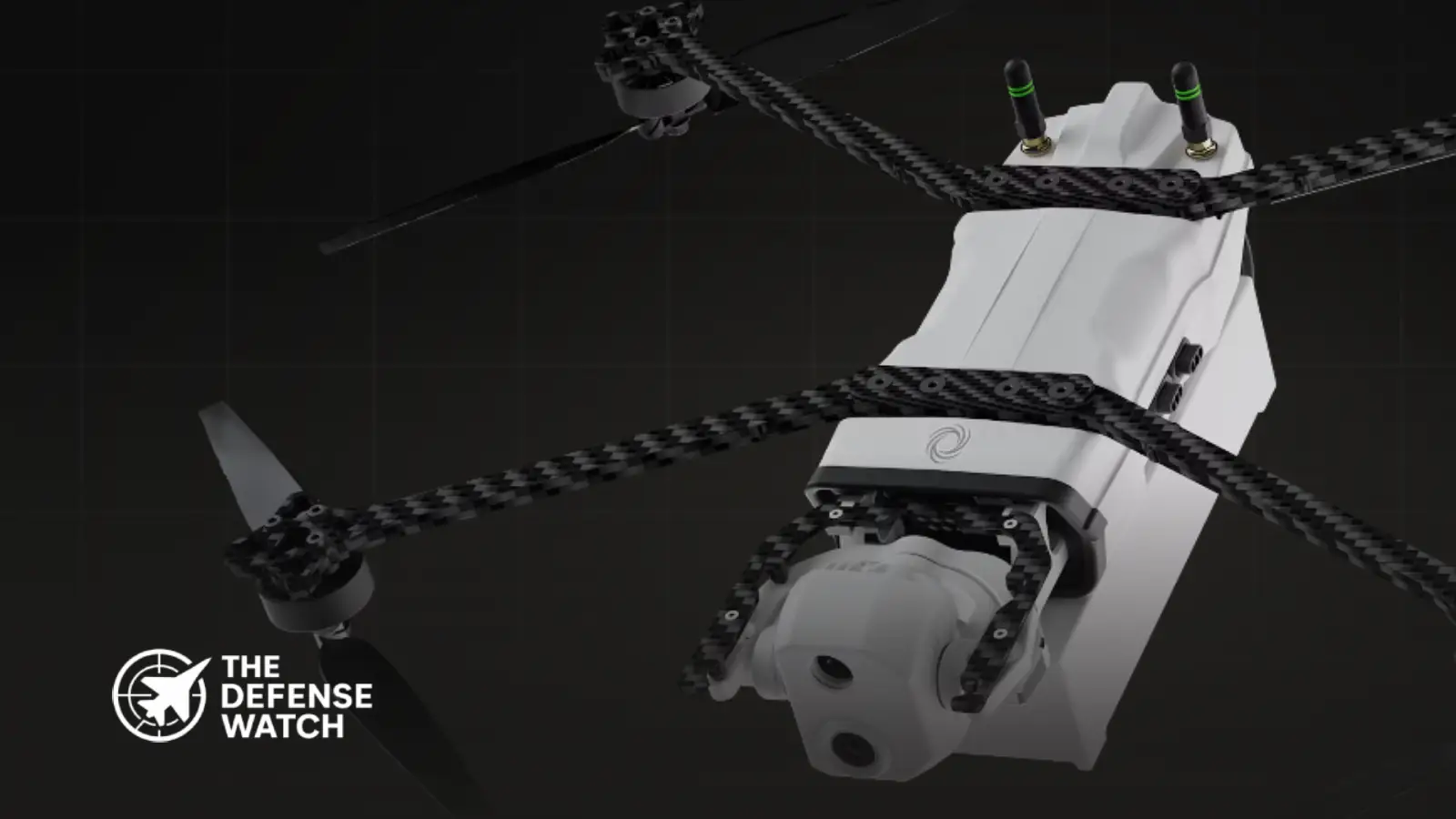
The Latvian Armed Forces have signed a framework agreement with Latvian defense technology company Origin Robotics for the multi year delivery of Blaze interceptor drones, marking a significant step in the country’s effort to strengthen counter unmanned aerial system capabilities.
The agreement establishes a long term procurement framework that could support sustained production and operational deployment of the Blaze interceptor drone platform.
The Blaze interceptor drone is designed to engage and neutralize hostile unmanned aerial systems, an area that has become increasingly important for European militaries following the widespread battlefield use of drones in Ukraine and other regional conflicts.
Latvia, a NATO member bordering Russia and Belarus, has accelerated investments in air defense, electronic warfare, and drone technologies over the past several years as regional security concerns continue to grow.
Blaze Interceptor Drones Reflect Shift In Modern Air Defense
The Blaze interceptor drones program reflects a broader shift toward lower cost and rapidly deployable counter drone systems capable of defending frontline units and critical infrastructure against small unmanned aircraft.
Traditional surface to air missile systems remain effective against high value aerial threats, but military planners increasingly view interceptor drones as a cost efficient solution against inexpensive commercial and military drones. That operational reality has driven growing interest across Europe in layered air defense architectures combining kinetic interceptors, electronic warfare, and radar integration.
The Latvian Armed Forces’ agreement with Origin Robotics aligns with this trend. By supporting domestic drone production, Latvia also reduces dependence on foreign suppliers while building local industrial capacity in a rapidly expanding defense sector.
The war in Ukraine has demonstrated how relatively inexpensive drones can impose significant operational and economic pressure on conventional military forces. In response, European governments are moving to field scalable counter UAS technologies that can be produced quickly and deployed in large numbers.
Origin Robotics Positions Itself In Expanding European Drone Market
Origin Robotics is part of a growing group of European defense startups focused on autonomous systems, loitering munitions, and interceptor drones.
The framework agreement gives the company an opportunity to scale production and validate its systems under military operational requirements. Although financial details and delivery quantities were not publicly disclosed, the structure of the agreement suggests long term procurement planning rather than a limited test acquisition.
European governments are increasingly seeking domestically developed unmanned systems to strengthen supply chain resilience and shorten procurement timelines. Smaller defense firms specializing in drone technologies have benefited from this shift, particularly as NATO members raise defense spending targets and expand industrial readiness initiatives.
The Blaze interceptor drones agreement may also position Latvia as a regional contributor to NATO counter drone capability development, especially among Baltic and Eastern European allies focused on defending against low altitude unmanned threats.
Counter UAS Demand Continues To Accelerate Across Europe
Demand for counter UAS systems has risen sharply across NATO and European Union member states since 2022. Governments are investing in radar networks, electronic warfare systems, directed energy weapons, and interceptor drones to counter evolving aerial threats.
Several European defense programs now prioritize rapid acquisition pathways for drone and anti drone technologies, recognizing that traditional procurement cycles are often too slow for the pace of technological change in modern warfare.
The Latvian Armed Forces’ decision to pursue Blaze interceptor drones under a framework agreement indicates an emphasis on flexibility and scalable procurement. Such agreements allow governments to increase orders over time while adapting technical requirements as operational lessons emerge.
For Latvia, the program also carries strategic importance beyond procurement alone. Supporting domestic drone manufacturing enhances national resilience, strengthens local defense innovation, and contributes to broader NATO capability goals in the Baltic region.
Strategic Importance For Baltic Security
The Baltic states remain among the most active NATO members in adapting to emerging drone warfare challenges. Latvia, Lithuania, and Estonia have all expanded defense modernization programs focused on air defense, ISR capabilities, electronic warfare, and autonomous systems.
The Blaze interceptor drones agreement highlights how smaller NATO states are pursuing agile and affordable defense technologies that can be fielded quickly without relying solely on large legacy weapons programs.
As drone threats continue evolving, interceptor drones are expected to play an increasingly central role in protecting military formations, logistics hubs, and civilian infrastructure from reconnaissance and attack UAVs.
The agreement between the Latvian Armed Forces and Origin Robotics demonstrates how regional defense industries are becoming more deeply integrated into Europe’s wider security strategy.