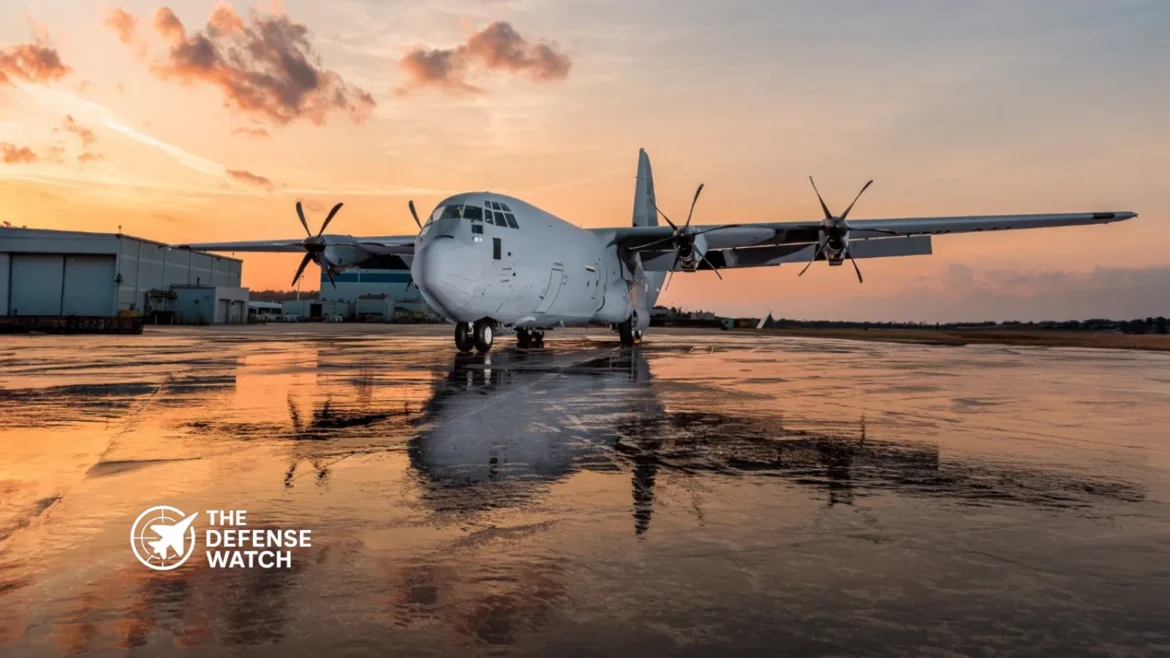
- ► Lockheed Martin has been awarded a US Foreign Military Sale contract to provide advanced C-130J training devices and simulator upgrades to the Royal Australian Air Force. :contentReference[oaicite:0]{index=0}
- ► Deliveries are scheduled to begin in 2029 and include Weapon Systems Trainers, an Enhanced Integrated Cockpit Systems Trainer, and Loadmaster Part-Task Trainer. :contentReference[oaicite:1]{index=1}
- ► New devices feature modern graphics, motion cueing and high-fidelity cockpit replication to mirror the actual C-130J flight environment. :contentReference[oaicite:2]{index=2}
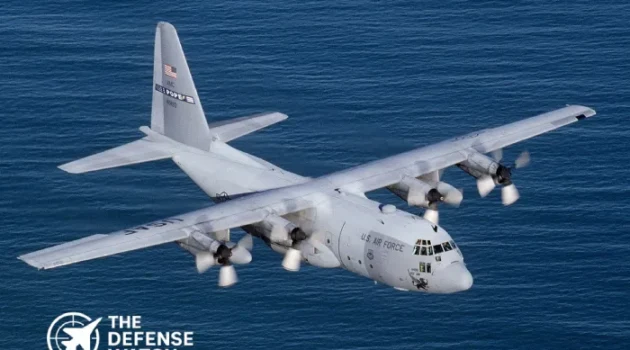
- ► RAAF operates 12 C-130J-30 Super Hercules airlifters and is acquiring 20 more to expand tactical airlift capacity. :contentReference[oaicite:3]{index=3}
- ► Training upgrades support Australia’s larger force structure, preparing crews ahead of new aircraft deliveries. :contentReference[oaicite:4]{index=4}
Lockheed Martin to Deliver C-130J Training Devices to RAAF
Lockheed Martin will deliver advanced C-130J training devices and simulator upgrades to the Royal Australian Air Force under a US Foreign Military Sale contract awarded through Wright-Patterson Air Force Base, the company announced February 18.
The contract covers a suite of training systems designed to support the RAAF’s expanding C-130J fleet as Australia strengthens its tactical airlift capability. Deliveries are expected to begin in 2029.
What the Contract Includes
Under the agreement, Lockheed Martin will provide:
- Two Weapon Systems Trainers
- One Enhanced Integrated Cockpit Systems Trainer (EICS)
- A Loadmaster Part-Task Trainer
- Upgrades to existing Virtual Simulation and Virtual Maintenance Trainers
These devices incorporate modern graphics, motion cueing and high-fidelity cockpit replication that reflect the operational C-130J environment.
Building Training Capacity
Lockheed Martin’s role as original equipment manufacturer of the C-130J Super Hercules gives it system-level insight into replicating aircraft behavior for training. The company says its solutions aim to improve mission readiness from initial crew training.
The contract comes as the RAAF prepares for an expanded tactical transport fleet. Australia currently fields 12 C-130J-30 Super Hercules aircraft and, under a 2022 Foreign Military Sale agreement, ordered 20 additional airlifters, with first deliveries expected in 2028.
Strategic Context
The C-130J Super Hercules is a cornerstone of tactical airlift for militaries around the world. More than 560 aircraft have been delivered to operators in over two dozen countries, amassing millions of flight hours.
By investing in enhanced training infrastructure now, Australia aims to align its crew preparation with upcoming fleet growth. High-fidelity simulators and advanced training devices help reduce cost and risk associated with live flight hours while maintaining operational proficiency.
Training and Readiness
Loadmasters, pilots and support personnel will train on both hardware-based systems and virtual environments. Upgrades to virtual simulation and virtual maintenance trainers expand the scope of instruction beyond basic cockpit handling, covering mission planning and aircraft upkeep.
Forward Outlook
Australia’s tactical airlift capability plays a key role in regional operations, humanitarian assistance and alliance interoperability with the United States and other partners. Enhanced training systems are expected to help ensure crews are ready as the RAAF absorbs newly delivered aircraft beginning in the latter part of the decade.

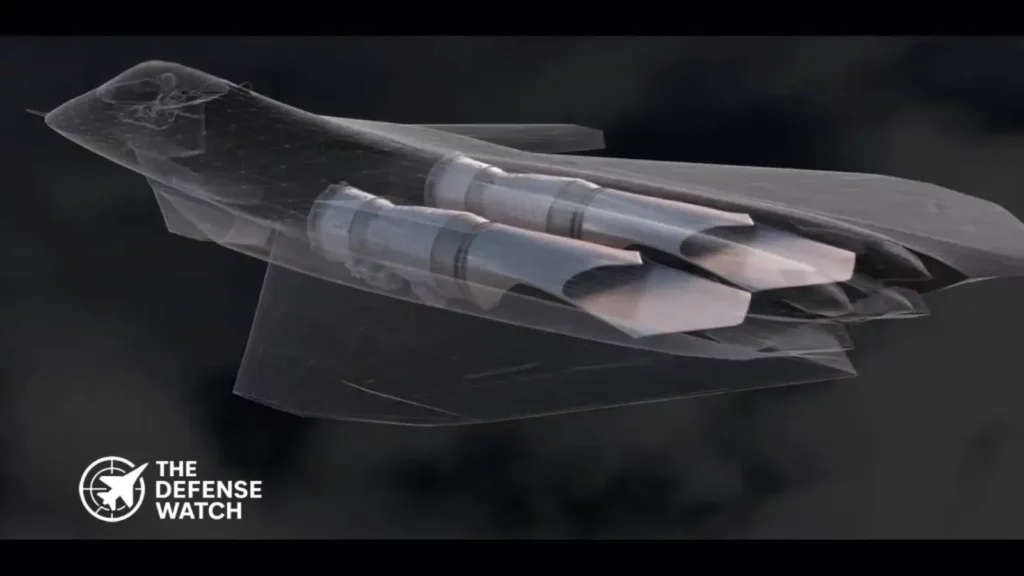
- ► Pratt & Whitney unveiled new images of the XA103 adaptive cycle engine for NGAP.
- ► XA103 will power the Boeing-built F-47 fighter under the Next Generation Air Dominance program.
- ► Engine targets up to 25% better fuel efficiency and 20% more thrust using three stream architecture.
- ► Detailed design completed in 2025, with prototype production ongoing and ground tests planned in late 2020s.
- ► F-47 program exceeds $20 billion and covers at least 185 aircraft, with first flight targeted for 2028.
Pratt & Whitney XA103 NGAP Engine Marks Critical Step For F-47
The Pratt & Whitney XA103 NGAP engine is moving into the next phase as the powerplant for the Boeing F-47 fighter under the US Air Force Next Generation Air Dominance program.
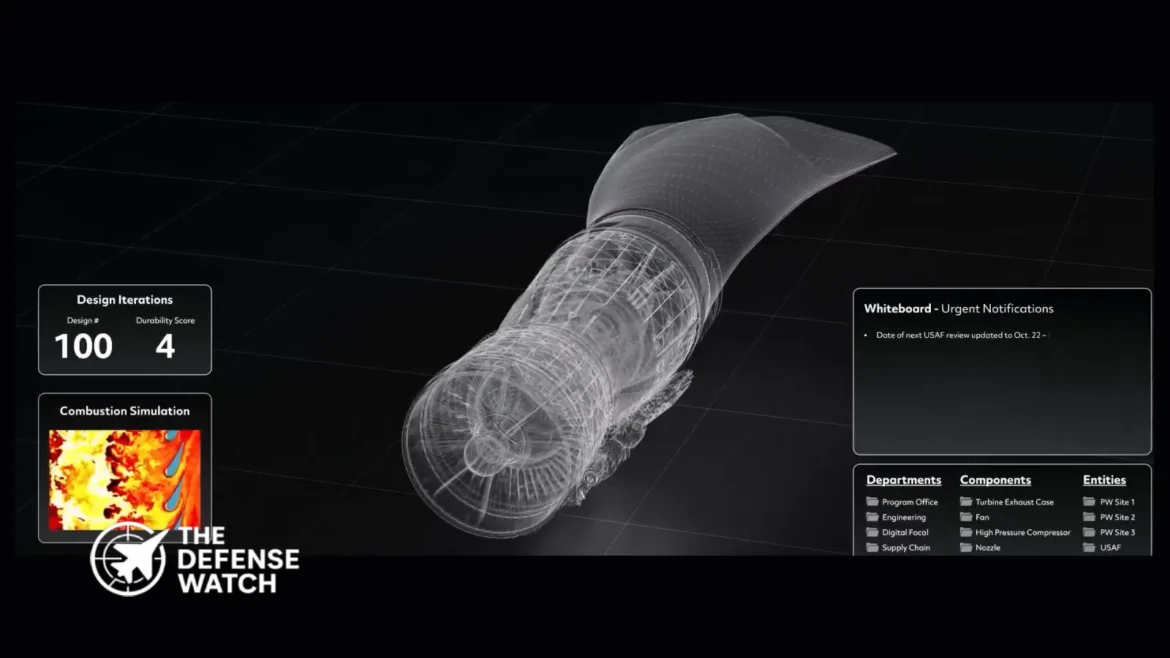
(adsbygoogle = window.adsbygoogle || []).push({});Pratt & Whitney, a business of RTX, recently released updated imagery of the XA103 adaptive cycle engine, confirming that detailed design work has been completed. Prototype production is ongoing, with ground testing scheduled for the late 2020s.
The engine is being developed under the US Air Force Next Generation Adaptive Propulsion, or NGAP, effort. NGAP is intended to deliver a new class of propulsion systems optimized for sixth generation air combat requirements, including range, survivability, thermal management, and sustained high performance.
Three Stream Adaptive Architecture
At the core of the XA103 NGAP engine is a three stream adaptive architecture. Unlike traditional two stream turbofan engines, the adaptive design allows the engine to dynamically adjust airflow between core and bypass streams depending on mission needs.
According to Pratt & Whitney, the XA103 targets up to 25 percent better fuel efficiency and up to 20 percent more thrust compared with current fifth generation fighter engines. Those gains are central to extending combat radius and improving acceleration and payload flexibility.
The adaptive cycle approach builds on lessons learned from the earlier Adaptive Engine Transition Program, where Pratt & Whitney and General Electric tested competing demonstrators. NGAP moves that technology toward an operational engine tailored specifically for the F-47.
From an operational standpoint, improved fuel efficiency directly translates into greater range or time on station without relying as heavily on aerial refueling. In a potential Indo Pacific scenario, where distances are vast and tankers may be contested, propulsion efficiency becomes a strategic enabler rather than just a technical metric.
Powering The Boeing F-47
The XA103 NGAP engine will power the Boeing F-47 fighter, a next generation aircraft designed to operate as the centerpiece of the Air Force future air dominance family of systems.

The F-47 program is valued at more than $20 billion and is expected to include at least 185 aircraft. First flight is targeted for 2028, with operational service entry planned in the 2030s.
While specific performance details of the F-47 remain classified, propulsion is widely viewed as one of the defining elements of sixth generation capability. Higher thrust supports greater payload and energy for directed energy systems, while improved thermal management is critical for advanced sensors and electronic warfare suites.
In this context, the Pratt & Whitney XA103 NGAP engine is not simply a replacement for existing powerplants. It is designed to enable the full performance envelope of the F-47, including potential integration with collaborative combat aircraft and high bandwidth data networks.
Industrial And Strategic Implications
The NGAP effort also carries industrial significance. By advancing adaptive engine technology into production, the US aerospace sector reinforces its lead in high performance military propulsion.
According to US Air Force budget documents and RTX disclosures, NGAP is structured to reduce lifecycle cost while increasing durability compared with legacy engines. That focus reflects lessons from sustainment challenges faced by earlier fighter fleets.
The scale of the F-47 program, covering at least 185 aircraft, suggests a substantial production run for the XA103 NGAP engine. Over time, propulsion decisions could influence allied interoperability and potential export pathways, depending on US policy.
From a geopolitical perspective, propulsion performance affects deterrence credibility. Extended range and higher efficiency expand operational options across contested theaters, including the Indo Pacific and European regions. In that sense, engine development is directly linked to force posture and alliance assurance.
Timeline And Next Steps
With detailed design completed in 2025, Pratt & Whitney is now focused on prototype manufacturing. Ground testing in the late 2020s will validate performance targets before integration with flight test aircraft.
The 2028 first flight target for the F-47 leaves a narrow but achievable window for propulsion validation. Historically, engine maturity has been one of the pacing elements in advanced fighter programs. Close coordination between Boeing and Pratt & Whitney will be critical to meeting schedule milestones.
As development progresses, additional data from the US Air Force and industry partners will clarify performance benchmarks and cost projections. For now, the Pratt & Whitney XA103 NGAP engine stands as a central pillar of the Air Force future air dominance architecture.

- ► Finland ordered 64 F‑35A Lightning II fighters in its HX program to replace F/A‑18 Hornets.
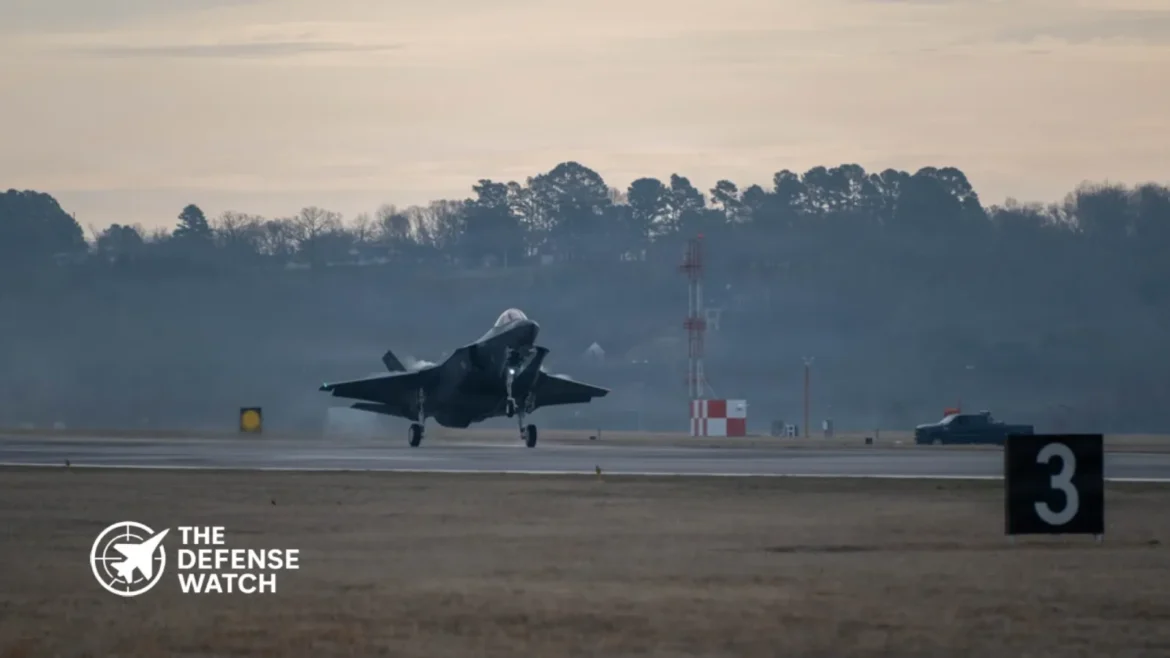
- ► The second aircraft, JF‑502, landed at Ebbing Air National Guard Base, Arkansas on February 18, 2026.
- ► Ebbing hosts the 57th Fighter Squadron, training international F‑35 pilots.
- ► The FMS program links Finnish jets to U.S. Air Force training and support.
- ► Finland’s first F‑35A, JF‑501, arrived at Ebbing in January 2026.
Finland’s second F‑35A Lightning II multirole fighter aircraft, tail number JF‑502, landed at Ebbing Air National Guard Base in Fort Smith, Arkansas on February 18, 2026 as part of the U.S. Foreign Military Sales program supporting Finnish pilot training operations.
Arrival And Training Mission
The Finnish Air Force continues building its F‑35A fleet, procured under a 64‑jet contract to replace legacy F/A‑18 Hornet fighters in the HX program. After the first aircraft, JF‑501, touched down at Ebbing in January, JF‑502’s arrival marks the next phase of training for Finnish pilots and maintainers under the U.S. Air Force training framework.
Ebbing, adjacent to Fort Smith Regional Airport, serves as a key training node for NATO and allied F‑35 units. The 57th Fighter Squadron, reactivated in 2024 to support international training, operates alongside the U.S. Air National Guard and hosts multinational pilot programs including Polish and Finnish F‑35 trainees. Short‑term missions are designed to help incoming aircrews become proficient on the aircraft and its systems before aircraft return to Finland or transit to bases in Europe.
Broader F‑35 Program Context
Finland’s acquisition is part of a larger trend of allied nations moving to the F‑35 platform for multirole air superiority and interoperability with U.S. and NATO forces. The Lightning II remains a core component of air defense modernization across Europe, with multiple nations receiving or training on F‑35A variants.
Ebbing’s role complements other U.S. training hubs such as Eglin AFB in Florida and supports rising allied demand for fifth generation fighter pilot throughput. The integration of foreign pilots at U.S. training bases helps standardize tactics and supports collective defense postures.
What Comes Next
With JF‑502 now in place, Finland’s F‑35 training rotation will continue through 2026 and into 2027. Additional aircraft will likely follow to support expanded training and evaluation phases before units begin transitioning jets to operational squadrons in Finland later in the decade.
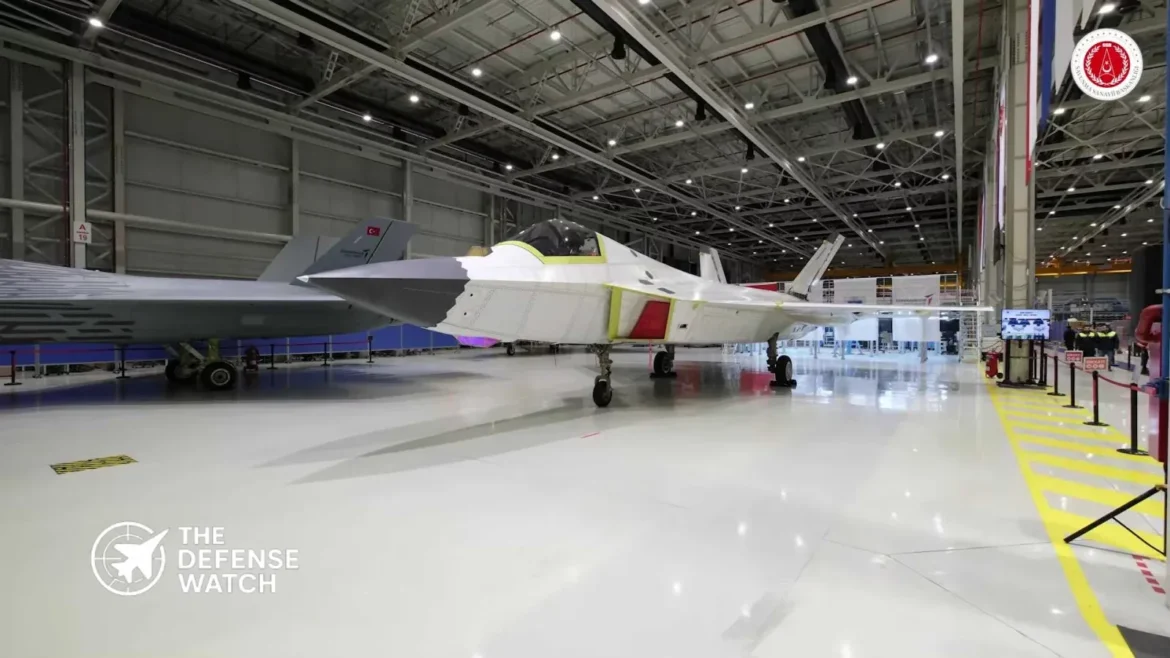
- ► Israeli newspaper Maariv reported that Spain is evaluating the Turkish KAAN fighter jet as part of its long term airpower planning.
- ► No official confirmation has been issued by Spain’s Ministry of Defense or Turkish Aerospace Industries.
- ► KAAN is Turkey’s indigenous fifth generation fighter program intended to replace the country’s F 16 fleet.
- ► The aircraft completed its maiden flight in 2024 and is currently in early flight testing.
- ► Spain operates EF 18 Hornets and Eurofighter Typhoons and participates in the Future Combat Air System program.
- ► European nations are reviewing next generation fighter options amid rising geopolitical tensions and modernization timelines.
- ► Any potential export of KAAN to a NATO member would carry strategic and industrial implications.
Spain Evaluating Turkish KAAN Fighter Jet, Israeli Media Claims
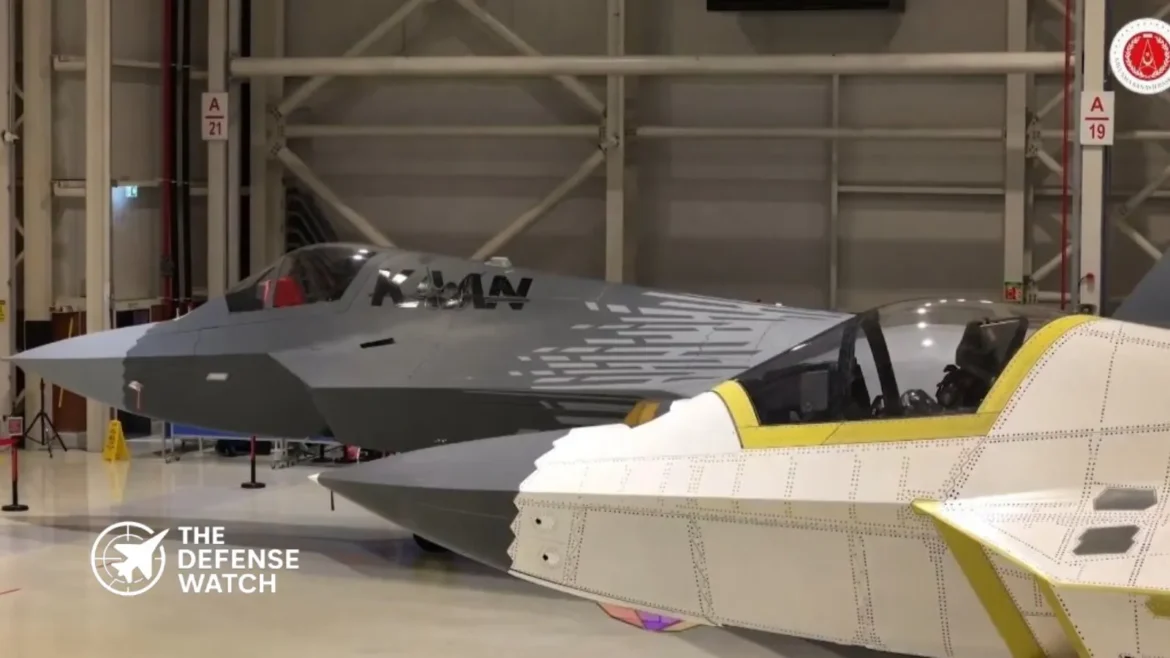
The Turkish KAAN fighter jet is reportedly being evaluated by Spain as part of Madrid’s long-term combat aircraft planning, according to a claim published by the Israeli newspaper Maariv.
(adsbygoogle = window.adsbygoogle || []).push({});The report states that Spain is assessing options beyond its current fleet as European nations accelerate efforts to field next-generation air combat systems. While no official confirmation has been issued by Madrid or Ankara, the claim highlights the growing international visibility of Turkey’s indigenous fifth-generation fighter program.
The development, if substantiated, would mark a notable moment for Turkey’s aerospace sector and for the evolving landscape of European fighter procurement.
Context: Europe’s Fighter Modernization Drive
Spain currently operates EF-18 Hornets and Eurofighter Typhoons and participates in the Future Combat Air System program led by France and Germany. However, European defense planning has become more fluid in recent years due to rising geopolitical tensions, budget pressures, and shifting industrial alliances.
Several European air forces are reviewing timelines, costs, and industrial participation frameworks tied to next-generation programs. In this context, external platforms such as the Turkish KAAN fighter jet are drawing attention, particularly as countries evaluate complementary or interim solutions.
The Maariv report suggests that Spain is monitoring KAAN as part of this broader review process. No procurement decision or formal request for information has been publicly disclosed.
What Is The Turkish KAAN Fighter Jet?
The Turkish KAAN fighter jet, developed by Turkish Aerospace Industries, is Turkey’s national combat aircraft program designed to replace the F-16 fleet in the coming decades.
The aircraft conducted its maiden flight in 2024 and is intended to feature:
- Low observable design characteristics
- Advanced avionics and sensor fusion
- Internal weapons bays
- Network centric warfare capability
Turkey positions KAAN as a fifth-generation platform, aligning it with aircraft such as the F-35 and other emerging stealth fighters. Engine development remains a key long-term milestone, with initial prototypes powered by foreign sourced engines while Ankara works toward indigenous propulsion solutions.
The Turkish government has consistently framed KAAN as both a sovereign capability project and a potential export platform.
European Interest And Strategic Implications
If Spain is indeed evaluating the Turkish KAAN fighter jet, it reflects several broader trends.
First, European nations are diversifying procurement options amid concerns over supply chains, cost growth, and industrial autonomy. Second, Turkey’s defense industry has expanded its footprint in recent years, particularly in unmanned systems and armored vehicles, increasing its credibility as an exporter.
From a geopolitical perspective, Spain considering a Turkish platform would carry industrial and alliance implications. Spain is a NATO member and part of joint European defense initiatives. Any movement toward a non EU fighter platform could influence trans European defense cooperation dynamics.
(adsbygoogle = window.adsbygoogle || []).push({});At the same time, evaluations do not necessarily translate into acquisition. Defense ministries routinely assess multiple platforms to benchmark capability, cost, and industrial return.
Official Silence And Verification
As of publication, neither the Spanish Ministry of Defense nor Turkish Aerospace Industries has confirmed the reported evaluation. The claim originates from Maariv, an Israeli publication, and has not been independently corroborated by official statements.
In defense reporting, early stage evaluations are common and often exploratory. Governments typically conduct feasibility reviews years before issuing formal tenders or requests for proposals.
Without confirmation from Madrid or Ankara, the reported Spanish interest in the Turkish KAAN fighter jet should be viewed as a preliminary assessment rather than a procurement commitment.
Analysis: Why KAAN Is Gaining Visibility
Roughly a third of Europe’s combat aircraft fleets will require replacement or major upgrades in the 2030s. Programs such as FCAS and the UK Italy Japan Global Combat Air Programme face long development timelines.
That gap creates space for alternative platforms to enter strategic discussions.
KAAN’s visibility is also tied to Turkey’s push for defense industrial independence following its removal from the F-35 program. Ankara has invested heavily in domestic aerospace capabilities, including radar systems, avionics, and weapons integration.
(adsbygoogle = window.adsbygoogle || []).push({});For potential buyers, three factors will likely determine interest:
- Program maturity and flight testing progress
- Engine roadmap and indigenous propulsion development
- Export framework, including technology transfer and industrial offsets
Spain’s reported evaluation, if accurate, may serve primarily as a comparative benchmark against European collaborative programs rather than a near-term acquisition plan.
Broader European Fighter Landscape
Spain’s current modernization path remains centered on Eurofighter upgrades and participation in FCAS. Any serious move toward the Turkish KAAN fighter jet would require alignment with NATO interoperability standards, sustainment infrastructure, and long term industrial partnerships.
European fighter procurement decisions are rarely made in isolation. They involve political, industrial, and alliance considerations as much as technical performance metrics.
The emergence of KAAN in European discussions underscores how the global fighter market is evolving, with more nations pursuing indigenous fifth-generation programs.
Conclusion
The reported Spanish evaluation of the Turkish KAAN fighter jet, as cited by Israeli media, signals growing international awareness of Turkey’s next-generation combat aircraft program.
(adsbygoogle = window.adsbygoogle || []).push({});However, no official confirmation has been issued, and there is no indication of a formal procurement process underway.
For now, the development highlights how Europe’s fighter modernization landscape remains dynamic, competitive, and strategically sensitive.
 ■ KEY FACTS AT A GLANCE
- ► KAAN-1 prototype planned to make its first flight in May or June.
- ► Aircraft expected to conduct initial flight tests with operational onboard systems.
- ► KAAN-0 completed two takeoffs focused on basic airframe and flight safety validation.
- ► Prototypes 2 and 3 scheduled to follow in 2026.
- ► Program led by Turkish Aerospace as part of Turkey’s indigenous fifth generation fighter effort.
KAAN-1 Prototype Moves Toward Operational Flight Testing
The KAAN-1 prototype is expected to make its first flight in May or June, marking a significant step in Turkey’s indigenous fifth generation fighter program.
(adsbygoogle = window.adsbygoogle || []).push({});Unlike the earlier KAAN-0 prototype, which conducted two takeoffs primarily focused on validating basic flight characteristics and airframe integrity, the KAAN-1 prototype is planned to fly with operational systems integrated. This shift signals the program’s transition from initial proof of flight to structured systems testing.
The KAAN fighter, developed by Turkish Aerospace, is Turkey’s flagship combat aircraft program, previously known as TF-X. It is intended to replace aging F-16 fleets and position Ankara among nations developing advanced, stealth-capable multirole fighters.
From KAAN-0 To KAAN-1
The KAAN-0 prototype achieved its first flight in early 2024, a milestone widely reported by Turkish officials and confirmed by defense media including Anadolu Agency. Those initial flights were limited in scope. They focused on validating basic aerodynamics, landing gear performance, propulsion integration, and flight control laws.
The upcoming KAAN-1 prototype represents a more advanced configuration. According to program updates, this aircraft is expected to carry a broader suite of onboard systems, potentially including radar, avionics, and mission computers closer to intended operational standards.
This progression mirrors typical fifth generation fighter development cycles seen in programs such as the F-35 and other advanced combat aircraft. Early prototypes verify that the platform can safely fly. Subsequent prototypes begin the far more complex process of systems integration and performance validation.
(adsbygoogle = window.adsbygoogle || []).push({});What Operational System Testing Means
For the KAAN-1 prototype, flying with operational systems changes the scope of testing significantly.
Flight trials will likely evaluate sensor fusion, avionics stability, power management, and electronic systems behavior under dynamic conditions. Even at this stage, these systems may not represent final production standards, but they provide critical data for refining software and hardware integration.
This phase is often the most technically demanding part of fighter development. Integrating advanced avionics into a stealth airframe requires balancing cooling, power supply, electromagnetic compatibility, and software architecture.
Industry experience shows that issues often emerge during this transition. As seen in other fifth generation programs, debugging mission systems and ensuring stable flight control integration can extend timelines. The move to operational system testing therefore signals both progress and the beginning of a more complex testing environment.
Additional Prototypes Planned For 2026
Within the same framework, prototypes numbered 2 and 3 are planned to follow in 2026.
(adsbygoogle = window.adsbygoogle || []).push({});Expanding the prototype fleet allows parallel testing. One aircraft may focus on envelope expansion, another on avionics, and another on weapons integration or structural stress evaluation. This approach accelerates data collection and reduces overall program risk.
The KAAN program timeline suggests a structured ramp-up in flight testing over the next two years. If maintained, this schedule would position the aircraft for continued development toward initial operational capability later in the decade.
Strategic Context
The KAAN fighter program carries strategic weight for Ankara. Turkey’s removal from the F-35 program in 2019 reshaped its combat aviation roadmap. Since then, officials have emphasized domestic fighter development to reduce reliance on foreign suppliers.
The KAAN-1 prototype’s planned first flight with operational systems reflects that broader strategic objective. Moving beyond symbolic milestones toward systems validation indicates a focus on practical capability development.
At the same time, fifth generation fighter development remains resource intensive and technically demanding. Nations pursuing such programs must sustain funding, industrial expertise, and long term political commitment.
(adsbygoogle = window.adsbygoogle || []).push({});Program Outlook
If the KAAN-1 prototype flies as planned in May or June, it will mark a measurable shift from basic airframe validation to systems oriented testing.
The introduction of additional prototypes in 2026 will further test the program’s maturity. The coming flight test campaigns will reveal how effectively the platform integrates avionics, propulsion, and stealth characteristics into a coherent operational design.
For defense observers, the next phase will be defined less by symbolic first flights and more by sustained, transparent testing progress.
■ KEY FACTS AT A GLANCE- ► Türkiye has unveiled its second KAAN fighter prototype to refine stealth capabilities before mass production.
- ► The prototype focuses on low-observable design elements including radar cross-section reduction.
- ► First prototype completed initial flight tests in 2025; the second prototype introduces updated stealth features.
- ► Türkiye aims to integrate the KAAN fighter into its Air Force fleet once development is complete.
- ► The program is part of Türkiye’s broader initiative to strengthen domestic aerospace and defense capabilities.
Türkiye Advances KAAN Fighter Stealth Ahead Of Mass Production
Türkiye has officially unveiled the second prototype of its indigenous KAAN fighter, signaling a significant step in the nation’s efforts to produce a next-generation stealth combat aircraft. The new prototype focuses on advanced low-observable technologies designed to reduce radar cross-section and enhance survivability in contested environments, according to Turkish defense sources.
The first KAAN prototype, which completed initial flight testing in 2025, provided critical insights into aerodynamics and systems integration. This second aircraft incorporates refinements to stealth shaping, radar-absorbing materials, and internal weapon bay configurations.
Turkish Aerospace Industries (TAI) leads the program, coordinating with domestic suppliers to integrate avionics, flight control systems, and mission-critical sensors. Officials emphasize that the KAAN project represents a milestone in Turkey’s strategic goal of achieving self-reliance in fighter aircraft production.
Program Goals And Timeline
The KAAN fighter is designed to serve as a multirole platform, capable of air superiority and strike missions. Mass production is targeted for later in the decade following completion of prototype testing and certification. Defense experts note that incorporating stealth elements from the early stages of development can shorten integration timelines and reduce future modifications.
Domestic Innovation And Global Ambitions
Türkiye’s push for indigenous aircraft development aligns with broader defense industry initiatives aimed at reducing reliance on foreign suppliers. The KAAN program also positions Ankara to participate in regional aerospace markets while advancing technological expertise in high-performance fighter jets.
TAI has stated that ongoing testing will evaluate radar cross-section reduction, sensor fusion, and internal weapons carriage. Flight trials for the second prototype are expected to continue throughout 2026, with performance data feeding into final design adjustments before production.
Strategic Implications
The KAAN fighter program enhances Türkiye’s operational independence and strengthens its ability to respond to regional threats. Analysts suggest that an operational KAAN fleet could complement existing F-16 assets, providing advanced stealth capabilities for air defense and strike operations.
By advancing stealth technology domestically, Türkiye can also inform future export opportunities while reinforcing the capabilities of its defense industrial base.
■ KEY FACTS AT A GLANCE- ► Israel’s Ambassador to the U.S., Yechiel Leiter, confirmed the IAF’s F-35I Adir fleet carries stealth-compatible range-extending fuel tanks.
- ► The modification preserves the aircraft’s low-observable radar signature — a technically demanding engineering achievement.
- ► The Adir can now carry four externally mounted wing missiles in “beast mode” configuration for high-payload strike sorties.
- ► Conformal tank designs are reported to push the F-35I’s combat radius beyond 1,700 km — sufficient for round-trip strikes on Iran without aerial refueling.
- ► The IAF is the only F-35 operator to have conducted combat strikes using the external wing-carriage design.
- ► Israel’s fleet stood at 48 F-35I aircraft as of January 2026, with a total of 75 on order.
- ► The U.S. Air Force cited Israeli modifications when requesting FY2026 funds to explore similar F-35 external fuel tank integration.
Israel’s F-35I Adir Gets Stealth Fuel Tanks — What It Means
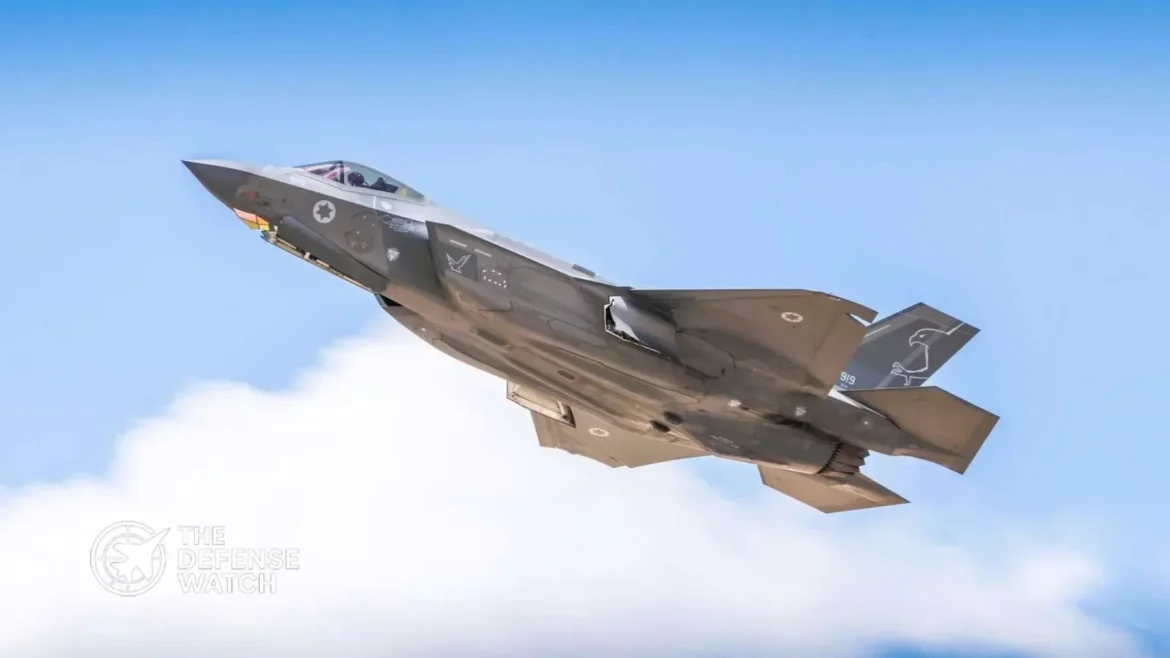
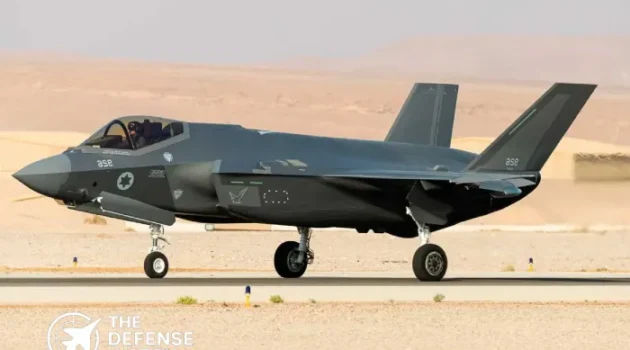
The Israeli Air Force’s F-35I Adir stealth fuel tank program has moved from long-rumored development into publicly confirmed operational reality. On February 16, 2026, Israel’s Ambassador to the United States, Yechiel Leiter, stated in an interview with the daily Israel Hayom — as reported by The Times of Israel — that the IAF’s Adir fleet has been fitted with range-extending fuel tanks “without compromising stealth.” Simultaneously, the ambassador disclosed that four external wing-mounted missiles have been added to the platform’s arsenal, formalizing the jet’s “beast mode” capability for high-payload strike missions.
(adsbygoogle = window.adsbygoogle || []).push({});The announcement carries substantial strategic weight. It is the first on-the-record confirmation by a senior Israeli official that the classified program — long speculated about in defense circles — has crossed the threshold from development into declared operational use. The timing, coming eight months after Israel’s June 2025 air campaign against Iran (Operation Rising Lion), signals that Israel intends adversaries, allies, and the broader strategic community to factor a more capable, longer-reaching F-35I into their strategic calculations.
“We developed fuel tanks that extend the aircraft’s range without compromising stealth, and we added four missiles on the wings.” — Yechiel Leiter, Israel’s Ambassador to the United States | Israel Hayom / Times of Israel, Feb. 16, 2026
The F-35I Adir: Not Your Standard F-35
To understand why Israel could achieve this modification while no other F-35 operator has, it is essential to understand what the F-35I Adir actually is. The Adir — Hebrew for “Mighty One” — is the only F-35 variant in global service that was contractually authorized for deep, indigenous systems integration by its operator before the first aircraft was delivered.
While every other nation that flies the F-35 operates a platform locked to Lockheed Martin’s standard hardware and software baseline, Israel negotiated a unique arrangement with the U.S. government and the F-35 Joint Program Office. This agreement permitted the Israeli defense industry to integrate national mission computers, electronic warfare suites developed by Elbit Systems, indigenous weapons, domestic data links, proprietary encryption systems, and custom command-and-control interfaces directly into the aircraft’s architecture.
This modular, open-architecture framework made the stealth tank program technically feasible. Because Israel and its defense contractors could work within the aircraft’s mission-system software and structural envelope — in cooperation with Lockheed Martin and the F-35 JPO — designing and certifying conformal fuel tanks that are aerodynamically and electromagnetically compatible with the airframe was a far less restrictive process than for any other operator.
The Stealth-Range Dilemma: How Israel Solved It
External fuel tanks on a stealth aircraft present a well-understood engineering paradox. The F-35’s low-observable profile derives from the careful geometric shaping of every external surface — every panel line, inlet, and contour is optimized to scatter radar energy away from threatening emitters. Attaching conventional pylon-mounted drop tanks immediately creates sharp edges, new radar-reflective volumes, and surface discontinuities that dramatically inflate the aircraft’s radar cross-section.
Israel’s solution, as described by open-source analysis and corroborated by Ambassador Leiter’s remarks, involved designing conformal tanks — installations that follow the curvature and contour of the fuselage rather than hanging below it on pylons. The tanks are reported to be “covered with absorbent materials” and attached using pylons engineered to preserve aerodynamic and electromagnetic signature characteristics, resulting in a cruise-flight range exceeding 2,200 kilometers — sufficient for a round-trip mission from Israeli airbases to targets deep inside Iranian territory without aerial refueling.
(adsbygoogle = window.adsbygoogle || []).push({});RANGE CONTEXT: The F-35A’s standard published combat radius on internal fuel alone is approximately 670 nautical miles (roughly 1,240 km). The Adir’s conformal tank integration is reported to extend unrefueled operational reach beyond 1,700 km — a critical threshold for striking Iran’s nuclear and missile infrastructure and returning safely.
The War Zone (TWZ), citing U.S. Air Force budget documents, confirmed in June 2025 that Israel’s extended-range capability was employed operationally during the Israel-Iran conflict. While precise technical parameters remain classified, the combination of conformal fuel tank geometry, radar-absorbent coatings, and jettison capability provides a credible, operationally viable answer to the stealth-range dilemma that has constrained fifth-generation aircraft globally.
Beast Mode: Four External Missiles and the Firepower Equation
Leiter’s second disclosure — that the F-35I now carries four externally mounted wing missiles — ties the range story to a separately confirmed IAF capability known colloquially as “beast mode.” The F-35 was originally optimized exclusively for internal weapons carriage. Its two internal bays hold precision-guided munitions while maintaining the aircraft’s full stealth profile. But internal volume is inherently limited.
In the year prior to Leiter’s interview, the IAF publicly announced that its Flight Test Center, working alongside Lockheed Martin and the Pentagon’s F-35 program, had developed an external wing-carriage capability. The IAF stated explicitly that the Adir is “the only F-35 to conduct strikes with this design.” Imagery released by the IDF during the June 2025 Iran air campaign confirmed that F-35Is flew combat missions with missiles visibly attached to their wings.
In “beast mode,” the F-35I trades its minimum radar signature for substantially increased firepower. The configuration is most tactically relevant in phases of a campaign where adversary air defenses have been degraded by prior SEAD (Suppression of Enemy Air Defenses) operations — reducing the survivability premium on stealth and making the firepower premium on heavy external ordnance loads more valuable per sortie.
Operational Impact: Tanker Independence and Mission Flexibility
One of the strategic drivers behind Israel’s long-range fuel tank program was a structural vulnerability in the IAF’s aerial refueling capacity. Prior to the June 2025 campaign, Israel operated only seven Boeing KC-707 Re’em tanker aircraft — a number defense analysts modeled as insufficient to sustain the scale of the observed operations. Extended-range F-35Is appear to have provided the additional endurance that made the campaign viable without confirmed external tanker support.
The equation is now shifting further. Israel has contracted the KC-46A Pegasus — the U.S. Air Force’s next-generation aerial refueling platform — to replace its aging Boeing 707-based tankers. But the conformal fuel tank program provides a complementary hedge: it reduces the dependency on tanker rendezvous points, which are themselves high-value targets and operationally complex to orchestrate in contested airspace.
Ambassador Leiter underscored Israel’s depth of experience in his interview, stating that Israeli pilots have logged more F-35 flight hours than all other foreign partner-nation pilots combined. He also relayed that Lockheed Martin’s chief executive described Israeli technical feedback and field-driven innovations as worth “many billions” to the company — an acknowledgment that Adir program modifications represent not just a national capability gain, but a data resource of global relevance to the entire F-35 enterprise.
U.S. Air Force Takes Note: FY2026 Budget Request Follows Israeli Lead
The Adir’s extended-range performance during Operation Rising Lion appears to have directly influenced U.S. Air Force procurement thinking. According to reporting by The War Zone citing U.S. Air Force budget documents, the USAF’s proposed Fiscal Year 2026 budget includes a request for funds to “evaluate feasibility and decompose requirements for integration of External Fuel Tanks to support long-range missions of the F-35.” This represents a reversal of an earlier programmatic decision that had eliminated the requirement for streamlined F-35 drop tanks.
The FY2026 request is particularly notable for the Navy’s carrier-based F-35C, whose existing development of the F/A-XX sixth-generation replacement has been placed on hold — leaving the C-model as the carrier air wing’s primary penetrating strike asset. Extended-range fuel tanks would directly address the F-35C’s combat radius limitations in Indo-Pacific scenarios. The USAF has indicated it will study Israeli modifications to the F-35I Adir as a reference point in the feasibility evaluation.
BROADER IMPACT: The F-35’s external tank challenge is not unique to Israel. Other partner nations operating the F-35 without organic tanker capacity — including several European allies — are watching Israeli developments closely as a potential model for extending their own aircraft’s effective operational reach. Strategic Implications: Deterrence, Iran, and the Regional Air Balance
Read in the context of Israel’s declared military doctrine and its active conflict with Iran, Leiter’s confirmation is clearly intended to carry a deterrence message. The operational credibility of Israel’s strike option against Iran’s nuclear program has historically been questioned by analysts on the grounds of range and weapons load — arguments that a larger aircraft like the F-15I Ra’am was better suited to the deep-strike mission. Those arguments are substantially weakened by the confirmed extended-range and beast-mode capabilities.
(adsbygoogle = window.adsbygoogle || []).push({});A more capable F-35I Adir — one that can reach central Iran and back without tanker support, carry a meaningful weapons load in either low-observable or high-payload configuration, and exploit its advanced sensor-fusion and electronic warfare systems throughout the mission — reinforces Israel’s capacity for unilateral action. It also reshapes alliance planning with Washington: the more credibly self-sufficient Israel’s strike posture is, the greater its leverage in discussions about U.S. involvement in future escalation scenarios.
For Iran, the strategic calculus is less favorable. The June 2025 air campaign already demonstrated that F-35I Adirs could penetrate Iranian air defenses — including elements of the Russian-origin S-300PMU-2 network — and strike hardened infrastructure. The confirmation that those aircraft now carry significantly more fuel and more weapons, with fewer logistical constraints, means the same capability is not a one-time demonstration but a durable, repeatable operational posture.
Fleet Status and What Comes Next
As of January 18, 2026, the IAF received its 48th F-35I Adir at Nevatim Air Base — adding tail numbers 978, 979, and 983 to its inventory in a single delivery ceremony. Under existing agreements with the United States, Israel is contracted to receive a total of 75 F-35Is, meaning more than a third of the eventual fleet has yet to be delivered. As those aircraft arrive in an already upgraded baseline configuration, Israel’s aggregate strike capacity will grow incrementally.
Technical details of the conformal tank program remain classified. Neither the Israeli government nor Lockheed Martin has released specific data on fuel volume, weight penalty, signature penalty, or integration architecture. External analysts note that some residual signature increase is almost certainly present with any external or conformal installation, and that the tanks would likely be jettisoned before penetrating the densest threat rings. The operational value, however, lies in the transit phase and the flexibility to reach distant targets with reduced reliance on tanker support.
What Ambassador Leiter’s public disclosure does, above all, is remove the capability from the realm of speculation. The F-35I Adir with stealth fuel tanks and external wing missiles is not a development program or a future aspiration — it is, by Israel’s own account, fielded and operationally proven. The Middle East air balance has shifted accordingly, and every actor in the region — and every F-35 operator beyond it — will be recalibrating their assessments in the months ahead.
Slovakia F-16s Purchase Talks Signal Further Air Force Expansion
Slovakia is in talks with the United States to buy four additional F-16s fighter jets, a move that would expand its ongoing F-16 modernization program and further align its air force with NATO standards.
According to a report by Defense News, Slovak officials confirmed discussions with Washington over the potential acquisition, which would add to the 14 F-16 Block 70 aircraft already on order from Lockheed Martin. The original deal, signed in 2018, marked the country’s largest military procurement since gaining independence.
If finalized, the new purchase would increase Slovakia’s future fleet to 18 advanced multirole fighters.
Building On The F-16 Block 70 Program
Slovakia selected the F-16 Block 70 variant to replace its aging Soviet-era MiG-29 fleet. The Block 70 configuration features an Active Electronically Scanned Array radar, modern avionics, advanced electronic warfare systems, and compatibility with a wide range of NATO-standard weapons.
The F-16s are being manufactured in the United States and are expected to form the backbone of the Slovak Air Force’s tactical aviation capability for decades.
The potential addition of four more jets suggests Bratislava may be seeking greater operational flexibility, enhanced training capacity, or improved readiness levels.
NATO Integration And Regional Security
As a NATO member, Slovakia has prioritized interoperability with allied air forces. The F-16 platform is widely operated across the alliance, including by the United States and several European nations, simplifying joint operations, logistics, and pilot training.
The talks also come amid broader European efforts to strengthen air defense and combat aviation capabilities in response to Russia’s ongoing war in Ukraine and shifting security dynamics along NATO’s eastern flank.
Slovakia has contributed to allied air policing missions and has relied on partners for temporary airspace protection during its transition from MiG-29 operations to the new F-16 fleet.
Budget And Timeline Considerations
Slovak defense officials have not disclosed the estimated cost or timeline for the potential four-aircraft purchase. Any agreement would likely proceed through the US Foreign Military Sales process, pending government approvals on both sides.
The original 14-jet F-16 deal was valued at approximately $1.6 billion, covering aircraft, training, weapons, and support. Expanding the fleet could further increase sustainment efficiency while spreading fixed operational costs across a larger number of aircraft.
Analysts note that fleet size is a critical factor in maintaining pilot proficiency, conducting maintenance rotations, and ensuring continuous air defense coverage.
Strategic Implications
The Slovakia F-16s purchase talks underscore a continued shift toward Western equipment and long-term defense integration within NATO. By expanding its fleet, Slovakia would strengthen its ability to conduct air policing, air-to-air defense, and precision strike missions.
While discussions remain ongoing, the move reflects sustained investment in combat aviation modernization and deeper US-Slovakia defense cooperation.
Further details are expected once negotiations advance and formal notifications are issued through official channels.
Northrop Grumman VALEN AESA Radar Signals A New Phase In Airborne Sensing
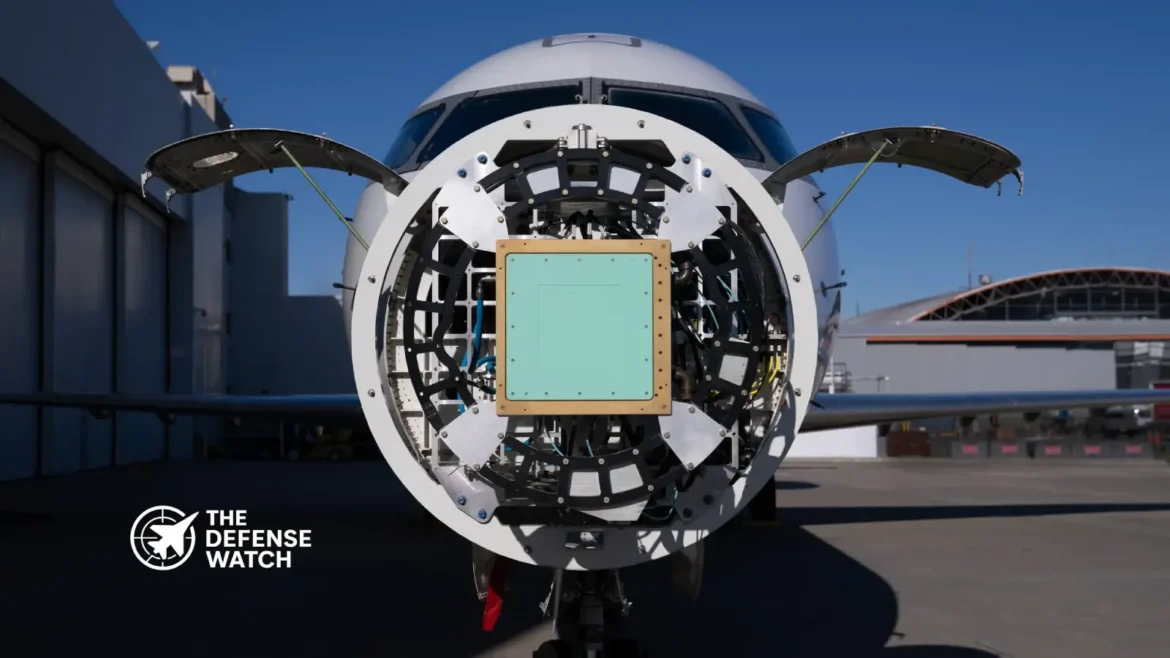
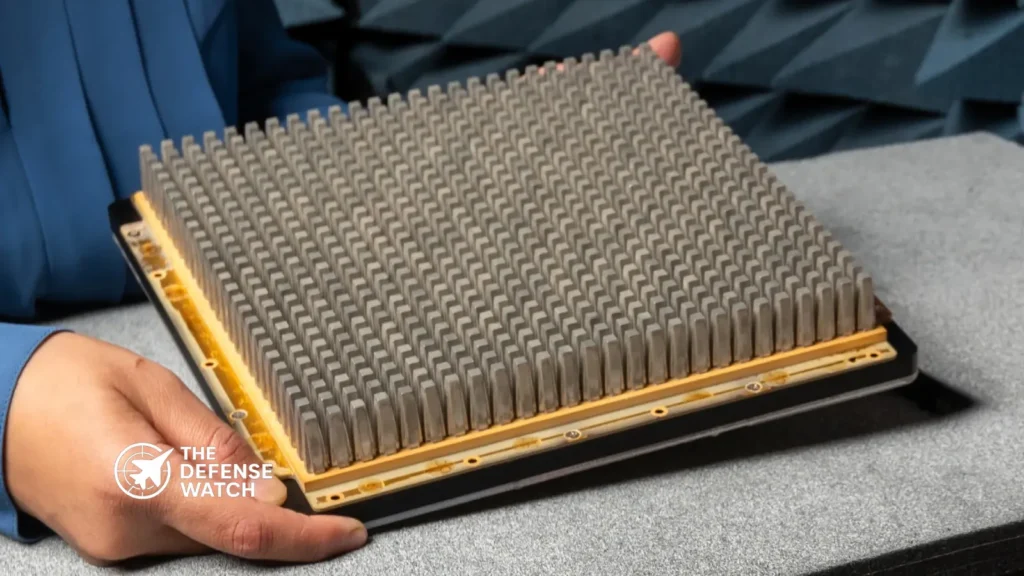
Northrop Grumman VALEN AESA is being positioned as a generational leap in airborne sensing, expanding the capabilities of active electronically scanned array radar for modern and future combat environments.
In an announcement published by Northrop Grumman, the company introduced VALEN as a scalable AESA radar family designed to support next generation aircraft and mission systems. The system builds on decades of experience in electronically scanned arrays and digital radar architectures.
The launch reflects growing demand across the U.S. and allied defense sectors for sensors capable of operating in contested, spectrum dense environments.
What Is VALEN AESA?
VALEN, which stands for a new radar product line under Northrop Grumman’s portfolio, is a modular, open architecture AESA radar system engineered for adaptability across multiple platforms.
AESA radars use electronically controlled beams instead of mechanically steered antennas. This allows rapid beam steering, simultaneous multi-mode operations, and improved resistance to electronic attack.
According to Northrop Grumman, VALEN integrates:
- Advanced digital beamforming
- Scalable hardware configurations
- Software defined capabilities
- Open mission systems compatibility
The company describes VALEN as a future ready sensing backbone rather than a single platform specific radar.
Image: Northrop Grumman Built For Multi Domain Operations
Modern combat aircraft and unmanned systems operate in increasingly complex environments. Air superiority missions, long range strike, electronic warfare, and intelligence gathering often occur simultaneously.
The Northrop Grumman VALEN AESA radar is designed to support these multi mission demands.
By leveraging digital architecture and scalable transmit receive modules, the system can be tailored to various aircraft sizes and mission sets. This includes:
- Tactical fighters
- Advanced trainers
- Unmanned aerial systems
- Collaborative combat aircraft
Northrop Grumman has long supplied AESA radars to U.S. platforms, including systems for the U.S. Air Force and U.S. Navy. VALEN builds on that legacy, with a focus on modularity and digital transformation.
Digital Backbone And Open Architecture
A key feature of the VALEN AESA radar system is its open systems approach.
The U.S. Department of Defense has increasingly emphasized Modular Open Systems Approach, or MOSA, to reduce vendor lock in and speed up upgrades. By aligning with open architecture standards, VALEN can integrate with evolving mission software, data links, and sensor fusion frameworks.
This design philosophy supports rapid capability insertion, allowing operators to add new waveforms, electronic protection features, and processing upgrades without redesigning the entire radar.
In practical terms, that means improved lifecycle flexibility and reduced long term sustainment costs.
Enhanced Survivability In Contested Environments
Air forces are preparing for high end conflicts where adversaries deploy advanced integrated air defense systems, jamming platforms, and cyber tools.
AESA radars already provide advantages such as low probability of intercept modes and agile beam steering. Northrop Grumman states that VALEN is engineered to further enhance survivability in electronically contested environments.
Digital beamforming enables more precise target tracking and improved discrimination in cluttered battlespaces. The scalable architecture also allows tailored electronic protection measures depending on mission needs.
This is particularly relevant as near peer competitors continue investing in advanced air defense and electronic warfare capabilities.
Supporting Next Generation Aircraft Programs
While Northrop Grumman has not publicly linked VALEN to a specific aircraft program, the timing aligns with several major U.S. modernization efforts.
These include:
- Next generation air dominance initiatives
- Collaborative combat aircraft concepts
- Advanced unmanned systems development
The U.S. Air Force and Navy are both pursuing future air combat ecosystems that rely heavily on sensor fusion and data sharing. In such architectures, radar is not just a detection tool but a central node in a larger combat cloud.
VALEN appears positioned to function as part of that distributed sensing framework.
Northrop Grumman is also a key player in strategic and stealth programs such as the B-21 Raider, underscoring its experience in integrating advanced sensors into low observable platforms.
Scalability Across Platforms
One of the defining features of the Northrop Grumman VALEN AESA radar is scalability.
Rather than designing unique radars for each aircraft, VALEN’s architecture can be adjusted in size, power output, and processing capability.
This approach offers several advantages:
- Reduced development timelines
- Common logistics and training pipelines
- Easier cross platform upgrades
- Interoperability across allied fleets
For allied nations seeking advanced radar performance without bespoke development programs, scalable AESA families can reduce risk and accelerate fielding.
Strategic Implications For U.S. Defense
The introduction of VALEN comes amid intensified global competition in sensor technology.
China and Russia have both invested heavily in AESA radars and electronic warfare systems. Maintaining an edge in sensing and electronic protection remains central to U.S. air dominance strategy.
By focusing on digital architecture, open systems, and modularity, Northrop Grumman is aligning its radar roadmap with Pentagon priorities for adaptability and long term modernization.
For policymakers and defense planners, the emergence of systems like VALEN underscores the shift from platform centric thinking to network centric operations, where sensors, shooters, and command nodes operate as an integrated ecosystem.
Industry Context
Northrop Grumman is one of several major U.S. defense contractors advancing AESA technology. Companies such as Raytheon Technologies and Lockheed Martin also field advanced radar systems across multiple platforms.
However, Northrop Grumman has historically been a pioneer in electronically scanned arrays, including early airborne AESA deployments.
With VALEN, the company signals a continued push toward digitally defined sensing capabilities designed for rapid evolution over decades of service life.
Why VALEN Matters
The Northrop Grumman VALEN AESA radar represents more than a hardware update. It reflects a broader transformation in how airborne sensors are designed, integrated, and upgraded.
As air combat shifts toward data driven, network enabled operations, radar systems must serve as both detection tools and information hubs.
VALEN’s emphasis on scalability, digital backbone, and open architecture aligns with this operational reality.
While specific performance metrics such as range, power class, or waveform details were not disclosed, the strategic positioning of the system suggests it is intended to anchor future airborne sensing solutions across U.S. and allied fleets.
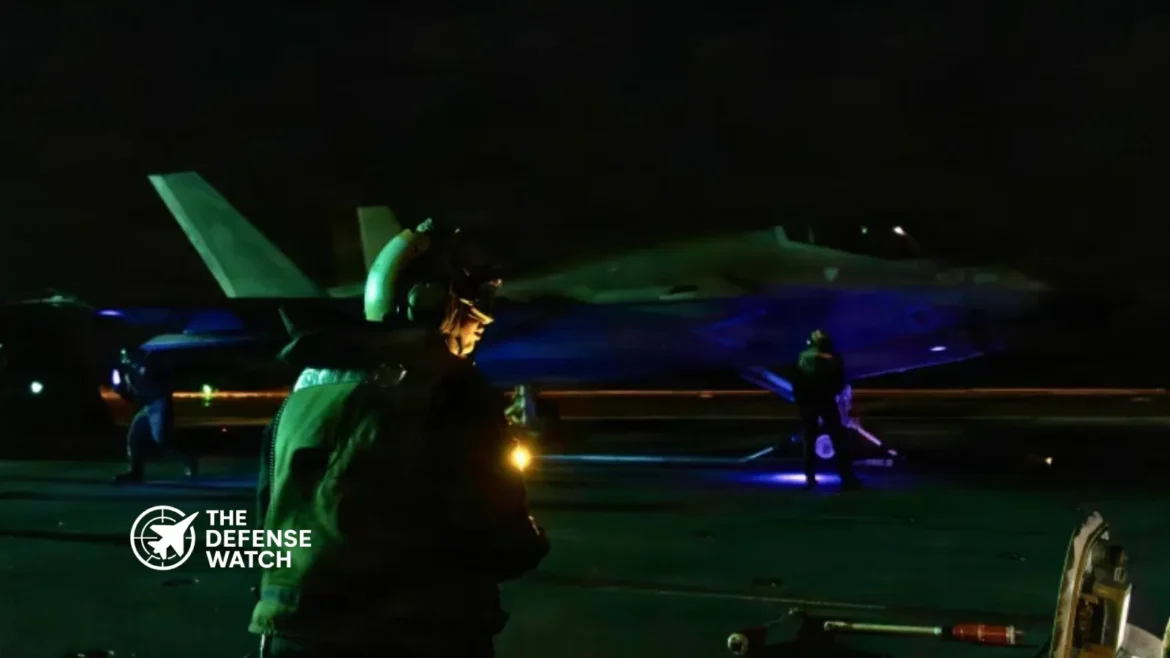
US Navy Operates F-35C And EA-18G Aircraft From USS Abraham Lincoln In Red Sea
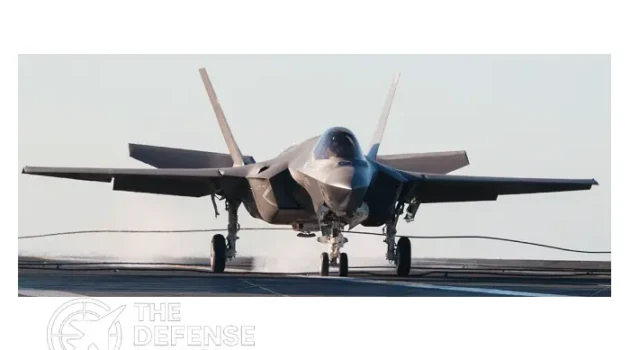
The US Navy is flying F-35C Lightning II and EA-18G Growler aircraft from the USS Abraham Lincoln (CVN-72) in the Red Sea, reinforcing carrier strike group presence amid ongoing regional tensions. The carrier air wing’s flight operations show sustained naval aviation activity in the region under US Central Command.
Images and operational details released by US Central Command on February 16 show Marine Fighter Attack Squadron 314 F-35C stealth fighters and Electronic Attack Squadron 133 Growlers preparing for launch from the carrier’s flight deck in international waters.
Carrier Air Wing Composition And Mission
The USS Abraham Lincoln Carrier Air Wing 9 includes a mix of strike fighters, electronic attack aircraft, airborne early warning platforms, and logistics helicopters. This mix provides layered capability for air defense, surveillance, and electronic warfare.
F-35C Lightning II jets from Marine Fighter Attack Squadron 314 bring fifth-generation stealth, sensor fusion, and networked operations to the carrier wing. The naval variant has a larger wing and strengthened landing gear for carrier operations, and uses advanced radar and sensor systems to support air-to-air and air-to-surface tasks.
EA-18G Growlers from Electronic Attack Squadron 133 deliver electronic attack and suppression of enemy air defenses, integrating receivers and jamming pods to disrupt hostile radars, communications, and targeting systems. The aircraft can carry AGM-88 HARM missiles to target radar emitters.
The air wing is supported by E-2D Advanced Hawkeye early warning aircraft that extend aerial surveillance and coordinate combat air patrols around the carrier strike group.
Strategic Context And Regional Security
The carrier’s presence in the Red Sea comes as the United States maintains operations to safeguard key maritime lines of communication. The broader region, including the Gulf of Aden, Bab el Mandeb, and Arabian Sea, remains an area of heightened maritime security activity due to asymmetric threats such as unmanned systems and regional state tensions.
In early February, a US Navy F-35C from the Abraham Lincoln successfully intercepted and shot down an Iranian-origin unmanned aerial system that was approaching the carrier strike group. The engagement caused no damage to the carrier or accompanying vessels.
US naval statements highlight continuous flight operations as part of efforts to deter threats to freedom of navigation and reassure partners in the region. The operations also underline the carrier strike group’s ability to project power without reliance on host nation basing.
Capability Integration At Sea
Operating together from a forward-deployed carrier allows the mix of F-35C, EA-18G, and supporting aircraft to share sensor data, conduct distributed operations, and respond to emerging challenges at range. The F-35C’s data links integrate with surface and airborne assets to build a common operational picture.
Electronic attack aircraft work ahead of strike fighters to shape the electromagnetic environment, reducing the effectiveness of hostile air defenses and creating windows for precision missions.
The sustained carrier air operations from USS Abraham Lincoln reflect US Navy doctrine for persistent presence in key maritime theaters and support for regional stability.