USA Army vs Pakistan Army!
The United States Army and Pakistan Army are two large land forces with different strategic responsibilities, military resources, and operational requirements. The U.S. Army is built to support American global commitments, conduct expeditionary operations, and fight alongside other U.S. military services and international partners. The Pakistan Army is primarily organized around defending national territory, maintaining regional deterrence, and addressing security challenges along Pakistan’s borders.
Both operate substantial armored formations, artillery, aviation assets, and modern surveillance systems. However, their differences in defense spending, industrial resources, strategic transportation, and access to advanced military technology create significant differences in their overall capabilities.
The USA Army vs Pakistan Army comparison is therefore not simply a contest between troop numbers or tank inventories. It requires examining what each force can deploy, operate, and sustain under different conditions.
1. Overall Military Strength and Force Structure
The United States Army is the principal land warfare service of the U.S. Armed Forces. It operates alongside the U.S. Navy, Air Force, Marine Corps, and Space Force.
Its organizational structure includes active-duty formations, the Army National Guard, and the Army Reserve. These components provide combat formations, logistical support, aviation, engineering, medical services, and other capabilities.
The Pakistan Army is the largest service within Pakistan’s armed forces by personnel. It maintains a substantial corps-based command structure and has responsibilities extending beyond conventional land warfare, including internal security operations and support to national security missions.
According to the European Union Agency for Asylum’s June 2026 country assessment, Pakistan had approximately 550,000 active Army personnel as of December 2025. The assessment also identifies nine corps-level commands in the Army’s reported mid-2025 command structure.
The United States authorized an active Army end strength of 454,000 for fiscal year 2026. Its authorized Army National Guard strength was 328,000, while the Army Reserve was authorized 172,000. These are authorized personnel levels, not a guarantee that every position was filled on September 30, 2026.
Personnel comparison
| Category | United States Army | Pakistan Army |
|---|---|---|
| Active personnel | 454,000 authorized, FY2026 | Approximately 550,000, December 2025 estimate |
| Army Reserve | 172,000 authorized | Separate comparable figure not established |
| National Guard | 328,000 authorized | No directly equivalent component |
| Corps-level structure | Multiple operational and administrative commands | Nine reported corps-level commands |
| Primary strategic focus | Global operations and national defense | Territorial defense and regional security |
The personnel figures have different reporting bases. The U.S. figures are congressional authorizations, while the Pakistani figure is an external estimate of active personnel.
Assessment: Pakistan has the larger active Army by the available figures. The United States, however, has a much larger organized Army reserve and National Guard system, providing additional mobilization capacity.
2. Tanks and Armored Fighting Vehicles
Armored warfare remains important to both armies, although their equipment mixes reflect different procurement histories and operational requirements.
United States Army
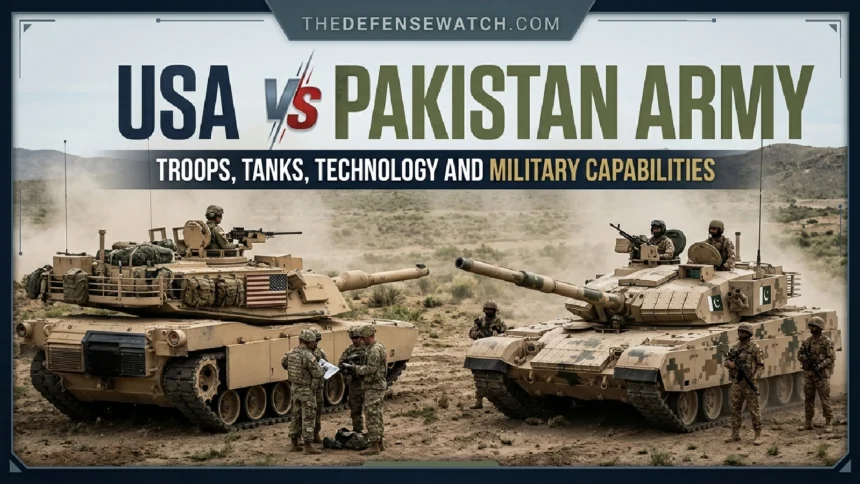
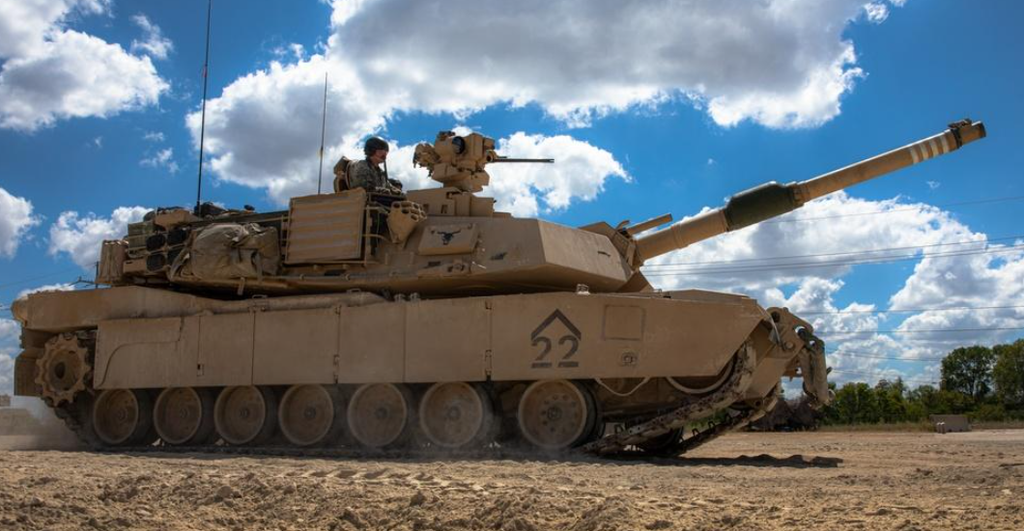
The M1 Abrams family is the principal U.S. Army main battle tank.
The Army’s armored formations also operate:
- M2 Bradley infantry fighting vehicles.
- Stryker family armored vehicles.
- M113 armored personnel carriers in supporting and specialized roles.
- Specialized engineering, recovery, and combat support vehicles.
According to the Congressional Research Service, the Active Component has 11 Armored Brigade Combat Teams, while the Army National Guard has five. Each brigade is structured around 87 M1 Abrams tanks. This provides a useful measure of planned brigade equipment allocation, rather than a count of all tanks owned or immediately available.
The Abrams modernization program is moving toward the M1E3 configuration. The Army’s decision to pursue the M1E3 reflects concerns about the Abrams’ weight, logistical requirements, protection, and ability to accommodate further upgrades. The program is intended to improve mobility, survivability, and future modernization flexibility.
Pakistan Army
Pakistan maintains one of the region’s largest armored inventories.
Its main battle tank fleet includes several generations of equipment:
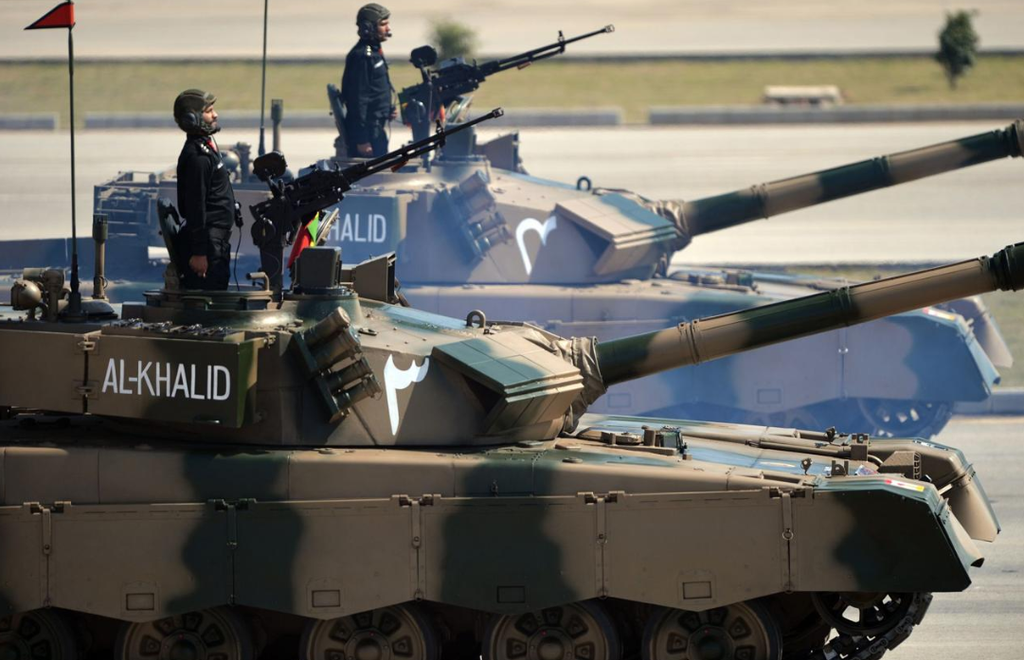
- Al-Khalid and Al-Khalid-I.
- Al-Zarrar.
- T-80UD.
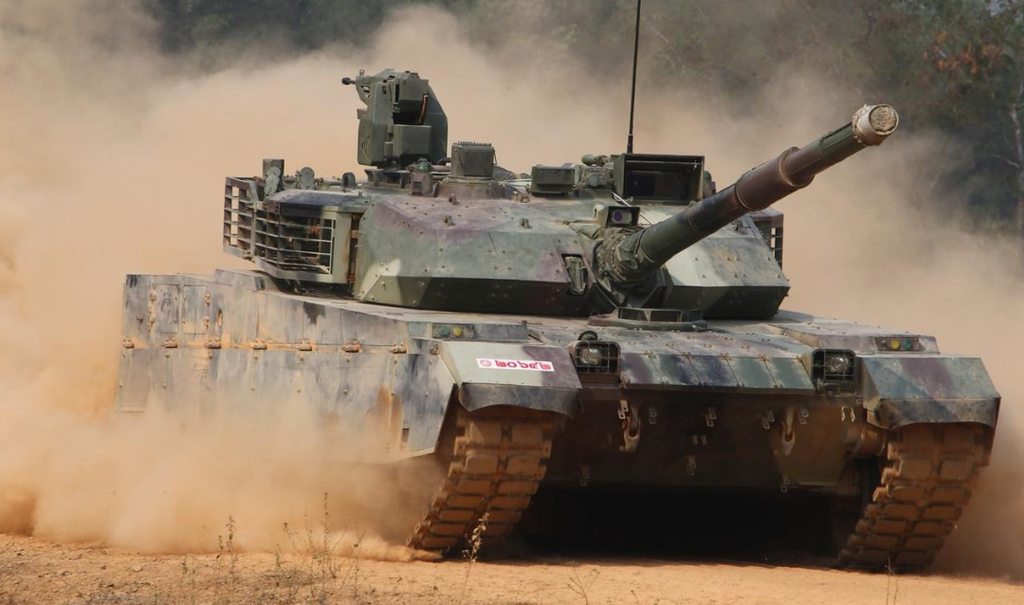
- Chinese VT-4.
- Haider, the Pakistani-produced version associated with the VT-4 platform.
- Older Type 69 and Type 85 variants.
Pakistan also operates M113 armored personnel carriers and other protected mobility vehicles.
Reuters, citing the International Institute for Strategic Studies, reported in July 2026 that Pakistan possessed more than 2,570 main battle tanks. This is an estimated inventory figure, not a verified count of operational or deployable vehicles.
Tank comparison
| Category | United States | Pakistan |
|---|---|---|
| Main battle tank | M1 Abrams | Al-Khalid, VT-4, T-80UD and others |
| Modernization | M1A2 SEPv3 and M1E3 development | VT-4/Haider introduction and fleet upgrades |
| Infantry fighting vehicle | M2 Bradley | Multiple older and newer armored platforms |
| Armored mobility | Stryker, M113 and specialized vehicles | M113, Talha, Saad and other vehicles |
| Public inventory information | Official formation structure available | Aggregate external inventory estimates |
| Operational availability | Not fully disclosed | Not fully disclosed |
Assessment: Pakistan has a larger publicly estimated tank inventory. The U.S. Army has a highly developed Abrams modernization program and a structured armored brigade system. Neither inventory figure establishes how many tanks are ready for immediate combat.
3. Artillery and Long-Range Ground Fires
Artillery is a major part of both armies’ conventional warfare capabilities.
The United States Army operates a combination of:
- M109 Paladin self-propelled howitzers.
- M777 towed howitzers.
- M142 HIMARS.
- M270 Multiple Launch Rocket Systems.
- Precision-guided artillery and rocket ammunition.
These systems support mobile ground formations, counter-battery operations, and long-range fires.
The Army’s rocket artillery capability is particularly important because HIMARS and M270 provide precision strike options beyond conventional tube artillery.
Pakistan also maintains a substantial artillery force. Its inventory includes M109 self-propelled howitzers, Chinese-origin SH-15 wheeled artillery systems, towed artillery, and multiple-launch rocket systems.
Reuters reported more than 4,600 artillery pieces in Pakistan’s inventory in July 2026, based on IISS data. The figure covers a broad artillery category and should not be interpreted as 4,600 modern or operational systems.
The operational difference is not simply the number of guns. Target acquisition, communications, ammunition availability, counter-battery radar, precision guidance, and coordination with other military services all influence artillery effectiveness.
Assessment: Both armies possess substantial ground-fire capabilities. The U.S. Army has an established precision rocket artillery architecture, while Pakistan fields a large and diverse artillery inventory oriented toward regional ground operations.
4. Air Defense and Counter-Drone Capabilities
Modern ground forces must defend against aircraft, helicopters, cruise missiles, precision weapons, and uncrewed aerial systems.
The U.S. Army operates a layered ground-based air defense architecture that includes Patriot, THAAD in the wider joint force, and shorter-range systems such as the Avenger and the Maneuver Short-Range Air Defense program.
An important distinction is that THAAD is a joint missile defense capability, not simply an organic Army formation-level weapon.
The Army is also investing in mobile air defense and counter-drone capabilities to protect maneuver units and fixed military facilities.
Pakistan’s Army and wider national air defense architecture rely on a combination of imported and domestically supported systems. These include short-range and medium-range air defense capabilities, surveillance radars, and Chinese-origin equipment.
However, not every system in Pakistan’s national air defense network is necessarily operated by the Army. The Pakistan Air Force also has a major role in national air defense.
Counter-drone warfare is becoming increasingly important for both forces. Small reconnaissance drones, loitering munitions, and larger uncrewed aircraft can threaten armored formations and artillery positions.
The United States has greater publicly documented investment in integrated Army air defense modernization. Pakistan’s ability to combine ground-based air defense, electronic warfare, radar, and its Air Force remains important to its national defense posture.
Assessment: The United States has a broader documented Army modernization effort in layered air and missile defense. Pakistan maintains relevant regional air defense capabilities, but publicly available information does not establish a reliable comparative measure of system readiness or interception effectiveness.
5. Army Aviation and Uncrewed Systems
Army aviation provides reconnaissance, mobility, fire support, casualty evacuation, and battlefield surveillance.
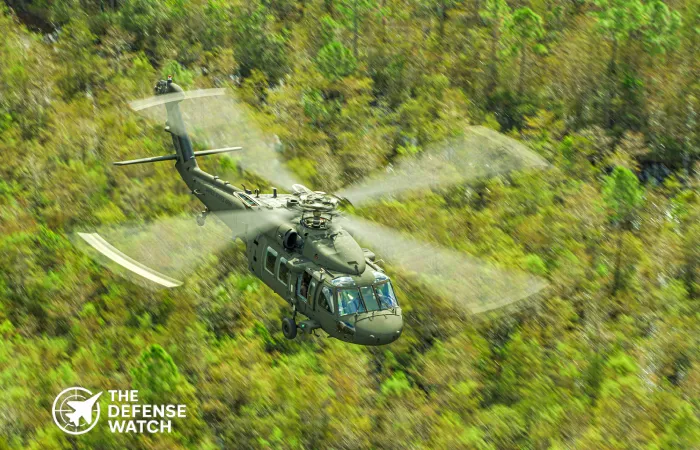
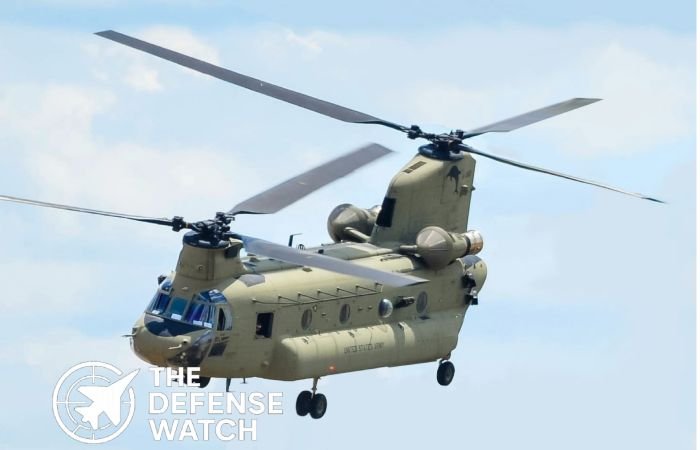
United States Army aviation
Major U.S. Army aviation platforms include:
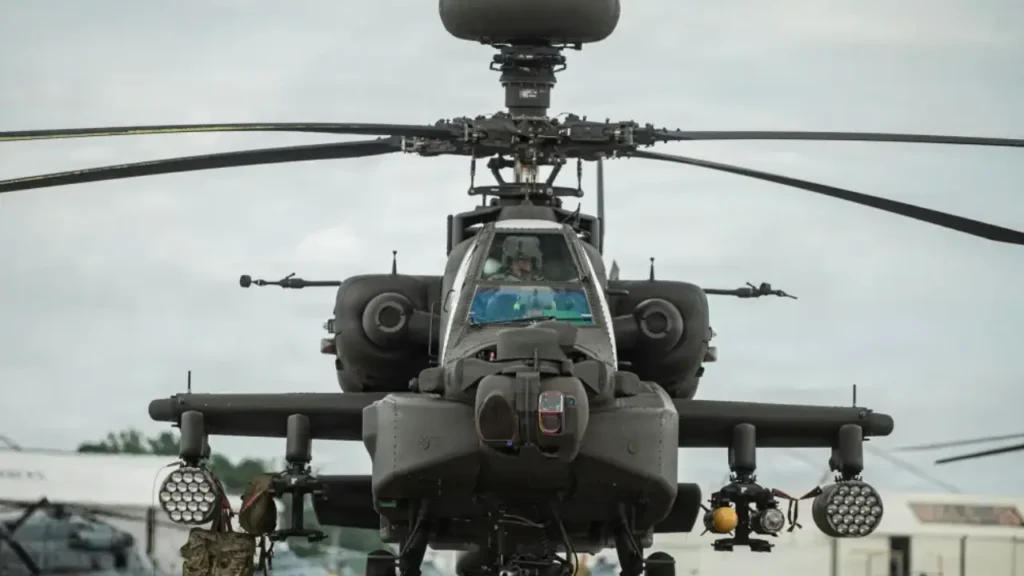
- AH-64E Apache attack helicopters.
- UH-60 Black Hawk utility helicopters.
- CH-47 Chinook heavy-lift helicopters.
- Uncrewed aerial systems for reconnaissance and surveillance.
The Army’s aviation capabilities are supported by established maintenance, training, logistics, and aviation command structures.
Pakistan Army aviation
Pakistan operates a range of Army aviation platforms, including:
- AH-1F Cobra attack helicopters.
- Mi-17 transport helicopters.
- Bell utility helicopters.
- Reconnaissance and surveillance drones.
Pakistan also has a growing domestic drone industry. Systems such as the Shahpar family demonstrate the country’s efforts to develop and integrate indigenous uncrewed aircraft technology.
Fixed-wing combat aircraft such as the F-16, J-10C, and JF-17 belong to the Pakistan Air Force, not the Pakistan Army.
Similarly, U.S. fighter aircraft such as the F-35 and F-16 belong to the Air Force or Navy, depending on the platform and service.
This distinction matters because an Army comparison should not count another service’s fighter aircraft as organic Army equipment.
Assessment: The U.S. Army has a broader and more established helicopter force. Pakistan has developed useful aviation and drone capabilities, particularly for regional surveillance and ground support. Both benefit from joint coordination with their respective air forces.
6. Technology, Battlefield Communications and Modernization
Technology is increasingly important in determining how quickly a military can detect threats, share information, and coordinate its forces.
The U.S. Army has invested heavily in:
- Tactical battlefield networks.
- Digital command-and-control systems.
- Satellite-enabled communications.
- Advanced battlefield sensors.
- Artificial intelligence-assisted analysis.
- Precision targeting.
- Electronic warfare.
- Autonomous and remotely operated systems.
Its modernization programs seek to improve coordination between infantry, armored vehicles, artillery, aviation, and joint-force assets.
Pakistan has pursued modernization through foreign procurement, domestic production, and technology partnerships.
Its efforts include improvements to armored vehicles, surveillance drones, battlefield communications, artillery, and missile systems.
Pakistan’s defense industry also provides a foundation for maintaining and modifying selected military equipment domestically.
However, public information does not establish that every announced technology has entered operational service. Demonstrations, development programs, and procurement announcements should not be treated as evidence of fully deployed capabilities.
Assessment: The U.S. Army has advantages in the scale of its digital military infrastructure, research investment, and integration with national intelligence and space capabilities. Pakistan has made progress in selected systems, but its overall network integration and technological depth are less comprehensively documented.
7. Training, Doctrine and Operational Experience
The two armies train for different strategic environments.
The U.S. Army places considerable emphasis on large-scale combat operations, combined-arms warfare, expeditionary deployments, and interoperability with allied forces.
Its training structure includes major combat training centers, professional military education, and multinational exercises.
The Pakistan Army places particular emphasis on conventional land warfare, territorial defense, mountain operations, counterinsurgency, and regional security.
Its geography requires experience operating in diverse environments, including mountainous border areas, plains, and difficult terrain.
Pakistan’s military has also conducted prolonged internal security and counterinsurgency operations.
Neither military’s training quality can be accurately measured through exercise numbers or public claims alone. Readiness, leadership, unit cohesion, equipment availability, and operational performance are all relevant.
The United States benefits from a wider international training network and extensive experience conducting overseas coalition operations.
Pakistan’s experience is more closely connected to South Asian security requirements and operations within its immediate strategic environment.
8. Logistics and Strategic Mobility
Logistics is one of the most important differences between the two armies.
The United States Army is structured to deploy forces beyond North America. It benefits from strategic airlift, sealift, overseas facilities, prepositioned equipment, and an extensive network of military transportation and maintenance organizations.
These capabilities allow the U.S. Army to move heavy formations and support equipment over long distances.
However, global deployment is expensive and depends on access to ports, airfields, fuel, maintenance facilities, and secure supply routes.
Pakistan’s logistics system is primarily designed around national defense and regional operations.
Its geographic proximity to likely operational areas provides important advantages. Forces can operate closer to established bases, domestic supply networks, and national transportation infrastructure.
However, sustaining a large armored force over a prolonged period still requires substantial fuel, spare parts, ammunition, recovery vehicles, and maintenance capacity.
The U.S. Army has the advantage in strategic transportation and overseas sustainment. Pakistan’s advantage is its ability to concentrate forces within its own territory without relying on the same level of intercontinental deployment infrastructure.
9. Defense Spending and Industrial Capacity
The financial gap between the United States and Pakistan is substantial.
According to the Stockholm International Peace Research Institute’s April 2026 report, military expenditure in 2025 reached:
| Category | United States | Pakistan |
|---|---|---|
| National military expenditure | $954 billion | $11.9 billion |
| Reporting year | 2025 | 2025 |
| Army-specific expenditure | Not separately represented by these figures | Not separately represented by these figures |
| Industrial base | Large, diversified defense sector | Smaller domestic and international partnership-based sector |
These are national military expenditure figures, not Army budgets. They include spending across the respective armed forces and other categories included in SIPRI’s methodology.
United States defense industry
The United States has a large defense industrial base supporting:
- Abrams tank production and modernization.
- Bradley and Stryker vehicle programs.
- Artillery and rocket ammunition.
- Missile manufacturing.
- Military electronics.
- Radar and communications.
- Aviation engines and components.
- Maintenance and depot-level repair.
Its industrial scale is a major advantage, but it does not eliminate production bottlenecks.
A useful example is 155mm artillery ammunition. The U.S. Army had aimed to increase production to 100,000 rounds per month by October 2025. A Department of Defense Inspector General report found that production was approximately 36,000 rounds per month in March 2026, highlighting the difficulty of translating industrial investment into actual output.
This distinction matters because production targets do not equal available ammunition stockpiles.
Pakistan defense industry
Pakistan has a smaller but strategically important domestic defense sector.
Its principal organizations include:
- Heavy Industries Taxila.
- Pakistan Ordnance Factories.
- Global Industrial and Defence Solutions.
- Armament Research and Development Establishment.
- National Radio Telecommunication Corporation.
The Ministry of Defence Production identifies these organizations as part of Pakistan’s public-sector defense industrial structure.
Heavy Industries Taxila supports armored vehicle production and maintenance, while Pakistan Ordnance Factories contributes to ammunition and weapons manufacturing.
Pakistan also relies on foreign suppliers, particularly China, for important military equipment and technology.
This creates a mixed industrial model: domestic production and maintenance combined with imported advanced systems.
Assessment: The United States has a decisive advantage in financial resources, manufacturing scale, research and development, and the ability to support complex military programs. Pakistan has meaningful domestic production capabilities, but its smaller industrial and financial base limits the scale of modernization and long-term replenishment.
10. Operational Capability: Where Does Each Army Have the Advantage?
The answer depends heavily on the operational environment.
| Operational environment | Relevant advantage | Explanation |
|---|---|---|
| Global expeditionary deployment | United States | Strategic airlift, sealift, overseas infrastructure and logistics |
| Territorial defense in Pakistan | Pakistan | Geographic familiarity and established national infrastructure |
| Large-scale armored warfare | Context-dependent | Both possess substantial armored formations and artillery |
| Long-range precision ground fires | United States | More extensive precision rocket artillery architecture |
| Mountain operations | Context-dependent | Both have relevant experience, with Pakistan’s regional specialization particularly important |
| Coalition operations | United States | Extensive multinational interoperability |
| Domestic counterinsurgency | Pakistan | Long experience in regional internal security operations |
| Prolonged industrial replenishment | United States | Greater manufacturing and financial resources, despite documented bottlenecks |
High-intensity conventional warfare
In a large conventional operation, the U.S. Army would benefit from its integrated communications, precision fires, advanced support infrastructure, and access to joint military capabilities.
Pakistan would bring a substantial active force, extensive armored inventory, artillery, and the advantages of operating within its own territory.
The outcome of any hypothetical engagement would depend on geography, objectives, intelligence, air support, ammunition, logistics, and the wider strategic situation.
Mountainous terrain
Mountain warfare places considerable demands on transport, infantry mobility, communications, artillery positioning, and medical evacuation.
Pakistan has considerable experience operating in mountainous regions. The U.S. Army also trains for mountain warfare and operates specialized units and equipment.
Neither force can claim an automatic advantage across all mountainous environments.
Long-duration operations
A prolonged conflict places increasing pressure on ammunition stocks, maintenance capacity, industrial production, personnel replacement, and transportation.
The U.S. Army has access to a much larger national industrial base and financial resources.
Pakistan can draw on domestic defense manufacturing and established regional supply arrangements, but imported equipment and components remain important dependencies.
The difference between equipment ownership and sustainable combat capability becomes especially significant in this environment.
11. Strengths and Limitations
United States Army
Principal strengths
- Extensive global deployment infrastructure.
- Large Army National Guard and Reserve system.
- Advanced armored and artillery systems.
- Strong battlefield communications and intelligence integration.
- Extensive military research and development.
- Larger defense industrial and maintenance base.
- Broad multinational training and interoperability.
Principal limitations
- High costs associated with global deployments.
- Significant fuel and maintenance requirements.
- Industrial production bottlenecks.
- Dependence on complex supply chains.
- Challenges sustaining simultaneous overseas commitments.
Pakistan Army
Principal strengths
- Larger active personnel count in the available comparison.
- Large armored vehicle inventory.
- Substantial artillery force.
- Experience in regional conventional and counterinsurgency operations.
- Geographic familiarity with South Asian operational environments.
- Domestic armored vehicle and ammunition manufacturing.
- Established defense partnerships with foreign suppliers.
Principal limitations
- Smaller financial resources.
- Greater dependence on selected foreign suppliers for advanced systems.
- Less extensive global strategic transportation infrastructure.
- Limited publicly available information on equipment readiness.
- Smaller industrial capacity for large-scale replenishment.
- Less extensive publicly documented integration of advanced battlefield networks.
12. USA Army vs Pakistan Army: Overall Assessment
The United States Army has the advantage in technological depth, strategic mobility, defense industrial capacity, precision fires, and the ability to sustain operations far from its national territory.
Pakistan has a larger active Army by the available personnel estimates and a substantial inventory of tanks and artillery. Its force structure is designed around regional security requirements, territorial defense, and the ability to concentrate military power within South Asia.
The comparison becomes more complicated when geography is considered. The United States is better equipped for global expeditionary operations, while Pakistan’s Army is structured for a different strategic environment.
Neither personnel numbers nor equipment inventories alone establish actual combat readiness. The availability of trained crews, ammunition, spare parts, maintenance facilities, intelligence, and supporting air power can change the balance significantly.
The overall conclusion is that the U.S. Army has the broader technological, financial, logistical, and industrial advantage. Pakistan Army has important numerical and regional advantages, particularly in active personnel and its large armored inventory. The stronger force in any particular operation would depend on its mission, geography, preparation, and supporting military capabilities.
Frequently Asked Questions
Overall, the U.S. Army has greater technological, logistical, financial, and industrial capabilities. Pakistan has a larger active personnel count in the available estimates and a substantial armored and artillery inventory. The answer depends partly on the mission and operational environment.
The U.S. Army had an authorized active strength of 454,000 for FY2026. Pakistan’s Army had approximately 550,000 active personnel according to the December 2025 estimate cited by the EUAA.
Pakistan has the larger publicly estimated tank inventory, with more than 2,570 tanks reported by Reuters in July 2026. The U.S. Army’s armored force centers on the M1 Abrams, with 11 active and five National Guard armored brigade combat teams.
The U.S. Army has an advantage in advanced battlefield networks, precision weapons, sensors, research and development, and integrated military systems. Pakistan has modernized selected capabilities through domestic programs and foreign procurement.
The United States spent approximately $954 billion in 2025, compared with Pakistan’s $11.9 billion, according to SIPRI. These figures represent national military expenditure, not individual Army budgets.
Pakistan can participate in overseas deployments and international military operations. However, it does not possess the same strategic transportation infrastructure, overseas military network, or global sustainment capacity as the United States.