

Executive Summary
- NASA Armstrong Flight Research Center is marking 80 years since five NACA engineers established the agency’s predecessor presence at Muroc Army Airfield on Sept. 30, 1946, beginning a flight-test lineage that included the X-1 and later programs such as the X-15, SR-71 and digital fly-by-wire.
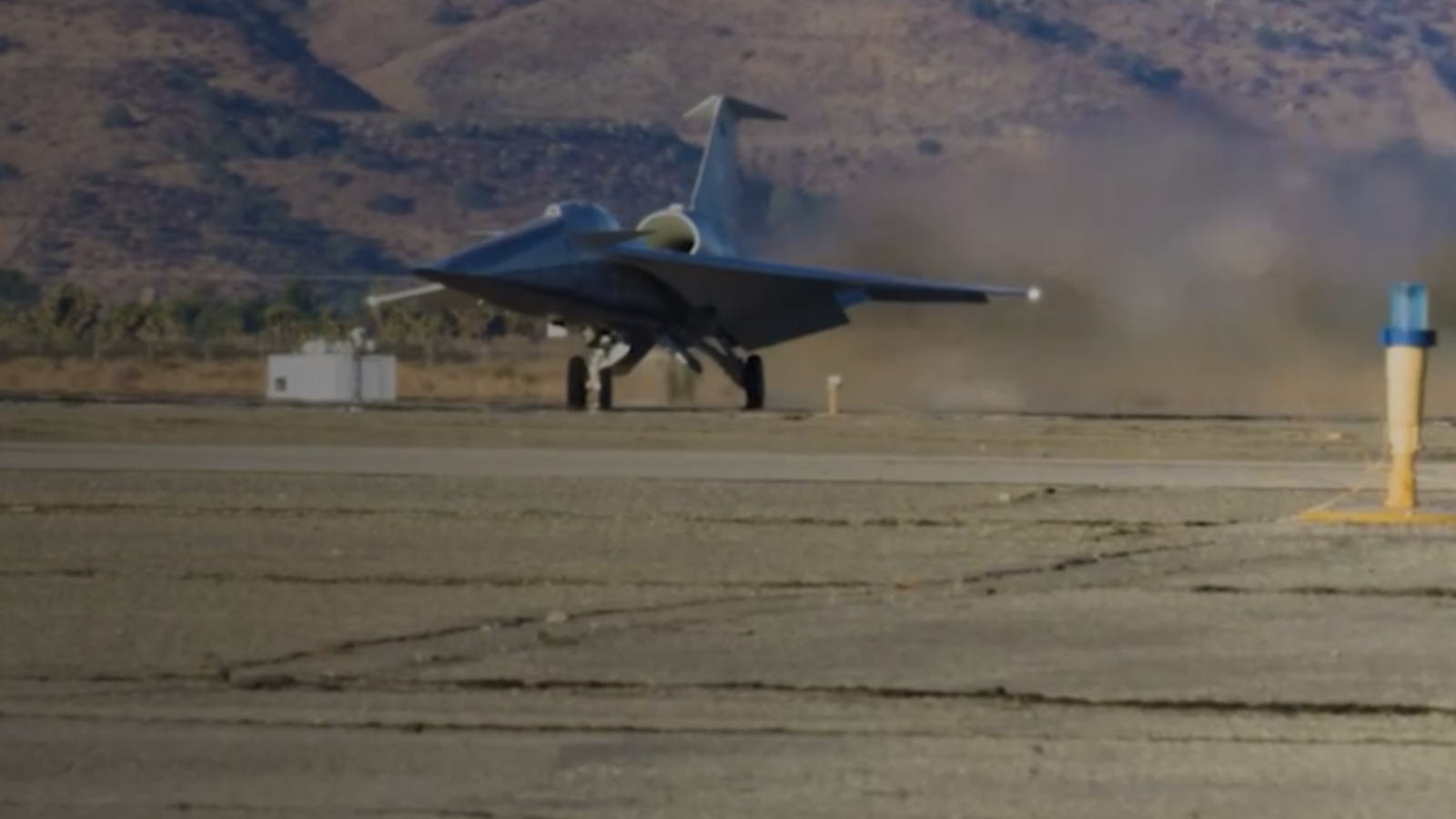
- The center is now conducting flight testing of NASA’s X-59, which entered supersonic flight in June 2026 and subsequently reached Mach 1.4 at 55,000 feet during mission-conditions testing for the Quesst program.
- Armstrong’s role increasingly extends beyond experimental aeronautics. NASA has designated it the agency’s Center of Excellence for Flight Test and Aircraft Operations, while its aircraft and engineering teams support Artemis, Earth science and advanced aviation research.
NASA Armstrong Flight Research Center is marking 80 years of flight research at California’s high desert test range, tracing its institutional lineage to Sept. 30, 1946, when five National Advisory Committee of Aeronautics engineers arrived at Muroc Army Airfield to prepare for X-1 supersonic research. The work established a flight-test presence that would later become NASA Armstrong and contribute to some of the most consequential advances in American aeronautics.
The anniversary comes as Armstrong is again working at the edge of the supersonic envelope. NASA’s X-59 quiet-supersonic research aircraft has completed its first supersonic flights and is being prepared for the acoustic testing and community demonstrations that form the central objective of the Quesst program.
The significance is broader than the anniversary itself. Armstrong illustrates a recurring U.S. aerospace model in which government flight research reduces technical and regulatory uncertainty before technologies move into military, civil or commercial applications.
From Muroc to Armstrong
The original Muroc operation was established when supersonic flight remained an unresolved engineering problem. Conventional wind tunnels could not fully reproduce the flight conditions around and beyond the speed of sound, so researchers turned to instrumented aircraft as what NASA describes as a wind tunnel in the sky.
The X-1 program subsequently demonstrated controlled supersonic flight. NASA’s historical record identifies the Muroc arrival in 1946 as the beginning of the NACA presence at the site, while the X-1 achieved the actual supersonic milestone in 1947. This distinction matters because the 80th anniversary marks the establishment of the flight research operation, not 80 years of continuous supersonic flight.
That early work created a test philosophy that remains relevant today: use specialized aircraft, instrumentation and controlled flight conditions to generate data that cannot be obtained adequately through analysis or ground testing alone.
Eight Decades of High-Risk Flight Testing
Armstrong’s historical portfolio extends well beyond the X-1.
The center became a major U.S. test location for high-speed, high-altitude and unconventional aircraft. NASA’s historical record includes the X-15, lifting-body vehicles, the YF-12A, SR-71 research aircraft and numerous aerodynamic research programs.
The SR-71 work is particularly relevant to the center’s long-term role. NASA acquired SR-71 aircraft in the 1990s and used them for high-altitude, high-speed research until 1998. The aircraft provided a platform for collecting data at flight conditions well beyond those available to conventional research aircraft.
Armstrong’s contribution was not limited to aircraft that eventually entered operational service. Many programs were deliberately designed to answer narrow technical questions, allowing engineers to validate aerodynamic, structural, propulsion or flight-control concepts before those technologies were incorporated into larger aircraft programs.
Digital fly-by-wire changed aircraft design
One of Armstrong’s most consequential technology programs was digital fly-by-wire.
The F-8 Digital Fly-By-Wire program began its flight-testing phase in 1972. NASA used an F-8C Crusader as a testbed, coupling digital computing and electronic signals to aircraft flight controls. The program ultimately conducted 211 flights over 13 years.
The importance of the technology was not simply the replacement of cables and mechanical linkages. Digital flight controls enabled aircraft designers to manage unstable or highly responsive aerodynamic configurations through computer-controlled inputs.
That principle is now fundamental to modern military and commercial aircraft. NASA notes that fly-by-wire technology subsequently became part of aircraft such as the Airbus A320 and Boeing 777 and remains common across modern civil and military aviation.
The same technology lineage is present in the X-59, which uses a digital fly-by-wire system.
X-59 Connects Armstrong’s Past to Its Next Mission
The clearest demonstration of Armstrong’s continuing relevance is NASA’s X-59.
The aircraft is not intended to become an operational fighter or transport aircraft. Its purpose is to collect flight and acoustic data that could help determine whether supersonic flight over land can be conducted with substantially reduced noise compared with conventional sonic booms.
NASA’s Quesst program is therefore addressing both an engineering problem and a regulatory problem.
The aircraft’s first supersonic flight occurred on June 5, 2026. NASA reported that the X-59 reached approximately Mach 1.1 at 43,400 feet during the 81-minute flight.
A week later, the aircraft reached its planned mission conditions of Mach 1.4 and approximately 55,000 feet. NASA identified those conditions as important for future community overflights intended to measure how people perceive the aircraft’s quieter sonic signature.
By its 25th flight in August, NASA reported that the X-59 had reached Mach 1.2 and approximately 49,000 feet while continuing to expand its flight envelope. The next major stage is acoustic validation, followed by community response testing.
X-59 test progression
| Milestone | NASA-reported result | Significance |
|---|---|---|
| First supersonic flight, June 5, 2026 | Mach 1.1, 43,400 ft | Entered supersonic flight-test phase |
| Mission-conditions flight, June 12, 2026 | Mach 1.4, 55,000 ft | Reached conditions planned for community testing |
| 25th flight, Aug. 21, 2026 | Mach 1.2, about 49,000 ft | Continued envelope expansion |
| Next major phase | Acoustic validation | Measures the X-59’s sonic signature |
| Later phase | Community overflights | Collects public-response data |
Source: NASA.
The key point is that the X-59 is not simply another high-speed aircraft. NASA is attempting to produce validated aerodynamic and acoustic data that regulators could use when considering future supersonic flight over land.
That creates a potential pathway from government-funded research to commercial aviation. The immediate output is data, not an operational aircraft fleet.
Armstrong’s Role Is Expanding Beyond Aeronautics
The center’s current workload also shows why its value cannot be measured only through experimental aircraft.
NASA Administrator Jared Isaacman designated Armstrong as the agency’s Flight Test and Aircraft Operations Center of Excellence in May 2026. Under NASA’s reorganization, the designation places flight-test and aircraft-operations expertise at the center of Armstrong’s institutional role.
That expertise is increasingly being applied to human spaceflight.
For Artemis II, a modified NASA Gulfstream G-III is being used to collect imagery and data on Orion’s heat shield during atmospheric reentry. NASA said the aircraft would operate as part of a larger airborne observation effort designed to capture data on the spacecraft’s thermal protection system.
Armstrong also supports other Artemis-related aircraft work, including astronaut suit testing aboard a 737 and flight testing involving an F/A-18 used in development work related to the Space Launch System. NASA identified these aircraft as part of the center’s support for the Artemis campaign.
This illustrates an important shift in flight research. Research aircraft are increasingly functioning as airborne test infrastructure for spacecraft, sensors, autonomy systems and mission-support technologies rather than simply as experimental platforms for aerodynamic research.
Why Flight-Test Infrastructure Still Matters
Advanced computer modeling and digital simulation have transformed aerospace development, but they have not eliminated the need for flight testing.
Real aircraft expose interactions among aerodynamics, structures, propulsion, software, sensors and human operators that can be difficult to reproduce completely in simulation. Flight testing also provides the empirical data required to validate models before technologies are adopted for larger operational systems.
Armstrong’s history demonstrates this progression repeatedly.
| Era | Representative research | Broader technology impact |
|---|---|---|
| 1940s | X-1 supersonic research | Established practical supersonic flight data |
| 1950s-60s | X-15, high-speed and lifting-body research | Advanced high-speed flight and atmospheric research |
| 1970s-80s | Digital fly-by-wire | Influenced modern civil and military aircraft |
| 1990s | SR-71 high-speed research | Supported high-altitude aeronautical research |
| 2020s | X-59 Quesst | Tests quieter supersonic flight and acoustic standards |
| Current | Artemis support aircraft | Provides airborne data collection and test infrastructure |
The continuity is important. Each generation uses the aircraft available at the time to answer questions that existing engineering methods cannot completely resolve.
Defense Implications Are Indirect but Significant
Armstrong is not a combat organization, but its technology base has repeatedly intersected with military aviation.
Digital flight controls, aerodynamic research, high-speed flight testing, autonomous flight technologies and advanced instrumentation all have applications across military aircraft development. NASA’s own history identifies fly-by-wire as technology used on modern military aircraft and spacecraft as well as commercial transports.
The center’s value to the broader U.S. aerospace ecosystem therefore comes from its ability to investigate technologies before they reach operational maturity.
This is especially relevant as military aircraft become increasingly software-defined and dependent on autonomous functions. Flight-test organizations must evaluate not only airframe performance but also how sensors, computers, control laws and human operators interact under real flight conditions.
Armstrong’s contribution is consequently less about producing a particular weapon system and more about maintaining a national capability to test technologies at the boundary of what current aircraft and flight-control systems can accomplish.
The Industrial Value of Government Flight Research
There is also an industrial-policy dimension.
Aerospace companies can develop aircraft and technologies internally, but government research can reduce technical uncertainty in areas where commercial incentives may not justify early-stage experimentation. NASA’s flight research programs can generate validated data, test methods and engineering knowledge that later become useful across the aerospace sector.
The digital fly-by-wire example demonstrates the potential scale of that effect. A research program using a modified fighter aircraft ultimately helped establish concepts now used throughout modern aviation.
The X-59 follows a similar model, although its intended technology transfer pathway is different. NASA plans to use flight and acoustic measurements to validate computational tools and provide information that aircraft manufacturers can use when considering future quiet-supersonic designs.
The success of that effort will depend on the quality and regulatory usefulness of the data rather than simply whether the X-59 can fly supersonically.
Armstrong’s Next 80 Years
The anniversary comes at a point when aerospace testing is becoming more complex.
Future flight-test programs are likely to combine conventional aircraft with autonomous systems, advanced sensors, high-performance computing and increasingly sophisticated control software. At the same time, human spaceflight programs such as Artemis require aircraft-based observation and test capabilities that can operate alongside spacecraft missions.
NASA Armstrong’s existing infrastructure provides a foundation for that work.
Its historical trajectory also offers a useful lesson for the U.S. aerospace sector. The most consequential results from flight research are not always the aircraft themselves. They can be control systems, aerodynamic models, test methods, instrumentation and validated engineering data that eventually become embedded in aircraft and spacecraft built elsewhere.
The X-1 established the foundation for one era of flight research. The X-59 represents another attempt to resolve a longstanding technical and regulatory barrier. Between them sit decades of work involving high-speed aircraft, lifting bodies, digital flight controls, spaceflight support and Earth science.
At 80 years, Armstrong’s central mission remains much the same: put difficult aerospace questions into the air, collect reliable data, and turn that evidence into technologies that can be used beyond the test program.
