USS Idaho Officially Joins the Fleet
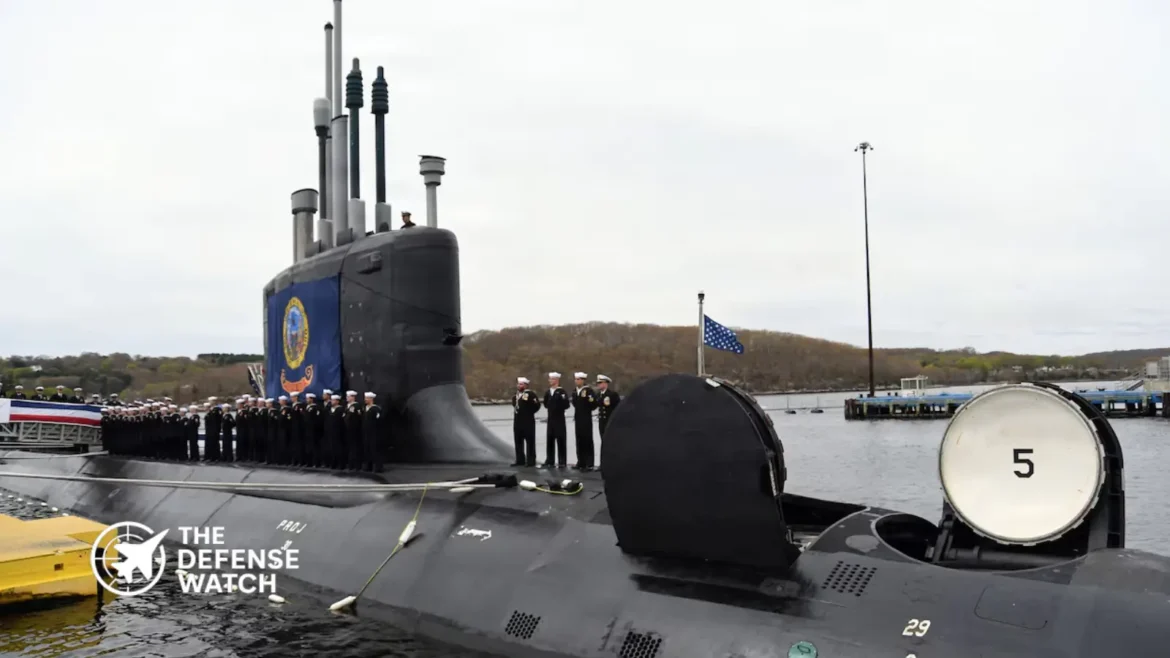
The USS Idaho submarine officially entered active U.S. Navy service during a commissioning ceremony at Naval Submarine Base New London in Groton, Connecticut, on April 25. The event marked the final step in a multi-year construction and testing process for one of America’s most important naval platforms.
USS Idaho (SSN 799) is the fifth U.S. Navy vessel to carry the name of the state of Idaho. Its predecessor was the battleship USS Idaho (BB-42), which earned seven battle stars during World War II.
- The U.S. Navy commissioned USS Idaho (SSN 799) on April 25, 2026, in Groton, Connecticut.
- USS Idaho is the 26th Virginia-class fast-attack submarine delivered to the Navy.
- The boat is the eighth submarine built to the advanced Block IV configuration.
- The submarine was jointly produced by General Dynamics Electric Boat and HII Newport News Shipbuilding.
- Virginia-class boats support anti-submarine warfare, intelligence collection, strike missions, and special operations.
The ship’s sponsor, Teresa Stackley, gave the traditional order to man our ship and bring her to life, after which the crew ceremonially boarded the submarine. Acting Secretary of the Navy Hung Cao formally placed the vessel into service.
Why USS Idaho Matters
The arrival of USS Idaho comes at a time when the United States is placing renewed emphasis on undersea deterrence and naval competition. Fast-attack submarines remain among the Navy’s most survivable and flexible assets, particularly in contested regions such as the Indo-Pacific and North Atlantic.
Virginia-class submarines are designed for multiple mission sets, including:
- Anti-submarine warfare
- Anti-surface warfare
- Intelligence, surveillance, and reconnaissance
- Land attack missions using cruise missiles
- Special operations support
That versatility gives commanders options short of deploying larger surface combatants or aircraft carriers. In modern conflict scenarios, submarines can often operate with lower visibility and greater persistence.
USS Idaho Specifications
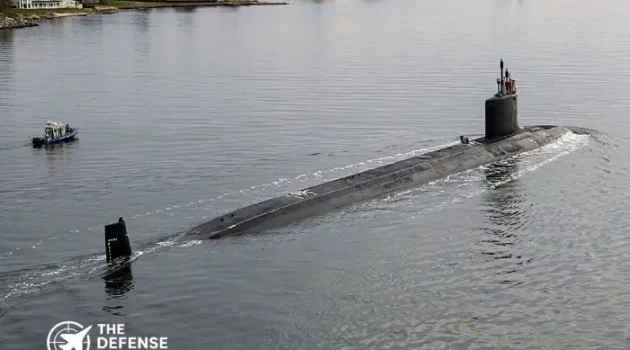
USS Idaho is the 26th Virginia-class submarine and the eighth Block IV variant. According to the Navy, the submarine displaces about 7,800 tons, measures 377 feet long, and has a beam of 34 feet. It is powered by a nuclear reactor designed to last the planned service life of the vessel without refueling.
The Block IV design focuses heavily on reducing maintenance time and increasing deployment availability. That matters because submarine demand has consistently exceeded supply in several global theaters.
Industrial Base and Production Signal
USS Idaho was built through the long-running teaming arrangement between General Dynamics Electric Boat and HII Newport News Shipbuilding. The program remains central to sustaining the U.S. submarine industrial base while production also shifts toward the future Columbia-class ballistic missile submarine.
Commissioning another Virginia-class hull sends a wider signal that the Navy is trying to balance current readiness with long-term modernization, despite workforce and supply chain pressure across U.S. shipyards.
Strategic Outlook
The addition of USS Idaho strengthens a fleet that remains one of Washington’s most decisive military advantages. While surface fleets draw more public attention, submarines often carry the highest strategic value because of stealth, endurance, and strike reach.
As competition with China and Russia continues below the surface, new Virginia-class boats like USS Idaho are likely to remain in high demand for years ahead.
Ocean Ships Navy Contract Strengthens US Survey Fleet Support
The Ocean Ships Navy contract marks a major sustainment investment in the U.S. Navy’s specialized maritime survey capability. The Department of Defense announced that Ocean Ships, Inc., based in Houston, Texas, has been awarded a $1.11 billion firm-fixed-price contract to operate and maintain seven government-owned Oceanographic Survey (T-AGS) vessels.
The award was issued by Military Sealift Command (MSC) in Norfolk, Virginia. According to the announcement, fiscal year 2026 Navy working capital funds totaling $22.38 million were obligated at the time of award and will remain available through the fiscal year.
- Ocean Ships Inc. received a $1,114,495,567 firm-fixed-price US Navy contract.
- The agreement covers operation and maintenance of seven government-owned T-AGS survey vessels.
- Contract includes one base year, four option years, and one six-month extension period.
- Work will be performed worldwide, with vessel delivery beginning in 2026.
- If all options are exercised, performance could continue through 2032.
This contract was competitively solicited as a total small business set-aside, with three proposals received.
Why T-AGS Vessels Matter To The Navy
T-AGS vessels are not combat warships, but they are strategically important assets. These ships support undersea mapping, seabed surveys, acoustic data collection, and oceanographic research that directly feeds naval operations.
That information can support:
- Submarine route planning
- Mine warfare preparation
- Amphibious landing analysis
- Sonar performance optimization
- Navigation safety in contested waters
In modern naval competition, especially in the Indo-Pacific and Arctic, accurate seafloor and environmental data can be as valuable as weapons systems. This gives the Ocean Ships Navy contract importance beyond simple ship operations.
Global Operations Through 2032
The Pentagon stated work will be performed on a worldwide basis, with vessel delivery beginning in 2026. If all contract options are exercised, the performance period will run for five years and six months, concluding in 2032.
That long timeline suggests the Navy is seeking continuity in managing these specialized ships. Survey fleets often require experienced civilian mariners, technical crews, and maintenance teams capable of operating unique onboard systems.
Because these vessels gather sensitive environmental and undersea data, reliability and readiness are critical.
Strategic Value For Military Sealift Command
Military Sealift Command manages a wide range of auxiliary and support vessels for the Navy, from replenishment ships to prepositioning fleets and research platforms. Keeping T-AGS ships available helps MSC support broader fleet readiness.
Unlike frontline destroyers or carriers, survey ships often receive less public attention. However, they play a quiet but essential role in enabling combat forces.
As naval competition grows with rivals such as China and Russia, hydrographic knowledge and undersea battlespace awareness are increasingly important. That makes contracts like the Ocean Ships Navy contract part of the wider readiness picture.
What The Award Signals
The size of the contract reflects rising costs and long-term demand for maritime support services, but it also signals confidence in outsourced commercial operators supporting Navy missions.
Using private-sector operators for non-combat fleets allows the Navy to focus uniformed manpower on warfighting platforms while maintaining critical support capacity elsewhere.
For defense industry observers, this award also shows that small business set-aside competitions can still produce billion-dollar outcomes in niche maritime sectors.
Enhanced P-8A Poseidon Reaches Operational Milestone
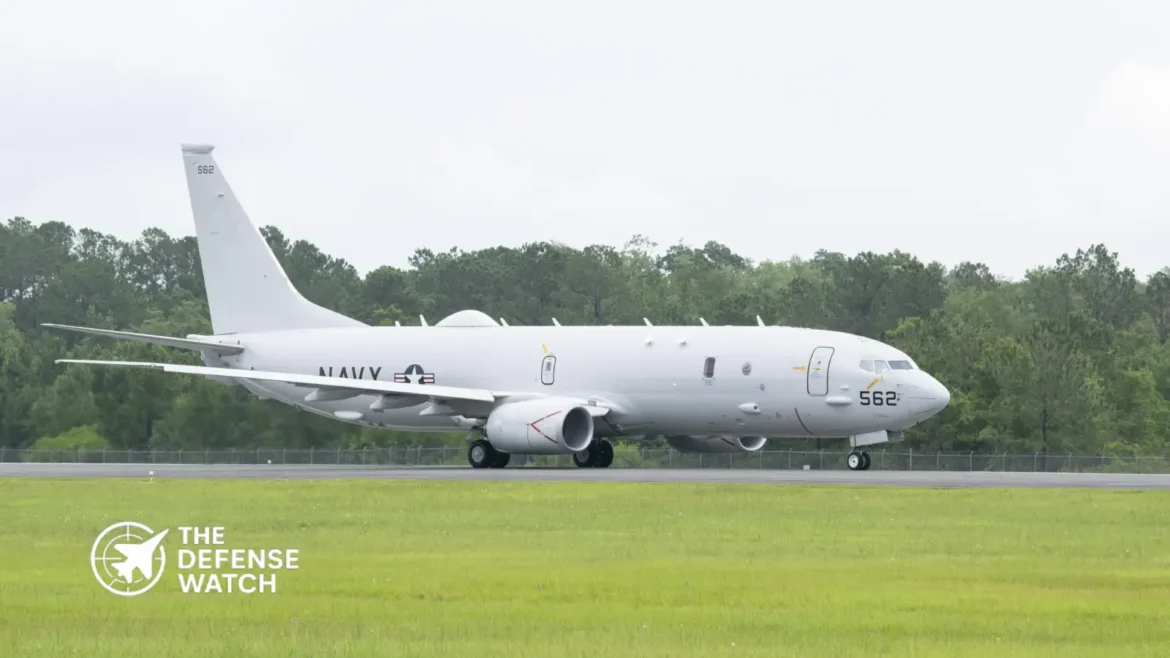
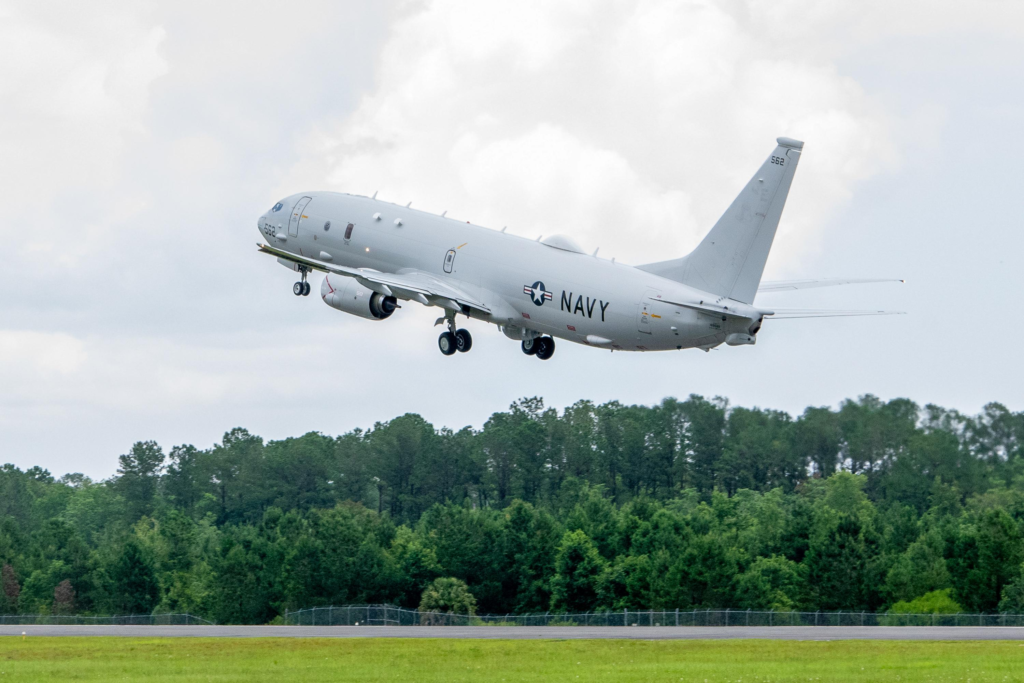
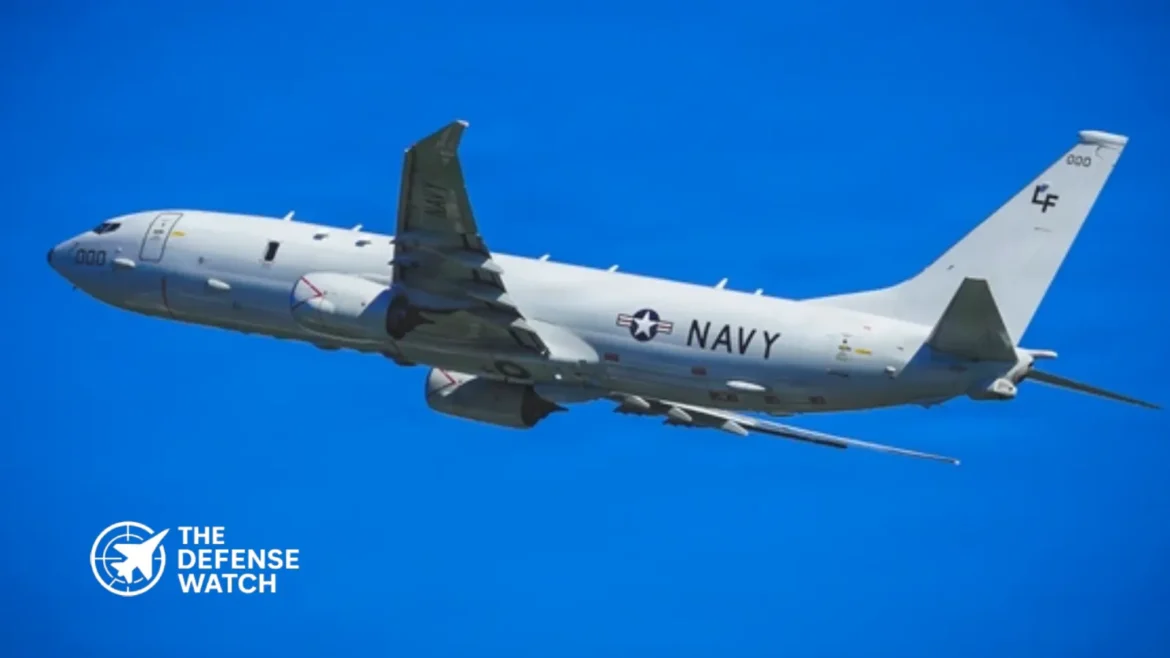
The Enhanced P-8A Poseidon has officially entered operational service after the U.S. Navy declared Initial Operational Capability for the Increment 3 Block 2 configuration, marking a major step in maritime patrol aircraft modernization. According to Naval Air Systems Command, the milestone followed successful initial operational testing supported by Air Test and Evaluation Squadron One and program office PMA-290.
- The U.S. Navy has declared Initial Operational Capability for the upgraded P-8A Poseidon Increment 3 Block 2 aircraft.
- The upgrade adds new avionics, sensors, antennas, radome changes, racks, and internal wiring.
- The Enhanced P-8A Poseidon supports anti-submarine warfare, anti-surface warfare, ISR, and targeting missions.
- The milestone follows operational testing led by Air Test and Evaluation Squadron One.
- The Navy says the modernization keeps the Poseidon relevant for future high-end maritime conflict.
The decision confirms the upgraded aircraft is ready for fleet use and capable of supporting frontline missions. For the U.S. Navy, this matters because the P-8A fleet is central to long-range surveillance, anti-submarine warfare, and maritime strike operations in the Pacific, Atlantic, and Middle East.
What Changed In The New P-8A Poseidon
The Increment 3 Block 2 package introduces substantial improvements across the airframe and mission systems. NAVAIR said the aircraft now includes upgraded racks, new antennas, revised radome structures, added sensors, and refreshed wiring architecture.
While these may sound technical, they directly affect battlefield performance. Better onboard processing and improved sensor integration can shorten detection timelines, improve crew awareness, and support faster targeting decisions.
That is increasingly important in an era where submarines are quieter, surface fleets are more networked, and maritime surveillance zones are expanding.
Why The Upgrade Matters Now
The timing of this declaration is significant. The U.S. military is placing renewed focus on undersea competition, especially in the Indo-Pacific where Chinese submarine activity and long-range naval operations continue to expand. Russia also remains an active submarine operator in the North Atlantic and Arctic.

The Enhanced P-8A Poseidon gives the Navy a faster way to strengthen existing squadrons without waiting for an all-new aircraft platform. Upgrading proven fleets is often cheaper, quicker, and lower risk than launching replacement programs.
That approach mirrors broader Pentagon procurement trends, where survivability, networking, and sensor modernization are often prioritized over entirely new airframes.
Role Of The P-8A In Future Naval Operations
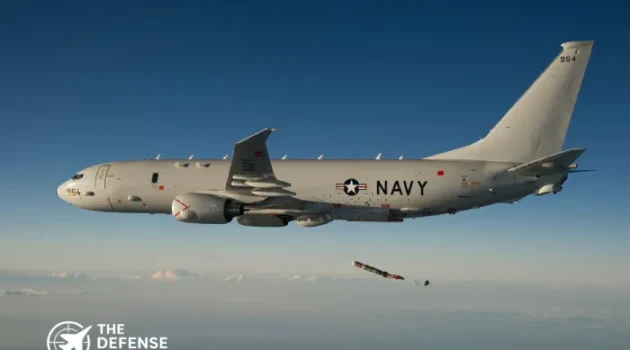
Built by Boeing, the P-8A Poseidon is based on the 737 platform but heavily modified for military missions. It performs anti-submarine warfare, anti-surface warfare, intelligence gathering, and search missions. The aircraft can deploy sonobuoys, carry torpedoes, and integrate with other naval assets such as the MQ-4C Triton unmanned system.
Its range, endurance, and jet speed allow commanders to move surveillance assets rapidly across large ocean areas, a key advantage during crises.
Analysis: A Practical Upgrade With Strategic Value
This is not a flashy next-generation reveal. It is something more useful, operational readiness for an aircraft already trusted by the fleet.
The Navy appears focused on ensuring current forces stay effective through the 2030s rather than accepting capability gaps while waiting for future programs. That makes the Enhanced P-8A Poseidon a practical force multiplier.
With anti-submarine warfare once again a priority mission, the upgraded Poseidon is likely to remain one of the Navy’s most valuable aviation assets.
Lockheed Martin Outlines Maritime Electronic Warfare Vision As Navy Faces Accelerating Electromagnetic Threats
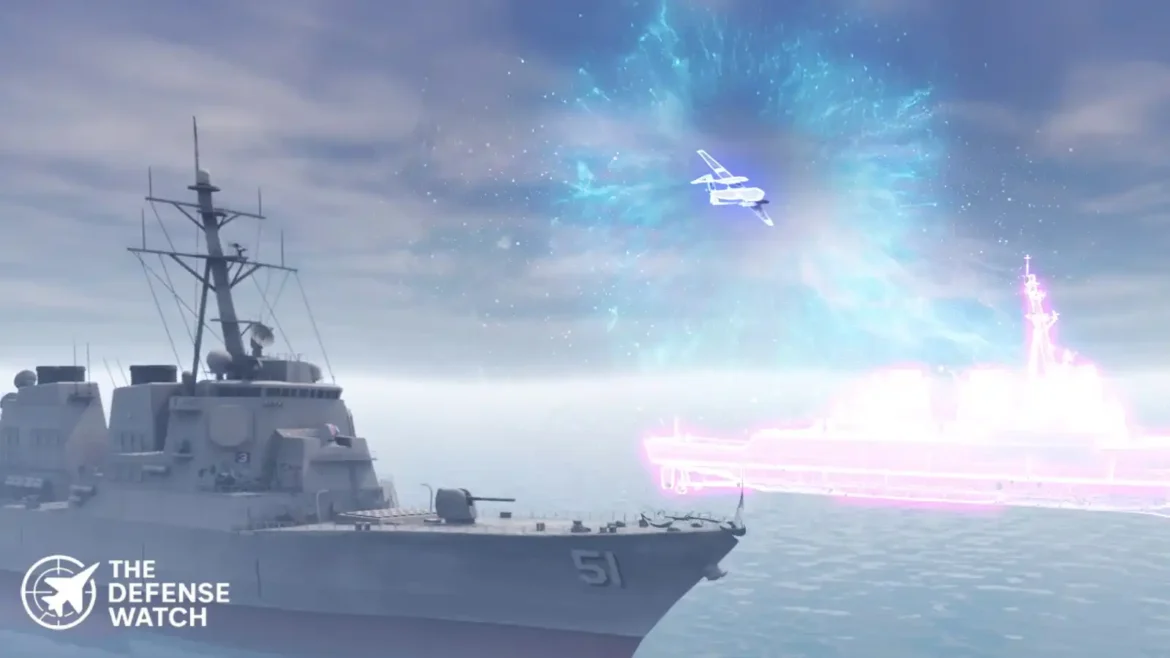
Maritime electronic warfare has moved from a supporting capability to a central pillar of US Navy fleet defense strategy, and Lockheed Martin is positioning itself at the forefront of that transformation. In a detailed technical feature published April 21, 2026, the defense contractor laid out its integrated approach to electromagnetic spectrum dominance aboard naval surface combatants — covering current fielded systems, next-generation development programs, and the doctrinal case for EW as the fleet’s primary non-kinetic shield.
- Lockheed Martin’s AN/SLQ-32(V)6 is described as the world’s most advanced naval electronic support system, forming a core layer of the Aegis Combat System’s real-time threat picture.
- The company is actively developing the Scaled Onboard Electronic Attack (SOEA) system — a next-generation, low-SWaP soft-kill terminal defense solution built on open architecture.
- Lockheed Martin argues EW enables surface combatants to conserve kinetic munitions, a lesson validated by real-world consumption rates observed in the Ukraine conflict.
- Lockheed Martin brings over 60 years of EW development history, integrating AI-enabled, software-defined EW into its open-architecture Surface Electronic Warfare Improvement Program (SEWIP) framework.
- The company positions maritime EW not as a last resort, but as the fleet’s first and most cost-effective defensive layer in future contested operations.
The Big Picture: A More Contested Electromagnetic Environment
Adversary investment in long-range sensors, anti-ship missiles, and multi-domain coordination has fundamentally altered the threat calculus for US surface forces. Peer competitors including China and Russia have developed sophisticated radio frequency (RF)-guided weapons and targeting systems specifically designed to compress the engagement timelines that traditional shipboard defenses rely on.
The US Navy’s response has centered on layered defense — combining kinetic interceptors, directed energy, and electronic warfare into a coherent, integrated system. Within that construct, EW carries a weight it has not historically held: the ability to deny an adversary’s entire kill chain without expending a single missile.
Lockheed Martin frames EW as the “connective tissue across the kill chain, from deciphering the environment to denying an adversary’s engagement and defeating threats.” That framing reflects a doctrine that has quietly gained momentum inside the Pentagon — one that treats spectrum control as a force multiplier, not merely a defensive reflex.
What’s Happening: Systems, Programs, and Active Development
Lockheed Martin’s current flagship naval EW system is the AN/SLQ-32(V)6 and its scaled derivative, the AN/SLQ-32C(V)6, which the company characterizes as the world’s most advanced electronic support systems for naval applications. The AN/SLQ-32(V)6 provides early threat indication and contributes to Aegis Combat System’s real-time battlespace picture. lockheedmartin
Beyond the fielded AN/SLQ-32 family, Lockheed is actively developing the Scaled Onboard Electronic Attack (SOEA) system. SOEA is described as an affordable, rapidly fieldable next-generation electronic attack system that leverages open-architecture engineering and low size, weight, and power (SWaP) design to support onboard soft-kill terminal defense.
SOEA is intended to advance the Surface Electronic Warfare Improvement Program (SEWIP) by integrating the advanced electronic support capability of the SLQ-32(V)6 with other shipboard systems to deliver onboard electronic attack capabilities.
The company frames the program as a direct bridge between legacy electronic support systems and a new generation of integrated attack-and-defense functions — a significant doctrinal and technical step for surface combatants.
Why It Matters: EW as Munitions Conservation
One of the more operationally significant arguments Lockheed Martin advances is the link between effective EW and kinetic munitions management. The company argues that by controlling the electromagnetic spectrum, naval forces deny adversaries the ability to employ systems across the entire kill chain — and that this is particularly important in conflicts where munition availability is limited, citing Ukraine as a recent example.
This is not a theoretical concern. The conflict in Ukraine has demonstrated at scale that even well-supplied militaries can face critical shortages in high-intensity combat environments. Surface combatants carry finite missile loads, and the logistics of replenishment at sea in contested waters are formidable. An EW capability that forces a threat into a soft-kill defeat before a ship must expend a Standard Missile or ESSM round represents a measurable tactical and logistical advantage.
The cost asymmetry also matters strategically. A reactive RF countermeasure that defeats an inbound missile costs far less than the interceptor it replaces. At fleet scale, across multiple simultaneous engagements, that arithmetic carries significant weight in long-duration conflict scenarios.
Open Architecture: The Strategic Differentiator
The most forward-looking element of Lockheed Martin’s maritime EW strategy is its emphasis on open architecture. Open-architecture EW systems enable navies to integrate new sensors, deploy updated countermeasure techniques, and adapt to shifting missions — effectively allowing the capability to evolve at the pace of software rather than shipbuilding.
This matters enormously in the current threat environment. Traditional closed-system EW platforms required lengthy and expensive upgrade cycles to address new emitter characteristics or weapons guidance modes. An open-architecture framework allows operators to push software-defined updates — new jamming techniques, updated threat libraries, revised countermeasure logic — in timelines measured in weeks rather than years.
Lockheed Martin describes open architecture as creating an ecosystem that encourages third-party developers to contribute and innovate, enabling standardization of interfaces and data formats across system components.
For the US Navy, this has tangible acquisition implications. Open-architecture EW platforms reduce vendor lock, lower lifecycle costs, and create space for rapid technology insertion from the commercial and academic sectors — an approach that aligns with the Pentagon’s broader defense modernization priorities under the National Defense Industrial Strategy.
Strategic Implications: AI Integration and the Multi-Domain Fight
Lockheed Martin is integrating artificial intelligence into its EW systems, with AI-enabled advanced, distributed, and cooperative EW platforms designed to support a range of missions and operations across all domains and platforms.
AI-driven EW represents a qualitative shift in how electronic warfare is conducted. Traditional EW systems rely on pre-programmed threat libraries and human operator decisions. AI-enabled systems can autonomously identify novel emitter signatures, correlate them against multi-source intelligence, and generate countermeasure responses in milliseconds — well within the engagement timelines that advanced anti-ship missiles impose.
The integration of AI also enables cooperative EW — where multiple shipboard or airborne platforms share threat data and coordinate spectrum management in real time. In a distributed maritime operations concept, which the Navy has been developing under its Distributed Maritime Operations (DMO) doctrine, this kind of machine-speed coordination is essential.
Competitor View: How Adversaries Will Read This Signal
China’s People’s Liberation Army Navy (PLAN) has invested substantially in anti-ship missile systems, over-the-horizon radar, and electromagnetic warfare capabilities. The PLAN’s DF-21D and DF-26 carrier-killer missiles depend on a functioning electromagnetic kill chain — from detection satellite or OTH radar through to terminal guidance. A US fleet with robust, layered EW capable of disrupting that chain at multiple nodes fundamentally challenges China’s anti-access/area-denial (A2/AD) strategy.
Russia’s naval doctrine similarly relies on coordinated missile salvos guided by radar and datalink. Advances in US shipborne electronic attack that can deny or degrade those guidance links would reduce the effectiveness of massed anti-ship strike packages — a core element of Russian maritime warfare doctrine.
Both adversaries will interpret accelerated US investment in maritime EW as a direct counter to their most valued naval strike capabilities, likely accelerating their own investment in guidance redundancy, frequency agility, and electronic counter-countermeasures.
What To Watch Next: SEWIP and SOEA Procurement Timelines
The SEWIP program has been the Navy’s primary vehicle for modernizing shipboard EW since the mid-2000s. SEWIP Block 2 delivered electronic support upgrades; SEWIP Block 3 has focused on expanding electronic attack capabilities. SOEA represents what Lockheed Martin positions as the next logical evolution of that roadmap.
Acquisition watchers should track whether SOEA receives a formal Navy program of record designation, which would signal transition from development to procurement. Given the Navy’s stated emphasis on non-kinetic fleet defense and the munitions conservation arguments Lockheed has publicly advanced, a formal SOEA contract award in the near term would be consistent with current service priorities.
EW training and simulation investment is also worth monitoring. Lockheed Martin is investing in more effective and efficient EW training and simulation tools to provide naval operators with realistic and immersive training environments, enhancing readiness to respond to emerging threats. Simulation-driven readiness investments often precede large-scale fielding programs, suggesting operational deployment planning may be further advanced than publicly disclosed.
Capability Gap: What This Addresses
The existing gap in US Navy surface EW is the integration seam between electronic support — knowing a threat exists — and electronic attack — actively denying or defeating it. The AN/SLQ-32 family excels at the former. SOEA is explicitly designed to close the latter.
A secondary gap is SWaP-constrained platforms: smaller surface combatants, littoral combat ships, and future unmanned surface vessels that cannot host legacy EW systems. SOEA’s low-SWaP architecture directly addresses that constraint, suggesting the system has applicability well beyond large-deck surface combatants.
Realistic limitations remain. Software-defined EW systems are only as effective as their threat libraries and update cycles. In a conflict where adversaries deploy previously unseen emitter characteristics, even advanced AI-enabled systems face detection and response latency. Redundancy, cross-domain cueing, and human oversight of autonomous EW decisions remain necessary safeguards.
The Bottom Line
As adversary missiles grow faster and smarter, the US Navy’s best and most cost-effective answer may not be another interceptor — it may be mastery of the electromagnetic spectrum, and Lockheed Martin is making a direct, technically credible case that it can deliver that edge.
Boeing P-8A Poseidon Upgrade Supports US Navy Undersea Warfare Mission
The P-8A Poseidon upgrade program moved forward after Boeing received an $11,952,154 contract modification from the United States Navy to retrofit one aircraft with Increment 3 capability improvements.
According to the Department of Defense contract announcement, the award modifies a previously issued ordering agreement and covers installation of one P-8A Increment 3 retrofit kit plus associated ancillary support. The work is specifically tied to improving anti-submarine warfare, one of the Poseidon fleet’s core missions.
- Boeing received an $11.95 million US Navy contract modification for one P-8A Increment 3 retrofit kit installation.
- The work supports upgraded anti-submarine warfare capabilities for the Navy’s P-8A Poseidon fleet.
- Work will be carried out in Jacksonville, Florida, St. Louis, Missouri, and Mesa, Arizona.
- Contract completion is scheduled for October 2026.
- Funding comes from Fiscal Year 2026 aircraft procurement accounts.
The contract was issued by Naval Air Systems Command.
Why The P-8A Poseidon Matters
The Boeing P-8A Poseidon is the US Navy’s primary long-range maritime patrol and reconnaissance aircraft. Derived from the commercial 737 platform, it replaces the aging P-3 Orion and is used for:
- Anti-submarine warfare
- Anti-surface warfare
- Maritime surveillance
- Intelligence gathering
- Search and rescue support
Its importance has grown as naval competition intensifies in the Indo-Pacific, North Atlantic, and other strategic waterways where submarine activity remains a key military concern.
What Increment 3 Upgrades Likely Mean
While the Pentagon notice did not list exact system changes, Increment 3 upgrades for the Poseidon fleet have generally focused on mission system improvements, software modernization, sensors, networking, and better processing of underwater threat data.
That matters because modern submarines are quieter, harder to track, and increasingly equipped with longer-range weapons. Aircraft like the P-8A must detect, classify, and coordinate responses faster than before.
In practical terms, modernization contracts of this size often support targeted capability insertion rather than a full fleet redesign. Even a single-aircraft retrofit can validate hardware and software configurations later used across additional airframes.
Where The Work Will Be Done
The Navy said contract performance will take place across three US locations:
- Jacksonville, Florida, 79.6%
- St. Louis, Missouri, 10.9%
- Mesa, Arizona, 9.5%
Most of the work being centered in Jacksonville suggests heavy aircraft modification and integration activity at an operational support hub tied to maritime patrol aviation.
Completion is expected by October 2026.
Why This Contract Matters Beyond Its Dollar Value
At just under $12 million, this is not one of the Pentagon’s largest aviation awards. But it reflects a broader pattern in US defense procurement, sustained incremental modernization instead of waiting for entirely new platforms.
That strategy allows the Navy to keep frontline aircraft relevant while controlling cost and reducing schedule risk. For mature fleets like the P-8A Poseidon, regular sensor, software, and mission-system upgrades can provide major operational returns at comparatively modest cost.
It also signals continued Navy confidence in the Poseidon as a long-term pillar of maritime patrol operations.
Growing Demand For Maritime Patrol Aircraft
The P-8A is not only used by the United States. Allies including United Kingdom, Australia, India, Norway, New Zealand, and others have selected the aircraft.
That international demand strengthens logistics support, upgrades, and long-term sustainment. Each new modernization effort can benefit a wider community of operators facing similar submarine detection challenges.
Bottom Line
This latest P-8A Poseidon upgrade contract may be modest in size, but it underscores a major US Navy priority, keeping its maritime patrol fleet ahead in anti-submarine warfare. As underwater competition increases globally, upgrades like Increment 3 will remain central to preserving the Poseidon’s combat edge.
USS Abraham Lincoln Anchors New US Pressure Campaign
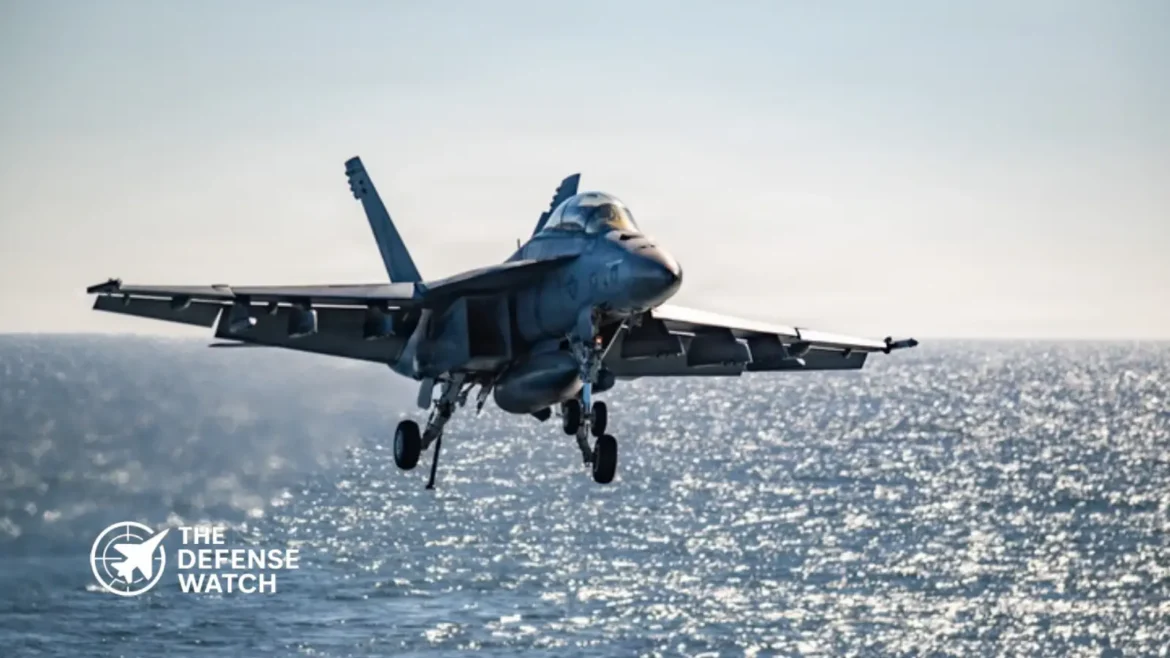
The USS Abraham Lincoln blockade mission has become the centerpiece of a wider US maritime operation aimed at increasing pressure on Iran and controlling access to regional sea lanes. Multiple open source and media reports indicate the Nimitz-class aircraft carrier is operating in or near the Arabian Sea with escorts from Carrier Strike Group 9.
- USS Abraham Lincoln is reported to be leading US carrier operations tied to an Iran maritime blockade.
- More than a dozen US naval vessels and over 100 aircraft are reportedly supporting enforcement efforts.
- US destroyers, surveillance aircraft, and support ships are central to interception and sea control missions.
- Additional carrier and mine countermeasure forces are reportedly moving toward the region.
- The deployment raises pressure on Tehran while securing key shipping lanes near the Strait of Hormuz.
The deployment reflects a strategic shift from airpower alone toward sustained naval coercion. Carrier groups can remain on station for long periods, generate continuous air sorties, and project force without relying on host nation bases. That gives Washington a flexible tool during periods of regional instability.
Why USS Abraham Lincoln Matters
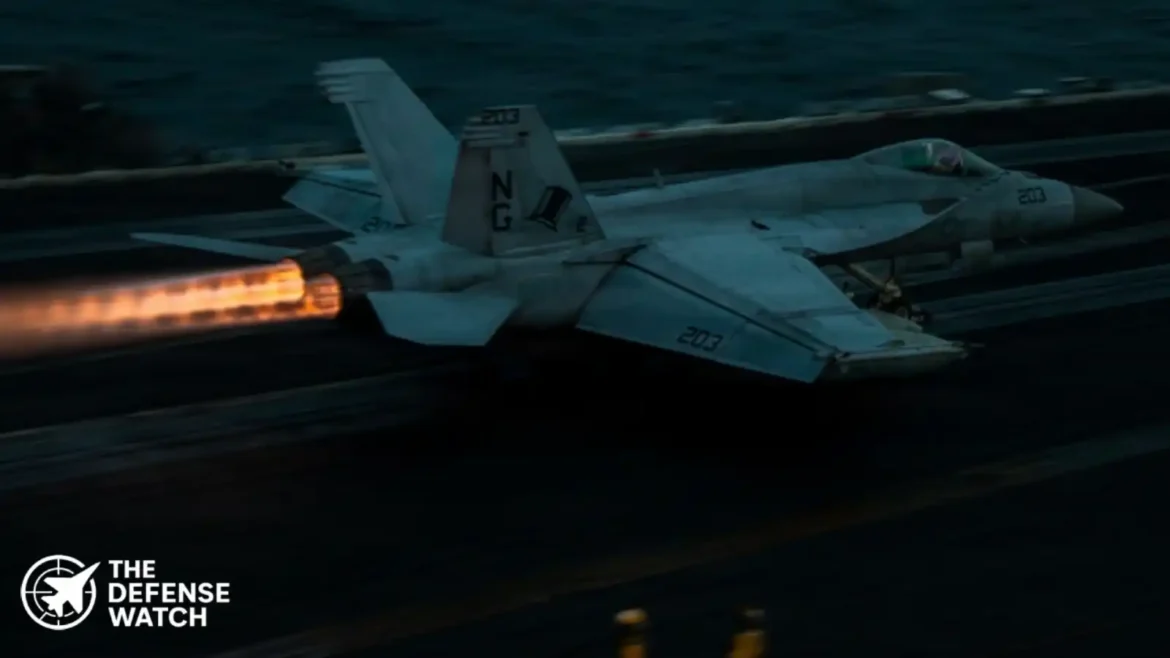
USS Abraham Lincoln is one of the US Navy’s most proven nuclear-powered carriers. It typically embarks a mix of strike fighters, electronic warfare aircraft, airborne early warning platforms, and helicopters. Previous reporting tied the ship to Carrier Air Wing 9, including F/A-18 Super Hornets, EA-18G Growlers, E-2D Hawkeyes, and rotary-wing detachments.
That matters because a carrier strike group can perform several missions at once:
- Air defense over fleet units
- Maritime surveillance across large sea areas
- Strike operations ashore
- Escort and deterrence patrols
- Rapid response to Iranian naval moves
In practical terms, USS Abraham Lincoln gives US commanders a floating air base that can reposition quickly.
Destroyers And Escorts Are Doing The Hard Work
While the carrier draws headlines, destroyers are often the workhorses of blockade enforcement. Recent reporting says Arleigh Burke-class destroyers are central to screening, boarding support, missile defense, and ship interception tasks.
These ships bring advanced radar, vertical launch missile cells, helicopters, and endurance. In a blockade environment, they are often the first ships to challenge approaching vessels, monitor suspicious traffic, and maintain constant patrol lines.
That suggests the operation is less about symbolic carrier presence and more about layered sea control.
Strait Of Hormuz Remains The Strategic Center
Any major US Iran naval operation inevitably points toward the Strait of Hormuz, one of the world’s most important maritime chokepoints. A large share of global energy shipments normally transits the waterway.
By massing naval power near the area, Washington gains leverage beyond the immediate Iran crisis. It reassures commercial shipping, signals resolve to regional partners, and preserves freedom of navigation options if tensions rise further.
This is why minesweepers, reconnaissance aircraft, and logistics ships matter as much as combat vessels. A carrier cannot sustain pressure alone. It needs a network.
Strategic Analysis: What Comes Next
The current posture suggests three likely US objectives:
- Economic pressure on Iran through maritime restrictions
- Deterrence against missile or swarm boat attacks
- Readiness for rapid escalation if diplomacy fails
For Tehran, direct confrontation at sea would carry high risk. Iran may instead rely on indirect pressure, drone threats, proxy activity, or legal and political messaging.
That means the naval contest could become a battle of endurance rather than a traditional fleet clash.
Broader Defense Implications
The USS Abraham Lincoln deployment also highlights how aircraft carriers remain relevant despite modern missile threats. Critics often question carrier survivability, yet Washington continues to use them first during crises because they combine mobility, airpower, command capability, and visible deterrence in one platform.
In that sense, the operation is also a message to rivals beyond the Middle East: the US still uses carrier strike groups as frontline instruments of state power.
U.S. Navy Deploys Drones and Robotic Systems for Strait of Hormuz Mine Clearance
The U.S. Navy has launched a mine clearance operation in the Strait of Hormuz, deploying unmanned surface vehicles, undersea drones, and remotely operated neutralization systems to address Iranian mines that have choked one of the world’s most critical maritime energy corridors. The operation, confirmed by U.S. military officials over the weekend of April 12–13, represents one of the most operationally complex mine countermeasure efforts the Navy has undertaken in decades.
- The U.S. military launched a mine-clearing operation in the Strait of Hormuz after Iran deployed approximately a dozen mines, severely disrupting global energy supplies.
- The Navy is deploying unmanned surface and undersea vehicles, BAE Systems‘ Archerfish torpedo-shaped neutralization devices, and MH-53 helicopters to locate and destroy mines remotely.
- The Strait of Hormuz handles roughly 20 percent of the world’s oil supply — even the threat of mines is sufficient to halt commercial shipping traffic.
- Two U.S. Littoral Combat Ships equipped with mine-hunting modules were undergoing maintenance in Singapore at the time the operation began, limiting initial capacity.
- Senior naval experts estimate the full clearance operation could take two to three weeks, with Iranian counterattack remaining a persistent threat throughout.
The Big Picture
The Strait of Hormuz — the narrow waterway between Iran and Oman — handles an estimated 20 percent of global oil supply. Its disruption since U.S. and Israeli strikes against Iran in late February 2026 has triggered significant global energy market volatility. Mine warfare, long considered a low-cost asymmetric weapon of choice for Iran’s Islamic Revolutionary Guard Corps Navy, has proven devastatingly effective at this strategic chokepoint.
Iran’s investment in sea mines is not new. Tehran has historically maintained one of the largest and most diverse mine inventories in the Middle East, developed specifically to threaten tanker traffic and U.S. naval assets in the Gulf. The current crisis has brought that threat from theoretical to operational reality.
What’s Happening
The U.S. military confirmed over the weekend it had started the mine-clearing operation, sending two warships through the strait, but offered few details about the equipment involved. It said additional forces, including underwater drones, would join the effort in the coming days.
Iran had recently deployed about a dozen mines in the Strait of Hormuz, Reuters reported, citing sources familiar with the matter. It is not publicly known where the mines may have been laid.

U.S. President Donald Trump said over the weekend that all of Iran’s minelaying ships had been sunk, though specialists noted there is a risk Tehran could deploy additional devices.
At the time the operation began, U.S. minesweeping capacity in the Middle East included unmanned undersea vehicles, four traditional Avenger-class vessels, helicopters, and divers, according to a senior U.S. official. Two Littoral Combat Ships with mine-hunting equipment were undergoing maintenance in Singapore.
U.S. Central Command declined to provide further operational details, and the Navy did not respond to requests for comment on its current mine-clearing capabilities in theater.
Iran’s Mine Arsenal: What the Navy Is Up Against
Tehran is believed to possess several types of maritime mines. These include bottom mines that rest on the seabed and detonate when ships pass above, tethered mines that are anchored but float closer to the surface, drifting mines that move freely on the water, and limpet mines that attach directly to a ship’s hull.
This diversity of mine types significantly complicates the U.S. clearance effort. Each category demands a different detection profile, different sensor configurations, and a different neutralization approach. Bottom mines in particular are difficult to distinguish from natural seabed debris using conventional sonar. Drifting and limpet mines introduce unpredictable threat vectors that cannot be resolved by a fixed search pattern alone.
The shallow, cluttered waters of the strait — with depths ranging from 35 to 100 meters in the navigable shipping lanes — add further acoustic and sonar complexity that degrades detection performance compared to open-ocean environments.
The Technology: How the Navy Clears Mines
Traditionally, the U.S. Navy relied on manned minesweeping ships that physically entered minefields, using sonars to locate the devices and mechanical gear dragged behind the vessel to clear explosives. Much of that aging fleet has been retired.

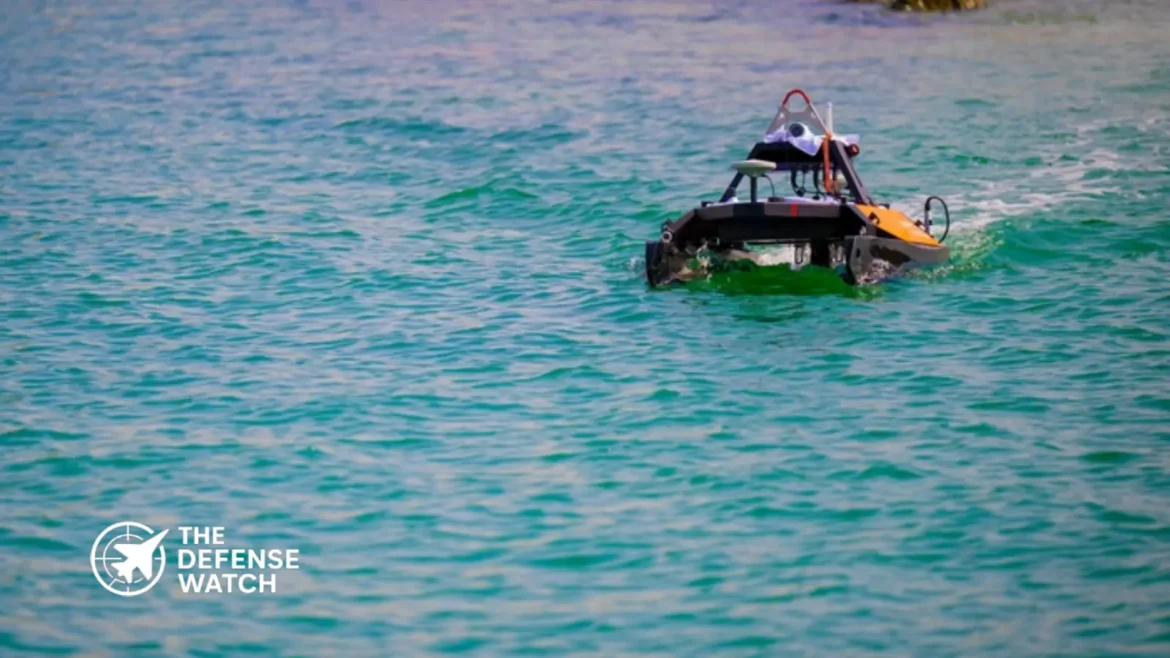
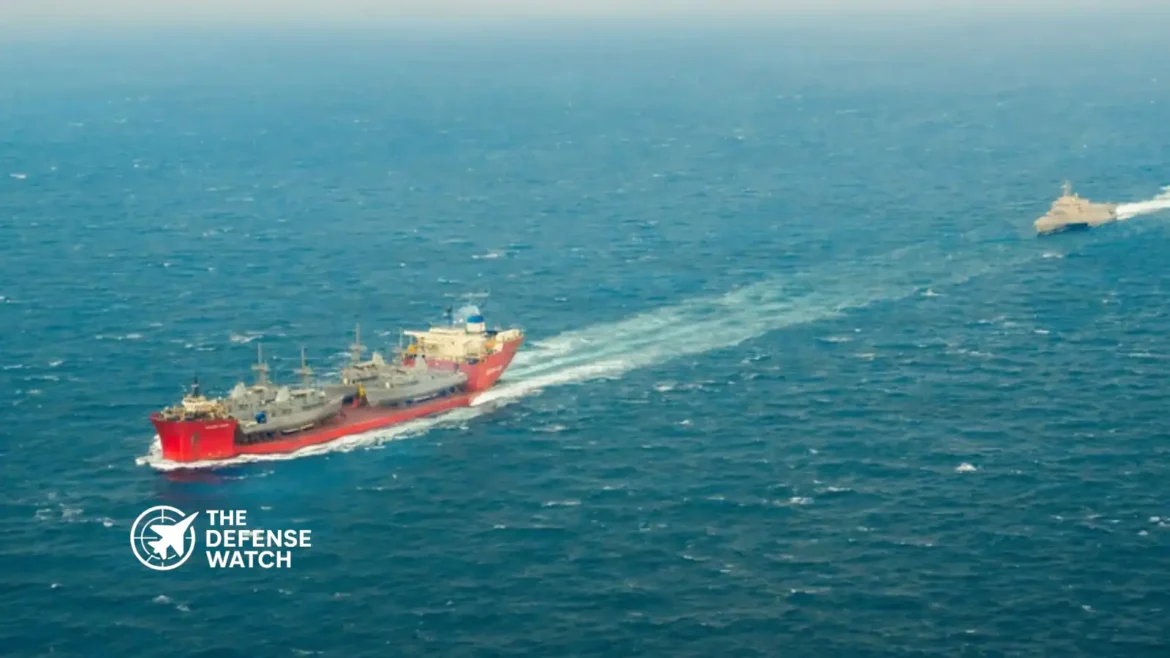
They are being replaced by Littoral Combat Ships, which carry modern mine-hunting equipment including semi-autonomous surface and underwater drones and remote-controlled robots that allow crews to maintain distance from the minefield. The Navy has three of these ships in deployment.
To destroy mines, the Navy can deploy systems such as the torpedo-shaped Archerfish — a remotely operated device about 2 meters long that carries an explosive charge and transmits video back to operators via cable, manufactured by BAE Systems. Designed to be expendable, it costs tens of thousands of dollars.
The U.S. could also deploy unmanned boats towing mine-sweeping sleds that trigger detonations or gather mines, according to Bryan Clark, a retired U.S. naval officer and senior fellow at the Hudson Institute. Human divers are also sometimes used, including for intelligence gathering.
The Archerfish system exemplifies the broader shift in mine countermeasures philosophy — away from placing sailors in harm’s way and toward expendable robotic platforms that absorb risk. At tens of thousands of dollars per unit, the cost-exchange ratio still strongly favors the mine (which can cost a few thousand dollars) over the neutralizer, but the reduction in human exposure is operationally significant.
Why It Matters
Mine warfare is effective because the devices are cheap, costly to clear, and “even the threat of a minefield is enough to stop ships, especially commercial ships,” according to Jon Pentreath, a retired British navy rear admiral and current consultant.
That deterrent effect is the strategic weapon. Iran does not need to sink a supertanker to win this phase of the campaign — it only needs to maintain uncertainty about which sea lanes are safe. Commercial operators and their insurers, applying standard risk calculus, will route around the strait entirely as long as any plausible mine threat persists.
This dynamic gives Iran a strategic multiplier well beyond the physical mines themselves: even a partial, unconfirmed minefield exerts maximum economic pressure on global energy markets while requiring minimum ongoing investment from Tehran.
Strategic Implications
The mine clearance operation carries implications that extend beyond the immediate tactical situation in the Gulf. A prolonged clearance timeline — measured in weeks rather than days — prolongs energy market disruption and tests the credibility of U.S. freedom-of-navigation commitments to regional partners including Saudi Arabia, the UAE, and Kuwait.
A successful and swift clearance would demonstrate the operational maturity of the Navy’s unmanned mine countermeasure systems and validate years of investment in platforms like the Remote Minehunting System and the Knifefish Unmanned Undersea Vehicle. Conversely, a prolonged or contested operation could expose gaps in fleet readiness — particularly given that two LCS mine-hunting-configured ships were sidelined in Singapore at the outset.
Competitor View
China’s People’s Liberation Army Navy strategists are almost certainly conducting detailed analysis of this operation. Beijing has studied Iranian mine warfare doctrine for decades, and the current Hormuz scenario provides a live operational case study in how a technologically inferior naval force can impose asymmetric costs on a superior power through mining.
For Chinese naval planners, the Taiwan Strait and South China Sea — both shallow, constrained water spaces with significant commercial traffic — offer analogous geography. Any lessons drawn from Iran’s success in temporarily disrupting Hormuz will likely inform PLA-N mine warfare doctrine and procurement priorities for constrained water operations.
Russia, too, maintains an interest: its own experience with drone-enabled maritime mining in the Black Sea during the Ukraine conflict has elevated the profile of mine warfare across multiple militaries.
What To Watch Next
Clearing the strait could take two or three weeks, according to Bryan Clark, with Iranian attacks on mine-clearing crews posing a risk of slowing the process. Clark noted the U.S. military may deploy defensive measures such as ships and airborne drones to protect crews and equipment.
New technologies are being developed to accelerate mine clearance, particularly through advances in sensors. French defense and technology group Thales says its latest sonar can scan a suspected mine from three different angles in a single pass — a process that typically requires multiple sweeps.

Advances in artificial intelligence are also enabling more onboard data analysis aboard unmanned vessels. Longer term, the ambition is to deploy groups of unmanned systems that can search for, identify, and destroy mines autonomously rather than through a multi-step crewed process. That doesn’t exist today,” said Mark Bock, a retired U.S. Navy captain and vice president at Thales’ U.S. Navy business, “but it is what all nations are trying to achieve now.
The deployment of additional unmanned underwater vehicles in the coming days will be the first major operational test of the Navy’s mine countermeasure modernization program under real-world combat conditions. Watch for how quickly the shipping lanes reopen to commercial traffic — that timeline will serve as the most credible public measure of the operation’s success.
Capability Gap
The Hormuz operation has exposed a structural readiness gap in U.S. mine countermeasure forces. The legacy Avenger-class fleet, commissioned in the 1980s and 1990s, is aging and was never designed for the intensity of operations now required. The transition to LCS-based mine hunting, while technologically sound in concept, has been marked by procurement delays, maintenance shortfalls, and an insufficient number of hulls in the right theaters at the right time.
U.S. Admiral Daryl Caudle, chief of naval operations, acknowledged in March that “finding and destroying mines is very time consuming,” leaving mine-clearing capability “vulnerable.”
That admission from the Navy’s top officer underscores a hard institutional reality: despite decades of investment in unmanned systems and new mine countermeasure concepts, the fleet entered this crisis with fewer ready assets than the mission demands. The gap between aspiration — fully autonomous multi-vehicle mine clearance — and current operational capability is real, and the Hormuz operation will quantify it in ways no exercise ever could.
The Bottom Line
The U.S. Navy’s Strait of Hormuz mine clearance operation is both an urgent tactical necessity and a high-visibility test of whether its unmanned mine countermeasure modernization program is ready for contested, real-world combat operations — with the credibility of American sea control hanging on the result.
US Navy Blackbeard Hypersonic Missile Moves Into MACE Program
The Blackbeard hypersonic missile has been formally identified by the US Navy as the first candidate weapon for the Modular Attack Cruise Engine (MACE) program, marking a notable step in the service’s push to field advanced hypersonic strike capabilities.
The confirmation ties the emerging Blackbeard system directly to a broader Pentagon effort focused on modular, scalable propulsion and weapon design. The MACE program is intended to accelerate the development of next-generation cruise and hypersonic weapons adaptable across multiple platforms.
This development signals a shift from concept exploration toward early integration of a specific weapon system within the Navy’s future strike architecture.
- US Navy confirmed the Blackbeard hypersonic missile as the first candidate weapon for the MACE program.
- MACE aims to develop modular hypersonic strike capabilities for future naval platforms.
- Blackbeard is designed to deliver high-speed, long-range precision strike against time-sensitive targets.
- The program reflects growing US focus on countering peer hypersonic advancements.
- Development aligns with broader Pentagon efforts to field operational hypersonic weapons this decade.
What The MACE Program Is Designed To Achieve
The MACE initiative centers on creating a modular propulsion framework that can support different classes of weapons, including hypersonic systems. Instead of developing single-purpose missiles, the program emphasizes flexibility, allowing upgrades and variants to be introduced more rapidly.
By linking the Blackbeard hypersonic missile to MACE, the Navy appears to be testing a model where propulsion, guidance, and payload components can evolve independently while maintaining interoperability.
This approach reflects lessons learned from earlier acquisition programs, where rigid designs limited adaptability in fast-changing threat environments.
Blackbeard Hypersonic Missile: Early Role And Capabilities
While technical details remain limited, the Blackbeard hypersonic missile is expected to focus on high-speed, long-range precision strike missions. Its inclusion in the MACE program suggests it could serve as a testbed for propulsion technologies as well as an operational weapon candidate.
Hypersonic systems typically travel at speeds above Mach 5, reducing reaction time for adversaries and complicating interception. In a naval context, this capability is particularly relevant for engaging heavily defended or time-sensitive targets at extended ranges.
The Blackbeard system may also support distributed maritime operations, where US forces rely on dispersed platforms to complicate enemy targeting.
Strategic Context: Closing The Hypersonic Gap
The decision to advance the Blackbeard hypersonic missile comes amid increasing global investment in hypersonic weapons, particularly by China and Russia. Both countries have tested and, in some cases, fielded systems designed to evade traditional missile defenses.
For the United States, integrating hypersonic capabilities into naval forces is seen as essential to maintaining credible deterrence in contested maritime regions such as the Indo-Pacific.
The Navy’s approach, focusing on modularity through MACE, may offer a faster pathway to deployment compared to traditional acquisition cycles.
Analysis: Why Blackbeard Matters Now
The linkage between the Blackbeard hypersonic missile and the MACE program suggests a more pragmatic phase in US hypersonic development. Rather than pursuing isolated flagship systems, the Navy is aligning weapon design with scalable infrastructure.
This could reduce long-term costs and improve upgrade cycles, especially as propulsion and guidance technologies continue to evolve.
At the same time, the lack of publicly available technical data indicates the program is still in early stages. Operational timelines, deployment platforms, and performance benchmarks remain undefined.
However, the move signals intent. The Navy is not only investing in hypersonic speed, but also in the architecture needed to sustain and expand that capability over time.
US Navy Awards $183M USS Truxtun Repair Contract After Collision
The USS Truxtun repair contract marks a significant step in restoring a frontline US Navy destroyer damaged in a recent Caribbean collision, highlighting the service’s ongoing push to sustain fleet readiness under operational strain.
The US Navy has awarded a $183 million contract to carry out repairs on the guided-missile destroyer USS Truxtun (DDG-103), an Arleigh Burke-class vessel that sustained damage during a collision while operating in the Caribbean. According to reporting by Army Recognition, the work will involve structural repairs, system restoration, and a full return to mission-capable status.
- The US Navy awarded a $183 million contract to repair USS Truxtun following a collision in the Caribbean.
- The Arleigh Burke-class destroyer sustained structural damage requiring extensive shipyard work.
- Repairs will focus on hull integrity, onboard systems, and restoring full combat capability.
- The contract reflects ongoing US Navy efforts to maintain fleet readiness amid high operational demand.
- USS Truxtun is a key asset in US naval operations, including missile defense and maritime security missions.
Damage Assessment And Repair Scope
Initial assessments indicate the destroyer suffered notable structural damage, particularly to its hull and possibly topside systems. While the Navy has not disclosed full technical details, such repair contracts typically include hull reconstruction, inspection of propulsion components, and recalibration of combat systems.
The USS Truxtun repair contract is expected to cover both visible and latent damage, ensuring that no hidden structural weaknesses compromise future operations. This reflects a broader Navy approach that prioritizes long-term survivability over rapid but incomplete fixes.
Arleigh Burke-class destroyers like USS Truxtun are equipped with the Aegis Combat System, making them central to ballistic missile defense, air warfare, and surface strike missions. Any degradation in these systems would directly affect regional force posture.
Operational Impact On Fleet Readiness
The temporary loss of USS Truxtun underscores the pressure on the US Navy’s surface fleet, which is already operating at a high tempo across multiple theaters. Destroyers are among the most heavily tasked assets, supporting missions from the Indo-Pacific to the Middle East.
From an operational standpoint, the USS Truxtun repair contract helps mitigate a capability gap, but it also highlights the fragility of fleet availability. Even a single collision can remove a critical asset from deployment cycles for months or longer.
This incident follows a pattern seen in previous years, where collisions involving US Navy destroyers led to extended maintenance periods and broader reviews of training and navigation protocols. While no systemic issue has been confirmed in this case, the Navy continues to emphasize seamanship and operational discipline.
Strategic Context: Sustaining A High-Demand Fleet
The contract reflects a wider trend in US naval strategy, where maintenance and sustainment are becoming as critical as procurement. With shipbuilding timelines stretching years into the future, keeping existing platforms operational is essential.
The USS Truxtun repair contract also signals the Navy’s reliance on industrial base capacity to rapidly address damage and return ships to service. Shipyards capable of handling complex destroyer repairs remain a strategic asset in their own right.
In recent budget cycles, the US Department of Defense has increased funding for maintenance and modernization, recognizing that readiness gaps can emerge not only from adversary threats but also from wear, accidents, and deferred upkeep.
Broader Implications For Naval Operations
Beyond the immediate repair effort, the incident raises questions about fleet resilience and redundancy. As geopolitical tensions persist, particularly in contested maritime regions, the availability of multi-mission destroyers remains a cornerstone of US naval power.
The USS Truxtun repair contract demonstrates how quickly operational realities can shift. A single incident can force adjustments in deployment schedules, task group composition, and regional coverage.
At the same time, the Navy’s rapid response in awarding the contract suggests a maturing approach to incident recovery, with streamlined processes aimed at minimizing downtime.
Conclusion
The $183 million USS Truxtun repair contract highlights both the challenges and priorities facing the US Navy today. While collisions remain relatively rare, their impact on fleet readiness is significant.
Restoring USS Truxtun to full operational capability will not only return a critical asset to the fleet but also reinforce the Navy’s broader effort to sustain combat power in an increasingly demanding global environment.
U.S. Navy Begins Strait of Hormuz Blockade After Iran Nuclear Talks Collapse In Islamabad
The U.S. Navy has been ordered to blockade the Strait of Hormuz effective immediately, President Donald Trump announced on April 12, 2026, following the failure of direct U.S.–Iran peace talks in Islamabad, Pakistan. The decision marks a significant escalation of Operation Epic Fury and directly threatens a fragile two-week ceasefire that had allowed the first tanker transits from the Gulf in weeks.
- President Trump ordered the U.S. Navy to begin blockading the Strait of Hormuz “effective immediately” on April 12, 2026, following the collapse of direct U.S.–Iran talks in Islamabad, Pakistan.
- The Navy has been directed to interdict all vessels in international waters that have paid a toll to Iran, and to begin clearing Iranian mines from the strait.
- The Strait of Hormuz is a choke point for approximately 20 percent of global energy supplies; hundreds of tankers remain stranded in the Persian Gulf awaiting passage.
- Operation Epic Fury has been ongoing since February 28, 2026; Pentagon data as of April 8 reported 13 U.S. troops killed and 346 wounded.
- Iran’s core demands — control of the strait, war reparations, release of frozen assets, and recognition of its nuclear program — were rejected by the U.S. delegation led by Vice President JD Vance.
The Big Picture
The conflict between the United States and Iran entered a new and potentially decisive phase in April 2026. What began on February 28, 2026, with coordinated U.S. and Israeli air strikes on Iranian military and nuclear infrastructure has since evolved into a sustained campaign with meaningful human and economic costs on both sides.
The Strait of Hormuz sits at the center of this confrontation. Roughly 20 percent of global oil and liquefied natural gas supplies transit the strait, making it one of the most strategically sensitive maritime chokepoints on Earth. Iran moved to block the waterway early in the conflict, deploying mines and leveraging its geographic position along the northern shore to interdict commercial shipping. The ripple effects have sent global oil prices soaring and disrupted supply chains across Europe, Asia, and beyond.
The Islamabad talks represented the first direct high-level U.S.–Iran contact in over a decade. Their failure, and the subsequent blockade order, signals that Washington has concluded diplomacy cannot achieve its core objectives — free passage through the strait and the elimination of Iran’s nuclear weapons capability — within an acceptable timeframe.
What’s Happening
President Trump announced on April 12, 2026, via Truth Social that the U.S. Navy would begin blockading the Strait of Hormuz, ordering the interdiction of every vessel in international waters that had paid a toll to Iran and the destruction of Iranian mines in the strait.
Vice President JD Vance led the U.S. delegation at the weekend talks in Islamabad — the first direct U.S.–Iranian meeting in more than a decade and the highest-level discussions since the 1979 Islamic Revolution. The talks ended without agreement.
Iran’s Parliamentary Speaker Mohammad Baqer Qalibaf and Foreign Minister Abbas Araqchi led Tehran’s delegation. Qalibaf blamed the U.S. for failing to earn Iran’s trust despite what he described as “forward-looking initiatives” from his side.
Iran’s semi-official Tasnim news agency attributed the breakdown to what it called excessive U.S. demands, while other Iranian media reported that the Strait of Hormuz and Iran’s nuclear program remained the main unresolved points.
Despite the diplomatic collapse, three fully laden supertankers passed through the Strait of Hormuz on Saturday — apparently the first vessels to exit the Gulf since the ceasefire deal — while hundreds of tankers remained stranded in the Gulf awaiting passage.
Why It Matters
The blockade order is operationally and legally unprecedented in the modern era. The U.S. Navy has interdicted vessels before — most notably during the 1990 Gulf War embargo against Iraq — but a declared naval blockade of an active international transit corridor of this scale would carry profound consequences for maritime law, energy markets, and U.S. alliance relationships.
From a military standpoint, blockade enforcement requires sustained surface and subsurface presence in a contested, mine-threatened environment. The Navy’s Arleigh Burke-class destroyers, already operating in the Arabian Sea under Operation Epic Fury, would form the backbone of any interdiction force. Mine countermeasures vessels and maritime patrol aircraft — including P-8 Poseidons — would be essential to the mine-clearing mission Trump referenced.
The mine threat is significant. Iran has a substantial inventory of both moored contact mines and more sophisticated influence mines capable of defeating basic countermeasures. Clearing a waterway as wide and trafficked as the Hormuz strait under potential Iranian fire is a complex, time-consuming operation that cannot be executed overnight regardless of the presidential order’s “effective immediately” language.
Strategic Implications
The blockade announcement fundamentally changes the deterrence calculus in the Persian Gulf. By committing the Navy to active interdiction, the administration has staked American credibility on the outcome. Any Iranian attack on U.S. vessels enforcing the blockade will demand a military response, narrowing the diplomatic off-ramps available to both governments.
Pakistan’s Foreign Minister Ishaq Dar called it “imperative” to preserve the ceasefire agreed the previous Tuesday, and Israeli security cabinet minister Zeev Elkin warned that the Iranians were “playing with fire.”
The ceasefire now appears highly fragile. Iran has consistently tied any agreement to a regional-level cessation of hostilities, including Israeli operations against Hezbollah in Lebanon. Israel has continued bombing Hezbollah rocket launchers in Lebanon, insisting that conflict falls outside the Iran–U.S. ceasefire framework — a position Iran explicitly rejects. With combat operations continuing on a secondary front, Tehran has limited political incentive to accept U.S. terms on the strait or the nuclear file.
The economic dimension also deserves attention. Trump’s stated minimum objectives are free passage for global shipping through the strait and crippling Iran’s nuclear enrichment program. Achieving both simultaneously through military pressure alone — without a negotiated settlement — would require a degree of sustained operational intensity that risks widening the conflict beyond its current geographic scope.
Competitor View
China and Russia are watching the Hormuz crisis with a mix of strategic interest and economic exposure. Beijing imports a substantial share of its oil through the strait; any prolonged disruption to tanker traffic directly damages Chinese industrial output. Beijing has publicly called for diplomatic resolution, but has largely avoided taking sides — a posture that preserves Chinese leverage with both Washington and Tehran.
Moscow, meanwhile, benefits from elevated oil prices driven by the disruption. Russian energy revenues remain a critical prop for its defense budget and war economy. A prolonged Hormuz crisis that keeps global oil prices elevated serves Russian economic interests, even as the Kremlin publicly calls for de-escalation.
Iran’s threat perception will likely harden following the blockade announcement. Tehran has long framed its nuclear program as an existential deterrent. The combination of military strikes, a collapsing ceasefire, and a naval blockade order will reinforce the Iranian leadership’s conviction that only a nuclear deterrent can guarantee the regime’s survival — the precise dynamic the U.S. seeks to prevent.
What To Watch Next
The immediate operational question is how quickly the Navy can establish enforceable interdiction lines across the strait’s roughly 21-mile-wide navigable channel. Mine countermeasures operations will likely begin in parallel, with MCM vessels and explosive ordnance disposal teams working under surface and air cover.
Congressional reaction will also shape the operation’s legal and political durability. A sustained naval blockade of international waters constitutes an act of war under international law, and sustained enforcement may require formal authorization beyond an executive order. Whether the administration seeks AUMF-style authorization or proceeds on existing war powers authority will be a key variable.
Oil markets opened higher following the announcement, and Asian buyers — particularly in Japan, South Korea, and India — are likely to accelerate purchases of non-Gulf crude as insurance against prolonged supply disruption.
Diplomatically, Pakistan’s role as a neutral intermediary has been significant. Islamabad hosted the failed talks, and Pakistani officials have publicly pressed for ceasefire preservation. Whether a third round of negotiations is possible — potentially with broader mediator involvement — remains the central open question.
Capability Gap
The Hormuz blockade exposes a persistent tension in U.S. naval strategy: the gap between the ability to project overwhelming strike power and the slower, manpower-intensive work of sustained maritime interdiction in a contested environment.
The Navy’s surface combatant fleet has been under sustained pressure for years. Readiness challenges, deferred maintenance, and a shipbuilding industrial base that cannot keep pace with the fleet’s operational demands mean that prolonged high-intensity Persian Gulf operations will stretch available assets. Mine warfare remains an acknowledged weak point; the Navy has invested in improved countermeasures, but the force structure for sustained MCM operations in a conflict zone is thin.
Iran, meanwhile, retains asymmetric capabilities — fast attack craft, anti-ship missiles, coastal defense batteries, and submarine forces — that could threaten even Arleigh Burke-class destroyers operating in restricted Gulf waters. The Navy has managed these threats effectively in Operation Epic Fury so far, but a blockade posture that requires sustained presence close to Iranian shores increases exposure.
The Bottom Line
The U.S. Navy’s blockade of the Strait of Hormuz marks a strategic inflection point: Washington has moved from coercive strikes to active maritime control, and the durability of that posture — against Iranian resistance, allied concern, and domestic political constraints — will determine whether the operation achieves its core objective of restoring free navigation and halting Iran’s nuclear program.