- F-35C enables carrier-based deep strike missions into contested airspace.
- Combines stealth, sensor fusion, and precision-guided munitions.
- Expands U.S. naval reach against integrated air defense systems.
- Operates from aircraft carriers without reliance on regional bases.
- Strengthens deterrence and rapid response in Middle East scenarios.
F-35C Carrier-Based Deep Strike Capability Expands U.S. Operational Reach
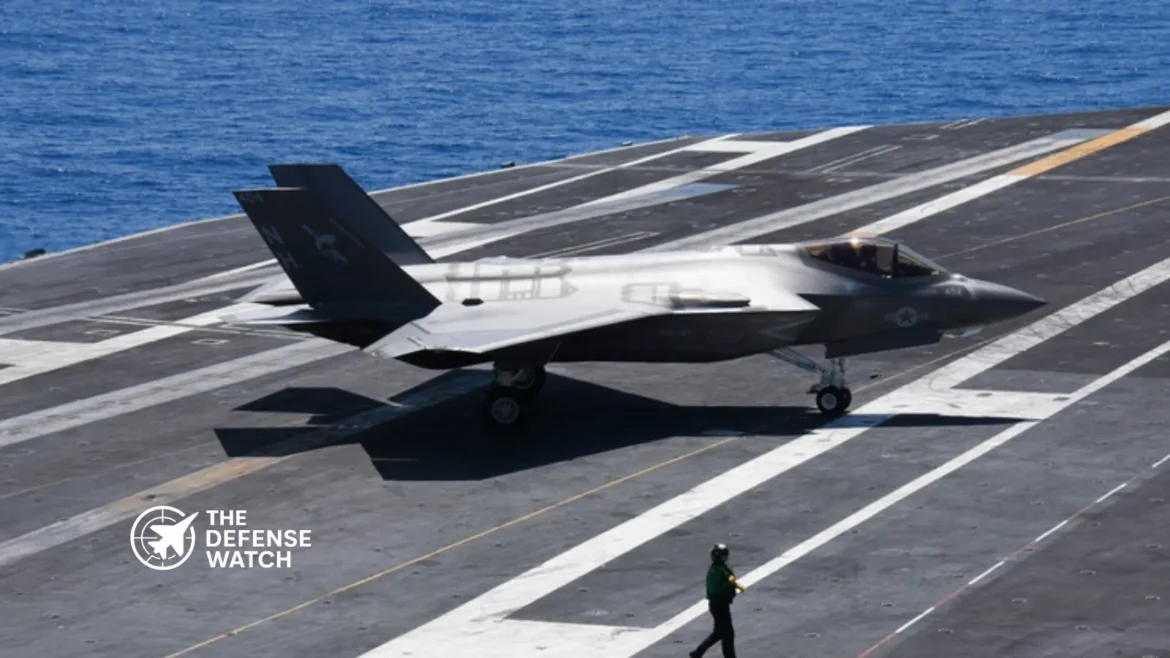
F-35C carrier-based deep strike capability is reshaping how the U.S. Navy conducts operations against heavily defended targets such as those in Iran. The aircraft combines stealth, advanced sensors, and carrier-based flexibility to penetrate sophisticated air defense networks without relying on forward-deployed airbases.
Recent analysis highlights how the F-35C enhances the ability of carrier strike groups to execute long-range precision strikes in contested environments, particularly in scenarios similar to a hypothetical “Epic Fury” operation targeting Iranian military infrastructure.
The Big Picture
The U.S. military continues to prioritize distributed, survivable strike capabilities that reduce reliance on vulnerable regional bases. Carrier-based aviation plays a central role in this shift.
The F-35C, the carrier variant of the Joint Strike Fighter program led by Lockheed Martin, supports this strategy by enabling stealth operations directly from the sea. This approach aligns with broader U.S. efforts to counter advanced anti-access, area denial (A2/AD) systems deployed by countries such as Iran and China.
Naval aviation now serves not only as a power projection tool but also as a first-day-of-war capability against integrated air defense systems.
What’s Happening
The F-35C carrier-based deep strike capability allows U.S. Navy aircraft carriers to launch stealth fighters capable of penetrating Iranian airspace without early detection.
The aircraft features:
- Low observable design for reduced radar signature
- Advanced sensor fusion integrating radar, infrared, and electronic warfare data
- Internal weapons carriage for stealth strike missions
- Extended range compared to other F-35 variants
Operating from U.S. Navy aircraft carriers positioned in international waters, F-35Cs can conduct precision strikes on high-value targets such as air defense nodes, command centers, and missile launch sites.
This capability reduces the need for land-based aircraft operating from regional partners, which may face political or operational constraints.
Why It Matters
The F-35C introduces a significant shift in how deep strike missions are executed in contested environments.
Traditional strike operations often relied on large formations, electronic warfare support, and suppression of enemy air defenses. The F-35C reduces this burden by combining these functions within a single platform.
Its ability to gather and share real-time battlefield data enhances situational awareness across the entire carrier strike group. This networked capability improves targeting accuracy and reduces mission risk.
In a scenario involving Iran, where layered air defenses include radar systems and surface-to-air missiles, stealth becomes critical for mission success.
Strategic Implications
The F-35C carrier-based deep strike capability strengthens U.S. deterrence by demonstrating the ability to strike high-value targets without warning.
Carrier strike groups equipped with F-35Cs can operate flexibly across the Middle East, reducing predictability and increasing survivability. This mobility complicates adversary planning and forces defensive resource allocation across a wider area.
The system also reinforces the credibility of U.S. commitments to regional allies by ensuring rapid response capability without dependence on host nation infrastructure.
Competitor View
Iran is likely to view the F-35C as a direct challenge to its air defense strategy, which relies on layered systems including domestically developed and imported surface-to-air missile platforms.
The aircraft’s stealth and electronic warfare capabilities could undermine Iran’s ability to detect and intercept incoming threats, particularly during the early stages of a conflict.
Russia and China, both developers of advanced air defense systems, will likely monitor F-35C operational use closely. Lessons learned from potential deployments could inform their own counter-stealth strategies and air defense modernization efforts.
What To Watch Next
Future developments will focus on expanding the operational integration of the F-35C within carrier strike groups.
Key areas include:
- Increased deployment cycles aboard U.S. Navy carriers
- Integration with unmanned systems and carrier-based drones
- Upgrades to software and sensor capabilities under ongoing modernization programs
- Expanded weapons compatibility, including next-generation precision munitions
Operational testing and real-world deployments will continue to validate the aircraft’s effectiveness in contested environments.
Capability Gap
The F-35C addresses a critical gap in penetrating advanced air defense systems from sea-based platforms.
Before its introduction, carrier air wings relied on legacy aircraft such as the F/A-18, which require greater support from electronic warfare assets and tanker aircraft to survive in high-threat environments.
However, limitations remain. The F-35C still depends on aerial refueling for extended missions and carries a limited internal weapons load when operating in stealth configuration. These constraints require careful mission planning and integration with other assets.
The Bottom Line
The F-35C carrier-based deep strike capability gives the U.S. Navy a survivable, flexible tool to penetrate defended airspace and hold high-value targets at risk from the sea.
- USS Pinckney deployed with Destroyer Modernization 2.0 upgrades and engaged Iranian targets in March 2026.
- Upgrade includes AN/SPY-6(V)4 radar and advanced SEWIP electronic warfare suite.
- Pentagon officials called for expanded operational testing of the improved Aegis system.
- Program aims to move older destroyers closer to Flight III capability standards.
- Upgrade reflects Navy focus on countering modern missile and drone threats.
Upgraded Aegis Destroyer Conducts First Combat Against Iran Amid Testing Calls
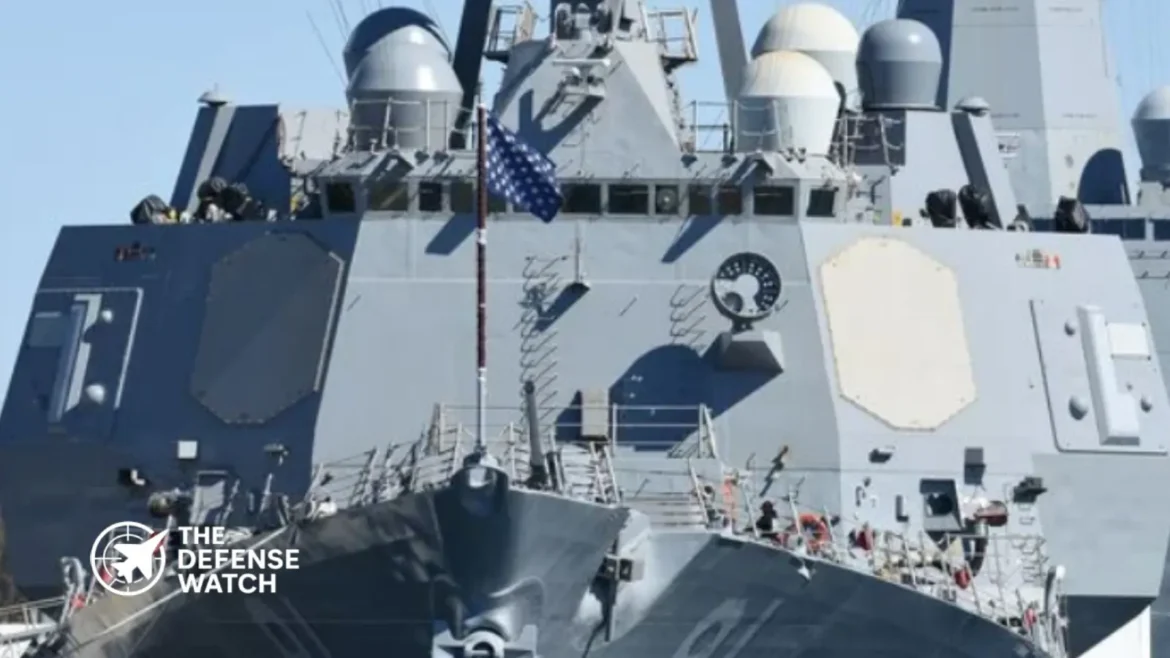
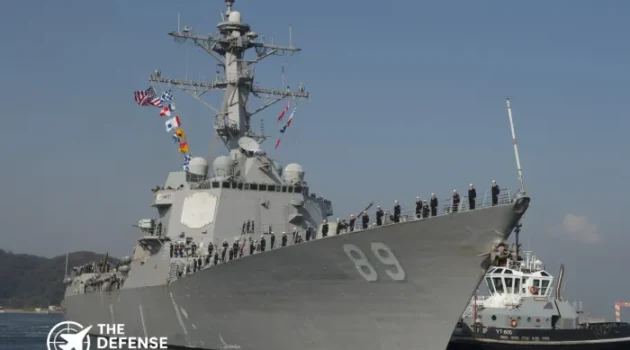
The upgraded Aegis destroyer USS Pinckney deployed with the main keyword improved Aegis system and engaged in combat operations against Iranian forces in March, marking the first operational use of the latest Destroyer Modernization 2.0 suite and raising Pentagon calls for expanded testing of the system’s enhanced radar and electronic warfare capabilities.
The Big Picture
The U.S. Navy is in the midst of a broader effort to modernize its surface fleet, enhancing its ability to respond to aerial, missile, and electronic threats without building new hulls. Central to this effort is the Aegis Combat System, the Navy’s primary integrated air and missile defense platform that combines powerful radar, advanced computing and a suite of interceptors. As naval threats evolve, especially in high-stakes regions such as the Middle East, Washington is under pressure to ensure upgrades deliver real-world advantage.
Aegis modernization has historically aimed to extend service life and capability of Arleigh Burke-class destroyers in the face of new radars and weapons technologies, with recent upgrades focused on closing the capability gap between older Flight IIA ships and the more advanced Flight III configuration.
What’s Happening
In March 2026 the Arleigh Burke-class guided-missile destroyer USS Pinckney, retrofitted under Destroyer Modernization 2.0, participated in combat operations against Iran. The ship’s improved Aegis system integrated an AN/SPY-6(V)4 radar variant and advanced Surface Electronic Warfare Improvement Program (SEWIP) components to improve threat detection and situational awareness.
U.S. Central Command released video from 15 March showing USS Pinckney firing a Tomahawk Land Attack Missile while operating with its modernized systems installed.
Pentagon testing officials noted that although the upgrades enhance capability, the department wants additional operational testing before committing to widespread fielding, signaling caution about current test coverage and risk exposure.
Why It Matters
Modernizing older destroyers with advanced radar and electronic warfare systems helps the fleet maintain multi-domain awareness and defensive reach without waiting years for new ship construction. Upgrades like the SPY-6 family of radars dramatically increase target sensitivity and tracking capacity, crucial as adversaries deploy faster and more complex threats.
Integrating advanced SEWIP systems improves electronic surveillance and countermeasure response, a vital asset when operating in congested or contested littoral regions where adversaries combine missiles, drones and other sensors.
Strategic Implications
For U.S. naval readiness, successful deployment of upgraded Aegis systems signals a maturing approach to force modernization. It reinforces U.S. ability to deter and, if necessary, counter threats, from missile salvos to swarming unmanned systems. It also underscores the Navy’s need to balance risk and verification in testing upgraded combat systems before full fleet rollout, an ongoing tension in defense acquisitions.
Regionally, the presence of modernized destroyers operating against Iranian forces conveys a clear message about sustained U.S. commitment to maritime security and deterrence in the Middle East, particularly in areas like the Persian Gulf and Gulf of Oman. Competitors and adversaries will note both the capabilities deployed and the Pentagon’s insistence on further testing, shaping their assessments of U.S. naval strengths and operational confidence.
Competitor View
Iran and allied groups likely interpret the deployment of an upgraded Aegis destroyer as an escalation in U.S. naval posture, emphasizing precision strike and layered defense against both missile and air threats. For China and Russia, continued investment in modernizing legacy systems reinforces the United States’ ability to sustain forward presence and complex integration across platforms, even as challenges remain in testing new capabilities thoroughly.
What To Watch Next
Analysts will track further Pentagon testing schedules for the improved Aegis system and monitor how feedback from operational use against Iran shapes future modernization decisions. Key milestones include additional live-fire events, expanded tactical evaluations and potential revisions to deployment doctrine for upgraded destroyers.
DoD acquisition communities will also be watching how the testing results influence budget requests and allocation for broader fleet modernization under Destroyer Modernization 2.0.
Capability Gap
Destroyer Modernization 2.0 aims to help older Flight IIA class ships close the gap to Flight III baseline capabilities, especially in radar performance, networked engagement and electronic warfare. Older systems based around legacy sensors and combat computer baselines faced limitations in handling complex, simultaneous threats in contested environments.
While the upgrades mark progress, Pentagon caution about testing highlights remaining uncertainties in fully validating performance under combat conditions, reinforcing the need to invest in comprehensive evaluation.
The Bottom Line
The USS Pinckney’s combat use of an upgraded Aegis system shows real progress in Navy modernization but underscores the Pentagon’s push to ensure that capability gains are fully proven before fleetwide adoption.
- L3Harris awarded a contract to sustain precision tracking systems used in U.S. test ranges.
- Kineto tracking mounts support high-accuracy optical data collection for flight and space testing.
- Systems are used by the Department of Defense, Department of Energy, and NASA.
- Contract valued at $77.8 million with performance through March 2031.
- IDIQ structure allows flexible funding as task orders are issued.
L3Harris Interstate Electronics Corp. has been awarded a $77.8 million contract by the Naval Air Systems Command to sustain kineto tracking mount systems used across U.S. government test ranges.
The contract covers ongoing maintenance and support for specialized optical tracking equipment that collects precise time, space, and position data. These systems play a key role in missile testing, flight trials, and space launch monitoring, making the award relevant to both defense readiness and space operations.
Contract Overview
- Date of Award: March 2026
- Contractor: L3Harris Technologies (Interstate Electronics Corp.)
- Contracting Activity: Naval Air Systems Command, Patuxent River, Maryland
- Total Value: $77,818,794
- Contract Type: Cost-reimbursable and firm-fixed-price IDIQ
Key Specifications & Delivery
The contract focuses on sustaining kineto tracking mounts and their associated subsystems used for high-precision optical tracking.
- Primary Location: Anaheim, California
- Estimated Completion: March 2031
- Solicitation Process: Competitive
- Number of Bids: One
Technical Analysis
The Technology
Kineto tracking mounts are advanced optical systems designed to follow high-speed objects such as missiles, aircraft, and spacecraft. They combine precision mechanics, sensors, and software to capture accurate trajectory and timing data during test events. This data is essential for validating performance and safety.
The Mission
As hypersonic weapons, missile defense systems, and space launch activity expand, test ranges require reliable tracking infrastructure. Sustaining existing systems ensures uninterrupted data collection without the delays or costs of full replacement programs.
Strategic Impact
The contract supports operations across multiple agencies, including the Department of Defense, Department of Energy, and NASA. These systems underpin testing for strategic weapons, energy research, and space missions. Their reliability directly affects program timelines and national security capabilities.
Financial & Funding Details
The contract is structured as an indefinite-delivery/indefinite-quantity agreement, meaning no funds are obligated at the time of award. Funding will be allocated incrementally through individual task orders as requirements arise over the contract period. This approach provides flexibility while aligning spending with operational demand.
About the Contractor
L3Harris Technologies is headquartered in Melbourne, Florida, and is a major supplier of defense electronics, communications systems, and aerospace technologies. Its Interstate Electronics division specializes in range instrumentation and tracking solutions, with a long history of supporting U.S. military and government test programs.
- $15.38 billion contract modification awarded to General Dynamics Electric Boat.
- Supports Columbia-class submarine design, lead yard services, and sustainment.
- Reinforces US nuclear deterrence through next-generation ballistic missile submarines.
- Work spans multiple US states and continues through June 2035.
- Includes major investment in submarine industrial base and supplier development.
Columbia-Class Submarine Contract Strengthens US Nuclear Deterrence
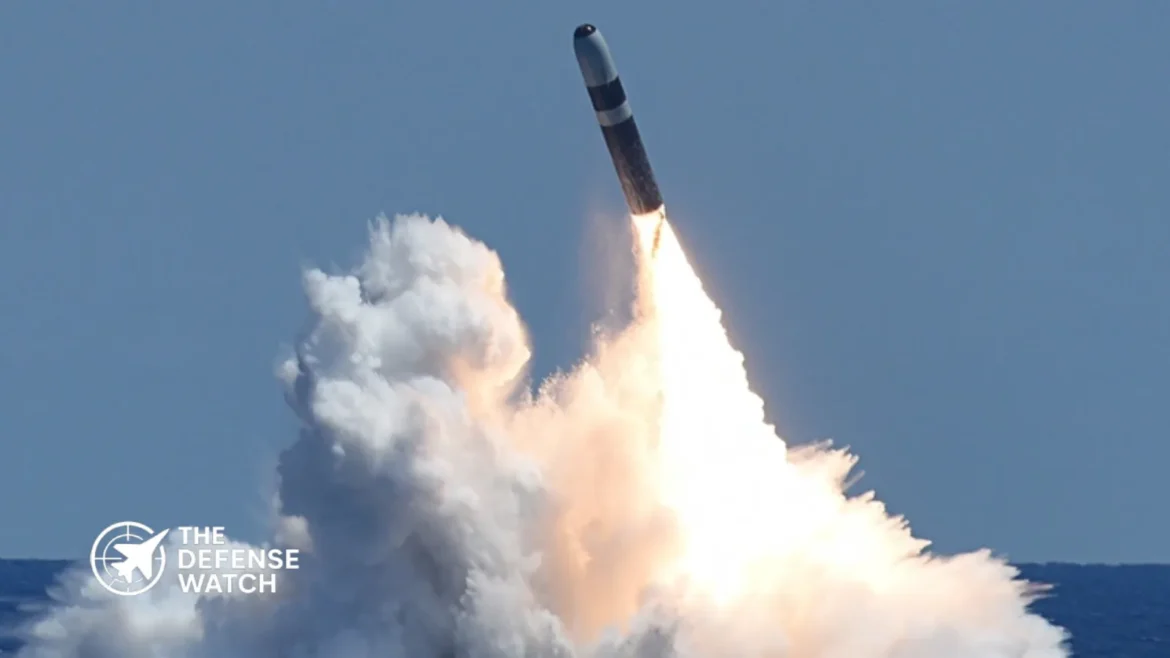
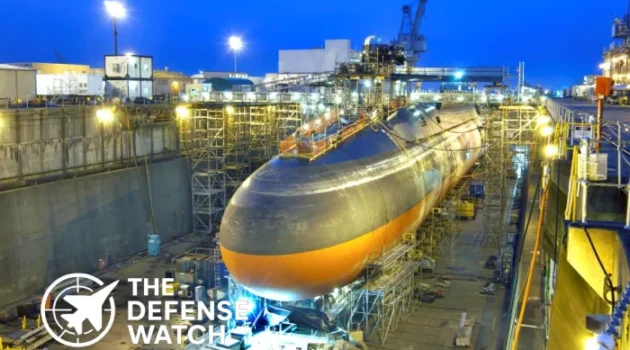
The Columbia-class submarine contract marks a $15.38 billion investment by the US Navy to expand design, sustainment, and industrial base support for its next-generation ballistic missile submarines, reinforcing the nation’s sea-based nuclear deterrent.
The award to General Dynamics Electric Boat reflects a long-term commitment to replacing the aging Ohio-class fleet with a more survivable and technologically advanced platform.
The Big Picture
The United States is executing one of its most critical nuclear modernization programs. The Columbia-class submarine will serve as the backbone of the sea-based leg of the nuclear triad well into the 2080s.
The Navy plans to build 12 Columbia-class submarines to replace 14 Ohio-class boats. Despite fewer hulls, each Columbia submarine is designed for higher availability, reducing the total number required for continuous at-sea deterrence.
This contract highlights how nuclear modernization is not limited to platforms alone. It includes workforce expansion, supplier stability, and long-term industrial resilience.
What’s Happening
The Naval Sea Systems Command awarded a $15,383,494,792 contract modification to General Dynamics Electric Boat under an existing agreement.
The funding supports:
- Additional Columbia-class design work
- Lead yard services
- Sustainment planning
- Integrated enterprise initiatives
- Supplier and industrial base development
Work will take place across multiple locations, including Connecticut, Virginia, California, Wisconsin, Rhode Island, and others, with completion expected by June 2035.
Funding comes primarily from the Fiscal Year 2026 National Sea-Based Deterrence Fund, alongside smaller allocations from research and industrial base accounts.
Why It Matters
The Columbia-class program directly underpins US nuclear deterrence strategy.
Ballistic missile submarines provide the most survivable leg of the nuclear triad. They operate undetected, ensuring a secure second-strike capability even in the event of a large-scale attack.
This contract ensures continuity in design and production while addressing a known risk: delays in submarine construction due to industrial bottlenecks.
The inclusion of supplier development funding signals that the Pentagon is actively managing risks in the submarine supply chain.
Strategic Implications
The Columbia-class submarine contract strengthens US military readiness in several ways.
First, it ensures schedule stability. The Navy cannot afford delays because the Ohio-class submarines are nearing the end of their service lives.
Second, it reinforces deterrence credibility. A modern, stealthy submarine force signals to adversaries that the US retains a reliable second-strike capability.
Third, it supports simultaneous production of Columbia- and Virginia-class submarines. This dual production demand places significant strain on shipyards and suppliers, making industrial base investment essential.
Competitor View
China and Russia closely monitor US nuclear modernization efforts.
China continues expanding its own sea-based deterrent with the Jin-class and future Type 096 submarines. A sustained US investment in Columbia-class boats reinforces strategic balance in the Indo-Pacific.
Russia maintains a modernized fleet of Borei-class ballistic missile submarines. Moscow will likely view this contract as confirmation that the US remains committed to long-term nuclear parity.
Both competitors are expected to interpret this move as part of a broader US effort to maintain credible deterrence across all domains.
What To Watch Next
Several milestones will define the program’s trajectory:
- Continued construction progress on the lead Columbia-class submarine
- Supplier capacity improvements across the industrial base
- Integration of advanced systems and quieting technologies
- Alignment of Columbia and Virginia production schedules
Any disruption in these areas could affect delivery timelines, making industrial performance a key indicator.
Capability Gap
The Columbia-class program addresses a critical gap created by the aging Ohio-class fleet.
Ohio-class submarines are reaching the limits of their service life, and life extensions are no longer sufficient to guarantee long-term deterrence.
However, the program faces constraints:
- Limited shipyard capacity
- Workforce shortages in skilled trades
- Complex supply chains for nuclear-grade components
The contract’s industrial base funding directly targets these challenges, but execution risk remains.
The Bottom Line
The Columbia-class submarine contract secures the foundation of US nuclear deterrence while exposing the growing importance of industrial capacity in modern defense strategy.
¦ KEY FACTS AT A GLANCE- Fire aboard USS Gerald R. Ford lasted nearly 30 hours before being contained.
- Over 600 crew members lost access to normal living spaces during the incident.
- Extended deployment of 10 months contributed to operational strain on personnel.
- Dozens of sailors reported smoke inhalation related health issues.
- Incident may temporarily impact US Navy carrier readiness and maintenance cycles.
USS Gerald R. Ford Fire Incident
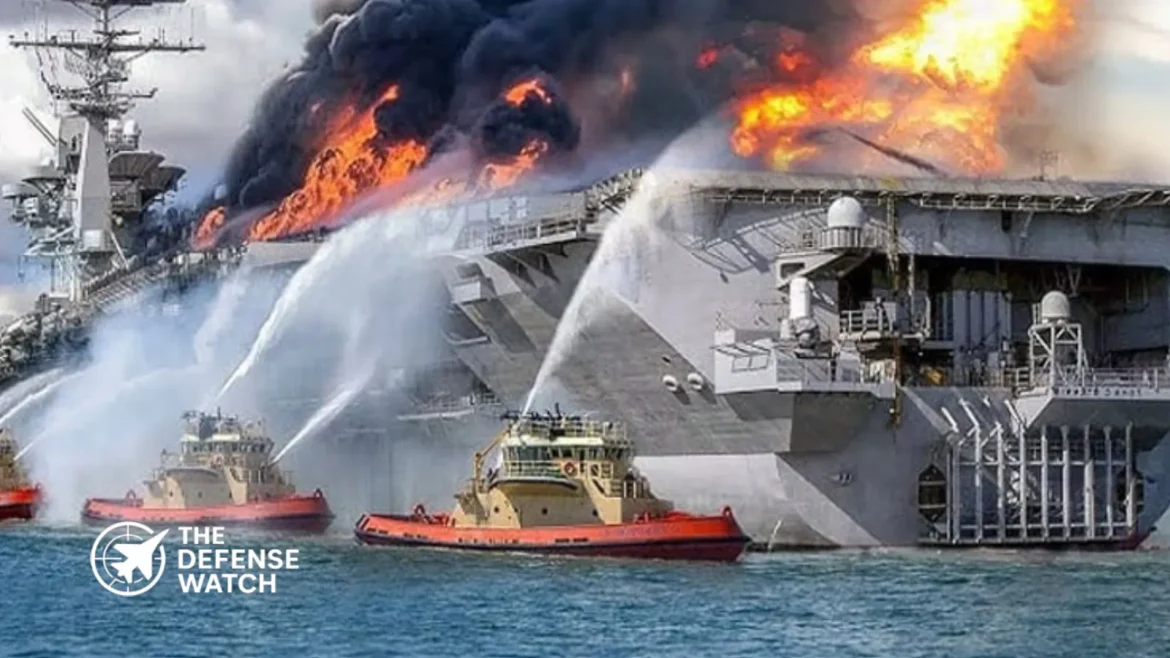
The USS Gerald R. Ford fire incident underscores the risks faced by deployed US Navy carriers, after a prolonged onboard blaze disrupted operations and affected hundreds of sailors.
The Big Picture
The US Navy aircraft carrier fleet remains central to American power projection, particularly in contested regions such as the Indo Pacific and the Middle East. The USS Gerald R. Ford, the lead ship of its class, represents the most advanced carrier design, incorporating electromagnetic aircraft launch systems, advanced radar, and improved sortie generation capabilities.
Sustained deployments have become more common as the US Navy balances global commitments with a limited number of available carriers. This operational tempo places increasing pressure on both platforms and personnel.
The incident highlights a persistent challenge. Even the most advanced platforms remain vulnerable to onboard hazards such as fires, especially during extended deployments where maintenance cycles are compressed.
What’s Happening
Reports from major US outlets, including The New York Times, indicate that a significant fire broke out aboard the USS Gerald R. Ford during ongoing operations at sea.
The fire lasted approximately 30 hours before crews brought it under control. During that period:
- More than 600 sailors lost access to their berthing areas
- Crew members were forced to sleep on floors and workspaces
- Dozens experienced breathing issues due to smoke exposure
The carrier had reportedly been deployed for nearly 10 months, conducting missions and training activities. US Navy officials confirmed that once the fire was extinguished, safety checks and repair efforts began immediately.
No fatalities have been reported, but the scale and duration of the fire indicate a serious onboard emergency.
Why It Matters
The USS Gerald R. Ford fire incident matters because it directly affects operational readiness at a time when US carrier presence is in high demand.
Aircraft carriers function as mobile airbases. Any disruption, especially one lasting more than a day, can degrade sortie generation rates, delay missions, and reduce overall combat effectiveness.
Crew fatigue adds another layer of concern. Sailors operating under sleep deprivation and stress are more likely to face reduced performance, increasing risks during flight operations and damage control scenarios.
The incident also raises questions about maintenance intervals. Extended deployments often delay routine inspections, which can increase the likelihood of technical failures or onboard hazards.
Strategic Implications
The US Navy relies on a limited number of carriers to maintain global presence. A temporary reduction in availability, even from a single ship, can ripple across multiple theaters.
The USS Gerald R. Ford fire incident may force adjustments in deployment schedules or require other carriers to fill operational gaps. This could strain the broader fleet, particularly as older Nimitz class carriers approach retirement.
The event also highlights the importance of damage control training. US Navy crews are known for strong firefighting capabilities, and successfully containing a 30 hour fire demonstrates resilience. However, the duration suggests the complexity of the incident and the challenges posed by modern carrier systems.
Competitor View
China and Russia closely monitor US carrier operations as indicators of American naval readiness.
China, in particular, is expanding its own carrier fleet and may view such incidents as evidence of operational strain within the US Navy. Beijing continues to invest in anti access and area denial systems designed to challenge US carriers in the Western Pacific.
Russia may interpret the event through a different lens, focusing on maintenance and deployment sustainability issues within the US fleet.
While a single incident does not alter the balance of power, repeated operational disruptions could influence perceptions of US naval reliability.
What To Watch Next
The immediate focus will remain on damage assessment and repair timelines aboard the USS Gerald R. Ford.
Key developments to monitor include:
- Official US Navy investigation into the cause of the fire
- Duration of repairs and any required port visits
- Impact on the carrier’s deployment schedule
- Crew recovery and rotation measures
The Navy may also review safety protocols and maintenance procedures, particularly for carriers on extended deployments.
Capability Gap
The USS Gerald R. Ford fire incident highlights a broader capability gap related to sustained operations at sea.
The US Navy aims to maintain continuous global presence, but limited carrier numbers force longer deployments. This increases wear on systems and personnel.
Modern carriers are highly complex platforms. While advanced systems improve combat capability, they also introduce new maintenance challenges. Fires remain one of the most dangerous onboard threats, capable of disrupting operations regardless of technological sophistication.
The incident reinforces the need for balanced deployment cycles, adequate maintenance windows, and continued investment in crew resilience.
The Bottom Line
The USS Gerald R. Ford fire incident reveals how even advanced US Navy carriers face operational strain during extended deployments, with direct implications for readiness and global naval posture.
¦ KEY FACTS AT A GLANCE- Raytheon awarded $40.2M base contract for OTH radar operations and maintenance.
- Contract supports relocatable over-the-horizon radar at Navy surveillance centers.
- Enhances long-range maritime domain awareness and early warning capability.
- Total value could reach $212.1M if all options exercised through 2031.
- Work spans multiple U.S. and Puerto Rico locations.
Raytheon OTH Radar Contract Strengthens U.S. Navy Surveillance Network
The Raytheon OTH radar contract marks a significant investment in sustaining the U.S. Navy’s long-range surveillance capabilities, with Raytheon Co. awarded a $40.25 million cost-plus-fixed-fee contract for operations and maintenance services.
The contract supports the relocatable over-the-horizon radar system at the Forces Surveillance Support Center in Chesapeake, a key node in the Navy’s maritime monitoring architecture.
The Big Picture
The U.S. Navy continues to prioritize persistent, wide-area surveillance as part of broader efforts to counter emerging maritime threats and enhance domain awareness.
Over-the-horizon radar systems play a central role in detecting targets at ranges far beyond conventional line-of-sight sensors. These systems use high-frequency radio waves that bounce off the ionosphere, allowing operators to monitor vast ocean areas, including potential adversary movements.
This contract aligns with ongoing U.S. military modernization efforts focused on sensor integration, distributed operations, and early warning capabilities, particularly in contested maritime environments.
What’s Happening
The Naval Supply Systems Command Fleet Logistics Center in Philadelphia awarded the contract following a competitive procurement process conducted through Sam.gov.
Raytheon will provide operations and maintenance services for the relocatable over-the-horizon radar system. The contract includes:
- A one-year base period running through April 2027
- Four optional one-year extensions
- A potential total value of $212.1 million if all options are exercised through April 2031
Work will take place across multiple locations, including:
- Chesapeake (48 percent)
- Freer and Premont (20 percent combined)
- New Kent (9 percent)
- Juana Díaz and Vieques (18 percent combined)
- Dallas and Fairfax (5 percent combined)
The Navy obligated $1 million in fiscal 2026 operations and maintenance funding at the time of award.
Why It Matters
Sustaining over-the-horizon radar capability is critical for maintaining persistent surveillance over large maritime areas, especially in regions where satellite coverage or airborne ISR assets may be limited or contested.
Unlike traditional radar systems, OTH radars can detect aircraft and surface vessels at distances exceeding 1,000 nautical miles. This provides early warning and enhances tracking of potential threats, including long-range missile launches and naval movements.
The contract ensures system readiness, reliability, and continuous operation, which are essential for real-time decision-making in naval operations.
Strategic Implications
Reliable OTH radar coverage directly strengthens U.S. military readiness by improving situational awareness across key maritime approaches.
The distributed nature of the system, with multiple operating sites, supports resilience against disruption or attack. It also allows the Navy to maintain coverage across both Atlantic and Gulf regions.
This capability contributes to layered defense architectures by complementing satellite surveillance, airborne ISR platforms, and ship-based sensors.
Competitor View
China and Russia have both invested heavily in over-the-horizon radar technologies as part of their anti-access and area denial strategies.
Sustained U.S. investment signals continued emphasis on long-range detection and early warning. Competitors may interpret this contract as part of a broader effort to reinforce maritime surveillance coverage and close potential detection gaps.
OTH radar systems also provide strategic transparency, making it more difficult for adversaries to operate undetected in key maritime zones.
What To Watch Next
Future developments will likely focus on integration with other sensor networks and command systems.
Key areas to monitor include:
- Integration with joint all-domain command and control frameworks
- Potential upgrades to radar processing and signal analysis capabilities
- Expansion of relocatable radar deployments to other regions
Funding decisions in upcoming defense budgets will also indicate whether the Navy plans to expand or modernize its OTH radar fleet.
Capability Gap
The Raytheon OTH radar contract addresses a critical gap in persistent long-range surveillance that cannot be fully covered by satellites or aircraft alone.
While satellites provide global coverage, they can face limitations such as revisit rates and vulnerability to counter-space measures. Airborne platforms offer flexibility but require significant operational resources.
OTH radar fills this gap by providing continuous, ground-based monitoring over vast distances.
However, these systems can face limitations in resolution and target discrimination compared to closer-range sensors, which makes integration with other ISR assets essential.
The Bottom Line
The Raytheon OTH radar contract ensures sustained long-range surveillance capability, reinforcing the U.S. Navy’s ability to detect and track threats across vast maritime regions.
¦ KEY FACTS AT A GLANCE- The U.S. Navy launched Operation Ice Camp Boarfish in the Arctic Ocean on March 7, 2026.
- Fast attack submarines USS Delaware (SSN 791) and USS Santa Fe (SSN 763) are conducting under ice operational testing.
- The mission includes multinational participation and focuses on Arctic submarine warfare readiness.
- The three week operation is conducted from a temporary ice camp built on a drifting Arctic ice floe.
- Ice Camp Boarfish represents the 100th major U.S. submarine under ice evolution.
Operation Ice Camp Boarfish Begins In The Arctic
The US Navy Operation Ice Camp Boarfish has begun in the Arctic Ocean, bringing together submarines, allied personnel, and specialized Arctic research teams to test under ice operational capabilities. The mission officially started on March 7, 2026, following the construction of a temporary ice camp and the arrival of two U.S. Navy fast attack submarines, USS Delaware (SSN 791) and USS Santa Fe (SSN 763).
The three week operation focuses on research, training, and capability testing in one of the most demanding maritime environments on Earth. Personnel from the U.S. Navy, U.S. Marine Corps, and Air National Guard are participating alongside international partners from Australia, Canada, France, Japan, Norway, and the United Kingdom.
The mission operates from Ice Camp Boarfish, a temporary installation built on a drifting Arctic ice floe that serves as the command center for submarine operations, logistics, and research activities.
The Big Picture: The Arctic As A Strategic Maritime Domain
The Arctic has become a growing focus for global military planners. Climate change and receding sea ice are opening new shipping routes and expanding access to natural resources across the region.
U.S. defense planners increasingly view the Arctic as an operational theater where maritime traffic, resource exploration, and military presence will expand over the coming decades. Estimates suggest the Arctic may contain about 13 percent of the world’s undiscovered oil reserves and roughly 30 percent of undiscovered natural gas resources.
These developments have heightened strategic competition.
Russia maintains the largest military presence in the Arctic, with a network of bases, airfields, and ice capable naval forces across its northern coastline. China, though not an Arctic state, has also declared itself a “near Arctic power” and has expanded scientific research and polar shipping initiatives.
Against this backdrop, Operation Ice Camp Boarfish demonstrates Washington’s effort to maintain operational readiness in the region while reinforcing alliances with Arctic and NATO partners.
What’s Happening
Operation Ice Camp Boarfish centers on the deployment of two nuclear powered fast attack submarines:
- USS Delaware (SSN 791), a Virginia class submarine
- USS Santa Fe (SSN 763), a Los Angeles class submarine
During the operation, crews conduct a range of activities designed to test submarine systems in extreme Arctic conditions. These include navigation under polar ice, communication testing, sonar performance evaluation, and vertical surfacing through thick sea ice.
The camp itself consists of modular shelters, communications equipment, and operational infrastructure that allow personnel to coordinate submarine activities while operating on a constantly shifting sheet of ice.
The Arctic Submarine Laboratory, a specialized unit within the Navy’s Undersea Warfighting Development Center, leads the planning and execution of the operation. The organization serves as the Navy’s center of excellence for Arctic submarine operations.
Why It Matters
Arctic submarine operations pose unique technical and operational challenges.
Under the ice, submarines face a complex acoustic environment caused by the irregular underside of the ice canopy, which reflects sound and complicates sonar detection and navigation. Communication with forces above the surface can also become more difficult.
These factors make Arctic training essential for maintaining operational proficiency.
Submarines remain one of the few naval platforms capable of operating freely beneath the polar ice cap. This provides a significant strategic advantage, allowing covert movement, intelligence collection, and potential strike operations in areas where surface ships and aircraft have limited access.
Exercises like Operation Ice Camp Boarfish allow the U.S. Navy to refine tactics and technologies specifically designed for these conditions.
Strategic Implications
Operation Ice Camp Boarfish highlights the importance of undersea dominance in the evolving Arctic security environment.
Submarines play a central role in deterrence and intelligence gathering. By maintaining the ability to operate under ice, the U.S. Navy preserves freedom of maneuver across northern sea lanes and strengthens its strategic reach between the Atlantic and Pacific oceans.
The Arctic also offers shorter transit routes for submarines moving between major operational theaters. Control of these routes could prove critical during a future high end conflict.
From a NATO perspective, Arctic submarine proficiency also supports defense planning for northern Europe and the North Atlantic. Allied participation in the operation reflects a broader effort to build interoperability among Western naval forces in polar environments.
Competitor View
Russia closely monitors Western military activity in the Arctic.
Moscow has invested heavily in Arctic infrastructure, including upgraded airbases, radar networks, and naval facilities along the Northern Sea Route. Russian submarines routinely operate under the polar ice and are considered among the most capable Arctic naval forces.
China has also increased its Arctic research activities and maritime presence. While Beijing does not operate combat submarines in the Arctic today, its expanding polar strategy could eventually lead to a greater military role.
Exercises like Operation Ice Camp Boarfish therefore serve not only as training events but also as signals of U.S. commitment to maintaining access and operational capability in the Arctic domain.
What To Watch Next
Several developments will shape future Arctic naval operations.
First, the U.S. Navy continues to expand its Virginia class submarine fleet, including newer variants equipped with the Virginia Payload Module for increased strike capacity.
Second, NATO allies are increasing their Arctic training activities, particularly Norway, Canada, and the United Kingdom, which operate forces designed for cold weather operations.
Finally, the Navy is investing in technologies that improve under ice navigation, autonomous underwater systems, and Arctic communications networks.
These capabilities will likely play a key role in future iterations of Ice Camp operations.
Capability Gap
Operating under Arctic ice requires specialized training, navigation techniques, and equipment that differ significantly from standard submarine operations.
Without regular Arctic deployments, naval forces risk losing the institutional knowledge required to operate safely in the region. Ice Camp missions help maintain those skills while validating new systems designed for polar conditions.
However, logistical challenges remain significant. The Arctic’s extreme weather, limited infrastructure, and communications constraints complicate sustained operations.
As competition in the region increases, maintaining a consistent training presence will remain essential for closing these operational gaps.
Historical Context
The U.S. Navy has conducted submarine operations beneath the Arctic ice for more than six decades.
The first nuclear powered submarine to transit under the polar ice cap was USS Nautilus in 1958, followed by USS Skate, which became the first submarine to surface at the North Pole in 1959.
Earlier experiments also played a critical role. In 1947, the submarine USS Boarfish conducted pioneering under ice navigation tests during Operation Blue Nose, demonstrating that extended submarine operations beneath polar ice were feasible.
Operation Ice Camp Boarfish continues that legacy and marks the 100th major U.S. submarine under ice evolution conducted by the Navy.
The Bottom Line
Operation Ice Camp Boarfish reinforces the U.S. Navy’s ability to operate submarines under Arctic ice, a capability that remains essential for maintaining strategic deterrence and maritime access in a rapidly evolving polar region.
■ KEY FACTS AT A GLANCE- ► US Defense Secretary confirms an American submarine sank an Iranian warship in the Indian Ocean.
- ► Attack conducted with a torpedo, described as the first sinking of an enemy ship by torpedo since World War II.
- ► Incident marks a significant escalation in ongoing US Iran maritime conflict.
- ► Engagement occurred in international waters of the Indian Ocean.
- ► Highlights renewed role of submarine warfare in high intensity naval operations.
US Submarine Sinks Iranian Warship In Indian Ocean
The US submarine sinks Iranian warship in the Indian Ocean in what the Pentagon describes as the first confirmed torpedo sinking of an enemy ship since World War II, according to remarks made by US Defense Secretary Pete Hegseth.
Speaking publicly, Hegseth said an American submarine engaged and destroyed an Iranian naval vessel operating in international waters. He described the torpedo strike as a decisive action and called it the first such sinking since the era when the US Department of Defense was still known as the War Department.
The Pentagon has not yet released the name of the US submarine or the class of the Iranian warship involved. Officials also have not disclosed the precise location beyond confirming the Indian Ocean.
Confirmed Torpedo Engagement
According to the Defense Secretary, the Iranian vessel believed it was operating safely in international waters before being struck by a torpedo fired from a submerged US submarine. The engagement underscores the continued lethality and stealth of modern US Navy attack submarines.
The US Navy has long maintained forward deployed submarine forces in the broader Middle East and Indian Ocean region, often under the operational umbrella of United States Central Command. Submarines provide covert intelligence collection, strike capability, and sea denial functions in contested waters.
While US submarines have conducted cruise missile strikes in past conflicts, confirmed torpedo attacks resulting in the sinking of an enemy warship have been absent from public record since World War II. During that conflict, US submarines played a decisive role in crippling Imperial Japanese maritime logistics across the Pacific.
Strategic Context In The Indian Ocean
The US submarine sinks Iranian warship at a time of expanding maritime confrontation between Washington and Tehran. Recent weeks have seen strikes, counter strikes, and increased naval deployments across key sea lanes connecting the Persian Gulf, Arabian Sea, and the wider Indian Ocean.
Iran has invested heavily in asymmetric naval tactics, including fast attack craft, mines, and anti ship missile systems. Its naval forces, divided between the regular navy and the Islamic Revolutionary Guard Corps Navy, routinely operate beyond the Strait of Hormuz.
From an operational standpoint, the use of a torpedo suggests a close range, high confidence engagement. Modern heavyweight torpedoes such as the US Navy Mark 48 are designed to destroy large surface combatants with a single strike, detonating beneath the keel to break a ship’s structural integrity.
Although officials did not specify the munition used, US attack submarines are equipped with advanced torpedo systems capable of engaging both submarines and surface ships.
Escalation And Naval Doctrine Implications
The US submarine sinks Iranian warship incident represents more than a tactical event. It signals a shift from limited maritime harassment to high intensity naval combat.
Submarines are among the most survivable assets in the US Navy inventory. Their employment in direct ship killing roles suggests confidence in sea control and escalation dominance. At the same time, it raises the risk of retaliatory actions against US naval or commercial vessels in the region.
Naval analysts note that torpedo use is significant. Cruise missile strikes are often visible and politically calibrated. A submerged torpedo attack is different. It reflects classic undersea warfare doctrine, prioritizing stealth and decisive lethality.
The Indian Ocean remains a critical artery for global trade and energy shipments. Any sustained naval conflict in these waters could disrupt shipping lanes and affect global markets.
Historical First Since World War II
The Defense Secretary’s reference to World War II places the incident in historical perspective. During that war, US submarines sank more than 1,300 Japanese merchant ships and numerous warships, according to historical records maintained by the US Navy and the Naval History and Heritage Command.
Since then, submarine operations have largely focused on deterrence, intelligence gathering, and land attack missile strikes. Direct torpedo sinkings of enemy surface warships have not been publicly confirmed in modern conflicts.
If verified through additional Pentagon briefings, this event marks a return of traditional submarine warfare to the forefront of naval combat.
What Comes Next
The Pentagon is expected to provide further operational details in upcoming briefings. Iranian authorities have not yet issued a detailed public statement confirming the loss of a warship.
The US submarine sinks Iranian warship episode is likely to influence naval force posture decisions across the region. Allied navies operating alongside US forces may increase undersea coordination, while Iran could accelerate efforts to expand anti submarine warfare capabilities.
For now, the engagement stands as a clear signal that undersea warfare has reemerged as a central feature of modern great power and regional conflict dynamics.
■ KEY FACTS AT A GLANCE- ► $225.1 million modification awarded to Northrop Grumman Systems Corp.
- ► Covers design, development, and delivery of E-130J training weapons systems courseware.
- ► Supports the Navy Take Charge and Move Out recapitalization program.
- ► Work to be completed by March 2027 across Florida and Oklahoma.
- ► Contract managed by Naval Air Systems Command, Patuxent River.
Northrop Grumman Awarded E-130J Training Systems Contract Worth $225 Million
The Northrop Grumman E-130J contractmarks a significant step in the US Navy’s Take Charge and Move Out recapitalization effort, with the Pentagon awarding a $225.1 million modification for training systems development and delivery.
The Department of Defense announced that Northrop Grumman Systems Corp., based in Melbourne, Florida, received a cost-plus-incentive-fee modification valued at $225,109,424. The award exercises options for the design, development, and delivery of comprehensive E-130J weapons systems training materials and courseware.
The aircraft was previously referred to as E-XX before its official designation as E-130J.
Supporting The Take Charge And Move Out Program
The E-130J training systems contract directly supports the Navy’s Take Charge and Move Out recapitalization program. The initiative aims to modernize key airborne command and control capabilities, ensuring continuity of strategic communications and operational readiness.
Training systems are central to that effort. As new platforms transition from development to operational service, the Navy must field fully integrated courseware, simulators, and instructional materials. Without a mature training pipeline, even advanced aircraft cannot reach full operational capability on schedule.
Under this modification, Northrop Grumman will deliver all required training weapons systems materials, covering aircrew and maintenance training components. The cost-plus-incentive-fee structure reflects the technical complexity and evolving requirements typical of advanced training system development.
Workshare And Funding Details
According to the Pentagon, work under the Northrop Grumman E-130J contract will be performed in:
- Orlando, Florida, 64 percent
- Oklahoma City, Oklahoma, 31 percent
- Melbourne, Florida, 5 percent
The effort is expected to conclude by March 2027.
At the time of award, $54.9 million in fiscal 2026 Navy research, development, test and evaluation funds were obligated. Notably, these funds will not expire at the end of the current fiscal year, providing flexibility for program execution.
The contract was competitively awarded and is managed by Naval Air Systems Command, headquartered in Patuxent River, Maryland. NAVAIR oversees procurement, development, and sustainment of naval aviation systems across the fleet.
Strategic Context And Program Significance
While the aircraft’s operational mission details remain limited in public disclosures, the E-130J designation signals alignment with the C-130J airframe family. That suggests a proven platform adapted for specialized Navy requirements, consistent with recapitalization priorities focused on survivability, reliability, and interoperability.
The training systems portion of the program is more than an administrative milestone. Historically, delays in courseware development have slowed fielding timelines across multiple US aviation programs. By awarding this modification early in the lifecycle, the Navy appears intent on synchronizing platform delivery with training readiness.
From a defense budgeting perspective, the award also reflects sustained congressional support for naval aviation modernization. Research and development funding commitments indicate the program remains in an active maturation phase rather than full-rate production.
Industry And Capability Implications
For Northrop Grumman, the E-130J training systems contract strengthens its role in high-end mission systems integration and training solutions. The company has longstanding experience delivering airborne command, control, and ISR systems across multiple US services.
As recapitalization efforts accelerate across the Department of Defense, integrated training solutions are becoming a core requirement rather than a follow-on activity. Digital courseware, simulation environments, and mission rehearsal systems now form a critical part of operational readiness.
The Northrop Grumman E-130J contract underscores that reality. Training systems are no longer secondary to aircraft procurement. They are a foundational element of capability delivery.
■ KEY FACTS AT A GLANCE- ► Castelion Corp. awarded a $49,998,005 firm fixed price order for Blackbeard hypersonic weapons development.
- ► Contract covers full scale prototypes, flight testing, integration, and early operational fielding.
- ► Work supports SBIR Phase III topic AF231 D026 on low cost long range strike weapon production.
- ► Funded with Fiscal 2026 Navy RDT&E dollars, none expiring at fiscal year end.
- ► Contracting activity is Naval Air Warfare Center Aircraft Division, Lakehurst, New Jersey.
US Navy Advances Blackbeard Hypersonic Weapons Program With $49.9M Award
The Blackbeard hypersonic weapons program has received a $49.9 million boost after the US Navy awarded a firm fixed price order to Castelion Corp. for full scale prototypes, flight testing, and early operational fielding.
The $49,998,005 order was issued against a previously awarded basic ordering agreement and supports continued development, integration, and testing of the Blackbeard hypersonic weapons effort. The award falls under a Small Business Innovation Research, or SBIR, Phase III project titled Low Cost Highly Manufacturable Long Range Strike Weapon Production.
Work will be carried out in Torrance, California, and is scheduled for completion by November 2027.
Contract Details And Funding Structure
According to the Department of Defense contract announcement, Fiscal 2026 Navy research, development, test and evaluation funds totaling $49,998,005 were obligated at the time of award. None of the funding will expire at the end of the current fiscal year, providing budget stability through the early stages of prototype and testing work.
The contracting activity is the Naval Air Warfare Center Aircraft Division in Lakehurst, New Jersey.
The contract was competed, in line with SBIR Phase III procedures that allow follow on production and fielding efforts based on prior competitive research phases. Phase III awards are typically used to transition promising technologies into operational capability without re competing the original concept.
What The Blackbeard Hypersonic Weapons Program Aims To Deliver
While detailed technical specifications remain limited, the Blackbeard hypersonic weapons effort is tied to the Air Force and Navy SBIR topic AF231 D026. The focus is clear: develop a low cost, highly manufacturable long range strike weapon capable of scaling to production.
That objective reflects a broader Pentagon shift. In recent years, the Department of Defense has emphasized not only speed and range in hypersonic systems, but also affordability and industrial scalability. Programs that cannot transition into repeatable production lines risk remaining limited demonstrations.
By framing Blackbeard around manufacturability from the outset, the Navy signals that it is seeking more than a technology experiment. The inclusion of operational fielding in the contract scope suggests an intent to move quickly from prototype to limited deployment.
Hypersonic Weapons And The Industrial Base Challenge
Hypersonic weapons, generally defined as systems capable of sustained flight at speeds above Mach 5 with maneuverability, have become central to US military modernization efforts. The Pentagon has invested heavily in boost glide and air breathing hypersonic technologies across multiple services.
However, a persistent concern within defense circles has been cost and production complexity. Advanced materials, propulsion systems, and thermal protection requirements can drive per unit costs sharply higher than conventional strike weapons.
The Blackbeard hypersonic weapons program appears designed to address that gap. By leveraging the SBIR pathway and engaging a smaller, non traditional contractor like Castelion, the Navy is testing whether newer entrants can deliver faster development cycles and lower cost production methods.
This aligns with broader Defense Department efforts to expand the supplier base beyond established primes, particularly in emerging technology sectors.
SBIR Phase III And Rapid Transition To Fielding
The SBIR program is structured in three phases. Phase I explores feasibility. Phase II develops prototypes. Phase III transitions successful projects into production or operational use, funded by non SBIR dollars.
The Blackbeard hypersonic weapons contract falls squarely into that final category. That is significant.
Phase III awards indicate that the sponsoring service sees operational relevance and near term application. The inclusion of full scale prototypes and flight testing in this order suggests that the Navy is preparing for realistic performance validation rather than laboratory demonstration.
Early operational capability language in the award further reinforces that intent. While this does not equate to full rate production, it typically signals limited fielding for evaluation in real world conditions.
Strategic Context
The United States faces sustained investment by peer competitors in advanced missile technologies, including hypersonic glide vehicles and long range precision strike systems. Maintaining credible deterrence requires not only technological parity, but also the ability to produce systems at meaningful scale.
If the Blackbeard hypersonic weapons program succeeds in delivering a lower cost, manufacturable strike option, it could help address inventory depth concerns that have surfaced in recent strategic assessments.
At the same time, the Navy must balance speed with reliability. Hypersonic testing across multiple US programs has faced schedule and technical challenges in recent years. Ensuring that Blackbeard meets performance and safety thresholds during flight testing will be critical before broader deployment decisions are made.
What Comes Next
Between now and November 2027, Castelion is expected to complete prototype builds, integration work, and flight test campaigns under Navy oversight. Data gathered during these tests will likely inform decisions on expanded procurement or integration into specific service platforms.
Because the contract is firm fixed price, cost control and schedule discipline will be closely watched. That structure shifts performance risk onto the contractor, incentivizing efficiency while protecting government funding.
The award underscores the Navy commitment to advancing hypersonic capabilities through both traditional and non traditional acquisition pathways.
As the Blackbeard hypersonic weapons program progresses, its success or failure will offer insight into whether smaller firms can help the Pentagon solve the twin challenges of speed and scale in next generation strike systems.