U.S. Army Accepts First XM8 Carbine Delivery
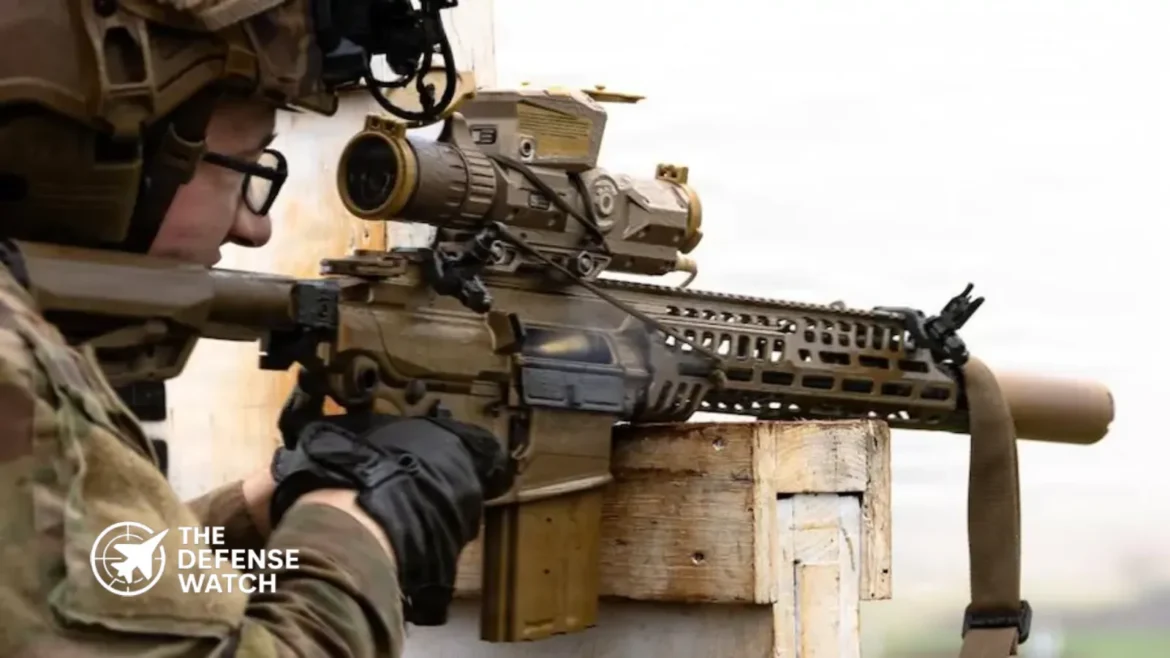
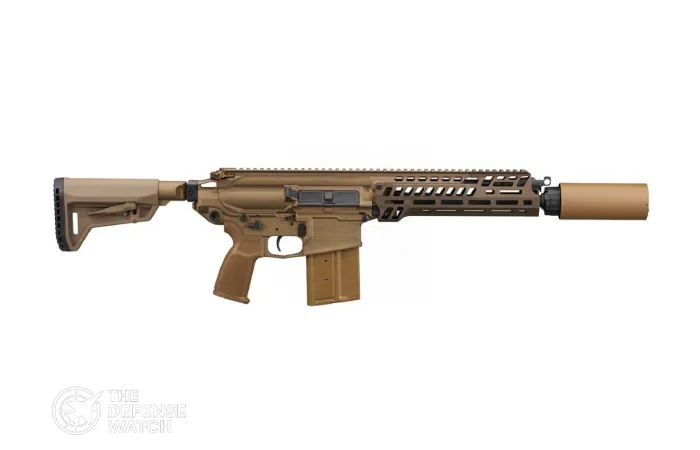
The XM8 carbine U.S. Army program has reached a key milestone with the acceptance of the first delivery from SIG Sauer, marking a renewed push to modernize frontline infantry capabilities.
The initial batch of XM8 carbines has been formally delivered to the U.S. Army, signaling progress in efforts to replace or supplement legacy small arms systems. The move comes as the Army continues to prioritize lethality, reliability, and adaptability in evolving combat environments.
While details on deployment timelines remain limited, the delivery confirms that the XM8 platform is moving from concept and evaluation toward operational integration.
- U.S. Army has accepted its first XM8 carbine delivery from SIG Sauer as part of ongoing infantry modernization efforts.
- The XM8 platform is designed to enhance reliability, modularity, and battlefield adaptability over legacy systems.
- The delivery supports broader efforts to upgrade small arms capability across frontline combat units.
- SIG Sauer continues to expand its role as a key supplier of next generation U.S. Army infantry weapons.
- The move reflects a strategic shift toward more advanced, modular, and future ready weapon systems.
A Renewed Push for Infantry Modernization
The XM8 carbine U.S. Army initiative reflects a broader modernization strategy aimed at addressing emerging threats and closing capability gaps in small arms performance.
For years, the Army has relied heavily on the M4 carbine platform. While proven in combat, the M4 faces limitations in range, lethality, and modular flexibility against near peer adversaries. The XM8, originally developed as part of earlier modernization efforts, has re-emerged as a potential solution to these challenges.
The system is designed with a modular architecture, allowing it to be configured for different mission profiles, including standard infantry use, designated marksman roles, and close quarters operations. This flexibility is increasingly important as U.S. forces prepare for multi domain operations across diverse theaters.
SIG Sauer’s Expanding Role
The SIG Sauer XM8 rifle delivery underscores the company’s growing footprint in U.S. military small arms programs. SIG Sauer has already secured major contracts in recent years, including the Next Generation Squad Weapon program, which introduced the XM7 rifle and XM250 automatic rifle.
By delivering the XM8 platform, SIG Sauer is reinforcing its position as a central player in the Army’s transition toward next generation infantry weapons.
This consolidation of suppliers may also streamline logistics and training, as multiple systems share design philosophies and operational concepts. However, it also places increased responsibility on a single manufacturer to meet performance and delivery expectations.
Operational Implications on the Battlefield
The introduction of the XM8 carbine U.S. Army system could have tangible effects on battlefield performance, particularly in terms of reliability and adaptability.
One of the key advantages often associated with the XM8 design is improved durability under harsh conditions. Past small arms programs have emphasized the need for weapons that can perform consistently in extreme environments, from desert heat to arctic cold.

Additionally, the XM8’s modular design supports rapid customization. Units can adjust configurations based on mission requirements without needing entirely different weapon systems. This reduces logistical burden while increasing tactical flexibility.
From a combat perspective, enhancements in ergonomics, weight distribution, and accessory integration may also improve soldier effectiveness and reduce fatigue during extended operations.
Strategic Context: Preparing for Peer Conflict
The U.S. Army infantry modernization effort, including the XM8 program, is closely tied to preparations for potential high intensity conflict against near peer adversaries.
In such scenarios, small arms are not just individual weapons but part of a larger system of systems that includes sensors, communications, and precision targeting. The XM8’s design aligns with this approach, enabling integration with advanced optics, fire control systems, and digital battlefield networks.
This shift reflects lessons learned from recent conflicts, where adaptability and rapid decision making have proven critical. Modern infantry units must be equipped with weapons that support these requirements without adding unnecessary complexity.
Challenges and Considerations
Despite the progress, the XM8 carbine U.S. Army program is not without challenges.
First, integration into existing force structures will require training, maintenance adjustments, and logistical planning. Transitioning from established platforms like the M4 is a complex process that involves more than simply issuing new weapons.
Second, questions remain about long term procurement scale. It is unclear whether the XM8 will fully replace existing systems or serve as a complementary platform within a broader small arms ecosystem.
Finally, budget pressures and competing priorities could influence the pace of adoption. The Army must balance investments across multiple modernization programs, including armored vehicles, long range fires, and air defense.
What Comes Next
The initial SIG Sauer XM8 rifle delivery is likely just the first step in a phased rollout. Future deliveries, testing, and operational feedback will determine how widely the system is adopted across the force.
If the XM8 meets performance expectations, it could play a significant role in shaping the next generation of U.S. Army infantry weapons. Its success will depend not only on technical performance but also on how well it integrates into the broader modernization framework.
For now, the delivery marks a clear signal that the Army is accelerating efforts to equip its soldiers with more capable and adaptable small arms.
Lockheed Martin Expands PAC-3 Missile Production Capacity
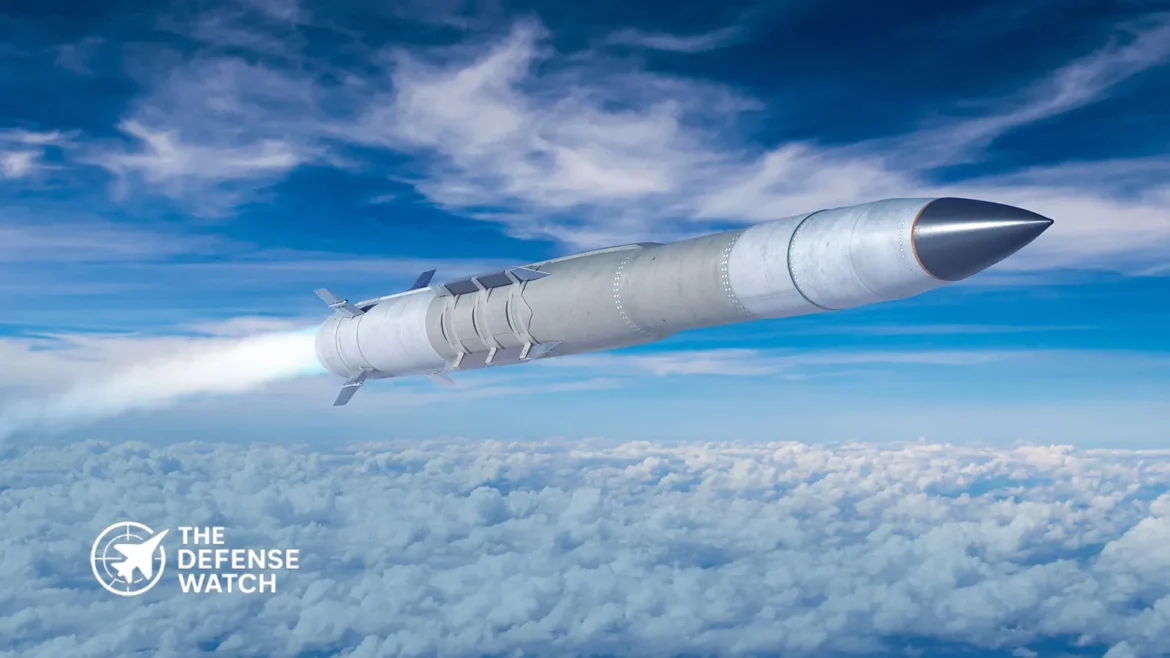
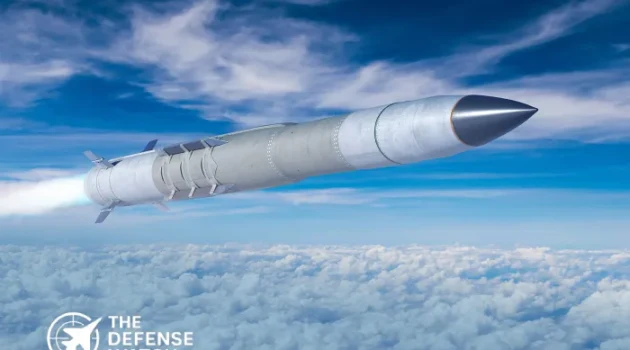
The PAC-3 missile contract awarded to Lockheed Martin marks one of the largest recent investments in U.S. and allied air and missile defense, reinforcing production of the Patriot Advanced Capability-3 Missile Segment Enhancement interceptor.
The $4.76 billion firm-fixed-price award covers full-scale production, engineering support, and lifecycle services. Work will continue across a distributed industrial base in states including Alabama, Florida, Texas, and Pennsylvania, with completion expected by June 30, 2030.
According to the U.S. Department of Defense contract announcement, the majority of funding comes from Foreign Military Sales customers, underscoring strong international demand for the PAC-3 MSE interceptor.
- :contentReference[oaicite:0]{index=0} awarded $4.76 billion contract for PAC-3 MSE missile production.
- Contract covers manufacturing, engineering, and support services through June 2030.
- $264.9 million funded by U.S. Army, $4.49 billion from Foreign Military Sales partners.
- Production spans multiple U.S. states, including Alabama, Florida, Texas, and Pennsylvania.
- Contract reflects growing demand for advanced missile defense against drones and ballistic threats.
Rising Global Demand Driving Production Scale
The scale of this PAC-3 missile contract reflects a clear shift in global defense priorities. Nations are accelerating investments in layered air and missile defense systems as threats from ballistic missiles, cruise missiles, and drones continue to expand.
The PAC-3 MSE interceptor is designed to defeat tactical ballistic missiles, cruise missiles, and advanced aerial threats using hit-to-kill technology. Unlike legacy proximity-based interceptors, the system relies on direct impact, improving precision and lethality.
Foreign Military Sales funding exceeding $4.4 billion suggests sustained procurement from U.S. allies in Europe, the Middle East, and the Indo-Pacific. Many of these regions are facing increased missile proliferation and evolving aerial threats, particularly from low-cost drones and maneuvering ballistic systems.
Industrial Base Spread Across Multiple States
The contract supports a wide network of manufacturing and engineering sites, including Huntsville, Alabama; Clearwater and Pinellas Park, Florida; Grand Prairie, Texas; and Archbald, Pennsylvania, among others.
This distributed production model strengthens supply chain resilience while maintaining surge capacity. It also aligns with broader Pentagon efforts to expand the U.S. defense industrial base following lessons learned from recent conflicts and supply chain disruptions.
From an industrial perspective, the PAC-3 missile contract sustains thousands of skilled jobs and reinforces specialized manufacturing capabilities tied to advanced guidance systems, propulsion, and interceptor assembly.
Strategic Importance Of PAC-3 MSE In Modern Warfare
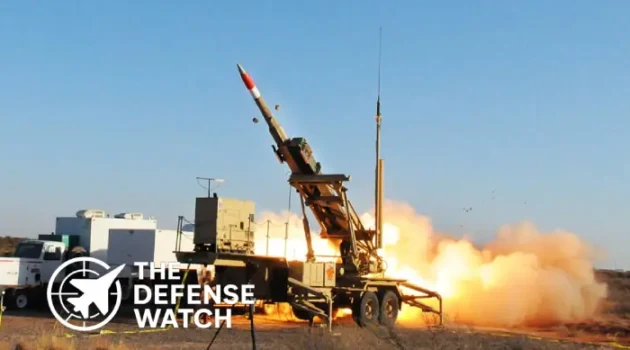
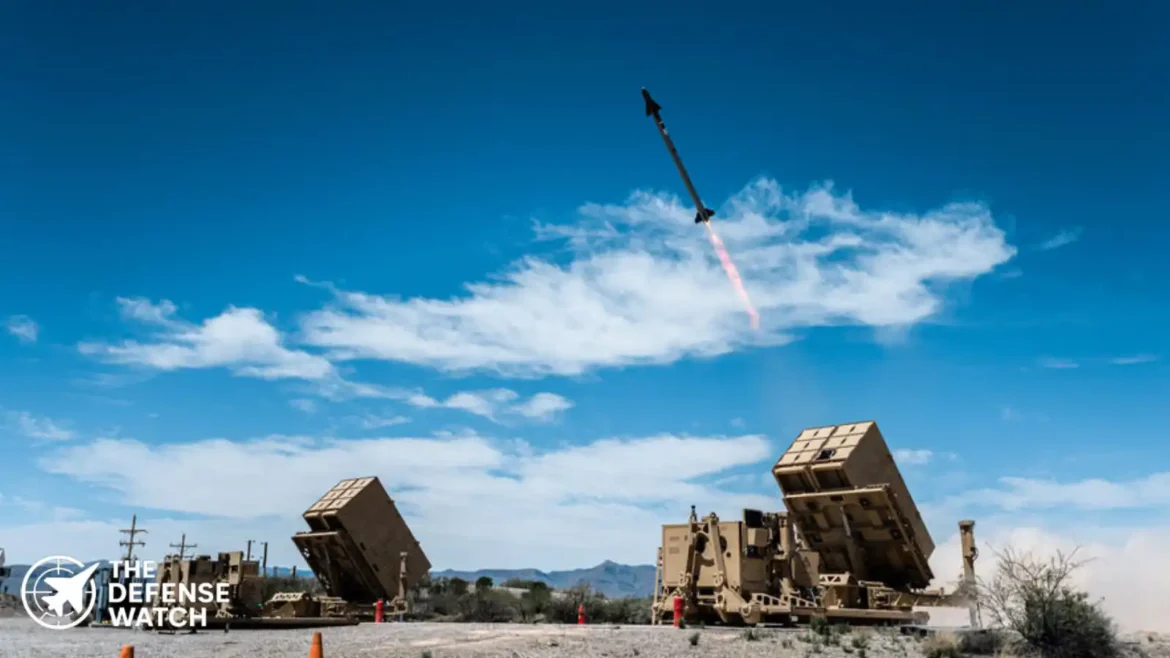
The PAC-3 MSE has become a central element of U.S. and allied missile defense architectures. It integrates into the Patriot air defense system, providing terminal phase interception against high-speed threats.
Recent operational trends highlight the growing importance of systems like PAC-3. Conflicts in Eastern Europe and the Middle East have demonstrated the increasing use of ballistic missiles and drones in combined attack strategies. This has placed pressure on existing air defense networks and accelerated demand for advanced interceptors.
The PAC-3 missile contract directly supports this evolving operational environment. By expanding production capacity, the U.S. and its partners aim to ensure sufficient interceptor stockpiles to sustain prolonged engagements if required.
Foreign Military Sales Signal Allied Dependence
A notable aspect of the contract is the funding split. Only a small portion, roughly $264.9 million, is allocated from U.S. Army procurement funds, while the majority comes from allied nations through Foreign Military Sales.
This highlights how dependent partner nations have become on U.S.-produced missile defense systems. It also reflects interoperability priorities within NATO and allied frameworks, where standardized systems like Patriot allow for integrated air defense operations.
Countries acquiring PAC-3 MSE systems are not just buying hardware. They are integrating into a broader network of sensors, command systems, and joint operational doctrines led by the United States.
Long-Term Implications For Missile Defense Strategy
The contract signals a sustained commitment to kinetic intercept technologies, even as emerging solutions such as directed energy weapons and electronic warfare systems gain attention.
While future air defense may include lasers and AI-driven intercept solutions, the near-term reality remains centered on proven systems like PAC-3 MSE. These interceptors provide reliable, combat-tested capabilities against a wide range of threats.
At the same time, the size of the PAC-3 missile contract suggests planners anticipate continued high demand for interceptor-based defenses. This aligns with assessments from the Missile Defense Agency and other defense bodies that forecast increasing missile threats over the next decade.
Program Outlook Through 2030
With an estimated completion date in 2030, the contract ensures production continuity over the next several years. This long-term horizon provides stability for suppliers and allows for incremental upgrades to be integrated during the production cycle.
It also gives the U.S. and its allies time to expand layered defense architectures, combining PAC-3 MSE with systems such as THAAD and next-generation radar platforms.
As global security dynamics continue to shift, the PAC-3 missile contract positions Lockheed Martin and its partners at the center of a growing missile defense market.
- U.S. Army is adding 20 M1074 Joint Assault Bridge systems to support M1 Abrams operations.
- The system is based on the M1 Abrams chassis and designed for rapid obstacle crossing.
- Bridges can span gaps of up to 18 meters and support heavy armored vehicles.
- The upgrade strengthens breaching and maneuver capabilities in contested environments.
- The move aligns with U.S. Army modernization priorities focused on mobility and survivability.
U.S. Army Expands M1 Abrams Breach Capability With M1074 Joint Assault Bridges
The U.S. Army is expanding M1 Abrams breach capability through the acquisition of 20 additional M1074 Joint Assault Bridge systems, reinforcing its ability to maneuver armored forces across complex battlefield obstacles.
The move is part of a broader effort to enhance combat engineering support for armored units, ensuring that main battle tanks can maintain operational momentum in high-intensity conflict environments.
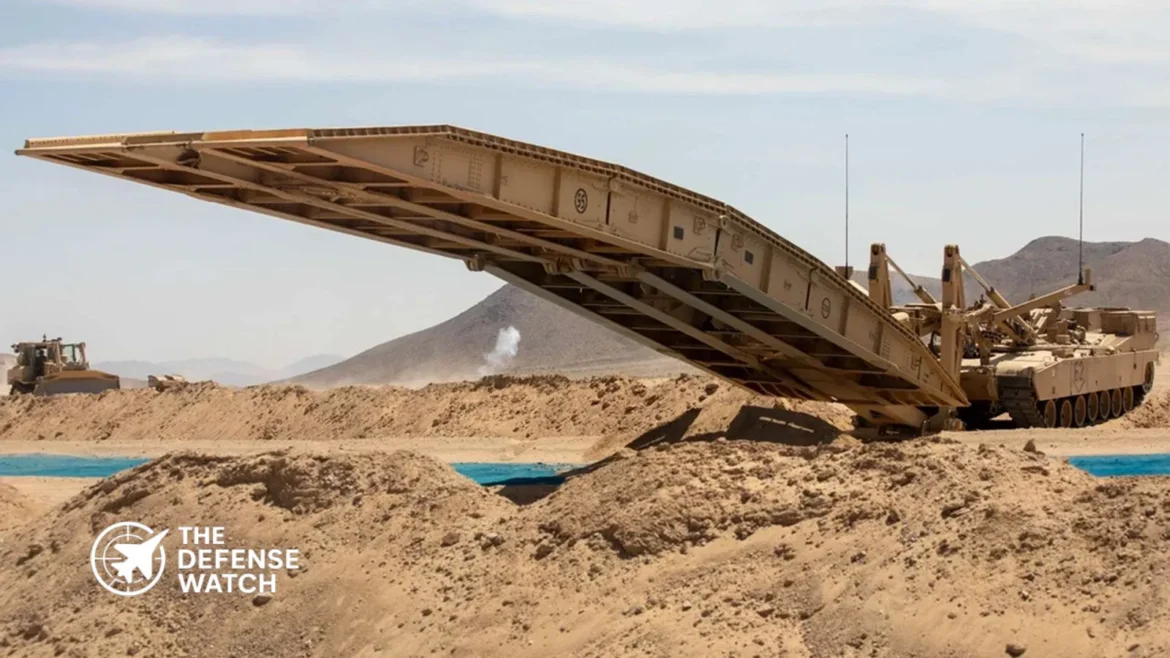
The M1074 Joint Assault Bridge, built on the same chassis as the M1 Abrams, enables rapid deployment of armored bridges under combat conditions. This allows heavy vehicles to cross gaps, trenches, and other obstacles without delaying advancing forces.
Enhancing Armored Mobility In Contested Terrain
The expansion of M1 Abrams breach capability reflects a core operational requirement: maintaining mobility under fire. Modern battlefields, particularly in Europe and other potential theaters, are expected to feature extensive obstacles, including anti-tank ditches, destroyed infrastructure, and engineered defensive barriers.
The M1074 system addresses these challenges by deploying a scissor-type bridge capable of spanning gaps up to approximately 18 meters. Importantly, the bridge is designed to support the weight of heavy armored vehicles, including the Abrams itself.
Because the system shares the Abrams platform, it benefits from similar levels of armor protection and mobility. This reduces vulnerability during forward operations, where engineering units often operate close to enemy contact.
From an operational perspective, this significantly reduces the time required to breach obstacles, limiting exposure to enemy fires and preserving the tempo of armored advances.
Integration With M1 Abrams Formations
The decision to expand M1 Abrams breach capability is closely tied to how armored brigade combat teams are structured. Engineering assets such as the M1074 are integral to combined arms operations, enabling tanks and mechanized infantry to operate without interruption.
In practice, Joint Assault Bridges are deployed alongside Abrams units, allowing commanders to quickly respond to terrain challenges without waiting for follow-on engineering support.
This integration is especially relevant in large-scale maneuver warfare scenarios, where delays at obstacles can create bottlenecks and increase vulnerability to precision fires, drones, and artillery.
The additional 20 systems will likely be distributed across multiple units, improving redundancy and ensuring that breaching capability is available across a wider operational footprint.
Strategic Context: Lessons From Recent Conflicts
The emphasis on M1 Abrams breach capability aligns with lessons observed in recent conflicts, particularly in Eastern Europe. Combat operations have highlighted the critical importance of mobility, especially when facing layered defenses that combine mines, trenches, and anti-armor systems.
In Ukraine, for example, both Russian and Ukrainian forces have encountered significant challenges breaching fortified positions. These conditions have underscored the need for protected, rapid-deployment bridging systems that can operate under fire.
The U.S. Army’s investment in additional M1074 systems suggests a recognition that future conflicts will require not just firepower, but sustained maneuver capability in heavily contested environments.
Engineering Support As A Combat Multiplier
While often less visible than frontline platforms, combat engineering systems play a decisive role in determining battlefield outcomes. Expanding M1 Abrams breach capability effectively enhances the combat power of armored units without modifying the tank itself.
The ability to cross obstacles quickly can dictate whether a force maintains initiative or becomes stalled. In high-intensity warfare, even short delays can expose units to surveillance and targeting by advanced sensors and long-range fires.
By increasing the number of Joint Assault Bridges, the Army is strengthening a key enabler of maneuver warfare, ensuring that armored formations can adapt to terrain challenges in real time.
Industrial And Programmatic Considerations
The M1074 Joint Assault Bridge program builds on existing Abrams-based manufacturing and support infrastructure, which simplifies logistics and lifecycle management.
This commonality reduces training requirements and streamlines maintenance, as crews and support personnel are already familiar with the Abrams platform. It also ensures interoperability within armored formations.
While specific contract details were not disclosed in the report, the acquisition reflects ongoing investment in proven systems rather than entirely new platforms, a trend seen across several U.S. Army modernization efforts.
Operational Impact And Future Outlook
The expansion of M1 Abrams breach capability is likely to have immediate operational benefits, particularly for units preparing for deployment in regions where terrain and infrastructure present significant challenges.
Looking ahead, the integration of engineering systems with emerging technologies, such as autonomous breaching and remote bridge deployment, may further enhance capability. However, for now, the focus remains on fielding reliable, combat-proven systems at scale.
In the near term, the additional M1074 systems will improve the Army’s ability to sustain momentum in offensive operations, reinforcing the central role of mobility in modern warfare.
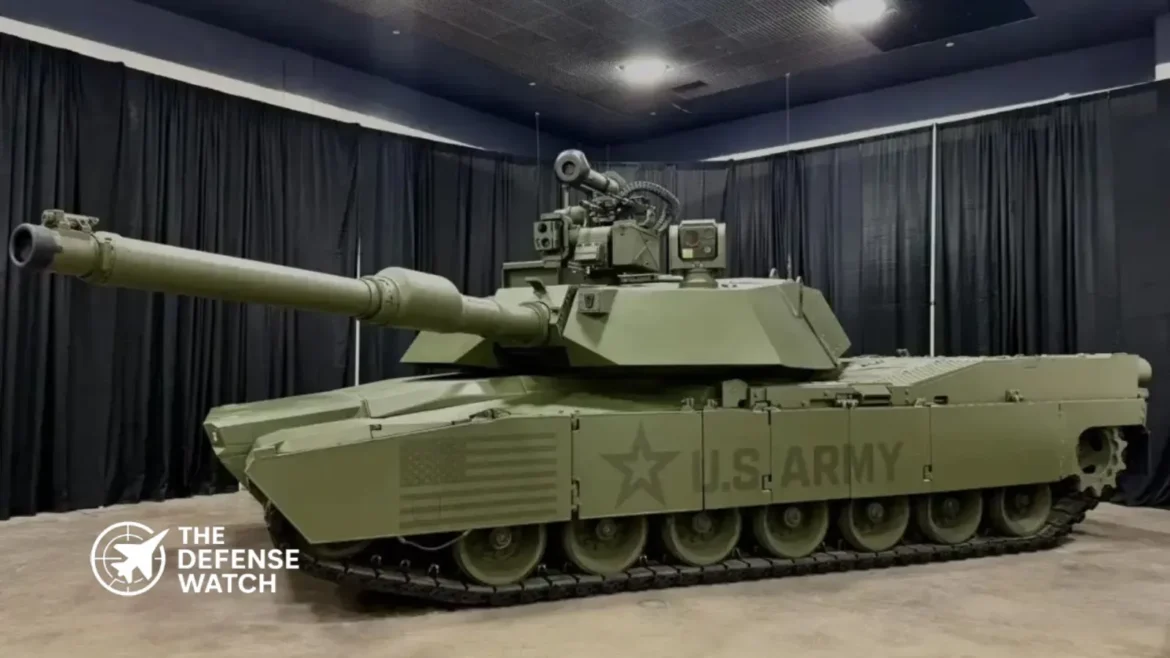
- U.S. Army plans to begin M1E3 Abrams prototype operational testing in summer 2026.
- The M1E3 focuses on reduced weight, improved survivability, and enhanced digital architecture.
- Program reflects broader U.S. shift toward more agile and deployable armored forces.
- Testing phase will validate performance before future production and fielding decisions.
- M1E3 represents a major evolution of the Abrams platform rather than a clean-sheet replacement.
M1E3 Abrams Operational Testing Marks Next Phase Of U.S. Army Modernization
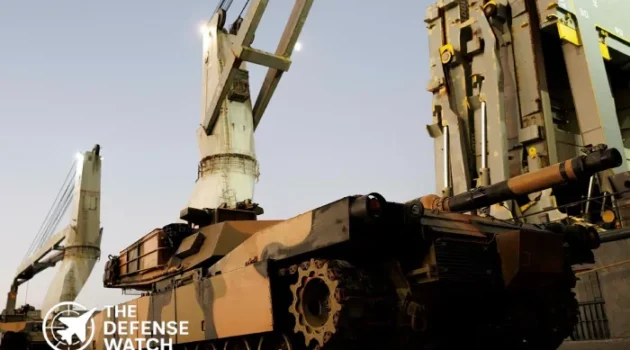
The M1E3 Abrams operational testing is set to begin in summer 2026, as the United States Army advances development of its next-generation main battle tank variant. The effort signals a shift toward a lighter, more survivable, and digitally integrated armored platform designed for future high-intensity conflict.
The Big Picture
U.S. armored modernization has entered a critical transition phase. Rather than pursuing an entirely new tank, the Army is evolving the proven M1 Abrams platform into a more adaptable system that can operate effectively in contested environments.
This approach reflects lessons from recent conflicts, including the importance of mobility, logistics sustainability, and survivability against advanced anti-tank threats such as loitering munitions and top-attack weapons.
The M1E3 program aligns with broader Pentagon priorities focused on force redesign, rapid deployment, and integration of advanced technologies across multi-domain operations.
What’s Happening
The U.S. Army will initiate operational testing of M1E3 Abrams prototypes in summer 2026. These tests aim to evaluate the platform under realistic battlefield conditions.
The testing phase will focus on validating key performance improvements, including survivability enhancements, weight reduction, and updated onboard systems.
The program follows a redesign strategy that moves away from incremental upgrades seen in earlier variants like the M1A2 SEP v3 and v4. Instead, the M1E3 introduces structural and architectural changes intended to improve long-term adaptability.
Operational testing will likely involve Army units in controlled environments to assess combat effectiveness, reliability, and maintainability.
What’s Happening
The U.S. Army will initiate operational testing of M1E3 Abrams prototypes in summer 2026. These tests aim to evaluate the platform under realistic battlefield conditions.
The testing phase will focus on validating key performance improvements, including survivability enhancements, weight reduction, and updated onboard systems.
The program follows a redesign strategy that moves away from incremental upgrades seen in earlier variants like the M1A2 SEP v3 and v4. Instead, the M1E3 introduces structural and architectural changes intended to improve long-term adaptability.
Operational testing will likely involve Army units in controlled environments to assess combat effectiveness, reliability, and maintainability.
Strategic Implications
The introduction of the M1E3 will influence U.S. military readiness by improving the deployability and sustainability of armored forces.
Lighter and more efficient tanks reduce logistical strain, particularly in regions like the Indo-Pacific, where infrastructure constraints complicate heavy equipment movement. This could enhance the Army’s ability to project power in geographically dispersed theaters.
Improved survivability features also strengthen deterrence. A tank that can better withstand modern anti-armor threats increases battlefield resilience and reduces vulnerability in high-intensity conflict scenarios.
The program reinforces the U.S. commitment to maintaining technological superiority in armored warfare, even as competitors invest heavily in their own next-generation platforms.
Competitor View
China and Russia are likely to interpret the M1E3 development as part of a broader U.S. effort to modernize legacy systems rather than replace them outright.
China continues to advance its Type 99 and next-generation armored concepts, focusing on digital integration and active protection systems. Russia, despite industrial constraints, promotes platforms like the T-14 Armata as a leap in armored design.
The U.S. approach differs by emphasizing evolutionary upgrades combined with modularity. This strategy may appear less revolutionary but offers faster fielding timelines and lower technical risk.
From a competitive standpoint, the M1E3 signals that the U.S. prioritizes adaptability and operational readiness over experimental designs that may face delays.
What To Watch Next
The summer 2026 operational testing phase will serve as a key milestone for the M1E3 program.
Observers should track:
- Performance results from field evaluations
- Decisions on production timelines
- Integration of new protection and sensor systems
- Budget allocations in upcoming defense cycles
The Army’s feedback from operational units will likely shape final design adjustments before any large-scale procurement.
Capability Gap
The M1E3 addresses several known limitations in current Abrams variants.
Weight remains a central issue. Existing models exceed 70 tons, creating logistical challenges and limiting deployment flexibility. The M1E3 aims to reduce this burden without sacrificing protection.
Another gap involves survivability against emerging threats. Modern battlefields feature drones, precision-guided munitions, and advanced anti-tank systems. The M1E3 incorporates design changes intended to counter these threats more effectively.
However, trade-offs are inevitable. Reducing weight while maintaining armor protection requires advanced materials and design compromises. The effectiveness of these solutions will depend on real-world testing outcomes.
The Bottom Line
The M1E3 Abrams operational testing marks a decisive step in reshaping U.S. armored forces for future high-intensity warfare.
- â–º U.S. Army Green Berets conducted Arctic reconnaissance and electronic warfare training in Alaska during the Joint Pacific Multinational Readiness Center rotation.
- â–º Soldiers from 3rd Battalion, 10th Special Forces Group (Airborne) operated in extreme cold from February 11 to 20, 2026.
- â–º Training included reconnaissance missions, signals intelligence collection, and electronic warfare support to conventional forces.
- â–º Green Berets used FPV drones and snowmobiles to gather real-time battlefield intelligence in difficult Arctic terrain.
- â–º The exercise supported large-scale combat operation scenarios and strengthened coordination with the 11th Airborne Division.
U.S. Army Green Berets Test Arctic Recon And Electronic Warfare Capabilities
U.S. Army Green Berets tested Arctic reconnaissance and electronic warfare capabilities during a cold-weather training exercise in Alaska, highlighting the military’s growing focus on operating in extreme northern environments.
The training involved soldiers from the 3rd Battalion, 10th Special Forces Group (Airborne) during the Joint Pacific Multinational Readiness Center (JPMRC) 26-02 rotation, which took place from February 11 to 20, 2026 across several training areas in central and southern Alaska.
The exercise placed Special Forces teams in harsh subarctic conditions to practice reconnaissance, signals intelligence, and electronic warfare tasks designed to support large-scale combat operations alongside conventional U.S. Army units.
According to the U.S. Army, the training aimed to ensure Special Operations Forces can deploy and fight effectively in one of the most challenging environments on Earth while supporting joint force commanders with timely battlefield intelligence.
Arctic Reconnaissance Missions In Extreme Conditions
A core element of the exercise focused on Arctic reconnaissance operations, where Green Beret teams conducted surveillance missions across snow-covered terrain and dense vegetation.
Operators used cross-country skis and snowmobiles to reach remote observation points. From these positions, small teams monitored simulated enemy targets such as air defense command and control nodes.
Reconnaissance units practiced establishing concealed surveillance sites and collecting intelligence on hostile electronic emissions and communications networks.
These activities are central to Special Forces doctrine, which often places small, highly trained teams deep behind enemy lines to gather critical intelligence and guide follow-on strikes by conventional forces.
In the Alaska exercise scenario, intelligence gathered by Special Forces could be passed to supporting units such as the 11th Airborne Division, enabling precision fires from artillery, rockets, or missiles during simulated combat operations.
Electronic Warfare And Signals Intelligence Integration
The training also emphasized the role of electronic warfare (EW) in modern military operations.
Signals intelligence specialists within the Green Beret teams analyzed radio frequency emissions and electronic signatures from simulated adversary systems.
By detecting and locating these signals, operators can identify command posts, communications links, or drone operators operating within the battlespace.
Electronic warfare capabilities are increasingly central to modern conflicts, where control of the electromagnetic spectrum is often as decisive as traditional firepower.
Recent conflicts, including the war in Ukraine, have demonstrated the growing importance of detecting and disrupting enemy communications, drones, and navigation systems.
The Alaska training allowed Special Forces units to refine these skills while operating in extreme cold conditions that can affect batteries, sensors, communications systems, and mobility equipment.
FPV Drones Expand Battlefield Awareness
One notable aspect of the exercise was the use of first-person-view (FPV) drones for tactical reconnaissance.
These small unmanned systems provide real-time video feeds that allow soldiers to confirm targets quickly and accurately.
According to U.S. Army personnel involved in the training, FPV drones allow teams to verify intelligence without exposing themselves to enemy observation or relying solely on reports from larger surveillance platforms.
The rapid deployment of drones helps commanders gain a clearer operational picture and enables faster decision-making during dynamic combat scenarios.
For Special Forces teams operating in dispersed formations, this capability can significantly improve situational awareness and targeting accuracy.
Alaska As A Testing Ground For Arctic Warfare
Alaska has become a central hub for the U.S. Army’s Arctic warfare training and experimentation.
The state’s extreme cold, rugged terrain, and vast training ranges make it an ideal environment for testing new tactics and technologies designed for cold-weather operations.
The Joint Pacific Multinational Readiness Center allows units to train in realistic operational conditions without leaving their regional area of responsibility.
Exercises conducted there combine live field training with advanced simulation and joint integration across multiple military branches.
The Arctic environment presents unique challenges for military operations, including limited infrastructure, extreme temperatures, and restricted mobility.
Cold weather can affect weapon systems, sensors, batteries, communications equipment, and logistics supply chains. Training in these conditions helps units identify technical limitations and refine operational procedures before deployment.
Strategic Importance Of Arctic Military Readiness
The United States has steadily increased its focus on Arctic military readiness in recent years.
The region is gaining strategic importance as melting ice opens new shipping routes and increases access to natural resources. At the same time, several major powers are expanding their presence in the High North.
Russia maintains a large network of Arctic bases and airfields, while China has expressed interest in developing polar shipping routes and infrastructure projects.
For the U.S. military, maintaining the ability to operate effectively in Arctic conditions is considered essential for homeland defense and for supporting allied operations in northern regions.
Training events such as the JPMRC rotation allow the U.S. Army to develop tactics and technologies that ensure forces remain capable of operating in contested environments across the Arctic.
By integrating reconnaissance, drones, electronic warfare, and cold-weather mobility, the Alaska exercise demonstrates how Special Operations Forces contribute to modern multi-domain operations.
- â–º $73,528,916 firm fixed price Merkava Power Pack contract awarded to Rolls-Royce Solutions America.
- â–º Supports Israel under Fiscal Year 2026 Foreign Military Sales funding.
- â–º Includes full and lite power pack kits, metal containers, and engineering technical services.
- â–º Work to be performed in Graniteville, South Carolina, through December 31, 2032.
- â–º Total cumulative program face value reaches $462,947,478.
US Awards $73.5M Merkava Power Pack Contract To Rolls-Royce Solutions America For Israel
The US Department of Defense has awarded a $73,528,916 Merkava Power Pack contract to Rolls-Royce Solutions America Inc., Novi, Michigan, for Israel under the Foreign Military Sales program.
According to the official contract announcement, the firm fixed price award covers the procurement of Merkava Power Pack Less Transmission full and lite kits, metal containers, and contractor engineering technical services. The total cumulative face value of the broader program stands at $462,947,478.
The contract was issued by Army Contracting Command, Detroit Arsenal, Michigan.
Contract Scope And Funding Details
The $73.5 million award supports Israel’s Merkava armored vehicle fleet through the provision of power pack components and associated technical services. Work will be performed in Graniteville, South Carolina, with an estimated completion date of December 31, 2032.
Fiscal Year 2026 Foreign Military Sales funds for Israel in the full amount of $73,528,916 were obligated at the time of award, meaning the contract is fully funded from the outset.
The contracting activity is identified as Army Contracting Command, Detroit Arsenal, under contract number W912CH-26-C-0019.
Supporting Israel’s Merkava Fleet
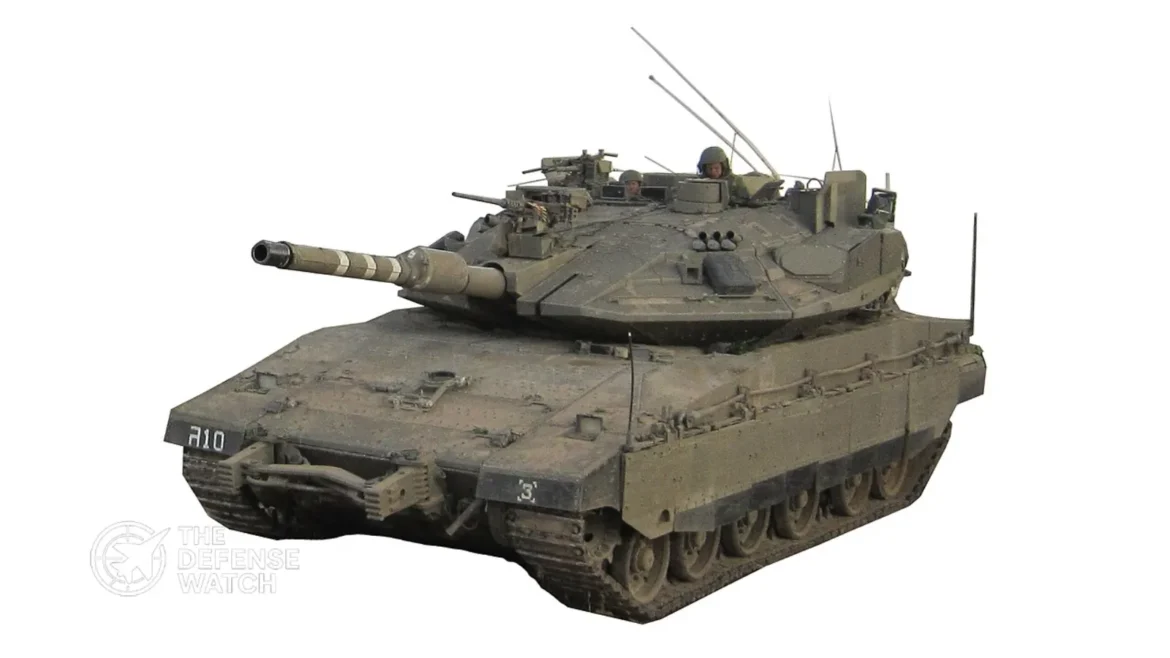
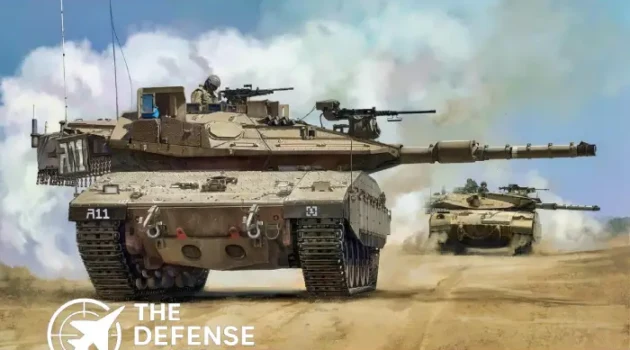
The Merkava Power Pack contract directly supports sustainment and operational readiness of Israel’s domestically produced Merkava main battle tanks. The Merkava series, developed by Israel, is designed for survivability, mobility, and rapid battlefield repair.
The power pack forms a critical subsystem within armored platforms, integrating engine and related components necessary for propulsion and battlefield maneuverability. Sustaining these systems is central to maintaining armored force readiness.
Through the Foreign Military Sales framework, the United States facilitates procurement of US-origin defense equipment and services for allied nations. Israel remains one of the largest and most consistent FMS partners.
Industrial Base And Long-Term Sustainment
The award highlights the continued role of US industry in supporting allied armored vehicle fleets. Production and services under the contract will take place in Graniteville, South Carolina, reinforcing the US defense industrial base while fulfilling allied requirements.
The broader cumulative ceiling value of $462.9 million indicates this is part of a larger, multi-year sustainment effort tied to Israel’s armored vehicle programs.
The Merkava Power Pack contract structure as firm fixed price provides cost certainty to the government, while the long period of performance through 2032 reflects the long-term sustainment nature of the effort.
US-Israel Defense Cooperation
The award underscores the depth of US-Israel defense cooperation, particularly in ground combat systems sustainment. Under the Foreign Military Sales system, the US government acts as the intermediary, managing procurement, contracting, and delivery.
Israel’s armored forces rely heavily on the Merkava platform as a core component of its ground maneuver capability. Sustainment contracts such as this ensure continued operational availability and lifecycle support.
While the Department of Defense did not provide additional technical details regarding quantities of kits or specific variants supported, the contract documentation confirms engineering technical services are included, suggesting ongoing technical assistance and integration support.
Why This Contract Matters
The Merkava Power Pack contract reflects the ongoing focus on sustainment rather than new platform acquisition. For armored forces, propulsion systems are among the most maintenance intensive components. Ensuring steady supply of kits and engineering services reduces downtime and supports operational readiness.
For US industry, the award reinforces the role of American companies in providing long term lifecycle support to allied armored fleets. For Israel, it ensures continued access to critical propulsion subsystems under a structured, government managed procurement process.
As geopolitical tensions remain high across the Middle East, armored mobility and readiness remain core to ground force deterrence and operational planning.
U.S. Army Tests Next Generation Rocket Assisted Projectile
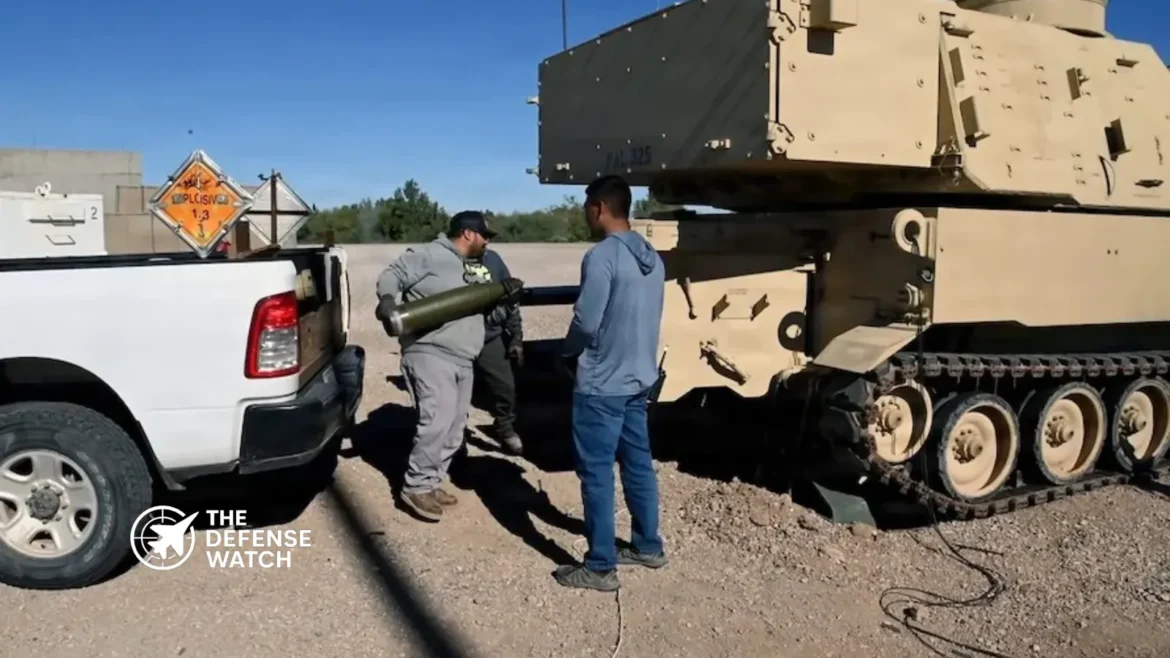
The U.S. Army has tested a next generation rocket assisted projectile at Yuma Proving Ground as part of its broader effort to extend the range of conventional tube artillery.
According to official Army information and reporting from defense industry sources, the live-fire event evaluated performance, stability, propulsion, and accuracy of the rocket assisted projectile under desert conditions. The trials form part of the service’s long range fires modernization strategy, which remains a core priority within Army transformation plans.
The test focused on increasing effective range while maintaining compatibility with existing 155mm artillery platforms.
Extending The Reach Of 155mm Artillery
The next generation rocket assisted projectile is designed to travel significantly farther than standard high explosive 155mm rounds. By incorporating a rocket motor that ignites after launch, the projectile sustains propulsion beyond the initial gun launch phase.
Traditional artillery shells rely solely on the force generated by the propellant charge in the howitzer. In contrast, a rocket assisted projectile uses that initial impulse to exit the barrel before activating a secondary propulsion system mid-flight. This design extends maximum range without requiring entirely new artillery platforms.
The U.S. Army has been pursuing several parallel efforts to increase cannon artillery reach, including extended range cannon artillery concepts and improved precision munitions. The rocket assisted projectile complements those efforts by offering a potentially more cost-effective range enhancement option compared to entirely new weapon systems.
Army officials have consistently identified long range precision fires as a key modernization priority, particularly in the context of large scale combat operations.
Testing At Yuma Proving Ground
Yuma Proving Ground, located in Arizona, is one of the Army’s primary locations for artillery, missile, and ground system testing. Its expansive desert terrain allows for long distance firing evaluations under controlled conditions.
During the recent event, the Army assessed multiple parameters, including projectile trajectory, motor ignition timing, aerodynamic stability, and impact accuracy. Data collected during the firing will inform further design refinements and validation steps.
The test also evaluated integration with standard 155mm howitzer systems currently fielded across U.S. Army units. Maintaining backward compatibility with existing platforms reduces logistical complexity and accelerates potential fielding timelines.
Defense analysts note that range extension for cannon artillery is increasingly relevant in contested environments where forces must operate beyond the reach of adversary counter battery systems.
Long Range Fires Modernization Effort
The U.S. Army’s modernization strategy has emphasized long range precision fires as one of its top priorities. This includes upgrades to cannon artillery, precision guided munitions, and missile systems.
The rocket assisted projectile initiative aligns with broader programs intended to ensure U.S. ground forces can strike targets at greater distances while reducing exposure to enemy fire.
Extended range artillery offers several operational advantages:
- Increased standoff distance
- Expanded coverage area from a single firing position
- Reduced need for forward repositioning
- Improved survivability against counter battery threats
As near peer competitors invest in longer range artillery and precision strike capabilities, the Army has sought to close potential gaps through incremental upgrades and new munitions development.
The rocket assisted projectile represents one approach that enhances existing systems rather than replacing them outright.
Operational And Strategic Implications
Improving artillery range affects not only tactical engagements but also broader operational planning. Longer range 155mm projectiles can support maneuver forces from deeper rear positions, complicating adversary targeting efforts.
In large scale ground combat scenarios, extended range cannon artillery can provide sustained fires without relying exclusively on higher cost missile systems. This layered approach allows commanders to match munitions to mission requirements.
The U.S. Army has highlighted the importance of scalable and cost conscious modernization. Rocket assisted projectiles may offer a balance between affordability and performance, particularly if production leverages existing supply chains.
While additional testing and validation will be required before fielding decisions, the Yuma trial marks a concrete step in advancing artillery capability.
Integration With Future Artillery Systems
The rocket assisted projectile effort may also support future cannon upgrades, including extended range barrels and improved fire control systems.
By combining improved projectiles with advanced targeting data, digital fire control networks, and sensor integration, the Army aims to enhance overall strike effectiveness.
See also: Extended Range Cannon Artillery modernization coverage at TheDefenseWatch.com.
Continued testing will determine final performance parameters, including maximum range, accuracy metrics, and reliability under varied environmental conditions.
What Comes Next
Following the Yuma Proving Ground evaluation, the Army is expected to analyze collected telemetry and impact data to refine projectile design.
Further developmental and operational testing could include:
- Additional live-fire events
- Environmental stress testing
- Compatibility assessments with multiple howitzer variants
- Production readiness evaluations
The timeline for potential fielding has not been formally announced. However, long range fires modernization remains central to Army force design updates.
Conclusion
The U.S. Army’s test of a next generation rocket assisted projectile at Yuma Proving Ground reflects continued investment in extending artillery range without overhauling existing systems.
As ground forces adapt to evolving threat environments, incremental improvements to conventional artillery may provide practical gains in reach, survivability, and operational flexibility.
The results of ongoing testing will determine how quickly the rocket assisted projectile moves from development to operational deployment.
U.S Army Qualifies ER GMLRS Rocket In Key Range Test
The U.S Army has successfully tested its Extended Range Guided Multiple Launch Rocket System, or ER GMLRS, firing a 150 km-class rocket that doubles the strike range of the High Mobility Artillery Rocket System (HIMARS) family of launchers.
A qualification event held at White Sands Missile Range, New Mexico, on January 30 confirmed the capability of the ER GMLRS Alternative Warhead variant. The flight met Army performance metrics and verified integration with fielded launch platforms, including HIMARS and the tracked M270A2 Multiple Launch Rocket System.
Extended Range With Existing Systems
The ER GMLRS family builds on the Army’s long-standing Guided Multiple Launch Rocket System, which historically has had a roughly 70 km range. The ER variant increases that reach to 150 km, allowing units to engage targets at longer distances while preserving current launcher footprints and tactical procedures.
Army officials emphasized that extended range comes without the need for new vehicles or major changes in unit structure, a key factor for rapidly fielding capability across fires units.
Why This Matters
Doubling the range of a precision rocket provides commanders a deeper stand-off strike option while retaining accuracy. The Alternative Warhead variant tested offers an area effects capability that reduces unexploded ordnance risks, which can be especially important in coalition operations and permissive environments.
The ER GMLRS munition uses a GPS-aided inertial navigation system and enhanced propulsion and control mechanisms to achieve longer reach. It is compatible with both HIMARS and M270 launchers already in U.S Army inventories.
Platform Modernization
The M270A2 launcher used in the test represents the Army’s recapitalized variant of the tracked MLRS. It features upgraded fire control systems and improved mobility and crew protection. These enhancements help ensure seamless adoption of new munitions such as ER GMLRS and future precision strike munitions without retraining or retooling.
Next Steps
The Army plans follow-on operational tests of ER GMLRS before fielding it to units. Performance in these environments will help shape deployment timelines and doctrine updates ahead of broader issuance.
Lockheed Martin has delivered the first Sentinel A4 radar from the second Low-Rate Initial Production (LRIP 2) batch to the U.S. Army, advancing the program closer to full-rate production of the next-generation air defense sensor.
What Was Delivered and Why It Matters
The U.S. Army received the first of 19 Sentinel A4 radars built under LRIP 2 on February 2, 2026. This delivery follows the company’s earlier production deliveries and completes the first phase of Initial Operational Test and Evaluation (IOT&E).
Army and industry officials describe the milestone as critical in fielding a modern, 360-degree active electronically scanned array (AESA) radar designed to detect and track a wide range of aerial threats. These include unmanned aerial systems (UAS), cruise missiles, helicopters and fixed-wing aircraft.
The Sentinel A4 is expected to replace the legacy Sentinel A3 radar and integrate with existing Army command and control networks such as Forward Area Air Defense Command and Control (FAAD-C2). This integration aims to improve layered air defense situational awareness across units.
Program Background and Capabilities
The Sentinel A4 radar (designated AN/MPQ-64A4) is a next-generation ground-based sensor developed by Lockheed Martin for the U.S. Army’s air and missile defense architecture. It employs a digital AESA design, offering greater range and sensitivity than the preceding A3 variant.

Image Source : lockheedmartin According to Lockheed Martin materials, Sentinel A4 delivers full 360-degree coverage with high-resolution tracking and can operate in complex environments. It is designed to detect and classify threats such as UAS, cruise missiles, rotary wing aircraft, artillery, rockets and mortars.
The radar’s open architecture enables interoperability with existing and future command and control networks, helping commanders make rapid decisions in contested environments.
Testing and Integration Work
During the first phase of IOT&E, Sentinel A4 was integrated with FAAD-C2 systems to validate its interoperability and performance in realistic operational scenarios. Continued testing will support refinement of tactics and readiness for broader deployment.
Further deliveries from LRIP 2 will continue through Army fielding plans and are expected to support additional testing and operator familiarization ahead of a full-rate production decision later in 2026.
Broader Army Air Defense Context
The Sentinel A4 program is part of the Army’s wider air and missile defense modernization effort, which includes integration with the Integrated Air and Missile Defense Battle Command System (IBCS) and other sensors and effectors.
Recent reports indicate planned deployments of Sentinel A4 radars to defend critical infrastructure, including in the National Capital Region, highlighting the system’s role in homeland air defense.
What Comes Next
As the Army moves through LRIP deliveries and operational testing, the focus will be on data collection, performance validation and preparing units for fielding. Industry and service officials aim for a full-rate production decision later this year as part of the radar’s transition from test units to operational capability.
RTX Raytheon has completed a successful ballistic test for the U.S. Army’s Next Generation Short Range Interceptor (NGSRI) missile, advancing the program that is meant to replace the Stinger surface-to-air missile. The test showed the interceptor could track target drones and be fired from a man-portable launcher.
Ballistic Test Validates Key NGSRI Performance
Raytheon, a business unit of RTX, said the ballistic test was funded by the company to gather critical technical data and show readiness ahead of planned flight test demonstrations.
The test took place at the company’s facilities in Tucson, Arizona, and demonstrated seeker performance against small aerial targets as well as launch system compatibility for dismounted troops.
Tom Laliberty, president of Land and Air Defense Systems for Raytheon, said the successful event reflects strong partnership with the Army as the program moves closer to broader developmental milestones.
NGSRI: Design and Development in Context
The NGSRI is the Army’s planned replacement for the legacy FIM-92 Stinger missile. Raytheon’s interceptor is designed to fly faster and engage a range of aerial threats including drones and rotary or fixed wing aircraft.
Earlier work on the program included a series of subsystem demonstrations and rocket motor tests using Highly Loaded Grain (HLG) solid propellant technologies, conducted with partner Northrop Grumman. These efforts focused on extending range and energy output over conventional motors.
Independent testing in 2025 included ten subsystem demonstrations covering seeker, guidance, warhead and launch systems. Those milestones helped mature critical components in advance of integrated testing.
Launcher Compatibility and Tactical Role
Raytheon says NGSRI can be fired from both vehicle mounts and shoulder launchers, giving ground forces flexible options for short range air defense.
Army planners see the new interceptor as part of layered air defense, filling gaps against low-altitude threats where systems like Patriot or Sentinel operate at longer ranges.
What Comes Next
With the ballistic test complete, program focus now shifts toward planned flight tests and soldier touchpoint exercises where troops will evaluate handling and integration. Earlier reports indicate a scheduled flight test demonstration later this year.
Raytheon continues to work with the Army to meet scheduled development and production goals as the service seeks to transition from legacy systems to more capable air defense solutions.