U.S. Army Certifies Artillery and M270 MLRS Units in Europe Ahead of Live-Fire Evaluations
The U.S. Army certified artillery and M270 MLRS units in Europe, completing structured evaluations before live-fire qualifications, according to Army images and unit releases.
In late January 2026, the 41st Field Artillery Brigade conducted Artillery Tables I through V across training areas in Europe. These structured drills move from basic individual and section-level tasks to full crew certification, checking procedures such as emplacement, orientation, communications, and ammunition handling.
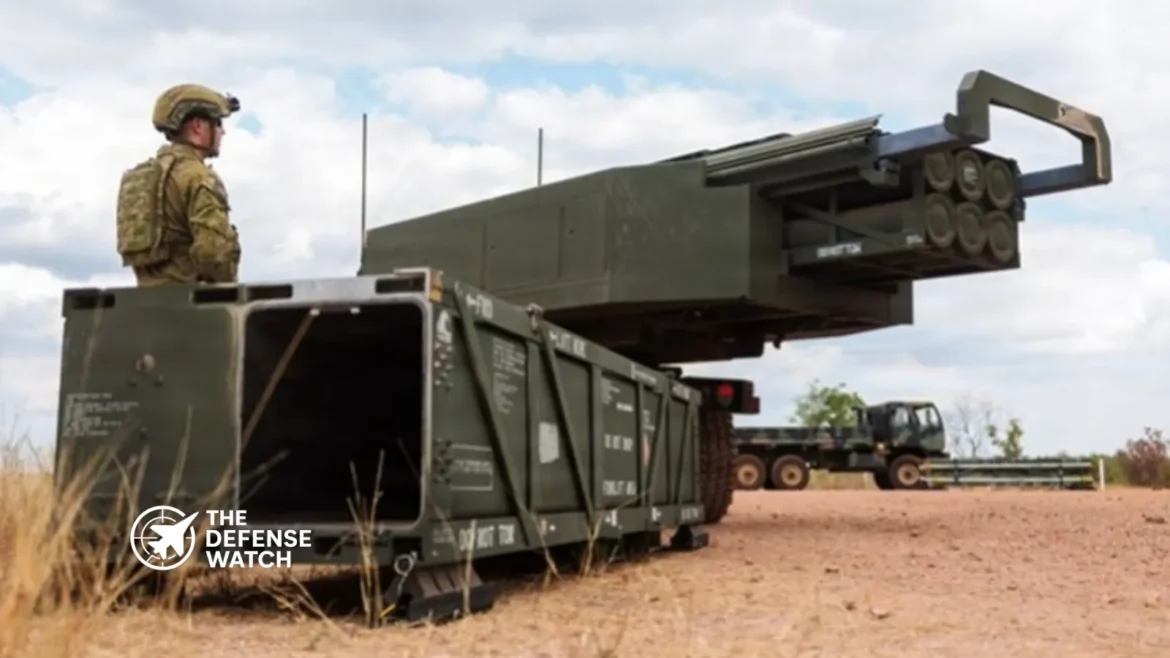
The 1st Battalion, 77th Field Artillery Regiment (1-77 FA) led the crew evaluations, supported by brigade-level long-range fires systems including the M270 Multiple Launch Rocket System (MLRS).
Training Overview and Doctrine
Artillery Tables I to V are central to U.S. Army field artillery doctrine. They ensure crews understand fundamental gunnery skills and can perform consistently under evaluation conditions. Training emphasizes adherence to established procedures and accurate processing of fire missions through fire direction elements.
Although the 1-77 FA battalion focuses on tube artillery, its certification is nested within the broader long-range fires mission of the 41st Field Artillery Brigade. That brigade integrates rocket and missile systems with traditional cannon units to provide fires across multiple ranges.
M270 MLRS: System Overview
The M270 MLRS is a tracked, armored rocket artillery platform produced by Lockheed Martin Missiles and Fire Control, in service with the U.S. Army since the 1980s. It carries two pods of six 227 mm rockets or Army Tactical Missile System missiles, with a three-person crew operating from within the protected cab.
In the commonly fielded M270A1 configuration, an improved fire control system uses GPS integration to speed targeting data processing from headquarters, radars, or joint sensors. The launcher’s mechanical improvements cut aim and reload times, enhancing survivability against counter-battery fire.
Standard rockets reach targets beyond 32 kilometers, while ATACMS missiles can strike more than 300 kilometers away, depending on variant.
Brigade-Level Fires and Interoperability
At the brigade level, the 41st Field Artillery Brigade coordinates sensors, radars, and shooters across multiple formations and national boundaries. Integrating tube artillery with MLRS units supports deep fires and responsiveness to joint targeting.
The presence of M270 systems within NATO members’ forces supports shared technical and procedural baselines for combined fire missions and multinational exercises, improving coalition interoperability and reducing friction during operations.
Strategic Context
Publishing imagery of certification activity highlights visible readiness of U.S. artillery units in Europe. It underscores artillery fundamentals and the integration of advanced rocket systems at a time of sustained tension along NATO’s eastern flank.
By validating artillery fundamentals and MLRS integration, the 41st Field Artillery Brigade contributes to a security posture focused on preparedness, credibility, and the ability to deliver fires decisively across the depth of the battlefield.
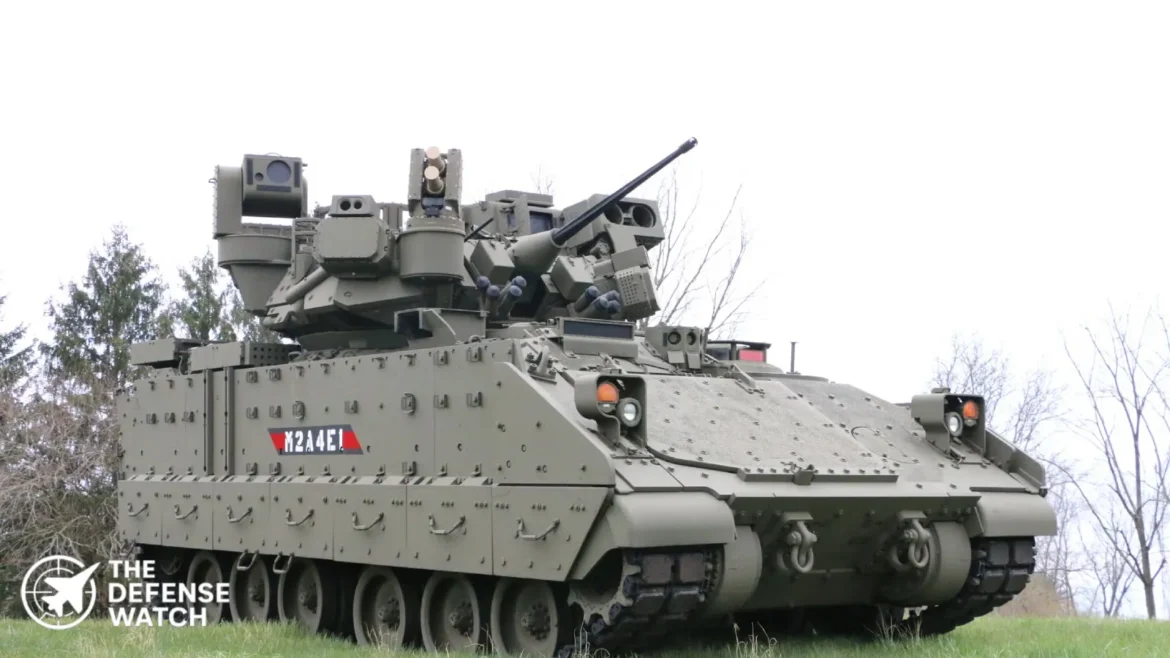
Elbit Systems has secured a $228 million follow-on contract to deliver its Iron Fist active protection system for the U.S. Army’s Bradley infantry fighting vehicle upgrade program, the company and industry sources reported. The award continues integration of the Iron Fist system as part of wider force modernization efforts.
What the Contract Covers
Under the contract awarded to Elbit Systems by General Dynamics Ordnance and Tactical Systems (GD-OTS), the company will supply Iron Fist active protection systems over a three-year period for Bradley IFV upgrades. This follows earlier contracts, building on work begun with an initial award in 2024.
The Iron Fist APS is designed to detect and defeat incoming threats such as anti-tank rockets, anti-tank guided missiles, unmanned aerial systems, loitering munitions and kinetic tank projectiles. The system offers 360-degree protection while keeping weight, volume and power demands suitable for integration onto armored vehicles.
Why It Matters
Active protection systems like Iron Fist are becoming a priority for modern armored forces. Emerging battlefield threats, including advanced guided missiles and small drones, have driven investment in technologies that can detect and neutralize threats before they strike. The U.S. Army’s decision to continue with Iron Fist reflects this demand.
Iron Fist has already been selected by the Israel Defense Forces and several NATO partners for different armored platforms. The current award marks the third selection of Iron Fist by the U.S. Army, highlighting sustained interest from Pentagon acquisition programs.
Background on the Bradley and Iron Fist
The Bradley infantry fighting vehicle has been in U.S. Army service for decades, and recent upgrade efforts aim to improve protection, mobility and sensor suites. In previous contracts, Elbit Systems provided Iron Fist APS units as part of the Bradley M2A4E1 upgrade package. These upgrades also include vision and control system enhancements to increase battlefield effectiveness.
Iron Fist is a hard-kill APS, meaning it intercepts and destroys incoming threats at close range. Its radar and sensor suite work together to detect, track and defeat attacks, improving crew and vehicle survivability in combat.
Industry and Strategic Context
Iron protection systems now compete with other APS technologies globally. Investments in these systems reflect lessons from recent conflicts, where armored vehicles have faced persistent threats from guided rockets, drones and other modern weapons. Elbit’s continued selection suggests confidence in its performance and integration capabilities.
What Comes Next
Production and delivery under the $228 million contract will occur through the next three years. Integration of Iron Fist onto Bradley IFVs supports broader Army modernization goals. Officials from Elbit Systems have underscored their strategic partnership with GD-OTS and the U.S. Army in statements tied to the award.
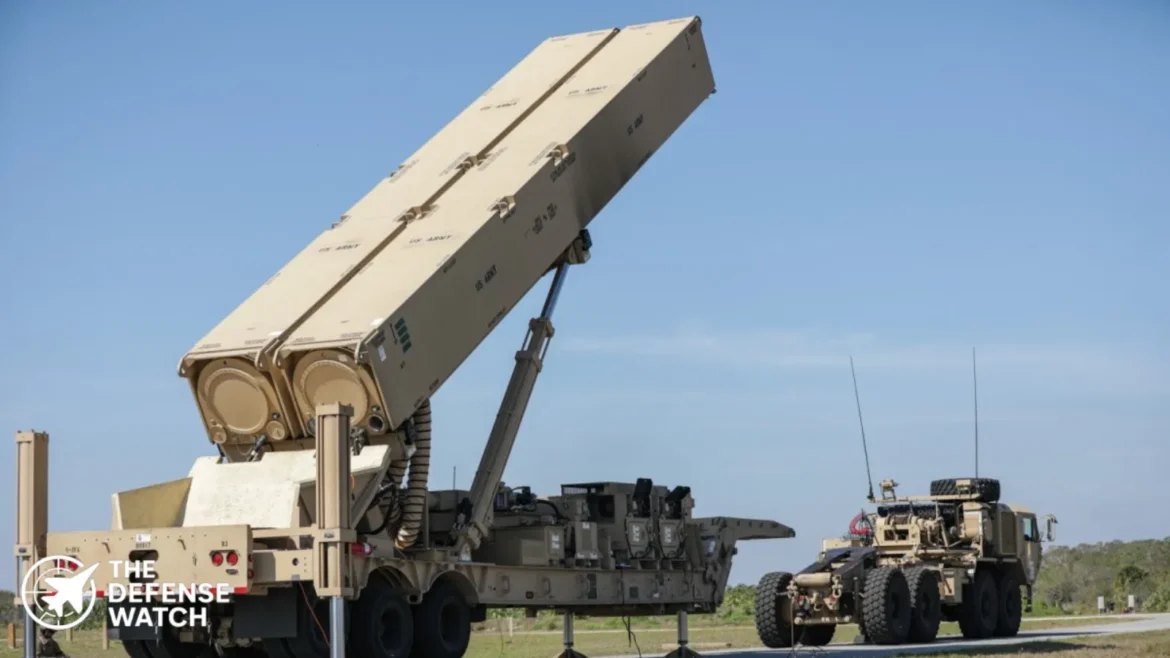
The U.S. Army has confirmed a further delay in the deployment of its Dark Eagle hypersonic missile system, now scheduled for early 2026. The unit trained to operate the system is ready, but the missile itself remains in testing and integration.
The Dark Eagle, part of the Army’s $10.4 billion hypersonic weapons program, is designed to provide long-range conventional strike capability using a boost-glide system capable of hypersonic speeds. Despite launchers and support vehicles being in place, the missile has not completed the necessary integration, safety, and readiness tests for operational deployment.
This marks the third missed deadline for the program, following earlier delays in 2023 and 2025, reflecting the technical challenges of developing weapons that operate at extreme speeds and temperatures while maintaining accuracy. The system is being developed by Lockheed Martin, with the Army overseeing integration, testing, and deployment.
In December 2025, the Army activated the first battery intended to operate Dark Eagle, citing it as a significant advancement, though missiles were not yet operational. The Government Accountability Office estimates the first battery will cost approximately $2.7 billion, including missiles.
The delay comes amid growing concerns over hypersonic capabilities, as China and Russia have already fielded operational systems, including Russia’s use in Ukraine. The U.S. Army maintains that rigorous testing and system maturity are critical to ensure reliability, sustainability, and effectiveness in operational environments.
The program’s postponement also serves as an early test for Defense Secretary Pete Hegseth, who has emphasized accelerating weapons deployment and personally inspected the Dark Eagle launcher in December at Huntsville, Alabama.
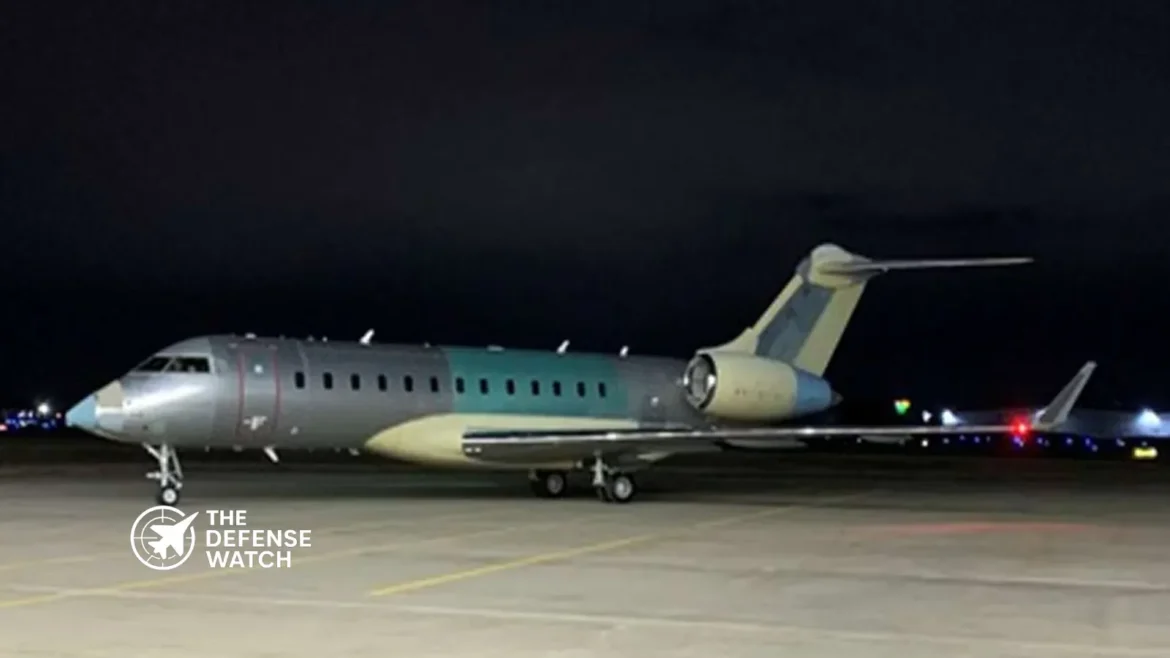
U.S Army Adds Fourth Global 6500 Jet to HADES ISR Program
The U.S Army has expanded its High Accuracy Detection and Exploitation System (HADES) intelligence, surveillance and reconnaissance (ISR) program with a fourth Bombardier Global 6500 business jet, the first aircraft acquired specifically as a non‑prototype platform. This move supports ongoing efforts to build out a next‑generation deep‑sensing ISR fleet.
Sierra Nevada Buys Fourth Aircraft
Sierra Nevada Corporation (SNC) announced it has purchased a fourth Global 6500 jet at its own expense for the Army’s HADES program. Unlike earlier jets that entered the project as prototypes, this aircraft is intended to serve as the first non‑prototype platform, helping de‑risk integration and support schedule milestones.
Fielding multiple Global 6500 jets builds on years of Army experimentation with large business jet platforms for advanced ISR roles. The HADES program aims to deliver extended range, altitude and endurance over legacy turboprop ISR platforms.
Program Context and Transition
The Army awarded Sierra Nevada a systems integrator role for HADES under a 12‑year contract worth up to nearly $1 billion, with Bombardier supplying initial airframes for modification. The Global 6500 aircraft, with long endurance and high altitude capability, is central to the service’s deep‑sensing strategy.
This expansion aligns with broader shifts in Army airborne ISR. The service continues to retire legacy turboprop platforms and pivot toward jet‑based solutions that offer greater range, persistence and sensor accommodation.
What Comes Next
The first HADES Global 6500 prototype is undergoing integration for advanced ISR systems. Additional jets, like the newly acquired fourth aircraft, will support further testing, certification and eventual operational fielding. Continued updates are expected as the Army moves toward initial operational capability.
The U.S. Army awarded Boeing a $2.7 billion contract for Apache helicopter support services, marking a major sustainment award for the AH-64 attack helicopter fleet, the Pentagon said.
Contract Details and Scope
The Pentagon announced that the U.S. Army selected Boeing to provide post-production support services for Apache helicopters under a firm-fixed-price agreement valued at roughly $2,728,234,918. The contract was awarded after a competitive internet-based bidding process and is managed by the Army Contracting Command at Redstone Arsenal in Alabama. Work will primarily be carried out from Boeing’s facility in Mesa, Arizona, and is expected to run through December 31, 2030.
Under the agreement, Boeing will deliver logistics support and sustainment services designed to maintain the operational readiness of the AH-64 attack helicopter fleet. Specific task orders and funding details will be set at the order level throughout the life of the contract.
Importance for Army Aviation
The Apache helicopter remains a cornerstone of U.S. Army attack aviation. The AH-64 platform has been in continuous service for decades, providing close air support, anti-armor capability, and reconnaissance to Army units. Sustainment contracts like this ensure the Army can keep a high rate of availability across its fleet while managing readiness costs over the long term.
This award follows a separate, larger Boeing build contract announced last month, in which the Army awarded Boeing about $4.7 billion for new Apache AH-64E attack helicopters and Longbow crew trainers.
Industrial and Strategic Impact
Sustainment contracts of this size reflect the ongoing need to support legacy platforms even as modernization programs progress. Boeing’s sustainment work for the Army helps preserve an industrial base of specialized rotorcraft support capability in the United States while the Apache fleet continues to play a central role in U.S. Army aviation operations.
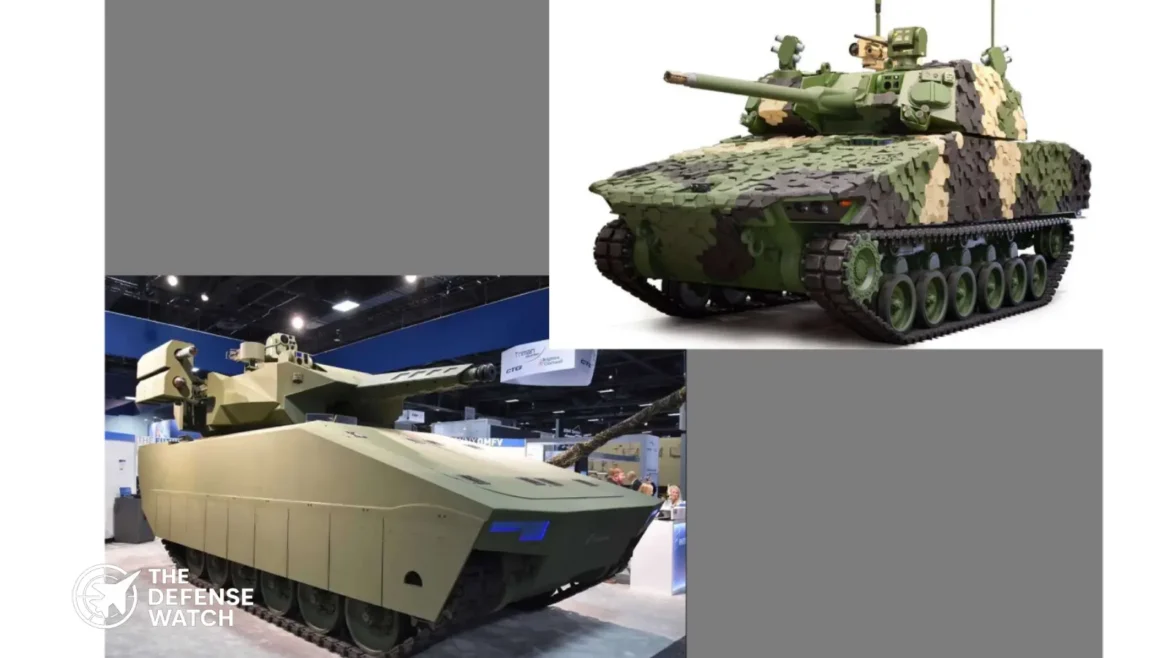
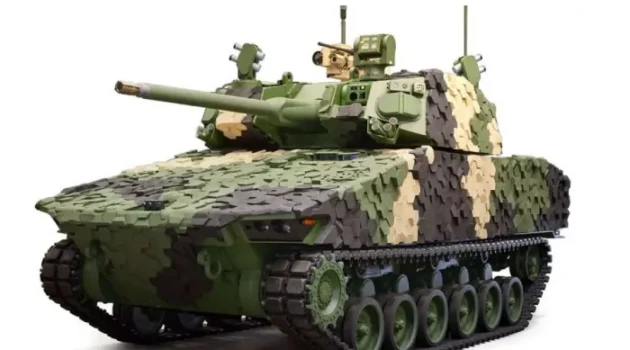
U.S. Army invests in XM30 IFV program for 2026
The U.S. Army will increase investment in the XM30 infantry fighting vehicle program in 2026 to accelerate development of next-generation armored platforms. The initiative aims to field advanced prototypes capable of replacing legacy Bradley IFVs.
According to Army sources, the XM30 fighting vehicle program will focus on modular design, enhanced lethality, and survivability to meet emerging operational requirements. The service is emphasizing adaptability to support a range of combat scenarios, including urban and high-intensity environments.
The planned prototypes will integrate advanced armor protection, improved mobility, and networked systems to enhance situational awareness for soldiers. The program reflects the Army’s broader effort to modernize armored units while maintaining interoperability with other ground and joint forces.
The XM30 infantry fighting vehicle effort aligns with the Army’s modernization strategy, which prioritizes lethality, survivability, and digital integration across combat vehicles. By investing in prototype development, the service expects to refine operational concepts and incorporate new technologies before final production decisions.
U.S. Army awards major Black Hawk helicopter contract
The U.S. Army has awarded Sikorsky Aircraft a contract valued at approximately 433 million dollars for the production and delivery of additional Black Hawk helicopters. The agreement covers new UH 60M utility helicopters and HH 60M medical evacuation variants, reinforcing the Army’s rotary wing fleet across multiple mission areas.
The contract was announced in December 2025 and supports ongoing modernization efforts aimed at maintaining operational readiness across active duty and reserve aviation units. Sikorsky, a Lockheed Martin company, will carry out the work at its facilities in the United States, with deliveries scheduled over the coming years.
Expanding the U.S. Army Black Hawk contract scope
Under the U.S. Army Black Hawk contract, Sikorsky will deliver a mix of UH 60M and HH 60M helicopters configured to meet current battlefield and humanitarian requirements. The UH 60M is the Army’s primary medium lift helicopter, while the HH 60M is optimized for combat medical evacuation missions.
Both variants are based on the same proven airframe but differ in mission equipment. The UH 60M supports troop transport, logistics resupply, command and control, and air assault operations. The HH 60M is equipped with advanced medical systems, patient litters, and defensive aids to operate in contested environments.
Background on the Black Hawk program
The Black Hawk family has been a cornerstone of U.S. Army aviation for more than four decades. Since its introduction in the late 1970s, the aircraft has been continuously upgraded to meet evolving operational demands.
The modern UH 60M configuration features improved engines, a strengthened drivetrain, digital cockpit displays, and enhanced survivability systems. These upgrades allow the helicopter to operate at higher altitudes, carry heavier payloads, and integrate with modern battlefield networks.
The HH 60M, introduced to replace older medical evacuation platforms, has become the standard Army MEDEVAC helicopter. It plays a critical role in reducing casualty evacuation times and improving survival rates for wounded personnel during combat operations.
Contract details and production timeline
According to official contract information, the 433 million dollar award covers procurement, integration, and support services for the helicopters. The work will be performed primarily at Sikorsky’s manufacturing site in Connecticut, with additional contributions from suppliers across the U.S. defense industrial base.
The U.S. Army Black Hawk contract is structured to ensure steady production while maintaining flexibility to adjust quantities based on operational needs and budget availability. This approach supports long term fleet planning and helps avoid gaps in helicopter availability.
Army officials have emphasized that continued investment in Black Hawk helicopters remains essential, even as future vertical lift programs advance. The platform provides a reliable and cost effective solution for a wide range of missions today.
Strategic importance for Army aviation
The latest U.S. Army Black Hawk contract reflects the service’s focus on sustaining proven platforms while integrating incremental upgrades. Despite the development of next generation rotorcraft under the Future Vertical Lift initiative, Black Hawk helicopters are expected to remain in service well into the 2040s.
By procuring additional UH 60M and HH 60M aircraft, the Army ensures consistent fleet commonality, simplified training, and reduced maintenance complexity. This is particularly important for medical evacuation units that rely on standardized equipment and procedures across deployments.
The contract also supports domestic manufacturing and skilled aerospace jobs, reinforcing the resilience of the U.S. defense supply chain.
What comes next
Delivery of the new helicopters will begin following completion of production and acceptance testing. Once fielded, the aircraft will be assigned to operational units in the United States and overseas.
As global security demands continue to evolve, the U.S. Army Black Hawk contract underscores the enduring value of a versatile and combat proven helicopter platform. Additional procurement actions and upgrade contracts are expected as the Army balances modernization goals with near term readiness requirements.
On December 5, 2025, General Dynamics Land Systems (GDLS) announced a successful demonstration of its new modular launcher, PERCH loitering munition launcher, installed on M1A2 SEP V3 Abrams main battle tanks. The live trial took place during the Machine Assisted Rugged Sapper (MARS) event at Fort Hood, Texas. The test saw Abrams tanks deploy AeroVironment Switchblade 300 loitering munition and AeroVironment Switchblade 600 loitering munition, giving the heavy armored vehicles a new beyond-line-of-sight (BLOS) reconnaissance and strike option.
Why This Matters: Context & Background
In recent conflicts, loitering munitions and armed drones have dramatically reshaped the battlefield, enabling forces to hit targets hidden behind terrain or fortifications — often without risking personnel. Tanks, long reliant on direct fire and external reconnaissance, have been exposed during such modern, drone-heavy engagements.
PERCH aims to change that dynamic. By installing a modular launcher directly onto armored platforms, tanks and infantry vehicles can carry and launch loitering munitions independently — turning them into both sensor and shooter nodes.
The demonstration at the MARS event marks the first public evidence that this concept can work under realistic, combat-relevant conditions.
PERCH Launcher: Technical and Operational Details
- The PERCH launcher — an acronym for Precision Effects & Reconnaissance, Canister-Housed — is a modular system co-developed by GDLS and AeroVironment (AV).
- It is designed to house and launch Switchblade loitering munitions (specifically Switchblade 300 and Switchblade 600) from combat vehicles like the M1A2 SEP V3 Abrams and the Stryker infantry carrier vehicle.
- Notably, PERCH requires no welding, cutting, or turret redesign. Instead, it replaces the Abrams’ loader sponson box and bolts directly into existing mounting points — enabling rapid kit installation and preserving the tank’s original protection and systems.
- According to GDLS, future iterations could integrate with onboard vehicle computer systems, allowing seamless control and management of loitering munitions from within the platform.
During the MARS event (Oct 26–30), crews using a PERCH-equipped Abrams conducted a complex obstacle-breaching operation. The tank launched both Switchblade 300 and 600 munitions to perform BLOS reconnaissance and over-the-horizon targeting of high-value targets — all without exposing crew or requiring external ISR (intelligence, surveillance, reconnaissance) assets.
One of the GDLS representatives noted: “PERCH allows units to deploy Switchblade loitering munitions far forward on the battlefield while remaining covered and concealed.”
AV emphasized that integrating Switchblade 300 and 600 via PERCH delivers immediate operational benefits — extending reach and enabling rapid, precise effects from protected positions.
What This Could Mean for Armored Warfare
The successful PERCH trial marks a potentially transformative moment for how armored units operate. Rather than tanks being limited to line-of-sight fire or depending on external drones, they can now carry their own drone strike and reconnaissance capability — creating a more self-sufficient and responsive force.
In doctrine terms, this reflects a growing shift toward distributed, networked fires, where every platform — tank, infantry carrier, or unmanned system — can act as both sensor and shooter.
This could reduce reliance on air assets or artillery for precision strikes, provide rapid response against hidden or fortified threats, and improve survivability by allowing units to engage without exposing themselves.
Moreover, the low-risk, modular installation path means that existing Abrams tanks (and other vehicles) can be upgraded without long downtime or major overhaul — making wide-scale adoption more feasible, should the U.S. Army decide to field PERCH broadly.
What Comes Next
While the demonstration shows promise, PERCH has not yet been formally procured by the U.S. Army.
Further testing under combat-representative conditions — in different environments, threat scenarios, and with full tactical formations — will be necessary to assess reliability, logistics, and integration into existing doctrine.
If performance holds up, this capability could influence future procurement and modernization decisions, not just for the Abrams fleet, but also for other armored and mechanized platforms.
Apache Proves Counter-Drone Muscle in Recent Drills
In a series of recent live-fire drills conducted by the South Carolina Army National Guard as part of Operation Flyswatter at Marine Corps Air Station New River (date not specified), the AH-64E Apache attack helicopter demonstrated its growing capability to counter unmanned aircraft systems (UAS). During the exercise, Apache crews recorded 13 kills out of 14 drone engagements — a high success rate that underscores the platform’s readiness to tackle one of the fastest-growing threats on modern battlefields.
The demonstration saw Apaches detecting, tracking, and then destroying small drones using a variety of munitions, including laser-guided rockets, precision missiles, and its onboard cannon.
Background: Why Apache’s Counter-UAS Role Matters
As low-cost, often one-way or “kamikaze” drones proliferate globally, militaries worldwide are scrambling to field effective counter-UAS (c-UAS) systems. While ground-based air defenses provide one layer of protection, mobile platforms capable of reacting quickly — especially in dynamic battlefield environments — are increasingly valuable.
The Apache, long valued for its attack and reconnaissance capabilities, has historically focused on anti-armor and conventional close air support. But upgrades to its software, sensors, and weapon integration have opened a new mission set: drone detection and defeat.
How the Apache Executed Counter-Drone Engagements
Sensor & Networking Integration
During Operation Flyswatter, the Apache used its standard electro-optical/infrared sensors and its mast-mounted AN/APG-78 Longbow radar to detect and track drones.
Moreover, thanks to network integration via Link 16 and modern data links, Apaches proved they can operate as mobile, airborne air-defense nodes — sharing target data between helicopters and command nodes to shorten sensor-to-shooter timelines.
As one pilot noted, even if only one Apache in a flight detects a drone, its data can cue the whole formation — a valuable force-multiplier in swarm or saturation attack scenarios.
Multi-Weapon Engagements
Once targets were tracked, Apaches engaged using a mix of weapons:
- Guided missiles, including AGM-179 JAGM and variants of AGM-114 Hellfire — some radar-guided, some laser-guided — depending on the engagement scenario.
- Laser-guided rockets: 70 mm Hydra rockets fitted with APKWS laser-guided rocket guidance kits. This proved particularly effective against small UAS, and reportedly three of four drones struck during the demonstration were downed using APKWS rockets.
- The Apache’s nose-mounted 30 mm chain gun, firing high-explosive dual-purpose rounds (M789) — used successfully for close-range drone kills (under ~300 meters).
According to Chief Warrant Officer 5 Daniel York, Project Manager for the Apache New Equipment Training Team, the 13-of-14 kill ratio “proves the Apache — using its current software and systems — is a lethal and adaptable solution to the drone threat.”

Wider Capability and Platform Evolution
The effectiveness demonstrated during Operation Flyswatter reflects broader enhancements being made to the Apache fleet. With its current configuration thanks to Version 6 software, the Apache is increasingly more than just a gunship — it can function as a networked, multi-role platform capable of manned-unmanned teaming, real-time data sharing, and layered mission sets that include counter-UAS, deep strike, and reconnaissance.
Indeed, recent upgrades under the U.S. defense procurement program have emphasized cyclic modernization — enabling integration of additional capabilities such as “Launched Effects” (e.g., expendable drones or rockets deployed from the Apache), advanced EW (electronic warfare) pods, and enhanced sensor suites.
Furthermore, other recent live-fire trials have shown the Apache’s ability to launch long-range guided missiles — such as the SPIKE NLOS — extending its standoff strike range to 26–32 km, a substantial growth over legacy Hellfire/JAGM reach.
This evolving arsenal and networking puts the Apache in a strong position to face modern threats — from swarming drones to peer-level adversaries — while working as part of a broader, layered air defense and strike architecture.
Strategic & Policy Implications
The success of the Apache in counter-drone drills sends a clear signal to defense planners: legacy rotary-wing assets can be adapted to meet the evolving demands of modern warfare, where unmanned systems are proliferating rapidly.
With drones increasingly used for reconnaissance, loitering munitions, and swarm attacks — often from non-state actors or in asymmetric conflict settings — having a highly mobile, flexible, and lethal airborne counter-UAS system fills a capability gap that ground-based air defenses alone may struggle to cover.
Moreover, this demonstration helps justify continued investment in attack helicopter fleets — including ongoing production runs, modernization programs, and export sales. Continuing upgrades (software, sensors, weapons) help ensure the platform remains relevant against future threats.
Finally, Apache’s role as a networked platform — interoperable via datalinks and working alongside UAVs, EW systems, and ground-based defenses — reflects the shifting nature of air operations toward integrated, multi-domain warfare.
What’s Next: Toward Formal Counter-UAS Integration
The live-fire success in Operation Flyswatter could accelerate formal adoption of counter-UAS missions for Apache units. That might include:
- Incorporation of dedicated counter-UAS tactics into standard aircrew training manuals. Indeed, Army officials have reportedly recommended expanding Apache battalion training to include a “Counter-UAS Mission Essential Task.”
- Continued upgrades to sensor suites, network integration, and weapons payloads to better handle drone swarms and fast-moving aerial threats. Future enhancements could include dual-mode rocket guidance (e.g., infrared seekers for fire-and-forget) to allow faster, more efficient engagements.
- Integration of unmanned “wingmen” — deployable drones working in concert with Apaches — to expand detection range, improve situational awareness, and reduce risk to manned helicopters.
Given the increasing complexity of air threats, this trajectory suggests that the Apache may evolve into a central node in future multi-domain air defense architectures.
In the face of proliferating drone threats — from surveillance drones to kamikaze loitering munitions — the AH-64E Apache is evolving from a conventional attack helicopter into a capable counter-UAS asset. The recent 13-of-14 drone kills during Operation Flyswatter offer concrete proof of concept, just as wider modernization and doctrinal adaptation position the Apache to remain relevant in future conflicts.
In November 2025, the U.S. Army convened a multi-week counter-drone trial at the coastal training grounds of Truppenübungsplatz Putlos in northern Germany. The event, branded as Project FlyTrap 4.5, saw air defense units from the 52nd Air Defense Artillery Brigade and the 10th Army Air and Missile Defense Command (10th AAMDC) putting next-generation counter-unmanned aerial systems (C-UAS) through realistic field conditions along the Baltic coast. The trials ran roughly from November 10 to November 21, 2025.
Background: Rising Drone Threats and NATO Posture
As hostile drones proliferate across modern conflict zones — from small reconnaissance UAVs to armed loitering munitions — militaries worldwide are scrambling to adapt. In response, NATO and the U.S. Army have prioritized development and deployment of layered counter-UAS architectures. Project FlyTrap 4.5 marks a major milestone in that effort — shifting from conceptual testing to integrated, networked defense drills that mirror real-world operational demands along NATO’s Eastern Flank.
Planning for the exercise began nearly a year earlier, under the direction of Gen. Christopher Donahue, commander of U.S. Army Europe and Africa and NATO Allied Land Command, who tasked the 52nd ADA Brigade to identify viable tools capable of countering emerging airborne threats in contested electromagnetic environments.
What Happened at Putlos: Trials, Testing, and Integration
At Truppenübungsplatz Putlos — a coastal range overlooking the Baltic Sea — the Army deployed a variety of prototype and experimental C-UAS systems under realistic threat scenarios. The exercise brought together tactical air defense operators, acquisition officials, and industry engineers for a holistic assessment of detection, discrimination, and defeat capabilities.
Detection & Discrimination
Vendors employed both active and passive sensors to detect and discriminate drone threats. Active radar provided better tracking accuracy, but at the cost of a stronger electromagnetic signature — making systems more detectable by adversaries. Passive sensors offered stealthier detection, though with reduced precision. This trade-off remains a central challenge for mobile air defense units operating in contested electronic warfare environments.
Defeat Mechanisms: Kinetic and Non-kinetic
The defeat phase of the trials featured a mix of traditional kinetic interceptors alongside modern non-kinetic options. Notably, the Army tested directed-energy and electronic disruption platforms capable of neutralizing rotary-wing UAS swarms without using explosives — a capability especially attractive for minimizing collateral damage in populated or maritime zones. According to a senior acquisition official, at least one low-collateral system demonstrated in Putlos is now under expedited evaluation by NATO.
Additionally, the trials were synchronized with a parallel competition, xTechCounterStrike, which invited vendors to submit breakthrough C-UAS concepts for direct testing. From over 200 initial companies, 15 finalists were chosen; 11 attended the live trials, and 4 emerged as winners — each awarded US$350,000 and a fast-track path into the U.S. Army’s procurement marketplace via the Global Tactical Edge Acquisition Directorate (G-TEAD).
Maj. Joshua McMillion, the G-TEAD capability lead and judging panel member, explained the motivation behind the exercise: “We were tasked specifically to accelerate the Eastern Flank Deterrence Line … one of the easiest ways to accelerate that capability is to partner with existing companies and existing organizations.”
Significance: Live-Network Integration and Alliance Readiness
What distinguishes Project FlyTrap 4.5 from previous demonstration events is the integration of experimental C-UAS systems directly into an operational command-and-control network. Every participating system needed to interface seamlessly with the brigade’s forward air defense C2 structure — the core of NATO’s Eastern Flank Deterrence Line.
Brig. Gen. Curtis King of the 10th AAMDC described FlyTrap 4.5 not as a demonstration, but “a vital rehearsal for future Baltic operations”. The event offered tactical-level commanders — including individual soldiers — a voice in shaping which technologies will become standard equipment for counter-drone defense across NATO.
Several industry insiders who participated in the trials noted the unprecedented closeness between procurement officers, operational commanders, and engineers as systems were tested side-by-side: “no PowerPoint, just performance,” one vendor observed. Early discussions are reportedly underway to combine complementary systems into mixed vendor packages, potentially enhancing overall effectiveness beyond what any single system can achieve.
Strategic Context: Lessons from Ukraine and Eastern Europe
The urgency behind the exercise reflects hard-earned lessons from recent conflicts — notably the widespread use of small drones, loitering munitions, and “saturation” drone attacks observed during the war in Ukraine. These low-cost, commercially available UAVs have inflicted rising casualties and disrupted logistics and command operations, exposing vulnerabilities in traditional air defense setups.
For NATO’s forward-deployed forces along the alliance’s eastern frontiers, mastering the counter-UAS fight is no longer optional — it is an operational imperative. By accelerating acquisition cycles, testing at the tactical edge, and embedding vendor solutions into real-world C2 networks, the U.S. Army is signaling a transition from reactive adaptation to proactive readiness. Project FlyTrap 4.5 represents more than a testbed; it is a preview of how future multi-domain air defense may be structured.
What’s Next: Toward Full-Spectrum Air Defense by 2026
Project FlyTrap 4.5 is a transitional milestone. The next full-spectrum test — expected in spring 2026 — will likely expand both the variety of threats (e.g., drone swarms, fixed-wing UAVs, loitering munitions) and the number of systems under evaluation. Meanwhile, systems selected via xTechCounterStrike could enter expedited procurement and deployment cycles, potentially equipping frontline NATO units before the end of 2026.
In a strategic environment where drone threats evolve quickly and unpredictably, such efforts will be crucial to maintaining air dominance, perimeter security, and force protection across Europe’s eastern flank.