(adsbygoogle = window.adsbygoogle || []).push({});Executive Summary:
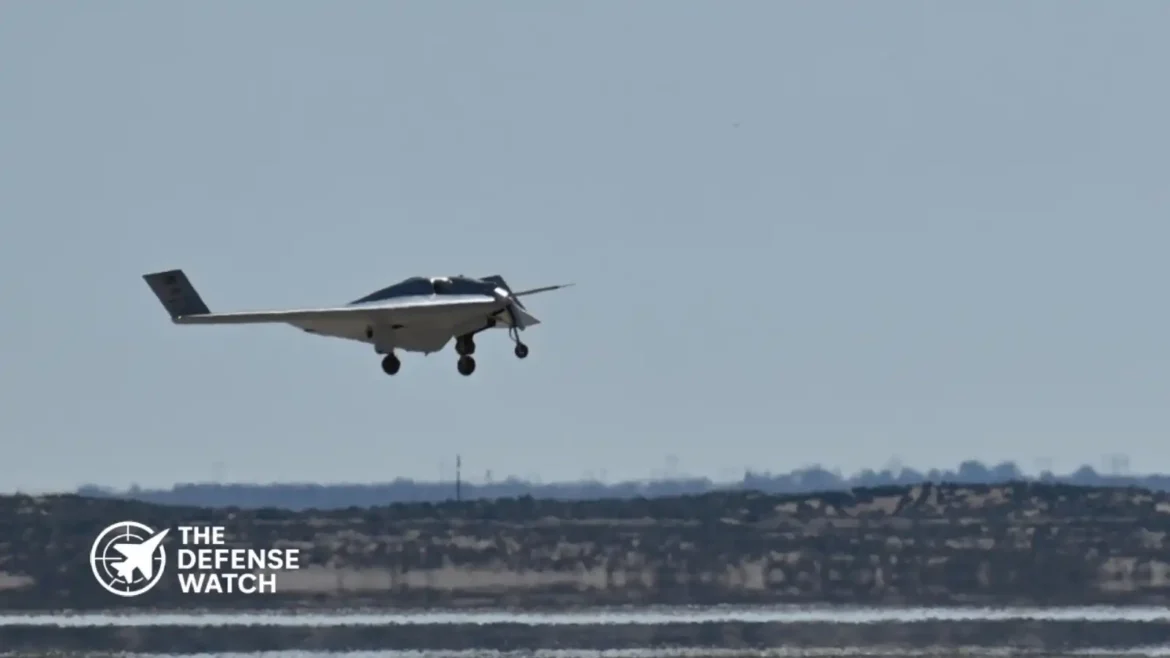
DARPA’s XRQ-73 SHEPARD hybrid electric uncrewed aircraft completed its first flight in April 2026 at Edwards Air Force Base, California. The prototype under DARPA’s Series Hybrid Electric Propulsion Aircraft Demonstration program is a key test of hybrid-electric propulsion for future UAS designs.
First Flight Marks Progress for XRQ-73 Hybrid Electric Uncrewed Aircraft
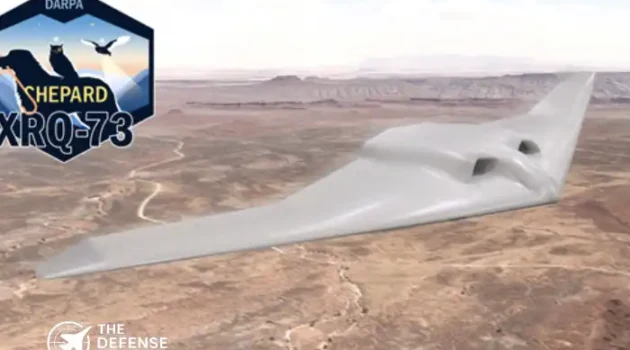
DARPA’s hybrid electric uncrewed aircraft, designated XRQ-73 under the Series Hybrid Electric Propulsion Aircraft Demonstration (SHEPARD) program, completed its first flight in April 2026 at Edwards Air Force Base, California. The flight was confirmed by program partners and announced publicly in early May 2026.
The XRQ-73 aircraft was developed by Northrop Grumman in collaboration with DARPA and with support from the Air Force Research Laboratory and Scaled Composites. The demonstrator uses a series hybrid electric propulsion system where a conventional engine generates electricity to power electric motors that drive the aircraft.
The SHEPARD program aims to assess the operational utility of hybrid-electric technologies for future military aircraft designs. The design blends efficient fuel use with reduced acoustic and thermal signatures, which could benefit long-endurance intelligence, surveillance and reconnaissance (ISR) missions and other applications.
Hybrid Electric Propulsion in a Group 3 UAS
The XRQ-73 SHEPARD is a Group 3 uncrewed aircraft system weighing roughly 1,250 pounds. The flying-wing configuration reflects earlier technology demonstrations such as the XRQ-72 Great Horned Owl, while pushing hybrid electric propulsion forward.
Hybrid electric propulsion uses a fuel-burning engine to generate electricity that drives electric motors. This setup can offer fuel savings, flexibility in mission pacing, and quieter operation compared with traditional propulsion. DARPA’s experiment tests how such systems perform in real flight conditions, data that could influence future military and research platforms.
The April test flight at Edwards occurred within a controlled flight envelope. Details on duration, range, or performance metrics were not disclosed at the time of the announcement. Continued flight testing and data analysis will shape follow-on evaluations.
Broader Research and Industry Context
Hybrid electric propulsion is drawing growing interest across military and civilian aviation sectors. DARPA’s SHEPARD program sits alongside other hybrid UAS projects, including those exploring multi-mode powerplants, quieter signatures, and improved endurance. Because hybrid systems can reduce fuel use and emissions while still tapping conventional power sources, researchers see potential for both defense and commercial applications.
SHEPARD builds on previous DARPA efforts, like the Great Horned Owl initiative, and reflects the Department of Defense’s focus on agile experimental programs that mature technologies fast. The platform’s performance in flight tests will help define whether hybrid-electric designs have practical value for sustained operational use or transition into broader defense acquisition.
What’s Next for XRQ-73 and SHEPARD
DARPA and industry partners will continue flight tests on the XRQ-73 prototype throughout 2026. These trials are expected to probe performance envelopes, endurance characteristics, and propulsion system behavior under varying conditions. The lessons learned could inform future designs for ISR or other uncrewed missions where endurance and low signatures matter.

Executive Summary:
Northrop Grumman has delivered its 200,000th FMU-139D/B bomb fuze, a key electronic ordnance component used by the U.S. military and allied partners. The milestone reflects sustained high-rate production and quality standards that support mission readiness and precision effects.
Northrop Grumman Fuze Delivery Milestone Highlights Production, Reliability
Northrop Grumman has reached a production milestone with the delivery of its 200,000th FMU-139D/B bomb fuze, a compact yet mission-critical component in modern ordnance that governs when and how a weapon functions.
The FMU-139D/B is an all-electronic fuze widely installed on MK-80 and BLU-100 series bombs and other munitions used by the U.S. military and allied air forces. Compared with legacy mechanical systems, this electronic design allows comprehensive pre-deployment testing and greater adaptability for impact, delayed, and penetration detonation profiles.
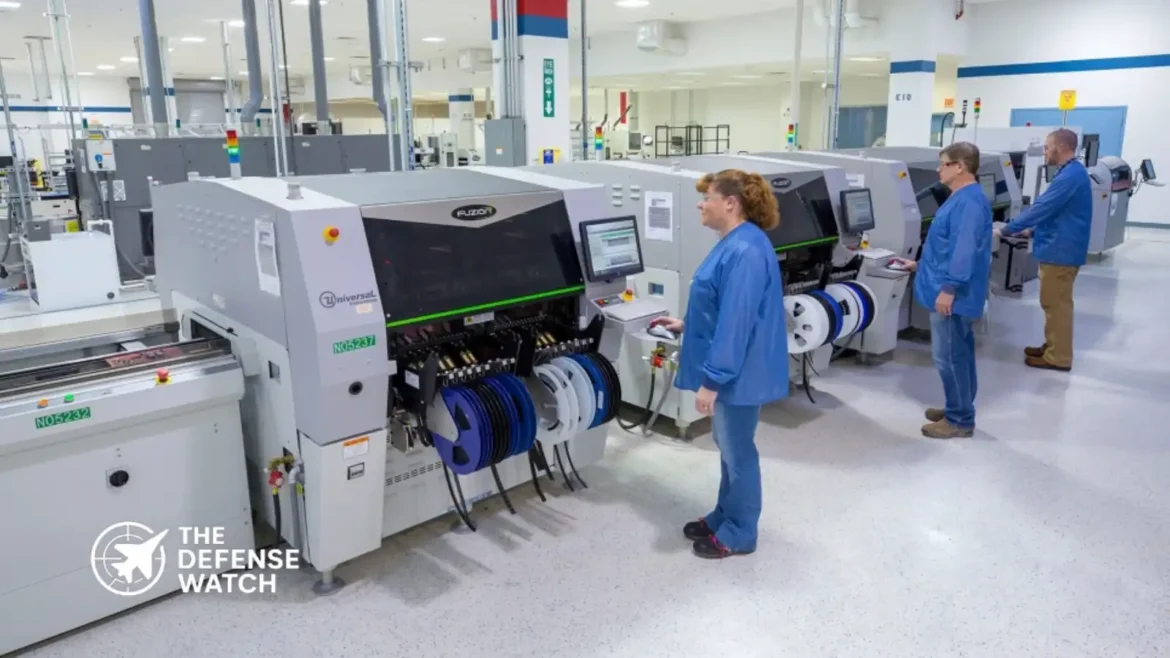
Northrop Grumman’s fuze production takes place at the Allegany Ballistics Laboratory in Rocket Center, West Virginia. The facility blends metals, electronics, composites, and energetics capabilities, enabling high-rate automated output while maintaining rigorous lot acceptance and quality standards.
Why The FMU-139D/B Matters
Although small in size, fuzes are one of the most important components in a munition. They serve as the triggering mechanism that determines detonation timing and effect, directly affecting weapon performance and the ability to achieve intended tactical outcomes.
Electronic designs like the FMU-139D/B are increasingly preferred in modern weapons for improved reliability, safety, and flexibility. They play a key role in operational planning by enabling consistent performance across a range of environments and storage durations.
Production Scale Reflects Sustained Demand
Northrop Grumman’s use of automated production lines supports an annual output capacity of up to 85,000 fuzes, a capability that helps meet long-term demand from U.S. defense programs and allied partners.
Tanya Santers, director of bombs and missiles within Northrop Grumman’s fuze and warheads unit, said the milestone reflects the company’s commitment to reliability and quality in critical ordnance components.
Strategic Impact On Readiness
The milestone underscores the role of defense industrial base capacity in ensuring readiness and sustained operational capability. Reliable fuze production is essential for supporting air-delivered weapon inventories and preserving combat effectiveness across global missions.
Electronic fuzes such as the FMU-139D/B also demonstrate incremental modernization within the wider ordnance portfolio, contributing to safer stockpile management and more precise weapon effects compared with older mechanical designs.
Looking Ahead
While the milestone itself is a production mark, it reinforces broader trends in military ordnance modernization and industrial base support. Continued fuze deliveries support existing inventory needs and signal a stable production base for future weapon system sustainment.

Executive Summary: Northrop Grumman has opened a state-of-the-art 113,000-square-foot Missile Integration Facility (MIF) at the Allegany Ballistics Laboratory in Rocket Center, West Virginia, designed to produce up to 300 advanced strike missiles annually. The facility is the latest component of the company’s $1 billion-plus investment in U.S. manufacturing since 2018, directly supporting the production of the U.S. Navy’s AGM-88G AARGM-ER — a next-generation radar-killing missile critical to suppressing advanced enemy air defenses. The opening comes as global weapons stockpiles face sustained depletion pressure and as Washington races to modernize key strike capabilities before operational timelines slip further.
Key Facts At A Glance
- Facility: Missile Integration Facility (MIF), Allegany Ballistics Laboratory, Rocket Center, WV
- Size: 113,000 square feet (roughly the area of two football fields)
- Production capacity: Up to 300 strike missiles per year; scalable to 600
- Primary product: AGM-88G AARGM-ER anti-radiation guided missile
- Opening date: September 25, 2025
- Northrop Grumman WV investment since 2018: Over $1 billion
- Total new/renovated WV manufacturing space: Over 1 million square feet
- ABL direct employment: More than 1,600 workers
- Total WV jobs supported: Up to 3,000
- WV economic activity generated: Over $1 billion annually
Northrop Grumman Cuts Ribbon On Next-Generation Missile Factory In West Virginia
Northrop Grumman Corporation has inaugurated a major new production center in Rocket Center, West Virginia, marking one of the most significant expansions of the U.S. strike missile manufacturing base in recent years. The new Missile Integration Facility (MIF) — a 113,000-square-foot complex at the Naval Industrial Reserve Ordnance Plant within the Allegany Ballistics Laboratory (ABL) — is designed to produce up to 300 advanced strike missiles per year and consolidate the full production chain under a single roof for the first time.
The September 2025 ribbon-cutting, attended by West Virginia Senator Shelley Moore Capito, Representative Riley Moore, and Northrop Grumman Vice President Frank DeMauro, signals a deliberate push by the defense industry to scale domestic weapons output at a time when U.S. and allied stockpiles are under sustained demand pressure.
“Northrop Grumman is delivering advanced weapons capabilities at scale today,” said DeMauro, VP and general manager of weapons systems. “The cutting-edge Missile Integration Facility expands manufacturing capacity and our team’s ability to deliver for our customers at a critical time.”
What The New Facility Does — And Why It Matters
The MIF is designed around a key principle that has historically slowed missile production: consolidation. Previously, rocket motors and other components manufactured at ABL were shipped to separate locations for final assembly into complete weapons. That logistical gap added lead time, cost, and supply chain vulnerability.
The new facility collapses that process. Rocket motor production, warhead assembly, final missile integration, testing, and shipping now all occur under one roof at ABL — using digital manufacturing technologies and advanced automation to enforce consistent quality controls throughout the production cycle.

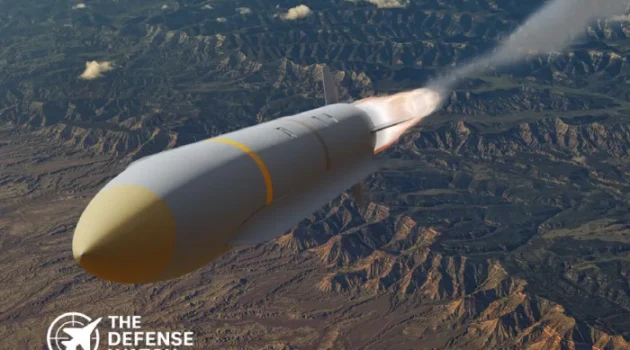
The primary platform this facility supports is the AGM-88G Advanced Anti-Radiation Guided Missile — Extended Range (AARGM-ER), a high-speed, extended-range, air-to-ground weapon designed to suppress or destroy enemy Integrated Air Defense Systems (IADS). The AARGM-ER targets radar emitters, command nodes, and surface-to-air missile batteries — giving U.S. and allied strike aircraft a critical edge in contested airspace before threats can even detect them.
“When flying in contested airspace, you want to destroy the threat before the threat detects you,” said Brad Russell, a former Naval Aviator now serving as a Northrop Grumman business development director. “That’s the capability AARGM-ER delivers.”
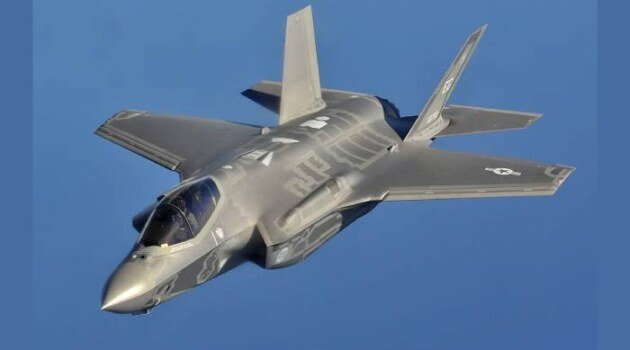
The weapon is designed for integration on the F/A-18E/F Super Hornet, EA-18G Growler, and all three variants of the F-35 Lightning II — making it one of the most broadly compatible anti-radiation missiles in the U.S. inventory.
A $1 Billion Investment In U.S. Weapons Manufacturing
The MIF is not a standalone project. It represents the latest milestone in what Northrop Grumman describes as a $1 billion-plus manufacturing investment at ABL since 2018, encompassing new facilities, renovated production lines, and expanded workforce capabilities.
With the addition of the MIF and a new Plant 4 at the Naval Industrial Reserve Ordnance Plant, Northrop Grumman has brought more than 1 million square feet of new and renovated manufacturing space online in West Virginia over the past seven years.
ABL currently employs more than 1,600 people directly, with the company’s broader activities in West Virginia supporting up to 3,000 additional jobs and generating over $1 billion in regional economic activity. Northrop Grumman is the state’s largest manufacturing industry employer.
The MIF is also designed with scalability in mind. According to company documentation, the facility’s production architecture can accommodate expansion to 600 strike missiles per year — double the initial rated output — giving the U.S. government surge capacity should strategic demands escalate rapidly.
AARGM-ER: A Critical Capability Navigating Real-World Headwinds
The timing of the facility’s opening underscores both the strategic importance of AARGM-ER and the challenges the program has faced in reaching the fleet.
As of May 2026, the U.S. Navy has reaffirmed a September 2026 target for Initial Operational Capability (IOC) on the AGM-88G, though independent watchdogs have flagged continued technical risk. A June 2025 Government Accountability Office (GAO) report cited deficiencies in the rocket motor, structural components, and software performance — alongside supply chain constraints and construction delays at the new production facility — as contributors to a schedule that has already slipped roughly two years from its original 2024 IOC target.
The Pentagon’s Office of the Director of Operational Test and Evaluation (DOT&E) warned in March 2026 that the IOC could potentially slip to the first quarter of FY2027 if unresolved test discrepancies persist. Of three integrated weapon employment tests conducted using F/A-18F aircraft at the China Lake Range in FY2025, only one fully met performance criteria. A successful live-fire event was conducted in January 2026 at the Point Mugu Sea Range — a progress marker the Navy highlighted publicly — but the program continues under close scrutiny.
Complicating matters further, the Navy’s FY2027 budget request allocates only $24 million for AGM-88G procurement — a reduction of roughly $200 million from FY2026 levels — in what officials describe as a “strategic pause” in domestic buying. As of FY2026, the Navy had ordered a total of 435 AARGM-ER rounds, representing approximately $2.43 billion in committed procurement. The service plans to restart domestic purchasing in FY2028, albeit at lower initial rates of around 40 missiles.
Critically, foreign military sales (FMS) procurement continues uninterrupted. Norway announced acquisition of AARGM-ER for its F-35A fleet in March 2026, joining Italy as an international operator. An earlier Honeywell contract valued at $30.8 million covers 1,890 inertial measurement units distributed across U.S. Navy, Air Force, Italian, and additional FMS customers — reflecting sustained allied demand even as the Navy pauses domestic buys.
Broader Industrial Context: Racing Against Stockpile Depletion
The opening of the MIF cannot be evaluated in isolation from the wider strategic context driving U.S. weapons production decisions. Sustained high-intensity conflict in Ukraine and persistent demand for precision munitions from allied partners have accelerated the drawdown of Western weapons inventories at a pace that production lines were not originally designed to match.
The U.S. defense industrial base has come under consistent bipartisan criticism for being too slow, too fragile, and too dependent on single-source suppliers for critical munitions. Northrop Grumman’s West Virginia investment — combining propulsion, warhead, and integration capabilities at a single government-owned, contractor-operated (GOCO) facility — represents one answer to that structural concern.
The Allegany Ballistics Laboratory has been a pillar of U.S. missile propulsion since the 1940s. What has changed is scale, pace, and technological sophistication. The new MIF deploys digital process controls, advanced automation, and integrated test-and-ship workflows that older production lines at ABL did not have. That matters not only for cost and throughput but for the quality assurance demands of a program like AARGM-ER, where defect rates in guidance and propulsion components have directly contributed to test failures.
Meanwhile, the Navy is already looking beyond AARGM-ER. In February 2026, the service issued a market research notice for the Advanced Emission Suppression Missile (AESM) — a longer-range anti-radiation weapon capable of engaging both ground and airborne targets, with forecasted production demand of up to 300 rounds per year and a stated requirement to be the most capable standoff radar-killing weapon in U.S. Naval aviation history. Northrop Grumman’s new West Virginia infrastructure would position the company well to compete for that future contract.
Analysis: Manufacturing Capacity As A Strategic Asset
The MIF opening reflects a broader recognition — increasingly shared by Pentagon planners, Congress, and industry — that production capacity itself is a deterrence asset, not just a logistics concern.
A missile that exists on paper or in small-lot quantities cannot fulfill its deterrent role if adversaries assess they can outlast or outproduce it. For advanced suppression weapons like AARGM-ER, credibility depends on the ability to field sufficient numbers across the fleet — on Super Hornets, Growlers, and eventually F-35s — quickly and in depth.
Northrop Grumman’s $1 billion investment in West Virginia over seven years, capped by the 113,000-square-foot MIF, is a tangible demonstration of commitment to that requirement. Whether the AARGM-ER itself achieves IOC on schedule in September 2026 will depend on resolving the remaining technical challenges — but the production infrastructure to deliver at scale is now in place.
For policymakers, the more pressing question is whether the Navy’s FY2027 “strategic pause” on procurement will delay the full fielding timeline or whether the service can use the interlude to resolve remaining qualification issues and emerge with a clean, fully validated weapon ready for high-rate production in FY2028.
The factory is ready. Now the missile has to meet it.

Executive Summary:
Northrop Grumman is advancing its Integrated Targeting and Data System (ITDS) for the United States Army to improve targeting precision and sensor integration. The effort supports faster decision-making and more effective engagement in complex combat environments. The program reflects a broader push to modernize battlefield networks and close capability gaps against peer adversaries.Northrop Grumman ITDS Program Gains Momentum
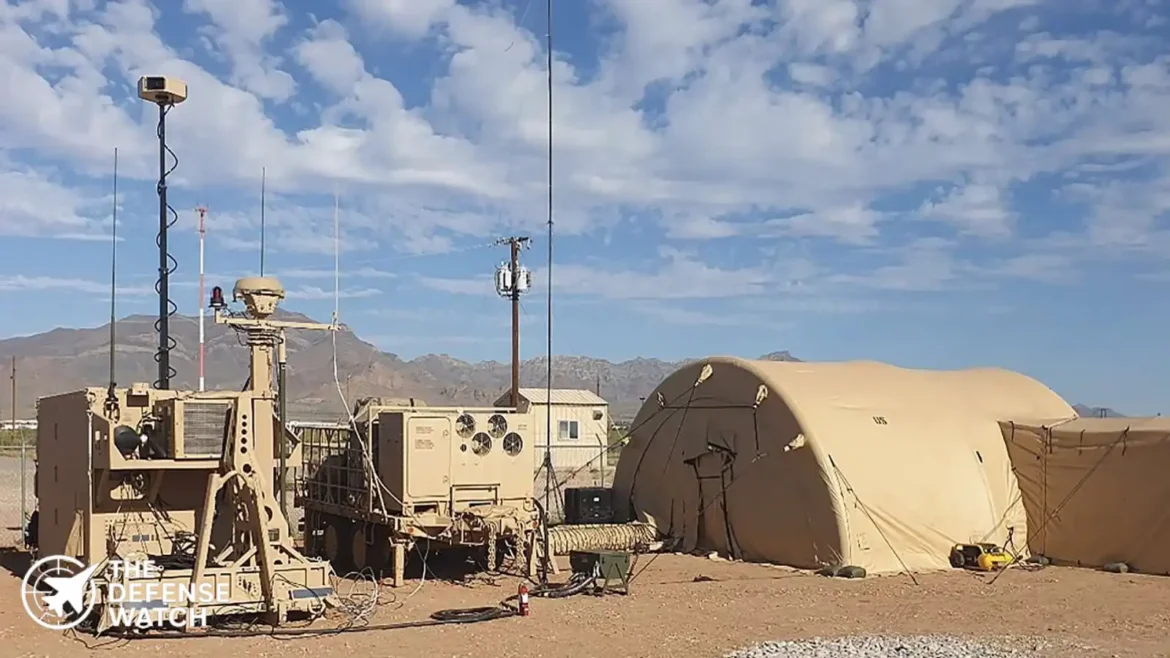
The Northrop Grumman ITDS program is moving forward as part of a broader effort to modernize how the US Army identifies, tracks, and engages targets on the battlefield. According to the company, the Integrated Targeting and Data System is designed to connect sensors, shooters, and command elements into a unified network, enabling faster and more accurate targeting decisions.
This development comes at a time when modern warfare increasingly depends on real-time data fusion and distributed operations. The US Army’s focus on multi-domain operations requires systems that can integrate inputs from air, ground, and space-based sensors while delivering actionable intelligence to frontline units.
Northrop Grumman stated that ITDS is being engineered to operate in contested environments, where electronic warfare and degraded communications are expected challenges.
Enhancing Targeting Precision And Speed
At its core, the Northrop Grumman ITDS program aims to reduce the time between target detection and engagement. By integrating multiple data sources into a single operational picture, the system enables commanders to make faster and more informed decisions.
Key capabilities include:
- Real-time data sharing across units
- Sensor fusion from multiple platforms
- Automated target recognition and tracking
- Interoperability with existing Army systems
These features are critical in high-intensity conflict scenarios, where delays in targeting can reduce effectiveness or increase risk to friendly forces.
From an operational perspective, ITDS supports the Army’s push toward precision fires, ensuring that targets are engaged accurately while minimizing collateral damage.
Supporting Multi-Domain Operations
The US Army targeting system modernization effort is closely tied to the concept of multi-domain operations, which emphasizes coordinated action across land, air, sea, space, and cyber domains.
ITDS plays a role in this framework by acting as a bridge between disparate systems. It allows data collected by one platform, such as a drone or satellite, to be rapidly shared with artillery units or ground forces.
This level of integration is increasingly important as adversaries develop advanced anti-access and area-denial capabilities. In such environments, the ability to operate with limited connectivity and still maintain situational awareness becomes a decisive advantage.
Closing Capability Gaps Against Peer Adversaries
One of the driving factors behind the Northrop Grumman ITDS program is the need to keep pace with near-peer competitors. Countries like China and Russia have invested heavily in electronic warfare, long-range fires, and sensor networks.
ITDS is intended to help close these gaps by:
- Improving resilience in contested electromagnetic environments
- Enabling decentralized operations
- Enhancing targeting accuracy at extended ranges
From an analytical standpoint, this reflects a shift away from platform-centric warfare toward network-centric operations. The effectiveness of a force increasingly depends on how well its systems communicate and share data.
Integration With Existing And Future Systems
A key challenge in any modernization effort is ensuring compatibility with legacy systems. Northrop Grumman has emphasized that ITDS is being designed with interoperability in mind.
This includes integration with:
- Existing command and control systems
- Current artillery and missile platforms
- Emerging technologies such as AI-enabled analytics
The ability to plug into existing infrastructure reduces the cost and complexity of adoption while accelerating deployment timelines.
Industry And Strategic Implications
The advancement of the Northrop Grumman ITDS program highlights the growing role of defense contractors in shaping next-generation military capabilities. It also underscores the importance of software and data-driven solutions in modern warfare.
From a strategic perspective, systems like ITDS are not just about improving individual engagements. They are about enabling a more agile and responsive force that can adapt to rapidly changing conditions on the battlefield.
This aligns with broader Pentagon priorities, including the Joint All-Domain Command and Control (JADC2) initiative, which seeks to connect all branches of the military through a unified data network.
Executive Summary
The United States has approved the integration of the Integrated Battle Command System (IBCS) into Kuwait’s air defense network. The upgrade will link existing Patriot systems into a unified architecture to improve response against missile and drone threats. The move reflects growing concern over complex, multi-vector attacks in the Gulf region.U.S. Clears Kuwait for IBCS Air Defense Network Integration
The U.S. government has approved Kuwait’s acquisition of the Integrated Battle Command System (IBCS), a next-generation command and control architecture developed by Northrop Grumman. The system will integrate Kuwait’s existing MIM-104 Patriot batteries into a unified, networked defense structure.
The approval, announced in 2026, is part of a broader U.S. effort to strengthen allied air and missile defense capabilities in the Gulf. Kuwait becomes one of the first regional operators to adopt IBCS, aligning its defenses with evolving U.S. Army doctrine.
What IBCS Brings to Kuwait’s Patriot Systems
IBCS replaces traditional, siloed air defense operations with a distributed network that connects sensors and shooters across the battlefield.
Key Technical Advantages
- Sensor fusion combines radar inputs into a single, real-time operational picture
- Any-sensor, any-shooter capability allows engagement using the most effective available interceptor
- Improved tracking of low-signature targets, including cruise missiles and drones
- Resilience against electronic warfare, with decentralized architecture
- Scalability, enabling integration with future systems beyond Patriot
This approach directly addresses emerging threats such as drone swarms and coordinated missile attacks, which can overwhelm traditional systems.
Comparison: IBCS-Enabled Patriot vs Legacy Patriot System
Feature IBCS-Enabled Patriot Legacy Patriot System Range Extended via networked sensors Limited to organic radar coverage Payload PAC-3 interceptors (network-optimized) PAC-2/PAC-3 interceptors Status Approved for Kuwait, 2026 Widely deployed globally Key Technology Networked command, sensor fusion, distributed targeting Standalone battery operations Strategic Context: Countering Missile and Drone Threats in the Gulf
Kuwait’s adoption of IBCS reflects a wider shift in regional defense planning. Gulf states face increasing risks from:
- Ballistic missile proliferation, particularly from regional actors
- Low-cost drone swarms, which challenge traditional interception models
- Cruise missiles with low radar signatures, capable of evading legacy defenses
Recent conflicts have shown that isolated air defense systems struggle against layered attacks. IBCS addresses this by enabling coordinated, multi-layered responses.
The integration also enhances interoperability with U.S. and allied forces, a critical factor in coalition operations across the Middle East.
Program Significance and Future Outlook
The Kuwait IBCS program underscores the growing importance of network-centric warfare in air defense. By shifting from platform-based to system-of-systems architecture, the U.S. and its partners aim to maintain an edge against increasingly complex threats.
For Kuwait, the upgrade represents a significant modernization step. It strengthens national defense while aligning with U.S. regional security frameworks.
Further adoption of IBCS across allied nations is expected, particularly in regions facing high-density missile and drone threats.
Executive Summary:
Northrop Grumman has delivered the 70th E-2D Advanced Hawkeye to the United States Navy, marking a key milestone in modernizing carrier-based airborne early warning capabilities. The platform enhances situational awareness and battle management across contested environments. The delivery reflects continued investment in network-centric warfare and integrated air and missile defense.E-2D Hawkeye Delivery Milestone Strengthens U.S. Naval Aviation
The delivery of the 70th E-2D Advanced Hawkeye underscores the U.S. Navy’s sustained effort to modernize its airborne early warning and command-and-control fleet. The aircraft, manufactured by Northrop Grumman, represents the latest evolution of the long-serving Hawkeye family.
The E-2D replaces older variants with a platform designed for operations in highly contested electromagnetic environments. It provides enhanced detection, tracking, and coordination capabilities for carrier strike groups operating across global theaters.
This milestone reflects steady production progress under a multi-year procurement framework aimed at delivering a fully modernized fleet.
Advanced Radar and Network-Centric Warfare Capabilities
At the core of the E-2D’s capability is its AN/APY-9 radar, which enables simultaneous air and surface surveillance over extended ranges. The aircraft is optimized for detecting low-observable and cruise missile threats.
Key Technical Advantages
- 360-degree radar coverage with advanced electronic scanning
- Enhanced detection of low-signature targets, including cruise missiles and UAVs
- Integrated battle management systems for real-time command and control
- Cooperative Engagement Capability (CEC) enabling sensor data sharing across platforms
- Improved data fusion, supporting joint and coalition operations
The aircraft serves as a critical node in the Navy’s broader Naval Integrated Fire Control-Counter Air (NIFC-CA) architecture.
Comparison: E-2D Advanced Hawkeye vs E-2C Hawkeye
Feature E-2D Advanced Hawkeye E-2C Hawkeye Range Extended (>550 km detection) ~400 km detection Payload Advanced radar + upgraded avionics Legacy radar systems Status Active production and deployment Being phased out Key Technology AN/APY-9 AESA radar, CEC, NIFC-CA integration Mechanically scanned radar Operational Role in Carrier Strike Groups
The E-2D operates from U.S. Navy aircraft carriers, providing:
- Early warning of airborne threats
- Battle management for air defense missions
- Coordination of fighter aircraft and interceptors
- Integration with surface and air assets
Its ability to act as an airborne command post makes it indispensable in high-end naval warfare scenarios.
Strategic Context: Countering Modern Threat Environments
The continued fielding of the E-2D comes amid evolving global threats, including:
- Proliferation of long-range anti-ship missiles
- Increased use of low-observable aircraft and drones
- Expansion of peer adversary anti-access/area denial (A2/AD) networks
In this context, the E-2D enhances the U.S. Navy’s ability to:
- Maintain persistent maritime domain awareness
- Coordinate multi-domain operations
- Enable long-range engagement capabilities
The aircraft plays a central role in ensuring carrier strike groups remain viable in contested regions such as the Indo-Pacific and beyond.
Production Outlook and Fleet Expansion
Northrop Grumman continues production under existing contracts, with additional aircraft expected to be delivered in the coming years. The U.S. Navy plans to expand its E-2D fleet to fully replace legacy E-2C variants.
The program also includes international interest, with allied nations evaluating or operating the platform to enhance their own airborne early warning capabilities.
Conclusion
The delivery of the 70th E-2D Advanced Hawkeye marks a significant milestone in U.S. naval aviation. As threats become more complex and contested environments more challenging, the platform provides a critical edge in airborne surveillance, battle management, and networked warfare.
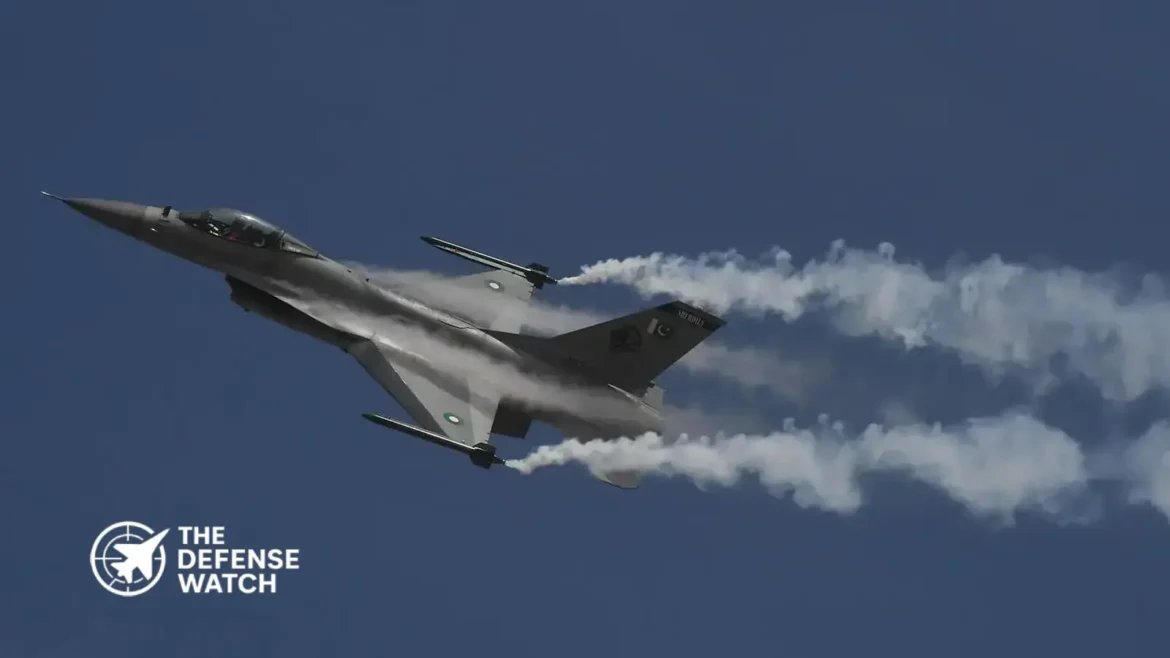
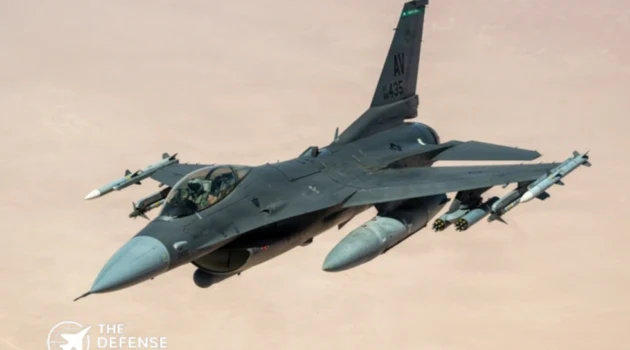
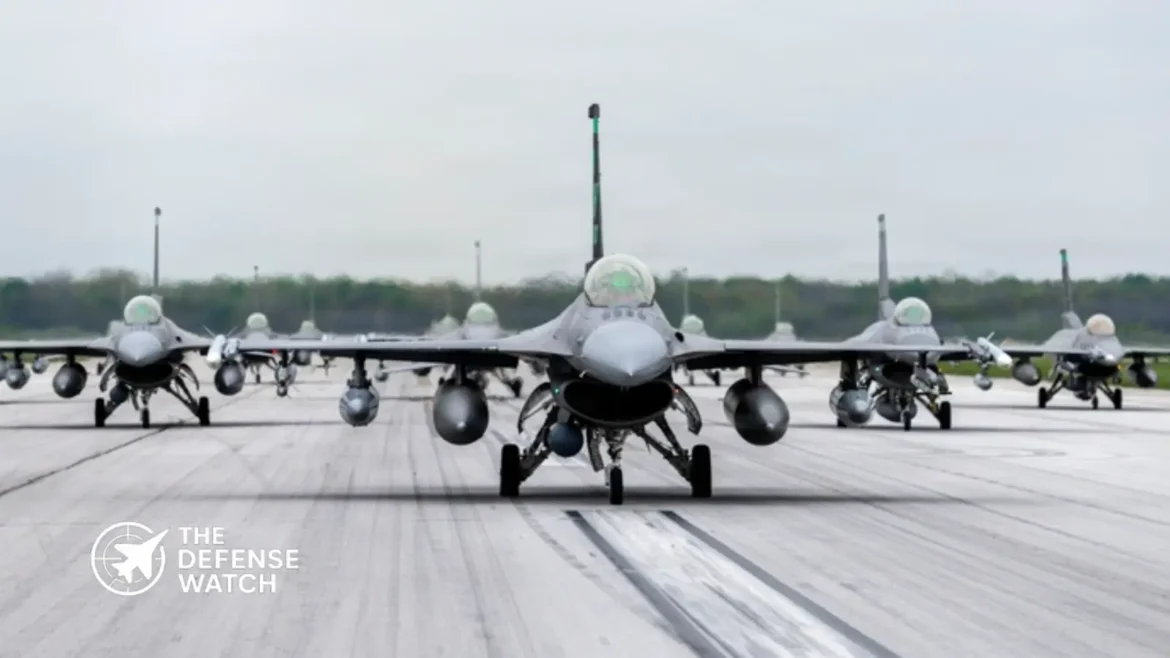
Executive Summary: The United States has authorized a comprehensive dual-track support and upgrade framework for Pakistan’s F-16 fleet, totaling approximately $1.17 billion. The package focuses on long-term radar sustainment and the integration of Link-16 tactical data links to ensure operational safety and regional interoperability through 2040.
Technical Modernization Overview
The modernization effort is divided into two distinct Foreign Military Sales (FMS) segments. The first, a $488 million contract awarded to Northrop Grumman, provides indefinite-delivery/indefinite-quantity (IDIQ) engineering and technical support for the AN/APG-66 and AN/APG-68 radar sets. This ensures the reliability of the fleet’s primary fire-control sensors.
The second phase, valued at $686 million, introduces advanced digital capabilities, most notably the Link-16 tactical data link system. This upgrade allows for secure, jam-resistant communication and real-time data sharing between aircraft and command centers, a critical requirement for modern multi-domain operations.
Comparative Capabilities: Legacy vs. Modernized Fleet
Feature Legacy F-16 (Block 15/MLU) Modernized F-16 (Post-Upgrade) Key Technology Mechanical Radar / Voice-only Link-16 / AN/APG-68(V)9 Support Range (Detection) ~40-60 nmi (Standard) Enhanced signal processing and MTBF Status Approaching End-of-Life Validated for service through 2040 Payload Interoperability Analog/Basic Digital Advanced precision-guided munitions (PGM) Precision Avionics and Secure Communications
The $686 million package notified to Congress by the Defense Security Cooperation Agency (DSCA) includes a robust suite of hardware and software enhancements:
- Tactical Data Exchange: Procurement of 92 Link-16 terminals to facilitate “silent” situational awareness.
- Cryptographic Security: Integration of KY-58M and KIV-78 cryptographic modules for secure, NSA-certified voice and data transmissions.
- Precision Navigation: Upgraded embedded Global Positioning Systems (GPS) and Inertial Navigation Systems (INS).
- Flight Safety: Structural and software modifications to the Operational Flight Program (OFP) to mitigate fatigue-related safety concerns.
Strategic Context and Regional Balance
While the upgrades significantly enhance the Pakistan Air Force (PAF) capability, the DSCA stated that the sale “will not alter the basic military balance in the region.” Instead, the focus is squarely on counterterrorism (CT) operations and maintaining a baseline of interoperability with US and coalition forces.
The timing of the authorization is critical. As regional threats evolve, the ability of the PAF to maintain a high mission-capable (MC) rate for its premier fighter platform is a pillar of Pakistan’s defensive posture. By refurbishing the Block-52 and Mid-Life Upgrade (MLU) airframes, Pakistan effectively bridges the gap until its next-generation platforms reach full operational maturity.
Logistics and Implementation
The primary contractors for these efforts are Lockheed Martin (Fort Worth, TX) and Northrop Grumman (Linthicum Heights, MD). Notably, the US government has confirmed that the implementation of these packages will not require the permanent stationing of additional US personnel in Pakistan. All support will be managed through existing technical coordination groups and long-term engineering contracts scheduled to run through March 31, 2036.
Executive Summary: Northrop Grumman and the Australian Government have finalized a strategic engagement to establish a sovereign Solid Rocket Motor (SRM) manufacturing capability. Supported by an initial $126.9 million investment, the partnership aims to bolster the Guided Weapons and Explosive Ordnance (GWEO) Enterprise by fast-tracking domestic production at the Mulwala munitions factory to secure critical missile supply chains.
Strategic Deepening of the GWEO Enterprise
The formalization of this agreement marks a pivotal shift in Australia’s defense industrial base. By integrating Northrop Grumman’s propulsion expertise with the Australian Government’s GWEO Enterprise, the Commonwealth seeks to mitigate supply chain vulnerabilities exposed by global strategic competition.
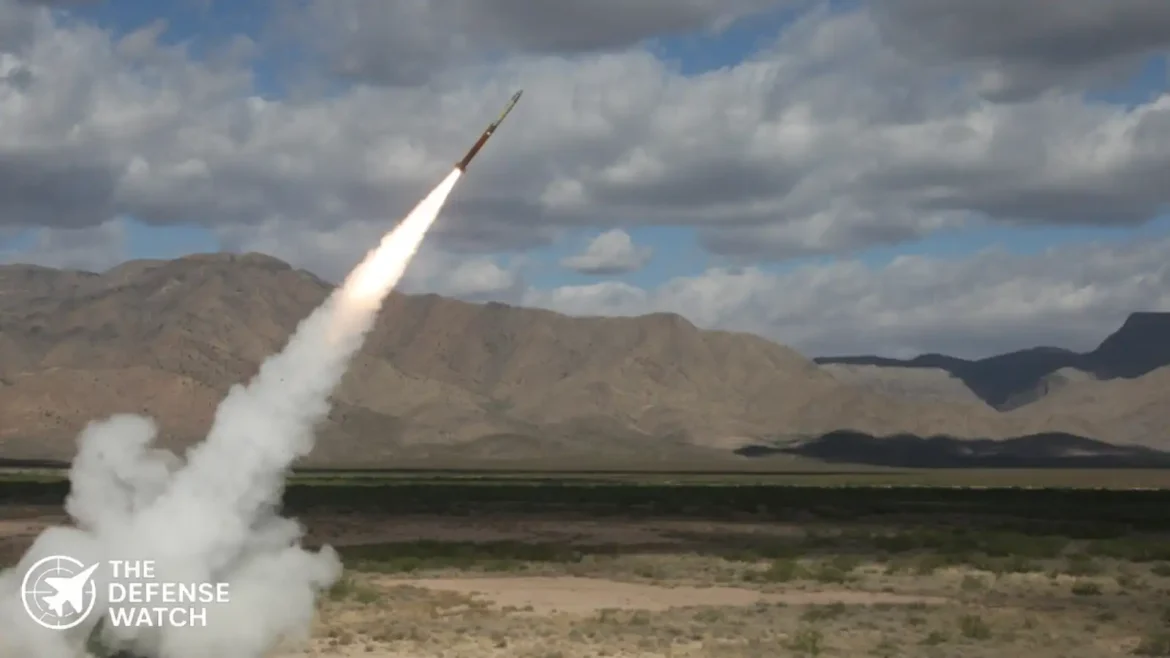
The initiative focuses on the domestic production of high-performance SRMs at the government-owned Mulwala munitions factory in New South Wales. This decision leverages recently completed facility upgrades to accelerate the timeline for Australian-produced components, with initial production of rocket motors for the Guided Multiple Launch Rocket System (GMLRS) scheduled to commence by 2030.
Technical Specifications: Transition to Sovereign Production
The following table outlines the projected advancements of localized SRM production compared to legacy imported systems.
Feature Legacy Imported SRMs Australian Sovereign SRM (Projected) Range System Dependent (Fixed) Extended via High-Energy Propellants Payload Standard HE/Fragmenting Modular Warhead Integration Status Procurement-based / Vulnerable Operational Readiness / Sovereign Key Technology Traditional Composite Propellant Advanced Cast-Cure / Case-Bonding Operational Advantages and Technological Innovation
The shift toward domestic SRM production provides several technical and tactical advantages for the Australian Defence Force (ADF):
- Advanced Energetics: Utilization of high-energy propellants to increase specific impulse, allowing for extended engagement ranges—critical for the ADF’s long-range strike posture.
- Manufacturing Resilience: A dedicated Rocket Motor Manufacturing Complex is planned to be operational by 2033, designed for high-rate production of multiple SRM types.
- Allied Integration: Designed to meet AUKUS and NATO standards, ensuring Australian-made motors can supplement the United States’ overstretched industrial base for platforms like HIMARS.
- Local Innovation: The program builds on the successful static firing of the DRACO motor in early 2026, an Australian-designed propulsion system that proves domestic maturity in energetics.
Geopolitical Context and Regional Security
The Indo-Pacific region is currently witnessing an unprecedented missile modernization effort. Australia’s investment in sovereign SRM production is a direct response to the “Impactful Deterrence” mandate of the National Defence Strategy.
By establishing a “second line of supply” for the United States and other regional partners, Australia positions itself as a critical industrial hub. This move is vital as the U.S. defense industrial base faces capacity constraints due to the simultaneous demands of the Indo-Pacific, Eastern Europe, and the Middle East.
Industrial and Strategic Implications
The partnership signals a fundamental shift toward decentralized defense manufacturing among the “Quad” and AUKUS nations. For Northrop Grumman, the agreement strengthens its role as a primary supplier within the global allied missile ecosystem. For Australia, it represents a definitive step toward defense industrial autonomy, ensuring the ADF can maintain its Guided Weapons inventory independent of external logistics during high-intensity contingencies.
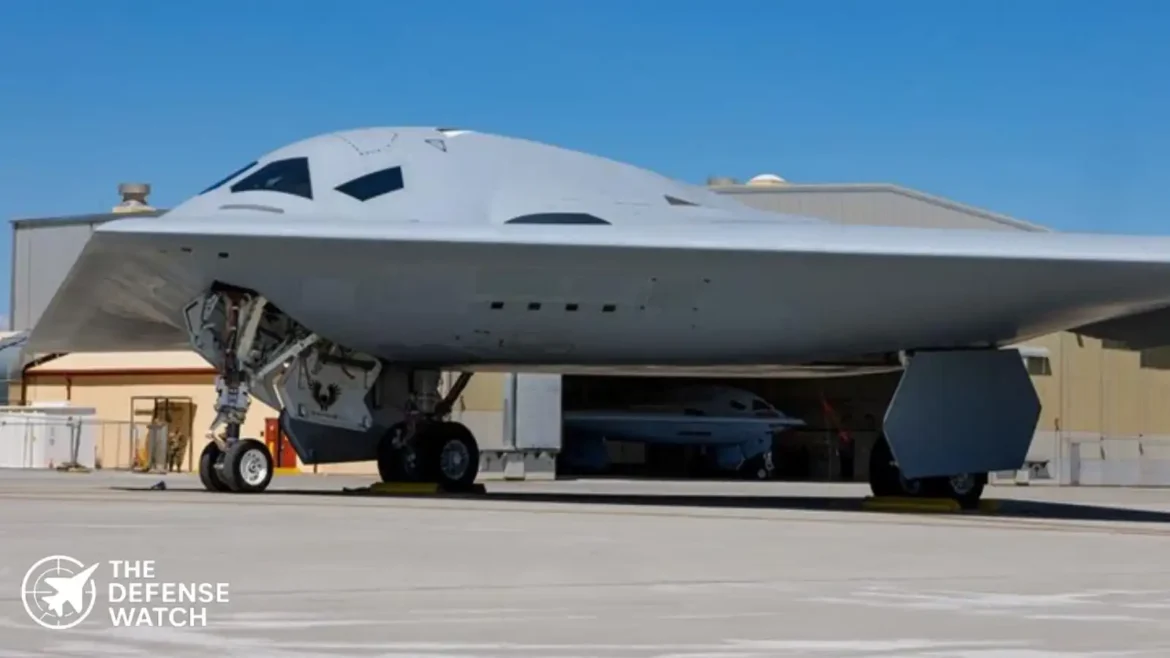
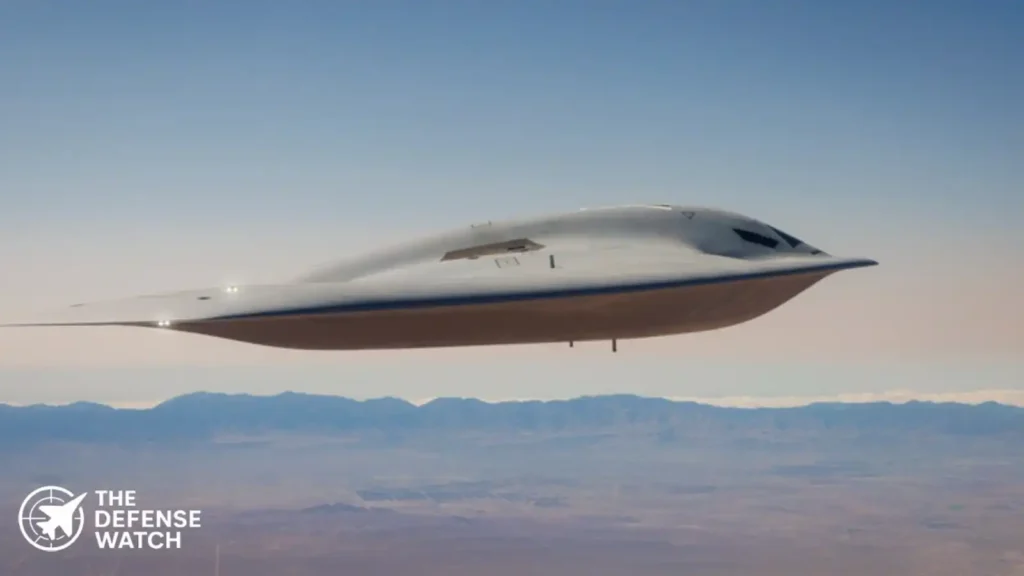
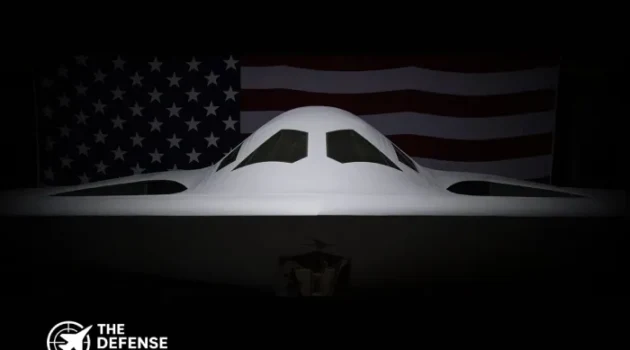
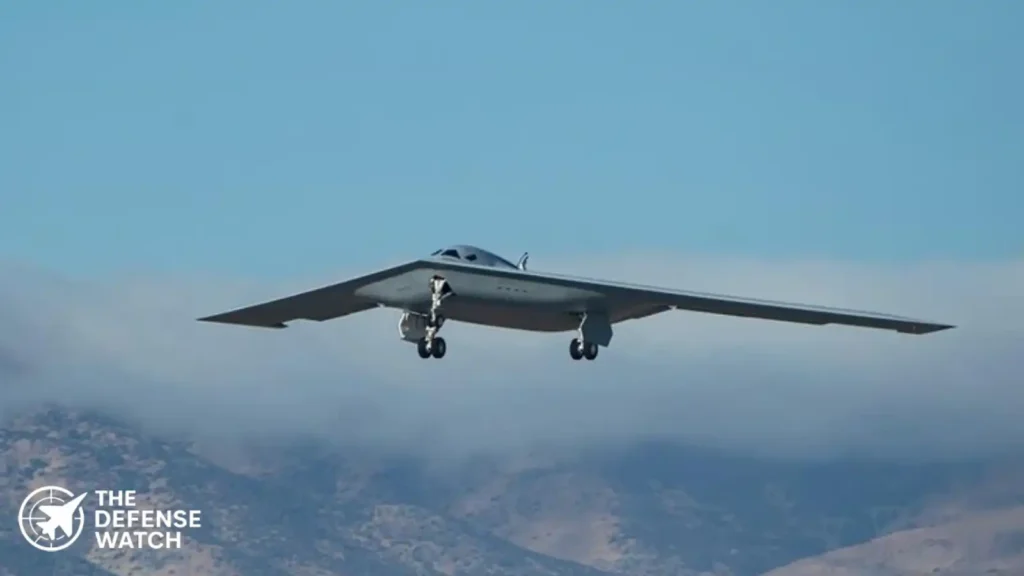
Executive Summary: The Commander of US Indo-Pacific Command (INDOPACOM) has formally supported increasing the US Air Force’s acquisition objective for the B-21 Raider from 100 to 200 aircraft. This recommendation is driven by the need for high-volume, long-range conventional and nuclear precision strikes to deter peer-state aggression in the Pacific theater.
Strategic Requirement for Expanded Stealth Capacity
The push for a 200-aircraft fleet represents a significant shift from the current Department of Defense (DoD) “Program of Record.” Military leadership argues that the initial requirement of 100 units was formulated under different geopolitical conditions. As regional anti-access/area-denial (A2/AD) bubbles expand, the B-21 is increasingly viewed as the primary tool for penetrating sophisticated Integrated Air Defense Systems (IADS).

The B-21 Raider, developed by Northrop Grumman, utilizes sixth-generation stealth technology designed to remain survivable against modern S-400 and nascent S-500 surface-to-air missile systems. By doubling the fleet, INDOPACOM aims to ensure high-sortie availability despite the vast geographical distances of the Pacific.
Comparative Analysis: B-21 Raider vs. B-2 Spirit
The B-21 is intended to replace the aging B-2 Spirit and B-1B Lancer fleets, providing a more maintainable and digitally integrated platform.
Feature B-21 Raider B-2 Spirit (Legacy) Range Estimated 6,000+ nm (Unrefueled) Approx. 6,000 nm Payload Classified (Mixed Munitions) 40,000 lbs Status In Production / Flight Testing Operational (Low Fleet Count) Key Technology Open Systems Architecture (OSA) Analog/Proprietary Digital Mix Export to Sheets
Technical Advantages and Mission Profile
The B-21’s value proposition extends beyond its radar cross-section (RCS) reduction. Its “Open Systems Architecture” allows for rapid software insertion, ensuring the platform can adapt to electronic warfare (EW) threats in real-time.
- Digital Engineering: The platform was developed using digital twin technology, reducing the sustainment tail and increasing the “Mission Capable” rate compared to the maintenance-intensive B-2.
- Multi-Role Capability: While primarily a bomber, the B-21 serves as a high-altitude sensor node, capable of gathering and distributing intelligence, surveillance, and reconnaissance (ISR) data across the Joint All-Domain Command and Control (JADC2) network.
- Dual-Capable Strike: The aircraft is designed to carry both the B61-12 guided nuclear bomb and the Long Range Stand-Off (LRSO) cruise missile, alongside a vast array of conventional precision-guided munitions (PGMs).
Geopolitical Implications and Deterrence
The INDOPACOM recommendation arrives amid increasing concerns regarding the People’s Liberation Army (PLA) modernization. The vastness of the Pacific theater requires a platform that can operate without reliance on vulnerable forward-operating bases.
“The B-21 is the most significant deterrent in our inventory,” noted officials during the 2026 posture hearings. The ability to hold targets at risk from the continental United States (CONUS) or second-island-chain bases like Guam provides a strategic depth that tactical fighters cannot match.
However, expanding the order to 200 aircraft will face budgetary scrutiny. With an estimated unit cost of $750 million (in 2026 dollars), a 100-unit increase would require an additional $75 billion in procurement funding, not including long-term operations and sustainment (O&S) costs. Proponents argue that the cost of conflict far outweighs the investment in a dominant stealth deterrent.
Northrop Grumman F-16 Radar Contract Extends Critical Fighter Fleet Support
Northrop Grumman has secured a $488 million contract for F-16 radar support, reinforcing long-term sustainment of one of the world’s most widely operated fighter aircraft fleets. The award was issued by the U.S. Air Force Life Cycle Management Center at Hill Air Force Base, Utah, and covers engineering and technical services for the APG-66 and APG-68 radar systems.
The firm-fixed-price, indefinite-delivery/indefinite-quantity agreement runs through March 31, 2036, signaling sustained demand for F-16 modernization and readiness support across both U.S. and allied operators.
KEY FACTS AT A GLANCE- Northrop Grumman received a ceiling $488 million IDIQ contract for F-16 radar engineering and technical support.
- The award covers APG-66 and APG-68 radar systems used by U.S. Air Force, Navy, and foreign military sales customers.
- Work will be performed in Linthicum Heights, Maryland, through March 31, 2036.
- More than 20 nations are included, among them Bahrain, Egypt, Greece, Israel, Pakistan, Poland, Romania, Thailand, and Türkiye.
- Initial funding of $2.64 million was obligated at the time of award.
The contract was awarded on a sole-source basis and includes support for U.S. Air Force and Navy requirements, alongside extensive Foreign Military Sales (FMS) participation.
Why The F-16 Radar Support Deal Matters
Although newer fighters such as the F-35 continue entering service, the F-16 remains a frontline aircraft in many air forces. Thousands of F-16s are still active worldwide, making radar sustainment a strategic priority.
The APG-66 and APG-68 radars are central to the aircraft’s combat value. These systems support:
- Air-to-air target detection
- Beyond-visual-range engagements
- Precision strike missions
- Maritime surveillance roles
- Multi-target tracking in contested airspace
Without radar reliability, even upgraded F-16 fleets lose much of their operational effectiveness.
This means the Northrop Grumman F-16 radar contract is less about legacy maintenance and more about preserving combat capability for allied fleets expected to serve well into the 2030s.
Broad International Reach Through Foreign Military Sales
The Pentagon said the contract involves FMS support to:
Bahrain, Belgium, Chile, Denmark, Egypt, Greece, Indonesia, Iraq, Israel, Jordan, Korea, Morocco, Netherlands, Norway, Oman, Pakistan, Poland, Portugal, Romania, Thailand, and Türkiye.
That customer list highlights how deeply embedded the F-16 remains in NATO, Middle Eastern, and Indo-Pacific force structures.
Several of these nations are also pursuing fleet upgrades, weapons integration, and service-life extensions. Reliable radar support is therefore essential to bridge capability gaps while countries assess future fighter replacements.
Strategic Importance Of APG-66 And APG-68 Systems
The APG-66 radar equipped earlier F-16 variants and helped establish the aircraft’s reputation as a capable multirole platform. The later APG-68 introduced improved range, mapping modes, and targeting performance.
Many operators continue flying aircraft equipped with these radars or upgraded derivatives. Even where active electronically scanned array systems are being introduced, legacy mechanically scanned radars remain common across reserve, export, and second-line fleets.
From a cost perspective, radar sustainment is often more affordable than replacing entire fleets. That reality explains why the $488 million defense contract spans a decade.
Northrop Grumman’s Role In Fighter Sensor Sustainment
Northrop Grumman has long experience in airborne sensors, mission systems, and fighter radar integration. The company’s continued involvement in F-16 radar support gives operators access to original equipment expertise, repair pathways, engineering changes, and lifecycle management.
For Washington, these contracts also strengthen interoperability. When multiple allied nations rely on common systems and support channels, logistics and readiness can improve during coalition operations.
Funding And Contract Structure
The Pentagon stated $2,644,922 in fiscal 2026 non-appropriated, Air Force, and Navy funds were obligated at the time of award. As an IDIQ contract, total spending will depend on future task orders placed over the contract period.
That structure gives the U.S. government flexibility to order support as operational needs emerge.
Outlook
The latest Northrop Grumman F-16 radar contract underscores a broader defense trend: older but proven combat aircraft are staying relevant through sustainment and incremental modernization.
As global tensions drive demand for ready fighter fleets, radar readiness may prove just as important as new aircraft procurement.