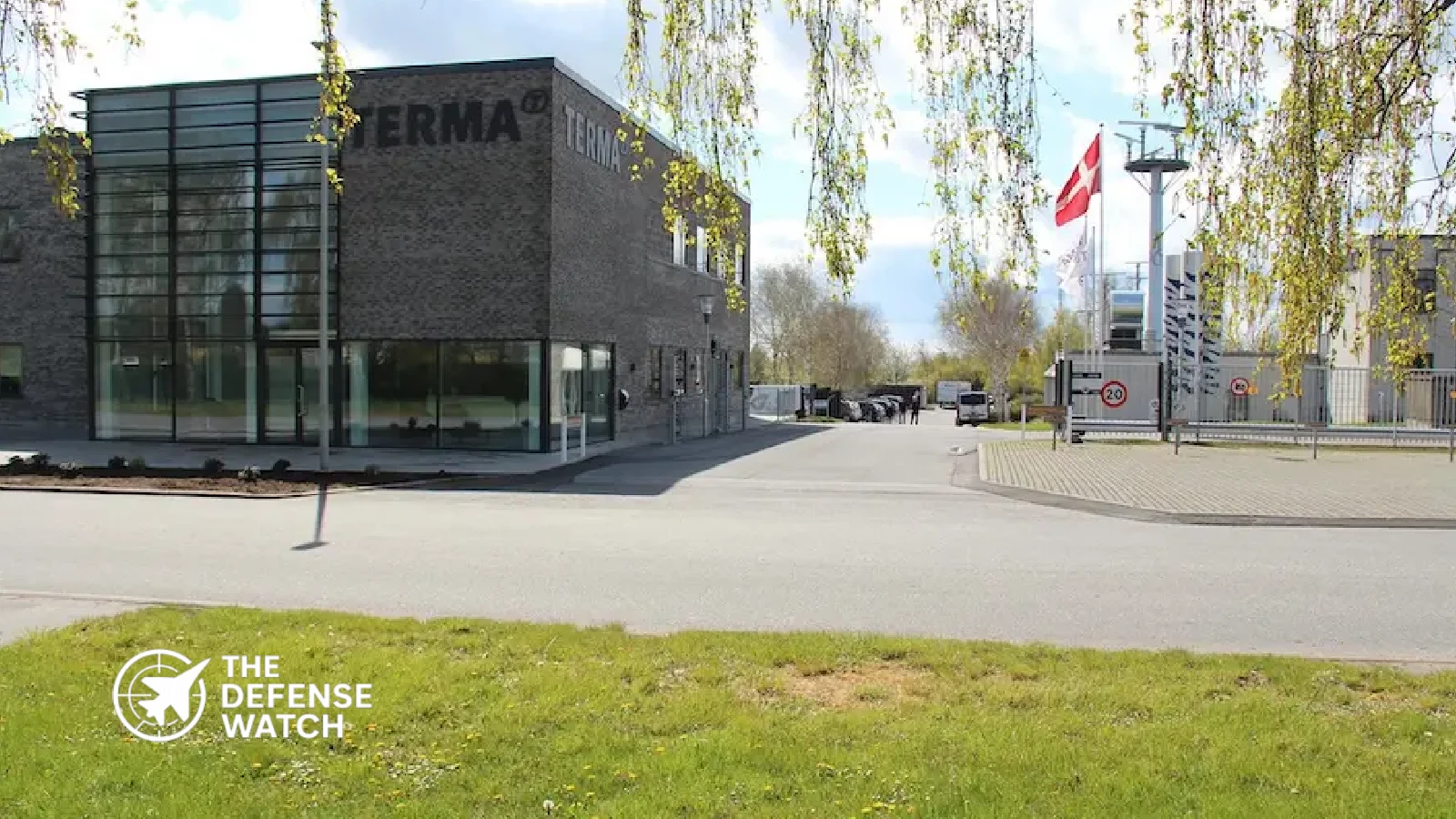
Executive Summary: Danish defense company Terma has agreed to acquire cybersecurity specialist Dencrypt, adding its secure communications and encryption technology to Terma’s portfolio. The transaction is aimed at strengthening Danish sovereign control over sensitive communications while expanding secure capabilities for NATO allies and trusted international partners.
Terma Targets Dencrypt To Strengthen Secure Communications
Terma’s planned acquisition of Dencrypt adds Danish-developed encryption technology to one of the country’s major defense companies, creating a broader domestic capability for protecting sensitive voice, video, messaging and data communications. The transaction, announced August 17, remains subject to final approval.
The move comes as European governments and NATO members place greater emphasis on secure digital infrastructure, national control of critical technologies and resilient communications. For defense organizations, secure information exchange is increasingly important as military operations depend on networked sensors, command systems, artificial intelligence and distributed forces.
Terma said it intends to combine Dencrypt’s cryptographic expertise with its industrial capabilities, international presence and established relationships across the defense sector. The companies plan to further develop the technology as a sovereign secure communications capability controlled and developed in Denmark.
What Dencrypt Brings To Terma
Dencrypt develops encrypted communications systems designed to operate on conventional smartphones, tablets and computers. Its platform can support encrypted voice and video calls, messaging and data exchange without requiring users to operate specialized communications hardware.
According to Dencrypt, its communications solution can operate over commercial mobile networks, Wi-Fi and satellite connections. This gives organizations the ability to protect communications while using existing digital infrastructure.
The company’s technology is built around Dynamic Encryption, a system designed to provide an additional encryption layer for communications. Dencrypt’s Connex platform supports end-to-end encrypted voice, video and messaging, while its server system provides user management, authentication, routing and administrative functions.
This existing technology base is significant because NATO’s information-security framework already includes Dencrypt products. NATO’s Information Assurance product database lists Dencrypt communications and server products under communications encryption and identifies NATO classifications and Common Criteria certifications for relevant systems.
Dencrypt’s current Connex platform is also described as Common Criteria certified and NATO approved by the company.
Why Sovereign Encryption Matters To NATO
The acquisition reflects a broader European defense-industry trend toward maintaining domestic control over technologies considered strategically important.
Secure communications are particularly sensitive because military and government networks routinely carry operational information, intelligence, logistics data and other material that could have serious consequences if intercepted or compromised.
NATO has also identified quantum technology as an emerging security issue. The Alliance’s quantum technology strategy states that sufficiently capable quantum computers could threaten existing cryptographic protocols and identifies post-quantum cryptography as an important approach for protecting communications against future quantum-enabled attacks.
NATO’s communications and cyber organizations are consequently examining technologies ranging from quantum key distribution to post-quantum cryptography and other approaches to improve the resilience of Allied networks. NATO’s Communications and Information Agency says quantum technologies could contribute to more secure communications and encryption resilience across the Alliance.
The Terma-Dencrypt deal should be viewed within this wider technology environment. It does not, by itself, make Dencrypt’s existing technology quantum-safe. Instead, it gives Terma ownership of an established Danish secure communications capability at a time when governments are paying greater attention to control over encryption technologies and the security of digital supply chains.
Terma’s Expanding Role In NATO Technology
Terma already has a substantial role in NATO-related defense programs. In July, the company said it was contributing to the development of NATO’s future operational intelligence architecture through work involving artificial intelligence, operational situational awareness and multidomain data fusion.
That work provides context for the Dencrypt acquisition.
Modern military systems generate large amounts of information through sensors, surveillance platforms and command networks. The ability to securely move that information between authorized users is becoming as important as the ability to collect and process it.
Terma’s acquisition strategy therefore adds a communications-security component to a broader portfolio that already includes defense electronics, surveillance and command-related technologies.
The company said the acquisition would expand its sovereign technology portfolio and strengthen its position as a European defense technology company and systems integrator. It also expects the deal to broaden its secure communications offering for defense organizations, governments and critical infrastructure operators.
Denmark Builds A Broader Defense Technology Base
Dencrypt’s origins also reinforce the Danish technology dimension of the transaction.
The company was founded on cryptographic research conducted at the Technical University of Denmark and has spent more than a decade developing secure communications technology for organizations with high security requirements. Its technology has received Common Criteria certification, while relevant solutions have held NATO and national security accreditations.
Denmark is also investing in other areas of advanced communications security. In May 2026, NATO’s Defence Innovation Accelerator for the North Atlantic reported that the Danish Ministry of Defence had installed quantum key distribution systems supplied by Celare Quantum Communications, a Danish company participating in NATO DIANA’s 2026 cohort.
The developments are separate, but together they illustrate the growing importance of secure communications and cryptographic technologies within Denmark’s defense technology ecosystem.
What The Acquisition Means For NATO Allies
For NATO and allied users, the most immediate significance of the transaction is industrial rather than operational.
Terma is not announcing a new battlefield communications network or a new encryption standard. Instead, it is bringing an existing Danish secure communications company into a larger defense-industrial organization.
That could give Dencrypt access to greater industrial capacity, international distribution and defense-sector relationships. Terma said the objective is to preserve and invest in Dencrypt’s technology while making it available to Denmark, its allies and trusted international partners.
For European defense planners, ownership can matter because secure communications systems often involve sensitive software, cryptographic methods, authentication infrastructure and administrative controls. Keeping development and control within a trusted national industrial base can reduce dependence on external suppliers for selected capabilities.
However, the acquisition should not be interpreted as eliminating supply-chain or cyber risks. Encryption provides protection against unauthorized access, but secure communications also depend on endpoint security, authentication, software maintenance, network architecture, key management and operational procedures.
A Strategic Move In Europe’s Defense Technology Market
The Terma-Dencrypt transaction is part of a broader shift in European defense toward strengthening domestic technology capabilities in areas that support military autonomy and resilience.
The acquisition gives Terma an established encryption and secure communications business rather than requiring the company to develop such capabilities from the ground up. For Dencrypt, joining Terma provides access to a larger defense organization and international reach.
The immediate focus will be completing the acquisition and determining how Dencrypt’s technology is integrated into Terma’s existing portfolio.
The longer-term importance will depend on how successfully the combined company develops secure communications products for defense and government users, maintains relevant certifications and expands interoperability across NATO and allied networks.
For NATO members, the requirement is clear: military forces need not only sensors, weapons and command systems, but also trusted networks capable of moving sensitive information securely. Terma’s planned acquisition of Dencrypt strengthens Denmark’s industrial position in that part of the defense technology stack.