

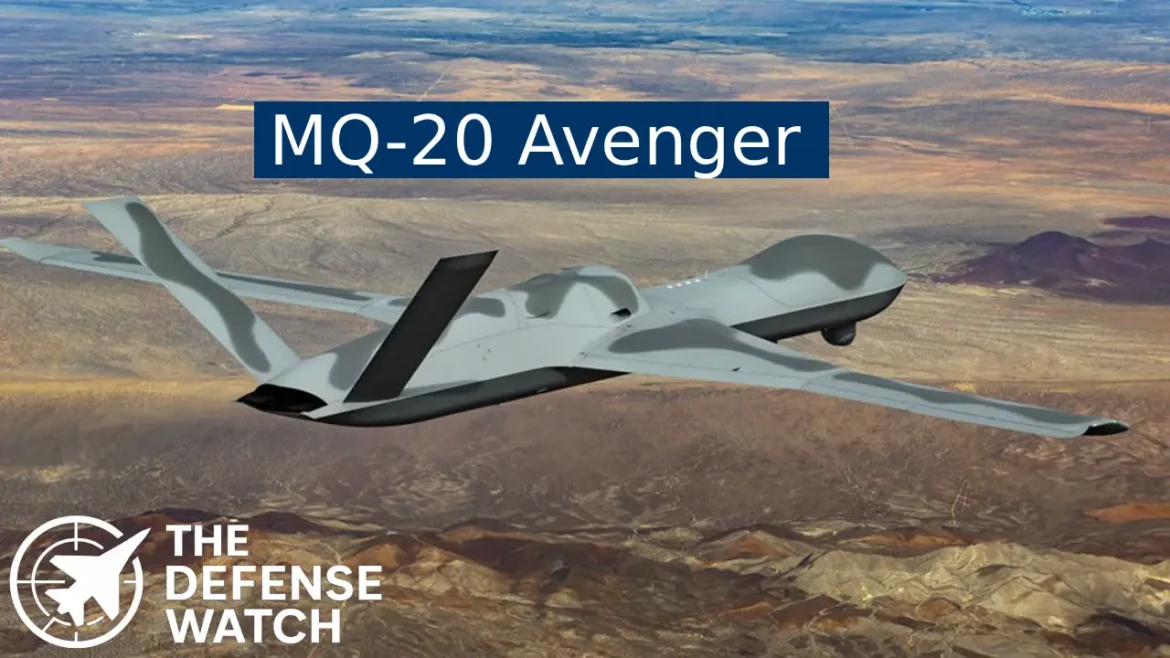
In a landmark demonstration on October 21, 2025, General Atomics Aeronautical Systems (GA-ASI), Lockheed Martin, and L3Harris successfully executed a cre wed-uncrewed teaming flight test in which an F-22 Raptor pilot commanded an MQ-20 Avenger drone integrated on board – a first of its kind. The exercise, carried out at the Nevada Test and Training Range, marks a significant step forward in the U.S. Air Force’s push toward Collaborative Combat Aircraft (CCA) and advanced manned-unmanned operations.
What Happened: The Flight Test Details
- The test involved installing two L3Harris software-defined radios (SDRs): one aboard the F-22, and another aboard the MQ-20.
- These radios used L3Harris’ BANSHEE advanced tactical datalinks and the Pantera SDR system integrated via Lockheed Martin’s open-radio architecture.
- From the cockpit, the F-22 pilot used a Pilot Vehicle Interface (PVI) tablet in conjunction with a new GRACE module (“Government Reference Architecture Compute Environment”) to send commands.
- GA-ASI characterized the communications chain as entirely non-proprietary and fully U.S. government-owned, built on Open Mission Systems principles.
Technical and Strategic Context
The MQ-20 Avenger is a stealthy, jet-powered unmanned combat aerial vehicle (UCAV) developed by GA-ASI. Unlike turboprop drones, it features a low-observable profile, internal weapons bays, and high speed/endurance.
Over the past year, the Avenger has been integrated with autonomy software, most notably Shield AI’s Hivemind, enabling it to conduct complex maneuvers like combat air patrols and simulated air-to-air engagements.
Moreover, this F-22/Avenger test follows previous milestones, such as the U.S. Navy’s live-control flight of the MQ-20 via a carrier-based ground station using Lockheed Martin’s MDCX platform.
Why This Matters: Analysis
Advancing the CCA Vision
This demonstration directly feeds into the U.S. Air Force’s Collaborative Combat Aircraft (CCA) strategy, which envisions manned fighters working alongside autonomous “drone wingmen” to enhance combat effectiveness, resilience, and flexibility.
By showing that a legacy platform like the F-22 can control an autonomous UCAV using open-architecture radios, the test proves that even older high-end assets can be rapidly modernized for future force structures.
All-Domain Connectivity and Interoperability
The use of non-proprietary, government-owned datalinks is particularly significant. It ensures greater resilience against supply-chain vulnerabilities, expands opportunities for allied interoperability, and reduces dependence on single-vendor systems.
Modular Autonomy in Action
Coupled with earlier tests of Shield AI’s Hivemind software, this trial underscores how modular autonomy (open architectures + reference software) can deliver agile, rapidly fieldable capabilities.
This model supports future scaling: additional drones, different fighter jets, or alternative autonomy stacks can be integrated without rearchitecting the entire system.
Implications for Force Multiplication and Cost Efficiency
If F-22s (and eventually other fighters) can reliably control UCAVs, it could dramatically expand the force’s reach. Pilots may direct more assets for strike, surveillance, or suppression missions, potentially reducing the number of manned sorties required and lowering risk to human pilots.
Challenges and Considerations
- Security & Jamming Risks: In contested electromagnetic environments, maintaining reliable datalink performance under jamming or cyberattacks remains a critical concern.
- Pilot Workload: Managing a high-performance fighter and simultaneously controlling a drone raises questions about cognitive load and ergonomic design.
- Certification & Safety: Extensive testing will be required to certify such systems for regular operational use, especially considering safety, autonomy fail-safes, and emergent behavior in contested airspace.
- Scalability: While this was a company-funded R&D demo, scaling to full operational deployment (across squadrons) will involve cost, logistics, training, and sustainment challenges.
Conclusion & Outlook
The F-22–MQ-20 Avenger teaming test represents a major milestone in the U.S. drive toward crewed-uncrewed collaborative warfare. By proving that a stealth fighter can directly command a stealth drone using open, government-owned datalinks, industry and the Air Force are laying the technical and doctrinal foundation for scalable Collaborative Combat Aircraft operations.
Looking ahead, we can expect further demonstrations involving other platforms (e.g., F-35, F-15), more sophisticated autonomy stacks, and perhaps even live-fire exercises. As the CCA vision matures, such teaming concepts could reshape how the U.S. projects airpower — blending human judgment with autonomous persistence, creating more flexible, resilient, and distributed mission architectures.
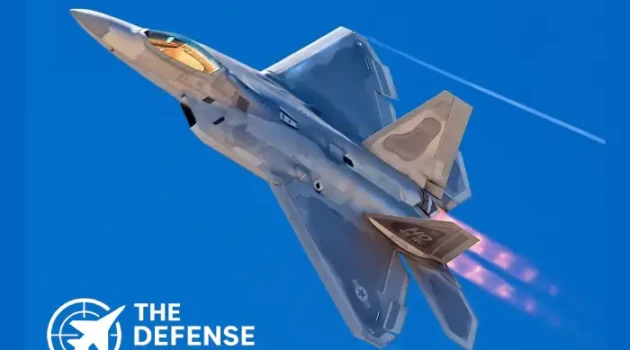

The F-22 Raptor may have taken first flight decades ago, but as the People’s Liberation Army Air Force (PLAAF) accelerates its stealth-fighter production and the U.S. next-generation air-dominance fleet remains years away, the United States Air Force (USAF) finds itself facing a potential air-superiority gap. According to a recent article in the National Security Journal, the optimum path forward is not retirement of the F-22, but an immediate push to transform it into a “Super Raptor” variant—extending its life, modernizing its sensors, weapons and networking, and bridging the time until sixth-generation systems mature.
This article explores why the F-22 Super upgrade has become a strategic imperative, outlines the key upgrade pathways, examines obstacles and counter-arguments, and provides a short context and analysis of what this means for air-power balance into the 2030s.
Why Upgrading the F-22 Makes Strategic Sense
Rising peer-threats demand constant air-dominance
China’s PLAAF is reported to operate approximately 300 stealth combat jets (such as the J-20) and is rapidly pushing ahead with follow-on 5th-generation and 6th-generation programs. In this context, retiring or sidelining the F-22 fleet would leave the USAF reliant on fewer proven platforms at a time when adversary capability is growing—not shrinking.

In short, the “air-dominance” mission set cannot be taken for granted. The F-22 remains one of the few platforms capable of executing the “first-shot, first-kill” doctrine in contested airspace thanks to its stealth, high thrust-to-weight ratio, and internal weapons bay design.
Production constraints and timing of next-gen fighters
The USAF is deja-vu: the next-gen fighter (under the Next Generation Air Dominance (NGAD) umbrella) will take years to achieve mass production. Meanwhile, the F-22 production line is closed, meaning building new airframes is not an option. Upgrading existing frames is far faster and more cost-effective.
Thus, the F-22 Super pathway becomes more than an option—it becomes a necessity to maintain credible air superiority while waiting for the 6th-generation leap.
Proven platform, vast upgrade potential
The F-22 airframe is not static: over the years it has undergone software, sensors, coatings and weapons updates—so much so that it is arguably a very different aircraft today than the one that first entered service.
Upgrading it further—with modern sensor-fusion, AI-enabled targeting, advanced electronic warfare, hypersonic and directed-energy weapons—makes strategic sense. It leverages continuity (training, logistics, maintainers) rather than starting from scratch.
What a “Super” F-22 Upgrade Would Entail
Networked avionics and sensor fusion
A core upgrade path involves giving the F-22 an enhanced integrated sensor suite, AI-driven data processing, and two-way communications/battle-management links—particularly with the F-35 Lightning II. According to the National Security Journal article, the F-22 already serves as an “aerial quarterback” connecting intelligence, targeting and strike elements.
A “Super” version would further that role, seamlessly tying into a networked force of manned and unmanned platforms.
Weapons and stealth enhancements
The planned integration of next-generation air-to-air weapons such as the AIM-260 Joint Advanced Tactical Missile, and possibly hypersonic missile options (e.g., the USAF’s MAKO air‑launched hypersonic missile) is central to the Super Raptor concept.
In tandem, upgrades to coatings, radar-absorbent materials and signature control will keep the platform stealth-relevant in increasingly contested electromagnetic environments.
Rapid deployment and global reach
Past USAF initiatives like “Rapid Raptor” focused on deploying F-22s globally within 24 hours. A Super Raptor variant would build upon this, leveraging modern logistics, forward-basing, and support to ensure readiness in high-threat theaters.
Extended service life
Rather than phasing out the F-22 in the near term, the Super concept envisions flying the type into the 2050s, acting as a credible dominant air-superiority platform while next-gen squadrons scale up.
Challenges and Counter-Arguments
Cost and opportunity‐cost
Upgrading the fleet is not free. Critics argue that funds poured into an extended F-22 life could divert resources from next-gen programs like NGAD, the F/A-XX (naval) or unmanned systems, thus delaying future capabilities. The National Security Journal acknowledges these concerns.
Platform limitations
Even upgraded, the F-22 retains inherent constraints: closed production line (so no expansion of fleet size), limited combat radius (which remains a logistical challenge, especially in the Indo-Pacific theatre) and maintenance burdens tied to its stealth skin and internal-weapons design.
How long is “enough”?
Even a Super Raptor variant can only hold the line until next-gen systems arrive; the question remains how much capability gap the USAF is willing to accept, and whether newer threats (e.g., more advanced integrated air-defense systems, hypersonic missiles) will outpace the upgrade.
Context and Implications for Air-Power Balance
Indo-Pacific posture
With China intensifying its naval and air‐force expansion, aircraft like the F-22 Super become critical in reinforcing U.S. deterrence. The ability to field stealthy, networked air-dominance fighters that can tie into allied and unmanned assets is central to the USAF’s posture in the region.
Strategic timeline bridging
The USAF’s plans show a fighter-fleet expansion to meet growing needs: one analysis notes the service is targeting 1,558 jets by 2035, up from roughly 1,271 today. In parallel, next-gen platforms will not reach numbers for years. The Super Raptor bridges this timeline by ensuring that fifth-generation air dominance remains credible while sixth-generation fleets are scaled.
Industrial and sustainment benefits
Modernizing rather than replacing leverages existing sustainment infrastructure, training pipelines and contractor support (primarily Lockheed Martin, with the F-22). It helps maintain the industrial base while newer programs ramp up. It may also reduce risk: mid-life upgrades are more predictable than entirely new airframe development.
Conclusion
In an era of intense great-power competition, the risk is not that the USAF will have too many superior fighters—it’s that it will have too few credible ones in the right place at the right time. The F-22 Raptor remains a formidable air-dominance asset, and transforming it into a “Super” variant offers an intellectually sound, fiscally and strategically responsible way to maintain U.S. air superiority until the next generation of fighters arrives.
The proposed upgrade path—sensor networking, weapons enhancements, stealth maintenance and global rapid deployment—aligns with the evolving threat environment. Nevertheless, challenges remain: delays in NGAD, budget pressures, maintenance burdens and range/logistics constraints must be addressed. On balance, the argument is compelling: the Super Raptor is not just a nice-to-have—it may be indispensable.
By accelerating the F-22 upgrade now, the USAF can buy time, preserve dominance and ensure that the United States remains the benchmark of air-superiority into the 2040s.
FAQs
It refers to a heavily upgraded version of the F-22 Raptor featuring advanced avionics, networking, weapons (including hypersonics/DEW), and sensor fusion—effectively converting a proven airframe into a “fifth-generation-plus” fighter.
Because next-gen platforms (such as those under NGAD) are years away from large-scale deployment. Waiting risks a capability gap; upgrading the F-22 is faster and leverages existing assets.
With the right upgrades, analysts project the F-22 platform could serve into the 2050s and maybe beyond in the U.S. inventory.
The key risks include funding diversion from next-gen programs, inherent airframe limitations (range, closed production line), stealth-skin maintenance burdens and evolving threat systems that may outpace the upgrades.
No new production line is planned—the upgrade applies to existing airframes. So fleet size remains unchanged, reinforcing the importance of networked operations and teaming with unmanned systems.
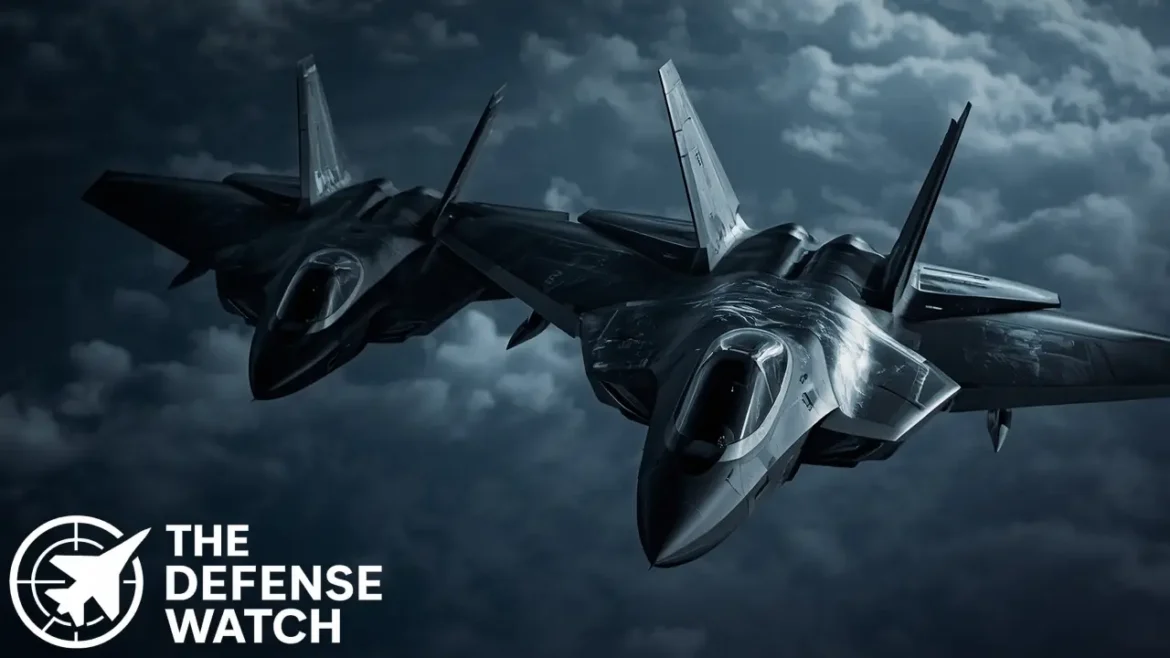
In the early 1990s, the F‑117 Nighthawk represented a pioneering leap in stealth technology for tactical operations. Fast-forward two decades and the F‑22 Raptor entered service, heralding a new era of fifth-generation stealth fighters. This article examines how fighter jet stealth evolved from the F-117 to the F-22, highlighting design, capabilities and operational context. We’ll also provide expert analysis of how this evolution shapes future air-combat dynamics.
The F-117 Nighthawk – Birth of Operational Stealth
Development and Role
The F-117 Nighthawk, developed by Lockheed Skunk Works, entered service in 1983 and became the first operational U.S. stealth aircraft. Its mission was essentially one-dimensional: penetrate the densest enemy air defences, deliver precision strike ordnance and exit without detection.
While often called a “fighter”, its role was ground attack — it lacked air-superiority weapons such as air-to-air missiles, and no guns. The skunk-works design team employed a radically faceted geometry to deflect radar energy and early radar-absorbing materials (RAM) to reduce radar cross-section (RCS).
Limitations in Capability
Although revolutionary, the F-117 had several limitations:
- It was subsonic and aerodynamically compromised due to stealth-shaping.
- It carried a modest payload (typically two laser/GPS-guided bombs) and lacked internal sensor suites for air-to-air combat.
- Maintainability was high: stealth coatings required frequent upkeep and were sensitive to environmental conditions like rain.
- Its stealth advantage, while considerable at the time, began to erode as adversaries improved air-defence radars and passive detection. The notable shoot-down of an F-117 in 1999 over Serbia demonstrated vulnerabilities.
In short: the F-117 delivered a quantum jump in stealth, but it was a first-generation system with clear trade-offs.
The F-22 Raptor – Stealth Meets Air Superiority
Program and Design Evolution
The F-22 Raptor emerged from the U.S. Air Force’s Advanced Tactical Fighter (ATF) programme and entered service in December 2005. It was designed not only for stealth but for air-superiority — meaning air-to-air and air-to-ground missions, with advanced sensors, high speed (including super-cruise capability) and full sixth-generation readiness features.
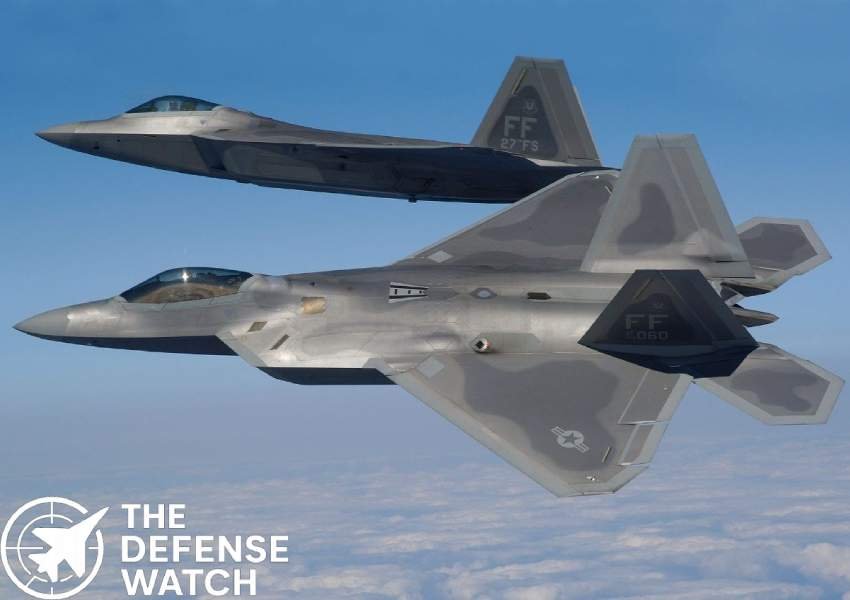
Where the F-117 was subsonic and focused on attack, the F-22 can super-cruise at Mach 1.6–1.7 without afterburner, even reaching near Mach 2 in afterburner. Its stealth measures include improved RAM coatings, internal weapon bays, optimized engine inlet/exhaust design, and much greater sensor and avionics integration.
Stealth & Survivability Advances
Compared to the F-117, the Raptor brought major stealth and survivability improvements:
- The aircraft uses smoother, blended wing-body shapes rather than faceted surfaces, reducing edge-wave scattering of radar energy.
- RAM coatings and their application were made more robust and less maintenance-intensive.
- Internal weapons carriage reduces external reflections.
- Avionics fusion, sensor networking and electronic warfare (EW) capability become integral to stealth operations, not just airframe shaping.
- The F-22 is capable of both air superiority and precision strike, merging roles long separated.
In short, the Raptor represents stealth matured into a fully-featured fighter-platform rather than a niche attack tool.
Key Differences: F-117 vs F-22
| Feature | F-117 Nighthawk | F-22 Raptor |
|---|---|---|
| Primary Role | Stealth attack aircraft (ground strike) | Air-superiority fighter with strike capability |
| Speed / Performance | Subsonic, optimized for stealth | Supersonic with super-cruise (Mach 1.6+) |
| Stealth Design | Faceted surfaces, early RAM | Blended surfaces, advanced RAM, internal bays |
| Payload / Weapons | Limited bombs, no air-to-air armament | Full internal weapon bays: AAMs, precision bombs |
| Sensor/Avionics Suite | Basic navigation/targeting only | Full sensor fusion, EW suite, datalink network |
| Maintainability | High upkeep required | Improved coatings and sustainment systems |
| Vulnerabilities | Shot-down in 1999, limited survivability | Far greater resilience against modern defences |
These differences reflect the leap from a specialized first-generation stealth platform to a full-featured fifth-generation fighter.
Why Stealth Evolved — Operational and Technological Drivers
Emerging Threat Environments
In the 1980s-90s the primary threat was radar-guided SAMs and fixed air-defence systems. The F-117 proved valuable in that era, especially during Gulf War. However, by the 2000s adversaries had deployed more advanced radars, integrated SAM networks, passive sensors and infrared search-and-track (IRST) systems. Stealth aircraft needed to evolve accordingly.
Broader Mission Demands
The nature of aerial combat changed: air superiority fighters needed stealth to penetrate enemy airspace, conduct air-to-air engagements and still strike ground targets. The F-22 addresses that need, whereas the F-117 was restricted in mission scope.
Technology Maturation
Advances in materials science (RAM), computational modelling (to optimise shapes and scattering), engine / inlet design, sensor and EW systems all matured significantly from the 1970s/80s to the 2000s. For example, the F-117 tested mirror-like coatings for IR signature reduction that later fed into F-22 developments.
Edge-treatment techniques, serpentine engine inlet ducts and more advanced RAM took hold.
These technological leaps enabled stealth aircraft to achieve greater mission flexibility and survivability.
What This Means for Airpower & Future Platforms
Multi-Domain and Networked Operations
Stealth is no longer just about shape and coating — it’s about sensor fusion, data links, EW capability and integration into a wider networked force. The F-22 exemplifies that shift. Future platforms (for example, the F‑35 Lightning II and sixth-generation systems) will further push these dimensions.
Stealth vs. Detection Arms-Race
As stealth improves, so do detection systems (e.g., low-frequency radars, passive tracking, IRST). The evolution from F-117 to F-22 is not a one-time leap — rather part of a continuous arms-race between stealth technology and counters. Analysts often note that the F-117’s limitations became more acute as adversaries adapted.
Sustaining Fleet Viability
The move from a specialist stealth bomber (F-117) to a multi-role stealth fighter (F-22) reflects shift in budget, doctrine and learnings from combat operations. The U.S. had to invest in sustainment, training, upgrades and tactics for stealth fleets. The future likely emphasises modularity, upgradeability and digital warfare integration rather than pure air-frame stealth alone.
Conclusion
From the first operational stealth aircraft in the F-117 Nighthawk to the fully networked, high-performance F-22 Raptor, stealth fighter technology has undergone a fundamental transformation. What began as a ground-strike specialist has evolved into a high-end air-superiority and strike platform. For defence planners, this evolution matters: future air-combat scenarios will demand platforms that combine stealth, speed, sensor fusion and adaptability. The F-22 stands on the shoulders of the F-117 — and the next generation will stand on the shoulders of the Raptor.
FAQs
The F-117 was designated as a fighter (“F”) largely for secrecy and programme classification. In practice its mission was strike operations and it lacked air-to-air armament.
It introduced operational use of faceted geometry, RAM coatings and signature-management tactics (night operations, specific routing) to reduce detection risk. It proved the concept of stealth in combat.
The F-22 uses blended wing-body shapes (versus faceted), improved RAM materials, internal carriage of weapons, super-cruise, sensor-fusion, full avionics integration and lower signatures (radar, IR).
While the F-117 proved foundational, its design limitations (subsonic speed, limited payload, no air-to-air capability, maintenance demands) made it less viable in modern contested air environments. The transition to platforms like the F-22 reflects that shift.
Future designs focus not only on invisibility to radar, but on emissions management, network integration, multi-role flexibility and digital warfare domains. Stealth remains vital but is just one pillar among many.

The Birth of Stealth: F-117 Nighthawk
The United States fundamentally changed the character of aerial warfare with the introduction of the Lockheed F-117 Nighthawk in the 1980s. Developed under the highly secretive “Have Blue” program, the F-117 became the world’s first operational stealth aircraft, optimized to evade radar detection through faceted design and radar-absorbent coatings.
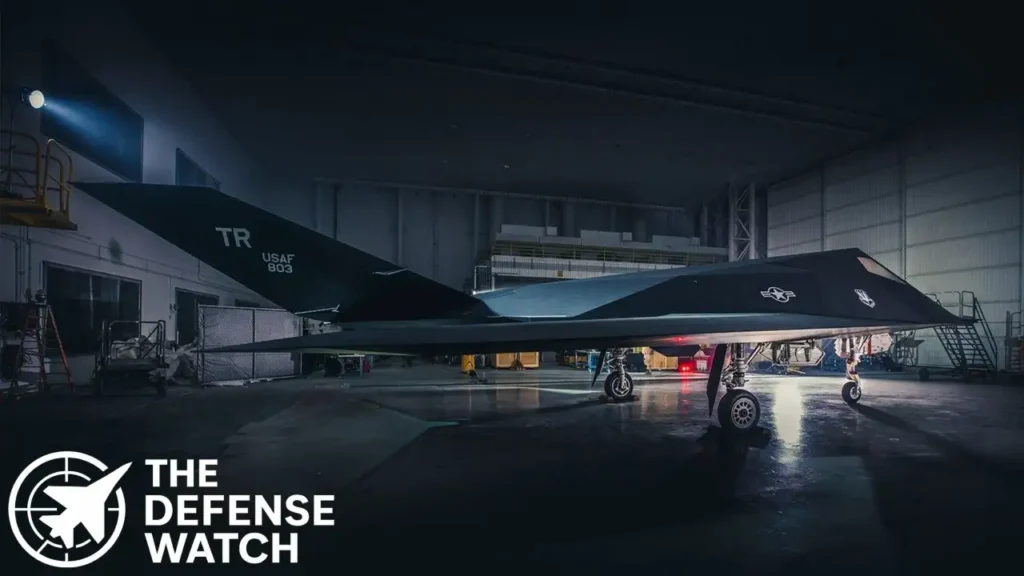
Although not a traditional fighter in terms of agility or speed, the F-117 was a precision strike aircraft. Its combat debut in Operation Just Cause (1989) and later prominence in Operation Desert Storm (1991) cemented its reputation. The aircraft’s ability to penetrate dense air defenses and deliver guided munitions on high-value targets demonstrated the transformative power of stealth.
Next Generation Superiority: F-22 Raptor
While the F-117 proved stealth’s utility, the Pentagon envisioned an aircraft combining radar evasion with air dominance. This vision led to the Lockheed Martin F-22 Raptor, which entered service in 2005.
The F-22 introduced a blend of stealth, supercruise, sensor fusion, and unmatched maneuverability. Designed to counter advanced Soviet fighters and integrated air defense systems, the Raptor became the U.S. Air Force’s premier fifth-generation air superiority platform.
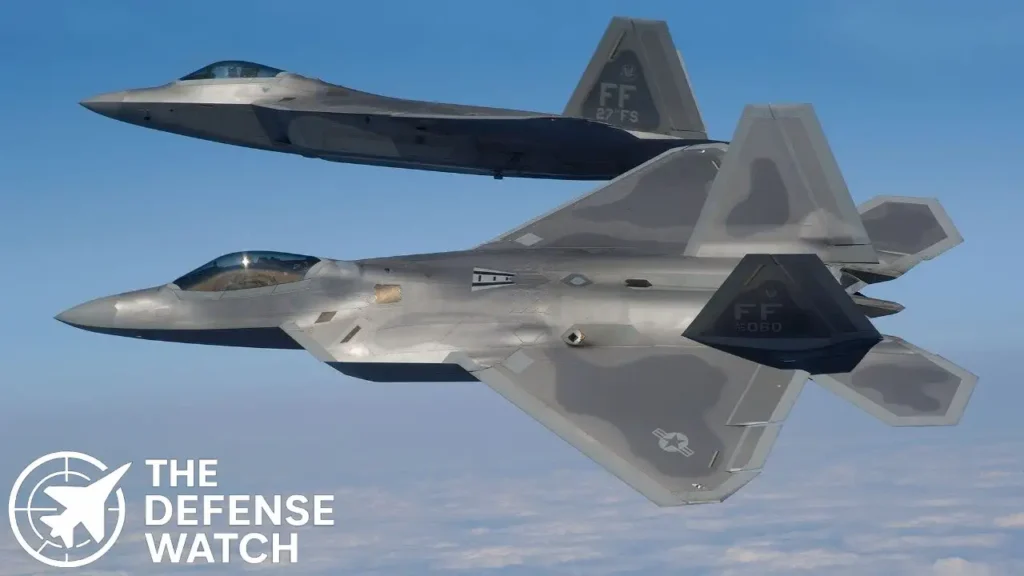
Despite its technological edge, the F-22 program was curtailed after only 187 aircraft were produced, largely due to high costs and the shifting defense priorities following the Cold War. Nonetheless, the F-22 remains a cornerstone of U.S. airpower, often deployed as a deterrent in contested regions.
Global Backbone of Stealth: F-35 Lightning II
The third stage in U.S. stealth fighter evolution came with the F-35 Lightning II, introduced in 2015. Unlike the niche-focused F-117 and the air-superiority-centric F-22, the F-35 was designed as a multirole stealth fighter adaptable across the Air Force, Navy, and Marine Corps.
The F-35’s variants—F-35A (conventional takeoff), F-35B (short takeoff/vertical landing), and F-35C (carrier-based)—allow joint and allied forces to operate with a common platform. With advanced sensors, networked warfare capability, and stealth design, the F-35 has been exported widely to NATO and partner nations, shaping coalition airpower.
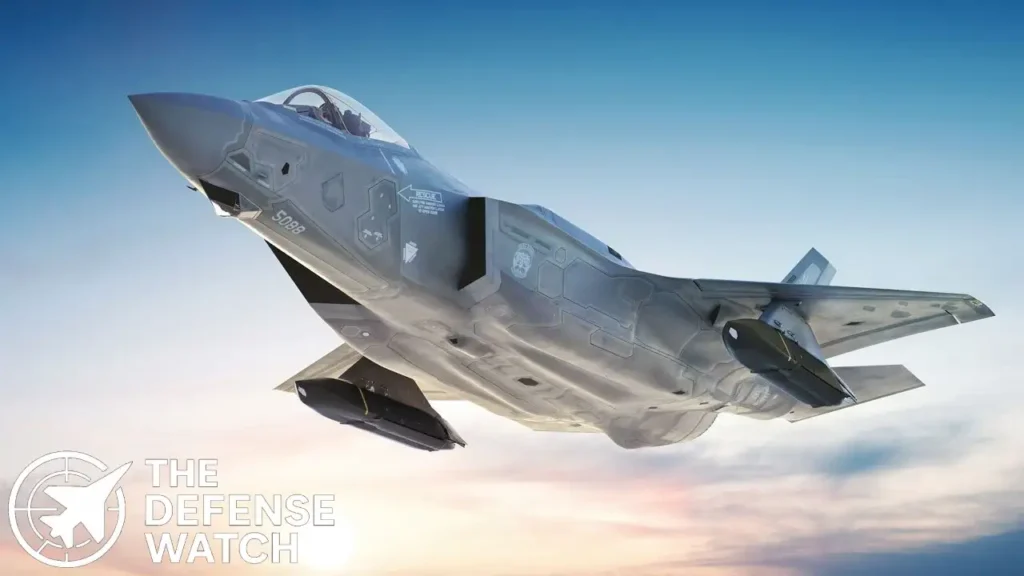
The program, though criticized for cost overruns and development delays, has matured into a global enterprise. Today, over 1,200 F-35s are in service worldwide, giving the United States and its allies a formidable technological edge.
Emerging Threats and the Next Chapter
As rivals such as China and Russia field their own stealth aircraft—the Chengdu J-20 and Sukhoi Su-57—the U.S. is already advancing its next-generation air dominance (NGAD) program. The NGAD initiative envisions a sixth-generation fighter with enhanced stealth, adaptive engines, directed-energy weapons, and unmanned teaming.
Analysts believe the NGAD will eventually complement or replace the F-22, while the F-35 remains in production through the 2030s. This layered approach ensures the U.S. maintains an air dominance edge amid growing global competition.
Analysis: From Prototype to Global Standard
The evolution from the faceted F-117 to the sensor-driven F-35 reflects the changing demands of warfare. Where stealth once meant survival against radar, it now enables data-driven, multi-domain operations. Each generation of U.S. stealth fighter has built upon the lessons of its predecessor—moving from niche strike missions, to air dominance, to coalition-wide multirole flexibility.
This progression underscores why U.S. stealth technology remains central to deterrence strategies. While adversaries invest in counter-stealth radar and integrated air defenses, the adaptability and networking capabilities of U.S. platforms have so far kept them ahead in the airpower race.
FAQs
The F-117 was retired in 2008 due to high operating costs and the arrival of more versatile stealth aircraft like the F-22 and F-35.
The F-22 excels in air superiority with unmatched maneuverability, while the F-35 is a multirole platform with advanced sensors and broader mission flexibility.
As of 2025, more than 1,200 F-35s are in service worldwide across U.S. and allied air forces.
NGAD is the U.S. Air Force’s effort to develop a sixth-generation stealth fighter designed for future contested airspaces.
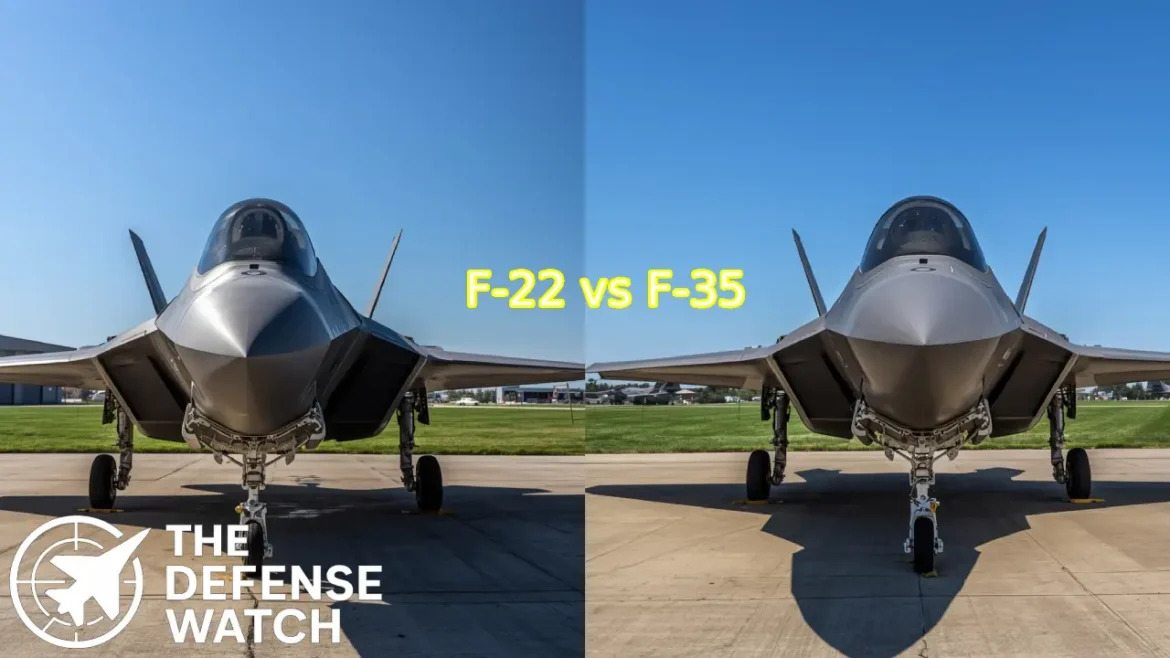
The F-22 Raptor and F-35 Lightning II are America’s premier fifth-generation stealth fighters, but they serve very different roles in 2025. The F-22, designed for unmatched air superiority, delivers speed, agility, and stealth dominance but remains exclusive to the U.S. Air Force with limited production. In contrast, the F-35 is a multi-role stealth fighter, widely exported to allies, with advanced sensor fusion, electronic warfare capabilities, and ongoing Block 4 upgrades. This side-by-side comparison highlights the top differences in missions, technology, performance, and production status of the F-22 vs F-35, showing how both aircraft complement U.S. and allied airpower.
| Feature / Category | F-22 Raptor | F-35 Lightning II |
|---|---|---|
| Primary Role | Air Superiority Fighter | Multi-Role Stealth Fighter (air-to-air, air-to-ground, electronic warfare) |
| First Flight | 1997 | 2006 |
| Production Status | Ended in 2012 (187 built) | Ongoing, over 1,000 delivered by 2025 |
| Export Availability | Not exported (U.S. only) | Widely exported to allies (NATO, Indo-Pacific) |
| Engines | 2 × Pratt & Whitney F119 | 1 × Pratt & Whitney F135 |
| Speed | Mach 2.0+ (supercruise capable) | Mach 1.6 (limited supercruise) |
| Combat Radius | ~460 miles (air-to-air mission) | ~670 miles (air-to-ground strike mission) |
| Stealth Design | Optimized for air dominance, minimal radar cross-section | Multi-spectral stealth with sensor fusion |
| Avionics & Sensors | Advanced radar (AN/APG-77), less open architecture | Advanced sensor fusion, DAS, Helmet-Mounted Display |
| Upgrade Path | Limited modernization (sensors, avionics, EW updates) | Continuous Block 4 upgrades (new weapons, EW, software enhancements) |
| Operational Users | U.S. Air Force only | U.S. and 17+ partner nations |
| Replacement Program | Next Generation Air Dominance (NGAD) in 2030s | Will remain in production into 2040s |
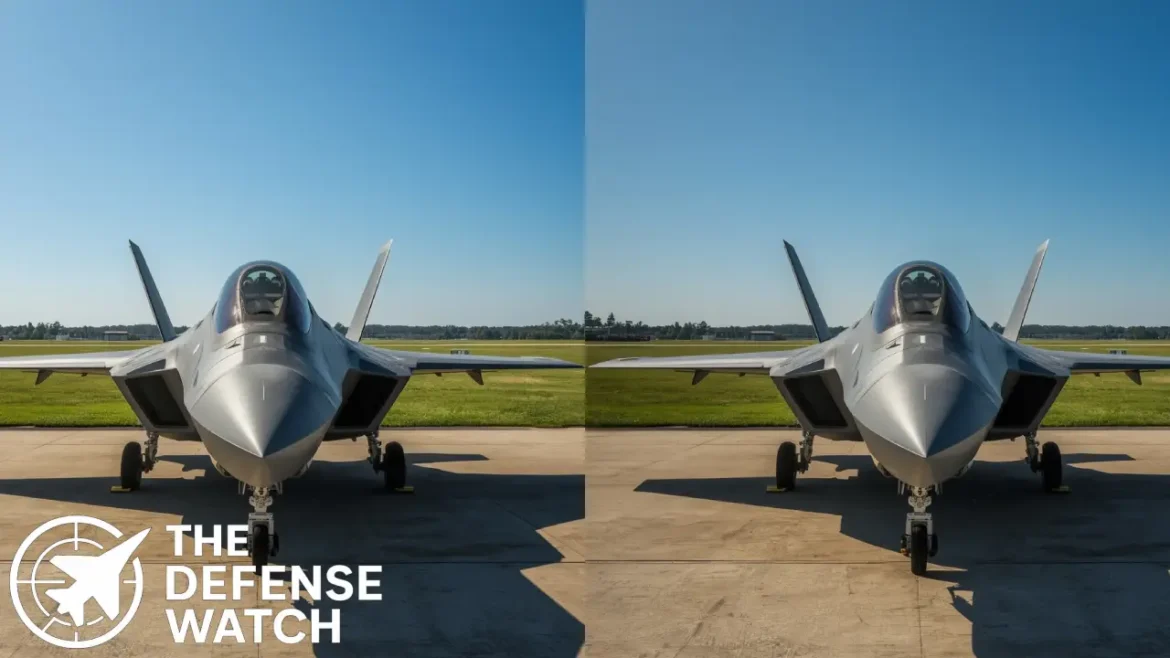
F-22 vs F-35 Differences 2025: Understanding America’s Stealth Fighters
The F-22 Raptor and the F-35 Lightning II remain the backbone of U.S. fifth-generation airpower in 2025. Both developed by Lockheed Martin, these stealth jets often draw comparisons, but their missions, design philosophies, and production paths are notably different. As global tensions rise, understanding the distinctions between the F-22 and F-35 has become central to debates over U.S. air dominance.
Mission Role and Operational Focus
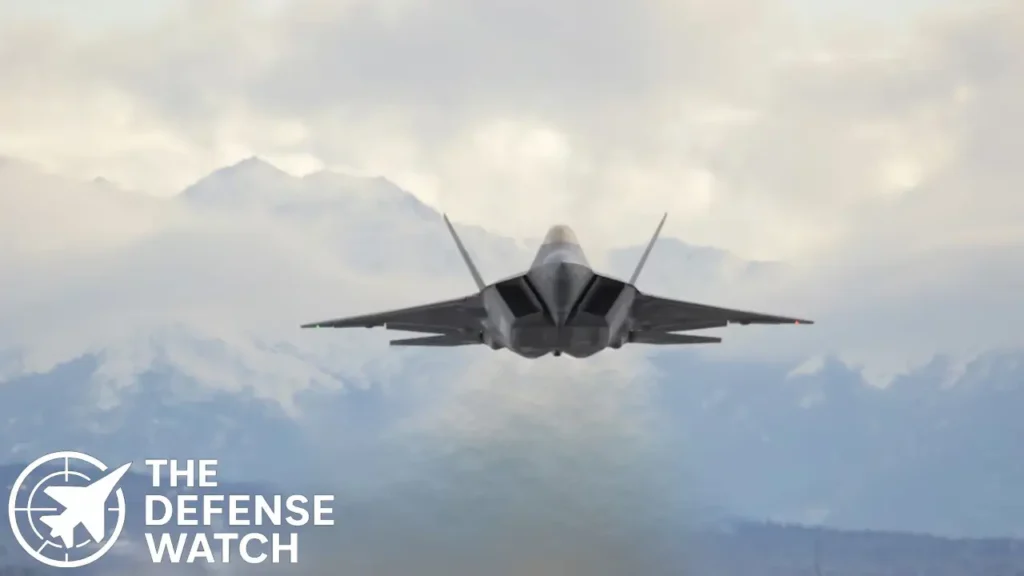
The F-22 Raptor was designed as an air superiority fighter, optimized for dogfighting, speed, and stealth against peer adversaries. Its twin engines deliver unmatched thrust, giving it supercruise capability—sustained supersonic flight without afterburners—making it unrivaled in high-end aerial combat.
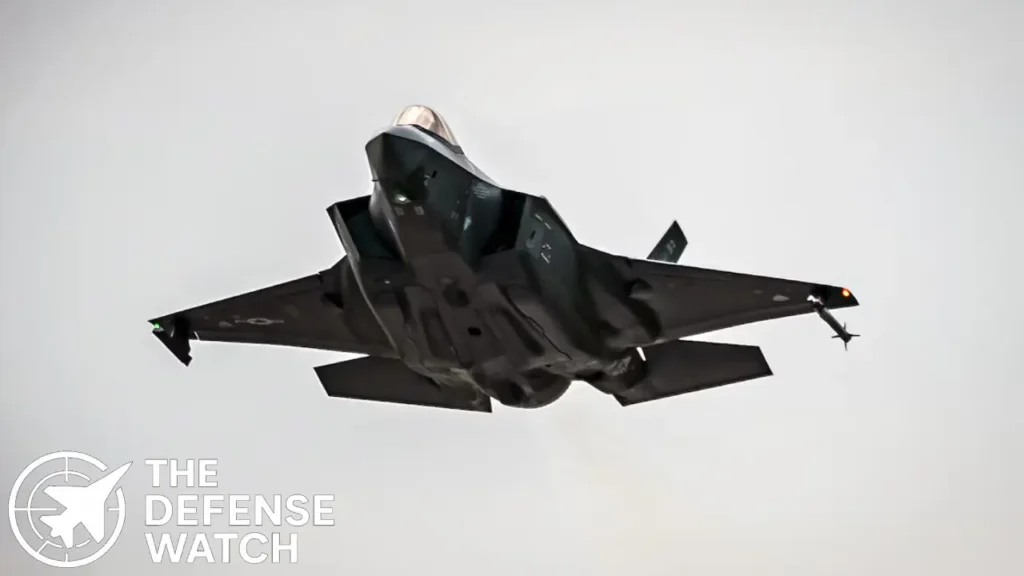
By contrast, the F-35 Lightning II was built as a multi-role stealth fighter, capable of conducting air-to-air, air-to-ground, and electronic warfare missions. The F-35 integrates deeply with Joint All-Domain Command and Control (JADC2) networks, making it as much an information node as a fighter jet. While less maneuverable than the F-22, it excels in situational awareness and strike versatility.
Production and Export Status
Production also highlights a sharp divide. The F-22 program ended in 2012 after just 187 aircraft were built, and the Raptor remains exclusive to the U.S. Air Force due to an export ban. While upgrades such as new sensors, avionics, and potential electronic warfare improvements continue, the Raptor fleet is aging and limited in scale.
In contrast, the F-35 continues active production in 2025, with over 1,000 aircraft delivered worldwide. Operated by more than a dozen allied nations, the F-35 has become the most widely exported fifth-generation fighter, strengthening interoperability within NATO and Indo-Pacific security frameworks.
Technology and Upgrade Path
The F-22’s airframe, while still stealthy, reflects late-1990s design choices. Its avionics are being modernized, but the fighter lacks the open systems architecture of the F-35, which was built with software-driven adaptability in mind.
The F-35 is undergoing continuous Block 4 upgrades, adding advanced weapons, sensor fusion, and enhanced electronic warfare capabilities. Its Distributed Aperture System (DAS) and Helmet-Mounted Display (HMD) give pilots a panoramic situational view, features absent in the F-22.
Strategic Context in 2025
While the F-22 remains unmatched in pure air dominance, its small fleet size limits its impact in large-scale conflicts. The F-35’s versatility and global proliferation make it the cornerstone of allied airpower, ensuring both deterrence and operational flexibility.
Analysts argue the two jets should not be viewed as rivals but as complementary assets. The F-22 can clear the skies of enemy aircraft, while the F-35 provides strike capability and acts as an information-sharing hub. Together, they form a layered approach to maintaining U.S. and allied air superiority.
FAQs
The F-22 is superior in air-to-air combat due to speed, stealth, and maneuverability, while the F-35 excels in multi-role missions and situational awareness.
Congress banned F-22 exports to protect U.S. stealth technology, making it exclusive to the U.S. Air Force.
The F-35, with over 1,000 units delivered to allied nations, is far more numerous and globally integrated than the F-22.
The U.S. Air Force plans to eventually replace the F-22 with the Next Generation Air Dominance (NGAD) program, expected to enter service in the 2030s.