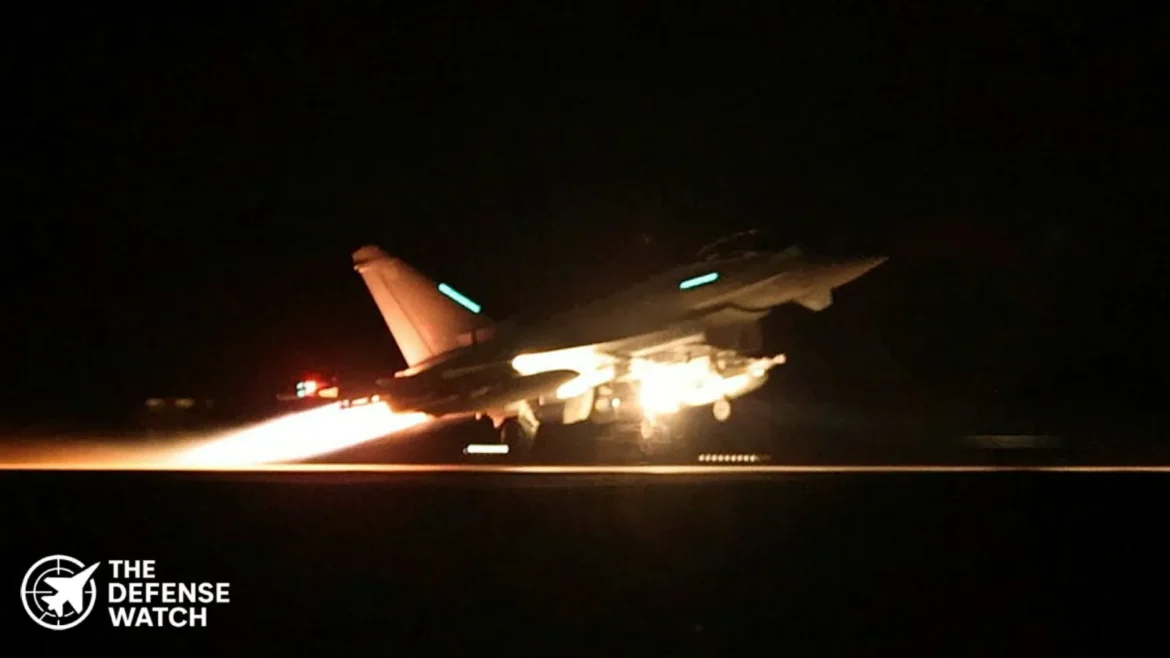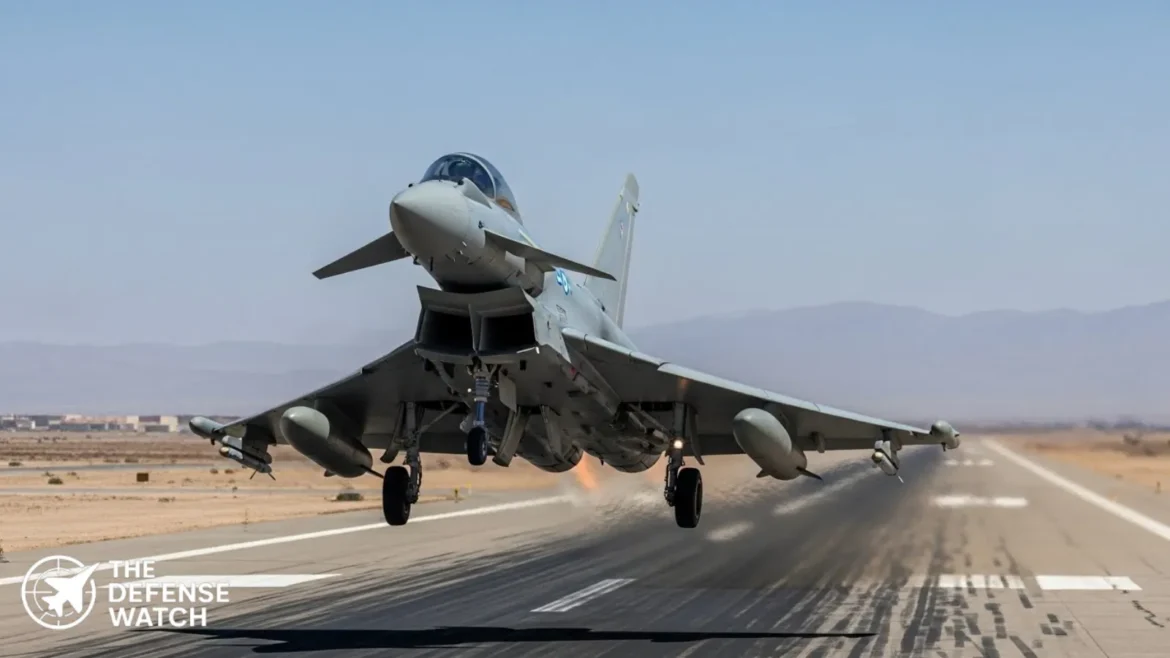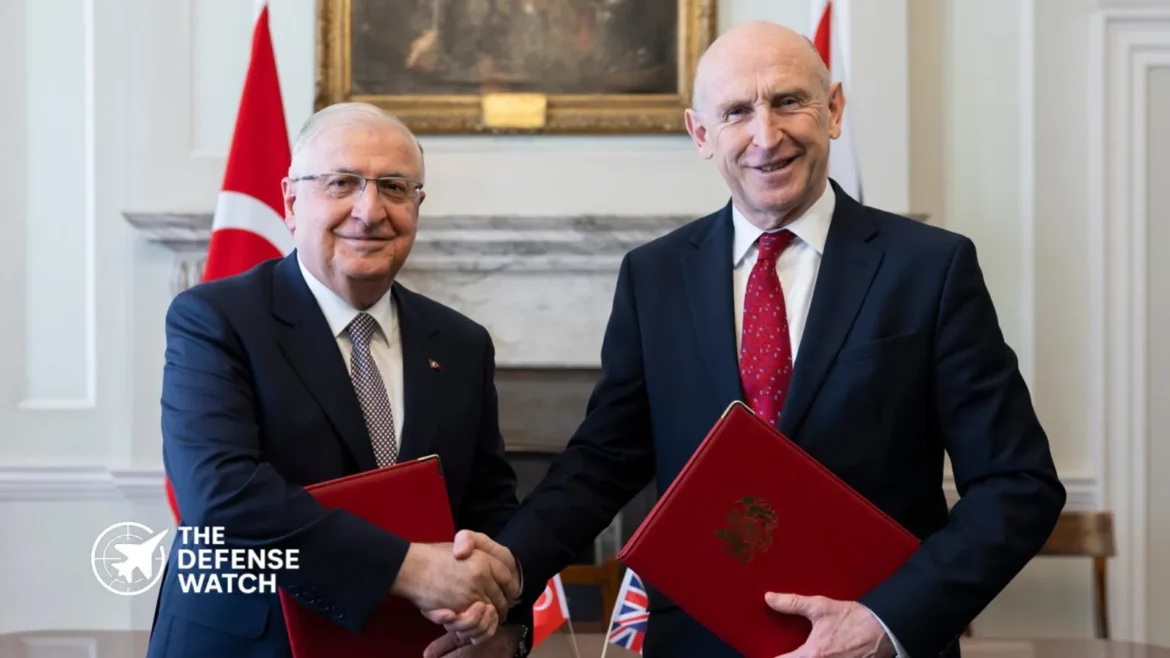
- BAE Systems signed a contract to provide Typhoon support and training services to Türkiye.
- The agreement focuses on maintenance, sustainment, and pilot training for the Eurofighter Typhoon fleet.
- The contract supports operational readiness and long-term sovereign sustainment capabilities.
- The UK Royal Air Force is also involved in supporting Türkiye under the agreement.
- Türkiye is positioning the Typhoon as a central pillar of its future combat airpower.
BAE Systems Türkiye Typhoon Support Contract Expands Airpower Capability
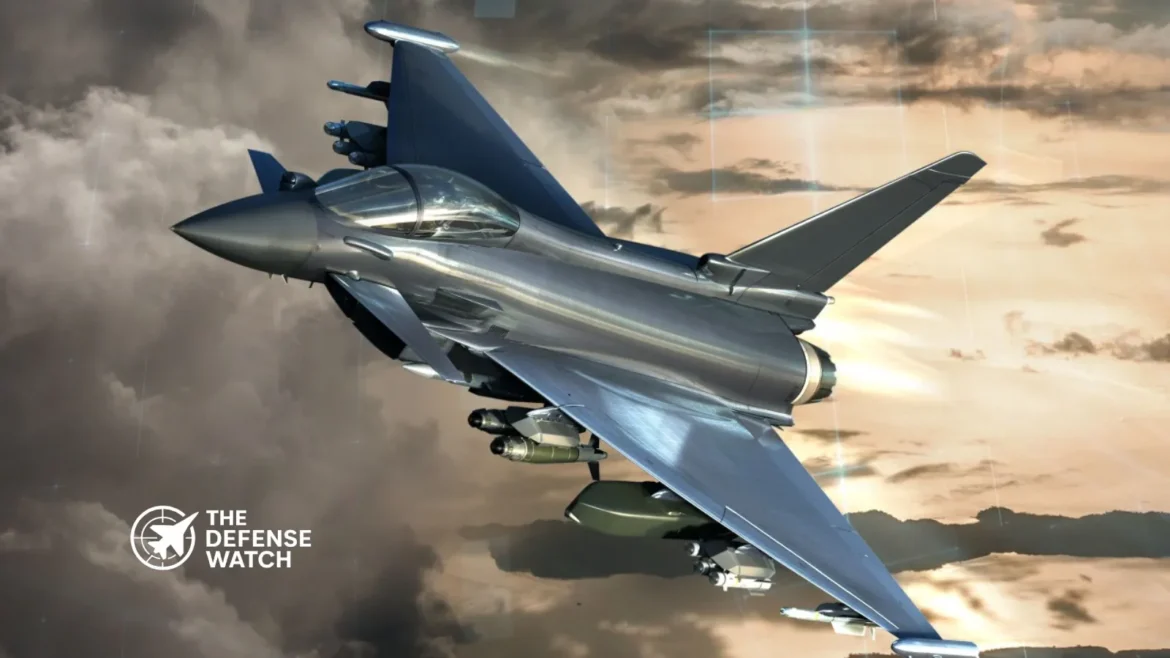
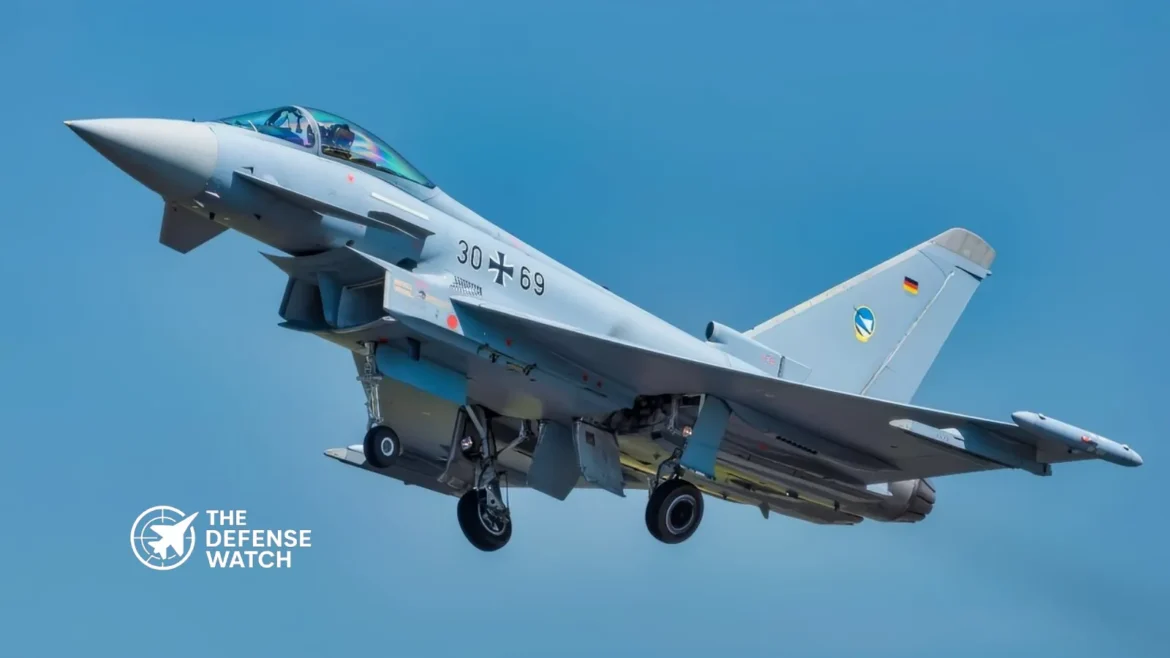
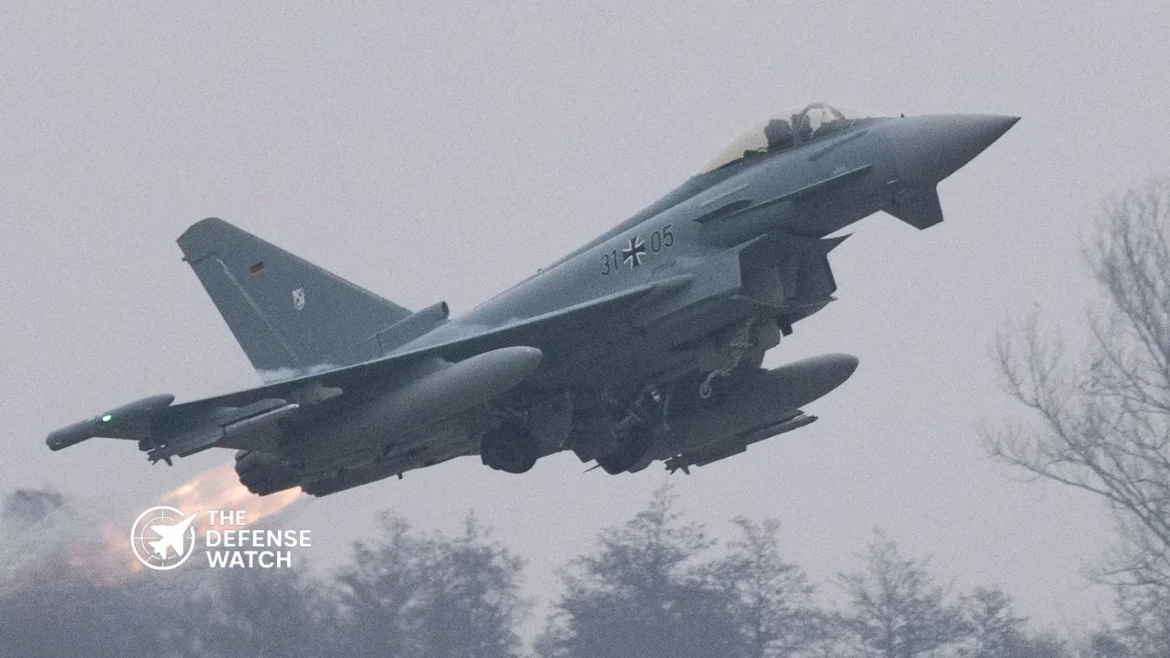
The BAE Systems Türkiye Typhoon support contract marks a significant step in strengthening Ankara’s combat aviation capabilities, focusing on sustainment, training, and long-term operational readiness of the Eurofighter Typhoon fleet.
Announced by BAE Systems, the agreement will deliver a comprehensive package of support services, including maintenance expertise and advanced pilot training. The contract underscores Türkiye’s continued investment in modernizing its air force and ensuring high readiness levels amid evolving regional security challenges.
In an official statement, BAE Systems emphasized the broader impact of the deal, noting that the work will support the Turkish Air Force in delivering operational readiness while progressively increasing its sovereign ability to sustain the fleet. The company added that, together with the Royal Air Force, it is supporting Türkiye as it becomes the latest air force to position the Typhoon as the backbone of its combat aviation capability.
Strengthening Eurofighter Typhoon Operations
The Eurofighter Typhoon remains one of the most advanced multirole fighter platforms in service across Europe and allied nations. Its effectiveness depends not only on platform performance but also on sustainment infrastructure and pilot proficiency.
Under the BAE Systems Türkiye Typhoon support contract, the integration of maintenance and training services is designed to ensure high availability rates and mission readiness. This reflects a broader shift in modern airpower, where lifecycle support is critical to operational success.
BAE Systems continues to play a central role in the Typhoon program, providing design expertise, upgrades, and in-service support across multiple operator nations.
Training And Sovereign Capability Development
A key aspect of the agreement is the development of Türkiye’s sovereign support capabilities. By transferring knowledge and enhancing local expertise, the contract aims to reduce reliance on external support over time.

Training initiatives will include advanced pilot instruction, simulation systems, and operational doctrine development. These elements are essential for maximizing the effectiveness of a fourth-generation-plus fighter such as the Typhoon.
This approach aligns with global trends, where nations seek greater control over maintenance, logistics, and training to ensure resilience during crises or supply chain disruptions.
Strategic Context: Türkiye’s Airpower Modernization
Türkiye continues to prioritize airpower modernization as part of its broader defense strategy. The integration of the Typhoon into its force structure reflects a focus on maintaining a capable and flexible fighter fleet.
The aircraft’s interoperability with NATO-aligned systems enhances Türkiye’s ability to participate in joint operations and coalition missions. At the same time, building sovereign sustainment capabilities supports long-term strategic autonomy.
Industrial And Geopolitical Implications
The BAE Systems Türkiye Typhoon support contract also carries significant industrial and geopolitical weight.
For BAE Systems, the deal strengthens its position as a global leader in defense sustainment and training solutions. Long-term support contracts provide consistent engagement with partner nations and reinforce industrial ties.
From a geopolitical perspective, the agreement highlights continued defense cooperation between Türkiye and European partners. Such collaboration plays a role in shaping regional security dynamics and maintaining interoperability within allied frameworks.
Analysis: Sustainment As The Core Of Modern Airpower
The BAE Systems Türkiye Typhoon support contract reflects a broader evolution in defense procurement, where sustainment and training are as critical as platform acquisition.
Modern fighter aircraft require continuous upgrades, predictive maintenance, and highly trained personnel. Without these elements, even advanced platforms risk reduced readiness.
For Türkiye, the focus on sovereign capability development is particularly significant. It enables greater control over operational readiness and reduces vulnerability to external constraints.
For BAE Systems, the agreement reinforces a strategic shift toward integrated service offerings, combining hardware, software, and human capital development.
Outlook
As global air forces adapt to increasingly complex operational environments, contracts like the BAE Systems Türkiye Typhoon support contract are expected to grow in importance.
For Türkiye, the deal supports both immediate readiness and long-term modernization goals. For the Eurofighter program, it demonstrates continued relevance in a competitive global market.

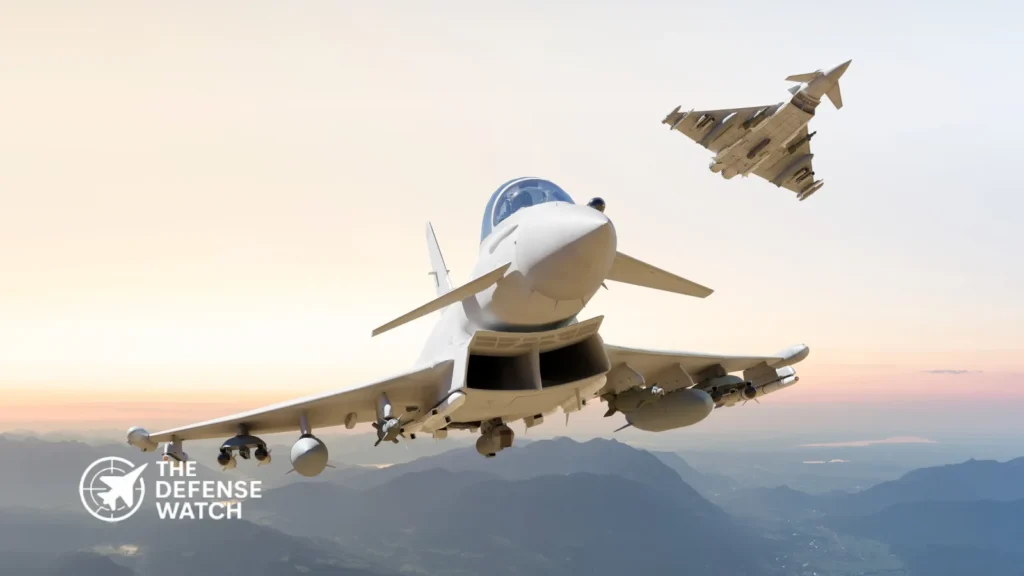
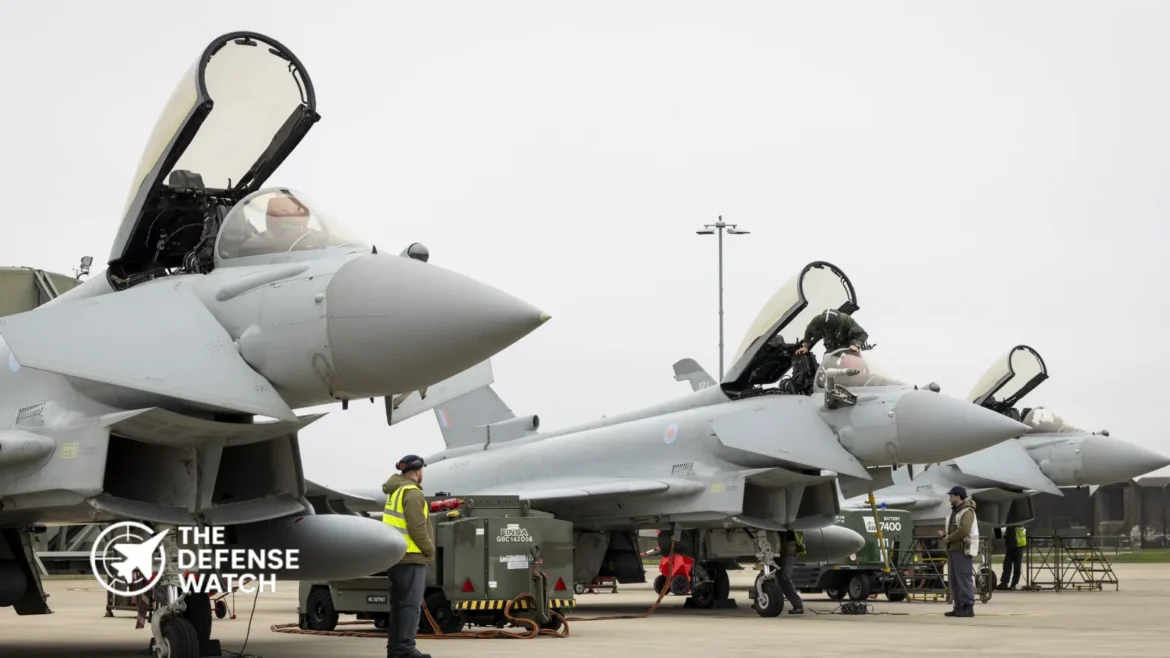
- Four RAF Typhoon fighter jets deployed from RAF Coningsby to Qatar in March 2026.
- Aircraft will integrate with the RAF Typhoon force already operating in the Gulf region.
- Deployment supports air defense operations for regional partners including Bahrain and the UAE.
- RAF personnel from the UK–Qatar joint 12 Squadron will support the mission.
- Move reinforces the UK’s commitment to regional security and collective defense cooperation.
RAF Typhoons Deploy To Qatar
RAF Typhoons deploy to Qatar as part of the United Kingdom’s effort to strengthen its air presence in the Middle East and support regional partners facing growing security challenges. The Royal Air Force confirmed that four Typhoon fighter jets departed RAF Coningsby and arrived in Qatar to reinforce the UK’s existing air assets operating in the region.
(adsbygoogle = window.adsbygoogle || []).push({});The aircraft will integrate with RAF Typhoon units already stationed in the Gulf and operate alongside personnel from the joint UK–Qatar 12 Squadron as well as Qatar’s own Typhoon squadron.
The deployment expands the RAF’s operational capacity in the region and enhances its ability to conduct air defense missions, support coalition operations, and contribute to broader regional stability.
The Big Picture
The RAF Typhoons deploy to Qatar at a time when Middle East security dynamics are becoming increasingly complex. Western militaries have increased their operational presence across the Gulf as tensions and drone threats continue to challenge regional air defenses.
The United Kingdom has maintained a persistent military footprint in the region for decades. Air power has remained a central element of that posture, particularly through fighter deployments, intelligence sharing, and joint training programs with Gulf partners.
Deploying additional Typhoon aircraft reflects the UK’s continuing role in multinational security arrangements designed to protect shipping routes, defend allied airspace, and deter hostile actions across the Gulf region.
Qatar plays an important role in this architecture. The country hosts major coalition military infrastructure and has steadily expanded its own air capabilities through partnerships with Western defense industries.
What’s Happening
Four RAF Typhoon fighters departed RAF Coningsby in eastern England and deployed to Qatar in early March 2026.
The aircraft will join existing RAF Typhoon forces operating in the Gulf and integrate with both RAF personnel and the Qatar Emiri Air Force. The mission includes supporting regional air defense efforts for Gulf partners including Bahrain and the United Arab Emirates.
The deployment also involves personnel from 12 Squadron, a joint RAF and Qatar Emiri Air Force unit established to deepen operational cooperation between the two countries.
RAF officials say the move demonstrates the service’s ability to rapidly reinforce deployed combat air assets and respond to emerging security requirements.
The Eurofighter Typhoon remains the RAF’s primary multirole combat aircraft. It can perform air superiority, defensive counter air, and precision strike missions, making it well suited for coalition air operations and regional air policing.
Why It Matters
Forward deployment of fighter aircraft provides a rapid response capability that is critical in the Gulf region. Air defense threats in the Middle East increasingly include cruise missiles, drones, and other unmanned systems that can appear with little warning.
(adsbygoogle = window.adsbygoogle || []).push({});Typhoon aircraft equipped with advanced radar, long range air to air missiles, and precision strike weapons can help detect and intercept aerial threats before they reach critical infrastructure or population centers.
The deployment also strengthens integrated air defense cooperation among Gulf partners and Western allies.
Military planners often rely on distributed fighter forces across several regional bases. This approach improves operational resilience and reduces vulnerability to surprise attacks against a single airfield.
The presence of additional RAF Typhoons therefore increases both operational flexibility and deterrence.
Strategic Implications
The RAF Typhoons deploy to Qatar as part of a broader Western effort to maintain military stability across the Middle East.
Forward based fighter aircraft allow the United Kingdom and its allies to respond quickly to emerging threats. They also enable coalition forces to conduct air patrols, intercept suspicious aircraft or drones, and support defensive operations across the region.
The deployment reinforces Britain’s long standing defense relationship with Qatar. The two countries operate a unique joint squadron, 12 Squadron, which integrates pilots, maintainers, and operational planning personnel from both air forces.
This partnership supports Qatar’s development of its own Typhoon capability while providing the RAF with valuable operational experience working alongside Gulf air forces.
In strategic terms, these deployments help sustain a layered security architecture that includes naval forces, missile defense systems, and coalition air power across the region.
Competitor View
Regional rivals and strategic competitors closely monitor Western air deployments in the Gulf.
Countries such as Iran often interpret increases in coalition air power as part of a broader deterrence posture aimed at countering missile and drone threats. Additional fighter aircraft also complicate any potential attempt to challenge coalition air superiority in the region.
For competitors, the presence of advanced fighters like the Typhoon signals that Western forces maintain a rapid reinforcement capability and can scale up air operations quickly if the security situation deteriorates.
At the same time, Gulf partners view these deployments as reassurance that Western security commitments remain active.
Capability Gap
The RAF Typhoons deploy to Qatar partly to address the growing challenge posed by unmanned aerial threats and long range missile systems.
(adsbygoogle = window.adsbygoogle || []).push({});Small drones and loitering munitions have become common tools in regional conflicts. These systems are inexpensive but can threaten military facilities, shipping lanes, and critical energy infrastructure.
Fighter aircraft equipped with modern sensors and air to air weapons provide one layer of defense against these threats.
However, air power alone cannot eliminate the risk. Effective defense requires integrated systems that combine fighters, ground based air defense, early warning radars, and electronic warfare capabilities.
The Typhoon deployment therefore contributes to a broader defensive network rather than acting as a standalone solution.
What To Watch Next
Several developments will determine the long term impact of this deployment.
First, the RAF may adjust the size or duration of its fighter presence depending on the regional security situation. Reinforcements could include additional aircraft, support personnel, or aerial refueling assets.
Second, joint operations between RAF and Qatar Emiri Air Force units will likely expand as Qatar continues to build its Typhoon fleet and operational expertise.
Third, the deployment may feed into broader multinational air defense coordination efforts involving NATO partners and Gulf Cooperation Council states.
(adsbygoogle = window.adsbygoogle || []).push({});These trends suggest that the Gulf will remain a key theater for Western air power deployments in the coming years.
The Bottom Line
The deployment of RAF Typhoons to Qatar strengthens coalition air power in the Gulf while reinforcing the United Kingdom’s long standing defense commitments to regional security.

International Fighter Jets Challenge American Air Dominance
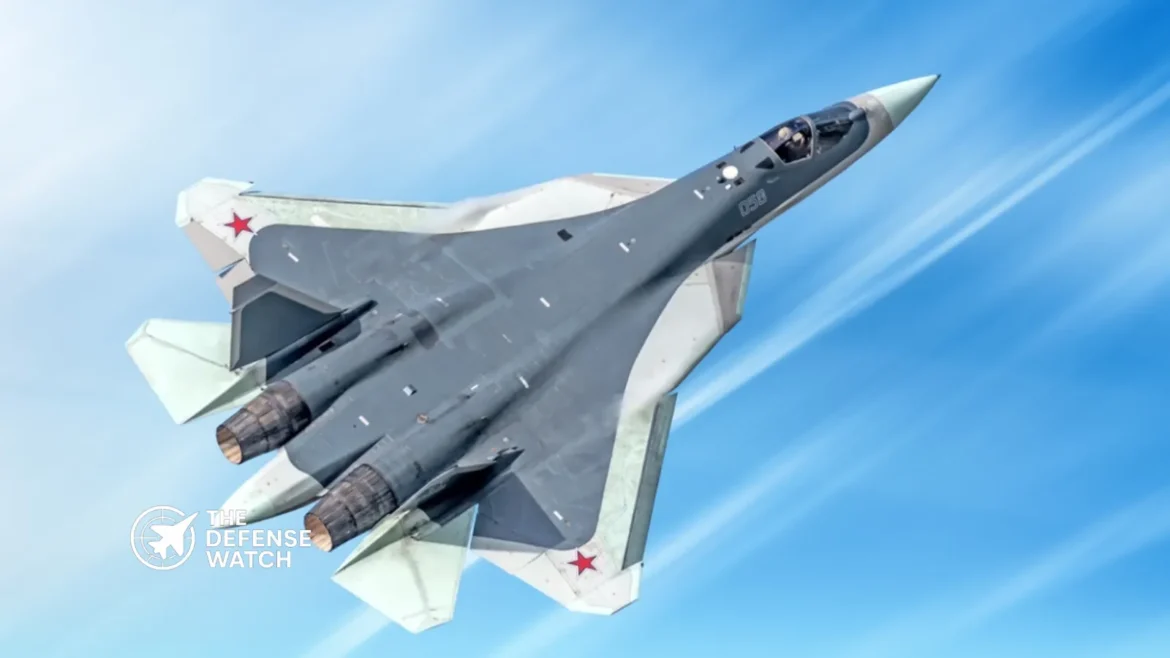
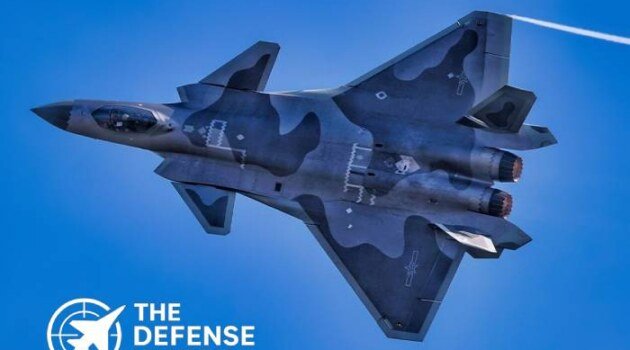
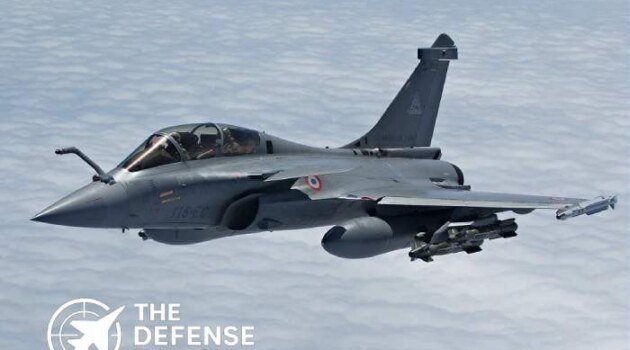
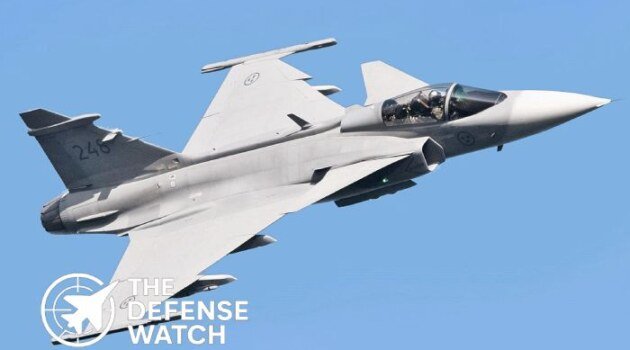
While best non-American fighter jets continue gaining global recognition, the United States maintains its position as the world’s foremost military aerospace designer. However, international competitors have fielded combat aircraft demonstrating exceptional capabilities across multiple domains. Five platforms stand out as particularly impressive: Russia’s Sukhoi Su-57 Felon, China’s Chengdu J-20 Mighty Dragon, France’s Dassault Rafale, the multinational Eurofighter Typhoon, and Sweden’s Saab JAS 39 Gripen.
(adsbygoogle = window.adsbygoogle || []).push({});These aircraft represent the pinnacle of non-American military aviation engineering, each bringing unique strengths to their respective air forces. From stealth technology to combat-proven versatility, these fighters have earned their place among the world’s elite combat platforms.
Russia’s Su-57 Felon: Fifth-Generation Stealth Fighter
The Sukhoi Su-57 Felon represents Russia’s first fifth-generation stealth fighter, designed for both air superiority and multirole missions. With a stealth-optimized airframe, supercruise capability, and thrust-vectoring engine nozzles, the Su-57 stands as arguably the most advanced non-American fighter currently operational.
Technical Specifications:
- Armament: Internal 30mm GSh-30-1 cannon
- Weapons Systems: R-77M long-range and R-37M extended-range air-to-air missiles
- Stealth Features: Internal weapons bay for reduced observability
- Advanced Capabilities: Hypersonic missile compatibility
The Su-57’s exceptional maneuverability stems from its thrust-vectoring nozzles and advanced aerodynamic design. According to defense analysts, the aircraft can deliver serious ordnance while maintaining low observability against modern radar systems.
- (adsbygoogle = window.adsbygoogle || []).push({});
However, production challenges have limited the Su-57’s operational deployment. Only a handful of aircraft have achieved operational readiness, with full-scale deployment still pending. Current production models utilize interim AL-41F1 engines, while the more advanced Izdeliye 30 engine remains under development.
Despite these constraints, the Su-57 continues supporting Russian operations, progressing from launching standoff cruise missiles to executing precision ground strikes. The platform demonstrates formidable capabilities in contested airspace environments.
China’s J-20 Mighty Dragon: Asian Stealth Power
China’s Chengdu J-20 Mighty Dragon represents Beijing’s emergence as a peer competitor in advanced aerospace technology. Entering service in 2017, the J-20 has been produced in significant numbers, with estimates suggesting over 200 aircraft operational by early 2026.
Key Features:
- Role: Long-range patrol and high-value target hunter
- Design: Large airframe with significant fuel reserves
- Weapons: Internal weapons bays plus external hardpoints
- Engines: Latest variants feature domestically-produced WS-15 engines
The J-20 regularly patrols contested airspace over the East and South China Seas, signaling China’s growing airpower capabilities. While speculation suggests the aircraft may have incorporated technology from the F-22 Raptor program, the J-20 demonstrates capabilities inferior to American fifth-generation platforms in stealth performance.
(adsbygoogle = window.adsbygoogle || []).push({});Defense experts note the J-20’s mission focuses on hunting high-value targets including USAF tanker aircraft and airborne command and control platforms. China’s lack of airborne tankers influenced the design toward a very large plane with substantial internal fuel capacity.
France’s Dassault Rafale: Combat-Proven Omnirole Fighter
The Dassault Rafale has emerged as one of the most successful fourth-generation-plus fighters globally, combining multirole versatility with proven combat effectiveness. France’s flagship fighter delivered record numbers in 2025, with 26 aircraft delivered—exceeding the company’s target.
Combat Record:
- First Deployment: Afghanistan (2007)
- Combat Operations: Iraq, Libya, Mali, Syria
- Recent Action: India-Pakistan operations (2025)
- Operational Nations: France, India, Egypt, Qatar, Greece, Croatia, Indonesia, UAE, Serbia
Dassault Aviation reported 220 Rafales in backlog as of December 31, 2025, with 175 aircraft destined for export customers. The company plans to increase production to four aircraft per month to meet growing international demand.
Technical Capabilities:
- Radar System: RBE2 AA active electronically scanned array (200 km detection range)
- Engines: Twin Snecma M88 (supercruise capable)
- Speed: Mach 1.6 (Mach 2+ with afterburners)
- Electronic Warfare: Advanced SPECTRA self-protection suite
The Rafale’s omnirole capability allows it to perform multiple missions in a single sortie, from air superiority to ground attack, reconnaissance, and nuclear deterrence. This versatility has proven particularly attractive to nations seeking alternatives to American or Russian platforms.
(adsbygoogle = window.adsbygoogle || []).push({});India’s selection of the Rafale over the F-35 and Su-57 demonstrates the aircraft’s international appeal. The Indian Air Force operates Rafales from strategically positioned bases at Ambala and Hasimara, with a reported proposal for 114 additional aircraft under consideration.
The carrier-capable Rafale M variant remains the only non-American fighter cleared for operation on U.S. aircraft carriers, highlighting the platform’s exceptional engineering and interoperability.
Eurofighter Typhoon: European Air Defense Backbone
Developed through a joint defense program among the United Kingdom, Germany, Italy, and Spain, the Eurofighter Typhoon represents multinational European aerospace cooperation at its finest. The fourth-generation-plus aircraft demonstrates excellent aerodynamics and maneuverability, achieving a top speed of Mach 2 (1,480 mph).
Key Specifications:
- Armament: 27mm Mauser BK-27 revolver cannon
- Hardpoints: 13 total (8 underwing, 5 under-fuselage)
- Payload Capacity: 9,000 kg (19,800 lb)
- Advanced Features: Modular architecture for technology integration
The Typhoon’s modular design allows for easy integration of new technology, keeping the platform continuously relevant and adaptable. Recent upgrades include the Captor-E AESA radar, updated mission systems, and next-generation air-to-air missile integrations.
(adsbygoogle = window.adsbygoogle || []).push({});Defense analysts note the Typhoon excels in both air-to-air and ground-attack missions. With upgrades planned into the 2040s, the aircraft is expected to remain crucial to European defense for another generation, bridging capabilities until sixth-generation platforms like FCAS and GCAP become operational.
Sweden’s Saab JAS 39 Gripen: Cost-Effective Multirole Platform
Sweden’s Saab JAS 39E Gripen represents a cost-effective multirole fighter with advanced capabilities that punch above its weight class. The latest E variant features significant upgrades over previous generations, offering capabilities that compete with larger, more expensive platforms.
Technical Advancements:
- Engine: GE F414 with increased fuel capacity
- Radar: Raven ES-05 AESA radar
- Sensors: Skyward-G infrared search and track (IRST)
- Electronic Warfare: Advanced survivability systems
- Armament: 27mm Mauser BK-27 cannon (omitted on two-seat variants)
The Gripen’s design emphasizes cost-effectiveness, versatility, and ease of maintenance. Defense experts highlight the aircraft’s highly survivable profile in contested airspace, achieved through its all-new avionics suite and electronic warfare capabilities.
Weapons Integration:
- Air-to-air: AIM-9 Sidewinder missiles
- Air-to-ground: AGM-65 Maverick missiles
- Anti-ship: RBS-15 missiles
The Gripen’s affordability and performance have attracted international customers seeking to democratize access to advanced fighter capabilities. Nations in Africa and Southeast Asia view the platform as an attractive alternative to more expensive American or European options.
Global Fighter Market Dynamics
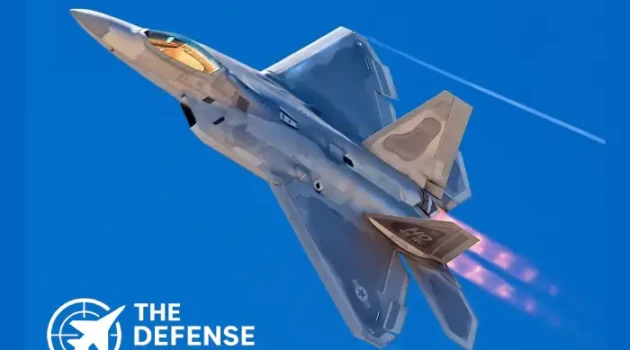
The dominance of non-American platforms reflects changing geopolitical dynamics and technological proliferation. While U.S. fighters like the F-35 and F-22 maintain technological edges in certain domains, international competitors have successfully carved out market niches through different value propositions.
Export Success Factors:
- Technology Transfer: France’s willingness to include technology sharing
- Strategic Autonomy: ITAR-free supply chains (particularly Rafale)
- Cost Considerations: More affordable alternatives to fifth-generation platforms
- Combat Proven: Operational track records in real-world conflicts
- Versatility: Multirole capabilities reducing need for specialized platforms
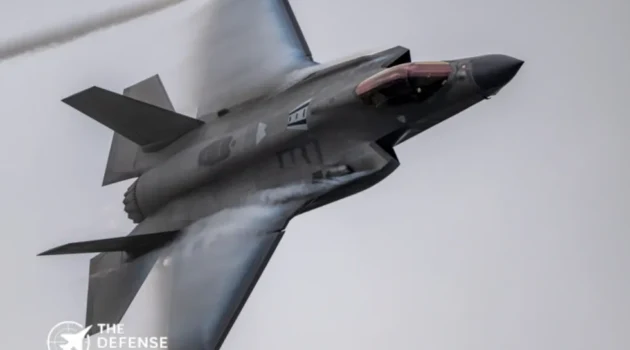
The F-35’s sensor fusion and network-centric warfare capabilities remain unmatched, with over 1,000 units delivered by mid-2025. However, platforms like the Rafale have successfully positioned themselves as capable alternatives for nations seeking proven performance without full fifth-generation investment.
Future Developments and Sixth-Generation Programs
The global fighter landscape continues evolving rapidly. The United States awarded Boeing the Next-Generation Air Dominance (NGAD) contract in 2025, designating the future jet as the F-47. This sixth-generation platform will introduce collaborative combat aircraft, allowing crewed fighters to quarterback up to five unmanned wingmen.
European nations are developing the Future Combat Air System (FCAS) and Global Combat Air Programme (GCAP), both targeting operational capability in the 2030s. The upcoming Rafale F5 variant, scheduled for around 2030, will integrate AI-assisted mission systems, enhanced stealth coatings, and expanded sensor fusion.
China continues advancing its aviation sector, with the mysterious J-36 featuring a unique stealth design configuration. Russia faces production and industrial challenges limiting Su-57 deployment, though the platform continues evolving with improved engines and weapons integration.
Strategic Implications
The proliferation of capable non-American fighter platforms signals a multipolar aerospace industry landscape. Nations increasingly have options beyond traditional U.S. or Soviet/Russian suppliers, enabling strategic diversification and reduced dependence on single sources.
For U.S. defense planners, this reality demands continued innovation and competitive pricing. The F-35 program’s falling unit costs (approximately $80-90 million for the F-35A variant as of 2025) reflect market pressures from capable international competitors.
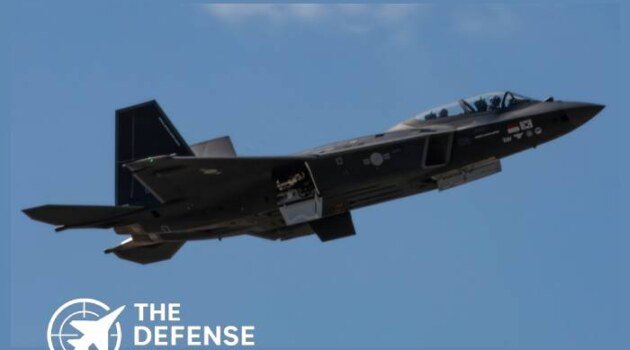
(adsbygoogle = window.adsbygoogle || []).push({});Mid-tier powers benefit from expanded choices, with collaborative programs and technology transfer arrangements enabling indigenous aerospace industry development. South Korea’s KF-21, Turkey’s TF-X (later renamed Kaan), and India’s AMCA represent this trend toward domestic fifth-generation fighter development.
Conclusion
The best non-American fighter jets demonstrate that while U.S. aerospace manufacturers lead in certain technological domains, international competitors field formidable platforms across multiple capability areas. From Russia’s Su-57 Felon to Sweden’s cost-effective Gripen, these aircraft represent diverse approaches to modern air combat requirements.
France’s Rafale stands out for combat-proven versatility and export success, delivering 26 aircraft in 2025 and maintaining a backlog of 220 orders. The Eurofighter Typhoon continues serving as Europe’s air defense backbone with planned upgrades through the 2040s. China’s J-20 Mighty Dragon demonstrates Beijing’s rapid advancement in stealth technology, while Sweden’s Gripen offers an attractive cost-effective alternative.
(adsbygoogle = window.adsbygoogle || []).push({});As sixth-generation programs advance globally, the competition for air superiority will intensify. Nations investing in advanced aerospace capabilities position themselves for strategic advantage in an increasingly contested environment. The integration of artificial intelligence, directed energy weapons, and unmanned systems will further transform air combat in the coming decades.
For defense analysts and military planners, understanding these platforms’ capabilities and limitations remains essential for assessing global military balance and future conflict dynamics.
Eurofighter Typhoon At World Defense Show 2026
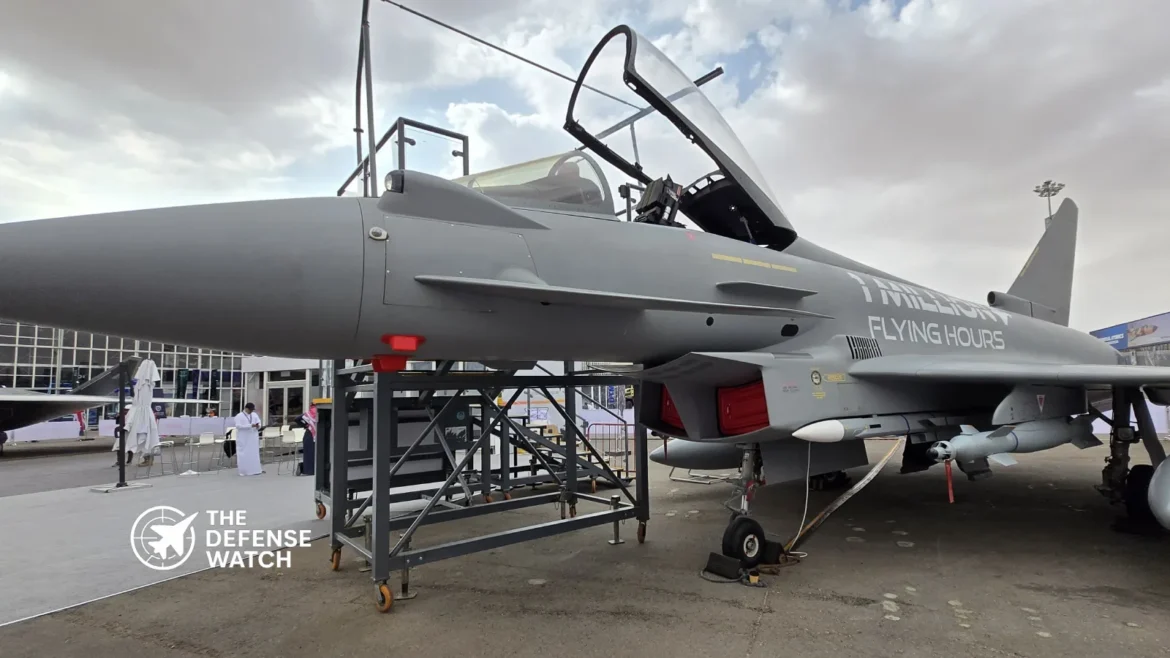
The Eurofighter Typhoon fighter jet took center stage at the World Defense Show 2026 in Riyadh as BAE Systems marked the aircraft’s achievement of one million cumulative flight hours across its global fleet. Displayed prominently in the company’s static exhibition area, the aircraft featured a special One Million Flight Hours insignia highlighting more than two decades of continuous operational service.
(adsbygoogle = window.adsbygoogle || []).push({});The milestone underscores the Eurofighter Typhoon’s role as a frontline multirole combat aircraft operated by several air forces across Europe, the Middle East, and beyond. The display at Saudi Arabia’s flagship defense exhibition placed emphasis on operational maturity, weapons integration, and ongoing modernization efforts rather than future concepts or experimental upgrades.
According to Eurofighter GmbH and BAE Systems data, the combined flight hours were accumulated across thousands of sorties conducted by partner nations including the United Kingdom, Germany, Italy, Spain, Saudi Arabia, and Qatar, among others.
Static Display Highlights Combat Loadout
BAE Systems configured the Eurofighter Typhoon on display with a representative combat weapons package, offering visitors a clear view of the platform’s strike and air dominance capabilities.
The aircraft was shown equipped with the Storm Shadow stealth cruise missile, a long range air launched weapon designed for deep precision strike missions against high value targets. Storm Shadow has been combat tested and remains a core element of the Typhoon’s strike portfolio in several air forces.
Also visible were Brimstone precision guided missiles, optimized for close air support and anti armor roles. Brimstone’s low collateral damage profile and dual mode guidance have made it a preferred option for dynamic targeting environments.
For air to air combat, the display included Meteor beyond visual range air to air missiles. Meteor provides extended engagement range and a high no escape zone, enhancing the Eurofighter Typhoon’s ability to counter advanced aerial threats.
This combination reflects the aircraft’s multirole design philosophy, allowing it to transition between air superiority and strike missions within the same deployment.
Operational Record And Global Fleet
The one million flight hours milestone reflects sustained operational tempo rather than ceremonial flying. Eurofighter Typhoon aircraft have conducted routine air policing, quick reaction alert missions, expeditionary deployments, and combat operations.
(adsbygoogle = window.adsbygoogle || []).push({});Royal Air Force Typhoons continue to support NATO air policing missions over Eastern Europe and the Baltic region. Middle Eastern operators, including the Royal Saudi Air Force and Qatar Emiri Air Force, employ the platform for national air defense and regional security tasks.
Eurofighter GmbH has previously stated that the fleet’s availability rates and mission capable performance have improved steadily through incremental upgrades, supply chain optimization, and software driven enhancements.
Modernization And Upgrade Path
While the static display focused on current capabilities, the Eurofighter Typhoon program continues to evolve. Partner nations are progressing with phased modernization programs aimed at keeping the aircraft relevant into the 2040s.
Key areas include radar upgrades, electronic warfare enhancements, sensor fusion improvements, and expanded weapons compatibility. The ECRS Mk2 AESA radar, led by BAE Systems, is among the most significant upgrades planned for future Royal Air Force Typhoon variants.
(adsbygoogle = window.adsbygoogle || []).push({});These efforts are intended to ensure interoperability with allied air forces and compatibility with emerging command and control architectures.
Strategic Importance Of WDS 2026
The World Defense Show 2026 in Riyadh has emerged as a major platform for aerospace and defense manufacturers targeting Middle Eastern and Asian markets. Saudi Arabia’s focus on defense localization, sustainment, and long term capability development has made the event strategically important for Western defense firms.
By highlighting a proven operational milestone rather than a conceptual prototype, BAE Systems reinforced the Eurofighter Typhoon’s status as a mature, combat ready aircraft with a long service life ahead.
Industry observers note that such displays are aimed at reinforcing confidence among existing operators while supporting long term sustainment and upgrade discussions.
Eurofighter Secures Major Contract for Advanced Aerodynamic Enhancement
The NATO Eurofighter and Tornado Management Agency (NETMA) has officially signed a contract with Eurofighter GmbH to advance the Aerodynamic Modification Kit (AMK), representing a significant milestone in the ongoing modernization of the Eurofighter Typhoon fleet. The Eurofighter Aerodynamic Modification Kit is designed to substantially enhance the aircraft’s maneuverability and combat effectiveness through comprehensive aerodynamic improvements.
(adsbygoogle = window.adsbygoogle || []).push({});According to official statements from Eurofighter, the newly signed agreement enables the progression of the AMK program, which aims to integrate advanced aerodynamic features onto the multi-role fighter platform. The contract signing demonstrates continued commitment from the four partner nations—Germany, Italy, Spain, and the United Kingdom—to maintain the Typhoon’s competitive edge in modern air combat scenarios.
Understanding the Aerodynamic Modification Kit
The NETMA Eurofighter AMK contract focuses on developing and implementing fuselage-mounted strakes and leading-edge root extensions that significantly improve the aircraft’s aerodynamic performance. These modifications are specifically engineered to enhance agility during close-range combat scenarios and improve overall handling characteristics across the flight envelope.
Industry sources indicate the Aerodynamic Modification Kit will provide measurable improvements in lift generation, vortex control, and sustained turn rates—critical parameters for air superiority operations. The AMK builds upon the Typhoon’s already formidable aerodynamic design, which features a delta-wing canard configuration optimized for high maneuverability.
The contract represents a continuation of efforts to ensure Eurofighter Typhoon fighters remain technologically relevant amid evolving threat environments. Defense analysts note that aerodynamic enhancements complement ongoing avionics and weapons system upgrades already underway across the Typhoon fleet.
Strategic Importance for European Air Power
The Typhoon fighter jet upgrades under the AMK program align with broader European defense modernization priorities. With over 550 Eurofighter Typhoons delivered to eight nations, the platform serves as a cornerstone of European air defense capabilities. The AMK contract ensures these aircraft can effectively counter advanced adversary fighters well into the 2030s and beyond.
NETMA, which manages procurement and support for the Eurofighter program on behalf of partner nations, emphasized that the contract reflects collaborative commitment to maintaining operational superiority. The agency coordinates acquisition activities for Germany’s Luftwaffe, Italy’s Aeronautica Militare, Spain’s Ejército del Aire, and the United Kingdom’s Royal Air Force.
Germany currently operates approximately 140 Eurofighter Typhoons, while the United Kingdom fields around 160 aircraft. Italy and Spain maintain fleets of approximately 96 and 73 aircraft respectively. Additional export customers including Saudi Arabia, Austria, Kuwait, Oman, and Qatar also operate the platform.
Technical Development and Testing Timeline
While specific contract values and delivery schedules remain undisclosed, the Eurofighter combat capabilities enhancement program typically follows a structured development pathway. Initial design work and wind tunnel testing precede flight testing and eventual fleet integration.
Previous Eurofighter upgrade contracts have demonstrated timelines ranging from 24 to 48 months from contract signature to initial operational capability, depending on modification complexity. The AMK program is expected to follow similar development protocols, with prototype testing likely preceding any fleet-wide installation campaign.
Eurofighter GmbH, headquartered in Munich, Germany, serves as the industrial prime contractor for the program. The company coordinates work share among the four partner nations’ aerospace industries: BAE Systems (United Kingdom), Airbus Defence and Space (Germany and Spain), and Leonardo (Italy).
Broader Context of Fighter Aircraft Modernization
The European fighter aircraft modernization effort extends beyond aerodynamic improvements. Concurrent upgrade programs address radar systems, electronic warfare capabilities, weapons integration, and cockpit systems. The AMK contract complements these parallel initiatives to deliver a comprehensively enhanced platform.
Recent years have seen increasing emphasis on extending the operational lifespan of fourth-generation fighters like the Typhoon while next-generation platforms remain in development. The Future Combat Air System (FCAS), a joint French-German-Spanish program, and the UK-led Tempest initiative represent long-term replacements but won’t achieve operational status until the 2030s at earliest.
This timeline necessitates continuous Typhoon improvements to bridge the capability gap. Aerodynamic enhancements provide cost-effective performance gains without requiring extensive structural redesign or entirely new aircraft acquisitions.
Industry and Defense Community Response
Defense industry observers view the NETMA Eurofighter AMK contract as confirmation of sustained investment in the Typhoon platform despite economic pressures facing European defense budgets. The signing demonstrates political will among partner nations to fund modernization rather than accept capability degradation.
(adsbygoogle = window.adsbygoogle || []).push({});Aviation Week has previously reported that aerodynamic modifications can deliver substantial performance improvements at relatively modest cost compared to entirely new aircraft development. The AMK approach allows partner nations to maximize return on existing platform investments.
Competitor platforms including the Dassault Rafale, Boeing F-15EX, and Lockheed Martin F-35 continue advancing their own capabilities, creating competitive pressure for Typhoon operators to pursue continuous improvement. The AMK program helps ensure the Eurofighter remains operationally relevant in this contested environment.
Implications for Allied Air Forces
For U.S. defense planners and NATO strategists, European fighter aircraft modernization directly impacts alliance air power availability and interoperability. Enhanced Eurofighter Typhoon capabilities strengthen collective defense posture, particularly given the aircraft’s significant presence across European NATO members.
The United States maintains close cooperation with European allies on air combat doctrine, training, and operations. Improved Typhoon performance enhances potential coalition operations and burden-sharing arrangements within the alliance framework.
Joint exercises including Red Flag, Ramstein Apex, and various NATO air policing rotations regularly involve Eurofighter Typhoons operating alongside U.S. Air Force assets. Platform capability improvements benefit overall alliance readiness and effectiveness in these collaborative contexts.
Looking Ahead
The Eurofighter Aerodynamic Modification Kit contract represents one element in a comprehensive modernization roadmap extending through the 2030s. Partner nations continue evaluating additional enhancement opportunities including improved sensors, advanced weapons integration, and network-centric warfare capabilities.
(adsbygoogle = window.adsbygoogle || []).push({});As geopolitical tensions persist and air combat technology rapidly evolves, sustained investment in proven platforms like the Typhoon provides European nations with credible deterrent capabilities while next-generation systems mature. The AMK program demonstrates pragmatic balancing of near-term readiness requirements against long-term modernization objectives.
Defense industry sources anticipate additional contract announcements in coming months as various Typhoon upgrade initiatives progress through development phases. The AMK program will likely serve as a template for collaborative modernization approaches across the four-nation partnership.
Eurofighter Typhoon One Million Flying Hours
The Eurofighter Typhoon fleet officially surpassed one million flying hours, a milestone that highlights the long-term service and broad operational use of the European multirole combat aircraft across allied air forces. The achievement was confirmed by Eurofighter Jagdflugzeug GmbH and reflects more than two decades of continuous flight operations.
(adsbygoogle = window.adsbygoogle || []).push({});Operational Record and Scope
The global Typhoon fleet, in service with nine nations, has steadily increased flight hours through air policing, quick reaction alert duties, joint patrols, and combat missions. The milestone coincides with the EJ200 engine reaching two million engine flying hours, a direct result of Typhoons operating with twin-engine powerplants on every sortie.
Officials emphasize this tally as a sign of the aircraft’s operational reliability and adaptability in diverse mission sets. Fleet commanders and industry partners note the combined contribution of pilots, maintenance crews, and support networks across partner nations.
What One Million Hours Means
Reaching one million flying hours places the Typhoon among a select group of modern fighters with long histories of sustained operations. The aircraft’s usage covers routine peacetime missions as well as higher-intensity activities for NATO and coalition partners. Its multirole design supports both air superiority and ground attack tasks.
About 80 percent of the core nations’ operational air missions are now flown by Typhoons, underscoring its central role in European and allied defense postures.
Aircraft and Engine Performance
The Typhoon’s twin-engine configuration powered by the EJ200 turboshaft has now doubled the flying hours of the airframe itself. This engine milestone reinforces confidence in the aircraft’s propulsion system under varied operational demands.
Manufacturers and military stakeholders have pointed to this record as evidence of sustained industrial cooperation and technical performance across multiple decades of service.
Broader Context
The Typhoon program started deliveries in the early 2000s and has since become one of Europe’s largest defense collaborations. Partner countries include the United Kingdom, Germany, Italy, and Spain, with additional export customers extending its global footprint.
(adsbygoogle = window.adsbygoogle || []).push({});This milestone comes as allied air forces adapt to shifting security demands and pursue air defense modernization programs, balancing legacy systems with fifth-generation platforms and future combat air systems. For context, other major fighter fleets like the U.S. F-35 Lightning II have also surpassed one million flight hours globally.
What’s Next for the Typhoon
Beyond flight hours, the Eurofighter consortium is advancing modernization efforts, including updated sensors, electronic warfare systems, and weapon integration. Partner nations are investing in enhancements to keep the platform operationally relevant through the 2030s and beyond.
Germany Strengthens Air Combat Capability with New Meteor Missile Procurement
Germany has placed a new order with European defense manufacturer MBDA for additional Meteor missiles, expanding the country’s stockpile of beyond visual range air-to-air weapons for its Eurofighter Typhoon fleet. The procurement underscores ongoing European efforts to modernize air combat capabilities amid evolving security challenges.
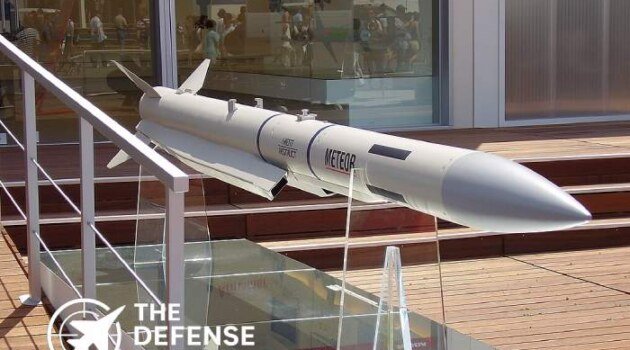
(adsbygoogle = window.adsbygoogle || []).push({});MBDA announced the contract award through its official channels, though specific order quantities and financial details were not disclosed. The Meteor missile represents one of the most advanced air-to-air weapons currently operational, featuring a ramjet propulsion system that provides extended range and sustained high-speed performance throughout flight.
Advanced Ramjet Technology Distinguishes Meteor System
The Meteor beyond visual range missile entered service with multiple European air forces over the past decade, representing a collaborative development program among France, Germany, Italy, Spain, Sweden, and the United Kingdom. Unlike conventional rocket-powered air-to-air missiles, Meteor’s throttleable ducted rocket (ramjet) motor enables the weapon to maintain energy throughout its flight envelope.
This propulsion system provides tactical advantages in engagements against maneuvering targets at extended ranges. The missile reportedly achieves a no-escape zone several times larger than previous-generation weapons, meaning adversary aircraft have significantly reduced opportunities to evade once the weapon is launched within certain parameters.
(adsbygoogle = window.adsbygoogle || []).push({});Germany’s Eurofighter Typhoon fleet has been equipped with Meteor since integration was completed, providing the Luftwaffe with enhanced air superiority capabilities. The weapon measures approximately 3.7 meters in length with a diameter of 178 millimeters and weighs around 190 kilograms.
European Collaborative Defense Manufacturing Model
MBDA defense systems operates as a joint venture among Airbus, BAE Systems, and Leonardo, representing a European collaborative approach to complex weapons development. The company specializes in missile systems across air, land, and naval platforms, with operations in France, Germany, Italy, Spain, and the United Kingdom.
The Meteor program exemplifies multinational defense cooperation, with development costs and industrial workshare distributed among participating nations. Germany’s continued procurement supports domestic industry participation while maintaining interoperability with allied air forces operating the same weapon system.
(adsbygoogle = window.adsbygoogle || []).push({});France, the United Kingdom, Italy, Spain, and Sweden have all integrated Meteor onto their respective fighter aircraft, including Rafale, Eurofighter Typhoon, and Gripen platforms. This commonality simplifies logistics and training across NATO air forces while supporting coalition operations.
Context Within European Defense Spending Trends
The new Meteor missile Germany order arrives as European nations accelerate defense modernization following geopolitical shifts. Germany announced significant increases to defense spending, targeting NATO’s 2% GDP guideline with plans for comprehensive military modernization across all service branches.
Air force modernization forms a critical component of Germany’s defense strategy, with investments in F-35 Lightning II acquisitions, continued Eurofighter upgrades, and munitions stockpiling. The Luftwaffe operates approximately 138 Eurofighter Typhoons across multiple variants, representing the backbone of German air combat capability.
(adsbygoogle = window.adsbygoogle || []).push({});Beyond visual range air-to-air missiles constitute essential inventory for maintaining credible deterrence and air superiority. Modern air combat doctrine emphasizes engagement at extended ranges before entering close-range combat, making weapons like Meteor central to operational effectiveness.
Operational Capabilities and Integration
The Eurofighter Typhoon weapon systems portfolio includes multiple air-to-air and air-to-ground munitions, with Meteor serving as the primary beyond visual range solution. The aircraft’s sensor suite, including CAPTOR-E active electronically scanned array (AESA) radar on newer variants, provides target detection and tracking capabilities to fully exploit Meteor’s performance envelope.
Integration testing and qualification programs ensure compatibility between aircraft systems and weapons. Germany’s Eurofighters have undergone successive upgrade programs, enhancing avionics, defensive systems, and weapons compatibility to maintain technological relevance against evolving threats.
The Meteor’s active radar seeker provides terminal guidance, allowing the missile to prosecute targets independently after launch. This “fire and forget” capability enables launching aircraft to engage multiple targets or maneuver defensively without maintaining target illumination throughout missile flight.
Strategic Implications for European Air Defense
European air defense modernization extends beyond individual weapons procurement to encompass integrated air and missile defense architectures. Germany participates in NATO integrated air defense, contributing aircraft, sensors, and command and control capabilities to collective defense arrangements.
The continued investment in advanced air-to-air capabilities reflects assessments of potential adversary capabilities, including modern fighter aircraft and long-range air-defense systems. Maintaining technological overmatch in air combat requires sustained investment in sensors, platforms, and weapons throughout their operational lifecycles.
(adsbygoogle = window.adsbygoogle || []).push({});MBDA continues development work on future variants and capability enhancements for the Meteor system, ensuring the weapon remains effective against emerging threats. Collaborative European defense programs provide economies of scale while maintaining industrial capabilities across multiple nations.
Industry and Economic Considerations
Defense procurement decisions balance operational requirements with industrial and economic factors. The MBDA Meteor air-to-air missile program supports skilled manufacturing jobs and advanced technology development across participating European nations.
Germany’s defense industrial base includes significant aerospace and weapons manufacturing capabilities, with domestic companies participating in major international programs. Continued orders support production lines and supplier networks while maintaining workforce skills and technological expertise.
The ramjet propulsion technology employed in Meteor represents specialized manufacturing capability with potential applications beyond air-to-air weapons. Maintaining these industrial competencies provides strategic advantages for future development programs and technological independence.
Future Outlook for European Air Combat Capabilities
As sixth-generation fighter programs advance, weapons like Meteor will likely serve as bridge capabilities until next-generation systems achieve operational status. The Future Combat Air System (FCAS), a joint French-German-Spanish development program, includes plans for advanced weapons alongside new aircraft platforms.
(adsbygoogle = window.adsbygoogle || []).push({});Germany’s continued investment in current capabilities ensures operational readiness while future programs mature. The typical service life for modern air-to-air missiles spans multiple decades with periodic upgrades, meaning today’s procurement decisions influence capabilities well into the 2040s and beyond.
NATO air forces conducting combined operations benefit from common weapons inventories, simplifying logistics and interoperability during multinational exercises and potential contingencies. The widespread Meteor adoption across European air forces reinforces this standardization.
Türkiye Edges Closer to Eurofighter Typhoon Delivery
Türkiye is advancing toward receiving its first Eurofighter Typhoon jets following trilateral defense talks in Doha with Qatar and the United Kingdom, according to the Turkish Defense Ministry.
Air Force Commander Gen. Ziya Cemal Kadıoğlu led discussions with Qatari and UK counterparts focused on the Eurofighter procurement process. The meetings follow an agreement signed in October valued at roughly 8 billion pounds (10.7 billion USD) for 20 Eurofighter Typhoons from the UK.
In addition to the UK order, Ankara plans to acquire 12 secondhand Typhoons from Qatar and 12 more from Oman. Private broadcaster NTV reports the first delivery is expected by the end of February, with pilot training already underway.
Defense Minister Yaşar Güler indicated that the initial aircraft from Qatar could arrive in early 2026, while UK-supplied jets are projected for 2030. The agreement also provides options for further purchases.
The Eurofighter Typhoon is built by a consortium spanning the UK, Germany, Italy, and Spain, represented by BAE Systems, Airbus, and Leonardo. Türkiye’s interest in the platform dates back to 2022, amid stalled negotiations with the United States over F-16 acquisitions.
Türkiye finalized a $7 billion deal with Washington in late 2024 for 40 F-16s. Negotiations have been complicated by cost concerns and Ankara’s renewed interest in rejoining the F-35 program, from which it was excluded in 2019 following the S-400 purchase from Russia.
President Recep Tayyip Erdoğan raised the F-35 issue during a September White House meeting with former U.S. President Donald Trump, who recently stated the sale was being considered.
Despite NATO’s second-largest military, Türkiye has faced repeated arms embargoes, prompting investments in domestic production. The country now manufactures drones, missiles, and naval platforms and is developing its own fifth-generation stealth fighter, Kaan, intended to replace F-16s in the 2030s.
UK Deploys Typhoon Jets to Qatar for Regional Security Mission
The UK deploys Typhoon jets to Qatar as part of a new Royal Air Force mission aimed at reinforcing Gulf security and strengthening defense cooperation with Doha, according to official announcements from the UK Ministry of Defence and reporting by UK Defence Journal.
(adsbygoogle = window.adsbygoogle || []).push({});The deployment involves RAF 12 Squadron, the joint UK-Qatar Typhoon unit, and is being conducted at the invitation of the Qatari government under the long-standing UK-Qatar Defence Assurance Agreement.
UK officials describe the move as a defensive deployment designed to support regional stability and maintain a visible allied air presence in the Middle East amid ongoing security challenges.
Joint UK-Qatar Squadron Leads Deployment
The Typhoon jets are being deployed by No. 12 Squadron RAF, a unique joint squadron composed of both Royal Air Force and Qatar Emiri Air Force personnel. The unit operates from RAF Coningsby in the United Kingdom and routinely conducts combined operations and training with Qatar.
According to the UK Ministry of Defence, the squadron’s deployment reflects the deep military partnership between London and Doha, built around shared training, operational integration, and long-term defense cooperation.
The joint structure allows British and Qatari pilots and engineers to fly and maintain the aircraft together, enhancing interoperability and operational readiness.
Defensive Mission Under UK-Qatar Defence Assurance Agreement
The UK government confirmed the mission is being carried out under the UK-Qatar Defence Assurance Agreement, which provides a formal framework for bilateral defense cooperation and mutual support.
(adsbygoogle = window.adsbygoogle || []).push({});UK Defence Secretary John Healey stated that the deployment is part of ongoing efforts to strengthen collective security in the Gulf region.
British officials emphasized that the Typhoon deployment is defensive in nature and intended to support Qatar’s air defense posture while reinforcing broader regional stability objectives.
Strategic Context: Heightened Middle East Tensions
The deployment comes amid heightened regional tensions in the Middle East, where allied nations have increased military presence to deter potential threats and reassure regional partners.
While the UK Ministry of Defence did not link the deployment to any specific incident, defense analysts note that allied air deployments are commonly used to signal commitment to regional security and to maintain rapid-response capabilities.
The Gulf region remains strategically important for global energy security, trade routes, and broader Western security interests.
Role of the Eurofighter Typhoon in Gulf Operations
The Eurofighter Typhoon is a multirole, fourth-generation combat aircraft that forms the backbone of the Royal Air Force’s air combat fleet. The aircraft is capable of air-to-air superiority, air policing, and precision strike missions.
RAF Typhoons have been routinely deployed to the Middle East under long-standing UK operations, including air defense, coalition support missions, and regional reassurance deployments.
The Typhoon’s advanced radar, air combat systems, and multirole flexibility make it a key asset for forward deployments and rapid regional response.
Longstanding UK-Qatar Defense Partnership
The UK and Qatar have maintained close defense ties for decades, including joint pilot training, shared basing, and collaborative operational deployments.
The partnership was expanded in recent years following Qatar’s purchase of Eurofighter Typhoon aircraft from the UK, leading to the creation of the joint 12 Squadron.
(adsbygoogle = window.adsbygoogle || []).push({});The unit gained international visibility during major security operations, including air security support during major international events hosted by Qatar.
UK Commitment to Gulf Security
The Typhoon deployment aligns with the UK’s broader military presence in the region under long-running operations supporting maritime and air security in the Gulf.
British forces routinely operate from Gulf bases to support air policing, intelligence, surveillance, and regional defense missions.
The Ministry of Defence has stated that these deployments are part of the UK’s commitment to maintaining freedom of navigation, protecting trade routes, and supporting allied partners.
What This Means for Regional Air Power
The arrival of RAF Typhoons in Qatar adds to allied air power in the region and enhances integrated air defense capabilities between the UK and Qatar.
For Qatar, the deployment provides additional operational depth and reinforces its air defense posture.
For the UK, it demonstrates continued engagement in Gulf security and strengthens defense ties with a key regional partner.
Bangladesh Signs Framework Agreement for Eurofighter Typhoon Acquisition
Bangladesh has taken its first step toward buying Western fighter aircraft after signing a framework deal with a European industry consortium for the Eurofighter Typhoon. The agreement was signed in Dhaka on December ten and represents a major shift in the Bangladesh Air Force as it moves ahead with a new multirole combat jet program.
A First for Bangladesh as It Turns to the West
Officials involved in the process said the framework establishes cooperation between Dhaka and a group of European aerospace companies that build the Typhoon. The signing gives Bangladesh access to detailed program data, industrial terms, and long term support options. It also allows the country to proceed to formal negotiations on aircraft numbers, configuration, training, and delivery schedules.
The step is significant for Bangladesh. The country has relied mainly on Chinese and Russian platforms, and the move toward a Western type marks a major policy and capability change. The Eurofighter Typhoon is widely used across Europe, the Middle East, and Asia, and the aircraft sits in the top tier of fourth generation plus fighters.
Background to the Deal
For several years, Bangladesh has studied options to renew its aging fighter fleet. The government set requirements for a twin engine jet with advanced radar, modern sensors, and strong air defense capabilities. The Typhoon met these conditions. The aircraft is built by Airbus, BAE Systems, and Leonardo. It features a powerful radar, high performance engines, and a range of air to air and air to surface weapons selected by each customer.
Bangladesh issued formal requests for information earlier in the decade. The European consortium responded with a full package including training, logistics, and possible participation in local industrial work.
What the Agreement Covers
The new framework is not a final purchase but it unlocks the next phase. The document outlines cooperation in areas such as flight training, simulator systems, maintenance planning, and future upgrades. It also includes access to classified technical data to help Bangladesh evaluate the aircraft against its long term defense needs.
European officials noted that the step allows both sides to move ahead with detailed cost discussions. Industry teams also said the agreement signals strong interest from Dhaka in the Typhoon as the lead candidate for its multirole fighter program.
The Bangladesh Air Force has set a goal to strengthen its air defense network and expand its air policing capacity. The Typhoon fits these aims because it can perform quick reaction alert, long range air patrol, and precision strike missions.
Why the Typhoon Matters for Bangladesh
If finalized, the Bangladesh Eurofighter deal would become the country’s first purchase of a Western combat aircraft. This would open the door to greater interoperability with European partners and give Bangladesh access to training programs not previously available.
Defense analysts point out that the Typhoon brings advanced radar, strong defensive systems, and high operational availability. These features would lift Bangladesh into a new capability tier in South Asia. The aircraft also supports future upgrades, something the air force sees as important because it wants long service life and evolving technology in its next jet.
Expert Perspective
Regional observers say Bangladesh is positioning itself for a diversified defense posture. They emphasize that the framework agreement shows Dhaka is widening its procurement sources to protect long term security interests. Specialists also note that the Eurofighter program allows customers to customize weapons and mission systems, giving Bangladesh flexibility in future planning.
One South Asia airpower analyst said the agreement signals that Dhaka wants a partner that can support long term sustainment rather than focusing only on upfront aircraft price. He added that the Typhoon offers Bangladesh a way to strengthen air defense without waiting for next generation fighter programs still under development.
What Happens Next
Negotiations will now focus on cost, timelines, and the final number of aircraft. Industry sources expect discussions to continue through next year. A final contract will depend on government funding, configuration choices, and long term support commitments.
If Bangladesh signs a full procurement deal, deliveries would likely begin several years later. Training for pilots and maintenance crews would start before the first aircraft arrives.
The Bangladesh Eurofighter deal stands as one of the largest defense modernization efforts in the country’s history. The move sets the stage for Dhaka to remake its air combat capabilities and places the Eurofighter Typhoon as the leading candidate for that role.