USS New Jersey Attack Submarine Returns To Strengthen Fleet Readiness
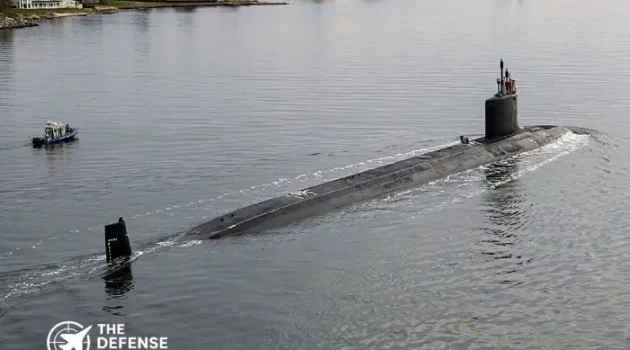
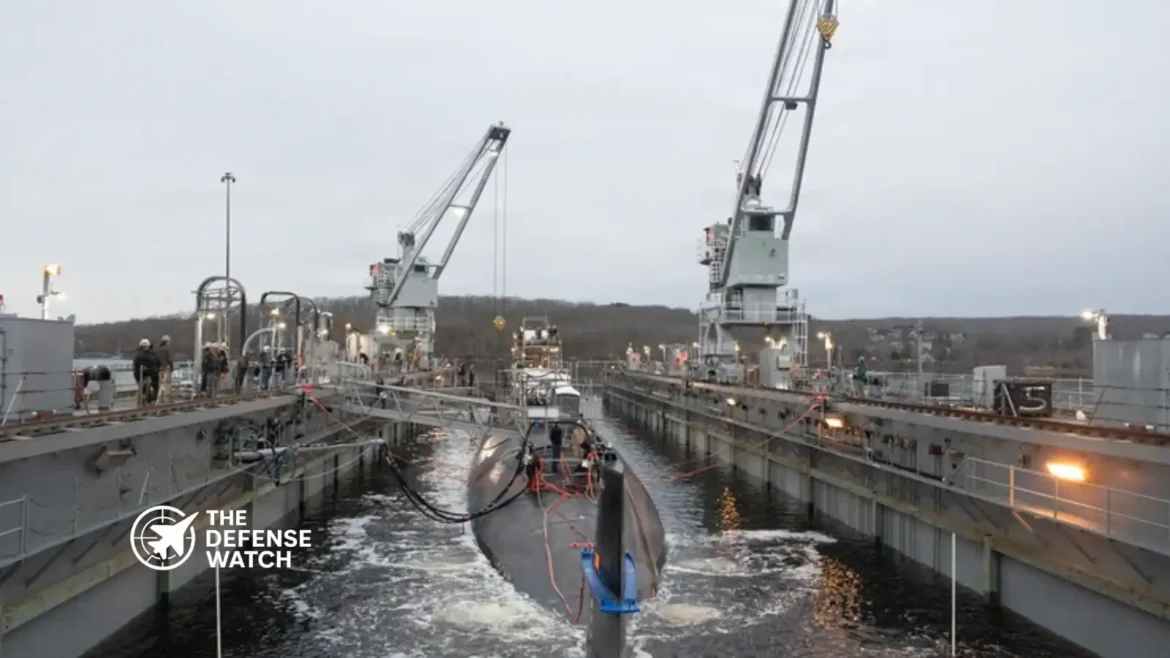
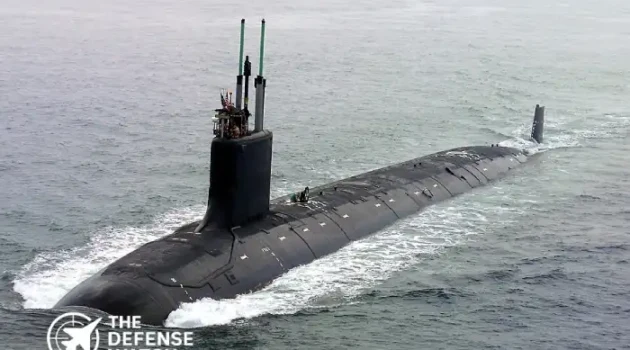
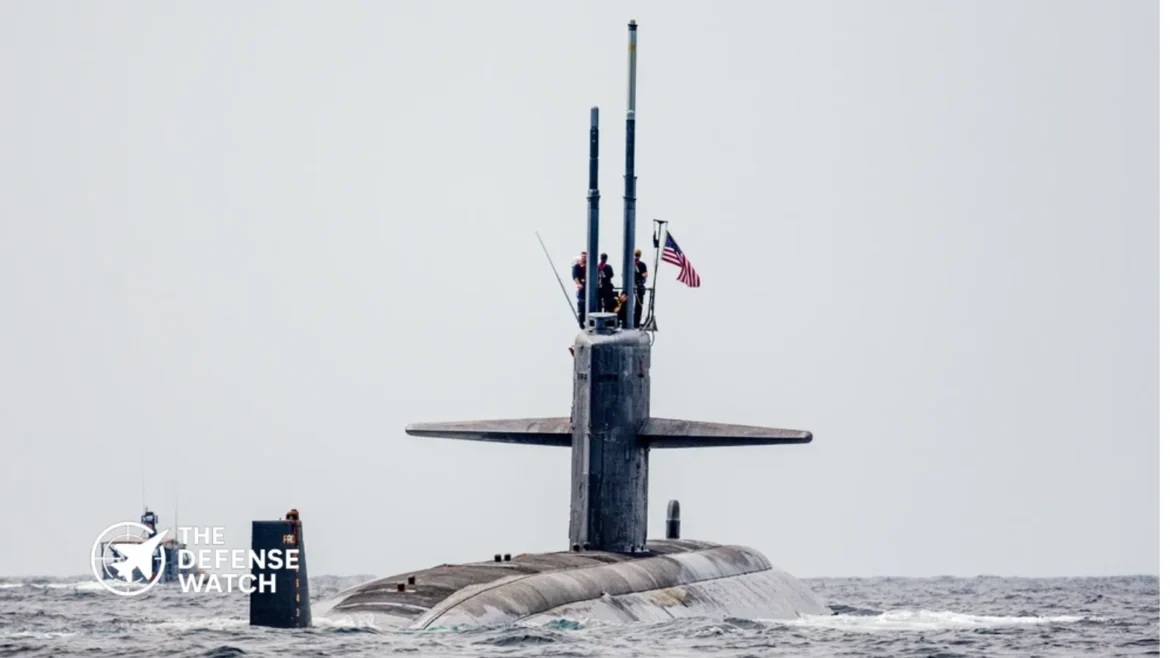
The USS New Jersey attack submarine has returned to operational service following a series of initial upgrades designed to improve sustained deployment capability. The move reflects ongoing efforts by the U.S. Navy to maintain a ready and modern undersea force amid evolving global threats.
The submarine, formally known as USS New Jersey (SSN-796), is part of the Virginia-class fleet, which forms the backbone of U.S. attack submarine operations. These platforms are tasked with intelligence gathering, anti-submarine warfare, strike missions, and special operations support.
Following its return, the vessel is expected to resume frontline duties, contributing to the Navy’s persistent undersea presence across key theaters.
- USS New Jersey has reentered service after completing initial upgrade work to improve long-term operational sustainability.
- The submarine is part of the Virginia-class, a key component of U.S. Navy undersea warfare strategy.
- Upgrades focused on maintenance readiness, system reliability, and deployment endurance.
- The move supports broader U.S. Navy efforts to maintain a high operational tempo amid global maritime competition.
- The submarine is expected to resume active fleet duties in support of forward presence and deterrence missions.
Upgrade Focus: Sustained Operations And Reliability
The recent work carried out on the USS New Jersey attack submarine focused primarily on improving long-term operational sustainability rather than introducing major new combat systems. This approach aligns with a broader trend within the Navy to prioritize readiness and availability across its fleet.
Initial upgrades included enhancements to onboard systems reliability, maintenance efficiency, and overall endurance during extended deployments. These improvements are critical for Virginia-class submarines, which are frequently deployed for prolonged missions far from home ports.
From an operational standpoint, reliability upgrades often deliver more immediate impact than new weapons integration. A submarine that can remain deployed longer with fewer maintenance interruptions directly increases mission availability and deterrence value.
Strategic Context: Sustaining Undersea Dominance
The return of the USS New Jersey attack submarine comes at a time when undersea competition is intensifying, particularly in regions such as the Indo-Pacific and North Atlantic. The U.S. Navy continues to face growing submarine fleets from near-peer competitors, placing pressure on fleet readiness rates.
Virginia-class submarines are central to maintaining undersea dominance. Their combination of stealth, advanced sensors, and strike capability makes them highly versatile assets across a wide range of missions.
However, fleet size alone does not determine effectiveness. Availability, maintenance cycles, and deployment readiness are equally decisive. By focusing on sustainment upgrades, the Navy is addressing a key vulnerability, ensuring that existing platforms remain mission capable at all times.
Operational Impact On Deployment Cycles
The reentry of the USS New Jersey attack submarine into service will contribute to easing pressure on deployment cycles. In recent years, the Navy has faced challenges related to maintenance backlogs and shipyard capacity constraints.
Each submarine returning to operational status helps distribute mission demands more evenly across the fleet. This reduces strain on other vessels and allows for more predictable deployment rotations.
In practical terms, this means improved presence in contested maritime regions, enhanced intelligence collection, and greater flexibility in responding to emerging threats.
Virginia-Class Role In Future Naval Strategy
The Virginia-class program remains one of the most important elements of U.S. naval modernization. Designed to replace older Los Angeles-class submarines, these vessels are built for multi-mission flexibility in both open ocean and littoral environments.
Future blocks of the Virginia class are expected to incorporate additional capabilities, including expanded strike capacity and enhanced sensor systems. However, maintaining the effectiveness of currently deployed submarines remains equally important.
The USS New Jersey attack submarine serves as a clear example of how incremental upgrades can extend operational value without requiring entirely new platforms.
Analysis: Readiness Over Expansion
The return of the USS New Jersey highlights a subtle but important shift in naval priorities. While procurement of new submarines continues, there is increasing emphasis on maximizing the performance of existing assets.
This reflects practical constraints, including industrial base limitations and rising costs associated with new ship construction. As a result, sustainment and modernization efforts are becoming a central pillar of naval strategy.
From a defense planning perspective, this approach offers several advantages. It delivers faster results, reduces risk, and ensures that current capabilities remain credible in the near term.
At the same time, it underscores the importance of maintenance infrastructure and workforce capacity, areas that have historically faced challenges within the U.S. naval enterprise.
- The U.S. Navy launched Operation Ice Camp Boarfish in the Arctic Ocean on March 7, 2026.
- Fast attack submarines USS Delaware (SSN 791) and USS Santa Fe (SSN 763) are conducting under ice operational testing.
- The mission includes multinational participation and focuses on Arctic submarine warfare readiness.
- The three week operation is conducted from a temporary ice camp built on a drifting Arctic ice floe.
- Ice Camp Boarfish represents the 100th major U.S. submarine under ice evolution.
Operation Ice Camp Boarfish Begins In The Arctic
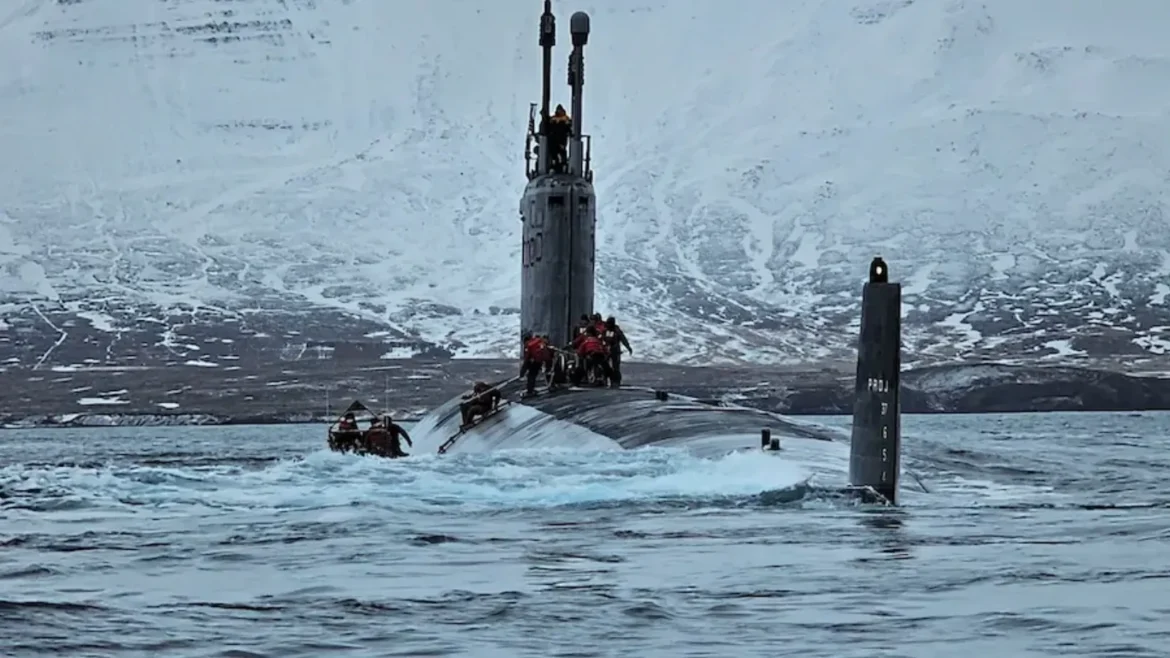
The US Navy Operation Ice Camp Boarfish has begun in the Arctic Ocean, bringing together submarines, allied personnel, and specialized Arctic research teams to test under ice operational capabilities. The mission officially started on March 7, 2026, following the construction of a temporary ice camp and the arrival of two U.S. Navy fast attack submarines, USS Delaware (SSN 791) and USS Santa Fe (SSN 763).
The three week operation focuses on research, training, and capability testing in one of the most demanding maritime environments on Earth. Personnel from the U.S. Navy, U.S. Marine Corps, and Air National Guard are participating alongside international partners from Australia, Canada, France, Japan, Norway, and the United Kingdom.
The mission operates from Ice Camp Boarfish, a temporary installation built on a drifting Arctic ice floe that serves as the command center for submarine operations, logistics, and research activities.
The Big Picture: The Arctic As A Strategic Maritime Domain
The Arctic has become a growing focus for global military planners. Climate change and receding sea ice are opening new shipping routes and expanding access to natural resources across the region.
U.S. defense planners increasingly view the Arctic as an operational theater where maritime traffic, resource exploration, and military presence will expand over the coming decades. Estimates suggest the Arctic may contain about 13 percent of the world’s undiscovered oil reserves and roughly 30 percent of undiscovered natural gas resources.
These developments have heightened strategic competition.
Russia maintains the largest military presence in the Arctic, with a network of bases, airfields, and ice capable naval forces across its northern coastline. China, though not an Arctic state, has also declared itself a “near Arctic power” and has expanded scientific research and polar shipping initiatives.
Against this backdrop, Operation Ice Camp Boarfish demonstrates Washington’s effort to maintain operational readiness in the region while reinforcing alliances with Arctic and NATO partners.
What’s Happening
Operation Ice Camp Boarfish centers on the deployment of two nuclear powered fast attack submarines:
- USS Delaware (SSN 791), a Virginia class submarine
- USS Santa Fe (SSN 763), a Los Angeles class submarine
During the operation, crews conduct a range of activities designed to test submarine systems in extreme Arctic conditions. These include navigation under polar ice, communication testing, sonar performance evaluation, and vertical surfacing through thick sea ice.
The camp itself consists of modular shelters, communications equipment, and operational infrastructure that allow personnel to coordinate submarine activities while operating on a constantly shifting sheet of ice.
The Arctic Submarine Laboratory, a specialized unit within the Navy’s Undersea Warfighting Development Center, leads the planning and execution of the operation. The organization serves as the Navy’s center of excellence for Arctic submarine operations.
Why It Matters
Arctic submarine operations pose unique technical and operational challenges.
Under the ice, submarines face a complex acoustic environment caused by the irregular underside of the ice canopy, which reflects sound and complicates sonar detection and navigation. Communication with forces above the surface can also become more difficult.
These factors make Arctic training essential for maintaining operational proficiency.
Submarines remain one of the few naval platforms capable of operating freely beneath the polar ice cap. This provides a significant strategic advantage, allowing covert movement, intelligence collection, and potential strike operations in areas where surface ships and aircraft have limited access.
Exercises like Operation Ice Camp Boarfish allow the U.S. Navy to refine tactics and technologies specifically designed for these conditions.
Strategic Implications
Operation Ice Camp Boarfish highlights the importance of undersea dominance in the evolving Arctic security environment.
Submarines play a central role in deterrence and intelligence gathering. By maintaining the ability to operate under ice, the U.S. Navy preserves freedom of maneuver across northern sea lanes and strengthens its strategic reach between the Atlantic and Pacific oceans.
The Arctic also offers shorter transit routes for submarines moving between major operational theaters. Control of these routes could prove critical during a future high end conflict.
From a NATO perspective, Arctic submarine proficiency also supports defense planning for northern Europe and the North Atlantic. Allied participation in the operation reflects a broader effort to build interoperability among Western naval forces in polar environments.
Competitor View
Russia closely monitors Western military activity in the Arctic.
Moscow has invested heavily in Arctic infrastructure, including upgraded airbases, radar networks, and naval facilities along the Northern Sea Route. Russian submarines routinely operate under the polar ice and are considered among the most capable Arctic naval forces.
China has also increased its Arctic research activities and maritime presence. While Beijing does not operate combat submarines in the Arctic today, its expanding polar strategy could eventually lead to a greater military role.
Exercises like Operation Ice Camp Boarfish therefore serve not only as training events but also as signals of U.S. commitment to maintaining access and operational capability in the Arctic domain.
What To Watch Next
Several developments will shape future Arctic naval operations.
First, the U.S. Navy continues to expand its Virginia class submarine fleet, including newer variants equipped with the Virginia Payload Module for increased strike capacity.
Second, NATO allies are increasing their Arctic training activities, particularly Norway, Canada, and the United Kingdom, which operate forces designed for cold weather operations.
Finally, the Navy is investing in technologies that improve under ice navigation, autonomous underwater systems, and Arctic communications networks.
These capabilities will likely play a key role in future iterations of Ice Camp operations.
Capability Gap
Operating under Arctic ice requires specialized training, navigation techniques, and equipment that differ significantly from standard submarine operations.
Without regular Arctic deployments, naval forces risk losing the institutional knowledge required to operate safely in the region. Ice Camp missions help maintain those skills while validating new systems designed for polar conditions.
However, logistical challenges remain significant. The Arctic’s extreme weather, limited infrastructure, and communications constraints complicate sustained operations.
As competition in the region increases, maintaining a consistent training presence will remain essential for closing these operational gaps.
Historical Context
The U.S. Navy has conducted submarine operations beneath the Arctic ice for more than six decades.
The first nuclear powered submarine to transit under the polar ice cap was USS Nautilus in 1958, followed by USS Skate, which became the first submarine to surface at the North Pole in 1959.
Earlier experiments also played a critical role. In 1947, the submarine USS Boarfish conducted pioneering under ice navigation tests during Operation Blue Nose, demonstrating that extended submarine operations beneath polar ice were feasible.
Operation Ice Camp Boarfish continues that legacy and marks the 100th major U.S. submarine under ice evolution conducted by the Navy.
The Bottom Line
Operation Ice Camp Boarfish reinforces the U.S. Navy’s ability to operate submarines under Arctic ice, a capability that remains essential for maintaining strategic deterrence and maritime access in a rapidly evolving polar region.
- â–º US Defense Secretary confirms an American submarine sank an Iranian warship in the Indian Ocean.
- â–º Attack conducted with a torpedo, described as the first sinking of an enemy ship by torpedo since World War II.
- â–º Incident marks a significant escalation in ongoing US Iran maritime conflict.
- â–º Engagement occurred in international waters of the Indian Ocean.
- â–º Highlights renewed role of submarine warfare in high intensity naval operations.
US Submarine Sinks Iranian Warship In Indian Ocean
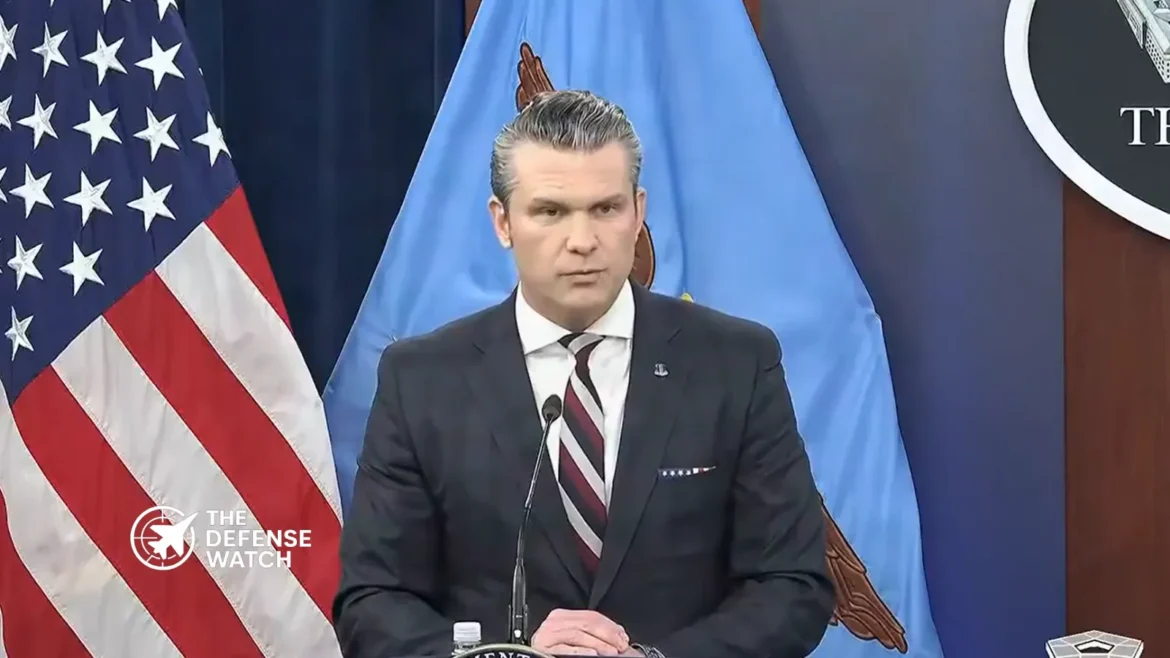
The US submarine sinks Iranian warship in the Indian Ocean in what the Pentagon describes as the first confirmed torpedo sinking of an enemy ship since World War II, according to remarks made by US Defense Secretary Pete Hegseth.
Speaking publicly, Hegseth said an American submarine engaged and destroyed an Iranian naval vessel operating in international waters. He described the torpedo strike as a decisive action and called it the first such sinking since the era when the US Department of Defense was still known as the War Department.
The Pentagon has not yet released the name of the US submarine or the class of the Iranian warship involved. Officials also have not disclosed the precise location beyond confirming the Indian Ocean.
Confirmed Torpedo Engagement
According to the Defense Secretary, the Iranian vessel believed it was operating safely in international waters before being struck by a torpedo fired from a submerged US submarine. The engagement underscores the continued lethality and stealth of modern US Navy attack submarines.
The US Navy has long maintained forward deployed submarine forces in the broader Middle East and Indian Ocean region, often under the operational umbrella of United States Central Command. Submarines provide covert intelligence collection, strike capability, and sea denial functions in contested waters.
While US submarines have conducted cruise missile strikes in past conflicts, confirmed torpedo attacks resulting in the sinking of an enemy warship have been absent from public record since World War II. During that conflict, US submarines played a decisive role in crippling Imperial Japanese maritime logistics across the Pacific.
Strategic Context In The Indian Ocean
The US submarine sinks Iranian warship at a time of expanding maritime confrontation between Washington and Tehran. Recent weeks have seen strikes, counter strikes, and increased naval deployments across key sea lanes connecting the Persian Gulf, Arabian Sea, and the wider Indian Ocean.
Iran has invested heavily in asymmetric naval tactics, including fast attack craft, mines, and anti ship missile systems. Its naval forces, divided between the regular navy and the Islamic Revolutionary Guard Corps Navy, routinely operate beyond the Strait of Hormuz.
From an operational standpoint, the use of a torpedo suggests a close range, high confidence engagement. Modern heavyweight torpedoes such as the US Navy Mark 48 are designed to destroy large surface combatants with a single strike, detonating beneath the keel to break a ship’s structural integrity.
Although officials did not specify the munition used, US attack submarines are equipped with advanced torpedo systems capable of engaging both submarines and surface ships.
Escalation And Naval Doctrine Implications
The US submarine sinks Iranian warship incident represents more than a tactical event. It signals a shift from limited maritime harassment to high intensity naval combat.
Submarines are among the most survivable assets in the US Navy inventory. Their employment in direct ship killing roles suggests confidence in sea control and escalation dominance. At the same time, it raises the risk of retaliatory actions against US naval or commercial vessels in the region.
Naval analysts note that torpedo use is significant. Cruise missile strikes are often visible and politically calibrated. A submerged torpedo attack is different. It reflects classic undersea warfare doctrine, prioritizing stealth and decisive lethality.
The Indian Ocean remains a critical artery for global trade and energy shipments. Any sustained naval conflict in these waters could disrupt shipping lanes and affect global markets.
Historical First Since World War II
The Defense Secretary’s reference to World War II places the incident in historical perspective. During that war, US submarines sank more than 1,300 Japanese merchant ships and numerous warships, according to historical records maintained by the US Navy and the Naval History and Heritage Command.
Since then, submarine operations have largely focused on deterrence, intelligence gathering, and land attack missile strikes. Direct torpedo sinkings of enemy surface warships have not been publicly confirmed in modern conflicts.
If verified through additional Pentagon briefings, this event marks a return of traditional submarine warfare to the forefront of naval combat.
What Comes Next
The Pentagon is expected to provide further operational details in upcoming briefings. Iranian authorities have not yet issued a detailed public statement confirming the loss of a warship.
The US submarine sinks Iranian warship episode is likely to influence naval force posture decisions across the region. Allied navies operating alongside US forces may increase undersea coordination, while Iran could accelerate efforts to expand anti submarine warfare capabilities.
For now, the engagement stands as a clear signal that undersea warfare has reemerged as a central feature of modern great power and regional conflict dynamics.
- â–º TKMS signed pan Canadian Indigenous agreements to support its bid under the Canadian Patrol Submarine Project.
- â–º The agreements aim to ensure long term Indigenous participation in submarine construction and sustainment.
- â–º Canada plans to replace its Victoria class submarines with a new fleet under a major modernization effort.
- â–º The project is expected to be one of the largest defense procurements in Canadian history.
- ► Industrial and regional benefits are central to Ottawa’s submarine acquisition strategy.
Canadian Patrol Submarine Project Moves Into Industrial Partnership Phase
The Canadian Patrol Submarine Project is entering a critical industrial phase as Thyssenkrupp Marine Systems, known as TKMS, signed a series of pan Canadian Indigenous agreements to support its bid for Canada’s future submarine fleet.
The agreements are designed to ensure Indigenous communities and businesses have structured participation in construction, supply chain work, and long term sustainment activities if TKMS is selected.
The move aligns with Ottawa’s broader defense procurement framework, which emphasizes industrial and technological benefits alongside operational capability.
Strategic Context For Canada’s Submarine Replacement
Canada is seeking to replace the aging Victoria class submarines operated by the Royal Canadian Navy. The effort falls under the Canadian Patrol Submarine Project, a program widely viewed as one of the largest and most strategically significant defense procurements in the country’s history.
Ottawa has signaled that its next submarine fleet must provide greater endurance, under ice capability, and enhanced surveillance capacity, particularly in the Arctic and North Atlantic. The evolving security environment, including increased naval activity by Russia and growing Indo Pacific competition, has reinforced the urgency of a credible undersea deterrent.
In this context, bidders are not competing solely on platform performance. They must also demonstrate meaningful domestic industrial participation and long term economic impact.
Indigenous Participation As A Core Requirement
TKMS said the pan Canadian Indigenous agreements establish a framework for collaboration in workforce development, technology transfer, and supply chain integration. While financial details were not disclosed, the company framed the agreements as foundational rather than symbolic.
Canada’s federal procurement policy requires bidders to meet strict industrial and regional benefit obligations. Indigenous economic participation has become a growing priority within that framework.
For a submarine program expected to span decades, sustainment will likely account for a substantial portion of lifecycle costs. That creates space for long term partnerships in maintenance, repair, training, and logistics support.
From an industrial perspective, early agreements can strengthen a bidder’s credibility. They demonstrate local engagement before a contract is awarded and signal readiness to scale operations inside Canada.
Competitive Landscape And Capability Implications
TKMS is a major global submarine builder, known for conventional submarine designs exported to multiple navies. While the company has not publicly detailed its exact offer under the Canadian Patrol Submarine Project, analysts expect proposals to include advanced air independent propulsion systems and modular design features suited for extended deployments.
The Canadian requirement is unusually demanding. Submarines must operate across vast distances, in harsh climates, and potentially under Arctic ice. That raises technical questions about hull strength, sensor integration, and crew sustainability.
At the same time, political considerations carry weight. Ottawa has consistently tied large defense procurements to domestic job creation and skills development. The Indigenous agreements are therefore not peripheral. They address a key decision factor.
Industrial Strategy And Long Term Impact
The Canadian Patrol Submarine Project will shape Canada’s naval industrial base for decades. Beyond ship construction, the program could influence training pipelines, digital engineering capacity, and advanced manufacturing sectors.
For TKMS, securing structured Indigenous partnerships early in the process may improve its standing with policymakers focused on reconciliation and inclusive economic growth.
For Canada, the challenge is balancing capability, cost, and sovereign control. Submarines are among the most complex defense systems a nation can operate. They require sustained funding, technical depth, and political continuity.
The Indigenous agreements underscore that the competition is as much about long term national strategy as it is about platform selection.
As the Canadian Patrol Submarine Project advances, further clarity on timelines, budget envelopes, and shortlisted bidders will determine how quickly Ottawa can transition from legacy submarines to a modern undersea fleet.
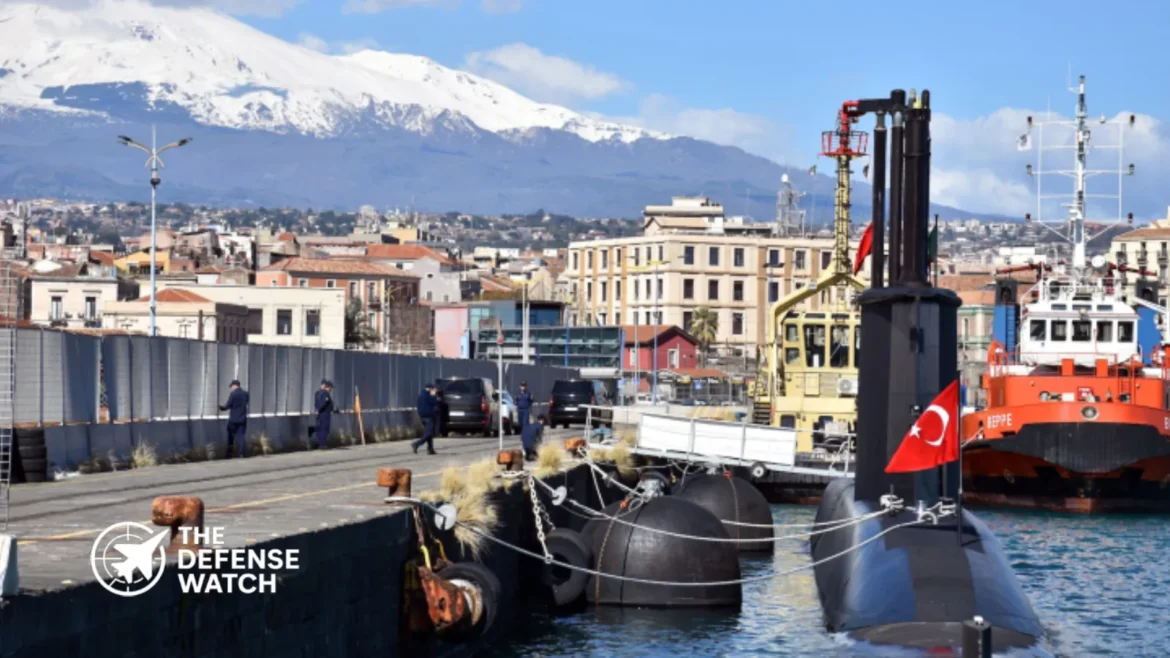
- ► TCG 1. İnönü submarine will participate in NATO Dynamic Manta 2026 off Sicily.
- â–º Exercise runs from February 23 to March 6 under NATO Allied Maritime Command.
- â–º Dynamic Manta focuses on submarine warfare and anti-submarine warfare training.
- ► Turkey is contributing a Gür-class submarine and a P-72 maritime patrol aircraft.
- â–º The submarine has been in service since 2007 and carries around 45 personnel.
TCG 1. İnönü Submarine Heads To NATO Dynamic Manta 2026
The TCG 1. İnönü submarine is set to take part in NATO Dynamic Manta 2026, one of the alliance’s premier anti-submarine warfare drills in the Mediterranean. The exercise, organized by NATO Allied Maritime Command, runs from February 23 through March 6 off the coast of Sicily, Italy.
Dynamic Manta is hosted annually by Italy and is widely regarded as NATO’s largest dedicated anti-submarine warfare exercise. It brings together submarines, surface combatants, maritime patrol aircraft, and support units from allied nations to test coordinated undersea warfare tactics.
A Core Asset Of The Turkish Navy
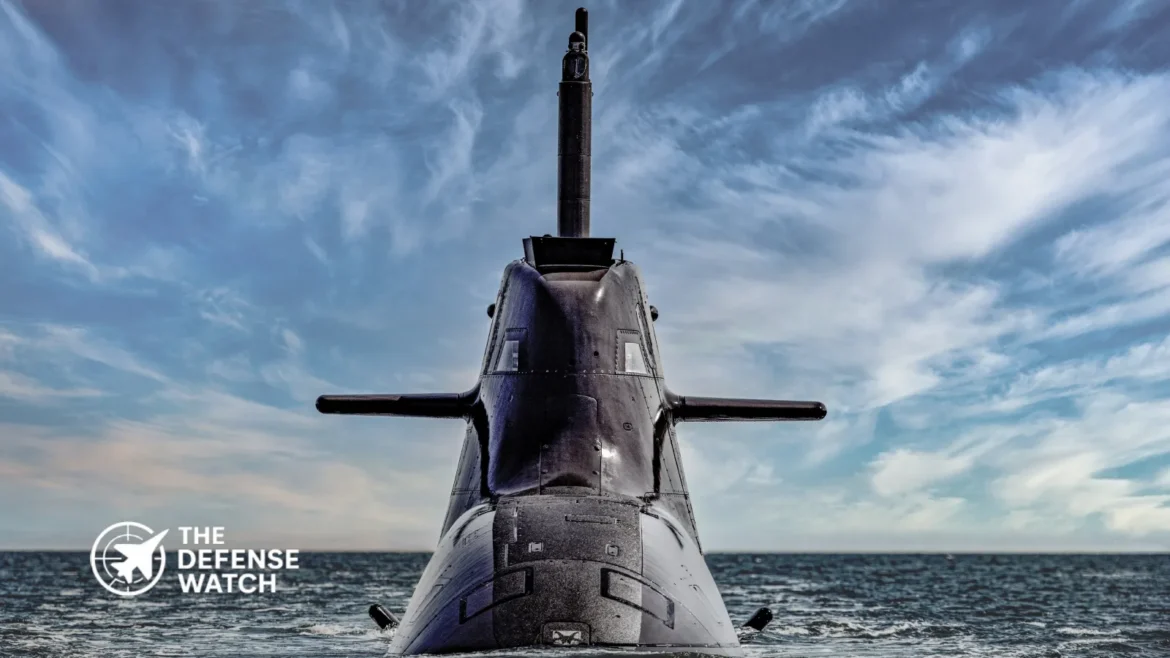
The TCG 1. İnönü is part of Turkey’s Gür-class submarines, based on the German Type 209 design. Commissioned in 2007, the submarine carries the hull number S360 and operates with a crew of approximately 45 personnel.
Named after the First Battle of İnönü during the Turkish War of Independence, the vessel represents both historical legacy and modern capability within the Turkish Naval Forces.
Ahead of deployment, Commander Naval Colonel İsmail Koç and Executive Officer Major Orkun Turan briefed journalists onboard the submarine. According to the crew, the platform has conducted numerous national and international missions since entering service.
Focus On Anti-Submarine Warfare
Colonel Koç described Dynamic Manta as NATO’s largest submarine defense exercise, emphasizing its operational phase between late February and early March.
The stated objective is to enhance submarine warfare and anti-submarine warfare capabilities across allied fleets. Training scenarios include maritime access control, sea denial operations, and crisis response coordination.
For NATO, such drills remain central to maintaining credible deterrence. Submarines continue to play a decisive role in intelligence gathering, sea control, and strategic strike missions. As undersea competition intensifies globally, alliance interoperability has become a priority.
Turkish Contribution To NATO Operations
Turkey’s participation in Dynamic Manta 2026 includes not only the TCG 1. İnönü submarine but also a P-72 maritime patrol aircraft. The aircraft strengthens airborne anti-submarine surveillance and tracking capabilities during the exercise.
Turkey has consistently maintained an active presence in NATO maritime drills. Its geographic position, straddling the Black Sea and Mediterranean, makes it a critical contributor to alliance naval operations.
From a strategic standpoint, the involvement of the TCG 1. İnönü submarine underscores Ankara’s continued investment in conventional submarine capabilities even as it advances newer programs such as the Reis-class submarines.
Broader Mediterranean Security Context
The Mediterranean remains a key operational theater for NATO. Increased submarine activity, evolving maritime threats, and contested sea lanes have pushed anti-submarine warfare back to the forefront of alliance planning.
Exercises like Dynamic Manta allow participating navies to test sonar performance, coordinated tracking, and live tactical decision-making in complex underwater environments. They also help refine command and control frameworks under NATO structures.
For Turkey, deploying the TCG 1. İnönü submarine signals operational readiness and reinforces its role within NATO’s southern maritime flank.
As Dynamic Manta 2026 unfolds off Sicily, allied forces will focus on sharpening their undersea warfare edge, ensuring preparedness for both conventional conflict and emerging maritime security challenges.
- ► A submarine from the UK’s :contentReference[oaicite:0]{index=0} conducted a historic port visit to Australia in February 2026.
- â–º The visit supports implementation of the :contentReference[oaicite:1]{index=1} trilateral security partnership.
- ► The submarine is part of the UK’s nuclear powered attack submarine force.
- â–º The deployment included engagement with the :contentReference[oaicite:2]{index=2}.
- â–º The visit aligns with plans to rotate UK and US submarines through Western Australia under AUKUS.
- â–º Australia plans to acquire conventionally armed, nuclear powered submarines under the SSN AUKUS program.
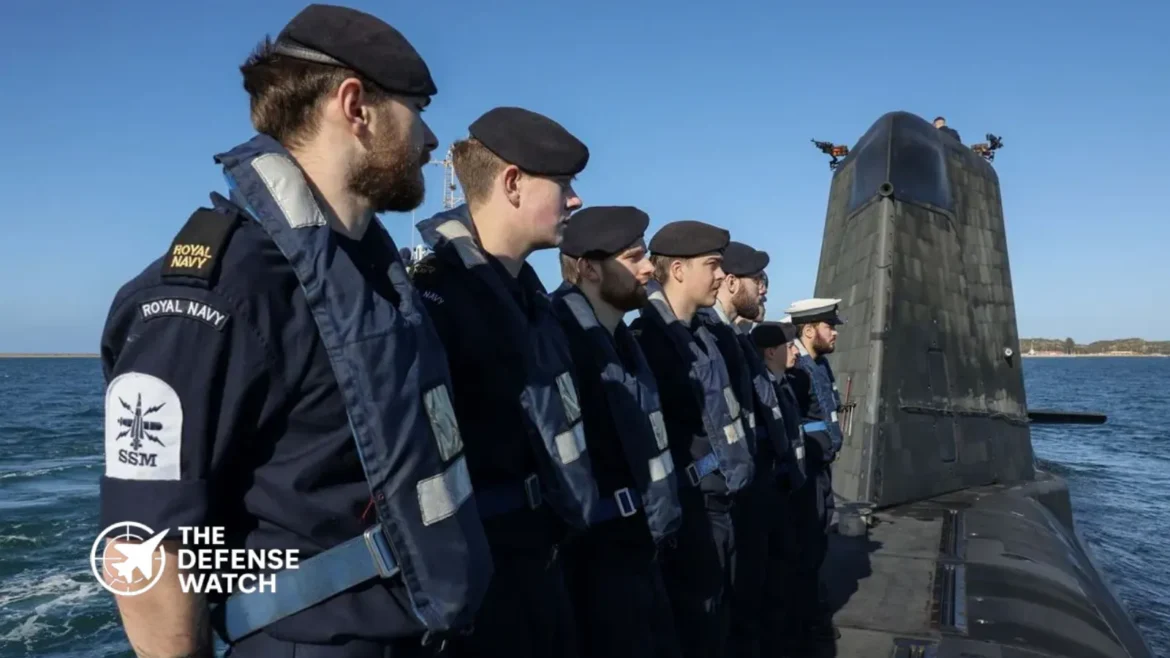
Royal Navy Submarine Visit Australia Underscores AUKUS Momentum
The Royal Navy submarine visit to Australia marks more than a ceremonial port call. It reflects a tangible step in implementing AUKUS and expanding allied undersea cooperation in the Indo-Pacific.
According to the UK Ministry of Defence, the submarine’s arrival represents the first visit of its kind in decades. It comes as the United Kingdom deepens operational ties with Australia ahead of the planned rotational presence of British and American nuclear powered attack submarines in Western Australia later this decade.
The timing is significant. With undersea competition intensifying in the Indo-Pacific, visible demonstrations of allied submarine cooperation send a strategic signal well beyond Canberra and London.
Operational Impact: Building Submarine Interoperability
The immediate operational value of the Royal Navy submarine visit to Australia lies in training, infrastructure familiarization, and command level coordination.
Australia is preparing to host regular rotations of UK and US submarines under the Submarine Rotational Force West construct. This will require port upgrades, nuclear stewardship procedures, safety protocols, and expanded sustainment capacity at HMAS Stirling in Western Australia.
A visiting British nuclear powered attack submarine allows Australian personnel to work alongside experienced crews. That includes exposure to reactor safety regimes, logistics chains, and dockyard handling procedures. These are not symbolic exercises. They are foundational steps for Australia’s transition from a conventional submarine operator to a nuclear powered one.
The UK benefits as well. Operating in Australian waters expands the Royal Navy’s Indo-Pacific familiarity. It also increases endurance options for British boats deployed east of Suez.
For the United States, which is the third AUKUS partner, such visits reinforce the credibility of the trilateral model. Interoperability is not built on paper agreements. It is built through repeated, practical integration at sea and in port.
Industrial And Programmatic Context
The Royal Navy submarine visit to Australia takes place as the SSN AUKUS design moves forward.
Under current plans, Australia will first acquire US Virginia class submarines as an interim capability before transitioning to a jointly developed SSN AUKUS design with the UK. That future class is expected to draw heavily from Britain’s experience with its Astute class and successor programs.
For London, this cooperation strengthens its domestic submarine industrial base. The UK’s submarine enterprise, centered at Barrow-in-Furness, faces workforce and production challenges similar to those in the United States. A trilateral pipeline offers longer term stability in design and construction work.
For Australia, the industrial implications are even larger. Canberra plans to build SSN AUKUS boats domestically in Adelaide. That requires workforce expansion, nuclear engineering skills, and regulatory structures that did not previously exist in the country.
The visit, therefore, supports more than naval diplomacy. It reinforces political commitments to a multi decade industrial transformation.
Regional Security Context: Undersea Competition In The Indo-Pacific
Submarines remain among the most survivable and strategically flexible military assets. In the Indo-Pacific, where maritime distances are vast and surveillance networks are expanding, nuclear powered attack submarines offer endurance, stealth, and rapid repositioning.
China’s People’s Liberation Army Navy has expanded its submarine fleet significantly over the past two decades. While many Chinese boats are diesel electric, Beijing continues to field new nuclear powered attack and ballistic missile submarines.
Against that backdrop, AUKUS partners are signaling that allied undersea capabilities will remain present and integrated.
The Royal Navy submarine visit to Australia sends a message of sustained UK engagement in the Indo-Pacific. Britain’s 2021 Integrated Review and its 2023 refresh identified the region as central to long term security and economic interests. This visit demonstrates follow through.
For regional states such as Japan and India, closer UK Australia submarine cooperation reinforces a broader network of maritime security partnerships. For Southeast Asian nations, it underscores that external powers are investing long term resources into regional stability.
For Beijing, the message is more direct. Allied nuclear powered attack submarines operating more frequently from Australian territory complicate Chinese naval planning. They expand patrol options in the South China Sea and beyond.
Comparison With Competitors
Few countries operate nuclear powered attack submarines. The United States and the United Kingdom are among the most experienced.
France also fields advanced nuclear submarines, and Paris maintains Indo-Pacific territories and a naval presence. However, France is not part of AUKUS, and its cooperation with Australia shifted after Canberra canceled its conventional submarine contract in 2021.
Russia retains significant submarine capabilities but has limited sustained presence in the Indo-Pacific compared to the Cold War period.
China is expanding its fleet, yet questions remain about acoustic quieting and operational experience compared to Western navies.
In that context, the Royal Navy submarine visit to Australia highlights the concentration of advanced undersea expertise within the AUKUS framework. It consolidates capability among close allies rather than dispersing it.
Strategic Assessment
The Royal Navy submarine visit to Australia carries implications beyond bilateral ties.
Impact on regional power balance:
Regular UK and US submarine rotations through Australia will increase allied undersea presence in the eastern Indian Ocean and western Pacific. This strengthens deterrence by complicating any adversary’s planning and increasing uncertainty about allied submarine locations.
Deterrence implications:
Nuclear powered attack submarines are optimized for anti submarine warfare, intelligence gathering, and land attack missions. Their presence signals high end warfighting capability, not just maritime patrol. That contributes to denial strategies aimed at preventing coercion in contested waters.
Budget and procurement signals:
The visit reinforces political backing for the expensive SSN AUKUS pathway. Submarine programs require long term funding certainty. Visible milestones help sustain domestic support in all three AUKUS countries.
Alliance dynamics:
AUKUS moves beyond technology sharing into integrated force posture. The Royal Navy submarine visit to Australia demonstrates that London is not a peripheral partner. It is an operational contributor in the Indo-Pacific.
Escalation risks:
While allied submarine deployments are defensive in nature, increased undersea activity can heighten risks of miscalculation. Close encounters at sea, especially in contested areas, demand robust communication mechanisms.
What Happens Next
In the near term, additional port visits and joint activities are likely as Australia prepares for rotational deployments beginning later this decade.
Longer term, attention will shift to infrastructure readiness at HMAS Stirling, workforce development, and legislative frameworks governing nuclear stewardship.
The success of SSN AUKUS will depend not only on engineering design but on sustained political alignment across three governments.
The Royal Navy submarine visit to Australia is therefore an early operational indicator. It shows that AUKUS is progressing from policy announcement to practical execution.
- â–º Denmark evacuated a sailor from a U.S. Navy attack submarine operating off Greenland.
- â–º The operation involved Danish Arctic response assets supporting a medical emergency.
- â–º The U.S. attack submarine off Greenland was conducting operations in Arctic waters.
- â–º The incident highlights close U.S.-Danish defense cooperation in the High North.
- â–º Arctic submarine activity underscores growing strategic focus on Greenland and surrounding seas.
Denmark Evacuates Sailor From US Attack Submarine Off Greenland
Denmark evacuated a sailor from a US attack submarine off Greenland following a medical emergency, underscoring the operational realities of submarine deployments in the Arctic.
According to Danish Arctic Command, Danish authorities responded after the U.S. Navy requested assistance while the submarine was operating in waters near Greenland. The sailor required medical evacuation, prompting coordination between U.S. and Danish forces in a remote and challenging environment.
Danish Arctic response assets were dispatched to support the transfer. Details about the sailor’s condition and the specific submarine involved were not publicly disclosed, consistent with standard U.S. Navy operational security practices.
Arctic Operations And Allied Coordination
The presence of a US attack submarine off Greenland reflects sustained American naval activity in the High North. The U.S. Navy regularly deploys fast attack submarines to Arctic and sub-Arctic waters for training, deterrence, and strategic patrols.
Greenland remains a critical node in transatlantic defense. The United States maintains a military footprint at Pituffik Space Base, formerly known as Thule Air Base, supporting missile warning and space surveillance missions. Danish sovereignty over Greenland, combined with its NATO membership, makes Copenhagen a key partner in Arctic security.
Medical evacuations from submarines are complex even in temperate waters. In Arctic conditions, the risks increase. Sea state, ice coverage, limited infrastructure, and long distances to advanced medical facilities all complicate response efforts. That Denmark was able to assist a US attack submarine off Greenland highlights established contingency planning and interoperability between the two navies.
Strategic Context In The High North
The Arctic has taken on renewed strategic importance in recent years. Melting sea ice is expanding seasonal access, while competition among major powers has intensified. The United States has emphasized freedom of navigation, early warning, and undersea dominance as core elements of its Arctic posture.
Attack submarines play a central role in that posture. Their ability to operate undetected, gather intelligence, and project force makes them one of the most flexible assets in the U.S. naval inventory. Deployments near Greenland also place submarines along key maritime approaches between North America and Europe.
For Denmark, Arctic readiness is both a national and alliance obligation. The Danish Joint Arctic Command is responsible for search and rescue, maritime surveillance, and sovereignty enforcement around Greenland and the Faroe Islands. Supporting a US attack submarine off Greenland during a medical emergency fits squarely within that mandate.
Operational Transparency And Limits
Neither Danish officials nor the U.S. Navy released identifying details about the submarine, its mission, or its precise location. Such discretion is typical. Submarine movements are closely guarded to protect operational security and crew safety.
However, the public acknowledgment of Danish assistance signals confidence in allied cooperation. NATO members routinely support each other’s vessels in port visits, exercises, and emergencies. In the Arctic, where infrastructure is sparse, that cooperation becomes more visible.
The incident does not appear to have disrupted broader operations. Medical evacuations, while serious, are not uncommon during extended naval deployments. Submarine crews operate in confined spaces for prolonged periods, often far from immediate medical facilities.
Why This Matters
The evacuation from a US attack submarine off Greenland offers a practical example of how Arctic strategy translates into day to day operations. It is not only about deterrence or geopolitical signaling. It also involves logistics, emergency response, and trust between allies.
As Arctic maritime activity grows, so does the need for coordinated search and rescue and medical support frameworks. Denmark’s response demonstrates that those mechanisms are active and functional.
For the United States, continued submarine operations in the High North reinforce commitments to NATO and maintain undersea awareness in a region of increasing military interest. For Denmark, the mission highlights its role as a frontline Arctic ally.
In a region defined by distance and harsh conditions, cooperation remains a decisive factor.
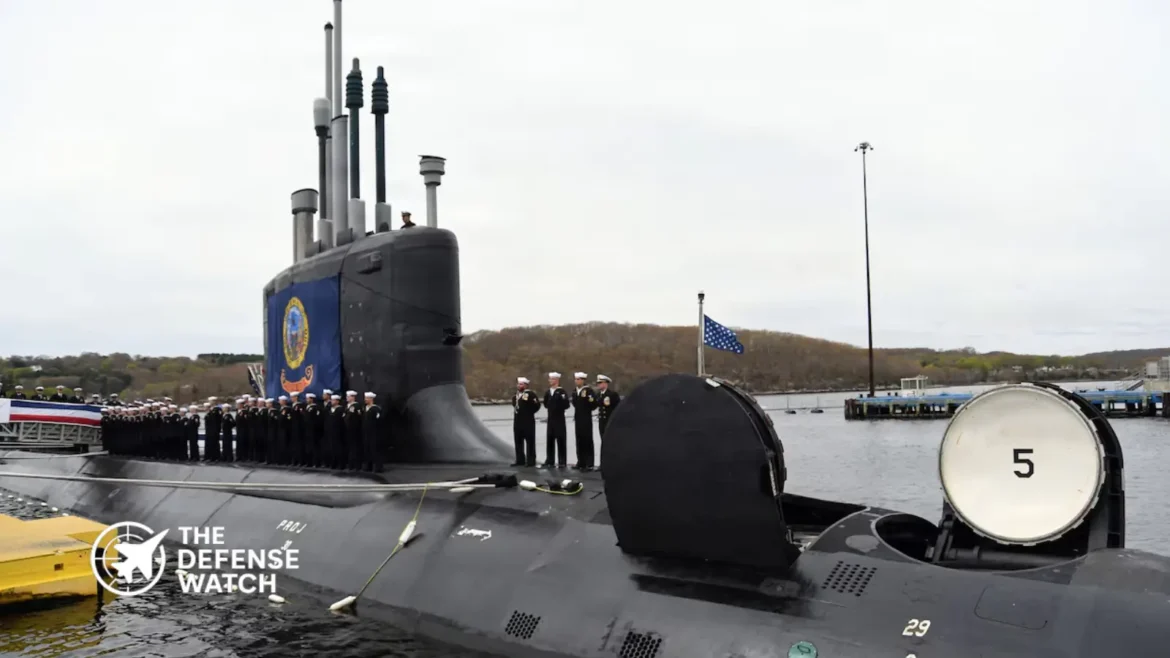
USS Idaho Virginia-Class Submarine Set For April 2026 Commissioning
The USS Idaho Virginia-Class submarine will be commissioned into the U.S. Navy in April 2026, marking another step forward in the service’s undersea modernization strategy.
According to reporting from U.S. Navy and defense industry sources, the vessel represents the eighth Block IV boat delivered under the Virginia-Class production program. The commissioning ceremony formalizes its entry into operational service following construction, sea trials, and delivery.
The Virginia-Class remains the backbone of America’s fast-attack submarine force, designed to perform a broad range of missions including anti-submarine warfare, anti-surface warfare, intelligence collection, and precision strike operations.
A Key Addition To The Virginia-Class Fleet
The future USS Idaho is part of the broader Virginia-class submarine program, which has steadily replaced aging Los Angeles-class submarines in the U.S. inventory.
Block IV submarines were specifically designed to reduce lifecycle maintenance requirements. Compared to earlier blocks, Block IV boats are built to deploy more frequently with fewer major maintenance periods over their service life. The design reduces the number of depot maintenance availabilities from four to three, increasing operational availability.
This improvement is central to the Navy’s strategy of sustaining undersea force levels as older submarines retire faster than new hulls are delivered.
Construction And Industrial Base
USS Idaho was built through the long-standing teaming arrangement between General Dynamics Electric Boat and Huntington Ingalls Industries Newport News Shipbuilding. The two shipyards jointly produce Virginia-Class submarines under a split-construction model, which distributes major modules between facilities before final assembly.
This cooperative production framework has been a cornerstone of U.S. submarine industrial capacity for decades. It also supports workforce stability and supplier networks critical to maintaining submarine output.
The Virginia program continues at a time when the industrial base faces increasing demand, including production of the forthcoming Columbia-Class ballistic missile submarines and commitments under the AUKUS security partnership.
Block IV Capabilities And Mission Set
As a Block IV submarine, USS Idaho integrates the mature combat systems and payload flexibility that define the class.
Virginia-Class submarines are equipped with advanced sonar arrays, photonics masts in place of traditional periscopes, and enhanced stealth characteristics. Their modular construction enables adaptability across multiple mission profiles.
A key capability includes the launch of the Tomahawk cruise missile, providing long-range precision strike options against land targets. The boats also deploy heavyweight torpedoes for anti-submarine and anti-surface warfare.
Additionally, Virginia-Class submarines support special operations forces through lock-in and lock-out chambers and can conduct intelligence, surveillance, and reconnaissance missions in contested maritime environments.
The Block IV design focuses less on new hardware compared to Block III and more on sustainment efficiency. The result is greater operational availability over the submarine’s projected 33-year service life.
Strategic Context: Undersea Competition Intensifies
The commissioning of USS Idaho comes amid intensifying undersea competition globally. Peer adversaries continue to modernize their submarine fleets, expand naval presence, and invest in anti-access and area denial systems.
The U.S. Navy has repeatedly emphasized the importance of maintaining a credible and survivable undersea force. Attack submarines remain among the most survivable assets in the U.S. arsenal due to their stealth and endurance.
Senior Navy leadership has stated in posture hearings and strategic guidance documents that submarine demand from combatant commanders consistently exceeds supply. The commissioning of each new Virginia-Class boat therefore carries operational significance beyond symbolic fleet growth.
Fleet Structure And Force Goals
The Navy’s long-term force structure plans call for a robust mix of attack submarines and ballistic missile submarines. However, the service faces a projected attack submarine shortfall in the coming decade as older Los Angeles-class boats retire faster than Virginia-Class replacements can be delivered.
Block IV submarines such as USS Idaho help mitigate this gap by maximizing deployable time per hull. The increased deployment ratio allows the Navy to generate more operational presence without proportionally increasing fleet size.
Future blocks, including Block V variants with the Virginia Payload Module, will further expand strike capacity. Block IV boats remain essential transitional assets bridging current force levels and next-generation enhancements.
Industrial And Budget Considerations
Submarine procurement remains one of the most resource-intensive components of the Navy’s shipbuilding budget. Maintaining steady production rates is considered critical to preserving skilled labor and supplier chains.
Congress has consistently supported Virginia-Class funding in recent defense authorization acts. Lawmakers frequently cite the program’s strategic importance and its role in maintaining U.S. technological advantage in undersea warfare.
The April 2026 commissioning of USS Idaho reflects both program continuity and the Navy’s broader modernization trajectory.
What Commissioning Means
Commissioning is the formal ceremony that places a ship or submarine into active service. Upon commissioning, the crew assumes full responsibility for operating the vessel as a commissioned unit of the fleet.
For USS Idaho, this milestone follows sea trials that validate propulsion systems, combat systems, and operational readiness.
Once commissioned, the submarine will join the active fleet and begin workups before deployment cycles under U.S. Fleet Forces or Pacific Fleet command structures, depending on assignment.
Strengthening U.S. Undersea Readiness
The addition of USS Idaho reinforces the steady expansion of the Virginia-Class force, which remains central to U.S. maritime strategy.
While individual submarine deliveries may appear incremental, each hull contributes to sustained deterrence, global presence, and operational flexibility. In a maritime environment defined by stealth competition and long-range strike capabilities, fast-attack submarines remain among the most strategically valuable assets in the U.S. arsenal.
As the Navy continues to balance modernization priorities with industrial capacity constraints, the commissioning of USS Idaho represents both continuity and commitment to maintaining undersea superiority.
China’s Next-Generation Type 09V Nuclear Attack Submarine Appears At Bohai Shipyard
Bohai Shipbuilding has moved the first Chinese Type 09V nuclear-powered attack submarine into the launch bay at its Huludao facility, according to satellite imagery obtained by Naval News. The new nuclear attack submarine represents a significant advancement in China’s submarine capabilities, featuring design elements not previously seen on People’s Liberation Army Navy vessels.
Satellite images dated February 9, 2026, show the Type 09V SSN in a flooded drydock at the Bohai facility. The submarine’s appearance marks a milestone in China’s ongoing submarine modernization program, which has seen accelerated production of nuclear-powered vessels over the past several years.
Design Features Distinguish Type 09V From Previous Classes
The Chinese Type 09V nuclear submarine measures approximately 110-115 meters in overall length with an estimated beam of 12-13 meters. These dimensions represent a notable departure from previous Chinese nuclear submarine designs, particularly in terms of hull width. The increased beam suggests a submerged displacement of 9,000 to 10,000 tons, considerably larger than the approximately 7,000-ton Type 09III-family submarines.

The most distinctive feature visible in satellite imagery is the prominent X-tail rudder arrangement with large control surfaces. This configuration represents the first use of X-form stern controls on a Chinese nuclear-powered submarine. The design choice aligns with modern submarine architecture trends favored by several Western navies for improved maneuverability and reduced acoustic signature.
Naval analysts note the X-tail configuration previously appeared on a smaller submarine design observed at Wuchang Shipbuilding in 2024, designated “Type 041” or “Zhou-class” by U.S. officials. The adoption of this arrangement on the Type 09V suggests China is implementing consistent design philosophies across its new-generation submarine programs.
Weapons Systems And Propulsion Configuration
Analysis of available satellite imagery indicates an unfinished compartment behind the sail that likely houses a vertical launch system for anti-ship and land-attack missiles. This arrangement would mirror the configuration on the preceding Type 09IIIB guided missile submarine, which reportedly carries 18 launchers in a three-abreast configuration.
The Type 09V almost certainly employs a pump-jet propulsion system rather than a traditional skewback propeller. This assessment aligns with the propulsion method used on the Type 09IIIB and meets performance expectations for a next-generation nuclear attack submarine design. Pump-jet propulsion offers reduced acoustic signatures compared to conventional propellers, a critical advantage for submarine operations.
The visible red-painted lower hull suggests reduced reserve buoyancy compared to earlier Chinese submarine designs. This characteristic may indicate a single-hull construction approach, departing from the double-hull arrangement used on all previous PLAN submarines. Single-hull designs maximize internal space efficiency but require more sophisticated hydrodynamic shaping.
Production Capacity And Strategic Implications
Since 2022, Bohai Shipbuilding has launched an estimated seven to eight Type 09IIIB guided missile nuclear submarines for the Chinese Navy. The facility’s demonstrated production capacity indicates China’s commitment to rapidly expanding its nuclear submarine fleet. The appearance of the Type 09V nuclear attack submarine suggests this expansion will continue with increasingly sophisticated designs.

Defense analysts assess that Bohai Shipyard possesses substantial capacity for simultaneous production of multiple nuclear submarine classes. The wider beam of the Type 09V likely provides insights into China’s prospective Type 09VI ballistic missile submarine, which may adapt a derivative hull design.
Regional Responses To PLAN Submarine Expansion
The Chinese Type 09V nuclear submarine development is compelling regional responses from Indo-Pacific nations. Australia is pursuing a future fleet of nuclear-powered attack submarines under the AUKUS agreement with the United States and United Kingdom. Japan and South Korea have both considered nuclear submarine programs in recent defense policy discussions.
South Korea appears particularly likely to pursue its own nuclear attack submarine fleet, possibly with U.S. collaboration. Countries unable to operate nuclear-powered submarines are expected to enhance conventional submarine capabilities and invest in anti-submarine warfare systems.
The Type 09V represents China’s determination to field a modern, capable nuclear submarine force that can operate across the Indo-Pacific region. Regional navies are likely to increase investments in sea- and airborne ASW capabilities in response to the expanding PLAN submarine fleet.
Technical Specifications Remain Partially Undetermined
Several technical aspects of the Chinese Type 09V nuclear submarine remain speculative based on available satellite imagery. The torpedo tube arrangement, sonar array configuration, and exact missile armament specifications have not been confirmed through open-source intelligence.
The submarine’s dive plane configuration is not visible in current imagery. Naval analysts suggest the Type 09V may use retractable hull-mounted dive planes rather than the fairwater planes employed on previous Chinese submarines. This assessment contrasts with standard Chinese submarine design practice but aligns with modern SSN architecture.
The reactor type and power output remain unknown. Previous Chinese nuclear submarines have faced challenges with reactor noise levels and reliability. Whether the Type 09V incorporates new reactor technology represents a critical question for assessing its operational capabilities.
Comparative Analysis With Western Submarines
The Type 09V’s estimated displacement of 9,000-10,000 tons places it in a similar size category to the U.S. Navy’s Virginia-class submarines (7,800 tons) and the larger Russian Yasen-class (13,800 tons). The X-tail configuration is similar to that employed on Virginia-class submarines, suggesting Chinese designers are adopting proven Western design concepts.
The submarine’s length-to-beam ratio appears optimized for a balance between internal volume and hydrodynamic efficiency. This design philosophy reflects modern submarine architecture trends emphasizing reduced acoustic signatures and improved sensor integration.
Future PLAN Submarine Fleet Composition
The introduction of the Type 09V nuclear attack submarine indicates China’s submarine force will include multiple specialized classes rather than a single standardized design. The Type 09IIIB guided missile submarines provide land-attack and anti-surface warfare capabilities, while the Type 09V appears optimized for hunter-killer missions against enemy submarines and surface vessels.
China’s ballistic missile submarine force currently relies on the Type 09IVA (Jin-class) SSBN, which carries JL-2 submarine-launched ballistic missiles. The prospective Type 09VI SSBN may incorporate design elements from the Type 09V hull, potentially offering improved acoustic performance and deeper diving capabilities.
Implications For U.S. Naval Strategy
The Chinese Type 09V nuclear submarine represents a capability advancement that U.S. Navy planners must account for in force structure and operational planning. The submarine’s larger size suggests improved sensor suites, greater weapons payload, and extended operational range compared to previous PLAN attack submarines.
U.S. Indo-Pacific Command faces an expanding Chinese submarine threat that includes both nuclear and conventional platforms. The Type 09V adds to existing PLAN submarine capabilities that already include the Type 09III/09IIIA/09IIIB nuclear attack submarines and multiple classes of advanced conventional submarines including the Type 039A/B/C (Yuan-class).
The acceleration of Chinese submarine construction at Bohai and other facilities suggests the PLAN submarine fleet will continue growing in both quantity and quality throughout the 2020s and into the 2030s.
U.S. Navy Nuclear Attack Submarines Conduct Forward Deployment Exercise Near Guam
The U.S. Navy deployed two Los Angeles-class nuclear attack submarines near Guam in a rare coordinated surface exercise that underscores forward-deployed undersea capabilities in the Indo-Pacific theater. USS Asheville (SSN 758) and USS Annapolis (SSN 760) surfaced together on December 17, 2025, conducting a tightly controlled photo exercise with aviation support from Helicopter Sea Combat Squadron 25.
According to Commander, Submarine Squadron 15, the operation demonstrated coordination between forward-deployed undersea platforms and naval aviation assets stationed at Naval Base Guam. The exercise represents an uncommon operational posture for attack submarines designed for stealth operations, offering a deliberate signal of readiness in a region where military response timelines continue to compress.
Los Angeles-Class Submarines: Capabilities and Strategic Value
USS Asheville and USS Annapolis are improved Los Angeles-class attack submarines, representing late-production variants with enhanced acoustic quieting and upgraded combat systems. The class displaces approximately 6,900 tons submerged, measures 360 feet in length, and operates at speeds exceeding 25 knots with diving capabilities beyond 800 feet.
Strike and Sea Denial Capabilities
Each submarine carries 12 Vertical Launch System (VLS) tubes for Tomahawk cruise missiles, providing land-attack capabilities without consuming torpedo-room capacity. The Navy fields Tomahawk Block IV and Block V variants with ranges approaching 900 nautical miles, incorporating GPS guidance, terrain-matching navigation, and two-way satellite communications for in-flight retargeting.
-
The submarines retain full torpedo-tube launch capability for Mk 48 ADCAP heavyweight torpedoes, designed to defeat deep-diving nuclear submarines and surface combatants through wire-guided and active-passive acoustic homing. This dual-payload configuration enables mission flexibility across intelligence collection, sea denial, and precision strike operations.
Forward Deployment Advantages
Naval Base Guam’s strategic location provides critical forward positioning for submarine operations. The facility enables faster rearmament, maintenance, and deployment cycles compared to continental U.S. bases, maintaining persistent undersea presence across the Western Pacific’s vast operational areas.
Submarine Squadron 15 operates from Polaris Point as a forward-deployed force supporting free and open Indo-Pacific operations. The squadron includes multiple Los Angeles-class boats alongside newer Virginia-class submarines, providing layered undersea capabilities across anti-submarine warfare, intelligence gathering, and strike missions.
Coordinated Operations: Why Surface Two Submarines Together?
Submarine doctrine emphasizes stealth, separation, and operational ambiguity. Coordinated surface operations with two attack submarines represent exceptional circumstances, typically limited to permissive waters during training, transit coordination, or deliberate signaling.
Aviation Support and Safety
The MH-60S Sea Hawk from HSC-25 provided communications relay, search-and-rescue coverage, and airborne oversight during close-quarters maneuvering. While MH-60S helicopters lack the anti-submarine warfare capabilities of MH-60R variants, they maintain critical medical evacuation readiness and surface coordination functions for forward-deployed submarine operations.
Guam-based helicopter squadrons provide continuous SAR and medevac posture across the 7th Fleet area of operations, making them natural aviation partners when submarines conduct controlled evolutions near high-traffic sea lanes.
Operational Messaging
The exercise signals several operational realities. First, multiple attack submarines operate from forward bases with coordinated procedures and safety protocols. Second, submarine forces can surge from forward hubs rather than relying on trans-Pacific deployments. Third, even legacy improved Los Angeles-class boats maintain modern Tomahawk strike capabilities and credible sea denial effects.
Indo-Pacific Strategic Context
The deployment occurs against a backdrop of regional security challenges including territorial disputes, military modernization programs, and contested sea lanes across the South China Sea and Western Pacific. U.S. Navy leadership has consistently emphasized forward presence as central to deterrence strategy and alliance commitments.
Guam’s Strategic Position
Guam’s geographic location provides proximity to potential contingency areas while maintaining sufficient distance for sustained operations. The island serves as a critical logistics node, enabling faster maintenance cycles and reducing the visible logistics footprint that accompanies surface combatant operations.
Forward deployment from Guam allows submarines to maintain station times, conduct intelligence collection, and provide strike options across multiple operational arcs without revealing intent through trans-oceanic transits.
Deterrence Through Controlled Visibility
The exercise represents deterrence through limited transparency—using rare surface-level operations to communicate undersea readiness while submarines remain among the hardest targets to detect once submerged. In a region defined by long-range sensors, missile salvo exchanges, and contested logistics, the Navy demonstrated that forward undersea forces are armed, trained, and coordinated for rapid response.
Platform Evolution and Future Capabilities
While Los Angeles-class submarines represent mature technology, continuous modernization maintains combat relevance. Tomahawk Block V incorporates navigation upgrades and structures future variants including Maritime Strike Tomahawk with anti-ship seeker capabilities and Joint Multiple Effects Warhead Systems for harder target sets.
The submarines’ combat systems receive regular updates maintaining compatibility with fleet networks and enabling dynamic targeting against mobile threats. Combined with Mk 48 ADCAP torpedoes designed to defeat modern countermeasures, Los Angeles-class boats retain credible lethality against both undersea and surface threats.
Undersea Warfare in a Contested Environment
Modern undersea operations require coordination across multiple domains. Attack submarines work distributed across operational areas using deconfliction measures that preserve acoustic advantage while enabling synchronized effects. Surface exercises like the December event rehearse procedures, demonstrate capabilities, and validate coordination between undersea platforms and supporting aviation assets.
The Navy’s approach balances operational security with strategic messaging—submarines survive through stealth and ambiguity, but controlled visibility serves deterrence when adversaries need reminders of forward-deployed capabilities and operational readiness.
Conclusion
The deployment of USS Asheville and USS Annapolis near Guam demonstrates U.S. Navy undersea force posture in the Indo-Pacific. Through forward basing, coordinated training, and modern strike capabilities, attack submarines provide persistent deterrence and rapid-response options across the theater.
As regional security challenges evolve, forward-deployed submarine forces operating from strategically positioned bases like Guam represent critical elements of U.S. maritime strategy—maintaining presence, signaling commitment to allies, and deterring potential adversaries through demonstrated capability and readiness.
-