










@2026 – All Right Reserved. TheDefenseWatch.com
- Home
- Defense Systems
- Missiles & Precision Weapons
- Kalibr Cruise Missile
Kalibr Cruise Missile
Defense Systems Full Specifications
1. General Information
| Name / Designation | 3M-14 / 3M-54 Kalibr |
| Type / Role | Land-Attack / Anti-Ship Cruise Missile |
| Country of Origin | Russia |
| Manufacturer | Novator Design Bureau |
| Service Entry / Year Introduced | Early 2010s |
| Operational Status | Active |
2. Performance & Range
| Range | 1,500–2,500 km (variant-dependent) |
| Speed | Subsonic / Supersonic terminal |
| Ceiling / Altitude Limit | Sea-skimming / Low-altitude flight profile |
| Accuracy (CEP) | Estimated <10 meters |
| Warhead Type | HE, Penetrator, Fragmentation, Nuclear-capable |
3. Guidance & Targeting
| Guidance System | INS, Satellite Navigation, Radar Homing |
| Targeting Mode | Fire-and-Forget |
| Launch Platform Compatibility | Surface Ships, Submarines |
| Seeker Type | Active Radar / Radar Altimeter |
4. Physical Characteristics
| Length | ~6.2–8.2 m |
| Diameter | ~0.52 m |
| Wingspan | Not publicly disclosed |
| Launch Weight | 1,300–1,900 kg |
| Propulsion | Turbofan with solid booster |
5. Warhead & Payload
| Warhead Weight | ~400–500 kg |
| Explosive Type | HE/penetrator/nuclear-capable |
| Detonation Mechanism | Impact / Delay Fuse |
| Payload Options | Conventional / Nuclear |
6. Operational Use & Capabilities
| Operational Range Type | Long |
| Deployment Platform | Surface Ships, Submarines |
| Target Types | Land Targets, Ships, Infrastructure |
| Combat Proven | Yes |
| Users / Operators | Russia |
PROS
- Long operational range (up to 2,500 km)
- Multiple launch platforms (ship, sub, land)
- High accuracy with advanced guidance systems
- Terminal supersonic strike capability (3M54 variant)
- Capable of carrying both conventional and nuclear payloads
CONS
- Subsonic cruise speed increases interception risk
- Costly production and maintenance
- Limited export due to sanctions and security restrictions
- Heavy reliance on satellite navigation (GLONASS)
- Effectiveness reduced against advanced air defenses
Kalibr Cruise Missile – Russia’s Precision Long-Range Strike Weapon
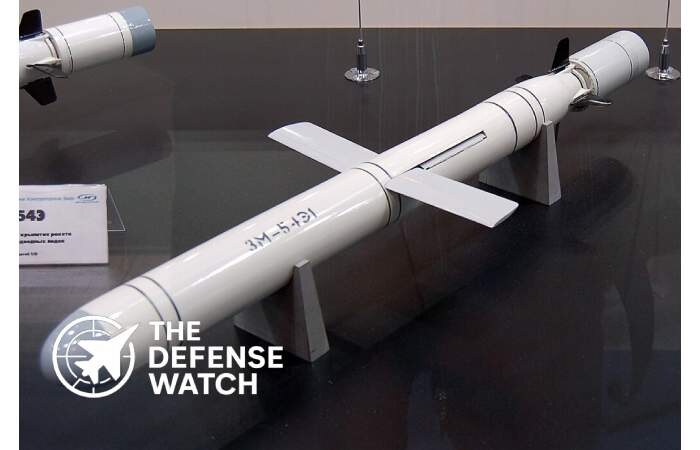
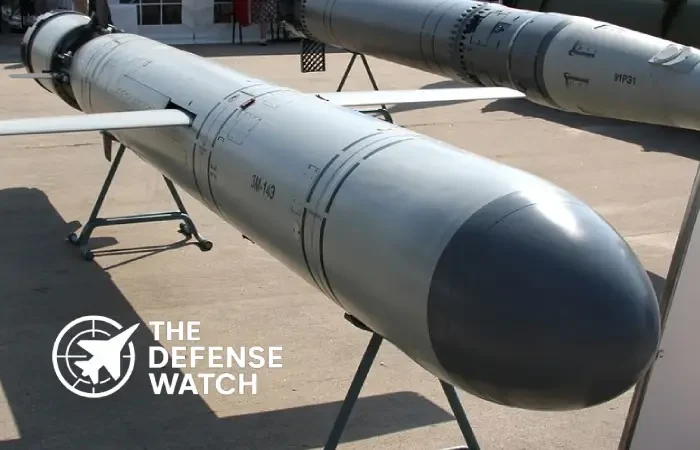
The Kalibr Cruise Missile (NATO: SS-N-27 “Sizzler”) is a family of Russian long-range, sea- and submarine-launched cruise missiles developed by the Novator Design Bureau (OKB-8). Designed for precision strikes against land and naval targets, the Kalibr system has become a central element of Russia’s naval strike capability, similar in role to the U.S. Navy’s Tomahawk missile.
Design and Capabilities
The Kalibr missile series includes both anti-ship (3M54), land-attack (3M14), and anti-submarine (91R) variants. It features a turbojet propulsion system and employs inertial, satellite (GLONASS), and terrain contour matching guidance systems for high accuracy. The 3M14 land-attack version can strike targets at ranges up to 2,500 km, flying at subsonic speed (around Mach 0.8) for most of its trajectory, while the 3M54 variant accelerates to Mach 2.9 during terminal attack.
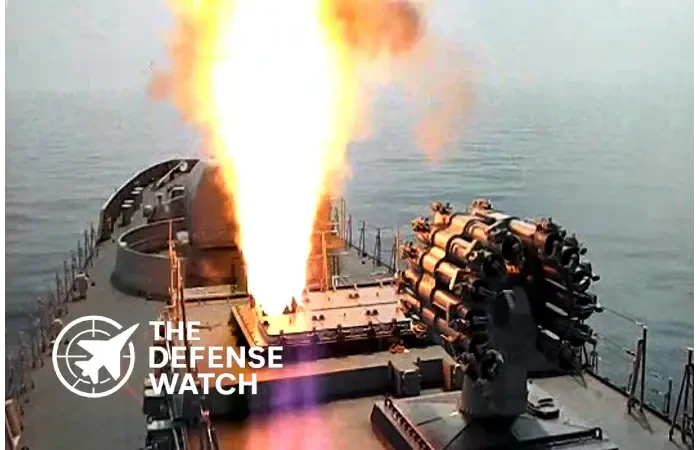
Operationally, the Kalibr has been launched from surface ships, submarines, and containerized launchers, making it a versatile and survivable weapon system. It gained global attention during Russia’s operations in Syria, where it was fired from the Caspian Sea Fleet to hit targets over 1,000 miles away.
Strategic Importance
The Kalibr series provides the Russian Navy with a potent stand-off strike capability, allowing engagement of high-value targets from secure distances. With conventional and nuclear warhead options, the system is a key element in Moscow’s strategic deterrence and precision strike doctrine.
Kalibr Cruise Missile Price in United State
The Kalibr Cruise Missile is not available for export or commercial sale due to its classification as a strategic weapon system under Russian military control. However, defense analysts estimate its unit cost between $1.2 million and $1.5 million per missile, depending on the variant and production batch. This price reflects the missile’s sophisticated guidance package, long-range propulsion system, and capability to carry either conventional or nuclear warheads.
For comparison, its closest Western counterpart, the U.S. Tomahawk Block IV, is valued at approximately $1.8 million per unit, placing the Kalibr slightly below in cost but similar in capability. Given its restricted status and integration with Russian naval platforms, any acquisition or reproduction outside Russia is prohibited under international arms control regulations. In defense market analysis, the Kalibr’s estimated cost serves primarily for strategic comparison and capability assessment rather than procurement purposes.
Kalibr Cruise Missile System Price in United State
The Kalibr is not available for U.S. defense procurement, but comparative cruise missile systems with similar capabilities—such as long-range naval land-attack missiles—typically exceed $1.5 million to $2 million per unit, depending on configuration and production scale.
Disclaimer Note
The information provided on TheDefenseWatch.com is for general informational purposes only. While we strive to ensure the accuracy, completeness, and timeliness of our content regarding defense and aerospace products, technologies, and specifications, we cannot guarantee that all information is 100% accurate or up-to-date due to the evolving nature of military technology and classified data.TheDefenseWatch.com does not warrant the reliability, suitability, or availability of the information for any specific purpose. Users are advised to consult official sources, such as manufacturers, government publications, or defense agencies, for precise and verified data before making decisions based on our content.We are not affiliated with any defense manufacturers, governments, or military organizations mentioned. Opinions, reviews, and ratings reflect expert analysis but are subjective and should not be considered endorsements. TheDefenseWatch.com is not responsible for any errors, omissions, or consequences arising from the use of this website’s content.External links are provided for convenience and do not imply endorsement. TheDefenseWatch.com reserves the right to update or modify content without prior notice. By using this website, you agree to our Privacy & Cookies Policy.
New Arrivals
Popular Comparisons
-
 Tejas Fighter Jet vs F-16 Fighting Falcon: Capability Compared
View Comparison →
Tejas Fighter Jet vs F-16 Fighting Falcon: Capability Compared
View Comparison → -
Rafale Fighter Jet vs F-16 Fighting Falcon : Which Fighter Has the Edge?
View Comparison →
-
Su-57 Fighter Jet vs J-20 Fighter Jet: Stealth and Air Combat Compared
View Comparison →
-
Mirage 2000 vs Tejas Mk1A: Legacy Combat Power vs Indigenous Modernization
View Comparison →
-
Rafale Fighter Jet vs F-22 Raptor: Which Air Dominance Fighter Has the Edge?
View Comparison →
-
Tejas Fighter Jet vs. Rafale Fighter Jet: India’s Indigenous Fighter Meets France’s Proven Multirole Combat Aircraft
View Comparison →
-
F-22 Raptor vs. F-35 Joint Strike Fighter: Which Fifth Generation Fighter Has the Edge?
View Comparison →
-
F-35A vs. F-22 Raptor: Which U.S. Stealth Fighter Dominates Modern Air Combat?
View Comparison →
-
AGM-114 Hellfire vs. AGM-179 JAGM: Which U.S. Precision Missile Is Better?
View Comparison →
-
Patriot (PAC-3) vs. THAAD: Complete Missile Defense System Comparison, Capabilities, Range, and Strategic Roles
View Comparison →
- Finland deepens European F-35 cooperation with first pilot flight in Europe

- Luxembourg Deploys Additional Detection Assets After Drone Sightings
- China’s J-XDS Prototype May Be Testing a New Radar
- L3Harris Pushes Modular, Distributed Architecture for Electronic Warfare
- Northrop Grumman to Deliver GHOST-R Prototype for U.S. Space Force
- Airborne Early Warning Aircraft Ranked: E-7 vs E-2D vs A-50
- Lockheed Martin Shifts Hypersonic Focus From Peak Speed to Sustained Flight and Production
- Spanish F-18s Conduct 15 Scrambles in Romania During First Month of NATO Mission
- South Korean Army Helicopter Crossed DMZ After Firefighting Mission Error
- Trump Announces Greenland Security Agreement With Denmark and Greenland