U.S. Approves AIM-260A Missile Sale To Strengthen Australia’s Airpower
The AIM-260A missile Australia approval marks a significant step in strengthening allied air combat capability in the Indo-Pacific, as Washington clears the transfer of up to 450 next-generation air-to-air missiles to Canberra.
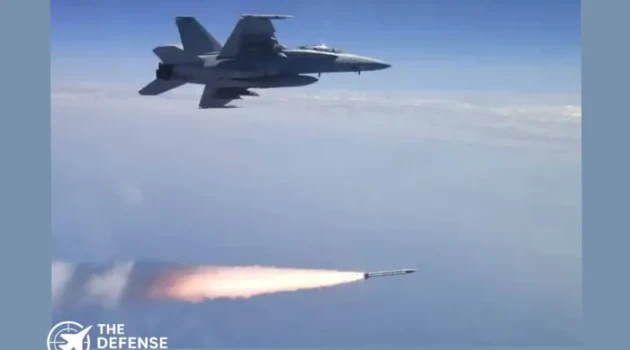
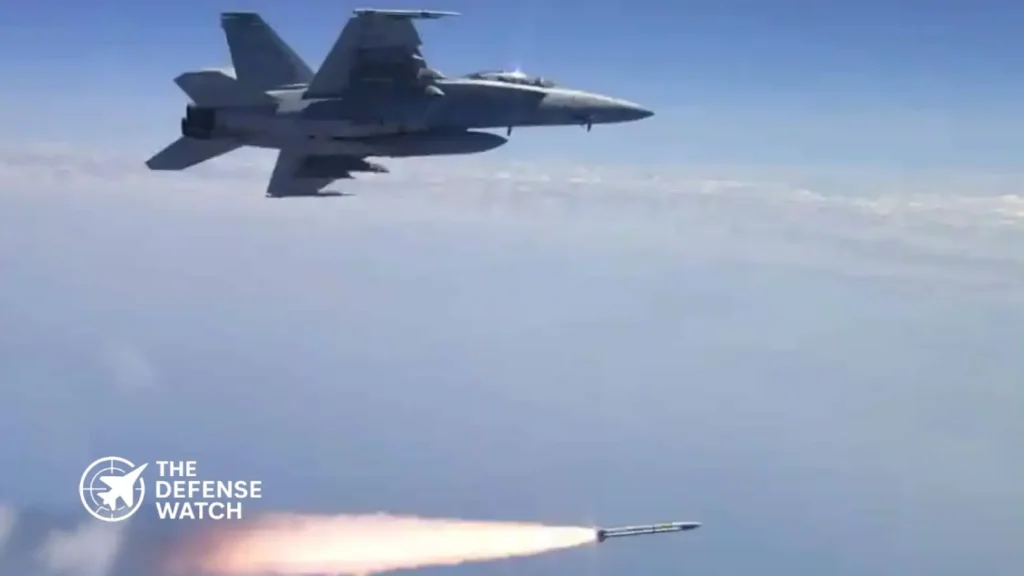
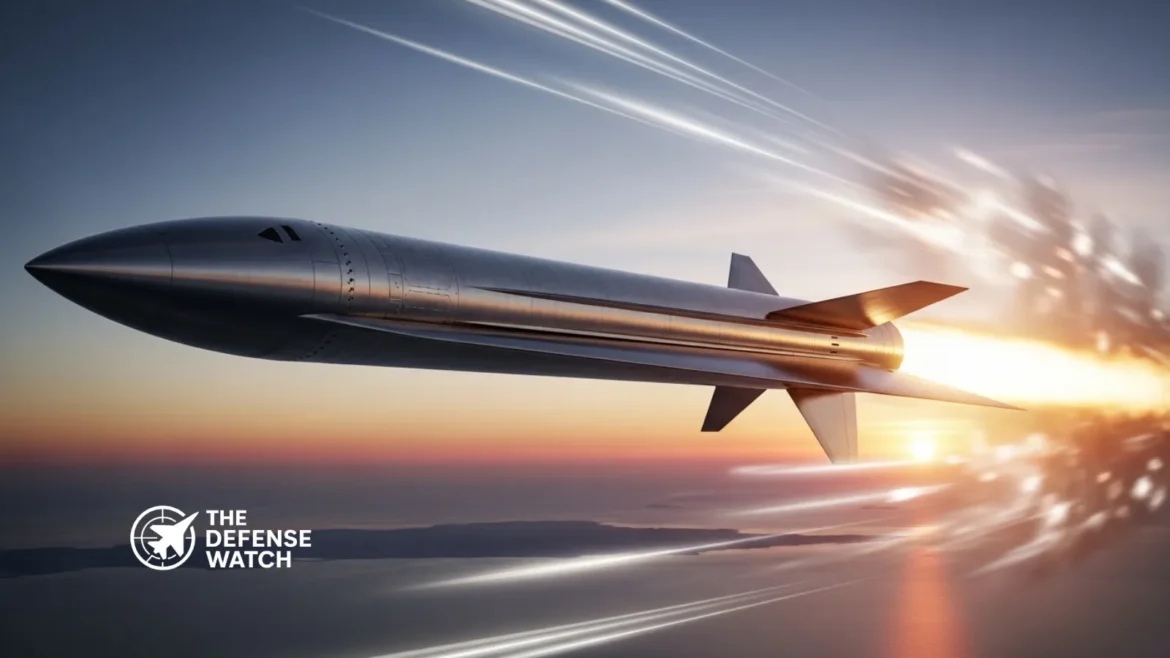
According to defense reporting and regional security sources, the approval centers on the AIM-260A Joint Advanced Tactical Missile, a program led by the U.S. Air Force to address emerging capability gaps against near-peer adversaries.
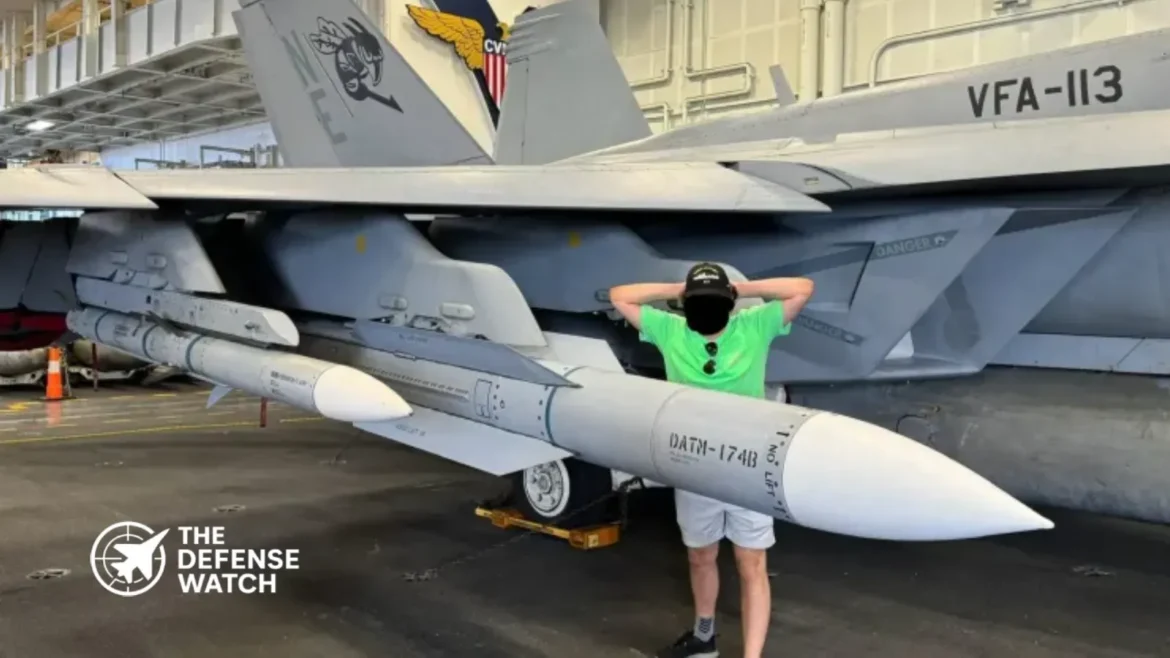
The missile is intended to replace the widely used AIM-120 AMRAAM, offering greater range and improved resistance to jamming in contested environments.
- The United States has approved the potential sale of up to 450 AIM-260A long-range air-to-air missiles to Australia.
- The AIM-260A, also known as the Joint Advanced Tactical Missile, is designed to replace the AIM-120 AMRAAM.
- The missile offers extended range and improved survivability against advanced electronic warfare environments.
- The acquisition supports Royal Australian Air Force platforms including F-35A and F/A-18F fighters.
- The move reflects growing U.S.-Australia defense cooperation amid rising Indo-Pacific tensions.
A Next-Generation Air Combat Capability
The AIM-260A missile Australia package is expected to provide a step change in beyond-visual-range engagement capability for the Royal Australian Air Force.
While official specifications remain classified, U.S. defense officials have indicated that the AIM-260A is designed to outperform current air-to-air systems in both range and survivability. Analysts widely assess that the missile was developed in response to advanced Chinese long-range air-to-air systems such as the PL-15.
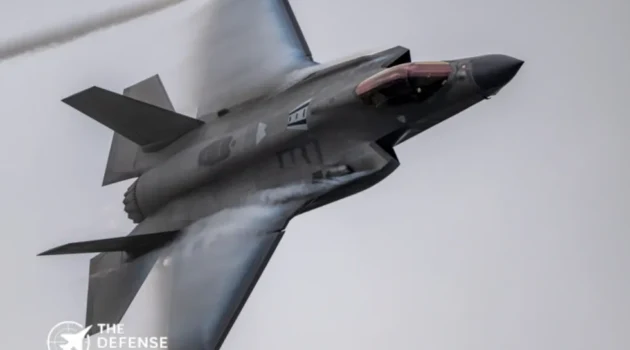
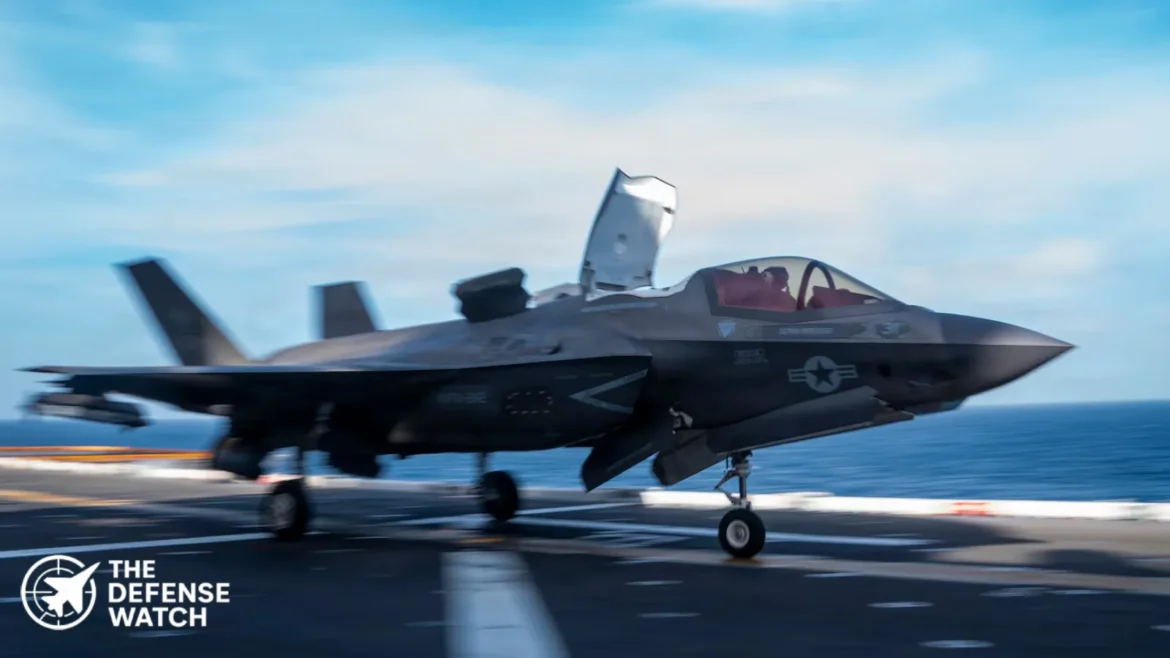
The integration of the missile with platforms like the F-35A Lightning II and F/A-18F Super Hornet will allow Australian forces to engage threats at longer distances, reducing exposure to enemy air defenses.
This shift is critical in modern air warfare, where detection and engagement ranges increasingly determine combat outcomes.
Strategic Context In The Indo-Pacific
The AIM-260A missile Australia approval comes amid rising strategic competition across the Indo-Pacific region.
The United States has been accelerating efforts to strengthen allied capabilities as part of a broader deterrence strategy. Australia, as a key partner under frameworks such as AUKUS and long-standing bilateral defense agreements, plays a central role in this posture.
From a strategic standpoint, long-range air-to-air missiles are becoming a decisive factor in potential high-end conflict scenarios. Control of the air domain depends not only on stealth and sensors, but also on the ability to strike first at extended distances.

AIM-260A Joint Advanced Tactical Missile By equipping Australia with the AIM-260A, Washington is effectively extending its own air combat network, enabling greater interoperability and shared operational reach.
Closing The Capability Gap
One of the primary drivers behind the AIM-260A missile Australia decision is the need to close a growing capability gap.
Regional competitors have invested heavily in long-range missile technology, supported by advanced radar systems and electronic warfare capabilities. This has raised concerns within U.S. defense circles about the effectiveness of legacy systems like the AIM-120 in future conflicts.
The AIM-260A addresses these concerns by offering:
- Increased engagement range
- Enhanced resistance to electronic countermeasures
- Compatibility with fifth-generation aircraft
- Improved lethality against high-speed and maneuvering targets
This aligns with Pentagon modernization priorities, which emphasize survivability and lethality in contested environments.
Operational Impact For Australia
For Australia, the acquisition significantly enhances its ability to project airpower across vast distances.
The Royal Australian Air Force operates in one of the largest areas of responsibility in the world, covering expansive maritime and airspace regions. Longer-range missiles reduce the need for forward basing and allow aircraft to operate from safer distances.
This also improves Australia’s contribution to coalition operations, particularly in scenarios involving joint U.S. and allied forces.
In practical terms, the AIM-260A missile Australia deployment will allow Australian pilots to engage adversary aircraft before entering contested zones, increasing survivability and mission success rates.
Industrial And Defense Cooperation
The approval further reinforces defense industrial ties between the United States and Australia.
Although the AIM-260A program remains tightly controlled, the sale highlights Washington’s willingness to share advanced capabilities with trusted allies. This is consistent with recent trends in U.S. defense exports, where interoperability and alliance integration are prioritized.
The deal also signals confidence in Australia’s role as a long-term security partner in the Indo-Pacific.
Broader Implications
Beyond immediate military benefits, the AIM-260A missile Australia decision carries broader geopolitical implications.
It sends a clear signal about U.S. commitment to maintaining a favorable balance of power in the region. At the same time, it underscores the accelerating pace of military modernization among Indo-Pacific nations.
As air combat evolves, missiles like the AIM-260A are likely to play a central role in shaping future engagements.
The focus is no longer just on aircraft performance, but on the entire kill chain, including sensors, data links, and long-range precision weapons.
 ¦ KEY FACTS AT A GLANCE
- China is increasing production capacity for both J-20 and J-35 stealth fighters.
- Expanded manufacturing lines aim to accelerate delivery of fifth-generation aircraft to the PLA.
- The move supports China’s broader strategy to compete with U.S. and allied airpower in the Indo-Pacific.
- J-20 production continues to scale, while J-35 is positioned for both naval and export roles.
- China is shifting from limited production to sustained high-rate output of stealth fighters.
China Stealth Fighter Production Expands Rapidly
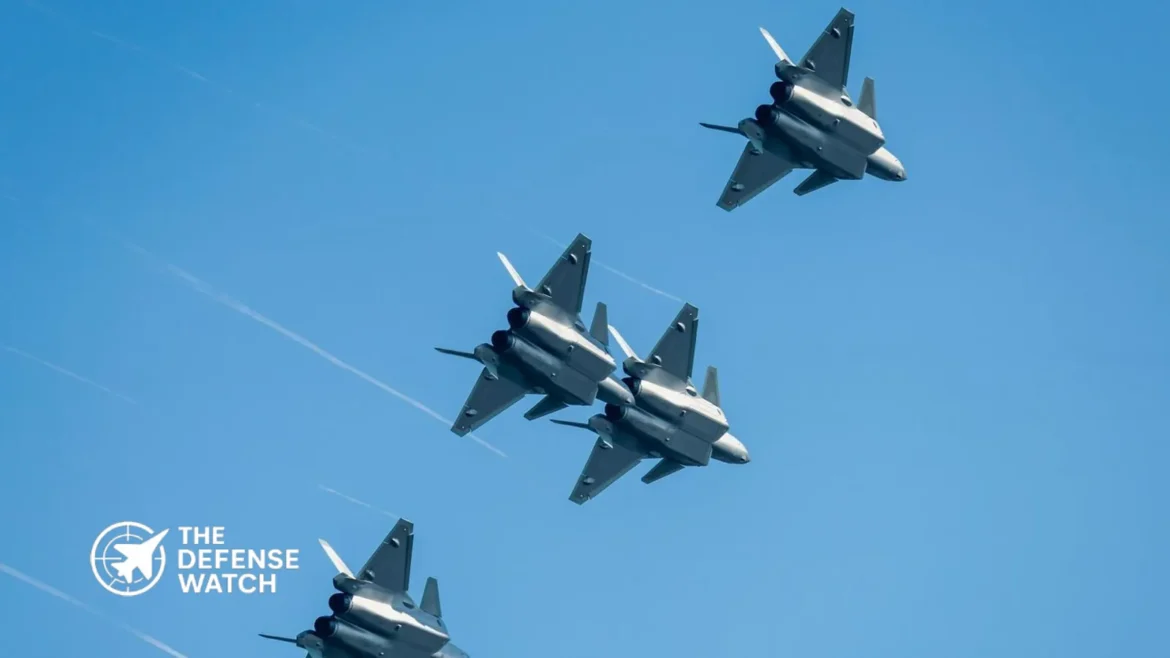
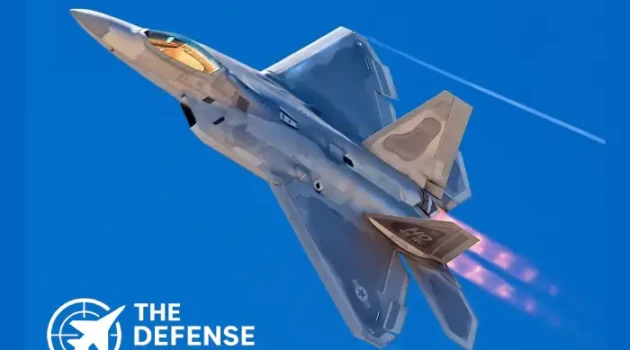
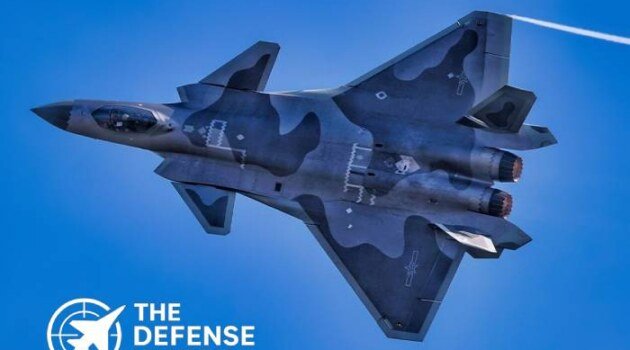
China stealth fighter production is accelerating as Beijing increases manufacturing capacity for both the J-20 and the emerging J-35 programs, signaling a sustained push to expand its fifth-generation combat aircraft fleet.
The Big Picture
China is moving from incremental modernization to large-scale force expansion. The focus is no longer just on fielding advanced platforms, but on producing them in volume.
The United States has long maintained an advantage in fifth-generation aircraft numbers through the F-22 and F-35 programs. China’s current effort suggests a shift toward narrowing that gap, not only in capability but in fleet size.
The Indo-Pacific remains the central theater for this competition. Air superiority, long-range strike, and survivability against advanced air defenses define operational planning for both sides.
What’s Happening
China is increasing production capacity for the J-20, its primary fifth-generation stealth fighter, while also advancing the J-35, a carrier-capable platform under development.
According to Source, new or expanded production lines are enabling higher output rates. The J-20 program, already in serial production, continues to scale, with improved variants and engine upgrades expected to support sustained manufacturing.
The J-35, often compared to U.S. carrier-based stealth fighters, is progressing toward operational deployment. It is expected to serve both the People’s Liberation Army Air Force and the People’s Liberation Army Navy.
Chinese industry appears to be transitioning toward parallel production of multiple stealth aircraft types, a capability historically associated with mature aerospace powers.
Why It Matters
Higher production capacity directly translates into operational mass. Even the most advanced aircraft cannot shape the battlefield if available in limited numbers.
China’s ability to produce the J-20 at scale strengthens its air dominance strategy. The aircraft’s stealth profile, long-range engagement capability, and networked operations make it central to Beijing’s air combat doctrine.
The addition of the J-35 expands flexibility. A carrier-capable stealth fighter enhances naval aviation, supporting power projection beyond China’s immediate coastline.
This dual-track production model reduces reliance on a single platform and creates redundancy in force structure.
Strategic Implications
China’s expanding stealth fighter production affects regional military balance in several ways.
First, it increases pressure on U.S. and allied air forces to maintain qualitative and quantitative advantages. Countries such as Japan and Australia rely heavily on the F-35 program, but production rates and fleet size remain critical factors.
Second, it strengthens China’s anti-access and area denial strategy. A larger stealth fleet complicates adversary planning by increasing the number of survivable strike and interception assets.
Third, it enhances China’s ability to sustain operations in a prolonged conflict. High production capacity suggests resilience, allowing the replacement of losses and continuous force generation.
Competitor View
The United States and its allies are likely to view China’s production surge as a signal of long-term strategic intent rather than a short-term buildup.
Washington has emphasized distributed operations and advanced networking to offset numerical challenges. However, increased Chinese output could erode that advantage over time.
Regional actors may interpret the J-35’s development as a direct response to carrier-based airpower in the Pacific. Its potential export role could also influence defense partnerships, particularly in regions where access to Western systems is limited.
Russia, while a traditional aerospace competitor, may view China’s industrial scaling as a benchmark for its own production challenges.
What To Watch Next
Key indicators will shape how this development unfolds.
Engine maturity remains critical. Indigenous engine programs will determine whether China can sustain high production rates without foreign dependencies.
Operational deployment timelines for the J-35 will also be closely watched, particularly its integration with aircraft carriers.
Production tempo is another factor. If China maintains consistent output growth, it will signal a durable industrial base rather than a temporary surge.
Export activity could further amplify the impact. If the J-35 enters the international market, it could reshape the global fighter landscape.
Capability Gap
China’s push addresses a clear gap in fleet size relative to the United States and its allies.
While the J-20 provides advanced capabilities, earlier production levels limited overall operational impact. Scaling production helps close that gap.
The J-35 addresses another gap, carrier-based stealth aviation. China’s naval air wing has historically relied on non-stealth platforms, limiting survivability in contested environments.
However, challenges remain. Engine performance, pilot training, and integration into joint operations will determine real-world effectiveness.
The Bottom Line
China’s expansion of J-20 and J-35 production marks a shift toward sustained, high-volume stealth fighter output that could reshape the balance of airpower in the Indo-Pacific.
¦ KEY FACTS AT A GLANCE- The U.S. and Israel launched airstrikes against Iran on Feb. 28, 2026, raising concerns about strain on the U.S. defense industrial base.
- Principal Deputy Assistant Secretary of State Stanley Brown confirmed to Congress on March 17 that no weapons shipments to Taiwan have been delayed.
- A pending $14 billion U.S. arms package for Taiwan — the largest ever — awaits President Trump’s signature and includes advanced interceptor missiles.
- A multi-billion-dollar backlog of U.S. arms deliveries to Taiwan existed before the Iran war began; the administration is reviewing ways to expedite shipments.
- Trump’s postponement of a Beijing summit with President Xi Jinping introduces fresh uncertainty over the timing of the Taiwan arms deal approval.
U.S. Weapons Shipments to Taiwan Continue Uninterrupted Despite Iran War Demands
U.S. officials told members of Congress on March 17 that the ongoing war against Iran has not delayed weapons shipments to Taiwan, pushing back against growing concerns that Washington’s simultaneous military commitments could erode its ability to arm the island against Chinese pressure.
The assurance, delivered during a House Foreign Affairs Committee hearing, carries significant weight. The U.S. and Israel launched airstrikes against Iran on Feb. 28 — a campaign that has consumed substantial interceptor and precision munitions inventory and raised questions about America’s capacity to supply multiple partners at once.
The Big Picture: A Defense Industrial Base Under Stress
The Iran air campaign has exposed structural vulnerabilities in U.S. weapons production that policymakers have long acknowledged but struggled to fix. Interceptor missiles, precision-guided bombs, and air defense systems are being expended at rates that outpace current manufacturing output — a challenge that directly bears on every U.S. security partner, from Ukraine and Israel to Taiwan.
Taiwan stands at the center of that strategic calculus. Chinese military pressure on the island has escalated steadily, with China holding its most recent war games around Taiwan in December and its naval and air forces conducting regular operations in the surrounding region. Any disruption to the U.S. arms pipeline would send a destabilizing signal to both Taipei and Beijing at a moment of acute geopolitical sensitivity.
What’s Happening: Congress Demands Answers
Stanley Brown, principal deputy assistant Secretary of State for Political-Military Affairs, told the House Foreign Affairs Committee that shipments to Taiwan have not been delayed. Brown added that the administration is examining ways to expedite deliveries but offered no specific timeline or mechanism.
The hearing came on the same day President Trump announced he was postponing a planned trip to Beijing. Taiwan was among the issues expected to be discussed by Trump and Chinese President Xi Jinping. The summit delay raises questions about whether a diplomatic off-ramp — however tenuous — has been set back, and whether the arms relationship with Taiwan will accelerate or stall in its absence.
A major U.S. arms package for Taiwan that included advanced interceptor missiles was reported ready for Trump’s approval, carrying a price tag of approximately $14 billion — which would make it the largest arms deal ever for the island. Whether the postponed Beijing meeting will delay that decision remains unclear.
Why It Matters: The Backlog Problem
A multi-billion-dollar backlog of U.S. arms shipments to Taiwan already existed before the Iran war started. That backlog is not a new problem — it reflects years of Foreign Military Sales processing delays, supply chain constraints, and competing theater demands.
The Iran campaign adds a new layer of urgency. Munitions that might otherwise have been available for FMS fulfillment to Taiwan are being drawn down in active combat operations. Even if direct shipments have not been delayed, as Brown testified, the consumption rate in Iran creates a downstream risk: a compressed future pipeline that could slow deliveries over the medium term.
For Taiwan, the distinction between current shipments and future capability delivery matters enormously. Advanced air defense systems, anti-ship missiles, and precision strike capabilities take years to procure and integrate. Any slippage in that pipeline narrows Taiwan’s window to field a credible deterrent.
Strategic Implications: Walking a Two-Theater Tightrope
The U.S. finds itself managing active kinetic operations in the Middle East while simultaneously attempting to reinforce deterrence in the Indo-Pacific — a two-theater stress test that defense planners have long warned was beyond current industrial capacity.
Congress has amplified that concern. Some U.S. officials raised concerns that the defense industry would be unable to keep up with demand and could be forced to slow shipments to buyers such as Taiwan. Brown’s testimony addressed the immediate picture but did not resolve the longer-term production question.
The $14 billion pending arms package — if approved — would include advanced interceptor missiles that are also in high demand in the Iran theater. Prioritizing Taiwan’s package over near-term operational needs in the Middle East would require deliberate political decisions at the highest levels of the administration. There is currently no public indication that such a reprioritization is under consideration.
Competitor View: How Beijing Reads the Signals
Beijing watches the Iran campaign closely — not out of solidarity with Tehran, but as a live stress test of American military capacity and political will. Chinese defense analysts and the People’s Liberation Army are cataloguing the rate at which the U.S. expends high-end interceptors and precision munitions, the tempo of resupply, and the degree to which Washington can sustain simultaneous commitments.
China views Taiwan as its own territory and has never renounced the use of force to take the island under its control. From Beijing’s perspective, any credible evidence that U.S. arms deliveries to Taiwan are being stretched or delayed validates its own strategic patience — and potentially shortens its perceived decision window.
Brown’s categorical statement to Congress that no shipments have been delayed is itself a deterrence signal directed as much at Beijing as at Taipei. The political messaging is intentional: Washington is signaling that it can walk and chew gum simultaneously, regardless of what the industrial data may suggest over the longer term.
What To Watch Next
Several near-term developments will clarify the trajectory of U.S. arms policy toward Taiwan. Trump’s rescheduled meeting with Xi Jinping — whenever it occurs — will test whether arms sales to Taiwan become a bargaining chip or remain insulated from bilateral negotiations, as prior administrations generally maintained.
The $14 billion arms package, once approved, will trigger a new Foreign Military Sales notification process and could face congressional scrutiny. Trump has used national emergency declarations to sidestep congressional review of some foreign weapons sales, a practice that has drawn bipartisan tension. Whether that authority extends to Taiwan’s package — or whether Congress insists on oversight — will shape the timeline.
Production ramp-up for key munitions categories, particularly interceptor missiles, will also determine whether the current no-delay posture is sustainable through the remainder of the Iran campaign.
Capability Gap: What Taiwan Still Needs
Taiwan’s most critical defensive gaps center on layered air defense, anti-ship strike, undersea warfare, and ground-based precision fires — capabilities that take years to integrate. The island’s military has steadily moved toward an asymmetric “porcupine” defense strategy that prioritizes systems difficult to destroy or suppress in a Chinese air campaign.
Advanced interceptor missiles in the pending $14 billion package directly address one of Taiwan’s most pressing vulnerabilities: the ability to survive an initial ballistic and cruise missile barrage from the PLA. Without adequate interceptor stocks, Taiwan’s ground forces and air assets face catastrophic attrition in the opening hours of any conflict.
The realistic limitation is time. Even if Trump signs the deal tomorrow, manufacturing, delivery, training, and integration cycles mean the capability would not be operationally mature for several years. That timeline underscores why the backlog problem is so consequential — every year of delay compresses Taiwan’s readiness window against a PLA that is modernizing rapidly.
The Bottom Line
Washington’s assurance that Taiwan arms deliveries remain on track is a critical deterrence signal, but the pre-existing backlog, active munitions consumption in Iran, and a stalled diplomatic calendar with Beijing mean the risk to Taiwan’s long-term defensive capability is real and demands sustained executive and congressional attention.
■ KEY FACTS AT A GLANCE- ► A submarine from the UK’s :contentReference[oaicite:0]{index=0} conducted a historic port visit to Australia in February 2026.
- ► The visit supports implementation of the :contentReference[oaicite:1]{index=1} trilateral security partnership.
- ► The submarine is part of the UK’s nuclear powered attack submarine force.
- ► The deployment included engagement with the :contentReference[oaicite:2]{index=2}.
- ► The visit aligns with plans to rotate UK and US submarines through Western Australia under AUKUS.
- ► Australia plans to acquire conventionally armed, nuclear powered submarines under the SSN AUKUS program.
Royal Navy Submarine Visit Australia Underscores AUKUS Momentum
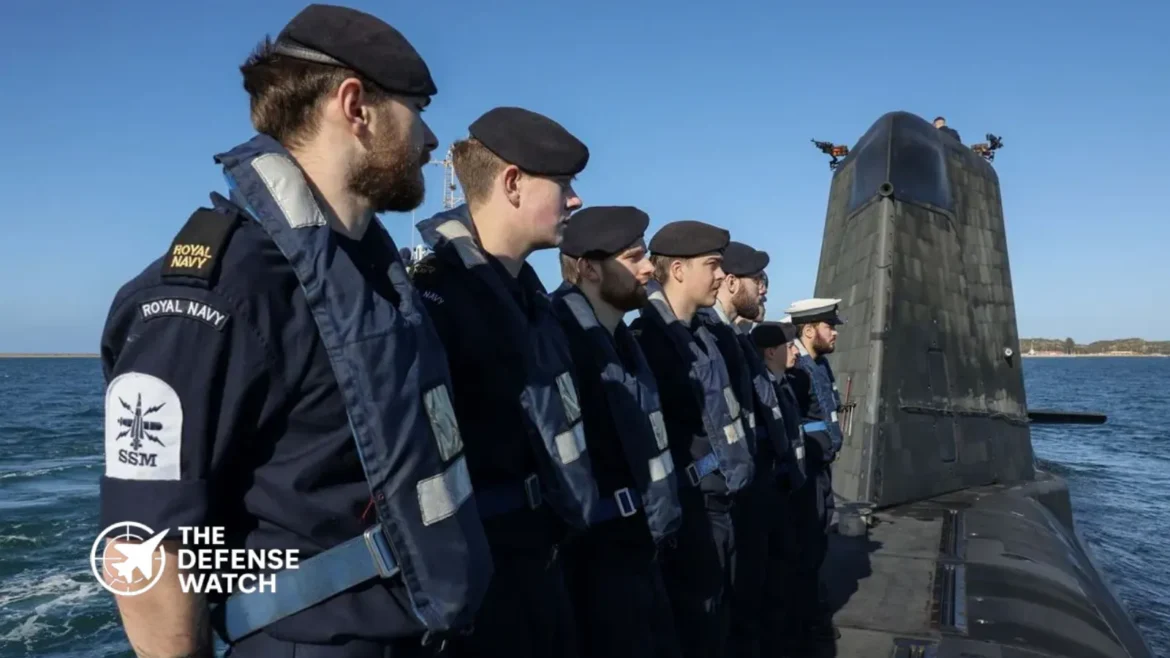
The Royal Navy submarine visit to Australia marks more than a ceremonial port call. It reflects a tangible step in implementing AUKUS and expanding allied undersea cooperation in the Indo-Pacific.
According to the UK Ministry of Defence, the submarine’s arrival represents the first visit of its kind in decades. It comes as the United Kingdom deepens operational ties with Australia ahead of the planned rotational presence of British and American nuclear powered attack submarines in Western Australia later this decade.
(adsbygoogle = window.adsbygoogle || []).push({});The timing is significant. With undersea competition intensifying in the Indo-Pacific, visible demonstrations of allied submarine cooperation send a strategic signal well beyond Canberra and London.
Operational Impact: Building Submarine Interoperability
The immediate operational value of the Royal Navy submarine visit to Australia lies in training, infrastructure familiarization, and command level coordination.
Australia is preparing to host regular rotations of UK and US submarines under the Submarine Rotational Force West construct. This will require port upgrades, nuclear stewardship procedures, safety protocols, and expanded sustainment capacity at HMAS Stirling in Western Australia.
A visiting British nuclear powered attack submarine allows Australian personnel to work alongside experienced crews. That includes exposure to reactor safety regimes, logistics chains, and dockyard handling procedures. These are not symbolic exercises. They are foundational steps for Australia’s transition from a conventional submarine operator to a nuclear powered one.
The UK benefits as well. Operating in Australian waters expands the Royal Navy’s Indo-Pacific familiarity. It also increases endurance options for British boats deployed east of Suez.
For the United States, which is the third AUKUS partner, such visits reinforce the credibility of the trilateral model. Interoperability is not built on paper agreements. It is built through repeated, practical integration at sea and in port.
Industrial And Programmatic Context
The Royal Navy submarine visit to Australia takes place as the SSN AUKUS design moves forward.
Under current plans, Australia will first acquire US Virginia class submarines as an interim capability before transitioning to a jointly developed SSN AUKUS design with the UK. That future class is expected to draw heavily from Britain’s experience with its Astute class and successor programs.
For London, this cooperation strengthens its domestic submarine industrial base. The UK’s submarine enterprise, centered at Barrow-in-Furness, faces workforce and production challenges similar to those in the United States. A trilateral pipeline offers longer term stability in design and construction work.
(adsbygoogle = window.adsbygoogle || []).push({});For Australia, the industrial implications are even larger. Canberra plans to build SSN AUKUS boats domestically in Adelaide. That requires workforce expansion, nuclear engineering skills, and regulatory structures that did not previously exist in the country.
The visit, therefore, supports more than naval diplomacy. It reinforces political commitments to a multi decade industrial transformation.
Regional Security Context: Undersea Competition In The Indo-Pacific
Submarines remain among the most survivable and strategically flexible military assets. In the Indo-Pacific, where maritime distances are vast and surveillance networks are expanding, nuclear powered attack submarines offer endurance, stealth, and rapid repositioning.
China’s People’s Liberation Army Navy has expanded its submarine fleet significantly over the past two decades. While many Chinese boats are diesel electric, Beijing continues to field new nuclear powered attack and ballistic missile submarines.
Against that backdrop, AUKUS partners are signaling that allied undersea capabilities will remain present and integrated.
The Royal Navy submarine visit to Australia sends a message of sustained UK engagement in the Indo-Pacific. Britain’s 2021 Integrated Review and its 2023 refresh identified the region as central to long term security and economic interests. This visit demonstrates follow through.
For regional states such as Japan and India, closer UK Australia submarine cooperation reinforces a broader network of maritime security partnerships. For Southeast Asian nations, it underscores that external powers are investing long term resources into regional stability.
For Beijing, the message is more direct. Allied nuclear powered attack submarines operating more frequently from Australian territory complicate Chinese naval planning. They expand patrol options in the South China Sea and beyond.
Comparison With Competitors
Few countries operate nuclear powered attack submarines. The United States and the United Kingdom are among the most experienced.
France also fields advanced nuclear submarines, and Paris maintains Indo-Pacific territories and a naval presence. However, France is not part of AUKUS, and its cooperation with Australia shifted after Canberra canceled its conventional submarine contract in 2021.
(adsbygoogle = window.adsbygoogle || []).push({});Russia retains significant submarine capabilities but has limited sustained presence in the Indo-Pacific compared to the Cold War period.
China is expanding its fleet, yet questions remain about acoustic quieting and operational experience compared to Western navies.
In that context, the Royal Navy submarine visit to Australia highlights the concentration of advanced undersea expertise within the AUKUS framework. It consolidates capability among close allies rather than dispersing it.
Strategic Assessment
The Royal Navy submarine visit to Australia carries implications beyond bilateral ties.
Impact on regional power balance:
Regular UK and US submarine rotations through Australia will increase allied undersea presence in the eastern Indian Ocean and western Pacific. This strengthens deterrence by complicating any adversary’s planning and increasing uncertainty about allied submarine locations.Deterrence implications:
Nuclear powered attack submarines are optimized for anti submarine warfare, intelligence gathering, and land attack missions. Their presence signals high end warfighting capability, not just maritime patrol. That contributes to denial strategies aimed at preventing coercion in contested waters.Budget and procurement signals:
The visit reinforces political backing for the expensive SSN AUKUS pathway. Submarine programs require long term funding certainty. Visible milestones help sustain domestic support in all three AUKUS countries.Alliance dynamics:
(adsbygoogle = window.adsbygoogle || []).push({});
AUKUS moves beyond technology sharing into integrated force posture. The Royal Navy submarine visit to Australia demonstrates that London is not a peripheral partner. It is an operational contributor in the Indo-Pacific.Escalation risks:
While allied submarine deployments are defensive in nature, increased undersea activity can heighten risks of miscalculation. Close encounters at sea, especially in contested areas, demand robust communication mechanisms.What Happens Next
In the near term, additional port visits and joint activities are likely as Australia prepares for rotational deployments beginning later this decade.
Longer term, attention will shift to infrastructure readiness at HMAS Stirling, workforce development, and legislative frameworks governing nuclear stewardship.
The success of SSN AUKUS will depend not only on engineering design but on sustained political alignment across three governments.
(adsbygoogle = window.adsbygoogle || []).push({});The Royal Navy submarine visit to Australia is therefore an early operational indicator. It shows that AUKUS is progressing from policy announcement to practical execution.
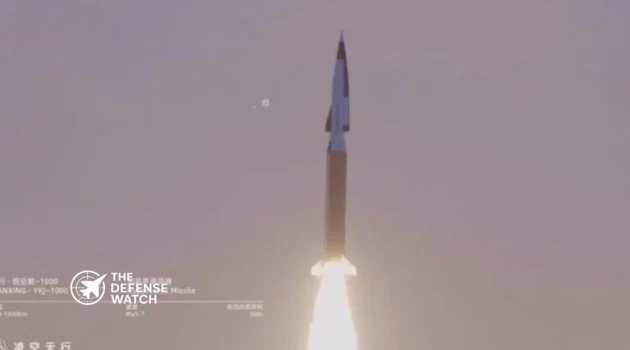
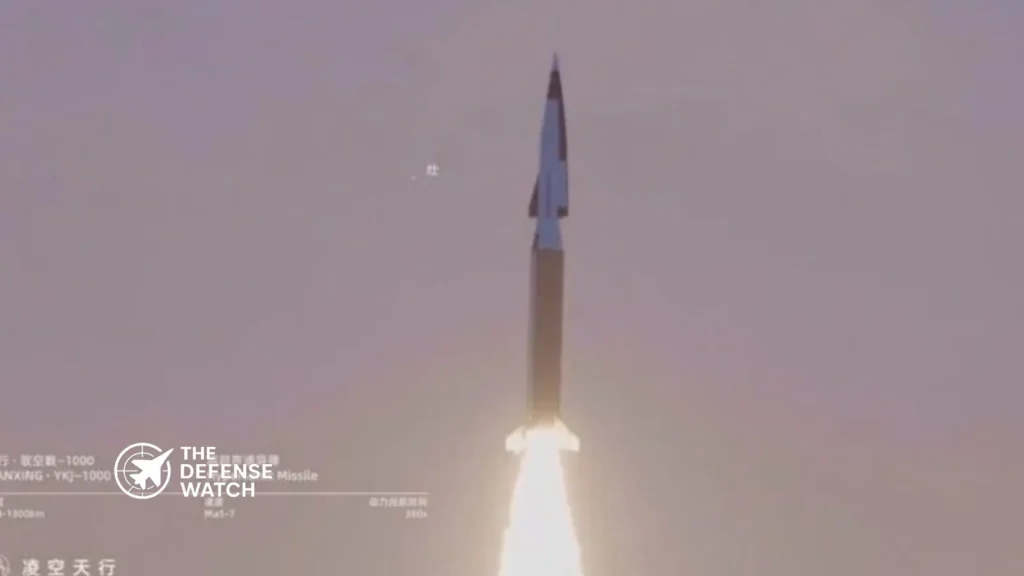
■ KEY FACTS AT A GLANCE- ► China’s Sichuan Lingkong Tianxing Technology unveiled the YKJ-1000 hypersonic glide missile in late November 2025, advertising a unit cost of approximately $99,000.
- ► The YKJ-1000 is claimed to achieve speeds up to Mach 7 (~8,575 km/h) with a range of 500 to 1,300 kilometers depending on configuration.
- ► A single U.S. Navy SM-6 interceptor costs approximately $4.1 million; THAAD interceptors range from $12 million to $15 million per round.
- ► The missile uses civilian-grade components including consumer drone optics, automotive processors, BeiDou navigation chips, and foamed concrete thermal coatings in place of traditional aerospace-grade materials.
- ► The system is road-mobile and container-launched, enabling rapid concealment and deployment from non-military platforms.
- ► An AI-enabled swarm variant is under development, designed to coordinate multiple YKJ-1000 missiles against single targets simultaneously.
- ► No independent third-party verification of the missile’s performance claims or actual production cost has been published as of February 2026.
China’s YKJ-1000 Doesn’t Have to Be Perfect to Be a Problem
The YKJ-1000 hypersonic missile may be the most strategically consequential weapon system announced in 2025 — not necessarily because it works as advertised, but because of what it signals about the direction of Chinese military development and the economic logic it introduces into modern deterrence.
(adsbygoogle = window.adsbygoogle || []).push({});Developed by Chengdu-based private aerospace firm Sichuan Lingkong Tianxing Technology, the YKJ-1000 is a boost-glide hypersonic missile reportedly capable of Mach 7 flight across a range of 500 to 1,300 kilometers. Its claimed price tag of roughly $99,000 per unit — compared to a $4.1 million SM-6 or a $12–15 million THAAD interceptor — immediately dominated defense discussions when the system was disclosed in late November 2025. Whether or not those numbers hold up under scrutiny, they frame a strategic challenge the U.S. missile defense enterprise cannot afford to ignore.
The Real Story Is the Cost-Exchange Ratio
Western missile defense doctrine has long rested on an uncomfortable but manageable asymmetry: interceptors are expensive, but adversary missiles capable of penetrating them are even more expensive. That equation made layered defense architectures — Patriot, THAAD, SM-6, and eventually NGAD-era directed energy — fiscally painful but strategically viable.
The YKJ-1000 directly attacks that assumption.
If a salvo of even 20 such missiles can be fielded for under $2 million and forces the expenditure of $80 to $300 million in SM-6 or THAAD rounds to defeat it, the attacker wins economically even in a failed strike. The Pentagon’s own Missile Defense Agency has acknowledged in successive budget justifications — including the FY2025 and FY2026 submissions — that the cost-exchange ratio in missile defense is a primary driver of procurement strategy. The YKJ-1000 scenario, however credible, places that entire calculus under pressure.
- (adsbygoogle = window.adsbygoogle || []).push({});
This is not a new concept. Ukraine’s conflict demonstrated it repeatedly: Iranian-origin Shahed-136 drones costing an estimated $20,000–$50,000 each routinely forced Ukrainian forces to expend Patriot or NASAMS rounds worth orders of magnitude more. The YKJ-1000 follows the same logic, but adds hypersonic speed and claimed maneuverability — factors that complicate intercept geometry in ways that slow drones simply do not.
What China’s Military-Civil Fusion Model Actually Produces
Lingkong Tianxing was founded in 2018 and initially focused on reusable launch vehicles and suborbital systems. Its pivot to hypersonic weapons reflects Beijing’s military-civil fusion policy in unusually concrete form: a private company with commercial space DNA, leveraging China’s dominant position in global consumer electronics manufacturing to undercut the cost structure of traditional weapons development.
The YKJ-1000’s use of BeiDou navigation chips — commercially available for a few dollars in smartphone and automotive applications — in place of bespoke military-grade inertial or GPS/INS systems is an instructive example. U.S. and allied defense contractors face regulatory, labor, and supply-chain constraints that prevent equivalent substitution. China does not face those barriers at the same scale, and its dominance in printed circuit board production, optical sensor fabrication, and chip packaging gives Lingkong Tianxing access to economies of scale that no Western hypersonics program can replicate through comparable means.
This structural advantage is more durable than any single weapon system. Even if the YKJ-1000 fails to meet its stated performance parameters, the next iteration — built on the same industrial base — may well close the gap.
Verifying the Claims: Significant Skepticism Is Warranted
Serious technical questions surround the YKJ-1000. No independent test data has been publicly released. Available disclosure material consists of promotional imagery, computer-rendered animations, and static display photographs. The company’s publicity officer has confirmed that the widely cited $99,000 figure is not precisely accurate, while affirming that the design does rely on mass-market industrial components.
The most significant technical concern involves thermal management. Sustained Mach 7 flight generates surface temperatures exceeding 1,600°C. Traditional hypersonic programs — including the U.S. AGM-183A ARRW and the Russian Kinzhal — rely on purpose-engineered carbon-ceramic or ablative composites specifically rated for those conditions. The YKJ-1000’s reported use of foamed concrete and industrial cement-based coatings raises legitimate questions about whether those materials can survive full-envelope hypersonic flight without structural degradation, loss of maneuverability, or guidance system failure from thermal ingress.
- (adsbygoogle = window.adsbygoogle || []).push({});
Similarly, integrating consumer-grade optical and processor components into a hypersonic terminal guidance system presents non-trivial engineering challenges. Commercial drone cameras and automotive processors are not radiation-hardened, vibration-qualified, or validated for the electromagnetic environment associated with hypersonic plasma sheaths.
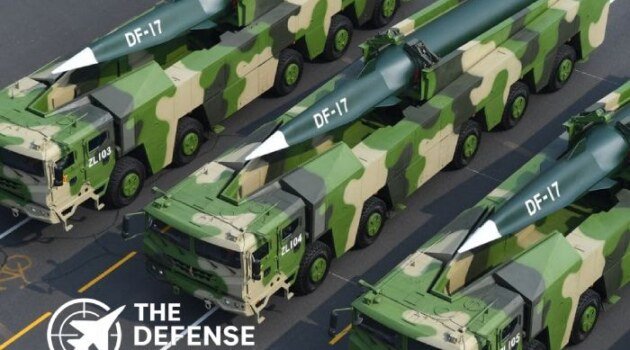
None of this means the program is fraudulent or without merit. China has conducted verified hypersonic tests — the DF-ZF glide vehicle and the DF-17 missile system are real, fielded, and assessed by the Defense Intelligence Agency as operational. Lingkong Tianxing’s principals have credible aerospace backgrounds, and the September 2025 visit by Vice Premier Zhang Guoqing to the company’s facility signals genuine high-level political backing. The question is not whether China can build a functional low-cost hypersonic weapon. The question is whether the YKJ-1000 specifically achieves its stated specifications at its stated price — and that remains unverified.
The Proliferation Risk Is the Most Urgent Concern
Independent of its actual performance, the YKJ-1000’s disclosure introduces a proliferation dynamic that demands immediate policy attention.
If China moves to export this system — even in a degraded or range-limited variant — to aligned states, the strategic landscape in the Middle East, South Asia, and sub-Saharan Africa changes materially. Iran, which already fields Shahed drones and the Abu Mahdi anti-ship missile, would gain a potential first-strike hypersonic capability against Gulf Cooperation Council infrastructure and U.S. naval assets in the Arabian Sea. North Korea, with its established ballistic and hypersonic test programs, could receive design or materials assistance accelerating its own low-cost glide vehicle development. Non-state actors with state backing — Hezbollah, the Houthis — could in theory deploy systems of this class if export controls fail.
(adsbygoogle = window.adsbygoogle || []).push({});China’s own export control regime is more restrictive than its public arms promotion narrative suggests. Beijing has not exported its most capable ballistic missile systems freely, and the YKJ-1000 involves technologies sensitive enough that selective proliferation — calibrated for maximum geopolitical leverage — is a more likely outcome than open market sales. Still, the entry of hypersonic weapons into the export price range of advanced conventional systems is a threshold that, once crossed, is difficult to reverse.
How the U.S. Should Respond: Three Immediate Priorities
The YKJ-1000 disclosure clarifies what U.S. missile defense planners have known but underfunded for years. Three responses are warranted.
First, directed energy. The only sustainable answer to mass-produced low-cost hypersonic saturation attacks is interceptors that are cheaper per shot than the incoming weapon. High Energy Laser with Integrated Optical-dazzler and Surveillance (HELIOS) and the Layered Laser Defense (LLD) programs need accelerated fielding timelines. Congress allocated funding for shipboard laser systems in FY2024 and FY2025, but operational deployment lags development. A $99,000 incoming hypersonic missile defeated by a $1-per-shot laser kill changes the cost-exchange ratio permanently.
Second, distributed defense architecture. Concentrating high-value assets — carriers, large-deck amphibious ships, fixed air bases — in predictable locations within the YKJ-1000’s 1,300-kilometer engagement envelope is a posture problem, not just a missile defense problem. The Navy’s Distributed Maritime Operations concept and the Air Force’s Agile Combat Employment doctrine both address this structurally. They need resourcing that matches the rhetoric.
Third, independent assessment. Congress should direct the Defense Intelligence Agency, in coordination with the Missile Defense Agency, to produce an unclassified assessment of the YKJ-1000’s probable performance parameters, production scalability, and export potential within the next budget cycle. Policy cannot outpace intelligence when the weapons concerned are novel.
Strategic Assessment
The YKJ-1000 represents a convergence of three trends that have been building separately for years: the democratization of precision manufacturing through consumer electronics supply chains, China’s deliberate use of military-civil fusion to compress defense development timelines, and the broader shift toward cost-imposing strategies in peer competition.
Whether or not this specific missile functions as advertised, it reflects a Chinese defense industrial approach that the United States has not yet fully countered at the structural level. American missile defense systems are optimized for quality and reliability at price points that assume adversary systems are equally expensive. That assumption is now actively under challenge.
(adsbygoogle = window.adsbygoogle || []).push({});The deterrence implication is significant. A credible low-cost hypersonic arsenal — even one of uncertain reliability — forces defensive planners to treat every potential engagement as a saturation scenario. That demands more interceptors, more sensors, and more magazine depth than current procurement plans provide. The FY2026 defense budget request, at $849.8 billion, is the largest in nominal terms in U.S. history, but it was structured before the YKJ-1000’s public disclosure and before full assessment of what low-cost hypersonic proliferation means for interceptor inventory requirements.
Regional allies face an even more acute challenge. Japan, Australia, and the Philippines have invested heavily in Aegis-based missile defense. South Korea fields THAAD under political duress. None of these architectures was designed for an environment where a near-peer adversary can field hundreds or thousands of maneuvering hypersonic threats at a unit cost below that of a commercial automobile. The alliance management dimension — specifically, whether partners will sustain missile defense investments if the cost-exchange ratio visibly shifts against them — deserves as much attention as the technical specifications of the missile itself.
- (adsbygoogle = window.adsbygoogle || []).push({});
Finally, the export signal matters more than the current weapon. The narrative that hypersonic weapons can be manufactured and exported at consumer-goods price points — regardless of current technical reality — will shape procurement decisions, threat perceptions, and arms race dynamics across multiple regions for the next decade. That is itself a strategic effect, independent of whether a single YKJ-1000 ever strikes a target.
- (adsbygoogle = window.adsbygoogle || []).push({});
■ KEY FACTS AT A GLANCE- ► Australia, the Philippines, and the United States conducted a Maritime Cooperative Activity inside the Philippine EEZ.
- ► Activities included joint sail, communication drills, and maritime domain awareness coordination.
- ► The operation supports freedom of navigation and adherence to international law.
- ► Trilateral cooperation builds on existing bilateral alliances and expanding Indo-Pacific partnerships.
- ► The Maritime Cooperative Activity reflects growing alignment among U.S. allies in the region.
Maritime Cooperative Activity Conducted In Philippine EEZ
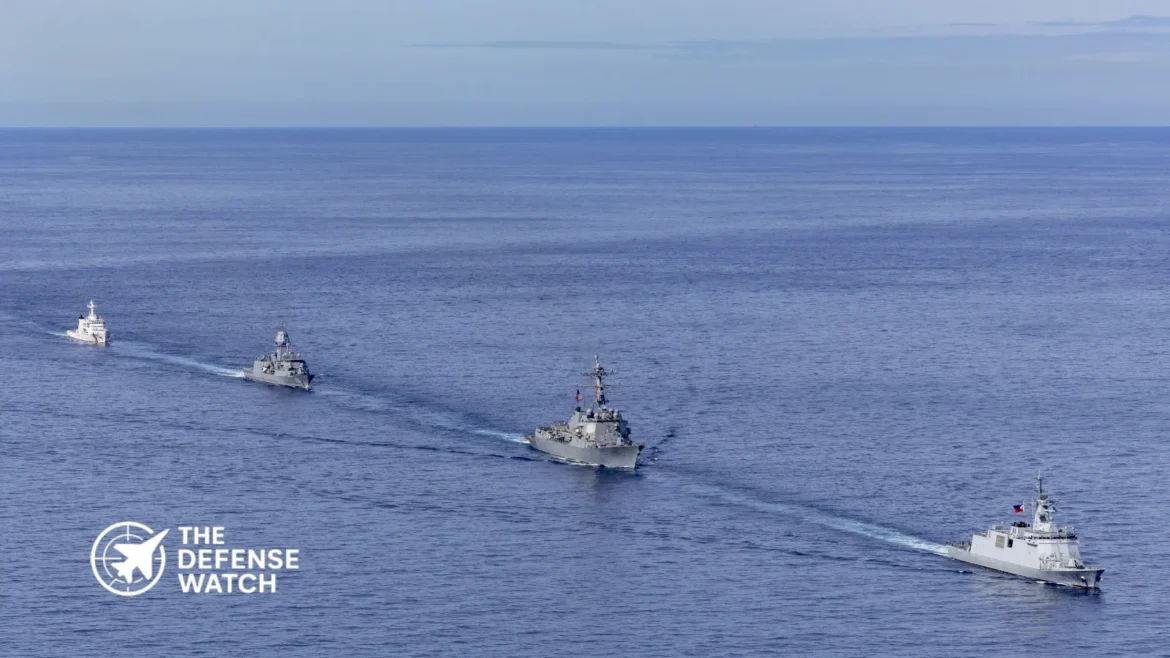
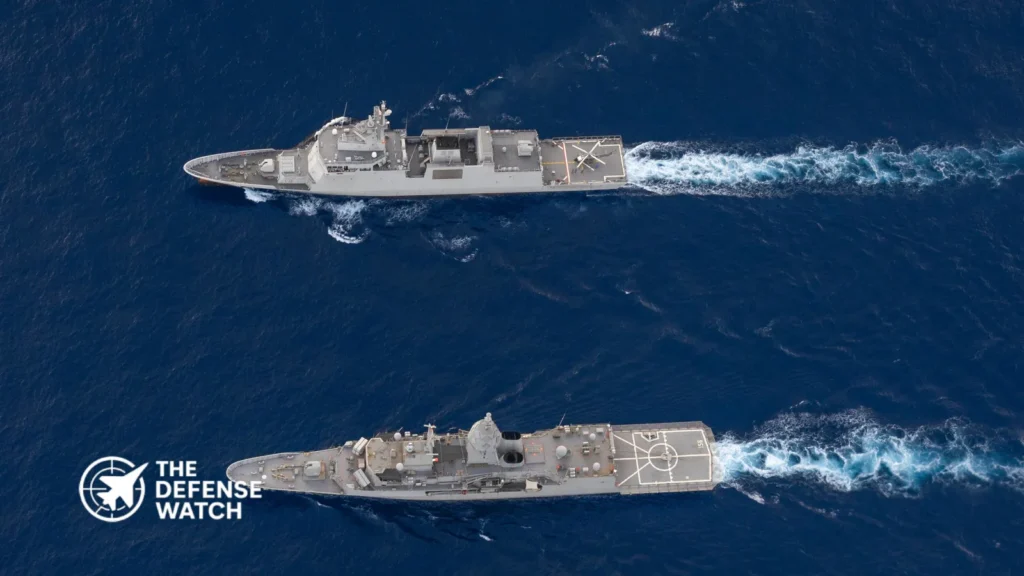
The recent Maritime Cooperative Activity in the Philippine Exclusive Economic Zone brought together naval and air forces from Australia, the Philippines, and the United States in a coordinated display of trilateral defense cooperation.
(adsbygoogle = window.adsbygoogle || []).push({});According to official releases from the Armed Forces of the Philippines and the U.S. Indo-Pacific Command, the activity was conducted within the Philippines’ internationally recognized Exclusive Economic Zone, consistent with international law.
The drills are part of a series of expanding multilateral engagements aimed at improving operational coordination, domain awareness, and maritime security in the Indo-Pacific.
Expanding Trilateral Maritime Coordination
The Maritime Cooperative Activity Philippines engagement reflects a steady shift from bilateral to trilateral maritime security coordination in Southeast Asia.
The Philippines remains a treaty ally of the United States under the 1951 Mutual Defense Treaty. Australia has deepened defense ties with Manila in recent years, including the signing of a Status of Visiting Forces Agreement in 2023, enabling closer military cooperation.
By conducting operations inside the Philippine Exclusive Economic Zone, the three nations are reinforcing Manila’s sovereign rights under the United Nations Convention on the Law of the Sea. While officials did not disclose the exact location, previous Maritime Cooperative Activity Philippines drills have taken place in waters facing the South China Sea.
(adsbygoogle = window.adsbygoogle || []).push({});This is significant. The South China Sea remains one of the world’s most contested maritime regions, with overlapping claims and increasing coast guard and naval presence from regional actors.
Operational Focus: Interoperability And Maritime Domain Awareness
Officials stated that the Maritime Cooperative Activity focused on improving interoperability between participating forces.
Typical components of such engagements include communication exercises, division tactics, cross deck coordination, and maritime domain awareness sharing. These activities are designed to ensure that allied ships and aircraft can operate safely and effectively together in real world scenarios.
The United States, through U.S. Navy assets assigned to Indo-Pacific Command, regularly conducts similar operations with treaty allies. Australia’s navy has expanded its operational footprint in Southeast Asia, while the Philippines continues to modernize its naval and coast guard capabilities.
The Philippine military has emphasized that these exercises are defensive in nature and aimed at strengthening collective maritime security.
Strategic Significance In The Indo-Pacific
The Maritime Cooperative Activity Philippines drill carries broader strategic weight beyond routine training.
First, it signals that trilateral cooperation is becoming institutionalized rather than episodic. Joint maritime patrols and coordinated presence operations are now occurring with greater frequency.
(adsbygoogle = window.adsbygoogle || []).push({});Second, it reinforces the concept of distributed deterrence. Rather than relying on a single nation’s presence, multiple allied forces operate together, complicating potential coercive actions in contested waters.
Third, it aligns with Washington’s Indo-Pacific strategy, which emphasizes networked security partnerships. Australia’s participation demonstrates that U.S. allies are increasingly coordinating among themselves, not only through Washington.
For Manila, such engagements serve a dual purpose. They enhance operational readiness while signaling diplomatic alignment with key security partners.
Legal And Policy Context
Under international law, an Exclusive Economic Zone extends up to 200 nautical miles from a coastal state’s baseline, granting sovereign rights over natural resources and certain economic activities.
By conducting the Maritime Cooperative Activity within the Philippine EEZ, participating nations reinforce recognition of these rights. This carries symbolic and practical importance in a region where maritime claims remain disputed.
Statements from participating governments have consistently referenced adherence to international law, freedom of navigation, and respect for sovereignty. These principles remain central to Indo-Pacific maritime policy frameworks.
(adsbygoogle = window.adsbygoogle || []).push({});Growing Pattern Of Multilateral Maritime Engagements
The Maritime Cooperative Activity Philippines drill is part of a broader trend.
Over the past several years, the United States and the Philippines have expanded the scope of their annual Balikatan exercises. Australia has increasingly joined such engagements, reflecting deeper integration among allied forces.
This pattern indicates a gradual normalization of multilateral maritime patrols in Southeast Asia. Rather than one off symbolic sail throughs, these activities now emphasize coordination, communication, and practical interoperability.
For defense planners, that shift matters. Routine coordination reduces friction during crises and strengthens shared situational awareness across maritime domains.
India Approves 6 New P-8I Neptune Maritime Patrol Aircraft
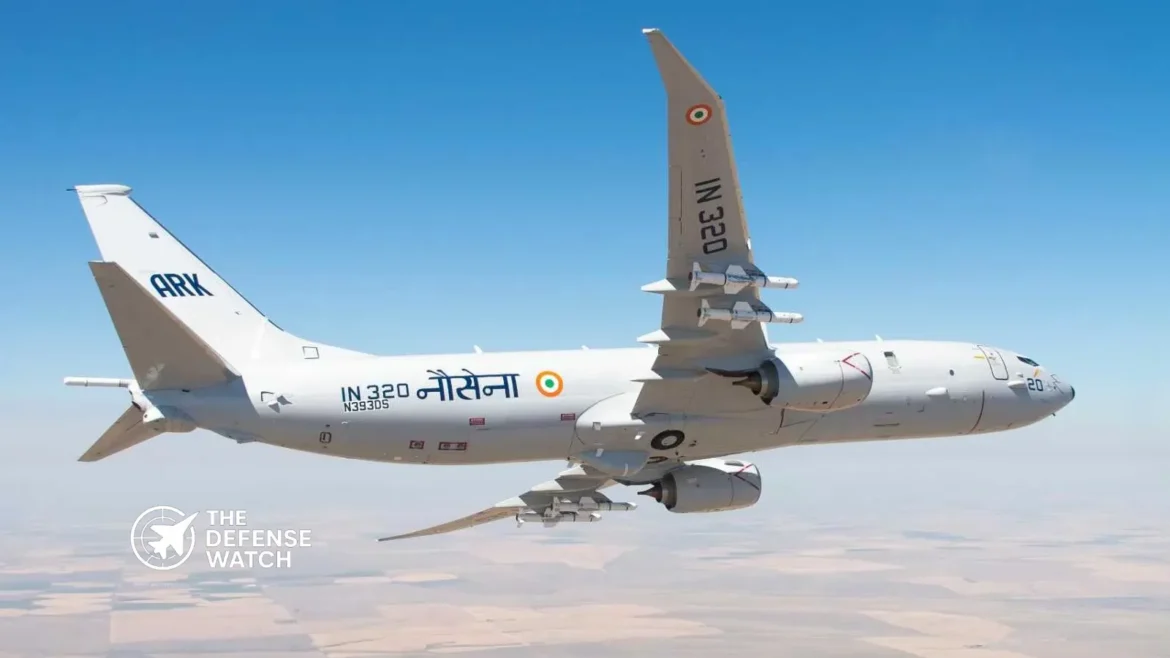
India has approved the purchase of six additional P-8I Neptune maritime patrol aircraft, expanding the Indian Navy’s long-range surveillance and anti-submarine warfare fleet in the Indian Ocean Region.
(adsbygoogle = window.adsbygoogle || []).push({});The decision was cleared by India’s Cabinet Committee on Security, marking another major step in New Delhi’s ongoing maritime modernization drive. The aircraft will be supplied by Boeing and are based on the proven Boeing P-8 Poseidon platform.
The move comes as India seeks to strengthen maritime domain awareness and anti-submarine warfare capabilities across the strategically critical Indo-Pacific.
Expanding India’s P-8I Fleet
The Indian Navy already operates 12 P-8I aircraft, making it one of the largest international operators of the platform outside the United States. With the addition of six more aircraft, the fleet will grow to 18, significantly expanding persistent coverage over the Arabian Sea, Bay of Bengal, and wider Indian Ocean Region.
The P-8I is a customized variant of the U.S. Navy’s P-8A Poseidon. It is designed for:
- Anti-submarine warfare
- Anti-surface warfare
- Intelligence, surveillance, and reconnaissance
- Maritime strike missions
The aircraft is equipped with advanced radar systems, electro-optical sensors, electronic support measures, and sonobuoy launch capabilities. It can deploy torpedoes and anti-ship missiles, providing both detection and engagement options.
The platform’s endurance and network-centric capabilities allow integration with surface ships, submarines, and shore-based command centers.
Strategic Context In The Indian Ocean
The Indian Ocean Region has seen increased naval activity in recent years. India’s maritime security planners have emphasized the need for continuous wide-area surveillance, especially along key sea lines of communication that handle a significant share of global trade.
(adsbygoogle = window.adsbygoogle || []).push({});By expanding its P-8I fleet, India strengthens its ability to monitor submarine movements, track surface vessels, and respond rapidly to emerging maritime contingencies.
The Indian Navy has frequently deployed P-8I aircraft for operational patrols and multinational exercises. The aircraft has also been used in humanitarian assistance and disaster relief missions, highlighting its multi-role utility.
Defense analysts note that long-range maritime patrol aircraft play a central role in anti-submarine warfare, particularly in tracking increasingly quiet diesel-electric and nuclear-powered submarines operating in the region.
Platform Overview: P-8I Neptune
The P-8I is derived from the commercial Boeing 737 airframe, adapted for military use. It features:
- Advanced maritime surveillance radar
- Acoustic processing systems for submarine detection
- Secure communications suites
- High-altitude and low-altitude operational flexibility
India’s variant includes certain indigenous and mission-specific systems tailored to Indian Navy requirements.
The aircraft’s combat radius and endurance allow extended patrols over vast maritime zones. Its ability to operate from land bases enables rapid response across multiple theaters.
Boeing has previously highlighted the P-8 platform’s interoperability benefits, particularly for nations operating alongside the United States and allied navies in the Indo-Pacific.
Defense Cooperation And Procurement Framework
India’s acquisition of additional P-8I aircraft reflects continued defense cooperation with the United States under established bilateral agreements.
The original P-8I contract was signed in 2009, with subsequent follow-on orders expanding the fleet. The new approval reinforces India’s reliance on established maritime platforms to meet evolving security requirements.
While financial details of the latest approval were not publicly detailed in initial reporting, previous P-8I acquisitions were conducted through government-to-government frameworks.
(adsbygoogle = window.adsbygoogle || []).push({});The expansion aligns with India’s broader naval modernization plan, which includes aircraft carriers, submarines, and advanced surface combatants.
Maritime Modernization And Force Posture
The Indian Navy continues to prioritize surveillance, anti-submarine warfare, and maritime strike capabilities. Long-range patrol aircraft serve as a critical component of this posture, complementing naval aviation assets and shipborne helicopters.
In recent years, India has increased participation in multinational naval exercises, including the Malabar exercise series. Enhanced maritime patrol capabilities support such engagements while improving real-time situational awareness.
See also: India Advances Indigenous Aircraft Carrier Development
The addition of six new P-8I aircraft will provide greater operational flexibility, redundancy, and surge capacity.
Broader Indo-Pacific Implications
The Indo-Pacific remains a focal point of global strategic competition. Maritime patrol aircraft provide persistent surveillance across chokepoints, shipping lanes, and contested waters.
With expanded P-8I capacity, India strengthens its maritime domain awareness architecture. This capability is widely regarded as essential for monitoring submarine deployments and safeguarding maritime trade routes.
(adsbygoogle = window.adsbygoogle || []).push({});The aircraft’s networked sensors and communication systems allow integration into joint and coalition operations, supporting broader regional stability objectives.
Feature Image Suggestion
High-resolution image of an Indian Navy P-8I Neptune aircraft in flight over the Indian Ocean, showing national markings and underwing stores.
Alt text: Indian Navy P-8I Neptune maritime patrol aircraft conducting surveillance over the Indian Ocean.
Japan Deploys F-35B Fighter Jets in First Operational Service
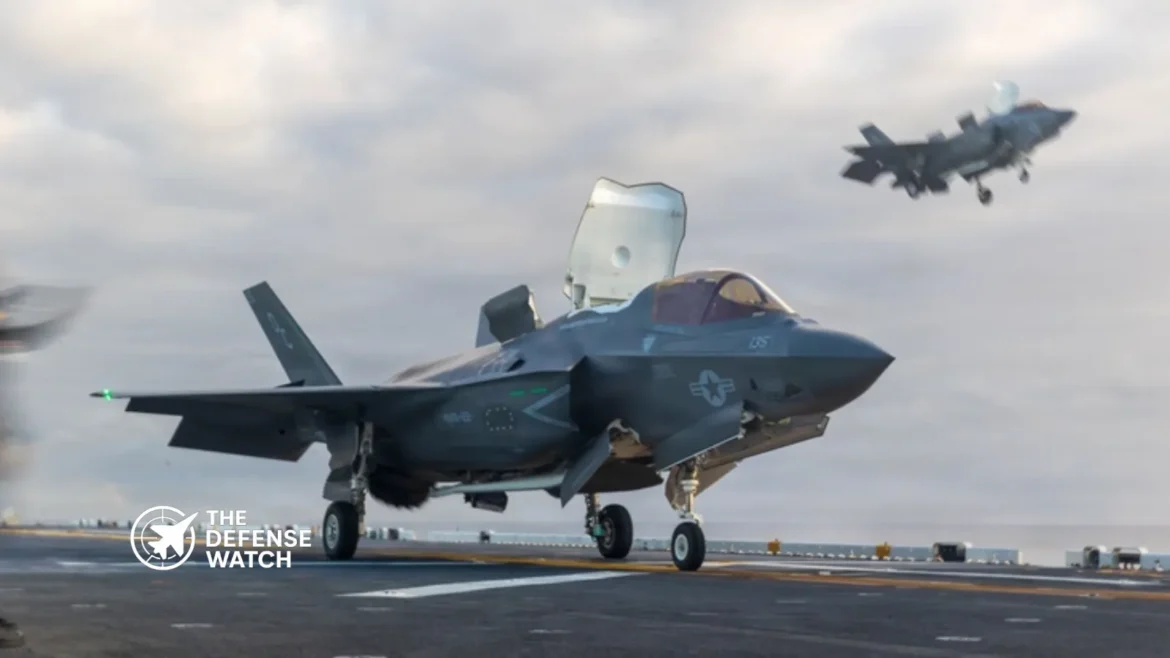
Japan has officially deployed U.S.-made F-35B fighter jets into operational service, marking a significant milestone in the country’s defense modernization and maritime airpower expansion. The deployment represents the first time Japan has placed the short takeoff and vertical landing variant of the F-35 Lightning II into frontline service, strengthening its ability to operate fixed-wing combat aircraft from short runways and modified naval platforms.
(adsbygoogle = window.adsbygoogle || []).push({});According to information released by Japan’s Ministry of Defense and reported by Army Recognition, the aircraft are now assigned to operational units under the Japan Air Self-Defense Force, or JASDF. The move reflects Tokyo’s growing emphasis on flexible power projection and rapid response capabilities in the Indo-Pacific region.
The F-35B deployment also underscores deepening defense integration between Japan and the United States, as both countries seek to enhance interoperability amid evolving regional security challenges.
A New Capability for Japan’s Air and Maritime Forces
The F-35B is uniquely suited for Japan’s operational needs due to its short takeoff and vertical landing capability. Unlike conventional fighters, the aircraft can operate from shorter runways and austere locations, reducing reliance on large, fixed air bases that could be vulnerable during a conflict.
Japan’s F-35B fleet is expected to support operations from land bases as well as from modified Izumo-class helicopter destroyers, which are being converted to support fixed-wing aircraft. These modifications include reinforced flight decks, heat-resistant coatings, and updated aviation support systems.
By integrating the F-35B into service, Japan gains a flexible air combat platform capable of operating closer to contested areas, particularly in the southwestern island chain.
Strengthening Deterrence in the Indo-Pacific
The operational deployment of the F-35B fighter jets aligns with Japan’s broader defense strategy aimed at strengthening deterrence and response capabilities in the Indo-Pacific. The region has seen increased military activity, including expanded naval operations and air patrols by regional powers.
Japanese defense planners have emphasized the need for distributed and resilient force structures. The F-35B supports this approach by enabling aircraft dispersal across multiple locations, complicating adversary targeting efforts.
U.S. defense officials have repeatedly highlighted the importance of Japan’s F-35 program to alliance readiness, noting that common platforms improve combined operations, logistics, and training.
Integration with U.S. and Allied Forces
Japan’s F-35B deployment further enhances interoperability with U.S. Marine Corps and U.S. Navy forces, both of which operate the same variant. Joint training, shared maintenance practices, and common mission systems allow allied forces to operate more seamlessly during exercises and real-world contingencies.
(adsbygoogle = window.adsbygoogle || []).push({});The aircraft’s advanced sensor fusion, stealth design, and networked warfare capabilities allow it to act as both a shooter and an information node. This is particularly valuable in joint and combined operations involving naval, air, and ground forces.
Industrial and Strategic Implications
Japan is one of the largest international customers for the F-35 program, with final assembly and maintenance activities conducted domestically at facilities operated by Mitsubishi Heavy Industries. The introduction of the F-35B adds a new layer of technical complexity and operational expertise to Japan’s aerospace sector.
From a strategic perspective, the deployment signals Tokyo’s willingness to invest in capabilities that extend beyond traditional homeland air defense. While Japan maintains a constitutionally defensive posture, the F-35B provides options for maritime air defense, island protection, and coalition operations.
Defense analysts note that the move reflects lessons learned from recent conflicts, where survivability, dispersion, and rapid response have proven critical.
Future Outlook for Japan’s F-35B Fleet
Japan plans to continue expanding and refining its F-35B operations through additional training, shipboard integration trials, and joint exercises with U.S. and allied forces. As modifications to the Izumo-class ships progress, operational concepts for sea-based air operations are expected to mature.
(adsbygoogle = window.adsbygoogle || []).push({});The deployment of the F-35B fighter jets represents a long-term shift in Japan’s defense posture, one focused on adaptability, alliance cooperation, and advanced aerospace capabilities.
As regional security dynamics continue to evolve, Japan’s investment in fifth-generation aircraft positions it as a central player in maintaining stability across the Indo-Pacific.
Taiwan asymmetric defense drones
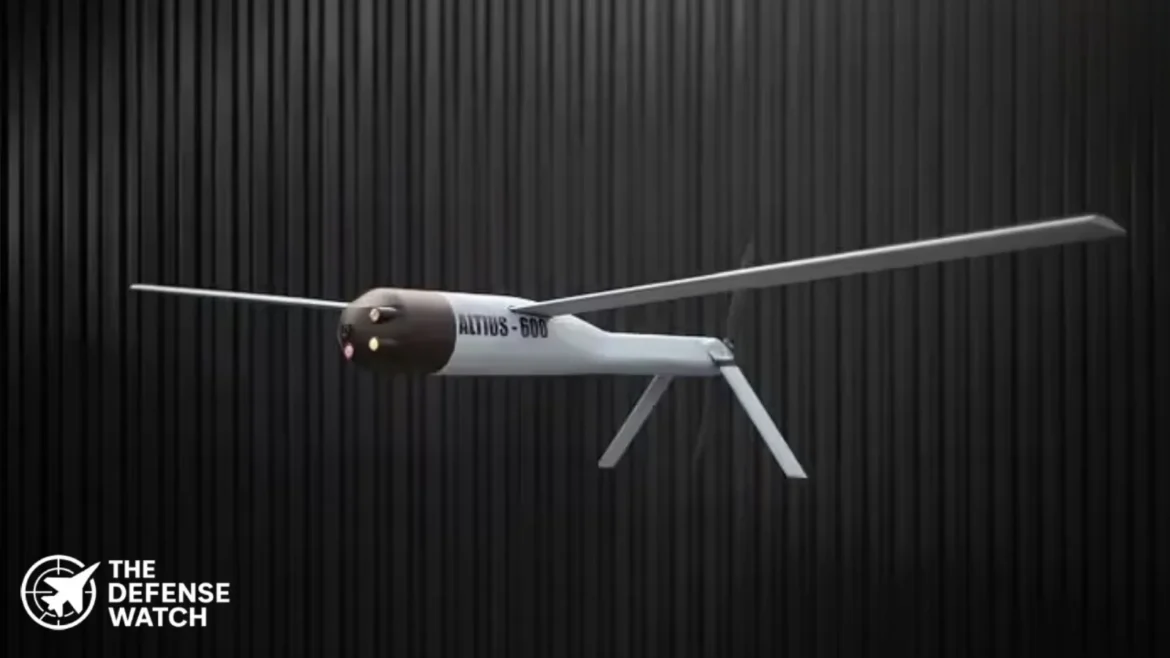
Taiwan has publicly disclosed procurement quantities of ALTIUS-700M loitering munitions and 600 ISR reconnaissance drones, underscoring its push to expand Taiwan asymmetric defense drones as part of a broader effort to counter maritime and amphibious threats.
(adsbygoogle = window.adsbygoogle || []).push({});The disclosure was made during legislative budget reviews, offering rare insight into classified acquisition plans tied to Taiwan’s evolving deterrence strategy and growing reliance on unmanned systems.
Drone Quantities and Procurement Details
According to official documents cited by Army Recognition, Taiwan plans to acquire:
- 291 ALTIUS-700M loitering munitions
- 600 units of the 600 ISR intelligence, surveillance, and reconnaissance drone
Both systems are produced by U.S.-based Anduril Industries and are being procured under U.S. Foreign Military Sales frameworks.
The procurement aligns with Taiwan’s emphasis on distributed, survivable capabilities that can operate in contested environments without relying on traditional air superiority.
Role of ALTIUS-700M in Asymmetric Warfare
The ALTIUS-700M loitering munition is designed for launch from ground vehicles, naval platforms, and aircraft. It combines long endurance with precision strike capability against high-value targets, including surface vessels and landing forces.
For Taiwan, the system is intended to complicate adversary planning by enabling rapid, dispersed attacks during early phases of a conflict. Defense planners view loitering munitions as a cost-effective way to offset numerical disadvantages.
The ALTIUS-700M has been marketed as suitable for swarm operations and autonomous targeting, features increasingly central to modern asymmetric warfare doctrines.
600 ISR Drone Expands Surveillance Coverage
The 600 ISR drone is optimized for intelligence collection rather than strike missions. Its primary role is persistent surveillance, target identification, and battlefield awareness.
Taiwanese defense officials have highlighted the need for continuous maritime and coastal monitoring, particularly in chokepoints and likely amphibious landing zones. The 600 ISR platform supports this requirement by providing real-time data to command networks and strike assets.
Together, the ISR and strike drone pairing reflects a layered approach, detect first, then engage.
Strategic Context and U.S.-Taiwan Defense Cooperation
The procurement fits within Taiwan’s shift away from large, vulnerable platforms toward mobile, expendable systems. U.S. defense officials have repeatedly encouraged Taipei to prioritize asymmetric capabilities that raise the cost of coercion or invasion.
(adsbygoogle = window.adsbygoogle || []).push({});Washington has approved multiple drone-related sales to Taiwan in recent years, viewing unmanned systems as central to Indo-Pacific deterrence and interoperability.
While Taiwan has invested heavily in domestic drone programs, U.S.-supplied platforms continue to fill capability gaps in endurance, networking, and autonomous operation.
Regional Implications
Taiwan’s disclosure comes amid heightened military pressure in the Taiwan Strait, including increased air and naval activity by the People’s Liberation Army.
Analysts note that unmanned systems allow Taiwan to scale deterrence without escalating politically sensitive force posture changes. By spreading capability across hundreds of small platforms, Taiwan aims to reduce vulnerability to preemptive strikes.
The drone acquisitions also reflect lessons drawn from recent conflicts, where loitering munitions and ISR drones have proven decisive in shaping battlefield outcomes.
Tripoli Expeditionary Strike Group Begins Routine Operations in 7th Fleet
The Tripoli Expeditionary Strike Group is conducting routine operations in the US Navy’s 7th Fleet area of operations in the Indo-Pacific region, marking a forward-deployed presence aimed at reinforcing regional security and interoperability with allies and partners, according to a US Navy press release.
The group is centered on the America-class amphibious assault ship USS Tripoli (LHA 7), serving as flagship, and includes the Ticonderoga-class guided-missile cruiser USS Robert Smalls (CG 62) and the Arleigh Burke-class destroyer USS Rafael Peralta (DDG 115), alongside the 31st Marine Expeditionary Unit (MEU).
Rear Admiral Tom Shultz, commander of the Tripoli Expeditionary Strike Group, said the formation promotes peace and security by ensuring freedom of navigation and access to the seas. The strike group’s capabilities span air, land, and sea domains with anti-air, anti-surface, and anti-submarine warfare potential.
Permanent Forward Presence and Multi-domain Readiness
This deployment marks Tripoli’s first assignment as the permanent forward-deployed flagship of its expeditionary strike group in the 7th Fleet area. The 31st MEU provides a flexible, combat-capable force that can respond to crises, support allied operations, and conduct amphibious and joint multi-domain missions.
A detachment of F-35B Lightning II aircraft from Marine Fighter Attack Squadron 242 embarked on Tripoli boosts the strike group’s operational flexibility and stealth capabilities during flight operations in the region.
The US 7th Fleet, the largest forward-deployed numbered fleet in the US Navy, regularly works with regional partners to uphold a free and open Indo-Pacific maritime order, advancing deterrence and security cooperation.
Regional Engagement and Presence
Port visits have supported diplomatic engagement. In December 2025, USS Tripoli and USS Robert Smalls made a scheduled stop in Da Nang, Vietnam, participating in arrival ceremonies with local and naval officials, reinforcing partnership ties in Southeast Asia.
Tripoli’s forward deployment to Sasebo, Japan, began mid-2025 as part of rotational force posture designed to maintain continuous amphibious readiness in the region.
Strategic Context
The sustained presence of amphibious strike groups like Tripoli’s in the Indo-Pacific underscores US commitment to allied support and deterrence. The 31st MEU’s relationships with units such as Japan’s Amphibious Rapid Deployment Brigade and Special Operations Command Pacific enhance interoperability and joint readiness.
- (adsbygoogle = window.adsbygoogle || []).push({});