

Executive Summary:
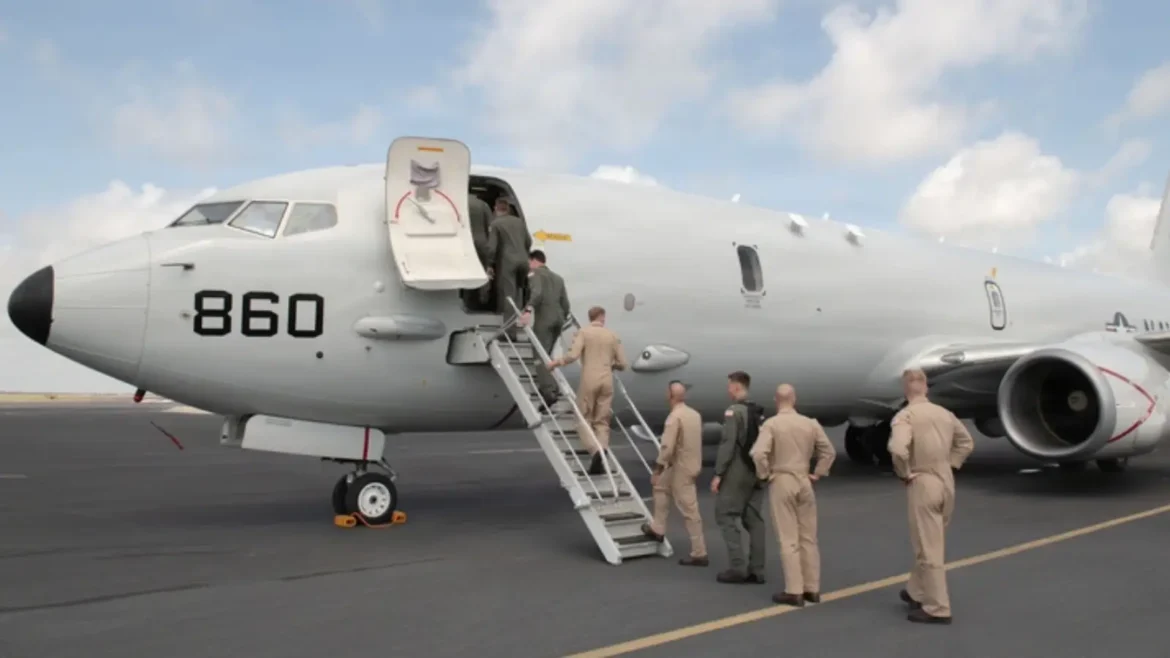
The U.S. Navy deployed a P-8A Poseidon maritime patrol aircraft for live anti-submarine warfare operations near Taiwan using Mk 54 lightweight torpedoes. The exercise underscores Washington’s continued focus on undersea warfare readiness and maritime deterrence in the increasingly contested Indo-Pacific region.
U.S. Navy P-8A Poseidon Conducts Live Anti-Submarine Warfare Operations Near Taiwan
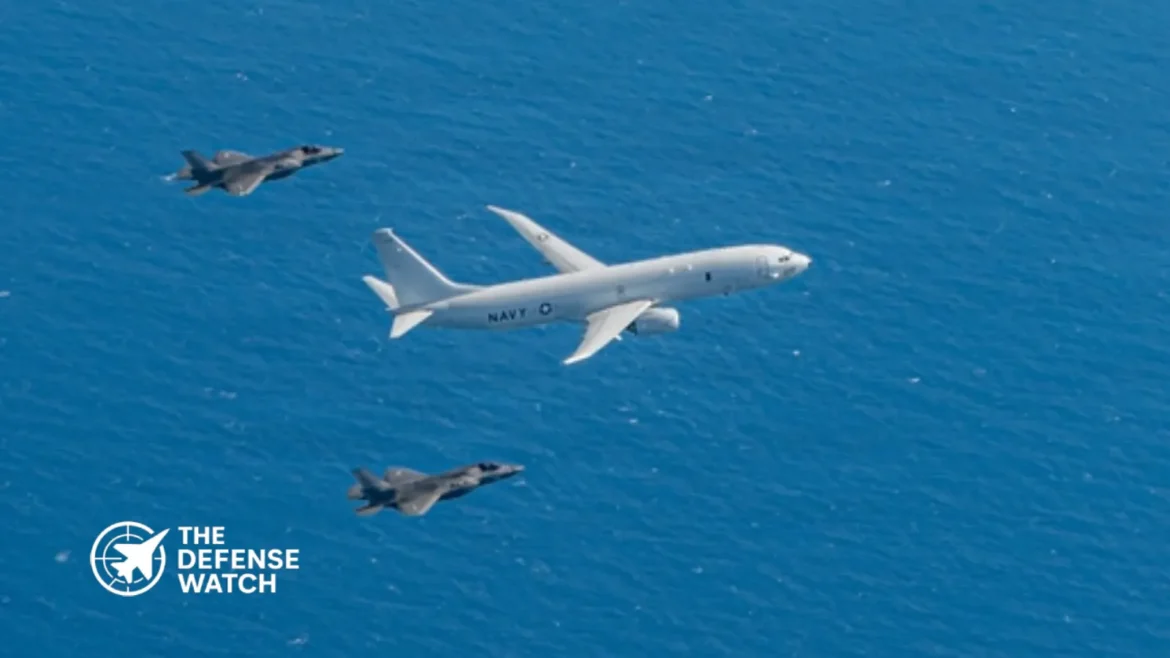
The U.S. Navy P-8A Poseidon conducted live anti-submarine warfare operations near Taiwan in a move that highlights growing American focus on maritime surveillance and undersea deterrence across the Indo-Pacific theater.
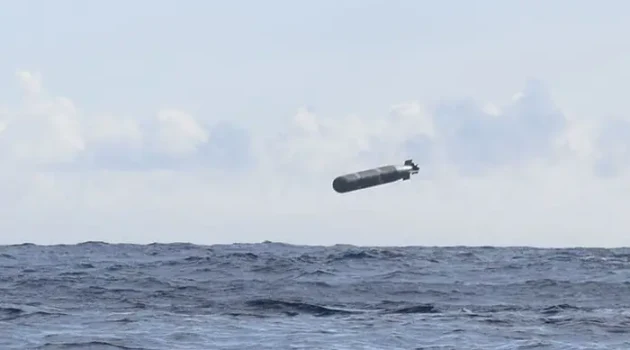
The exercise involved the deployment of live Mk 54 lightweight torpedoes during operational training missions designed to strengthen anti-submarine warfare readiness in strategically sensitive waters near Taiwan.
The drill reflects the expanding operational role of the P-8A Poseidon as the U.S. Navy continues increasing maritime patrol activities across the Western Pacific amid heightened regional military competition.
P-8A Poseidon Remains Central To U.S. Maritime Surveillance Strategy
The Boeing P-8A Poseidon has become one of the most important airborne assets in the U.S. Navy’s anti-submarine warfare architecture. Developed from the Boeing 737-800ERX airframe, the aircraft combines long-range surveillance, electronic intelligence collection, and anti-submarine combat capabilities within a single platform.
The aircraft is equipped with advanced maritime radar systems, acoustic sensors, sonobuoys, electro-optical targeting systems, and secure communications suites that allow crews to detect, classify, and track hostile submarines across large operational areas.
Its ability to deploy the Mk 54 lightweight torpedo gives the platform an immediate strike capability against submerged threats. The torpedo itself is optimized for both deep-water and littoral combat environments, making it suitable for operations across the complex maritime geography of the Indo-Pacific.
The latest exercise near Taiwan demonstrates how the U.S. Navy is integrating surveillance and strike capabilities into regular operational patrols rather than treating anti-submarine warfare as a standalone mission set.
Indo-Pacific Undersea Competition Continues To Intensify
The operational environment surrounding Taiwan has become increasingly important in modern naval strategy, particularly as regional powers continue investing heavily in submarine fleets and long-range maritime strike systems.
China’s rapid naval modernization has included significant expansion of the People’s Liberation Army Navy submarine force, including nuclear-powered ballistic missile submarines and advanced diesel-electric attack submarines designed for operations in contested regional waters.
For the United States and allied forces, maintaining anti-submarine warfare superiority has become critical to preserving freedom of navigation, carrier strike group survivability, and regional deterrence credibility.
The U.S. Navy P-8A Poseidon fleet plays a central role in this strategy by providing persistent maritime domain awareness across chokepoints and contested sea lanes stretching from the South China Sea to the Philippine Sea and East China Sea.
Operational patrols near Taiwan also serve broader strategic objectives by demonstrating U.S. capability to monitor underwater activity in one of the world’s most strategically sensitive maritime corridors.
Live Torpedo Operations Signal Operational Readiness
Unlike routine surveillance missions, live torpedo exercises provide crews with real-world operational training under combat-like conditions. These drills test targeting procedures, sensor integration, communications coordination, and weapons deployment accuracy.
The use of live Mk 54 torpedoes indicates a focus on maintaining combat proficiency rather than conducting symbolic presence operations alone.
From a military readiness perspective, anti-submarine warfare remains among the most technically demanding naval mission areas. Modern submarines are increasingly quiet, difficult to detect, and capable of operating across shallow coastal waters where acoustic tracking becomes more challenging.
By conducting live anti-submarine warfare drills near Taiwan, the U.S. Navy is reinforcing its ability to rapidly respond to underwater threats in a high-risk operational environment.
The exercise also reflects a wider Pentagon emphasis on distributed maritime operations and persistent forward presence across the Indo-Pacific region.
Allied Maritime Coordination Expands Across The Region
The P-8A Poseidon platform is also widely operated by U.S. allies and partners, including Australia, the United Kingdom, India, South Korea, Norway, and New Zealand. This growing multinational operator base enhances interoperability during coalition maritime operations and regional security patrols.
In recent years, Indo-Pacific security cooperation has increasingly focused on maritime intelligence sharing, anti-submarine warfare coordination, and integrated surveillance operations.
Taiwan’s surrounding waters remain particularly important due to their proximity to key shipping routes and military operating areas. The ability to monitor submarine activity in this environment provides strategic advantages for both deterrence and crisis response planning.
As regional tensions continue evolving, maritime patrol aircraft such as the P-8A Poseidon are expected to remain among the most heavily utilized assets in forward U.S. naval operations.
Strategic Analysis
The latest U.S. Navy P-8A Poseidon anti-submarine warfare mission near Taiwan highlights a broader shift toward persistent undersea dominance operations across the Indo-Pacific.
Rather than relying solely on large naval formations, the United States is increasingly leveraging networked surveillance aircraft, submarines, unmanned systems, and distributed sensor networks to counter emerging maritime threats.
This approach reflects the growing recognition that future naval competition may be decided as much below the surface as above it.
The combination of live weapons training, forward deployment patterns, and expanded allied interoperability suggests Washington intends to maintain continuous anti-submarine warfare pressure in strategically contested waters.
For regional actors, these operations signal that maritime surveillance and undersea warfare capabilities will remain central components of Indo-Pacific military planning in the years ahead.
Germany P-8A Poseidon Arrives In Scotland For NATO Patrol Mission
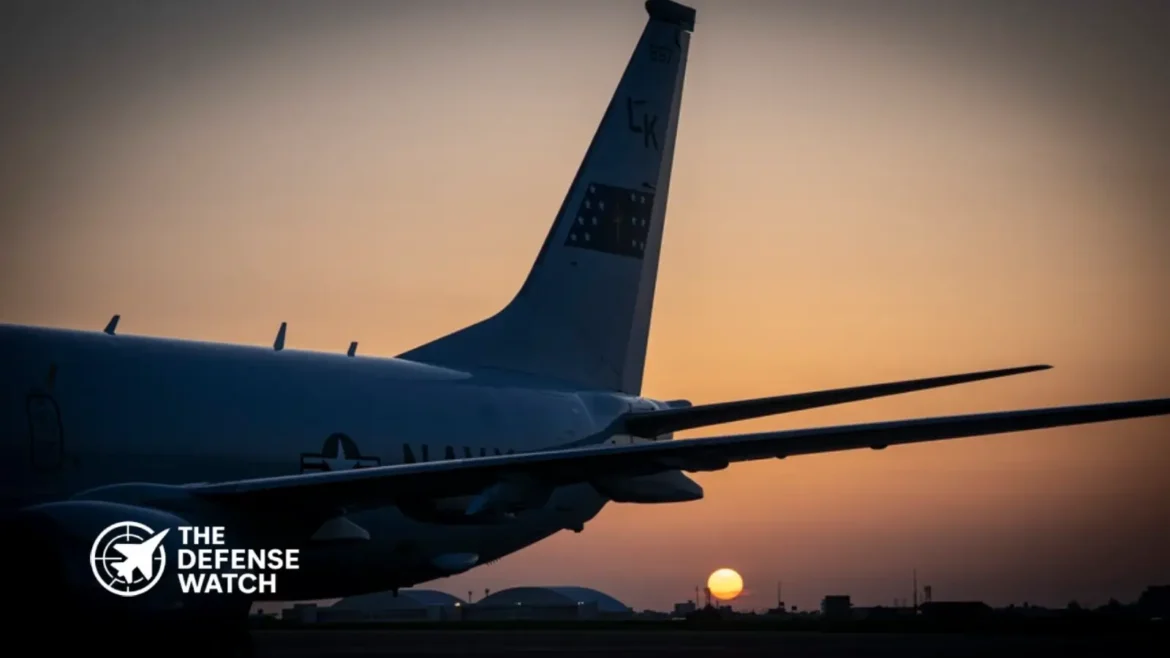
Germany P-8A Poseidon deployment to Scotland marks a notable step in Berlin’s expanding maritime security role inside NATO. Germany has sent one of its newly introduced Boeing P-8A Poseidon aircraft to Scotland to support operations aimed at tracking Russian submarine movements in the North Atlantic.
The deployment places German airpower in one of NATO’s most strategically sensitive maritime zones. Scotland hosts key Royal Air Force facilities and provides rapid access to northern waters where Russian submarines often transit between the Arctic, Norwegian Sea, and Atlantic approaches.
- Germany has deployed a P-8A Poseidon maritime patrol aircraft to Scotland for NATO surveillance operations.
- The mission is focused on monitoring increased Russian submarine activity in the North Atlantic and nearby sea lanes.
- Germany is acquiring eight Boeing P-8A Poseidon aircraft to replace its aging P-3C Orion fleet.
- Scotland remains a critical hub for anti-submarine warfare operations due to access to the GIUK gap.
- The deployment highlights deeper German integration into NATO maritime security operations.
For Germany, the mission also serves as an operational milestone for the P-8A fleet, which is gradually replacing the German Navy’s aging Lockheed P-3C Orion patrol aircraft.
Why Scotland Matters In Anti-Submarine Warfare
Scotland is central to NATO maritime defense because of its proximity to the Greenland-Iceland-United Kingdom corridor, commonly known as the GIUK gap. This chokepoint has long been vital for detecting and tracking submarines moving from Russian bases on the Kola Peninsula into the wider Atlantic.
By deploying the P-8A Poseidon there, Germany joins the United States, United Kingdom, Norway, and other allies already operating advanced maritime patrol aircraft in the region.
This matters because Russian submarine operations have grown more active in recent years. NATO commanders have repeatedly warned that quieter submarines armed with cruise missiles pose a serious challenge to sea lines of communication and allied naval movements.
What The P-8A Poseidon Brings
The P-8A Poseidon is one of the most capable maritime patrol aircraft in service today. Built by Boeing and based on the 737 airframe, it combines long endurance with modern sensors and networked warfare systems.
Core capabilities include:
- Advanced surface search radar
- Sonobuoy deployment for submarine detection
- Electronic surveillance systems
- Secure data links for NATO interoperability
- Anti-ship and anti-submarine weapons compatibility
- Long-range patrol endurance
Germany selected the aircraft to quickly close a capability gap after delays in broader European maritime patrol programs. That decision gave Berlin an immediate, proven platform already used by the United States Navy, Royal Air Force, Royal Norwegian Air Force, and others.
Strategic Signal From Berlin
The Germany P-8A Poseidon deployment is more than a routine training event. It signals that Berlin is taking a larger operational role in collective defense missions beyond continental land forces.
Historically, Germany’s naval aviation footprint has been more limited than some NATO peers. Sending a frontline maritime patrol aircraft to Scotland demonstrates willingness to contribute directly to undersea surveillance, an area increasingly important as Russia modernizes its submarine fleet.
It also strengthens burden-sharing inside the alliance. With multiple NATO members now flying the same aircraft type, crews can exchange tactics, maintenance support, and mission data more efficiently.
Russian Submarine Activity Remains A NATO Priority
Russian submarines remain among Moscow’s most survivable strategic assets. Nuclear-powered attack submarines and cruise missile platforms can threaten carrier groups, logistics shipping, and coastal infrastructure.
That makes persistent tracking missions essential. Maritime patrol aircraft like the P-8A are often the first layer of detection, cueing frigates, destroyers, helicopters, and submarines to investigate contacts.
Germany’s participation broadens NATO’s surveillance coverage at a time when alliance forces are stretched across the Baltic, Black Sea, Arctic, and Atlantic theaters.
Outlook
As Germany receives additional Poseidon aircraft, similar forward deployments are likely to become more common. The fleet gives Berlin a faster route into high-end maritime operations while improving NATO readiness.
For alliance planners, the arrival of another P-8A operator in Scotland means more aircraft available to monitor contested waters and respond quickly to submarine activity.
Enhanced P-8A Poseidon Reaches Operational Milestone
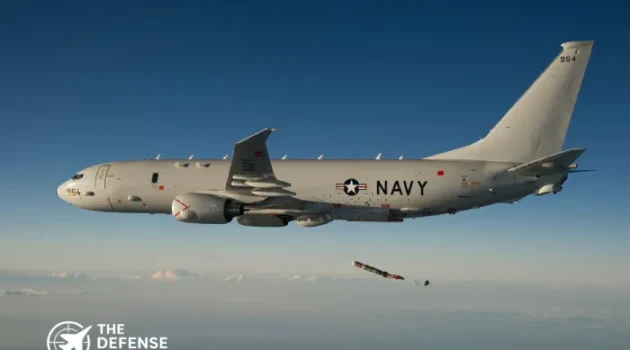
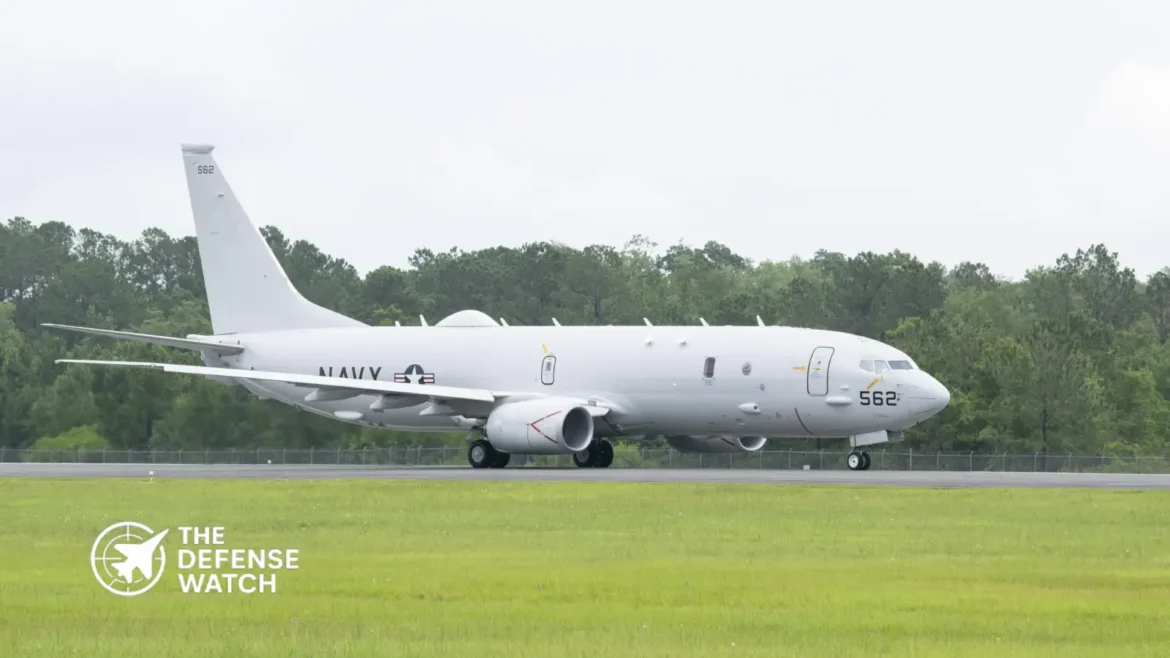
The Enhanced P-8A Poseidon has officially entered operational service after the U.S. Navy declared Initial Operational Capability for the Increment 3 Block 2 configuration, marking a major step in maritime patrol aircraft modernization. According to Naval Air Systems Command, the milestone followed successful initial operational testing supported by Air Test and Evaluation Squadron One and program office PMA-290.
- The U.S. Navy has declared Initial Operational Capability for the upgraded P-8A Poseidon Increment 3 Block 2 aircraft.
- The upgrade adds new avionics, sensors, antennas, radome changes, racks, and internal wiring.
- The Enhanced P-8A Poseidon supports anti-submarine warfare, anti-surface warfare, ISR, and targeting missions.
- The milestone follows operational testing led by Air Test and Evaluation Squadron One.
- The Navy says the modernization keeps the Poseidon relevant for future high-end maritime conflict.
The decision confirms the upgraded aircraft is ready for fleet use and capable of supporting frontline missions. For the U.S. Navy, this matters because the P-8A fleet is central to long-range surveillance, anti-submarine warfare, and maritime strike operations in the Pacific, Atlantic, and Middle East.
What Changed In The New P-8A Poseidon
The Increment 3 Block 2 package introduces substantial improvements across the airframe and mission systems. NAVAIR said the aircraft now includes upgraded racks, new antennas, revised radome structures, added sensors, and refreshed wiring architecture.
While these may sound technical, they directly affect battlefield performance. Better onboard processing and improved sensor integration can shorten detection timelines, improve crew awareness, and support faster targeting decisions.
That is increasingly important in an era where submarines are quieter, surface fleets are more networked, and maritime surveillance zones are expanding.
Why The Upgrade Matters Now
The timing of this declaration is significant. The U.S. military is placing renewed focus on undersea competition, especially in the Indo-Pacific where Chinese submarine activity and long-range naval operations continue to expand. Russia also remains an active submarine operator in the North Atlantic and Arctic.
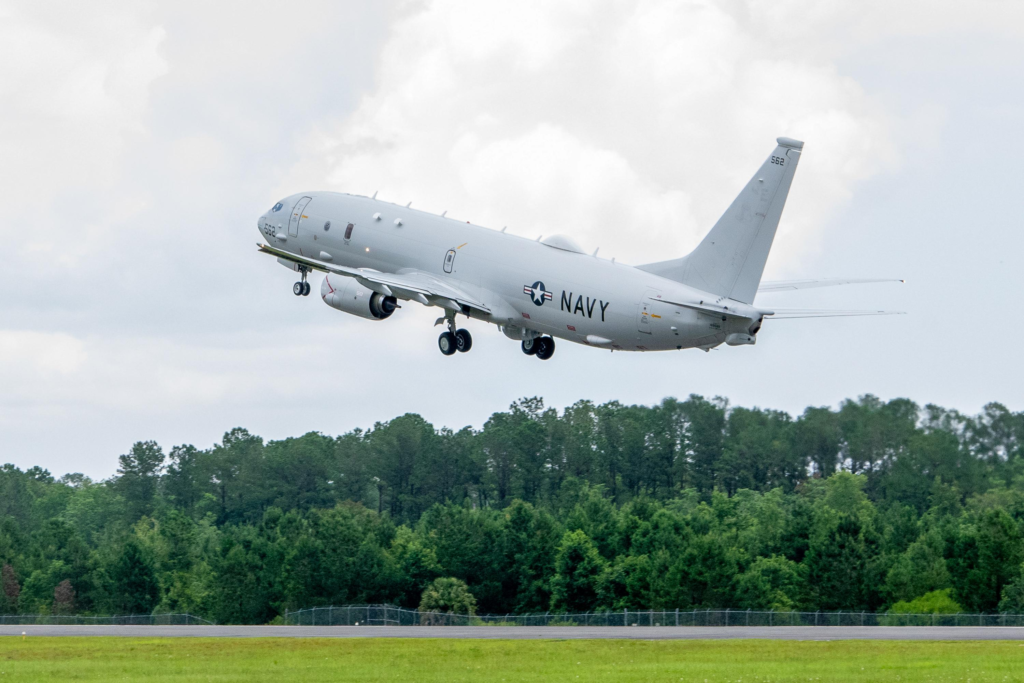
The Enhanced P-8A Poseidon gives the Navy a faster way to strengthen existing squadrons without waiting for an all-new aircraft platform. Upgrading proven fleets is often cheaper, quicker, and lower risk than launching replacement programs.
That approach mirrors broader Pentagon procurement trends, where survivability, networking, and sensor modernization are often prioritized over entirely new airframes.
Role Of The P-8A In Future Naval Operations
Built by Boeing, the P-8A Poseidon is based on the 737 platform but heavily modified for military missions. It performs anti-submarine warfare, anti-surface warfare, intelligence gathering, and search missions. The aircraft can deploy sonobuoys, carry torpedoes, and integrate with other naval assets such as the MQ-4C Triton unmanned system.
Its range, endurance, and jet speed allow commanders to move surveillance assets rapidly across large ocean areas, a key advantage during crises.
Analysis: A Practical Upgrade With Strategic Value
This is not a flashy next-generation reveal. It is something more useful, operational readiness for an aircraft already trusted by the fleet.
The Navy appears focused on ensuring current forces stay effective through the 2030s rather than accepting capability gaps while waiting for future programs. That makes the Enhanced P-8A Poseidon a practical force multiplier.
With anti-submarine warfare once again a priority mission, the upgraded Poseidon is likely to remain one of the Navy’s most valuable aviation assets.
Boeing P-8A Poseidon Upgrade Supports US Navy Undersea Warfare Mission
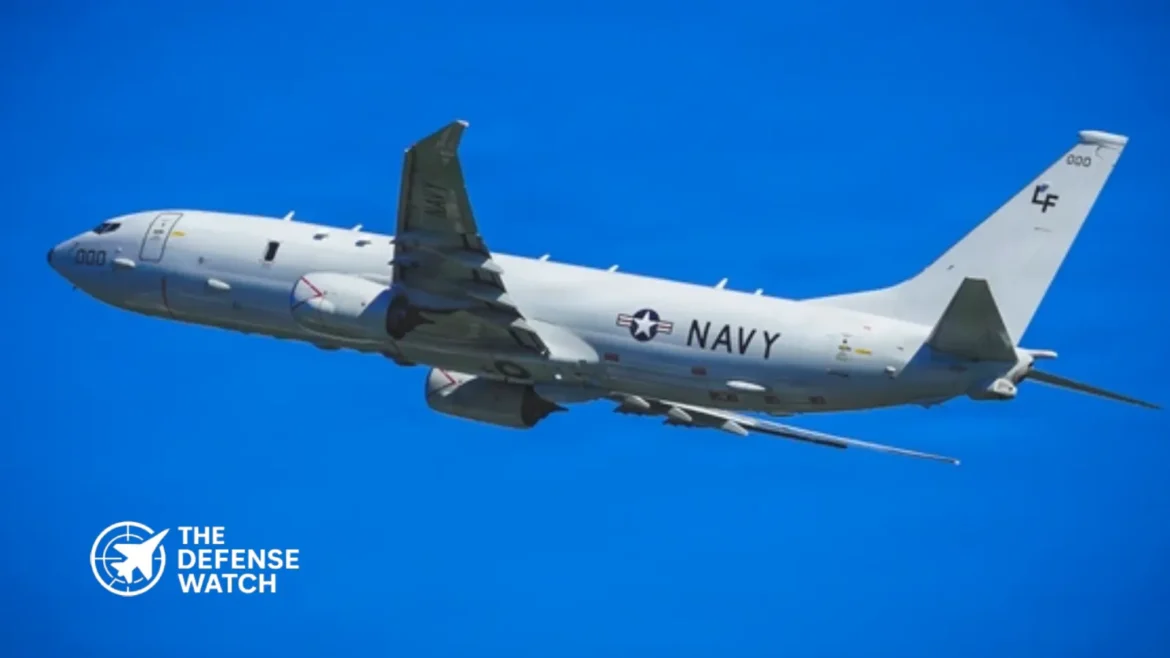
The P-8A Poseidon upgrade program moved forward after Boeing received an $11,952,154 contract modification from the United States Navy to retrofit one aircraft with Increment 3 capability improvements.
According to the Department of Defense contract announcement, the award modifies a previously issued ordering agreement and covers installation of one P-8A Increment 3 retrofit kit plus associated ancillary support. The work is specifically tied to improving anti-submarine warfare, one of the Poseidon fleet’s core missions.
- Boeing received an $11.95 million US Navy contract modification for one P-8A Increment 3 retrofit kit installation.
- The work supports upgraded anti-submarine warfare capabilities for the Navy’s P-8A Poseidon fleet.
- Work will be carried out in Jacksonville, Florida, St. Louis, Missouri, and Mesa, Arizona.
- Contract completion is scheduled for October 2026.
- Funding comes from Fiscal Year 2026 aircraft procurement accounts.
The contract was issued by Naval Air Systems Command.
Why The P-8A Poseidon Matters
The Boeing P-8A Poseidon is the US Navy’s primary long-range maritime patrol and reconnaissance aircraft. Derived from the commercial 737 platform, it replaces the aging P-3 Orion and is used for:
- Anti-submarine warfare
- Anti-surface warfare
- Maritime surveillance
- Intelligence gathering
- Search and rescue support
Its importance has grown as naval competition intensifies in the Indo-Pacific, North Atlantic, and other strategic waterways where submarine activity remains a key military concern.
What Increment 3 Upgrades Likely Mean
While the Pentagon notice did not list exact system changes, Increment 3 upgrades for the Poseidon fleet have generally focused on mission system improvements, software modernization, sensors, networking, and better processing of underwater threat data.
That matters because modern submarines are quieter, harder to track, and increasingly equipped with longer-range weapons. Aircraft like the P-8A must detect, classify, and coordinate responses faster than before.
In practical terms, modernization contracts of this size often support targeted capability insertion rather than a full fleet redesign. Even a single-aircraft retrofit can validate hardware and software configurations later used across additional airframes.
Where The Work Will Be Done
The Navy said contract performance will take place across three US locations:
- Jacksonville, Florida, 79.6%
- St. Louis, Missouri, 10.9%
- Mesa, Arizona, 9.5%
Most of the work being centered in Jacksonville suggests heavy aircraft modification and integration activity at an operational support hub tied to maritime patrol aviation.
Completion is expected by October 2026.
Why This Contract Matters Beyond Its Dollar Value
At just under $12 million, this is not one of the Pentagon’s largest aviation awards. But it reflects a broader pattern in US defense procurement, sustained incremental modernization instead of waiting for entirely new platforms.
That strategy allows the Navy to keep frontline aircraft relevant while controlling cost and reducing schedule risk. For mature fleets like the P-8A Poseidon, regular sensor, software, and mission-system upgrades can provide major operational returns at comparatively modest cost.
It also signals continued Navy confidence in the Poseidon as a long-term pillar of maritime patrol operations.
Growing Demand For Maritime Patrol Aircraft
The P-8A is not only used by the United States. Allies including United Kingdom, Australia, India, Norway, New Zealand, and others have selected the aircraft.
That international demand strengthens logistics support, upgrades, and long-term sustainment. Each new modernization effort can benefit a wider community of operators facing similar submarine detection challenges.
Bottom Line
This latest P-8A Poseidon upgrade contract may be modest in size, but it underscores a major US Navy priority, keeping its maritime patrol fleet ahead in anti-submarine warfare. As underwater competition increases globally, upgrades like Increment 3 will remain central to preserving the Poseidon’s combat edge.
- Boeing received a $38.67 million contract to upgrade software on South Korea’s P-8A aircraft.
- The upgrade includes Tactical Open Mission Software version 105K enhancements and capability expansion.
- New features include Multi-Static Active Coherent processing and Harpoon II integration.
- Work will be conducted across five locations in the United States and South Korea through January 2029.
- The $38.67 million contract is funded in full through Foreign Military Sales.
Boeing P-8A Software Upgrade Strengthens South Korea’s Maritime Surveillance
The Boeing P-8A software upgrade contract marks a significant step in enhancing South Korea’s maritime patrol and anti-submarine warfare capabilities, as the U.S. Navy awarded a $38.67 million order under an existing agreement.
The contract, issued by Naval Air Systems Command, covers the development and installation of an updated software load for the Republic of Korea’s P-8A Poseidon fleet. The effort centers on deploying Tactical Open Mission Software (TOMS) version 105K, a key evolution in the aircraft’s mission system architecture.
This upgrade is designed to improve operational flexibility, address supply chain constraints, and expand mission effectiveness in contested maritime environments.
Modernizing Mission Systems And Addressing Supply Chain Gaps
A core component of the Boeing P-8A software upgrade is the inclusion of improvements tied to diminishing manufacturing sources and material shortages. These updates ensure continued system sustainment as legacy components become harder to source.
This reflects a broader trend across U.S. and allied defense programs, where software-driven upgrades are increasingly used to extend platform life cycles without requiring costly hardware redesigns.
By integrating these changes into TOMS 105K, Boeing enables the Republic of Korea Navy to maintain readiness while adapting to evolving logistical challenges.
Expanded Combat Capabilities With Advanced Processing And Weapons Integration
Beyond sustainment, the Boeing P-8A software upgrade introduces notable capability enhancements.
One of the most significant additions is Multi-Static Active Coherent (MAC) processing. This technology improves the aircraft’s ability to detect and track submarines by leveraging multiple acoustic sources and receivers. In practical terms, it strengthens anti-submarine warfare performance, particularly in complex underwater environments.
The upgrade also integrates Harpoon II anti-ship missile capabilities. This provides the P-8A with enhanced maritime strike options, allowing it to engage surface targets with greater precision and flexibility.
Together, these additions move the aircraft beyond traditional surveillance roles toward a more versatile, multi-mission platform.
Distributed Industrial Base And Long-Term Timeline
Work on the Boeing P-8A software upgrade will be distributed across several locations, reflecting the program’s wide industrial footprint.
Seattle, Washington, will handle the largest share at 45 percent, followed by Huntington Beach, California at 30 percent. Additional work will take place in St. Louis, Missouri, Patuxent River, Maryland, and Pohang, South Korea.
The program is scheduled for completion by January 2029, indicating a multi-year effort that aligns with long-term fleet modernization planning.
This distributed approach supports both U.S. defense industry capacity and allied integration, reinforcing interoperability between American and South Korean forces.
Strategic Implications For South Korea’s Maritime Posture
The Boeing P-8A software upgrade comes at a time of increasing maritime security concerns in the Indo-Pacific region. South Korea faces a complex threat environment, including North Korean submarine activity and broader regional naval competition.
Enhancing the P-8A’s capabilities directly contributes to improved situational awareness and deterrence. The addition of advanced anti-submarine processing and anti-ship strike capability strengthens Seoul’s ability to monitor and respond to threats across its maritime domain.
From a strategic perspective, this upgrade also deepens defense ties between the United States and South Korea under the Foreign Military Sales framework.
Growing Role Of Software In Modern Military Aviation
The contract highlights a broader shift in military aviation toward software-centric modernization.
Rather than relying solely on new airframes, defense planners are increasingly investing in software upgrades to unlock new capabilities from existing platforms. This approach reduces costs, accelerates deployment timelines, and allows for more rapid adaptation to emerging threats.
In the case of the P-8A, continuous software evolution ensures the aircraft remains relevant against advancing submarine technologies and changing operational demands.
Contract Details And Funding Structure
The $38.67 million contract is funded بالكامل through Foreign Military Sales customer funds, which were obligated at the time of award. Notably, none of the funds are set to expire at the end of the current fiscal year, providing stability for program execution.
The award was issued on a sole-source basis, consistent with Boeing’s role as the original manufacturer and systems integrator for the P-8A platform.
Naval Air Systems Command, based in Patuxent River, Maryland, is overseeing the contract.
Telephonics P-8A IFF contract expansion strengthens allied maritime aviation
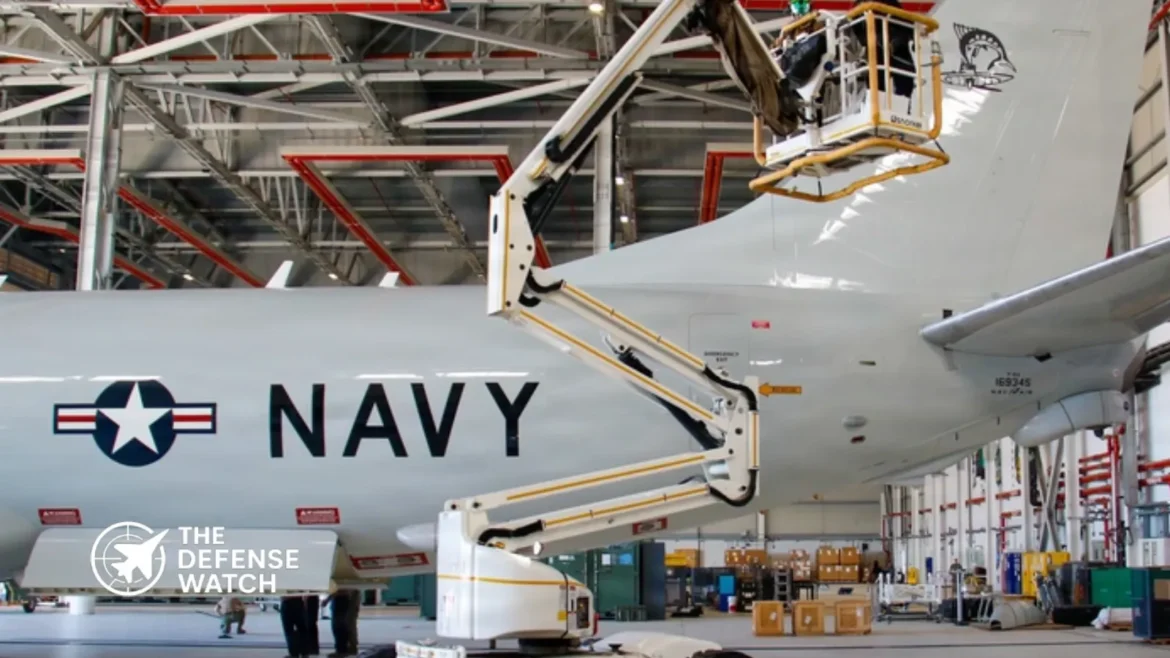
Telephonics, based in Farmingdale, New York, has been awarded a $16,022,537 contract modification to expand production and support of Identification Friend or Foe systems for the P-8A Poseidon aircraft, according to a U.S. Navy contract announcement. The Telephonics P-8A IFF contract supports U.S. Navy requirements and Foreign Military Sales customers, including Canada and Germany.
(adsbygoogle = window.adsbygoogle || []).push({});The contract modification, designated P00002, updates a previously awarded firm fixed price cost plus fixed fee contract and adds scope for additional production, delivery, and sustainment activities through April 2028.
Contract scope and system details
Under the modified contract, Telephonics will produce and deliver 29 AN UPX-43(V) Identification Friend or Foe Interrogators for the P-8A maritime patrol aircraft. The systems are allocated across U.S. Navy and allied fleets as follows:
- Eight IFF interrogator sets for the U.S. Navy
- Fourteen sets and three spares for the government of Canada
- Three sets and one spare for the government of Germany
In addition to the interrogators, the contract includes the production of 25 P-8A IFF trays, which support installation and integration aboard the aircraft.
The AN UPX-43(V) is a modern IFF interrogator used to identify cooperative air and surface contacts. On the P-8A Poseidon, the system supports maritime surveillance, anti submarine warfare, and coalition operations by enabling secure identification within joint and allied airspace.
(adsbygoogle = window.adsbygoogle || []).push({});Support, sustainment, and firmware updates
Beyond hardware production, the Telephonics P-8A IFF contract also covers a range of sustainment and lifecycle support activities. These include:
- Repair of repairable components
- Ongoing technical support
- Firmware updates for the IFF systems
These elements are critical for maintaining interoperability and system reliability across multinational P-8A fleets. Firmware updates ensure continued compliance with evolving identification standards and coalition operating requirements.
The inclusion of sustainment work reflects the growing emphasis on long term readiness and supportability for U.S. Navy and allied aviation platforms.
Funding and contract structure
The $16 million modification includes funding from both U.S. Navy procurement accounts and Foreign Military Sales customers.
- $4,932,817 is funded by Fiscal Year 2024 Navy aircraft procurement funds
- $11,089,721 is funded by Foreign Military Sales customers
The Navy funded portion will be obligated at the time of award, with funds set to expire at the end of the current fiscal year.
The contract was awarded on a non competitive basis, consistent with system sustainment and follow on production for existing platforms and suppliers.
Work location and schedule
All work under the contract will be performed in Farmingdale, New York, where Telephonics conducts system development, production, and support activities.
The Navy expects contract performance to be completed by April 2028, aligning with ongoing P-8A fleet modernization and allied force expansion timelines.
(adsbygoogle = window.adsbygoogle || []).push({});Strategic context for P-8A operators
The P-8A Poseidon is a cornerstone of U.S. and allied maritime patrol aviation. Operated by the U.S. Navy, Canada, Germany, and several other partner nations, the aircraft plays a key role in:
- Maritime domain awareness
- Anti submarine warfare
- Surface surveillance
- Coalition and NATO operations
Reliable IFF capability is essential for these missions, particularly during multinational operations where aircraft operate in shared airspace and contested maritime environments.
The Telephonics P-8A IFF contract supports this requirement by ensuring consistent system configuration and sustainment across multiple allied fleets.
Contracting authority
The contracting activity for the award is Naval Air Systems Command, headquartered at Patuxent River, Maryland. NAVAIR manages the development, acquisition, and sustainment of naval aviation platforms and systems, including the P-8A Poseidon.