


India Tests K-4 Long Range Nuclear Missile From INS Arighaat Submarine
India has conducted a successful test of the K-4 long-range nuclear-capable submarine-launched ballistic missile (SLBM) from the newly commissioned nuclear-powered submarine INS Arighaat, Indian defense media report. This launch advances the Indian Navy’s sea-based nuclear deterrent and follows earlier developmental trials.
(adsbygoogle = window.adsbygoogle || []).push({});The launch occurred in the Bay of Bengal off the east coast of India near Visakhapatnam. The Defense Ministry has not issued an official public statement as of this writing, but multiple Indian news sources cite defense officials and local reports on the event.
The K-4 SLBM, developed by the Defense Research and Development Organisation, is designed to arm India’s Arihant-class ballistic missile submarines and has a reported range of about 3,500 kilometers.
Strategic Context
The K-4 launch from INS Arighaat is seen as a key step toward operationalizing India’s sea-based nuclear deterrent. India’s broader nuclear posture includes land-, air-, and sea-based delivery systems. Deployment of SLBMs from SSBNs is central to a survivable second-strike capability.
INS Arighaat, commissioned into the Indian Navy in August 2024, is the second submarine in the Arihant class capable of deploying ballistic missiles. The earlier lead vessel, INS Arihant, initially carried shorter-range SLBMs.
Technical Details
The K-4 is a two-stage solid-fuel intermediate-range ballistic missile tailored for submarine launch. It is roughly 12 meters long, weighs about 17 tons, and can carry a nuclear payload. Guidance systems combine inertial navigation with satellite navigation support for accuracy.
The missile ejection process involves launching from a submerged submarine tube, breaching the surface, and igniting its rocket motor to follow its trajectory.
(adsbygoogle = window.adsbygoogle || []).push({});Regional and Global Implications
The successful launch places India among a small group of nations fielding sea-based strategic weapons. SLBMs with ranges beyond 3,000 kilometers add survivability to a nuclear force by allowing patrols far from home ports.


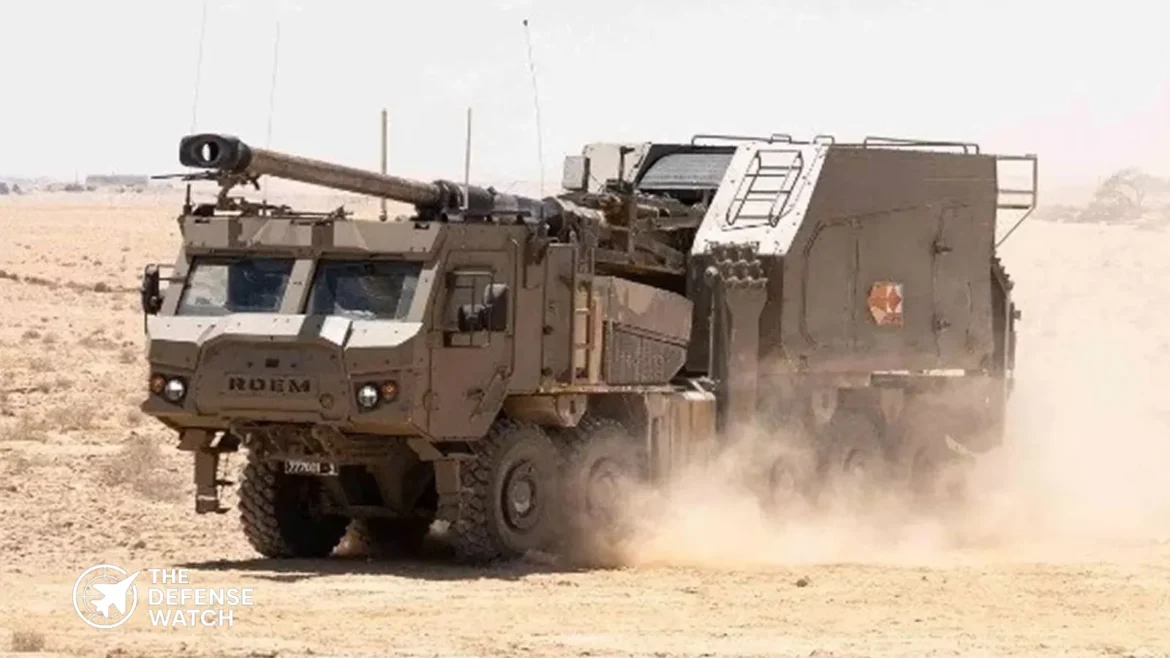
SIGMA 155 Roem Enters Israeli Service
The SIGMA 155 Roem artillery system has entered service with the Israel Defense Forces, marking a major step in replacing the long serving M109 self propelled howitzer. The new system reflects Israel’s push toward faster, more automated fires and reduced crew exposure on the modern battlefield.
According to reporting by Army Recognition, the SIGMA 155 Roem is designed as a fully automated 155 mm artillery platform. It combines high rates of fire with digital fire control and network integration, aligning Israeli artillery with current operational demands.
The system is expected to improve response time, accuracy, and survivability, key lessons drawn from recent high intensity conflicts.
Designed to Replace the M109
Israel has operated upgraded variants of the U.S. made M109 for decades. While reliable, the M109 requires larger crews and manual loading, which limits sustained fire and increases risk under counter battery threats.
The SIGMA 155 Roem addresses these limits through automation. The system uses an unmanned turret mounted on a tracked chassis, allowing the crew to operate from a protected compartment. Loading, laying, and firing are automated, reducing crew workload and exposure.
This shift mirrors a wider global trend, as armies seek to modernize tube artillery rather than rely solely on rockets or missiles.
Automation and Firepower
The SIGMA 155 Roem artillery system uses a 155 mm gun compatible with NATO standard ammunition. Automation enables rapid burst fire followed by quick displacement, a shoot and move approach critical against modern sensors and counter fire systems.
The platform is reported to support advanced fire missions, including multiple round simultaneous impact. This allows several shells fired at different trajectories to strike a target at the same time, increasing effect without increasing exposure time.
Digital fire control links the system to command networks, drones, and battlefield sensors. This improves target handoff and shortens the sensor to shooter timeline.
Crew Protection and Survivability
Crew survivability is a central design goal. By moving the crew away from the gun and ammunition handling process, the SIGMA 155 Roem reduces risk from blast, fragments, and counter battery fire.
The automated turret also lowers physical strain on crews, which supports sustained operations. In modern conflicts, artillery units often operate for extended periods under pressure, making automation a force multiplier.
Mobility remains key. Mounted on a tracked platform, the system is intended to keep pace with armored maneuver forces, unlike towed guns or lighter wheeled systems.
Fit Within Israeli Doctrine
Israeli artillery doctrine emphasizes speed, precision, and integration with intelligence and air assets. The SIGMA 155 Roem fits this approach by acting as part of a wider network rather than a standalone gun.
Israel has invested heavily in drones, sensors, and digital command systems. An automated artillery system that can rapidly receive and execute fire missions complements these investments.
The move also reflects lessons from regional conflicts, where artillery remains central to suppressing enemy forces, shaping maneuver, and providing responsive fire support.
Global Context and Comparisons
Several countries are fielding automated or semi automated artillery systems, including South Korea, Germany, and Sweden. Israel’s SIGMA 155 Roem places it firmly in this peer group, focusing on automation rather than sheer gun caliber.
Unlike wheeled systems optimized for expeditionary forces, Israel’s choice of a tracked platform reflects its terrain and operational needs. The emphasis is on survivability and integration with armored brigades.
Strategic Implications
Replacing the M109 with the SIGMA 155 Roem signals a long term commitment to tube artillery despite the rise of precision strike weapons. Guns remain cheaper per shot and better suited for sustained fire missions.
For Israel, the system strengthens deterrence by improving readiness and responsiveness without relying solely on air power. It also reduces manpower demands, an important factor for reserve heavy forces.
The program highlights how mid sized militaries are adapting legacy capabilities with automation rather than abandoning them.
What Comes Next
Further details on production scale and deployment timelines have not been fully disclosed. However, the entry of the SIGMA 155 Roem into service suggests the IDF is moving from testing to operational use.
As conflicts continue to show the value of artillery, systems like SIGMA 155 Roem are likely to shape how fires are delivered in future land warfare.

US Strikes Islamic State-Linked Militants in Northwest Nigeria
ABUJA, Nigeria
The United States carried out precision airstrikes against Islamic State-affiliated militants in northwest Nigeria on Thursday, December 25, 2025, striking positions in Sokoto State in coordination with Nigerian authorities. President Donald Trump announced the operation on his social media platform and said the strikes targeted militants he accused of killing civilians, particularly Christians. Nigerian officials confirmed the joint action, saying it was carried out with shared intelligence and approval from Abuja.
Background to the Strikes
Nigeria has faced persistent insecurity for more than a decade, with multiple extremist and criminal groups operating across its north and central regions. Among these are factions linked to the Islamic State, including the Islamic State West Africa Province (ISWAP) in the northeast and the lesser-known Islamic State Sahel Province (ISSP), often referred to locally as Lakurawa in northwest Nigeria. These groups have grown in capability, exploiting weak state presence and socioeconomic vulnerabilities in remote communities.
Militants Targeted by the Airstrikes
Officials have not publicly confirmed exactly which militant group was struck. Analysts say the likely target was members of the Lakurawa, an armed faction associated with ISSP and active in Sokoto and neighboring Kebbi states. Lakurawa originally emerged around 2017, when local leaders invited them to protect villages from bandits, but the group later became a source of violence itself, clashing with community leaders and imposing strict interpretations of Islamic law.
The ISSP, a broader Islamic State affiliate that expanded from Niger into northwest Nigeria, also operates in the border region. Experts note ISSP maintained a low profile initially but has expanded covertly into areas along the Niger-Nigeria and Benin-Nigeria borders.
Together, Lakurawa and ISSP have been linked to kidnappings, rape, armed robbery, and attacks on security forces and civilian populations, using the lack of effective governance to recruit fighters.
US and Nigerian Coordination
The airstrikes reflect deeper security cooperation between the United States and Nigeria. Nigerian Foreign Minister Yusuf Tuggar said Abuja provided intelligence ahead of the operation and approved the action after consultations with US officials. He stressed that Nigeria’s counterterrorism efforts are not driven by religious distinctions among victims, saying the violence affects Muslims and Christians alike.
US Africa Command (AFRICOM) described the mission as a joint operation carried out at Nigeria’s request. A US defense official said multiple militants were killed, though precise casualty figures have not been released.
President Trump framed the strikes as retaliation for what he described as lethal attacks on Christians in the region, language that drew international attention. Nigerian leaders have maintained that the broader conflict involves various armed groups and affects communities without a singular religious focus.
Context of Regional Threats
The northwest region shares security challenges with Nigeria’s northeast, where ISWAP and Boko Haram have waged a long-running insurgency. While Boko Haram’s central faction split from ISWAP years ago, both organizations remain significant threats. In the northwest, ISSP and Lakurawa fill a security void, intertwining with local criminal networks and presenting problems for Nigeria’s overstretched military.
Analysts point out that the absence of effective governance in remote communities creates conditions that armed groups exploit. Poverty, unemployment, and lack of state services make it easier for militants to establish footholds. Nigeria’s defense officials have acknowledged that military action alone is insufficient to resolve these deep-rooted issues.
Local Impact and Wider Implications
In Sokoto and surrounding areas, residents reported loud explosions and air operations late on December 25, with some describing a red glow in the night sky. Eyewitness accounts noted the shock of the strikes in areas that had not previously experienced direct foreign military action. No confirmed civilian casualties have been reported, though local leaders have called for transparency to calm communities affected by the strikes.
The strikes mark a notable escalation in US involvement in Nigeria’s security environment. They come amid broader US military operations against Islamic State affiliates in multiple regions, including recent strikes in the Middle East. The coordinated action also occurs against a backdrop of diplomatic tensions earlier this year between Abuja and Washington over how to classify and address violence against religious groups in Nigeria.
What Comes Next
Nigeria and the United States indicated that the airstrikes are part of sustained cooperation against extremist threats. Nigerian officials suggested further joint actions may be planned as intelligence sharing and operational planning continue. However experts caution that airstrikes are only one piece of a larger strategy needed to weaken entrenched militant networks, and that progress will depend on addressing underlying political and economic challenges in affected regions.
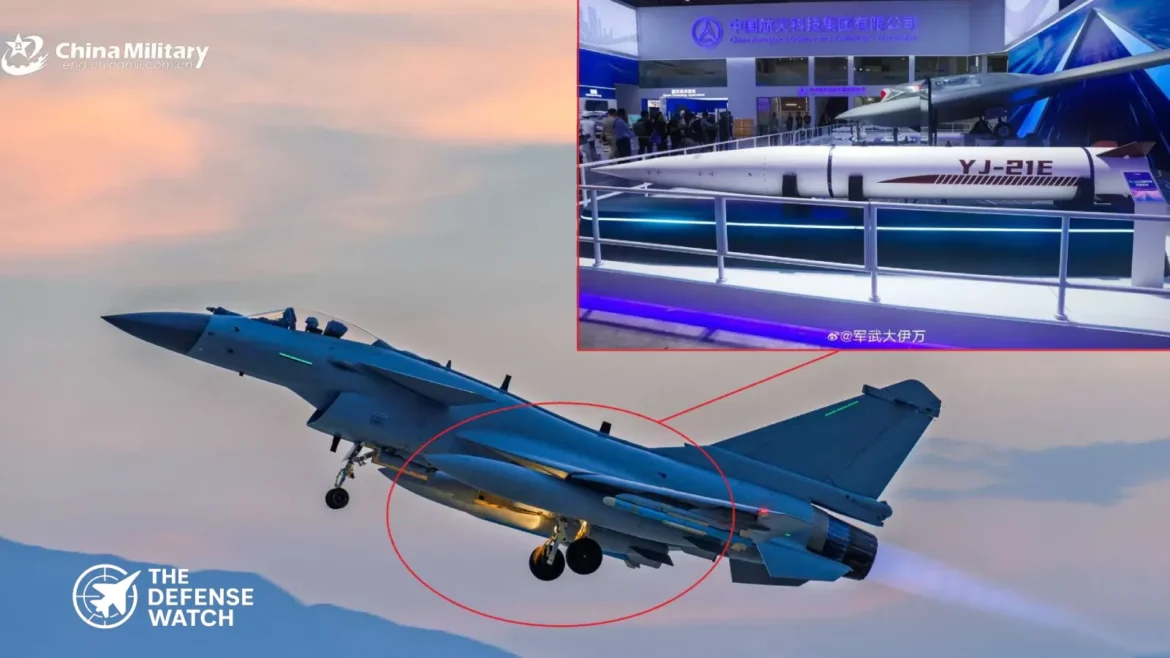
J-10 Fighter Seen With Possible YJ-21E Missile
China’s J-10 fighter has been photographed carrying what appears to be a YJ-21E hypersonic anti-ship missile, a development that could mark a new step in the PLA Air Force’s strike modernization. The images, first reported by Army Recognition, show a J-10 aircraft fitted with a large centerline weapon consistent in shape and size with the YJ-21 missile family.
While Chinese authorities have not confirmed the weapon’s identity, the imagery has drawn attention across defense circles due to the YJ-21’s known role as a high-speed, long-range anti-ship system. If confirmed, the pairing would suggest China is exploring ways to extend hypersonic strike capability beyond bombers and naval platforms.
What the YJ-21E Is Believed to Be
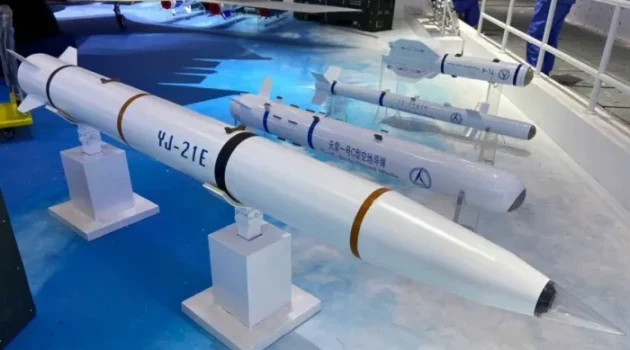
The YJ-21 is widely assessed as a hypersonic anti-ship missile designed to defeat modern naval defenses through speed, altitude, and maneuverability. Previous sightings have linked the missile to the PLA Navy’s Type 055 destroyers and to air-launched variants carried by the H-6K bomber.
- (adsbygoogle = window.adsbygoogle || []).push({});
The YJ-21E is believed to be an export or air-launched derivative optimized for fighter or bomber integration. Analysts note its distinctive long body and enlarged nose section, features consistent with hypersonic glide or boost-glide designs. Army Recognition reports that the missile seen on the J-10 closely matches these characteristics, though no official specifications have been released.
Why the J-10 Integration Matters
The J-10 fighter has long been a core platform of the PLA Air Force, serving as a multirole aircraft for air defense, strike, and limited maritime missions. Integrating a weapon like the YJ-21E onto the J-10 would represent a major expansion of its mission set.
Unlike large bombers, fighters offer greater flexibility, faster reaction times, and broader basing options. A J-10 fighter armed with a hypersonic anti-ship missile could complicate adversary naval planning, especially in contested areas such as the Western Pacific and South China Sea.
From a U.S. and allied perspective, this would signal continued Chinese efforts to distribute long-range strike capabilities across multiple platforms, rather than relying on a small number of high-value assets.
Technical and Operational Questions Remain
Despite the visual evidence, several uncertainties remain. The J-10’s payload capacity, combat radius, and sensor integration raise questions about how operational such a configuration would be. Carrying a large hypersonic missile could affect the fighter’s range, maneuverability, and survivability.
(adsbygoogle = window.adsbygoogle || []).push({});It is also unclear whether the aircraft shown was conducting a test fit, captive carry trial, or an early phase of weapons integration. Defense analysts caution that imagery alone does not confirm full operational capability.
As Aviation Week and Janes have noted in past assessments of Chinese weapons programs, public sightings often precede years of testing before a system reaches frontline service.
Broader Strategic Context
China’s focus on hypersonic weapons reflects a broader push to counter advanced missile defense systems and naval power projection. Air-launched hypersonic missiles add another layer to China’s anti-access and area denial strategy.
For the United States and its allies, developments like the possible J-10 and YJ-21E pairing reinforce the need to track not just new missiles, but also the platforms that carry them. Distributed launch options increase complexity for detection, tracking, and interception.
See also: China’s H-6K bomber and its evolving long-range strike role.
What Comes Next
Further confirmation will likely depend on additional imagery, official PLA statements, or disclosures through Chinese state media. Until then, the J-10 fighter’s apparent association with a possible YJ-21E missile remains an important indicator of China’s ongoing experimentation with hypersonic air-launched weapons.
As China continues to modernize its air and missile forces, such developments will remain closely watched by defense planners across the Indo-Pacific.

Why the Baba Yaga Drone Matters
The Baba Yaga drone matters because it shows how low cost, locally built unmanned systems are reshaping modern warfare. In Ukraine, heavy multirotor drones are no longer support tools. They are frontline strike weapons. The Baba Yaga drone has become one of the clearest examples of this shift, earning both battlefield impact and symbolic status during the ongoing war with Russia.
What Happened
In late 2025, a monument honoring the Baba Yaga drone was unveiled in Ukraine. The tribute recognized the drone’s role in combat operations against Russian forces. According to Ukrainian media reporting, the monument reflects how the system has become widely known among troops and the public for its destructive effectiveness and psychological impact on the battlefield.
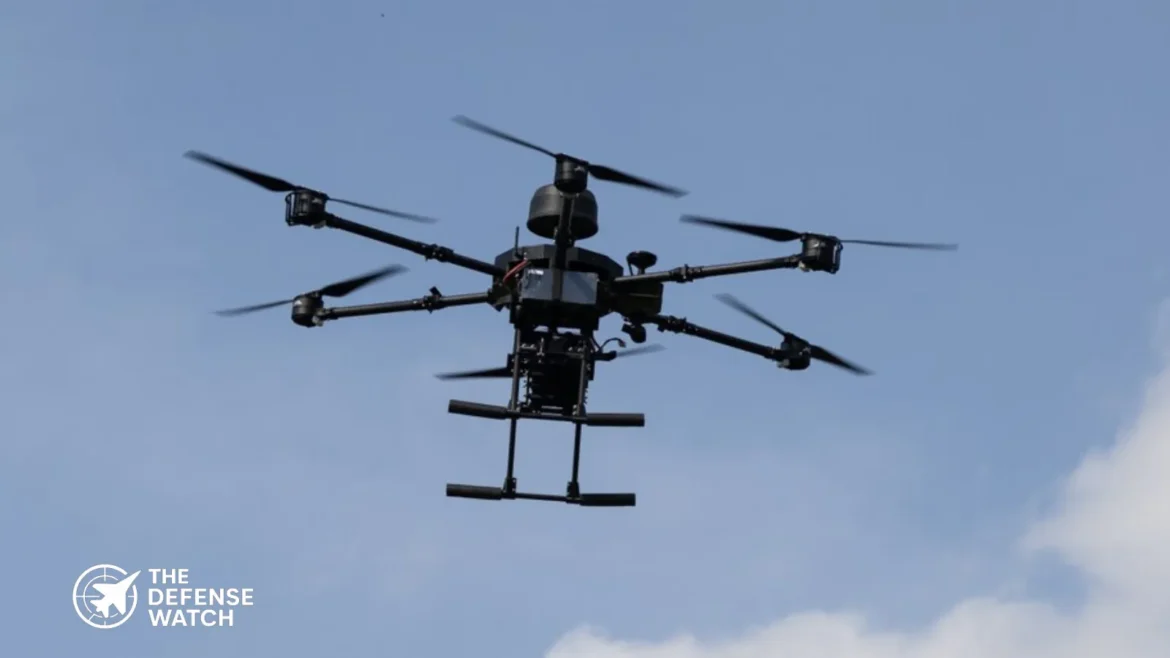
The Baba Yaga drone is not a single factory built platform. It is a category of heavy multirotor strike drones used by Ukrainian units, often operated at night and designed to deliver large explosive payloads against armored vehicles, fortified positions, and troop concentrations.
Background on the Baba Yaga Drone
The Baba Yaga drone takes its name from a figure in Slavic folklore associated with fear and destruction. Ukrainian soldiers adopted the nickname due to the drone’s night operations and distinctive sound. The system is typically larger than commercial quadcopters used for reconnaissance or small munition drops.
Unlike lighter FPV drones, the Baba Yaga drone can carry heavier payloads, including anti tank mines and modified artillery munitions. It is usually powered by electric motors, uses satellite navigation when available, and relies on trained operators positioned several kilometers from the target area.
The Baba Yaga drone emerged as Ukraine expanded its domestic drone production after 2022. Faced with shortages of traditional airpower and artillery, Ukrainian forces accelerated the use of unmanned systems to offset Russia’s numerical advantages.
How It Works
The Baba Yaga drone is a heavy lift multirotor platform, often with six or eight rotors. This configuration allows it to carry payloads far heavier than standard commercial drones. Missions are commonly flown at night to reduce detection and increase survivability.
Operators guide the drone using live video feeds and navigation data. Once over the target, the munition is released rather than detonated on impact, allowing the drone to return if not engaged by air defenses. This reuse capability makes the Baba Yaga drone more cost effective than one way attack systems.
Electronic warfare remains a challenge. Russian forces actively jam GPS and control signals. In response, Ukrainian units have adapted by using alternative navigation methods, shorter flight paths, and coordinated attacks that overwhelm defenses.
Battlefield Role and Impact
On the battlefield, the Baba Yaga drone fills a gap between small FPV drones and traditional artillery. It offers precision strike capability with payloads large enough to damage armored vehicles or collapse defensive positions.
Ukrainian officials and military analysts note that heavy drones like the Baba Yaga drone have forced Russian troops to alter their behavior. Vehicles are dispersed, night movement is reduced, and defensive positions are reinforced against aerial attack from above.
The drone’s psychological effect is also significant. The distinctive sound of large multirotors at night has been reported by both sides as a source of stress for troops under threat.
Strategic Context
The rise of the Baba Yaga drone reflects a broader shift in global military competition. Modern conflicts increasingly rely on adaptable, low cost systems that can be produced locally and modified quickly. Ukraine’s drone ecosystem contrasts with traditional procurement models that depend on long development cycles and centralized production.
Similar trends are visible elsewhere. Militaries are investing in heavy UAVs for logistics, strike missions, and electronic warfare. However, Ukraine’s experience shows how combat driven innovation can accelerate deployment and refine tactics in real time.
The Baba Yaga drone also highlights the limits of conventional air defense systems. Many are optimized to counter aircraft or missiles, not slow moving, low altitude drones operating in large numbers.
Policy and Expert Perspective
Defense analysts note that Ukraine’s use of heavy strike drones is influencing military planning worldwide. Lessons from the Baba Yaga drone are being studied by NATO members and other armed forces evaluating future force structures.
From a policy standpoint, the system underscores the importance of domestic industrial capacity, rapid certification processes, and close cooperation between frontline units and manufacturers. It also raises questions about how international arms control frameworks apply to improvised or semi commercial unmanned systems.
What Comes Next
Ukraine continues to expand its drone forces, with ongoing efforts to improve range, resistance to jamming, and payload flexibility. The Baba Yaga drone is expected to evolve rather than remain a fixed design, reflecting the fast pace of battlefield innovation.
The monument dedicated to the drone signals more than recognition of a single system. It marks a shift in how military power is built, deployed, and remembered in modern war.
S Navy Launches Attack Drone from Ship in Middle East
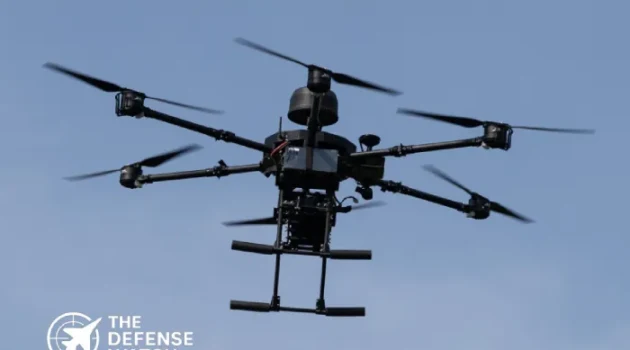
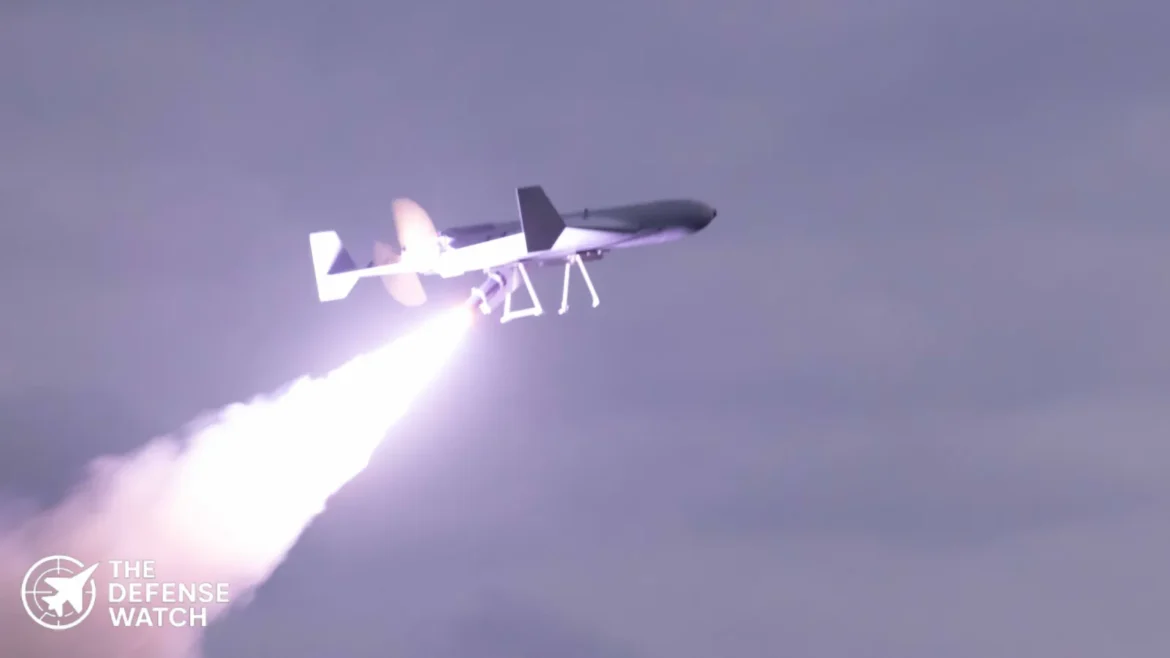
The US Navy successfully launched a Low-cost Unmanned Combat Attack System (LUCAS) drone from the flight deck of the Independence-class littoral combat ship USS Santa Barbara (LCS 32) in the Arabian Gulf on December 16, 2025. This marks the first ship-based deployment of a one-way attack drone in the region.
Task Force 59, operating under Task Force Scorpion Strike, oversaw the historic launch. The squadron was recently deployed to enhance regional security and strengthen deterrence capabilities. According to Vice Adm. Curt Renshaw, commander of U.S. Naval Forces Central Command, the launch highlights the Navy’s commitment to rapidly delivering affordable, effective unmanned capabilities to warfighters.
The LUCAS drone is versatile, capable of catapult launches, rocket-assisted takeoffs, and deployment from mobile ground or vehicle systems. This flexibility allows the Navy to operate in complex maritime environments while maintaining rapid response options.
“This platform will undoubtedly enhance regional maritime security and deterrence,” Vice Adm. Renshaw said. The deployment aligns with broader U.S. military efforts to integrate unmanned technologies into operational strategies across the Middle East.

China Sanctions US Defense Firms Over Taiwan Arms Deal
China has imposed sanctions on 20 U.S. defense companies and 10 executives in response to Washington’s $11.1 billion arms sale to Taiwan, Beijing’s largest arms transaction with the island to date. The move freezes assets in China and bars domestic entities from doing business with the targeted firms, according to the Chinese foreign ministry.
Boeing’s St. Louis branch, Northrop Grumman Systems Corporation, L3Harris Maritime Services, and other leading defense contractors are included. Individuals sanctioned include the founder of Anduril Industries and nine senior executives. These individuals are also banned from entering China.
A Chinese foreign ministry spokesperson stated, The Taiwan issue is the core of China’s core interests and the first red line that cannot be crossed in China-U.S. relations. The statement emphasized any provocative actions crossing this line would receive a strong response.
The sanctions follow Washington’s announcement of the $11.1 billion package, which includes advanced aircraft, missile systems, and other defense equipment intended to strengthen Taiwan’s self-defense capabilities. U.S. law requires support for Taiwan’s defense, but these sales consistently provoke Beijing.
Analysts note the sanctions are largely symbolic, aimed at signaling Beijing’s opposition while limiting direct business interactions. Companies affected include some of the largest U.S. defense contractors with substantial global operations.

China Sixth-Generation Fighter Progress in Pentagon Report
The China sixth-generation fighter progress is a key element in the latest Pentagon annual assessment of Beijing’s military capabilities to Congress, the US Department of Defense stated. The report underscores early test activity for two future combat aircraft and broader advances in Chinese airpower systems.
The defense review, which covers developments across land, sea, air and space, is a baseline for US lawmakers and defense planners tracking Beijing’s military modernization.
Pentagon Report Points to Test Flights
According to the Department of Defense’s report to Congress, China began testing a pair of sixth-generation aircraft in December 2024, referencing jets tentatively linked with the Chengdu J-36 and a Shenyang design often labeled J-50 or J-XDS. These flights mark the first observed progression from concept toward flight-worthy prototypes.
The report notes these aircraft are in the early stages of development and states they could become operational around 2035. It highlights the broad mission potential for such aircraft in future conflict scenarios, including air-to-air, air-to-surface, and command of unmanned wingmen.
Broader Airpower Enhancements
The document also cites progress in other aviation domains. China’s Xian KJ-3000 airborne early warning and control platform completed a first flight in 2024. The report describes the KJ-3000’s radar as capable of anti-jamming, passive detection and target ID features that could improve regional situational awareness.
Additionally, Pekin’s carrier aviation elements and UAV systems show continued expansion, according to the review, reflecting a focus on integrated airpower.
Context on Chinese Fighter Programs
Independent reporting and imagery analysis indicate that the aircraft referred to by the Pentagon are part of ongoing prototype programs seen on Chinese social media and aviation forums. Observers note multiple test flights of tailless, stealthy designs from Chengdu and Shenyang, with some reports pointing to rapid iterative changes in prototype configurations over recent months.
Implications for US Airpower and F-47 NGAD
While the Pentagon frames the progress as early and developmental, the milestones have drawn attention in defense circles given ongoing US efforts under its Next Generation Air Dominance initiative. The United States has also been advancing future air dominance concepts, although official documents place operational timelines later in the decade.


US Navy Tomahawk Strike in Nigeria
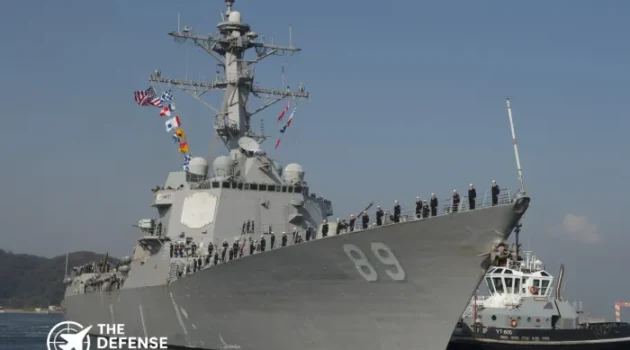
The United States Navy launched a precision Tomahawk cruise missile strike against Islamic State positions in northwest Nigeria on December 25, 2025, from an Arleigh Burke-class guided-missile destroyer, US Africa Command said. This operation marks a notable use of sea-launched strike capabilities in West Africa and was carried out at the request of the Nigerian government.
The attack targeted militants linked to Islamic State West Africa Province, an extremist group responsible for attacks on civilians, including religious communities in the region, US officials said. According to the Pentagon and the White House, multiple militant fighters were killed, though exact numbers and damage assessments have not been released.
Video released by the Department of War shows a missile launch from a Navy surface combatant operating offshore. Defense analysts say the visual profile is consistent with the long-range BGM-109 Tomahawk cruise missile fired from a Mk 41 Vertical Launching System aboard an Arleigh Burke destroyer. The US military has not publicly confirmed the specific vessel or weapon type used.
Coordination With Nigerian Authorities
US Africa Command said the operation was conducted in coordination with Nigerian authorities and under presidential direction. The coordinated nature of the strike reflects a partnership approach rather than unilateral action by US forces in the region.
Arleigh Burke Destroyers and Tomahawk Capability
Arleigh Burke-class destroyers serve as the backbone of the US Navy’s surface combat fleet. Equipped with the Aegis Combat System and up to 96 Mk 41 VLS cells, these ships can launch a variety of munitions, including Standard Missiles for air defense and Tomahawk cruise missiles for long-range land attack missions.
The Tomahawk is a subsonic, long-range cruise missile capable of striking fixed targets with high precision at ranges beyond 1,000 miles. It uses GPS, inertial guidance, and terrain contour matching for navigation and has been a key naval strike weapon since the 1991 Gulf War.
Strategic Implications
Using a maritime launch platform for strikes inland gives the US military flexibility to engage distant targets without relying on regional airfields. This approach reduces diplomatic friction and limits the need for a ground presence in politically sensitive areas.
The December 25 strike could signal a broader shift in how US forces support counterterrorism operations in West Africa, complementing existing drone and land-based air missions.
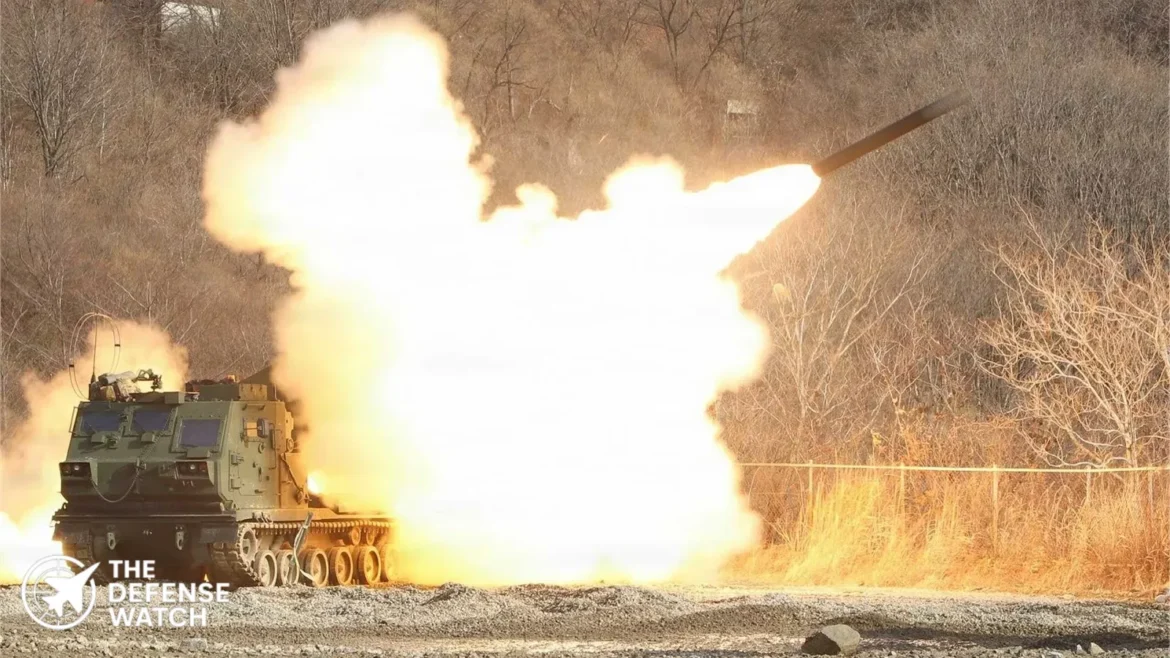
The M270A2 rocket launcher has been used operationally for the first time by U.S. forces in South Korea, marking a key step in U.S. Army artillery modernization near the North Korea border.
The U.S. Army has carried out the first known operational employment of its upgraded M270A2 Multiple Launch Rocket System during activities in South Korea, according to reporting by Army Recognition and U.S. military sources. The system was deployed close to the Demilitarized Zone, underscoring the role of long range rocket artillery in combined U.S. South Korea defense planning.
The M270A2 is a modernized version of the tracked M270 launcher, designed to extend service life while improving accuracy, range, and survivability. Key upgrades include a new fire control system, improved cab protection, and compatibility with current and future precision guided munitions. The launcher can fire Guided Multiple Launch Rocket System rockets and Army Tactical Missile System rounds.
U.S. Army units assigned to the Korean Peninsula operate under a high readiness posture due to North Korea’s large conventional artillery force and expanding missile capabilities. The deployment of the M270A2 adds depth to allied counter fire and long range strike options, supporting deterrence and rapid response missions.
Officials have emphasized that the activity was conducted in coordination with South Korean forces and aligns with long standing alliance commitments. The use of the M270A2 also reflects broader U.S. Army efforts to replace aging systems and improve interoperability across forward deployed units.

