What Is Happening: Russia’s S-500 Threat to U.S. Stealth Jets
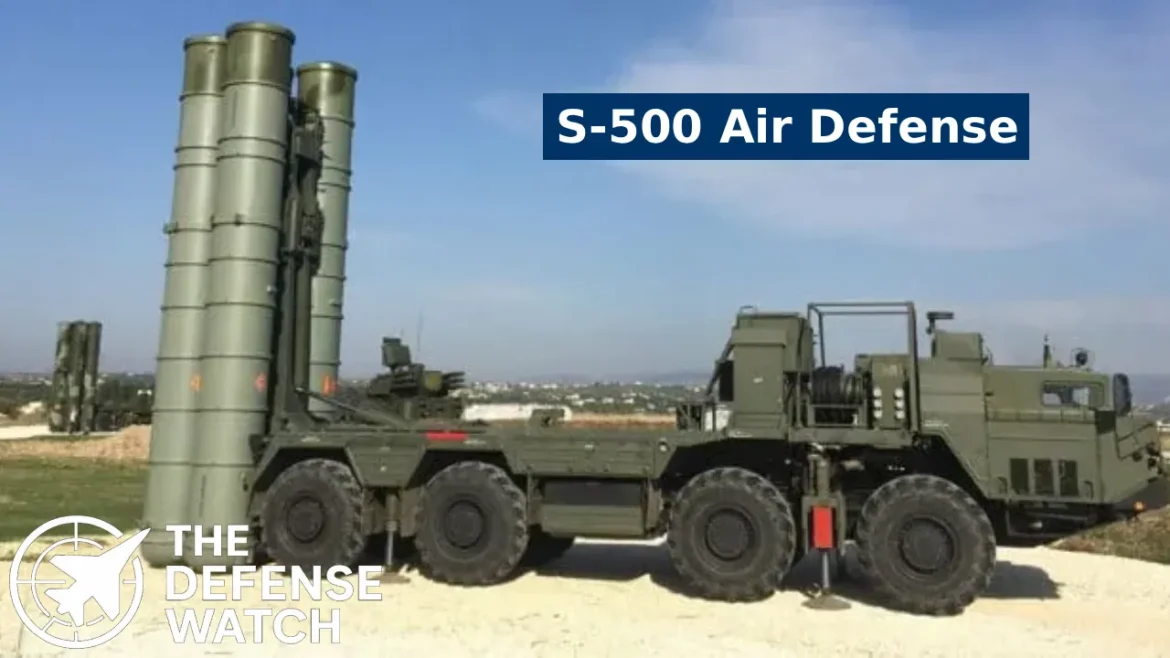
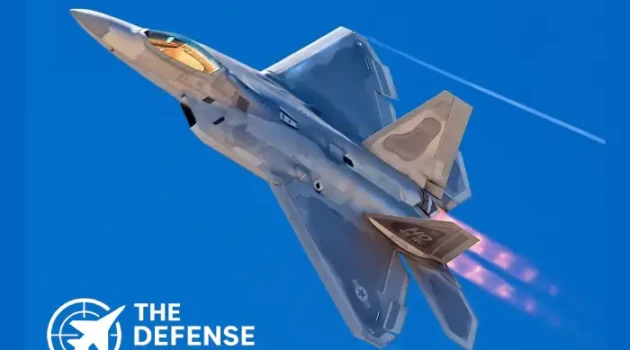
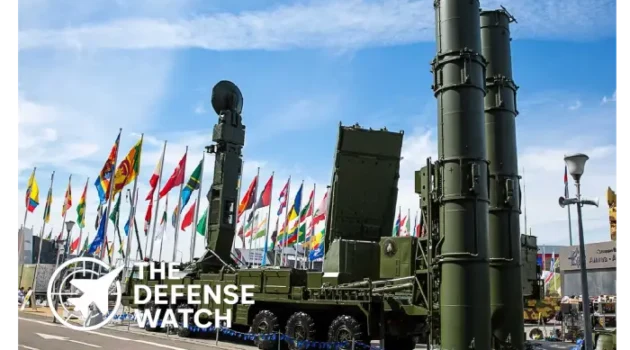
Russia is promoting its S-500 “Prometheus” air-defense system as capable of targeting U.S. fifth-generation stealth aircraft like the F-22 Raptor and F-35 Lightning II, according to multiple Russian defense sources and open-source defense reporting.
Authorities claim the S-500 can engage targets at ranges up to 600 km and altitudes up to 200 km, putting it in a new class of “hybrid” air-and-space defense.
Background: Why the S-500 Matters
The S-500, developed by Almaz-Antey, is viewed by Russian officials as a key pillar in their next-generation layered air defense architecture — sitting above systems like the S-400 and alongside emerging systems such as the A-235 ABM.
Moscow contends that the S-500 bridges tactical air defense and strategic missile defense: it’s designed to counter not just aircraft, but hypersonic missiles, ballistic warheads, and even low Earth orbit satellites.
Its radar suite is a multi-band architecture, which Moscow argues gives S-500 the ability to detect and track very low-observable stealth targets.
Key Features & Claimed Capabilities
Radar and Tracking Systems
- The S-500 reportedly uses a combination of 91N6A(M) S-band, 96L6-TsP C-band, 76T6 multimode, and 77T6 ABM engagement radars.
- These radars operate in multiple frequency bands (L-, S-, and X-band), which proponents say helps in detecting stealth aircraft optimized to evade narrower-band radars.
- According to some reports, these radars can detect ballistic targets up to 2,000 km away, and aerodynamic (aircraft) threats up to 800 km.
Interceptors and Engagement
- For air defense roles, the S-500 is said to employ 40N6M long-range interceptor missiles.
- For ballistic or hypersonic threats, it reportedly uses kinetic 77N6-N and 77N6-N1 missiles, capable of “hit-to-kill” interception.
- Russia claims it can engage up to 10 targets simultaneously, with a very fast reaction time (~3–4 seconds).
- The engagement ceiling is claimed to be around 200 km, which would allow the system to intercept threats in near-space.
Mobility & Deployment
- The S-500 is mobile — its radar and launch units are mounted on wheeled chassis, allowing redeployment.
- It is reportedly being integrated into Russia’s existing air defense mix, working alongside S-400, S-350, and Pantsir systems.
- According to some Russian analysts, S-500 units have been deployed to strategically critical locations, including Crimea.
Expert Analysis & Policy Implications
Technical Credibility & Challenges
- While Moscow’s claims are ambitious, independent verification of the S-500’s full performance (especially against stealth aircraft) remains limited.
- Analysts note that detecting stealth is one challenge; achieving a fire-control solution and intercepting such targets is a separate, technically difficult step.
- Hypersonic and ballistic intercept capabilities are central to the system’s appeal. The 77N6 series missiles, if they perform as claimed, would represent a significant leap in Russia’s ability to engage high-speed warheads.
- Some analysts are cautious: while the system may be theoretically capable, operational readiness, production scale, and real-world performance remain open questions.
Strategic Impact & Geopolitical Considerations
- If the S-500 genuinely threatens F-22 and F-35 aircraft, it could complicate NATO planning, particularly for operations near or within range of deployed S-500 units.
- The claimed anti-satellite (ASAT) capability adds a space dimension to Russia’s air defense posture, raising concerns about the securitization of low Earth orbit, especially for ISR and comms satellites.
- For countries that consider buying advanced Russian air defenses (e.g., India), the S-500 could be a force multiplier — but its “game-changing” status depends on whether its high-end claims hold in practice.
- From a policy perspective, even if S-500’s full potential is not yet realized, its perception as a “stealth killer” could be leveraged for deterrence and strategic signaling.
What to Watch Next
- Deployment Scale: How many S-500 regiments Russia will operationalize, and where.
- Export Prospects: Which countries may acquire S-500 and what conditions would apply.
- Operational Tests: Any publicized live-fire tests targeting stealth or hypersonic targets.
- Countermeasures: How NATO and U.S. defense planners adapt to the S-500 threat, possibly via tactics, electronic warfare, or new platforms.
Conclusion
Russia’s S-500 “Prometheus” system represents a bold claim in modern air defense: long-range engagement, multispectral radar, and the ability to threaten fifth-generation stealth fighters like the F-22 and F-35. While many of these claims come from Moscow or Russian-aligned defense outlets, the system’s development underscores how air defense is evolving — merging anti-aircraft, ABM, and space-defense roles. Whether the S-500 fulfills its promised “stealth killer” reputation will depend on further testing, deployment, and real-world performance.
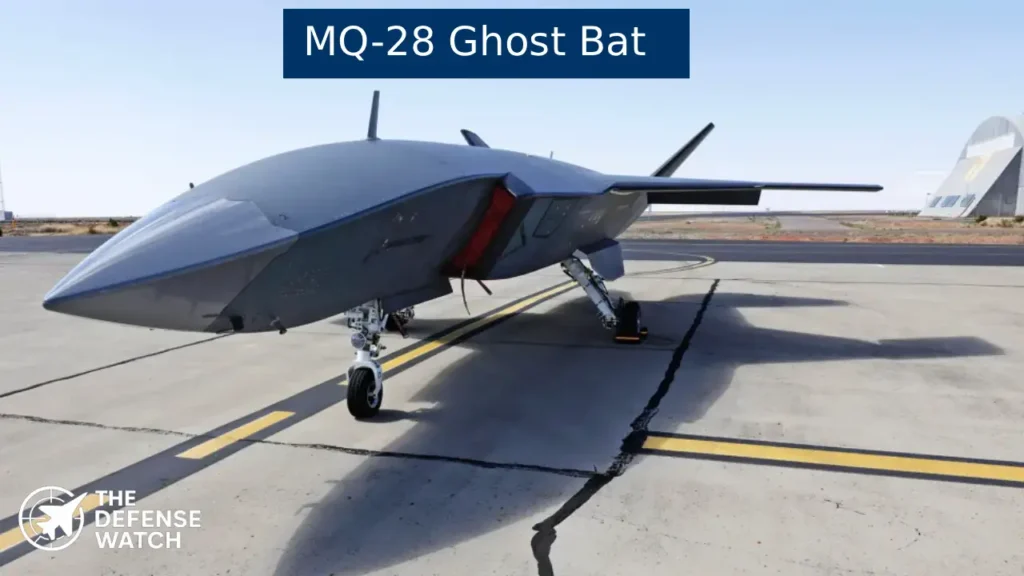
MQ-28 Ghost Bat: Current Status and Operational Progress
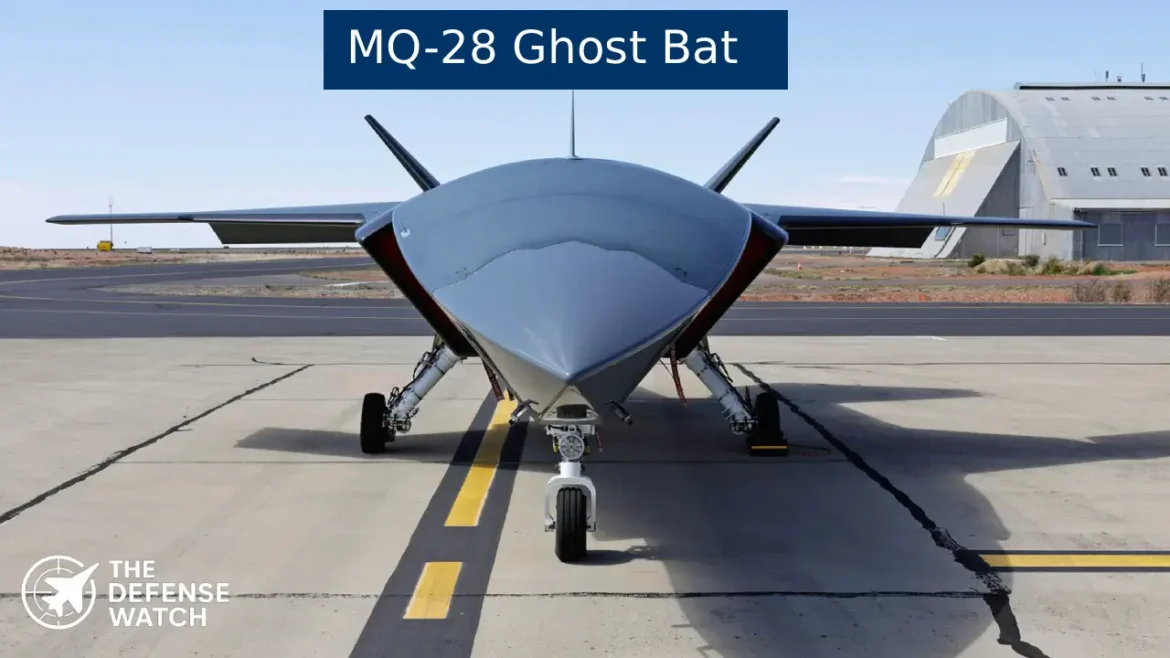
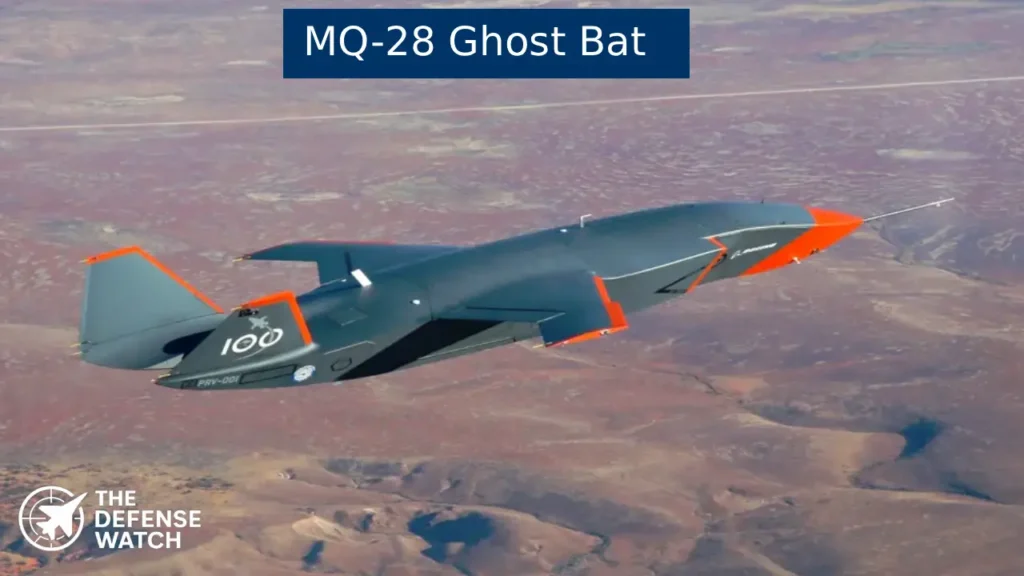
The MQ-28 Ghost Bat, Boeing Australia’s collaborative combat aircraft (CCA), has made significant strides in 2025, with the Royal Australian Air Force (RAAF) now validating its operational viability and planning its first live-fire weapons test.
Operational Demonstrations Complete
- In Capability Demonstration 2025, Boeing and the RAAF validated the Ghost Bat’s autonomous behaviors, multi-aircraft operations, deployment flexibility, and data-sharing capabilities.
- The platform has now logged more than 150 flight hours and over 20,000 hours of virtual testing.
- In a first-of-its-kind mission, two MQ-28s were controlled in flight by a single operator aboard an E-7A Wedgetail AEW&C aircraft, validating collaborative control from a crewed command platform.
- The aircraft’s deployment capability was tested during Exercise Carlsbad at RAAF Base Tindal, demonstrating rapid redeployment, base operations, and integration with local RAAF units.
- For the first time, the MQ-28 operated from an operational air base, showing the aircraft can be transported (via C-17), set up, launched, and redeployed within a short timeframe.
Live-Fire Test Planned: AIM-120 AMRAAM
- Boeing has announced plans for the first live-fire test of the MQ-28, expected in late 2025 or early 2026, using an AIM-120 Advanced Medium-Range Air-to-Air Missile (AMRAAM).
- According to Boeing, the test will take place over the Woomera Range Complex and simulate a “tactically relevant scenario” against a real airborne target.
- The Ghost Bat is configurable: its nose section is modular and swappable, enabling payload flexibility. Some early test aircraft have been spotted carrying an infrared search and track (IRST) sensor, which could be used to detect and target threats.
Program Maturity and Next Phases
- Boeing is now building Block 2 MQ-28s, which incorporate improvements such as a refined wing design and upgraded GPS/INS.
- The operational lessons from 2025 will feed directly into the Block 2 production aircraft, forming the basis of an initial operational capability (IOC) for the RAAF.
- Boeing has also invested in a production facility in Queensland (Wellcamp, Toowoomba), which will support local assembly and future export potential.

Analysis: Strategic Implications and Challenges
The progress of the MQ-28 Ghost Bat reflects the growing seriousness of “loyal wingman” concepts in modern air warfare. By demonstrating multi-ship autonomy, base deployability, and the capacity to carry air-to-air weapons, the MQ-28 offers the RAAF a scalable way to add combat mass without relying solely on traditional manned platforms.
If the live-fire test succeeds, it could mark a first among CCAs: an uncrewed aircraft firing an air-to-air missile in a combat-like scenario. That would significantly shift the narrative on unmanned combat aircraft, not merely as surveillance or decoy drones, but as active combat participants.
However, there are challenges:
- The AIM-120 test is still pending, and success is not guaranteed — integrating a missile onto a CCA is non-trivial, especially in terms of guidance, targeting, and launch dynamics.
- While Block 2 production is underway, the path to full operational deployment and export remains uncertain; further funding and partner adoption will be critical.
- Rules of engagement, command & control, and doctrine for fully autonomous or semi-autonomous combat operations are still developing, especially for weapons employment.
Key Facts at a Glance
Item Status Developer Boeing Defence Australia User Royal Australian Air Force (RAAF) Demonstration Program Capacity Demonstration 2025 (CD-25) Flight Hours ~150 real + 20,000+ virtual First Live-Fire Weapon Planned AIM-120 AMRAAM Deployment Proven from RAAF Base Tindal (Exercise Carlsbad) Team Control Demonstrated control from E-7A Wedgetail Production Standard Block 2 in production FAQs
Is the MQ-28 Ghost Bat already in active service?No, as of now it is in a demonstrator/testing phase. While its deployment and operational capabilities are being validated, it has not yet been declared as fully operational service by the RAAF.
Has the MQ-28 fired its missile yet?Not yet. The AIM-120 live-fire test is planned but has not yet been publicly confirmed as completed.
What makes the MQ-28 different from other drones?It’s designed as a Collaborative Combat Aircraft (CCA) — not just a drone for ISR, but to actively team with crewed aircraft, share data, perform combat missions, and potentially fire weapons.
Which aircraft has it teamed with?It has teamed in trials with a Boeing E-7A Wedgetail AEW&C, where one operator onboard controlled two MQ-28s simultaneously.
Is this just for Australia, or could it be exported?While the primary user is the RAAF, Boeing aims for export potential. The production facility in Toowoomba underlines that ambition. However, export will depend on customer interest, funding, and strategic alignment.

U.S. Army Fields First Operational Hypersonic Battery
The United States military is advancing into a new era of long-range precision strike with hypersonic glide vehicles now entering operational service. The U.S. Army’s Long-Range Hypersonic Weapon, officially designated Dark Eagle in April 2025, represents America’s entry into a hypersonic arms race where adversaries China and Russia have maintained a multi-year lead.
The Army confirmed that the first full battery of Dark Eagle missiles will be operational in 2025, following the successful completion of an end-to-end flight test in December 2024 at Cape Canaveral. This milestone marks the culmination of a development program plagued by technical setbacks, funding challenges, and schedule delays that pushed initial fielding from fiscal year 2023 to late 2025.
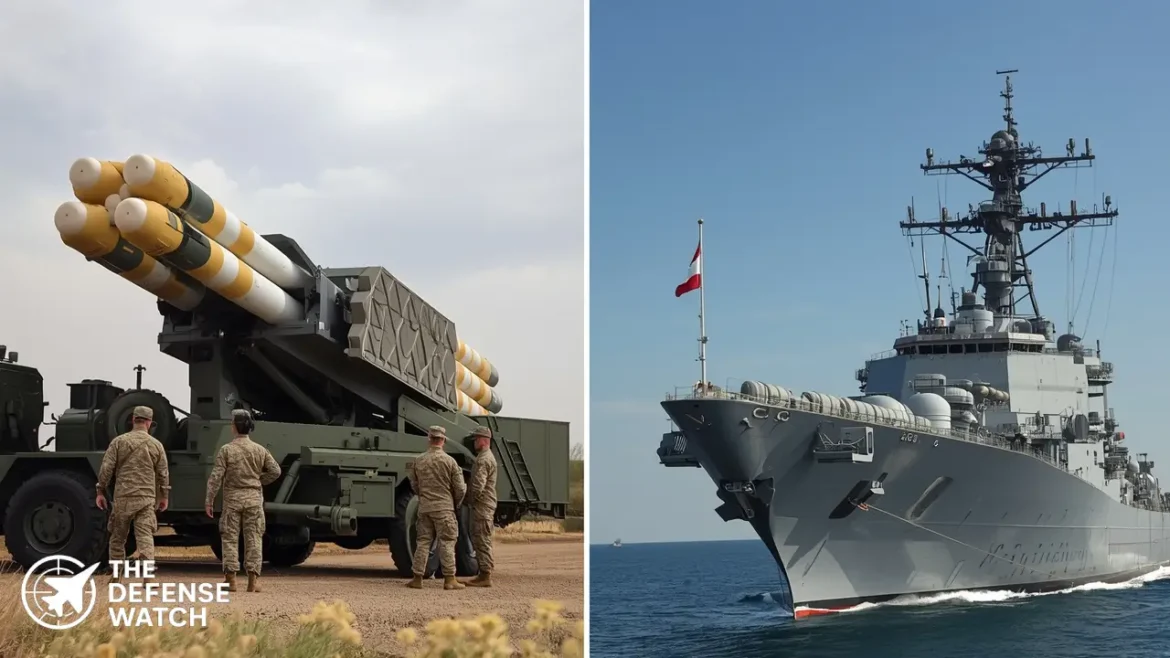
The Dark Eagle system consists of four Transporter Erector Launchers mounted on modified M870A4 trailers, each carrying two missiles for a total battery capacity of eight rounds. Designed as a land-based, truck-launched platform, it combines a two-stage solid-fueled booster system with the Common Hypersonic Glide Body (C-HGB), enabling the missile to travel at speeds exceeding Mach 5 and strike targets over 1,725 miles (2,775 km) away.
How Hypersonic Glide Vehicles Function
Hypersonic glide vehicles represent a distinct category of weaponry that exploits the boundary between atmospheric and space-based flight. Unlike traditional ballistic missiles that follow predictable parabolic trajectories, or cruise missiles that fly at constant altitudes, hypersonic glide vehicles combine elements of both technologies while introducing unprecedented maneuverability.
The operational profile begins with a rocket booster accelerating the glide body to hypersonic velocities—speeds exceeding Mach 5, or five times the speed of sound (approximately 3,800 miles per hour). Once the booster reaches altitude and speed, it releases the glide body, which then maneuvers at hypersonic speeds toward its target. The glide vehicle then descends through the upper atmosphere, generating lift from its specially designed aerodynamic surfaces.
This flight regime presents extreme engineering challenges. At hypersonic speeds, friction with atmospheric molecules generates temperatures exceeding 2,000 degrees Fahrenheit, creating plasma sheaths around the vehicle that can disrupt communications and electronics. The shockwaves produced by the craft occur much closer to the vehicle than in supersonic flight, requiring innovative thermal protection systems and materials capable of withstanding sustained heat stress while maintaining structural integrity.
The strategic advantage lies in the glide vehicle’s ability to maneuver unpredictably during its terminal phase. An HGV’s ability to maneuver as it descends into thicker and thicker air allows it to be both more accurate and unpredictable. When the vehicle’s wings begin generating lift as it reaches the upper wisps of the atmosphere, it gains the ability to roll and maneuver. This capability complicates defensive calculations, as the weapon can alter its trajectory to engage different targets or evade interceptor missiles.
Global Hypersonic Programs Transform Strategic Balance
The development and deployment of hypersonic glide vehicles has emerged as a defining competition among major military powers, with China and Russia establishing operational capabilities years ahead of the United States.
Chinese Hypersonic Arsenal
China has aggressively pursued hypersonic weapons development, integrating these systems across multiple service branches. China’s military parade in September showed off a hypersonic “carrier killer” ballistic missile built to attack high-value naval targets. The display included the YJ-17, YJ-19, and YJ-20 systems—a clear signal of Beijing’s intent to hold U.S. carrier strike groups at risk in any Pacific conflict.
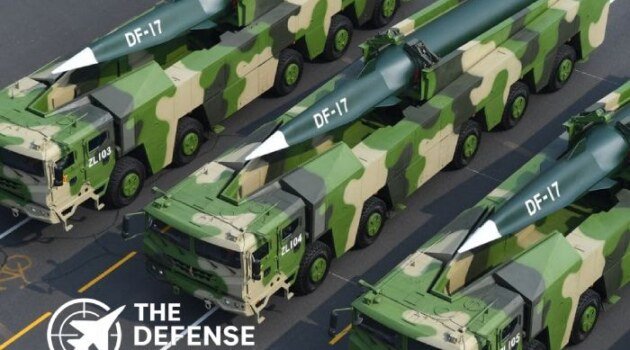
The DF-17 medium-range ballistic missile, first unveiled publicly in 2019, represents China’s most mature operational hypersonic system. Boasting the ability to fly at speeds in excess of Mach 5, the DF-17 is boosted into the atmosphere by a rocket before separating and gliding at hypersonic speeds toward its target. With an estimated range of 1,800 to 2,500 kilometers, the DF-17 poses a considerable threat to regional security.
Beyond theater-range systems, China has tested fractional orbital bombardment systems paired with hypersonic glide vehicles—a combination that would enable attacks from unpredictable trajectories, including approaches over the South Pole that circumvent U.S. missile defense radars optimized for polar approaches.
Russian Operational Systems
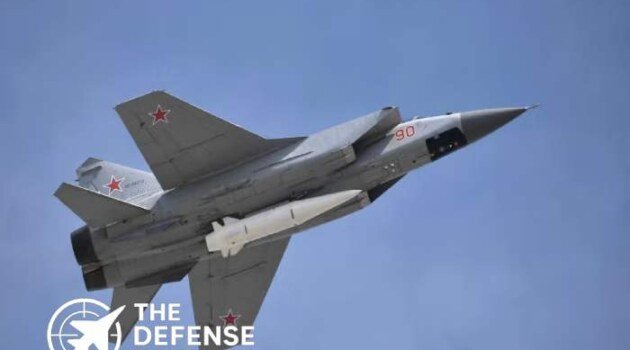
Russia has fielded multiple operational hypersonic weapons systems and employed them in combat operations. The Kh-47M2 Kinzhal, an air-launched hypersonic missile carried by modified MiG-31K interceptors and Tu-22M3 bombers, entered service in 2017. Russia fields a range of hypersonic systems, for example, the sea-launched Zircon (often reported to be traveling at speeds near Mach 8–9) and the Kh-47M2 Kinzhal (air-launched and reported to travel at speeds up to Mach 10), as well as strategic boost-glide programs such as Avangard.
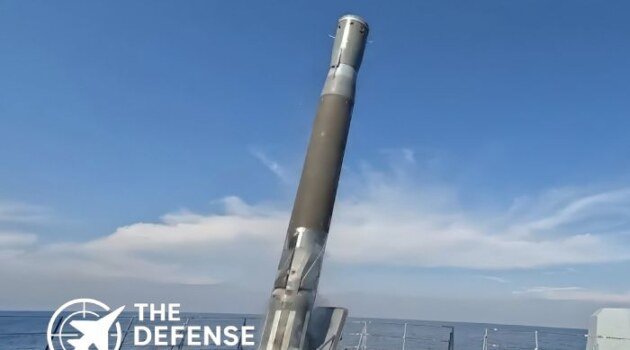
The 3M22 Zircon sea-launched hypersonic cruise missile, deployed aboard surface combatants and submarines, provides Russian naval forces with anti-ship and land-attack capabilities designed to overwhelm Western air defenses. The Avangard strategic boost-glide system, mounted atop intercontinental ballistic missiles, represents Moscow’s answer to U.S. missile defense systems, capable of maneuvering during its terminal phase while traveling at speeds reportedly approaching Mach 27.
Russia has employed hypersonic weapons operationally during its invasion of Ukraine, though with mixed results. Ukrainian forces successfully intercepted a Kinzhal missile using U.S.-provided Patriot air defense systems in May 2023, demonstrating that hypersonic weapons are not invulnerable despite their extreme speed.
U.S. Navy Prepares Sea-Based Hypersonic Strike
While the Army moves toward operational deployment with Dark Eagle, the U.S. Navy is pursuing parallel development of the Conventional Prompt Strike system, which shares the Common Hypersonic Glide Body with the Army’s program but integrates it onto naval platforms.
The lead ship for CPS integration is USS Zumwalt (DDG-1000), the Navy’s most advanced stealth destroyer. USS Zumwalt (DDG-1000) is back in the water after the installation of four missile tubes that will eventually carry the Conventional Prompt Strike weapon. The destroyer underwent extensive modifications at HII’s Ingalls Shipbuilding facility in Pascagoula, Mississippi, where workers removed the ship’s problematic 155mm Advanced Gun System and installed four large-diameter vertical launch tubes.
Each 87-inch diameter tube will accommodate three CPS missiles in a triple-pack configuration, giving each Zumwalt-class destroyer a maximum load of 12 hypersonic weapons. The Navy wants to start testing its Conventional Prompt Strike missile system aboard guided-missile destroyer USS Zumwalt (DG-1000) in 2027 or 2028, with operational deployment targeted for 2026-2027.
The Navy also plans to integrate CPS onto Virginia-class attack submarines equipped with the Virginia Payload Module. This submarine-launched variant would provide a covert hypersonic strike capability, enabling attacks without warning from submarines positioned off enemy coastlines. Initial submarine integration is scheduled for 2028, contingent on the delivery timeline for Block V Virginia-class boats.
Strategic Implications for Naval Warfare
The integration of hypersonic weapons onto surface combatants and submarines fundamentally alters naval strike warfare. The warships will be armed with a hypersonic glide vehicle released from a weapon known as Conventional Prompt Strike, a long range precision missile intended to hold any target in the world at risk of an ultra-long-range, high-speed missile attack.
This capability addresses a critical gap in the Navy’s arsenal. Traditional Tomahawk cruise missiles, while accurate and proven, fly at subsonic speeds and can be intercepted by modern air defense systems. Hypersonic weapons compress decision timelines for adversaries, potentially arriving at their targets before defenders can react effectively. For high-value, time-sensitive targets—such as mobile ballistic missile launchers, command posts, or surface action groups—the speed advantage of hypersonic weapons could prove decisive.
The stealth characteristics of the Zumwalt class compound this advantage. The destroyer’s tumblehome hull design and composite superstructure produce a radar signature comparable to a small fishing vessel, enabling the ship to approach contested waters undetected before launching hypersonic strikes.
Technical Challenges and Cost Constraints
Despite recent successes, U.S. hypersonic weapons programs continue to grapple with significant technical and fiscal challenges that threaten to constrain their operational impact.
Testing Setbacks and Reliability Concerns
The path to operational fielding has been marked by numerous test failures and delays. The first test of the AUR, conducted in June 2022, resulted in failure. Subsequent flight tests, including those planned for March and September 2023, did not occur due to failed preflight checks. Army officials attributed these problems to mechanical engineering issues with the Lockheed Martin-produced launcher rather than the missile itself, but the pattern of delays fueled concerns about industrial base capacity and technical maturity.
Even after successful flight tests in June and December 2024, questions about operational effectiveness persist. The 2024 report from the Director, Operational Test & Evaluation (DOT&E) delivered a stark verdict: “There is not enough data available to assess the operational effectiveness, lethality, suitability, and survivability of the LRHW system.” This assessment indicates that while the Army has proven the missile can fly, critical questions about its ability to reliably destroy intended targets under combat conditions remain unanswered.
Prohibitive Unit Costs
The economics of hypersonic weapons pose serious challenges for large-scale procurement and deployment. A 2023 Congressional Budget Office study estimated that a missile similar to the LRHW would cost approximately $41 million. For context, this is significantly more than a Trident II D5 submarine-launched ballistic missile, which costs around $31 million.
Program costs have also experienced significant growth. According to a June 2025 Government Accountability Office (GAO) assessment, the estimated cost of fielding just the first prototype battery rose by $150 million in a single year, from $2.54 billion in January 2024 to $2.69 billion in January 2025. The Army attributed this increase to rising missile costs and expenses associated with investigating and correcting earlier failures.
These costs create difficult tradeoffs for military planners. At $41 million per missile, a single eight-round Dark Eagle battery represents a $328 million investment in munitions alone, not counting the launcher systems, fire control equipment, training, and logistics support. Army Chief of Staff General Randy George pointedly stated the service was preparing to test “long-range missiles that are a tenth of the price.” This signals recognition that Dark Eagle will likely remain a niche capability reserved for the highest-value targets rather than a weapon available in large quantities.
Multi-Domain Task Force Employment Concept
The Army is fielding Dark Eagle to its Multi-Domain Task Forces, specialized units designed to conduct integrated operations across land, sea, air, space, and cyberspace domains. The 5th Battalion, 3rd Field Artillery Regiment at Joint Base Lewis-McChord, WA, was designated to operate the first battery of eight LRHW missiles. The battalion, also referred to as the Long-Range Fires Battalion, is part of the Army’s 1st Multi-Domain Task Force (MDTF), a unit in the Indo-Pacific-oriented I Corps.
This organizational structure reflects the weapon’s strategic rather than tactical role. MDTFs operate at the theater level, providing joint force commanders with long-range fires capabilities to shape the operational environment before major combat operations begin. In an Indo-Pacific conflict scenario, Dark Eagle batteries could engage targets across the first island chain, suppressing enemy air defenses, striking command nodes, or destroying ballistic missile launchers before they can fire.
Forward Deployment Considerations
The Army has demonstrated interest in forward-deploying Dark Eagle systems to allied nations in critical theaters. In July, the U.S. Army deployed the LRHW outside the continental U.S. for the first time, with two missile launchers participating in Exercise Talisman Sabre 2025 in Australia. This deployment, involving the Hawaii-based Third Multi-Domain Task Force, validated the system’s transportability and ability to operate in expeditionary environments.
Potential basing locations include Japan, where U.S. forces already maintain substantial presence, and Australia, which has signaled willingness to host enhanced American military capabilities. However, forward deployment of hypersonic weapons carries significant diplomatic implications. Host nations must weigh the deterrent value of these systems against the risk of becoming priority targets for adversary strikes in a conflict.
The mobile nature of Dark Eagle provides some mitigation for these concerns. Mounted on standard military trucks, the launchers can relocate rapidly after firing, complicating adversary targeting. This “shoot and scoot” capability—proven effective with rocket artillery in Ukraine—enhances survivability compared to fixed installations.
Budget Reductions Signal Strategic Reassessment
Despite the urgency surrounding hypersonic weapons development, Pentagon funding for these programs has declined substantially. The Pentagon’s FY2026 budget request for hypersonic research was $3.9 billion—down from $6.9 billion in the FY2025 request. This represents a 43% reduction in a single fiscal year, suggesting either increased confidence in current programs or recognition that initial hypersonic capabilities may be sufficient to meet near-term requirements.
The funding decline also reflects cancellation of underperforming programs. The Air Force’s AGM-183 Air-Launched Rapid Response Weapon program was terminated in 2023 after multiple test failures, with officials citing the weapon’s lackluster testing record as justification for ending procurement. The Navy also canceled its Hypersonic Air-Launched Offensive Anti-Surface Warfare (HALO) program in April 2025 due to cost concerns, consolidating resources on the Conventional Prompt Strike system.
These programmatic decisions indicate a shift toward fielding fewer, more mature hypersonic systems rather than pursuing multiple parallel development efforts. The emphasis on the Common Hypersonic Glide Body shared between Army and Navy programs exemplifies this more disciplined approach.
Defensive Countermeasures and Arms Control Challenges
The proliferation of hypersonic weapons has spurred efforts to develop defensive systems capable of detecting, tracking, and intercepting these high-speed threats. However, defending against hypersonic glide vehicles poses extraordinary technical challenges that current missile defense architectures are poorly positioned to address.
Detection and Tracking Limitations
Traditional missile defense systems rely on space-based infrared sensors optimized for detecting the heat signatures of ballistic missile launches and tracking their predictable trajectories. Hypersonic glide vehicles exploit gaps in this architecture. Operating at altitudes between 20 and 60 kilometers—below typical satellite detection capabilities but above most radar coverage—they can evade observation during critical portions of their flight.
The U.S. Missile Defense Agency is developing the Hypersonic and Ballistic Tracking Space Sensor constellation to address this gap. MDA’s FY2025 budget documents state that GPI is to be delivered in FY2035. However, the lengthy development timeline means that offensive hypersonic capabilities will significantly outpace defensive systems for at least a decade.
Interceptor Development Programs
Even with improved sensors, destroying hypersonic targets requires interceptors capable of matching their speed and maneuverability. DARPA’s Glide Breaker program aims to develop critical component technologies for hypersonic defense, but operational systems remain years away. The extreme closing velocities involved—potentially Mach 15 or higher when combining the speed of both interceptor and target—create engagement challenges that existing kinetic kill vehicles cannot reliably address.
Some defense experts argue that the most effective defense against hypersonic weapons is offensive capability to destroy them before launch. “Your best defense is a good offense — you have to be able to deny launch and go after those numbers before they launch”, according to former defense officials. This logic suggests that hypersonic weapons may drive military strategies toward preemption and rapid escalation rather than measured response.
FAQs
What makes hypersonic glide vehicles different from ballistic missiles?Hypersonic glide vehicles maneuver during flight, unlike ballistic missiles that follow predictable trajectories. They operate at lower altitudes than ballistic missiles, making them harder to detect with space-based sensors, and can change course to evade defenses
Can current missile defense systems intercept hypersonic weapons?Advanced systems like the U.S. Patriot have demonstrated limited capability to intercept certain hypersonic weapons under ideal conditions, but reliably defending against maneuvering hypersonic glide vehicles remains an unsolved technical challenge. Detection and tracking represent equally significant obstacles to interception.
When will the U.S. have operational hypersonic weapons?The U.S. Army’s Dark Eagle system is scheduled to reach initial operational capability by the end of fiscal year 2025. The Navy’s Conventional Prompt Strike system is expected to begin testing from USS Zumwalt in 2027-2028, with operational deployment projected for the late 2020s.
Why are hypersonic weapons so expensive?The extreme temperatures, pressures, and speeds involved in hypersonic flight require exotic materials, specialized manufacturing techniques, and extensive testing. Current production runs are small, preventing economies of scale. Unit costs exceeding $40 million per missile are common for U.S. systems.
Do Russia and China already have operational hypersonic weapons?Yes. Russia has deployed the Kinzhal air-launched system, Zircon sea-launched cruise missile, and Avangard strategic boost-glide vehicle. China fields the DF-17 medium-range ballistic missile with a hypersonic glide vehicle and has tested multiple other systems, giving both nations a multi-year lead over the United States.

Growing Stakes: China’s Nuclear Expansion
China’s nuclear weapons stockpile is growing faster than any other nuclear power, raising fresh concerns about strategic stability in a potential conflict over Taiwan. According to the Stockholm International Peace Research Institute (SIPRI), China reached around 600 warheads as of January 2025, adding roughly 100 warheads annually.
Data from the Federation of American Scientists (FAS) corroborates this trend, putting China’s current total at about 600 warheads, with most in reserve and only a small fraction deployed.
Meanwhile, the U.S. maintains a significantly larger nuclear inventory, with an active stockpile of roughly 3,700 warheads, per SIPRI.The Nuclear Dimension of a Taiwan Conflict
Why Nuclear Weapons Could Be a Factor
Analysts argue that in a war over Taiwan, the role of nuclear weapons would be more than symbolic: they could serve as both a deterrent and a coercive tool.
A report from the Atlantic Council suggests that U.S. nuclear forces might be used in several ways in a Taiwan war:- To restore deterrence if China uses limited nuclear weapons first.
- To attack a Chinese amphibious invasion force at sea, undermining its ability to land on Taiwan.
- Even to shift the balance through limited nuclear use if U.S. conventional forces are insufficient.
Another influential paper from the Atlantic Council recommends that the U.S. revisit its nuclear policy to include first-use options if conventional deterrence fails — arguing that a credible U.S. commitment could help dissuade Beijing from escalating.
The Limits of Deterrence
That said, nuclear deterrence is not ironclad. If China believed it could use nuclear escalation to enforce a fait accompli or coerce the U.S., the risk of miscalculation or unintended escalation could become uncomfortably real. Analysts warn that signaling, communication, and war planning would need to be highly calibrated.
What This Means for U.S. Defense — A Strategic Analysis
From a U.S. defense perspective, China’s nuclear acceleration complicates long-standing assumptions. Here’s how:
- Escalation Risk Is Rising
As China’s arsenal grows, the credibility of its coercive nuclear threats — potentially even in a limited-war context — increases. The more warheads China has, the greater its options to target regional U.S. assets or compel compromise. - U.S. Deterrence Must Be Credible
To sustain deterrence, the U.S. may need to revisit its declaratory policy. If Washington signals that it could rely on nuclear options in response to limited Chinese escalation, it strengthens its deterrence posture — but also raises the political threshold for any action. - Allied Assurance & Extended Deterrence
Allies such as Japan, South Korea, and especially Taiwan could demand greater clarity from the U.S. about its nuclear umbrella. Strategic ambiguity may no longer suffice in a world where China’s nuclear capacity is expanding rapidly. - Arms Control Is Under Pressure
With China’s build-up and continued U.S./Russian nuclear modernization, traditional arms control regimes are increasingly strained. There’s growing urgency for new dialogues on risk reduction, crisis communication, and possibly new bilateral or multilateral pacts.
Broader Global Implications
- New Nuclear Arms Race: According to SIPRI, China is leading a broader trend — global nuclear arsenals are growing, reversing decades of post-Cold War reductions.
- Strategic Stability in Asia: A more powerful Chinese nuclear force could embolden Beijing in other flashpoints beyond Taiwan, such as the South China Sea.
- Escalation Control Challenges: Any conflict over Taiwan could now more easily spiral. Managing nuclear signals, de-escalation, or even limited use becomes harder.
Conclusion: On a Precipice of Strategic Risk
China’s expanding nuclear arsenal underscores a new reality: nuclear weapons are no longer just backstop deterrents in a U.S.–China confrontation — they could plausibly shape a war over Taiwan from the outset. For U.S. defense planners, that raises a hard set of challenges around posture, signaling, and escalation management.
Looking ahead, Washington and its allies may need to calibrate their deterrence strategy more precisely, enhance strategic communication, and press for renewed arms control engagement. Failing to do so risks facing a crisis where nuclear weapons become not just a threat but an active component of the conflict calculus.
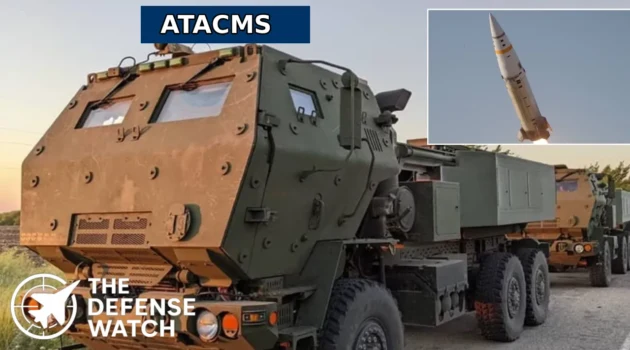
Ukraine has confirmed launching strikes into Russian territory using U.S.-supplied ATACMS missiles, marking a new chapter in Kyiv’s long-range strike capabilities. The announcement came after months of Pentagon-imposed restrictions that had previously limited Ukraine’s use of these advanced tactical missiles. Ukrainian officials disclosed that the strikes targeted critical military infrastructure deep inside Russia, signaling a significant escalation in the ongoing conflict.
Background
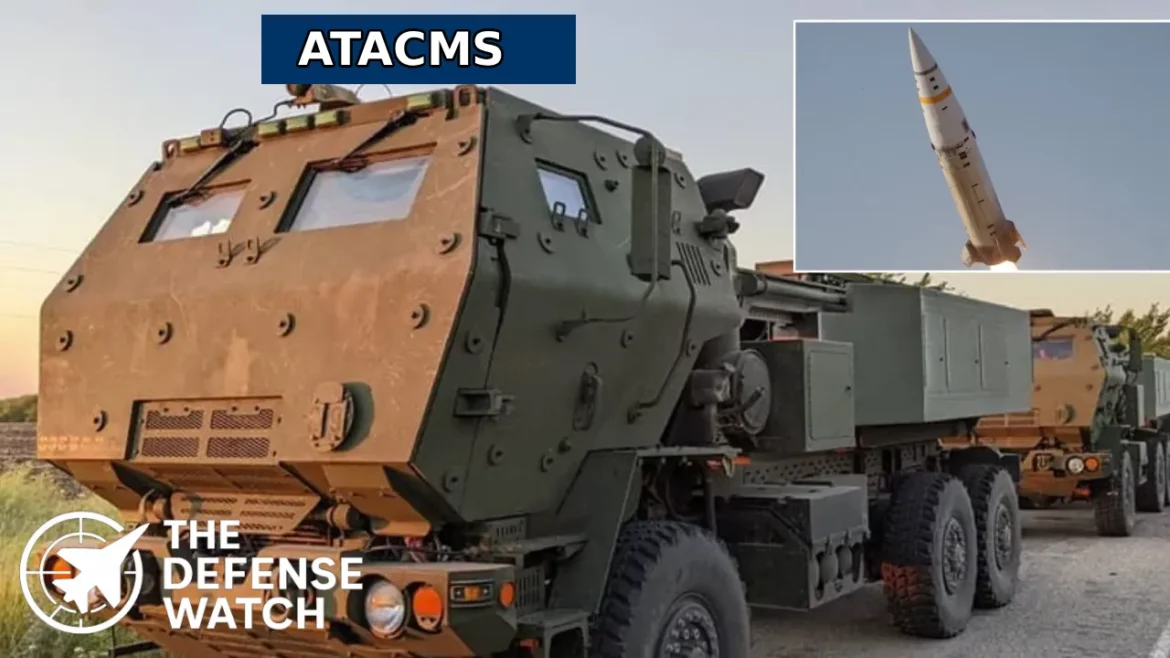
The ATACMS (Army Tactical Missile System) is a U.S.-developed surface-to-surface missile capable of striking targets up to 300 kilometers away with high precision. Since the onset of Russia’s invasion of Ukraine in 2022, the U.S. has provided a range of military assistance to Kyiv, including artillery, drones, and precision-guided munitions. However, ATACMS deliveries were initially restricted due to concerns about escalating the conflict into Russian territory. Pentagon sources had previously indicated that providing Ukraine with these long-range capabilities would be closely monitored to avoid direct confrontation.
Details of the Strikes
According to Ukrainian Defense Ministry officials, the strikes targeted ammunition depots and command centers located deep inside Russian territory, although specific locations were not disclosed for operational security reasons. The use of ATACMS marks the first confirmed deployment of U.S.-supplied tactical missiles in direct operations across the Russian border.
A Ukrainian military spokesperson stated, “These strikes demonstrate Ukraine’s growing capability to disrupt enemy operations beyond the immediate frontlines. ATACMS provides us with the precision and reach necessary to strike high-value targets safely.”
U.S. officials have confirmed the provision of ATACMS systems but emphasized that their use by Ukraine remains subject to ongoing coordination to minimize escalation risks. Analysts note that the strikes could have strategic and psychological impacts, demonstrating Kyiv’s ability to hit targets previously considered out of reach.
Expert Perspective
Defense analysts suggest that Ukraine’s deployment of ATACMS could alter operational calculations for both sides. “The introduction of long-range tactical missiles changes the battlefield dynamics. Russia must now consider vulnerabilities deep in its rear areas,” said Dr. Karen Thompson, a senior analyst at the Center for Strategic Defense Studies.
However, experts also caution that the increased range of strikes carries potential risks of escalation. Maintaining control over target selection and ensuring precise intelligence are critical to minimizing unintended consequences.
Impact and What’s Next
The confirmed use of ATACMS by Ukraine indicates an evolution in the conflict’s trajectory, highlighting Kyiv’s growing reliance on U.S. technological support to extend its strike capability. It also underscores the Pentagon’s continued strategic role in balancing military aid with broader geopolitical considerations.
Observers anticipate that additional missile systems and precision-guided munitions could follow in the coming months, potentially reshaping operational strategies across the conflict. The strikes serve as both a tactical advantage and a message of capability to Moscow, signaling that Ukrainian forces are increasingly able to project power beyond frontline engagements.
Saudi Arabia Greenlights 300 U.S.-Made Abrams Tanks
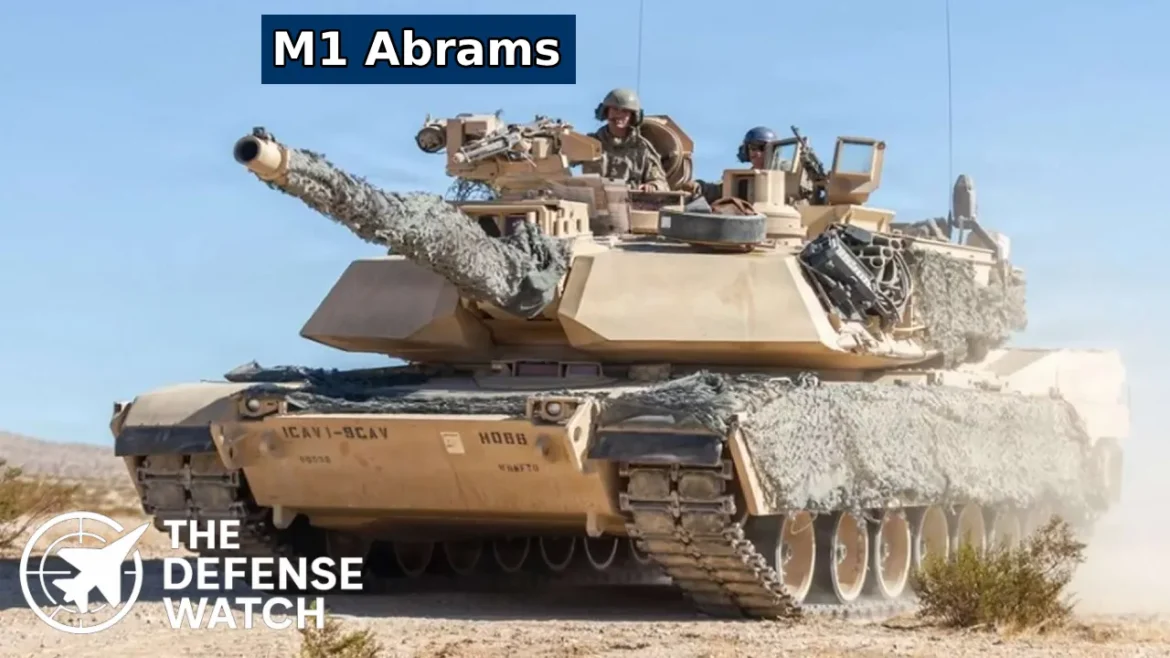
In a sweeping augmentation of its military capabilities, Saudi Arabia has confirmed the acquisition of nearly 300 M1 Abrams main battle tanks under a newly ratified Strategic Defense Agreement (SDA) with the United States, the White House announced on November 18, 2025.
Background: A Deepening of U.S.–Saudi Defense Ties
This announcement comes amid renewed high-level talks between Saudi leaders and the U.S. administration, signaling a major boost in the long-standing defense relationship between the two nations. According to a statement from the White House, the agreement not only includes tank sales but also provisions for F-35 stealth fighters – marking a significant milestone in U.S.-Saudi security cooperation.
The Abrams tanks, manufactured by General Dynamics Land Systems, represent a core component of U.S. armored warfare doctrine and have widespread adoption globally.
Key Deal Details and Strategic Implications
Scale and Purpose
- The confirmed order stands at roughly 300 Abrams tanks, making it one of the largest such sales to Riyadh in recent years.
- According to the White House, the deal “fortifies deterrence across the Middle East” and builds on burden-sharing mechanisms to bring “hundreds of American jobs” into the production chain.
Strategic Defense Agreement
- Under this Strategic Defense Agreement, Saudi Arabia is now formally recognized in a broader security framework with the U.S., allowing for streamlined defense cooperation.
- The pact is seen as a mechanism to deepen military industrial ties, affirm Riyadh’s role as a strategic U.S. partner, and potentially expand future arms sales.
Tank Variant and Capabilities
- While the White House did not specifically name the variant in its announcement, the most likely candidate is the M1A2S “Saudi Abrams”, a version tailored to Riyadh’s needs.
- The M1A2S variant is optimized for desert operations, featuring enhanced thermal sighting systems (second-generation FLIR), robust armor, and mission-management electronics suited to harsh environments.
Historical Context: Saudi Abrams Fleet
- Saudi Arabia already operates a substantial fleet of Abrams tanks. In late 2021, 153 M1A2 Abrams were delivered, upgraded to the M1A2S configuration.
- Previous U.S. Foreign Military Sales (FMS) arrangements also covered spare parts and logistic support under a Cooperative Logistics Supply Support Arrangement (CLSSA). For example, in 2024, Riyadh negotiated a $300 million CLSSA deal for repair parts for Abrams, Bradley fighting vehicles, and other systems.
- The 2016 U.S. State Department–approved sale of 153 M1A1/A2 tank structures to Saudi Arabia (for conversion to M1A2S) also included training, recovery vehicles, and support equipment.
Expert & Policy Perspectives
Defense analysts suggest this deal serves several strategic objectives:
- Burden sharing and industrial cooperation: By anchoring future procurement under the SDA, the U.S. may gain more predictable demand for its defense-industrial base, while Saudi Arabia strengthens its combat capabilities.
- Regional deterrence: The addition of advanced Abrams tanks bolsters Riyadh’s armored force posture in a region marked by simmering tensions, especially given proxy conflicts and rivalries.
- Integration and interoperability: The upgrade to M1A2S standard ensures compatibility with U.S. logistics, training regimes, and support – enhancing cooperation in joint operations or future exercises.
What’s Next: Challenges and Impact
Timeline and Delivery
- The White House did not disclose a specific delivery schedule. Given the scale of the order, deliveries could be phased over several years.
- Integration of the new tanks into Saudi doctrine and logistics could require additional training, infrastructure, and parts sustainment.
Political Considerations
- In Washington, some lawmakers may scrutinize the deal in light of broader human rights debates, export controls, and regional stability concerns.
- For Riyadh, the acquisition strengthens its long-term security architecture and deepens strategic alignment with the United States.
Industrial and Economic Effects
- The deal could generate thousands of U.S. manufacturing jobs, particularly at General Dynamics and its supply chain.
- On the Saudi side, a stronger armored force may spur further investments in maintenance, training, and possibly even co-production or localized assembly in the future.
Conclusion
Saudi Arabia’s confirmation of 300 Abrams tanks under a newly signed Strategic Defense Agreement with the United States marks a major deepening of military ties between Riyadh and Washington. The deal not only underscores the strategic importance of the Kingdom as a key U.S. partner in the Middle East but also bolsters Saudi armored capabilities with one of the world’s most advanced main battle tanks. As delivery and integration progress, both countries could further expand industrial cooperation and cement their shared defense architecture.
Abu Dhabi-based defense conglomerate EDGE Group announced plans to co-produce arms with U.S. weapons manufacturers, signaling a major push into the American market.
EDGE’s CEO, Hamad Al Marar, told Reuters this strategy includes potentially shifting some of EDGE’s production to U.S. soil.
This announcement comes on the heels of a newly disclosed joint venture with U.S. defense-tech firm Anduril Industries to build autonomous “hover-to-cruise” drones in the UAE, part of a broader effort to cement deep transatlantic industrial ties.
Background: Who Is EDGE & Why This Matters
Founded in 2019 and fully state-owned by Abu Dhabi, EDGE Group is a rapidly growing advanced technology and defense conglomerate. Its portfolio spans a wide range of capabilities—from drones, armored vehicles, and radar systems to cyber and secure communications tech.
EDGE’s industrial base is strongly rooted in the UAE: over 80% of its 220+ products are now made in-country, supported by more than 170 production and assembly facilities.
The company has also built up a substantial order backlog: roughly $21 billion, according to Al Marar, with much of its export-driven growth coming from regions like Africa and Latin America.
At IDEX 2025, EDGE showcased 46 new systems and struck or expanded global industrial partnerships.
Key Details
Expanding Ties with U.S. Defense Firms
- EDGE is in talks to co-produce weapons with major U.S. primes, including Raytheon, Lockheed Martin, and Northrop Grumman, according to Al Marar.
- The group did not provide firm timelines or specify which product lines would be involved in these collaborations.
- EDGE is also weighing an equity investment in Anduril, valued at around $30 billion, per Al Marar.
The Anduril Alliance & “Omen” Drone
- EDGE and Anduril have formed a joint venture, dubbed the EDGE-Anduril Production Alliance, to develop and manufacture the Omen autonomous air vehicle.
- The Omen is a “hover-to-cruise” drone: it takes off and lands like a helicopter but flies like a fixed-wing aircraft.
- EDGE is investing ~$200 million in the joint venture; Anduril already committed ~$850 million in its autonomy and development stack.
- A 50,000 ft² R&D and simulation facility is being established in Abu Dhabi to support the JV.
- First 50 Omen systems have already been ordered by a UAE customer, anchoring initial production.
- Under the JV’s structure, future production for U.S. orders could be fulfilled at Anduril’s “Arsenal-1” facility in Ohio.
Strategic & Economic Context
- EDGE’s move aligns with its broader goal to deepen integration with Washington and U.S. defense firms, thereby increasing its global industrial footprint.
- From the U.S. side, the collaboration could provide a trusted partner in the Middle East, while expanding access to EDGE’s sovereign-manufacturing capabilities.
- The broader backdrop includes the UAE’s massive planned U.S. investment — approximately $1.4 trillion, as pledged earlier in 2025.
Expert and Policy Perspective
From a geostrategic lens, EDGE’s push into the U.S. defense market represents a significant deepening of the UAE–U.S. industrial relationship. While the two countries have long cooperated on security, this marks a maturation toward joint manufacturing, not just procurement.
For U.S. defense firms, Edge potentially offers:
- Access to a sovereign, well-funded partner in a stable Gulf state.
- Co-development and export opportunities into markets where EDGE already has a presence, such as Latin America, Africa, and Southeast Asia.
- Risk-sharing on R&D, especially for advanced systems like autonomous drones.
From the UAE’s perspective, EDGE’s ambitions help realize key national priorities:
- Building a defense-industrial base under the “Make it in the Emirates” agenda.
- Expanding global reach while retaining sovereignty over critical technologies.
- Generating local employment and technical talent: EDGE emphasizes that its workforce-building efforts have yielded strong increases in Emirati technicians and engineers.
However, such partnerships may come under regulatory and security scrutiny. For instance, U.S. export control laws and foreign ownership restrictions could complicate joint production, especially for sensitive systems like munitions or highly autonomous platforms.
What’s Next & Watch Points
- Regulatory Approvals: EDGE and Anduril will need U.S. and UAE government approvals for their joint activities, especially for export-sensitive systems.
- Production Location: Will EDGE actually build components or full weapons systems in the U.S., or rely on co-production agreements?
- Export Strategy: To what markets will jointly built systems be exported? EDGE’s strength lies in emerging markets — will U.S. buyers be offered the same line?
- Further Investments: Will EDGE move ahead with its proposed equity investment in Anduril, and what will that mean for future JV projects?
- Technology Transfer Risks: As U.S. firms engage more deeply, managing sensitive technology and IP protection will be critical.
Bottom Line
EDGE’s announcement reflects a bold pivot: not just exporting its UAE-made systems, but manufacturing alongside U.S. defense giants for American end users. The move deepens the industrial dimension of the U.S.–UAE security relationship and aligns with both nations’ long-term strategic ambitions. But execution will hinge on navigating regulatory, technological, and export-control challenges — a test for EDGE’s global ambitions and U.S. firms’ willingness to share production with a foreign sovereign partner.
What’s Happened: Slow Creep and Power Cut Sabotage
Russia’s gradual consolidation of control over the Zaporizhzhia nuclear power plant — Europe’s largest — is sparking renewed alarm, as repeated outages, power-line damage, and allegations of sabotage raise the specter of a potential nuclear safety crisis.
Power was cut again in late September, severing the plant’s last external connection to Ukraine’s grid, forcing operators under Russian control to rely on back-up diesel generators.
Greenpeace and satellite analysts say there is no evidence of shell-crater damage to the downed pylon, suggesting deliberate sabotage rather than warhead strikes.
The outage triggered a ceasefire between Russian and Ukrainian forces to allow IAEA-supervised repairs. But critics warn the crisis could be politically manufactured to tighten Russian control over the site.
Context: Why Zaporizhzhia Matters
- Russia seized the plant in March 2022, early in its full-scale invasion of Ukraine.
- All six of its reactors remain in cold shutdown, but residual heat still requires active cooling.
- The plant once supplied nearly 20% of Ukraine’s electricity, making it both a symbolic and strategic asset.
- The IAEA maintains a contingent at the site, but its ability to enforce safeguards is limited under Russian occupation.
- After the destruction of the Kakhovka dam in 2023, water supply for cooling became more precarious, worsening safety risks.
Detailed Developments
Power‐Line Outage & Sabotage Allegations
- On September 23, the final 750 kV line supplying the plant was severed.
- Experts from McKenzie Intelligence Services, working with Greenpeace, found no signs of explosions or crater damage at the pylon site.
- Shaun Burnie, a nuclear specialist at Greenpeace, said the imagery “strongly suggests deliberate sabotage” to isolate the plant from Ukrainian power.
- According to a leaked Russian IAEA submission, Moscow had a contingency plan to reroute power from the Russian grid if the Ukrainian lines were cut.
Repair Under Ceasefire
- In October, IAEA-led teams brokered temporary ceasefires to begin restoration of the lines.
- The main 750 kV “Dniprovska” line was repaired under the first phase, per IAEA Director General Rafael Grossi.
- A secondary 330 kV line (Ferosplavna-1) is also under repair, though it passes through contested areas.
- IAEA warned that without a stable connection, the plant’s reliance on diesel generators is unsustainable.
Political Stakes & Moscow’s Long Game
- Russia’s Foreign Ministry has formally declared the plant part of its national territory, rejecting any joint operation or transfer.
- Sergey Lavrov, Russia’s foreign minister, ruled out handing control to third parties, including the U.S., saying it belongs to Rosatom.
- Ukrainian officials and Western experts warn that Russia may be manufacturing a nuclear crisis to justify full integration into the Russian energy grid.
- After annexing the region, Moscow reportedly began building new high-voltage transmission infrastructure to connect the plant to the Russian grid.
Expert & Policy Perspectives
From a geopolitical standpoint, analysts see Russia’s “slow creep” not as an accident but as a calculated strategy. By fragmenting supply lines, isolating the plant, and controlling its narrative, Moscow appears to be repositioning Zaporizhzhia as a leverage point — both for regional power politics and as a bargaining chip in potential peace deals.
IAEA Director Grossi has repeatedly warned that the plant’s fragile power situation represents a long-term nuclear safety risk.
Meanwhile, Global Policy Journal analysts argue that Russia’s legal reinterpretation of the plant’s status under annexation is part of a broader effort to normalize control, undermining international norms on nuclear governance.
Ukraine’s Foreign Ministry has urged greater IAEA engagement and called for sanctions against Rosatom, saying that only Kyiv’s regulators should have a say in operating the plant.
What Comes Next
- IAEA monitoring will remain critical: any new outages or damage will be scrutinized under international frameworks.
- Russian grid link: Observers will closely watch how fast and how deeply Russia integrates the plant into its power network.
- Diplomatic pressure: Kyiv and its allies may lean more heavily on the IAEA, sanctions, and international forums to contest Moscow’s claims.
- Safety risk escalation: A repeat of a prolonged blackout, or generator failure, could turn a political crisis into a catastrophic nuclear accident.
What Happened
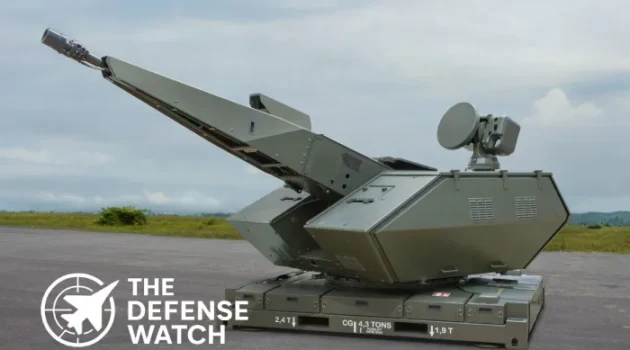
Germany has completed the delivery of four Rheinmetall Skynex short-range air defense systems to Ukraine, according to statements by Rheinmetall CEO Armin Papperger. The systems are now operational, particularly in western Ukraine, where they are deployed to protect power plants and critical grid infrastructure from Russian loitering munitions and cruise missile threats.
Background: Why Skynex Matters
The Skynex system is designed for very short-range air defense (VSHORAD), optimized to counter small, low-flying threats such as drones—including Shahed loitering munitions—as well as cruise missiles.
Germany first committed to supplying Skynex systems under a contract with Rheinmetall in late 2022. The modular architecture comprises a command node (Oerlikon Skymaster), radar (X-TAR3D), and up to four 35 mm Revolver Gun Mk 3 turrets per battery.
Each 35 mm turret uses AHEAD (Advanced Hit Efficiency And Destruction) programmable airburst ammunition, which deploys subprojectiles to form a dense tungsten cloud in front of the target—very effective against small drones and cruise missiles.
The range and performance
The Mk 3 cannon has an effective range up to ~4 km, can engage targets up to around 3,500 m in altitude, and can fire at a cyclic rate of up to 1,000 rounds per minute. The radar (X-TAR3D) enables 360-degree coverage out to roughly 50 km.
Deployment & Operational Role
According to the German Aid to Ukraine (GAU) monitoring project, the full four-system Skynex package (each with four guns) has been delivered and deployed.
In Ukrainian service, Skynex batteries are primarily assigned to Air Command West, tasked with defending key power plants and grid nodes from aerial threats.
In one reported August 2025 strike, Air Command West said it intercepted 42 Shahed drones and 11 cruise missiles in a single attack, with visual footage of a Skynex turret engaging multiple targets—firing a burst, quickly re-aiming, and engaging another target.
Industrial & Logistical Implications
A key strategic advantage of Skynex lies in its cost-efficiency. The 35 mm AHEAD rounds are far cheaper per engagement than guided missile interceptors, making it viable for high-volume, repeated use.
Ukraine already uses 35 mm ammunition in its Gepard self-propelled anti-aircraft guns, meaning existing supply chains can support sustained Skynex operations. Rheinmetall is reportedly expanding AHEAD production capacity, including in its facility in Várpalota, Hungary, to meet demand.
For Germany, the Skynex deliveries also support its broader European Sky Shield Initiative, strengthening integrated short-range air defense across Europe.
The fact that Rheinmetall has now fulfilled the entire pledged delivery (four systems) reflects not only industrial capacity but political will.
Expert & Policy Analysis
From a doctrinal standpoint, Skynex fills an important mid-layer role in Ukraine’s layered air-defense architecture:
- Missile systems (like Patriot, IRIS-T SLM, NASAMS) handle high-altitude, long-range, or high-speed threats.
- Skynex absorbs much of the threat from low-flying, saturating drones and cruise missiles in the terminal phase (within ~4 km).
- By doing so, Skynex frees up costly missile interceptors for more strategic threats, optimizing Ukraine’s limited stockpiles.
Industry observers say this could become a template for NATO-standard short-range air defense, especially with other European customers adopting Rheinmetall’s 35 mm gun + AHEAD ecosystem.
There’s also a political signal: Germany’s completion of its Skynex commitment underscores Berlin’s continued high-end support for Ukraine. As Germany has also delivered other systems, like IRIS-T and Patriot interceptors, this package reaffirms an integrated posture.
What to Watch Next
- Sustainment: Will Ukraine be able to maintain Skynex operations long term? Key will be continued supply of 35 mm AHEAD ammunition and spare parts.
- Further deliveries: Will Germany or other allies commit more Skynex or similar systems? Rheinmetall has already won orders in Europe.
- Integration: How will Skynex batteries mesh with Ukraine’s broader air-defense network (radars, command posts, higher-tier missile systems)?
- Operational performance: Continued open-source footage and Ukrainian statements may give insight into how effective Skynex is under real combat conditions, particularly against drone swarms or mixed missile attacks.
Conclusion
Germany’s completion of all four pledged Skynex air defense systems to Ukraine marks a significant reinforcement of Kyiv’s ability to defend critical infrastructure against Russian aerial threats. With its low-cost, high-rate-of-fire gun architecture, Skynex fills a vital gap in Ukraine’s air-defense shield—especially against saturating drone and cruise missile attacks. As Ukraine continues to build a layered and resilient air defense posture, Skynex could emerge as a cornerstone of efficient, high-volume terminal defense—and a model for other European nations as they modernize their short-range air defenses.
A Strategic Shift: Air Force Evaluates Low-Cost Missiles
The U.S. Air Force is poised to begin formally evaluating a new class of low-cost missiles, designed to counter increasingly numerous aerial threats. According to an Air & Space Forces Association report, the service has invited industry proposals under its Counter Air Missile Program (CAMP) — a clear indicator of its pivot toward scalable munitions.
Pentagon officials and industry executives say this push reflects a hard lesson from recent conflicts: adversaries are stockpiling attack drones, cruise missiles, and ballistic systems. Rather than rely solely on expensive, high-end precision weapons, U.S. defense planners believe large inventories of cheaper missiles are essential to sustain a protracted fight.
Key Industry Players and Missiles in Focus
Several defense companies have already responded with low-cost designs that align with the Air Force’s ambitions:
- Lockheed Martin has introduced its Common Multi-Mission Truck (CMMT) — a modular, subsonic cruise missile that could cost as little as ~$150,000 per unit.
- Lockheed is also developing two variants: a glide variant (CMMT-D) and a powered experimental version (CMMT-X).
- Leidos, in collaboration with Moog and under a CRADA with U.S. Special Operations Command and AFSOC, is advancing its Small Cruise Missile (SCM) — nicknamed Black Arrow. The missile reportedly weighs around 91 kg and can carry kinetic or non-kinetic payloads.
- Anduril Industries is pitching its Barracuda-M series, a turbojet-powered, subsonic missile family engineered for high-volume production.
Program Details: FAMM and CAMP
The evaluation is part of the broader Family of Affordable Mass Munitions (FAMM) initiative. Retired Col. Mark Gunzinger of the Mitchell Institute describes the shift as “a major change” in how the Air Force plans to structure its munitions inventory — emphasizing not just air-to-surface weapons but expanding into surface-to-air and air-to-air variants.
Budget documents tied to FAMM include plans to procure more than 3,000 cruise missiles, at a per-unit target cost of roughly $218,000 under a $656.3 million commitment.
Proposals submitted under CAMP will be evaluated across phases:
- Phase One — prototype of a ground-launched missile, with full-rate production targets of 1,000 to 3,500 units per year, and a goal unit cost of under $500,000.
- Phase Two and beyond — transition into a program of record, expanding into air-launched (air-to-air) variants.
The white paper call for submissions closes on Dec. 2, and successful proposals will enter a 24-month development window, with a first flight test expected within nine months.
Analysis: Why This Matters for the U.S. Military
- Resetting the Cost-Exchange Ratio
In a future conflict, the U.S. could face swarms of inexpensive drones and massed missile salvos. The Air Force’s current inventory skews toward sophistication and stealth — but not necessarily quantity. By fielding cheaper munitions, the service hopes to avoid depleting its more capable weapons and maintain a credible deterrent. As Gunzinger put it, “we’re on the wrong side of the cost-exchange ratio.” - Industrial Base Resilience and Surge Capacity
Producing thousands of low-cost missiles annually demands scalable manufacturing. This could revitalize parts of the U.S. defense industrial base, especially in small turbine engines, modular warheads, datalinks, and sensors — areas where cost-effective innovation is critical. - Strategic Flexibility
A family of mass munitions enables flexible mission planning: from suppressing cruise missile threats with large salvos, to using non-kinetic payloads for escalation control or signature management. It also provides a hedge against attrition in high-intensity conflict. - Peer Competition Implications
Adversaries such as Russia and China are investing heavily in missile stockpiles and unmanned systems. The U.S. pursuit of affordable mass munitions is a direct counter — signaling not just high-technology superiority but also capacity for sustained mass fires.
Challenges and Risks
- Price vs. Performance Trade-off: While low cost is attractive, ensuring reliability, range, and effectiveness at scale is difficult. Cheaper systems may sacrifice range, guidance, or warhead size.
- Integration Complexity: New low-cost missiles must be compatible with existing platforms (e.g., pallet launchers, cargo aircraft, fighters), while maintaining safe and effective operations.
- Budget Execution: Meeting annual production targets of up to 3,500 missiles hinges on consistent funding, supplier stability, and ramping up manufacturing capacity — not always guaranteed in defense budgets.
- Arms Control Risks: Mass production of inexpensive missiles may spark concerns internationally, potentially raising the risk of arms races or escalation, particularly in contested regions.
Conclusion: A New Era of Affordable Mass
The Air Force’s move to formally evaluate low-cost missile offerings marks a strategic turning point. Through its FAMM initiative and CAMP solicitation, the service is betting that quantity can be a capability, not just quality. If successful, this would reshape U.S. munitions strategy — enabling both high-end precision strike and massed, scalable fires.
The coming months will be critical: which designs survive evaluation, how quickly they can transition to production, and whether the industrial base can deliver at the targeted scale. Should these efforts pay off, the Air Force could emerge from this initiative with a cost-effective arsenal that better matches the evolving threat landscape — particularly in high-intensity, large-scale conflicts.