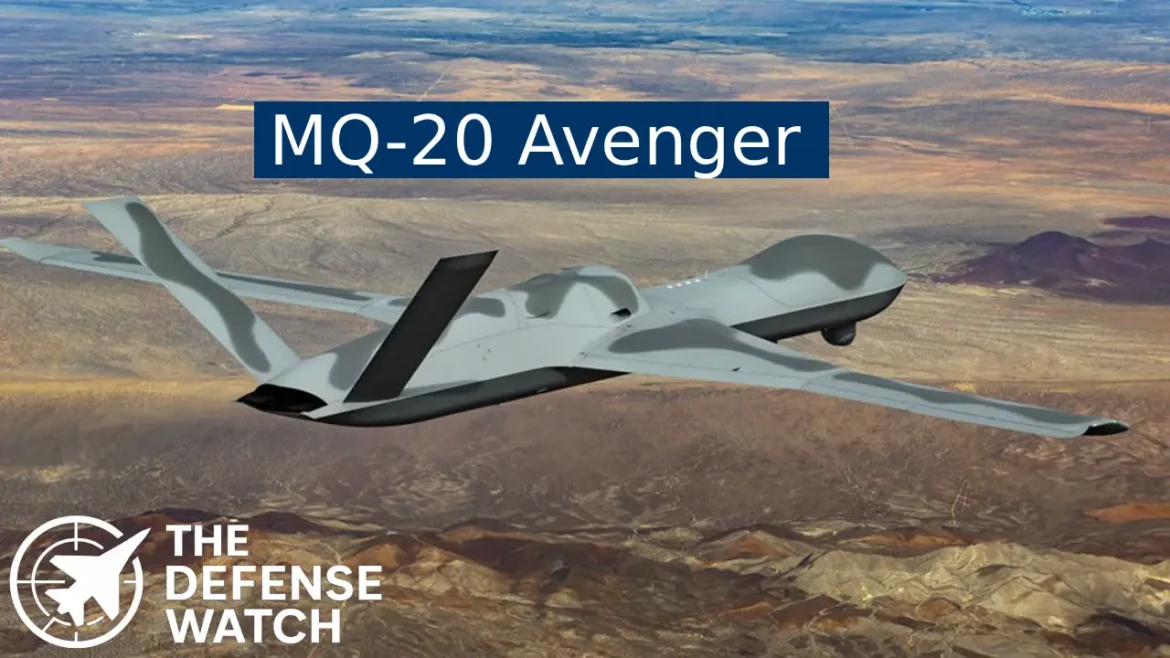
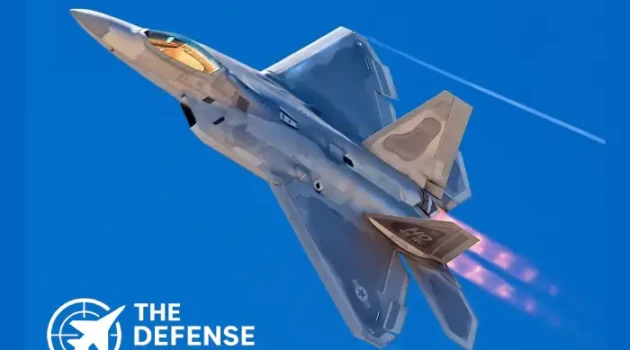
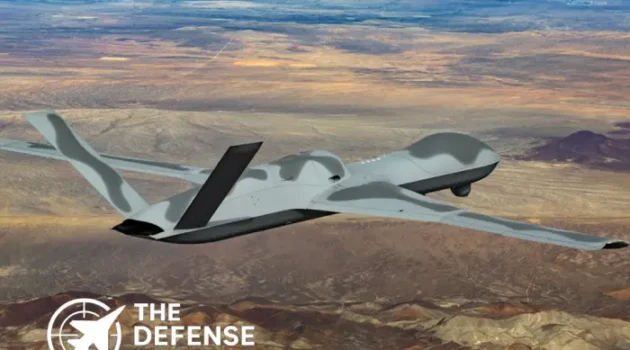
In a landmark demonstration on October 21, 2025, General Atomics Aeronautical Systems (GA-ASI), Lockheed Martin, and L3Harris successfully executed a cre wed-uncrewed teaming flight test in which an F-22 Raptor pilot commanded an MQ-20 Avenger drone integrated on board – a first of its kind. The exercise, carried out at the Nevada Test and Training Range, marks a significant step forward in the U.S. Air Force’s push toward Collaborative Combat Aircraft (CCA) and advanced manned-unmanned operations.
What Happened: The Flight Test Details
- The test involved installing two L3Harris software-defined radios (SDRs): one aboard the F-22, and another aboard the MQ-20.
- These radios used L3Harris’ BANSHEE advanced tactical datalinks and the Pantera SDR system integrated via Lockheed Martin’s open-radio architecture.
- From the cockpit, the F-22 pilot used a Pilot Vehicle Interface (PVI) tablet in conjunction with a new GRACE module (“Government Reference Architecture Compute Environment”) to send commands.
- GA-ASI characterized the communications chain as entirely non-proprietary and fully U.S. government-owned, built on Open Mission Systems principles.
Technical and Strategic Context
The MQ-20 Avenger is a stealthy, jet-powered unmanned combat aerial vehicle (UCAV) developed by GA-ASI. Unlike turboprop drones, it features a low-observable profile, internal weapons bays, and high speed/endurance.
Over the past year, the Avenger has been integrated with autonomy software, most notably Shield AI’s Hivemind, enabling it to conduct complex maneuvers like combat air patrols and simulated air-to-air engagements.
Moreover, this F-22/Avenger test follows previous milestones, such as the U.S. Navy’s live-control flight of the MQ-20 via a carrier-based ground station using Lockheed Martin’s MDCX platform.
Why This Matters: Analysis
Advancing the CCA Vision
This demonstration directly feeds into the U.S. Air Force’s Collaborative Combat Aircraft (CCA) strategy, which envisions manned fighters working alongside autonomous “drone wingmen” to enhance combat effectiveness, resilience, and flexibility.
By showing that a legacy platform like the F-22 can control an autonomous UCAV using open-architecture radios, the test proves that even older high-end assets can be rapidly modernized for future force structures.
All-Domain Connectivity and Interoperability
The use of non-proprietary, government-owned datalinks is particularly significant. It ensures greater resilience against supply-chain vulnerabilities, expands opportunities for allied interoperability, and reduces dependence on single-vendor systems.
Modular Autonomy in Action
Coupled with earlier tests of Shield AI’s Hivemind software, this trial underscores how modular autonomy (open architectures + reference software) can deliver agile, rapidly fieldable capabilities.
This model supports future scaling: additional drones, different fighter jets, or alternative autonomy stacks can be integrated without rearchitecting the entire system.
Implications for Force Multiplication and Cost Efficiency
If F-22s (and eventually other fighters) can reliably control UCAVs, it could dramatically expand the force’s reach. Pilots may direct more assets for strike, surveillance, or suppression missions, potentially reducing the number of manned sorties required and lowering risk to human pilots.
Challenges and Considerations
- Security & Jamming Risks: In contested electromagnetic environments, maintaining reliable datalink performance under jamming or cyberattacks remains a critical concern.
- Pilot Workload: Managing a high-performance fighter and simultaneously controlling a drone raises questions about cognitive load and ergonomic design.
- Certification & Safety: Extensive testing will be required to certify such systems for regular operational use, especially considering safety, autonomy fail-safes, and emergent behavior in contested airspace.
- Scalability: While this was a company-funded R&D demo, scaling to full operational deployment (across squadrons) will involve cost, logistics, training, and sustainment challenges.
Conclusion & Outlook
The F-22–MQ-20 Avenger teaming test represents a major milestone in the U.S. drive toward crewed-uncrewed collaborative warfare. By proving that a stealth fighter can directly command a stealth drone using open, government-owned datalinks, industry and the Air Force are laying the technical and doctrinal foundation for scalable Collaborative Combat Aircraft operations.
Looking ahead, we can expect further demonstrations involving other platforms (e.g., F-35, F-15), more sophisticated autonomy stacks, and perhaps even live-fire exercises. As the CCA vision matures, such teaming concepts could reshape how the U.S. projects airpower — blending human judgment with autonomous persistence, creating more flexible, resilient, and distributed mission architectures.
Russia Puts Su-57E on Display in Dubai
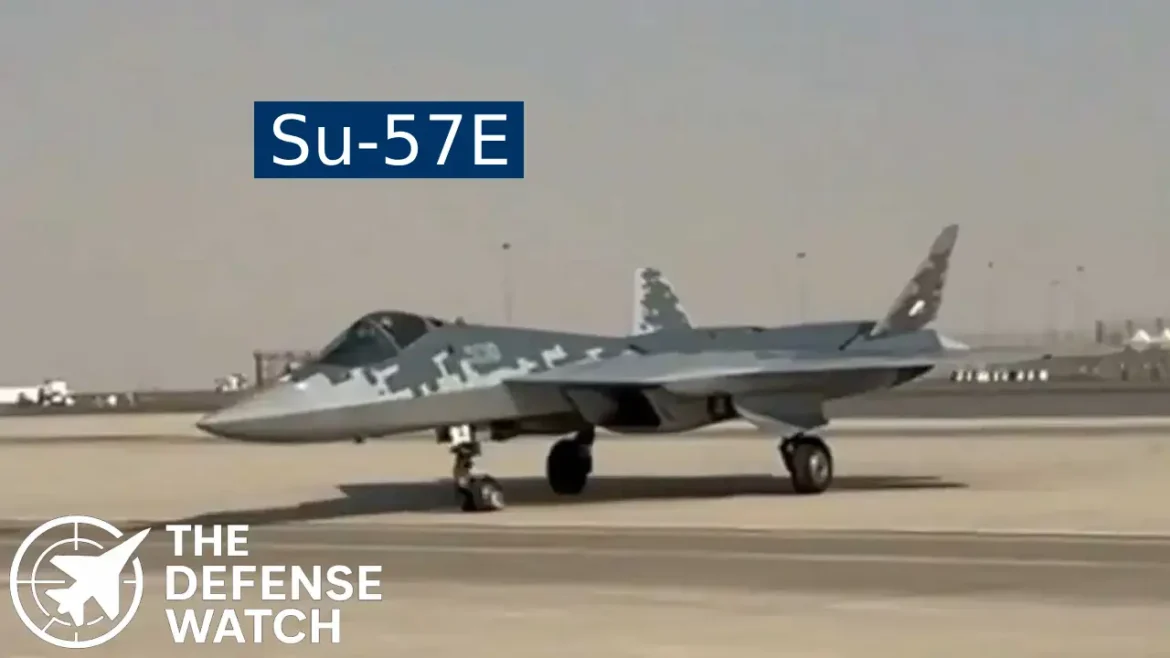
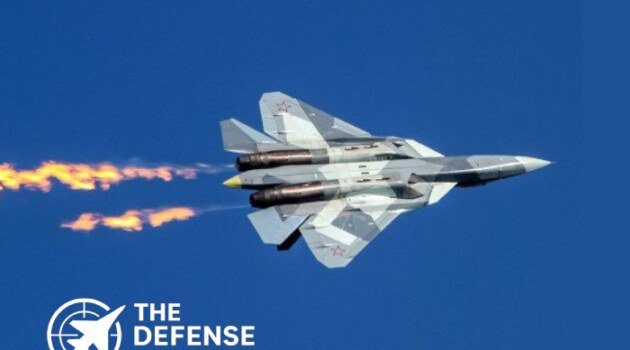
At the Dubai Airshow 2025, Russia publicly displayed its Su-57E, the export variant of the Su-57 fifth-generation fighter, for the first time in the Middle East. According to Russian defense authorities, the aircraft performed both static demonstration and flight displays — including high-angle-of-attack maneuvers, yaw rolls, and post-stall flight — to showcase its supermaneuverability and advanced thrust-vectoring capability.
Rosoboronexport and Sukhoi officials emphasized the Su-57E’s role as a multirole stealth platform suited for both air-to-air combat and strike missions.
What Makes the Su-57E Distinct
The Su-57E is tailored for export customers with certain cost optimizations, while retaining core performance traits: low observability, internal weapons bays, and a highly agile airframe.
Moscow has offered unprecedented technology transfer, including full access to the aircraft’s source code, allowing buyers to integrate their own avionics, mission computers, and weapons.
In a proposal to India, Russia has offered to produce the Su-57E locally at HAL’s Nashik facility, leveraging India’s ongoing Su-30MKI production lines.
India: A Key Target for Su-57E Sales
Russia’s outreach to India is especially ambitious. The offer includes:
- 20–30 Su-57E jets delivered off-the-shelf in the short term.
- Deep localization with 40–60% of the aircraft built in India.
- Full transfer of source code, enabling integration of Indian weapons such as the Astra air-to-air missile, Rudram anti-radiation missile, and Virupaksha AESA radar.
- Engine support: Russia has proposed supplying its AL-41F1S engine and, in the future, the newer Izdeliye-177S engine to India.
- An invitation for Indian Air Force test pilots to evaluate the Su-57E firsthand.
A recent technical assessment by a Russian delegation reportedly found that HAL already possesses around 50% of the capacity needed to produce Su-57 jets.
Export Track Record: Algeria First Customer
Algeria became the first confirmed export customer of the Su-57E, with deliveries expected in 2025. Reports suggest an initial batch of six aircraft, along with pilot training in Russia and support infrastructure.
Despite being offered at a lower price point than Western stealth fighters, the Su-57E has raised questions about sustainment, production scale, and long-term support — especially in the context of Russia’s strained defense-industrial base under sanctions.
Analysis: What This Means for U.S. Defense and Global Security
Challenging U.S. Dominance in Stealth Exports:
The Su-57E’s public debut in Dubai signals Russia’s renewed ambition to compete in the global fifth-generation market. Traditionally, stealth fighter exports have been dominated by U.S. aircraft such as the F-35. Offering source code access and deep technology transfer marks a departure from conventional Western export models, potentially appealing to countries that prioritize operational sovereignty.Strategic Implications in the Indo-Pacific:
Russia’s pitch to India reflects a long-term vision. If India accepts and co-produces the Su-57E, New Delhi could develop a homegrown stealth ecosystem, weakening U.S. leverage and shifting the regional defense balance. This comes amid India’s development of its own Advanced Medium Combat Aircraft (AMCA), and could act as an interim solution for India’s fifth-generation ambitions.Sustainment Risks and Geopolitical Constraints:
However, questions remain. Russia’s own Su-57 program has faced production delays, and sanctions could complicate parts supply and long-term maintenance for export customers. For Gulf buyers, embracing the Su-57E may offer cost-effective stealth, but it also ties them to a partner facing geopolitical and industrial headwinds. These aspects could limit broad adoption unless Russia proves it can reliably deliver and sustain the platform.Conclusion: Strategic Push and Watch for Buyers
Russia’s showcase of the Su-57E at the Dubai Airshow may mark a turning point in global stealth fighter exports. By combining attractive pricing, technology transfer, and export readiness, Moscow is staking out a position as a major competitor to traditional Western suppliers.
For buyers in the Middle East and Asia, the Su-57E represents a compelling, sovereign-rich path to fifth-generation combat capability. But the critical test ahead will be whether Russia can deliver on sustainment, production scale, and parts reliability under increasingly challenging geopolitical conditions.
As discussions deepen — especially with key potential buyers such as India — the Su-57E deal could reshape regional airpower dynamics and trigger a reassessment of long-term procurement strategies. For U.S. defense stakeholders, this underlines the need to sharpen competitive offerings and deepen alliances to counter Russia’s growing influence in the global stealth market.
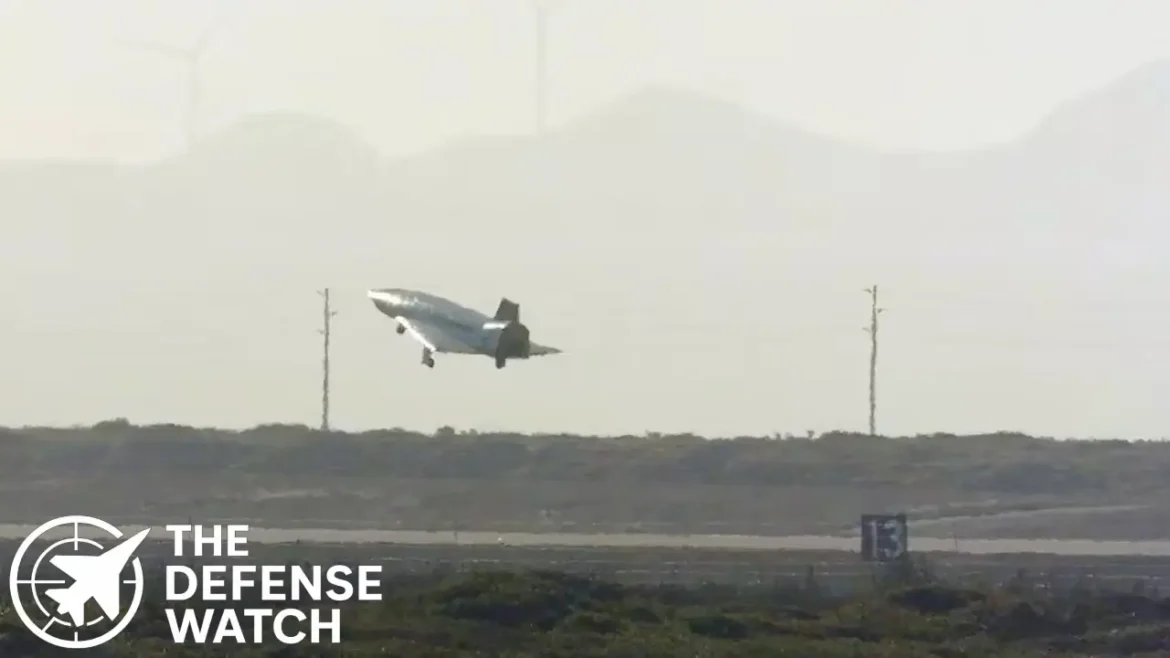
Revolutionary Reusable Hypersonic Testing Takes Flight
Stratolaunch has achieved a historic milestone in hypersonic technology, successfully completing two Talon-A hypersonic aircraft flights that exceeded Mach 5 speeds and featured full vehicle recovery. The California-based company’s Talon-A2 vehicle conducted flights in December 2024 and March 2025 as part of the Pentagon’s Multi-Service Advanced Capability Hypersonic Test Bed (MACH-TB) program, marking the first reusable hypersonic aircraft operations since the X-15 program ended in 1968.
Both flights met all Defense Department performance benchmarks within a one percent margin , demonstrating unprecedented precision in hypersonic testing. The March flight exceeded the December speed record, with the fully autonomous vehicle landing successfully at Vandenberg Space Force Base in California after each mission.
This achievement represents a fundamental shift in how the United States approaches hypersonic technology development. The ability to reuse the Talon-A will eventually make it a more affordable hypersonic testbed by orders of magnitude, addressing a critical bottleneck that has hampered U.S. hypersonic weapons development for decades.
Inside the Talon-A Hypersonic Aircraft
The Talon-A is a fully autonomous, rocket-powered hypersonic vehicle designed to serve as a reusable testbed for validating components, subsystems, and technologies under realistic flight conditions. The wedge-shaped unmanned aircraft features modular payload spaces to support high-speed flight test activities, allowing customers to rapidly iterate on hypersonic designs without the expense and complexity of full-scale weapon systems testing.
The air-launched Talon-A is ferried aloft by a captive-carry mother ship before accelerating to hypersonic speeds using a Hadley rocket engine developed by Colorado-based Ursa Major. While hypersonic speed is usually defined as anything above Mach 5, the Talon-A is expected to be able to reach speeds of at least Mach 6.
The vehicle’s autonomous capabilities eliminate the need for onboard pilots, reducing risk while enabling more aggressive test profiles. Stratolaunch’s Department of Defense customer, the Test Resource Management Center, can immediately recover and begin pulling data from the payloads flown on the vehicle following landing, dramatically accelerating the development cycle compared to expendable test vehicles.
Stratolaunch has conducted four Talon-A flights to date, with the company focused on expanding the vehicle’s flight envelope. Emphasis is on expanding its flight envelope, allowing it to fly faster, perform more maneuvers, and maintain hypersonic speeds for longer durations.
URSA Major’s Hadley Engine Powers Hypersonic Breakthrough
The propulsion system enabling Talon-A’s hypersonic performance is Ursa Major’s Hadley liquid rocket engine, a 5,000-pound-thrust liquid oxygen and kerosene, oxygen-rich staged combustion cycle reusable rocket engine for small vehicles or hypersonic applications.
Unlike historical rocket engines, Ursa Major uses metal additive manufacturing to speed up the production process, allowing the company to build engines in a matter of days. This advanced manufacturing approach represents a significant departure from traditional aerospace production methods, enabling rapid iteration and cost reduction.
The Hadley engine achieved a major milestone with the Talon-A flights. Both test flights exceeded flight and power objectives for Stratolaunch’s Talon-A2 testbed and featured the successful recovery of the hypersonic testbed vehicle post-landing for reuse Ursa Major CEO Dan Jablonsky stated the flights demonstrate the company is answering the call from military and government partners to innovate and meet the mission to provide critical national security capabilities.
The Hadley represents the first in a family of propulsion systems from Ursa Major. Hadley enables the U.S. Department of Defense to field new mission solutions faster and advances performance metrics of speed, range, and payload. The engine’s versatility has proven valuable across multiple applications, with Ursa Major delivering Hadley engines for both space launch and hypersonic missions.
In June 2025, Ursa Major was awarded a $32.9 million contract to develop and deliver 16 upgraded Hadley H13 engines to Stratolaunch. The Hadley H13 is a mission-upgraded variant that increases engine reusability with additional starts, driving down cost per flight while supporting new test objectives and mission profiles.
The Roc: World’s Largest Aircraft Serves as Launch Platform
Enabling Talon-A’s hypersonic missions is the Stratolaunch Roc, the world’s largest aircraft by wingspan. The aircraft features a twin-fuselage design and the longest wingspan ever flown, at 385 feet, surpassing even the legendary Hughes H-4 Hercules “Spruce Goose.”
Stratolaunch is powered by six Pratt & Whitney PW4056 engines positioned on pylons outboard of each fuselage, providing 56,750 pounds-force of thrust per engine. Many of the aircraft systems have been adopted from the Boeing 747-400, including the engines, avionics, flight deck, landing gear and other systems, reducing development costs.
The massive carrier aircraft serves as a mobile launch platform, carrying Talon-A vehicles to altitude before releasing them for powered hypersonic flight. Stretching over a football field long, Roc supports a robust payload capacity of over 500,000 pounds. The dual-fuselage configuration allows payloads to be carried between the fuselages and released from the center wing, providing optimal aerodynamic conditions for separation.
Roc has completed 24 flights to date, progressively expanding its operational envelope to support increasingly demanding hypersonic test missions. The aircraft requires specialized facilities, with the aircraft requiring 12,000 feet of runway to lift off.
Expanding Global Operations with Spirit of Mojave
Recognizing operational limitations imposed by Roc’s massive size, Stratolaunch is modifying its carrier aircraft to support test flights of its hypersonic Talon-A vehicle around the globe through a nearly $25 million contract from the Missile Defense Agency. The company will modify a Boeing 747-400 platform dubbed Spirit of Mojave to support hypersonic missions.
Through the Missile Defense Agency contract, the company will modify one of its launch platforms to fly from any airport that can support an aircraft the size of a 747 jetliner. Stratolaunch hopes to have the modifications complete to support testing by the fourth quarter of 2025.
The modifications will include installing Stratolaunch’s release mechanism on Spirit of Mojave, along with upgraded electrical interfaces and configured onboard displays for Talon-A operations. Having two test platforms equipped to fly Talon-A gives Stratolaunch flexibility to support multiple Department of Defense customers whose testing needs extend beyond the West Coast, which is where Roc has conducted Talon-A testing to date.
For the Missile Defense Agency, flexibility means it can test and calibrate the performance of its sensors to detect missiles launched from different locations around the world. This capability is critical for developing the Hypersonic and Ballistic Tracking Space Sensor experimentation effort and other advanced missile defense programs.
MACH-TB Program Accelerates U.S. Hypersonic Development
The Talon-A flights directly support the Pentagon’s Multi-Service Advanced Capability Hypersonic Test Bed program, a critical initiative designed to overcome infrastructure limitations that have constrained U.S. hypersonic development. MACH-TB was created in 2022 as part of efforts to help improve the Defense Department’s lagging hypersonic test infrastructure, which has slowed U.S. hypersonic weapons development.
The effort is led by the Pentagon’s Test Resource Management Center and the Naval Surface Warfare Center’s Crane Division. The program’s flying testbed is designed to validate hypersonic subsystems, advanced materials and other technologies as a system is being developed.
To address testing challenges, Department of Defense leaders have been on a path since 2022 to increase the department’s hypersonic flight cadence to around one test per week, and MACH-TB is a big part of that initiative. The program uses systems like Talon-A, which is powered by Ursa Major’s Hadley engine, as well as Rocket Lab’s HASTE rocket and Kratos’ Erinyes to test components and subsystems in a realistic flight environment that mimics the harsh conditions hypersonic vehicles face.
Program achievements have been significant. Scott Wilson, MACH-TB Program Manager, stated the data collected from the experiments flown on the initial Talon-A flight has been analyzed and the results are extremely positive. George Rumford, Director of the Department of Defense Test Resource Management Center, emphasized demonstrating the reuse of fully recoverable hypersonic test vehicles is an important milestone for MACH-TB, with lessons learned from this test campaign helping reduce vehicle turnaround time from months down to weeks.
Stratolaunch is on contract for five MACH-TB flights and will support a Missile Defense Agency test campaign later in 2025 . The company has a full flight manifest through 2025 and has started booking Talon-A missions for 2026.
MACH-TB continues evolving with MACH-TB 2.0, which transitions the program from concept demonstration to full-flight test capacity. After conducting over 25 flight tests and creating a hypersonic boost glide testbed under MACH-TB 1.0, the Pentagon is now moving to transition that technology from design and concept demonstration to full-flight test capacity in fiscal 2025 under the follow-on MACH-TB 2.0 effort. In January 2025, the Defense Department tapped Kratos to develop a testbed for hypersonic vehicles under the Multi-Service Advanced Capability Hypersonic Test Bed 2.0 program, with an agreement worth $1.45 billion if all options are exercised.
Analysis: Strategic Implications for U.S. Hypersonic Capabilities
Stratolaunch’s successful demonstration of reusable hypersonic flight testing capabilities arrives at a critical juncture for U.S. defense strategy. China and Russia have made substantial progress in hypersonic weapons development, with both nations fielding operational systems. The ability to conduct frequent, affordable hypersonic tests represents a potential game-changer for the United States as it seeks to close capability gaps with peer competitors.
The economics of reusable hypersonic testing cannot be overstated. Traditional hypersonic development has been constrained by the high cost and limited availability of test opportunities. Most major programs conduct only a handful of tests annually, with each expendable flight representing millions of dollars and months of preparation. By demonstrating vehicle recovery and reuse within months, Stratolaunch has validated a model that could enable weekly testing cadences envisioned by Pentagon planners.
The rapid turnaround demonstrated by Talon-A—flying twice in three months—suggests the potential for dramatically accelerated development cycles. This capability allows engineers to test incremental design changes and validate technologies under realistic flight conditions far more frequently than previously possible. The modular payload architecture enables multiple customers to leverage the same testbed platform, sharing costs while advancing diverse technology areas simultaneously.
URSA Major’s role as a commercially-focused propulsion provider represents another strategic advantage. The company’s use of advanced manufacturing techniques and oxygen-rich staged combustion cycle technology—previously the exclusive domain of Russian engine manufacturers—demonstrates growing U.S. industrial base capabilities in critical propulsion technologies. The Hadley engine’s versatility across both hypersonic and space launch applications provides economies of scale that reduce per-unit costs while maintaining high performance.
The expansion to Spirit of Mojave operations addresses a key operational limitation: geographic flexibility. Hypersonic threats can originate from any vector, and sensor systems designed to detect and track these weapons must be validated against realistic flight profiles from multiple launch points. A 747-based launch platform can operate from dozens of airfields globally, enabling test campaigns that more accurately replicate operational scenarios the U.S. and allied forces would face in conflict.
However, challenges remain. The United States still lacks fielded operational hypersonic weapons systems, despite years of development and billions in investment. While improved test infrastructure addresses one bottleneck, translating test data into deployable weapons requires sustained focus on systems integration, manufacturing scale-up, and operational doctrine development. The Government Accountability Office has noted concerns about program transparency and cost-effectiveness, issues that will require continued attention as programs transition from testing to production.
The competitive landscape also continues evolving. China’s hypersonic anti-ship ballistic missiles and Russia’s Kinzhal and Avangard systems represent operational capabilities against which U.S. systems must be measured. While test infrastructure improvements are essential, they must be accompanied by parallel progress in propulsion technologies, guidance systems, and hypersonic-capable air defense platforms.
Stratolaunch’s achievement demonstrates that private industry innovation can deliver critical capabilities for national security missions. The company’s transition from space launch to hypersonic testing—following founder Paul Allen’s death and subsequent acquisition by Cerberus Capital Management—illustrates how specialized aerospace firms can adapt to evolving defense priorities. This model of leveraging commercial innovation for defense applications aligns with broader Department of Defense initiatives to accelerate technology development through non-traditional partnerships.
Looking ahead, the key question is whether this testing capability translates into fielded systems that provide meaningful military advantage. With a goal of one flight test per month in 2025, Stratolaunch is positioning itself as a critical enabler for multiple Pentagon hypersonic programs. Success will ultimately be measured not just by test flights completed, but by whether those tests accelerate deployment of operational capabilities that enhance U.S. and allied deterrence and warfighting capacity in contested environments.
FAQs
What makes the Talon-A hypersonic aircraft unique compared to previous test vehicles?The Talon-A is the first fully autonomous, reusable hypersonic vehicle capable of landing on a runway after achieving Mach 5+ speeds. Unlike expendable test vehicles, it can be recovered, refurbished, and reflown within months, dramatically reducing testing costs and enabling rapid iteration.
How does the URSA Major Hadley engine enable hypersonic flight?The Hadley is a 5,000-pound-thrust liquid rocket engine using liquid oxygen and kerosene in an oxygen-rich staged combustion cycle. Built with advanced additive manufacturing, it can propel vehicles to speeds exceeding Mach 6 while remaining reusable across multiple flights.
Why is the MACH-TB program important for U.S. national security?MACH-TB addresses critical testing infrastructure limitations that have slowed hypersonic weapons development. By providing affordable, high-cadence testing of components and subsystems under realistic flight conditions, it accelerates the transition from ground testing to operational systems.
What advantages does air-launching from Roc provide over ground-based launches?Air-launching from Roc’s 35,000-foot altitude provides flexibility to test from multiple geographic locations, avoids weather delays and range conflicts, reduces fuel requirements by starting at altitude, and enables safer payload separation compared to ground launches.
How does Talon-A support both military and commercial hypersonic development?Talon-A’s modular payload architecture allows government and commercial customers to test various components, materials, and technologies in authentic hypersonic flight environments. This shared testbed approach reduces individual program costs while building a comprehensive hypersonic technology knowledge base.

Russia’s Evolving Hypersonic Arsenal Reshapes Strategic Deterrence
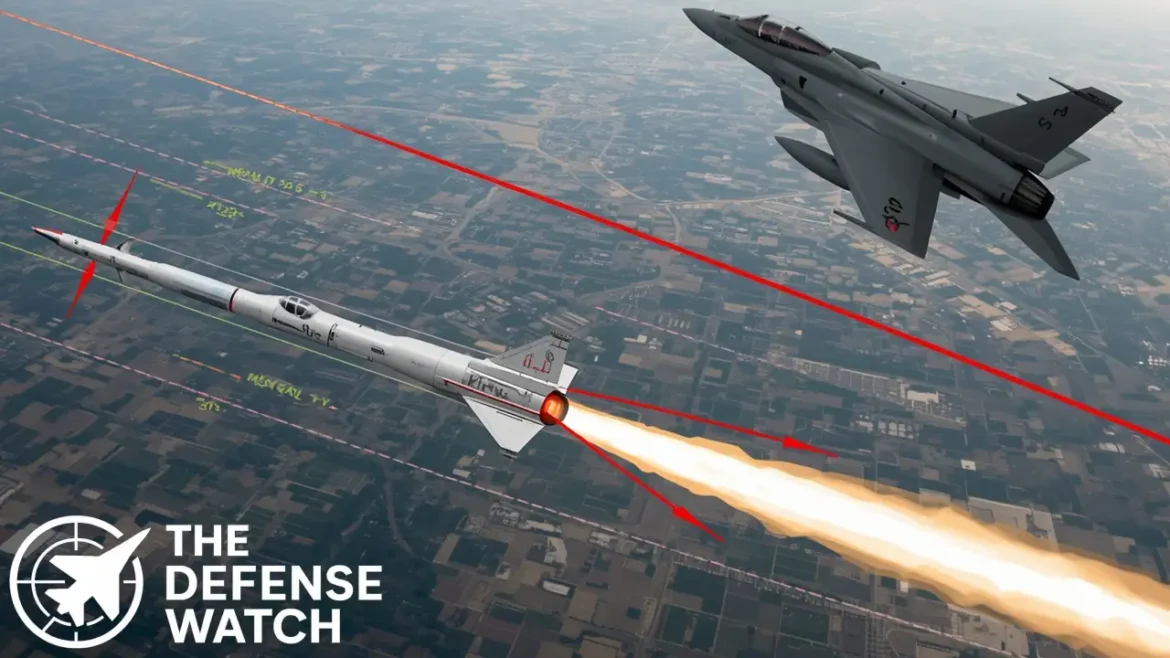
Russia’s development of hypersonic missile technology represents one of the most significant advances in strategic weaponry since the Cold War era. The Russian hypersonic missile program encompasses multiple platforms, including hypersonic glide vehicles and air-launched systems capable of reaching hypersonic speed—defined as velocities exceeding Mach 5, or five times the speed of sound. These weapons are designed to evade existing missile defense systems through a combination of extreme velocity and unpredictable flight paths, fundamentally altering the calculus of nuclear deterrence and conventional strike capabilities.
Moscow’s hypersonic weapons portfolio includes the Avangard hypersonic glide vehicle, the Kinzhal air-launched ballistic missile, and the Zircon anti-ship cruise missile. Each system employs different technologies to achieve hypersonic speed, with the Avangard representing the most sophisticated application—a boost-glide system that rides atop an intercontinental ballistic missile before separating to glide toward its target at speeds reportedly exceeding Mach 20. Russian hypersonic missiles have transitioned from experimental prototypes to operational deployment, with President Vladimir Putin announcing their combat readiness and their reported use in the Ukraine conflict.
Understanding Hypersonic Glide Vehicle Technology
The hypersonic glide vehicle represents the cutting edge of Russia’s strategic weapons development. Unlike traditional ballistic missiles that follow predictable parabolic trajectories, a hypersonic glide vehicle separates from its booster rocket and maneuvers through the atmosphere at extreme velocities, making interception extraordinarily difficult with current defensive technologies.
The Avangard system exemplifies this technology. According to Russian defense sources, the weapon system travels at approximately Mach 27 during its glide phase and can perform evasive maneuvers while en route to its target. The vehicle is carried atop the UR-100UTTKh intercontinental ballistic missile (known in NATO designation as the SS-19 Stiletto) and can reportedly carry both conventional and nuclear warheads. Russian Strategic Missile Forces began combat duty rotations with Avangard-equipped units in December 2019, marking the world’s first operational deployment of a hypersonic glide vehicle.
Maneuverability as a Defense Penetration Strategy
The strategic advantage of hypersonic glide vehicles lies not solely in velocity but in their capacity to alter course during flight. Traditional missile defense systems like the U.S. Ground-based Midcourse Defense rely on intercepting warheads along predictable ballistic trajectories. Hypersonic glide vehicles exploit the gaps in this defensive architecture by maneuvering within the atmosphere, potentially shifting targets or evading interceptor missiles deployed in their projected path.
This maneuverability is achieved through aerodynamic control surfaces and, in some designs, through thrust vectoring or auxiliary propulsion systems. The plasma sheath that forms around objects traveling at hypersonic speed creates significant engineering challenges for guidance systems, requiring advanced materials and heat-resistant electronics. Russia claims to have solved these thermal management problems, though independent verification of these capabilities remains limited.
The Kinzhal: Air-Launched Hypersonic Strike System
The Kh-47M2 Kinzhal, whose name translates to “dagger” in English, represents Russia’s air-launched hypersonic missile capability. Operationally deployed since 2018, the Kinzhal is launched from modified MiG-31K interceptor aircraft or Tu-22M3 long-range bombers, giving Russian forces a flexible platform for hypersonic strikes against high-value targets including aircraft carriers, command centers, and critical infrastructure.
The Kinzhal is technically an aero-ballistic missile—a modified version of the ground-launched Iskander-M short-range ballistic missile adapted for air launch. While Russian sources claim the weapon reaches speeds of Mach 10 and possesses a range exceeding 2,000 kilometers when air-launched, Western analysts assess that its kinematic performance, while impressive, may not match official Russian claims. The system’s hypersonic speed is achieved during its ballistic descent phase rather than through sustained powered flight.
Operational Employment in Ukraine
Russian forces have employed Kinzhal missiles operationally during the conflict in Ukraine, marking the first combat use of hypersonic weapons. Russian defense ministry statements claim successful strikes against ammunition depots, command posts, and underground facilities using Kinzhal missiles launched from MiG-31K aircraft. Ukrainian officials initially reported that their air defense systems could not intercept these weapons due to their speed and trajectory characteristics.
However, in May 2023, Ukrainian forces claimed to have successfully intercepted a Kinzhal missile using U.S.-supplied Patriot air defense systems—a claim that, if verified, would indicate that hypersonic missiles are not entirely invulnerable to advanced air defense networks. The Pentagon declined to confirm specific interception details but acknowledged that Patriot systems engaged aerial threats over Kyiv during the relevant timeframe. This development suggests that while hypersonic weapons present significant challenges to air defense, they are not categorically unstoppable with current-generation defensive systems.
Zircon: Naval Hypersonic Capability
The 3M22 Zircon (also designated Tsirkon) extends Russia’s hypersonic capabilities to the naval domain. Designed as an anti-ship and land-attack cruise missile, Zircon is launched from vertical launch systems aboard Russian surface combatants and submarines, providing the Russian Navy with a standoff strike capability that can threaten carrier strike groups and coastal targets.
Russian sources describe Zircon as a scramjet-powered missile capable of sustained hypersonic flight at Mach 8-9 with a range of approximately 1,000 kilometers against naval targets. Unlike the Kinzhal, which achieves hypersonic speed through ballistic flight, Zircon reportedly employs a scramjet engine that enables powered flight throughout its trajectory at hypersonic speed. This propulsion method theoretically provides greater maneuverability and target flexibility compared to ballistic systems.
The Russian Navy conducted extensive testing of Zircon from various platforms including the Admiral Gorshkov frigate and Severodvinsk-class submarines. In October 2024, Russian defense officials announced that Zircon had entered serial production and operational deployment, with missiles supplied to both surface vessels and submarines of the Northern and Pacific Fleets.
Strategic Implications for Naval Warfare
Zircon represents a potential paradigm shift in naval engagement ranges and carrier vulnerability. U.S. carrier strike groups rely on layered air defense systems including the Aegis Combat System, E-2D Advanced Hawkeye airborne early warning aircraft, and fighter patrols to defend against incoming threats. The compressed engagement timelines created by hypersonic anti-ship missiles—potentially as brief as five minutes from launch detection to impact at maximum range—challenge the defensive reaction cycles of even the most advanced naval formations.
The U.S. Navy has acknowledged this challenge and is investing in hypersonic weapon defense capabilities, including modifications to the Aegis system and development of next-generation interceptors. However, the physical constraints of intercepting maneuvering targets at hypersonic speed create fundamental difficulties that cannot be fully resolved through incremental improvements to existing systems.
Hypersonic Nuclear Missiles and Strategic Stability
The integration of hypersonic delivery systems with Russia’s nuclear arsenal introduces new complexities to strategic stability calculations. While Russia has not officially confirmed which hypersonic systems are nuclear-capable, Western analysts assess that both Avangard and Kinzhal can carry nuclear warheads. The Avangard, as a strategic system carried by intercontinental ballistic missiles, is explicitly designed for potential nuclear missions.
The strategic concern surrounding hypersonic nuclear missiles centers on their implications for crisis stability and decision-making timelines. Traditional nuclear deterrence rests on assured second-strike capability—the confidence that a nation can absorb a first strike and still retain sufficient forces to deliver an unacceptable retaliatory blow. Hypersonic weapons that can evade missile defenses and strike with minimal warning time potentially undermine this stability by creating incentives for preemptive strikes during crises.
Arms Control Challenges
Hypersonic weapons exist in a regulatory gap within the existing arms control architecture. The New START treaty between the United States and Russia, extended in 2021 and set to expire in 2026, covers strategic nuclear delivery vehicles including intercontinental ballistic missiles, submarine-launched ballistic missiles, and heavy bombers. While the Avangard hypersonic glide vehicle is counted under New START as a warhead delivered by the UR-100UTTKh missile, other hypersonic systems may fall outside treaty limitations.
The Kinzhal, for example, presents classification challenges. If considered an air-launched ballistic missile with strategic range when launched from a heavy bomber, it could theoretically be subject to treaty provisions. However, Russian deployment of Kinzhal on MiG-31K interceptors—which are not heavy bombers under treaty definitions—potentially places these systems outside New START’s scope. This ambiguity, replicated across multiple emerging weapons technologies, complicates future arms control negotiations.
Comparative Assessment: Global Hypersonic Competition
Russia’s hypersonic weapons program exists within a broader context of great power competition in advanced strike technologies. The United States, China, and to a lesser extent other nations including India, France, and Australia are developing hypersonic capabilities, creating a multilateral arms race with significant strategic implications.
The United States has pursued hypersonic weapon development through multiple programs including the Army’s Long-Range Hypersonic Weapon, the Navy’s Conventional Prompt Strike system, and the Air Force’s AGM-183 Air-launched Rapid Response Weapon. Unlike Russia’s approach, which has emphasized rapid deployment of systems with potential developmental shortcuts, the U.S. program has prioritized technical maturity and extensive testing, resulting in a slower timeline to operational deployment.
China has made substantial progress in hypersonic technologies, with the DF-17 medium-range ballistic missile equipped with a hypersonic glide vehicle entering service with the People’s Liberation Army Rocket Force. In 2021, reports emerged of Chinese testing of a fractional orbital bombardment system combined with a hypersonic glide vehicle—a capability that, if operational, would represent a significant advancement in global strike reach and defense penetration.
Technical and Operational Realities
Despite the strategic attention given to hypersonic weapons, several technical and operational realities moderate their revolutionary impact. Hypersonic flight imposes severe constraints on sensor performance, guidance systems, and communications due to the plasma sheath that forms around vehicles at extreme velocities. This ionization layer can block radio frequencies, complicating target updates and terminal guidance.
Additionally, the extreme thermal and mechanical stresses of hypersonic flight limit the materials and designs available for these weapons, potentially constraining payload capacity and reducing the size of warheads compared to traditional delivery systems. The sophisticated ground infrastructure required for targeting, launch, and guidance of hypersonic systems creates dependencies that may be vulnerable to counterforce targeting or electronic warfare.
Strategic Analysis: Implications for Deterrence and Defense
Russia’s operational deployment of hypersonic missiles has already influenced U.S. and NATO defense planning. The Pentagon’s 2022 Missile Defense Review explicitly acknowledged the challenge posed by hypersonic threats and outlined investments in sensor networks, space-based tracking systems, and next-generation interceptors designed to address these weapons.
The most effective near-term response to hypersonic threats may lie not in intercepting the missiles themselves but in left-of-launch strategies—disrupting adversary intelligence, surveillance, and reconnaissance systems, electronic warfare against launch platforms, or kinetic strikes against hypersonic weapon infrastructure before launch. This shift toward offensive counter-force measures rather than purely defensive interception raises its own strategic stability concerns, potentially increasing crisis instability by creating incentives to strike first against adversary launch platforms.
From Russia’s perspective, hypersonic weapons serve multiple strategic purposes beyond their immediate military utility. They demonstrate technological prowess, complicate adversary defense planning, and provide leverage in strategic negotiations. The psychological and political impact of hypersonic weapons may exceed their actual military effectiveness, particularly given the limited numbers deployed and the high costs associated with these systems.
Future Trajectories
The trajectory of hypersonic weapon development will likely follow several parallel paths. First, incremental improvements in existing systems will enhance reliability, accuracy, and operational flexibility. Second, defensive technologies will gradually improve, potentially including directed energy weapons, electromagnetic railguns, or advanced kinetic interceptors specifically designed for hypersonic threats. Third, the integration of artificial intelligence into targeting and guidance systems may partially overcome the communication challenges imposed by hypersonic flight.
The strategic equilibrium will depend on the relative pace of offensive and defensive technological development, the economic sustainability of maintaining and expanding hypersonic arsenals, and the diplomatic success or failure of efforts to establish norms and limitations on these weapons. Given the substantial investments by major powers in hypersonic programs, these weapons will remain a central feature of strategic competition for the foreseeable future.
Conclusion: Navigating the Hypersonic Era
Russia’s development and deployment of hypersonic missiles including hypersonic glide vehicles marks a significant evolution in strategic weapons technology. While these systems present genuine challenges to existing missile defense architectures, their operational impact should be assessed within the broader context of nuclear deterrence, conventional military capabilities, and the ongoing adaptation of defensive systems.
The Russian hypersonic missile program has achieved operational milestones ahead of competing nations, providing Moscow with a temporary advantage in this domain. However, the sustainability of this lead remains uncertain given the substantial resources the United States and China are dedicating to their own hypersonic programs. The ultimate strategic significance of hypersonic weapons will depend not on their impressive technical specifications but on how they influence crisis behavior, defense planning, and the broader dynamics of great power competition in an increasingly multipolar international system.
FAQs
What makes a missile hypersonic, and why are they difficult to intercept?A missile is classified as hypersonic when it travels at speeds exceeding Mach 5 (five times the speed of sound, approximately 3,836 mph or 6,174 km/h). Hypersonic missiles are difficult to intercept because they combine extreme velocity with maneuverability—unlike traditional ballistic missiles that follow predictable arcs, hypersonic weapons can alter their flight paths, evading missile defense systems designed to intercept targets along predetermined trajectories.
What hypersonic missiles does Russia currently have operational?Russia has deployed three primary hypersonic systems: the Avangard hypersonic glide vehicle (operational since December 2019), which is mounted on intercontinental ballistic missiles; the Kinzhal air-launched missile (operational since 2018), carried by MiG-31K interceptors and Tu-22M3 bombers; and the Zircon naval cruise missile (entered serial production in 2024), launched from surface ships and submarines.
Can hypersonic missiles be intercepted by current defense systems?While extremely challenging, hypersonic missiles are not completely immune to interception. Ukrainian forces claimed to have successfully intercepted a Russian Kinzhal missile using U.S.-supplied Patriot systems in May 2023, suggesting that advanced air defense networks can engage some hypersonic threats under certain conditions. However, the compressed engagement timelines and maneuverability of hypersonic weapons make successful interception difficult and unreliable with current technology.
Are Russia’s hypersonic missiles nuclear-capable?Russia has not officially disclosed the complete nuclear configuration of its hypersonic arsenal, but Western intelligence assessments indicate that both the Avangard and Kinzhal systems are capable of carrying nuclear warheads. The Avangard, as a strategic weapon system, is explicitly designed with nuclear mission capability. The Zircon is primarily described as a conventional anti-ship missile, though its potential nuclear adaptation cannot be ruled out.
How does Russia’s hypersonic program compare to U.S. and Chinese efforts?Russia has achieved operational deployment of hypersonic weapons ahead of both the United States and China, gaining a temporary technological advantage. However, the U.S. has multiple hypersonic programs in advanced development emphasizing technical maturity over rapid deployment, while China has fielded the DF-17 hypersonic glide vehicle system and reportedly tested advanced orbital bombardment concepts. Each nation’s approach reflects different strategic priorities, technological philosophies, and resource allocation decisions in the ongoing hypersonic arms race.
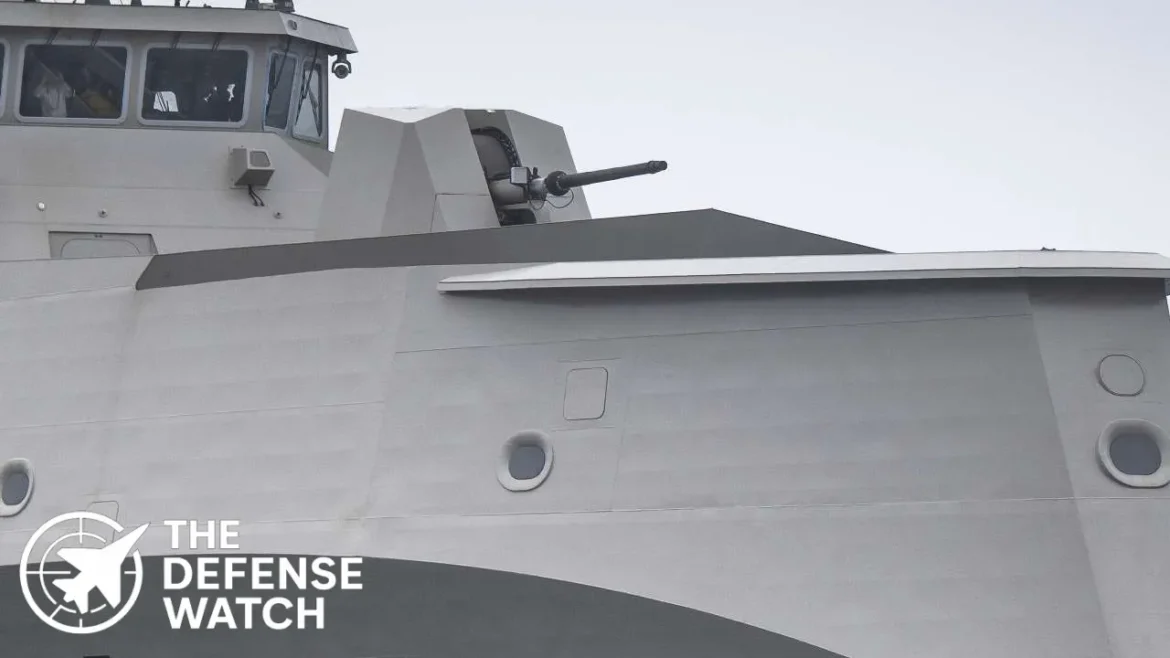
Greece has officially signed a contract with France’s Naval Group for a fourth FDI (Frégate de Défense et d’Intervention) frigate for the Hellenic Navy. The deal, worth approximately €982 million, was formalized on 14 November 2025 by Major General Ioannis Bouras of Greece’s defense acquisition office and Pierre Éric Pommellet, CEO of Naval Group.
This marks the exercise of an existing option: Greece had originally ordered three FDI frigates in 2021, with a fourth unit built into the procurement agreement. The new ship is widely expected to receive the name HS Themistocles and the hull number F-600.
Background: Why It Matters
Greece’s decision to add a fourth FDI frigate builds on a broader naval modernization strategy. Under a 2021 defense pact with France, Greece committed nearly €3 billion to acquire three FDI frigates, and this option for a fourth reflects strategic foresight.
The FDI frigates for Greece differ from their French counterparts: they are more heavily armed, featuring enhanced air-defense, anti-ship, and anti-submarine capability. The Greek versions are being built with a strong domestic industrial component: Naval Group has committed to 25% industrial return, channeling significant work into Greek defense companies.
Strategically, the move strengthens Greece’s deterrence in a tense regional environment, particularly amid longstanding rivalry with Turkey over territorial waters, airspace, and maritime rights in the Eastern Mediterranean.
Frigate Details: Capabilities & Timeline
Ship and Configuration
- The fourth frigate will be part of the Kimon-class (FDI HN), a local variant of France’s FDI design.
- It will be built in Lorient, France, under Naval Group’s supervision.
- The contract includes in-service support (maintenance), not just the build.
Armament & Systems
Greek FDI frigates are being tailored for high-end missions, with advanced systems including:
- 32 Aster 30 B1 surface-to-air missiles, using Sylver A50 vertical launchers.
- RAM (Rolling Airframe Missile) Block 2B launcher for short-range point defense.
- MM40 Block 3C Exocet anti-ship missiles (eight per vessel).
- MU90 torpedoes, launched from dual torpedo tubes.
- 76 mm main gun, paired with two remote 20 mm systems.
- Electronic warfare suite, including decoy launchers and countermeasures.
- Sensors: Thales Sea Fire fixed-panel AESA radar, Kingklip Mk II hull sonar, CAPTAS-4 towed array, and a panoramic intelligence module.
- Aviation: capability to host a helicopter (e.g., MH-60R Seahawk) or UAV (e.g., Schiebel Camcopter S-100).
Future Upgrades
- The Themistocles (fourth FDI) is expected to be delivered in “Standard 2+” configuration and possibly upgraded later to Standard 2++, incorporating advanced capabilities such as new cruise missile systems (e.g., MdCN) and enhanced CMS/electronic systems.
- Greece has discussed integration of European Long-Range Strike Approach (ELSA) cruise missiles, suggesting future strike capability.
Timeline
- The first FDI for Greece, HS Kimon (F-601), is nearing delivery by end of 2025.
- HS Nearchos (F-602) and HS Formion (F-603) are under construction; Formion was launched in June 2025.
- The new Themistocles is projected to enter service by 2028, according to Greek and French sources.
Strategic and Policy Implications
Regional Deterrence
- By expanding its FDI fleet to four high-end frigates, Greece boosts its ability to project power in the Aegean and Eastern Mediterranean.
- The upgraded capabilities—especially strong air defense, anti-ship weapons, and potential cruise missile integration—are clearly aimed at countering regional maritime threats.
Industrial Impact and European Defense
- The 25% industrial offset means around €200–250 million of the contract value will flow into Greek companies.
- This deepens Franco-Hellenic industrial cooperation and strengthens Greece’s defense industrial base.
- Naval Group has also made proposals for building additional FDI frigates locally in Greece, signaling long-term industrial partnership.
Budget and Long-Term Modernization
- The deal fits into Greece’s broader defense modernization plan, which includes investments in frigates, aircraft (Rafales), helicopters (NH90), and potentially more frigates and corvettes.
- The structured payment plan (amortized across 2025–2030) aims to balance cost and operational readiness.
What to Watch
- Delivery of Themistocles: Will it meet the 2028 target, and will it come fully equipped with cruise missile capability?
- Local Construction Proposals: Will Naval Group and Greece move forward with building even more FDI frigates in Greek shipyards?
- Further Modernization: How will this contract fit with Greece’s other procurement plans (e.g., missile systems, corvettes, anti-drone/seasurface assets)?
- Geopolitical Tensions: Whether enhanced Greek naval power will alter strategic dynamics in the Eastern Mediterranean, especially vis-à-vis Turkey.
What Happened
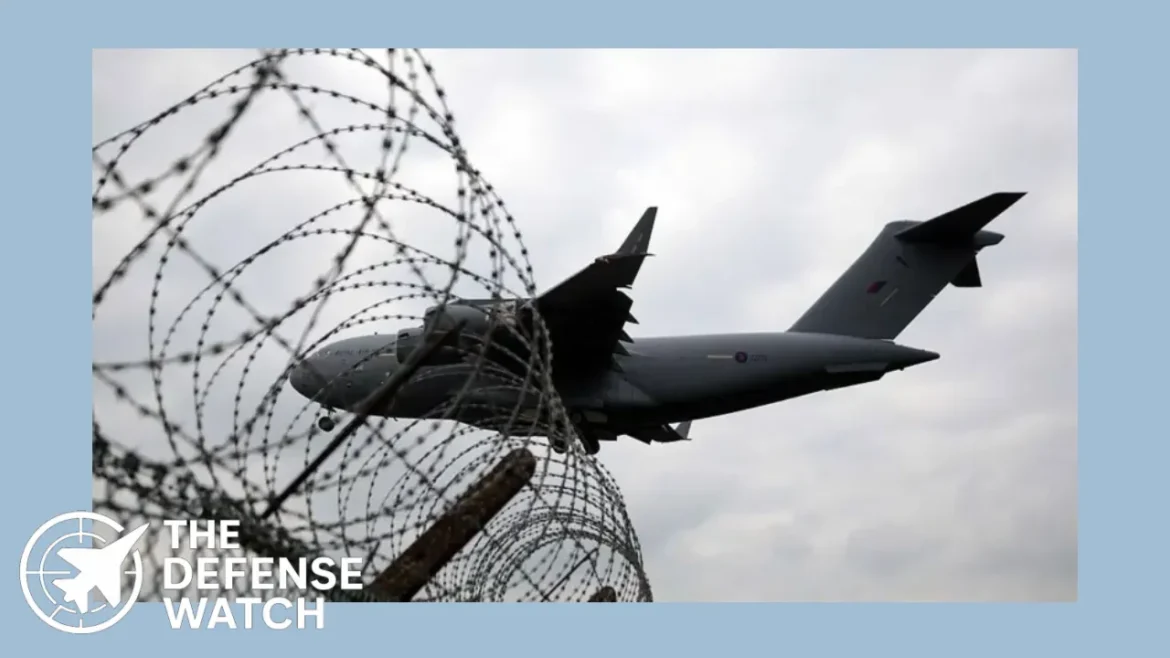
A recent BBC report alleges that Pakistan sold 155 mm artillery shells to Ukraine via contracts worth $364 million, involving two U.S. companies: Global Military and Northrop Grumman. The report claims these deals were signed in August 2022 and subsequently carried out via deliveries that involved British military cargo flights. Pakistan’s Foreign Office, however, strongly denies the claims, reiterating its formal stance of “strict neutrality” in the Russia-Ukraine war.
Background
The allegations appear in a BBC Urdu investigative report, which draws on U.S. Federal Procurement Data System documentation. According to the report:
- A $232 million contract was awarded to Global Military.
- A $131 million contract went to Northrop Grumman.
- Both agreements reportedly expired in October 2023.
- The munitions were allegedly transported from Nur Khan Air Base in Pakistan, flown by a British military transport aircraft that made multiple stops in Cyprus and Romania on its way to Ukraine.
Pakistan’s Foreign Office and its Defense Ministry, meanwhile, have firmly rejected the report.
Why It Matters
If validated, these arms sales would represent a serious challenge to Pakistan’s declared neutrality in the Russia-Ukraine war. More broadly:
- Geopolitical Risk: The deal could strain Pakistan’s diplomatic balancing — potentially undermining relations with Russia or raising questions about its broader security policies.
- Defense Export Implications: Pakistan is increasingly seen as an emerging defense exporter. This report could raise transparency and compliance concerns about its defense export regime.
- Trust & Credibility: For Western partners and Pakistan’s own regional allies, allegations of clandestine arms transfers complicate its credibility as a responsible defense actor.
Expert Perspective
Defense analysts note that while the BBC report draws on public procurement data, independent verification remains a challenge. U.S.-based security experts observe:
- U.S. defense sales to Pakistan are typically subject to rigorous export controls. If the report is accurate, it raises questions about oversight gaps in the contracting process.
- The timing of the contracts — August 2022 — coincides with a period of intense fighting in Ukraine, which could suggest deliberate risk-taking by Pakistani actors.
- On the other hand, Pakistani analysts argue that such transactions may have been structured in a way to obscure end-use, a tactic sometimes used in global arms trade to preserve plausible deniability.
Policy-wise, some experts warn of potential fallout: Western countries may demand tighter export monitoring, while Russia could perceive Pakistan’s role as adversarial, potentially diminishing Islamabad’s value as a regional balancer.
What’s Next
- Independent verification: Observers and governments will likely press for detailed audits of procurement and logistics records.
- Diplomatic fallout: Depending on the outcome, Pakistan may face greater diplomatic scrutiny, especially from major powers invested in European security.
- Defense posture recalibration: Islamabad might further tighten its export regulatory regime to avoid reputational damage and maintain alliances.
- Strategic signaling: Pakistan’s response could shape how future defense cooperation deals — both civilian and military — are negotiated.
Russian Drone Production Reaches Industrial Scale
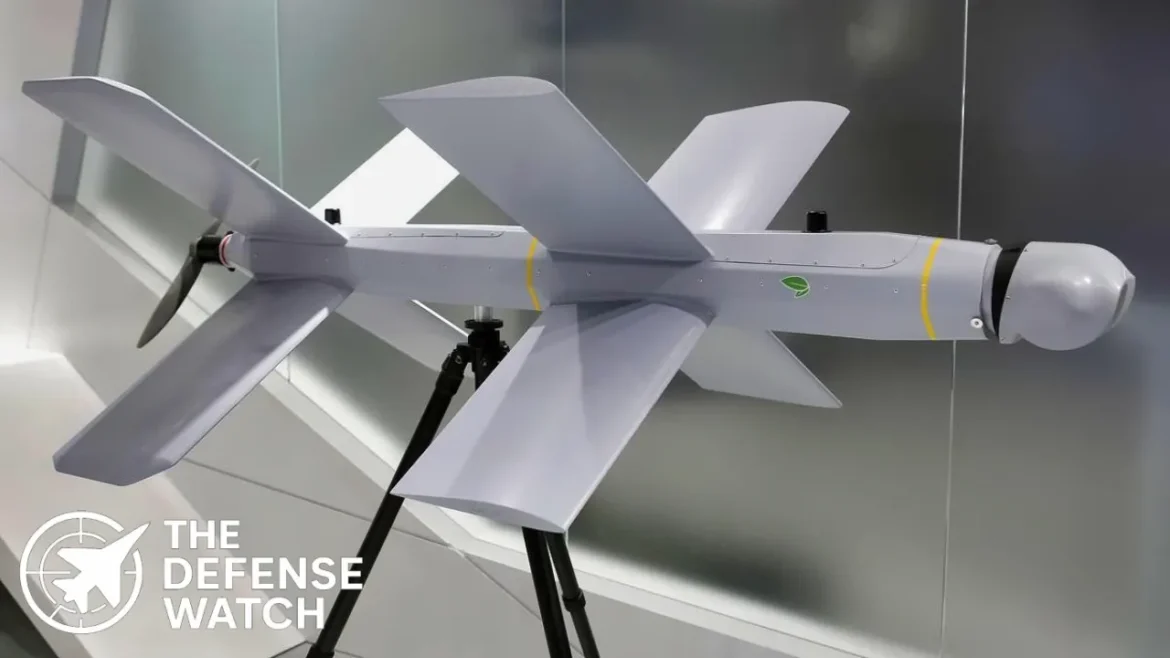
Russia has dramatically expanded its unmanned aerial vehicle manufacturing capacity, with intelligence assessments indicating production of approximately 170 Shahed-type drones daily as of mid-2025. According to Ukrainian military intelligence, Russian facilities are capable of producing up to 2,700 Shahed-variant drones monthly, with projections suggesting total output could reach 79,000 units by year-end. The Alabuga Special Economic Zone in Tatarstan has emerged as the primary production hub for the Geran-2, Russia’s licensed version of the Iranian Shahed-136 design.
Recent revelations show Russia’s defense industry operating ahead of schedule on its contracted deliverables. The Institute for Science and International Security reported that JSC Alabuga fulfilled its initial contract with Iran for 6,000 drones approximately one year ahead of the September 2025 deadline. The facility has since continued production with plans to increase daily output to 190 drones by year-end, supported by substantial government investment estimated between $8.2 billion and $12.4 billion through 2030.
The upgraded drone models feature significant technical improvements over earlier variants. Ukrainian Defense Intelligence notes that explosive payloads have increased from 50 kilograms to 90 kilograms, while new versions incorporate combined shaped-charge high-explosive fragmentation warheads selected based on target profiles. Perhaps most concerning, Russian forces have begun equipping drones with controlled reception pattern antenna systems that resist electronic warfare countermeasures, and some units reportedly carry Starlink terminals enabling real-time remote control.
European Airspace Violations Trigger Alliance Response
The scale of Russia’s drone threat became undeniable during September 2025, when multiple incursions into NATO airspace prompted emergency responses across the alliance. On September 10, approximately 20 Russian drones violated Polish airspace, forcing Warsaw to scramble multimillion-dollar F-35 and F-16 fighter jets. NATO jets successfully intercepted seven drones during a seven-hour aerial engagement, marking the first time alliance forces opened fire on Russian aircraft since the conflict in Ukraine began.
Polish Foreign Minister Radek Sikorski acknowledged the operation exposed a fundamental asymmetry in defense economics. Recovery operations revealed the downed drones were unarmed decoys constructed from polystyrene and plywood, with estimated production costs around $10,000 each. Meanwhile, the NATO response involved $80 million F-35s launching interceptor missiles costing hundreds of thousands of dollars per unit.
Romania and Estonia reported similar violations throughout September. Romanian authorities scrambled combat aircraft after a Russian drone penetrated approximately 10 kilometers into their territory, remaining in NATO airspace for roughly 50 minutes. Estonia’s Foreign Ministry reported three Russian fighter aircraft entered its airspace on September 19, with Foreign Minister Margus Tsahkna describing the incursion as “unprecedentedly brazen.
Denmark experienced particularly disruptive incidents, with unidentified drone activity forcing the closure of Aalborg Airport and causing near-total shutdown of Copenhagen Airport operations for approximately four hours. The incidents prompted Denmark to temporarily ban civilian drone flights across its airspace ahead of critical European Council meetings.
NATO Launches Eastern Sentry Operation
In response to the escalating threat, NATO Secretary-General Mark Rutte announced Operation Eastern Sentry, a coordinated air defense initiative focused on deterring further Russian incursions along the alliance’s eastern flank. The operation integrates multiple NATO capabilities, including Dutch F-35s, Italian AWACS aircraft, NATO’s Multi Role Tanker Transport Capability, and German Patriot defense systems.
General Ingo Gerhartz, commander of NATO Allied Joint Force Command Brunssum, emphasized the urgent need for accelerated counter-drone technology deployment. Speaking at the Warsaw Security Forum, Gerhartz stated that counter-drone systems must be fielded within months rather than years. He stressed that shooting down drones costing $2,000 to $3,000 with million-dollar missiles represents neither an effective nor sustainable defensive posture.
Britain and Denmark have pledged significant support for Eastern Sentry, with Germany doubling its combat aircraft allocation for Polish air defense from two to four units. France has deployed Rafale fighter jets to the region. However, defense experts question whether conventional air defense architecture can sustainably counter mass drone attacks without prohibitive economic costs.
European Drone Wall Concept Takes Shape
European leaders have endorsed development of a continental “drone wall” designed to detect, track, and neutralize unmanned aerial vehicles along NATO’s eastern borders. European Commission President Ursula von der Leyen publicly backed the initiative during her 2025 State of the Union address, positioning it as a flagship defense project requiring expedited implementation.
EU Defense and Space Commissioner Andrius Kubilius outlined the concept as a layered network combining mobile radars, sensors, and rapid-fire air defense batteries. Speaking in Vilnius, Kubilius acknowledged European nations remain unprepared to effectively counter Russian drone attacks using cost-effective methods. He emphasized the critical importance of integrating Ukraine’s battle-tested counter-drone capabilities into European defense architecture.
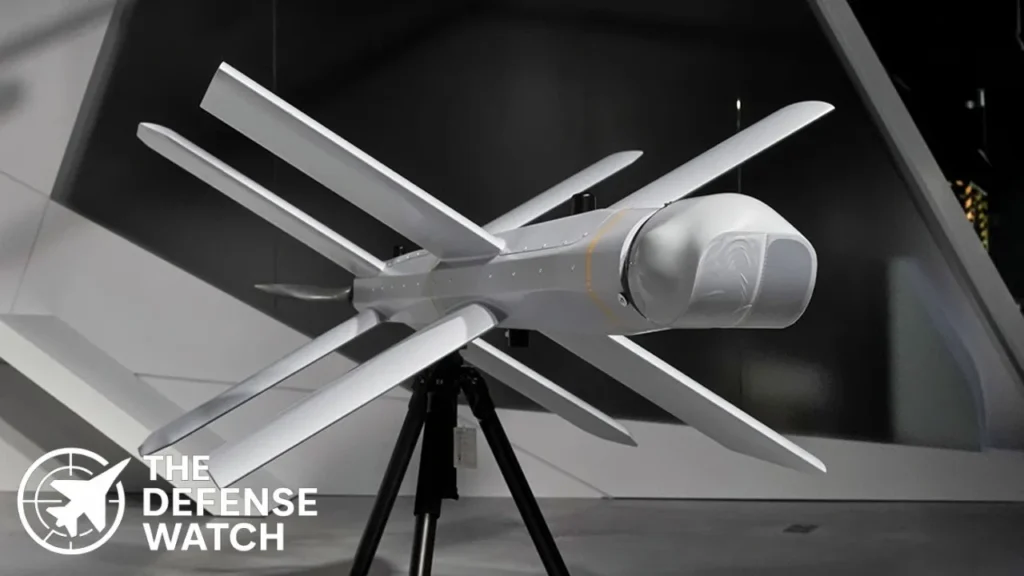
The European Drone Defense Initiative targets initial operational capability by late 2026, with full functionality expected by end-2027. Implementation will involve procurement coordination through EU programs including SAFE and the European Defense Industry Programme. However, officials acknowledge significant challenges remain regarding political coordination, industrial capacity, and cost-effectiveness.
EU officials stress the initiative will complement NATO frameworks rather than duplicate them. Member states retain sovereignty over national defense systems while the EU facilitates common standards, shared funding, and operational oversight. The informal European Council meeting in Copenhagen produced broad endorsement of the concept, though frontline states including Poland, the Baltic nations, and Finland view the project with greater urgency than countries further from Russia’s borders.
Cost Asymmetry Challenges Traditional Defense Models
The economic implications of drone warfare have fundamentally altered air defense calculations. Defense analysts emphasize that traditional surface-to-air missile systems face unsustainable cost disadvantages when engaging low-cost unmanned threats. A single Patriot interceptor missile costs approximately $5 million, while Russian Shahed-type drones cost between $30,000 and $50,000 to manufacture.
Chris Kremidas-Courtney of the European Policy Centre characterized current NATO responses as “using a sledgehammer on a thumbtack.” He warned that European nations risk depleting expensive missile inventories against mass drone attacks unless they rapidly adopt more economical countermeasures. Admiral Pierre Vandier, NATO’s Supreme Allied Commander Transformation, stated bluntly that defenders will eventually lose if they continue firing million-dollar missiles at ten-thousand-dollar targets.
Ukraine has pioneered cost-effective counter-drone solutions that NATO is rapidly studying. Ukrainian forces deploy interceptor drones costing between $2,500 and $6,000 to engage Russian Shaheds, preserving expensive missiles for faster cruise and ballistic threats. The economics favor defenders for the first time in modern air defense, with Ukrainian manufacturers targeting production of 1,000 interceptor drones daily.
NATO conducted demonstrations of Ukrainian-developed interceptor technology in Denmark and Estonia, with systems like Wild Hornets’ Sting successfully downing training targets. Latvia-based Origin is developing reusable interceptor drones with titanium frames designed to slice through attacking UAVs at speed. Company officials expressed confidence they can produce interceptors economically viable for countering large volumes of Russian drones.
AI-Enabled Defense Systems Deploy to Eastern Flank
NATO has begun deploying advanced counter-drone systems to Poland and Romania, including the US-developed Merops platform. The artificial intelligence-driven system, compact enough to transport in pickup trucks, can identify and engage drones while maintaining functionality when satellite and electronic communications are jammed. Former Google CEO Eric Schmidt has provided private investment for the technology’s development.
Colonel Mark McLellan, assistant chief of staff for operations at NATO Allied Land Command, emphasized that Merops delivers accurate detection and cost-effective interception compared to fighter jet responses. Brigadier General Thomas Lowin noted the system provides commanders critical time to assess threats before deciding whether to engage.
However, experts caution that current counter-drone technology faces emerging challenges. Russia has reportedly begun deploying Geran-3 variants powered by Chinese turbojet engines, capable of speeds between 230 and 310 miles per hour. These jet-propelled drones incorporate 12-element adaptive antenna arrays for jamming-resistant satellite navigation, rendering them immune to electronic warfare tactics effective against slower Shaheds.
Additionally, Russian forces increasingly employ fiber-optic cable-tethered first-person-view drones that cannot be electronically jammed. NATO and Ukrainian officials conducted trials in Tallinn during June 2025 to evaluate countermeasures against these systems, requiring detection ranges exceeding 500 meters and costs under $100,000 per unit.
Intelligence Warnings and Strategic Implications
European intelligence agencies have issued warnings that Russian President Vladimir Putin may be considering potential attacks on NATO countries in coming years. The drone incursions represent what officials characterize as deliberate testing of alliance defenses and political resolve. Behind closed doors, Russian officials reportedly told British, French, and German diplomats that the incursions constituted retaliation for Ukrainian strikes on Crimea enabled by NATO support.
Danish Prime Minister Mette Frederiksen characterized the situation as Europe facing its “most difficult and dangerous situation since the end of the Second World War.” She stated unequivocally that only one country threatens European security: Russia. The assessment reflects growing consensus among European leaders that Moscow is conducting hybrid warfare operations designed to probe NATO’s vulnerabilities and test alliance cohesion.
Some analysts question whether all drone incursions result from deliberate Russian strategy. Marina Miron of King’s College London suggested that drones operating on autopilot can lose GPS signals and become disoriented. However, German Defense Minister Boris Pistorius dismissed technical malfunction theories, noting that Russian drones would not need to traverse NATO airspace to reach Ukrainian targets.
The Institute for the Study of War projects that Russia could deploy up to 2,000 unmanned aerial vehicles in a single night by November 2025 if current production trends continue. Such capability would enable sustained saturation attacks designed to overwhelm even the most advanced air defense systems through sheer volume rather than technological sophistication.
Deterrence Debate and Offensive Capabilities
Defense strategists increasingly argue that purely defensive measures prove insufficient to deter Russian aggression. The RAND Corporation published analysis contending that Europe’s true problem involves erosion of conventional deterrence rather than drone technology gaps. Analysts emphasize that cost-effective “drone wall” technology does not currently exist anywhere globally, particularly when defending countries operating under peacetime rules of engagement against adversaries actively at war.
Experts advocate that NATO should demonstrate willingness to strike back rather than solely investing in defensive systems. This rationale supports Ukraine’s requests for long-range strike capabilities, including Tomahawk cruise missiles, to damage Russian drone production and launch facilities rather than attempting to intercept every projectile. Several NATO members, including Lithuania, have authorized peacetime shoot-downs of unauthorized drones over their territory.
The debate reflects fundamental questions about NATO’s political will and strategic posture. Russia appears emboldened to test alliance responses precisely because Moscow questions whether NATO members will use their defensive capabilities decisively. Brigadier General Zacarias Hernandez, NATO’s deputy chief of staff for plans, acknowledged the alliance must prepare for threats demonstrated daily in Ukraine’s skies.
Ukrainian Integration and Lessons Learned
Commissioner Kubilius strongly advocated for incorporating Ukrainian military expertise into European defense planning. He warned that failure to integrate Ukraine’s battle-tested capabilities would constitute a “historical mistake” leaving both Europe and Ukraine weaker. Ukrainian forces have achieved relatively high success rates against Russian drones through tactical innovation and cost-effective countermeasures developed under combat conditions.
The Center for Strategic and International Studies documented Ukraine’s urgent requirement for layered, economically sustainable air defenses. Russia’s persistent nightly drone attacks have subjected Ukrainian civilians to conditions exceeding the duration of World War II’s Blitz bombing campaign against London. The punishment strategy aims to force negotiations that would compromise Ukrainian sovereignty for generations.
Western governments face pressure to disrupt China’s supply of critical electronics and components flowing to Russian drone manufacturers. Despite sanctions, Russian industry continues accessing Western semiconductors and Chinese engines essential for Shahed production. Targeted long-range strikes against production facilities and launch sites represent necessary complements to defensive systems, according to multiple strategic assessments.
Implementation Challenges and Timeline Concerns
Despite broad political support for enhanced drone defense, significant obstacles impede rapid implementation. Many EU members maintain independent procurement policies that slow collaborative projects. Technical feasibility questions persist regarding sensor integration, interoperability standards, and operational coordination across multiple national systems.
Michael Bociurkiw of the Atlantic Council characterized the drone wall as currently remaining a “fantasy” requiring months or years to accomplish. He emphasized that implementation will consume enormous percentages of military budgets, necessitating sustained public support for defense spending increases. NATO officials must convince populations of the importance and urgency of such investments.
The procurement challenge extends beyond funding. Defense industry experts note that NATO acquisition processes remain rooted in 1980s-era specifications-based contracting. Companies with operational counter-drone technology struggle to navigate bureaucratic evaluation procedures while threats evolve daily. Ukraine’s streamlined procurement pathway has enabled rapid technology deployment absent in traditional NATO channels.
Andreas Graae of the Royal Danish Defense College confirmed a “huge drive” exists to rapidly deploy counter-drone systems across Europe amid Russian aggression. However, coordination between military requirements, industrial capacity, and political decision-making remains imperfect. The gap between available technology and fielded capabilities continues widening as Russia accelerates production and tactical innovation.
Looking Ahead
The escalating Russian drone threat has forced NATO to confront uncomfortable realities about modern warfare’s economics and the limitations of conventional air defense architectures. Alliance responses will require sustained investment in cost-effective counter-drone technologies, deeper integration of Ukrainian combat lessons, and potentially more aggressive postures toward disrupting Russian production capabilities.
The coming months will prove critical as Europe attempts to translate political commitments into operational capabilities. Initial deployments of systems like Merops represent important first steps, but comprehensive drone defense networks will require years to fully implement. Meanwhile, Russia continues expanding production capacity and refining tactics based on daily combat experience in Ukraine.
Success will depend on NATO’s ability to innovate faster than adversaries while maintaining alliance cohesion under pressure. The fundamental question remains whether European nations possess sufficient political will to make necessary investments and accept risks inherent in more assertive defensive postures. Russia’s drone campaign has delivered an unmistakable message: the time for Europe’s defenses to awaken has arrived.

Three Chinese astronauts returned to Earth on November 14 after a nine-day delay when their Shenzhou-20 spacecraft sustained damage from suspected space debris while docked at the Tiangong space station. The crew used the recently arrived Shenzhou-21 capsule for their return instead of their original vehicle, which remains at the station with window cracks.
The China Manned Space Agency revealed that crews discovered tiny cracks in the return capsule’s viewport window, most likely caused by external impact from space debris. The incident marks a significant operational disruption for China’s space program and underscores the mounting risks posed by orbital debris to military and civilian space operations.
The three astronauts—mission commander Chen Dong, Chen Zhongrui, and Wang Jie—completed a 204-day mission aboard Tiangong, setting a new endurance record for Chinese astronauts. Their original return date of November 5 was postponed after the damage was discovered, forcing mission planners to implement an alternative return procedure.
Operational Implications for Chinese Space Program
The incident leaves China facing an unprecedented situation: the Shenzhou-21 crew currently aboard Tiangong has no working spacecraft available for emergency evacuation. The damaged Shenzhou-20 vessel was deemed unfit to fly and remains docked at the station.
China’s Manned Space Agency announced that the Shenzhou-22 spacecraft will be launched at an appropriate time in the future, though no specific timeline was provided. The premature deployment of Shenzhou-22, originally scheduled for April launch, may draw on experience from Russia’s Soyuz program, upon which Chinese Shenzhou vessels are based.
This represents the first time a Shenzhou vessel has been left behind in space while its crew returned to Earth. The debris-damaged spacecraft must be either repaired in orbit or removed entirely, as Tiangong requires a vacant docking port to accommodate newly arrived vessels. Russian space experts suggest that if damage is significant, the vessel could be undocked and deorbited over the Pacific Ocean.
Space Debris: An Escalating Military and Strategic Concern
The Shenzhou-20 incident highlights the growing operational risks that space debris poses to military space assets and national security infrastructure. According to NASA, more than 45,000 human-made objects currently orbit Earth, with the global space economy valued at over $600 billion. While objects larger than 10 centimeters can be tracked, the real danger comes from smaller debris traveling at speeds exceeding 27,000 kilometers per hour.
The European Space Agency’s 2024 Space Environment Report indicates that approximately 35,000 objects are now tracked by space surveillance networks, but the actual number of space debris objects larger than one centimeter—capable of causing catastrophic damage—exceeds one million.
This is not the first debris incident affecting China’s space program. In March 2024, a fragment struck one of Tiangong’s solar panels, causing power loss that required astronauts to conduct spacewalks for repairs. The frequency of such incidents demonstrates the vulnerability of long-duration space infrastructure to debris impacts.
Defense analysts note that China’s space program operates under military control, making incidents like the Shenzhou-20 damage relevant to broader defense and strategic considerations. China developed Tiangong after being excluded from the International Space Station over U.S. national security concerns.
Comparative Analysis: International Space Station Precedents
The Shenzhou-20 incident parallels challenges faced by other space programs. The International Space Station experienced delayed astronaut returns in 2024 when NASA astronauts Butch Wilmore and Suni Williams saw their one-week Boeing Starliner test flight extend to nine months after propulsion problems developed with their capsule.
Space policy experts argue that two separate incidents within approximately one year should serve as a wake-up call that space rescue capabilities or organizations are needed. Both the Boeing Starliner and China Shenzhou episodes benefited from occurring during missions to space stations, which could act as safe havens until rescue plans were implemented.
However, commercial free-flyer missions where docking with a station is not an option face greater risks, as rescue must happen quickly due to limited onboard supplies. Experts identify compatible docking systems, communications systems, and established rescue coordination procedures as critical enablers for future space rescue capabilities.
The Accelerating Orbital Debris Crisis
Recent data underscores the severity of the space debris problem. The European Space Agency’s 2024 report shows that 2023 saw the highest payload launch traffic ever recorded, with most satellites joining large commercial communication constellations. Two-thirds of all active satellites—over 6,000—currently operate between 500 and 600 kilometers altitude.
Within certain heavily populated altitude bands, the density of active objects now equals the order of magnitude of space debris. In 2024, several major fragmentation events added over 3,000 tracked objects in a single year. These fragmentations result from anti-satellite tests, propulsion system failures, and collisions.
Active satellites must perform an increasing number of collision avoidance maneuvers to dodge other satellites and debris fragments. Without further change, the collective behavior of spacefaring entities remains unsustainable in the long term.
Military Space Operations Under Threat
The Shenzhou-20 damage carries significant implications for military space operations globally. Space-based assets provide critical capabilities for modern warfare, including communications, navigation, reconnaissance, and early warning systems. The vulnerability of these systems to debris impacts represents a strategic concern for defense planners.
According to Georgetown University research analysts, there are currently more than 34,000 debris objects in orbit. The problem traces to decades of space activity where spent rocket stages, defunct satellites, and mission-related hardware were discarded without adequate disposal protocols.
Historical events demonstrate the lasting impact of debris-generating incidents. China’s 2007 anti-satellite test destroyed a weather satellite and created approximately 3,500 debris fragments that remain in orbit. The 2009 collision between the inactive Russian Cosmos-2251 satellite and the operational U.S. Iridium 33 communications satellite generated over 2,000 trackable debris pieces.
Mitigation Efforts and Future Outlook
The European Space Agency has implemented debris mitigation rules for partner missions and awarded an €86 million contract to ClearSpace SA for a mission demonstrating active debris removal. Space agencies worldwide are exploring technical solutions including space-based removal systems and novel deorbiting techniques.
The Inter-Agency Space Debris Coordination Committee published Space Debris Mitigation Guidelines in 2002, establishing voluntary measures for designing, flying, and disposing of space missions to prevent further debris creation. However, adoption of these guidelines has been insufficient to halt debris accumulation.
The space debris removal market is experiencing rapid growth. Market valuations indicate expansion from $70 million in 2023 to a projected $400 million by 2028, driven by increased satellite deployments, growing awareness of space sustainability, and the proliferation of mega-constellations.
Defense and space policy experts emphasize that without legally binding international treaties establishing cleanup responsibilities and operational standards, the orbital environment will continue deteriorating. The voluntary nature of current guidelines has proven inadequate to address the scale of the problem.
Strategic Assessment and Recommendations
Mission commander Chen Dong acknowledged the challenges upon returning to Earth, stating that human space exploration is filled with difficulties and challenges, which is precisely why they choose this path. His comments reflect the broader reality that space operations now occur in an increasingly hazardous environment.
For defense planners and military space operators, the Shenzhou-20 incident provides several lessons. First, long-duration missions require robust contingency planning for debris-related emergencies. Second, maintaining backup transportation capabilities at orbital facilities is essential for crew safety. Third, the accumulation of debris threatens the long-term viability of military space operations.
The incident also highlights the interconnected nature of space security. Debris generated by any nation or entity threatens assets belonging to all spacefaring powers. This reality argues for enhanced international cooperation on debris mitigation, even among geopolitical competitors.
As satellite constellations expand and military space operations intensify, the orbital debris problem will worsen before improvement occurs. The European Space Agency’s new Health Index for the space environment indicates that if current behaviors continue, risk levels will pass beyond the point of sustainability.
Conclusion
The damage to China’s Shenzhou-20 spacecraft represents more than an operational setback for Beijing’s space program. It serves as a stark reminder that the orbital debris problem poses immediate risks to space operations, including military and intelligence assets critical to national security.
With the Shenzhou-21 crew currently lacking immediate emergency escape capability, China faces operational constraints unprecedented in its space station program. The incident underscores the urgent need for comprehensive international agreements on debris mitigation, active removal capabilities, and standardized rescue procedures.
As space becomes increasingly central to military operations and strategic competition, the sustainability of the orbital environment emerges as a critical defense issue. The Shenzhou-20 damage demonstrates that space debris threatens all spacefaring nations equally, regardless of terrestrial geopolitical divisions.

Historic Defense Pact Signed in Paris
Ukrainian President Volodymyr Zelenskyy and French President Emmanuel Macron signed a historic defense agreement on November 17, 2025, at Villacoublay Air Base near Paris, establishing a framework for Ukraine to acquire up to 100 Dassault Rafale F4 fighter jets and eight SAMP/T next-generation air defense systems. The 10-year strategic cooperation agreement represents one of the largest single combat aircraft acquisitions in Ukrainian military history and signals France’s commitment to Ukraine’s long-term security architecture.
The agreement was signed as heavy Russian drone and missile attacks on Ukraine have increased in recent weeks and Moscow has reported sharp ground advances in the southeastern Zaporizhzhia region. Zelenskyy described the signing as a truly historic moment for both nations, emphasizing that it will significantly strengthen Ukraine’s combat aviation and air defense capabilities.
Background: Ukraine’s Multi-Platform Fighter Strategy
The Rafale acquisition is part of Ukraine’s broader efforts to increase its long-term fighter fleet to 250 warplanes, including the U.S. F-16 and Sweden’s Gripen. This three-platform strategy represents a fundamental transformation of the Ukrainian Air Force from Soviet-era aircraft to a modern Western-equipped force capable of deterring future Russian aggression.
France has emerged as a critical pillar of Western support for Ukraine since the February 2022 full-scale invasion. Paris previously supplied Mirage 2000-5F fighter jets, SCALP long-range cruise missiles, and jointly delivered with Italy a SAMP/T air defense battery that proved its effectiveness by shooting down its first Russian aircraft in March 2025. The current agreement builds upon this foundation while addressing Ukraine’s urgent need for enhanced air defense capabilities against Russia’s sustained aerial campaign, which currently involves approximately 1,700 drone strikes per week plus ballistic and cruise missile attacks.
Details of the Defense Agreement
Rafale F4 Fighter Acquisition
The agreement enables Ukraine to purchase 100 Rafale F4 aircraft for Ukraine’s combat aviation by 2035. The Rafale F4, manufactured by Dassault Aviation, represents one of Europe’s most advanced 4.5-generation multirole fighters, capable of air-to-air combat, precision ground strikes, maritime operations, and even nuclear strike delivery missions.
The Elysee Palace confirmed that the purchases covered by the letter of intent would span the next 10 years. Initial deliveries are not expected until at least 2029, with the full fleet operational by 2035. The extended timeline reflects both the rigorous training programs required for pilots transitioning from Soviet-era platforms and the production capacity constraints faced by Dassault Aviation.
The Rafale package includes associated advanced weaponry systems, including SCALP long-range cruise missiles, AASM Hammer precision-guided bombs, MICA short- and medium-range air-to-air missiles, and Meteor beyond-visual-range air-to-air missiles. These weapons systems will provide Ukrainian forces with standoff strike capabilities and enhanced air superiority options against Russian aviation.
SAMP/T Next-Generation Air Defense Systems
Ukraine aims to acquire eight SAMP/T systems, each comprising six launchers. Macron announced that Ukraine will receive a “new generation” of the SAMP/T missile interceptor, largely comparable to the U.S.-made Patriot system, which will be available in 2026.
The SAMP/T NG (next generation) system represents a significant upgrade over current models. According to French defense officials, the system demonstrates superior performance against advanced Russian missile threats, including adapted flight profiles designed to evade interception. Ukraine’s existing SAMP/T batteries have proven highly effective, with French sources noting the system successfully intercepts Russian missiles that evade Patriot defenses.
Eight complete systems will be supplied, each comprising six launchers of eight missiles. The package includes Aster 30 surface-to-air missiles produced by European consortium MBDA, designed to counter ballistic missiles, cruise missiles, and aircraft across multiple threat vectors.
Additional Defense Cooperation
The wider package includes the Ground Master 200 radar from Thales, and unmanned platforms including the X-Wing Interceptor drone from Alta Araes for counter-UAS missions and Delair’s DT-46 and UX-11 tactical UAVs for reconnaissance, mapping, and artillery correction.
Macron stated that some deliveries of drones, interceptor drones and guided bombs would come in the “very short term” with manufacturing commitments made for the coming three years. This indicates immediate capability enhancements even as longer-term platform acquisitions proceed through development and training cycles.
Strategic and Operational Implications
Transformation of Ukrainian Air Power
The Rafale acquisition marks a watershed moment for the Ukrainian Air Force. Moving from legacy MiG-29 and Su-27 platforms to advanced Western fighters like the Rafale F4 represents a generational leap in combat capability across every domain: sensor fusion, network-centric warfare, precision strike, electronic warfare, and sustained operations tempo.
Together with the previous agreement signed with Sweden, this new deal would in theory see Ukraine’s air force as the first operator of both the Dassault Rafale and Saab Gripen, which would quickly catapult the Ukrainian Air Force to become one of the most well equipped air arms in Europe if full numbers are realized.
Ukraine signed a letter of intent with Sweden in October 2025 to explore acquiring up to 150 Gripen E fighters. Combined with ongoing F-16 deliveries from Denmark and the Netherlands, Ukraine is positioning itself to field a diverse, interoperable fleet of Western combat aircraft exceeding 250 fighters. This multi-platform approach provides operational flexibility, reduces single-source dependency, and complicates adversary targeting and planning.
Industrial Cooperation and Co-Production
When questioned over the financing of the deal, Zelenskyy indicated Ukraine was examining the possible co-production of the French-made jets. Co-production arrangements could address several strategic objectives simultaneously: reducing per-unit costs through economies of scale, establishing indigenous aerospace manufacturing capabilities within Ukraine, creating high-value employment opportunities, and ensuring long-term sustainment and upgrade paths independent of foreign supply chains.
Such arrangements would follow established precedents in European defense cooperation, where partner nations participate in manufacturing and maintain their own sustainment capabilities. For France, expanded production runs help amortize development costs and strengthen Dassault’s position in the competitive international fighter market.
Air Defense Architecture Enhancement
The SAMP/T NG systems address Ukraine’s most pressing operational requirement: defending against Russia’s relentless missile and drone campaign targeting critical infrastructure, particularly energy facilities as winter approaches. The system’s demonstrated effectiveness against advanced Russian threats makes it a cornerstone of Ukraine’s layered air defense architecture.
The integration of eight complete SAMP/T NG batteries would provide Ukraine with theater-level air and missile defense capabilities comparable to major NATO member states. Combined with existing Patriot systems supplied by the United States and Germany, NASAMS batteries from Norway, and shorter-range systems from various partners, Ukraine is constructing one of the most comprehensive integrated air defense networks in Europe.
Policy and Geopolitical Context
France’s Leadership in European Security
France, along with Britain, has pushed for the creation of a coalition of about 30 countries willing to send troops and assets to Ukraine or along its western borders once a peace deal with Russia is agreed. This Coalition of the Willing framework aims to provide credible security guarantees that deter future Russian aggression even in the absence of formal NATO membership.
Standing alongside Zelenskyy at a news conference, Macron stated the two countries were putting in place the security guarantees required for any possible peace agreement with Russia that may be negotiated down the line. This positions military aid not merely as assistance during active conflict, but as foundational elements of a future European security architecture.
Macron’s approach reflects broader French strategic thinking about European defense autonomy and France’s historic role as a leading military power on the continent. With questions surrounding long-term American commitment to European security, particularly given political volatility in Washington, France and Britain are positioning themselves as anchors of sustained support for Ukraine.
Financing and Budget Considerations
Sources indicated it was not clear how these deals would be financed. French defense officials acknowledged that political and budgetary instability in Paris raises questions about funding mechanisms. Potential approaches include direct French government financing, European Union instruments like the European Peace Facility, international consortium funding, or long-term credit arrangements.
The Ukrainian government may also explore creative financing structures leveraging frozen Russian assets, international loans backed by future reconstruction commitments, or deferred payment schedules tied to post-war economic recovery. These mechanisms would allow Ukraine to secure critical capabilities without immediate cash outlays during wartime fiscal constraints.
Timeline and Training Requirements
Operating advanced jets would take time given the rigorous training program for would-be pilots. Transitioning pilots from Soviet-era aircraft and tactics to Western platforms requires comprehensive retraining encompassing flight operations, weapons employment, maintenance procedures, and integration with NATO-standard command and control systems.
Initial deliveries beginning in 2029 provide a realistic timeline for establishing training pipelines, potentially at French military flight schools or specialized international training centers. France may leverage its existing Rafale training infrastructure, which already supports international customers including Egypt, Qatar, India, and Greece.
The extended timeline also allows for infrastructure development within Ukraine: construction or modification of airbases to Western standards, establishment of maintenance and logistics facilities, and creation of secure operational dispersal sites to protect valuable assets from Russian strikes.
Expert Analysis: Building Deterrence Through Capability
Defense analysts emphasize that the letter of intent, while not a binding contract, sends powerful strategic signals. By publicly committing to long-term defense cooperation, France and Ukraine demonstrate resolve that the conflict will not result in Ukrainian capitulation and that Western nations are prepared to support Ukrainian sovereignty for decades.
The multi-platform fighter strategy reduces risk compared to single-source dependencies. If production delays, technical issues, or political complications affect one platform, Ukraine maintains alternatives. This approach also creates competitive pressures among suppliers to deliver quality products and support on favorable terms.
Several analysts note, however, that a letter of intent differs substantially from executed contracts with firm delivery schedules and payment terms. Converting intent into operational capabilities requires sustained political will, consistent funding, and successful navigation of complex defense industrial processes across multiple nations.
The psychological and political dimensions may prove as significant as the military hardware itself. Russia must plan for a Ukrainian military capable of fielding several hundred modern Western fighters with advanced weapons systems. This fundamentally alters the strategic calculus for any future Russian military action and may influence current battlefield decision-making as Moscow assesses long-term trends unfavorable to Russian objectives.
Looking Ahead: Implementation Challenges and Next Steps
Converting this historic agreement into operational capability faces several challenges. First, financing mechanisms must be finalized and sustained across multiple budget cycles in both France and Ukraine despite political uncertainties. Second, training pipelines must be established to produce sufficient numbers of qualified pilots, maintainers, and support personnel. Third, infrastructure development within Ukraine must occur while the country remains under active attack.
Fourth, industrial production rates must meet ambitious delivery schedules while Dassault fulfills existing commitments to other international customers. Fifth, weapons integration and tactical doctrine development must occur to effectively employ these platforms within Ukraine’s operational environment and command structure.
Despite these challenges, the agreement represents tangible progress toward Ukraine’s strategic objective of building a military capable of deterring future Russian aggression. The combination of advanced fighters and state-of-the-art air defense systems addresses Ukraine’s most critical capability gaps while signaling long-term Western commitment to Ukrainian security.
France will prepare a new defense aid package for Ukraine by year’s end, according to Ukrainian presidential statements. Additional announcements may clarify interim capability deliveries, financing arrangements, and specific implementation timelines for various agreement elements.
The Ukrainian defense establishment faces the complex task of simultaneously fighting a present war while building forces for future contingencies. Success requires balancing immediate operational needs against long-term force structure goals, integrating multiple disparate weapons systems from different suppliers, and maintaining combat effectiveness during fundamental organizational transformation.
Conclusion: Historic Milestone in Ukraine-France Relations
The November 17 agreement between Ukraine and France marks a historic milestone in bilateral defense relations and European security architecture. By committing to supply up to 100 advanced Rafale fighters and eight next-generation SAMP/T air defense systems over the next decade, France demonstrates long-term commitment to Ukrainian sovereignty and deterrence of Russian aggression.
While implementation challenges remain significant, the agreement establishes a framework for transforming the Ukrainian Air Force into a modern, Western-equipped force capable of defending the nation’s airspace and projecting power across operational theaters. Combined with parallel agreements with Sweden and ongoing F-16 integration, Ukraine is positioning itself to field one of Europe’s most capable air forces.
The strategic implications extend beyond immediate military capabilities. France and its partners are constructing security architecture designed to function whether or not Ukraine achieves NATO membership, providing credible deterrence against future Russian adventurism. This approach acknowledges current geopolitical realities while creating pathways toward long-term stability in Eastern Europe.
As winter approaches and Russian aerial attacks intensify, the agreement offers both immediate hope through near-term deliveries of drones and guided weapons, and long-term assurance that Ukraine will possess the capabilities necessary to defend itself for decades to come.

F-35 Stealth Fighters and Saudi Arabia
The prospect of selling F-35 stealth fighters to Saudi Arabia is re-emerging as a major discussion in U.S. defense and geopolitical circles. The potential transaction, long constrained by laws protecting Israel’s Qualitative Military Edge (QME), now faces a shifting Middle Eastern landscape where former adversaries confront new common threats. The F-35 stealth fighters sale to Saudi Arabia, if executed, would mark a significant evolution in U.S. arms export policy.

Israel’s F-35I Adir Fighter. Image credit: Creative Commons Historical Context: Qualitative Military Edge
The U.S. established the Qualitative Military Edge to ensure Israel maintained technological superiority over neighboring Arab states. Historically, military sales to regional countries were carefully managed to prevent any erosion of Israel’s edge. F-35 sales to Israel and discussions with the United Arab Emirates illustrate the sensitive balance the U.S. has maintained for decades. While the UAE considered 50 F-35s in 2021, the deal was suspended due to concerns over usage restrictions and embedded U.S. technology.
F-35I Adir. Image Credit: Creative Commons. Changing Geopolitical Dynamics
The regional security environment has evolved. Former Arab adversaries and Gulf states now share common concerns regarding Iran and Turkey. This realignment opens new possibilities for arms sales that were previously politically unfeasible. Saudi Arabia’s potential acquisition of F-35 stealth fighters highlights this shift, suggesting that historical restrictions could be revisited under modern security imperatives.
Framework for a Sale
A proposed F-35 sale to Saudi Arabia would require a robust framework to maintain Israel’s QME. Analysts suggest conditional requirements, including formal diplomatic relations with Israel, embassy presence in Jerusalem, and active measures against designated terrorist organizations like Hamas. Additionally, stability assessments should ensure the purchaser remains a reliable partner for the foreseeable decade. Restrictions on technology collaborations with Chinese companies, such as Huawei, would mitigate risks associated with transferring advanced military capabilities.
F-35I Adir. Image Credit: Creative Commons. Lessons from Past Sales
Historical U.S. arms transfers, such as the controversial 1981 AWACS sale under President Reagan, demonstrate that Israel’s QME has been protected through careful legislative and diplomatic oversight. Congress could leverage any Saudi F-35 sale to establish a new precedent, ensuring high-end weapons transfers are coupled with stringent political, strategic, and security conditions.
Analysis: Strategic Implications
Selling F-35 stealth fighters to Saudi Arabia could redefine U.S. influence in the Gulf. It would signal Washington’s willingness to adapt arms sale policy to current geopolitical realities, prioritizing shared threats over legacy rivalries. Moreover, a well-structured sale could enhance regional stability by reinforcing alliances, deterring common adversaries, and encouraging diplomatic normalization between Israel and Gulf partners. However, the long-term success of such a sale depends on sustained regime stability and compliance with U.S. strategic safeguards.
F-35 Lightning II Fighter Jet – Full Specifications
FAQs
Why has the F-35 sale to Saudi Arabia been controversial?Due to U.S. laws protecting Israel’s Qualitative Military Edge, advanced weapons sales to regional powers are heavily regulated.
How could Saudi Arabia’s F-35 purchase affect regional security?It could strengthen deterrence against shared threats like Iran while promoting strategic cooperation with Israel.
Have other countries received F-35s in the Middle East?Yes, Israel operates the F-35I Adir, and the UAE previously considered a purchase.
What safeguards could the U.S. implement for such a sale?Conditions could include formal relations with Israel, embassy in Jerusalem, anti-terrorism measures, and restrictions on Chinese tech partnerships.
Could this sale set a precedent for future arms deals?Yes, it could redefine U.S. export policy and establish a stricter, more politically conditioned framework for high-end weapons transfers.