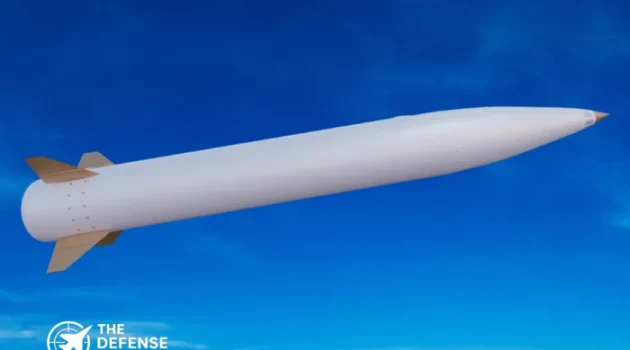
- Lockheed Martin is increasing Precision Strike Missile production to meet U.S. Army demand.
- PrSM replaces ATACMS with extended range and improved targeting capability.
- Expansion supports U.S. long range fires modernization and multi domain operations.
- Production ramp up aligns with planned fielding timelines later this decade.
- Program strengthens deep strike deterrence against near peer adversaries.
Precision Strike Missile Production Expands To Meet U.S. Army Demand
Precision Strike Missile production is increasing as Lockheed Martin moves to scale output in response to growing U.S. Army requirements for long range precision fires. The expansion reflects sustained demand for next generation surface to surface strike capabilities as the Army accelerates modernization efforts.
The move follows continued investment in the Precision Strike Missile program, widely known as PrSM, which is set to replace the legacy Army Tactical Missile System.
The Big Picture
The U.S. Army has prioritized long range precision fires as one of its top modernization pillars. This shift reflects lessons from recent conflicts and evolving operational concepts focused on contested environments.
Future battlefields will likely involve denied access zones, advanced air defenses, and dispersed forces. In that context, ground launched long range missiles provide a critical capability to strike high value targets without relying solely on airpower.
PrSM sits at the center of this transformation. It supports multi domain operations by enabling deep strikes against command nodes, air defenses, logistics hubs, and mobile targets.
What’s Happening
Lockheed Martin is increasing Precision Strike Missile production capacity to meet rising demand from the U.S. Army. The company is scaling manufacturing processes and supply chains to support higher output rates.
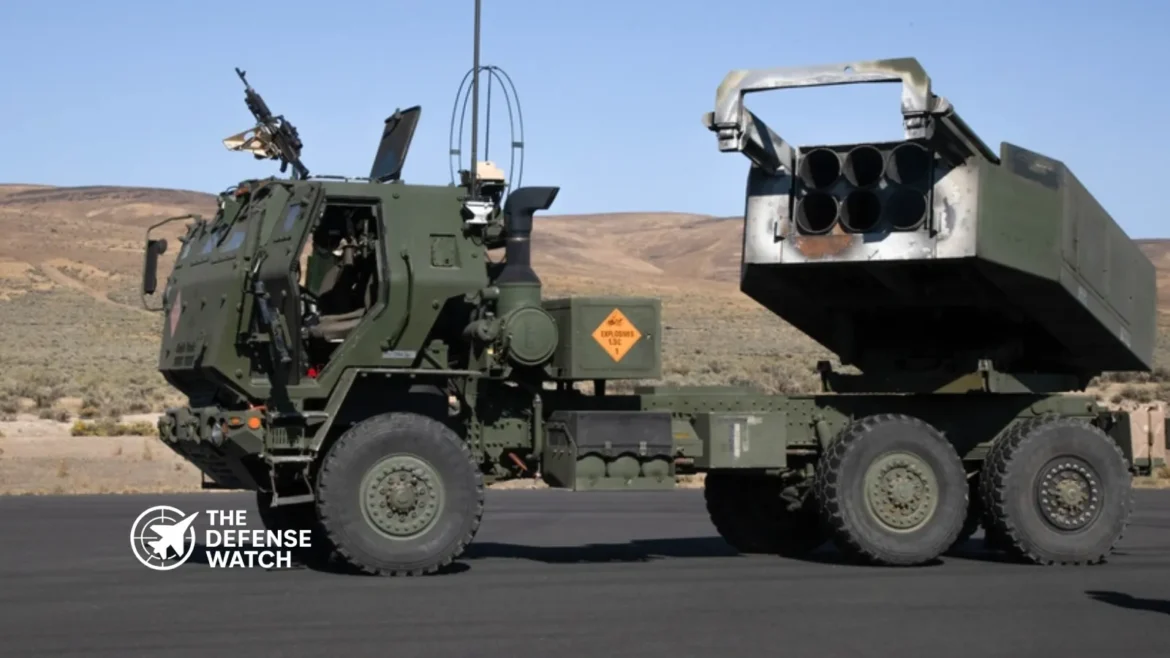
The PrSM is designed to replace the ATACMS system, offering improved range, accuracy, and flexibility. It is compatible with existing launch platforms, including the M270 Multiple Launch Rocket System and the M142 HIMARS.
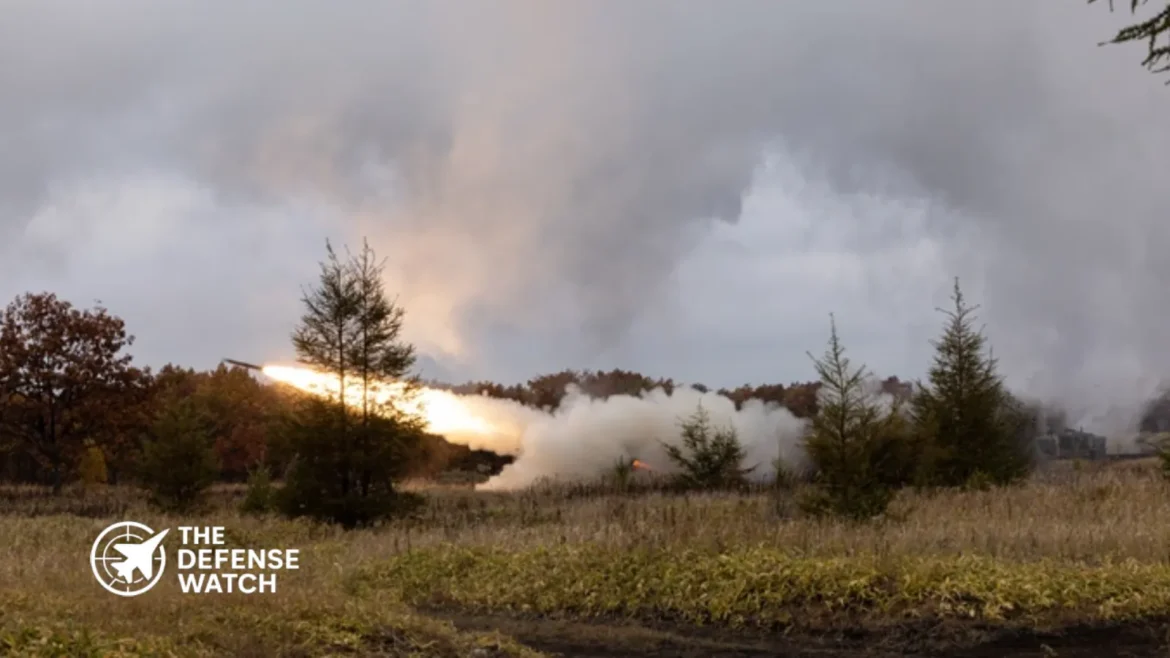
The missile has already progressed through testing phases, and the Army has begun initial fielding efforts. Production increases aim to support both U.S. inventory requirements and potential future foreign military sales.
Why It Matters
The Precision Strike Missile production ramp up directly supports the Army’s ability to conduct long range precision fires at scale.
PrSM delivers several operational advantages:
It increases engagement range, allowing forces to strike targets deeper behind enemy lines.
It improves targeting flexibility with modern guidance systems.
It enables higher missile loadouts per launcher compared to ATACMS.These improvements translate into greater battlefield effectiveness, particularly in high intensity conflicts where rapid targeting and strike density are critical.
Strategic Implications
Expanding Precision Strike Missile production strengthens U.S. deterrence posture by enhancing deep strike capability.
The system allows ground forces to hold adversary assets at risk across extended distances. This reduces reliance on air superiority in early phases of conflict and complicates enemy planning.
In the Indo Pacific, long range fires are especially important due to vast distances and contested maritime zones. In Europe, they reinforce NATO’s ability to counter advanced anti access and area denial systems.
Higher production rates also ensure stockpile resilience, a key factor highlighted by recent conflicts where munitions consumption exceeded peacetime expectations.
Competitor View
China and Russia are likely to view increased Precision Strike Missile production as part of a broader U.S. effort to enhance long range strike capabilities.
Both countries have invested heavily in their own ground based missile systems, particularly those designed to target logistics hubs, airfields, and command infrastructure.
From their perspective, PrSM adds another layer to U.S. strike options, particularly when integrated with joint and allied systems.
This development reinforces an ongoing trend where long range precision fires play a central role in great power competition.
What To Watch Next
The next phase of the Precision Strike Missile program will focus on continued testing, incremental capability upgrades, and expanded procurement.
Future variants are expected to include enhanced seekers for maritime targets, enabling the missile to engage moving ships. This would significantly expand its operational role.
Observers should also watch for increased international interest, as allied nations look to acquire similar capabilities.
Production scaling will remain a key factor, especially as the Army seeks to build sufficient inventory levels for sustained operations.
Capability Gap
The Precision Strike Missile addresses a critical gap left by the aging ATACMS system.
ATACMS offers limited range and fewer missiles per launcher, constraining operational flexibility. PrSM improves both factors, enabling more efficient use of launch platforms and greater strike depth.
However, limitations remain. The system still depends on targeting data from external sensors, including satellites and reconnaissance platforms. This reliance highlights the importance of resilient command and control networks.
The Bottom Line
The Precision Strike Missile production increase signals a decisive U.S. Army shift toward scalable, long range strike power designed for high intensity conflict against advanced adversaries.


- $20 billion contract awarded to Anduril Industries for AI driven defense integration.
- The agreement centers on deployment of the Lattice open architecture battlefield data platform.
- System integrates sensors, autonomous platforms, and command networks into a unified operational environment.
- Work will be executed through task orders through 2036 under U.S. Army Contracting Command oversight.
- The effort reflects growing Pentagon emphasis on AI enabled command and control architectures.
Anduril Industries Lattice Contract Expands US Army AI Battlefield Network
The Anduril Industries Lattice contract represents a major step in the modernization of digital battlefield systems for the United States Army. Under the agreement, the Pentagon awarded up to $20 billion to Anduril Industries to consolidate artificial intelligence software, integrated hardware, computing infrastructure, and technical support into a unified operational capability.
The contract centers on the deployment and expansion of the company’s proprietary Lattice platform, an AI enabled system designed to integrate sensors, autonomous platforms, command systems, and battlefield data streams into a single operational architecture.
Officials say the effort will support the Army’s evolving operational and enterprise requirements across multiple mission areas.
The contract was awarded by U.S. Army Contracting Command at Aberdeen Proving Ground in Maryland. Work locations and funding will be assigned through individual orders, with program activities expected to run through March 2036.
The Big Picture
Artificial intelligence driven command systems are becoming central to modern military operations.
The Pentagon increasingly views data integration, sensor networking, and automated decision support as essential capabilities for future conflicts. Programs across the U.S. military services are shifting toward digital architectures that connect drones, satellites, sensors, and weapons platforms into shared operational networks.
Platforms such as the Lattice system represent the type of digital infrastructure required for concepts like Joint All Domain Command and Control, often abbreviated as JADC2. These systems aim to allow commanders to process massive volumes of battlefield data and respond faster than adversaries.
The Anduril Industries Lattice contract reflects this broader strategic shift. Instead of focusing only on physical weapons platforms, the Department of Defense is investing heavily in software driven operational environments.
What Is Happening
The new agreement allows the Army to procure commercial solutions from Anduril that integrate multiple elements into a single mission ready capability.
The contract includes several key components:
• The AI enabled Lattice software suite
• Integrated sensors and hardware systems
• Data infrastructure and computing architecture
• Technical support services
• Ongoing system integration and upgrades
Lattice functions as a command and control layer that processes data from a wide range of sensors and platforms. It uses machine learning algorithms to detect threats, track objects, and provide decision support to operators.
Anduril has previously deployed the platform in several operational environments, including border security, counter drone missions, and autonomous surveillance networks.
Under this Army contract, the platform will be expanded to support both operational military missions and broader enterprise needs.
Why It Matters
The Anduril Industries Lattice contract highlights a growing shift toward software driven military capability.
Modern battlefields generate enormous amounts of data from satellites, drones, radar systems, electronic warfare sensors, and ground units. Without automated processing and integration tools, commanders risk being overwhelmed by information.
AI enabled platforms like Lattice aim to solve this problem by:
• Aggregating data from multiple sources
• Automatically identifying patterns and threats
• Presenting real time situational awareness
• Enabling faster operational decisions
This approach reduces the time between detection and response, which can be decisive in high intensity combat.
For the Army, integrating AI based decision support systems also supports modernization efforts aimed at preparing forces for future conflicts involving peer competitors.
Strategic Implications
The contract also reflects the Pentagon’s increasing reliance on non traditional defense contractors specializing in software and autonomous technologies.
Companies like Anduril have emerged as key players in defense innovation by focusing on rapid development cycles and commercial style software architectures. Their platforms often rely on open architecture systems that allow rapid upgrades and integration with third party technologies.
The Lattice architecture is designed to integrate with a variety of sensors and autonomous systems. This flexibility allows military units to add new capabilities without rebuilding entire command networks.
For the Army, that approach could accelerate modernization while reducing long term system integration challenges.
Competitor View
Rival military powers closely monitor U.S. investments in AI driven command systems.
Both China and Russia have emphasized the importance of information dominance and automated battlefield management in future warfare concepts.
Chinese military doctrine increasingly stresses intelligentized warfare, which includes the use of artificial intelligence to coordinate sensors, weapons, and command networks. Russia has also invested in automated battlefield management systems designed to integrate reconnaissance and strike capabilities.
Large scale contracts such as the Anduril Industries Lattice contract signal that the United States intends to accelerate development of these capabilities.
The deployment of AI enabled command platforms could improve operational tempo and increase the effectiveness of distributed forces.
Capability Gap The Army Is Addressing
The Army faces a long standing challenge in integrating data from multiple platforms and operational domains.
Many legacy command systems operate in isolated networks. This fragmentation slows decision making and limits situational awareness during complex operations.
The Lattice platform aims to close that gap by creating a unified operational picture across sensors, vehicles, and command nodes.
However, implementing such systems across large military organizations remains complex. Integration with legacy hardware, cybersecurity concerns, and operator training all present practical challenges.
Despite these hurdles, AI driven data fusion is widely viewed as essential for modern military operations.
What To Watch Next
Several milestones will determine the long term impact of the program.
First, the Army will begin issuing task orders under the contract framework. These orders will define specific projects, deployments, and operational environments.
Second, integration with existing Army command systems will be critical. The platform must connect with current communications networks and battlefield sensors.
Finally, operational testing will determine how effectively the system supports decision making in real world conditions.
If successful, the Lattice platform could become a foundational element of the Army’s digital command architecture over the next decade.
The Bottom Line
The Anduril Industries Lattice contract signals a major U.S. Army investment in AI driven battlefield data integration, highlighting the growing role of software platforms in future military operations.
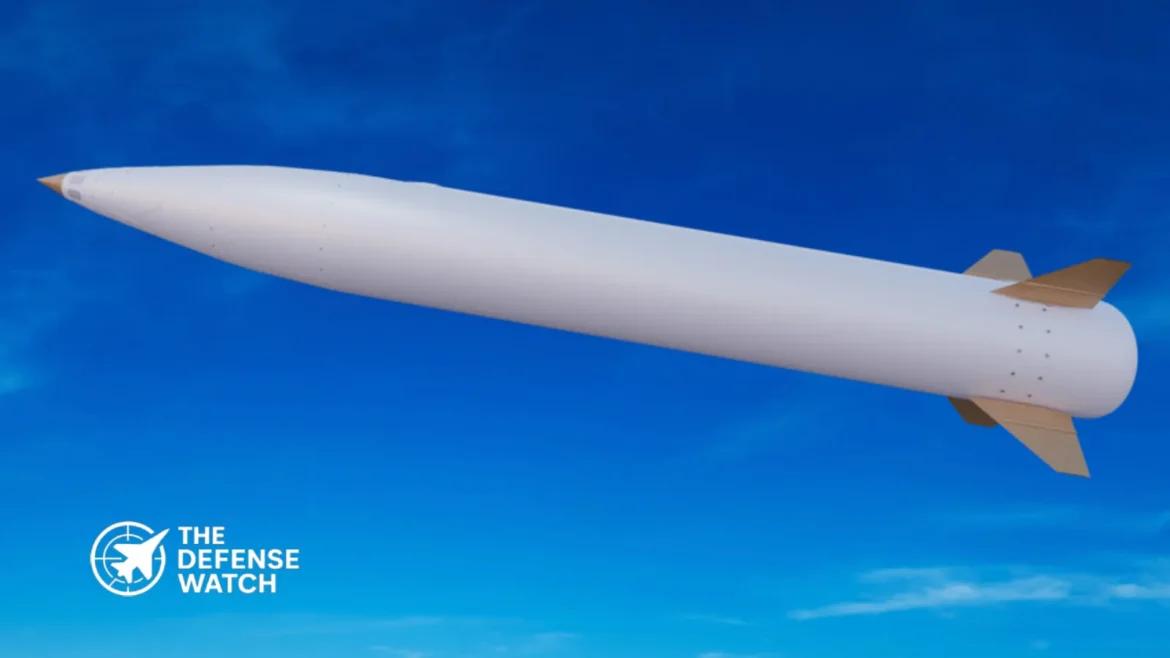
- The US Army and Lockheed Martin conducted a successful flight test of the Precision Strike Missile Increment 2.
- The new variant is designed to strike moving land targets and maritime targets at long range.
- The capability strengthens US long range precision fires and supports joint operations against naval threats.
- PrSM is designed to launch from HIMARS and M270A2 launchers that already serve in US and allied forces.
- Increment 2 development marks a key step toward operational deployment later in the decade.
PrSM Increment 2 Test Marks Major Step In Long Range Precision Fires
The Precision Strike Missile Increment 2 recently completed a flight test conducted by the Lockheed Martin and the US Army, demonstrating progress toward a new long range weapon capable of striking moving land and maritime targets.
The test represents another milestone in the evolution of the Precision Strike Missile program, which is replacing the aging Army Tactical Missile System. The new missile aims to extend range, improve precision, and enable new targeting capabilities across modern battlefields.
According to Lockheed Martin, the latest test successfully demonstrated the missile’s ability to support future moving target engagement missions. The capability would significantly expand the operational role of US ground based long range fires.
The Big Picture
Long range precision fires remain one of the central priorities in US military modernization. Army planners see deep strike weapons as critical tools for penetrating contested environments where aircraft or naval platforms may face heavy defenses.
The Precision Strike Missile program sits at the center of this effort. The missile allows ground forces to strike high value targets hundreds of kilometers away while operating from mobile launchers.
The introduction of a moving target capability reflects changing operational demands. Modern conflicts increasingly involve dynamic targets such as mobile missile launchers, command vehicles, or naval vessels operating within contested littoral zones.
US defense leaders have repeatedly emphasized that future conflicts may require land forces to help control maritime spaces. The development of maritime strike capability for the Precision Strike Missile supports that concept.
What Is Happening
Engineers from Lockheed Martin and the US Army conducted the recent flight test of PrSM Increment 2 as part of the program’s development campaign.
The test evaluated the missile’s ability to engage moving targets. This represents a major upgrade over the baseline PrSM design, which focuses primarily on fixed land targets.
The missile is designed to launch from existing US Army platforms including the M142 HIMARS and the M270A2 MLRS. Both launchers already serve widely across the US military and allied forces.
Using these launch systems allows the Army to integrate the new missile without major infrastructure changes. This approach speeds up deployment while maintaining interoperability with existing units.
The new Increment 2 version is expected to add a multi mode seeker that allows the missile to track and engage moving targets, including maritime vessels.
Why It Matters
Moving target capability fundamentally changes how the Precision Strike Missile can be used in combat.
Traditional long range artillery weapons are effective against fixed targets such as infrastructure, airfields, or logistics hubs. However, modern warfare increasingly involves mobile systems that relocate quickly to avoid detection.
A missile capable of tracking moving targets allows the Army to strike assets such as mobile missile launchers, armored formations, and naval vessels.
This capability also strengthens joint operations with the US Navy and Air Force. Army launchers deployed on islands or coastal areas could provide long range maritime strike support during regional conflicts.
Military planners often refer to this concept as land based anti ship capability. It creates additional dilemmas for adversaries by expanding the number of platforms that can threaten naval forces.
Strategic Implications
The development of PrSM Increment 2 fits into a broader US strategy focused on distributed strike capabilities.
Instead of relying on a limited number of high value platforms, the US military is spreading long range weapons across multiple services and domains. Ground based missile systems add another layer to that approach.
This concept is particularly relevant in the Indo Pacific. Island chains across the region could host mobile missile units capable of targeting hostile ships operating nearby.
A network of such systems would complicate adversary planning and increase deterrence by expanding the threat envelope.
The mobility of launchers such as the M142 HIMARS also allows units to relocate quickly after firing, reducing vulnerability to counter attacks.
Competitor View
China and Russia closely monitor US developments in long range precision fires.
Both countries have invested heavily in their own land based missile forces designed to threaten ships and bases across large regions.
China in particular has developed multiple anti ship ballistic missile systems as part of its anti access and area denial strategy.
The addition of maritime targeting capability to the Precision Strike Missile suggests the United States is moving toward a more symmetrical capability set. Land based strike systems could help counter adversary naval operations in contested regions.
Regional rivals may interpret the development as another step in expanding the reach of US ground forces into maritime domains.
What To Watch Next
Testing for PrSM Increment 2 is expected to continue as engineers refine guidance systems and target tracking capabilities.
Future flight tests will likely focus on validating the missile’s seeker technology and its ability to engage maneuvering targets in complex environments.
The US Army also plans additional increments of the Precision Strike Missile program. Later versions may introduce further range improvements and expanded target sets.
Operational deployment timelines will depend on the results of ongoing testing and procurement decisions by the Department of Defense.
Capability Gap
The Precision Strike Missile program addresses several limitations of earlier US Army missile systems.
The aging Army Tactical Missile System offers limited missile capacity per launcher and lacks the advanced targeting flexibility required for modern battlefields.
PrSM increases the number of missiles carried per launcher while adding improved accuracy and digital integration.
Increment 2 specifically addresses the challenge of engaging moving targets. Without that capability, long range artillery systems struggle against mobile adversaries.
However, long range targeting still depends on reliable sensors and networked data sources. Accurate tracking data from drones, satellites, or reconnaissance aircraft remains essential for successful engagements.
The Bottom Line
The Precision Strike Missile Increment 2 test signals a major step toward giving US ground forces the ability to strike moving land and maritime targets at long range.
 ¦ KEY FACTS AT A GLANCE
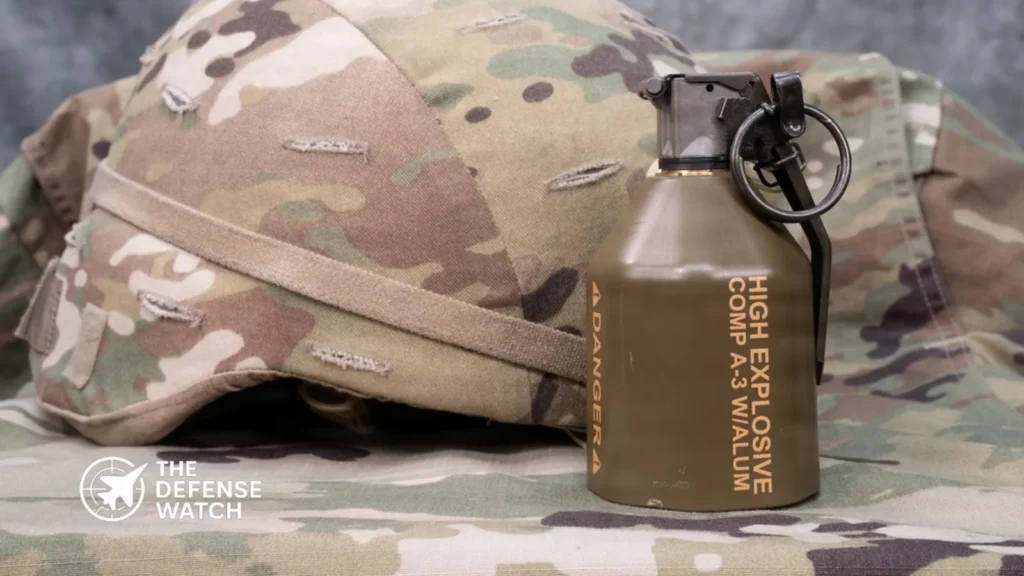
- The US Army approved the M111 offensive hand grenade for Full Material Release, the first newly approved lethal grenade since 1968.
- The grenade relies on blast overpressure instead of fragmentation, making it more effective in enclosed combat environments.
- Developed at Picatinny Arsenal, the system replaces the aging Mk3A2 grenade series with a safer and modern design.
- The M111 uses the same fuze and arming procedures as existing M67 grenades to simplify logistics and training.
- The new design improves safety while giving infantry units a dedicated weapon for close quarters urban combat.
US Army Approves M111 Offensive Hand Grenade
The M111 offensive hand grenade has been approved by the US Army for Full Material Release, marking the first newly authorized lethal hand grenade for the service since 1968. The decision allows the Army to move the weapon into wider production and operational use across infantry units.
Developed by the Army’s Capabilities Program Executive Office Ammunition and Energetics in partnership with the DEVCOM Armaments Center at Picatinny Arsenal, the grenade replaces the aging Mk3A2 series. The new munition addresses both safety concerns and modern battlefield requirements, particularly in urban environments where traditional fragmentation grenades pose significant risks to friendly forces.
The Big Picture
The US Army’s approval of the M111 reflects a broader effort to modernize legacy munitions and adapt infantry equipment for contemporary combat environments.
Urban warfare has become a defining feature of modern conflicts, from Iraq and Syria to recent fighting in densely populated areas worldwide. Military planners increasingly expect future operations to take place in cities, where buildings, narrow corridors, and civilian infrastructure complicate the use of traditional explosive weapons.

U.S. Army Hand grenades have remained a staple of infantry combat for decades. However, many designs currently in service trace their origins to Cold War era requirements. The Mk3A2 offensive grenade, introduced in 1968, remained the Army’s primary concussive grenade despite evolving operational needs.
By introducing the M111 offensive hand grenade, the Army is updating a critical piece of soldier equipment that had seen limited innovation for nearly six decades.
What’s Happening
The US Army formally cleared the M111 offensive hand grenade for Full Material Release after years of development and testing at Picatinny Arsenal in New Jersey.
The weapon replaces the obsolete Mk3A2 grenade, which faced increasing restrictions due to its asbestos based body. The M111 eliminates this hazard by using a plastic casing that is fully consumed during detonation.
Unlike the widely used M67 fragmentation grenade, the M111 relies primarily on blast overpressure rather than metal fragmentation to neutralize targets. This design produces powerful shock waves capable of incapacitating enemy personnel in enclosed spaces such as rooms, bunkers, and narrow structures.
U.S. Army Army officials say the weapon fills a critical operational niche. Fragmentation grenades like the M67 can send lethal fragments in all directions, which may bounce off walls or penetrate barriers in confined spaces. The M111 instead concentrates its lethal effects through pressure waves, reducing the risk to friendly forces positioned nearby.
The grenade uses the same fuze and five step arming process as the M67 fragmentation grenade. This design decision allows soldiers to train using familiar procedures while simplifying manufacturing and supply chains.
Why It Matters
The introduction of the M111 offensive hand grenade directly reflects lessons learned during decades of close quarters combat.
US forces conducting urban operations in Iraq and Afghanistan often encountered situations where fragmentation grenades were not the ideal tool. When fighting inside buildings or narrow corridors, fragments can travel unpredictably or penetrate interior walls, increasing the risk of friendly casualties.
U.S. Army Army program officials noted that door to door combat in Iraq revealed the limitations of existing grenade types. A blast based weapon designed for confined spaces offers a safer alternative for clearing rooms and fortified positions.
The M111 gives infantry units greater flexibility. Soldiers can now choose between fragmentation effects in open terrain using the M67, or concentrated blast effects when operating inside structures.
This approach reflects a broader trend toward specialized infantry munitions tailored for specific tactical environments.
Strategic Implications
Although the M111 is a relatively small piece of equipment, its introduction has broader implications for infantry combat capability.
Urban combat presents unique challenges for modern militaries. Dense terrain restricts movement, limits visibility, and creates complex engagement environments where traditional weapons may not perform as intended.
By fielding a grenade optimized for enclosed spaces, the US Army is improving the survivability and effectiveness of infantry units conducting room clearing operations.
The change also highlights the importance of incremental modernization. While large scale programs such as next generation combat vehicles often dominate headlines, improvements to basic soldier equipment can have immediate operational impact.
Grenades remain among the most widely used infantry weapons. Enhancing their safety and effectiveness directly affects frontline combat units.
Competitor View
Potential adversaries closely monitor US efforts to improve infantry lethality and urban combat capabilities.
U.S. Army Russia and China both emphasize urban warfare in their military planning and training exercises. Russian operations in Ukraine have demonstrated the brutal realities of fighting in cities, while Chinese military writings frequently highlight the importance of urban operations in potential future conflicts.
The introduction of the M111 may reinforce perceptions that the US military is preparing for sustained close quarters combat scenarios. It also signals continued investment in infantry modernization even as attention shifts toward high technology systems such as drones and long range precision weapons.
At the tactical level, however, improvements to close combat equipment remain essential for ground forces.
What To Watch Next
The Army’s approval of the M111 offensive hand grenade allows the program to transition from development to broader production.
Future milestones will likely include expanded procurement contracts and gradual distribution to operational units. Training grenades, designated the M112, will support instruction and allow soldiers to practice with equipment that closely replicates the live weapon.
Industry participation may also expand. Because the Army retains government owned intellectual property for the grenade design, multiple manufacturers could potentially compete for production contracts.
This approach supports the Pentagon’s broader effort to strengthen the domestic ammunition industrial base.
Capability Gap
The M111 offensive hand grenade addresses a long standing capability gap in close quarters combat.
Fragmentation grenades excel in open terrain but can create unacceptable risks in confined spaces. Conversely, older offensive grenades such as the Mk3A2 lacked modern materials and safety standards.
The M111 attempts to balance lethality with controlled effects in urban environments. Its blast overpressure can incapacitate enemies inside rooms or bunkers while reducing unintended fragmentation hazards.
However, offensive grenades also have limitations. Their blast effects diminish quickly in open areas, meaning they cannot replace fragmentation grenades in all situations.
For this reason, the Army continues to field both grenade types as complementary tools for different combat scenarios.
The Bottom Line
The M111 offensive hand grenade modernizes a decades old infantry weapon and gives US soldiers a safer, more effective option for close quarters urban combat.
¦ KEY FACTS AT A GLANCE- The US Army recently tested the APEX counter-UAS round at Yuma Proving Ground in Arizona.
- The 30mm Aviation Proximity Explosive round is designed for the AH-64 Apache’s M230 chain gun.
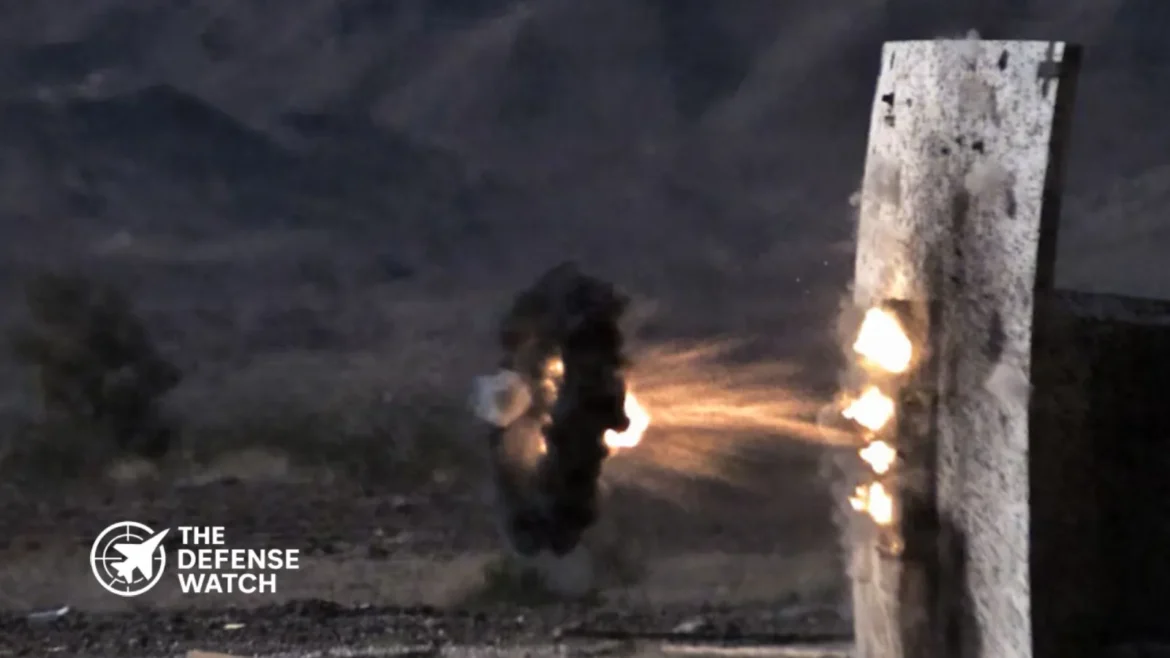
- The munition detonates near a drone, creating a fragmentation pattern to destroy small UAS.
- About 1,200 rounds were fired during testing against aerial and ground targets.
- The next milestone is an airworthiness release enabling operational firing from Apache helicopters.
US Army Tests APEX Counter-UAS Round To Strengthen Drone Defense
The APEX counter-UAS round is undergoing testing by the US Army at Yuma Proving Ground in Arizona as part of efforts to improve the military’s ability to defeat drones on the modern battlefield. The new 30mm Aviation Proximity Explosive munition is designed for use with the AH-64 Apache helicopter’s M230 chain gun and is intended to destroy unmanned aerial systems by detonating near the target rather than requiring a direct hit.
Army testers recently conducted live-fire evaluations at the Yuma Test Center, where crews fired approximately 1,200 rounds during a series of trials comparing the new munition with legacy ammunition and assessing its effectiveness against aerial targets.
The Big Picture
The US military’s rapid push for counter-drone technologies reflects a fundamental shift in modern warfare. Small and inexpensive unmanned aerial systems have become widely used for reconnaissance, targeting, and attack missions.
Recent conflicts have demonstrated the scale of this challenge. In the war between Russia and Ukraine, both sides rely heavily on small drones for surveillance and strike operations, forcing militaries to develop new tools to detect and destroy these systems.
Army leadership has increasingly prioritized counter-UAS capabilities across multiple domains. The service has expanded research and testing programs focused on sensors, electronic warfare, and kinetic solutions designed to counter both individual drones and coordinated drone swarms.
The APEX counter-UAS round represents a relatively low-cost kinetic option that could expand the Apache helicopter’s ability to engage aerial threats.
What’s Happening
Testing took place at the Yuma Test Center at US Army Yuma Proving Ground, one of the military’s largest testing facilities. The site includes nearly 2,000 square miles of restricted airspace, allowing safe aerial weapons testing from helicopters.
The APEX round closely resembles existing 30mm ammunition used by the Apache, including the M788 training round and the M789 high-explosive dual-purpose round. However, the new munition introduces a key feature.
Instead of detonating on impact, the round uses a proximity effect that allows it to explode just in front of a target drone. The resulting fragmentation pattern spreads outward to disable or destroy the unmanned aircraft.
During testing, crews conducted two main subtests:
- A comparison between the APEX round and legacy M789 ammunition
- Engagement trials against unmanned aerial systems
Apache crews also fired at ground targets and tested the round at both short and longer ranges.
To capture detailed performance data, testers used a range of instrumentation. Support assets included overhead scoring aircraft, telemetry systems, tracking mounts, high-speed video cameras, and multiple ground-based sensors.
Why It Matters
Counter-drone defense presents a difficult problem for traditional military weapons. Small drones are often fast, agile, and inexpensive, which makes it inefficient to use costly missiles against them.
Attack helicopters such as the Apache already carry a powerful 30mm cannon that can fire hundreds of rounds per minute. However, hitting a small drone directly with conventional ammunition can be challenging.
The APEX counter-UAS round addresses this issue by using proximity detonation and fragmentation. This increases the probability of destroying a drone even when the round does not score a direct hit.
If fielded, the munition could significantly expand the Apache’s defensive and offensive capabilities against small aerial threats.
Strategic Implications
Integrating counter-drone ammunition into existing weapons platforms could offer several operational advantages.
First, it allows helicopters already deployed in combat zones to engage drones without requiring specialized interceptors or additional systems.
Second, it improves layered air defense. Apache helicopters operating near forward units could provide mobile counter-UAS coverage against surveillance drones or loitering munitions.
Third, it supports the broader US military approach to distributed air defense, where multiple platforms contribute to detecting and defeating unmanned threats.
This concept is increasingly important as drones become more numerous and are used in swarms or coordinated attacks.
Competitor View
Strategic competitors are closely watching Western progress in counter-drone technology.
Russia has relied heavily on reconnaissance and loitering drones in Ukraine, while China has invested heavily in drone swarms and autonomous systems. Both nations have also developed their own counter-UAS technologies.
A weapon like the APEX counter-UAS round highlights a Western approach focused on adapting existing platforms to defeat drone threats quickly and cost effectively.
Rather than relying only on high-end missile interceptors, militaries are increasingly combining electronic warfare, directed energy weapons, and proximity-fused ammunition to create layered defenses.
What To Watch Next
The next major milestone for the program is an airworthiness release.
This certification would allow soldiers to safely fire the APEX round from Apache helicopters in operational settings once the munition becomes available. The release represents a critical step toward full materiel release and eventual fielding to Army units.
Additional testing may examine reliability, lethality against different drone types, and compatibility with Apache fire control systems.
Future evaluations could also explore how the round performs against drone swarms or fast-moving aerial targets.
Capability Gap
Modern militaries face a growing gap between the cost of defending against drones and the cost of deploying them.
A small commercial drone can cost a few thousand dollars or less, while intercepting it with a missile can cost hundreds of thousands of dollars.
The APEX counter-UAS round aims to close this gap by providing a low-cost engagement option using a weapon system already carried by Apache helicopters.
However, the munition also has limitations. It relies on the helicopter’s sensors and targeting systems to detect and track drones, which can be difficult against small or low-flying targets. It also remains a line-of-sight weapon with limited engagement range compared with missile systems.
The Bottom Line
The APEX counter-UAS round represents a practical step toward giving Apache helicopters an effective and cost-efficient weapon against the growing threat of battlefield drones.
KEY FACTS AT A GLANCE- BAE Systems secured a $473 million U.S. Army contract to produce additional M109A7 Paladin artillery vehicle sets.
- The order covers 40 M109A7 self propelled howitzers and associated M992A3 ammunition resupply vehicles.
- The contract represents the first award under a five year procurement framework for the Paladin system.
- Production will occur at BAE Systems facilities in Pennsylvania, Oklahoma, and Alabama.
- The program supports U.S. Army efforts to modernize artillery within Armored Brigade Combat Teams.
BAE Systems Paladin Artillery Vehicles Contract Expands U.S. Army Firepower
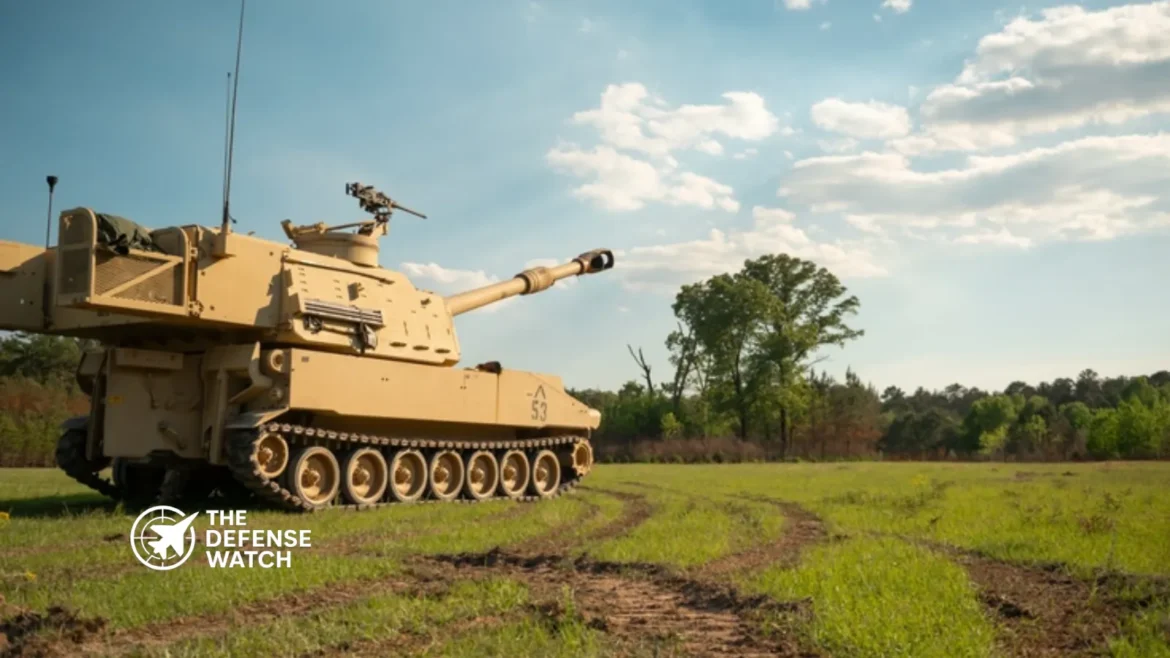
The M109A7 Paladin artillery vehicles program has received a major boost after the U.S. Army awarded BAE Systems a $473 million contract to produce 40 additional self propelled howitzer systems and ammunition resupply vehicles. The award expands production of the Army’s primary tracked artillery platform and supports long term modernization of armored brigade firepower.
(adsbygoogle = window.adsbygoogle || []).push({});The contract was issued by the U.S. Army Contracting Command at Detroit Arsenal and represents the first award under a broader five year production agreement for the Paladin system.
Each production set includes an M109A7 Paladin self propelled howitzer and the M992A3 Carrier Ammunition Tracked vehicle, which provides battlefield ammunition resupply and support for artillery units.
The Big Picture
Artillery has returned to the center of modern warfare. Large scale conflicts and high intensity combat scenarios have reinforced the importance of long range indirect fire.
The U.S. Army has prioritized artillery modernization as part of its broader force modernization strategy. Armored Brigade Combat Teams depend on mobile howitzers like the M109A7 Paladin artillery vehicles to deliver sustained fire support while maneuvering alongside tanks and mechanized infantry.
Programs such as the Paladin Integrated Management effort aim to extend the operational life of the M109 platform while integrating modern electronics, power systems, and survivability improvements.
The continued procurement of M109A7 systems shows the Army’s focus on maintaining reliable artillery capacity while future next generation systems are still under development.
What’s Happening
BAE Systems received a $473 million contract to manufacture 40 additional M109A7 Paladin artillery vehicle sets for the U.S. Army.
The order includes:
- 40 M109A7 self propelled howitzers
- M992A3 Carrier Ammunition Tracked resupply vehicles
- Technical support packages
- Post production refurbishment support
- Welding compliance and sustainment services
Production will take place across several U.S. industrial sites, including:
- York, Pennsylvania
- Elgin, Oklahoma
- Anniston, Alabama
The contract was awarded in September and marks the first procurement under a larger multi year framework designed to maintain steady production of the Paladin system.
Why It Matters
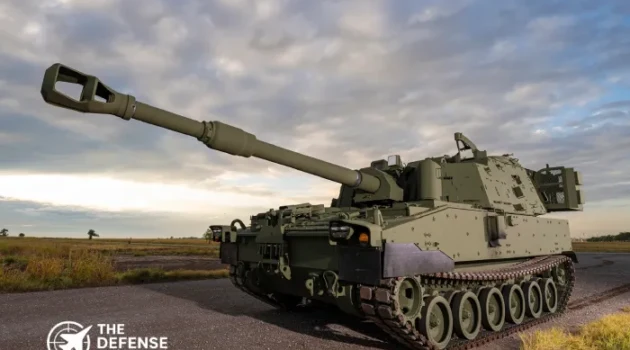
The M109A7 Paladin artillery vehicles represent the most modern variant of the long running M109 self propelled howitzer family.
The platform incorporates a redesigned chassis derived from the Bradley Fighting Vehicle, along with upgraded power generation and digital architecture. These improvements allow the system to support modern fire control systems and future upgrades.
The system delivers several operational advantages:
- Improved reliability and maintainability
- Greater electrical power for modern electronics
- Enhanced survivability for artillery crews
- Integration with digital battlefield networks
These upgrades enable the Paladin to support modern targeting networks, including sensor to shooter fire missions that shorten response times.
For armored formations, rapid indirect fire support remains essential for suppressing enemy defenses, shaping battlefield conditions, and enabling maneuver operations.
(adsbygoogle = window.adsbygoogle || []).push({});Strategic Implications
Sustained production of the M109A7 Paladin artillery vehicles supports the U.S. Army’s ability to maintain artillery readiness across its armored formations.
Armored Brigade Combat Teams depend on mobile artillery that can keep pace with maneuver forces. Unlike towed systems, tracked howitzers can reposition quickly and maintain protection against counter battery fire.
The procurement also reflects broader lessons drawn from recent conflicts where artillery has played a decisive role in large scale ground warfare.
Modern armies require:
- high ammunition throughput
- protected mobile artillery platforms
- integrated digital targeting networks
The Paladin program contributes to maintaining these capabilities while the Army continues work on future long range precision fires systems.
Competitor View
Strategic competitors closely monitor U.S. artillery modernization programs.
Russia maintains extensive artillery forces and has historically emphasized massed fires as a central element of ground combat operations. China has also invested heavily in self propelled artillery systems and rocket forces designed to support mechanized units.
From a competitor perspective, expanded production of M109A7 Paladin artillery vehicles signals that the United States intends to maintain strong conventional artillery capacity within armored formations.
Such capabilities remain important in potential large scale conflicts where sustained firepower and survivable artillery units could shape the outcome of ground engagements.
Capability Gap
The Paladin Integrated Management program addresses several operational limitations of earlier M109 variants.
Earlier systems faced challenges in electrical power generation, reliability, and integration with digital command networks.
The M109A7 resolves many of these issues through:
- modern power systems
- upgraded chassis and suspension
- digital fire control architecture
- improved survivability features
However, the platform still faces limitations in maximum firing range compared to emerging long range artillery systems currently under development.
The Army continues to explore extended range artillery concepts and new munitions to complement existing Paladin units.
(adsbygoogle = window.adsbygoogle || []).push({});What To Watch Next
Several developments will shape the future of the Paladin program.
Key milestones include:
- continued production under the five year contract framework
- integration of improved digital targeting systems
- potential upgrades for extended range artillery capabilities
- future long range artillery programs that may complement or eventually replace the platform
The U.S. Army plans to field hundreds of M109A7 systems across its active force structure as it modernizes artillery units.
The Bottom Line
The new contract ensures continued production of M109A7 Paladin artillery vehicles, strengthening the U.S. Army’s mobile firepower as artillery regains prominence in modern warfare.
■ KEY FACTS AT A GLANCE- ► The US used the 500km Precision Strike Missile in its first confirmed combat operation against Iranian targets.
- ► The PrSM was launched from an M142 HIMARS platform operated by US Army forces.
- ► The strike reportedly targeted high value Iranian military infrastructure.
- ► PrSM replaces the ATACMS system and extends US Army deep strike reach beyond 300km.
- ► The combat debut signals a shift in how the US Army employs long range precision fires in regional conflicts.
US Deploys 500km PrSM Ballistic Missile In First Combat Strike On Iran
The 500km PrSM ballistic missile was used in combat for the first time during a US strike on Iranian targets, marking a major milestone for the US Army long range fires modernization program.
U.S. Central Command, the strike involved the Precision Strike Missile, or PrSM, launched from an M142 High Mobility Artillery Rocket System. The operation represents the first confirmed battlefield employment of the new missile, which is designed to replace the aging ATACMS inventory.
A New Phase For US Army Long Range Fires
The Precision Strike Missile is a next generation surface to surface ballistic missile developed by Lockheed Martin for the US Army. It is designed to engage high value targets at ranges of up to 500 kilometers under current configurations, with future increments expected to extend that range further.
PrSM is compatible with both the M142 HIMARS and the M270 Multiple Launch Rocket System. Unlike ATACMS, which carries one missile per pod, PrSM allows two missiles per launcher pod, effectively doubling the firepower available from existing platforms.
The reported use of the 500km PrSM ballistic missile in a strike on Iran suggests the US Army is now confident in its operational readiness under real combat conditions. That decision carries technical and strategic weight.
Operational And Strategic Implications
The deployment of the 500km PrSM ballistic missile changes the geometry of land based strike operations in the Middle East. With a 500km reach, US Army units can hold a broader range of fixed and mobile targets at risk without repositioning forward elements.
In a regional scenario involving Iran, this extended range allows US forces to strike command nodes, logistics hubs, air defense systems, and missile infrastructure from greater standoff distances. That reduces exposure to counterbattery fire and ballistic missile retaliation.
The PrSM also improves accuracy and survivability compared to older systems. Open source defense assessments indicate the missile incorporates improved guidance and anti access resilience features, though full specifications remain classified.
The combat debut sends a signal beyond the immediate theater. It demonstrates that the Army long range precision fires program, a top modernization priority, has moved from testing and limited fielding into active operational use.
Replacement Of ATACMS
PrSM is intended to fully replace the MGM 140 Army Tactical Missile System, which entered service in the 1990s. ATACMS has seen combat in Iraq, Afghanistan, and Syria, but its range and payload limits have constrained future use against more advanced adversaries.
By contrast, the 500km PrSM ballistic missile restores overmatch in deep fires while complying with post INF Treaty realities. After the collapse of the Intermediate Range Nuclear Forces Treaty in 2019, the United States was no longer bound by the 500km cap, though initial PrSM variants are reported to operate within that threshold.
The missile forms part of the Army broader Long Range Precision Fires portfolio, which also includes hypersonic weapons development and extended range cannon artillery.
Regional Escalation Risks
The use of the 500km PrSM ballistic missile in a strike on Iran carries geopolitical consequences. Iran has invested heavily in layered air defense systems and its own ballistic missile arsenal. A confirmed US employment of PrSM could influence Iranian force posture and regional deterrence calculations.
At the same time, the operational use of PrSM underscores how the US Army is adapting to high intensity conflict environments rather than counterinsurgency operations that dominated the past two decades.
From a force design perspective, it also reinforces the relevance of ground based fires in joint campaigns traditionally dominated by airpower and naval strike assets.
What Comes Next
Future increments of PrSM are expected to include multi mode seekers capable of engaging moving maritime targets, potentially expanding the missile role into anti ship missions. That would align with US efforts to counter anti access strategies in contested theaters.
For now, the first combat use of the 500km PrSM ballistic missile marks a clear turning point. It confirms the system has transitioned from development and limited operational capability into active combat employment.
The move will likely accelerate allied interest in long range precision fires, particularly among NATO and Indo Pacific partners already operating HIMARS platforms.
KEY FACTS AT A GLANCE■ KEY FACTS AT A GLANCE- ► The US Army tested the XM1225 30×113 mm fuze munition from an AH 64 Apache helicopter.
- ► The munition is designed as an airburst round to counter small unmanned aerial systems.
- ► Engagements were conducted against air to air targets at varying distances.
- ► The round is fired from the Apache’s M230 30 mm chain gun.
- ► The test supports broader US Army counter UAS modernization efforts.
US Army Tests XM1225 Anti Drone Munition From AH 64 Apache
The US Army anti drone munition program took a key step forward as the service tested the 30×113 mm XM1225 fuze round from an Boeing AH-64 Apache helicopter against aerial targets.
According to the United States Army, the live fire event involved engaging air to air targets at varying distances using the Apache’s M230 chain gun. The demonstration focused on validating the performance of the XM1225 programmable fuze round against unmanned aerial systems.
The test reflects the Army’s growing emphasis on counter UAS capability across its aviation and ground formations.
Expanding Apache Counter UAS Capability
The XM1225 is a 30×113 mm high explosive airburst munition designed to detonate at a programmed point in space. Fired from the Apache’s M230 cannon, the round is intended to create a fragmentation pattern effective against small drones.
The US Army anti drone munition effort addresses a clear operational challenge. Small, low cost drones have become a persistent threat in recent conflicts, used for reconnaissance, targeting, and direct attack roles.
Traditionally, the AH 64 Apache has been optimized for close air support, anti armor operations, and armed reconnaissance. By integrating a programmable airburst round, the platform gains an additional air to air capability tailored to counter Group 1 and Group 2 UAS threats.
Army officials have emphasized layered defense against drones, combining electronic warfare, directed energy systems, missiles, and gun based solutions. The XM1225 offers a comparatively low cost per shot option when engaging small aerial targets.
Technical Focus: 30×113 mm XM1225 Round
The 30×113 mm caliber is standard for the Apache’s M230 chain gun. What differentiates the XM1225 is its fuze technology, which enables airburst detonation rather than impact only effects.
Airburst munitions are designed to increase hit probability against small or maneuvering aerial targets. Instead of requiring a direct hit, the round can detonate near the drone, dispersing fragments within a defined radius.
The US Army anti drone munition test evaluated engagements at different ranges, helping determine effective burst timing and lethality envelopes.
Such testing is critical as the Army refines tactics, techniques, and procedures for aviation units facing drone swarms or individual hostile UAS.
Counter UAS In Modern Conflict
The proliferation of small drones in conflicts in Eastern Europe and the Middle East has accelerated US military investment in counter UAS technologies. Senior defense leaders have repeatedly cited the need for scalable and affordable solutions.
The U.S. Department of Defense has prioritized integrated air and missile defense that includes protection against unmanned systems. Aviation assets such as the Apache are increasingly expected to contribute to that mission set.
By testing the XM1225 from the Apache, the Army is exploring how existing platforms can be adapted without requiring entirely new weapon systems.
This approach supports modernization goals while managing cost and integration timelines.
US To Produce 180,000 155mm Artillery Shells Annually In Poland
The United States will produce 180,000 155mm artillery shells annually in Poland, marking a major expansion of allied ammunition production capacity in Europe. The move aims to strengthen NATO supply chains, replenish stockpiles, and support ongoing modernization efforts across the alliance.
According to reporting, the production initiative reflects growing transatlantic cooperation between Washington and Warsaw as demand for conventional artillery ammunition continues to surge.
The expansion comes amid sustained requirements for 155mm artillery shell production across NATO member states, particularly as European militaries work to rebuild inventories and enhance readiness.
Strengthening NATO’s Ammunition Supply Base
The 155mm caliber round remains the standard for most Western artillery systems, including the U.S. Army’s M109 Paladin and the M777. European platforms such as the Krab also rely on the same NATO-standard ammunition.
By establishing production capacity in Poland, the United States diversifies its manufacturing footprint beyond North America. This approach reduces transportation timelines, increases surge capacity, and provides greater resilience against supply chain disruptions.
Poland has become a central hub for NATO’s eastern flank, hosting rotational U.S. forces and key logistical infrastructure. Expanding 155mm artillery shell production there aligns with broader alliance efforts to reinforce deterrence and readiness in Central and Eastern Europe.
Why 155mm Artillery Shells Matter
The 155mm artillery shell remains a core component of conventional land warfare. Modern variants include high-explosive, smoke, illumination, and precision-guided rounds.
The U.S. Army has steadily increased domestic output of 155mm artillery shells over the past two years. Establishing annual production of 180,000 rounds in Poland signals a parallel push to build allied industrial depth in Europe.
Artillery continues to play a decisive role in high-intensity conflict. Sustained operations require consistent supply. For NATO, expanding 155mm artillery shell production ensures that frontline units can maintain operational tempo without exhausting national reserves.
US–Poland Defense Industrial Cooperation
Defense cooperation between Washington and Warsaw has deepened in recent years. Poland has invested heavily in modernizing its armed forces, acquiring advanced systems from the United States and expanding its domestic defense industry.
This new production effort underscores Poland’s role as a key defense manufacturing partner. By hosting 155mm artillery shell production, Poland strengthens its own security while contributing to broader NATO ammunition readiness.
The initiative also reflects U.S. efforts to integrate allied industrial bases more closely. Shared production reduces strategic risk and allows for faster replenishment of ammunition stocks across Europe.
Expanding Global Artillery Output
The United States has previously announced plans to significantly increase domestic production of 155mm artillery shells. Adding European capacity complements those efforts and supports long-term sustainability.
Officials have emphasized that building distributed manufacturing networks is essential to meeting modern battlefield demands. As NATO members increase defense spending, ammunition production has become a priority area for investment.
The planned output of 180,000 155mm artillery shells per year in Poland represents a substantial addition to allied capacity. Over time, this level of production could contribute millions of rounds to NATO inventories.
Strategic Implications For Europe
Poland’s geographic location makes it a strategic logistics node for NATO operations. Hosting 155mm artillery shell production reduces reliance on transatlantic shipping and shortens delivery timelines to allied forces stationed in Europe.
The move also signals continued U.S. commitment to strengthening the alliance’s eastern flank.
In parallel, European governments are accelerating procurement and modernization programs. Ammunition production is increasingly viewed as a critical pillar of national defense strategy, alongside advanced platforms and air defense systems.
Industrial Resilience And Long-Term Planning
The establishment of large-scale 155mm artillery shell production in Poland reflects lessons learned about industrial resilience. Modern conflicts place sustained demand on ammunition stocks.
Expanding output across multiple locations mitigates bottlenecks and enhances redundancy. For NATO planners, this ensures that artillery forces remain supplied during prolonged operations.
The focus on standard 155mm rounds also reinforces interoperability among allied forces. Shared calibers allow NATO members to exchange and distribute ammunition more efficiently during joint operations.
Outlook
The decision to produce 180,000 155mm artillery shells annually in Poland marks a significant step in strengthening NATO’s industrial base. It aligns with broader efforts to enhance ammunition readiness, expand production capacity, and deepen U.S.–Poland defense cooperation.
As European security dynamics continue to evolve, sustained investment in 155mm artillery shell production will remain central to maintaining alliance deterrence and operational capability.
US Army Fields M109A7 Self-Propelled Howitzers To 1st Armored Division
The US Army has fielded the M109A7 self-propelled howitzers to the 1st Armored Division, marking another step in its ongoing artillery modernization effort.
(adsbygoogle = window.adsbygoogle || []).push({});The upgraded howitzers have been delivered to units within the division as part of the service’s broader plan to enhance firepower, survivability, and digital integration across armored brigade combat teams.
The move aligns with the Army’s long-term modernization priorities, which emphasize long-range precision fires and improved operational readiness.
Modernizing The Paladin Fleet
The M109A7 self-propelled howitzers are the latest evolution of the Paladin artillery system. Developed under the Paladin Integrated Management program, the platform replaces the older M109A6 variant with upgraded chassis components, electrical systems, and survivability enhancements.
Manufactured by BAE Systems, the M109A7 incorporates a new hull based on Bradley Fighting Vehicle components, improving commonality and sustainment efficiency across armored formations.
The howitzer retains the 155mm cannon but integrates a modernized power generation system capable of supporting future digital and networked capabilities. This allows better compatibility with advanced targeting systems and command networks used by armored brigade combat teams.
Enhanced Survivability And Reliability
The M109A7 self-propelled howitzers feature improved armor protection and upgraded suspension. These enhancements aim to increase survivability in contested environments where counter-battery fire and drone surveillance are growing threats.
(adsbygoogle = window.adsbygoogle || []).push({});The new electric drive and power distribution architecture also support more reliable operations. By addressing obsolescence issues present in earlier models, the Army reduces maintenance burdens and improves readiness rates.
The Army has stated in previous modernization updates that recapitalizing legacy artillery systems is essential to maintaining overmatch against peer and near-peer adversaries. The M109A7 forms a key part of that effort.
Integration Within Armored Brigade Combat Teams
Fielding the M109A7 self-propelled howitzers to the 1st Armored Division ensures artillery units can operate seamlessly alongside upgraded armored vehicles and digital mission command systems.
The 1st Armored Division, based at Fort Bliss, plays a central role in testing and deploying modernized ground combat systems. Integrating the M109A7 strengthens the division’s ability to provide responsive, high-volume indirect fire support during large-scale combat operations.
The howitzer is paired with the M992A3 ammunition carrier vehicle, also upgraded under the Paladin Integrated Management effort, enabling sustained operations and faster resupply cycles.
Part Of A Broader Fires Strategy
The delivery of M109A7 self-propelled howitzers reflects the Army’s broader fires modernization roadmap. While the service is investing in extended-range cannon artillery and precision strike missiles, it continues to upgrade core tube artillery systems that form the backbone of brigade-level fires.
(adsbygoogle = window.adsbygoogle || []).push({});The M109A7 provides incremental but critical improvements in mobility, protection, and digital connectivity. These upgrades ensure compatibility with evolving battlefield requirements while maintaining proven 155mm firepower.
As the Army prepares for multidomain operations, modernized artillery units such as those equipped with the M109A7 will play a central role in shaping the battlefield, suppressing enemy defenses, and enabling maneuver forces.
The fielding to the 1st Armored Division underscores the service’s commitment to maintaining credible and ready armored formations capable of operating in high-intensity conflict scenarios.