Executive Summary:
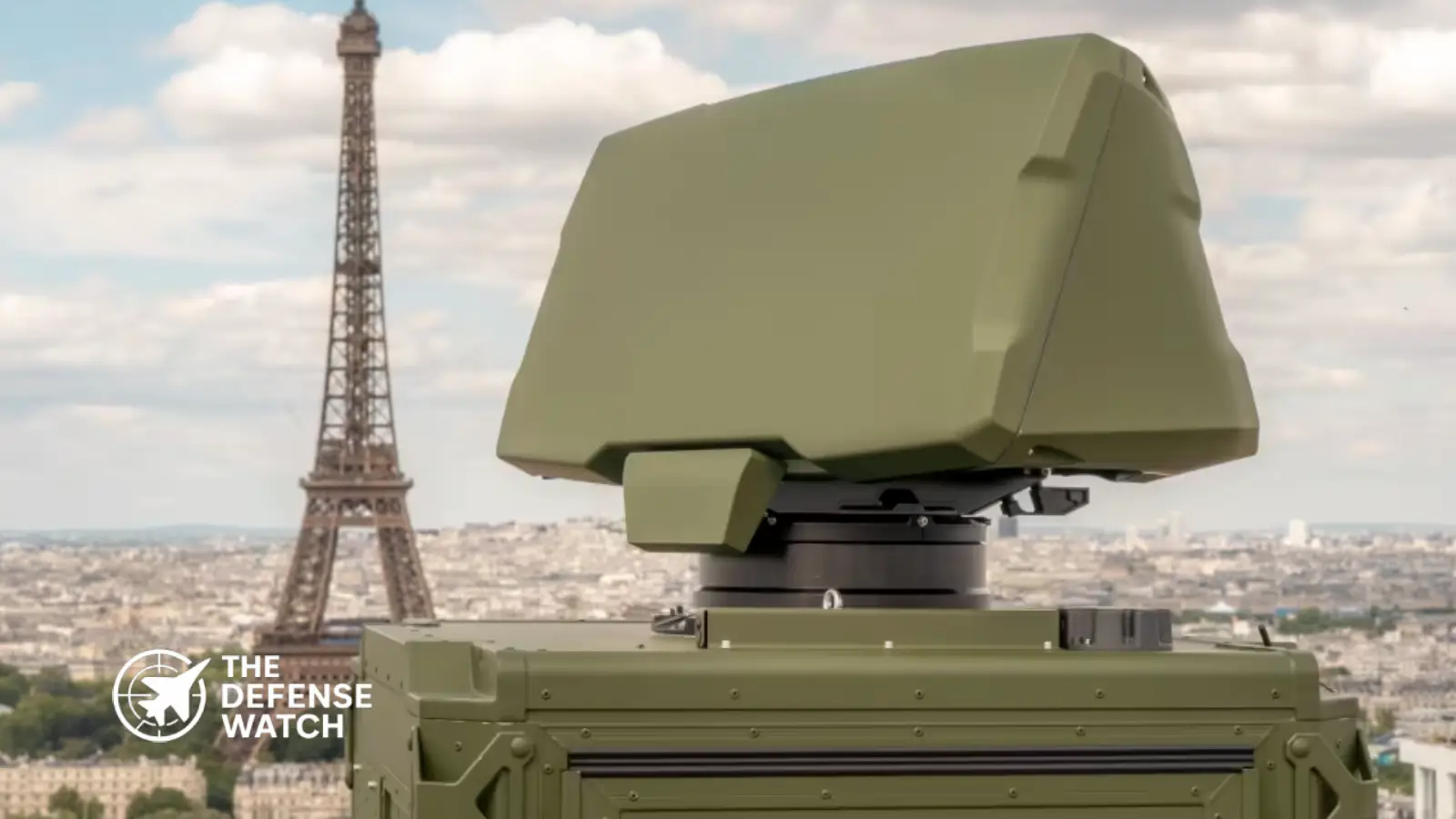
Saab and Scania have secured a contract from France for 17 Giraffe 1X radar systems mounted on tactical vehicles. The deal supports French efforts to modernize short range air defense and improve counter drone capabilities amid evolving aerial threats across Europe.
Saab Giraffe 1X Radar Selected For French Tactical Air Defense
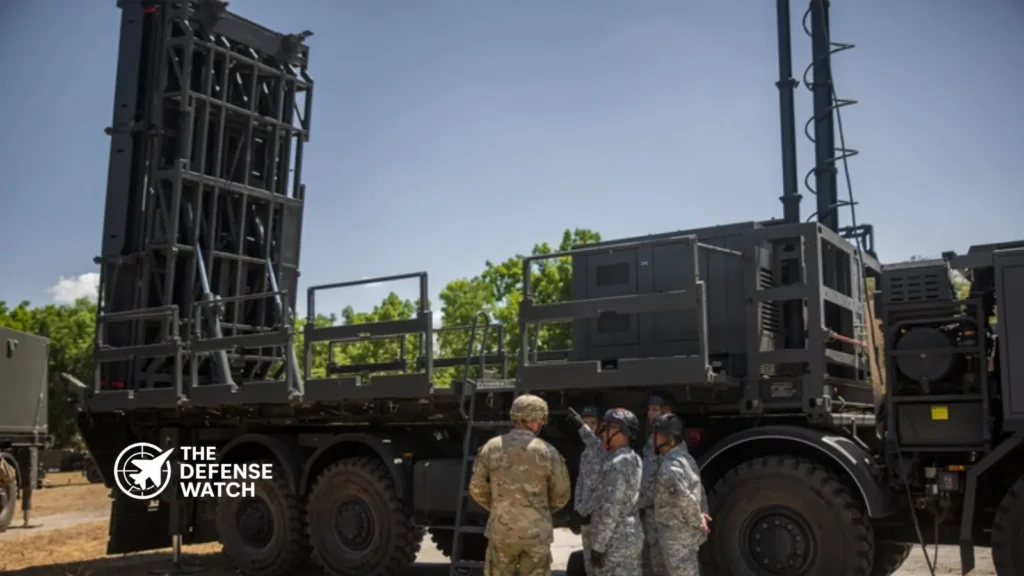
Saab has received a new contract from France for the delivery of Giraffe 1X radar systems integrated onto tactical military vehicles supplied by Scania France.
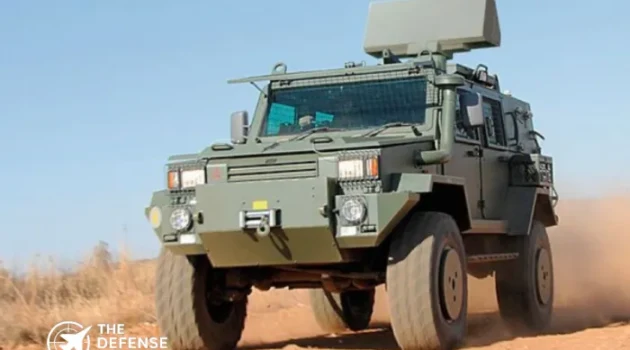
The agreement, signed with France’s Direction Générale de l’Armement (DGA), covers 17 Giraffe 1X radars for the French Armed Forces. Under the contract, one radar will support testing and evaluation activities, while the remaining 16 systems will be mounted on Scania V3P tactical vehicle chassis developed by Scania France’s SPAD defense division in Angers.
Deliveries are scheduled between 2026 and 2027.
The contract also includes training, spare parts, and logistical support, reflecting France’s broader push to improve operational readiness and sustainment for mobile air defense units.
Carl Johan Bergholm, head of Saab’s Surveillance business area, said the partnership with Scania France aims to modernize France’s short and very short range air defense capabilities.
Growing Demand For Counter Drone And SHORAD Systems
The Saab Giraffe 1X radar arrives at a time when European militaries are rapidly expanding investments in short range air defense and counter unmanned aerial system (C-UAS) technologies.
The war in Ukraine, combined with the growing use of low cost drones, loitering munitions, and cruise missile threats, has exposed vulnerabilities in legacy European air defense networks. Many NATO members are now prioritizing mobile radar systems capable of detecting small and low flying aerial targets.
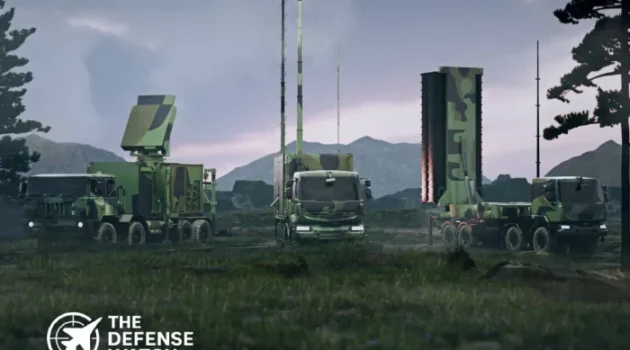
The Giraffe 1X is designed specifically for these missions. The compact 3D radar provides air surveillance, target tracking, and classification capabilities while maintaining a relatively small operational footprint. Saab says the system can support air defense operations, counter drone missions, protection of military bases and critical infrastructure, and maritime surveillance applications.
Unlike larger strategic radar systems, the Giraffe 1X focuses on tactical mobility and rapid deployment. Mounted on the Scania V3P platform, the system gives French forces a mobile sensor package suitable for dispersed battlefield operations.
That mobility could become increasingly important as NATO militaries adapt to highly contested electronic warfare environments where fixed radar sites are more vulnerable to detection and attack.
Why France Is Expanding Mobile Air Defense
France has accelerated several defense modernization initiatives in recent years as European security conditions continue to deteriorate.
Paris has sought to strengthen layered air defense coverage while improving interoperability with NATO allies. Mobile radar platforms such as the Saab Giraffe 1X help fill gaps between long range strategic systems and frontline maneuver units.
The French Armed Forces are also investing heavily in counter drone defenses following operational lessons observed in Ukraine and the Middle East. Small drones have increasingly demonstrated the ability to threaten armored formations, logistics hubs, and critical infrastructure at relatively low cost.
Deploying radar systems on tactical vehicles improves survivability and operational flexibility. Instead of relying solely on static installations, mobile radar units can reposition quickly, support expeditionary operations, and reduce exposure to precision strikes.
The partnership structure between Saab and Scania France is also notable from an industrial perspective. By involving Scania France’s domestic defense division, the program supports local integration and sustainment capabilities while strengthening industrial cooperation between France and Sweden.
Saab Continues Expanding European Radar Footprint
The French order adds to Saab’s growing presence in the European radar and surveillance market.
The Giraffe radar family is already in service with multiple countries and has seen increased interest as NATO members modernize integrated air and missile defense architectures. Saab has positioned the Giraffe 1X as a flexible and software driven radar platform capable of evolving alongside emerging threats.
Its software based architecture allows for upgrades without requiring major hardware redesigns, an increasingly important feature as drone technology and electronic warfare tactics continue evolving rapidly.
For France, the acquisition reflects a broader trend across Europe toward highly mobile and networked air defense systems capable of responding to fast changing battlefield conditions.

Executive Summary:
Lockheed Martin is expanding its munitions production strategy through a new supplier initiative and a planned $9 billion investment effort. The move is designed to increase manufacturing capacity, improve supply chain resilience, and support growing U.S. and allied demand for precision-guided weapons and missile systems.
Lockheed Martin Expands Munitions Production Strategy
Lockheed Martin is accelerating efforts to strengthen U.S. missile manufacturing capacity through a broad industrial expansion strategy focused on supplier growth, production resilience, and long-term munitions output.
The company plans to invest up to $9 billion across its supply chain and production ecosystem over the coming years. The initiative comes as the United States and allied nations continue increasing demand for advanced missile systems following ongoing global security tensions and sustained weapons transfers to partner countries.
The investment strategy centers on expanding supplier participation and reducing manufacturing bottlenecks that have affected defense production across the industry since the COVID-19 pandemic and subsequent geopolitical crises.
Supplier Initiative Targets Production Bottlenecks
Lockheed Martin said the new supplier initiative is intended to help smaller and mid-sized manufacturers enter the defense industrial base more efficiently. The company aims to accelerate qualification timelines, improve production coordination, and create a more distributed manufacturing network for critical missile components.
The effort reflects a broader challenge facing the U.S. defense sector. Demand for precision-guided munitions has increased sharply due to replenishment requirements, military modernization programs, and support packages provided to allies in Europe and the Indo-Pacific.
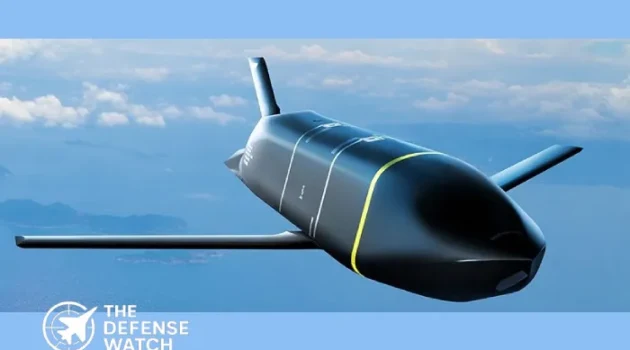
Key missile programs linked to Lockheed Martin production capacity include the JASSM, HIMARS launch systems, PAC-3 interceptors, and long-range strike weapons under development for the U.S. military.
The company stated that expanding supplier participation could help stabilize delivery schedules while increasing surge production capability during future crises.
U.S. Defense Industry Faces Sustained Demand Pressure
The Lockheed Martin munitions production expansion reflects wider Pentagon concerns regarding the readiness of the U.S. defense industrial base. Senior U.S. defense officials have repeatedly warned that existing production rates for missiles and artillery systems may be insufficient for prolonged high-intensity conflict scenarios.
Over the last several years, the U.S. Department of Defense has encouraged major defense contractors to increase manufacturing capacity for missile systems, rocket motors, and precision-guided munitions. Congress has also approved supplemental funding packages intended to accelerate industrial expansion.
The Lockheed Martin initiative aligns with those national priorities. By increasing supplier diversity and investing in production infrastructure, the company appears focused on reducing reliance on limited-source manufacturers and improving scalability across critical weapons programs.
This strategy may also help mitigate risks associated with labor shortages, material sourcing challenges, and production delays that have affected several sectors of the aerospace and defense industry.
Strategic Importance Of Missile Manufacturing Capacity
The expansion of Lockheed Martin munitions production carries strategic significance beyond simple manufacturing growth. Modern conflicts have demonstrated that stockpile sustainability and production endurance are now central components of military readiness.
The war in Ukraine, rising tensions in the Indo-Pacific, and increased NATO defense spending have collectively pushed Western defense industries toward higher production targets. Missile defense interceptors, long-range precision weapons, and guided rocket systems are among the most heavily requested capabilities.
Lockheed Martin’s investment plan suggests the company expects elevated demand levels to continue for years rather than months. That outlook is consistent with recent Pentagon procurement trends and allied modernization programs.
The company’s supplier-focused model may also serve as a template for other U.S. defense firms attempting to scale production while maintaining cost control and delivery reliability.
Industrial Expansion May Influence Future Defense Contracts
Analysts increasingly view manufacturing scalability as a competitive advantage in future defense contracting decisions. Companies capable of delivering weapons systems quickly and consistently are likely to gain stronger positioning in both U.S. and allied procurement competitions.
Lockheed Martin’s investment strategy therefore represents not only an industrial expansion effort but also a long-term positioning move within the global defense market.
As defense budgets rise across NATO and Indo-Pacific partner nations, production readiness is becoming nearly as important as weapons performance itself. The ability to rapidly replenish stockpiles and sustain operational tempo is now shaping procurement policy discussions in Washington and allied capitals.
Executive Summary:
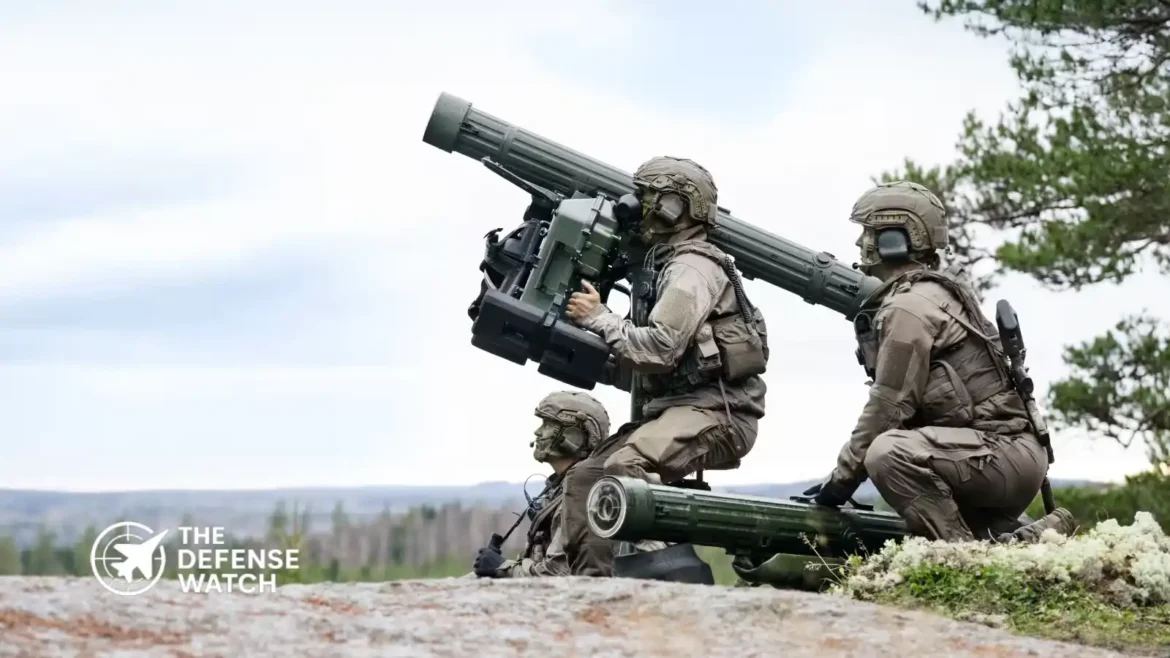
Saab has introduced the new Bolide 2 missile for its RBS 70 NG short range air defense system. The upgrade is designed to improve performance against modern aerial threats, including drones, aircraft, and cruise missiles, while extending the operational relevance of the widely deployed platform.
Saab Expands RBS 70 NG Capability With Bolide 2 Missile
The Saab Bolide 2 missile marks the latest upgrade for the company’s RBS 70 NG ground based air defense system, reinforcing Saab’s position in the growing global market for short range air defense solutions.
According to Saab, the Bolide 2 missile is designed to improve the operational effectiveness of the RBS 70 NG system against a wider range of modern airborne threats. The company announced the new missile as part of its broader effort to adapt legacy and current air defense platforms to increasingly complex battlefield environments.
The RBS 70 NG system is already in service with multiple armed forces worldwide and has gained attention for its laser beam riding guidance technology, portability, and resistance to electronic countermeasures. Saab said the new missile enhances the platform’s capability while maintaining compatibility with existing launch systems.
Focus On Modern Air Threats
The introduction of the Bolide 2 missile reflects a wider trend across NATO and partner nations toward strengthening layered air defense networks.
Modern conflicts, including the war in Ukraine and growing drone proliferation in the Middle East and Indo Pacific regions, have highlighted the vulnerability of military forces and infrastructure to low flying and low cost aerial threats. As a result, demand for mobile short range air defense systems has increased sharply over the past several years.
Saab stated that the Bolide 2 missile is optimized to counter threats such as:
- Unmanned aerial systems (UAS)
- Helicopters
- Fixed wing aircraft
- Cruise missiles
The company also emphasized improved performance characteristics and future growth potential for the missile family, though detailed technical specifications were not fully disclosed in the announcement.
RBS 70 NG Remains Relevant In Evolving Air Defense Market
The RBS 70 NG system has remained competitive in a crowded global market due to its combination of mobility, relatively low operational cost, and immunity to many traditional jamming methods.
Unlike radar guided missiles, the RBS 70 NG uses laser guidance, reducing susceptibility to electronic warfare interference. This characteristic has become increasingly valuable as militaries invest heavily in electronic attack capabilities and counter drone technologies.
The Bolide missile family already offers high speed interception capability and operational flexibility. The addition of Bolide 2 suggests Saab is seeking to extend the lifespan and export competitiveness of the RBS 70 NG platform amid intensifying global demand for air defense modernization.
Analysts have noted that short range air defense systems are now considered essential for protecting maneuver forces, logistics hubs, and critical infrastructure from both conventional and asymmetric aerial attacks.
Growing Global Demand For Short Range Air Defense
The unveiling of the Bolide 2 missile comes as defense spending on integrated air and missile defense continues to rise worldwide.
European nations, in particular, have accelerated procurement of ground based air defense systems following Russia’s invasion of Ukraine. At the same time, Indo Pacific states are investing in layered air defense architectures to counter regional missile and drone threats.
Saab has steadily expanded its portfolio in the air defense sector, positioning systems like the RBS 70 NG for export opportunities among countries seeking affordable and rapidly deployable solutions.
The market for short range air defense systems is also becoming more competitive, with manufacturers from the United States, Europe, Türkiye, Israel, and South Korea all pursuing new contracts tied to counter drone and low altitude defense requirements.
Strategic Importance Of Portable Air Defense Systems
Portable and mobile air defense systems continue to play a critical role in modern military operations.
Large strategic air defense systems provide wide area protection, but shorter range systems such as the RBS 70 NG are often needed to defend frontline units and infrastructure against fast moving or low observable threats that can evade higher tier defenses.
The development of Bolide 2 indicates Saab’s intent to maintain relevance in a defense environment increasingly shaped by drone warfare, electronic warfare, and saturation attacks.
As militaries reassess force protection requirements, systems capable of rapid deployment and integration into layered defense networks are likely to remain in high demand.
Iron Dome Turns 15: 10,000 Intercepts & Counting
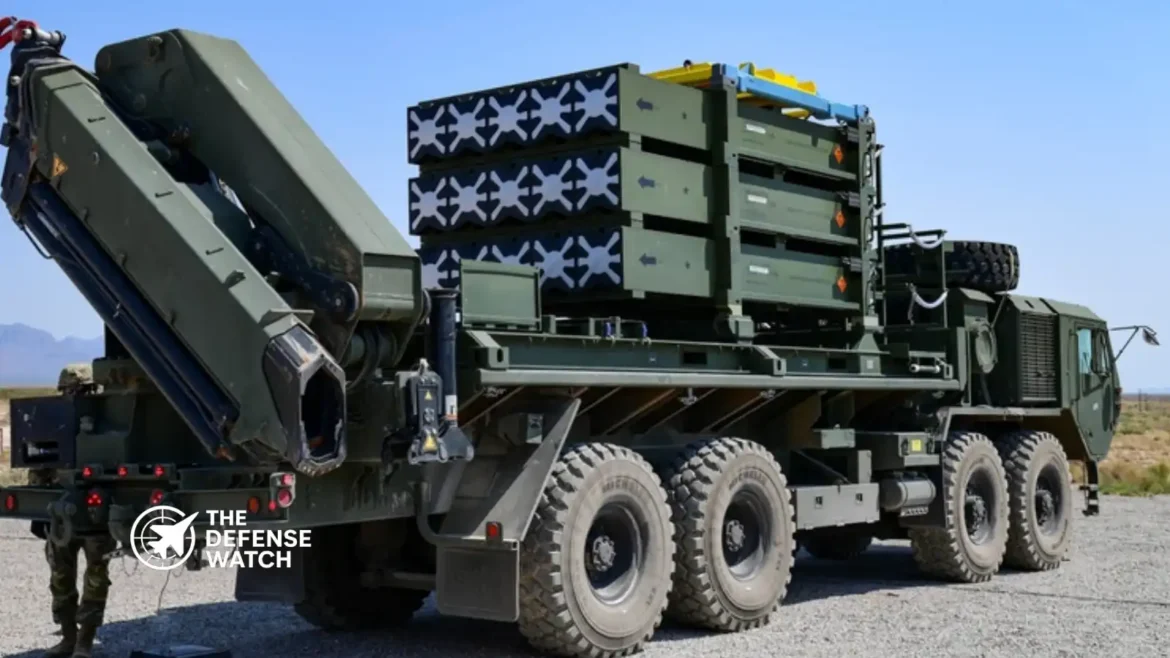
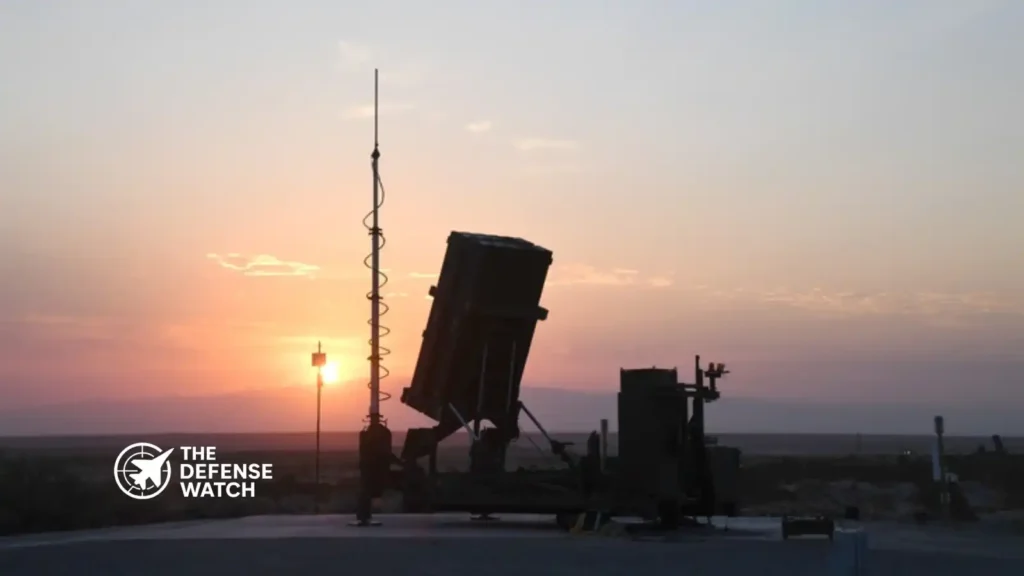
Iron Dome missile defense system has crossed a milestone that few weapons platforms in modern history can claim: fifteen uninterrupted years of combat-proven performance, more than 10,000 confirmed intercepts, and an operational record that has fundamentally altered how militaries worldwide think about short-to-medium-range air defense. On April 9, 2026, Rafael Advanced Defense Systems formally marked the anniversary, underscoring the system’s evolution from a domestic Israeli solution into one of the most replicated and studied air defense concepts on the planet.
- Iron Dome conducted its first successful operational intercept on April 7, 2011, neutralizing a rocket launched from the Gaza Strip.
- The system has surpassed 10,000 combat intercepts over 15 years of active service with a reported success rate exceeding 90 percent.
- Iron Dome was developed in approximately two and a half years and is capable of engaging rockets, cruise missiles, UAVs, and other aerial threats.
- The naval variant, C-Dome, became operational in 2017 and recorded its first at-sea intercept in April 2024 aboard an Israeli Sa’ar 6 corvette.
- The United States Marine Corps has selected Iron Dome to bolster its own ground-based short-range air defense capabilities.
The Shot That Changed Everything: April 7, 2011
The clock started on April 7, 2011, when an Iron Dome battery neutralized a rocket fired from the Gaza Strip — the system’s first confirmed operational intercept. The moment was more than a technical proof of concept. It signaled a deliberate shift in Israeli national security strategy: rather than relying solely on deterrence and ground operations to suppress rocket fire, Israel would field a persistent, high-volume intercept capability designed to protect its civilian population in near-real time.
That first intercept marked a shift in Israel’s defensive approach to countering aerial threats, and the system has since been deployed across multiple large-scale operations including Protective Edge, Guardian of the Walls, Breaking Dawn, Shield and Arrow, the Swords of Iron War, and Operation Roaring Lion.
The speed of development was equally remarkable. Iron Dome was built in approximately two and a half years — an extraordinarily compressed timeline for a platform of this complexity, reflecting both the urgency of the threat environment and the depth of Israeli defense-industrial capacity.
A System Built for the Modern Threat Landscape
Iron Dome is not a single-mission interceptor. It is a short- to medium-range system designed to engage a wide range of targets, including rockets, cruise missiles, unmanned aerial vehicles, and other aerial threats under various operational conditions — capable of functioning independently or as part of an integrated, layered air defense network.

Image : Iron Dome missile defense system That multi-threat adaptability has proven decisive. In today’s conflict environment, where adversaries routinely saturate defenses with mixed salvos of unguided rockets, precision cruise missiles, and low-cost kamikaze drones, a system that can discriminate between threat types and engage selectively represents a significant operational advantage. Iron Dome’s battle management component calculates probable impact points and prioritizes intercepts against threats aimed at populated or strategically critical areas — a feature that directly contributes to its cost efficiency in high-volume engagements.
Over 15 years of service, the system has maintained a reported success rate exceeding 90 percent across more than 10,000 combat intercepts.
Leadership Voices: Confidence Backed by Battlefield Data
Rafael’s leadership did not mince words when assessing the system’s legacy.
Yuval Steinitz, chairman of Rafael, framed Iron Dome’s significance in both strategic and economic terms. He described it as “the only system capable of engaging rockets and missiles across short and medium ranges — and doing so at a cost that makes large-scale deployment feasible,” adding that it reflects the scientific and technological superiority of Israel and of Rafael’s engineers in particular.
Yoav Tourgeman, Rafael’s chief executive, pointed to the system’s continuous performance improvement as its defining characteristic. He stated that ongoing upgrades have significantly enhanced capabilities, noting that what the system can do today across the full spectrum of threats it faces exceeds what it could do at initial delivery by “an order of magnitude.” Tourgeman also credited the system with saving tens of thousands of Israeli lives over the course of its operational service.
Both statements reflect a broader truth about Iron Dome: it is not the same system it was in 2011. Iterative upgrades based on operational feedback — a process conducted in close coordination with the Israel Air Force and the Directorate of Defense Research and Development — have kept the platform ahead of an evolving threat curve that now includes precision-guided rockets, loitering munitions, and salvo tactics designed to overwhelm point defenses.
Expanding to Sea: The C-Dome Naval Variant
One of the clearest indicators of Iron Dome’s strategic staying power is the decision to extend the platform into the maritime domain. The C-Dome naval variant became operational in 2017 and conducted its first combat intercept in April 2024, aboard an Israeli Sa’ar 6 corvette.
The significance of that intercept extends well beyond Israel’s territorial waters. Naval forces globally are grappling with a rapidly deteriorating threat environment driven by cheap, proliferating anti-ship missiles and drone swarms. C-Dome’s integration aboard surface combatants offers a potential model for navies seeking affordable, high-rate intercept capability without the footprint of larger shipborne air defense systems. Its operational debut in a live conflict environment will inevitably draw close scrutiny from allied naval planners.
U.S. Adoption and International Demand
Perhaps the most telling endorsement of Iron Dome’s standing is its adoption by the United States military. The U.S. Marine Corps selected Iron Dome to enhance its own short-range air defense capabilities — a choice that reflects both the system’s combat credibility and Washington’s broader effort to address gaps in ground-based air defense following years of neglect during the counter-insurgency era.
The USMC selection also carries significant implications for allied interoperability. Iron Dome batteries operating alongside U.S. forces in a contested theater would need to integrate with American command-and-control networks, a requirement that accelerates technical cooperation between Rafael and U.S. defense industry partners and potentially opens doors to further foreign military sales.
Analysis: What Iron Dome’s 15-Year Record Reveals About the Future of Air Defense
Iron Dome’s anniversary arrives at a moment when the global air defense market is experiencing its most significant surge in demand since the Cold War. The wars in Ukraine and the Middle East have demonstrated that aerial threats — from crude artillery rockets to sophisticated cruise missiles and drone swarms — are now a fixture of modern combined-arms warfare, not an exception.
Several lessons from Iron Dome’s operational history are already shaping procurement decisions worldwide. First, the value of layered defense architecture is now empirically validated rather than theoretically argued. Iron Dome was never designed to operate alone; it functions as the lower tier of a network that includes David’s Sling and the Arrow systems for medium and long-range threats. That integrated approach, once primarily an Israeli concept, is now being adopted as a template by NATO members accelerating their own air defense investments.
Second, the cost-per-intercept question — long a vulnerability in Iron Dome’s economic case — has become less acute as adversaries increasingly deploy more expensive offensive systems. When the incoming threat is a $50,000 precision rocket rather than a $500 unguided projectile, the calculus of using a multi-thousand-dollar interceptor becomes considerably more defensible. And as Rafael continues to reduce production costs through scale and manufacturing efficiency, the system’s economics improve further.
Third, Iron Dome’s journey from a domestic emergency response to a global export product underscores how battlefield validation accelerates international adoption. No amount of laboratory testing or simulation replicates the persuasive power of a 90-plus percent success rate accumulated over 15 years and across multiple high-intensity conflicts. That record is Rafael’s most effective sales tool — and the reason allied defense ministries continue to study it closely.
What comes next will likely involve deeper integration of artificial intelligence into threat discrimination and intercept sequencing, expanded cooperation with U.S. and European partners on next-generation interceptors, and continued development of the C-Dome naval platform as maritime air defense becomes a priority concern across multiple allied navies.
Iron Dome did not just defend a country. It helped define what effective short-range air defense looks like in the 21st century — and fifteen years on, that definition is still being written.
FAQs
How many intercepts has Iron Dome made in 15 years?Iron Dome has recorded more than 10,000 combat intercepts since its first operational engagement in April 2011, maintaining a reported success rate above 90 percent.
What types of threats can Iron Dome intercept?The system is designed to engage short- to medium-range rockets, cruise missiles, and unmanned aerial vehicles. It can operate across all weather conditions and in dense threat environments.
Has the U.S. military adopted Iron Dome?Yes. The United States Marine Corps selected Iron Dome to strengthen its short-range air defense capabilities, marking a significant international endorsement of the platform.
What is C-Dome?C-Dome is the naval variant of Iron Dome developed by Rafael. It became operational in 2017 and conducted its first live combat intercept in April 2024 aboard an Israeli Sa’ar 6 corvette.
How long did it take to develop Iron Dome?Rafael developed Iron Dome in approximately two and a half years, an unusually compressed timeline for a system of its complexity and capability.
Is Iron Dome still being upgraded?Yes. Rafael conducts continuous capability upgrades based on operational experience, and company leadership has stated that the system’s current performance substantially exceeds its original specifications at the time of delivery.

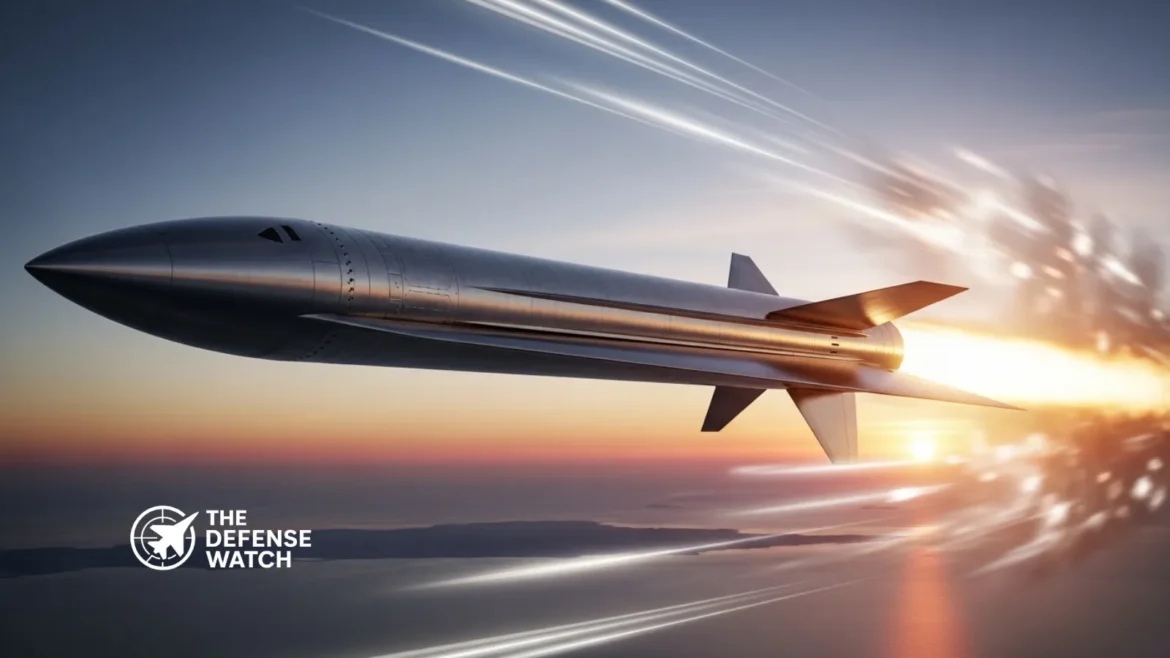
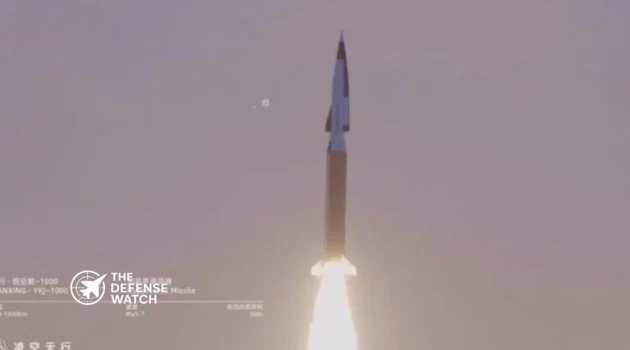
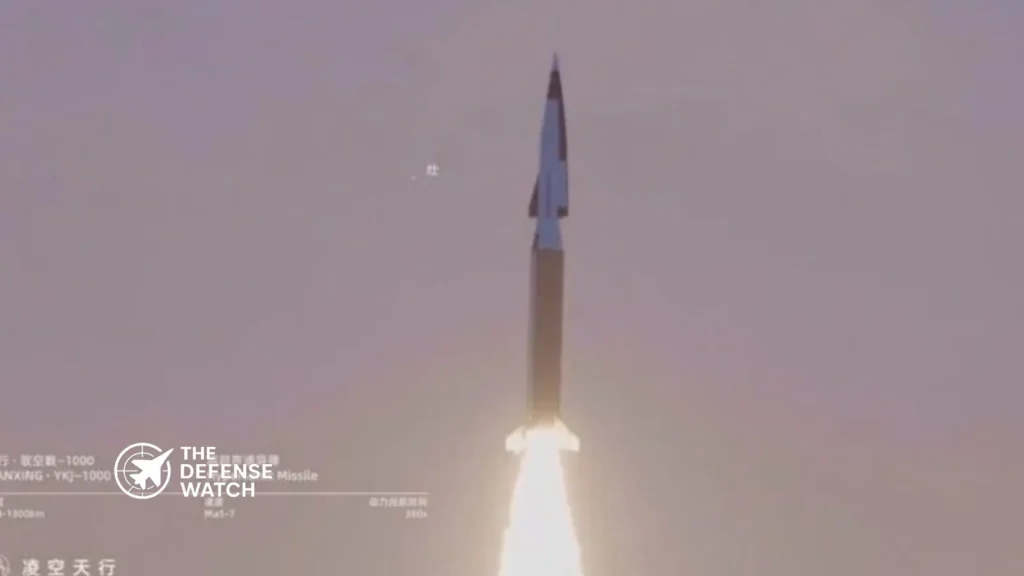
- ► China’s Sichuan Lingkong Tianxing Technology unveiled the YKJ-1000 hypersonic glide missile in late November 2025, advertising a unit cost of approximately $99,000.
- ► The YKJ-1000 is claimed to achieve speeds up to Mach 7 (~8,575 km/h) with a range of 500 to 1,300 kilometers depending on configuration.
- ► A single U.S. Navy SM-6 interceptor costs approximately $4.1 million; THAAD interceptors range from $12 million to $15 million per round.
- ► The missile uses civilian-grade components including consumer drone optics, automotive processors, BeiDou navigation chips, and foamed concrete thermal coatings in place of traditional aerospace-grade materials.
- ► The system is road-mobile and container-launched, enabling rapid concealment and deployment from non-military platforms.
- ► An AI-enabled swarm variant is under development, designed to coordinate multiple YKJ-1000 missiles against single targets simultaneously.
- ► No independent third-party verification of the missile’s performance claims or actual production cost has been published as of February 2026.
China’s YKJ-1000 Doesn’t Have to Be Perfect to Be a Problem
The YKJ-1000 hypersonic missile may be the most strategically consequential weapon system announced in 2025 — not necessarily because it works as advertised, but because of what it signals about the direction of Chinese military development and the economic logic it introduces into modern deterrence.
(adsbygoogle = window.adsbygoogle || []).push({});Developed by Chengdu-based private aerospace firm Sichuan Lingkong Tianxing Technology, the YKJ-1000 is a boost-glide hypersonic missile reportedly capable of Mach 7 flight across a range of 500 to 1,300 kilometers. Its claimed price tag of roughly $99,000 per unit — compared to a $4.1 million SM-6 or a $12–15 million THAAD interceptor — immediately dominated defense discussions when the system was disclosed in late November 2025. Whether or not those numbers hold up under scrutiny, they frame a strategic challenge the U.S. missile defense enterprise cannot afford to ignore.
The Real Story Is the Cost-Exchange Ratio
Western missile defense doctrine has long rested on an uncomfortable but manageable asymmetry: interceptors are expensive, but adversary missiles capable of penetrating them are even more expensive. That equation made layered defense architectures — Patriot, THAAD, SM-6, and eventually NGAD-era directed energy — fiscally painful but strategically viable.
The YKJ-1000 directly attacks that assumption.
If a salvo of even 20 such missiles can be fielded for under $2 million and forces the expenditure of $80 to $300 million in SM-6 or THAAD rounds to defeat it, the attacker wins economically even in a failed strike. The Pentagon’s own Missile Defense Agency has acknowledged in successive budget justifications — including the FY2025 and FY2026 submissions — that the cost-exchange ratio in missile defense is a primary driver of procurement strategy. The YKJ-1000 scenario, however credible, places that entire calculus under pressure.
- (adsbygoogle = window.adsbygoogle || []).push({});
This is not a new concept. Ukraine’s conflict demonstrated it repeatedly: Iranian-origin Shahed-136 drones costing an estimated $20,000–$50,000 each routinely forced Ukrainian forces to expend Patriot or NASAMS rounds worth orders of magnitude more. The YKJ-1000 follows the same logic, but adds hypersonic speed and claimed maneuverability — factors that complicate intercept geometry in ways that slow drones simply do not.
What China’s Military-Civil Fusion Model Actually Produces
Lingkong Tianxing was founded in 2018 and initially focused on reusable launch vehicles and suborbital systems. Its pivot to hypersonic weapons reflects Beijing’s military-civil fusion policy in unusually concrete form: a private company with commercial space DNA, leveraging China’s dominant position in global consumer electronics manufacturing to undercut the cost structure of traditional weapons development.
The YKJ-1000’s use of BeiDou navigation chips — commercially available for a few dollars in smartphone and automotive applications — in place of bespoke military-grade inertial or GPS/INS systems is an instructive example. U.S. and allied defense contractors face regulatory, labor, and supply-chain constraints that prevent equivalent substitution. China does not face those barriers at the same scale, and its dominance in printed circuit board production, optical sensor fabrication, and chip packaging gives Lingkong Tianxing access to economies of scale that no Western hypersonics program can replicate through comparable means.
This structural advantage is more durable than any single weapon system. Even if the YKJ-1000 fails to meet its stated performance parameters, the next iteration — built on the same industrial base — may well close the gap.
Verifying the Claims: Significant Skepticism Is Warranted
Serious technical questions surround the YKJ-1000. No independent test data has been publicly released. Available disclosure material consists of promotional imagery, computer-rendered animations, and static display photographs. The company’s publicity officer has confirmed that the widely cited $99,000 figure is not precisely accurate, while affirming that the design does rely on mass-market industrial components.
The most significant technical concern involves thermal management. Sustained Mach 7 flight generates surface temperatures exceeding 1,600°C. Traditional hypersonic programs — including the U.S. AGM-183A ARRW and the Russian Kinzhal — rely on purpose-engineered carbon-ceramic or ablative composites specifically rated for those conditions. The YKJ-1000’s reported use of foamed concrete and industrial cement-based coatings raises legitimate questions about whether those materials can survive full-envelope hypersonic flight without structural degradation, loss of maneuverability, or guidance system failure from thermal ingress.
- (adsbygoogle = window.adsbygoogle || []).push({});
Similarly, integrating consumer-grade optical and processor components into a hypersonic terminal guidance system presents non-trivial engineering challenges. Commercial drone cameras and automotive processors are not radiation-hardened, vibration-qualified, or validated for the electromagnetic environment associated with hypersonic plasma sheaths.
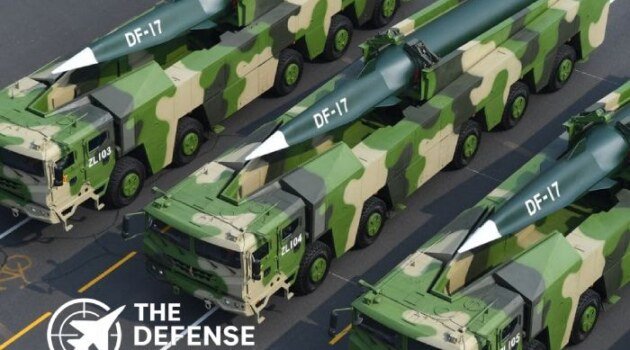
None of this means the program is fraudulent or without merit. China has conducted verified hypersonic tests — the DF-ZF glide vehicle and the DF-17 missile system are real, fielded, and assessed by the Defense Intelligence Agency as operational. Lingkong Tianxing’s principals have credible aerospace backgrounds, and the September 2025 visit by Vice Premier Zhang Guoqing to the company’s facility signals genuine high-level political backing. The question is not whether China can build a functional low-cost hypersonic weapon. The question is whether the YKJ-1000 specifically achieves its stated specifications at its stated price — and that remains unverified.
The Proliferation Risk Is the Most Urgent Concern
Independent of its actual performance, the YKJ-1000’s disclosure introduces a proliferation dynamic that demands immediate policy attention.
If China moves to export this system — even in a degraded or range-limited variant — to aligned states, the strategic landscape in the Middle East, South Asia, and sub-Saharan Africa changes materially. Iran, which already fields Shahed drones and the Abu Mahdi anti-ship missile, would gain a potential first-strike hypersonic capability against Gulf Cooperation Council infrastructure and U.S. naval assets in the Arabian Sea. North Korea, with its established ballistic and hypersonic test programs, could receive design or materials assistance accelerating its own low-cost glide vehicle development. Non-state actors with state backing — Hezbollah, the Houthis — could in theory deploy systems of this class if export controls fail.
(adsbygoogle = window.adsbygoogle || []).push({});China’s own export control regime is more restrictive than its public arms promotion narrative suggests. Beijing has not exported its most capable ballistic missile systems freely, and the YKJ-1000 involves technologies sensitive enough that selective proliferation — calibrated for maximum geopolitical leverage — is a more likely outcome than open market sales. Still, the entry of hypersonic weapons into the export price range of advanced conventional systems is a threshold that, once crossed, is difficult to reverse.
How the U.S. Should Respond: Three Immediate Priorities
The YKJ-1000 disclosure clarifies what U.S. missile defense planners have known but underfunded for years. Three responses are warranted.
First, directed energy. The only sustainable answer to mass-produced low-cost hypersonic saturation attacks is interceptors that are cheaper per shot than the incoming weapon. High Energy Laser with Integrated Optical-dazzler and Surveillance (HELIOS) and the Layered Laser Defense (LLD) programs need accelerated fielding timelines. Congress allocated funding for shipboard laser systems in FY2024 and FY2025, but operational deployment lags development. A $99,000 incoming hypersonic missile defeated by a $1-per-shot laser kill changes the cost-exchange ratio permanently.
Second, distributed defense architecture. Concentrating high-value assets — carriers, large-deck amphibious ships, fixed air bases — in predictable locations within the YKJ-1000’s 1,300-kilometer engagement envelope is a posture problem, not just a missile defense problem. The Navy’s Distributed Maritime Operations concept and the Air Force’s Agile Combat Employment doctrine both address this structurally. They need resourcing that matches the rhetoric.
Third, independent assessment. Congress should direct the Defense Intelligence Agency, in coordination with the Missile Defense Agency, to produce an unclassified assessment of the YKJ-1000’s probable performance parameters, production scalability, and export potential within the next budget cycle. Policy cannot outpace intelligence when the weapons concerned are novel.
Strategic Assessment
The YKJ-1000 represents a convergence of three trends that have been building separately for years: the democratization of precision manufacturing through consumer electronics supply chains, China’s deliberate use of military-civil fusion to compress defense development timelines, and the broader shift toward cost-imposing strategies in peer competition.
Whether or not this specific missile functions as advertised, it reflects a Chinese defense industrial approach that the United States has not yet fully countered at the structural level. American missile defense systems are optimized for quality and reliability at price points that assume adversary systems are equally expensive. That assumption is now actively under challenge.
(adsbygoogle = window.adsbygoogle || []).push({});The deterrence implication is significant. A credible low-cost hypersonic arsenal — even one of uncertain reliability — forces defensive planners to treat every potential engagement as a saturation scenario. That demands more interceptors, more sensors, and more magazine depth than current procurement plans provide. The FY2026 defense budget request, at $849.8 billion, is the largest in nominal terms in U.S. history, but it was structured before the YKJ-1000’s public disclosure and before full assessment of what low-cost hypersonic proliferation means for interceptor inventory requirements.
Regional allies face an even more acute challenge. Japan, Australia, and the Philippines have invested heavily in Aegis-based missile defense. South Korea fields THAAD under political duress. None of these architectures was designed for an environment where a near-peer adversary can field hundreds or thousands of maneuvering hypersonic threats at a unit cost below that of a commercial automobile. The alliance management dimension — specifically, whether partners will sustain missile defense investments if the cost-exchange ratio visibly shifts against them — deserves as much attention as the technical specifications of the missile itself.
- (adsbygoogle = window.adsbygoogle || []).push({});
Finally, the export signal matters more than the current weapon. The narrative that hypersonic weapons can be manufactured and exported at consumer-goods price points — regardless of current technical reality — will shape procurement decisions, threat perceptions, and arms race dynamics across multiple regions for the next decade. That is itself a strategic effect, independent of whether a single YKJ-1000 ever strikes a target.
- (adsbygoogle = window.adsbygoogle || []).push({});
 ■ KEY FACTS AT A GLANCE
- ► The U.S. Missile Defense Agency selected new industry partners for the Golden Dome homeland defense initiative.
- ► Golden Dome is designed as a layered architecture integrating sensors, interceptors, and command networks.
- ► The system is focused on strengthening U.S. homeland defense against advanced missile threats.
- ► The effort aligns with broader Pentagon modernization and integrated air and missile defense priorities.
- ► The program advances distributed sensing and improved interceptor coordination across domains.
Golden Dome Missile Defense Enters A New Phase
The Golden Dome missile defense initiative has moved into a critical implementation stage following the selection of new industry partners to support homeland defense architecture development.
The decision marks more than a routine contract award. It reflects a structural evolution in how the United States intends to defend the homeland against increasingly complex missile threats, including ballistic, cruise, and potentially hypersonic systems.
At a time when Russia continues to modernize its strategic arsenal and China expands both conventional and nuclear missile inventories, Washington is adjusting its defensive posture accordingly. The Golden Dome concept appears designed to integrate sensors, interceptors, and command networks into a more resilient, distributed shield.
This matters now because U.S. homeland defense architecture, historically focused on limited intercontinental ballistic missile threats, is facing a broader spectrum of capabilities.
Operational Impact On U.S. Homeland Defense
The core operational shift behind Golden Dome lies in integration.
For decades, U.S. homeland missile defense has centered on the Ground Based Midcourse Defense system in Alaska and California, designed to counter a limited number of ICBMs. That architecture remains important, but threat trajectories have diversified.
Cruise missiles, depressed trajectory ballistic missiles, and maneuvering hypersonic vehicles complicate detection and tracking timelines. Golden Dome appears aimed at closing these gaps through layered coverage.
By adding new partners, the Missile Defense Agency is likely broadening sensor fusion capacity, interceptor options, or command and control interoperability. That improves resilience. A distributed network reduces single points of failure and increases shot opportunities.
Operationally, that means faster detection, improved tracking quality, and better fire control solutions. In homeland defense, seconds matter. Integrated architecture can determine whether an interceptor is launched with sufficient confidence.
The shift also signals a move toward greater network centric integration across services. Air Force early warning radars, Navy Aegis capabilities, and space based sensors must operate as a coherent whole.
Industrial And Budget Signals
The partner selection carries industrial implications.
U.S. missile defense has traditionally been dominated by a small group of prime contractors. Expanding participation may introduce competitive pressure, new technologies, or niche specialization in areas such as discrimination algorithms, sensor integration, or advanced interceptors.
From a budget perspective, Golden Dome aligns with congressional emphasis on homeland defense modernization. Pentagon budget documents in recent fiscal cycles have consistently highlighted next generation interceptor development and sensor upgrades.
Selecting additional partners suggests the program is transitioning from conceptual planning to tangible architecture development. That often precedes multi year funding commitments.
-
For industry, early positioning in Golden Dome offers long term sustainment and upgrade opportunities. Missile defense systems typically remain in service for decades, with recurring modernization cycles.
Comparison With Competing Architectures
Globally, layered missile defense concepts are not unique.
Israel’s multi tiered system integrates Iron Dome, David’s Sling, and Arrow interceptors into a coordinated defense network. While the threat scale differs, the architectural logic is similar.
Russia and China, meanwhile, are investing heavily in advanced offensive missile systems rather than expansive defensive shields. Moscow has modernized its A 135 and A 235 missile defense systems around Moscow, but these are geographically limited.
The United States, by contrast, is attempting nationwide resilience. Golden Dome appears designed not as a city specific defense, but as a continental shield integrating multiple domains.
This approach is technologically demanding and financially intensive. However, it reflects Washington’s assessment that homeland vulnerability to emerging missile threats is no longer theoretical.
Regional And Global Security Context
The timing of Golden Dome’s advancement intersects with several trends.
China’s rapid expansion of silo based ICBMs and development of fractional orbital bombardment systems has altered strategic calculations. Russia continues to deploy hypersonic glide vehicles and advanced cruise missiles.
North Korea maintains active missile testing programs. Iran is expanding regional missile capabilities.
In this context, U.S. homeland defense credibility supports broader deterrence. If adversaries perceive a higher probability of interception, their cost benefit calculus shifts.
However, missile defense also influences arms race dynamics. Adversaries may respond by increasing warhead numbers or deploying countermeasures designed to overwhelm or evade defenses.
Golden Dome therefore operates within a delicate strategic balance.
What Happens Next
The next phase will likely focus on architecture validation.
That includes integration testing, sensor interoperability trials, and potential interceptor upgrades. Congressional oversight committees will scrutinize cost projections and schedule discipline.
Expect additional contract announcements tied to radar modernization, command network software, or interceptor development.
The long lead element remains discrimination. Accurately distinguishing real warheads from decoys in complex threat environments is one of missile defense’s hardest technical problems. Any Golden Dome partner specializing in this area could significantly influence program effectiveness.
Strategic Assessmen
Golden Dome missile defense represents a reinforcement of U.S. homeland deterrence at a time of expanding peer competition.
From a regional balance perspective, it strengthens North American defensive resilience against limited missile attacks. It does not negate large scale nuclear exchanges, but it complicates limited coercive strike options.
Deterrence implications are nuanced. Improved interception capability raises the threshold for adversaries contemplating a small scale or demonstrative strike. At the same time, it may incentivize investment in saturation tactics or advanced penetration aids.
Budget signals suggest sustained congressional backing for homeland defense modernization. That indicates missile defense will remain a central pillar of U.S. strategic posture alongside nuclear triad modernization.
Alliance dynamics are also affected. A credible U.S. homeland shield reassures allies under extended deterrence umbrellas. It signals that Washington is investing not only in forward deployed forces, but also in defending its own territory.
Escalation risks exist if adversaries interpret expanded missile defense as undermining strategic stability. However, U.S. doctrine continues to frame homeland missile defense as limited and threat specific rather than a shield against major nuclear powers.
In practical terms, Golden Dome reinforces layered defense principles. It improves resilience. It signals seriousness of purpose.
For industry, it opens a new competitive arena. For adversaries, it introduces added uncertainty. For allies, it strengthens confidence in U.S. commitment.
That combination explains why this partner selection matters now.
■ KEY FACTS AT A GLANCE- ► The United States plans to send additional missile launchers to the Philippines under alliance cooperation frameworks.
- ► The deployment follows earlier use of the U.S. Army Typhon mid range capability during joint exercises.
- ► China has publicly criticized the move, calling it destabilizing for regional security.
- ► The Philippines has expanded U.S. access to military sites under the Enhanced Defense Cooperation Agreement.
- ► The move comes amid ongoing maritime confrontations in the South China Sea.
US To Send More Missile Launchers To The Philippines
The United States will send more missile launchers to the Philippines, expanding its military presence in the Indo Pacific despite strong objections from China, according to report.
The move builds on earlier deployments under joint exercises and signals deeper U.S. Philippines defense cooperation as tensions persist in the South China Sea.
Washington has framed the decision as part of routine alliance coordination. Beijing, however, has warned that the deployment risks destabilizing the region.
Expanding U.S. Missile Presence In Southeast Asia
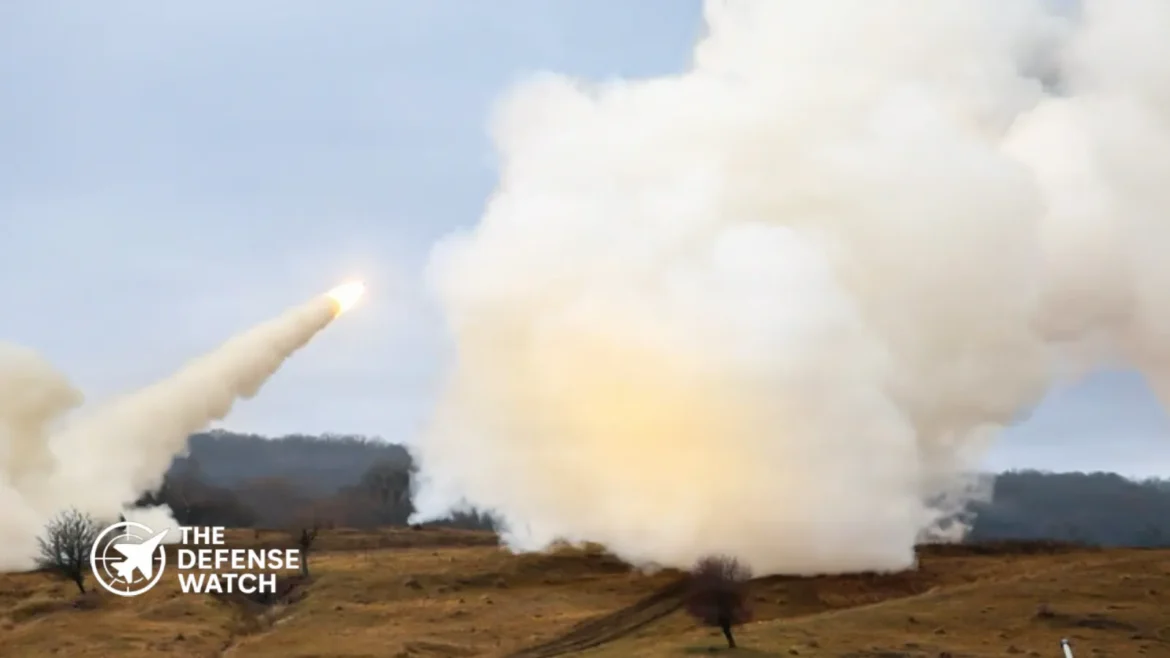
The decision to send more missile launchers to the Philippines follows the earlier deployment of the U.S. Army’s Typhon mid range capability system during 2024 exercises.
The Typhon system, also known as the Mid Range Capability, can launch Standard Missile 6 and Tomahawk land attack cruise missiles. Its presence marked the first time the United States positioned a ground based system of that range in the region since the end of the Intermediate Range Nuclear Forces Treaty.
According to Defense News, U.S. officials indicated that additional launchers will rotate into the Philippines as part of continuing cooperation with Manila.
The deployments are being conducted under the framework of the Enhanced Defense Cooperation Agreement, which allows expanded U.S. access to Philippine military bases.
Manila’s Strategic Shift
Under President Ferdinand Marcos Jr., the Philippines has moved to strengthen defense ties with Washington. Manila has granted U.S. forces access to additional sites, some located near Taiwan and contested waters in the South China Sea.
Philippine defense officials have described the missile deployments as defensive in nature, aimed at improving deterrence and joint readiness.
The United States and the Philippines are treaty allies under the 1951 Mutual Defense Treaty. In recent years, both governments have emphasized closer interoperability amid increased Chinese maritime activity.
Beijing’s Response
China has repeatedly criticized the presence of U.S. missile systems in the Philippines. Officials in Beijing argue that such deployments heighten regional tensions and risk turning the Southeast Asian nation into a frontline state in strategic competition.
The Chinese government has also warned Manila against deepening military alignment with Washington, especially in areas close to Taiwan.
Tensions between China and the Philippines have escalated over disputed features in the South China Sea, including repeated confrontations between coast guard vessels.
Strategic Context
The move to send more missile launchers to the Philippines aligns with broader U.S. Indo Pacific strategy. Washington has sought to distribute combat power across allied territory to complicate potential adversary planning.
Ground based long range missile systems are seen by U.S. planners as a key component of deterrence, particularly in scenarios involving maritime access denial.
Defense analysts note that rotational deployments allow the United States to maintain presence without establishing permanent bases, which can be politically sensitive in host nations.
Alliance Implications
The expansion of missile capabilities in the Philippines underscores the deepening U.S. Philippines defense partnership. It also reflects Manila’s recalibration of foreign policy in response to maritime friction.
While Washington maintains that the deployments are defensive and alliance focused, China continues to frame them as destabilizing.
The coming months are likely to see further joint exercises and operational coordination as both allies refine how missile systems integrate into regional contingency planning.
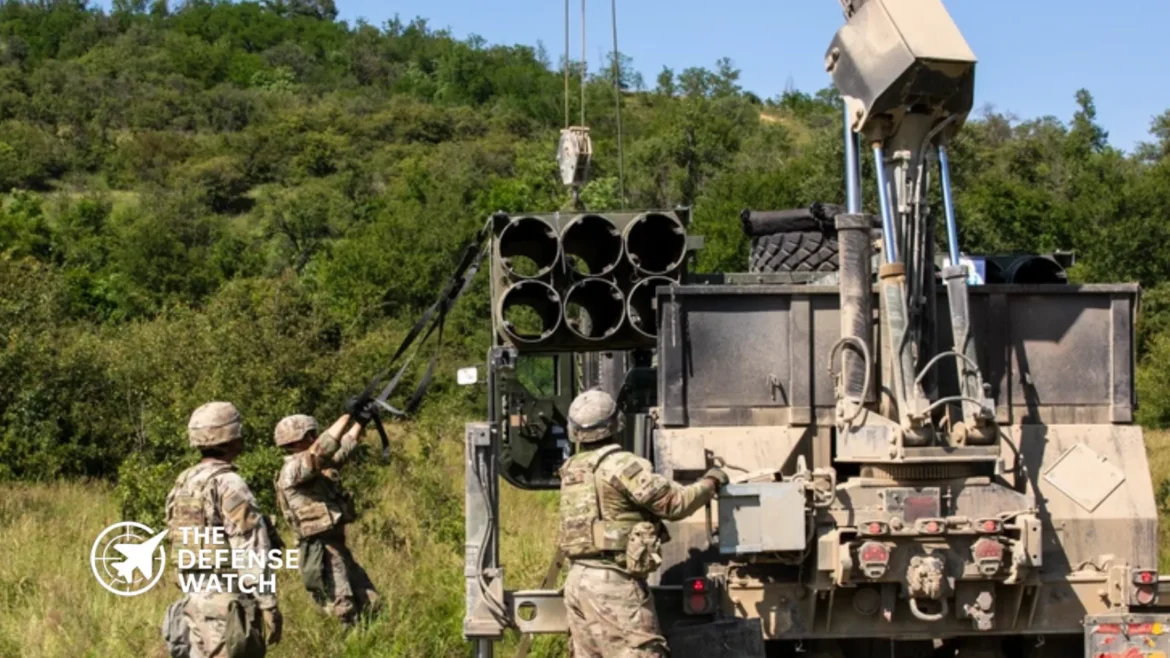
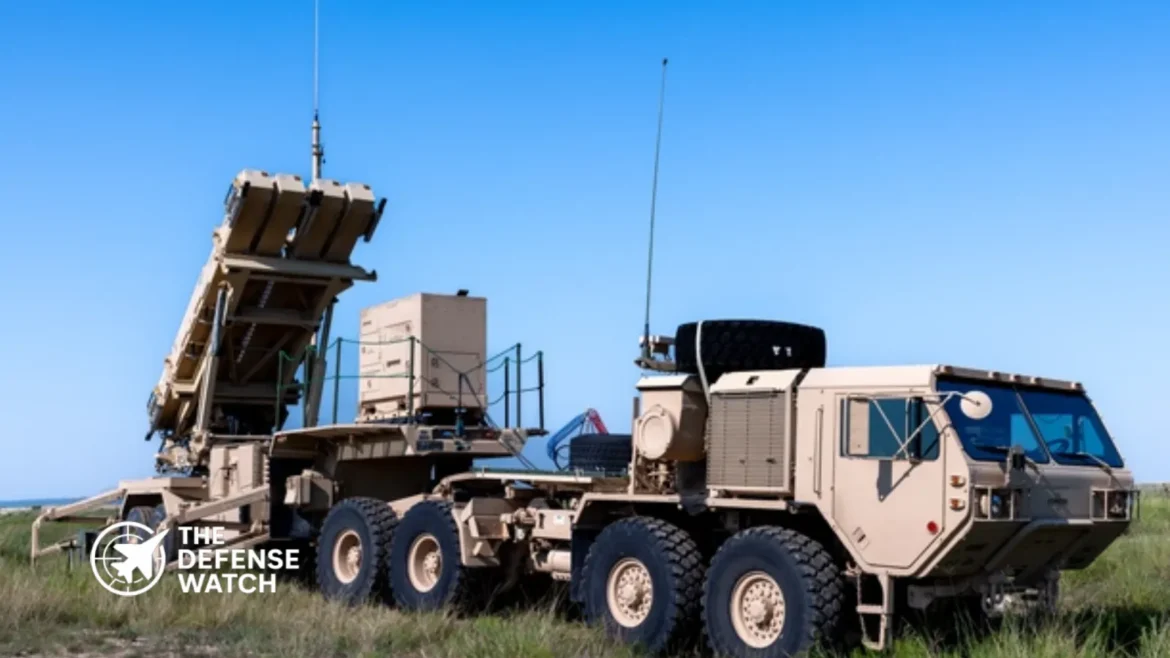
Ukraine Calls Patriot Most Effective Air And Missile Defense System
Ukraine has described the Patriot air and missile defense system as its most effective air and missile defense capability and is urging partners to accelerate deliveries of interceptors as Russian missile and drone strikes continue.
(adsbygoogle = window.adsbygoogle || []).push({});Ukrainian officials said the US made Patriot system has demonstrated the highest success rate against advanced threats, including ballistic missiles. The appeal comes as Moscow sustains long range strikes targeting critical infrastructure, energy facilities, and urban centers.
According to reporting by Defence Industry Europe, Ukrainian representatives emphasized that while existing Patriot batteries have performed effectively, limited interceptor stockpiles constrain sustained defensive operations.
Proven Performance Against Ballistic Missiles
The Patriot air and missile defense system, developed by RTX, formerly Raytheon Technologies, is designed to counter aircraft, cruise missiles, and tactical ballistic missiles. The system has been in service with the US Army and allied nations for decades and has undergone multiple upgrades, including the PAC 3 interceptor variant optimized for ballistic missile defense.
Ukrainian authorities have previously credited Patriot batteries with intercepting advanced Russian systems, including the Kinzhal air launched ballistic missile. US officials have confirmed that Patriot systems supplied to Ukraine have successfully intercepted ballistic threats during the conflict.
The US Department of Defense has repeatedly highlighted Patriot’s layered defense capabilities, particularly when integrated with other systems such as NASAMS and IRIS T SLM, forming a multi tiered air defense network.
Growing Demand For Interceptors
Ukraine’s call for faster interceptor deliveries reflects the high operational tempo of air defense missions. Each ballistic missile engagement requires a significant number of interceptors, and sustained attacks can rapidly deplete available stocks.
The Patriot air and missile defense system relies on interceptors such as PAC 2 GEM T and PAC 3 MSE. Production capacity for these missiles is expanding in the United States and Europe, but lead times remain a challenge amid rising global demand.
The US has committed billions of dollars in security assistance to Ukraine, including Patriot batteries and munitions. According to the Pentagon, replenishment contracts and industrial base expansion efforts are underway to increase output of critical air defense interceptors.
European partners, including Germany and the Netherlands, have also provided Patriot components and additional launchers to strengthen Ukraine’s air defense coverage.
Strategic Impact On The Battlefield
The effectiveness of the Patriot air and missile defense system has had both tactical and strategic implications. By reducing the success rate of Russian ballistic missile strikes, Patriot systems help preserve critical infrastructure and protect civilian populations.
Defense analysts note that ballistic missile interception capability remains limited globally, making Patriot one of the few operational systems capable of reliably countering high speed maneuvering threats.
Ukraine’s emphasis on Patriot underscores the broader shift toward advanced missile defense as a core element of modern warfare. As missile technology proliferates, integrated air and missile defense networks are increasingly central to national security planning.
Industrial And Alliance Considerations
Accelerating interceptor production will require sustained coordination between governments and industry. RTX and Lockheed Martin, which produces the PAC 3 interceptor, have announced efforts to scale manufacturing in response to increased demand from both US and allied customers.
(adsbygoogle = window.adsbygoogle || []).push({});NATO officials have stressed the importance of strengthening collective air and missile defense in light of the ongoing conflict. The performance of Patriot systems in Ukraine is being closely studied by allied militaries assessing their own force modernization priorities.
For Kyiv, the immediate priority remains clear. Officials argue that maintaining sufficient stocks of Patriot interceptors is essential to counter persistent missile barrages and to ensure that the system can continue operating at peak effectiveness.
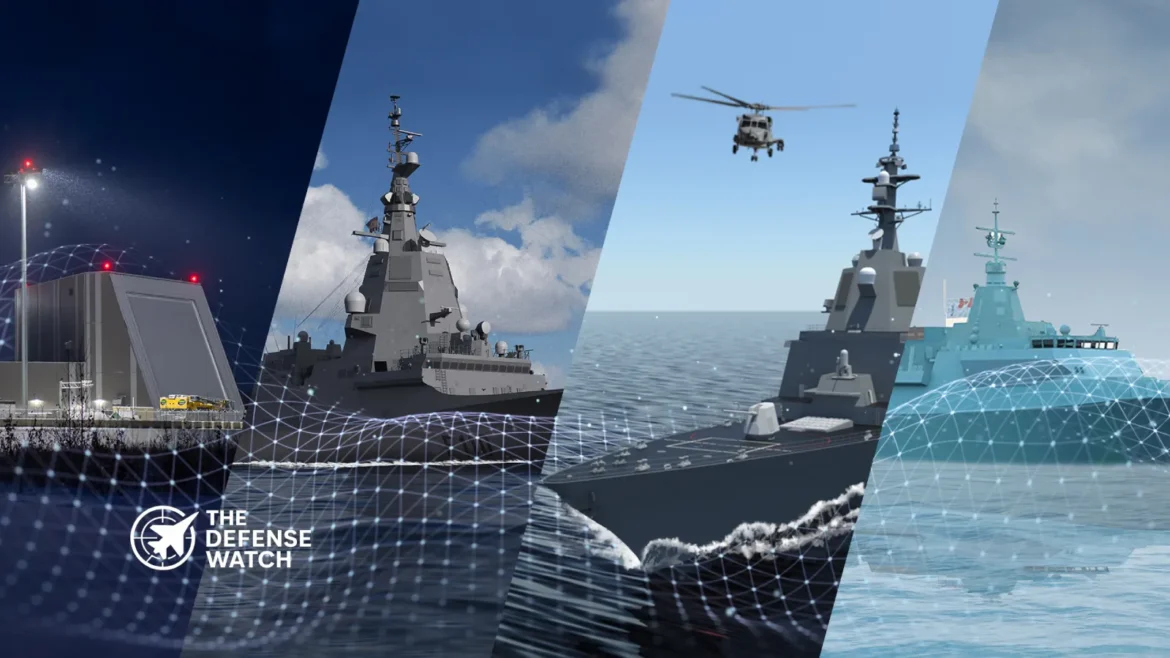
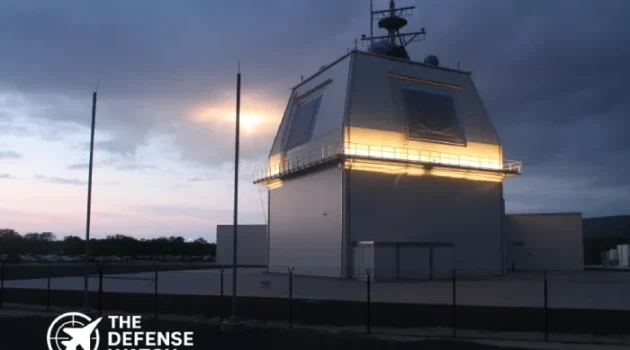
US Japan SPY 7 Radar Manufacturing Activated For Aegis System Equipped Vessels
The US Japan SPY 7 radar partnership has formally entered the manufacturing phase, marking a key milestone in bilateral missile defense cooperation tied to Aegis system equipped vessels.
(adsbygoogle = window.adsbygoogle || []).push({});According to information released by industry and defense officials, the activation of manufacturing centers on localized production and integration of the AN/SPY-7(V)1 radar for Japan’s next generation Aegis platforms. The effort supports both operational readiness and long term supply chain resilience.
The radar will be produced in cooperation with Lockheed Martin and Japanese industry partners as part of Tokyo’s broader missile defense modernization plan.
What The SPY 7 Radar Brings To Aegis Platforms
The SPY 7 is an advanced solid state radar designed for ballistic missile defense, air surveillance, and integrated fire control. It is built on scalable Gallium Nitride technology, enabling higher sensitivity, improved discrimination, and better tracking of complex missile threats.
Japan selected SPY 7 for its new Aegis system equipped vessels following earlier plans for land based Aegis Ashore sites. The maritime configuration is intended to provide persistent coverage while offering greater flexibility.
The radar integrates with the Aegis Combat System, which forms the backbone of US and allied naval missile defense architecture. Aegis enables simultaneous tracking and engagement of multiple air and missile threats.
According to program details previously released by Lockheed Martin and Japan’s Ministry of Defense, SPY 7 is optimized for ballistic missile defense missions, including detection and tracking of medium and intermediate range ballistic missiles.
(adsbygoogle = window.adsbygoogle || []).push({});Strengthening US Japan Missile Defense Cooperation
The US Japan SPY 7 radar manufacturing initiative reflects deepening defense industrial integration between the two allies. Japan has long operated Aegis destroyers equipped with earlier SPY radar variants, but local production of SPY 7 marks a step forward in industrial collaboration.
The move aligns with commitments under the US Japan security alliance, which remains a central pillar of regional stability in the Indo Pacific. Missile defense cooperation has expanded steadily in response to evolving regional threat dynamics.
Officials have repeatedly emphasized the importance of interoperable systems. By aligning SPY 7 production and integration standards, both nations aim to ensure seamless operational compatibility across fleets.
(adsbygoogle = window.adsbygoogle || []).push({});The manufacturing activation also supports Japan’s broader defense posture reforms, including increased defense spending and new counterstrike capabilities.
Industrial Footprint And Technology Transfer
Under the arrangement, Japanese industry will play a growing role in component production and system integration. This includes radar module assembly and potential sustainment activities over the lifecycle of the system.
Lockheed Martin has described SPY 7 as a modular radar architecture adaptable for naval and land based configurations. Beyond Japan, variants of SPY 7 have been selected by other allied nations for advanced air and missile defense missions.
Local production helps mitigate supply chain risks and reduces long term maintenance dependence on overseas facilities. It also aligns with Japan’s stated objective of strengthening its domestic defense industrial base.
Operational Role On Japan’s Aegis System Equipped Vessels
Japan’s new Aegis system equipped vessels are expected to provide continuous ballistic missile defense coverage around the archipelago. These ships will supplement existing Aegis destroyers operated by the Japan Maritime Self Defense Force.
The SPY 7 radar will serve as the primary sensor for long range detection and tracking, feeding data into intercept systems capable of engaging incoming threats in midcourse or terminal phases.
(adsbygoogle = window.adsbygoogle || []).push({});Through integration with the broader Aegis architecture, SPY 7 supports layered missile defense. This includes coordination with interceptor missiles and command and control networks.
The US Navy has extensive experience operating Aegis equipped ships, and interoperability remains a core objective. The shared radar lineage enhances joint operational planning and combined exercises.
Broader Regional Implications
The activation of SPY 7 radar manufacturing comes amid heightened missile development activity across the Indo Pacific. Regional actors continue to field advanced ballistic and cruise missile systems, increasing the demand for sophisticated detection and tracking capabilities.
Missile defense cooperation between Washington and Tokyo has expanded over the past decade, including joint development of interceptor technologies and sensor networks.
(adsbygoogle = window.adsbygoogle || []).push({});The SPY 7 program reinforces a broader strategic alignment focused on deterrence and collective defense. By deepening technology sharing and industrial coordination, both governments aim to sustain long term readiness.
Program Outlook
While officials have not publicly detailed full production timelines, manufacturing activation signals the transition from planning and design to sustained industrial output.
Future milestones are expected to include radar module delivery, system integration testing, and sea trials aboard Japan’s Aegis system equipped vessels.
As the US Japan SPY 7 radar program advances, it is likely to remain a focal point of allied missile defense cooperation in the region.
Switzerland’s 5 Patriot Air Defense Systems Deal Enters Uncertainty
Switzerland’s 5 Patriot air defense systems acquisition has entered a period of uncertainty, with delivery timelines slipping and projected costs rising, according to Swiss government statements and defense reporting.
The agreement, signed in 2023 as part of Bern’s broader air defense modernization plan, envisioned delivery of the systems by 2028. However, Swiss authorities have indicated that schedule changes are now expected. Costs may also exceed earlier projections.
(adsbygoogle = window.adsbygoogle || []).push({});The Bern administration has suspended payments after failing to receive a clear update from Washington regarding revised delivery timelines and pricing.
The delay is reportedly linked to the United States prioritizing Patriot systems for Ukraine, as Kyiv continues to request additional air and missile defense assets amid ongoing Russian missile and drone strikes.
Patriot Systems Central To Swiss Air Defense Modernization
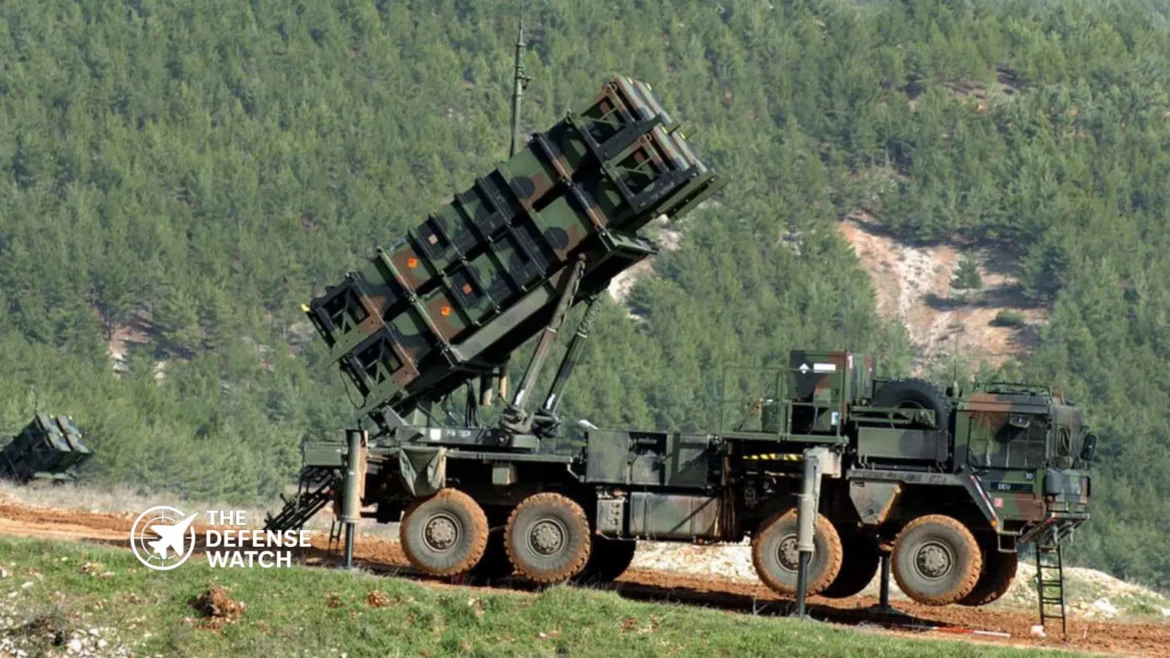
The Switzerland Patriot air defense systems program is a cornerstone of the country’s future integrated air defense architecture. Bern selected the U.S.-made Patriot system in 2022 following a competitive evaluation process.
The Patriot system, produced by Raytheon Technologies, is designed to intercept aircraft, cruise missiles, and certain ballistic missile threats. It is widely deployed by NATO members and U.S. allies, including Germany, Poland, and several Gulf states.
Switzerland’s procurement includes five Patriot fire units intended to replace aging air defense capabilities and provide long range coverage against evolving aerial threats.
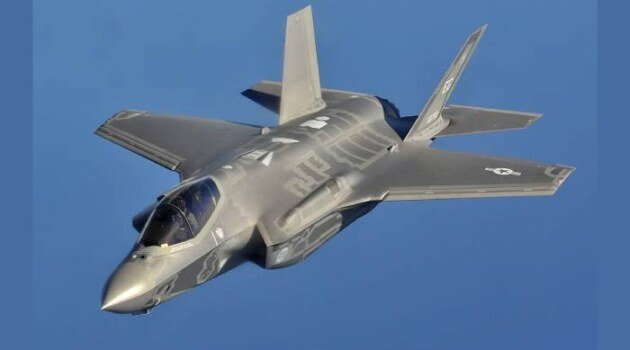
The deal forms part of a broader modernization effort that also includes the purchase of 36 F 35A fighter aircraft from Lockheed Martin.
(adsbygoogle = window.adsbygoogle || []).push({});U.S. Prioritizes Patriot Deliveries For Ukraine
The reported delay in the Switzerland Patriot air defense systems schedule comes as the United States and European allies continue to accelerate military assistance to Ukraine.
Washington has transferred multiple Patriot batteries to Kyiv since 2023, in coordination with NATO partners. Additional interceptors and support equipment have been directed to reinforce Ukraine’s air defense network against ballistic missile and drone attacks.
Given limited production capacity and high global demand, Patriot production lines are under pressure. The reallocation of systems or components to Ukraine may have contributed to schedule adjustments affecting other customers, including Switzerland.
Neither the U.S. Department of Defense nor Swiss officials have publicly detailed the revised delivery schedule. However, Bern’s decision to suspend payments underscores the seriousness of the delay.
Alternatives Under Consideration: SAMP T And Arrow
Amid uncertainty surrounding the Switzerland Patriot air defense systems deal, alternative solutions are reportedly being reevaluated.
(adsbygoogle = window.adsbygoogle || []).push({});One option is the Franco Italian SAMP T system, developed by the European consortium Eurosam. SAMP T uses Aster interceptor missiles and is currently operated by France and Italy. It has also been supplied to Ukraine.
Another potential alternative is Israel’s Arrow missile defense system, developed by Israel Aerospace Industries in cooperation with the United States. Arrow is optimized for high altitude ballistic missile interception and has been adopted by Israel and Germany.
Any shift away from Patriot would carry strategic and political implications. Switzerland’s selection process previously identified Patriot as the most suitable system based on operational performance, cost, and interoperability considerations.
A reopening of the competition could delay modernization efforts further and require new negotiations.
Procurement Challenges Echo F 35A Cost Debate
The uncertainty surrounding the Switzerland Patriot air defense systems agreement follows a similar cost debate in the country’s F 35A fighter procurement.
(adsbygoogle = window.adsbygoogle || []).push({});Last year, Swiss authorities acknowledged that the contract value for 36 F 35A aircraft had risen by approximately 610 million dollars. Bern maintained that the maximum number of aircraft would still be procured within the approved budget ceiling of roughly 7.5 billion dollars.
The F 35A is a fifth generation stealth fighter produced by Lockheed Martin and selected by Switzerland in 2021 after a nationwide evaluation process.
Cost transparency and budget predictability remain politically sensitive issues in Switzerland, where major defense acquisitions often face public scrutiny and, in some cases, referendums.
Broader Implications For European Air Defense
The Switzerland Patriot air defense systems delay highlights broader pressures in the global missile defense market.
Since 2022, European states have accelerated investments in layered air and missile defense, responding to lessons from the war in Ukraine. Germany’s European Sky Shield Initiative and Poland’s rapid Patriot procurement are examples of this trend.
Image : dvidshub High demand, supply chain constraints, and increased production timelines are affecting multiple programs. U.S. defense officials have repeatedly stated that expanding production capacity for missile defense interceptors remains a priority, but scaling up complex systems takes time.
(adsbygoogle = window.adsbygoogle || []).push({});For Switzerland, maintaining a credible long range air defense capability is a strategic requirement, particularly as air and missile threats evolve across Europe.
What Comes Next
Swiss officials are expected to seek formal clarification from Washington regarding delivery schedules, cost adjustments, and contractual obligations tied to the Switzerland Patriot air defense systems program.
If revised terms are acceptable, the program could proceed with an adjusted timeline. If not, Bern may revisit alternative systems, including SAMP T or Arrow, potentially reopening a competitive procurement process.
(adsbygoogle = window.adsbygoogle || []).push({});For now, the suspension of payments signals that Switzerland intends to protect budgetary discipline while seeking firm commitments from its U.S. partner.
The outcome will be closely watched across Europe, where multiple governments are balancing urgent air defense needs with production realities and shifting geopolitical priorities.
-
- (adsbygoogle = window.adsbygoogle || []).push({});