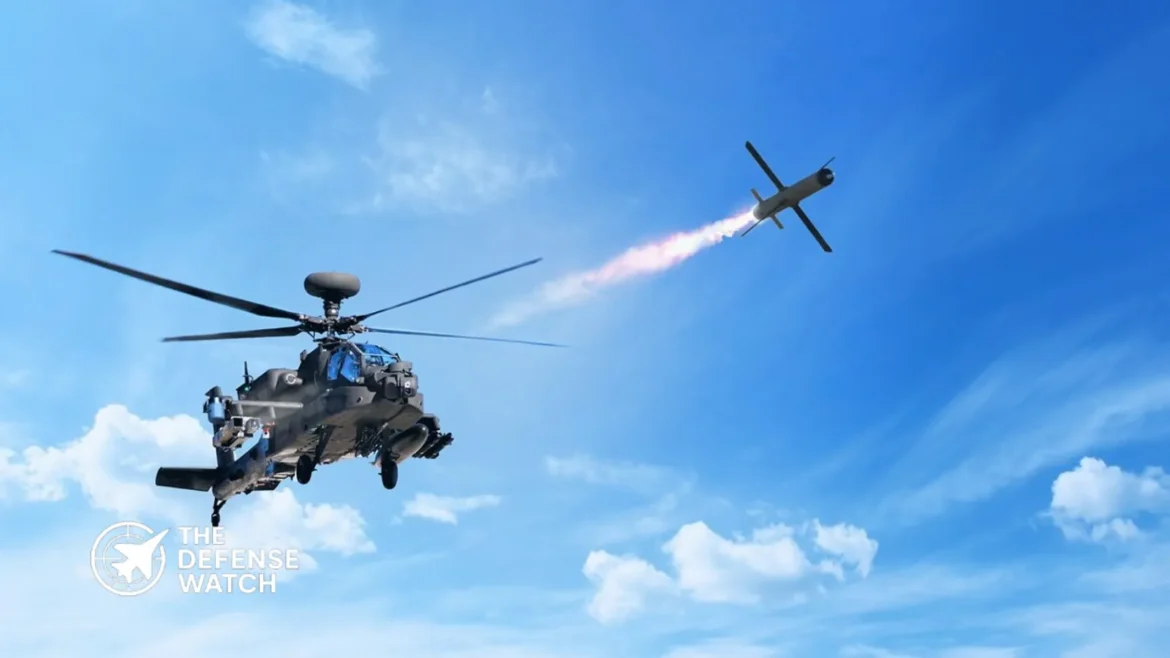
- ► The US Army tested the XM1225 30×113 mm fuze munition from an AH 64 Apache helicopter.
- ► The munition is designed as an airburst round to counter small unmanned aerial systems.
- ► Engagements were conducted against air to air targets at varying distances.
- ► The round is fired from the Apache’s M230 30 mm chain gun.
- ► The test supports broader US Army counter UAS modernization efforts.
US Army Tests XM1225 Anti Drone Munition From AH 64 Apache
The US Army anti drone munition program took a key step forward as the service tested the 30×113 mm XM1225 fuze round from an Boeing AH-64 Apache helicopter against aerial targets.
According to the United States Army, the live fire event involved engaging air to air targets at varying distances using the Apache’s M230 chain gun. The demonstration focused on validating the performance of the XM1225 programmable fuze round against unmanned aerial systems.
The test reflects the Army’s growing emphasis on counter UAS capability across its aviation and ground formations.
Expanding Apache Counter UAS Capability
The XM1225 is a 30×113 mm high explosive airburst munition designed to detonate at a programmed point in space. Fired from the Apache’s M230 cannon, the round is intended to create a fragmentation pattern effective against small drones.
The US Army anti drone munition effort addresses a clear operational challenge. Small, low cost drones have become a persistent threat in recent conflicts, used for reconnaissance, targeting, and direct attack roles.
Traditionally, the AH 64 Apache has been optimized for close air support, anti armor operations, and armed reconnaissance. By integrating a programmable airburst round, the platform gains an additional air to air capability tailored to counter Group 1 and Group 2 UAS threats.
Army officials have emphasized layered defense against drones, combining electronic warfare, directed energy systems, missiles, and gun based solutions. The XM1225 offers a comparatively low cost per shot option when engaging small aerial targets.
Technical Focus: 30×113 mm XM1225 Round
The 30×113 mm caliber is standard for the Apache’s M230 chain gun. What differentiates the XM1225 is its fuze technology, which enables airburst detonation rather than impact only effects.
Airburst munitions are designed to increase hit probability against small or maneuvering aerial targets. Instead of requiring a direct hit, the round can detonate near the drone, dispersing fragments within a defined radius.
The US Army anti drone munition test evaluated engagements at different ranges, helping determine effective burst timing and lethality envelopes.
Such testing is critical as the Army refines tactics, techniques, and procedures for aviation units facing drone swarms or individual hostile UAS.
Counter UAS In Modern Conflict
The proliferation of small drones in conflicts in Eastern Europe and the Middle East has accelerated US military investment in counter UAS technologies. Senior defense leaders have repeatedly cited the need for scalable and affordable solutions.
The U.S. Department of Defense has prioritized integrated air and missile defense that includes protection against unmanned systems. Aviation assets such as the Apache are increasingly expected to contribute to that mission set.
By testing the XM1225 from the Apache, the Army is exploring how existing platforms can be adapted without requiring entirely new weapon systems.
This approach supports modernization goals while managing cost and integration timelines.


Singapore Prepares For Historic F-35 Stealth Fighter Arrival
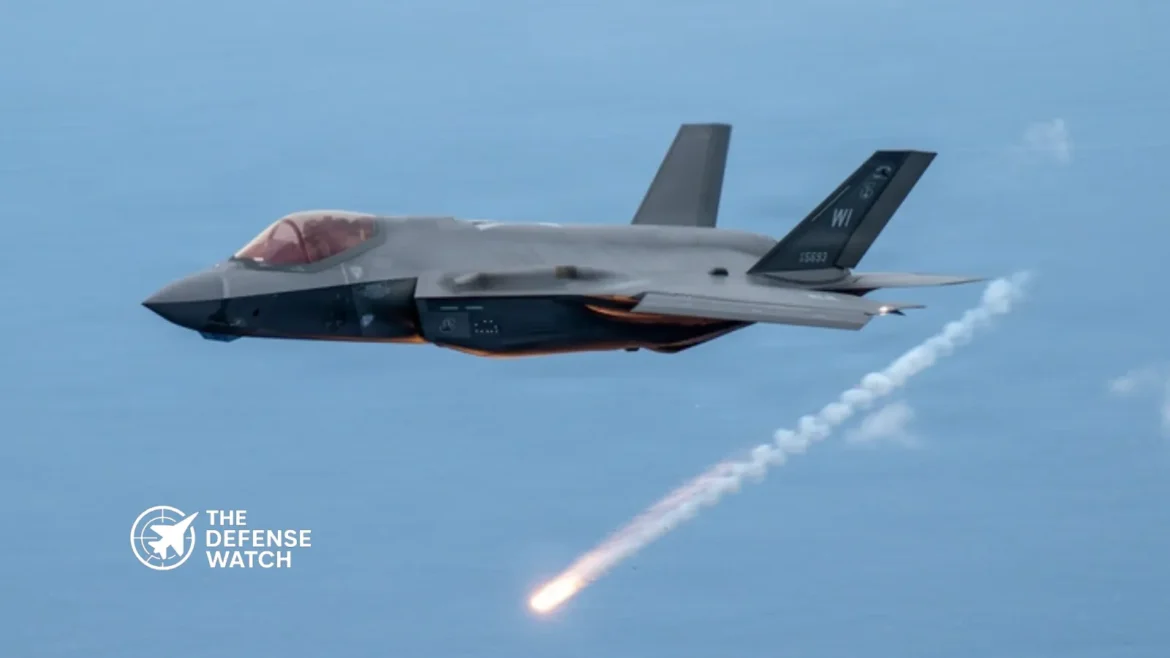
Singapore is on track to receive its first F-35 Lightning II stealth fighters later this year, marking a significant milestone in the Republic of Singapore Air Force’s (RSAF) modernization efforts. According to Defense News reporting, the Southeast Asian nation will join an exclusive group of operators flying the world’s most advanced fifth-generation fighter aircraft, strengthening its defense capabilities amid evolving regional security challenges.
(adsbygoogle = window.adsbygoogle || []).push({});The anticipated delivery represents the culmination of Singapore’s 2020 decision to procure the F-35, positioning the city-state as the first Southeast Asian nation to operate the Joint Strike Fighter. This acquisition fundamentally transforms Singapore’s air combat capabilities and reinforces its position as a key U.S. defense partner in the Indo-Pacific region.
Background: Singapore’s F-35 Acquisition Program
Singapore announced its intention to purchase the F-35B and F-35A variants in January 2020, with an initial order reportedly covering up to 12 aircraft in the first phase. The F-35B variant, capable of short takeoff and vertical landing (STOVL), offers unique operational flexibility for Singapore’s space-constrained environment, while the conventional takeoff and landing F-35A provides complementary capabilities.
The procurement decision followed years of evaluation and came after Singapore’s participation in the F-35 program as a Security Cooperation Participant since 2003. This long-standing involvement provided RSAF personnel valuable exposure to the platform’s development and operational concepts well before finalizing the purchase.
Defense officials indicated that the F-35 acquisition aligns with Singapore’s comprehensive fleet modernization strategy, which includes replacing aging F-16C/D Fighting Falcons that have served as the backbone of the RSAF fighter force for decades.
Technical Capabilities And Strategic Implications
The F-35 Lightning II brings transformative capabilities to the Republic of Singapore Air Force, including advanced stealth characteristics, sensor fusion technology, and network-centric warfare capabilities that far exceed fourth-generation platforms. The aircraft’s AN/APG-81 Active Electronically Scanned Array (AESA) radar, Electro-Optical Targeting System (EOTS), and Distributed Aperture System (DAS) create an unprecedented situational awareness picture for pilots.
(adsbygoogle = window.adsbygoogle || []).push({});Singapore’s F-35 fleet will provide critical advantages in contested airspace scenarios, including the ability to detect, track, and engage threats while remaining difficult to detect. The aircraft’s advanced electronic warfare suite and low-observable design enable operations in highly defended environments that would pose significant challenges to conventional fighters.
The stealth fighter’s interoperability with U.S. and allied forces represents another strategic dimension. As tensions in the South China Sea and broader Indo-Pacific region continue, Singapore’s F-35s will enhance coalition operations and information sharing with other F-35 operators including the United States, Australia, Japan, and South Korea.
Training And Infrastructure Development
Preparing for F-35 operations has required substantial investments in infrastructure, training, and support systems. According to industry sources, RSAF pilots and maintainers have been conducting training at U.S. facilities, including Luke Air Force Base in Arizona, which hosts international F-35 training operations.
Singapore has also invested in specialized maintenance facilities, secure communications infrastructure, and Autonomic Logistics Information System (ALIS) — now transitioning to the Operational Data Integrated Network (ODIN) — to support F-35 operations. These systems enable predictive maintenance and global sustainment coordination essential for maintaining the sophisticated fifth-generation platform.
The training pipeline for F-35 pilots typically requires 12-18 months, beginning with academic instruction on aircraft systems, followed by simulator training, and culminating in live flying operations. RSAF personnel have reportedly been progressing through this pipeline in preparation for the aircraft’s arrival.
Regional Context And Balance Of Power
Singapore’s F-35 acquisition occurs against a backdrop of significant military modernization across the Asia-Pacific region. China has deployed its own fifth-generation fighters, including the J-20 and FC-31/J-35, while neighboring countries have pursued advanced fourth-generation-plus platforms.
The arrival of F-35s in Singapore reinforces the nation’s defense deterrence posture without dramatically altering regional military balances. Singapore has historically maintained a policy of active defense and technological superiority to compensate for its small geographic size and limited strategic depth.
(adsbygoogle = window.adsbygoogle || []).push({});Defense analysts note that Singapore’s F-35 fleet will likely focus on air defense, maritime strike, and intelligence, surveillance, and reconnaissance (ISR) missions within the immediate region. The aircraft’s advanced sensors make it particularly valuable for monitoring maritime approaches and contested waters, including critical sea lanes through the Strait of Malacca.
Economic And Industrial Participation
Singapore’s involvement in the F-35 program extends beyond simple procurement. Local defense companies have secured positions in the global F-35 supply chain, providing components and support services for the international fleet of over 1,000 aircraft across multiple operators.
ST Engineering, Singapore’s defense industrial champion, manufactures components including aircraft structures and participates in maintenance, repair, and overhaul activities for the F-35 program. This industrial participation generates economic returns while building domestic expertise in advanced aerospace technologies.
The F-35 program office has emphasized that Security Cooperation Participants like Singapore benefit from technology transfer opportunities, industrial partnerships, and long-term sustainment contracts that extend well beyond initial aircraft deliveries.
Operational Timeline And Fleet Expansion
While the first F-35 deliveries are expected in late 2026, achieving full operational capability will require additional time for pilot training, tactics development, and operational testing under tropical conditions specific to Southeast Asia. Defense sources suggest initial operational capability could be achieved by 2027-2028.
Singapore has indicated that the F-35 acquisition may extend beyond the initial batch, with potential for additional orders as older F-16 fighters reach the end of their service lives. The RSAF currently operates approximately 60 F-16C/D aircraft alongside F-15SG Strike Eagles, and the F-35 is positioned to eventually replace the F-16 fleet entirely.
The phased approach allows Singapore to manage costs, develop operational expertise gradually, and assess the platform’s performance before committing to larger fleet numbers. This measured strategy reflects Singapore’s typically prudent approach to major defense acquisitions.
Challenges And Considerations
Operating the F-35 in Singapore’s tropical environment presents unique challenges, including high temperatures, humidity, and corrosive salt air that can affect aircraft systems and maintenance requirements. The RSAF will need to develop location-specific maintenance procedures and potentially modify existing infrastructure to accommodate the platform’s environmental sensitivities.
The F-35’s operating costs, which remain higher than fourth-generation fighters despite continuous reduction efforts, will require sustained defense budget commitments. Singapore’s robust economy and consistent defense spending — typically 3-4% of GDP — position the nation to sustain F-35 operations long-term.
Cybersecurity considerations also factor prominently, as the F-35’s network-centric design and reliance on software updates require robust information security measures. Singapore has invested heavily in cyber defense capabilities that will support secure F-35 operations.
(adsbygoogle = window.adsbygoogle || []).push({});International Cooperation And Partnerships
Singapore’s F-35 acquisition strengthens defense ties with the United States, already formalized through multiple agreements including the 1990 Memorandum of Understanding on U.S. military access to Singapore’s facilities. The F-35 program includes extensive information sharing, joint training opportunities, and coordinated sustainment activities that deepen bilateral defense cooperation.
The platform also facilitates multilateral cooperation with other regional F-35 operators. Australia, Japan, and South Korea all operate F-35s, creating opportunities for combined exercises, tactics development, and interoperability enhancement across the Indo-Pacific theater.
Singapore’s Defense Minister has emphasized that the F-35 acquisition supports the nation’s commitment to regional stability and its role as a responsible stakeholder in Southeast Asian security architecture. The RSAF regularly participates in multilateral exercises including Red Flag, Cope Tiger, and Pitch Black, where F-35 integration will enhance training value.
Looking Ahead: Future Capabilities
The F-35 program continues evolving through ongoing software upgrades and capability enhancements under the Continuous Capability Development and Delivery (C2D2) process. Singapore’s aircraft will benefit from these improvements, including enhanced weapons integration, improved electronic warfare capabilities, and advanced networking features.
(adsbygoogle = window.adsbygoogle || []).push({});Future Block 4 upgrades promise significant capability expansions, including integration of new weapons, improved radar performance, and enhanced survivability features. As these upgrades become available, Singapore’s F-35 fleet will maintain its technological edge throughout its multi-decade service life.
The RSAF has also expressed interest in unmanned systems and loyal wingman concepts that could operate alongside manned F-35s, potentially including platforms like the MQ-28 Ghost Bat being developed by Australia and Boeing. Such collaborative combat aircraft could multiply F-35 effectiveness while reducing pilot risk in high-threat scenarios.

UK Digital Targeting Web Minimum Viable Product Due in 2026
The UK Ministry of Defence aims to field the first Digital Targeting Web minimum viable product in 2026, with broader evolutionary development continuing thereafter, officials told Parliament. The Digital Targeting Web is part of London’s Strategic Defence Review effort to knit sensors, decision-makers and weapon effectors into a single, digital battle system.
(adsbygoogle = window.adsbygoogle || []).push({});MoD Confirms 2026 Deliverable
In a written parliamentary answer published February 5, Defence Minister Luke Pollard said the Department plans to deliver “the first elements of the Digital Targeting Web, or a minimum viable product, in 2026.” He clarified that this initial delivery will be defined as work on digitising selected targeting processes to improve scale, speed and precision across multiple defence systems. Full implementation has no fixed date and will evolve to meet emerging threat requirements.
The MoD emphasised that the Digital Targeting Web should not be seen as a single discrete platform. Instead it is an interconnected ecosystem of systems, processes and capabilities intended to enhance targeting effectiveness across the British armed forces.
What the Digital Targeting Web Is
First outlined in the UK Strategic Defence Review, the Digital Targeting Web seeks to tie together disparate targeting, command and intelligence functions. It connects frontline sensors, data processing nodes and firing systems (effectors) across land, sea, air and other domains. The goal is to shorten the decision cycle from threat detection to effect, applying advanced data connectivity and automation in the battlespace.
A 2025 Royal United Services Institute commentary notes the government has committed to a minimum viable product for 2026 and full operational capability by 2027, though milestones could adjust with evolving needs.
(adsbygoogle = window.adsbygoogle || []).push({});Integration With Existing Programmes
The programme is broader than one project. It includes existing and planned capabilities such as:
- Army initiatives like the ASGARD targeting and decision-support system
- RAF’s Nexus network elements
- Royal Navy’s Strike Net data links
These feed into the overall web concept, with underpinning work on data standards and secure networks to allow information to flow quickly and securely at machine speed.
Strategic Context
The Strategic Defence Review frames the Digital Targeting Web as part of the Integrated Force concept, designed to help British and allied forces respond faster with better coordinated sensor-to-shooter chains. It follows lessons learned from recent conflicts where rapid integration of data and strike capabilities proved decisive.
(adsbygoogle = window.adsbygoogle || []).push({});Efforts align with broader UK defence digital strategy updates, aiming to protect critical military data and networks from growing cyber and electronic warfare threats. Senior MoD leaders have acknowledged vulnerabilities in current systems and are updating digital strategies to support future integration work.
Delivery and Next Steps
Details of what specific components will form the 2026 minimum viable product remain under definition, according to MoD responses. The emphasis is on iterative development, scaling capability over time rather than meeting a single fixed milestone. The objective is to ensure adaptability as defence requirements evolve.
U.S. Accelerates Taiwan Arms Deliveries as HIMARS, Harpoon, MQ-9B Systems Target Defense Gaps
The United States is accelerating Taiwan arms deliveries, including HIMARS rocket launchers, Harpoon coastal missiles and MQ-9B drones as part of Taipei’s effort to strengthen its layered defense against growing pressure from China, Taiwan’s defense minister said.
(adsbygoogle = window.adsbygoogle || []).push({});Taipei Defense Minister Wellington Koo told reporters that Washington is moving to ease long delays in weapons shipments this year as U.S. defense production bottlenecks improve and administrative processes for Taiwan cases are streamlined.
Faster deliveries could help Taiwan close what Koo described as critical capability gaps in long-range precision fires, coastal defense and persistent surveillance, officials said.
What Taiwan Expects
Taipei anticipates phased shipments later this year will include:
- HIMARS multiple rocket launcher systems, capable of mobile long-range precision fires.
- Harpoon coastal defense missile systems, configured for over-the-horizon sea denial.
- MQ-9B drones for extended surveillance and targeting support.
- Javelin anti-armor missiles following plan schedules.
Officials said the aim of sped-up deliveries is to help Taiwan implement a denial strategy that disperses firepower and complicates any potential amphibious assault.
HIMARS launchers provide mobility, rapid fire and relocation options. The system can fire guided rockets and Army Tactical Missile System rounds, giving Taiwan the ability to strike at greater distances across likely approach corridors.
Harpoon coastal defense missiles, configured for mobile land launch, give Taiwan forces the ability to hold Chinese surface combatants and amphibious ships at risk as they move toward the island’s littoral zones.
MQ-9B drones extend Taipei’s surveillance reach, with high endurance enabling persistent monitoring of maritime approaches and early cueing for ground and coastal missile units.
Context and Strategic Drivers
The push to speed up deliveries comes after months of high-level discussions and policy changes in Washington that aim to ease procedural delays. Taiwan’s defense minister said improvements in U.S. defense industry production and streamlined export processes have reduced some bottlenecks.
(adsbygoogle = window.adsbygoogle || []).push({});Taipei is also navigating a domestic budget debate over a proposed supplementary defense budget worth about $40 billion that would fund advanced U.S. weapons packages and other systems. Delays in budget approval risk slowing or stalling planned acquisitions, officials warn.
In December 2025, the United States announced a record $11.1 billion set of proposed arms sales to Taiwan covering HIMARS, howitzers, drones and related equipment, reflecting growing U.S. support for Taipei’s asymmetric defense posture amid persistent cross-Strait tensions.
China regularly protests U.S. arms sales to Taiwan, calling them destabilizing, but Washington says these transfers support Taiwan’s right to self-defense under U.S. law and help maintain peace in the region.
Outlook
Officials in Taipei and Washington expect the improved delivery pace to continue, but stress that actual arrival dates will depend on a mix of industrial production capacity, export processing and Taiwan’s own funding decisions. Experts say the accelerated schedule aims to ensure key systems are fielded before potential crisis scenarios tighten timelines.
Israel Azerbaijan artificial intelligence MOU cooperation took a new step forward today as Israel and Azerbaijan signed a Memorandum of Understanding focused on artificial intelligence development and collaboration. The agreement is positioned as part of Israels broader national strategy to expand its leadership role in artificial intelligence, while also strengthening strategic ties with Azerbaijan in emerging technologies relevant to defense, security, and state modernization.
Officials from both governments confirmed the signing, describing the MOU as a framework for deeper institutional cooperation, knowledge sharing, and joint initiatives in artificial intelligence across civilian and security related domains.
Israel Azerbaijan Artificial Intelligence MOU Explained
The newly signed Israel Azerbaijan artificial intelligence MOU establishes a formal mechanism for cooperation between government institutions, research bodies, and technology ecosystems in both countries. While detailed technical annexes have not been made public, officials indicated the agreement focuses on applied artificial intelligence, innovation policy coordination, and workforce development.
According to Israeli government statements, the MOU aligns with national efforts to integrate artificial intelligence into public services, defense planning, and industrial competitiveness. For Azerbaijan, the agreement supports Baku’s ongoing push to modernize state capabilities, including digital governance and security related technologies.
The MOU does not announce specific weapons programs or classified military projects. Instead, it creates a policy and cooperation framework that can support future joint initiatives, including those relevant to defense technology and national security applications.
Strategic Context for Israel
Israels leadership has repeatedly identified artificial intelligence as a strategic national priority. The government has promoted AI as a foundational technology for economic growth, military effectiveness, and technological sovereignty.
Officials described the Israel Azerbaijan artificial intelligence MOU as a continuation of these objectives, emphasizing international cooperation with trusted partners. Israels defense sector already integrates AI into areas such as intelligence analysis, command and control systems, cyber defense, and autonomous platforms.
By expanding cooperation with Azerbaijan, Israel broadens its network of international AI partnerships beyond traditional Western allies, reinforcing its role as a global hub for applied artificial intelligence and defense innovation.
Azerbaijan’s Interest in AI and Defense Modernization
Azerbaijan has invested heavily in defense modernization and digital transformation over the past decade. The country has pursued advanced capabilities in intelligence, surveillance, and command systems, often emphasizing technology driven efficiency and automation.
The Israel Azerbaijan artificial intelligence MOU supports these objectives by enabling access to Israeli expertise in AI research, startup ecosystems, and applied defense technologies. Azerbaijani officials have framed artificial intelligence as a key enabler for future economic diversification and security resilience.
Israel is already one of Azerbaijan’s most important defense technology partners, particularly in unmanned systems, sensors, and electronic warfare related equipment. The AI agreement adds a policy level structure to this long standing relationship.
Implications for Defense Technology Cooperation
While the MOU is framed broadly, artificial intelligence has clear relevance for defense and security cooperation. AI applications increasingly underpin modern military systems, including decision support tools, predictive maintenance, autonomous platforms, and intelligence fusion.
The Israel Azerbaijan artificial intelligence MOU may facilitate joint research programs, academic exchanges, and pilot projects that indirectly support defense modernization without transferring classified systems. Such arrangements are common in international AI cooperation agreements, allowing governments to explore dual use technologies under civilian frameworks.
Defense analysts note that AI policy cooperation often precedes deeper technical collaboration, especially in areas such as cyber defense, space data processing, and electronic warfare support systems.
Geopolitical and Regional Significance
The agreement also carries geopolitical weight. Israel and Azerbaijan maintain close diplomatic and security ties, rooted in shared strategic interests and long term cooperation. Formalizing AI collaboration signals trust at the policy level, particularly in a domain increasingly viewed as critical to national power.
From a regional perspective, the Israel Azerbaijan artificial intelligence MOU highlights the growing role of emerging technologies in shaping defense partnerships across the Middle East and Eurasia. Governments are increasingly focusing on software driven capabilities rather than traditional platform centric modernization alone.
The timing of the agreement underscores a broader trend of states seeking resilient technology partnerships amid global competition over artificial intelligence leadership.
Alignment With National AI Strategies
Israeli officials linked the MOU to national flagship goals aimed at positioning Israel among the world’s leading AI nations. These efforts include investments in compute infrastructure, talent development, and regulatory frameworks to support responsible AI deployment.
Azerbaijan has similarly outlined digital development strategies that emphasize smart government, data driven decision making, and advanced security technologies. The Israel Azerbaijan artificial intelligence MOU provides a bilateral channel to align elements of these national strategies.
Both sides emphasized cooperation rather than dependency, highlighting mutual benefit and shared development rather than one directional technology transfer.
What Comes Next
The MOU itself is a framework agreement rather than an operational contract. Implementation will likely depend on follow on working groups, project specific agreements, and institutional partnerships.
Observers expect initial cooperation to focus on policy exchange, academic collaboration, and applied research programs. Any defense related applications would likely proceed cautiously and within existing export control and security frameworks.
For defense and aerospace stakeholders, the Israel Azerbaijan artificial intelligence MOU is a signal of continued convergence between digital technologies and national security planning.
Pentagon Secures Full-Year Funding After Brief Shutdown
The U.S. Congress officially approved the fiscal year 2026 defense spending bill on February 3, delivering $839 billion in Pentagon funding and ending a brief partial government shutdown that affected federal operations. The House of Representatives passed the defense appropriations package in a narrow 217-214 vote, sending the legislation to President Donald Trump for his signature.
(adsbygoogle = window.adsbygoogle || []).push({});The approved defense budget 2026 represents an $8 billion increase over the Pentagon’s original budget request, providing critical resources for military modernization efforts across all service branches. The passage marks a significant milestone as the Department of Defense receives its first full-year appropriations since fiscal year 2024, ending months of uncertainty that hampered long-term planning and procurement activities.
According to the Senate Appropriations Committee, the funding package forms part of a larger “minibus” appropriations bill that includes full-year funding for five additional federal agencies. The legislation’s approval brings relief to defense officials and military planners who had operated under continuing resolutions that restricted new program starts and limited operational flexibility.
Navigating Political Hurdles and Shutdown Concerns
The path to approval encountered significant obstacles in recent weeks. While the House initially passed the spending package on January 23 to meet a January 30 deadline, controversy surrounding Department of Homeland Security funding delayed Senate action. The final version included a two-week continuing resolution for DHS, requiring a second House vote that didn’t occur until the chamber reconvened in early February.
This procedural requirement forced several agencies to operate through a four-day shutdown starting January 31. Though disruptive, the temporary pause proved considerably shorter than the record-breaking 43-day shutdown that occurred last fall, during which the Pentagon furloughed 334,000 civilian employees. The quick resolution demonstrated congressional commitment to maintaining defense readiness despite broader appropriations disputes.
Defense officials expressed relief at avoiding extended operational disruptions. Full-year funding enables the Pentagon to execute procurement contracts, initiate new development programs, and provide predictable resources to military installations and personnel worldwide. The stability proves particularly important as global security challenges demand sustained attention and investment.
Air Force Receives Substantial Modernization Funding
The approved defense budget allocates billions toward key Air Force modernization priorities, addressing critical capability gaps across multiple domains. Major investments target next-generation platforms essential for maintaining air superiority against peer competitors.
The F-35 Joint Strike Fighter program receives $440 million specifically designated for spare parts to support the aircraft and its F135 engine. This funding addresses persistent maintenance challenges that have limited F-35 availability rates across the Air Force, Navy, and Marine Corps fleets. Improved parts availability directly enhances operational readiness and sortie generation capability.
- (adsbygoogle = window.adsbygoogle || []).push({});
Electronic warfare capabilities gain significant attention with $474 million allocated for the Air Force to purchase two additional EC-37B Compass Call aircraft. These specialized platforms provide critical airborne electronic attack capabilities, jamming enemy communications and radar systems to protect friendly forces and create operational advantages during contested operations.
Airlift capacity receives a notable boost with $976 million designated for six C-130J Super Hercules tactical transports for the Air National Guard. The versatile C-130J serves as the backbone of tactical airlift operations, supporting everything from disaster relief to combat missions. Adding these aircraft strengthens the Guard’s ability to respond to both state emergencies and federal mobilizations.
The legislation also provides continued funding for advanced platforms including the B-21 Raider stealth bomber and the F-47 Next-Generation Air Dominance fighter, though some nuclear modernization programs faced modest reductions. The E-7 Wedgetail airborne early warning aircraft received an additional $900 million to prevent program cancellation, ensuring the Air Force can replace aging E-3 Sentry AWACS platforms.
The Sentinel intercontinental ballistic missile program continues receiving support despite ongoing cost growth concerns. Congressional appropriators emphasized the strategic importance of modernizing the land-based leg of the nuclear triad while demanding improved program management and cost controls.
Space Force Budget Bolsters Satellite and Defense Systems
Space Force funding priorities reflect growing recognition of space as a contested warfighting domain requiring sustained investment. The approved budget provides $4 billion for continued development of missile warning and tracking satellites and sensors, critical capabilities for detecting and characterizing ballistic missile threats globally.
The legislation funds 11 National Security Space Launch missions, maintaining the cadence necessary to deploy military satellites and ensure access to space remains available for national security purposes. These launches support everything from communications satellites to reconnaissance platforms that provide commanders with essential intelligence and surveillance capabilities.
A significant portion of Space Force funding addresses the Golden Dome integrated air and missile defense architecture. The final appropriations deal includes $13.4 billion to “augment and integrate” space and missile defense systems under this initiative. Interestingly, the Pentagon excluded Golden Dome funding from its base budget request, planning instead to rely on $25 billion in reconciliation funding that Congress approved last year.
Congressional appropriators questioned this funding approach during recent hearings, expressing concern about budget transparency and long-term sustainability. Lawmakers requested additional details about how the Defense Department plans to allocate Golden Dome resources and integrate various systems into a coherent defensive architecture.
Space domain awareness programs receive continued support, enabling the Space Force to track objects in orbit, detect potential threats, and coordinate defensive actions. As adversaries develop anti-satellite weapons and other counter-space capabilities, these monitoring systems become increasingly vital for protecting American space assets.
Strategic Implications and Future Defense Planning
The approved $839 billion defense budget signals continued congressional commitment to military modernization despite fiscal pressures and competing domestic priorities. The funding level exceeds the Pentagon’s request, suggesting bipartisan recognition of growing global threats requiring sustained defense investment.
China’s military expansion and technological advancement feature prominently in defense planning documents justifying budget increases. The Air Force and Space Force investments specifically target capabilities needed to deter or, if necessary, defeat Chinese aggression in the Indo-Pacific region. Advanced fighters, stealth bombers, long-range missiles, and space-based sensors all contribute to maintaining technological advantages critical for deterrence.
The budget also reflects lessons from the conflict in Ukraine, where precision munitions, electronic warfare, and integrated air defenses proved decisive. American military planners studied these operations closely, identifying capability gaps and accelerating programs that address vulnerabilities exposed by modern combat.
Nuclear modernization remains a budget priority despite some congressional trims. The simultaneous recapitalization of all three legs of the nuclear triad—land-based missiles, submarine-launched missiles, and strategic bombers—represents the most extensive nuclear modernization effort since the Cold War. While expensive, defense officials argue these systems provide the ultimate deterrent against existential threats.
(adsbygoogle = window.adsbygoogle || []).push({});The legislation’s passage provides stability for defense contractors and the broader defense industrial base. Full-year funding enables companies to hire workers, invest in facilities, and execute multi-year contracts with confidence. This predictability proves essential for complex weapons systems requiring years of development and production.
Industry Response and Economic Impact
Defense contractors welcomed the budget approval after months of operating under continuing resolution constraints. Major aerospace companies like Lockheed Martin, Northrop Grumman, Boeing, and Raytheon Technologies rely on predictable Pentagon funding to maintain production lines and development programs.
The F-35 spare parts funding specifically addresses supply chain challenges that have plagued the program. Manufacturers can now order long-lead components and invest in production capacity improvements that enhance aircraft availability across the fleet. Better parts availability translates directly into more aircraft available for training and operational missions.
The C-130J procurement benefits Lockheed Martin’s Marietta, Georgia production facility, sustaining jobs and industrial capability for tactical airlift. The National Guard aircraft orders maintain production momentum while the Air Force evaluates future tactical transport requirements and potential C-130J replacement programs.
Smaller suppliers and subcontractors throughout the defense industrial base also benefit from full-year funding certainty. These companies manufacture everything from electronic components to specialized materials, forming a complex supply chain that supports major weapons platforms. Funding stability enables them to plan investments and maintain skilled workforces essential for defense production.
Regional economies hosting military installations and defense contractors see significant benefits from the approved budget. States with substantial Air Force and Space Force presence, including Colorado, California, Florida, and others, receive economic stimulus from defense spending that supports local jobs and tax revenues.
Congressional Oversight and Accountability Measures
While approving substantial defense funding, congressional appropriators included numerous oversight provisions and reporting requirements. Lawmakers demanded detailed justifications for major programs, regular progress updates, and explanations for any significant cost increases or schedule delays.
The Golden Dome initiative faces particularly close scrutiny, with appropriators requiring the Pentagon to provide comprehensive spending plans and integration strategies. Congress wants assurance that the $13.4 billion appropriation plus previous reconciliation funding achieves stated objectives without wasteful duplication or inefficient program management.
(adsbygoogle = window.adsbygoogle || []).push({});Nuclear modernization programs including Sentinel and the Long-Range Standoff weapon received funding with strings attached. The Pentagon must demonstrate improved cost controls and program management before accessing certain funds. Congressional skepticism about nuclear program execution reflects concern over historical cost overruns and schedule delays.
Appropriators also emphasized workforce development, noting that skilled personnel shortages threaten defense acquisition and sustainment programs. The budget includes provisions encouraging Pentagon investment in training, retention, and recruitment of acquisition professionals, engineers, and technical specialists essential for managing complex weapons programs.
Transparency requirements mandate regular reporting on program health, financial management, and performance metrics. These oversight mechanisms help Congress make informed decisions about future budgets while holding defense officials accountable for efficient resource utilization.
Looking Ahead: Fiscal 2027 and Beyond
Even as fiscal 2026 funding takes effect, attention shifts toward fiscal year 2027 budget development. The Trump administration’s stated goal of increasing defense spending toward $1.5 trillion annually suggests continued budget growth, though congressional approval remains uncertain given deficit concerns and competing priorities.
Defense officials must balance modernization needs against readiness requirements and force structure decisions. The Air Force continues grappling with aging aircraft fleets requiring expensive maintenance while simultaneously funding next-generation replacement platforms. Similar tensions affect the Space Force as satellite constellations require both sustainment and modernization.
Emerging threats including hypersonic weapons, artificial intelligence applications, cyber capabilities, and autonomous systems demand investment that strains defense budgets despite overall increases. Pentagon leaders must prioritize among competing requirements while maintaining technological advantages over peer competitors.
The defense industrial base faces capacity constraints that money alone cannot immediately resolve. Expanding production of missiles, munitions, and complex platforms requires years of investment in facilities, equipment, and workforce development. Budget increases must align with realistic industrial capabilities to avoid wasteful spending on unachievable production targets.
(adsbygoogle = window.adsbygoogle || []).push({});International partnerships and burden-sharing discussions will influence future budget debates. Allies and partners in Europe and the Indo-Pacific face pressure to increase defense spending, potentially reducing demands on American resources. However, U.S. forces maintain unique capabilities that allies cannot replicate, ensuring substantial American investment regardless of allied contributions.
The approved fiscal 2026 defense budget provides essential resources for current military needs while advancing modernization programs crucial for future readiness. As global security challenges intensify and technology evolves, sustained congressional commitment to adequate defense funding remains vital for protecting American interests and maintaining peace through strength.
BAE Systems Expands Marine Corps Amphibious Fleet With New Contract
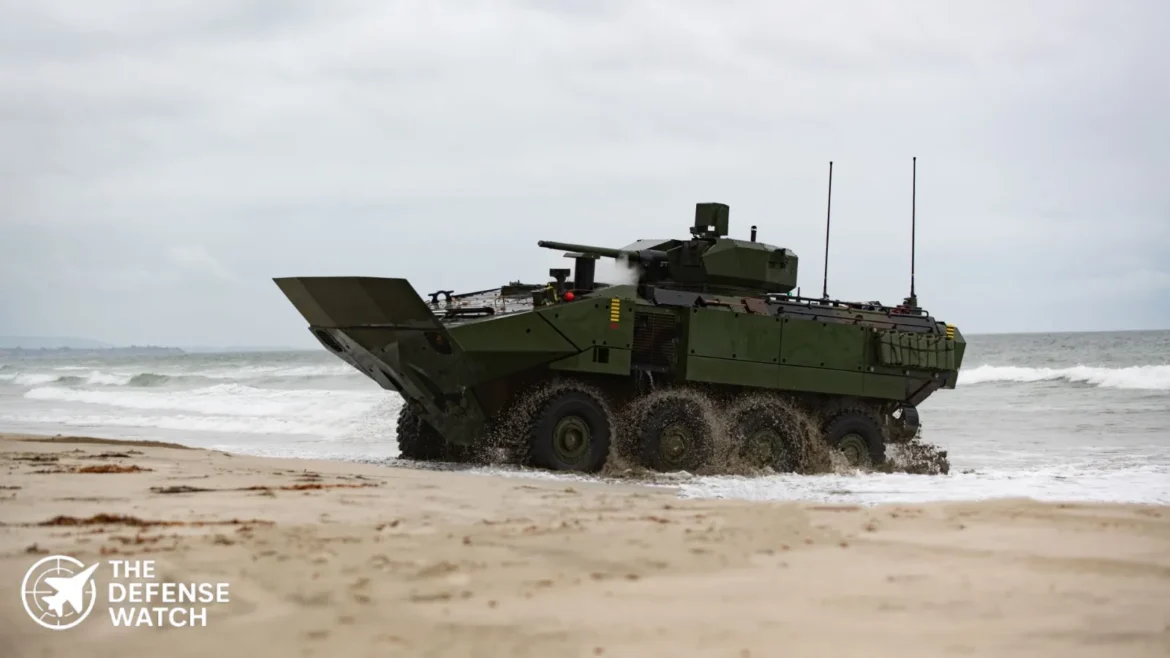
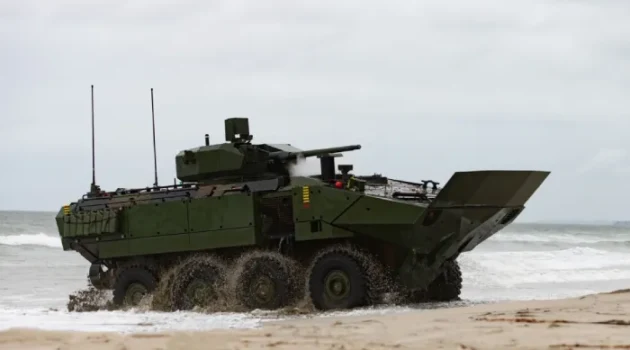
BAE Systems has secured a $195 million contract from the U.S. Marine Corps for the production of 30 additional Amphibious Combat Vehicles (ACVs), the defense contractor announced February 3, 2026. The latest contract award increases the total number of ACV-30 variant vehicles ordered to more than 150 units, marking significant progress in the Marine Corps’ amphibious modernization program.
(adsbygoogle = window.adsbygoogle || []).push({});The contract represents continued investment in the ACV platform, which provides Marines with enhanced mobility, survivability, and firepower capabilities for ship-to-shore operations and inland maneuvers. Production work will take place at BAE Systems facilities in Johnstown and York, Pennsylvania, with turret integration conducted in Charleston, South Carolina.
Advanced 30mm Firepower Configuration
The ACV-30 variant is equipped with the KONGSBERG PROTECTOR RT-20 remote turret system mounting a 30mm Bushmaster II cannon, providing Marines with enhanced direct fire support capabilities for engaging enemy targets at extended ranges. This weapon system eliminates the internal basket requirement of traditional turret systems, freeing valuable interior space for additional troops or mission-essential equipment while maintaining crew protection.
“This award highlights the strength of our partnership and our shared commitment with the U.S. Marine Corps to equip forces with the capabilities they need to succeed,” stated Rebecca McGrane, vice president of Amphibious Vehicles at BAE Systems. McGrane emphasized that the additional vehicles keep the program aligned with operational requirements, ensuring Marines maintain readiness for diverse mission sets.
Next-Generation Amphibious Platform
The Amphibious Combat Vehicle represents a technological advancement over the aging Assault Amphibious Vehicle (AAV) that has served the Marine Corps since 1972. Based on the Iveco SuperAV 8×8 chassis, the ACV platform achieved Initial Operational Capability in November 2020 and entered full-rate production in December 2020.
The ACV-30 joins an expanding family of variants currently in production. The ACV-Personnel (ACV-P) variant can transport 13 combat-loaded Marines plus three crew members, while the ACV-Command (ACV-C) variant provides multiple workstations for maintaining situational awareness during operations. Additionally, BAE Systems has delivered three ACV-Recovery (ACV-R) variant Production Representative Test vehicles, which will provide field-level maintenance and recovery capabilities to Assault Amphibian companies.
Platform Capabilities and Specifications
The ACV platform is designed to provide true open-ocean capability with ship-to-shore and shore-to-shore operational flexibility. The vehicles feature a monocoque steel hull offering protection against small arms fire, artillery fragments, landmines, and improvised explosive devices. When combat-loaded, the vehicle has a gross weight of approximately 32,000 kilograms and includes add-on armor kits for enhanced protection.
(adsbygoogle = window.adsbygoogle || []).push({});The ACV-30’s KONGSBERG RT-20 turret features an advanced fire control system that automatically adjusts for ballistic variables including firing angle, inclination, and vehicle movement. The network-based architecture enables wireless operation and supports automated Hunter-Killer operations with target sharing capabilities among multiple vehicles.
Production Timeline and Strategic Significance
The contract continues BAE Systems’ role as prime contractor for the ACV program, a position the company has held since winning the competitive selection in 2018. The initial contract awarded in June 2018 covered 30 vehicles valued at $198 million, with options for up to 204 additional units.
Recent procurement activities demonstrate sustained momentum for the program. In January 2026, BAE Systems received a separate $184 million contract for 30 additional ACV-30s, bringing total orders beyond 100 units for that specific variant. The Marine Corps has also contracted KONGSBERG for 175 RT-20 turret systems valued at $329 million to support full-rate production Lots 5 and 6.
Program Evolution and Future Variants
The ACV program has evolved significantly since its inception. Originally planned with an acquisition objective of 1,122 vehicles, the current target stands at 632 units, adjusted to align with Marine Corps Force Design 2030 modernization initiatives. Fiscal constraints and inflationary pressures have impacted procurement schedules, with the Marine Corps reducing planned acquisition quantities for fiscal years 2025 and 2026 by 48 vehicles.
Despite these adjustments, the program maintains strong support within Marine Corps leadership. The Pentagon’s fiscal year 2026 budget confirms procurement of 59 ACV-30 gun variants and funds the first 32 ACV-R recovery vehicles, signaling the platform’s status as a foundational system for future amphibious operations.
Integration of Advanced Technologies
The modularity of the ACV platform allows for future capability integration as technology evolves. The platform was designed with growth potential to address additional mission roles including reconnaissance, electronic warfare, anti-air systems, and unmanned aerial system integration. The Marine Corps is reportedly conducting market research to examine the feasibility of incorporating counter-unmanned aerial system (C-UAS) capabilities onto ACV variants.
The KONGSBERG turret system contributes to this modernization approach. The RT-20 is part of the broader PROTECTOR family of remote weapon stations, with more than 20,000 systems delivered to over 20 nations. Its modular and digital design provides growth potential for incorporating emerging technologies to counter evolving threats.
Economic Impact and Workforce Development
The contract supports defense manufacturing operations across multiple states. Primary production occurs in Pennsylvania, where BAE Systems maintains facilities in both York and Johnstown. The Charleston, South Carolina location handles government integration of the KONGSBERG turret system. Additional program support takes place at BAE Systems locations in Sterling Heights, Michigan; Aiken, South Carolina; Stafford, Virginia; and San Jose, California.
(adsbygoogle = window.adsbygoogle || []).push({});This distributed production approach strengthens domestic defense industrial base capabilities while supporting skilled manufacturing employment across multiple regions. The program also reinforces transatlantic industrial cooperation, with KONGSBERG conducting turret development and partial manufacturing in Norway before final integration in the United States.
Operational Testing and Deployment
The ACV platform has undergone extensive testing to validate its performance in diverse operational environments. Following incidents in July 2022 involving two ACVs during training exercises off the California coast in high surf conditions, the Marine Corps conducted comprehensive internal reviews and implemented additional safety protocols. Marines in both incidents safely executed immediate action drills and returned to shore without casualties.
The ACV-30 variant entered government testing in February 2024 following delivery of the first production representative test vehicle. Testing validated the platform’s performance in surf conditions, land operations, and live-fire scenarios, confirming successful integration of the KONGSBERG turret system.
Strategic Context for Amphibious Modernization
The ACV program represents a critical component of Marine Corps transformation under Force Design 2030, which refocuses the service on maritime expeditionary operations after two decades of predominantly land-based warfare. The emphasis on amphibious capabilities addresses operational requirements for contested littoral environments, particularly in the Indo-Pacific region where distributed operations and ship-to-shore maneuver remain essential.
The addition of the ACV-30 fundamentally enhances the capabilities of Marine amphibious formations by providing organic, protected firepower during initial landing phases. This capability reduces reliance on external fire support and enables distributed operations across wider operational areas.
(adsbygoogle = window.adsbygoogle || []).push({});Program Outlook
With more than 150 ACV-30 variants now on contract and multiple other variants in full-rate production, the ACV program demonstrates the Marine Corps’ commitment to modernizing its amphibious assault capabilities. The platform’s proven performance, modular design, and growth potential position it as a long-term solution for expeditionary operations in increasingly contested operational environments.
As production continues and additional variants enter service, the ACV will progressively replace the AAV fleet in Assault Amphibian Battalions, providing Marines with enhanced protection, mobility, and firepower capabilities essential for 21st-century amphibious operations.
Kongsberg Maritime Spin Off Marks Strategic Shift for Norwegian Defense Industry
Kongsberg Maritime spin off plans signal a major structural change within Norway’s defense and maritime technology sector, as Kongsberg Group prepares to separate its maritime business into an independent company. The move is intended to clarify business focus, strengthen market positioning, and allow both entities to pursue tailored growth strategies across defense and commercial markets.
(adsbygoogle = window.adsbygoogle || []).push({});Kongsberg Group confirmed the decision following internal reviews of its long term industrial structure, according to reporting by UK Defence Journal and company statements. The transaction is expected to be completed once regulatory and shareholder approvals are secured.
Why Kongsberg Is Separating Its Maritime Business
Kongsberg Maritime currently operates across commercial shipping, offshore energy, ocean science, and naval markets. While closely linked to defense programs, much of its portfolio serves civilian customers, creating differing investment cycles and risk profiles compared to Kongsberg Defence and Aerospace.
By executing the Kongsberg Maritime spin off, the parent group aims to:
- Allow each business to pursue focused capital allocation
- Improve transparency for investors and government stakeholders
- Strengthen operational agility in defense and maritime markets
- Align leadership and strategy with distinct customer bases
Kongsberg Group leadership has emphasized that the decision is structural rather than a divestment, with both companies expected to remain closely linked through industrial cooperation.
Implications for Naval Defense and Maritime Security
Kongsberg Maritime plays a critical role in naval and maritime security through technologies that support:
- Integrated ship systems
- Dynamic positioning and navigation
- Autonomous and remotely operated vessels
- Underwater sensors and command systems
Many of these capabilities directly support naval platforms, including frigates, patrol vessels, and unmanned surface and underwater systems used by NATO and allied navies.
As an independent company, Kongsberg Maritime is expected to pursue deeper specialization in maritime autonomy, digital ship management, and naval support technologies, areas increasingly tied to modern naval warfare and fleet survivability.
Impact on Kongsberg Defence and Aerospace
The spin off allows Kongsberg Defence and Aerospace to sharpen its focus on core defense priorities such as:
- Naval Strike Missile and Joint Strike Missile programs
- Integrated air and missile defense systems
- Space and satellite ground systems
- Command, control, and combat management solutions
This separation is expected to improve alignment with Norwegian defense policy and allied procurement priorities, particularly as NATO members increase spending on naval strike, missile defense, and maritime domain awareness.
Industrial and Workforce Considerations
Kongsberg Group has stated that existing employment, industrial sites, and ongoing contracts will continue without disruption during the transition. The maritime business will retain its current workforce, management expertise, and customer relationships.
Norwegian authorities are expected to review the transaction, given the strategic importance of both defense and maritime industries to national security and export controls.
(adsbygoogle = window.adsbygoogle || []).push({});Global Market Context
The Kongsberg Maritime spin off comes amid broader trends in the global defense and aerospace industry, where companies are restructuring to respond to:
- Rising naval modernization budgets
- Increased demand for unmanned maritime systems
- Greater emphasis on supply chain resilience
- Clear separation between military and commercial technology portfolios
Similar moves have been seen across Europe and the United States as defense primes streamline operations to meet government requirements and security regulations.
What Comes Next
Final details on the corporate structure, listing status, and governance of the new Kongsberg Maritime company are expected to be released closer to transaction completion. Kongsberg Group has indicated it will provide further updates as regulatory processes advance.
For allied navies and defense partners, the move is unlikely to affect existing programs in the near term, but it could shape future collaboration models and technology development paths in naval and maritime defense.
Northrop Grumman wins $50M Air Force software task order
Northrop Grumman software contract activity expanded this week as the company secured a $50 million task order from the U.S. Air Force to support agile software development for nuclear mission systems.
According to a Department of Defense contract announcement, Northrop Grumman Systems Corp., based in McLean, Virginia, was awarded a time and materials and firm fixed price task order valued at $50 million. The effort focuses on direct sustainment and modernization of software that supports the Strategy Mission Planning and Execution, Data Fusion, and Visualization suite of applications.
The work under the Northrop Grumman software contract will be performed in Bellevue, Nebraska, and at Offutt Air Force Base, Nebraska. Contract performance is expected to continue through Oct. 31, 2031.
The Air Force Nuclear Weapons Center, Command and Control Division at Offutt AFB is the contracting activity.
Supporting nuclear command and control modernization
The task order supports software systems used in planning, executing, and visualizing strategic missions tied to the U.S. nuclear enterprise. These applications play a central role in integrating data, enabling situational awareness, and supporting command level decision making.
The Air Force has placed increasing emphasis on modernizing digital infrastructure that underpins nuclear command, control, and communications, often referred to as NC3. Software sustainment and agile development are seen as essential to maintaining reliability while adapting to evolving operational and cyber requirements.
Officials did not release technical details about the software architecture or classified mission sets, consistent with the sensitive nature of nuclear command systems. However, the focus on agile commercial development services aligns with broader Department of Defense efforts to accelerate software delivery and reduce sustainment risk.
Contract structure and funding details
The Northrop Grumman software contract was awarded as a competitive acquisition, though only one offer was received. At the time of award, operations and maintenance funding totaling $685,155 was obligated.
The mix of time and materials and firm fixed price elements suggests the Air Force is balancing flexibility for ongoing development work with cost controls for defined sustainment activities. This approach has become common for long duration defense software efforts where requirements evolve over time.
The contract identifier is FA2217-26-F-B001.
Northrop Grumman role in Air Force digital systems
Northrop Grumman has long served as a key industry partner for U.S. Air Force command, control, and mission planning systems. The company has deep experience in nuclear enterprise support, including ground based strategic deterrence, airborne command platforms, and digital mission systems.
This latest award reinforces Northrop Grumman presence at Offutt Air Force Base, home to U.S. Strategic Command and a major hub for nuclear command and control operations.
Broader context for defense software modernization
Across the Pentagon, software sustainment contracts are increasingly structured to support continuous updates rather than large block upgrades. The Air Force, in particular, has pushed agile development practices to keep pace with cyber threats and operational demands.
Programs tied to nuclear mission planning and execution face additional scrutiny due to their critical role in national security. As a result, long term contracts like this one are designed to ensure stability, security, and continuity while still allowing incremental improvements.
Defense officials have repeatedly stressed that software resilience and data integration are as vital to deterrence as physical platforms.
RTX Raytheon MS-110 reconnaissance system contract boosts Poland ISR
RTX Raytheon has secured a 197 million dollar contract to deliver the MS-110 multispectral reconnaissance system to Poland, marking a major step in the country’s airborne intelligence, surveillance, and reconnaissance modernization. The award supports Warsaw’s ongoing effort to strengthen situational awareness, targeting accuracy, and alliance interoperability as regional security pressures grow.
(adsbygoogle = window.adsbygoogle || []).push({});The contract was announced through U.S. government contracting disclosures and confirmed by industry reporting, including Defence Industry Europe and RTX corporate statements.
Contract Overview and Scope
The agreement covers production and delivery of the MS-110 multispectral reconnaissance system, a high resolution airborne sensor designed for intelligence collection across multiple spectral bands. While detailed platform integration plans were not disclosed publicly, the system is commonly used on crewed and uncrewed aircraft supporting long range surveillance and tactical reconnaissance missions.
The contract value of 197 million dollars reflects not only the sensor hardware, but also integration support, spares, and related program services. Work is expected to be performed primarily in the United States, with deliveries aligned to Polish defense acquisition timelines.
Authoritative sources cited include U.S. Department of Defense contract announcements and reporting from Defence Industry Europe.
What Is the MS-110 Multispectral Reconnaissance System
The MS-110 is one of RTX Raytheon’s flagship airborne ISR sensors. It is designed to provide high fidelity imagery and data collection in complex operational environments.
Key capabilities typically associated with the MS-110 include:
• Multispectral imaging across visible and infrared bands
• Wide area coverage combined with long standoff range
• High resolution imagery for intelligence analysis and targeting
• Compatibility with multiple aircraft types
• Secure data links for rapid dissemination to command networksThe system is widely used by the United States and allied nations, supporting both strategic intelligence missions and time sensitive tactical operations.
Importance for Poland’s Military Modernization
For Poland, the acquisition of the MS-110 reconnaissance system aligns with broader defense modernization priorities focused on deterrence, NATO interoperability, and rapid response capability.
Poland has steadily increased defense spending in recent years, investing heavily in air power, missile defense, armored forces, and ISR assets. Enhanced airborne reconnaissance is a critical enabler for:
• Monitoring regional military activity
• Supporting joint and combined operations
• Improving targeting for long range fires
• Strengthening national and allied situational awarenessThe MS-110 system provides a proven, combat tested capability that integrates smoothly with U.S. and NATO intelligence architectures.
Strengthening NATO Interoperability
The selection of a U.S. developed reconnaissance system reinforces Poland’s close defense relationship with Washington. RTX Raytheon systems are already widely fielded across NATO, simplifying training, sustainment, and data sharing.
(adsbygoogle = window.adsbygoogle || []).push({});Interoperability is particularly important on NATO’s eastern flank, where intelligence sharing and early warning are central to alliance deterrence posture. The MS-110 enables Poland to contribute high quality ISR data directly into allied networks, enhancing collective situational awareness.
RTX Raytheon’s Role in Allied ISR Programs
RTX Raytheon remains a leading supplier of ISR sensors, radars, and electronic warfare systems for the U.S. military and international partners. The MS-110 is part of a broader portfolio that includes airborne radars, electro optical sensors, and integrated mission systems.
The Poland contract underscores continued demand for advanced U.S. reconnaissance technology, even as European nations expand domestic defense production. For RTX, the award strengthens its position in the international ISR market and deepens long term partnerships with frontline NATO states.
Strategic Context and Regional Security
Poland’s decision to invest in advanced multispectral reconnaissance comes amid heightened security concerns in Eastern Europe. Persistent surveillance and intelligence collection are essential for detecting threats, tracking force movements, and supporting deterrence strategies.
While the contract announcement does not specify operational scenarios, the MS-110’s long range and multi band imaging capabilities are well suited for monitoring contested and denied environments.
The acquisition also complements Poland’s recent investments in combat aircraft, air defense systems, and long range strike capabilities, creating a more integrated and resilient force structure.
Program Timeline and Next Steps
Specific delivery schedules and platform integration details have not been publicly released. Based on similar programs, initial system deliveries typically follow within a few years of contract award, depending on aircraft readiness and integration requirements.
RTX Raytheon is expected to work closely with Polish defense authorities and U.S. government partners to ensure certification, training, and operational integration.