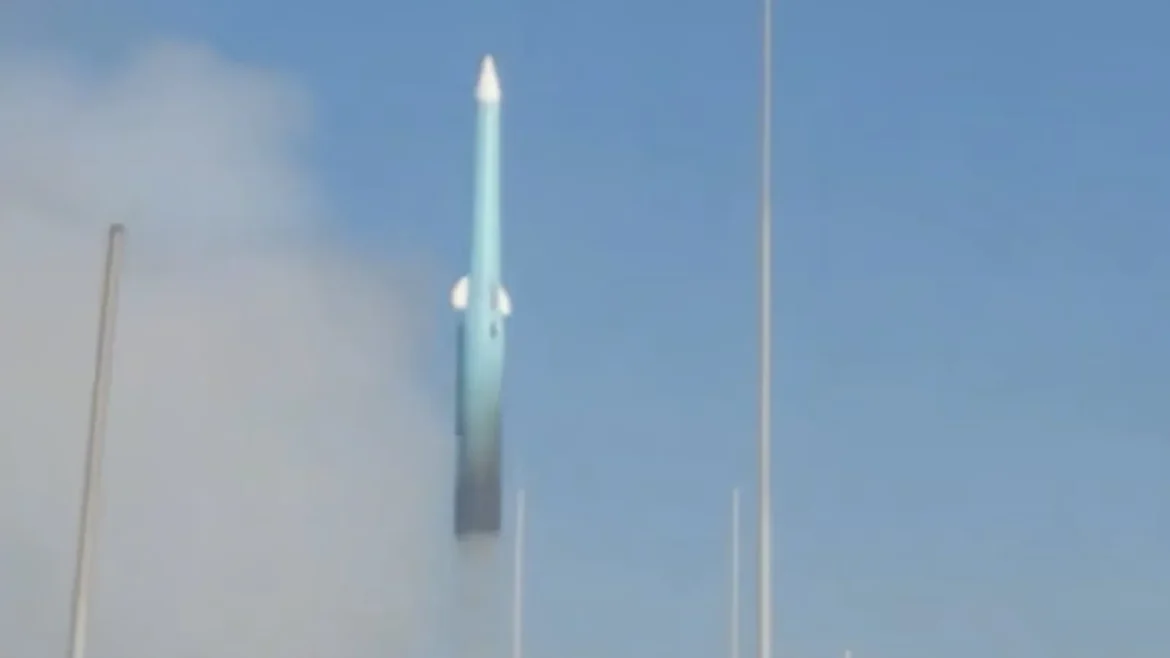
China Releases Footage of YJ-20 Hypersonic Missile Launch
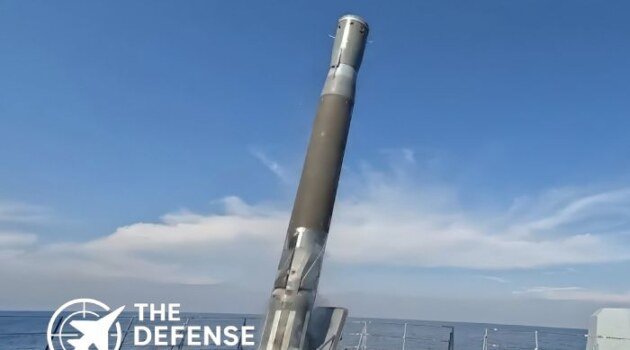
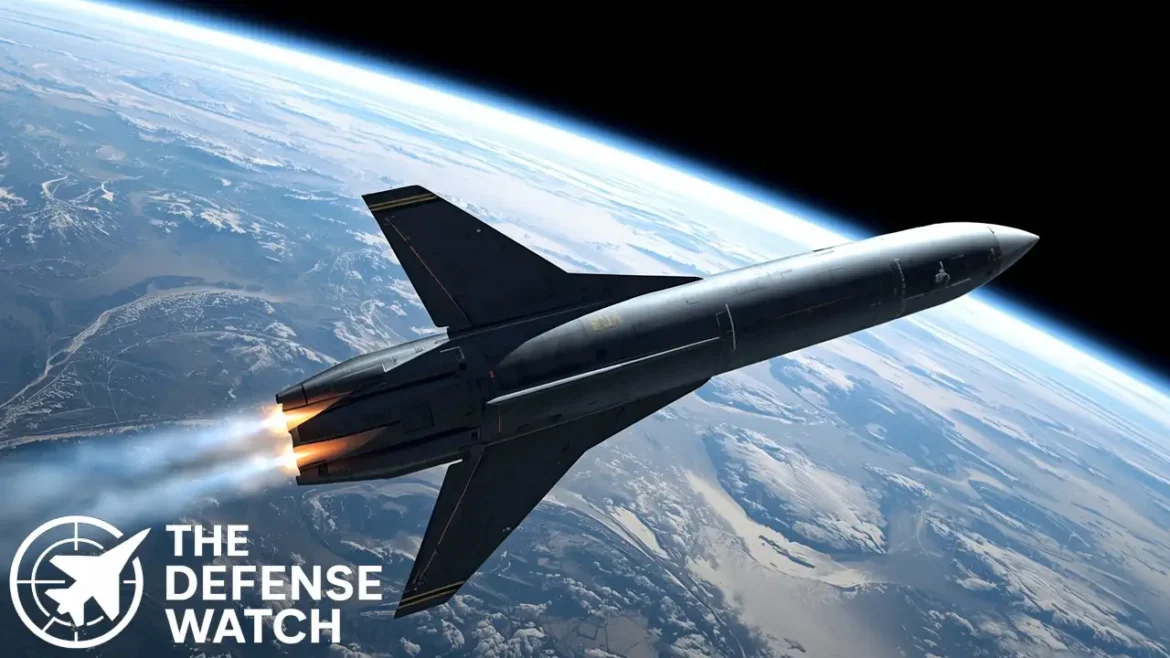
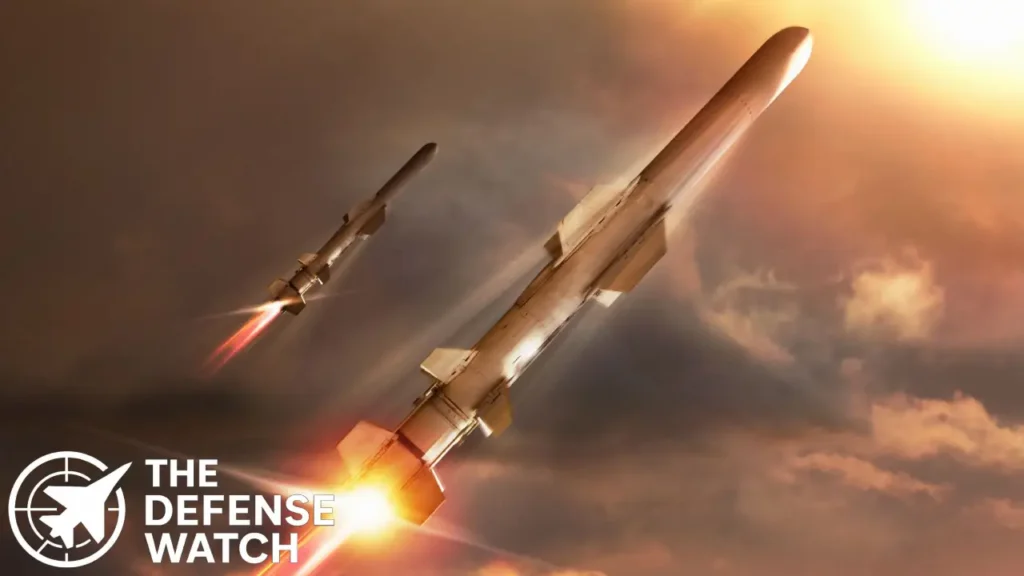
China has released its first known footage showing the launch of a YJ-20 hypersonic missile from a Type 055 guided-missile destroyer, marking a notable step in public disclosure of the PLA Navy’s advanced strike capabilities.
(adsbygoogle = window.adsbygoogle || []).push({});The video, published by Chinese state-linked media and reported by Defence Industry Europe, shows the missile being fired from a vertical launch system aboard a Type 055 warship during what appears to be a live-fire naval exercise. Chinese authorities did not provide technical details or the exact timing of the launch.
YJ-20 Missile and Type 055 Platform
The YJ-20 hypersonic missile is believed to be an anti-ship weapon designed for long-range maritime strike missions. Analysts widely assess the missile as capable of high-speed flight intended to complicate interception by modern air and missile defense systems.
The Type 055 destroyer, known in NATO reporting as the Renhai class, is the largest surface combatant currently in service with the PLA Navy. It displaces more than 12,000 tons and is equipped with a large vertical launch system that supports air defense, land attack, and anti-ship missiles.
- (adsbygoogle = window.adsbygoogle || []).push({});
Strategic Signaling and Naval Modernization
By releasing footage of a YJ-20 hypersonic missile launch, Beijing appears to be signaling confidence in its naval hypersonic weapons program. The move aligns with broader Chinese efforts to showcase advances in long-range precision strike systems as part of ongoing naval modernization.
U.S. and allied defense analysts have closely tracked the Type 055 class due to its potential role in carrier escort missions and long-range maritime operations. Public confirmation of a YJ-20 launch from the platform adds context to long-standing assessments of its offensive capabilities.
Regional and Global Implications
The appearance of the YJ-20 hypersonic missile on a frontline surface combatant underscores China’s focus on strengthening sea denial and power projection in contested maritime regions. It also highlights the growing role of hypersonic weapons in naval warfare planning.
While many technical aspects remain undisclosed, the footage itself marks a rare and deliberate public release related to China’s hypersonic anti-ship missile development.
- (adsbygoogle = window.adsbygoogle || []).push({});

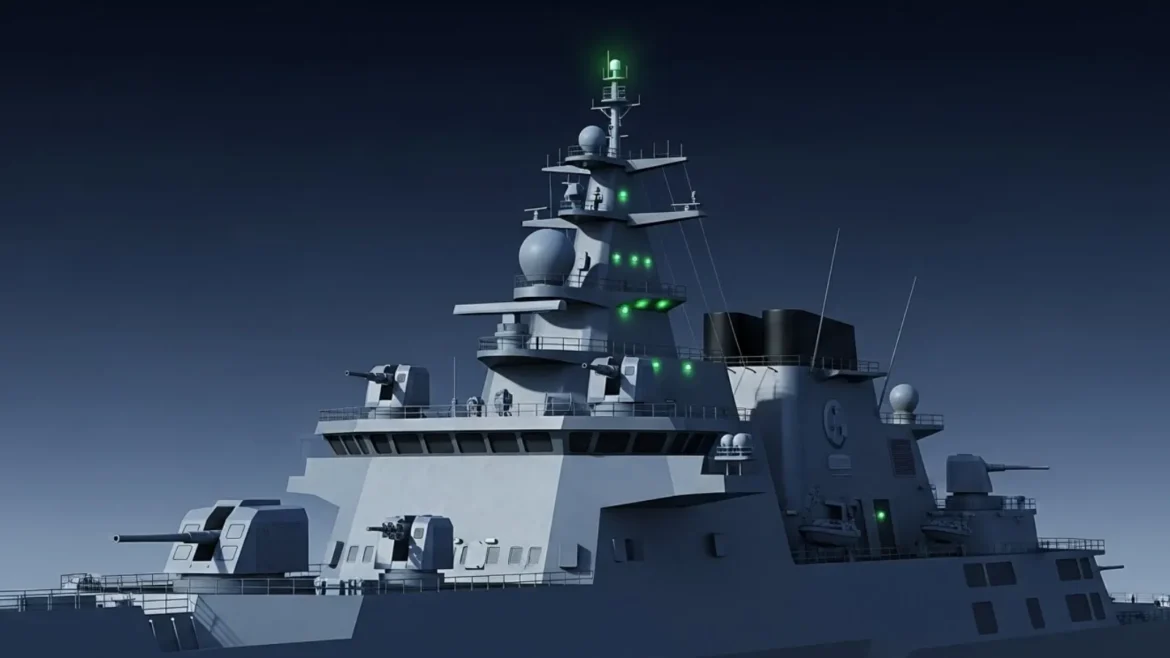
President Donald Trump has announced an ambitious naval expansion program centered on the development of the Trump class battleship, marking the most significant shift in U.S. surface combatant strategy in decades. The unveiling of this new warship class at Mar-a-Lago on December 22, 2025, introduces a massive 30,000 to 40,000-ton displacement vessel designed to carry cutting-edge weapons systems including hypersonic missiles, electromagnetic railguns, and directed energy weapons.

The first ship in the Trump class battleship fleet, designated USS Defiant, represents the cornerstone of what the administration calls the “Golden Fleet” initiative—a comprehensive naval modernization effort aimed at reasserting American sea power across global waters.
Naval Architecture and Displacement Specifications
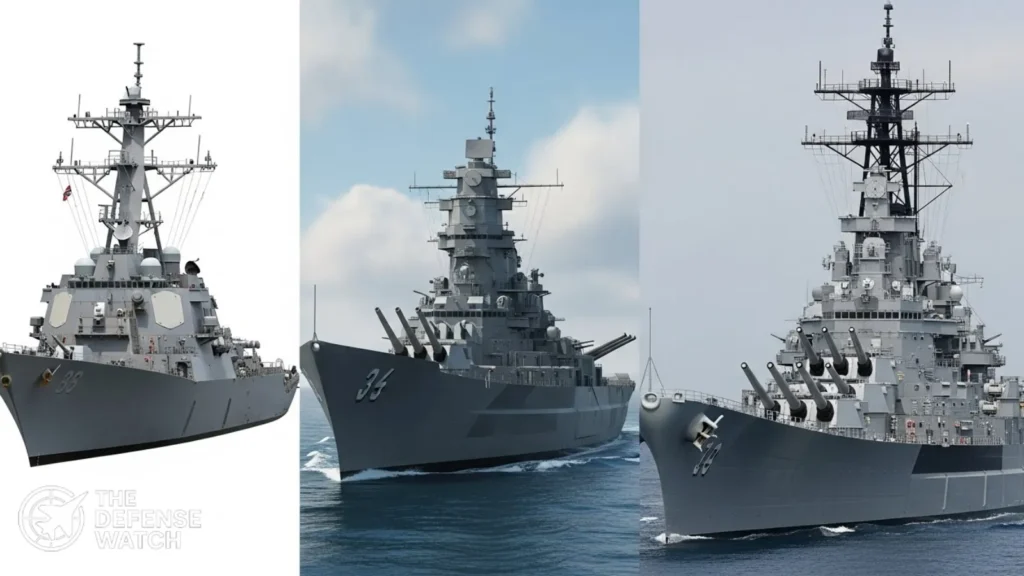
The Trump class battleship program features vessels with displacement ranging from 30,000 to 40,000 tons, making them approximately three times larger than the Navy’s current Arleigh Burke class destroyers. According to Navy officials, this substantial increase in hull size enables the integration of advanced weapons systems previously impossible on smaller platforms.
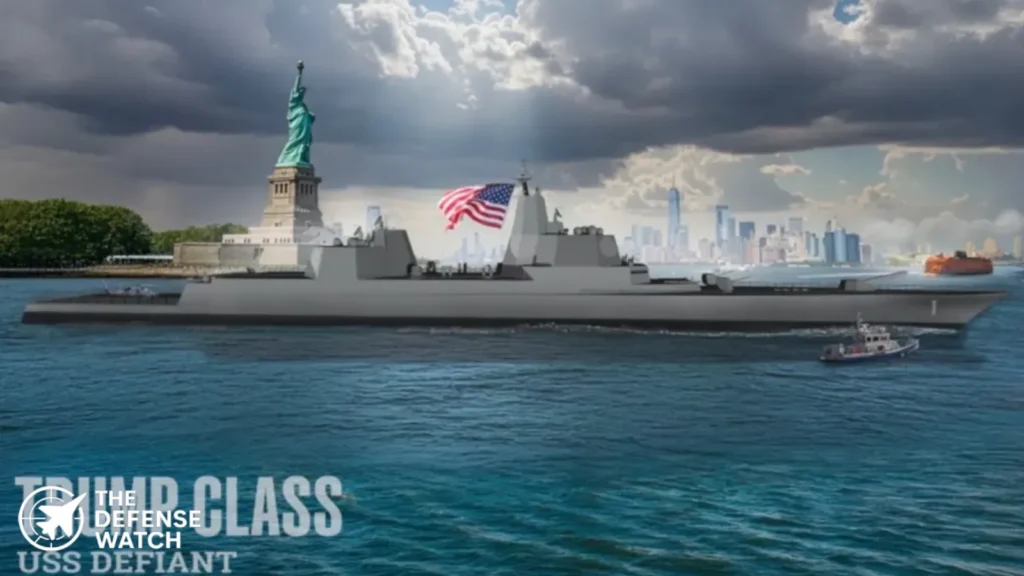
Secretary of the Navy John Phelan emphasized the strategic importance during the Mar-a-Lago announcement: “The USS Defiant battleship will inspire awe and reverence for the American flag whenever it pulls into a foreign port. It will be a source of pride for every American.”
The displacement specifications position these warships between modern destroyers and the historic Iowa class battleships, which displaced approximately 57,540 tons fully loaded. This sizing allows the Trump class battleship to balance firepower capacity with operational flexibility—a critical consideration for contemporary naval operations.
Advanced Weapons Systems Integration
Hypersonic Missile Capabilities
The Trump class battleship will carry the Intermediate-Range Conventional Prompt Strike (IRCPS) hypersonic missile system, representing a quantum leap in naval strike capabilities. These hypersonic weapons can travel at speeds exceeding Mach 5, making them extremely difficult for adversaries to intercept. The integration of IRCPS missiles addresses a critical capability gap as the Navy transitions away from legacy weapons systems.
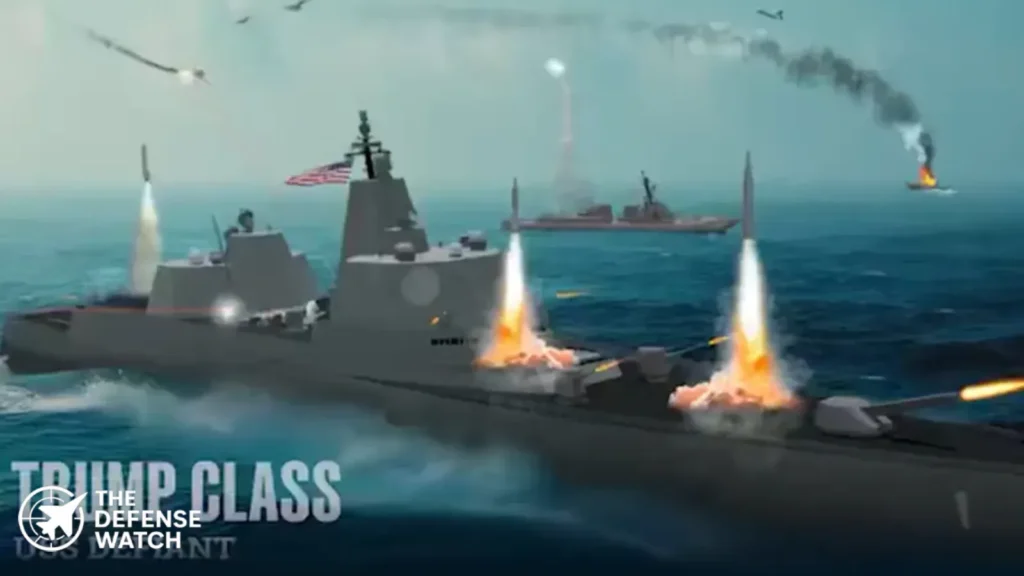
Renderings displayed at the announcement show the Trump class battleship firing IRCPS missiles alongside Tomahawk cruise missiles and Standard Missile family weapons, demonstrating the vessel’s multi-mission flexibility.
Electromagnetic Railgun Technology
One of the most revolutionary features of the Trump class battleship program is the incorporation of electromagnetic railgun systems. These advanced weapons use electromagnetic force to launch projectiles at hypersonic velocities without traditional propellant, offering unprecedented range and precision. The Navy has conducted extensive railgun testing over the past decade, and the Trump class battleship represents the first operational deployment platform for this technology.
Directed Energy Weapons
Laser directed energy weapons will provide the Trump class battleship with defensive and offensive capabilities against drones, small craft, and incoming missiles. These systems offer virtually unlimited magazines compared to conventional weapons, requiring only electrical power to operate—making them ideal for extended deployments.
Vertical Launch System Configuration
Renderings of the Trump class battleship reveal three massive Vertical Launch System (VLS) arrays: two positioned at the bow and one at the stern. This configuration maximizes missile capacity while maintaining balanced weight distribution throughout the hull. The exact cell count remains classified, but defense analysts estimate each Trump class battleship could carry between 300 to 400 VLS cells—substantially more than any current U.S. surface combatant.
This expanded VLS capacity directly addresses the Navy’s looming missile magazine deficit. The service plans to retire its Ticonderoga class cruisers by the end of the decade, removing 122 VLS cells per ship from the fleet. Additionally, four Ohio class guided missile submarines will be decommissioned before 2030, eliminating massive strike capacity. The Trump class battleship program aims to offset these losses while adding new capabilities.
Nuclear-Armed Sea-Launched Cruise Missiles
In a significant policy shift, the Trump class battleship will carry the nuclear-armed Sea-Launched Cruise Missile-Nuclear (SLCM-N) currently under development. This capability restores tactical nuclear strike options to surface ships—a capability the Navy lost when it retired nuclear Tomahawk cruise missiles in the early 2010s.
The SLCM-N integration reflects growing concerns about peer adversaries’ tactical nuclear weapons and the need for flexible deterrence options. Defense experts note this move could complicate adversary targeting calculus by distributing nuclear strike capabilities across more platforms.
Conventional Armament Systems
Beyond advanced weapons, renderings show the Trump class battleship equipped with multiple turreted 5-inch naval guns and additional conventional gun systems. These weapons provide the vessel with capabilities for naval surface fire support, anti-surface warfare, and close-in defense. The inclusion of substantial conventional firepower echoes the original battleship concept while incorporating modern fire control systems.
Recent operations in the Red Sea have demonstrated the continued relevance of naval guns for air defense against drone swarms and cruise missiles, validating the multi-layered armament approach of the Trump class battleship design.
Command, Control, and Artificial Intelligence
The Trump class battleship will function as a command and control platform capable of directing both crewed and uncrewed systems. This network-centric warfare approach allows the vessels to serve as quarterback platforms for distributed naval operations—coordinating actions across carrier strike groups, surface action groups, and unmanned maritime systems.
Artificial intelligence capabilities integrated into the Trump class battleship will enable enhanced decision-making, threat assessment, and weapons employment. President Trump specifically mentioned AI-driven systems during the announcement, though technical details remain classified.
Chief of Naval Operations Admiral Daryl Caudle stated: “As we forge the future of our Navy’s Fleet, we need a larger surface combatant and the Trump class battleships meet that requirement. We will ensure continuous improvement, intellectually honest assessments about the requirement to effectively deter and win in the 2030s and beyond.”
Production Strategy and Shipyard Selection
President Trump emphasized that Trump class battleship construction will occur entirely within American shipyards, supporting domestic shipbuilding infrastructure and employment. The administration indicated involvement of both traditional defense contractors and “new, non-traditional defense partners” in the program.
Secretary of War Pete Hegseth highlighted the industrial base implications: “New and better ships will provide that deterrent today and for generations to come. American strength is back on the world stage, and the announcement of the Golden Fleet, anchored by new battleships, the biggest and most lethal ever, marks a generational commitment to American sea power.”
The Navy plans to leverage approximately 1,000 suppliers across nearly every state for Trump class battleship production. This distributed manufacturing approach aims to build political support while reinvigorating America’s naval shipbuilding capacity, which has atrophied significantly since the Cold War era.
Foreign-owned but U.S.-based shipyards may also participate in the Trump class battleship program, addressing concerns about limited domestic production capacity. This approach mirrors strategies used by other nations to accelerate naval expansion while maintaining domestic economic benefits.
Fleet Composition and Acquisition Timeline
The initial Trump class battleship procurement focuses on two vessels—USS Defiant and an unnamed sister ship—with plans to expand the class to ten hulls. Long-term projections suggest the fleet could eventually grow to 20-25 Trump class battleships depending on budgetary conditions and operational requirements.
No specific timeline for USS Defiant‘s launch or commissioning was provided during the announcement. Historical naval shipbuilding timelines suggest the first Trump class battleship could take 5-7 years from design finalization to initial operational capability, though the administration may pursue accelerated schedules.
The Trump class battleship program represents the high-end component of a planned high-low naval force structure. This approach pairs sophisticated, heavily-armed capital ships with more numerous, less expensive platforms including the future FF(X) frigates and uncrewed surface vessels.
Cost Considerations and Budgetary Impact
Neither construction costs nor lifecycle expenses for the Trump class battleship were disclosed during the announcement. However, defense budget analysts estimate vessels of this size and capability could cost $4-6 billion per hull—significantly more than Arleigh Burke class destroyers ($2.2 billion) but less than Gerald R. Ford class aircraft carriers ($13 billion).
Annual operating costs for a Trump class battleship could reach $150-200 million, including crew salaries, maintenance, fuel, and ammunition. These expenses will compete with other Navy priorities in constrained budget environments, raising questions about program sustainability through multiple administrations.
The Navy’s recent cancellation of the troubled Constellation class frigate program potentially frees resources for Trump class battleship development. However, critics argue the service needs greater hull numbers rather than small quantities of extremely capable ships.
Historical Context and Naming Precedent
The Trump class battleship designation represents the first time a U.S. Navy ship class has been named after a sitting president. Historically, the service has avoided such naming conventions to maintain political neutrality and honor deceased leaders and historical figures.
Additionally, the lead ship USS Defiant not sharing the class name (USS Trump or USS Donald J. Trump) breaks standard Navy nomenclature practices. This unusual approach may reflect political sensitivities while still associating the vessels with the president who authorized their development.
The last American battleships, the Iowa class vessels USS Missouri and USS Wisconsin, were decommissioned between 1990 and 1992 after extensive upgrades during the 1980s Reagan administration buildup. Those ships served primarily as cruise missile platforms and naval gunfire support vessels by the end of their service lives.
Strategic Rationale and Operational Concepts
The Trump class battleship program addresses several strategic challenges facing the U.S. Navy. First, the vessels provide significant firepower concentration that can be rapidly deployed to crisis regions. Second, they offer visible symbols of American power during peacetime port visits and exercises. Third, they create multiple high-value targets that complicate adversary targeting priorities.
Secretary Phelan noted that future presidents will ask two questions during crises: “Where are the carriers and where are the battleships?” This framing positions Trump class battleships as complementary to carrier strike groups rather than replacements.
Operationally, these vessels could serve as centerpieces of Surface Action Groups operating independently of carrier strike groups. This distributed lethality approach forces adversaries to allocate resources against multiple threat axes rather than concentrating forces against carrier groups.
The command and control capabilities built into the Trump class battleship enable coordination of distributed naval forces across vast ocean areas. These ships could orchestrate actions by surface combatants, submarines, maritime patrol aircraft, and uncrewed systems in contested environments.
Arsenal Ship Concept Evolution
The Trump class battleship program shares conceptual similarities with “arsenal ship” proposals dating to the 1990s. These earlier concepts envisioned large, minimally-crewed vessels carrying hundreds of VLS cells to provide massive firepower at lower cost than traditional combatants.
Defense Advanced Research Projects Agency (DARPA) explored arsenal ship designs extensively before the concept was shelved due to concerns about single-point-of-failure vulnerabilities and crew reduction limits. The Trump class battleship essentially revives this concept while adding substantial conventional capabilities and crew complements.
Huntington Ingalls Industries proposed a San Antonio class amphibious ship derivative in the early 2010s optimized for ballistic missile defense with 288 VLS cells. That concept never advanced beyond initial design studies, but it demonstrated industry interest in large missile-carrying platforms.
The Trump class battleship’s integration of railguns, lasers, and advanced sensors distinguishes it from purely missile-focused arsenal ship concepts. This multi-mission capability may address earlier criticisms about vulnerability and operational flexibility.
Comparison with Peer Adversary Capabilities
China and Russia have both pursued large surface combatants with extensive missile armaments in recent years. China’s Type 055 guided missile cruisers displace approximately 13,000 tons and carry 112 VLS cells, while Russia’s Admiral Gorshkov class frigates and Admiral Nakhimov class battle cruisers feature similar heavy armament approaches.
The Trump class battleship significantly exceeds these foreign designs in displacement and projected weapons capacity. This capability overmatch aims to maintain American naval superiority as peer competitors expand their own fleets.
Russian Yasen class submarines, which carry extensive cruise missile armaments, prompted U.S. military officials to publicly acknowledge they are “on par with ours” in capability. The Trump class battleship program partly responds to these advancing adversary capabilities by providing distributed strike options that complement submarine forces.
Technical and Programmatic Risks
Large naval shipbuilding programs historically encounter significant challenges including cost overruns, schedule delays, and performance shortfalls. The Navy’s Zumwalt class stealth destroyer program, initially planned for 32 ships, was truncated to just three vessels after costs ballooned and technical problems emerged.
The recently cancelled Constellation class frigate program demonstrates ongoing difficulties in naval shipbuilding. That program experienced weight growth exceeding 759 metric tons, forcing capability reductions and threatening the entire effort before its termination.
Integrating multiple developmental technologies—hypersonic missiles, electromagnetic railguns, directed energy weapons, advanced AI systems—into a single platform compounds technical risk. Delays or failures in any major system could cascade throughout the Trump class battleship program.
The Navy’s shipbuilding industrial base has struggled to meet current production demands, raising concerns about capacity for additional major programs. Workforce shortages, aging infrastructure, and supply chain vulnerabilities all threaten program timelines.
Alternative Approaches and Criticisms
Defense analysts have questioned whether the Trump class battleship program represents optimal resource allocation given the Navy’s hull number shortfalls. The service projects needing approximately 381 ships to meet global commitments, but currently operates around 296 vessels.
Critics argue that limited resources would be better invested in larger numbers of less capable platforms that provide distributed presence across multiple theaters simultaneously. A single Trump class battleship can only operate in one location, while several smaller combatants enable multiple simultaneous missions.
The recent decision to deliver the first FF(X) frigates without VLS cells—prioritizing rapid production over capability—stands in stark contrast to the Trump class battleship program. This divergence raises questions about strategic coherence in naval force structure planning.
Uncrewed surface vessels offer potential alternatives for distributed missile capacity at substantially lower cost than manned warships. The Navy is developing several classes of large uncrewed vessels that could carry VLS cells at a fraction of Trump class battleship costs.
Congressional Oversight and Political Dynamics
The Trump class battleship program will face extensive Congressional scrutiny during authorization and appropriation processes. Lawmakers will demand detailed cost estimates, capability assessments, and programmatic justifications before approving funding.
Geographic distribution of shipbuilding contracts typically drives Congressional support for major naval programs. The administration’s emphasis on utilizing suppliers across “nearly every state” suggests awareness of political realities surrounding defense procurement.
Naming the class after a sitting president may complicate Congressional dynamics depending on partisan alignments. Supporters will champion the vessels as symbols of American strength while critics may oppose them as politically motivated vanity projects.
The program’s sustainability across multiple administrations remains uncertain. Large naval programs typically require 15-20 years from conception to full operational capability, spanning several presidential terms with potentially shifting priorities.
Analysis: Strategic Implications and Future Outlook
The Trump class battleship announcement represents a bold departure from recent Navy force structure planning, which emphasized distributed operations using numerous smaller platforms. This shift toward concentrated firepower on large hulls reflects evolving threat perceptions and operational concepts.
The massive VLS capacity addresses near-term missile magazine deficits as the Navy retires Ticonderoga class cruisers and Ohio class guided missile submarines. However, the relatively small planned procurement of 10-25 ships may inadequately compensate for those losses when distributed across global theaters.
Integration of developmental technologies creates both opportunities and risks. Successful deployment of railguns and directed energy weapons would provide revolutionary capabilities, while technical failures could undermine the entire program’s viability.
The emphasis on domestic shipbuilding and broad supplier participation could help reinvigorate America’s naval industrial base—a strategic necessity given competition with China’s massive shipbuilding capacity. However, execution risks remain substantial given the industry’s current constraints.
Ultimately, the Trump class battleship program’s success will depend on disciplined cost control, realistic technical expectations, and sustained political support across multiple budget cycles. The Navy’s troubled recent shipbuilding history provides sobering lessons about the challenges ahead.
FAQs
The Trump class battleship will displace 30,000 to 40,000 tons, making it approximately three times larger than Arleigh Burke class destroyers and comparable in size to World War II heavy cruisers.
These vessels will be armed with hypersonic missiles (IRCPS), electromagnetic railguns, laser directed energy weapons, nuclear-armed cruise missiles (SLCM-N), conventional missiles in extensive VLS arrays, and multiple naval guns.
No specific timeline has been announced, but major warship programs typically require 5-7 years from design finalization to initial operational capability.
Official cost estimates have not been released, but defense analysts project $4-6 billion per ship based on size and capability requirements.
The Trump class battleship program addresses missile capacity shortfalls from retiring cruisers and guided missile submarines while providing concentrated firepower for deterrence and power projection missions.
The Navy plans to initially build ten ships, with potential expansion to 20-25 vessels depending on budgetary conditions and operational requirements.
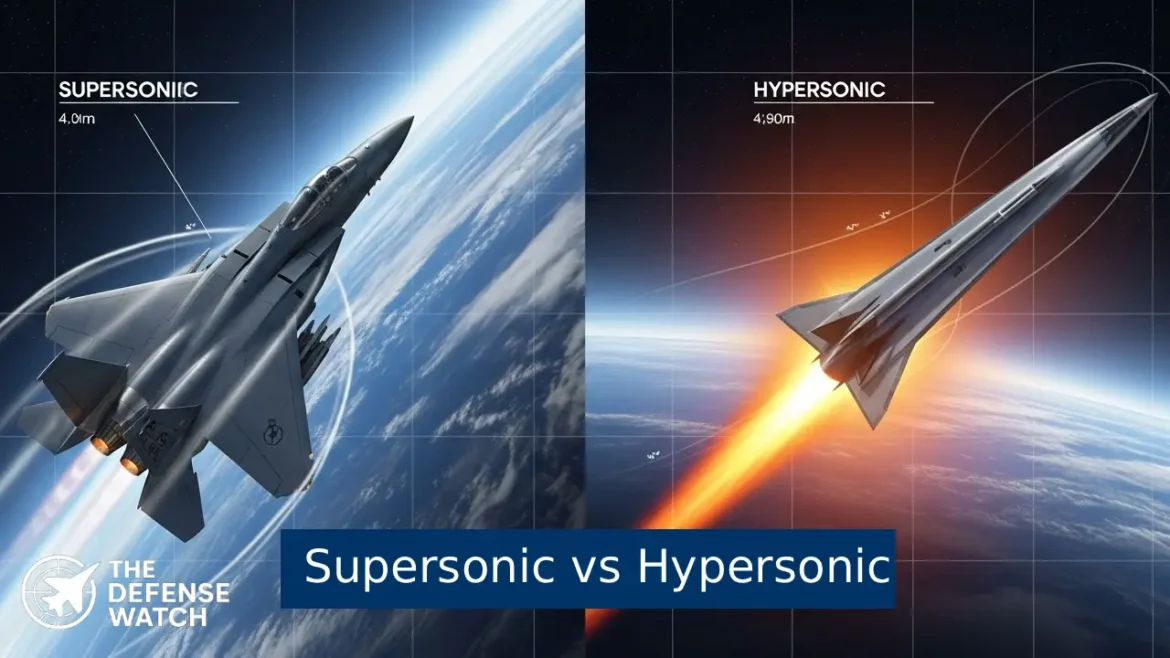
Supersonic vs Hypersonic: Understanding Speed, Missiles, Technology, and Modern Aircraft
The debate over supersonic vs hypersonic systems has become central to today’s defense landscape as militaries race to field faster, more maneuverable, and harder-to-intercept weapons. While supersonic platforms have been operational for decades, hypersonic missiles, hypersonic glide vehicles (HGVs), and emerging hypersonic aircraft represent the cutting edge of strategic competition among the United States, China, and Russia.
What Defines Supersonic vs Hypersonic Speeds?
Supersonic Speed (Mach 1–5)
- Travels faster than the speed of sound (approx. 343 m/s at sea level)
- Widely used in fighter aircraft, cruise missiles, and interceptors
- Established technologies with predictable aerodynamic behavior
Examples of active supersonic systems:
- U.S. AGM-86C Conventional Air-Launched Cruise Missile (CALCM)
- Russia’s P-800 Oniks anti-ship missile
- India/Russia BrahMos cruise missile
- F-16, F-15, Rafale, Su-35, and Eurofighter Typhoon (supersonic fighters)
Hypersonic Speed (Above Mach 5)
- Extremely high aerodynamic heating
- Requires advanced materials and thermal protection
- Maneuverability increases complexity for missile defense
- Relatively new and still maturing
- Used for strategic-range strike, anti-ship missions, and potential ISR/strike aircraft concepts
Examples of active hypersonic systems (as of 2025):
- Russia: Avangard HGV (operational), Kinzhal (limited hypersonic performance), 3M22 Zircon (in service with Russian Navy)
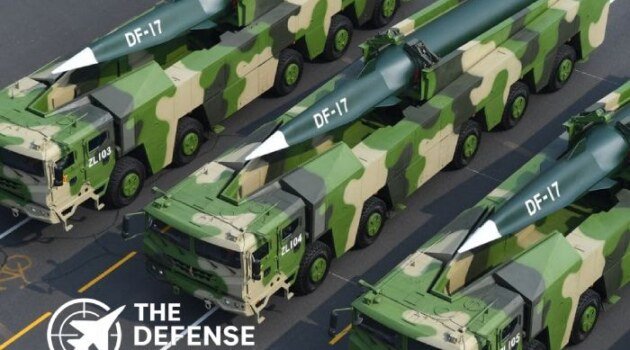
- China: DF-17 HGV-equipped ballistic missile (operational)
- U.S.: No fully deployed hypersonic weapons yet; programs advancing (ARRW cancelled after tests, HACM under development, Glide Phase Interceptor in progress)
Hypersonic Missiles vs Supersonic Missiles
Supersonic Missiles: Mature, Widely Fielded, Highly Reliable
Supersonic missiles constitute the backbone of global strike arsenals. Their speed reduces exposure time to enemy air defense systems while maintaining affordable, scalable manufacturing.
Common roles include:
- Anti-ship strike
- Land-attack precision strike
- Interception and air-defense missions
Many navies and air forces rely on supersonic anti-ship missiles such as BrahMos, Harpoon (high subsonic), RGM-84 variants, and Oniks. Their predictability and cost-effectiveness make them ideal for mass deployment.
Hypersonic Missiles: Maneuverability, Speed, and Anti-Ship Breakthrough
Hypersonic missiles promise:
- Reduced defender reaction time
- High survivability against interceptors
- Ability to maneuver unpredictably
Two main types exist:
- Hypersonic Glide Vehicles (HGVs)
- Launched via ballistic missile booster
- Glide at hypersonic speed with unpredictable flight paths
- Examples: Russia Avangard, China DF-17
- Hypersonic Cruise Missiles (HCMs)
- Scramjet-powered
- Maintain sustained Mach 5+ in atmosphere
- Examples: Russia Zircon; U.S. HACM in development
Operational deployment remains limited due to:
- Thermal protection challenges
- Materials science constraints
- High cost
- Launch platform limitations
Hypersonic Aircraft vs Supersonic Aircraft
Supersonic Aircraft: Global Standard for Combat Aviation
Supersonic jets remain the world’s primary combat aircraft.
Advantages include:
- Proven propulsion
- Broad industrial base
- High maneuverability
- Compatibility with existing infrastructure
Examples:
- F-22, F-35 (supercruise capability), F-15EX
- Su-57, Su-35
- J-20 Mighty Dragon
Hypersonic Aircraft: Still Experimental
As of 2025, no operational hypersonic aircraft are in service.
Key U.S. and Chinese programs under research:
- U.S. DARPA HTV-2 (test program)
- Lockheed Martin SR-72 concept (ISR/strike concept)
- China’s Starry Sky-2 test vehicle
Technical barriers include:
- Scramjet reliability
- Reentry thermal loads
- Sensor survivability
- Human survivability at high thermal stress
Hypersonic aircraft remain long-term strategic projects rather than near-term operational systems.
Why Hypersonic Systems Are Strategically Important
Reduced Reaction Time
Hypersonic weapons can reduce defender response windows to a few minutes, challenging existing missile defenses.
Maneuverability
Unlike traditional ballistic missiles, HGVs can alter course mid-flight, complicating interception.
Long-Range Precision Strike
Hypersonics can threaten high-value, time-sensitive, or heavily defended targets.
Analysis: The Strategic Race Is About More Than Speed
The U.S., China, and Russia treat hypersonics as part of a broader competition in sensor networks, missile defense, command-and-control, and space-based tracking. The race is less about raw velocity and more about integrated ecosystems:
- Early-warning satellites
- Over-the-horizon radars
- Glide-phase interceptors
- AI-enabled targeting
- Future scramjet-enabled strike aircraft
Whichever nation pairs hypersonic offense with hypersonic defense first will gain significant strategic advantage.
FAQs
No. They are difficult to intercept, but the U.S. and partners are developing glide-phase interceptors, next-gen radars, and space-based tracking systems.
Not yet. Major programs are advancing, but no weapon has reached full operational status as of 2025.
No. Supersonic missiles and aircraft remain widely used, affordable, and integral to modern militaries.
Russia and China have operational HGV systems. The United States is developing its own but has not deployed them.
Any system traveling faster than Mach 5—approximately 3,836 mph (6,174 km/h).
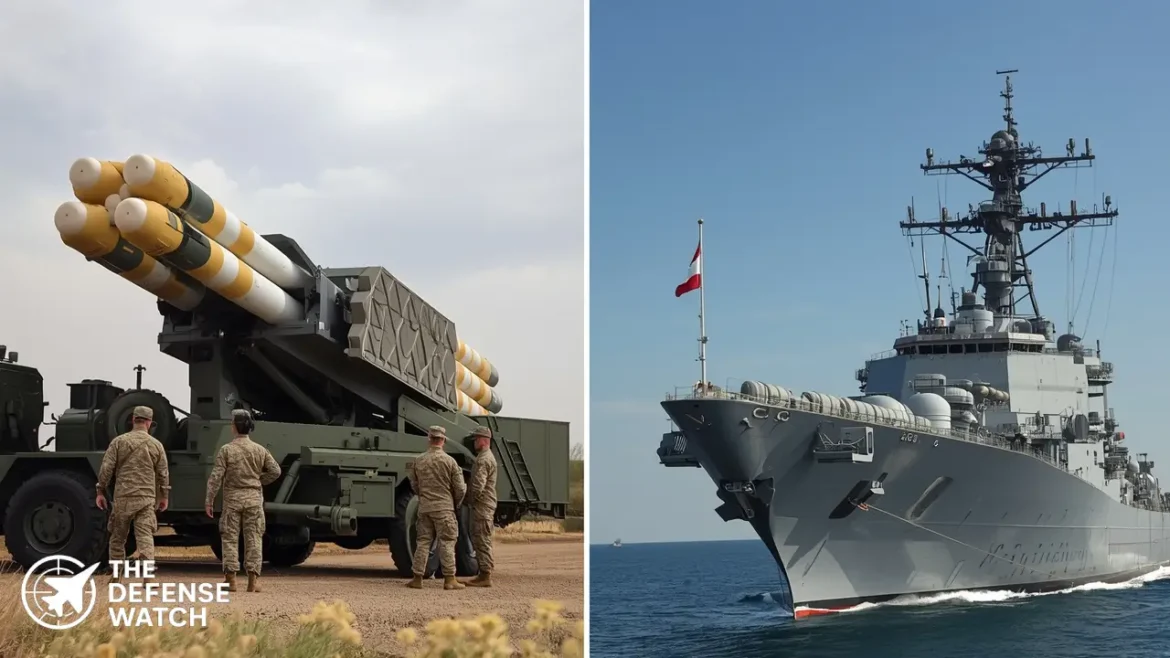
U.S. Army Fields First Operational Hypersonic Battery
The United States military is advancing into a new era of long-range precision strike with hypersonic glide vehicles now entering operational service. The U.S. Army’s Long-Range Hypersonic Weapon, officially designated Dark Eagle in April 2025, represents America’s entry into a hypersonic arms race where adversaries China and Russia have maintained a multi-year lead.
The Army confirmed that the first full battery of Dark Eagle missiles will be operational in 2025, following the successful completion of an end-to-end flight test in December 2024 at Cape Canaveral. This milestone marks the culmination of a development program plagued by technical setbacks, funding challenges, and schedule delays that pushed initial fielding from fiscal year 2023 to late 2025.
The Dark Eagle system consists of four Transporter Erector Launchers mounted on modified M870A4 trailers, each carrying two missiles for a total battery capacity of eight rounds. Designed as a land-based, truck-launched platform, it combines a two-stage solid-fueled booster system with the Common Hypersonic Glide Body (C-HGB), enabling the missile to travel at speeds exceeding Mach 5 and strike targets over 1,725 miles (2,775 km) away.
How Hypersonic Glide Vehicles Function
Hypersonic glide vehicles represent a distinct category of weaponry that exploits the boundary between atmospheric and space-based flight. Unlike traditional ballistic missiles that follow predictable parabolic trajectories, or cruise missiles that fly at constant altitudes, hypersonic glide vehicles combine elements of both technologies while introducing unprecedented maneuverability.
The operational profile begins with a rocket booster accelerating the glide body to hypersonic velocities—speeds exceeding Mach 5, or five times the speed of sound (approximately 3,800 miles per hour). Once the booster reaches altitude and speed, it releases the glide body, which then maneuvers at hypersonic speeds toward its target. The glide vehicle then descends through the upper atmosphere, generating lift from its specially designed aerodynamic surfaces.
This flight regime presents extreme engineering challenges. At hypersonic speeds, friction with atmospheric molecules generates temperatures exceeding 2,000 degrees Fahrenheit, creating plasma sheaths around the vehicle that can disrupt communications and electronics. The shockwaves produced by the craft occur much closer to the vehicle than in supersonic flight, requiring innovative thermal protection systems and materials capable of withstanding sustained heat stress while maintaining structural integrity.
The strategic advantage lies in the glide vehicle’s ability to maneuver unpredictably during its terminal phase. An HGV’s ability to maneuver as it descends into thicker and thicker air allows it to be both more accurate and unpredictable. When the vehicle’s wings begin generating lift as it reaches the upper wisps of the atmosphere, it gains the ability to roll and maneuver. This capability complicates defensive calculations, as the weapon can alter its trajectory to engage different targets or evade interceptor missiles.
Global Hypersonic Programs Transform Strategic Balance
The development and deployment of hypersonic glide vehicles has emerged as a defining competition among major military powers, with China and Russia establishing operational capabilities years ahead of the United States.
Chinese Hypersonic Arsenal
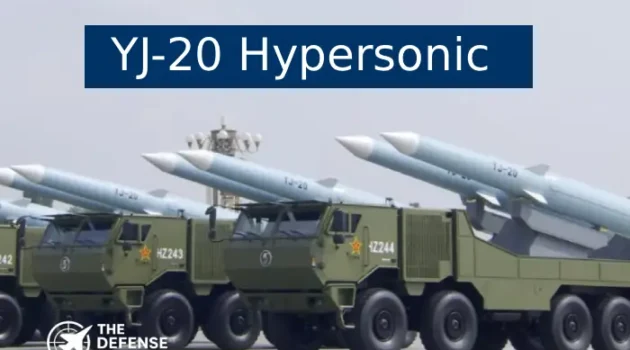
China has aggressively pursued hypersonic weapons development, integrating these systems across multiple service branches. China’s military parade in September showed off a hypersonic “carrier killer” ballistic missile built to attack high-value naval targets. The display included the YJ-17, YJ-19, and YJ-20 systems—a clear signal of Beijing’s intent to hold U.S. carrier strike groups at risk in any Pacific conflict.
The DF-17 medium-range ballistic missile, first unveiled publicly in 2019, represents China’s most mature operational hypersonic system. Boasting the ability to fly at speeds in excess of Mach 5, the DF-17 is boosted into the atmosphere by a rocket before separating and gliding at hypersonic speeds toward its target. With an estimated range of 1,800 to 2,500 kilometers, the DF-17 poses a considerable threat to regional security.
Beyond theater-range systems, China has tested fractional orbital bombardment systems paired with hypersonic glide vehicles—a combination that would enable attacks from unpredictable trajectories, including approaches over the South Pole that circumvent U.S. missile defense radars optimized for polar approaches.
Russian Operational Systems
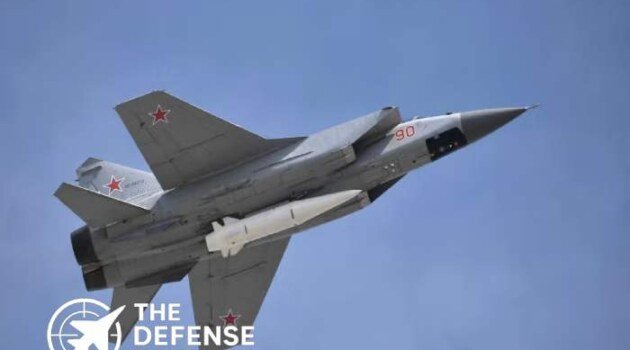
Russia has fielded multiple operational hypersonic weapons systems and employed them in combat operations. The Kh-47M2 Kinzhal, an air-launched hypersonic missile carried by modified MiG-31K interceptors and Tu-22M3 bombers, entered service in 2017. Russia fields a range of hypersonic systems, for example, the sea-launched Zircon (often reported to be traveling at speeds near Mach 8–9) and the Kh-47M2 Kinzhal (air-launched and reported to travel at speeds up to Mach 10), as well as strategic boost-glide programs such as Avangard.
The 3M22 Zircon sea-launched hypersonic cruise missile, deployed aboard surface combatants and submarines, provides Russian naval forces with anti-ship and land-attack capabilities designed to overwhelm Western air defenses. The Avangard strategic boost-glide system, mounted atop intercontinental ballistic missiles, represents Moscow’s answer to U.S. missile defense systems, capable of maneuvering during its terminal phase while traveling at speeds reportedly approaching Mach 27.
Russia has employed hypersonic weapons operationally during its invasion of Ukraine, though with mixed results. Ukrainian forces successfully intercepted a Kinzhal missile using U.S.-provided Patriot air defense systems in May 2023, demonstrating that hypersonic weapons are not invulnerable despite their extreme speed.
U.S. Navy Prepares Sea-Based Hypersonic Strike
While the Army moves toward operational deployment with Dark Eagle, the U.S. Navy is pursuing parallel development of the Conventional Prompt Strike system, which shares the Common Hypersonic Glide Body with the Army’s program but integrates it onto naval platforms.
The lead ship for CPS integration is USS Zumwalt (DDG-1000), the Navy’s most advanced stealth destroyer. USS Zumwalt (DDG-1000) is back in the water after the installation of four missile tubes that will eventually carry the Conventional Prompt Strike weapon. The destroyer underwent extensive modifications at HII’s Ingalls Shipbuilding facility in Pascagoula, Mississippi, where workers removed the ship’s problematic 155mm Advanced Gun System and installed four large-diameter vertical launch tubes.
Each 87-inch diameter tube will accommodate three CPS missiles in a triple-pack configuration, giving each Zumwalt-class destroyer a maximum load of 12 hypersonic weapons. The Navy wants to start testing its Conventional Prompt Strike missile system aboard guided-missile destroyer USS Zumwalt (DG-1000) in 2027 or 2028, with operational deployment targeted for 2026-2027.
The Navy also plans to integrate CPS onto Virginia-class attack submarines equipped with the Virginia Payload Module. This submarine-launched variant would provide a covert hypersonic strike capability, enabling attacks without warning from submarines positioned off enemy coastlines. Initial submarine integration is scheduled for 2028, contingent on the delivery timeline for Block V Virginia-class boats.
Strategic Implications for Naval Warfare
The integration of hypersonic weapons onto surface combatants and submarines fundamentally alters naval strike warfare. The warships will be armed with a hypersonic glide vehicle released from a weapon known as Conventional Prompt Strike, a long range precision missile intended to hold any target in the world at risk of an ultra-long-range, high-speed missile attack.
This capability addresses a critical gap in the Navy’s arsenal. Traditional Tomahawk cruise missiles, while accurate and proven, fly at subsonic speeds and can be intercepted by modern air defense systems. Hypersonic weapons compress decision timelines for adversaries, potentially arriving at their targets before defenders can react effectively. For high-value, time-sensitive targets—such as mobile ballistic missile launchers, command posts, or surface action groups—the speed advantage of hypersonic weapons could prove decisive.
The stealth characteristics of the Zumwalt class compound this advantage. The destroyer’s tumblehome hull design and composite superstructure produce a radar signature comparable to a small fishing vessel, enabling the ship to approach contested waters undetected before launching hypersonic strikes.
Technical Challenges and Cost Constraints
Despite recent successes, U.S. hypersonic weapons programs continue to grapple with significant technical and fiscal challenges that threaten to constrain their operational impact.
Testing Setbacks and Reliability Concerns
The path to operational fielding has been marked by numerous test failures and delays. The first test of the AUR, conducted in June 2022, resulted in failure. Subsequent flight tests, including those planned for March and September 2023, did not occur due to failed preflight checks. Army officials attributed these problems to mechanical engineering issues with the Lockheed Martin-produced launcher rather than the missile itself, but the pattern of delays fueled concerns about industrial base capacity and technical maturity.
Even after successful flight tests in June and December 2024, questions about operational effectiveness persist. The 2024 report from the Director, Operational Test & Evaluation (DOT&E) delivered a stark verdict: “There is not enough data available to assess the operational effectiveness, lethality, suitability, and survivability of the LRHW system.” This assessment indicates that while the Army has proven the missile can fly, critical questions about its ability to reliably destroy intended targets under combat conditions remain unanswered.
Prohibitive Unit Costs
The economics of hypersonic weapons pose serious challenges for large-scale procurement and deployment. A 2023 Congressional Budget Office study estimated that a missile similar to the LRHW would cost approximately $41 million. For context, this is significantly more than a Trident II D5 submarine-launched ballistic missile, which costs around $31 million.
Program costs have also experienced significant growth. According to a June 2025 Government Accountability Office (GAO) assessment, the estimated cost of fielding just the first prototype battery rose by $150 million in a single year, from $2.54 billion in January 2024 to $2.69 billion in January 2025. The Army attributed this increase to rising missile costs and expenses associated with investigating and correcting earlier failures.
These costs create difficult tradeoffs for military planners. At $41 million per missile, a single eight-round Dark Eagle battery represents a $328 million investment in munitions alone, not counting the launcher systems, fire control equipment, training, and logistics support. Army Chief of Staff General Randy George pointedly stated the service was preparing to test “long-range missiles that are a tenth of the price.” This signals recognition that Dark Eagle will likely remain a niche capability reserved for the highest-value targets rather than a weapon available in large quantities.
Multi-Domain Task Force Employment Concept
The Army is fielding Dark Eagle to its Multi-Domain Task Forces, specialized units designed to conduct integrated operations across land, sea, air, space, and cyberspace domains. The 5th Battalion, 3rd Field Artillery Regiment at Joint Base Lewis-McChord, WA, was designated to operate the first battery of eight LRHW missiles. The battalion, also referred to as the Long-Range Fires Battalion, is part of the Army’s 1st Multi-Domain Task Force (MDTF), a unit in the Indo-Pacific-oriented I Corps.
This organizational structure reflects the weapon’s strategic rather than tactical role. MDTFs operate at the theater level, providing joint force commanders with long-range fires capabilities to shape the operational environment before major combat operations begin. In an Indo-Pacific conflict scenario, Dark Eagle batteries could engage targets across the first island chain, suppressing enemy air defenses, striking command nodes, or destroying ballistic missile launchers before they can fire.
Forward Deployment Considerations
The Army has demonstrated interest in forward-deploying Dark Eagle systems to allied nations in critical theaters. In July, the U.S. Army deployed the LRHW outside the continental U.S. for the first time, with two missile launchers participating in Exercise Talisman Sabre 2025 in Australia. This deployment, involving the Hawaii-based Third Multi-Domain Task Force, validated the system’s transportability and ability to operate in expeditionary environments.
Potential basing locations include Japan, where U.S. forces already maintain substantial presence, and Australia, which has signaled willingness to host enhanced American military capabilities. However, forward deployment of hypersonic weapons carries significant diplomatic implications. Host nations must weigh the deterrent value of these systems against the risk of becoming priority targets for adversary strikes in a conflict.
The mobile nature of Dark Eagle provides some mitigation for these concerns. Mounted on standard military trucks, the launchers can relocate rapidly after firing, complicating adversary targeting. This “shoot and scoot” capability—proven effective with rocket artillery in Ukraine—enhances survivability compared to fixed installations.
Budget Reductions Signal Strategic Reassessment
Despite the urgency surrounding hypersonic weapons development, Pentagon funding for these programs has declined substantially. The Pentagon’s FY2026 budget request for hypersonic research was $3.9 billion—down from $6.9 billion in the FY2025 request. This represents a 43% reduction in a single fiscal year, suggesting either increased confidence in current programs or recognition that initial hypersonic capabilities may be sufficient to meet near-term requirements.
The funding decline also reflects cancellation of underperforming programs. The Air Force’s AGM-183 Air-Launched Rapid Response Weapon program was terminated in 2023 after multiple test failures, with officials citing the weapon’s lackluster testing record as justification for ending procurement. The Navy also canceled its Hypersonic Air-Launched Offensive Anti-Surface Warfare (HALO) program in April 2025 due to cost concerns, consolidating resources on the Conventional Prompt Strike system.
These programmatic decisions indicate a shift toward fielding fewer, more mature hypersonic systems rather than pursuing multiple parallel development efforts. The emphasis on the Common Hypersonic Glide Body shared between Army and Navy programs exemplifies this more disciplined approach.
Defensive Countermeasures and Arms Control Challenges
The proliferation of hypersonic weapons has spurred efforts to develop defensive systems capable of detecting, tracking, and intercepting these high-speed threats. However, defending against hypersonic glide vehicles poses extraordinary technical challenges that current missile defense architectures are poorly positioned to address.
Detection and Tracking Limitations
Traditional missile defense systems rely on space-based infrared sensors optimized for detecting the heat signatures of ballistic missile launches and tracking their predictable trajectories. Hypersonic glide vehicles exploit gaps in this architecture. Operating at altitudes between 20 and 60 kilometers—below typical satellite detection capabilities but above most radar coverage—they can evade observation during critical portions of their flight.
The U.S. Missile Defense Agency is developing the Hypersonic and Ballistic Tracking Space Sensor constellation to address this gap. MDA’s FY2025 budget documents state that GPI is to be delivered in FY2035. However, the lengthy development timeline means that offensive hypersonic capabilities will significantly outpace defensive systems for at least a decade.
Interceptor Development Programs
Even with improved sensors, destroying hypersonic targets requires interceptors capable of matching their speed and maneuverability. DARPA’s Glide Breaker program aims to develop critical component technologies for hypersonic defense, but operational systems remain years away. The extreme closing velocities involved—potentially Mach 15 or higher when combining the speed of both interceptor and target—create engagement challenges that existing kinetic kill vehicles cannot reliably address.
Some defense experts argue that the most effective defense against hypersonic weapons is offensive capability to destroy them before launch. “Your best defense is a good offense — you have to be able to deny launch and go after those numbers before they launch”, according to former defense officials. This logic suggests that hypersonic weapons may drive military strategies toward preemption and rapid escalation rather than measured response.
FAQs
What makes hypersonic glide vehicles different from ballistic missiles?Hypersonic glide vehicles maneuver during flight, unlike ballistic missiles that follow predictable trajectories. They operate at lower altitudes than ballistic missiles, making them harder to detect with space-based sensors, and can change course to evade defenses
Can current missile defense systems intercept hypersonic weapons?Advanced systems like the U.S. Patriot have demonstrated limited capability to intercept certain hypersonic weapons under ideal conditions, but reliably defending against maneuvering hypersonic glide vehicles remains an unsolved technical challenge. Detection and tracking represent equally significant obstacles to interception.
When will the U.S. have operational hypersonic weapons?The U.S. Army’s Dark Eagle system is scheduled to reach initial operational capability by the end of fiscal year 2025. The Navy’s Conventional Prompt Strike system is expected to begin testing from USS Zumwalt in 2027-2028, with operational deployment projected for the late 2020s.
Why are hypersonic weapons so expensive?The extreme temperatures, pressures, and speeds involved in hypersonic flight require exotic materials, specialized manufacturing techniques, and extensive testing. Current production runs are small, preventing economies of scale. Unit costs exceeding $40 million per missile are common for U.S. systems.
Do Russia and China already have operational hypersonic weapons?Yes. Russia has deployed the Kinzhal air-launched system, Zircon sea-launched cruise missile, and Avangard strategic boost-glide vehicle. China fields the DF-17 medium-range ballistic missile with a hypersonic glide vehicle and has tested multiple other systems, giving both nations a multi-year lead over the United States.

China’s Expanding Hypersonic Missile Force
China’s hypersonic missile expansion has become a central concern for U.S. defense planners as Beijing accelerates the development of advanced glide vehicles, dual-use missiles, and operational hypersonic platforms. As the U.S. Air Force and Missile Defense Agency work to field their own systems, the strategic race now centers on one question critical to both sides: how fast is hypersonic speed, and why do hypersonic weapons pose such a challenge to U.S. hypersonic missile defense systems?
Hypersonic speed is commonly defined as Mach 5 or higher—roughly 3,836 mph (6,174 km/h). But speed alone does not make hypersonic weapons disruptive. Their ability to maneuver unpredictably at these velocities is what gives China an emerging military advantage and stretches the limits of existing U.S. detection and interception capabilities.
China’s Hypersonic Weapons: DF-17, Glide Vehicles, and New Test Activity
DF-17 Ballistic Missile + Hypersonic Glide Vehicle (HGV)
China’s publicly revealed operational hypersonic system is the DF-17, which pairs a medium-range ballistic missile booster with a hypersonic glide vehicle capable of flying low, maneuvering laterally, and evading traditional radar tracking.
U.S. defense officials have consistently assessed the DF-17 as fielded and deployable, giving China a regional capability aimed at U.S. bases and naval assets in the Indo-Pacific.
Hypersonic Fractional Orbital Bombardment System (FOBS) Tests
In recent years, China reportedly tested a system that combined a fractional orbital bombardment vehicle (FOBS) with a maneuverable hypersonic glide body. While publicly available details remain limited, the test suggested advanced capabilities for global-range, non-ballistic flight paths designed to bypass U.S. early-warning systems.
Scramjet and Boost-Glide Research
Chinese state media and academic publications show continuing investment in:
- Scramjet-powered hypersonic cruise missiles
- High-enthalpy wind tunnels (Mach 25+)
- Thermal protection materials
- Advanced guidance and control algorithms
This broad research ecosystem suggests China aims for a multi-layered hypersonic portfolio similar to U.S. programs but with faster deployment timelines.
DF-17 Hypersonic Missile – Full Specifications
How Fast Is Hypersonic Speed? Understanding Mach 5 and Beyond
Hypersonic speed begins at Mach 5, but modern weapons often reach Mach 8–10 depending on their design.
Speed Benchmarks
System TypeTypical Speed Hypersonic glide vehicles Mach 5–10 Hypersonic cruise missiles Mach 5–7 Ballistic missiles (mid-course) Mach 15–20 (but predictable trajectories) The difference lies in maneuverability, not raw velocity.
Ballistic missiles can travel faster, but their paths are fixed and easily modeled.
Hypersonic weapons fly lower and unpredictably, making them far more challenging to track and defeat.Why Hypersonic Weapons Challenge U.S. Hypersonic Missile Defense Systems
1. Low-Altitude Maneuvering
Hypersonic glide vehicles fly at 30–60 km altitude, which is below ballistic missile mid-course height. This creates a coverage gap between:
- Ground-based radars optimized for higher ballistic arcs
- Space-based sensors optimized for boost-phase tracking
2. Compressed Reaction Time
At speeds over 4,000–7,000 mph, hypersonic weapons reduce the time available for:
- Detection
- Tracking
- Interceptor launch
- Engagement
In the Pacific, flight times could drop to minutes, significantly complicating U.S. response options.
3. Thermal and Plasma Effects
Heat generated at hypersonic speed can create a plasma sheath around the weapon, reducing its radar signature and complicating sensor tracking.
4. Maneuverability and Uncertain Pathing
Course adjustments during glide make it difficult for missile defense systems to calculate intercept points. Traditional interceptors, designed for predictable ballistic trajectories, require new seekers and guidance technology to counter such threats.
U.S. Hypersonic Missile and Defense Programs
While China deploys operational systems, the United States is pursuing multiple offensive and defensive programs:
Offensive Hypersonic Programs
- ARRW (Air-launched Rapid Response Weapon) – canceled after testing issues
- Hypersonic Attack Cruise Missile (HACM) – ongoing, scramjet-powered
- Long-Range Hypersonic Weapon (LRHW) – Army hypersonic missile under development
Defensive Systems
- Glide Phase Interceptor (GPI) – Navy program focused on intercepting hypersonic threats in glide phase
- Hypersonic and Ballistic Tracking Space Sensor (HBTSS) – new satellites for persistent tracking
- Aegis modernization – improved radar and interceptor capabilities
Progress is steady, but no complete operational defense against hypersonic glide vehicles currently exists.
Strategic Implications: A Shifting Indo-Pacific Deterrence Balance
China’s hypersonic missile expansion presents several major implications for U.S. forces and regional allies.
1. Increased Pressure on U.S. Naval Assets
Carrier strike groups operating near the first island chain face growing challenges from fast, maneuvering anti-ship weapons.
2. Greater Threat to Fixed Bases
U.S. facilities in Guam, Japan, and South Korea remain at risk due to the DF-17’s regional range and maneuverability.
3. A New Deterrence Formula
Hypersonic weapons alter escalation dynamics by offering:
- Rapid strike capability
- Precision against hardened or moving targets
- Unpredictable flight characteristics
Both the U.S. and China now view hypersonic systems as essential to shaping future deterrence and crisis response.
FAQs
What is hypersonic speed?Hypersonic speed refers to any velocity above Mach 5, or roughly 3,836 mph (6,174 km/h). Both China and the United States are developing weapons capable of sustaining these extreme speeds.
What hypersonic missiles does China currently field?China’s most well-known operational system is the DF-17, a ballistic missile paired with a maneuverable hypersonic glide vehicle (HGV). China is also researching scramjet-powered hypersonic cruise missiles and has tested a system combining a fractional orbital bombardment system (FOBS) with a hypersonic vehicle.
Why are hypersonic weapons hard to intercept?Unlike ballistic missiles, hypersonic weapons fly lower, maneuver during flight, and travel at Mach 5+, reducing detection time and making their path unpredictable. These characteristics strain current U.S. radar coverage and missile defense architectures.
Does the United States have hypersonic missiles?The U.S. is developing several systems—such as the Hypersonic Attack Cruise Missile (HACM) and the Long-Range Hypersonic Weapon (LRHW)—but none are yet operational. This has contributed to concerns about China holding an early advantage in hypersonic strike capability.
Can current U.S. missile defenses stop hypersonic missiles?As of now, the U.S. does not have a fully operational system capable of reliably intercepting hypersonic glide vehicles. However, the Glide Phase Interceptor (GPI) and new space-based tracking satellites are under development to close this gap over the coming decade.

Lockheed Martin has formally unveiled its Golden Dome Missile Defense System, a next-generation homeland protection network designed to counter the accelerating threat of hypersonic weapons, long-range missiles, and autonomous drones. The debut, accompanied by a prototype demonstration video that quickly gained traction on X, marks a significant milestone in U.S. missile defense modernization efforts.
The Golden Dome Missile Defense System, positioned by Lockheed Martin as an integrated, multi-domain shield, aims to provide persistent surveillance, rapid threat evaluation, and precision intercept capabilities — all enabled by advanced artificial intelligence. The company described the system as “ready for immediate field experimentation,” signaling growing urgency in strengthening domestic air and missile defenses.
Background: Rising Threats Drive Need for New Shield
The unveiling comes amid mounting concern in Washington over the proliferation of hypersonic glide vehicles, long-range cruise missiles, and low-cost drone swarms. U.S. defense officials have repeatedly warned that current missile defense infrastructure, designed primarily around ballistic threats, may be insufficient against modern, maneuverable systems introduced by Russia, China, Iran, and North Korea.
As adversarial capabilities expand, the Pentagon has accelerated investment in AI-enabled detection, distributed sensor networks, and multi-layered interceptors capable of engaging targets across different altitudes and mission profiles. The Golden Dome Missile Defense System is Lockheed Martin’s latest entry into this emerging field.
AI Integration and Rapid Response at Core of Golden Dome
Lockheed Martin’s demonstration video — viewed thousands of times within hours — highlights several key elements of the Golden Dome Missile Defense System:
1. Multi-Domain Sensor Fusion
The system fuses data from space-based early warning constellations, ground-based radars, airborne sensors, and naval assets, creating a unified threat picture for operators.
2. AI-Driven Decision Support
According to Lockheed Martin engineers, embedded AI algorithms analyze threat trajectories, classify targets, and recommend optimal intercept solutions. The company states that AI reduces reaction time dramatically, an essential factor when countering hypersonic vehicles traveling more than Mach 5.
3. Interceptor Agility and Multi-Layer Engagement
The Golden Dome appears designed to integrate existing U.S. interceptors with new, agile kill vehicles capable of engaging fast-manoeuvring aerial threats at multiple ranges.
4. Distributed Architecture for National Coverage
Lockheed Martin suggests the system can be deployed as a nationwide grid or scaled to protect regional assets such as nuclear command-and-control centers, critical infrastructure, ports, and military bases.
A spokesperson for Lockheed Martin said the company is prepared to “support immediate government evaluation and testing” and emphasized that Golden Dome “uses existing industrial capacity” to accelerate deployment timelines.
Golden Dome Missile Defense System – Full Specifications
- Maximum Range: 160+ km
- Maximum Altitude: 25–30 km
- Radar Detection Range: 300+ km
- Missile Speed: Mach 4+
Defense Policy and Expert Reaction
Defense analysts note that the Golden Dome Missile Defense System aligns with broader U.S. missile defense trends, particularly the shift toward multi-layered architectures that integrate space assets, artificial intelligence, and rapid-launch interceptors. The Pentagon’s 2024 Missile Defense Review emphasized the need for “persistent domain awareness” and “AI-enabled battle management,” both reflected in the Golden Dome’s design.
Dr. Robert Hayes, a missile defense specialist at the Atlantic Strategic Studies Center, said the system’s debut “signals industry recognition that the next phase of homeland defense must be faster, more automated, and more flexible than previous generations.”
He added that the system’s AI decision framework “may ultimately reduce human-in-the-loop delays” — a controversial but increasingly common development in modern defense systems.
What Comes Next?
U.S. defense planners now face decisions over budget priorities as the Pentagon weighs investments in hypersonic interceptors, space-based sensors, and AI-driven command systems. The Golden Dome’s introduction may influence upcoming congressional deliberations on homeland missile defense modernization.
Lockheed Martin has not yet disclosed full technical specifications, cost projections, or deployment timelines. However, the strong engagement generated by the system’s unveiling video suggests high public interest and early industry momentum.
As adversarial long-range strike capabilities continue evolving, systems like the Golden Dome Missile Defense System are positioned to become central components of the U.S. homeland defense architecture. The Pentagon is expected to comment further when initial testing schedules are formalized.
Mobile Launcher Adaptation Signals New Phase in Hypersonic Warfare
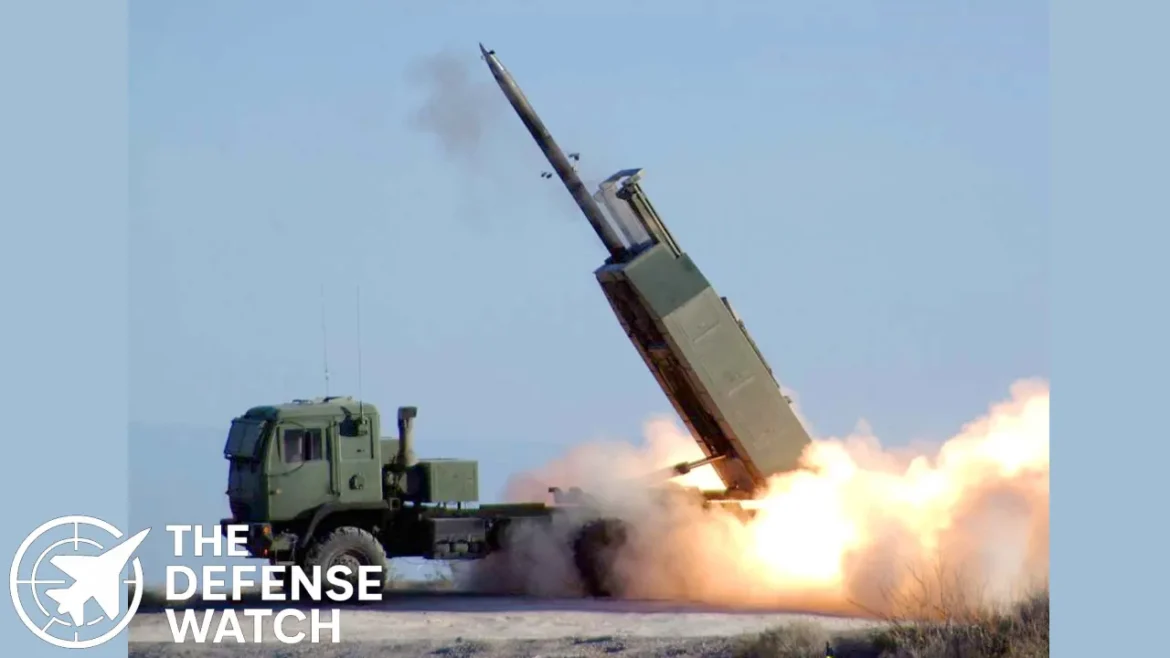
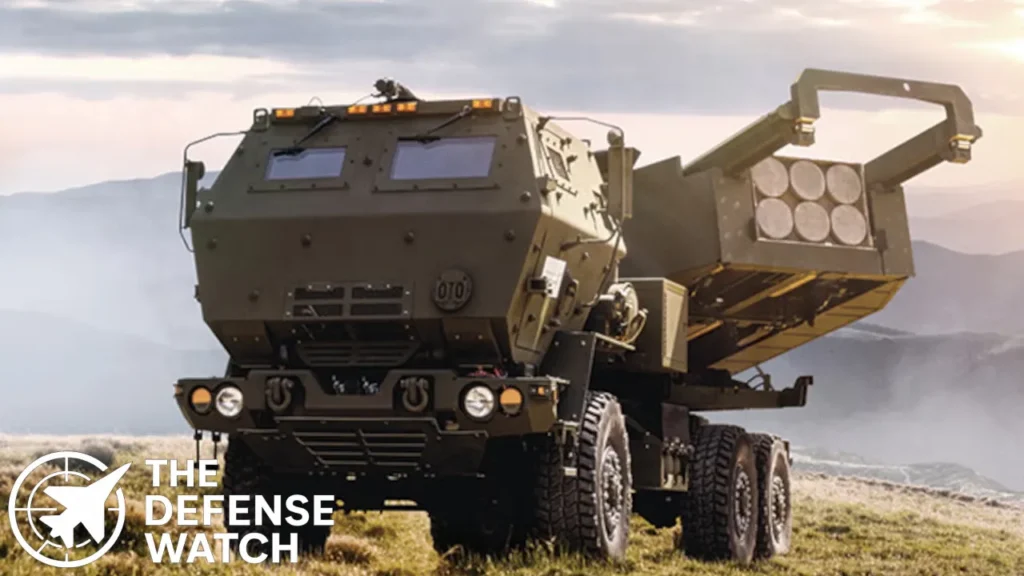
The U.S. military is taking a significant step in the evolution of its strike capabilities by adapting a new hypersonic weapon system for deployment on mobile launchers. According to a report by Reuters on 24 October 2025, defense startup Castelion has secured contracts to integrate its “Blackbeard” hypersonic strike weapon with the HIMARS (High Mobility Artillery Rocket System) platforms used by the U.S. Army.
This initiative marks the first step toward widespread fielding of high-speed, difficult-to-intercept weapons on mobile, conventional launch systems, broadening the operational flexibility of U.S. strike forces.
Image Credit: Creative Commons. Integration with Current Platforms
Under the announced contracts, Castelion will work with the U.S. Army—and potentially the U.S. Navy—to mount the Blackbeard system onto mobile rocket launchers such as those used by HIMARS. The unit cost is reportedly targeted in the “hundreds of thousands of dollars” per missile, and the company aims for thousands of units annually in full-production.
The article does not disclose detailed contract terms, nor does it fully specify time-lines for deployment; however, the move signals intent to field hypersonic options more affordably and more flexibly.Strategic Context: Hypersonics in the U.S. Defense Portfolio
Hypersonic weapons — defined as manoeuvring missiles or glide-vehicles travelling at Mach 5 or greater — have been a priority topic for the U.S. defense establishment for years. A majority of U.S. efforts focus on conventional (non-nuclear) strike rather than nuclear-armed systems.
In recent years the U.S. has pursued major programmes such as:- Long‑Range Hypersonic Weapon (LRHW) for the Army.
- Hypersonic Attack Cruise Missile (HACM) for the Air Force.
Until now, many of the systems remained in development with limited mobility or large, specialised platforms. The recent announcements mark a pivot toward mobile, ground-launchable hypersonics, increasing warfighter flexibility.
What This Means—Analysis
Operational Impact
Integrating hypersonic weapons into mobile launcher fleets like HIMARS changes the tactical and operational calculus. Mobile platforms are harder for adversaries to target, can be repositioned, and introduce short-warning strike capability from dispersed launch nodes.
Because hypersonic weapons combine speed, manoeuvrability and altitude-profile complexity, they compress decision timelines for an adversary.Strategic & Global Security Implications
The U.S. move comes amid intensified competition with nations such as China and Russia in hypersonics. Both have reported fielding or testing capabilities. Congress.gov Deploying more mobile hypersonic strike systems increases the perception of prompt-global-strike reach and may drive further arms behaviour among peer adversaries.
On the other hand, this increase in mobile-launcher hypersonics has potential arms-control implications. Because they can be dual-use, difficult to detect, and fast, they may raise escalation risks if adversaries misinterpret launches or cannot discriminate the target set.Technology & Procurement Trend
The focus in the announcement on “mass production” and lower unit cost (hundreds of thousands of dollars) signals a shift away from ultra-expensive, niche hypersonic solutions toward scalable strike options. This is notable because one past constraint in hypersonic deployment has been cost and production tempo.
Also, the use of existing launch platforms (HIMARS) accelerates deployment timeline by leveraging logistic and operational infrastructures already in service, rather than requiring wholly new systems.Conclusion & Looking Forward
The U.S. decision to adapt hypersonic weapons for mobile ground launchers marks a significant inflection point in how strike capabilities are being fielded. As the system moves from development into operational integration, we should watch for:
- The timeline for “initial operational capability” of the Blackbeard-HIMARS pairing.
- The quantity and dispersion of mobile hypersonic launchers assigned in the U.S. force posture.
- The adversary reaction: whether China, Russia, or other states adjust their own posture or accelerate counter-measures.
- The evolution of defense against hypersonics—many analysts note challenges in detection, interception and command-control when facing manoeuvring high-speed weapons. Congress.gov
In the coming years, if this mobile hypersonic strategy proves viable, we may see a broader proliferation of similar launch-capabilities across U.S. services and possibly allies — reshaping both how the U.S. projects power and how adversaries must defend against it.
LRHW (Dark Eagle) 2025: What’s New
The U.S. Army’s Long-Range Hypersonic Weapon (LRHW), now officially nicknamed Dark Eagle, is moving from the drawing board to field trials and limited deployment in 2025. What had long been a technically ambitious concept is now entering a critical phase of transition, with recent test successes, forward deployments, and a planned soldier-operated test later in the year.
The Army announced the moniker Dark Eagle in April 2025 following a series of system-level flight tests. The name is intended to evoke both lethal precision (“eagle”) and the weapon’s disruptive potential against adversary systems (“dark”).
Program Trajectory & Testing History
Flight test successes and delays
The LRHW program has endured several false starts. Earlier planned launches in 2023 were scrubbed during pre-flight checks. These setbacks, often attributed to launcher mechanical issues or integration problems, forced the Army to postpone initial fielding schedules.
By mid-2024, however, the program recorded a major breakthrough. In June 2024, an end-to-end test was conducted from Hawaii to the Marshall Islands, validating the hypersonic glide body release and flight path. Later, in December 2024, the Army and Navy jointly executed a live-fire “all-up-round” test using a battery’s command & launcher ensemble. That event marked the first time the system had been tested in a configuration closer to an operational deployment.
Path to operational fielding
According to a June 2025 Congressional Research Service report, the Army aims to field its first LRHW battery by the end of fiscal year 2025. The first battery is assigned to 5th Battalion, 3rd Field Artillery Regiment under the 1st Multi-Domain Task Force at Joint Base Lewis-McChord, Washington. Procurement documents show the FY 2025 request included funding for ground support equipment and eight “all-up-round + canister” missiles for battery operations.
However, GAO’s 2025 Weapons Systems Annual Assessment highlights cost and schedule risks. The program’s estimated cost for the first battery has increased by about $150 million due to extra testing and retests. Battery 3 equipment awards have slipped from FY 2024 to Q3 FY 2025. Meanwhile, the Army intends to flight-test a slightly modified missile configuration in Q4 FY 2025 ahead of future battery deployments.
In public remarks in mid-2025, Army leadership emphasized upcoming tests and a push for cost efficiency. General Randy George described efforts to test “long-range missiles that are a tenth of the price” to deepen magazine depth.
Forward Deployment: Indo-Pacific & Australia
In a shift toward operational realism, the Army deployed an LRHW battery beyond continental U.S. for the first time in 2025. The 3rd Multi-Domain Task Force (3MDTF) temporarily stationed the launchers in Australia’s Northern Territory during Exercise Talisman Sabre 2025, under U.S. Indo-Pacific Command oversight. The deployment served two purposes: demonstrating strategic mobility and reinforcing deterrence posture in a contested region. As Adm. Samuel Paparo (USINDOPACOM) remarked, the move validated power projection and command-and-control (C2) ability in forward theaters.
Participating in Talisman Sabre 2025 alongside Australian forces, the battery’s presence signals Washington’s willingness to forward-base advanced strike systems, potentially inside allied territory, to counter peer adversary threats.
2025 Outlook & Challenges
Next soldier-operated test
One key milestone on the 2025 calendar is a soldier-operated test slated for December, tying the launch to operational crews rather than test teams. Maj. Gen. Frank Lozano (Army Missiles & Space) has said that the test will coincide with training for the first field unit — a critical step toward operational viability. The Army also plans to transition program oversight from the Rapid Capabilities & Critical Technologies Office (RCCTO) to the formal PEO (Program Executive Office) Missiles & Space once first rounds are delivered.
Cost, testing demands, and stockpile size
Cost overrun concerns remain acute. Early cost estimates placed each LRHW missile at around $41 million in 2023 dollars; current procurement estimates now exceed that value. In tandem, the relatively high price may constrain quantities procured. Congressional oversight may demand tighter reporting on missile stockpiles and testing volumes.
Operational testing faces another limit: suitable test ranges. Hypersonic weapons require extended flight corridors and tracking support, and range availability constrains how many tests the Army can conduct without incurring additional costs or logistical challenges.
Strategic and doctrinal implications
Deploying a mobile, road-launch hypersonic strike capability gives the Army’s long-range fires portfolio a leap in reach, speed, and flexibility. The LRHW fills a doctrinal gap between theater ballistic missiles and over-the-horizon strike assets. In a contested A2/AD environment, the maneuvering glide phase and high terminal velocity make interception by current missile defenses exceptionally difficult.
However, its strategic value depends heavily on stockpile size, weapons cost, and integration with intelligence, targeting, and command networks. A handful of high-end missiles alone may not be sufficient to deter adversaries unless backed by supporting systems and credible rules of engagement.
Final Analysis
By mid-2025, the LRHW (Dark Eagle) program is at a pivotal juncture. The transition from prototype to practiced operator deployment is underway, with forward deployments and live battery tests offering proof of concept. But the program must now prove that it can be sustainable: affordable, logistically supportable, and flexible enough for real-world operational demands.
If successful, Dark Eagle could reshape how the U.S. projects precision strike capability in peer conflict zones — especially across the Indo-Pacific. But its real test will be in combining speed, lethality, survivability, and cost-effectiveness against adversary counters.
Source 1 | Source 2 | Source 3
FAQs
What exactly is the LRHW / Dark Eagle?The LRHW is a boost-glide hypersonic missile system combining a rocket booster and a Common Hypersonic Glide Body (C-HGB). After booster separation, the C-HGB glides at hypersonic speed (Mach ≥ 5) toward its target, with maneuverability to complicate interception.
When will it be fielded?The Army aims to field the first LRHW battery by the end of FY 2025. A soldier-operated test is planned for December 2025.
What is its effective range?The program cites a range of approximately 1,725 miles (around 2,775 kilometers).
Why is deployment in Australia significant?It demonstrates forward deployment capability, strategic reach, and alliance integration in the Indo-Pacific. It also signals the U.S. willingness to project long-range strike assets beyond its mainland.
What are the main risks facing the program?Key challenges include cost growth, limited testing range infrastructure, integration and reliability of launch systems, and ensuring sufficient stockpiles to make deterrence credible.
Hypersonic Missiles Explained: The Future of Strategic Warfare
Hypersonic missiles — capable of flying at speeds exceeding Mach 5 (over 6,000 km/h) — are transforming global military strategy. Their unmatched speed, maneuverability, and unpredictable flight paths make them one of the most dangerous and destabilizing weapons in modern arsenals.
While ballistic missiles have existed since the Cold War, hypersonic weapons represent a new class of strategic capability — one that threatens to upend decades of missile defense planning.
What Are Hypersonic Missiles?
In simplest terms, hypersonic missiles are projectiles that travel at five times the speed of sound or faster. There are two primary types:
- Hypersonic Glide Vehicles (HGVs): Launched atop a rocket, they glide through the upper atmosphere before descending unpredictably toward their target.
- Hypersonic Cruise Missiles (HCMs): Powered by scramjet engines, these missiles sustain hypersonic speeds within the atmosphere for their entire flight.
Unlike traditional ballistic missiles, which follow a fixed parabolic path, hypersonic systems can maneuver mid-flight, making them extremely difficult to detect and intercept.
Learn more from the U.S. Congressional Research Service on hypersonic weapon development.
Why Are Hypersonic Missiles So Dangerous?
1. Speed and Reaction Time
At speeds above Mach 5, a hypersonic weapon can strike targets within minutes, leaving defenders with virtually no time to respond. For instance, a missile launched from 1,000 miles away could reach its target in under 10 minutes.
2. Maneuverability
Unlike ballistic missiles, hypersonic weapons can change course mid-flight, evading radar tracking and missile interceptors designed for predictable trajectories.
3. Low Flight Path
Hypersonic cruise missiles fly within the atmosphere, at altitudes too low for early-warning satellites to track effectively, yet too high for traditional air defense systems to engage.
4. Nuclear and Conventional Capability
These weapons can carry either nuclear or conventional warheads, making it difficult for adversaries to determine intent — a key risk for escalation in crisis scenarios.
Image courtesy of popularmechanics The Hypersonic Arms Race: U.S., China, and Russia
Russia
Moscow has fielded several operational systems, including the Avangard (a nuclear-capable HGV) and the Kinzhal air-launched missile, reportedly used in Ukraine.
China
Beijing’s DF-ZF hypersonic glide vehicle, mounted on the DF-17 missile, is now operational, giving China a strategic edge in the Indo-Pacific.
United States
The U.S. is investing heavily in programs such as the ARRW (Air-launched Rapid Response Weapon) and the Hypersonic Attack Cruise Missile (HACM). However, delays and testing challenges have kept American hypersonic weapons largely in development rather than deployment stages.
Recent Pentagon reports emphasize the need for a comprehensive hypersonic defense network, including satellite tracking, interceptor systems, and advanced radar.
Can Hypersonic Missiles Be Stopped?
Currently, no existing missile defense system — including the U.S. THAAD, Aegis, or Patriot — can reliably intercept hypersonic weapons. Their speed and erratic flight paths make them nearly invisible to current early-warning and interception systems.
To counter this, the U.S. and allies are developing next-generation tracking satellites under the Hypersonic and Ballistic Tracking Space Sensor (HBTSS) program. Meanwhile, defense contractors are working on directed-energy weapons and interceptor prototypes capable of engaging hypersonic threats mid-flight.
Strategic Implications
Hypersonic weapons blur the line between strategic deterrence and conventional warfare. Their rapid strike capability and dual-use potential (nuclear/conventional) increase the risk of miscalculation or pre-emptive escalation during conflicts.
Analysts warn that unless clear communication channels and arms control measures are established, hypersonic weapons could destabilize global deterrence frameworks similar to the early nuclear age.
As the technology spreads — with India, Japan, and North Korea also pursuing hypersonic programs — the race to master these systems is becoming the defining competition of 21st-century warfare.
Analysis: The Next Frontier in Deterrence
The emergence of hypersonic weapons represents not just a leap in engineering, but a strategic shift in global power dynamics. Nations are no longer only competing for nuclear supremacy but for speed and precision dominance.
However, experts argue that the most dangerous aspect of hypersonic weapons isn’t just their speed — it’s the lack of transparency and arms control dialogue around them. Without international agreements, the world could soon enter a new era of hypersonic instability, where minutes determine peace or war.
FAQs
How fast is a hypersonic missile?Hypersonic missiles travel at speeds exceeding Mach 5 — five times the speed of sound, or roughly 6,100 km/h.
Can current missile defense systems stop hypersonic weapons?No. Current systems like Patriot and THAAD are not optimized for hypersonic interception, though new defense programs are in development.
Which countries have hypersonic missiles?Russia and China have operational systems, while the U.S., India, Japan, and North Korea are actively developing theirs.
What’s the main difference between ballistic and hypersonic missiles?Ballistic missiles follow a fixed arc; hypersonic missiles can maneuver unpredictably, making them harder to track and intercept.
Are hypersonic weapons nuclear?They can carry either nuclear or conventional warheads, adding ambiguity to their strategic use.
The New Frontline: Hypersonic Weapons in 2025
In 2025, the hypersonic weapons race among the United States, Russia, and China continues at breakneck pace — driven by strategic competition, deterrence imperatives, and the quest to overcome missile defenses. Hypersonic systems, broadly defined as maneuverable missiles traveling at speeds of Mach 5 or higher, represent the next jump in strike capability. But each power is following its own trajectory: the U.S. still experiments with conventional prototypes, Russia is pushing for operational deployment, and China is combining advanced trajectories with novel warhead designs.
U.S.: From Prototypes to Practical Challenges
Current U.S. Hypersonic Efforts
The United States has invested heavily over many years in hypersonic research, but to date lacks a formally fielded system. According to a Congressional research report, many U.S. hypersonic programs remain in RDT&E phase without being established as programs of record. The Pentagon’s FY 2026 budget request calls for ~$3.9 billion in hypersonics R&D, down from ~$6.9 billion in FY 2025, while the Missile Defense Agency is seeking ~$200.6 million for hypersonic defense.
Key U.S. programs include:
- Conventional Prompt Strike (Navy) — pairing a common hypersonic glide body with various boost systems
- Long-Range Hypersonic Weapon (Army)
- Air-Launched Rapid Response Weapon (Air Force)
- Hypersonic Attack Cruise Missile (Air Force)
Despite the advanced R&D, U.S. officials have yet to commit to acquisition or fielding, instead continuing evaluations and demonstrations.
Recent Advances & New Systems
One of the U.S.’ more visible steps has been the test flights of the Talon-A reusable hypersonic test aircraft (developed by Stratolaunch and Ursa Major). The vehicle exceeded Mach 5 in autonomous tests, providing valuable data for future operational systems.
Another proposed system, dubbed “Angry Tortoise,” aims to deliver a cost-effective, maneuverable hypersonic strike capability. It is designed to merge the storage advantages of solid fuel with multiple ignition capability, enabling mid-flight course changes. The initial test is projected for December, although the first flight may only reach Mach 2 (due to range limitations); longer-range tests are planned over the Pacific in 2026.
Image courtesy of wsj On the defense side, the U.S. has also procured upgraded AN/TPY-2 radars featuring Gallium Nitride (GaN) arrays and improved computing to help detect and track hypersonic threats. Additionally, the Pentagon is conceptualizing a multi-tiered intercept architecture known as “Golden Dome”, combining space, midcourse, high-altitude, and terminal layers to counter ballistic and hypersonic missiles.
Still, these efforts face steep technical hurdles—especially sensor coverage, heat shielding, guidance control at extreme speeds, and seamless integration into command-and-control systems.
Russia: From Demonstrations to Deployment
Oreshnik Enters Service
Russia has moved aggressively toward deploying hypersonic-capable missiles. In August 2025, President Vladimir Putin announced that the Oreshnik hypersonic ballistic missile had entered production and would be deployed in Belarus by year’s end. Previous reports indicate that Oreshnik can carry conventional or nuclear warheads, reaches speeds up to Mach 10, and covers all of Europe.
Putin also previously suggested a “missile duel” with the U.S. to validate Russia’s claims about Oreshnik’s ability to defeat U.S. missile-defenses.
Mass Production and Strategic Signaling
Earlier in 2025, Putin ordered the mass production of Oreshnik to rival U.S. systems. The weapon’s deployment to Belarus is a strategic move: it positions Russian hypersonic reach closer to NATO borders and reduces flight time to potential European targets.
Meanwhile, Russia’s existing hypersonic systems—such as the Avangard glide vehicle mounted on the RS-18 ICBM—already represent some of the world’s few operational hypersonic deterrent assets.
Russia’s strategy emphasizes field deployment and deterrent posture, leveraging these systems as bargaining chips in geopolitical competition, especially in Europe.
China: Pushing Trajectories & Warhead Innovation
High-Profile Tests and Trajectory Innovation
In late September 2025, China conducted a hypersonic ICBM test featuring boost-glide technology and a depressed trajectory—a lower, flatter flight path that reduces detection windows and complicates interception. Analysts interpreted this as a major leap in flight profile sophistication, combining maneuverability with stealthy approach vectors.
China has also advanced hypersonic anti-ship and cruise systems. For instance:
- YJ-17: an anti-ship aerobalistic missile with a hypersonic glide vehicle warhead, unveiled in 2025.
- YJ-19: a hypersonic cruise missile powered by scramjet engines, capable of maneuvering during flight.
- CJ-1000: a hypersonic cruise missile intended to target system nodes on land, sea, and air.
Chinese displays of these systems, especially during military parades, also serve a strategic signaling function to regional neighbors and global powers.
Strategic Impetus & Deterrence Logic
China’s hypersonic investments align with a broader strategic imperative: to overcome U.S. missile defenses and preserve credible deterrence in a contested Indo-Pacific. Beijing sees hypersonics as a means to degrade midcourse interceptors (like THAAD, Aegis, GMD) by exploiting lower flight altitudes and unpredictable trajectories.
By combining range, velocity, and maneuver, China aims to saturate or bypass missile defenses while shrinking response windows for adversaries—especially for the U.S. and its regional allies.
Comparative Overview: Capabilities, Risks & Trajectories
Nation Hypersonic Focus Deployment Status Key Strengths Challenges / Weaknesses U.S. Conventional glide bodies, cruise missiles, reusable testbeds Prototype / test phase Innovation, industrial base, defense budgets No program of record; sensor / C2 integration; cost & complexity Russia Hypersonic ballistic designs, Avangard, Oreshnik Already entering service Operational glide assets, strategic signaling Limited production scale, reliability, sanctions-driven supply issues China Depressed trajectories, scramjets, anti-ship & cruise roles Rapid testing, limited fielding Ambitious R&D, integrated trajectories Production scaling, intercept resilience, corroborating open data In sum, Russia is ahead in deployment, China is innovating aggressively, and the U.S. is racing to catch up. But the race is not just about who fires first—it’s about who can integrate, protect, defend, and sustain hypersonic operations in a real war environment.
What’s Next: Defense, Arms Control, and the Strategic Landscape
As hypersonic weapons move from labs to arsenals, the race is shifting toward countermeasures and strategic stability. The U.S. “Golden Dome” initiative and enhanced radars aim to counter future hypersonic assaults.
Yet, the accelerating pace of development may outstrip traditional arms control frameworks. New START’s extension remains uncertain. Policymakers will soon have to confront whether hypersonic systems can or should be included in future treaties or confidence-building regimes.
From the Indo-Pacific to Europe, nations will be forced to reconsider defense postures and alliances in response to shrinking detection times and increased strike lethality. In this new era, miscalculation becomes riskier—and the threshold for crisis may narrow further.
FAQs
Why are hypersonic weapons more dangerous than traditional missiles?Hypersonics combine extreme speed (Mach 5+) with maneuverability and lower-altitude flight paths, making them harder to detect, track, and intercept compared to traditional ballistic missiles.
Are all hypersonic weapons nuclear-armed?No. The U.S. is developing primarily conventional hypersonic weapons, which require much greater accuracy to hit targets, while Russia and China have designs that can carry nuclear warheads.
When might the U.S. field an operational hypersonic weapon?Although many U.S. programs remain in development, policymakers expect a potential fielding window in the late 2020s, provided technical and funding challenges are resolved.
Can missile defenses stop hypersonic weapons now?Current missile defenses are poorly optimized for hypersonic threats due to their speed, maneuvering, and low-altitude paths. That is why new sensors, interceptors, and layered defenses are being proposed.
Could an arms control treaty limit hypersonic weapons?It is theoretically possible, but so far no treaty sufficiently encompasses hypersonic systems. As deployment accelerates, calls for inclusion in future arms control regimes may grow.