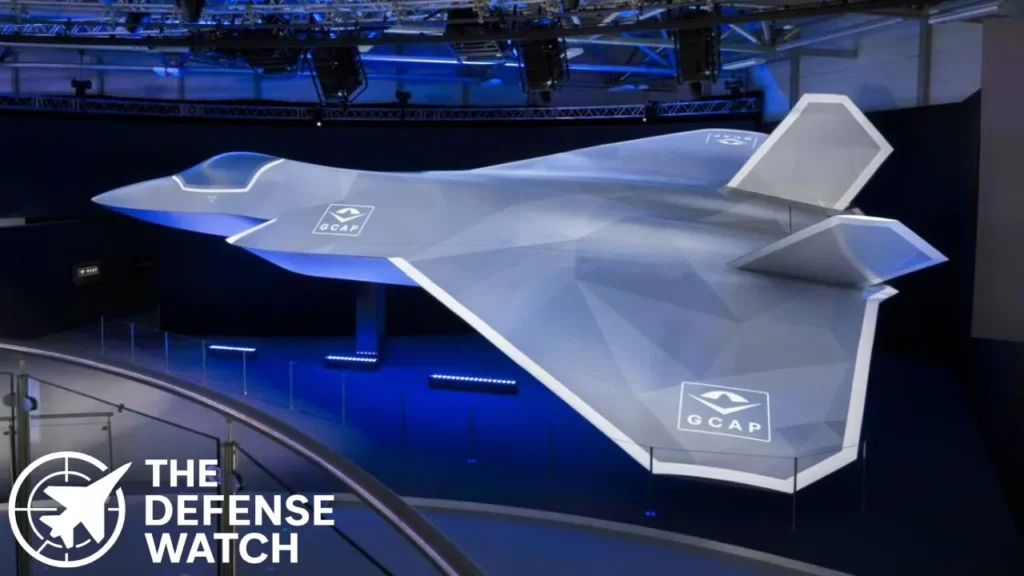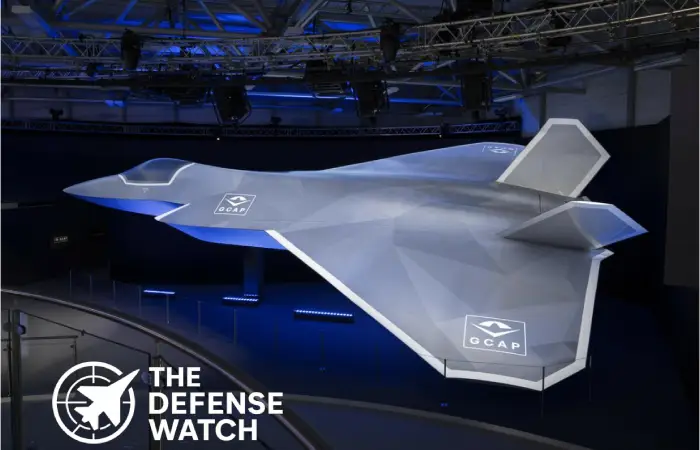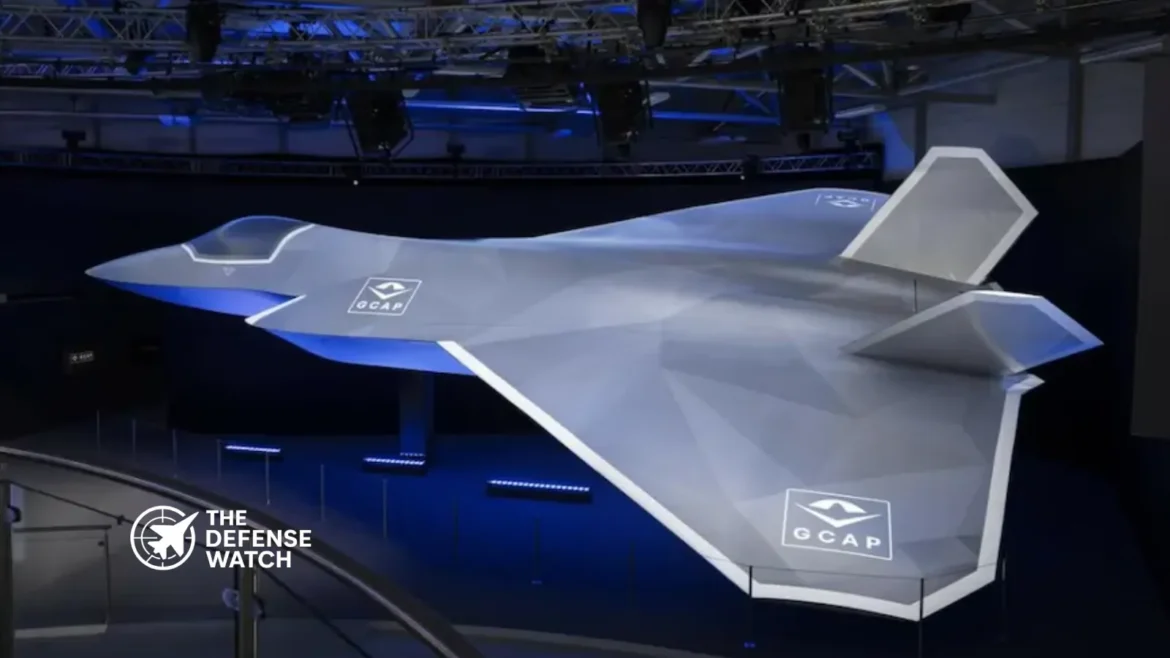
Italy Reinforces GCAP Sixth-Generation Fighter Program With Major Financial Commitment
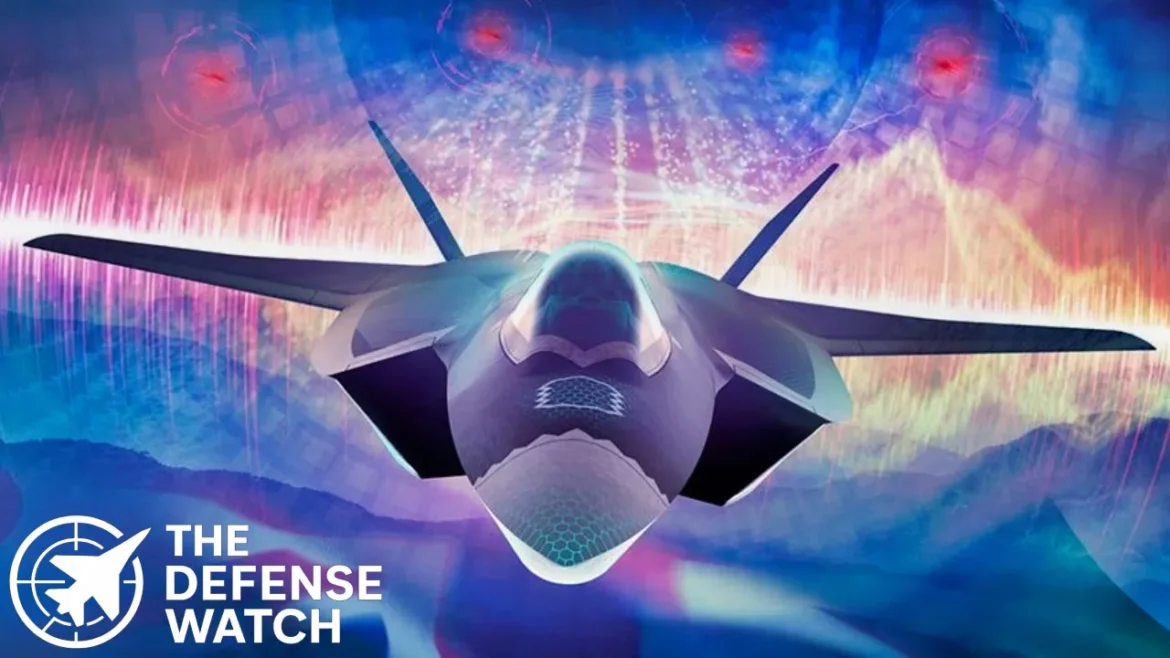
Italy has allocated approximately €9 billion ($9.4 billion) toward the development of the Global Combat Air Programme (GCAP), the ambitious sixth-generation fighter jet being co-developed with the United Kingdom and Japan. The announcement, made by Italian Defense Minister Guido Crosetto, represents one of Europe’s largest single commitments to next-generation air combat capability.
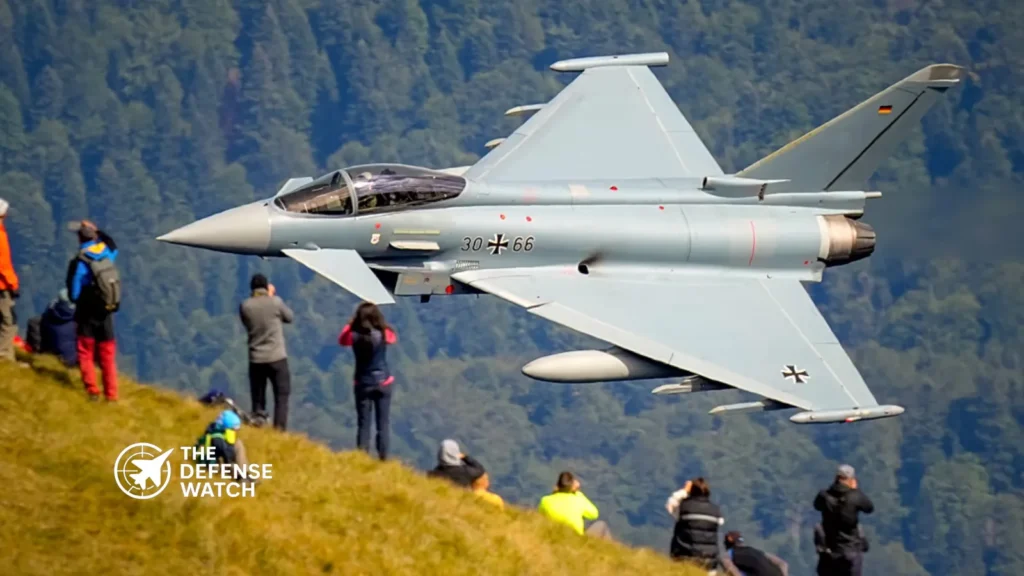
(adsbygoogle = window.adsbygoogle || []).push({});The GCAP fighter jet program Italy is pursuing aims to field an operational aircraft by 2035, replacing the country’s aging Eurofighter Typhoon fleet with a stealth-capable, network-centric warplane designed for 21st-century aerial warfare.
Major Investment Signals Strategic Defense Priority
Defense Minister Crosetto confirmed the substantial financial commitment during recent parliamentary proceedings, emphasizing that the investment would be distributed across the program’s development timeline through 2035. The allocation represents a significant portion of Italy’s long-term defense modernization budget and underscores Rome’s strategic commitment to maintaining air superiority capabilities.
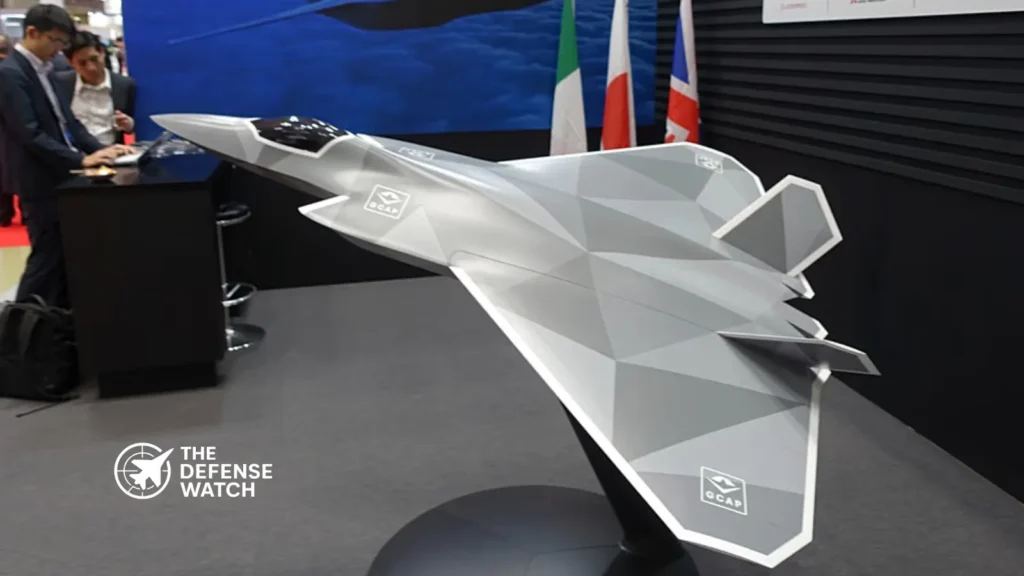
The GCAP program, formally established in December 2022, brings together Italy’s Leonardo, the UK’s BAE Systems, and Japan’s Mitsubishi Heavy Industries as primary industrial partners. This trilateral collaboration marks one of the most significant international defense partnerships outside traditional NATO frameworks.
(adsbygoogle = window.adsbygoogle || []).push({});Italy’s €9 billion contribution will support research and development, prototyping, manufacturing infrastructure, and eventual production capabilities on Italian soil. Leonardo will serve as the primary Italian contractor, with significant workshare expected to support the country’s aerospace industrial base.
Sixth-Generation Technology Sets GCAP Apart
The sixth-generation stealth fighter aircraft being developed under GCAP will incorporate advanced technologies not present in current fifth-generation platforms like the F-35 Lightning II. Key capabilities include:
Advanced Stealth and Survivability: Next-generation radar-absorbent materials and airframe shaping designed to operate in highly contested electromagnetic environments.
Artificial Intelligence Integration: AI-assisted mission planning, threat assessment, and sensor fusion to reduce pilot workload and enhance decision-making speed.
Optionally Manned Capability: The platform is being designed to operate with or without a pilot onboard, enabling high-risk missions while preserving human life.
(adsbygoogle = window.adsbygoogle || []).push({});Loyal Wingman Compatibility: GCAP will command and control unmanned combat air vehicles (UCAVs) functioning as “loyal wingmen,” extending sensor range and weapon deployment options.
Advanced Sensor Suite: Multi-spectral sensors providing 360-degree situational awareness, integrated electronic warfare systems, and directed energy weapon potential.
These capabilities position GCAP to counter emerging threats from advanced Russian and Chinese fighter programs, including the Su-57 Felon and J-20 Mighty Dragon.
Timeline and Production Targets
The GCAP development timeline targets first flight of a demonstrator aircraft in the early 2030s, with initial operational capability planned for 2035. This ambitious schedule requires sustained financial commitment and close coordination among the three partner nations.

Italy plans to procure a substantial number of GCAP aircraft to replace its current Eurofighter Typhoon fleet, which entered service in the early 2000s. While exact procurement numbers remain classified, defense analysts estimate Italy may order between 80 and 100 GCAP fighters to maintain its air combat force structure.
- (adsbygoogle = window.adsbygoogle || []).push({});
The UK and Japan have similarly committed to replacing their Typhoon and F-2 fighter fleets respectively with GCAP aircraft, creating a combined market of potentially 250-300 sixth-generation fighters.
Industrial and Economic Impact
Italy’s defense spending 2026 allocation toward GCAP extends beyond military capability, representing a strategic investment in high-technology industrial capacity. Leonardo and its Italian supply chain partners stand to benefit from sustained high-value work in advanced materials, propulsion systems, avionics, and weapons integration.
(adsbygoogle = window.adsbygoogle || []).push({});The program is expected to create thousands of high-skill engineering and manufacturing jobs across Italy’s aerospace sector, particularly in regions already supporting military aircraft production. Leonardo’s facilities in Turin, Naples, and Rome will play central roles in GCAP development and production.
Economic multiplier effects from the program could generate billions in additional economic activity through subcontractors and technology spillover into civilian aerospace applications.
Balancing GCAP and F-35 Commitments
Italy’s major investment in the GCAP sixth-generation fighter comes as the country continues its commitment to the F-35 Joint Strike Fighter program. Italy is a Level 2 partner in the F-35 program and operates both F-35A conventional takeoff variants and F-35B short takeoff/vertical landing models.
The Italian Air Force currently operates over 30 F-35 aircraft and has plans to eventually acquire up to 90 fighters across both variants. Italy also hosts F-35 final assembly and checkout facilities at Cameri Air Base, the only such facility outside the United States.
Defense officials have clarified that GCAP and F-35 programs serve complementary rather than competing roles. The F-35 will continue as Italy’s primary multi-role fighter through the 2040s and potentially beyond, while GCAP will focus on high-end air superiority and deep strike missions requiring sixth-generation capabilities.
(adsbygoogle = window.adsbygoogle || []).push({});This dual-track approach mirrors strategies adopted by other advanced air forces seeking layered capabilities across multiple fighter generations.
Strategic Rationale and Threat Environment
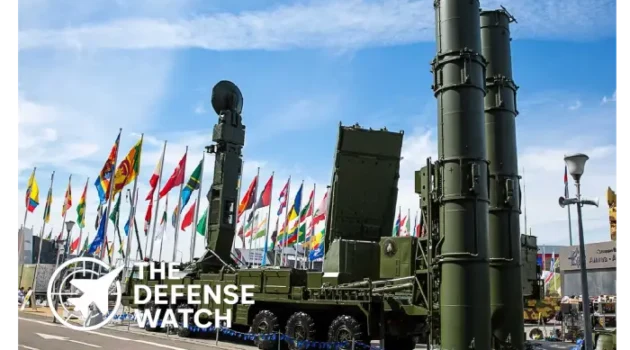
Italy’s substantial financial commitment to the Eurofighter Typhoon replacement program reflects evolving threat assessments in the Mediterranean region and broader European security environment. Russian military modernization, including deployment of advanced S-400 and S-500 air defense systems, necessitates next-generation stealth and electronic warfare capabilities.
Additionally, the growing sophistication of potential adversary air forces requires capabilities beyond current fourth and fifth-generation platforms. GCAP’s advanced sensor fusion, AI integration, and loyal wingman control represent force multiplication capabilities essential for maintaining air superiority in future conflicts.
The program also strengthens Italy’s position within European defense cooperation frameworks while maintaining critical partnerships with the UK post-Brexit and expanding defense ties with Japan amid Indo-Pacific security concerns.
Multinational Cooperation Challenges and Benefits
The UK Japan Italy fighter collaboration presents both opportunities and challenges inherent in complex multinational defense programs. Geographic separation between partner nations, differing operational requirements, and export control considerations require careful management.
(adsbygoogle = window.adsbygoogle || []).push({});However, cost-sharing across three advanced economies reduces individual financial burden while creating economies of scale in production. Technology sharing accelerates development timelines and distributes technical risk. The partnership also creates interoperability benefits and strengthens security relationships among democracies facing common threats.
Program governance structures establish joint decision-making authorities while preserving sovereign control over critical technologies and operational concepts. This balanced approach has enabled the program to progress through initial development phases without major delays.
Looking Ahead
Italy’s €9 billion commitment to GCAP represents a decisive investment in future air combat capability and strategic defense autonomy. As development work accelerates toward first flight milestones in the coming years, sustained political and financial support will prove critical to meeting the 2035 operational timeline.
The program’s success will depend on maintaining trilateral consensus, managing technical complexity, and delivering capabilities that justify substantial investment. For Italy, GCAP represents not only next-generation military capability but also preservation of high-technology aerospace industrial capacity essential for long-term strategic independence.

Europe’s GCAP 6th-Generation Fighter Faces Cost and Integration Challenges
WARSAW, POLAND – The Global Combat Air Program (GCAP), a joint initiative between the United Kingdom, Japan, and Italy to develop a next-generation 6th-generation stealth fighter, is facing mounting concerns over affordability and integration of supporting unmanned systems. The program, which has been described as one of the most ambitious multinational fighter projects in recent history, is navigating complex technical and budgetary challenges as partner nations pursue unique requirements.
Background: Multinational Collaboration and Complexity
The GCAP program is designed to produce a common stealth fighter platform for multiple partner nations while allowing each country to develop its own “loyal wingman” drones, also known as Collaborative Combat Aircraft (CCAs). Japan’s Mitsubishi Heavy Industries (MHI) has unveiled concepts such as the ARMDC-20X missile-like drone and a high-performance tactical unmanned aerial vehicle, both intended to operate alongside manned GCAP fighters.
GCAP Sixth-Generation Stealth Fighter – Full Specifications
- Primary Effect / Kill Mechanism: Kinetic strike, air dominance, electronic warfare
- Operational Range / Engagement Envelope: ~1,500–2,000 km
- Autonomy / Guidance Level: Human-in-loop with AI decision support
- Power / Propulsion Type: Adaptive-cycle twin-engine turbine
The program’s multinational structure adds layers of complexity. While the core fighter design aims for consistency across the UK, Italy, and Japan, each nation’s unique drone systems must integrate seamlessly with the aircraft. This creates interoperability challenges that experts warn could significantly strain the program’s budget.
Integration and Budget Concerns
At a recent International Fighter Conference in Rome, Eurofighter CEO Jorge Tamarit-Degenhardt emphasized the risks of integrating multiple, disparate drone designs. “Can we develop CCA integration in different configurations in different countries? We cannot do everything at the same time. We don’t have infinite resources,” he said.
GCAP 6th Generation Fighter. RAF Group Captain Bill Sanders, the UK Ministry of Defense official overseeing the GCAP program, echoed concerns about cost-efficiency. Writing in the Journal of the Joint Airpower Competence Centre, Sanders highlighted the importance of balancing advanced capabilities with cost-effectiveness. He emphasized that the program must justify expenses while providing adaptable and multi-use capabilities across conflict scenarios.
Germany’s Potential Participation
Adding further complexity, Germany is reportedly considering withdrawing from the French-led SCAF program to join GCAP, either as a buyer or as a developer of CCAs. While German involvement could bring additional industrial expertise, it would also necessitate late-stage adjustments to the program, further complicating budget and schedule forecasts.
Weapons and Cost Management
Analysts note that maintaining affordability will require careful management of the GCAP’s weapons bay to accommodate both high-end and lower-cost munitions. Ensuring a favorable cost-per-kill ratio is seen as critical to maintaining the fighter’s relevance in extended conflicts, particularly as nations look for multi-role aircraft that deliver both strategic and tactical flexibility.
Looking Ahead
While GCAP remains a flagship European and Japanese effort to develop cutting-edge air combat capabilities, its long-term success will depend on navigating multinational integration, cost control, and the deployment of compatible drone systems. With key treaties and agreements still pending and partner nations balancing industrial and political priorities, the program’s trajectory will remain under close scrutiny.

The trilateral partnership of the United Kingdom, Italy and Japan has ramped up its ambitions for the Global Combat Air Programme (GCAP) — a next-generation, sixth-generation stealth fighter program designed to deliver a cutting-edge combat aircraft by around 2035. This article examines the latest developments in GCAP, explores what it means for U.S. defense interests and the broader global combat-air market, and assesses the strategic technology implications.
What is GCAP and how does it differ from prior programs?
The GCAP programme merges three national efforts — the UK’s “Tempest”, Italy’s participation, and Japan’s F-X project — into a unified development programme for a sixth-generation stealth fighter. The objective: develop a multirole, stealth-optimized, networked combat aircraft capable of manned-unmanned teaming, advanced sensors, internal weapon bays and long-range global reach.
Key milestones include:- Demonstrator flight targeted for 2027.
- Entry into service expected around 2035.
- Joint venture (design authority) formed by BAE Systems (UK), Leonardo (Italy) and Japan Aircraft Industrial Enhancement Co. Ltd. (JAIEC, Japan), each holding roughly equal shares.
- Governance through the inter-governmental organisation (referred to as GIGO) to manage the multi-national structure.
Compared to earlier programmes like the F‑35 Lightning II, GCAP emphasises greater internal payload, global range without refuelling, advanced AI and drone control capabilities. For example, observers note that GCAP partners aim to carry “roughly double an F-35A’s [weapon] payload” and cross the Atlantic on internal fuel.

Image Credit: Creative Commons. Latest Developments
In June 2025, the joint-venture “Edgewing” was officially named as the design authority for the GCAP airframe, signalling a transition from concept into structural implementation.
In December 2024, industry partners reached a landmark agreement outlining the structure of the joint venture, expected to be established by mid-2025, with the lifetime of product extending beyond 2070.
Meanwhile, media reports highlight timeline pressures: the U.S. is already pursuing a sixth-generation project (the F-47), meaning GCAP must accelerate to stay relevant.Analysis: Implications for U.S. Defense & Global Security
1. Competitive landscape
For U.S. defence planners, GCAP represents both a peer-level challenge and a potential partner. The U.S. has long held near-monopoly on fifth-generation fighters globally, but the UK-Italy-Japan axis is seeking to forge a coalition with export potential and sovereign capability outside U.S. export and upgrade constraints.
This may press U.S. industry to sustain lead in sixth-generation fighter development, improve interoperability, and accelerate schedule.2. Interoperability & coalition operations
There is explicit intent within GCAP to ensure interoperability with allied systems, including U.S. platforms. For example, an Italian official noted the GCAP jet and the prospective U.S. F-47 are “two elements in an integrated system of fighters, not competitors.” This suggests U.S. forces may need to plan for joint operations with GCAP participants, adopt compatible standards and consider data-link/sensor fusion frameworks.
3. Technology leap and risk
The ambition of GCAP reflects a generational leap — advanced manned-unmanned teaming, sensor fusion, directed-energy weapons, digital twin modelling, modular open architecture and AI-enabled decision-support. U.S. aerospace and defence firms will need to match such capabilities. At the same time, as with past multinational programmes (e.g., F-35), schedule risk and cost overruns are real concerns — GCAP’s success or failure will influence U.S. decisions on future fighter programmes.
4. Strategic balance & export control
GCAP represents a path for Japan (and potentially other partners) to reduce reliance on U.S.-supplied fighters and associated restrictions (e.g., on upgrades). For the U.S., preserving its qualitative edge in fighter aviation means tracking such initiatives and possibly accelerating sixth-generation efforts under U.S. leadership or co-operation frameworks.
Tempest Fighter from BAE Systems Outlook & Conclusion
The GCAP partnership among the UK, Italy and Japan is shaping up as a major entry into the sixth-generation combat air domain. With a service target around 2035 and world-class ambitions, it will influence not just partner-nation air forces but also U.S. defence planning, global export dynamics and aerospace innovation.
For the U.S., the emergence of GCAP reinforces the necessity to accelerate its own next-gen programmes, ensure interoperability with allied systems and maintain technological superiority.
With prototypes slated by 2027 and production airframes by the mid-2030s, both strategic risk and opportunity looms large — not just for the partner nations, but across the global combat-air ecosystem.Older Posts
- (adsbygoogle = window.adsbygoogle || []).push({});