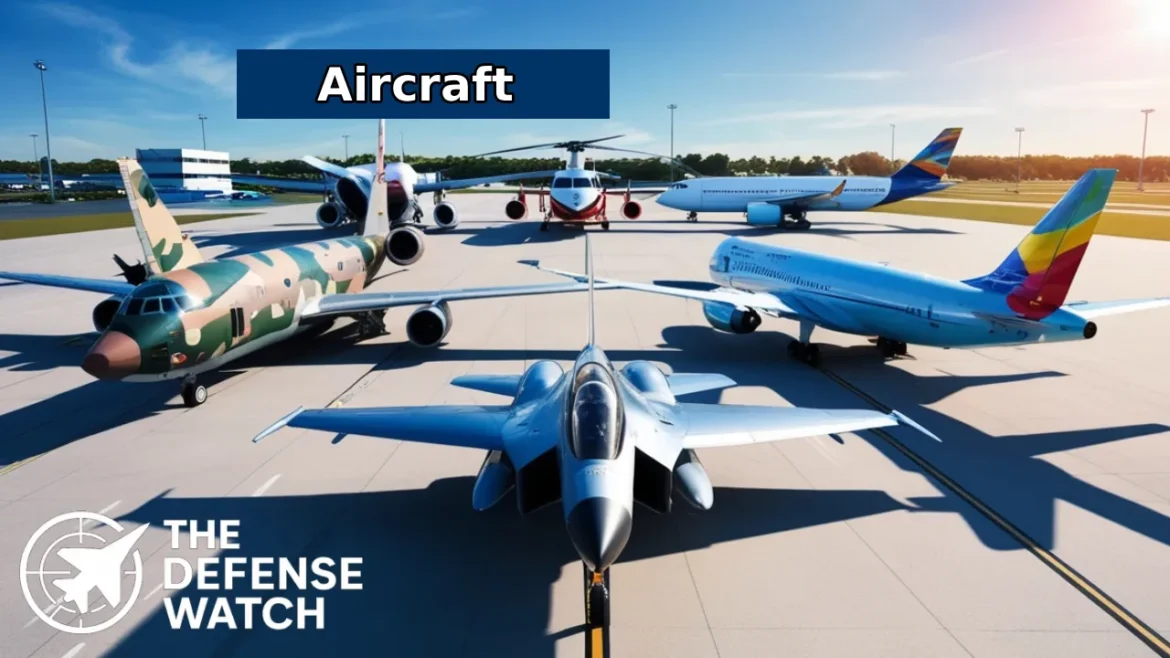
Understanding Aircraft in Modern Aviation
An aircraft is one of humanity’s most transformative engineering achievements—an innovation that reshaped warfare, commerce, travel, and global mobility. From commercial airliners connecting continents to military aircraft securing national airspace, the aircraft remains central to how nations project power, move people, and respond to crises.
In 2025, aircraft are more advanced than ever, combining aerodynamic efficiency, digital avionics, artificial intelligence, stealth shaping, and long-range sensors. They serve as vital tools in humanitarian missions, commercial logistics, border defense, and strategic deterrence. Understanding what an aircraft is—and how different types operate—is essential to grasping the broader picture of global airpower and modern aerospace technology.
What Is an Aircraft?
An aircraft is any machine capable of sustained flight within Earth’s atmosphere. Unlike spacecraft, aircraft rely on aerodynamic lift created by wings, rotor blades, or the displacement of air. They operate using engines, flight-control systems, and aerodynamic surfaces allowing pilots—or autonomous systems—to maneuver safely through the sky.
Core Components of an Aircraft
Every aircraft, regardless of mission, features several key elements:
- Fuselage: Main body containing cockpit, systems, and payload
- Wings or Rotors: Generate aerodynamic lift
- Propulsion: Jet engines, turboprops, pistons, or electric motors
- Landing Gear: For ground operations
- Flight Controls: Allow altitude, speed, and directional changes
Aircraft range from light recreational flyers to sophisticated military platforms capable of stealth penetration or intelligence gathering.
Major Types of Aircraft
1. Fixed-Wing Aircraft
Fixed-wing aircraft use forward motion and aerodynamic lift to stay airborne. These include everything from small trainers to large airliners and advanced fighter jets.
Examples:
Airbus A320, Boeing 787, F-35 Lightning II, C-130 Hercules.
Advantages:
- High speed
- Long range
- Efficient fuel consumption
- Ideal for commercial transport and long-distance operations
2. Rotary-Wing Aircraft (Helicopters)
Rotary-wing aircraft generate lift through spinning rotor blades, enabling vertical takeoff, hovering, and tight maneuvering.
Examples:
UH-60 Black Hawk, AH-64 Apache, CH-47 Chinook.
Advantages:
- Operate without runways
- Superior mobility in complex terrain
- Ideal for rescue, assault, medevac, and close air support
3. Unmanned Aircraft Systems (Drones/UAVs)
UAVs operate remotely or autonomously, becoming crucial assets for surveillance, intelligence, and precision strike missions.
Examples:
MQ-9 Reaper, Bayraktar TB2, small quadcopter drones.
Advantages:
- Long endurance
- Lower operational risk
- Cost-effective for surveillance and combat
4. Tiltrotor & Hybrid Aircraft
Tiltrotors combine helicopter takeoff capabilities with airplane speed and range.
Example:
V-22 Osprey.
5. Gliders & Ultralights
Lightweight aircraft used in sport aviation, training, and specialized missions.
Military Aircraft and Their Strategic Roles
Military aircraft represent some of the most advanced machines ever built. They provide nations with capabilities ranging from aerial dominance to humanitarian relief.
Key Military Aircraft Categories
Fighter Aircraft
Designed for air-to-air combat and air superiority.
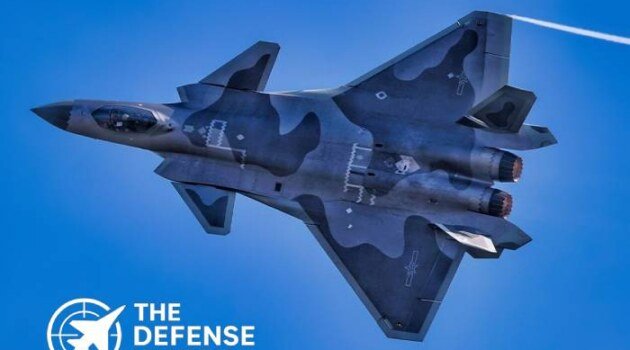
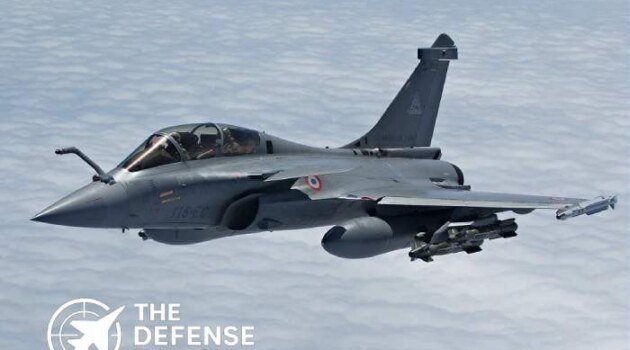
Examples: F-22 Raptor, Rafale, J-20.
Bombers
Deliver large payloads over long distances.
Examples: B-52H Stratofortress, B-2 Spirit.
Transport Aircraft
Carry troops, equipment, and humanitarian cargo.
Examples: C-17 Globemaster III.
Maritime Patrol Aircraft
Support naval operations and anti-submarine warfare.
Examples: P-8A Poseidon.
AEW&C and ISR Aircraft
Provide early warning and intelligence collection.
Examples: E-3 AWACS, E-7 Wedgetail.
Combat & Utility Helicopters
Support ground forces, rescue missions, and special operations.
Why Aircraft Are Essential in Modern Warfare
Aircraft remain critical to defense planning because they:
- Secure air superiority, a prerequisite for modern operations
- Deliver precision strikes against high-value targets
- Support troop movement and logistics
- Provide ISR (Intelligence, Surveillance, Reconnaissance)
- Enhance deterrence and rapid reaction capability
As threats evolve, aircraft are increasingly integrated into joint-force networks with satellites, radars, and unmanned systems.
Fixed-Wing vs Rotary-Wing Aircraft: Key Differences
Fixed-Wing
- Fast (Mach 0.8–2+)
- Long-range capability
- Best for transport, strike, and surveillance
Rotary-Wing
- Vertical takeoff and hover
- Operate in complex environments
- Best for assault, medevac, and close support
Each serves a distinct mission set, and modern militaries require both for balanced airpower.
Evolution of Aircraft Technology: From Early Flight to 2026
Early Innovations (1900s–1930s)
The Wright Brothers’ 1903 flight marked the first controlled powered flight. Aircraft rapidly evolved during World War I for reconnaissance and combat.
World War II and the Jet Age
Wartime demand accelerated aircraft development, leading to early jet fighters and long-range bombers.
Cold War Era (1950s–1990s)
Supersonic aircraft, nuclear-capable bombers, and early stealth technology emerged during this period.
21st Century: Stealth, Digital Avionics, and Network Warfare
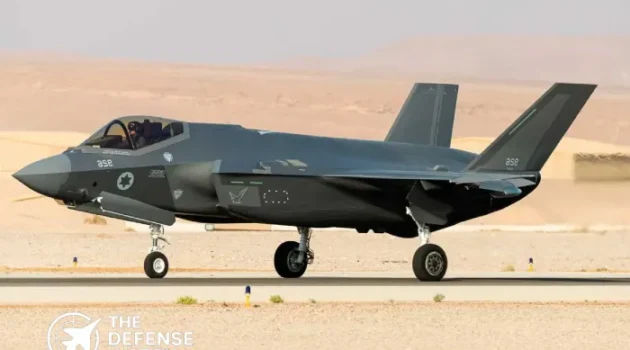
Platforms like the F-35 integrated multi-role capability with sensor fusion, data links, and low-observable design.
2025 and Beyond: AI-Driven and Autonomous Systems
The next generation of aircraft will introduce:
- AI copilots
- Loyal wingman drones
- Directed-energy weapons
- Hypersonic propulsion
- Adaptive cycle engines
Aircraft remain essential components of national security—and the future promises even more disruptive innovations.
Global Aircraft Trends
The aviation sector is experiencing rapid transformation driven by geopolitical tensions, commercial demand, and emerging technologies.
Commercial Aviation Recovery and Growth
Global air travel has returned to pre-pandemic levels, prompting major airlines to renew fleets for efficiency and sustainability.
Rising Defense Procurement
Europe, Asia, and the Middle East are increasing military aircraft orders due to a shifting global security environment.
UAV Expansion
Drones dominate reconnaissance and precision-strike missions across modern conflict zones.
Sustainability and Electric Aircraft Development
Civilian programs are exploring hybrid and electric propulsion to reduce emissions.
FAQs
An aircraft is any machine capable of sustained flight in the atmosphere using wings, rotors, or aerodynamic lift.
Fixed-wing, rotary-wing, drones, tiltrotor, and gliders.
Military aircraft include combat systems, sensors, weapons, and armor for defense operations.
High-performance fighter jets and specialized reconnaissance aircraft typically reach the highest speeds.
Not fully. UAVs will augment manned aircraft, especially for high-risk missions.
Fixed-Wing Aircraft – Airplanes that generate lift via stationary wings (e.g., commercial jets, fighter jets).
Rotary-Wing Aircraft – Helicopters that use spinning rotor blades to lift and maneuver.
Unmanned Aerial Vehicles (UAVs/Drones) – Remotely piloted or autonomous aircraft for surveillance or strike missions.
Tiltrotor/Hybrid Aircraft – Combine vertical takeoff of helicopters with the speed and range of fixed-wing planes (e.g., V-22 Osprey).
An aircraft is a broad term for any machine capable of sustained flight, including airplanes, helicopters, drones, gliders, and tiltrotors.
An airplane (or aeroplane) is a specific type of fixed-wing aircraft that relies on forward motion and wings to generate lift. All airplanes are aircraft, but not all aircraft are airplanes.


What Is a Fighter Jet?
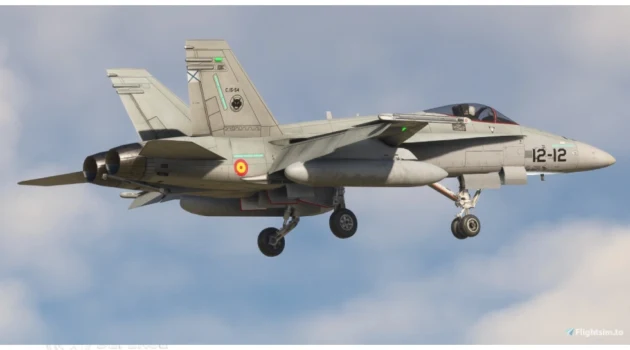
A fighter jet is a high-performance military aircraft designed primarily for air-to-air combat, interception, and securing air superiority. In modern warfare, these aircraft serve as the backbone of national air forces, providing rapid response, deterrence, and offensive capability. Fighter jets remain essential because control of the skies often determines the outcome of conflicts, shaping everything beneath—from ground operations to naval movements.
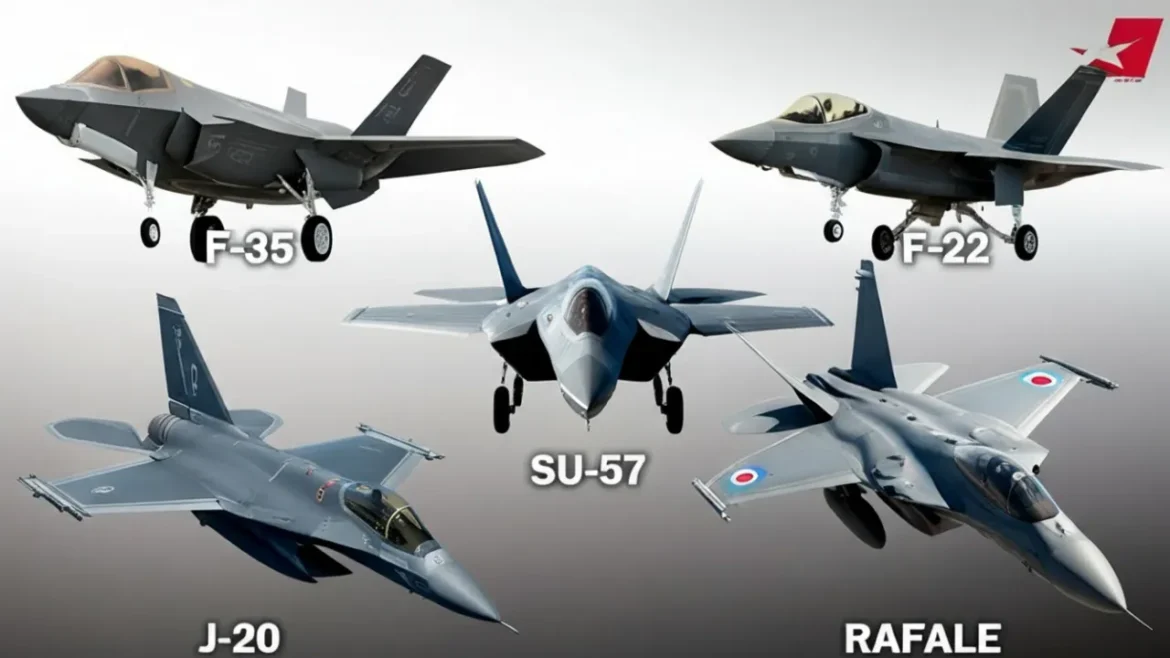
Today’s fighter jets combine speed, stealth, avionics, and precision weapons to engage both airborne and ground threats. From the F-35 and F-22 to the Rafale, J-20, and Gripen, they reflect a nation’s technological capability and defense priorities.
What Defines a Fighter Jet?
1. Designed for Air Superiority
The primary mission of any fighter jet is to defeat enemy aircraft. Air-to-air missiles, high-G maneuverability, advanced radar, and electronic warfare systems make this possible.
2. High-Speed, High-Altitude Capability
Modern fighters routinely operate at speeds above Mach 1 and at altitudes exceeding 50,000 ft. This provides tactical advantage and battlefield dominance.
3. Advanced Sensors and Avionics
Fighter jets carry powerful radars, infrared sensors, data-links, and cockpit displays that fuse information, giving pilots a real-time view of the battlefield.
4. Multi-Role Flexibility
Most current-generation fighters are multirole, able to conduct:
- Air-to-air combat
- Precision strikes
- Close air support
- Reconnaissance
- Maritime operations
This flexibility reduces the need for separate aircraft types.
Why Fighter Jets Matter in Modern Warfare
1. Securing Air Superiority
Nations must protect their airspace. Fighter jets intercept and neutralize hostile aircraft before they reach critical areas. Without air superiority, ground forces and naval fleets remain vulnerable.
2. Deterrence and Strategic Signaling
A capable fighter fleet serves as a deterrent, signaling to adversaries that any aggression will face a rapid and effective military response.
3. Precision Strike Capability
Modern fighters can engage ground targets using guided bombs, cruise missiles, and stand-off weapons. This allows nations to strike with accuracy while minimizing collateral damage.
4. Rapid Reaction and Global Reach
Fighter jets can deploy within minutes, project power across long distances, and reinforce allies as part of international coalitions.
5. Technology Leadership
Advances in stealth, sensors, hypersonic weapons, and AI-driven warfare are closely tied to fighter jet development. Nations leading in airpower often lead in overall military innovation.
Generations of Fighter Jets: A Quick Overview
Early Jets (1st–2nd Generation)
- Subsonic or early supersonic
- Basic radar
- Primitive missiles and gun combat
3rd–4th Generation
- High maneuverability
- Advanced air-to-air missiles
- Multi-role capabilities
4.5 Generation
- AESA radars
- Electronic warfare suites
- Network-centric operations
5th Generation
- Stealth shaping
- Sensor fusion
- Supercruise
- Example: F-22, F-35, J-20
6th Generation (In Development)
- AI copilots
- Directed energy weapons
- Loyal wingman drones
- Adaptive engines
How Fighter Jets Work: Key Systems
1. Propulsion
Most fighters use afterburning turbofan engines, enabling supersonic flight. New engines focus on lower fuel burn and higher thrust.
2. Stealth Technology
Shaping, radar-absorbent materials, and internal weapon bays reduce detection by enemy radar.
3. Weapons
Typical armament includes:
- Short- and long-range air-to-air missiles
- Precision-guided bombs
- Anti-ship missiles
- Internal cannons
4. Avionics
Fighters carry advanced avionics such as:
- AESA radar
- Infrared search and track (IRST)
- Helmet-mounted displays
- Electronic countermeasures
Global Competition: Why Nations Invest in Fighter Jets
Airpower is a symbol of national strength. Countries like the U.S., China, India, France, and Russia invest heavily in fighter programs to maintain strategic advantage.
Rising tensions—from the Indo-Pacific to Eastern Europe—have renewed global demand. Joint fighter programs like the F-35, GCAP, and AUKUS aviation initiatives show how fighter jets have become diplomatic tools as well as military assets.
Strategic Analysis: The Future of Fighter Jets
Air combat is evolving. Pilots now rely on AI, drones, and long-range missiles more than close-range dogfighting. Future fighters will emphasize stealth, electronic warfare, hypersonic weapons, and loyal wingman drones.
Despite emerging technologies, fighter jets will remain central to military strategy because speed, reach, and air dominance are irreplaceable.
FAQs
What is a fighter jet?A fighter jet is a high-performance military aircraft designed for air combat, interception, and securing airspace.
Why are fighter jets important?They provide air superiority, deterrence, rapid response capability, and precision strike options.
What makes modern fighter jets different from older ones?Stealth, advanced sensors, network-centric warfare, and multirole capability distinguish modern fighters.
Which countries operate the most advanced fighter jets?The United States, China, Russia, France, the UK, and several NATO/Asian partners field advanced fleets.
Will drones replace fighter jets?Drones will complement—not replace—manned fighters. Future jets will operate alongside autonomous wingmen.
-
Top 10 Most Advanced Fighter Jets in 2026: A Global Airpower Assessment
The global race for air superiority continues to accelerate as nations invest aggressively in 5th-generation stealth fighters, advanced avionics, sensor fusion, and electronic warfare capabilities. In 2026, the competition is led by a small group of technologically dominant air forces whose fighters are redefining the future battlespace. Below is a comprehensive ranking of the most advanced fighter jets in 2026, based on stealth performance, situational awareness, combat readiness, weapons integration, and operational maturity.
1. F-35 Lightning II – United States
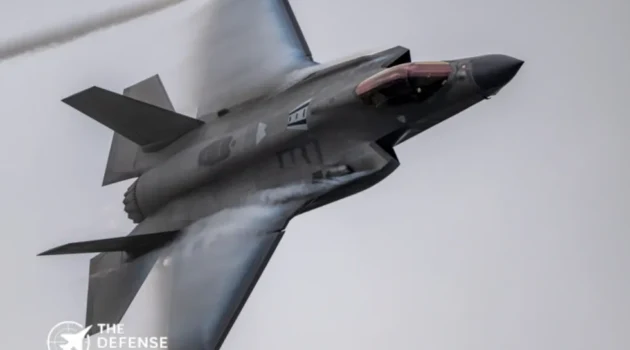
The F-35 remains the world’s most capable multirole stealth fighter due to its unrivaled sensor fusion, electronic warfare suite, network-centric connectivity, and global fleet size. With three variants and more than a dozen international operators, the F-35 is the only 5th-generation aircraft deployed at scale worldwide.
2. F-22 Raptor – United States
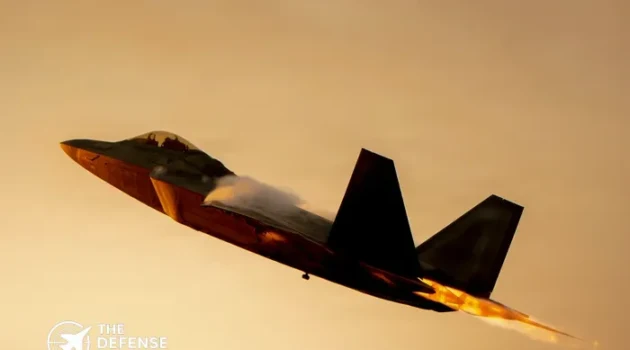
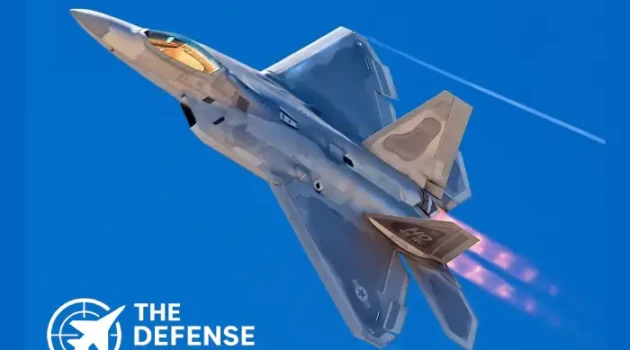
Although no longer in production, the F-22 still sets the benchmark for air dominance, excelling in supercruise performance, stealth shaping, and unmatched maneuverability. Its limited numbers remain its only drawback.
3. Su-57 Felon – Russia
Russia’s Su-57 continues to evolve, incorporating advanced IRST sensors, 3D thrust vectoring, and new long-range missiles. While its stealth rating lags behind U.S. platforms, the Felon is becoming more operationally mature.
4. J-20 Mighty Dragon – China
China’s most advanced fighter is steadily improving with upgraded WS-15 engines, enhanced stealth coatings, extended-range missiles, and AI-enabled cockpit features. Beijing is expanding J-20 squadrons rapidly, shifting Asia’s airpower balance.
5. Rafale F4 – France
The Rafale F4 standard boosts the platform into a next-generation category with new sensors, enhanced data links, improved SPECTRA EW system, and advanced air-to-air weaponry. Its combat-proven track record makes it one of the most versatile fighters in the world.
6. Eurofighter Typhoon – UK/Italy/Germany
The Typhoon benefits from continuous upgrades—particularly the Captor-E AESA radar, updated mission systems, and next-generation air-to-air missile integrations. While not a stealth design, its performance and sensor suite keep it competitive in 2026.
7. Tejas Mk-2 – India
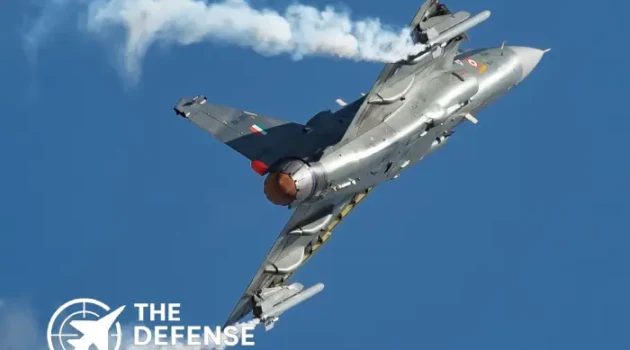
India’s upcoming Tejas Mk-2 introduces a larger airframe, stronger engine, modern avionics, and superior weapons payload, turning it into a capable medium-weight combat aircraft aimed at replacing older MiG platforms.
8. F-3 Shinshin – Japan
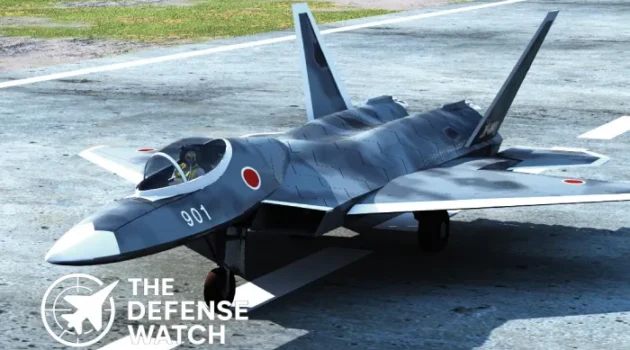
Japan’s F-3 (formerly F-X) is designed to serve as a high-end air dominance fighter, leveraging cutting-edge Mitsubishi technologies, advanced stealth shaping, and cooperation with international partners. The jet promises next-generation networking and AI-driven battlefield awareness.
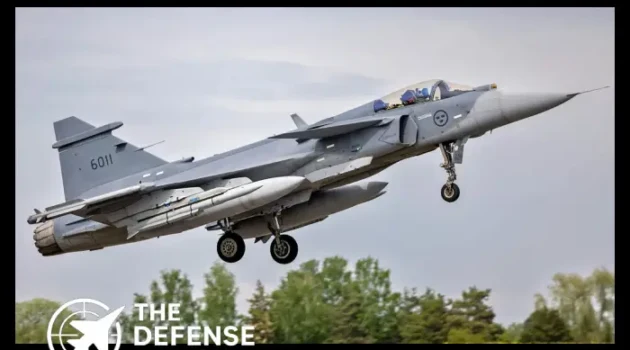
9. Saab Gripen E – Sweden
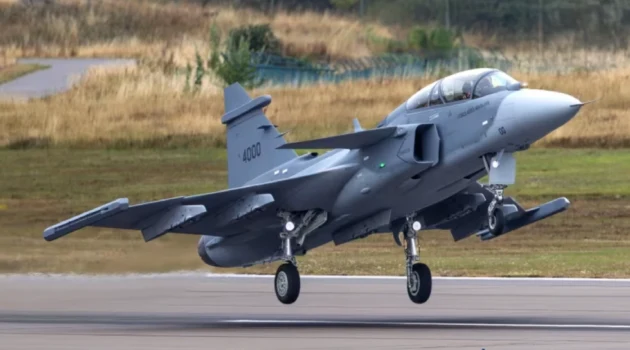
The Gripen E stands out for its cost-efficiency, powerful EW systems, advanced tactical datalinks, and multi-role versatility. Its small radar cross-section and excellent situational awareness make it a strong 4.5-generation contender.
10. KAAN Fighter – Türkiye
Türkiye’s KAAN program is progressing rapidly, aimed at delivering a stealth-capable, high-performance 5th-generation fighter with strong computing power and indigenous sensors. The first flight marks a major step forward for Turkish aerospace ambitions.
Global Analysis: What This Ranking Means for Airpower in 2026
The 2026 ranking of advanced fighter jets shows a clear technological divide. The United States remains dominant with two fully operational stealth fighters, while China continues to scale production and upgrades of the J-20. Russia is improving the Su-57 despite industrial challenges, and Europe is maintaining 4.5-gen relevance until 6th-generation programs like FCAS and GCAP enter service.
Meanwhile, new entrants—such as Türkiye, India, and Japan—are reshaping the future landscape by investing in indigenous 5th-generation aircraft. This diversification signals a shift from Western monopoly toward multipolar airpower modernization.
FAQs
Which fighter jet is the most advanced in 2026?The U.S. F-35 Lightning II leads due to its unmatched sensor fusion, global deployment, and combat-ready maturity.
Why is the F-22 still ranked so high?Despite limited numbers, its stealth, supercruise, and air dominance performance are still unmatched.
Is China’s J-20 considered a true 5th-generation fighter?Yes—especially with the latest WS-15 engine upgrades, which enhance its range, power, and stealth capabilities.
What is the most advanced European fighter in 2026?The Rafale F4 is Europe’s most modern operational fighter until 6th-gen programs arrive.
Which new fighter programs are worth watching?Japan’s F-3, Türkiye’s KAAN, and India’s AMCA will significantly impact next-decade airpower.
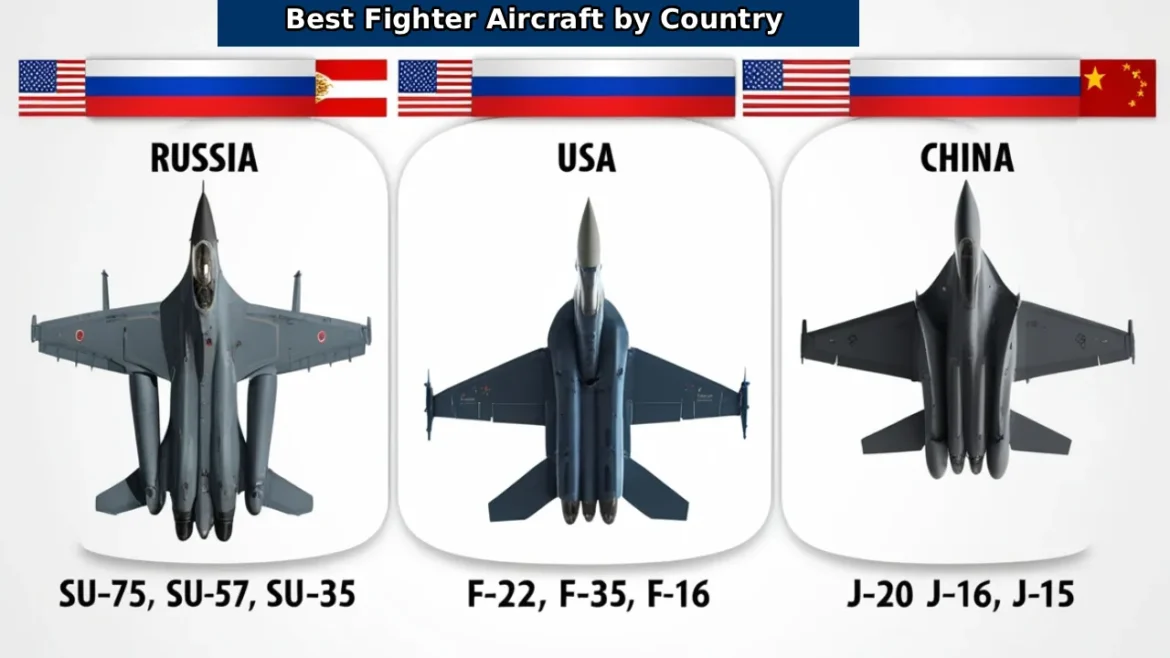
The global race for air superiority continues to intensify in 2026as Russia, the United States, and China expand and modernize their fighter aircraft fleets. Each nation is rapidly advancing its fifth-generation and multirole combat capabilities, aiming to secure technological and operational dominance in future wars. This comparison evaluates the leading fighter platforms representing the three major air powers — Russia (Su-75, Su-57, Su-35), United States (F-22, F-35, F-16), and China (J-20, J-16, J-15) — to understand how each country positions itself in the evolving aerospace landscape.
Russia’s Lineup: Su-75 | Su-57 | Su-35
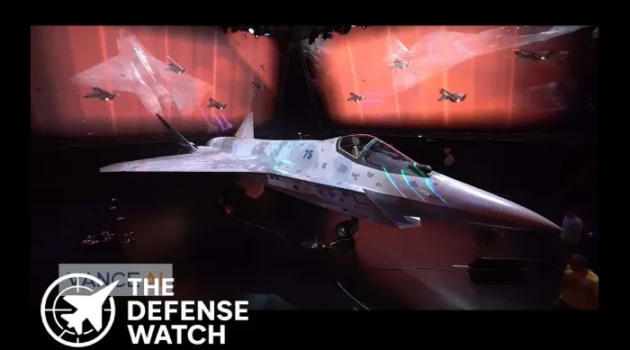
Su-75 “Checkmate” (Future 5th-Gen Light Fighter)
Russia’s Su-75, still under development, is designed as an affordable fifth-generation fighter aimed at export markets. Expected features include stealth shaping, advanced avionics, internal weapons carriage, and high maneuverability. If realized as promised, it could serve as Russia’s cost-effective counterpart to the F-35.
Su-57 (5th-Gen Stealth Multirole Fighter)
The Su-57 is Russia’s front-line stealth fighter featuring supermaneuverability, 360° sensor coverage, internal weapons bays, and long-range air-to-air missile capability. While stealth performance is still debated, the aircraft offers strong kinematic performance and advanced electronic warfare systems.
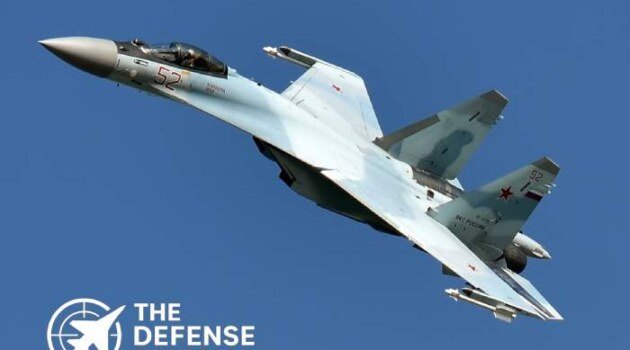
Su-35 (4.5-Gen Supermaneuverable Fighter)
The Su-35 remains one of the world’s most capable non-stealth air superiority fighters. Known for thrust-vectoring engines, long-range radars, and heavy weapons load, it provides Russia with a reliable platform for air dominance missions.
United States Lineup: F-22 | F-35 | F-16
F-22 Raptor (5th-Gen Air Superiority Fighter)
The F-22 remains unmatched in air-to-air combat due to its extremely low observability, thrust-vectoring agility, and advanced avionics. Despite ending production, the Raptor still represents the benchmark for fifth-generation air superiority.
F-35 Lightning II (5th-Gen Multirole Stealth Fighter)
The F-35 is now the most widely deployed fifth-generation fighter globally. It combines stealth, network-centric warfare, electronic attack, and advanced sensor fusion, making it a versatile asset for U.S. and allied forces.
F-16 Fighting Falcon (4th-Gen Multirole Fighter)
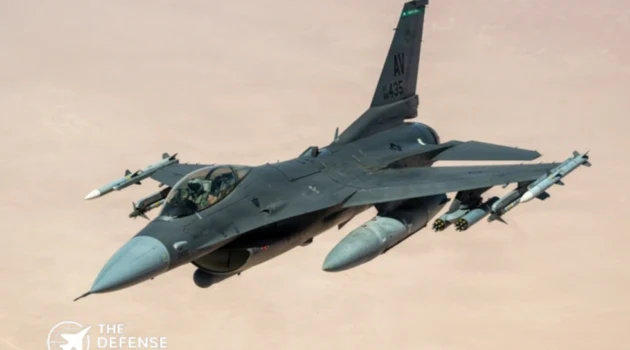
Even after decades of service, the F-16 remains a critical part of the U.S. Air Force and global export market. The modern Block 70/72 variants offer upgraded avionics, AESA radar, and expanded weapons capability.
China’s Lineup: J-20 | J-16 | J-15
J-20 Mighty Dragon (5th-Gen Stealth Fighter)
China’s J-20 is the nation’s most advanced stealth fighter and the backbone of the PLA Air Force’s modernization strategy. With a stealth-optimized airframe, long operational range, and active sensor systems, it acts as Beijing’s primary counter to U.S. fifth-generation fighters in the Indo-Pacific.
J-16 (4.5-Gen Multirole Fighter)
The J-16 is a heavily modernized platform derived from the Su-27 family, equipped with AESA radar, EW suites, and long-range missiles. It plays a key role in Chinese air dominance and strike missions.
J-15 (Carrier-Based Fighter)
Operating from China’s aircraft carriers, the J-15 provides the PLA Navy with blue-water airpower capabilities. While limited compared to U.S. carrier aviation, it forms a foundation for China’s future carrier strike ambitions.
Comparative Assessment: Who Leads in 2026?
Stealth & Technology Advantage – United States
The U.S. maintains the edge in stealth capability, sensor fusion, and network warfare through the F-22 and F-35 programs. These technologies remain difficult for rivals to replicate at scale.
Maneuverability & Kinetic Performance – Russia
Russia still excels in supermaneuverability and air combat kinematics, particularly with the Su-57 and Su-35. These designs favor close-range engagements and high agility.
Rapid Modernization & Fleet Expansion – China
China continues to grow its fleet at a remarkable pace, deploying J-20s in increasing numbers and investing heavily in advanced sensors, datalinks, and EW systems.
Strategic Context: The Airpower Balance Is Shifting
The U.S. remains the global leader in fifth-generation technology, but China is rapidly narrowing the gap through high production rates and indigenous innovation. Russia, while strong in aerodynamic design, faces industrial challenges and limited production output.
The next decade will likely see increased emphasis on sixth-generation programs, advanced drones, loyal wingmen, and AI-enabled combat aviation — areas where the U.S. and China are heavily investing.
FAQs
Which country has the strongest air force in 2026?The U.S. remains the leader in both technology and operational capability, primarily due to the F-22 and F-35 fleets.
Is the Su-75 operational?No, the Su-75 is still under development, with its first flight yet to be officially confirmed.
Is China’s J-20 stealth comparable to the F-35?The J-20 is considered stealthy, but U.S. fighters still maintain an edge in sensor fusion and low-observable coatings.
Which fighter is best in close-range combat?Russia’s Su-35 and Su-57 offer exceptional agility due to thrust-vectoring technology.
Which country is expanding its fleet fastest?China is currently increasing production of the J-20 and J-16 at the highest pace among major powers.
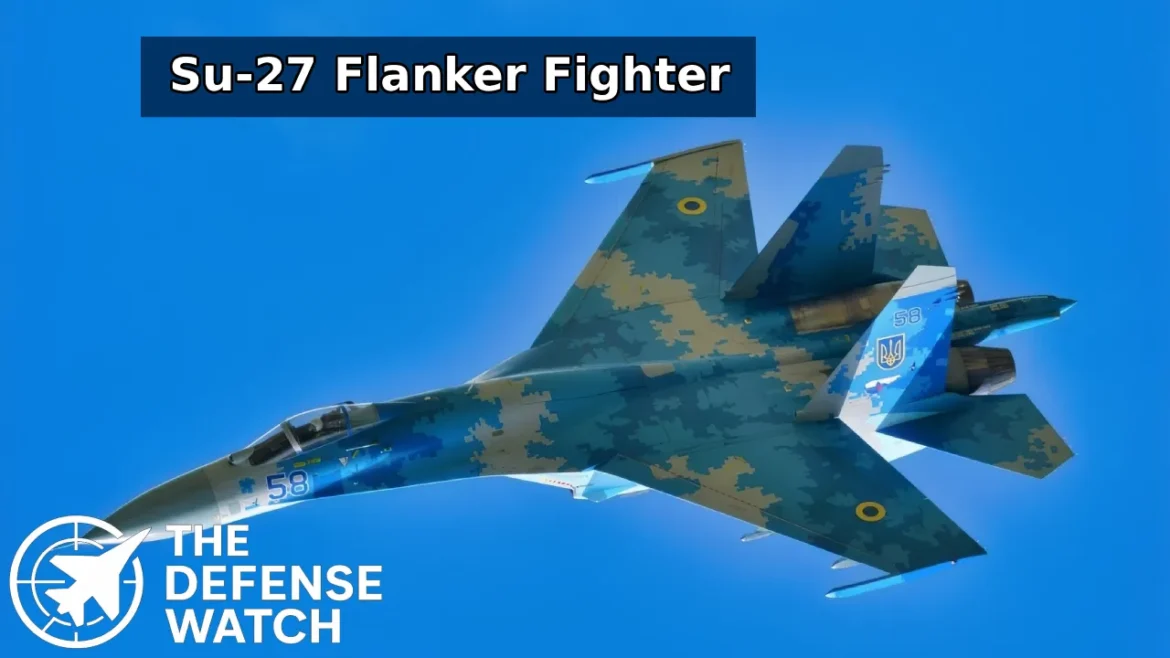
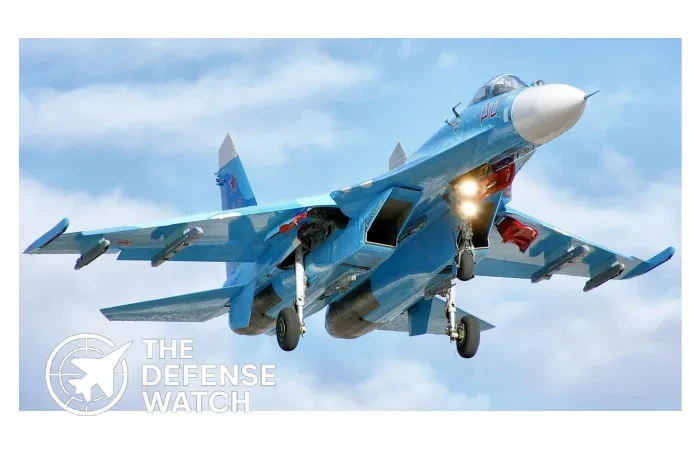
The United States military discreetly purchased two Russian-made Su-27 Flanker fighters in the mid-2000s to support advanced training and intelligence programs, according to historical procurement disclosures and defense industry sources. The acquisition, carried out through a foreign contractor, enabled U.S. pilots and analysts to study one of Russia’s most widely deployed air superiority fighters under controlled conditions.
Background: Why the Su-27 Flanker Matters
The Su-27 Flanker, developed by the Soviet Union in the late Cold War, was designed as a direct counter to the U.S. F-15 Eagle. With its Mach 2.35 top speed, high-agility aerodynamics, long operational range, and powerful radar suite, the aircraft became a cornerstone of Russian and allied air forces.
Following the collapse of the Soviet Union, several former republics inherited Su-27s. Limited budgets and shifting defense priorities made some of these aircraft available for legal export or refurbishment—creating rare opportunities for Western governments to obtain and evaluate frontline Russian platforms.

Image Credit: National Security Journal Image Credit: National Security Journal 
Image Credit: National Security Journal Image Credit: National Security Journal For the United States, having access to a real Su-27 Flanker offered significant advantages in understanding the design philosophy, strengths, limitations, and maneuver characteristics of a potential adversary aircraft.
Acquisition Through a Third-Party Contractor
The two Su-27 Flanker fighters were purchased through Tac Air, a private contractor specializing in adversary air support. Reports indicate that the aircraft originated from Ukraine’s surplus stock and were transferred after refurbishment and demilitarization processes aligned with export-control regulations.
While the exact purchase price was never publicly disclosed, defense analysts estimate that foreign-origin Flankers sold on the legal market typically range between $5–$15 million per unit depending on airframe hours and equipment installed.
The aircraft were shipped to a secure U.S. facility where engineers completed airworthiness evaluations and maintenance work prior to flight testing.
Purpose: Evaluation and Aggressor Training
Once in U.S. custody, the Su-27 Flanker fighters played key roles in:
1. Reverse-Engineering and Technical Evaluation
Analysts examined the aircraft’s radar cross-section, avionics architecture, radar performance parameters, and aerodynamic handling. Understanding these systems allowed the U.S. to refine both defensive countermeasures and fighter engagement strategies.
2. Adversary Air (Red Air) Training
Trained contractor pilots flew the Su-27 Flanker in simulated combat missions against U.S. fighters such as the F-15, F-16, and later the F-22 and F-35. First-hand exposure enabled American pilots to understand how the Flanker behaves during high-G maneuvers, low-speed engagements, and beyond-visual-range fights.
These sessions offered insights impossible to replicate through simulators alone.
3. Tactics Development
The Air Force’s Weapons School and intelligence community used data gathered from the aircraft to develop new tactics, techniques, and procedures for countering Russian-designed fighters widely exported to Asia, Africa, and the Middle East.
Expert Perspectives
Defense aviation expert Richard Aboulafia has noted that access to real foreign fighters gives the U.S. “a training and analytical advantage that no simulator or mock-up can replicate.”
Former Air Combat Command officials have similarly stated that assessments of authentic adversary aircraft significantly improve pilot situational understanding during air-to-air engagements.
Additionally, analysts highlight that the widespread global use of the Su-27 Flanker family—including its modern derivatives like the Su-30, Su-33, Su-34, and Su-35—makes direct exposure strategically valuable for the United States.
Strategic Significance
The acquisition reflects a long-standing U.S. practice of obtaining foreign combat aircraft whenever legally and practically feasible. Past examples include MiG-21s from Indonesia, Iraqi MiG-23s, and the well-known secretive “Red Eagles” squadron of the 1980s.
For the Su-27 Flanker, this access became especially relevant as Russia exported advanced variants to countries such as China, India, Vietnam, and Algeria. Understanding the aircraft’s baseline capabilities helped the U.S. anticipate how these fleets might operate in real-world scenarios.
What’s Next?
Although the two original Su-27 Flanker aircraft acquired by the U.S. are no longer believed to be flying, their legacy continues to influence American air combat programs. The rise of contractor-run adversary air units and increasing demand for dissimilar air combat training may prompt future interest in acquiring other foreign-origin platforms, especially as geopolitical tensions rise.
Meanwhile, the widespread deployment of advanced Flanker-family aircraft worldwide ensures that the insights gained from these airframes will remain relevant for years to come.
Su-27 Flanker Fighter Jet – Full Specifications
Su-27 Flanker Fighter Jet
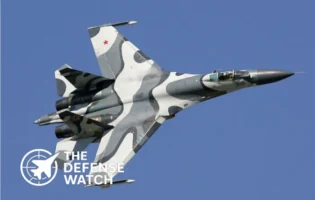
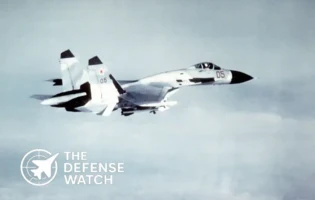
Defense Systems Full Specifications
General Information
Name Su-27 “Flanker” Manufacturer Sukhoi Design Bureau Country of Origin Soviet Union (Russia) Type / Role Air Superiority Fighter Generation 4th Generation Status In Service First Flight May 20, 1977 Introduction / In Service Since 1985 Number Built Over 700 Operators Russia, China, Ukraine, Vietnam, Ethiopia, Indonesia, Belarus Dimensions & Structure
Length 21.9 m (72 ft) Wingspan 14.7 m (48 ft) Height 5.9 m (19 ft) Wing Area 62 m² Empty Weight 16,380 kg Maximum Takeoff Weight (MTOW) 30,450 kg Internal Weapons Bay None External Hardpoints 10 Performance
Maximum Speed Mach 2.35 (2,500 km/h) Range 3,530 km Combat Radius 1,340 km Service Ceiling 19,000 m (62,500 ft) Rate of Climb 325 m/s Thrust-to-Weight Ratio 1.07 G Limits +9G Powerplant
Engine Type Saturn AL-31F Turbofan No. of Engines 2 Thrust (each) 27,500 lbf (122.6 kN) Thrust Vectoring No (Su-27 base model) Fuel Capacity 9,400 kg internal Armament
Gun 30mm GSh-30-1 cannon Missiles (Air-to-Air) R-27, R-73, R-77 Missiles (Air-to-Ground) Kh-29, Kh-31 Bombs FAB-series general-purp Hardpoints 10 Payload Capacity 8,000 kg Avionics & Systems
Radar N001 Myech Pulse-Doppler Radar Range 80–100 km Electronic Warfare (EW) System SPO-15 Beryoza RWR Targeting System IRST & Helmet-Mounted Sight Helmet Display Yes Navigation Inertial + GPS Autopilot / AI Assistance Basic analog system Communication Secure UHF/VHF Stealth & Technology
Radar Cross Section (RCS) 10–15 m² Stealth Features Non Infrared Signature Reduction Minimal Sensor Fusion No Networking Capabilities Limited datalink Variants
Special Export Versions Su-27SK Operational History
Major Conflicts / Deployments Ethiopia–Eritrea War, Ukraine conflict Notable Operators Russia, China, India (as Su-30MK), Ukraine Combat Proven? Yes Mission Types Air Superiority, Interception, Escort, Patrol Cost & Program
Unit Cost $30–40 million USD Development Cost Classified (Soviet-era) Program Name PFI Program (Perspective Frontline Fighter) Funding Countries Soviet Union Additional Information
Upgrades Planned Radar and avionics modernization Future Replacement Su-35S, Su-57 Export Restrictions Limited to friendly nations Notable Achievements Set multiple world records for climb rate Competitors F-15 Eagle, MiG-29, Rafale PROS
- Exceptional range and endurance
- Highly maneuverable airframe
- Powerful twin-engine thrust
- Proven combat record
- Extensive global operator base
CONS
- Outdated avionics compared to modern jets
- Lacks stealth features
- High radar cross-section
- Limited multirole capability in base model
- Maintenance-intensive
Su-27 Flanker: Russia’s Air Superiority Fighter
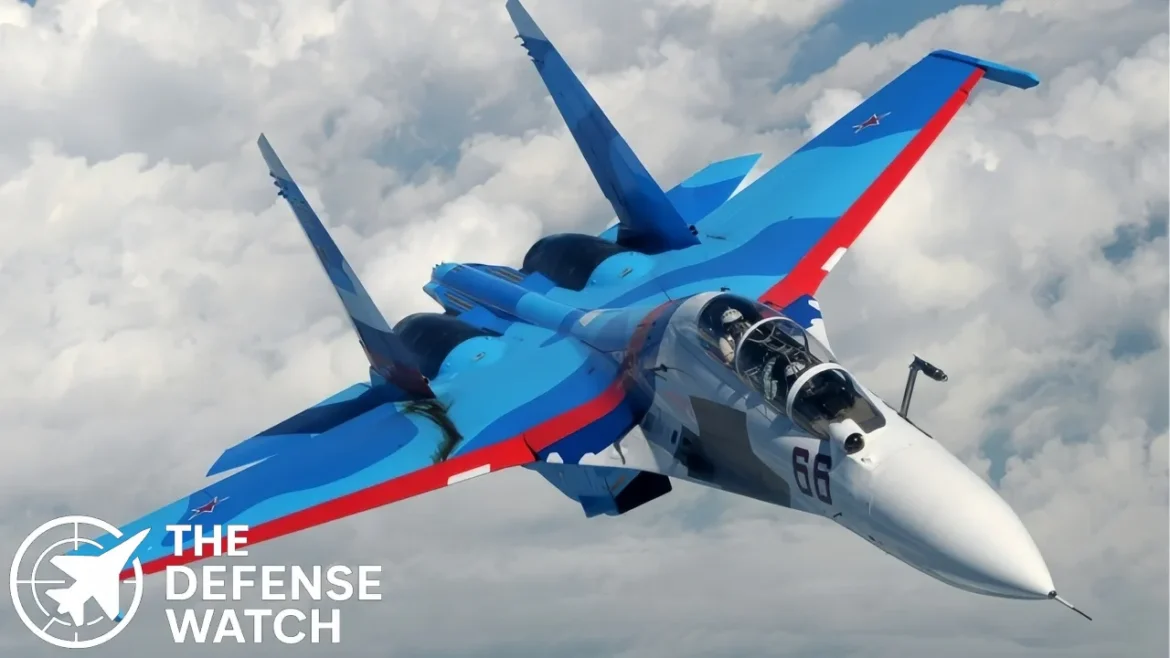
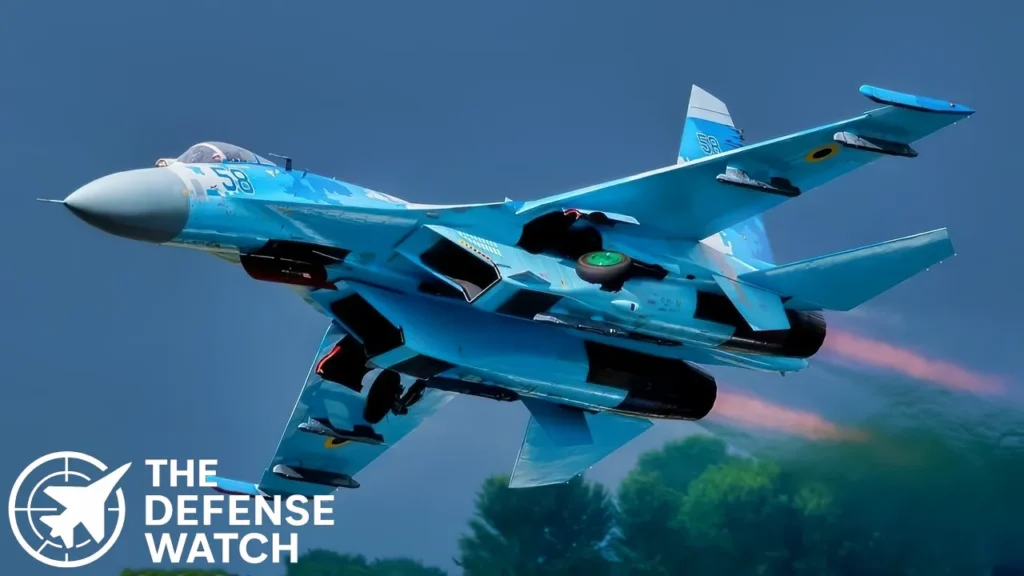
Developed by the Soviet Union’s Sukhoi Design Bureau, the Su-27 “Flanker” remains one of the most capable and recognizable fourth-generation fighter jets in the world. Conceived in response to the U.S. F-15 Eagle during the late Cold War, the Su-27 was designed to ensure Soviet air superiority against advanced Western aircraft. Its blend of range, agility, and firepower continues to make it relevant in modern combat environments.
Powered by twin Saturn AL-31F turbofan engines, the Su-27 can reach speeds of Mach 2.35 and altitudes exceeding 57,000 feet. With an operational range of nearly 2,200 miles, it provides the Russian Air Force with deep strike and patrol capabilities. The aircraft’s 30mm GSh-30-1 cannon and up to 10 hardpoints for air-to-air and air-to-ground missiles make it a formidable adversary in both interception and multirole operations.
Avionics on the Su-27 Flanker Fighter Jet include the N001 radar, offering detection ranges of up to 80–100 km against fighter-sized targets. Its infrared search and track (IRST) system and helmet-mounted sight enhance situational awareness and missile cueing. Though lacking stealth, the Su-27’s aerodynamic design and supermaneuverability—achieved through relaxed static stability and powerful thrust vectoring in later variants—make it one of the most agile fighters of its era.
Modernized derivatives such as the Su-30, Su-33, and Su-35 trace their lineage to the original Su-27 platform, underscoring its robust design and long-term adaptability.
Su-27 Flanker Fighter Jet Price in US
The Su-27 Flanker’s estimated unit cost is between $30–40 million USD, depending on configuration and export version. While not operated by the U.S., it is often studied by Western analysts and featured in training simulations for its performance benchmark role against American fighters like the F-15 and F-16.
FAQs – Su-27 Fighter Jet
Is the Su-27 a Flanker?Yes. The Su-27’s NATO reporting name is “Flanker”. This codename was assigned during the Cold War to identify Soviet aircraft in NATO’s system. The “Flanker” designation applies to the Su-27 and its subsequent derivatives, including the Su-30, Su-33, and Su-35.
Why is the Su-30 called Flanker?The Su-30 is a direct evolution of the Su-27 airframe, which is why NATO also classifies it under the same “Flanker” family. Although upgraded with modern avionics, radar, and multirole capability, the Su-30 retains much of the Su-27’s aerodynamic structure and design lineage—hence its continued “Flanker” naming convention.
Is the Su-27 better than the F-15?The Su-27 and F-15 Eagle were designed as counterparts during the Cold War. While the Su-27 offers superior maneuverability, range, and high-altitude performance, the F-15 generally holds an advantage in avionics, radar, and precision-guided weapon integration. In short, the Su-27 excels in agility and endurance, while the F-15 dominates in technology and situational awareness.
What is the most advanced Flanker?The most advanced “Flanker” variant today is the Su-35S, often dubbed “Flanker-E.” It features thrust-vectoring engines, Irbis-E radar, advanced electronic warfare systems, and partial stealth improvements. The Su-35S represents the peak of Su-27 family evolution before the introduction of Russia’s fifth-generation Su-57.
What generation is the Su-27?The Su-27 Flanker is a fourth-generation air superiority fighter. It was developed in the 1970s to counter advanced Western fighters like the F-14 and F-15, combining high speed, long range, and agility to maintain Soviet dominance in air-to-air engagements.
The F-22 Raptor may have taken first flight decades ago, but as the People’s Liberation Army Air Force (PLAAF) accelerates its stealth-fighter production and the U.S. next-generation air-dominance fleet remains years away, the United States Air Force (USAF) finds itself facing a potential air-superiority gap. According to a recent article in the National Security Journal, the optimum path forward is not retirement of the F-22, but an immediate push to transform it into a “Super Raptor” variant—extending its life, modernizing its sensors, weapons and networking, and bridging the time until sixth-generation systems mature.
This article explores why the F-22 Super upgrade has become a strategic imperative, outlines the key upgrade pathways, examines obstacles and counter-arguments, and provides a short context and analysis of what this means for air-power balance into the 2030s.
Why Upgrading the F-22 Makes Strategic Sense
Rising peer-threats demand constant air-dominance
China’s PLAAF is reported to operate approximately 300 stealth combat jets (such as the J-20) and is rapidly pushing ahead with follow-on 5th-generation and 6th-generation programs. In this context, retiring or sidelining the F-22 fleet would leave the USAF reliant on fewer proven platforms at a time when adversary capability is growing—not shrinking.
In short, the “air-dominance” mission set cannot be taken for granted. The F-22 remains one of the few platforms capable of executing the “first-shot, first-kill” doctrine in contested airspace thanks to its stealth, high thrust-to-weight ratio, and internal weapons bay design.
Production constraints and timing of next-gen fighters
The USAF is deja-vu: the next-gen fighter (under the Next Generation Air Dominance (NGAD) umbrella) will take years to achieve mass production. Meanwhile, the F-22 production line is closed, meaning building new airframes is not an option. Upgrading existing frames is far faster and more cost-effective.
Thus, the F-22 Super pathway becomes more than an option—it becomes a necessity to maintain credible air superiority while waiting for the 6th-generation leap.
Proven platform, vast upgrade potential
The F-22 airframe is not static: over the years it has undergone software, sensors, coatings and weapons updates—so much so that it is arguably a very different aircraft today than the one that first entered service.
Upgrading it further—with modern sensor-fusion, AI-enabled targeting, advanced electronic warfare, hypersonic and directed-energy weapons—makes strategic sense. It leverages continuity (training, logistics, maintainers) rather than starting from scratch.
What a “Super” F-22 Upgrade Would Entail
Networked avionics and sensor fusion
A core upgrade path involves giving the F-22 an enhanced integrated sensor suite, AI-driven data processing, and two-way communications/battle-management links—particularly with the F-35 Lightning II. According to the National Security Journal article, the F-22 already serves as an “aerial quarterback” connecting intelligence, targeting and strike elements.
A “Super” version would further that role, seamlessly tying into a networked force of manned and unmanned platforms.
Weapons and stealth enhancements
The planned integration of next-generation air-to-air weapons such as the AIM-260 Joint Advanced Tactical Missile, and possibly hypersonic missile options (e.g., the USAF’s MAKO air‑launched hypersonic missile) is central to the Super Raptor concept.
In tandem, upgrades to coatings, radar-absorbent materials and signature control will keep the platform stealth-relevant in increasingly contested electromagnetic environments.
Rapid deployment and global reach
Past USAF initiatives like “Rapid Raptor” focused on deploying F-22s globally within 24 hours. A Super Raptor variant would build upon this, leveraging modern logistics, forward-basing, and support to ensure readiness in high-threat theaters.
Extended service life
Rather than phasing out the F-22 in the near term, the Super concept envisions flying the type into the 2050s, acting as a credible dominant air-superiority platform while next-gen squadrons scale up.
Challenges and Counter-Arguments
Cost and opportunity‐cost
Upgrading the fleet is not free. Critics argue that funds poured into an extended F-22 life could divert resources from next-gen programs like NGAD, the F/A-XX (naval) or unmanned systems, thus delaying future capabilities. The National Security Journal acknowledges these concerns.
Platform limitations
Even upgraded, the F-22 retains inherent constraints: closed production line (so no expansion of fleet size), limited combat radius (which remains a logistical challenge, especially in the Indo-Pacific theatre) and maintenance burdens tied to its stealth skin and internal-weapons design.
How long is “enough”?
Even a Super Raptor variant can only hold the line until next-gen systems arrive; the question remains how much capability gap the USAF is willing to accept, and whether newer threats (e.g., more advanced integrated air-defense systems, hypersonic missiles) will outpace the upgrade.
Context and Implications for Air-Power Balance
Indo-Pacific posture
With China intensifying its naval and air‐force expansion, aircraft like the F-22 Super become critical in reinforcing U.S. deterrence. The ability to field stealthy, networked air-dominance fighters that can tie into allied and unmanned assets is central to the USAF’s posture in the region.
Strategic timeline bridging
The USAF’s plans show a fighter-fleet expansion to meet growing needs: one analysis notes the service is targeting 1,558 jets by 2035, up from roughly 1,271 today. In parallel, next-gen platforms will not reach numbers for years. The Super Raptor bridges this timeline by ensuring that fifth-generation air dominance remains credible while sixth-generation fleets are scaled.
Industrial and sustainment benefits
Modernizing rather than replacing leverages existing sustainment infrastructure, training pipelines and contractor support (primarily Lockheed Martin, with the F-22). It helps maintain the industrial base while newer programs ramp up. It may also reduce risk: mid-life upgrades are more predictable than entirely new airframe development.
Conclusion
In an era of intense great-power competition, the risk is not that the USAF will have too many superior fighters—it’s that it will have too few credible ones in the right place at the right time. The F-22 Raptor remains a formidable air-dominance asset, and transforming it into a “Super” variant offers an intellectually sound, fiscally and strategically responsible way to maintain U.S. air superiority until the next generation of fighters arrives.
The proposed upgrade path—sensor networking, weapons enhancements, stealth maintenance and global rapid deployment—aligns with the evolving threat environment. Nevertheless, challenges remain: delays in NGAD, budget pressures, maintenance burdens and range/logistics constraints must be addressed. On balance, the argument is compelling: the Super Raptor is not just a nice-to-have—it may be indispensable.
By accelerating the F-22 upgrade now, the USAF can buy time, preserve dominance and ensure that the United States remains the benchmark of air-superiority into the 2040s.
FAQs
What exactly is meant by “Super Raptor”?It refers to a heavily upgraded version of the F-22 Raptor featuring advanced avionics, networking, weapons (including hypersonics/DEW), and sensor fusion—effectively converting a proven airframe into a “fifth-generation-plus” fighter.
Why not just wait for the sixth-generation fighter?Because next-gen platforms (such as those under NGAD) are years away from large-scale deployment. Waiting risks a capability gap; upgrading the F-22 is faster and leverages existing assets.
How long could the F-22 Super stay relevant?With the right upgrades, analysts project the F-22 platform could serve into the 2050s and maybe beyond in the U.S. inventory.
What are the main risks with this upgrade path?The key risks include funding diversion from next-gen programs, inherent airframe limitations (range, closed production line), stealth-skin maintenance burdens and evolving threat systems that may outpace the upgrades.
Will the number of F-22s increase under the Super concept?No new production line is planned—the upgrade applies to existing airframes. So fleet size remains unchanged, reinforcing the importance of networked operations and teaming with unmanned systems.
Russia’s Su-30SM Fighter: A Symbol of Aerial Supremacy
In an era of rapid advancements in aerial warfare, Russia’s Su-30SM fighter stands as a formidable testament to Moscow’s commitment to air superiority. Capable of reaching Mach 2 speeds, this twin-engine multirole platform combines supermaneuverability with a heavy weapons load, posing a direct challenge to any adversary’s air defenses. As geopolitical frictions intensify across Eastern Europe and beyond, the Su-30SM’s evolving role underscores Russia’s strategy to maintain parity—or even superiority—in contested skies.
Developed by the Sukhoi Design Bureau, the Su-30SM entered service with the Russian Aerospace Forces in 2012, building on the storied Su-27 Flanker lineage. Its design emphasizes versatility, enabling seamless transitions between air-to-air intercepts and precision ground strikes. Recent deliveries and upgrades, including those to allies like Belarus in August 2025, highlight its ongoing relevance. For defense analysts, the Su-30SM fighter represents not just a machine, but a calculated message: Russia’s air power remains agile, lethal, and export-ready for nations seeking to counterbalance Western dominance.
Image Credit: Creative Commons. The Engineering Marvel Behind Mach 2 Performance
At the heart of the Su-30SM’s prowess are its two Saturn AL-31F turbofan engines, each delivering over 27,000 pounds of thrust in afterburner mode. This propulsion duo propels the aircraft to a top speed of approximately 1,500 miles per hour at altitude, earning its Mach 2 moniker and allowing it to outpace many contemporaries in high-threat environments. Low-level dashes reach around 840 miles per hour, ideal for evading surface-to-air threats during penetration missions.
What sets the Su-30SM fighter apart is its thrust-vectoring nozzles, which enable post-stall maneuvers like the Pugachev’s Cobra—a dramatic pitch-up that can reverse direction mid-dogfight. Coupled with a combat radius exceeding 900 miles without refueling, and compatibility with in-flight probes for extended loiter times up to 3.5 hours, the platform excels in prolonged operations. These attributes make it a nightmare for enemy pilots, as its agility disrupts predictable engagement patterns.
Armament Arsenal: Versatility in Every Hardpoint
The Su-30SM’s 12 external pylons can shoulder up to 17,600 pounds of ordnance, transforming it into a flying arsenal for diverse threats. Its fixed 30mm GSh-30-1 cannon, with a blistering rate of fire up to 1,800 rounds per minute, serves as a close-in equalizer, effective against both aerial and ground targets out to 1,200 meters.
For beyond-visual-range engagements, the aircraft integrates advanced missiles like the R-77-1 active radar-guided variant, boasting a 110-kilometer reach, and the longer-legged R-37M, which stretches to 350 kilometers on upgraded SM2 models. Anti-ship duties fall to the Kh-31A, a supersonic missile skimming just meters above waves to strike destroyer-class vessels at 38 nautical miles. Ground-attack options include laser-guided Kh-29s and glide bombs, ensuring the Su-30SM can dismantle armored columns or fortified positions with pinpoint accuracy.
This payload flexibility extends to electronic warfare suites, with integrated jammers to spoof enemy radars. In essence, the Su-30SM fighter’s armament philosophy prioritizes adaptability, allowing crews to tailor loads for theater-specific demands—from Baltic patrols to Pacific island chains.
Recent Upgrades: Elevating the Su-30SM
Modernization efforts have breathed new life into the Su-30SM fleet. The SM2 variant, spotlighted in 2025 deliveries to Belarus, incorporates enhanced avionics and a Bars-R radar with nearly triple the detection range of predecessors—scanning out to 400 kilometers for stealthy intruders. Navigation upgrades, including GPS/INS hybrids resistant to jamming, bolster all-weather operations.
Closer to home, Russia’s Aerospace Forces are transitioning select units to the Su-30SM1 standard, featuring improved stores management for precision-guided munitions like the KAB-250 smart bombs. Internationally, Kazakhstan turned to Indian expertise in August 2025 for AESA radar retrofits on its Su-30SMs, integrating Virupaksha systems to rival fifth-generation stealth fighters. These enhancements, detailed in recent analyses, ensure the platform’s viability against evolving threats like drone swarms and hypersonic interceptors.
Such upgrades aren’t mere tweaks; they reflect Russia’s industrial resilience amid sanctions, with serial production humming at the Irkutsk Aviation Plant. By late 2025, over 130 Su-30SMs operate with the VKS, supplemented by exports totaling hundreds worldwide.
Global Deployments: From Crimea to Caracas
The Su-30SM’s footprint spans continents, underscoring its appeal as a cost-effective powerhouse. India’s fleet of over 270 Su-30MKIs— a close cousin—patrols the Indo-Pacific, while Vietnam’s squadrons deter maritime incursions in the South China Sea. In Africa, Algeria and Uganda leverage the type for border security, and Venezuela’s aircraft have staged provocative flyovers near U.S. assets in the Caribbean.
Operationally, the fighter has seen combat in Syria, where it coordinated strikes against ISIS holdouts, and more recently in Ukraine-related theaters. A notable incident in October 2024 saw a Su-30SM downed by friendly fire over Crimea during a drone intercept, with pilots ejecting safely—a reminder of the risks in dense electronic battlespaces. Yet, these deployments affirm the aircraft’s robustness, with high sortie rates and low maintenance demands.
Exports continue apace: Belarus’s full receipt of 12 SM/SM2 jets in August 2025 bolsters NATO’s eastern flank concerns, while Indonesia eyes additional units for archipelago defense. This proliferation sends a clear signal—nations from Astana to Hanoi can acquire Mach 2 capabilities without breaking the bank.
Geopolitical Ramifications: A Message in the Skies
Beyond technical specs, the Su-30SM fighter embodies Russia’s bid to reshape airpower dynamics. In a multipolar world, its export success erodes Western monopolies on advanced fighters, empowering non-aligned states to challenge U.S.-led coalitions. For instance, Venezuela’s integration of Kh-31A missiles with Su-30SMs serves as a deterrent against hemispheric interventions, mirroring Iran’s use of similar platforms in the Gulf.
Analysis: As tensions simmer in 2025—from Taiwan Strait flare-ups to Arctic resource scrambles—the Su-30SM’s upgrades position Russia as a swing supplier in arms races. Allies like Belarus gain not just aircraft, but interoperability with Moscow’s command networks, potentially complicating NATO exercises. However, vulnerabilities persist: reliance on imported components and pilot training gaps could blunt its edge against F-35 swarms. Ultimately, the Su-30SM warns that affordable, high-performance fighters democratize aerial threats, forcing global air forces to rethink deterrence strategies.
Contextual Insight: With U.S. F-15EX rollouts and China’s J-20 expansions, the Su-30SM’s role evolves from frontline workhorse to networked enabler. Integrated with S-400 systems, it forms denial bubbles over key theaters, compelling adversaries to invest in standoff weapons. This layered approach amplifies Russia’s asymmetric advantages, ensuring the Su-30SM remains a pivotal asset through the decade.
In summary, Russia’s Mach 2 Su-30SM fighter isn’t just an evolution—it’s a strategic imperative, reminding every air force that speed, versatility, and reach define survival in modern skies.
FAQs
What is the top speed of the Su-30SM fighter?The Su-30SM achieves Mach 2 (about 1,500 mph) at high altitude, powered by twin AL-31F engines for rapid intercepts.
How does the Su-30SM compare to Western fighters like the F-15?While the F-15 edges in radar stealth, the Su-30SM excels in maneuverability and payload, offering cost-effective multirole flexibility for export markets.
What recent upgrades have been applied to the Su-30SM in 2025?Key 2025 enhancements include tripled radar detection ranges in the SM2 variant and AESA integrations for allies like Kazakhstan, boosting anti-stealth capabilities.
Which countries operate the Su-30SM fighter?Operators include Russia, India, Vietnam, Algeria, Belarus, and Venezuela, with over 400 units in global service.
What role does the Su-30SM play in current conflicts?It supports air patrols and strikes in regions like Ukraine and Syria, demonstrating resilience in high-intensity electronic warfare environments.
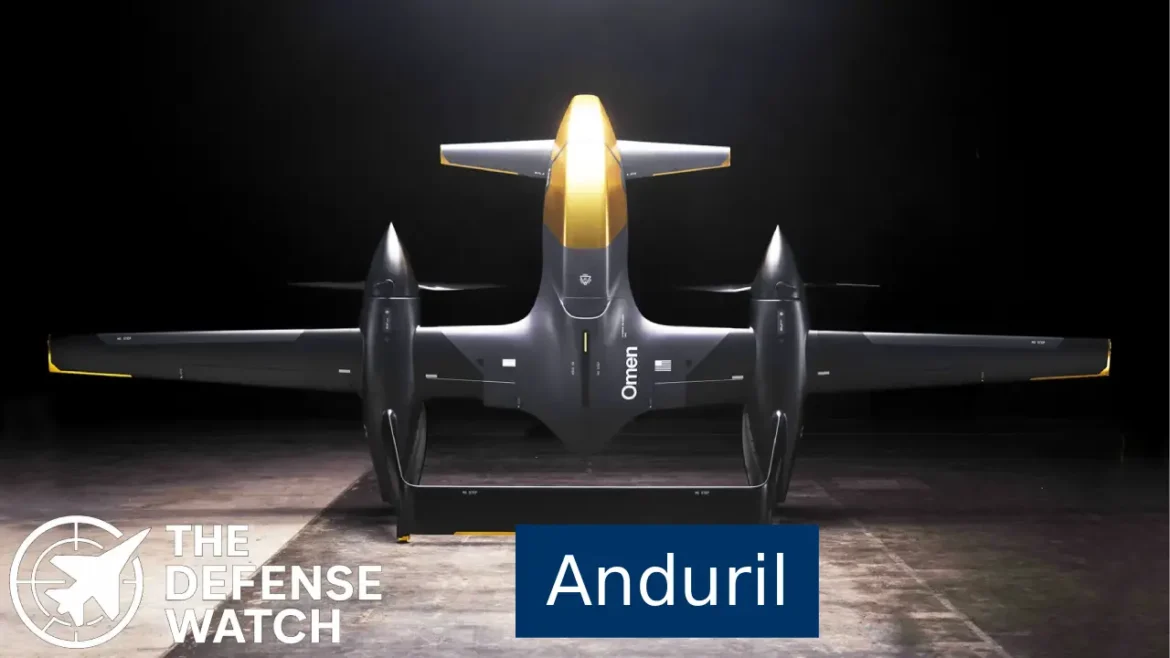
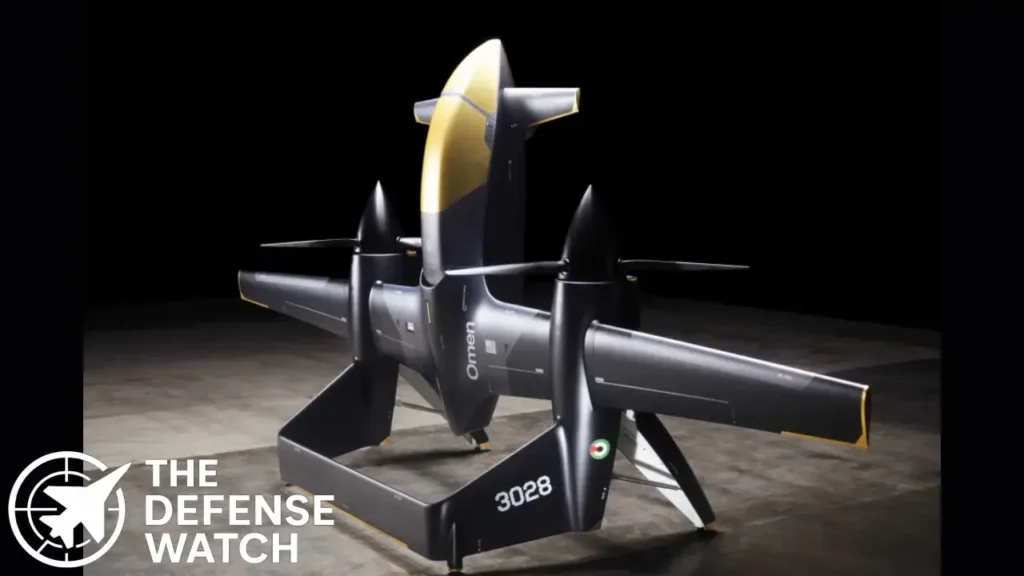
Anduril Industries has publicly unveiled its latest unmanned aerial vehicle, the “Omen,” a hybrid-electric tail-sitter vertical take-off and landing (VTOL) drone, developed jointly with the EDGE Group in the United Arab Emirates (UAE). The announcement came in advance of the 2025 Dubai Airshow and reveals a new UAV aimed at long-endurance missions in the “heavy” Group 3 category.
Background
Tail-sitter VTOL drones are a niche but increasingly contested segment of unmanned systems: they combine vertical take-off and landing capability with fixed-wing cruising flight. Traditional Group 3 unmanned aircraft systems (UAS) weigh between 55 and 1,320 pounds, can operate up to altitudes between 3,500 and 18,000 ft, and achieve speeds between 100 and 250 knots. The Omen is intended to sit at the upper end of that class. The concept of hybrid-electric propulsion — combining battery or electric power with a conventional engine — is increasingly viewed as a way to extend endurance and reduce dependency on runways.
The Omen: Details and Capabilities
Partnership and Production
Anduril’s announcement states that Omen will be co-developed with EDGE, which will also assist with production, sales and sustainment in the UAE. Anduril reports that a firm order has been received for up to 50 units from an unnamed UAE-based customer. Manufacturing is slated to occur at Anduril’s upcoming Arsenal-1 factory in Ohio, with joint development extending into 2028.
Design and Propulsion
The Omen features a twin-rotor tail-sitter configuration: the drone takes off and lands standing on its tail, then transitions to horizontal flight via its slender main wings and canard foreplanes. Anduril describes the propulsion system as hybrid-electric: combining a traditional powerplant with battery-electric lift motors. Dr. Shane Arnott, Senior VP at Anduril, said that “we hit a wall when it came to propulsion technologies… we’ve been working very diligently over the last five years … in particular series hybrid tech.”
Performance Claims
While Anduril has not provided full specifications, Omen is described as a “heavy Group 3” drone, and Arnott said its payload capacity is “three to five times” more than typical Group 3 systems (which currently average payloads in the 25–50 lb range). Range-wise, Omen is claimed to be able to fly “three to four times as far as typical Group 3 designs on the market now.” Arnott said it is “Indo-Pacific relevant ranges,” meaning long-haul over-water operations could be targeted.
Market and Competitive Context
The announcement notes that whilst there are other tail-sitter designs (for example the V‑BAT from Shield AI, which is combat-proven in Ukraine), what sets Omen apart is “really the propulsion tech … being able to get it off the ground and then still be able to get into a regime that is efficient for forward flight.” Anduril also pointed to the recent unveiling by Sikorsky/Lockheed Martin of the Nomad family of tail-sitter UAVs, indicating the competition in this architectural space is heating up.
Expert & Policy Perspective
From a defence industry perspective, the Omen’s focus on the Indo-Pacific theatre reflects growing demand among U.S. allies and partners for long-endurance unmanned systems capable of remote, maritime, or dispersed operations. The partnership with EDGE in the UAE also underscores the region’s growing role as a production and export hub for advanced unmanned systems. The use of hybrid-electric propulsion may allow for reduced logistical footprints, lower acoustic signatures, and increased endurance — all desirable attributes for distributed operations.
However, the lack of publicly released performance data means operational utility remains to be validated. The transition from demonstrator to production, the cost per unit, maturity of hybrid-electric propulsion in heavier UAS, and sustainment in austere environments all remain open questions. Analysts will also watch export controls, interoperability with partners’ C2 systems, and how the Omen fits into existing unmanned architectures in allied air forces.
What’s Next
Anduril indicates that the joint development with EDGE will run into 2028, after which series production and fielding of “fully missionised” Omen systems will begin. twz.com In the interim, the Dubai Airshow and associated marketing efforts will likely be used to promote the system to other international customers. As multiple tail-sitter designs emerge, potential users will compare trade-offs of cost, endurance, payload, logistics, and supplier ecosystem.
For defence procurement authorities, the introduction of Omen may drive reconsideration of unmanned system architecture in the Group 3 class — potentially replacing or complementing existing fixed-wing or rotorcraft UAVs with hybrid-electric tail-sitter models.
Closing
The unveiling of Omen by Anduril and EDGE marks a significant step in the evolution of unmanned aerial systems: hybrid-electric propulsion, tail-sitter VTOL architecture, and long-range capabilities in the Group 3 class. If the claimed endurance, payload and logistical advantages are borne out in operational service, Omen could become a reference point for future tactical and expeditionary UAV acquisitions. Its progress will be closely watched by militaries and industry alike.
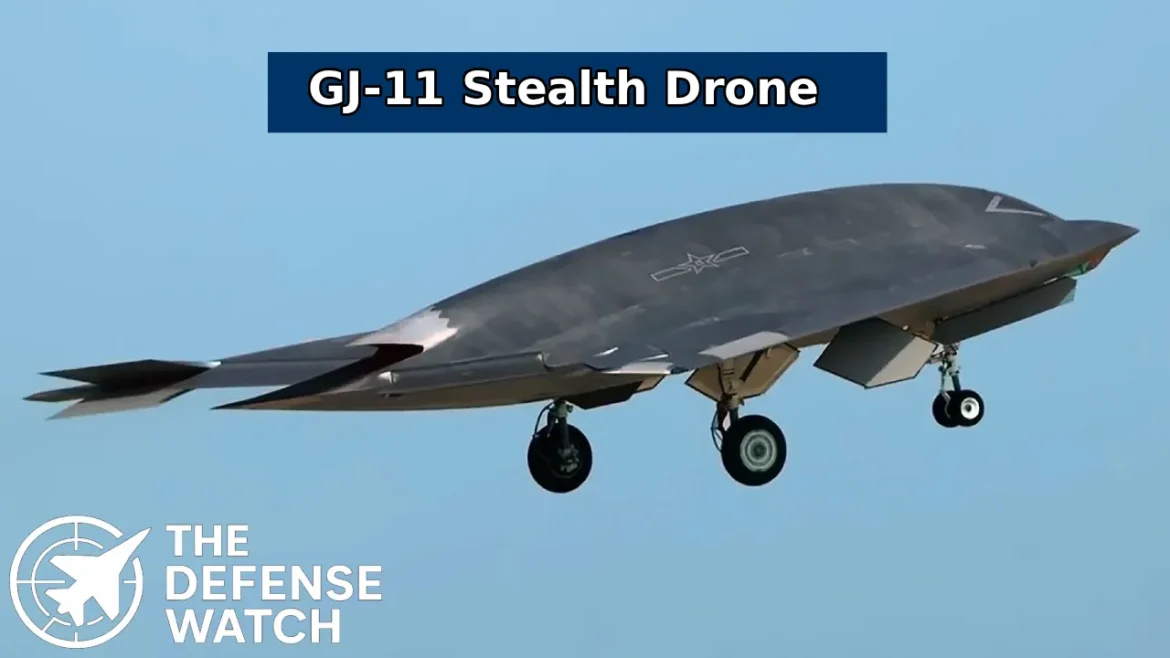
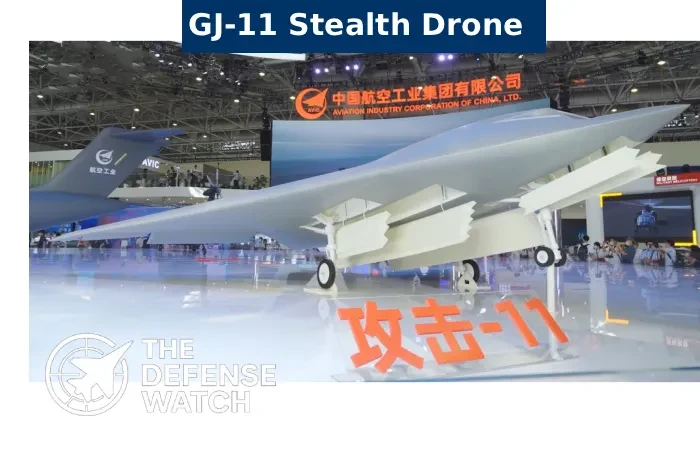
China Unveils GJ-11 “Mysterious Dragon” Stealth Drone
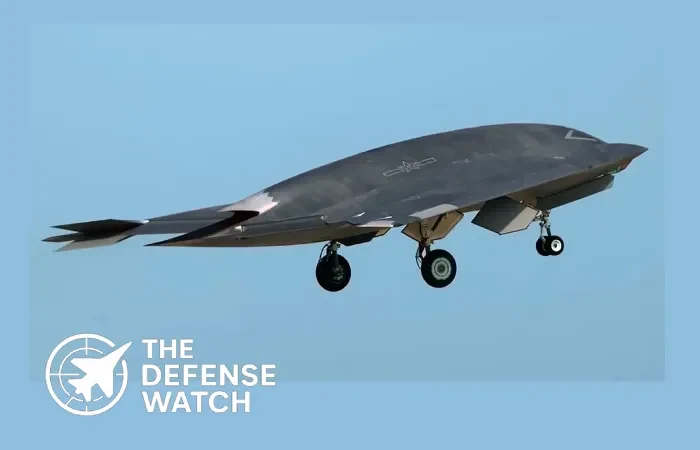
China has officially revealed its long-rumored GJ-11 unmanned combat air vehicle (UCAV), now formally named “Mysterious Dragon”. The People’s Liberation Army Air Force (PLAAF) released the first official video of the aircraft in flight, showing it operating alongside the J-20 stealth fighter and the J-16D electronic attack aircraft. This marks a significant milestone in Beijing’s push to integrate advanced unmanned systems into its air combat fleet.
The GJ-11, previously known in Western circles as the Sharp Sword, has been in development for over a decade. Analysts believe the aircraft is designed for a mix of penetrating air-to-surface strikes, intelligence, surveillance, and reconnaissance (ISR) missions, with potential for electronic warfare and air-to-air operations.
First Official PLAAF Footage
The PLAAF video, released to commemorate the 76th anniversary of its founding, runs nearly 30 minutes and showcases the GJ-11 in several key sequences:
- Formation flight with J-20 and J-16D: Demonstrates potential for cooperative operations between crewed and uncrewed platforms.
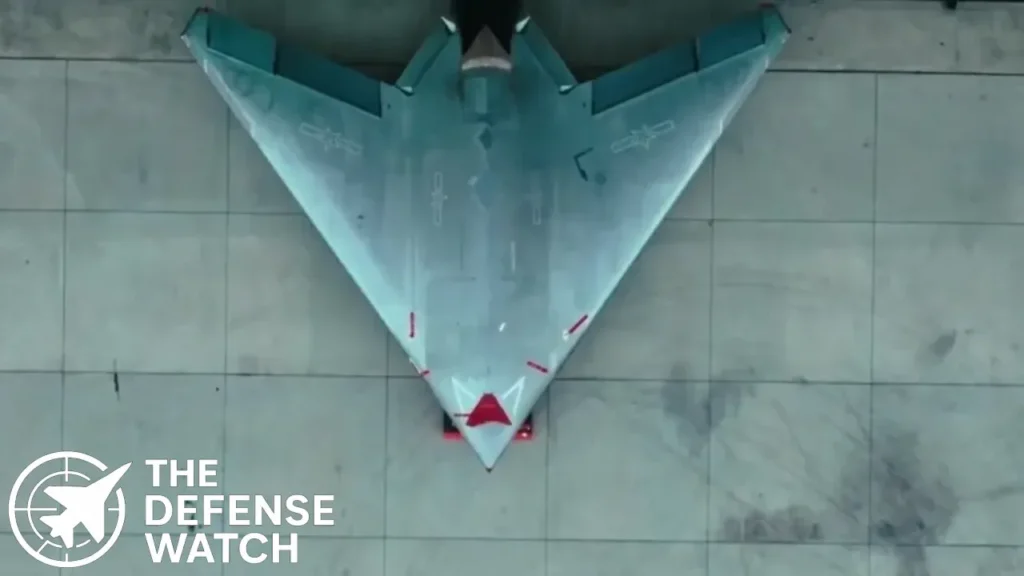
- Takeoff and maneuvering footage: Highlights its stealthy flying-wing design optimized for low radar cross-section.
- Air-to-air combat context: Shows a J-20 launching a PL-15 medium-range air-to-air missile from its internal weapons bay, illustrating the synergy between UCAVs and fifth-generation fighters.
This coordinated display signals China’s commitment to autonomous and semi-autonomous drone integration within its modernized air force.
Capabilities and Strategic Context
The China GJ-11 stealth drone is assessed to carry a relevant weapons payload while maintaining longer endurance than crewed tactical jets. Its stealthy design allows for deep penetration missions in contested airspace, while also performing ISR and electronic attack tasks. Experts suggest it could serve as a force multiplier, working in tandem with aircraft like the J-20 to extend sensor coverage, suppress air defenses, and execute precision strikes.
China’s development of the GJ-11 comes amid a global trend of pairing unmanned systems with advanced manned fighters, a strategy aimed at increasing survivability and operational flexibility. The PLAAF’s public release of the drone underscores its intent to showcase technological progress and bolster deterrence messaging.
Analysis: Implications for Regional Airpower
The emergence of the China GJ-11 stealth drone may have notable implications for the airpower balance in the Indo-Pacific region. With long-range stealth UCAVs entering service, China could expand its strike and ISR reach while reducing risk to human pilots. Moreover, integration with J-20 fighters hints at the potential for networked warfare, where drones act as forward sensors, decoys, or electronic attack platforms in complex combat scenarios.
While precise numbers and operational readiness remain classified, the GJ-11’s appearance signals that China is moving toward deployable stealth drones capable of integrated, high-end combat operations, a domain previously dominated by the United States.
FAQs
What is the GJ-11 Mysterious Dragon?It is China’s stealth unmanned combat air vehicle (UCAV), designed for air-to-surface, ISR, and potential electronic warfare missions.
When did the PLAAF release official footage of the GJ-11?The first official video was released in November 2025, coinciding with the 76th anniversary of the PLAAF.
What other aircraft were shown flying with the GJ-11?The GJ-11 was seen alongside the J-20 stealth fighter and the J-16D electronic attack aircraft.
Does the GJ-11 carry weapons?Yes, it can carry a relevant payload for precision strikes, though specific armaments are not publicly disclosed.
What is the strategic significance of the GJ-11?The UCAV enhances China’s ability to conduct long-range stealth strikes, ISR missions, and integrated drone-fighter operations in contested airspace.
Chinese GJ-11 Stealth Drone – Full Specifications
- Maximum Speed: ~1,000 km/h
- Endurance: ~6–8 hours
- Operational Range: 1,500+ km
- Payload Capacity: ~400–500 kg
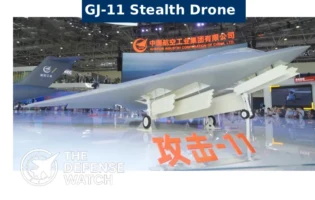
Chinese GJ-11 Stealth Drone
Defense Systems Full Specifications
1. General Information
Manufacturer Chengdu Aircraft Industry Group Country of Origin China Type / Role Stealth Attack / Reconnaissance UAV First Flight / Introduced 2013 Status In Service / Limited Deployment Unit Cost Classified 2. Performance
Maximum Speed ~1,000 km/h Cruise Speed ~700 km/h Operational Range 1,500+ km Endurance 6–8 hours Service Ceiling 15,000 m (~49,000 ft) 3. Dimensions
Length ~8 m Wingspan ~12 m Height ~1.8 m Maximum Takeoff Weight (MTOW) ~4,500 kg 4. Payload & Armament
Payload Capacity 400–500 kg Hardpoints Internal bays Weapons Precision-guided missiles & bombs Sensors EO/IR, SAR, laser designator Avionics Satellite link, GPS/INS, targeting pod 5. Propulsion
Engine Type Turbofan (Exact type classified) Engine Power Estimated 2,000–2,500 kgf thrust 6. Communication & Control
Control Type Remote / Autonomous Data Link Range Satellite beyond line-of-sight Navigation GPS / INS 7. Operational Use
Primary Users PLAAF Combat Proven Limited Notable Operations Classified / Testing Phase PROS
- Low-observable stealth design
- Long-range strike capability
- Advanced sensor and ISR suite
- Autonomous and manned-control operation modes
- Integration with fifth-generation fighter jets
CONS
- Limited operational history and combat-proven data
- Subsonic speeds may restrict rapid response
- High development and production costs
- Reliance on satellite communication vulnerable to jamming
- Payload capacity lower than larger UCAVs
GJ-11 Stealth Drone: China’s Advanced Unmanned Strike Platform
The Chinese GJ-11 Stealth Drone, also known as the “Sharp Sword,” represents China’s cutting-edge foray into stealth unmanned aerial vehicles (UAVs) designed for precision strike and reconnaissance missions. Developed by the Chengdu Aircraft Industry Group, the GJ-11 integrates low-observable airframe design, advanced sensors, and autonomous operational capabilities, making it a key asset for modern asymmetric warfare.
Manufacturer and Origin
- Manufacturer: Chengdu Aircraft Industry Group
- Country of Origin: China
- Purpose: Long-range strike, reconnaissance, and support for manned fighter jets like the J-20.
Capabilities and Performance
The Chinese GJ-11 Stealth Drone is optimized for deep penetration into contested airspace. Featuring a tailless, flying-wing design, it minimizes radar signature while carrying a variety of precision-guided munitions. Its estimated operational range exceeds 1,500 km, with a subsonic cruise speed allowing extended mission endurance. The drone can be deployed both autonomously and via remote control, enabling flexible operational profiles.
Technology and Armament
Equipped with advanced EO/IR sensors, synthetic aperture radar (SAR), and satellite communication links, the GJ-11 can conduct both intelligence gathering and precision strikes. Its internal weapons bay supports guided missiles and bombs, maintaining stealth while delivering combat payloads. The platform is compatible with drone swarm operations and networked warfare strategies, reflecting China’s emphasis on integrated unmanned systems.
Operational Use
Though primarily operated by the People’s Liberation Army Air Force (PLAAF), the GJ-11 is expected to supplement China’s fifth-generation fighter fleet. Its missions include suppression of enemy air defenses, strategic strikes, and reconnaissance in contested environments.
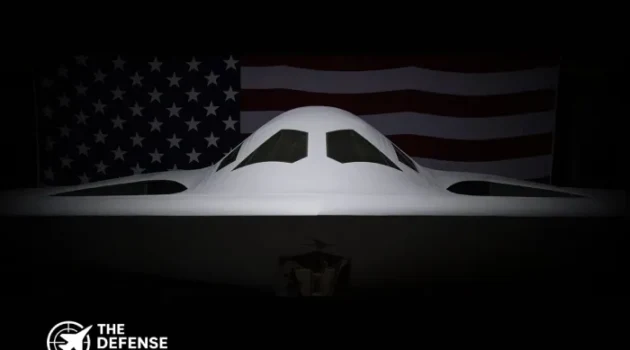
The B‑21 Raider is set to radically redefine the U.S. bomber force. While public attention often focuses on its stealth pedigree, a deeper look shows that the U.S. Air Force (USAF) is planning something far more ambitious: a networked strike node capable of operating as pilot-manned, optionally unmanned, and deeply integrated with sensors, drone teams and battle-management systems. Recent reporting has underscored this shift.
In this article we unpack the emerging role of the B-21 Raider, examine how its operational concept is evolving, and explore what that means for future bomber operations and strategic deterrence.
The B-21 Raider in Brief
Developed under the USAF’s Long Range Strike Bomber (LRS-B) program, the B-21 Raider is designed by Northrop Grumman as a next-generation stealth bomber with both conventional and nuclear mission sets. Key public attributes include:
- A flying-wing stealth design, following from the legacy of the B-2 Spirit.
- An open systems architecture enabling upgrades of sensors, electronic warfare (EW) packages and data links over time.
- A planned procurement of at least 100 aircraft to become the backbone of the USAF bomber fleet in the 21st century.
Yet, as several recent analyses suggest, the B-21 Raider is intended to do more than simply deliver bombs.
B-21 Raider Stealth Bomber – Full Specifications
- Maximum Speed: High subsonic (Mach 0.8+)
- Range: (est. 6,000+ nm unrefueled)
- Payload Capacity: Est. 20,000–30,000 lb internal
- Crew: 2
From “Bomb Truck” to “Penetration Node”
Crew re-thinking: one pilot + WSO
One of the most striking developments: the USAF is considering a default crew model of a single pilot, paired with a Weapons System Officer (WSO) rather than a second pilot.
Historically, strategic bombers have flown with two pilots, especially for long-duration missions. But the B-21 concept shifts the second seat role from piloting to managing complex sensor suites, networks and unmanned teaming. As one commentary frames it, the bomber is “less a bomber than the lead element of a system-of-systems”.
Optional unmanned operations or “loyal wingmen”

Even more ambitious: the aircraft is built from the outset to support optionally-manned operations and to act as a control node for unmanned aircraft.
This emerging concept transforms the B-21 from a payload-delivery platform into a battle manager that can orchestrate drones, manage data flows and perform deeper penetration in contested airspace.
Implications for stealth, sensors and networks
The shift in mission profile has knock-on effects for stealth, sensors and networking. By embedding the WSO and unmanned teaming roles, the B-21 can layer its stealth penetration with persistent ISR (intelligence, surveillance, reconnaissance), EW and rapid sensor-to-shooter kill chains. That is a significant evolution from earlier bomber models which were primarily “bomb trucks” delivering ordnance.
Strategic & Operational Context
Strategic deterrence and modernization
The B-21 Raider is central to the USAF’s long-term bomber modernization effort. With adversary air-defense systems (A2/AD) growing more capable, legacy bombers alone may struggle to penetrate future contested battlefields. The B-21’s networked and optionally unmanned capabilities aim to address that.
Risks of requirement creep and cost growth
But this new ambition carries risk. As one analysis warns, allowing the role and crew concept of the B-21 to drift may cause requirement creep, higher costs or delay. We already see cost pressures: recent reporting notes that manufacturer Northrop Grumman incurred higher-than-expected material and manufacturing costs in the B-21 program.
Competition and future threat environment
For the United States, the B-21 isn’t just replacing older platforms—it’s designed to stay viable even as peer competitors such as Xian H‑20 (China) and PAK DA (Russia) advance. The networked, optionally unmanned nature of the B-21 gives the USAF a strategic edge in long-range strike, sensor fusion and multi-domain operations.
What Comes Next: Key Questions
- When will full capability materialize? Two pre-production B-21s are flying in test and evaluation, but many systems (weapons, unmanned teaming) remain to be integrated.
- What is the final crew model? Although the one-pilot + WSO model is under recommendation, no formal decision has been publicly confirmed.
- Will the optionally-manned mode be realised? Achieving unmanned or minimal-crew operations for such high-threat missions is a technical and doctrinal challenge.
- How many will be procured? While 100 is the base number, some USAF leaders are pushing for 145 or more in light of evolving threats and competitor capabilities.
Analysis: Why This Matters
The evolution of the B-21 Raider from “stealth bomber” to “networked strike system” reflects broader shifts in airpower doctrine. As adversaries field more capable air defences, the ability to deliver ordnance is no longer sufficient; platforms must penetrate, survive, sense, network and orchestrate. The B-21’s architecture—open systems, drone integration, advanced networking—is tailored for that future.
However, ambition must be matched with discipline. The danger in such advanced program is scope expansion and mismatch between what is promised and what can be delivered on time and budget. Given the B-21’s cost, strategic importance and long service life (the B-21 is meant to serve for decades), decision-makers must lock in roles, crew concepts and production baselines before the programs becomes unmanageable.
Conclusion
The B-21 Raider is far more than just a stealth bomber. It is a versatile, network-enabled strike node built for the contested battlefields of the future. While many details remain classified, the emerging operational concepts—single-pilot plus WSO, optionally unmanned operations, drone teaming and open systems integration—point to a platform designed for adaptability and relevance for decades. The mission is bold, the stakes high—and the U.S. Air Force is betting that the B-21 will set the tone for bomber operations well into the 21st century.
FAQs
What is the B-21 Raider?The U.S. Air Force’s next-generation stealth bomber, designed for long-range strike, stealth penetration and both conventional and nuclear missions.
How many crew members will it have?The preferred concept is one pilot and one Weapons System Officer (WSO), replacing the traditional two-pilot model.
Will it be unmanned?The B-21 is designed with optionally-manned operations in mind and the ability to integrate and command unmanned aircraft, though fully unmanned combat operations have not been officially confirmed.
Why is it more than just a bomber?Its open systems architecture, networking capability, drone‐teaming potential and battle-management role shift it from pure ordnance delivery toward a multi-mission strike node.
When will it enter service?Initial flight test aircraft are flying; full operational capability is expected sometime in the latter part of the decade.