First T-7A Red Hawk lands at JBSA-Randolph
The United States Air Force (USAF) received its first production Boeing–Saab T-7 Red Hawk on December 5, 2025 at Joint Base San Antonio-Randolph (JBSA-Randolph), Texas. The aircraft touched down at the 12th Flying Training Wing, marking the beginning of a new generation in Air Force pilot training.
The delivery is a significant milestone in the USAF’s long-planned shift away from legacy trainers that have served for decades.
Background: Why the T-7A matters
For more than six decades, the USAF has relied on the aging Northrop T-38 Talon as its advanced jet trainer — a platform first introduced in the 1960s.
In 2018, the Air Force awarded a roughly USD 9.2 billion contract to Boeing for a new fleet: 351 T-7A trainers, along with 46 simulators and associated training infrastructure.
The T-7A Red Hawk is built using modern digital design and manufacturing methods. Its architecture supports a fully integrated training system combining live, virtual, and constructive (LVC) elements such as advanced simulators and mission software — capabilities that better prepare pilots for fifth- and future-generation fighters and bombers.
What the Arrival Means — Details
According to official statements, the arrival of the first T-7A at JBSA-Randolph is the “first physical representation of progress” within the program.
The jet will be assigned to the 99th Flying Training Squadron (99 FTS), known as the “Red Tails,” which will spearhead integration of the trainer into the USAF pilot pipeline.
While the aircraft has arrived, full-scale training has yet to begin. According to the USAF, instructor pilots must first familiarize themselves with the new platform and maintainers must be trained on logistics, maintenance, and support.
The full Program of Record envisions 351 T-7A aircraft supported by ground- and simulator-based training systems. Over several years, as more jets are delivered, the plan is to phase out the legacy T-38C fleet and eventually consider replacing even the turboprop T-6 Texan II for some training missions.
Brig. Gen. Matthew Leard, director of AETC Plans, Program, Requirements and International Affairs, said this delivery is the first tangible indicator that the long-awaited transformation of pilot training is beginning. He emphasized that training and maintenance infrastructure is being built in parallel with deliveries — a shift from past programs that waited for full production before ramping up support.
What Makes the T-7A Red Hawk Different
The T-7A Red Hawk brings several significant improvements over the T-38C:
- Modern Design & Performance: The Red Hawk features twin tails, leading-edge root extensions and slats for improved handling at low speeds — better approximating the flight envelope of modern fighters.
- Increased Power: Its single engine produces nearly three times the thrust of the twin engines on the T-38C Talon.
- Digital, Integrated Training System: Whereas older trainers were primarily airframes with limited avionics, the T-7A comes with state-of-the-art integrated flight simulators, advanced visual systems, mission-system software, and facilitates live-virtual-constructive training.
- Future-Proof and Upgradable: The aircraft’s open-architecture software and digital systems are designed to evolve, enabling integration of new training modules or mission profiles such as aggressor or light attack variants if required.
According to Boeing, the T-7A represents a “multi-generational leap” in pilot training, offering low-risk, cost-effective, and highly capable training — a major upgrade over legacy platforms that are decades old.
Strategic Implications and What Comes Next
The delivery of the first T-7A Red Hawk marks a critical turning point in how the USAF trains its future fighter and bomber pilots. For decades, new pilots have had to transition from training jets such as the T-38 or T-6 directly to high-performance fourth-, fifth-, or sixth-generation combat aircraft — a steep leap that often requires additional on-the-job training. The T-7A fills that gap by better bridging training to operational jets.
Over the next several years, as more T-7As arrive and simulators come online, the USAF can expect reduced training bottlenecks, improved readiness, and a pipeline better aligned with modern and future air combat demands. The program’s roadmap foresees deliveries ramping up through the early 2030s; once fully fielded, the T-7A will become the backbone of advanced pilot training across multiple USAF bases.
Additionally, the growth of the T-7A program lays the groundwork for potential expansion: given its flexible digital architecture, the trainer could adapt over time to evolving mission requirements — providing the USAF with a long-term training and preparation platform.
Conclusion
The arrival of the first production T-7A Red Hawk at JBSA-Randolph on December 5, 2025, represents a landmark achievement for the U.S. Air Force and its pilot training enterprise. As the cornerstone of a broader modernization effort, the Red Hawk promises to deliver more realistic, flexible, and future-ready training for the next generation of aircrew — enhancing readiness for fifth- and sixth-generation fighters and beyond. As deliveries scale over the coming years, the impact will steadily reshape the structure and effectiveness of USAF pilot training for decades.
Officials from MBDA, Lockheed Martin and the F-35 Joint Program Office announced that the fifth-generation stealth fighter F-35A Lightning II has successfully passed a key series of ground-based integration tests with the long-range air-to-air missile MBDA Meteor. The trials were conducted at Edwards Air Force Base, California. The ground vibration testing and fit checks confirmed that Meteor can be securely carried and released from the F-35A’s internal weapons bay — preserving the aircraft’s stealth profile.
This achievement brings the F-35A and Meteor pairing a step closer to actual flight testing — with only one ground test remaining before airborne evaluations begin.
Why It Matters: Context for F-35 and Meteor
The MBDA Meteor missile is a ramjet-propelled beyond-visual-range air-to-air missile (BVRAAM) developed by a six-nation European consortium. It provides extended range, high endgame kinematics, and a “no-escape zone” that significantly improves interception probabilities compared with traditional boost-glide missiles.
Meteor is already operational on multiple European fighters (e.g., Eurofighter Typhoon, Saab Gripen, Dassault Rafale), and integrating it on F-35 significantly enhances the jet’s long-range air combat capability.
Earlier this year — on 28 February 2025 — a short-takeoff/vertical-landing (STOVL) variant, F-35B Lightning II, conducted the first test flights carrying an inert Meteor missile, flown by the U.S. Marine Corps out of Naval Air Station Patuxent River in Maryland. That exercise helped collect environmental and fit data as part of the broader effort to integrate the missile across F-35 variants.
For F-35A — a conventional takeoff and landing variant — integration has been sponsored by Italy, while the UK leads the F-35B campaign.
What the Ground Tests Showed
- Structural fit and clearance: Engineers verified that the Meteor missile can be safely housed within the F-35A’s internal weapons bay, ensuring no compromise to stealth features during carriage.
- Vibration and mechanical integrity: Through ground vibration testing, the structural and mechanical response of the missile-aircraft combination under various stress conditions was validated — a prerequisite for safe carriage and release under operational flight loads.
- Release mechanism verified: Fit checks confirmed that the missile launch rails, ejection clearance, and geometry are compatible with internal carriage and expected launch envelope.
According to the joint statement from MBDA and Lockheed Martin, only one more ground test remains before certification to begin flight trials with the Meteor on F-35A.
Meteor’s Capabilities: Why It’s Significant
Meteor’s ramjet propulsion allows the missile to maintain thrust throughout its flight — rather than relying solely on a quick boost phase followed by an unpowered glide (as with many traditional missiles). This ensures high speed, sustained energy, and superior maneuverability until intercept.
The missile uses inertial midcourse navigation updated via two-way data link, combined with an active radar seeker for terminal guidance. Dual fusing — proximity and impact — enhances lethality against manoeuvring aerial targets.
With these features, Meteor provides a “large no-escape zone,” making it far more difficult for potential adversaries to evade — a capability that aligns with modern air-to-air combat requirements of fifth-generation fighters.
What This Means for Operators: Strategic and Operational Impact
- Extended reach and lethality: Once operational, F-35As equipped with Meteor will gain a long-range BVR capability — enabling them to engage threats at greater standoff distances while leveraging their stealth to avoid detection.
- Interoperability between allies: With both UK (F-35B) and Italy (F-35A) spearheading integration, allied air forces operating F-35 may standardize on the Meteor missile, simplifying logistics and shared operations.
- Modernizing air force arsenals: For nations using European air-to-air munitions, integrating Meteor onto a widely fielded platform like F-35 enhances deterrence and parity against high-end threats.
What Comes Next: Flight Testing and Future Timeline
With ground integration tests now complete — save for one final ground test — the next phase is to begin flight tests of the Meteor missile on F-35A. These trials will validate safe separation, aerodynamics, release dynamics, and system performance under real-world flight conditions.
If successful, operational deployment could follow — allowing air forces operating F-35A to add Meteor as part of their combat loadout. The exact timeline remains unspecified.
China Emerges as Second Nation With Multiple Stealth Fighter Programs
China has become the second country after the United States to develop two types of stealth fighter jets—the J-20 and J-35 families—marking a transformative milestone in global aerospace competition. As of December 2025, more than 300 J-20 china stealth fighter jets have been manufactured, with the People’s Liberation Army Air Force (PLAAF) simultaneously integrating the newly operational J-35A and advancing development of the sixth-generation J-36. This triad of platforms represents Beijing’s comprehensive approach to challenging U.S. air dominance across the Indo-Pacific theater.

The rapid expansion of China’s stealth capabilities reflects both industrial maturity and strategic urgency. In 2025 alone, China is expected to procure up to 120 J-20s, a figure that dwarfs the U.S. Air Force’s planned acquisition of just 24 F-35s. This production disparity, coupled with the operational debut of multiple stealth variants, signals a fundamental shift in the regional balance of airpower.
The J-20: China’s Heavy Stealth Fighter Reaches Critical Mass
Production Surge and Operational Deployment
The Chengdu J-20, also known as Weilong or “Mighty Dragon,” is a twin-engine all-weather stealth fighter developed for the People’s Liberation Army Air Force. First achieving operational capability in March 2017, the J-20 program has accelerated dramatically in recent years. Between mid-2024 and late 2025 alone, more than 50 aircraft were delivered, with current estimates indicating annual output between 70 and 100 units.
The aircraft’s deployment pattern reflects Beijing’s strategic priorities. In the Eastern Theater Command, J-20 brigades conduct patrols over the Taiwan Strait and East China Sea, frequently shadowing U.S. and Japanese reconnaissance aircraft, while in the Southern Theater Command, J-20s are now a permanent fixture over the South China Sea. This operational tempo provides the PLAAF with a persistent stealth presence across China’s most sensitive flashpoints.
Twin-Seat Variant Expands Mission Capabilities
On July 7, 2025, China officially fielded a two-seat version of the J-20 fighter, identified as the J-20S, the first fifth-generation stealth fighter globally to feature a tandem crew configuration. The second crew member functions as a mission systems officer responsible for managing electronic warfare, coordinating strikes, and potentially controlling unmanned combat aerial vehicles in loyal wingman formations.
Chief Technical Expert Gong Feng described the J-20 as possessing outstanding stealth capabilities with an extremely small radar cross-section, allowing it to “pierce the opponent’s defense network like a needle”. The twin-seat configuration addresses the cognitive challenges of processing enormous sensor data while maintaining tactical effectiveness during extended-range operations.
Technical Evolution and Engine Upgrades
The aircraft has evolved into variants including the initial production model, the revised airframe variant with new engines and thrust-vectoring control, and the twin-seat variant. Early J-20s were powered by Russian AL-31F or Chinese WS-10C engines, but newer variants feature the indigenous Shenyang WS-15 afterburning turbofan producing 161.86-180 kN of thrust with afterburner, significantly enhancing supercruise performance and combat agility.
The J-20’s canard-delta configuration, once controversial among Western analysts, has proven effective. Chinese aerospace researchers have concluded that the canard delta configuration is comparable with conventional arrangements in terms of stealth when properly managed through flight-control software.
J-35A Stealth Fighter: China’s Multirole Solution
From Export Demonstrator to Frontline Asset
The Shenyang J-35 was developed from the FC-31 Gyrfalcon, a stealth aircraft prototype that initially aimed to secure export customers after Shenyang Aircraft Corporation lost the J-XX bid to Chengdu’s J-20. However, PLA Navy interest in a carrier-capable stealth fighter led to extensive redesign work. On 3 September 2025, Chinese state media announced the J-35 and J-35A to be part of the aircraft fleet of the PLA Navy and the PLAAF.
The land-based J-35A variant officially entered PLAAF service in October 2025, complementing the heavier J-20 with a medium-weight multirole platform. Wang Yongqing, the J-35A’s chief researcher, stated the aircraft was created to neutralize high-level threats, especially hostile stealth aircraft, while establishing a considerable scale fleet of affordable, powerful stealth jets.
Networked Warfare Capabilities
The J-35A’s defining characteristic is its integration into China’s broader air defense architecture. Wang explained that the aircraft “can lock on targets, share the targets’ position with other weapon systems, such as surface-to-air missiles, and even use its own radar to guide other weapons to bring the targets down” in what he described as “systems coordination” or “multi-domain coordination”.
This network-centric approach mirrors the U.S. F-35’s sensor fusion philosophy but adapts it to China’s integrated air defense systems. The J-35A functions as both a shooter and a sensor node, enabling non-stealthy platforms and ground-based systems to engage targets beyond their organic detection ranges.
Carrier Operations and Naval Variant
On 22 September 2025, the PLA Navy announced that the Shenyang J-35 had been certified for catapult launch and recovery operation using the electromagnetic catapult onboard the Fujian aircraft carrier. This milestone makes the J-35 the first stealth fighter to successfully conduct electromagnetic catapult-assisted operations at sea, preceding the U.S. Navy’s F-35C integration aboard USS Gerald R. Ford.
The carrier-based J-35 features folding wings, reinforced landing gear, and structural modifications for the demanding catapult and arresting gear environment. Its deployment aboard the Fujian—China’s first carrier equipped with electromagnetic launch systems—will substantially enhance the PLA Navy’s ability to project airpower beyond the first island chain.
J-36: China’s Sixth-Generation Demonstrator
Tailless Flying Wing Design Breaks Cover
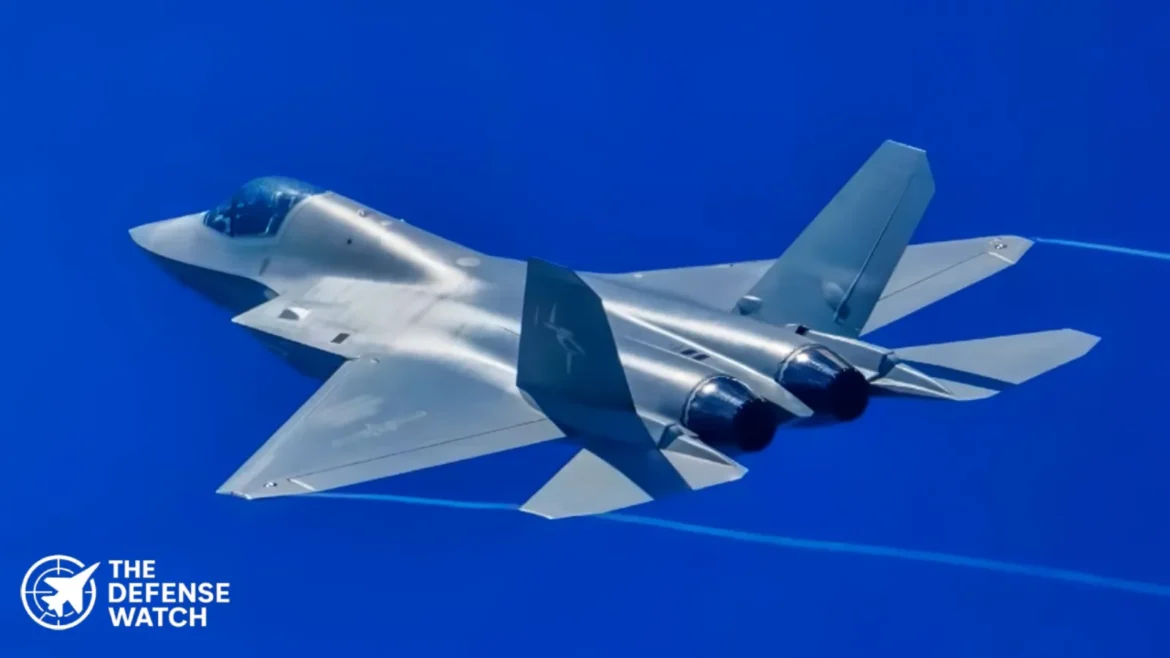
On 26 December 2024, an aircraft believed to be the J-36 was spotted conducting test flights in Chengdu, featuring a trijet tailless diamond-double-delta winged design. The aircraft’s public emergence surprised Western analysts and sparked immediate debate about its classification and capabilities.
Open imagery and specialist analysis describe a tailless, trijet flying wing with a stretched diamond double-delta wing, broad chine running into the leading edge, and side-by-side seating under a wide canopy. Three engines buried deep in the fuselage are fed by lateral inlets and a prominent dorsal diverterless supersonic intake, maximizing internal volume while minimizing radar signature.
Weapons Bay and Payload Capacity
The primary weapons bay has an approximate length of 7.6 meters, apparently capable of housing PL-17 beyond-visual-range air-to-air missiles or large air-to-surface munitions, flanked by two smaller bays. This internal capacity exceeds that of the J-20 and approaches that of heavy strategic bombers, suggesting a platform optimized for long-range strike and air dominance missions.
The overall aircraft design is speculated to emphasize all-aspect broadband stealth, high speed, long endurance, high payload capacity, large power generation, and multispectral situational awareness. The wing sweep angles indicate aerodynamic optimization for supercruise, potentially enabling sustained supersonic flight without afterburner.
Rapid Prototyping and Development Timeline
On 17 March 2025, images emerged of a second J-36 prototype featuring redesigned exhausts with two-dimensional thrust vectoring petals and revised side intakes with diverterless supersonic inlets. The rapid iteration between prototypes demonstrates an accelerated development approach, with significant design changes occurring within months rather than years.
USAF official Andrew P. Hunter acknowledged the J-36 may achieve initial operational capability earlier than American sixth generation fighter programs, though he believed the USAF system would likely produce the better product. U.S. Air Force leadership has cited the J-36’s progress as justification for continuing the Next Generation Air Dominance (NGAD) program despite budget pressures.
Strategic Implications and Mission Profile
According to Chinese military magazine Shipborne Weapons, when the sixth-generation fighter is in service, the PLA can intercept U.S. warplanes trying to penetrate the first island chain, potentially blocking the airspace to foreign bases in Guam for up to two hours from 1,000 km away. This assessment highlights the aircraft’s intended role as a long-range interceptor and strike platform capable of operating deep into the Pacific.
The J-36 fits Beijing’s need for a deep-reach air-dominance and strike asset over the Indo-Pacific’s vast maritime spaces, tailored to patrol far beyond China’s coastline while cueing long-range anti-ship and anti-air missiles against U.S. carrier strike groups. In future air combat, the platform could function as the central node of a kill web, absorbing targeting data from satellites and drones while pushing track-quality information to other shooters.
Comparative Analysis: China vs. U.S. Stealth Fighters
Production Rates and Fleet Size
The disparity in production rates represents a critical strategic factor. If the present tempo continues, China’s J-20 inventory may exceed 500 units by 2026 and approach 1,000 by 2030—potentially surpassing the combined numbers of F-22s and F-35As in U.S. Air Force service. The U.S. operates 187 F-22 Raptors with no additional production planned, while F-35 deliveries continue at approximately 156 units annually across all services and international partners.
However, raw numbers tell only part of the story. The F-35 program has delivered over 1,000 aircraft globally, with extensive combat experience and a mature logistics infrastructure. The F-22, despite limited numbers, remains undefeated in simulated combat and possesses stealth characteristics refined over decades of development.
Technological Maturity and Operational Experience
Western analysts remain cautious about Chinese stealth capabilities. Questions persist regarding radar cross-section reduction, sensor fusion effectiveness, engine reliability, and pilot training standards. The PLAAF has limited experience integrating fifth-generation fighters into complex air campaigns, whereas the U.S. has employed stealth aircraft operationally since 1991.
Some analysts describe the J-35A as requiring time to reach full operational capacity, with potential gaps in engines, frontal stealth, sensor fusion, interoperability, and maintenance ecosystems compared to the F-35. Software development, mission mode updates, and data link security represent critical challenges for achieving true networked warfare capability.
Design Philosophy Differences
The J-20, with a canard wing configuration, is a heavy fighter jet focused on air superiority missions comparable to the F-22, while the medium-sized J-35A uses a tailplane wing configuration similar to the F-35 with strong surface attack capabilities. This high-low mix mirrors U.S. force structure but with China achieving simultaneous serial production of both aircraft classes—something the U.S. never accomplished with the F-22 and F-35.
The J-36’s tailless configuration and tri-engine layout represent a distinct design philosophy. China’s tri-engine approach suggests it chose brute-force thrust and power over the weight savings of two larger engines, potentially implying differences in engine technology maturity or specific performance goals.
Regional Security Implications
First Island Chain Dynamics
The concentration of Chinese stealth fighters in the Eastern and Southern Theater Commands directly challenges U.S. and allied freedom of operation. Taiwan, Japan, and South Korea face an adversary capable of contesting airspace with low-observable platforms supported by integrated air defenses and long-range sensors.

The stealth capabilities of the J-35A make it difficult for Taiwan’s air defense systems to detect and track the planes, making surprise attacks easier for China while advanced avionics and weapon systems give China a significant edge in achieving air superiority. Taiwan’s F-16V fighters, while upgraded with modern radars, lack the stealth characteristics necessary for survivability in heavily contested environments.
U.S. Response and Force Posture Adjustments
Facing China’s growing military threat, the U.S. has deployed all three variants of its F-35 jet in Japan, its key ally for projecting power and deterring Chinese aggression under the island chain strategy. The U.S. Air Force has also reactivated aggressor squadrons equipped with F-35s to replicate Chinese stealth threats during training.
The emergence of the J-36 has intensified pressure on U.S. sixth-generation programs. Bryan Clark of the Hudson Institute suggested the Chengdu aircraft could be a potential adversary to NGAD and provide American planners incentives to continue the program. However, the NGAD program faces budget scrutiny and questions about optimal configuration, with some officials questioning whether a crewed fighter remains cost-effective.
Export Potential and International Proliferation
In January 2024, Pakistan announced its intention to buy FC-31 aircraft, with Pakistani media reporting in December 2024 that 40 aircraft had been approved for purchase. Export versions of the J-35 could provide countries unable to access Western fifth-generation fighters with stealth capabilities, fundamentally altering regional power dynamics in South Asia and the Middle East.
In May 2025, Egypt was reportedly considering the purchase of the J-35, with military officials showing interest during an event celebrating 45 years of military ties between Egypt and China. Chinese willingness to export advanced stealth technology—something the U.S. has restricted to close allies—could accelerate global proliferation of fifth-generation capabilities.
Industrial Base and Technological Foundations
Digital Manufacturing and AI-Assisted Production
The sheer pace of J-20 production highlights the industrial discipline and resource allocation underpinning China’s defense manufacturing ecosystem, where digitalized factories and AI-assisted quality control ensure consistent output. China’s state-directed aerospace sector enables rapid scaling and coordinated supply chains across multiple manufacturers.
The J-20 program has become an integration benchmark, linking Aviation Industry Corporation of China (AVIC), Aero Engine Corporation of China (AECC), and China Electronics Technology Group Corporation (CETC) in synchronized production networks. This industrial coordination allows China to maintain high production rates while managing the complexity of stealth manufacturing.
Indigenous Engine Development Progress
Engine technology has historically represented a critical weakness in Chinese aerospace programs. Early J-20s relied on Russian AL-31F engines or interim Chinese WS-10C powerplants. The development of the WS-15 engine represents a major milestone, providing thrust levels comparable to the F-22’s F119 while incorporating thrust-vectoring nozzles for enhanced maneuverability.
The J-36 appears to use thrust-vectoring nozzles similar to those on the F-22A fighter, providing additional maneuverability throughout different areas of the flight envelope and allowing better overall controllability on a highly unstable tailless design. Mastery of two-dimensional thrust vectoring technology demonstrates China’s progress in advanced propulsion systems.
Future Trajectory and Uncertainties
Manned-Unmanned Teaming Integration
The two-seat J-20S’s rear cockpit capabilities have sparked discussion about managing collaborative combat aircraft and loyal wingman systems. China is developing multiple unmanned platforms including the AVIC Dark Sword and GJ-11 Sharp Sword stealth UAVs designed to operate in coordination with manned fighters.
The integration of stealth UCAVs with the J-20S and potentially the J-36 would create layered attack formations capable of overwhelming air defenses through saturation while preserving high-value manned platforms. This manned-unmanned teaming concept parallels U.S. efforts with the Collaborative Combat Aircraft program but may advance more rapidly given China’s industrial capacity.
Sixth-Generation Definition and Classification Debate
Experts have not yet reached a consensus on the J-36’s primary role or specific capabilities, with uncertainty about what jet fighter generation and tactical usage the aircraft would be classified under. Some analysts view it as a fighter-bomber hybrid optimized for range and payload rather than a pure air superiority platform.
From the PLAAF perspective, Wang Wei, deputy commander of PLAAF, confirmed in an interview that J-36 is PLAAF’s interpretation of a sixth-generation aircraft. However, without clear international consensus on sixth-generation criteria, classification remains fluid and dependent on observed capabilities as testing progresses.
Timeline to Operational Capability
If China’s sixth-generation fighters follow a similar pace to previous programs, they could potentially enter service as early as January 2031, possibly outpacing the U.S. Air Force’s projected sixth-generation fighter timeline However, significant development challenges remain, particularly in advanced sensor integration, artificial intelligence systems, and directed energy weapons that may define true sixth-generation capability.
The J-36 is unlike any fighter now in frontline service, and while China moved first in flight-test chronology with public flights since late 2024, the United States still holds deep advantages in adaptive engines, combat networking, and the broader drone ecosystem underpinning NGAD.
FAQs
How many J-20 stealth fighters does China currently operate?As of late 2025, China has manufactured over 300 J-20 fighters, with the majority integrated into active PLAAF service across multiple theater commands. Production rates suggest the fleet could exceed 500 aircraft by 2026.
What distinguishes the J-35A from the carrier-based J-35?The J-35A is a land-based variant optimized for PLAAF operations from conventional runways with a single nose wheel and revised wing design. The carrier-based J-35 features folding wings, reinforced landing gear, a catapult launch bar, and arresting gear tailhook for electromagnetic catapult operations aboard the Fujian carrier.
Is the J-36 truly a sixth-generation fighter?The classification remains debated among analysts. The J-36 features advanced characteristics including tailless configuration, all-aspect stealth, tri-engine layout, and extensive weapons capacity. Chinese officials describe it as their sixth-generation interpretation, though its operational capabilities relative to U.S. NGAD concepts remain unclear.
Can Chinese stealth fighters match U.S. F-22 and F-35 capabilities?While Chinese stealth fighters represent significant technological achievements, questions remain about stealth effectiveness, sensor fusion maturity, pilot training standards, and combat-proven reliability compared to U.S. platforms with decades of operational experience. Production numbers increasingly favor China, but technological sophistication likely still favors U.S. systems.
What export markets exist for Chinese stealth fighters?Pakistan has committed to purchasing approximately 40 FC-31/J-35 aircraft with pilot training already underway in China. Egypt has reportedly expressed interest in the J-35. Chinese willingness to export fifth-generation technology to partners unable to access Western platforms could significantly alter regional power balances.
The Global Push Toward Sixth Generation Fighter Jets
The race to field the world’s most advanced combat aircraft is intensifying, with sixth generation fighter jets emerging as the next major milestone in airpower. Both China and the United States are pursuing sixth-generation designs, and China’s alleged sixth-generation fighter jets have become a key focus of global intelligence observations. While details remain closely guarded, both nations view these future platforms as essential to maintaining—or redefining—the global balance of air superiority.
Sixth-generation fighters aim to surpass traditional stealth aircraft through deeper integration with AI, sensor fusion, collaborative unmanned teaming, advanced propulsion concepts, and long-range strike capabilities. As the world’s two largest military powers push aggressively toward this new frontier, the competition represents one of the most consequential aerospace races since the early Cold War.

What Defines a Sixth Generation Fighter Jet?
Although no universal specification exists, defense agencies and aerospace analysts generally agree on several core characteristics that differentiate sixth-generation fighters from current fifth-generation platforms:
Key Expected Capabilities
- Enhanced low observability beyond traditional shaping and coatings
- AI-enabled battle management and semi-autonomous mission execution
- Optionally manned operation, switching between piloted or unmanned missions
- Directed-energy weapon (DEW) compatibility, including laser defenses
- Adaptive-cycle or hybrid propulsion systems enabling greater range and efficiency
- Seamless teaming with drones, especially “loyal wingman” autonomous systems
- Multi-domain networking, connecting air, space, cyber, and ground sensors
These features are designed to address future threat environments involving advanced air defenses, hypersonic weapons, and increasingly contested electronic warfare conditions.
China’s Alleged Sixth-Generation Fighter Jet Program
China has not officially unveiled a complete sixth-generation fighter jet design, but imagery, state media hints, and strategic patterns indicate aggressive development within the People’s Liberation Army Air Force (PLAAF).
Satellite Imagery and Unconfirmed Prototypes
Commercial satellite photos released over the last two years appear to show large, tailless, flying-wing-type aircraft at the Chengdu Aircraft Industry Group (CAIG) facility. While Chinese officials have neither confirmed nor denied these reports, the aircraft shape is consistent with sixth-generation aerodynamic signatures focusing on extreme stealth.
Expected Capabilities of China’s Next-Gen Fighter
Based on available intelligence and PLAAF modernization trends, analysts expect China’s sixth-generation platform to include:
- Large internal weapons capacity for long-range missiles
- Deep-penetration stealth aimed at bypassing U.S. Indo-Pacific defenses
- AI-powered autonomous teaming, possibly with enhanced air-launched drones
- Advanced electronic warfare suites, potentially rivaling the F-35’s sensor fusion
Chinese military researchers have also published papers on laser-based missile defenses, hypersonic integration, and new composite materials, signaling potential directions for the program.
Strategic Motivation
China’s focus appears centered on countering U.S. air dominance in the Western Pacific. A sixth-generation aircraft, combined with rapidly advancing missile systems, could play a key role in A2/AD (anti-access/area denial) strategy.
The United States’ NGAD Program: Sixth Generation by 2030s
The U.S. Air Force’s Next Generation Air Dominance (NGAD) program is the most publicly acknowledged sixth-generation fighter initiative in the world. Expected to replace or supplement the F-22 Raptor, NGAD is designed for operations in highly contested environments where current platforms may face limitations.
NGAD’s Confirmed Features
U.S. Air Force leadership has confirmed several components of NGAD:
- Family-of-systems approach, with a manned fighter at the center
- Collaborative Combat Aircraft (CCA) drones functioning as escorts, decoys, or strike assets
- Open-architecture digital design, supporting rapid upgrades
- Breakthrough propulsion, likely adaptive-cycle engines from GE or Pratt & Whitney
- Large standoff-range sensors to counter long-range PLA anti-air missiles
While images of the prototype remain classified, officials have stated that a demonstrator has already flown—indicating the project is further along than many expected.
Cost and Industrial Impact
NGAD is projected to be one of the most expensive aircraft programs ever undertaken, with fighter unit costs potentially exceeding $300 million each. Its development will drive innovations in U.S. aerospace manufacturing, autonomy, and next-generation avionics.
China vs. the U.S.: A Strategic and Technological Competition
Technology Access and Industrial Capacity
- United States: Holds decades of stealth experience and deep industrial infrastructure.
- China: Rapidly accelerating aerospace R&D but still constrained by reliance on foreign or reverse-engineered engine technology—though progress is improving.
Timeline Comparison
- U.S. NGAD: Expected fielding early-to-mid 2030s
- China’s 6th Gen Jet: Unconfirmed, but analysts estimate early 2030s prototypes
Airpower Implications
The deployment of sixth-generation fighter jets by both countries could dramatically reshape:
- Pacific airpower balance
- ISR (intelligence, surveillance, reconnaissance) penetration capabilities
- Deterrence dynamics in contested regions like Taiwan and the South China Sea
Both nations view sixth-generation airpower as a core requirement for future warfare.
Analysis: The Future of Air Superiority
The sixth-generation fighter race is not simply about aircraft—it represents a broader transformation of integrated air combat networks. The U.S. and China are building ecosystems that link manned fighters, drones, space assets, and AI-driven command systems into a single battlespace.
While the U.S. maintains a lead in proven stealth combat operations and engine technology, China’s rapid expansion, industrial scale, and willingness to iterate quickly make it a serious competitor.
The real question is not which aircraft will be superior, but how each nation will integrate these platforms into wider operational concepts. The country that achieves more effective manned-unmanned teaming, resilient data links, and adaptive autonomy may ultimately define the future of air dominance.
FAQs
What qualifies a fighter jet as sixth generation?A combination of extreme stealth, AI autonomy, advanced propulsion, and multi-domain network integration.
Has China revealed a sixth-generation fighter?Not officially. Imagery and research suggest development is underway, but details remain classified.
What is the U.S. NGAD program?A sixth-generation air dominance family of systems centered on a next-generation fighter for the 2030s.
Will sixth-generation jets replace the F-35?No. The F-35 will remain in service for decades and operate alongside NGAD aircraft.
When will the first sixth-generation jet enter service?Likely sometime in the early to mid-2030s, depending on development timelines.
How Fighter Jets Identify Threats at Extended Ranges
Modern fighter jets detect threats from over 100 km away through sophisticated sensor systems that have revolutionized air combat capabilities. These platforms combine Active Electronically Scanned Array (AESA) radar technology, infrared search and track (IRST) sensors, and advanced data fusion systems to provide pilots with comprehensive situational awareness well before hostile aircraft enter engagement range.
The ability to identify and track adversaries at extended distances represents a fundamental shift in aerial warfare doctrine. Where previous generations of fighters relied primarily on mechanically scanned radars with limited detection ranges, today’s combat aircraft employ multiple overlapping sensor systems that create a detailed picture of the battlespace in three dimensions.
AESA Radar Technology Extends Detection Beyond 150 Kilometers
Active Electronically Scanned Array radars scan electronically without mechanical movement, detecting targets beyond 150 kilometers. Unlike traditional mechanically scanned systems that required physical antenna movement, AESA technology uses thousands of individual transmit/receive modules (TRMs) arranged in a fixed array.
The Lockheed Martin F-35’s AN/APG-81 AESA radar tracks up to 23 targets simultaneously while engaging multiple threats, with detection ranges exceeding 150 kilometers for air-to-air targets. The system incorporates 1,676 transceivers that work in concert to provide unprecedented targeting precision and resistance to electronic countermeasures.

Fifth-generation platforms demonstrate even more impressive capabilities. The Sukhoi Su-57’s N036 Byelka AESA radar complex achieves claimed detection ranges up to 400 kilometers for large targets, with the ability to track 60 threats and engage 16 simultaneously. The Russian system features forward-facing, side-looking, and rear arrays for complete spherical coverage.
South Korea’s Hanwha Systems unveiled its first mass-produced AESA radar unit in August 2025 for the KF-21 fighter jet, with deliveries of 40 units scheduled between 2025 and 2028. The development highlights the global proliferation of AESA technology beyond traditional Western manufacturers.
Gallium Nitride Components Boost Performance
By 2025, gallium nitride (GaN) components have become standard in many systems, boosting power efficiency and range. GaN-based transmitters deliver superior thermal performance and power output compared to earlier gallium arsenide technology, enabling radars to operate at higher power levels while maintaining compact dimensions.
The Boeing F-15EX Eagle II employs the Raytheon AN/APG-82(V)1 AESA radar with GaN technology. This system tracks more than 30 targets at once and engages up to eight simultaneously, with ranges extending beyond 200 kilometers in optimal conditions. Recent tests in 2025 demonstrated its integration with hypersonic missile detection capabilities.
Multi-Spectrum Sensor Coverage Provides 360-Degree Awareness
Forward-looking, side-looking, and rear radars provide 360-degree coverage around the jet, ensuring threats can be detected from any direction. This spherical coverage eliminates blind spots that adversaries might exploit during engagement maneuvering.
Modern fighters supplement radar with complementary sensor systems that operate across different electromagnetic wavelengths. Infrared cameras, electronic warfare sensors, and data links detect and classify threats from long distances, creating a comprehensive battle picture. The integration of multiple sensor types compensates for individual system limitations while maximizing detection probability.
Infrared Search and Track Systems Operate Passively
IRST technology provides critical capabilities that complement active radar systems. The F-35’s AN/AAQ-37 Distributed Aperture System consists of six IR sensors around the aircraft for full spherical coverage, providing day/night imaging and acting as an IRST and missile approach warning system.
These passive sensors detect heat signatures without emitting detectable energy, allowing fighters to track adversaries while maintaining electromagnetic silence. The Eurofighter Typhoon’s PIRATE IRST can detect subsonic fighters from 50 km from the front and 90 km from the rear, with even greater increases possible if the target uses afterburners.
The U.S. Air Force awarded Lockheed Martin a $270 million contract in January 2025 to integrate the Infrared Defensive System (IRDS) with embedded TacIRST sensors on F-22 Raptors. The distributed system will provide 360-degree situational awareness for detecting and tracking both surface-to-air and air-to-air threats.
The U.S. Navy declared Initial Operating Capability for the IRST21 sensor system on F/A-18 Super Hornets in January 2025, with the long-wave infrared system passively detecting airborne targets well beyond visual range. The system integrates into the nose of the centerline fuel tank and significantly increases threat-detection range.
Data Fusion Delivers Refined Targeting Information
Computers fuse data from radar, infrared, and other sensors, filtering noise and false targets, and delivering precise information to the pilot’s display. Advanced algorithms correlate returns from multiple sources to eliminate ambiguities and present actionable intelligence to aircrew.
The F-35’s sensor fusion architecture sets the benchmark for integration capabilities. The system seamlessly combines inputs from the AN/APG-81 radar, Distributed Aperture System, Electro-Optical Targeting System, electronic warfare suite, and datalinks to generate a unified tactical picture. This synthesis reduces pilot workload while accelerating decision-making timelines.
Sensor fusion addresses one of the fundamental challenges in modern air combat: information overload. By automatically prioritizing threats based on range, aspect angle, and trajectory, these systems allow pilots to focus on tactical employment rather than raw data interpretation. The fusion algorithms continuously update as new information becomes available, maintaining currency even in rapidly evolving scenarios.
Electronic Warfare Resistance Maintains Detection Capability
Sophisticated sensors detect enemy jamming attempts and adjust radar modes to sustain detection capability over 100 km despite electronic countermeasures. AESA technology provides inherent advantages in electronically contested environments through frequency agility and low probability of intercept waveforms.
Unlike mechanically scanned radars that operate on fixed frequencies, AESA systems can rapidly change transmission characteristics across wide bandwidths. This frequency hopping makes jamming significantly more difficult, as adversary systems must distribute their limited power across broader spectrums to maintain effectiveness.
The electronic protection capabilities extend beyond simple anti-jamming. Modern AESA radars can classify jamming signals, providing intelligence on adversary electronic warfare systems while simultaneously adapting transmission parameters to counter specific threat techniques. This cat-and-mouse dynamic continues to drive developments in both radar and countermeasure technology.
Detecting Stealth Aircraft Through Advanced Waveforms
Stealth aircraft reduce radar reflections but can often be detected by low-frequency radar bands, with advanced radars using waveforms to detect and track such stealth targets at long ranges. While low-observable designs minimize returns in high-frequency bands, physical limitations prevent equivalent signature reduction at longer wavelengths.
The challenge of counter-stealth detection drives ongoing investment in radar signal processing. Modern systems employ sophisticated waveforms that maximize energy on target while minimizing vulnerability to detection or jamming. Algorithms analyze subtle return characteristics that distinguish stealthy platforms from background clutter or false targets.
IRST systems provide another counter-stealth capability by detecting heat signatures that low-observable aircraft cannot eliminate. Engine exhaust produces infrared emissions regardless of radar cross-section, making passive infrared tracking a valuable complement to radar detection. The combination of multi-spectral sensors increases detection probability against adversary stealth platforms.
Network-Centric Warfare Extends Sensor Range
Jets receive target data from airborne early warning aircraft and ground radars, extending their detection range beyond onboard sensors. This networked approach transforms individual fighters into nodes within a broader surveillance architecture that leverages sensors across multiple platforms.
The E-3 Sentry AWACS and E-2D Advanced Hawkeye provide long-range surveillance that supplements tactical fighter sensors. Their elevated positions and powerful radars detect aircraft at ranges exceeding organic fighter capabilities, transmitting cueing data via Link 16 and other tactical datalinks. This off-board information allows fighters to maneuver for intercept before adversaries appear on their own sensors.
Ground-based radar systems contribute additional coverage, particularly for air defense of fixed sites and critical infrastructure. Integration between airborne and ground sensors creates redundant coverage that complicates adversary penetration planning. Even if hostile forces neutralize one element of the detection network, others maintain surveillance continuity.
Tactical Advantages of Early Threat Detection
Early detection gives pilots time to plan engagement or evasion, significantly increasing survival chances in contested airspace The temporal advantage provided by long-range sensors translates directly into tactical options unavailable to pilots who detect threats late.
Aircrew with comprehensive early warning can select optimal weapons employment ranges, maneuver for favorable geometries, or disengage entirely if conditions prove unfavorable. This flexibility represents the practical manifestation of information superiority in aerial combat. Platforms that see first can shoot first, determining engagement conditions before adversaries recognize they face threats.
The psychological dimension deserves consideration alongside tactical benefits. Pilots operating with reliable situational awareness demonstrate greater confidence and effectiveness than those uncertain about threat locations. This intangible advantage compounds the technical capabilities provided by advanced sensors, creating combat effectiveness multipliers that extend beyond raw performance specifications.
Artificial Intelligence Accelerates Threat Assessment
Next-generation radars and sensor fusion technologies will further improve detection range and accuracy, integrating AI for faster threat assessment. Machine learning algorithms show promise for classifying radar returns, predicting adversary behavior, and recommending tactical responses.
Aselsan’s AESA radar features automatic target limitation with artificial intelligence-supported algorithms, demonstrating the integration of AI processing into operational systems. These capabilities reduce human workload while accelerating the observe-orient-decide-act cycle that determines air combat outcomes.
Future developments will likely incorporate AI across multiple aspects of sensor management. Predictive algorithms could optimize scan patterns based on threat likelihood, automatically prioritizing high-value targets while maintaining surveillance across the broader battlespace. Electronic warfare systems might employ machine learning to classify and counter novel jamming techniques without human intervention.
The integration of quantum computing technologies promises additional capabilities over longer time horizons. Quantum sensors could provide unprecedented precision for range and velocity measurements, while quantum-resistant encryption would secure datalinks against future computational threats. These developments remain largely experimental but indicate potential trajectories for sensor evolution.
Analysis: Sensor Technology Reshapes Air Combat Doctrine
The proliferation of advanced detection systems fundamentally alters air combat dynamics. Historical engagements favored platforms with superior kinematic performance—speed, acceleration, and maneuverability determined outcomes when opponents merged into visual range. Modern sensors push initial detection points well beyond visual distances, emphasizing information warfare over traditional dogfighting skills.
This technological shift drives doctrinal evolution across air forces worldwide. Training programs now emphasize sensor management, electronic warfare, and network integration alongside conventional combat maneuvering. Pilots must understand how to exploit their sensor advantages while denying adversaries equivalent capabilities through tactics and electronic countermeasures.
The economic implications merit attention. AESA radars, IRST pods, and sensor fusion processors represent substantial investments that constrain acquisition budgets. Nations must balance quantities of aircraft against individual platform capabilities, with higher-end sensors concentrating on premium platforms while more austere systems equip secondary fighters. This capability stratification influences force structure decisions and alliance interoperability planning.
Proliferation concerns arise as these technologies mature and diffuse globally. What began as advantages exclusive to American and Western European forces now appears in South Korean, Turkish, Indian, and Chinese systems. India’s DRDO unveiled a scaled model of the AESA radar for the Advanced Medium Combat Aircraft at Aero India 2025, featuring Gallium Nitride-based transmit/receive modules. This democratization of sensor technology compresses capability gaps between first-tier and emerging air forces.
The counter-stealth implications deserve emphasis. Fifth-generation fighters achieved temporary advantages through reduced radar signatures, but advanced sensors increasingly negate those benefits. Long-wave infrared detection, low-frequency radar bands, and multi-static configurations complicate penetration planning for stealth platforms. Future combat aircraft will require not just signature reduction but comprehensive spectrum management across all detection domains.
Electronic warfare assumes growing importance as both detection and countermeasure capabilities advance. The electromagnetic spectrum becomes a contested domain where advantage shifts based on technical sophistication and tactical employment. Platforms with superior electronic protection and attack capabilities gain decision advantage regardless of traditional metrics like speed or weapons payload.
FAQs
How do AESA radars differ from traditional mechanically scanned radars?AESA radars use thousands of individual transmit/receive modules in a fixed array that electronically steer the beam without physical movement. This provides faster scanning, better reliability, multiple simultaneous beams, and enhanced resistance to jamming compared to mechanically scanned systems that physically rotate their antennas.
Can modern fighters detect stealth aircraft at long ranges?While stealth aircraft significantly reduce radar cross-sections in high-frequency bands, advanced radars using low-frequency waveforms and infrared sensors can detect them at extended ranges. IRST systems track heat signatures that stealth designs cannot eliminate, while long-wavelength radars exploit physical limitations of radar-absorbing materials.
Why are infrared sensors important when fighters already have radar?IRST systems operate passively without emitting detectable signals, allowing aircraft to track threats while maintaining electromagnetic silence. They complement radar by providing detection in heavy electronic warfare environments, tracking stealth aircraft through heat signatures, and offering redundant surveillance when radar faces jamming.
How far can modern fighter jet radars detect other aircraft?Detection ranges vary by radar type and target characteristics. Advanced AESA systems like the F-35’s AN/APG-81 detect fighter-sized targets beyond 150 kilometers, while systems like the Su-57’s N036 Byelka claim ranges up to 400 kilometers for large targets. Actual performance depends on target radar cross-section, altitude, and atmospheric conditions.
What is sensor fusion and why does it matter in air combat?Sensor fusion combines data from radar, infrared sensors, electronic warfare systems, and datalinks to create a unified tactical picture. This eliminates false targets, reduces pilot workload, and provides actionable intelligence faster than interpreting individual sensors separately. Modern fighters like the F-35 excel at sensor fusion, giving pilots superior situational awareness.
Turkey’s Kizilelma Drone Fires Radar-Guided Missile in Milestone Test
Turkey achieved a notable milestone in unmanned combat aviation when its Kizilelma UCAV successfully fired a radar-guided air-to-air missile at a target drone. The test, conducted alongside Turkish Air Force F-16s, marked the first known instance of a UCAV launching a radar-guided missile in a live-fire scenario, highlighting Turkey’s advancing aerial combat technology.
Background on Kizilelma and Turkish UAV Development
Developed by Baykar, the Kizilelma is a fighter-like unmanned combat air vehicle designed for air superiority missions. With stealth features, supersonic capability, and compatibility with advanced missiles, the Kizilelma represents Turkey’s push to enhance its autonomous and semi-autonomous aerial warfare capabilities. Previous attempts at arming drones with air-to-air weapons have largely focused on infrared-guided missiles, such as the U.S. MQ-1 Predator and MQ-9 Reaper programs, but the Kizilelma’s radar-guided engagement signals a new step forward.
Details of the Live-Fire Test
During the test, the PT-5 variant of Kizilelma took off with four F-16s, one of which acted as a safety chase plane. An Akinci high-altitude UCAV also participated in chase duties. Equipped with two Gökdoğan air-to-air missiles, one inert and one live, the Kizilelma successfully engaged and destroyed a target drone. Baykar released video footage showing the missile launch and subsequent target impact.
While details remain limited, questions linger regarding the level of assistance provided by crewed fighter aircraft in targeting and engagement. Analysts note that external missile carriage slightly compromises the UCAV’s radar signature reduction but does not diminish the operational significance of the demonstration.
Expert Perspectives
Defense analysts highlight that integrating radar-guided air-to-air missiles on UCAVs could redefine future aerial combat. “This test demonstrates Turkey’s capacity to expand drone roles beyond surveillance and strike missions to potential air-to-air engagements,” noted Thomas Newdick, a military aviation analyst.

The Kizilelma test may also influence regional UAV development trends, prompting other nations to explore similar capabilities for force multiplication in contested airspace.
Implications and Next Steps
Turkey’s successful demonstration reinforces its growing domestic defense industry and unmanned combat expertise. The Kizilelma could eventually operate alongside manned aircraft in mixed formations, providing enhanced strike and air defense flexibility. Further tests and operational deployment are expected to refine targeting autonomy and multi-missile engagement capability.
As UAV technology continues to evolve, the Kizilelma program underscores Turkey’s commitment to advancing unmanned combat operations and shaping future air warfare doctrines.
The F-22 Raptor remains central to U.S. air superiority doctrine — and under the newly elevated “F-22 Super” upgrade plan, the Raptor is being readied with enhanced sensors, stealth refinements and extended-range capabilities that seek to preserve its dominance until the next generation arrives. The “F-22 Super” upgrade — the focus of growing congressional and service support — reflects an emerging consensus that modernization of existing stealth assets is essential to sustain “first look, first shot, first kill” advantage in contested airspaces.
With the Next Generation Air Dominance (NGAD) family of systems still several years from full deployment, upgrading the F-22 is viewed by many as a cost-effective and prudent way to maintain edge amid evolving threats from near-peer competitors.
What Is the “F-22 Super” Upgrade
Upgrade Scope and Key Technologies
Under the proposed FY 2026 budget, the U.S. Air Force has earmarked approximately $90 million to begin what it calls a “viability package” for the F-22.
Key components of the upgrade package include:
- A new Infrared Defensive System (IRDS), to improve missile-launch detection and warning.
- Provision for pod-mounted Infrared Search and Track (IRST), enhancing passive detection of threats — especially valuable in contested electromagnetic (EW) environments.
- Sensor and avionics refresh: updated radar, open-architecture data fusion, cryptographic upgrades and other “future-proofing” to allow better integration with other platforms (e.g., NGAD, F-35 Lightning II).
- Improved electronic warfare capabilities and updated threat-warning receivers, under what the Air Force refers to as “Project Keystone.”
- Extended-range fuel tanks and low-drag pylons (the “Low Drag Tanks and Pylons,” LDTP), enabling longer missions — including potentially supersonic ferry or deployment flights — while minimizing radar signature when tanks are mounted.
- A helmet-mounted display (HMD) for pilots, a long-requested capability that provides off-boresight weapon cueing and improved situational awareness.
Together, these improvements are intended to transform the F-22 into a more resilient, networked, and flexible sensor-shooter — sometimes described as a “fifth generation plus” or “F-22 Super” configuration.
Why the Upgrades Are Gaining Renewed Support
NGAD Delays and Capability Gap Risk
The overarching driver behind the push for the F-22 upgrade is the reality that NGAD — slated to succeed the Raptor — remains years away from full operational deployment. Recent public reporting notes that the older jets of the fleet have begun to show their age, and reactivating non-combat-coded airframes requires substantial investment.
By investing in upgrades now, the U.S. Air Force hedges against a capability gap should NGAD face further delays, or if the initial NGAD fleet is limited in size. Maintaining a credible stealth-air superiority force with F-22 “Super” modifications buys critical time.
Evolving Threat Environment
Advances in adversary air-to-air missiles, infrared search-and-track systems, and radar/infrared hybrid detection platforms — particularly by near-peer competitors — have heightened the risk to legacy stealth aircraft which rely primarily on low observable radar signature and limited passive threat detection tools. The F-22’s planned IRDS/IRST and EW upgrades directly address those vulnerabilities.
In addition, range limitations have long hampered Raptor deployments in theaters such as the vast Indo-Pacific region, where long-range reach is critical. The LDTP initiative addresses those concerns, extending the Raptor’s reach while preserving stealth and speed advantages.

Cost-Effectiveness Compared to New-Build Programs
Restarting production of F-22 airframes or accelerating NGAD procurement comes with high cost and risk. By contrast, upgrading existing airframes draws on established maintenance/logistics chains, and avoids the industrial, training, and supply-chain burdens of fielding a completely new fleet. This makes the “Super” upgrade a more economical bridge strategy until NGAD matures.
The Role of “F-22 Super” in the NGAD Era and U.S. Air Dominance
Bridging to NGAD
With the NGAD program still in development, the F-22 Super acts as a “bridge” — preserving critical stealth-air superiority capability while NGAD’s manned sixth-generation fighters, loyal-wingman drones, and sensor-shooter architectures are finalized.
By integrating NGAD-derived technologies (sensors, data fusion, EW, avionics) into the F-22, the Air Force aims to ensure interoperability across legacy and future platforms — a key consideration for joint operations.
Enhancing Force Flexibility and Deterrence Posture
A modernized F-22 fleet — refreshed, sensor-upgraded, and extended in range — supports rapid response, long-range deployment, and forward-deployed deterrence concepts. Some reports describe a “Rapid Raptor” model: a small group of F-22 Supers capable of deploying globally within 24 hours, carrying advanced missiles or even hypersonics, with integrated links to joint force networks.
This flexibility remains valuable even once NGAD becomes operational: a mixed force of NGAD fighters, loyal-wingman drones, and upgraded F-22s would maximize coverage, offering both quantity and quality across different mission sets.
Challenges & Constraints
While the F-22 Super plan offers clear advantages, it is not without hurdles:
- Fleet size constraints: The legacy fleet is limited — only a fraction of the original ~185 Raptors remain combat-coded, and some older Block-20 jets are slated for retirement or reactivation only with major investment.
- Maintenance and sustainment burden: Stealth coatings, low observable materials, and complex avionics make sustainment resource-intensive — reactivation and upgrade of older airframes will require careful logistics and parts supply.
- Budget and prioritization pressure: With NGAD and other modernization programs consuming significant funding, balancing investment between upgrading legacy platforms and funding next-generation systems remains politically and strategically challenging.
- Technological limits: Even upgraded, the F-22 will remain a 5th-generation airframe. Some envisioned NGAD capabilities — such as optionally crewed operations, integrated loyal-wingman drone control, advanced sensor-to-shooter kill chains — may be beyond retrofit scope.
Analysis: What “F-22 Super” Means for U.S. Air Dominance
The renewed push for “F-22 Super” upgrades reflects a pragmatic recalibration of U.S. air dominance strategy. Rather than banking solely on generations-ahead platforms like NGAD, the Air Force seems increasingly focused on maintaining — and optimizing — existing capabilities to reduce risk and cost.
In the near to mid-term, the upgraded Raptor fleet can provide credible deterrence and warfighting capability in contested zones, especially in regions like the Indo-Pacific or Europe where adversaries field improving stealth, IRST, and long-range missile threats.
In the longer term, pairing a modernized F-22 with NGAD and other new systems offers a layered force architecture — combining proven fighters with next-gen platforms and drone-enabled mass. That architecture could offer both flexibility and formidable redundancy: if NGAD faces delays, cost overruns, or initial limited basing, the F-22 Super ensures the core air-superiority mission remains covered.
Still, this approach is not a substitute for NGAD’s ambition. The F-22 Super should be seen as a bridge — but a strategically vital one.
FAQs
Will the F-22 production ever restart?There is no public indication that full-scale F-22 production will restart. The current “Super” upgrades focus on existing airframes. Restarting production would be costly, and past cost estimates for hundreds of new Raptors ran into tens of billions of dollars.
How long will upgraded F-22s remain in service?With the Super upgrades, F-22s could remain relevant well into the 2030s and even 2040s — effectively bridging the gap until NGAD and other future platforms are fully operational.
Does the upgrade include new weapons or just sensors/avionics?The upgrade package emphasizes sensors, avionics, defense systems and endurance enhancements. However, the new open-architecture avionics could facilitate integration of modern weapons, long-range missiles, and future munitions.
How does the F-22 Super compare to NGAD capabilities?NGAD is expected to deliver a fundamentally new generation of capabilities — optionally crewed aircraft, loyal-wingman drones, advanced networking and sensor-fusion architecture. The F-22 Super is not a replacement, but a bridging upgrade: a 5th-generation “plus” that borrows NGAD-derived sensors and avionics to remain effective until the new generation arrives.
Why not simply rely on the F-35 fleet instead of upgrading the F-22?The F-35 serves a complementary but different role: multi-role strike, close air support, and networked operations. The F-22’s unique combination of stealth, supercruise, maneuverability and range — particularly after Super upgrades — is irreplaceable for dedicated air superiority and first-look, first-shot engagements in contested environments.
Conclusion
The “F-22 Super” upgrade is gaining traction not as a nostalgic effort to preserve Cold War-era airframes, but as a deliberate, strategic investment in sustaining U.S. air superiority through a complex transition period. As NGAD and associated sixth-gen programs press forward — but remain years away from full deployment — the Air Force appears to be hedging its bets: modernizing and extending the life of proven platforms while simultaneously preparing for the future.
In an era of rapidly evolving air and missile threats, contested electromagnetic environments and near-peer adversaries fielding advanced stealth, IRST and long-range missiles, that dual-track strategy may be the most realistic path to preserving U.S. global air dominance.
The U.S. Air Force, in collaboration with defense-contractor Lockheed Martin, is reportedly moving forward with ambitious upgrade proposals for its stealth fighter fleet — the “Super” F-22 Raptor and the “Ferrari” F-35 Lightning II. These plans aim to modernize existing airframes with next-generation technologies originally developed for the Next Generation Air Dominance (NGAD) program.
With new sixth-generation jets delayed, the upgrades are intended to provide a ready and capable stealth force in the near term — effectively extending the operational life and combat relevance of existing aircraft.
Background: Why Upgrades Are Gaining Traction
The NGAD program was meant to deliver a leap ahead in air-dominance through a brand-new sixth-generation fighter. However, development timelines remain uncertain and competitive pressures — particularly from rapidly evolving adversary programs — have accelerated calls for interim solutions.

Rather than waiting for a fully new aircraft to reach maturity, U.S. defense planners and industry leaders are now advocating for an alternative: retrofit and modernize existing stealth fighters to absorb as many next-gen features as possible, sooner. This approach promises a potentially faster, more cost-efficient way to maintain air superiority while bridging the gap.
What the “Super F-22” and “Ferrari F-35” Would Deliver
Super F-22
The “Super” F-22 plan goes beyond incremental enhancements. It envisions a substantial structural refresh of existing Raptor airframes — including new stealth materials, redesigned engine inlets, powerful onboard processors, and advanced electronic-warfare (EW) systems derived from NGAD development.
Under the proposal, the upgraded F-22 could support heavier weapons loads, more power-hungry sensors, and expanded mission profiles. Elements under consideration reportedly include stealth coatings refinements, range-extending fuel tanks, improved infrared defense systems, and drone (loyal wingman) control capabilities.
Ferrari F-35
On the F-35 side, Lockheed Martin is pitching a “fifth-generation-plus” variant — colloquially dubbed “Ferrari” — that would blend much of NGAD-era tech with the widely fielded F-35 chassis.
According to company executives, this upgraded F-35 could deliver roughly 80% of a sixth-generation fighter’s capability at close to half the projected cost per unit. Specific upgrades under discussion include enhanced infrared search-and-track sensors, updated stealth materials, new air-frame geometry, advanced data links, and expanded weapons compatibility. There is also talk of improved integration with autonomous or drone “wingmen.”
Given the existing global fleet — numbering in the thousands — such upgrades could rapidly scale to meet strategic requirements.
What It Means for the U.S. Air Force and Strategic Posture
A modernized fleet of Super F-22s and Ferrari F-35s would give the U.S. Air Force a substantial near-term boost. It would raise the number of combat-ready stealth fighters, enhance mission versatility (air superiority, long-range strike, EW, drone integration), and extend the life of proven platforms — all without the long delays and risk of developing an entirely new jet from scratch.
This bridging strategy becomes especially critical as the U.S. navigates a period of shifting global power balances — where peer competitors are also advancing stealth and drone-enabled capabilities rapidly.
Upgrading existing aircraft could also reassure U.S. allies — especially those relying on American airpower — that Washington remains capable of delivering high-end air superiority even as its procurement and development cycles evolve.
Challenges, Trade-offs, and Questions
- Scale and Timing: It remains unclear how many F-22s will actually receive the Super upgrade — and how quickly. The retrofit process could take years, and legacy maintenance/backlog issues for the F-22 fleet remain a hurdle.
- Cost vs. Benefit: While Lockheed claims costs will be lower than a new sixth-gen jet, the extent of structural modifications — especially to older airframes — may drive up expenses and complicate logistics.
- Capability Ceiling: Even with “fifth-gen-plus” upgrades, there may still be a performance gap compared to a true sixth-generation platform, especially in areas like next-gen propulsion, stealth, and unmanned teaming.
- Strategic Risk: Relying on upgraded legacy airframes may leave the U.S. vulnerable if adversaries leapfrog ahead with more advanced designs — or counter-stealth and drone integration.
What’s Next — And What to Watch
- How many F-22 and F-35 jets will be selected for upgrade, and on what schedule.
- Whether the upgrades will include drone/control-network integration and new weapons systems (e.g., hypersonic missiles).
- How the upgrades influence the broader rollout and procurement plans for six-generation jets under NGAD (or successor initiatives).
- Responses from rival powers — and potential shifts in global airpower dynamics.
Conclusion
As the doorstep of sixth-generation air dominance continues to recede, the U.S. is charting a pragmatic path: bolstering the capabilities of current stealth aircraft rather than relying solely on future, uncertain platforms. The proposed “Super” F-22 and “Ferrari” F-35 — powered by cutting-edge NGAD-derived technologies — represent a strategic bet on bridging periods of uncertainty without sacrificing combat effectiveness. If realized, this modernization could preserve U.S. air superiority in a rapidly evolving global security landscape — at least through the late 2020s and early 2030s.
Apache Proves Counter-Drone Muscle in Recent Drills
In a series of recent live-fire drills conducted by the South Carolina Army National Guard as part of Operation Flyswatter at Marine Corps Air Station New River (date not specified), the AH-64E Apache attack helicopter demonstrated its growing capability to counter unmanned aircraft systems (UAS). During the exercise, Apache crews recorded 13 kills out of 14 drone engagements — a high success rate that underscores the platform’s readiness to tackle one of the fastest-growing threats on modern battlefields.
The demonstration saw Apaches detecting, tracking, and then destroying small drones using a variety of munitions, including laser-guided rockets, precision missiles, and its onboard cannon.
Background: Why Apache’s Counter-UAS Role Matters
As low-cost, often one-way or “kamikaze” drones proliferate globally, militaries worldwide are scrambling to field effective counter-UAS (c-UAS) systems. While ground-based air defenses provide one layer of protection, mobile platforms capable of reacting quickly — especially in dynamic battlefield environments — are increasingly valuable.
The Apache, long valued for its attack and reconnaissance capabilities, has historically focused on anti-armor and conventional close air support. But upgrades to its software, sensors, and weapon integration have opened a new mission set: drone detection and defeat.
How the Apache Executed Counter-Drone Engagements
Sensor & Networking Integration
During Operation Flyswatter, the Apache used its standard electro-optical/infrared sensors and its mast-mounted AN/APG-78 Longbow radar to detect and track drones.
Moreover, thanks to network integration via Link 16 and modern data links, Apaches proved they can operate as mobile, airborne air-defense nodes — sharing target data between helicopters and command nodes to shorten sensor-to-shooter timelines.
As one pilot noted, even if only one Apache in a flight detects a drone, its data can cue the whole formation — a valuable force-multiplier in swarm or saturation attack scenarios.
Multi-Weapon Engagements
Once targets were tracked, Apaches engaged using a mix of weapons:
- Guided missiles, including AGM-179 JAGM and variants of AGM-114 Hellfire — some radar-guided, some laser-guided — depending on the engagement scenario.
- Laser-guided rockets: 70 mm Hydra rockets fitted with APKWS laser-guided rocket guidance kits. This proved particularly effective against small UAS, and reportedly three of four drones struck during the demonstration were downed using APKWS rockets.
- The Apache’s nose-mounted 30 mm chain gun, firing high-explosive dual-purpose rounds (M789) — used successfully for close-range drone kills (under ~300 meters).
According to Chief Warrant Officer 5 Daniel York, Project Manager for the Apache New Equipment Training Team, the 13-of-14 kill ratio “proves the Apache — using its current software and systems — is a lethal and adaptable solution to the drone threat.”

Wider Capability and Platform Evolution
The effectiveness demonstrated during Operation Flyswatter reflects broader enhancements being made to the Apache fleet. With its current configuration thanks to Version 6 software, the Apache is increasingly more than just a gunship — it can function as a networked, multi-role platform capable of manned-unmanned teaming, real-time data sharing, and layered mission sets that include counter-UAS, deep strike, and reconnaissance.
Indeed, recent upgrades under the U.S. defense procurement program have emphasized cyclic modernization — enabling integration of additional capabilities such as “Launched Effects” (e.g., expendable drones or rockets deployed from the Apache), advanced EW (electronic warfare) pods, and enhanced sensor suites.
Furthermore, other recent live-fire trials have shown the Apache’s ability to launch long-range guided missiles — such as the SPIKE NLOS — extending its standoff strike range to 26–32 km, a substantial growth over legacy Hellfire/JAGM reach.
This evolving arsenal and networking puts the Apache in a strong position to face modern threats — from swarming drones to peer-level adversaries — while working as part of a broader, layered air defense and strike architecture.
Strategic & Policy Implications
The success of the Apache in counter-drone drills sends a clear signal to defense planners: legacy rotary-wing assets can be adapted to meet the evolving demands of modern warfare, where unmanned systems are proliferating rapidly.
With drones increasingly used for reconnaissance, loitering munitions, and swarm attacks — often from non-state actors or in asymmetric conflict settings — having a highly mobile, flexible, and lethal airborne counter-UAS system fills a capability gap that ground-based air defenses alone may struggle to cover.
Moreover, this demonstration helps justify continued investment in attack helicopter fleets — including ongoing production runs, modernization programs, and export sales. Continuing upgrades (software, sensors, weapons) help ensure the platform remains relevant against future threats.
Finally, Apache’s role as a networked platform — interoperable via datalinks and working alongside UAVs, EW systems, and ground-based defenses — reflects the shifting nature of air operations toward integrated, multi-domain warfare.
What’s Next: Toward Formal Counter-UAS Integration
The live-fire success in Operation Flyswatter could accelerate formal adoption of counter-UAS missions for Apache units. That might include:
- Incorporation of dedicated counter-UAS tactics into standard aircrew training manuals. Indeed, Army officials have reportedly recommended expanding Apache battalion training to include a “Counter-UAS Mission Essential Task.”
- Continued upgrades to sensor suites, network integration, and weapons payloads to better handle drone swarms and fast-moving aerial threats. Future enhancements could include dual-mode rocket guidance (e.g., infrared seekers for fire-and-forget) to allow faster, more efficient engagements.
- Integration of unmanned “wingmen” — deployable drones working in concert with Apaches — to expand detection range, improve situational awareness, and reduce risk to manned helicopters.
Given the increasing complexity of air threats, this trajectory suggests that the Apache may evolve into a central node in future multi-domain air defense architectures.
In the face of proliferating drone threats — from surveillance drones to kamikaze loitering munitions — the AH-64E Apache is evolving from a conventional attack helicopter into a capable counter-UAS asset. The recent 13-of-14 drone kills during Operation Flyswatter offer concrete proof of concept, just as wider modernization and doctrinal adaptation position the Apache to remain relevant in future conflicts.
Anduril’s YFQ-44A Drone Wingman Completes First Flight in Key CCA Milestone
Anduril Industries has successfully conducted the first flight of its YFQ-44A autonomous drone, marking a major milestone in the U.S. Air Force’s Collaborative Combat Aircraft (CCA) program. The company confirmed the achievement this week, noting that the prototype performed as expected during its inaugural sortie at a U.S. test range.
A Milestone for the CCA Program
The YFQ-44A is one of the Air Force’s leading prototypes under development for the CCA effort—an initiative designed to field autonomous “loyal wingman” aircraft capable of operating alongside crewed fighters such as the F-35A and next-generation platforms. The successful flight demonstrates steady progress toward developing unmanned systems that can conduct sensing, strike support, electronic warfare, and distributed operations.
According to Anduril, the test flight validated core aerodynamics, autonomy software, and safety architectures that will inform later risk-reduction phases. While specific flight parameters were not disclosed, the company described the data collected as “high-quality and mission-relevant.”
Background: The Rise of Autonomous Combat Aviation
The CCA program is one of the U.S. Air Force’s most ambitious modernization efforts. The initiative seeks to introduce an operational fleet of affordable, expendable, and highly autonomous drones that can support or augment piloted aircraft during combat missions. These systems are designed to be modular, AI-enabled, and adaptable to a range of missions—from reconnaissance to kinetic engagements.

Anduril’s YFQ-44A is part of a competitive field that includes multiple defense contractors working on parallel CCA prototypes. The Air Force expects operational platforms to enter service later in the decade, with the first production awards anticipated within the next few years.
Technical Features and Development Goals
While detailed specifications of the YFQ-44A remain undisclosed for security reasons, Anduril has emphasized several foundational design principles:
- Autonomous mission execution: The drone is built to operate with limited human supervision, leveraging advanced onboard processing and AI-driven decision-making.
- Open-architecture mission systems: The platform is designed to support rapid payload integration and capability upgrades.
- Cost-efficient production: CCA systems must be affordable at scale, enabling the Air Force to field them in large numbers for distributed operations.
The company stated that the first flight marks the beginning of a broader series of test sorties focused on validating control laws, sensor integration, and collaborative behaviors between unmanned and manned aircraft.
Industry and Air Force Perspectives
U.S. Air Force officials have repeatedly emphasized the importance of the CCA initiative in future air warfare concepts. The service envisions operational units deploying multiple autonomous wingmen per crewed aircraft, enabling greater mission flexibility, survivability, and target coverage.
Defense industry analysts note that Anduril’s rapid development approach—leveraging digital engineering, modular systems, and commercial software practices—positions the company as a disruptive competitor in the traditionally hardware-driven aerospace sector.

The YFQ-44A’s flight also illustrates the Air Force’s shift toward fielding systems at a faster pace, echoing recent service guidance prioritizing speed over extended development timelines. Industry experts say that early flight demonstrations help reduce program risk and strengthen the company’s position in future down-select phases.
What Comes Next
With the first flight completed, Anduril will now proceed with envelope expansion, integrated payload testing, and multi-vehicle autonomy trials. The company plans to increase flight tempo as the program advances toward more complex demonstrations, including teaming operations with crewed fighters and other CCA prototypes.

The Air Force has indicated that the next major step for the CCA program will involve selecting companies for low-rate production development, following competitive evaluations of autonomy performance, cost, mission adaptability, and manufacturing readiness.
The YFQ-44A’s successful first flight brings the service closer to fielding autonomous wingmen capable of supporting combat airpower in contested environments—an operational shift that could reshape U.S. aerial warfare strategy in the years ahead.