What Just Happened
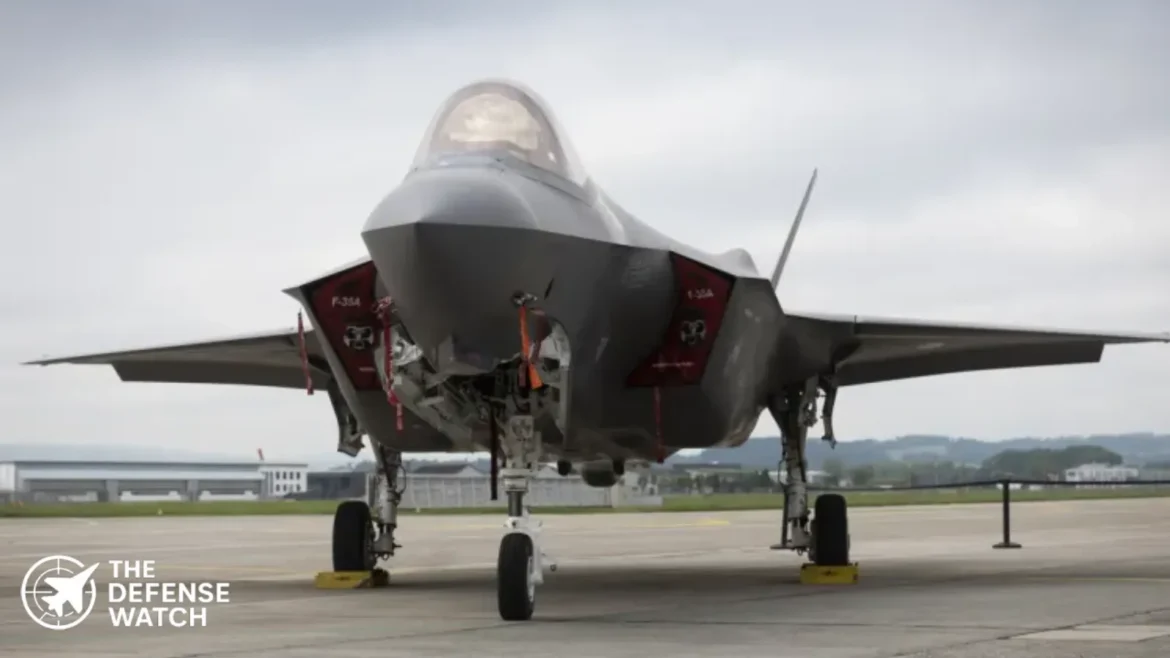
Former U.S. President Donald Trump announced that he plans to sell F-35 fighter jets to Saudi Arabia, marking a potentially historic shift in U.S. defense-export policy. Speaking in the Oval Office on the eve of Crown Prince Mohammed bin Salman’s visit to Washington, Trump said, “We’ll be selling F-35s… they want to buy them, they’ve been a great ally.”
Sources indicate that Saudi Arabia has requested up to 48 F-35A jets, and the deal could be part of a broader $142 billion U.S.–Saudi defense package. According to officials quoted in media reports, the request has already cleared a key review stage within the Pentagon.

Strategic and Political Context
This move would represent a significant break from past U.S. policy. Historically, the F-35 stealth jet has only been exported to a limited number of close U.S. allies — NATO members, Japan, and select partners.
One of the core concerns: maintaining Israel’s “Qualitative Military Edge” (QME). U.S. law requires that Israel retain superior military capability relative to its regional neighbors, and the F-35 is widely considered one of its most advanced systems.
At the same time, some U.S. national security officials are reportedly warning that sharing such advanced technology with Riyadh could pose a risk of technology leakage, particularly to China, given Saudi Arabia’s increasingly close ties with Beijing.
Details of the Proposed Deal
- Jet Model: The Saudi request centers on the F-35A, the conventional take-off and landing variant.
- Quantity: As many as 48 aircraft.
- Strategic Alignment: The jet sale appears tied to a broader defense cooperation pact, possibly akin to a mutual security assurance from the U.S. to Saudi Arabia.
- Congressional Risk: The deal would require congressional notification and could face pushback, particularly given human rights concerns and regional balance issues.
Policy Implications & Risks
Israel’s Military Edge
Israeli officials reportedly lobbied the Trump administration to condition any F-35 sale on further normalization of relations between Saudi Arabia and Israel. While some voices in Israel aren’t fully opposed, they emphasize Washington should extract diplomatic concessions in return to maintain regional stability.
Security & Technology Leakage
Some U.S. intelligence / defense officials have warned that Saudi Arabia’s security relationship with China could allow Beijing to glean sensitive insights into F-35 technology. This concern is heightened by the jet’s stealth, sensor, and software sophistication — key enablers of U.S. air dominance.
Governance & Oversight
- The deal cleared a significant hurdle at the Pentagon, advancing to senior levels.
- But final approval still hinges on White House sign-off, interagency coordination, and congressional review.
- There’s also a question of how the U.S. would structure security guarantees with Riyadh — whether via an executive order, treaty, or defense pact.
Expert & Policy Perspective
From a strategic perspective, this decision by Trump could reflect a broader realignment of U.S.-Gulf defense policy:
- For Riyadh, acquiring F-35s would significantly modernize its air force, closing capability gaps vis-à-vis regional adversaries (like Iran) and flagship U.S. systems.
- For Washington, it could leverage weapons sales to push Riyadh toward diplomatic outcomes — potentially using F-35 access as a diplomatic bargaining chip in Middle East normalization efforts.
- From an arms-control standpoint, the deal raises tough questions. If sold, would the U.S. accept concessions on basing, deployments, or restrictions on where the jets could be flown — especially given Israeli concerns?
- Long-term risk: The possibility of sensitive F-35 tech slipping into Chinese hands could undermine U.S. air dominance and expose stealth/AVIONICS secrets that are not easily safeguarded once systems are fielded in a foreign country.

What to Watch Next
- Congressional Review: Will lawmakers block or condition the sale? Key votes could come on the basis of QME, human rights, or technology security.
- Defense Pact Details: Whether the U.S. grants Riyadh “major non-NATO ally” or “major defense partner” status could reshape long-term cooperation.
- Operational Restrictions: Will the U.S. impose basing or flight-zone constraints to assuage Israeli concerns?
- Tech Safeguards: What measures will be built into the F-35 transfer to prevent leaks — such as encryption, maintenance controls, or off-limits software features?
- Regional Reactions: How will Iran, Israel, and Gulf neighbors respond? Will this sale accelerate normalization or trigger new security alignments?
Bottom Line
Trump’s commitment to sell F-35 stealth jets to Saudi Arabia marks a bold departure from previous U.S. export norms. If executed, it would make Saudi Arabia potentially only the second country in the Middle East — after Israel — to field the world’s most advanced fifth-generation fighter. But the proposal sets off alarm bells in Washington and Jerusalem: preserving Israel’s qualitative military edge, safeguarding advanced U.S. technology from China, and managing Congress’s wariness will all be critical. The deal may hinge not only on jets, but on diplomatic leverage, security guarantees, and geopolitical trade-offs.
The Top 5 U.S. fighter jets represent the cutting edge of American airpower, combining stealth, advanced sensors, superior weapons, and unmatched operational experience. As the backbone of U.S. air dominance, these jets reflect decades of technological innovation, defense investment, and combat requirements. Together, they ensure the United States maintains a decisive advantage in both contested and permissive airspace.
This article examines the United States’ leading fighter aircraft, their roles, capabilities, and strategic importance, providing a clear picture of why they remain the world’s benchmark for air combat performance.
The Top 5 U.S. Fighter Jets in Service Today
1. F-22 Raptor — America’s Premier Air-Dominance Stealth Fighter
The F-22 Raptor remains the world’s most capable air-superiority fighter. Designed for unmatched stealth, supercruise, and aerial agility, it delivers decisive first-look, first-shot, first-kill capability. Despite production ending in 2012, the Raptor continues to anchor high-end air dominance missions.
Key Features:
- Stealth + supercruise (Mach 1.8 without afterburner)
- Advanced AESA radar and sensor fusion
- Unmatched dogfighting performance
- Primary role: air superiority and offensive counter-air
Strategic Importance:
Essential for high-threat environments against near-peer adversaries like China and Russia.2. F-35A Lightning II — The U.S. Air Force’s Stealth Multirole Backbone
The F-35A is the most widely deployed fifth-generation fighter and the backbone of future U.S. tactical aviation. Its stealth, electronic warfare suite, and sensor fusion allow it to penetrate contested airspace, conduct precision strikes, and serve as an intelligence node.
Key Features:
- Stealth multirole design
- High survivability in denied environments
- Advanced networking, targeting sensors
- Continuous upgrades through Block 4
Strategic Importance:
The F-35A’s versatility, production scale, and global interoperability make it the cornerstone of U.S. and allied airpower.3. F-15EX Eagle II — The Heavyweight Missile Truck
The F-15EX Eagle II represents the modernized evolution of the legendary F-15 lineage. With expanded payload capacity and advanced avionics, it serves as a “missile truck” capable of launching long-range weapons, providing air dominance and deep-strike support.
Key Features:
- Carries up to 22 air-to-air missiles
- Latest fly-by-wire controls and advanced cockpit
- Open mission system for rapid upgrades
- High speed and altitude performance
Strategic Importance:
Complements stealth aircraft by delivering massed firepower from standoff range.4. F/A-18E/F Super Hornet — Carrier-Based Multirole Workhorse
The Super Hornet remains the primary U.S. Navy fighter, performing air-to-air combat, strike missions, and maritime interdiction. Its reliability and versatility make it a cornerstone of carrier air wings.
Key Features:
- Carrier-capable multirole platform
- APG-79 AESA radar
- Proven combat record
- Excellent maintainability at sea
Strategic Importance:
The only U.S. fighter qualified across all Navy carriers, ensuring continuous maritime airpower projection.5. F-16C/D Fighting Falcon — The USAF’s Combat-Proven Multirole Jet
The F-16 Fighting Falcon continues to serve as one of the most flexible airframes in U.S. inventory. Decades of upgrades—including modern radars, datalinks, and targeting systems—keep it relevant in modern air combat.
Key Features:
- Lightweight, agile design
- APG-83 AESA radar on many upgraded units
- Low operating cost
- Vast weapons compatibility
Strategic Importance:
Though aging, its global popularity and modernization programs ensure it remains integral for homeland defense, air policing, and secondary strike missions.How These Jets Shape U.S. Airpower
Each aircraft fills a different role within the U.S. airpower ecosystem:
- F-22 dominates high-threat airspace.
- F-35A penetrates defenses and conducts precision strikes.
- F-15EX provides standoff firepower and air dominance support.
- F/A-18E/F anchors naval aviation operations.
- F-16 provides flexible, cost-effective multirole capability.
This layered approach ensures the United States maintains superiority across air, land, and maritime theaters.
Additional Context: Modernization Trends
Recent modernization trends reflect shifting strategic priorities:
- Expansion of NGAD (Next-Generation Air Dominance) for sixth-generation capabilities
- Upgrades to F-35 Block 4 and open architecture
- Standoff weapons integration on the F-15EX
- Improved EW systems for F-22 and F/A-18E/F
- Continued service-life extensions for F-16
The U.S. fighter fleet is evolving to face high-end threats from China’s PLA Air Force, Russia, and emerging long-range missile threats.
Analysis: The Future of American Fighter Airpower
The United States is shifting toward a hybrid model of stealth dominance and high-capacity fighter support. While fifth-generation platforms like the F-22 and F-35 ensure survivability, aircraft such as the F-15EX and Super Hornet deliver payload mass and mission endurance.
Key insights:
- The U.S. remains the only nation with two operational fifth-generation fighter lines.
- F-35 production scale will define global airpower for decades.
- Carrier aviation remains central to Indo-Pacific strategy.
- The U.S. requires both stealth platforms and high-capacity 4.5-generation fighters for large-scale conflict scenarios.
Future developments—including NGAD, Collaborative Combat Aircraft (CCAs), and advanced EW—will further transform how U.S. fighter jets operate.
FAQs
What is the most advanced U.S. fighter jet today?The F-22 Raptor is widely regarded as the most advanced U.S. air-dominance fighter.
Which U.S. fighter jet is used by the most countries?The F-16 Fighting Falcon, operated by more than 25 nations worldwide.
What is the newest U.S. fighter jet in production?The F-15EX and the F-35A Block 4 are the most recent major production upgrades.
Which U.S. fighter jet carries the most weapons?The F-15EX can carry up to 22 air-to-air missiles, the highest of any U.S. fighter.
What jet will replace the F-22?The NGAD program is expected to produce America’s next air-dominance fighter by the 2030s.
Russia Puts Su-57E on Display in Dubai
At the Dubai Airshow 2025, Russia publicly displayed its Su-57E, the export variant of the Su-57 fifth-generation fighter, for the first time in the Middle East. According to Russian defense authorities, the aircraft performed both static demonstration and flight displays — including high-angle-of-attack maneuvers, yaw rolls, and post-stall flight — to showcase its supermaneuverability and advanced thrust-vectoring capability.
Rosoboronexport and Sukhoi officials emphasized the Su-57E’s role as a multirole stealth platform suited for both air-to-air combat and strike missions.
What Makes the Su-57E Distinct
The Su-57E is tailored for export customers with certain cost optimizations, while retaining core performance traits: low observability, internal weapons bays, and a highly agile airframe.
Moscow has offered unprecedented technology transfer, including full access to the aircraft’s source code, allowing buyers to integrate their own avionics, mission computers, and weapons.
In a proposal to India, Russia has offered to produce the Su-57E locally at HAL’s Nashik facility, leveraging India’s ongoing Su-30MKI production lines.
India: A Key Target for Su-57E Sales
Russia’s outreach to India is especially ambitious. The offer includes:
- 20–30 Su-57E jets delivered off-the-shelf in the short term.
- Deep localization with 40–60% of the aircraft built in India.
- Full transfer of source code, enabling integration of Indian weapons such as the Astra air-to-air missile, Rudram anti-radiation missile, and Virupaksha AESA radar.
- Engine support: Russia has proposed supplying its AL-41F1S engine and, in the future, the newer Izdeliye-177S engine to India.
- An invitation for Indian Air Force test pilots to evaluate the Su-57E firsthand.
A recent technical assessment by a Russian delegation reportedly found that HAL already possesses around 50% of the capacity needed to produce Su-57 jets.
Export Track Record: Algeria First Customer
Algeria became the first confirmed export customer of the Su-57E, with deliveries expected in 2025. Reports suggest an initial batch of six aircraft, along with pilot training in Russia and support infrastructure.
Despite being offered at a lower price point than Western stealth fighters, the Su-57E has raised questions about sustainment, production scale, and long-term support — especially in the context of Russia’s strained defense-industrial base under sanctions.
Analysis: What This Means for U.S. Defense and Global Security
Challenging U.S. Dominance in Stealth Exports:
The Su-57E’s public debut in Dubai signals Russia’s renewed ambition to compete in the global fifth-generation market. Traditionally, stealth fighter exports have been dominated by U.S. aircraft such as the F-35. Offering source code access and deep technology transfer marks a departure from conventional Western export models, potentially appealing to countries that prioritize operational sovereignty.Strategic Implications in the Indo-Pacific:
Russia’s pitch to India reflects a long-term vision. If India accepts and co-produces the Su-57E, New Delhi could develop a homegrown stealth ecosystem, weakening U.S. leverage and shifting the regional defense balance. This comes amid India’s development of its own Advanced Medium Combat Aircraft (AMCA), and could act as an interim solution for India’s fifth-generation ambitions.Sustainment Risks and Geopolitical Constraints:
However, questions remain. Russia’s own Su-57 program has faced production delays, and sanctions could complicate parts supply and long-term maintenance for export customers. For Gulf buyers, embracing the Su-57E may offer cost-effective stealth, but it also ties them to a partner facing geopolitical and industrial headwinds. These aspects could limit broad adoption unless Russia proves it can reliably deliver and sustain the platform.Conclusion: Strategic Push and Watch for Buyers
Russia’s showcase of the Su-57E at the Dubai Airshow may mark a turning point in global stealth fighter exports. By combining attractive pricing, technology transfer, and export readiness, Moscow is staking out a position as a major competitor to traditional Western suppliers.
For buyers in the Middle East and Asia, the Su-57E represents a compelling, sovereign-rich path to fifth-generation combat capability. But the critical test ahead will be whether Russia can deliver on sustainment, production scale, and parts reliability under increasingly challenging geopolitical conditions.
As discussions deepen — especially with key potential buyers such as India — the Su-57E deal could reshape regional airpower dynamics and trigger a reassessment of long-term procurement strategies. For U.S. defense stakeholders, this underlines the need to sharpen competitive offerings and deepen alliances to counter Russia’s growing influence in the global stealth market.
Revolutionary Reusable Hypersonic Testing Takes Flight
Stratolaunch has achieved a historic milestone in hypersonic technology, successfully completing two Talon-A hypersonic aircraft flights that exceeded Mach 5 speeds and featured full vehicle recovery. The California-based company’s Talon-A2 vehicle conducted flights in December 2024 and March 2025 as part of the Pentagon’s Multi-Service Advanced Capability Hypersonic Test Bed (MACH-TB) program, marking the first reusable hypersonic aircraft operations since the X-15 program ended in 1968.
Both flights met all Defense Department performance benchmarks within a one percent margin , demonstrating unprecedented precision in hypersonic testing. The March flight exceeded the December speed record, with the fully autonomous vehicle landing successfully at Vandenberg Space Force Base in California after each mission.
This achievement represents a fundamental shift in how the United States approaches hypersonic technology development. The ability to reuse the Talon-A will eventually make it a more affordable hypersonic testbed by orders of magnitude, addressing a critical bottleneck that has hampered U.S. hypersonic weapons development for decades.
Inside the Talon-A Hypersonic Aircraft
The Talon-A is a fully autonomous, rocket-powered hypersonic vehicle designed to serve as a reusable testbed for validating components, subsystems, and technologies under realistic flight conditions. The wedge-shaped unmanned aircraft features modular payload spaces to support high-speed flight test activities, allowing customers to rapidly iterate on hypersonic designs without the expense and complexity of full-scale weapon systems testing.
The air-launched Talon-A is ferried aloft by a captive-carry mother ship before accelerating to hypersonic speeds using a Hadley rocket engine developed by Colorado-based Ursa Major. While hypersonic speed is usually defined as anything above Mach 5, the Talon-A is expected to be able to reach speeds of at least Mach 6.
The vehicle’s autonomous capabilities eliminate the need for onboard pilots, reducing risk while enabling more aggressive test profiles. Stratolaunch’s Department of Defense customer, the Test Resource Management Center, can immediately recover and begin pulling data from the payloads flown on the vehicle following landing, dramatically accelerating the development cycle compared to expendable test vehicles.
Stratolaunch has conducted four Talon-A flights to date, with the company focused on expanding the vehicle’s flight envelope. Emphasis is on expanding its flight envelope, allowing it to fly faster, perform more maneuvers, and maintain hypersonic speeds for longer durations.
URSA Major’s Hadley Engine Powers Hypersonic Breakthrough
The propulsion system enabling Talon-A’s hypersonic performance is Ursa Major’s Hadley liquid rocket engine, a 5,000-pound-thrust liquid oxygen and kerosene, oxygen-rich staged combustion cycle reusable rocket engine for small vehicles or hypersonic applications.
Unlike historical rocket engines, Ursa Major uses metal additive manufacturing to speed up the production process, allowing the company to build engines in a matter of days. This advanced manufacturing approach represents a significant departure from traditional aerospace production methods, enabling rapid iteration and cost reduction.
The Hadley engine achieved a major milestone with the Talon-A flights. Both test flights exceeded flight and power objectives for Stratolaunch’s Talon-A2 testbed and featured the successful recovery of the hypersonic testbed vehicle post-landing for reuse Ursa Major CEO Dan Jablonsky stated the flights demonstrate the company is answering the call from military and government partners to innovate and meet the mission to provide critical national security capabilities.
The Hadley represents the first in a family of propulsion systems from Ursa Major. Hadley enables the U.S. Department of Defense to field new mission solutions faster and advances performance metrics of speed, range, and payload. The engine’s versatility has proven valuable across multiple applications, with Ursa Major delivering Hadley engines for both space launch and hypersonic missions.
In June 2025, Ursa Major was awarded a $32.9 million contract to develop and deliver 16 upgraded Hadley H13 engines to Stratolaunch. The Hadley H13 is a mission-upgraded variant that increases engine reusability with additional starts, driving down cost per flight while supporting new test objectives and mission profiles.
The Roc: World’s Largest Aircraft Serves as Launch Platform
Enabling Talon-A’s hypersonic missions is the Stratolaunch Roc, the world’s largest aircraft by wingspan. The aircraft features a twin-fuselage design and the longest wingspan ever flown, at 385 feet, surpassing even the legendary Hughes H-4 Hercules “Spruce Goose.”
Stratolaunch is powered by six Pratt & Whitney PW4056 engines positioned on pylons outboard of each fuselage, providing 56,750 pounds-force of thrust per engine. Many of the aircraft systems have been adopted from the Boeing 747-400, including the engines, avionics, flight deck, landing gear and other systems, reducing development costs.
The massive carrier aircraft serves as a mobile launch platform, carrying Talon-A vehicles to altitude before releasing them for powered hypersonic flight. Stretching over a football field long, Roc supports a robust payload capacity of over 500,000 pounds. The dual-fuselage configuration allows payloads to be carried between the fuselages and released from the center wing, providing optimal aerodynamic conditions for separation.
Roc has completed 24 flights to date, progressively expanding its operational envelope to support increasingly demanding hypersonic test missions. The aircraft requires specialized facilities, with the aircraft requiring 12,000 feet of runway to lift off.
Expanding Global Operations with Spirit of Mojave
Recognizing operational limitations imposed by Roc’s massive size, Stratolaunch is modifying its carrier aircraft to support test flights of its hypersonic Talon-A vehicle around the globe through a nearly $25 million contract from the Missile Defense Agency. The company will modify a Boeing 747-400 platform dubbed Spirit of Mojave to support hypersonic missions.
Through the Missile Defense Agency contract, the company will modify one of its launch platforms to fly from any airport that can support an aircraft the size of a 747 jetliner. Stratolaunch hopes to have the modifications complete to support testing by the fourth quarter of 2025.
The modifications will include installing Stratolaunch’s release mechanism on Spirit of Mojave, along with upgraded electrical interfaces and configured onboard displays for Talon-A operations. Having two test platforms equipped to fly Talon-A gives Stratolaunch flexibility to support multiple Department of Defense customers whose testing needs extend beyond the West Coast, which is where Roc has conducted Talon-A testing to date.
For the Missile Defense Agency, flexibility means it can test and calibrate the performance of its sensors to detect missiles launched from different locations around the world. This capability is critical for developing the Hypersonic and Ballistic Tracking Space Sensor experimentation effort and other advanced missile defense programs.
MACH-TB Program Accelerates U.S. Hypersonic Development
The Talon-A flights directly support the Pentagon’s Multi-Service Advanced Capability Hypersonic Test Bed program, a critical initiative designed to overcome infrastructure limitations that have constrained U.S. hypersonic development. MACH-TB was created in 2022 as part of efforts to help improve the Defense Department’s lagging hypersonic test infrastructure, which has slowed U.S. hypersonic weapons development.
The effort is led by the Pentagon’s Test Resource Management Center and the Naval Surface Warfare Center’s Crane Division. The program’s flying testbed is designed to validate hypersonic subsystems, advanced materials and other technologies as a system is being developed.
To address testing challenges, Department of Defense leaders have been on a path since 2022 to increase the department’s hypersonic flight cadence to around one test per week, and MACH-TB is a big part of that initiative. The program uses systems like Talon-A, which is powered by Ursa Major’s Hadley engine, as well as Rocket Lab’s HASTE rocket and Kratos’ Erinyes to test components and subsystems in a realistic flight environment that mimics the harsh conditions hypersonic vehicles face.
Program achievements have been significant. Scott Wilson, MACH-TB Program Manager, stated the data collected from the experiments flown on the initial Talon-A flight has been analyzed and the results are extremely positive. George Rumford, Director of the Department of Defense Test Resource Management Center, emphasized demonstrating the reuse of fully recoverable hypersonic test vehicles is an important milestone for MACH-TB, with lessons learned from this test campaign helping reduce vehicle turnaround time from months down to weeks.
Stratolaunch is on contract for five MACH-TB flights and will support a Missile Defense Agency test campaign later in 2025 . The company has a full flight manifest through 2025 and has started booking Talon-A missions for 2026.
MACH-TB continues evolving with MACH-TB 2.0, which transitions the program from concept demonstration to full-flight test capacity. After conducting over 25 flight tests and creating a hypersonic boost glide testbed under MACH-TB 1.0, the Pentagon is now moving to transition that technology from design and concept demonstration to full-flight test capacity in fiscal 2025 under the follow-on MACH-TB 2.0 effort. In January 2025, the Defense Department tapped Kratos to develop a testbed for hypersonic vehicles under the Multi-Service Advanced Capability Hypersonic Test Bed 2.0 program, with an agreement worth $1.45 billion if all options are exercised.
Analysis: Strategic Implications for U.S. Hypersonic Capabilities
Stratolaunch’s successful demonstration of reusable hypersonic flight testing capabilities arrives at a critical juncture for U.S. defense strategy. China and Russia have made substantial progress in hypersonic weapons development, with both nations fielding operational systems. The ability to conduct frequent, affordable hypersonic tests represents a potential game-changer for the United States as it seeks to close capability gaps with peer competitors.
The economics of reusable hypersonic testing cannot be overstated. Traditional hypersonic development has been constrained by the high cost and limited availability of test opportunities. Most major programs conduct only a handful of tests annually, with each expendable flight representing millions of dollars and months of preparation. By demonstrating vehicle recovery and reuse within months, Stratolaunch has validated a model that could enable weekly testing cadences envisioned by Pentagon planners.
The rapid turnaround demonstrated by Talon-A—flying twice in three months—suggests the potential for dramatically accelerated development cycles. This capability allows engineers to test incremental design changes and validate technologies under realistic flight conditions far more frequently than previously possible. The modular payload architecture enables multiple customers to leverage the same testbed platform, sharing costs while advancing diverse technology areas simultaneously.
URSA Major’s role as a commercially-focused propulsion provider represents another strategic advantage. The company’s use of advanced manufacturing techniques and oxygen-rich staged combustion cycle technology—previously the exclusive domain of Russian engine manufacturers—demonstrates growing U.S. industrial base capabilities in critical propulsion technologies. The Hadley engine’s versatility across both hypersonic and space launch applications provides economies of scale that reduce per-unit costs while maintaining high performance.
The expansion to Spirit of Mojave operations addresses a key operational limitation: geographic flexibility. Hypersonic threats can originate from any vector, and sensor systems designed to detect and track these weapons must be validated against realistic flight profiles from multiple launch points. A 747-based launch platform can operate from dozens of airfields globally, enabling test campaigns that more accurately replicate operational scenarios the U.S. and allied forces would face in conflict.
However, challenges remain. The United States still lacks fielded operational hypersonic weapons systems, despite years of development and billions in investment. While improved test infrastructure addresses one bottleneck, translating test data into deployable weapons requires sustained focus on systems integration, manufacturing scale-up, and operational doctrine development. The Government Accountability Office has noted concerns about program transparency and cost-effectiveness, issues that will require continued attention as programs transition from testing to production.
The competitive landscape also continues evolving. China’s hypersonic anti-ship ballistic missiles and Russia’s Kinzhal and Avangard systems represent operational capabilities against which U.S. systems must be measured. While test infrastructure improvements are essential, they must be accompanied by parallel progress in propulsion technologies, guidance systems, and hypersonic-capable air defense platforms.
Stratolaunch’s achievement demonstrates that private industry innovation can deliver critical capabilities for national security missions. The company’s transition from space launch to hypersonic testing—following founder Paul Allen’s death and subsequent acquisition by Cerberus Capital Management—illustrates how specialized aerospace firms can adapt to evolving defense priorities. This model of leveraging commercial innovation for defense applications aligns with broader Department of Defense initiatives to accelerate technology development through non-traditional partnerships.
Looking ahead, the key question is whether this testing capability translates into fielded systems that provide meaningful military advantage. With a goal of one flight test per month in 2025, Stratolaunch is positioning itself as a critical enabler for multiple Pentagon hypersonic programs. Success will ultimately be measured not just by test flights completed, but by whether those tests accelerate deployment of operational capabilities that enhance U.S. and allied deterrence and warfighting capacity in contested environments.
FAQs
What makes the Talon-A hypersonic aircraft unique compared to previous test vehicles?The Talon-A is the first fully autonomous, reusable hypersonic vehicle capable of landing on a runway after achieving Mach 5+ speeds. Unlike expendable test vehicles, it can be recovered, refurbished, and reflown within months, dramatically reducing testing costs and enabling rapid iteration.
How does the URSA Major Hadley engine enable hypersonic flight?The Hadley is a 5,000-pound-thrust liquid rocket engine using liquid oxygen and kerosene in an oxygen-rich staged combustion cycle. Built with advanced additive manufacturing, it can propel vehicles to speeds exceeding Mach 6 while remaining reusable across multiple flights.
Why is the MACH-TB program important for U.S. national security?MACH-TB addresses critical testing infrastructure limitations that have slowed hypersonic weapons development. By providing affordable, high-cadence testing of components and subsystems under realistic flight conditions, it accelerates the transition from ground testing to operational systems.
What advantages does air-launching from Roc provide over ground-based launches?Air-launching from Roc’s 35,000-foot altitude provides flexibility to test from multiple geographic locations, avoids weather delays and range conflicts, reduces fuel requirements by starting at altitude, and enables safer payload separation compared to ground launches.
How does Talon-A support both military and commercial hypersonic development?Talon-A’s modular payload architecture allows government and commercial customers to test various components, materials, and technologies in authentic hypersonic flight environments. This shared testbed approach reduces individual program costs while building a comprehensive hypersonic technology knowledge base.
Russian Drone Production Reaches Industrial Scale
Russia has dramatically expanded its unmanned aerial vehicle manufacturing capacity, with intelligence assessments indicating production of approximately 170 Shahed-type drones daily as of mid-2025. According to Ukrainian military intelligence, Russian facilities are capable of producing up to 2,700 Shahed-variant drones monthly, with projections suggesting total output could reach 79,000 units by year-end. The Alabuga Special Economic Zone in Tatarstan has emerged as the primary production hub for the Geran-2, Russia’s licensed version of the Iranian Shahed-136 design.
Recent revelations show Russia’s defense industry operating ahead of schedule on its contracted deliverables. The Institute for Science and International Security reported that JSC Alabuga fulfilled its initial contract with Iran for 6,000 drones approximately one year ahead of the September 2025 deadline. The facility has since continued production with plans to increase daily output to 190 drones by year-end, supported by substantial government investment estimated between $8.2 billion and $12.4 billion through 2030.
The upgraded drone models feature significant technical improvements over earlier variants. Ukrainian Defense Intelligence notes that explosive payloads have increased from 50 kilograms to 90 kilograms, while new versions incorporate combined shaped-charge high-explosive fragmentation warheads selected based on target profiles. Perhaps most concerning, Russian forces have begun equipping drones with controlled reception pattern antenna systems that resist electronic warfare countermeasures, and some units reportedly carry Starlink terminals enabling real-time remote control.
European Airspace Violations Trigger Alliance Response
The scale of Russia’s drone threat became undeniable during September 2025, when multiple incursions into NATO airspace prompted emergency responses across the alliance. On September 10, approximately 20 Russian drones violated Polish airspace, forcing Warsaw to scramble multimillion-dollar F-35 and F-16 fighter jets. NATO jets successfully intercepted seven drones during a seven-hour aerial engagement, marking the first time alliance forces opened fire on Russian aircraft since the conflict in Ukraine began.
Polish Foreign Minister Radek Sikorski acknowledged the operation exposed a fundamental asymmetry in defense economics. Recovery operations revealed the downed drones were unarmed decoys constructed from polystyrene and plywood, with estimated production costs around $10,000 each. Meanwhile, the NATO response involved $80 million F-35s launching interceptor missiles costing hundreds of thousands of dollars per unit.
Romania and Estonia reported similar violations throughout September. Romanian authorities scrambled combat aircraft after a Russian drone penetrated approximately 10 kilometers into their territory, remaining in NATO airspace for roughly 50 minutes. Estonia’s Foreign Ministry reported three Russian fighter aircraft entered its airspace on September 19, with Foreign Minister Margus Tsahkna describing the incursion as “unprecedentedly brazen.
Denmark experienced particularly disruptive incidents, with unidentified drone activity forcing the closure of Aalborg Airport and causing near-total shutdown of Copenhagen Airport operations for approximately four hours. The incidents prompted Denmark to temporarily ban civilian drone flights across its airspace ahead of critical European Council meetings.
NATO Launches Eastern Sentry Operation
In response to the escalating threat, NATO Secretary-General Mark Rutte announced Operation Eastern Sentry, a coordinated air defense initiative focused on deterring further Russian incursions along the alliance’s eastern flank. The operation integrates multiple NATO capabilities, including Dutch F-35s, Italian AWACS aircraft, NATO’s Multi Role Tanker Transport Capability, and German Patriot defense systems.
General Ingo Gerhartz, commander of NATO Allied Joint Force Command Brunssum, emphasized the urgent need for accelerated counter-drone technology deployment. Speaking at the Warsaw Security Forum, Gerhartz stated that counter-drone systems must be fielded within months rather than years. He stressed that shooting down drones costing $2,000 to $3,000 with million-dollar missiles represents neither an effective nor sustainable defensive posture.
Britain and Denmark have pledged significant support for Eastern Sentry, with Germany doubling its combat aircraft allocation for Polish air defense from two to four units. France has deployed Rafale fighter jets to the region. However, defense experts question whether conventional air defense architecture can sustainably counter mass drone attacks without prohibitive economic costs.
European Drone Wall Concept Takes Shape
European leaders have endorsed development of a continental “drone wall” designed to detect, track, and neutralize unmanned aerial vehicles along NATO’s eastern borders. European Commission President Ursula von der Leyen publicly backed the initiative during her 2025 State of the Union address, positioning it as a flagship defense project requiring expedited implementation.
EU Defense and Space Commissioner Andrius Kubilius outlined the concept as a layered network combining mobile radars, sensors, and rapid-fire air defense batteries. Speaking in Vilnius, Kubilius acknowledged European nations remain unprepared to effectively counter Russian drone attacks using cost-effective methods. He emphasized the critical importance of integrating Ukraine’s battle-tested counter-drone capabilities into European defense architecture.

Lancet Drone from Russia. Image Credit: Creative Commons. The European Drone Defense Initiative targets initial operational capability by late 2026, with full functionality expected by end-2027. Implementation will involve procurement coordination through EU programs including SAFE and the European Defense Industry Programme. However, officials acknowledge significant challenges remain regarding political coordination, industrial capacity, and cost-effectiveness.
EU officials stress the initiative will complement NATO frameworks rather than duplicate them. Member states retain sovereignty over national defense systems while the EU facilitates common standards, shared funding, and operational oversight. The informal European Council meeting in Copenhagen produced broad endorsement of the concept, though frontline states including Poland, the Baltic nations, and Finland view the project with greater urgency than countries further from Russia’s borders.
Cost Asymmetry Challenges Traditional Defense Models
The economic implications of drone warfare have fundamentally altered air defense calculations. Defense analysts emphasize that traditional surface-to-air missile systems face unsustainable cost disadvantages when engaging low-cost unmanned threats. A single Patriot interceptor missile costs approximately $5 million, while Russian Shahed-type drones cost between $30,000 and $50,000 to manufacture.
Chris Kremidas-Courtney of the European Policy Centre characterized current NATO responses as “using a sledgehammer on a thumbtack.” He warned that European nations risk depleting expensive missile inventories against mass drone attacks unless they rapidly adopt more economical countermeasures. Admiral Pierre Vandier, NATO’s Supreme Allied Commander Transformation, stated bluntly that defenders will eventually lose if they continue firing million-dollar missiles at ten-thousand-dollar targets.
Ukraine has pioneered cost-effective counter-drone solutions that NATO is rapidly studying. Ukrainian forces deploy interceptor drones costing between $2,500 and $6,000 to engage Russian Shaheds, preserving expensive missiles for faster cruise and ballistic threats. The economics favor defenders for the first time in modern air defense, with Ukrainian manufacturers targeting production of 1,000 interceptor drones daily.
NATO conducted demonstrations of Ukrainian-developed interceptor technology in Denmark and Estonia, with systems like Wild Hornets’ Sting successfully downing training targets. Latvia-based Origin is developing reusable interceptor drones with titanium frames designed to slice through attacking UAVs at speed. Company officials expressed confidence they can produce interceptors economically viable for countering large volumes of Russian drones.
AI-Enabled Defense Systems Deploy to Eastern Flank
NATO has begun deploying advanced counter-drone systems to Poland and Romania, including the US-developed Merops platform. The artificial intelligence-driven system, compact enough to transport in pickup trucks, can identify and engage drones while maintaining functionality when satellite and electronic communications are jammed. Former Google CEO Eric Schmidt has provided private investment for the technology’s development.
Colonel Mark McLellan, assistant chief of staff for operations at NATO Allied Land Command, emphasized that Merops delivers accurate detection and cost-effective interception compared to fighter jet responses. Brigadier General Thomas Lowin noted the system provides commanders critical time to assess threats before deciding whether to engage.
However, experts caution that current counter-drone technology faces emerging challenges. Russia has reportedly begun deploying Geran-3 variants powered by Chinese turbojet engines, capable of speeds between 230 and 310 miles per hour. These jet-propelled drones incorporate 12-element adaptive antenna arrays for jamming-resistant satellite navigation, rendering them immune to electronic warfare tactics effective against slower Shaheds.
Additionally, Russian forces increasingly employ fiber-optic cable-tethered first-person-view drones that cannot be electronically jammed. NATO and Ukrainian officials conducted trials in Tallinn during June 2025 to evaluate countermeasures against these systems, requiring detection ranges exceeding 500 meters and costs under $100,000 per unit.
Intelligence Warnings and Strategic Implications
European intelligence agencies have issued warnings that Russian President Vladimir Putin may be considering potential attacks on NATO countries in coming years. The drone incursions represent what officials characterize as deliberate testing of alliance defenses and political resolve. Behind closed doors, Russian officials reportedly told British, French, and German diplomats that the incursions constituted retaliation for Ukrainian strikes on Crimea enabled by NATO support.
Danish Prime Minister Mette Frederiksen characterized the situation as Europe facing its “most difficult and dangerous situation since the end of the Second World War.” She stated unequivocally that only one country threatens European security: Russia. The assessment reflects growing consensus among European leaders that Moscow is conducting hybrid warfare operations designed to probe NATO’s vulnerabilities and test alliance cohesion.
Some analysts question whether all drone incursions result from deliberate Russian strategy. Marina Miron of King’s College London suggested that drones operating on autopilot can lose GPS signals and become disoriented. However, German Defense Minister Boris Pistorius dismissed technical malfunction theories, noting that Russian drones would not need to traverse NATO airspace to reach Ukrainian targets.
The Institute for the Study of War projects that Russia could deploy up to 2,000 unmanned aerial vehicles in a single night by November 2025 if current production trends continue. Such capability would enable sustained saturation attacks designed to overwhelm even the most advanced air defense systems through sheer volume rather than technological sophistication.
Deterrence Debate and Offensive Capabilities
Defense strategists increasingly argue that purely defensive measures prove insufficient to deter Russian aggression. The RAND Corporation published analysis contending that Europe’s true problem involves erosion of conventional deterrence rather than drone technology gaps. Analysts emphasize that cost-effective “drone wall” technology does not currently exist anywhere globally, particularly when defending countries operating under peacetime rules of engagement against adversaries actively at war.
Experts advocate that NATO should demonstrate willingness to strike back rather than solely investing in defensive systems. This rationale supports Ukraine’s requests for long-range strike capabilities, including Tomahawk cruise missiles, to damage Russian drone production and launch facilities rather than attempting to intercept every projectile. Several NATO members, including Lithuania, have authorized peacetime shoot-downs of unauthorized drones over their territory.
The debate reflects fundamental questions about NATO’s political will and strategic posture. Russia appears emboldened to test alliance responses precisely because Moscow questions whether NATO members will use their defensive capabilities decisively. Brigadier General Zacarias Hernandez, NATO’s deputy chief of staff for plans, acknowledged the alliance must prepare for threats demonstrated daily in Ukraine’s skies.
Ukrainian Integration and Lessons Learned
Commissioner Kubilius strongly advocated for incorporating Ukrainian military expertise into European defense planning. He warned that failure to integrate Ukraine’s battle-tested capabilities would constitute a “historical mistake” leaving both Europe and Ukraine weaker. Ukrainian forces have achieved relatively high success rates against Russian drones through tactical innovation and cost-effective countermeasures developed under combat conditions.
The Center for Strategic and International Studies documented Ukraine’s urgent requirement for layered, economically sustainable air defenses. Russia’s persistent nightly drone attacks have subjected Ukrainian civilians to conditions exceeding the duration of World War II’s Blitz bombing campaign against London. The punishment strategy aims to force negotiations that would compromise Ukrainian sovereignty for generations.
Western governments face pressure to disrupt China’s supply of critical electronics and components flowing to Russian drone manufacturers. Despite sanctions, Russian industry continues accessing Western semiconductors and Chinese engines essential for Shahed production. Targeted long-range strikes against production facilities and launch sites represent necessary complements to defensive systems, according to multiple strategic assessments.
Implementation Challenges and Timeline Concerns
Despite broad political support for enhanced drone defense, significant obstacles impede rapid implementation. Many EU members maintain independent procurement policies that slow collaborative projects. Technical feasibility questions persist regarding sensor integration, interoperability standards, and operational coordination across multiple national systems.
Michael Bociurkiw of the Atlantic Council characterized the drone wall as currently remaining a “fantasy” requiring months or years to accomplish. He emphasized that implementation will consume enormous percentages of military budgets, necessitating sustained public support for defense spending increases. NATO officials must convince populations of the importance and urgency of such investments.
The procurement challenge extends beyond funding. Defense industry experts note that NATO acquisition processes remain rooted in 1980s-era specifications-based contracting. Companies with operational counter-drone technology struggle to navigate bureaucratic evaluation procedures while threats evolve daily. Ukraine’s streamlined procurement pathway has enabled rapid technology deployment absent in traditional NATO channels.
Andreas Graae of the Royal Danish Defense College confirmed a “huge drive” exists to rapidly deploy counter-drone systems across Europe amid Russian aggression. However, coordination between military requirements, industrial capacity, and political decision-making remains imperfect. The gap between available technology and fielded capabilities continues widening as Russia accelerates production and tactical innovation.
Looking Ahead
The escalating Russian drone threat has forced NATO to confront uncomfortable realities about modern warfare’s economics and the limitations of conventional air defense architectures. Alliance responses will require sustained investment in cost-effective counter-drone technologies, deeper integration of Ukrainian combat lessons, and potentially more aggressive postures toward disrupting Russian production capabilities.
The coming months will prove critical as Europe attempts to translate political commitments into operational capabilities. Initial deployments of systems like Merops represent important first steps, but comprehensive drone defense networks will require years to fully implement. Meanwhile, Russia continues expanding production capacity and refining tactics based on daily combat experience in Ukraine.
Success will depend on NATO’s ability to innovate faster than adversaries while maintaining alliance cohesion under pressure. The fundamental question remains whether European nations possess sufficient political will to make necessary investments and accept risks inherent in more assertive defensive postures. Russia’s drone campaign has delivered an unmistakable message: the time for Europe’s defenses to awaken has arrived.
Understanding Aircraft in Modern Aviation
An aircraft is one of humanity’s most transformative engineering achievements—an innovation that reshaped warfare, commerce, travel, and global mobility. From commercial airliners connecting continents to military aircraft securing national airspace, the aircraft remains central to how nations project power, move people, and respond to crises.
In 2025, aircraft are more advanced than ever, combining aerodynamic efficiency, digital avionics, artificial intelligence, stealth shaping, and long-range sensors. They serve as vital tools in humanitarian missions, commercial logistics, border defense, and strategic deterrence. Understanding what an aircraft is—and how different types operate—is essential to grasping the broader picture of global airpower and modern aerospace technology.
What Is an Aircraft?
An aircraft is any machine capable of sustained flight within Earth’s atmosphere. Unlike spacecraft, aircraft rely on aerodynamic lift created by wings, rotor blades, or the displacement of air. They operate using engines, flight-control systems, and aerodynamic surfaces allowing pilots—or autonomous systems—to maneuver safely through the sky.
Core Components of an Aircraft
Every aircraft, regardless of mission, features several key elements:
- Fuselage: Main body containing cockpit, systems, and payload
- Wings or Rotors: Generate aerodynamic lift
- Propulsion: Jet engines, turboprops, pistons, or electric motors
- Landing Gear: For ground operations
- Flight Controls: Allow altitude, speed, and directional changes
Aircraft range from light recreational flyers to sophisticated military platforms capable of stealth penetration or intelligence gathering.
Major Types of Aircraft
1. Fixed-Wing Aircraft
Fixed-wing aircraft use forward motion and aerodynamic lift to stay airborne. These include everything from small trainers to large airliners and advanced fighter jets.
Examples:
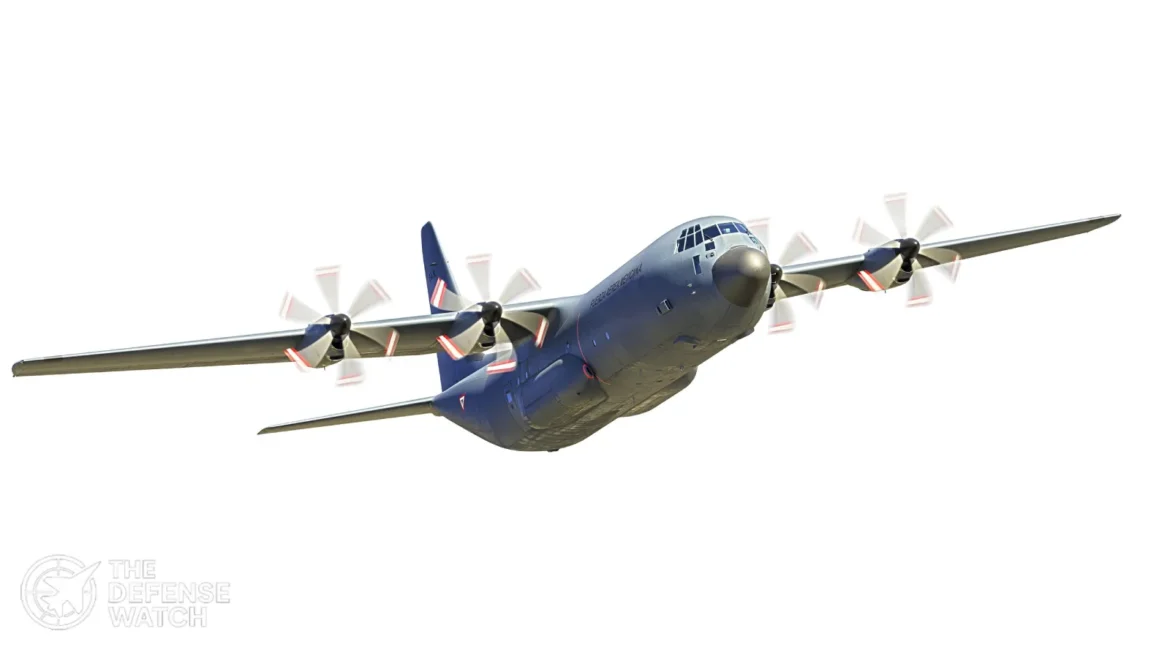
Airbus A320, Boeing 787, F-35 Lightning II, C-130 Hercules.Advantages:
- High speed
- Long range
- Efficient fuel consumption
- Ideal for commercial transport and long-distance operations
2. Rotary-Wing Aircraft (Helicopters)
Rotary-wing aircraft generate lift through spinning rotor blades, enabling vertical takeoff, hovering, and tight maneuvering.
Examples:
UH-60 Black Hawk, AH-64 Apache, CH-47 Chinook.Advantages:
- Operate without runways
- Superior mobility in complex terrain
- Ideal for rescue, assault, medevac, and close air support
3. Unmanned Aircraft Systems (Drones/UAVs)
UAVs operate remotely or autonomously, becoming crucial assets for surveillance, intelligence, and precision strike missions.
Examples:
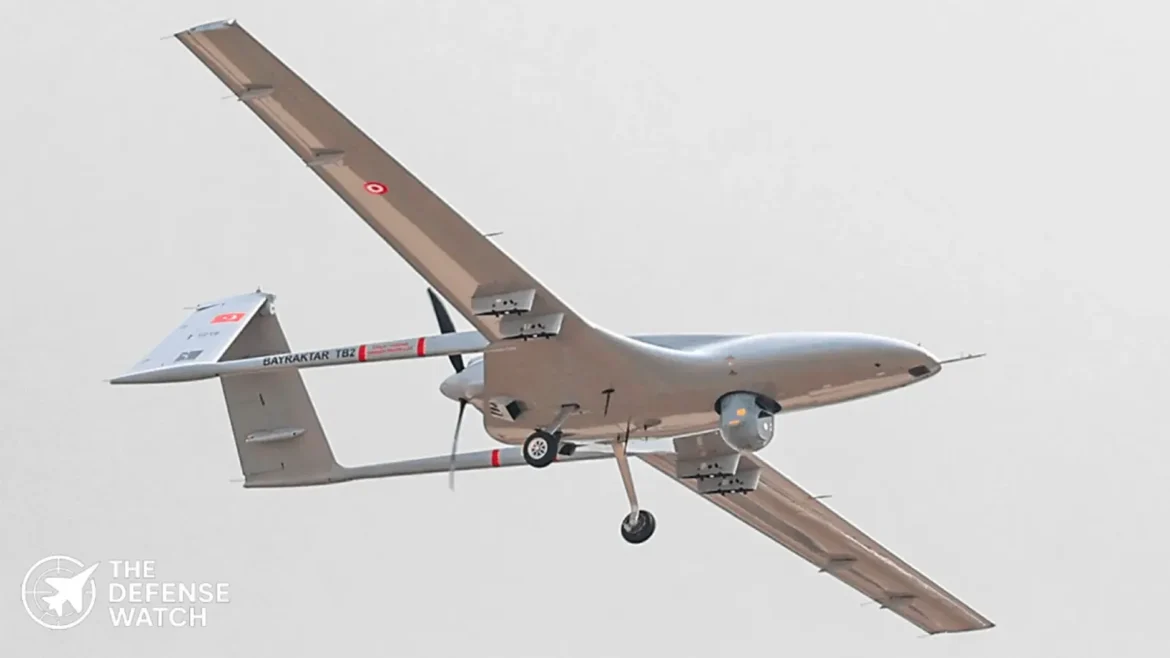
MQ-9 Reaper, Bayraktar TB2, small quadcopter drones.Advantages:
- Long endurance
- Lower operational risk
- Cost-effective for surveillance and combat
4. Tiltrotor & Hybrid Aircraft
Tiltrotors combine helicopter takeoff capabilities with airplane speed and range.
Example:
V-22 Osprey.5. Gliders & Ultralights
Lightweight aircraft used in sport aviation, training, and specialized missions.
Military Aircraft and Their Strategic Roles
Military aircraft represent some of the most advanced machines ever built. They provide nations with capabilities ranging from aerial dominance to humanitarian relief.
Key Military Aircraft Categories
Fighter Aircraft
Designed for air-to-air combat and air superiority.
Examples: F-22 Raptor, Rafale, J-20.Bombers
Deliver large payloads over long distances.
Examples: B-52H Stratofortress, B-2 Spirit.Transport Aircraft
Carry troops, equipment, and humanitarian cargo.
Examples: C-17 Globemaster III.Maritime Patrol Aircraft
Support naval operations and anti-submarine warfare.
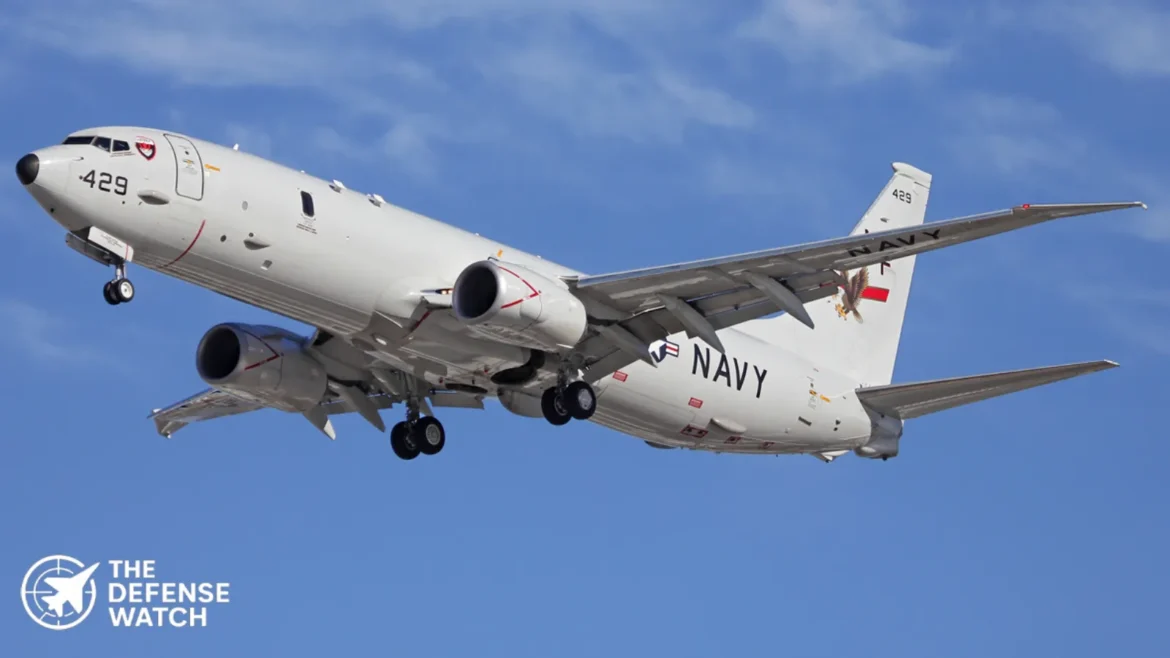
Examples: P-8A Poseidon.AEW&C and ISR Aircraft
Provide early warning and intelligence collection.
Examples: E-3 AWACS, E-7 Wedgetail.Combat & Utility Helicopters
Support ground forces, rescue missions, and special operations.
Why Aircraft Are Essential in Modern Warfare
Aircraft remain critical to defense planning because they:
- Secure air superiority, a prerequisite for modern operations
- Deliver precision strikes against high-value targets
- Support troop movement and logistics
- Provide ISR (Intelligence, Surveillance, Reconnaissance)
- Enhance deterrence and rapid reaction capability
As threats evolve, aircraft are increasingly integrated into joint-force networks with satellites, radars, and unmanned systems.
Fixed-Wing vs Rotary-Wing Aircraft: Key Differences
Fixed-Wing
- Fast (Mach 0.8–2+)
- Long-range capability
- Best for transport, strike, and surveillance
Rotary-Wing
- Vertical takeoff and hover
- Operate in complex environments
- Best for assault, medevac, and close support
Each serves a distinct mission set, and modern militaries require both for balanced airpower.
Evolution of Aircraft Technology: From Early Flight to 2026
Early Innovations (1900s–1930s)
The Wright Brothers’ 1903 flight marked the first controlled powered flight. Aircraft rapidly evolved during World War I for reconnaissance and combat.
World War II and the Jet Age
Wartime demand accelerated aircraft development, leading to early jet fighters and long-range bombers.
Cold War Era (1950s–1990s)
Supersonic aircraft, nuclear-capable bombers, and early stealth technology emerged during this period.
21st Century: Stealth, Digital Avionics, and Network Warfare
Platforms like the F-35 integrated multi-role capability with sensor fusion, data links, and low-observable design.
2025 and Beyond: AI-Driven and Autonomous Systems
The next generation of aircraft will introduce:
- AI copilots
- Loyal wingman drones
- Directed-energy weapons
- Hypersonic propulsion
- Adaptive cycle engines
Aircraft remain essential components of national security—and the future promises even more disruptive innovations.
Global Aircraft Trends
The aviation sector is experiencing rapid transformation driven by geopolitical tensions, commercial demand, and emerging technologies.
Commercial Aviation Recovery and Growth
Global air travel has returned to pre-pandemic levels, prompting major airlines to renew fleets for efficiency and sustainability.
Rising Defense Procurement
Europe, Asia, and the Middle East are increasing military aircraft orders due to a shifting global security environment.
UAV Expansion
Drones dominate reconnaissance and precision-strike missions across modern conflict zones.
Sustainability and Electric Aircraft Development
Civilian programs are exploring hybrid and electric propulsion to reduce emissions.
FAQs
What is an aircraft?An aircraft is any machine capable of sustained flight in the atmosphere using wings, rotors, or aerodynamic lift.
What are the main types of aircraft?Fixed-wing, rotary-wing, drones, tiltrotor, and gliders.
What makes military aircraft different from civilian aircraft?Military aircraft include combat systems, sensors, weapons, and armor for defense operations.
What is the fastest type of aircraft?High-performance fighter jets and specialized reconnaissance aircraft typically reach the highest speeds.
Will unmanned aircraft replace piloted aircraft?Not fully. UAVs will augment manned aircraft, especially for high-risk missions.
What are the four types of aircraft?Fixed-Wing Aircraft – Airplanes that generate lift via stationary wings (e.g., commercial jets, fighter jets).
Rotary-Wing Aircraft – Helicopters that use spinning rotor blades to lift and maneuver.
Unmanned Aerial Vehicles (UAVs/Drones) – Remotely piloted or autonomous aircraft for surveillance or strike missions.
Tiltrotor/Hybrid Aircraft – Combine vertical takeoff of helicopters with the speed and range of fixed-wing planes (e.g., V-22 Osprey).What is the difference between an aircraft and an airplane?An aircraft is a broad term for any machine capable of sustained flight, including airplanes, helicopters, drones, gliders, and tiltrotors.
An airplane (or aeroplane) is a specific type of fixed-wing aircraft that relies on forward motion and wings to generate lift. All airplanes are aircraft, but not all aircraft are airplanes.What Is a Fighter Jet?
A fighter jet is a high-performance military aircraft designed primarily for air-to-air combat, interception, and securing air superiority. In modern warfare, these aircraft serve as the backbone of national air forces, providing rapid response, deterrence, and offensive capability. Fighter jets remain essential because control of the skies often determines the outcome of conflicts, shaping everything beneath—from ground operations to naval movements.
Today’s fighter jets combine speed, stealth, avionics, and precision weapons to engage both airborne and ground threats. From the F-35 and F-22 to the Rafale, J-20, and Gripen, they reflect a nation’s technological capability and defense priorities.
What Defines a Fighter Jet?
1. Designed for Air Superiority
The primary mission of any fighter jet is to defeat enemy aircraft. Air-to-air missiles, high-G maneuverability, advanced radar, and electronic warfare systems make this possible.
2. High-Speed, High-Altitude Capability
Modern fighters routinely operate at speeds above Mach 1 and at altitudes exceeding 50,000 ft. This provides tactical advantage and battlefield dominance.
3. Advanced Sensors and Avionics
Fighter jets carry powerful radars, infrared sensors, data-links, and cockpit displays that fuse information, giving pilots a real-time view of the battlefield.
4. Multi-Role Flexibility
Most current-generation fighters are multirole, able to conduct:
- Air-to-air combat
- Precision strikes
- Close air support
- Reconnaissance
- Maritime operations
This flexibility reduces the need for separate aircraft types.
Why Fighter Jets Matter in Modern Warfare
1. Securing Air Superiority
Nations must protect their airspace. Fighter jets intercept and neutralize hostile aircraft before they reach critical areas. Without air superiority, ground forces and naval fleets remain vulnerable.
2. Deterrence and Strategic Signaling
A capable fighter fleet serves as a deterrent, signaling to adversaries that any aggression will face a rapid and effective military response.
3. Precision Strike Capability
Modern fighters can engage ground targets using guided bombs, cruise missiles, and stand-off weapons. This allows nations to strike with accuracy while minimizing collateral damage.
4. Rapid Reaction and Global Reach
Fighter jets can deploy within minutes, project power across long distances, and reinforce allies as part of international coalitions.
5. Technology Leadership
Advances in stealth, sensors, hypersonic weapons, and AI-driven warfare are closely tied to fighter jet development. Nations leading in airpower often lead in overall military innovation.
Generations of Fighter Jets: A Quick Overview
Early Jets (1st–2nd Generation)
- Subsonic or early supersonic
- Basic radar
- Primitive missiles and gun combat
3rd–4th Generation
- High maneuverability
- Advanced air-to-air missiles
- Multi-role capabilities
4.5 Generation
- AESA radars
- Electronic warfare suites
- Network-centric operations
5th Generation
- Stealth shaping
- Sensor fusion
- Supercruise
- Example: F-22, F-35, J-20
6th Generation (In Development)
- AI copilots
- Directed energy weapons
- Loyal wingman drones
- Adaptive engines
How Fighter Jets Work: Key Systems
1. Propulsion
Most fighters use afterburning turbofan engines, enabling supersonic flight. New engines focus on lower fuel burn and higher thrust.
2. Stealth Technology
Shaping, radar-absorbent materials, and internal weapon bays reduce detection by enemy radar.
3. Weapons
Typical armament includes:
- Short- and long-range air-to-air missiles
- Precision-guided bombs
- Anti-ship missiles
- Internal cannons
4. Avionics
Fighters carry advanced avionics such as:
- AESA radar
- Infrared search and track (IRST)
- Helmet-mounted displays
- Electronic countermeasures
Global Competition: Why Nations Invest in Fighter Jets
Airpower is a symbol of national strength. Countries like the U.S., China, India, France, and Russia invest heavily in fighter programs to maintain strategic advantage.
Rising tensions—from the Indo-Pacific to Eastern Europe—have renewed global demand. Joint fighter programs like the F-35, GCAP, and AUKUS aviation initiatives show how fighter jets have become diplomatic tools as well as military assets.
Strategic Analysis: The Future of Fighter Jets
Air combat is evolving. Pilots now rely on AI, drones, and long-range missiles more than close-range dogfighting. Future fighters will emphasize stealth, electronic warfare, hypersonic weapons, and loyal wingman drones.
Despite emerging technologies, fighter jets will remain central to military strategy because speed, reach, and air dominance are irreplaceable.
FAQs
What is a fighter jet?A fighter jet is a high-performance military aircraft designed for air combat, interception, and securing airspace.
Why are fighter jets important?They provide air superiority, deterrence, rapid response capability, and precision strike options.
What makes modern fighter jets different from older ones?Stealth, advanced sensors, network-centric warfare, and multirole capability distinguish modern fighters.
Which countries operate the most advanced fighter jets?The United States, China, Russia, France, the UK, and several NATO/Asian partners field advanced fleets.
Will drones replace fighter jets?Drones will complement—not replace—manned fighters. Future jets will operate alongside autonomous wingmen.
Top 10 Most Advanced Fighter Jets in 2026: A Global Airpower Assessment
The global race for air superiority continues to accelerate as nations invest aggressively in 5th-generation stealth fighters, advanced avionics, sensor fusion, and electronic warfare capabilities. In 2026, the competition is led by a small group of technologically dominant air forces whose fighters are redefining the future battlespace. Below is a comprehensive ranking of the most advanced fighter jets in 2026, based on stealth performance, situational awareness, combat readiness, weapons integration, and operational maturity.
1. F-35 Lightning II – United States
The F-35 remains the world’s most capable multirole stealth fighter due to its unrivaled sensor fusion, electronic warfare suite, network-centric connectivity, and global fleet size. With three variants and more than a dozen international operators, the F-35 is the only 5th-generation aircraft deployed at scale worldwide.
2. F-22 Raptor – United States
Although no longer in production, the F-22 still sets the benchmark for air dominance, excelling in supercruise performance, stealth shaping, and unmatched maneuverability. Its limited numbers remain its only drawback.
3. Su-57 Felon – Russia
Russia’s Su-57 continues to evolve, incorporating advanced IRST sensors, 3D thrust vectoring, and new long-range missiles. While its stealth rating lags behind U.S. platforms, the Felon is becoming more operationally mature.
4. J-20 Mighty Dragon – China
China’s most advanced fighter is steadily improving with upgraded WS-15 engines, enhanced stealth coatings, extended-range missiles, and AI-enabled cockpit features. Beijing is expanding J-20 squadrons rapidly, shifting Asia’s airpower balance.
5. Rafale F4 – France
The Rafale F4 standard boosts the platform into a next-generation category with new sensors, enhanced data links, improved SPECTRA EW system, and advanced air-to-air weaponry. Its combat-proven track record makes it one of the most versatile fighters in the world.
6. Eurofighter Typhoon – UK/Italy/Germany
The Typhoon benefits from continuous upgrades—particularly the Captor-E AESA radar, updated mission systems, and next-generation air-to-air missile integrations. While not a stealth design, its performance and sensor suite keep it competitive in 2026.
7. Tejas Mk-2 – India
India’s upcoming Tejas Mk-2 introduces a larger airframe, stronger engine, modern avionics, and superior weapons payload, turning it into a capable medium-weight combat aircraft aimed at replacing older MiG platforms.
8. F-3 Shinshin – Japan
Japan’s F-3 (formerly F-X) is designed to serve as a high-end air dominance fighter, leveraging cutting-edge Mitsubishi technologies, advanced stealth shaping, and cooperation with international partners. The jet promises next-generation networking and AI-driven battlefield awareness.
9. Saab Gripen E – Sweden
The Gripen E stands out for its cost-efficiency, powerful EW systems, advanced tactical datalinks, and multi-role versatility. Its small radar cross-section and excellent situational awareness make it a strong 4.5-generation contender.
10. KAAN Fighter – Türkiye
Türkiye’s KAAN program is progressing rapidly, aimed at delivering a stealth-capable, high-performance 5th-generation fighter with strong computing power and indigenous sensors. The first flight marks a major step forward for Turkish aerospace ambitions.
Global Analysis: What This Ranking Means for Airpower in 2026
The 2026 ranking of advanced fighter jets shows a clear technological divide. The United States remains dominant with two fully operational stealth fighters, while China continues to scale production and upgrades of the J-20. Russia is improving the Su-57 despite industrial challenges, and Europe is maintaining 4.5-gen relevance until 6th-generation programs like FCAS and GCAP enter service.
Meanwhile, new entrants—such as Türkiye, India, and Japan—are reshaping the future landscape by investing in indigenous 5th-generation aircraft. This diversification signals a shift from Western monopoly toward multipolar airpower modernization.
FAQs
Which fighter jet is the most advanced in 2026?The U.S. F-35 Lightning II leads due to its unmatched sensor fusion, global deployment, and combat-ready maturity.
Why is the F-22 still ranked so high?Despite limited numbers, its stealth, supercruise, and air dominance performance are still unmatched.
Is China’s J-20 considered a true 5th-generation fighter?Yes—especially with the latest WS-15 engine upgrades, which enhance its range, power, and stealth capabilities.
What is the most advanced European fighter in 2026?The Rafale F4 is Europe’s most modern operational fighter until 6th-gen programs arrive.
Which new fighter programs are worth watching?Japan’s F-3, Türkiye’s KAAN, and India’s AMCA will significantly impact next-decade airpower.
The global race for air superiority continues to intensify in 2026as Russia, the United States, and China expand and modernize their fighter aircraft fleets. Each nation is rapidly advancing its fifth-generation and multirole combat capabilities, aiming to secure technological and operational dominance in future wars. This comparison evaluates the leading fighter platforms representing the three major air powers — Russia (Su-75, Su-57, Su-35), United States (F-22, F-35, F-16), and China (J-20, J-16, J-15) — to understand how each country positions itself in the evolving aerospace landscape.
Russia’s Lineup: Su-75 | Su-57 | Su-35
Su-75 “Checkmate” (Future 5th-Gen Light Fighter)
Russia’s Su-75, still under development, is designed as an affordable fifth-generation fighter aimed at export markets. Expected features include stealth shaping, advanced avionics, internal weapons carriage, and high maneuverability. If realized as promised, it could serve as Russia’s cost-effective counterpart to the F-35.
Su-57 (5th-Gen Stealth Multirole Fighter)
The Su-57 is Russia’s front-line stealth fighter featuring supermaneuverability, 360° sensor coverage, internal weapons bays, and long-range air-to-air missile capability. While stealth performance is still debated, the aircraft offers strong kinematic performance and advanced electronic warfare systems.
Su-35 (4.5-Gen Supermaneuverable Fighter)
The Su-35 remains one of the world’s most capable non-stealth air superiority fighters. Known for thrust-vectoring engines, long-range radars, and heavy weapons load, it provides Russia with a reliable platform for air dominance missions.
United States Lineup: F-22 | F-35 | F-16
F-22 Raptor (5th-Gen Air Superiority Fighter)
The F-22 remains unmatched in air-to-air combat due to its extremely low observability, thrust-vectoring agility, and advanced avionics. Despite ending production, the Raptor still represents the benchmark for fifth-generation air superiority.
F-35 Lightning II (5th-Gen Multirole Stealth Fighter)
The F-35 is now the most widely deployed fifth-generation fighter globally. It combines stealth, network-centric warfare, electronic attack, and advanced sensor fusion, making it a versatile asset for U.S. and allied forces.
F-16 Fighting Falcon (4th-Gen Multirole Fighter)
Even after decades of service, the F-16 remains a critical part of the U.S. Air Force and global export market. The modern Block 70/72 variants offer upgraded avionics, AESA radar, and expanded weapons capability.
China’s Lineup: J-20 | J-16 | J-15
J-20 Mighty Dragon (5th-Gen Stealth Fighter)
China’s J-20 is the nation’s most advanced stealth fighter and the backbone of the PLA Air Force’s modernization strategy. With a stealth-optimized airframe, long operational range, and active sensor systems, it acts as Beijing’s primary counter to U.S. fifth-generation fighters in the Indo-Pacific.
J-16 (4.5-Gen Multirole Fighter)
The J-16 is a heavily modernized platform derived from the Su-27 family, equipped with AESA radar, EW suites, and long-range missiles. It plays a key role in Chinese air dominance and strike missions.
J-15 (Carrier-Based Fighter)
Operating from China’s aircraft carriers, the J-15 provides the PLA Navy with blue-water airpower capabilities. While limited compared to U.S. carrier aviation, it forms a foundation for China’s future carrier strike ambitions.
Comparative Assessment: Who Leads in 2026?
Stealth & Technology Advantage – United States
The U.S. maintains the edge in stealth capability, sensor fusion, and network warfare through the F-22 and F-35 programs. These technologies remain difficult for rivals to replicate at scale.
Maneuverability & Kinetic Performance – Russia
Russia still excels in supermaneuverability and air combat kinematics, particularly with the Su-57 and Su-35. These designs favor close-range engagements and high agility.
Rapid Modernization & Fleet Expansion – China
China continues to grow its fleet at a remarkable pace, deploying J-20s in increasing numbers and investing heavily in advanced sensors, datalinks, and EW systems.
Strategic Context: The Airpower Balance Is Shifting
The U.S. remains the global leader in fifth-generation technology, but China is rapidly narrowing the gap through high production rates and indigenous innovation. Russia, while strong in aerodynamic design, faces industrial challenges and limited production output.
The next decade will likely see increased emphasis on sixth-generation programs, advanced drones, loyal wingmen, and AI-enabled combat aviation — areas where the U.S. and China are heavily investing.
FAQs
Which country has the strongest air force in 2026?The U.S. remains the leader in both technology and operational capability, primarily due to the F-22 and F-35 fleets.
Is the Su-75 operational?No, the Su-75 is still under development, with its first flight yet to be officially confirmed.
Is China’s J-20 stealth comparable to the F-35?The J-20 is considered stealthy, but U.S. fighters still maintain an edge in sensor fusion and low-observable coatings.
Which fighter is best in close-range combat?Russia’s Su-35 and Su-57 offer exceptional agility due to thrust-vectoring technology.
Which country is expanding its fleet fastest?China is currently increasing production of the J-20 and J-16 at the highest pace among major powers.
The United States military discreetly purchased two Russian-made Su-27 Flanker fighters in the mid-2000s to support advanced training and intelligence programs, according to historical procurement disclosures and defense industry sources. The acquisition, carried out through a foreign contractor, enabled U.S. pilots and analysts to study one of Russia’s most widely deployed air superiority fighters under controlled conditions.
Background: Why the Su-27 Flanker Matters
The Su-27 Flanker, developed by the Soviet Union in the late Cold War, was designed as a direct counter to the U.S. F-15 Eagle. With its Mach 2.35 top speed, high-agility aerodynamics, long operational range, and powerful radar suite, the aircraft became a cornerstone of Russian and allied air forces.
Following the collapse of the Soviet Union, several former republics inherited Su-27s. Limited budgets and shifting defense priorities made some of these aircraft available for legal export or refurbishment—creating rare opportunities for Western governments to obtain and evaluate frontline Russian platforms.

Image Credit: National Security Journal 
Image Credit: National Security Journal For the United States, having access to a real Su-27 Flanker offered significant advantages in understanding the design philosophy, strengths, limitations, and maneuver characteristics of a potential adversary aircraft.
Acquisition Through a Third-Party Contractor
The two Su-27 Flanker fighters were purchased through Tac Air, a private contractor specializing in adversary air support. Reports indicate that the aircraft originated from Ukraine’s surplus stock and were transferred after refurbishment and demilitarization processes aligned with export-control regulations.
While the exact purchase price was never publicly disclosed, defense analysts estimate that foreign-origin Flankers sold on the legal market typically range between $5–$15 million per unit depending on airframe hours and equipment installed.
The aircraft were shipped to a secure U.S. facility where engineers completed airworthiness evaluations and maintenance work prior to flight testing.
Purpose: Evaluation and Aggressor Training
Once in U.S. custody, the Su-27 Flanker fighters played key roles in:
1. Reverse-Engineering and Technical Evaluation
Analysts examined the aircraft’s radar cross-section, avionics architecture, radar performance parameters, and aerodynamic handling. Understanding these systems allowed the U.S. to refine both defensive countermeasures and fighter engagement strategies.
2. Adversary Air (Red Air) Training
Trained contractor pilots flew the Su-27 Flanker in simulated combat missions against U.S. fighters such as the F-15, F-16, and later the F-22 and F-35. First-hand exposure enabled American pilots to understand how the Flanker behaves during high-G maneuvers, low-speed engagements, and beyond-visual-range fights.
These sessions offered insights impossible to replicate through simulators alone.
3. Tactics Development
The Air Force’s Weapons School and intelligence community used data gathered from the aircraft to develop new tactics, techniques, and procedures for countering Russian-designed fighters widely exported to Asia, Africa, and the Middle East.
Expert Perspectives
Defense aviation expert Richard Aboulafia has noted that access to real foreign fighters gives the U.S. “a training and analytical advantage that no simulator or mock-up can replicate.”
Former Air Combat Command officials have similarly stated that assessments of authentic adversary aircraft significantly improve pilot situational understanding during air-to-air engagements.
Additionally, analysts highlight that the widespread global use of the Su-27 Flanker family—including its modern derivatives like the Su-30, Su-33, Su-34, and Su-35—makes direct exposure strategically valuable for the United States.
Strategic Significance
The acquisition reflects a long-standing U.S. practice of obtaining foreign combat aircraft whenever legally and practically feasible. Past examples include MiG-21s from Indonesia, Iraqi MiG-23s, and the well-known secretive “Red Eagles” squadron of the 1980s.
For the Su-27 Flanker, this access became especially relevant as Russia exported advanced variants to countries such as China, India, Vietnam, and Algeria. Understanding the aircraft’s baseline capabilities helped the U.S. anticipate how these fleets might operate in real-world scenarios.
What’s Next?
Although the two original Su-27 Flanker aircraft acquired by the U.S. are no longer believed to be flying, their legacy continues to influence American air combat programs. The rise of contractor-run adversary air units and increasing demand for dissimilar air combat training may prompt future interest in acquiring other foreign-origin platforms, especially as geopolitical tensions rise.
Meanwhile, the widespread deployment of advanced Flanker-family aircraft worldwide ensures that the insights gained from these airframes will remain relevant for years to come.
Su-27 Flanker Fighter Jet – Full Specifications
Su-27 Flanker Fighter Jet


Full Specifications
General Information
Name Su-27 “Flanker” Manufacturer Sukhoi Design Bureau Country of Origin Soviet Union (Russia) Type / Role Air Superiority Fighter Generation 4th Generation Status In Service First Flight May 20, 1977 Introduction / In Service Since 1985 Number Built Over 700 Operators Russia, China, Ukraine, Vietnam, Ethiopia, Indonesia, Belarus Dimensions & Structure
Length 21.9 m (72 ft) Wingspan 14.7 m (48 ft) Height 5.9 m (19 ft) Wing Area 62 m² Empty Weight 16,380 kg Maximum Takeoff Weight (MTOW) 30,450 kg Internal Weapons Bay None External Hardpoints 10 Performance
Maximum Speed Mach 2.35 (2,500 km/h) Range 3,530 km Combat Radius 1,340 km Service Ceiling 19,000 m (62,500 ft) Rate of Climb 325 m/s Thrust-to-Weight Ratio 1.07 G Limits +9G Powerplant
Engine Type Saturn AL-31F Turbofan No. of Engines 2 Thrust (each) 27,500 lbf (122.6 kN) Thrust Vectoring No (Su-27 base model) Fuel Capacity 9,400 kg internal Armament
Gun 30mm GSh-30-1 cannon Missiles (Air-to-Air) R-27, R-73, R-77 Missiles (Air-to-Ground) Kh-29, Kh-31 Bombs FAB-series general-purp Hardpoints 10 Payload Capacity 8,000 kg Avionics & Systems
Radar N001 Myech Pulse-Doppler Radar Range 80–100 km Electronic Warfare (EW) System SPO-15 Beryoza RWR Targeting System IRST & Helmet-Mounted Sight Helmet Display Yes Navigation Inertial + GPS Autopilot / AI Assistance Basic analog system Communication Secure UHF/VHF Stealth & Technology
Radar Cross Section (RCS) 10–15 m² Stealth Features Non Infrared Signature Reduction Minimal Sensor Fusion No Networking Capabilities Limited datalink Variants
Special Export Versions Su-27SK Operational History
Major Conflicts / Deployments Ethiopia–Eritrea War, Ukraine conflict Notable Operators Russia, China, India (as Su-30MK), Ukraine Combat Proven? Yes Mission Types Air Superiority, Interception, Escort, Patrol Cost & Program
Unit Cost $30–40 million USD Development Cost Classified (Soviet-era) Program Name PFI Program (Perspective Frontline Fighter) Funding Countries Soviet Union Additional Information
Upgrades Planned Radar and avionics modernization Future Replacement Su-35S, Su-57 Export Restrictions Limited to friendly nations Notable Achievements Set multiple world records for climb rate Competitors F-15 Eagle, MiG-29, Rafale PROS
- Exceptional range and endurance
- Highly maneuverable airframe
- Powerful twin-engine thrust
- Proven combat record
- Extensive global operator base
CONS
- Outdated avionics compared to modern jets
- Lacks stealth features
- High radar cross-section
- Limited multirole capability in base model
- Maintenance-intensive
Su-27 Flanker: Russia’s Air Superiority Fighter
Developed by the Soviet Union’s Sukhoi Design Bureau, the Su-27 “Flanker” remains one of the most capable and recognizable fourth-generation fighter jets in the world. Conceived in response to the U.S. F-15 Eagle during the late Cold War, the Su-27 was designed to ensure Soviet air superiority against advanced Western aircraft. Its blend of range, agility, and firepower continues to make it relevant in modern combat environments.
Powered by twin Saturn AL-31F turbofan engines, the Su-27 can reach speeds of Mach 2.35 and altitudes exceeding 57,000 feet. With an operational range of nearly 2,200 miles, it provides the Russian Air Force with deep strike and patrol capabilities. The aircraft’s 30mm GSh-30-1 cannon and up to 10 hardpoints for air-to-air and air-to-ground missiles make it a formidable adversary in both interception and multirole operations.
Avionics on the Su-27 Flanker Fighter Jet include the N001 radar, offering detection ranges of up to 80–100 km against fighter-sized targets. Its infrared search and track (IRST) system and helmet-mounted sight enhance situational awareness and missile cueing. Though lacking stealth, the Su-27’s aerodynamic design and supermaneuverability—achieved through relaxed static stability and powerful thrust vectoring in later variants—make it one of the most agile fighters of its era.
Modernized derivatives such as the Su-30, Su-33, and Su-35 trace their lineage to the original Su-27 platform, underscoring its robust design and long-term adaptability.
Su-27 Flanker Fighter Jet Price in US
The Su-27 Flanker’s estimated unit cost is between $30–40 million USD, depending on configuration and export version. While not operated by the U.S., it is often studied by Western analysts and featured in training simulations for its performance benchmark role against American fighters like the F-15 and F-16.
FAQs – Su-27 Fighter Jet
Is the Su-27 a Flanker?Yes. The Su-27’s NATO reporting name is “Flanker”. This codename was assigned during the Cold War to identify Soviet aircraft in NATO’s system. The “Flanker” designation applies to the Su-27 and its subsequent derivatives, including the Su-30, Su-33, and Su-35.
Why is the Su-30 called Flanker?The Su-30 is a direct evolution of the Su-27 airframe, which is why NATO also classifies it under the same “Flanker” family. Although upgraded with modern avionics, radar, and multirole capability, the Su-30 retains much of the Su-27’s aerodynamic structure and design lineage—hence its continued “Flanker” naming convention.
Is the Su-27 better than the F-15?The Su-27 and F-15 Eagle were designed as counterparts during the Cold War. While the Su-27 offers superior maneuverability, range, and high-altitude performance, the F-15 generally holds an advantage in avionics, radar, and precision-guided weapon integration. In short, the Su-27 excels in agility and endurance, while the F-15 dominates in technology and situational awareness.
What is the most advanced Flanker?The most advanced “Flanker” variant today is the Su-35S, often dubbed “Flanker-E.” It features thrust-vectoring engines, Irbis-E radar, advanced electronic warfare systems, and partial stealth improvements. The Su-35S represents the peak of Su-27 family evolution before the introduction of Russia’s fifth-generation Su-57.
What generation is the Su-27?The Su-27 Flanker is a fourth-generation air superiority fighter. It was developed in the 1970s to counter advanced Western fighters like the F-14 and F-15, combining high speed, long range, and agility to maintain Soviet dominance in air-to-air engagements.
Reviews