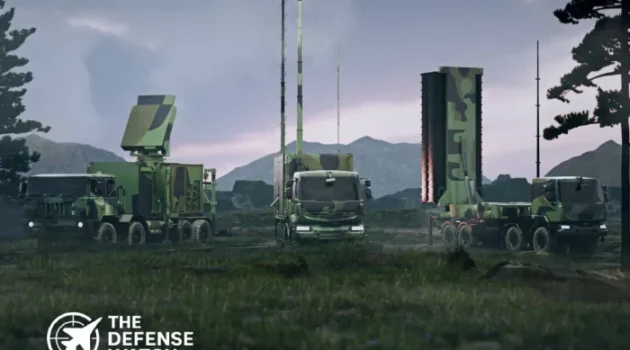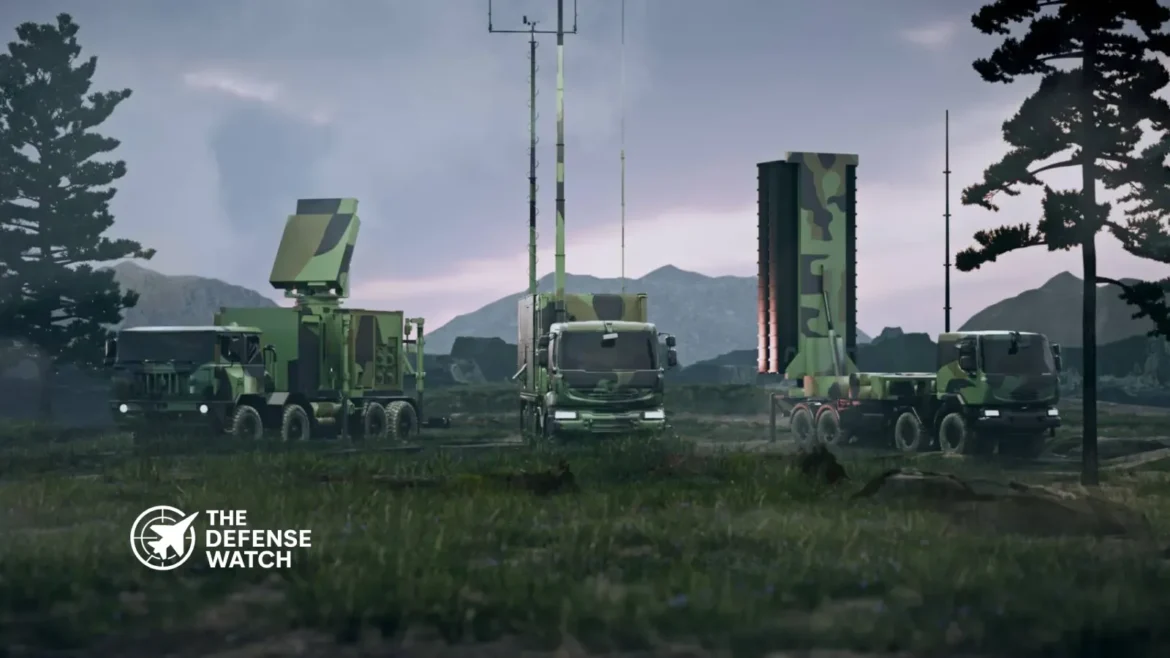
- ► Denmark has formally ordered the SAMP/T NG ground-based air and missile defense system from the Eurosam consortium.
- ► The system, co-developed by France and Italy (MBDA, Thales, Leonardo), uses Aster 30 B1/B1NT missiles to intercept aircraft, cruise missiles, and short- to medium-range ballistic threats.
- ► This acquisition provides Denmark with its first dedicated land-based theater air defense capability, filling a major gap in national and NATO northern flank protection.
- ► Selection of SAMP/T NG (French variant) was confirmed in September 2025; the March 2026 order announcement advances the procurement process within Denmark’s multi-billion kroner air defense modernization program.
- ► Upgrades include the Thales Ground Fire 300 AESA radar, enhanced C2, and full NATO interoperability, with first deliveries expected in the 2026–2027 timeframe for evaluation and integration.
Denmark Advances Missile Defense Capabilities with SAMP/T NG Acquisition
Denmark has ordered the SAMP/T NG air defense missile systems, a significant step in addressing evolving ballistic threats and reinforcing its role within NATO’s integrated air and missile defense framework.
(adsbygoogle = window.adsbygoogle || []).push({});The announcement, detailed in reports from March 2, 2026, highlights Denmark’s strategic pivot toward advanced ground-based theater-level protection. This acquisition provides Copenhagen with the ability to intercept a range of threats, including cruise missiles, sophisticated combat aircraft, and short- to medium-range ballistic missiles.
Developed by the Eurosam consortium—a partnership between MBDA (France and Italy) and Thales, with contributions from Leonardo—the SAMP/T NG represents an evolution from the original SAMP/T systems operational in France and Italy since the 2010s. Key upgrades include the Aster 30 Block 1NT interceptor, featuring a new Ka-band seeker and refined discrimination algorithms to handle maneuvering reentry vehicles and countermeasures effectively.
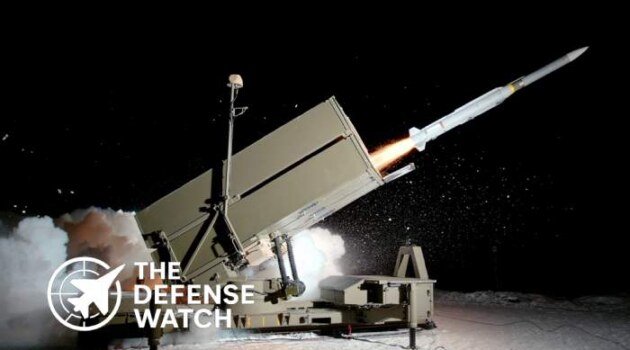
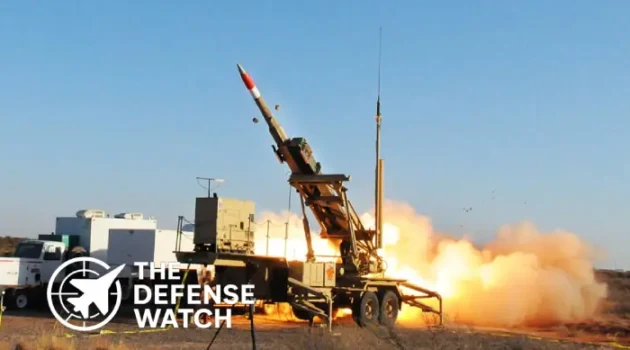
Complementing this is the Thales Ground Fire 300 AESA radar, delivering 360-degree coverage, extended detection ranges, rapid refresh rates, and superior multi-target tracking in high-saturation environments. The system’s redesigned engagement module, enhanced command-and-control with boosted processing and cybersecurity, and improved interoperability align it closely with NATO architectures, facilitating coordination with platforms like Patriot, NASAMS, and Aegis Ashore.
French Defense Minister Catherine Vautrin confirmed the order on February 26, 2026, describing it as a “landmark” development. She noted parallel discussions with Romania and Greece, signaling broader European adoption of the Franco-Italian system amid concerns over advanced missile arsenals.
This move comes as Denmark builds a multi-layered air defense network, following its September 2025 selection of SAMP/T NG over the U.S. Patriot PAC-3 for long-range needs. Part of a larger approximately $9.1 billion investment in eight long- and medium-range systems, the procurement addresses gaps exposed by conflicts like Ukraine, where mixed missile salvos challenged existing defenses.
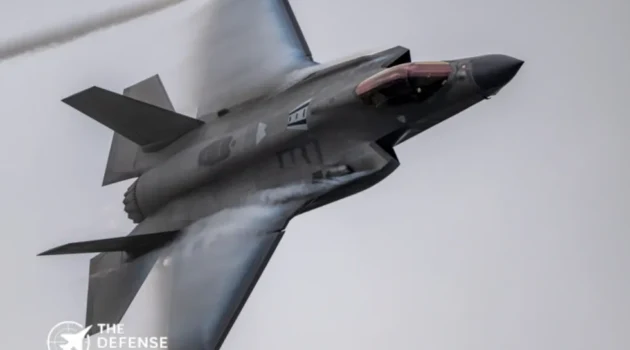
Previously reliant primarily on fighter aircraft such as the F-35 for air defense, Denmark lacked robust ground-based theater interception. The SAMP/T NG fills this void, protecting critical infrastructure, air bases, naval ports, and command centers while supporting territorial defense across the Danish Straits and northern approaches.
The system’s modular design enables faster emplacement, shoot-and-scoot mobility, and flexible battery configurations, suiting high-intensity scenarios. It strengthens European defense industrial cooperation, bolstering Eurosam’s production and reducing reliance on non-European suppliers while maintaining transatlantic interoperability.
In the context of heightened tensions in the Baltic region and High North—driven by Russian capabilities—Denmark’s investment enhances NATO deterrence on the northern flank. It contributes to alliance burden-sharing and promotes harmonized missile defense standards within the European pillar of NATO.
As deliveries, training, and integration proceed (exact timelines not disclosed), the SAMP/T NG positions Denmark to transition toward a resilient, digitally integrated shield against complex aerial and missile threats.

Pentagon Accelerates Defense Innovation with Record Small Business Investment
The War Department’s Accelerate the Procurement and Fielding of Innovative Technologies (APFIT) program has surpassed $1 billion in total awards to small businesses and non-traditional defense contractors, marking a significant expansion in the Pentagon’s effort to rapidly field cutting-edge military capabilities.
The milestone announcement, made December 22, 2025, includes the first round of Fiscal Year 2026 project selections valued at approximately $400 million across 14 unclassified programs spanning autonomous systems, space technologies, communications networks, and advanced munitions.
“Crossing the billion-dollar threshold underscores APFIT’s commitment to America’s small business innovators,” stated Emil Michael, Under Secretary of War for Research and Engineering, emphasizing the program’s role in accelerating critical capabilities to warfighters.
Scaling Innovation from Development to Production
The FY 2026 selections demonstrate the program’s growing maturity and operational impact. Average project awards now exceed $30 million, reflecting APFIT’s transition from early-stage prototypes to production-scale deployments of mission-critical technologies.
The largest single award announced totals $49.7 million for the U.S. Army’s Real-Time Command and Control at the Tactical Edge project, approaching APFIT’s $50 million statutory maximum. This represents the highest individual contract in the program’s history and signals increasing confidence in rapid technology transition pathways.
According to the War Department, the FY 2026 portfolio emphasizes operational readiness through technologies already validated in development phases. The program continues expanding opportunities for small businesses across all U.S. regions, including traditionally underrepresented and remote states, strengthening the domestic defense industrial base.
Marine Corps Dominates Project Awards
The U.S. Marine Corps leads FY 2026 selections with seven projects totaling approximately $212 million, focusing heavily on autonomous systems and unmanned platforms. Notable Marine Corps projects include:
The Gremlin Low-Cost Munition receives $35 million to provide affordable precision strike capabilities. The autonomous Unmanned Ground Vehicle for Ground Based Air Defense garners $20 million to enhance expeditionary air defense posture.
Maritime autonomy represents another Marine Corps priority, with the Whaleshark Autonomous Low-Profile Vessel awarded $29.49 million and Small Uncrewed Maritime Vessels receiving $24 million in joint funding with the Navy. The Trolling Uncrewed Navigation Assistant (TUNA) Seeker secures $35 million for advanced maritime guidance systems.
Additional Marine Corps investments include a $20 million Miniaturized Gyroscope for Resilient Navigation and a $10 million Tactical High-Bandwidth, Low-Latency data network project, addressing critical gaps in denied-environment operations.
Space Force Pursues Orbital Superiority
The U.S. Space Force received two substantial awards addressing critical space domain challenges. The Augmented Maneuver Vehicle for Satellites project secures $48.5 million, the second-largest award announced, to enhance on-orbit operations and satellite maneuverability.
Deployable, Attritable Optical Systems receives $22.15 million to develop cost-effective space-based surveillance and tracking capabilities. These investments align with broader Pentagon efforts to maintain space superiority amid growing threats to orbital assets.
Navy and Air Force Technology Priorities
The U.S. Navy’s selection of Domestic High Performance UAS Batteries for $28 million addresses critical supply chain vulnerabilities in unmanned aerial systems. The service also allocated $33 million for the Kraken 18 Communications Pod, enhancing maritime communications capabilities.
The U.S. Air Force focuses on logistics innovation with a $25 million award for Mobile Smart Manufacturing for Airframe Spares. This project aims to revolutionize maintenance operations through additive manufacturing and distributed production capabilities at forward locations.
Army Invests in Electronic Warfare and Network Command
Beyond the flagship $49.7 million command and control project, the U.S. Army awarded $21.66 million for the High Frequency Intercept Direction Finding and Exploitation (HIDES) system. This electronic warfare capability addresses emerging threats in contested electromagnetic environments.
The Real-Time Command and Control at the Tactical Edge project represents the Army’s commitment to network-centric warfare, enabling faster decision-making cycles and improved battlefield awareness at the lowest echelons.
Strategic Implications for Defense Industrial Base
The APFIT program serves as a cornerstone of the War Department’s innovation strategy, designed to circumvent traditional acquisition timelines that often span decades. By focusing on small businesses and non-traditional contractors, APFIT aims to access commercial technologies and innovative approaches typically outside conventional defense channels.
Industry analysts note the program’s emphasis on dual-use technologies, particularly in autonomy, communications, and advanced manufacturing. These sectors attract significant commercial investment, allowing the Pentagon to leverage private sector innovation while maintaining operational requirements.
The $1 billion milestone also reflects broader Pentagon efforts to distribute defense spending beyond traditional prime contractors. Small business participation strengthens regional economies and cultivates a diverse supplier base less vulnerable to single points of failure.
Program Structure and Future Outlook
APFIT operates under specific statutory authorities enabling rapid prototyping and fielding of technologies demonstrating high operational value. The $50 million per-project ceiling encourages focused development while maintaining agility compared to major acquisition programs.
The War Department indicated additional FY 2026 projects will be announced throughout the fiscal year as selections are finalized. Classified projects were excluded from the December announcement but represent a significant portion of total APFIT funding.
Program officials emphasize that awards target technologies at higher technology readiness levels, typically between TRL 6 and 8, where systems have been validated in relevant environments but require final engineering and production scaling. This approach minimizes technical risk while maximizing fielding speed.
Technology Trends and Operational Priorities
The FY 2026 selections reveal clear operational priorities across the services. Autonomous systems dominate the portfolio, with seven of 14 unclassified projects involving unmanned platforms or autonomous capabilities. This reflects ongoing Pentagon emphasis on distributed operations, attrition-resistant forces, and human-machine teaming.
Maritime autonomy receives particular attention, with multiple projects addressing surface and subsurface unmanned vessels. These investments support distributed maritime operations concepts and counter-maritime strategies in contested environments.
Communications and networking technologies represent another focus area, addressing persistent challenges in denied and degraded environments. Projects emphasize resilience, bandwidth, and low-latency requirements for modern multi-domain operations.
Space technologies expand APFIT’s traditional focus on terrestrial systems, reflecting the domain’s growing importance and the Space Force’s integration into rapid acquisition pathways. Emphasis on attritable and maneuverable systems suggests preparations for potential orbital conflicts.
Congressional and Industry Reaction
While official congressional responses have not yet been issued, APFIT enjoys bipartisan support as a mechanism to accelerate innovation while supporting small business development. The program aligns with legislative priorities to strengthen the defense industrial base and reduce acquisition timelines.
Defense industry associations have previously praised APFIT for lowering barriers to entry for non-traditional contractors. However, some traditional defense firms express concern about program scale relative to major acquisition programs and potential gaps in long-term sustainment planning.
Small business advocacy groups welcome the funding expansion but note that $1 billion across multiple years represents a fraction of total defense procurement spending, which exceeds $140 billion annually.
Additional FY 2026 Announcements Expected
The War Department indicated the December announcement represents only the initial round of FY 2026 selections. Additional projects will be revealed as they complete evaluation and approval processes throughout the fiscal year.
Historical patterns suggest subsequent announcements may include projects currently under security review or pending final contract negotiations. The program typically announces 20-30 projects per fiscal year across classified and unclassified portfolios.
APFIT remains a key element of the Pentagon’s broader technology modernization strategy, working alongside other innovation initiatives such as the Defense Innovation Unit, Strategic Capabilities Office, and service-specific rapid capabilities offices. Together, these programs aim to maintain U.S. technological advantage against near-peer competitors while adapting to evolving threats.
The program’s success in reaching the $1 billion milestone demonstrates sustained institutional commitment to alternative acquisition pathways and recognition that traditional procurement cycles cannot adequately address the pace of technological change in modern warfare.
Pentagon Consolidates Counter-Drone Policy Framework
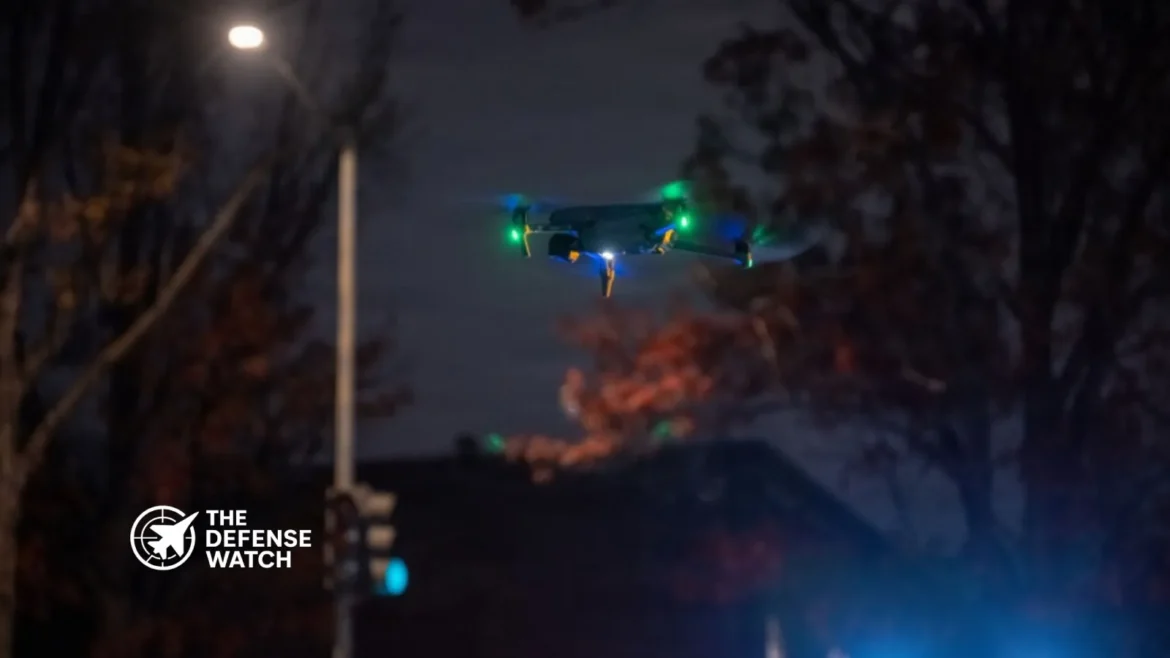
The Department of Defense’s Joint Interagency Task Force 401 announced the release of updated counter-drone guidance on December 8, 2025, providing installation commanders with streamlined authority to detect and mitigate unmanned aerial system threats to military facilities across the United States.
(adsbygoogle = window.adsbygoogle || []).push({});The guidance, signed by the Secretary of Defense, consolidates existing policies for countering unmanned aircraft systems under the authority of 10 U.S. Code Section 130i. The comprehensive framework addresses what military officials describe as a direct and growing threat posed by the proliferation of inexpensive, capable, and weaponizable UAS by both peer competitors and non-state actors.
“Drones are a defining threat for our time,” said Brigadier General Matt Ross, Director of JIATF-401. “Technology is evolving fast and our policies and counter-UAS strategy here at home must adapt to meet this reality.”
Expanding Commander Authority Beyond Installation Perimeters
The updated guidance provides commanders with expanded authority and flexibility to dominate the airspace above their installations. According to defense officials, the policy recognizes that drone threats do not begin and end at installation fence lines.
“Countering drones does not start and stop at the fence line,” Ross explained. With this new guidance, installation commanders are empowered to address threats as they develop, and the guidance makes clear that unauthorized drone flights are a surveillance threat even before they breach an installation perimeter.
The framework empowers installation commanders to take decisive action to protect military facilities, assets, and personnel from the evolving threat landscape. Installation commanders are now directed to issue installation-specific operating procedures within 60 days of the guidance release.
Enhanced Interagency Data Sharing Capabilities
The updated policy incorporates provisions from the Fiscal Year 2026 National Defense Authorization Act, authorizing the sharing of UAS track and sensor data among interagency partners. The guidance specifically enables data sharing with the Department of Homeland Security and the Department of Justice, facilitating a more coordinated whole-of-government approach to counter-drone operations.
The policy also permits the use of trained and certified contractor personnel as counter-UAS operators, addressing workforce capacity challenges in defending military installations. This provision expands the available pool of personnel capable of operating defensive counter-drone systems.
“Hardware alone is not sufficient,” Ross stated. “We need to train service members and work in concert with interagency partners so that we’re all pulling together toward the same mission.”
Clear Authority Delegation Structure
Service Secretaries are now authorized to designate covered facilities or assets based on comprehensive risk assessments. This authority can be delegated to Service Chiefs, ensuring protection is applied where it is needed most across the military enterprise.
The guidance consolidates what had been multiple separate memoranda and directives into a single authoritative document. This streamlining effort addresses longstanding concerns about clarity and consistency in counter-UAS policy implementation across different military installations and service branches.
According to defense officials, the consolidation provides installation commanders with clear decision-making authority regarding when and how to engage drone threats approaching or operating near their installations.
Proactive Defense Posture Requirements
The guidance emphasizes a proactive approach, directing military leaders to assess vulnerabilities, conduct rigorous training drills, and develop robust defensive postures to deter and defeat aerial threats. This represents a shift from reactive measures to anticipatory defense planning.
(adsbygoogle = window.adsbygoogle || []).push({});JIATF-401 stands ready to assist commanders in implementing the new framework and developing installation-specific procedures. The task force, established in August 2025, serves as the Department of Defense’s lead organization for synchronizing counter-small UAS efforts across the department and rapidly delivering joint capabilities.
Addressing the Proliferation Challenge
The proliferation of inexpensive and capable unmanned aerial systems presents unique challenges to military installation security. Commercial drone technology has advanced rapidly, providing potential adversaries with surveillance and reconnaissance capabilities at minimal cost.
Defense officials have noted that adversaries are actively testing U.S. resolve, seeking to exploit perceived gaps in defenses to surveil operations, harass American forces, and undermine homeland security. The updated guidance aims to close those gaps through clearer authorities and standardized procedures.
The policy addresses threats from both peer competitors and non-state actors who have demonstrated increasing sophistication in employing drone technology against U.S. interests domestically and abroad.
Implementation Timeline and Training Requirements
Installation commanders have 60 days from the guidance release date to develop and issue installation-specific operating procedures. The procedures must address local threat assessments, available counter-UAS capabilities, coordination mechanisms with local and federal law enforcement, and rules of engagement.
The guidance mandates that all officers assuming command of military installations in the United States receive pre-briefings on counter-UAS authorities and policies. This requirement ensures continuity and consistent understanding of counter-drone authorities across command changes.
JIATF-401 has committed to providing support materials, training resources, and technical assistance to installation commanders as they implement the new framework. The task force has already conducted site assessments at key installations to identify and address defense gaps.
Integration with Broader Defense Initiatives
The updated guidance supports the Department of Defense’s Replicator 2 initiative, which focuses on rapidly fielding affordable counter-drone capabilities to protect U.S. personnel and facilities. JIATF-401 has developed a prioritized list of asset locations to guide resource allocation under this initiative.
The task force marked its 100th day of operations in December 2025, demonstrating rapid progress in delivering state-of-the-art counter-drone equipment and revamping policy frameworks. Since its establishment, JIATF-401 has delivered counter-UAS capabilities to forces on the southern border and enhanced protections for installations in the National Capital Region.
(adsbygoogle = window.adsbygoogle || []).push({});From day one, our mission has been to move with speed and purpose to keep pace with this evolving threat,” Ross said. “In just over three months, we have demonstrated our ability to rapidly integrate across the department and within the interagency.”
National Capital Region Coordination
In the National Capital Region, JIATF-401 has played an instrumental role in coordinating with interagency partners to improve integrated air defense capabilities. The task force is working to integrate sensors, effectors, and mission command systems into a responsive, interoperable network.
“Our goal is to integrate sensors, effectors, and mission command systems into a responsive, interoperable network that protects service members and American citizens alike,” Ross explained. “Countering drones is not just a battlefield problem—it’s a homeland defense imperative.”
The updated guidance provides the policy foundation for these technical integration efforts, ensuring that legal authorities align with operational capabilities.
Congressional Mandate Fulfillment
The updated guidance fulfills congressional mandates outlined in the FY2025 National Defense Authorization Act, which directed the Secretary of Defense and the C-UAS Task Force to review and consolidate all Department of Defense counter-UAS memoranda and directives within 90 days.
The legislation required providing clarity and an expedited decision-making process for commanders regarding counter-UAS operations at military installations in the United States. The consolidated guidance directly addresses these congressional concerns.
Congress has expressed sustained interest in the Department of Defense’s ability to detect and mitigate UAS threats to military personnel and installations, both domestically and abroad. The FY2026 NDAA further codified JIATF-401’s authority and responsibilities in statute.
Addressing Group 1 and Group 2 Threats
Defense officials have emphasized the particular challenge posed by small drones classified as Group 1 and Group 2 systems. While many defensive systems exist to defeat larger Group 3 drones, protecting against smaller, more agile systems requires different technologies and tactics.
I want to make sure that we have just as robust protection against Group 1 and Group 2 systems that are smaller and much more likely to be seen over a heavily attended gathering, stadium, or watch party,” Ross noted in recent remarks.
The updated guidance provides the policy framework for deploying counter-UAS systems optimized for these smaller threat vectors, which are increasingly accessible to both sophisticated adversaries and opportunistic actors.
Future Capability Development
JIATF-401 continues to engage with venture capitalists, technology startups, and nontraditional defense firms as critical partners in developing next-generation counter-UAS capabilities. The task force is designed to move at the speed of relevance, cutting through traditional acquisition bureaucracy.
“We have just one measure of effectiveness: to deliver state-of-the-art counter-UAS capabilities to our warfighters both at home and abroad,” Ross stated.
(adsbygoogle = window.adsbygoogle || []).push({});The task force recently announced its first Replicator 2 purchase, acquiring DroneHunter systems—reusable, artificial intelligence-driven interceptor drones designed for use in homeland settings where minimizing risk to civilian populations is paramount.
Interagency Coordination Framework
The guidance establishes clear protocols for interagency coordination on counter-drone operations. In the event of a drone incident on U.S. soil, the Department of Homeland Security and local law enforcement would lead the response, with the Department of Defense providing support as requested.
JIATF-401 is working to ensure seamless information sharing and coordinated responses across federal agencies. The task force hosted an interagency meeting at the White House in November 2025 to strengthen cooperation across the U.S. government.
“JIATF-401 is an entirely joint, interagency endeavor dedicated to defeating small UAS,” Ross emphasized. The task force brings together representatives from nearly 50 federal agencies, including DHS, DOJ, FBI, FAA, and others.
Long-Term Strategic Implications
The updated counter-drone guidance represents a significant evolution in how the Department of Defense approaches homeland airspace defense. By providing installation commanders with clear, consolidated authorities, the policy aims to create a more agile and responsive defense posture.
Defense officials have characterized the drone threat as evolving faster than any other contemporary security challenge. The guidance framework is designed to be adaptive, allowing for updates as technology and threat vectors continue to develop.
(adsbygoogle = window.adsbygoogle || []).push({});“Small unmanned aircraft systems are changing the character of modern warfare and homeland defense,” Secretary of the Army Dan Driscoll stated. “Adversaries are exploiting inexpensive and adaptable drone technology faster than our current acquisition system can handle.”
The Department of Defense’s initiative underscores its commitment to continuously adapting amid a rapidly evolving operational landscape, ensuring the Joint Force maintains technological and tactical superiority in contested airspace environments.
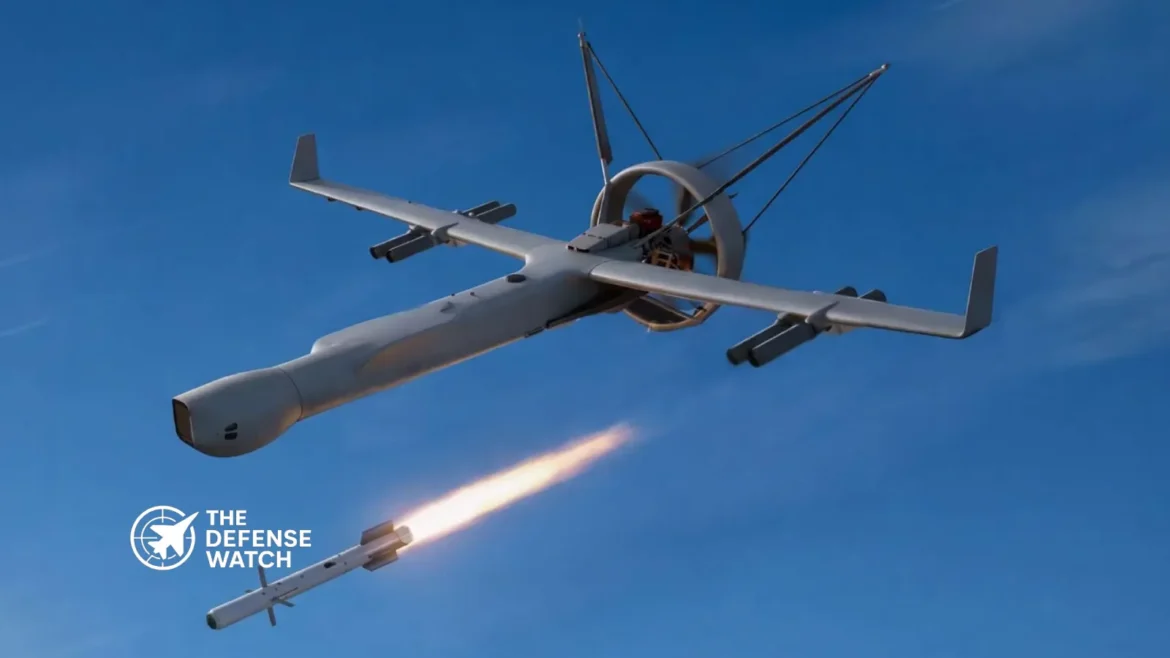
The U.S. V-BAT drone armed with guided missiles has emerged as a notable development in unmanned aerial warfare, reflecting the growing push to combine intelligence, surveillance, reconnaissance, and precision strike in a single vertical takeoff platform.
(adsbygoogle = window.adsbygoogle || []).push({});Recent demonstrations confirmed that the V-BAT vertical takeoff unmanned aerial vehicle has been successfully integrated with South Korean developed guided missiles, expanding its operational role beyond ISR missions. The development underscores evolving U.S. interest in deployable, runway independent armed drones for expeditionary and maritime operations.
The system has drawn attention across defense and aerospace circles for its modular design and its ability to operate from confined environments, including ship decks and austere forward bases.
V-BAT Drone Overview
The V-BAT is a vertical takeoff and landing unmanned aircraft system originally designed for long endurance ISR missions. Its ducted fan configuration allows it to launch and recover without runways, a feature increasingly valued by U.S. forces operating in dispersed environments.
The aircraft is optimized for persistent surveillance, electronic payloads, and communications relay missions. With the addition of guided missile capability, the platform now enters the armed UAV category, significantly broadening its mission set.
This integration aligns with broader U.S. military trends favoring flexible unmanned systems capable of both sensing and striking in contested areas.
Guided Missile Integration
The armed configuration features South Korean guided missiles, adapted for lightweight UAV deployment. These precision weapons are designed for engaging ground targets with minimal collateral damage.
(adsbygoogle = window.adsbygoogle || []).push({});According to publicly released information, the missile integration required limited airframe modification, highlighting the V-BAT’s modular payload architecture. This allows rapid mission reconfiguration depending on operational needs.
The move reflects closer interoperability between allied defense industries, particularly in unmanned systems and precision munitions.
Operational Implications for U.S. Forces
The U.S. V-BAT drone armed configuration offers several operational advantages:
- Vertical takeoff capability eliminates runway dependence
- Persistent ISR combined with strike reduces sensor to shooter timelines
- Compact footprint supports shipboard and forward deployment
- Lower cost compared to larger armed UAVs
These attributes make the system suitable for maritime security, expeditionary warfare, and distributed operations where traditional air assets may be constrained.
The platform also supports emerging U.S. doctrine emphasizing unmanned systems as force multipliers rather than replacements for crewed aircraft.
Broader Context in Unmanned Warfare
The weaponization of smaller vertical takeoff UAVs reflects a broader global shift in drone warfare. Armed drones are no longer limited to large medium altitude long endurance platforms.
By integrating precision guided munitions onto compact UAVs, military planners gain scalable options for surveillance, deterrence, and limited strike missions without escalating force posture.
Similar trends are visible across allied militaries, particularly in naval and expeditionary forces seeking organic air support without large aviation infrastructure.
Defense Industry and Allied Cooperation
The V-BAT missile integration highlights growing collaboration between U.S. and Asian defense manufacturers. South Korea has increasingly positioned itself as a supplier of advanced guided weapons compatible with allied platforms.
(adsbygoogle = window.adsbygoogle || []).push({});This cooperation supports faster fielding of capabilities while reducing development risk and cost. It also reflects shifting defense supply chains toward greater allied interoperability.
Outlook
While the armed V-BAT remains a relatively lightweight strike platform, its successful missile integration demonstrates how unmanned systems continue to evolve toward multi role combat capabilities.
As the U.S. military refines its unmanned force structure, platforms like the V-BAT may play a growing role in maritime security, border surveillance, and expeditionary operations where speed, flexibility, and persistence are critical.
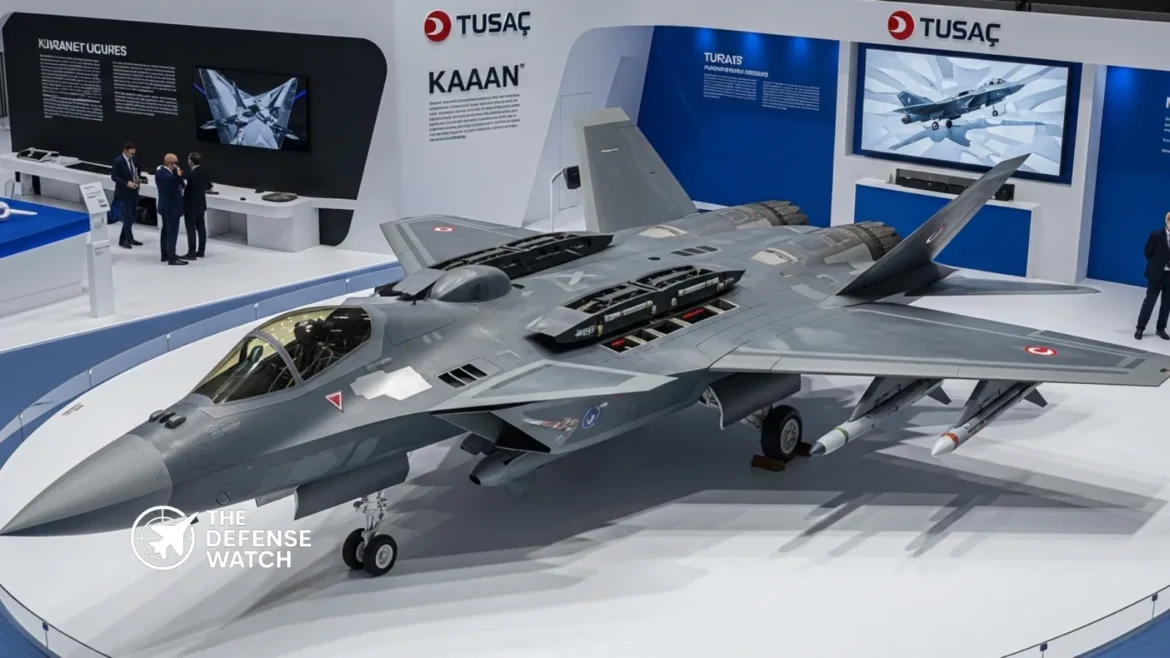
Turkey’s TUSAŞ Details Next-Gen Fighter Progress in Leadership Interview
Turkey’s state aviation and defense prime Turkish Aerospace Industries (TUSAŞ) has provided new public commentary on its sixth-generation combat aircraft program, widely referred to as KAAN, in a recently posted interview video featuring TUSAŞ General Manager Dr Mehmet Demiroğlu. The comments offer fresh insight into the development roadmap and test preparation for the advanced platform.
In the interview, Demiroğlu discusses current activities in the Turkish defense aerospace sector, with emphasis on KAAN’s flight test sequence and associated systems integration. The video was shared on official social media channels and linked by industry observers, indicating TUSAŞ’s intent to communicate progress to the broader defense community.
Program Context and Strategic Goals
Turkey’s next-generation fighter initiative is intended to succeed existing fourth- and fifth-generation aircraft in Turkish service, expanding indigenous capability in air superiority, sensor fusion, and survivability against emerging threats. The platform is being developed domestically by TUSAŞ with support from a broad national supply base.
While official defense ministries have not published detailed technical specifications, the sixth-gen designation generally implies capabilities such as advanced avionics, low observables, internal weapons bays, next-level sensor networks, and sustained high survivability in contested airspace.
Development Roadmap and Test Activities
In remarks captured by the interview video, TUSAŞ leadership confirmed ongoing ground testing and preparation for flight activity. Local industry media circulation around the video suggests a flight test campaign may occur later this year, with ground integration work and systems verification progressing on schedule.
The interview also underscores TUSAŞ’s communication strategy toward both domestic stakeholders and international partners. By publicly outlining aspects of the development timeline, the company aims to bolster confidence in the program’s trajectory and highlight Turkey’s growing aerospace engineering base.
Industry and Regional Implications
Turkey’s pursuit of an indigenous sixth-generation fighter reflects broader trends in the global defense aerospace domain, where major powers invest in next-generation platforms to maintain edge in air dominance. For Ankara, the KAAN effort supports national goals of technological autonomy, reduced reliance on foreign systems, and potential export opportunities.
The strategic timing of such communications can also influence regional defense dynamics, especially within NATO and adjacent security environments, where air superiority capabilities shape deterrence postures.
Outlook
As TUSAŞ moves toward first flights and continued prototype validation, defense analysts will be watching for formal ministry statements and flight test confirmations. Transitions from design and ground testing into airborne operations remain key milestones for any advanced combat aircraft program.
Northrop Grumman Finalizing Major Production Agreement
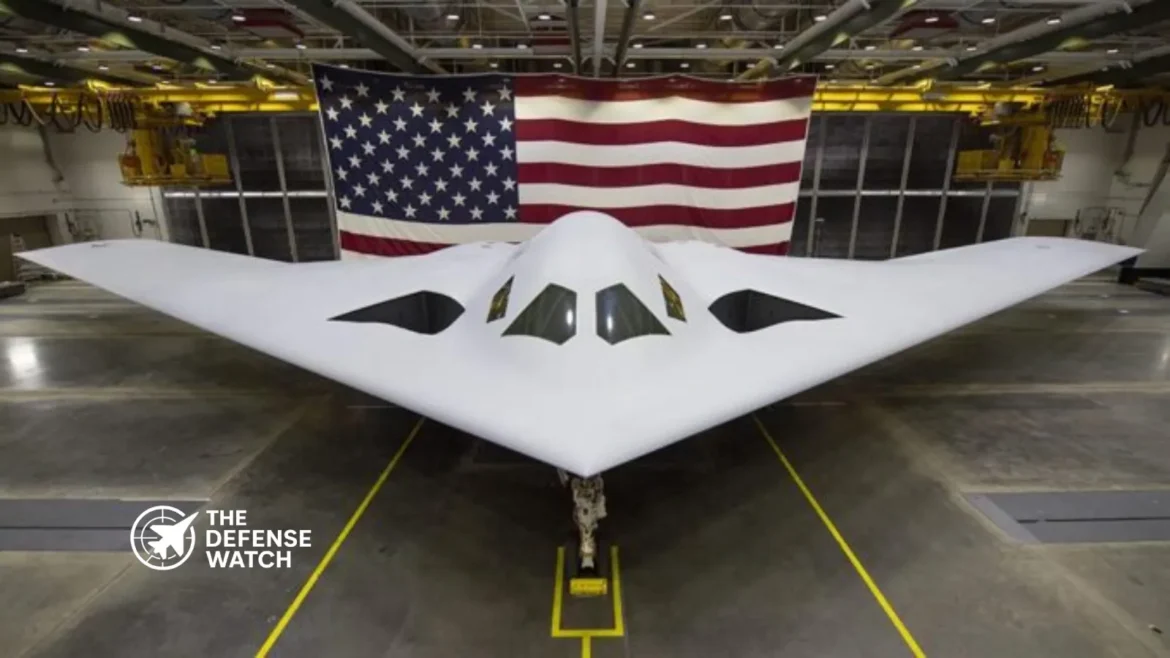
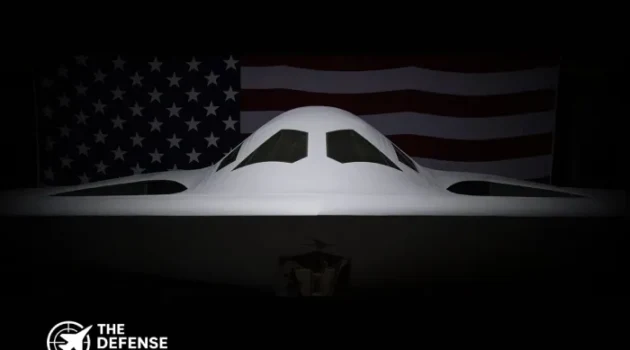
Northrop Grumman expects to finalize an agreement with the Air Force to accelerate B-21 Raider production expansion by the end of March, according to company CEO Kathy Warden during a Jan. 27 earnings call.
The announcement confirms that negotiations for one of the U.S. military’s most critical modernization programs are entering their final phase. Congress approved $4.5 billion for expanding production capacity for the B-21 as part of a reconciliation package passed in July 2025, and defense officials have been working to structure the contract terms since then.
“We continue to work closely with the Air Force on plans to increase the production rate of the program,” Warden stated. Our priority is to establish a mutually beneficial agreement that accelerates the delivery of this game-changing capability to our nation.”
The current fiscal quarter concludes March 31, 2026, establishing a firm timeline for contract finalization.
Massive Investment in Bomber Capacity
The production expansion contract represents substantial financial commitment from both parties. The Air Force outlined plans in its 2026 budget request to spend all $4.5 billion from the reconciliation bill this fiscal year: nearly $2.4 billion in research and development and $2.1 billion in procurement.
Northrop Grumman is also making significant internal investments to support increased manufacturing throughput. Warden revealed that Northrop plans to invest between $2 to $3 billion over multiple years for “facilitizing for that acceleration”, though specific details about these facility upgrades were not disclosed.
The defense contractor previously announced in April 2025 that it had invested $477 million in a “process change” designed to enable higher production rates for the advanced stealth bomber.
Low-Rate Initial Production Advances
Parallel to expansion negotiations, the B-21 program continues advancing through its planned production phases. Warden confirmed that Northrop received the contract for the third lot of low-rate initial production in the final quarter of 2025, as well as a contract for advanced procurement for the fifth lot.
The low-rate initial production phase is expected to encompass 21 aircraft distributed across five lots, establishing the manufacturing foundation before full-rate production begins.
Flight testing is also progressing on schedule. The CEO highlighted the first flight of a second B-21 test aircraft as evidence of program momentum, building on the successful maiden flight of the initial test platform.
Classification Limits Public Disclosure
Specific details about production metrics and long-term program objectives remain highly classified. The Air Force has consistently declined to reveal exact production rates or whether the expansion aims to exceed the current program of record of 100 aircraft or simply deliver that baseline quantity on an accelerated timeline.
Defense industry sources have previously suggested the B-21 production rate operates around seven aircraft annually, though official confirmation remains restricted.
An Air Force spokesperson provided limited comment, stating: “The B-21 program of record has not changed. We are in low-rate initial production. We don’t have additional details to share at this time.”
Congressional Funding Adjustments
Despite overall program progress, lawmakers recently modified the B-21’s fiscal 2026 baseline budget allocation. Congressional appropriators cut $620 million from procurement and added $409 million for research and development for a net reduction of $211 million, citing “classified adjustments” without elaborating on specific rationale.
These budget shifts are separate from the $4.5 billion reconciliation package dedicated to production expansion, which remains intact.
Sentinel ICBM Program Faces Delays
While the B-21 bomber program accelerates, Warden provided sobering updates on the Air Force’s other major nuclear modernization effort—the Sentinel intercontinental ballistic missile system.
The Sentinel program is undergoing comprehensive restructuring following a “Nunn-McCurdy breach” triggered by significant cost overruns and schedule delays. If the program had continued on its trajectory, it would have been 81 percent over budget and three years late.
We still believe that the program will be in development for several years and not transitioning into production until later in the decade,” Warden explained, adding that production transition falls “outside of that two-to-three-year window at this point.
The Pentagon cleared Sentinel to continue in July 2024 but rescinded its previous approval for engineering and manufacturing development, mandating the current restructure before the program can advance.
Strategic Significance of B-21 Expansion
The B-21 Raider represents the cornerstone of the Air Force’s future strategic bomber fleet and nuclear deterrence posture. The aircraft’s stealth characteristics, advanced sensors, and open-architecture design position it to operate in highly contested environments against peer adversaries.
Accelerating production delivery directly supports the Department of Defense’s priority to field next-generation capabilities faster amid intensifying great power competition. The bomber is designed to eventually replace aging B-1 and B-2 fleets while complementing upgraded B-52 Stratofortress bombers.
Industry analysts anticipate the March contract announcement will provide greater clarity on delivery timelines and potential force structure implications, though classification constraints will likely limit public disclosure of operational details.
The production expansion initiative reflects broader Pentagon efforts to strengthen America’s deterrence capabilities and ensure air dominance against advanced anti-access/area-denial threats in the 2030s and beyond.
RTX Raytheon MS-110 reconnaissance system contract boosts Poland ISR
RTX Raytheon has secured a 197 million dollar contract to deliver the MS-110 multispectral reconnaissance system to Poland, marking a major step in the country’s airborne intelligence, surveillance, and reconnaissance modernization. The award supports Warsaw’s ongoing effort to strengthen situational awareness, targeting accuracy, and alliance interoperability as regional security pressures grow.
(adsbygoogle = window.adsbygoogle || []).push({});The contract was announced through U.S. government contracting disclosures and confirmed by industry reporting, including Defence Industry Europe and RTX corporate statements.
Contract Overview and Scope
The agreement covers production and delivery of the MS-110 multispectral reconnaissance system, a high resolution airborne sensor designed for intelligence collection across multiple spectral bands. While detailed platform integration plans were not disclosed publicly, the system is commonly used on crewed and uncrewed aircraft supporting long range surveillance and tactical reconnaissance missions.
The contract value of 197 million dollars reflects not only the sensor hardware, but also integration support, spares, and related program services. Work is expected to be performed primarily in the United States, with deliveries aligned to Polish defense acquisition timelines.
Authoritative sources cited include U.S. Department of Defense contract announcements and reporting from Defence Industry Europe.
What Is the MS-110 Multispectral Reconnaissance System
The MS-110 is one of RTX Raytheon’s flagship airborne ISR sensors. It is designed to provide high fidelity imagery and data collection in complex operational environments.
Key capabilities typically associated with the MS-110 include:
• Multispectral imaging across visible and infrared bands
• Wide area coverage combined with long standoff range
• High resolution imagery for intelligence analysis and targeting
• Compatibility with multiple aircraft types
• Secure data links for rapid dissemination to command networksThe system is widely used by the United States and allied nations, supporting both strategic intelligence missions and time sensitive tactical operations.
Importance for Poland’s Military Modernization
For Poland, the acquisition of the MS-110 reconnaissance system aligns with broader defense modernization priorities focused on deterrence, NATO interoperability, and rapid response capability.
Poland has steadily increased defense spending in recent years, investing heavily in air power, missile defense, armored forces, and ISR assets. Enhanced airborne reconnaissance is a critical enabler for:
• Monitoring regional military activity
• Supporting joint and combined operations
• Improving targeting for long range fires
• Strengthening national and allied situational awarenessThe MS-110 system provides a proven, combat tested capability that integrates smoothly with U.S. and NATO intelligence architectures.
Strengthening NATO Interoperability
The selection of a U.S. developed reconnaissance system reinforces Poland’s close defense relationship with Washington. RTX Raytheon systems are already widely fielded across NATO, simplifying training, sustainment, and data sharing.
(adsbygoogle = window.adsbygoogle || []).push({});Interoperability is particularly important on NATO’s eastern flank, where intelligence sharing and early warning are central to alliance deterrence posture. The MS-110 enables Poland to contribute high quality ISR data directly into allied networks, enhancing collective situational awareness.
RTX Raytheon’s Role in Allied ISR Programs
RTX Raytheon remains a leading supplier of ISR sensors, radars, and electronic warfare systems for the U.S. military and international partners. The MS-110 is part of a broader portfolio that includes airborne radars, electro optical sensors, and integrated mission systems.
The Poland contract underscores continued demand for advanced U.S. reconnaissance technology, even as European nations expand domestic defense production. For RTX, the award strengthens its position in the international ISR market and deepens long term partnerships with frontline NATO states.
Strategic Context and Regional Security
Poland’s decision to invest in advanced multispectral reconnaissance comes amid heightened security concerns in Eastern Europe. Persistent surveillance and intelligence collection are essential for detecting threats, tracking force movements, and supporting deterrence strategies.
While the contract announcement does not specify operational scenarios, the MS-110’s long range and multi band imaging capabilities are well suited for monitoring contested and denied environments.
The acquisition also complements Poland’s recent investments in combat aircraft, air defense systems, and long range strike capabilities, creating a more integrated and resilient force structure.
Program Timeline and Next Steps
Specific delivery schedules and platform integration details have not been publicly released. Based on similar programs, initial system deliveries typically follow within a few years of contract award, depending on aircraft readiness and integration requirements.
RTX Raytheon is expected to work closely with Polish defense authorities and U.S. government partners to ensure certification, training, and operational integration.
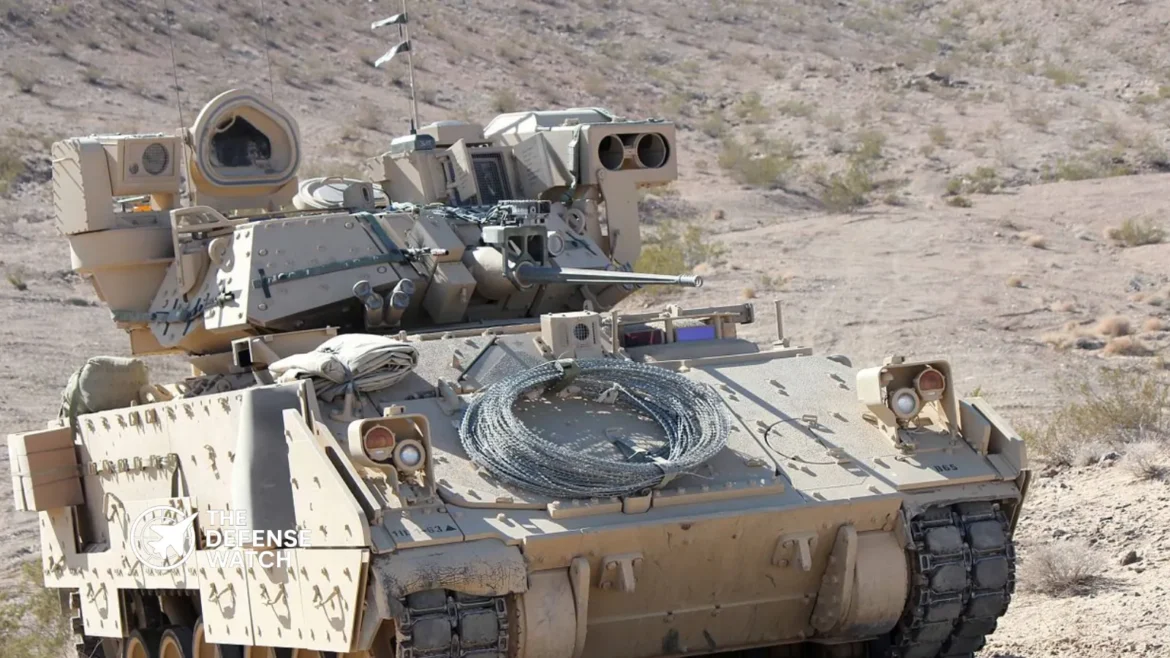
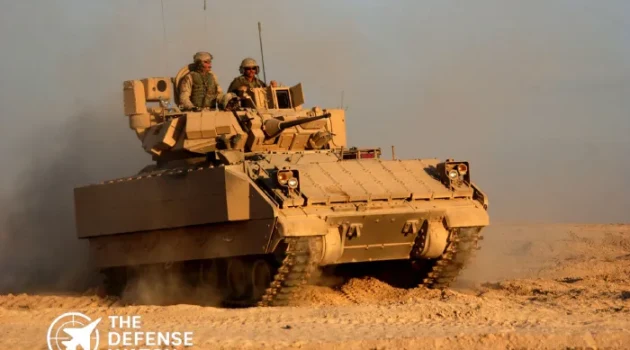
BAE Systems Bradley tanks contract activity expanded this week after the U.S. Army awarded an $11.6 million contract modification to support ongoing work on the Bradley Fighting Vehicle fleet.
The award continues a long running sustainment and services effort tied to one of the Army’s most widely deployed tracked combat vehicles. According to official contract information released by the Department of Defense, the modification funds three additional services work directives under an existing multi year agreement.
(adsbygoogle = window.adsbygoogle || []).push({});Contract Details and Scope of Work
BAE Systems Land and Armaments L.P., based in San Jose, California, received the modification, identified as P00135, to contract W56HZV 22 C 0072. The new action increases the total cumulative face value of the Bradley support contract to $420,453,368.
The $11,555,761 modification covers three services work directives related to Bradley tanks, a term commonly used in Army contracting language to describe tracked armored vehicle variants and support activities associated with the Bradley Fighting Vehicle family.
Work under the latest modification will be performed in San Jose, California. The Army estimates the work will be completed by July 23, 2027, aligning with broader sustainment timelines for legacy armored platforms that remain central to U.S. ground combat formations.
Funding for the award comes from Fiscal Year 2025 Procurement of Weapons and Tracked Combat Vehicles, Army appropriations. The full amount was obligated at the time of the award, signaling immediate execution rather than a phased funding approach.
The contracting activity is Army Contracting Command, Detroit Arsenal, Michigan, which manages a wide portfolio of armored vehicle, ground systems, and sustainment contracts for the service.
Why the Bradley Still Matters
Despite ongoing development of next generation combat vehicles, the Bradley Fighting Vehicle remains a core element of U.S. Army armored brigade combat teams. First fielded in the 1980s, the platform has undergone repeated upgrades to improve survivability, lethality, mobility, and digital integration.
Current Bradley variants support infantry transport, reconnaissance, and command and control missions. They have been modernized with improved armor packages, upgraded power systems, enhanced thermal sights, and advanced battle management systems.
Sustainment contracts such as this one are critical to keeping the fleet operational as the Army balances near term readiness with long term modernization goals. While programs like the XM30 Mechanized Infantry Combat Vehicle aim to eventually replace the Bradley, the existing fleet is expected to remain in service well into the next decade.
BAE Systems Role in Bradley Sustainment
BAE Systems has been closely tied to the Bradley program for decades, serving as the original manufacturer and a primary support contractor. The company continues to provide engineering services, lifecycle support, and upgrade work for the platform under multiple Army contracts.
The current Bradley tanks contract reflects the Army’s preference for continuity when dealing with complex armored vehicle sustainment. Keeping work within an established industrial base reduces technical risk and helps maintain specialized expertise.
BAE Systems Land and Armaments also supports other major U.S. Army ground systems, including the M109 Paladin self propelled howitzer and the Armored Multi Purpose Vehicle. This breadth allows the company to leverage shared supply chains and engineering capabilities across programs.
Budget Context and Army Priorities
The use of Fiscal 2025 Procurement of Weapons and Tracked Combat Vehicles funds highlights how the Army continues to allocate resources toward maintaining existing platforms even as it invests in future systems.
Army leaders have repeatedly emphasized that readiness gaps cannot be allowed to emerge while modernization programs mature. Sustainment spending, while less visible than new platform development, plays a major role in ensuring deployed units remain fully mission capable.
(adsbygoogle = window.adsbygoogle || []).push({});Contracts like this also support the domestic defense industrial base. Work performed in California contributes to skilled manufacturing and engineering jobs tied to armored vehicle expertise that is difficult to regenerate once lost.
Oversight and Contract Management
Army Contracting Command at Detroit Arsenal oversees many of the service’s most complex ground systems contracts. The command is responsible for ensuring cost control, schedule adherence, and technical compliance across a wide range of programs.
Incremental modifications, such as this $11.6 million award, are common in long term sustainment contracts. They allow the Army to add specific tasks or respond to evolving operational needs without renegotiating an entirely new agreement.
According to Department of Defense contracting data, the Bradley tanks contract has seen steady growth since its initial award in 2022, reflecting both the scope of the work and the enduring relevance of the platform.
Broader Implications for Armored Vehicle Modernization
While the Bradley remains effective, the Army is clear that it is not a permanent solution. Programs under the Next Generation Combat Vehicle portfolio aim to deliver improved protection against modern anti armor threats, better power generation, and greater integration with unmanned systems.
Until those platforms reach operational units at scale, sustainment and incremental upgrades will continue to shape the Bradley fleet. Support contracts ensure vehicles can deploy, train, and fight without unacceptable maintenance backlogs.
(adsbygoogle = window.adsbygoogle || []).push({});What Comes Next
With work scheduled through mid 2027, the latest BAE Systems award reinforces a predictable sustainment timeline for the Bradley Fighting Vehicle. Additional modifications are likely as operational requirements evolve and as the Army refines its modernization roadmap.
For industry observers, the contract underscores how legacy platforms continue to attract steady funding, even amid budget pressure and competing priorities such as long range fires, air and missile defense, and network modernization.
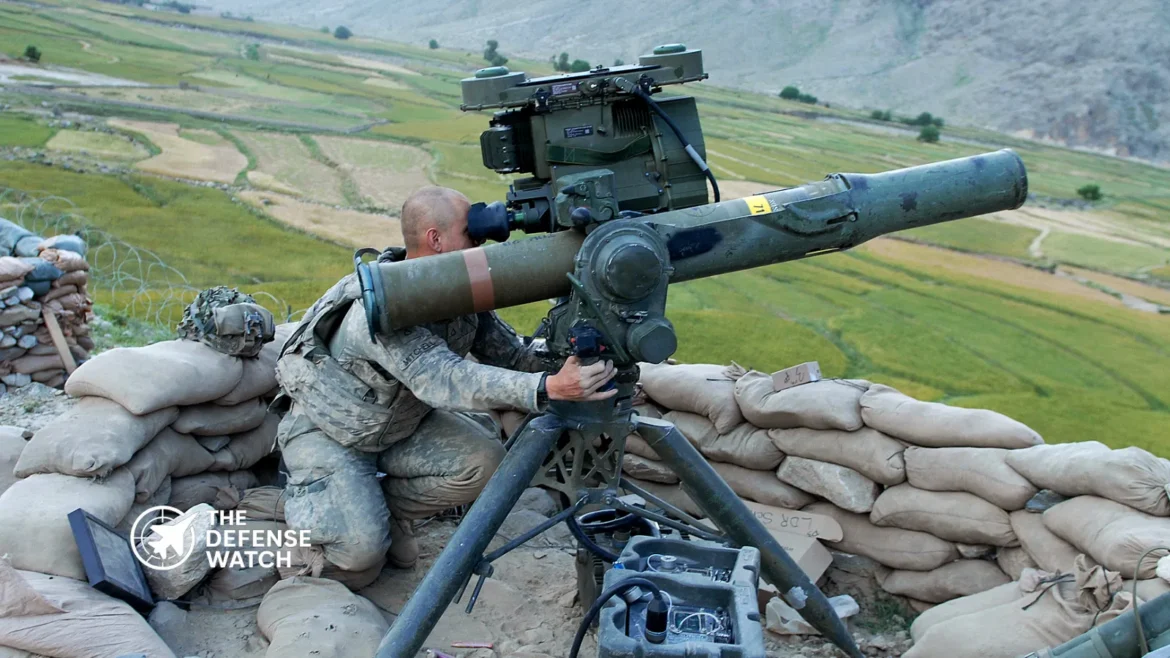
Raytheon expands Tube Launched Optically Tracked Wireless Guided Missiles production for US Army
Tube Launched Optically Tracked Wireless Guided Missiles remain a core part of the US Army anti armor inventory as Raytheon secures a major contract modification to expand procurement through the end of the decade.
(adsbygoogle = window.adsbygoogle || []).push({});Raytheon, based in Tucson, Arizona, has been awarded a 193,705,262 dollar modification to an existing US Army contract for the procurement of Tube Launched Optically Tracked Wireless Guided Missiles, according to official US Department of Defense contracting data. The modification, listed as P00019 under contract W31P4Q 23 C 0026, brings the total cumulative face value of the contract to the same amount.
The award reflects continued Army investment in proven infantry and vehicle mounted missile systems as part of broader conventional force modernization efforts.
Contract details and funding breakdown
The modification covers additional procurement quantities of Tube Launched Optically Tracked Wireless Guided Missiles, commonly referred to as TOW missiles, which have been in US service for decades and remain widely deployed across allied forces.
Work under the contract will be performed in Tucson, Arizona, with an estimated completion date of Sept 30, 2028. The long performance period suggests sustained production rather than a one time surge buy.
At the time of award, the Army obligated 46,762,368 dollars in fiscal 2024 other procurement Army funds, along with 2,679,094 dollars from fiscal 2025 other procurement Army accounts. Army Contracting Command at Redstone Arsenal, Alabama, is managing the contracting activity.
According to Pentagon contracting announcements, the obligation structure allows the Army to incrementally fund missile production while maintaining flexibility for future procurement decisions.
Why Tube Launched Optically Tracked Wireless Guided Missiles still matter
Despite growing attention on next generation precision weapons and long range fires, Tube Launched Optically Tracked Wireless Guided Missiles remain a reliable and adaptable system for US and allied ground forces.
The missile system provides heavy anti armor capability against main battle tanks, fortified positions, and low speed aerial threats. Its wire free guidance variants reduce vulnerability to countermeasures and allow for longer engagement ranges compared to earlier wire guided versions.
(adsbygoogle = window.adsbygoogle || []).push({});The US Army continues to deploy TOW systems across multiple platforms, including Bradley infantry fighting vehicles, Stryker variants, Humvee mounted launchers, and tripod configurations for dismounted units.
Defense analysts note that the system’s continued relevance stems from incremental upgrades rather than radical redesigns. These upgrades have improved guidance accuracy, range, and warhead effectiveness while keeping training and sustainment costs relatively low.
Raytheon’s role in US missile industrial base
Raytheon has been the prime contractor for the TOW missile family for decades, making the Tucson facility a critical node in the US missile industrial base.
The company’s Arizona operations support missile assembly, testing, quality assurance, and supply chain coordination. Sustained contracts such as this one help preserve skilled manufacturing labor and ensure production continuity for the Army and foreign military sales customers.
Industry observers view long term production contracts as increasingly important amid broader Pentagon efforts to stabilize munitions manufacturing after years of surge demand driven by global conflicts and security assistance programs.
The Department of Defense has repeatedly emphasized the need for predictable funding to maintain missile stockpiles and avoid production gaps that could weaken readiness.
Alignment with Army modernization priorities
The contract modification aligns with the Army’s focus on near term readiness while it develops future anti armor solutions. While programs exploring advanced top attack and extended range missiles continue, Army leadership has signaled that existing systems will remain essential through the late 2020s.
Tube Launched Optically Tracked Wireless Guided Missiles offer a mature capability that integrates easily into current force structures. This reduces risk compared to fielding entirely new systems under compressed timelines.
Army budget documents have consistently included funding lines for TOW procurement and sustainment, particularly for armored brigade combat teams and allied force interoperability.
The continued investment also supports coalition operations, as many NATO and partner nations operate the same missile system, simplifying logistics and training during joint deployments.
Broader context in global security environment
The renewed emphasis on conventional ground combat capabilities reflects lessons drawn from recent conflicts, where armored vehicles and fortified positions remain decisive factors.
Defense planners have observed that high end anti armor weapons are consumed at faster rates than previously expected during sustained operations. This has prompted a reassessment of stockpile requirements and production capacity.
By extending procurement of Tube Launched Optically Tracked Wireless Guided Missiles through 2028, the Army signals confidence in the system’s ability to meet current and foreseeable operational needs.
Analysts at institutions such as the Center for Strategic and International Studies have highlighted the importance of balancing advanced research with immediate force requirements, particularly as global demand for munitions increases.
What comes next
With work scheduled to continue for more than three years, Raytheon’s Tucson facility is expected to remain a key supplier of anti armor missiles for the Army and potentially for allied customers through foreign military sales channels.
(adsbygoogle = window.adsbygoogle || []).push({});While the Pentagon has not disclosed specific quantities associated with the modification, the contract value suggests a substantial production run aimed at replenishing inventories and supporting operational units.
Future budget cycles may include additional options or follow on modifications, depending on Army requirements and congressional appropriations.
For now, the award reinforces the enduring role of Tube Launched Optically Tracked Wireless Guided Missiles within the US Army arsenal and highlights the continued reliance on established defense manufacturers to meet pressing readiness demands.
Lockheed Martin Expands Role in Mark IV-B Weather Program
Lockheed Martin has secured a $10.2 million contract modification for the Mark IV-B weather program, expanding its role in supporting U.S. Space Force and Air Force weather operations worldwide.
The U.S. Department of Defense announced that Lockheed Martin Space Mission Systems, based in King of Prussia, Pennsylvania, was awarded contract modification P00011 under an existing contract for the Mark IV-B weather program. The modification raises the total cumulative value of the contract to $21.9 million, up from $11.7 million.
The award was issued by Space Systems Command Directorate of Contracting at Peterson Space Force Base, Colorado, underscoring the growing importance of resilient and modernized military weather infrastructure.
Scope of Work and Global Footprint
The Mark IV-B weather program supports environmental monitoring and forecasting capabilities critical to U.S. and allied military operations. Under the modified contract, Lockheed Martin will perform work across a wide network of operational locations.
Designated work sites include Hickam Air Force Base in Hawaii, Andersen Air Force Base in Guam, Kadena Air Base in Japan, Ali Al Salem Air Base in Kuwait, Kapaun Air Base in Germany, Soto Cano Air Base in Honduras, Offutt Air Force Base in Nebraska, and Joint Base Elmendorf Richardson in Alaska.
These sites reflect the global reach of U.S. air and space operations and the need for reliable, standardized weather systems to support flight operations, space launches, intelligence missions, and contingency planning.
Funding and Contract Timeline
Fiscal year 2026 operations and maintenance funds totaling $5.9 million are being obligated at the time of award, according to the Department of Defense contract notice. The remaining value will be funded in accordance with future budget allocations and contract milestones.
Work under the contract modification is scheduled to be completed by January 31, 2027. The timeline aligns with ongoing Space Force and Air Force efforts to modernize legacy ground systems and improve environmental awareness across contested and remote regions.
Importance of the Mark IV-B Weather Program
The Mark IV-B weather program provides ground-based weather processing and dissemination capabilities that support commanders, pilots, and mission planners. Accurate and timely weather data is essential for aircraft sortie generation, space launch operations, missile warning activities, and joint force readiness.
Military weather systems differ from civilian forecasting platforms by focusing on mission specific variables such as cloud ceilings, winds aloft, electro optical conditions, and space weather impacts. These factors directly affect aircraft survivability, sensor performance, and operational tempo.
According to U.S. Space Force planning documents, environmental intelligence remains a core enabler for multi domain operations, particularly as forces operate across greater distances and in more complex threat environments.
Lockheed Martin and Military Weather Modernization
Lockheed Martin has long supported U.S. military weather and environmental monitoring programs, including satellite ground systems, data processing architectures, and secure communications networks. The Mark IV-B weather program fits within the company’s broader portfolio of space and command and control solutions.
The contract modification reflects continued reliance on industry partners to sustain and upgrade critical infrastructure while new space based weather systems are developed and fielded. Space Systems Command oversees these efforts as part of its mandate to acquire and maintain space and ground capabilities for the Space Force.
Strategic Context
As U.S. forces operate in increasingly contested environments, dependable weather intelligence supports both day to day operations and crisis response. Bases in the Indo Pacific, Middle East, Europe, and Arctic regions face unique environmental challenges that require tailored forecasting tools.
The expansion of the Mark IV-B weather program highlights the incremental approach the Department of Defense is taking to modernize essential support systems while ensuring continuity of operations.
Looking Ahead
With completion scheduled for early 2027, the updated Mark IV-B weather infrastructure is expected to enhance reliability and interoperability across multiple combatant commands. The contract modification also reinforces Space Systems Command’s role as a central hub for space and ground system acquisitions.
As the Space Force continues to refine its mission set, investments in environmental awareness remain a foundational element of operational success.