

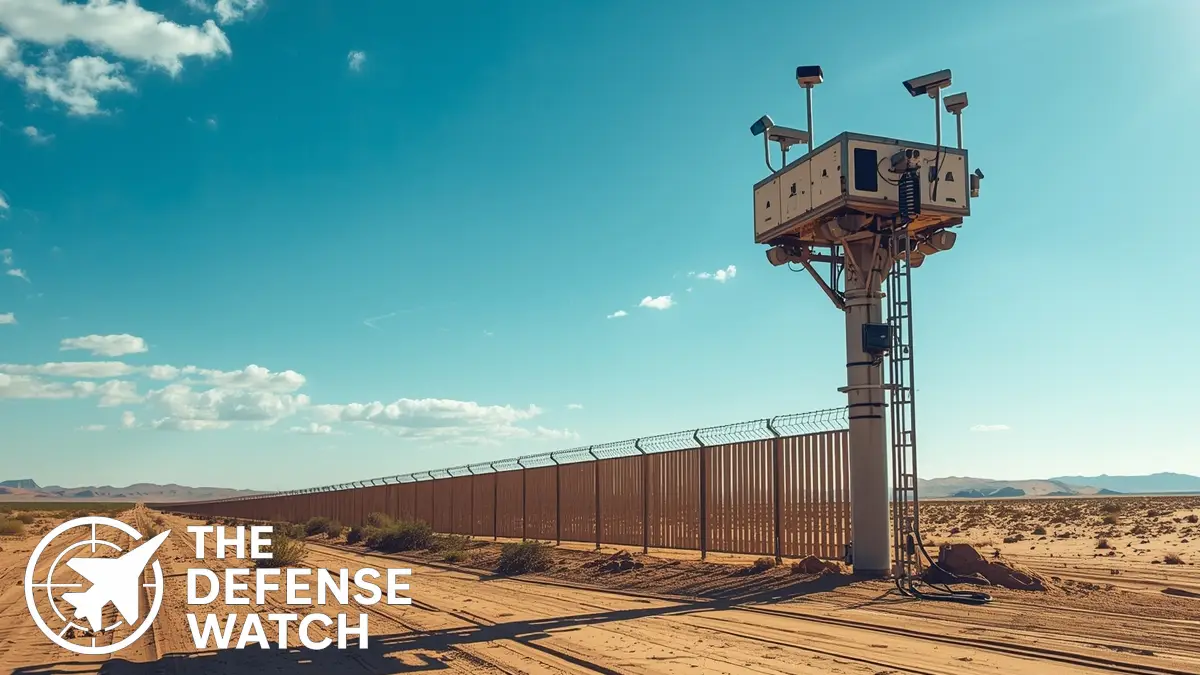
U.S. Border Security Shifts Toward High-Tech Solutions
The United States is investing heavily in advanced border security systems, combining surveillance drones, artificial intelligence, and integrated command networks to tackle a growing range of challenges. Beyond migration management, these measures are increasingly aimed at countering drug trafficking, human smuggling, and even cyber-enabled threats targeting U.S. homeland security.
According to recent policy updates from the Department of Homeland Security (DHS), federal agencies are coordinating with private defense contractors to deploy autonomous surveillance towers, thermal imaging systems, and unmanned aerial systems (UAS) across key stretches of the southern border. These technologies are intended to reduce reliance on physical barriers, shifting the strategy toward an intelligence-driven approach.

Surveillance Towers, AI, and Drones Expand Border Watch
More than 350 autonomous surveillance towers, developed in partnership with private industry, are already in operation along the U.S.–Mexico border. These towers use radar, cameras, and AI software to automatically detect, classify, and track movements across remote terrain.
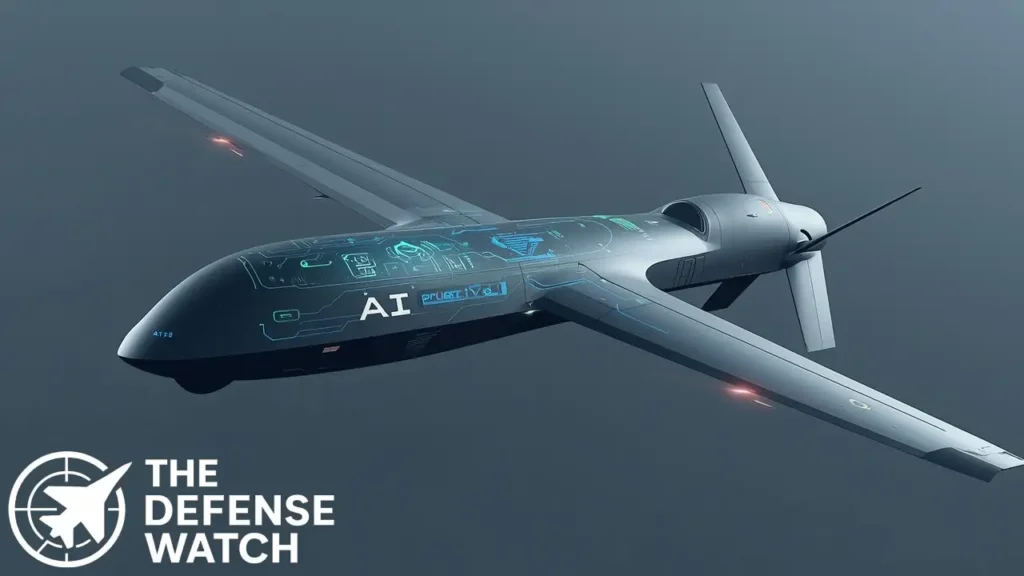
The U.S. Customs and Border Protection (CBP) has also expanded its fleet of MQ-9 Reaper drones for persistent aerial surveillance, while testing smaller tactical drones for agents operating in rugged areas. Integrated AI tools can analyze large volumes of imagery and sensor data in real time, giving border patrol units faster response capability without requiring constant human monitoring.
Policy and Funding Priorities
Congress has signaled bipartisan support for increased investment in high-tech border security systems, though debates continue over the balance between physical barriers and technological solutions. The Biden administration’s fiscal year 2025 homeland security budget emphasizes technology modernization, including over $500 million earmarked for surveillance and detection capabilities.
Meanwhile, several states have launched their own initiatives to supplement federal efforts, such as deploying National Guard assets equipped with reconnaissance drones to assist in interdiction operations.
International and Cyber Dimensions of Border Security
Border security is no longer confined to physical territory. Officials warn that cyber threats, including digital networks used by smuggling cartels, are now a major concern. U.S. border strategy increasingly emphasizes cross-agency intelligence sharing, blending physical surveillance with cyber defense and data analytics.
International cooperation also plays a role. Washington has expanded joint programs with Mexico to target cartel supply chains and enhance real-time information exchange. At the same time, advanced border technologies are being tested for use in northern states to manage cross-border trade and potential smuggling via Canada.
Analysis: Border Security as National Defense
Border security has evolved into a core element of U.S. national defense strategy. The integration of AI-driven monitoring, unmanned systems, and data fusion centers reflects a trend seen in modern warfare—leveraging technology to maintain situational awareness and deterrence.
Critics, however, raise concerns about privacy, oversight, and the effectiveness of costly surveillance systems in addressing root causes of migration and trafficking. As technology becomes central to border security policy, striking a balance between security, humanitarian considerations, and civil liberties will remain a central debate.
FAQs
AI-powered surveillance towers, drones, ground sensors, and thermal imaging systems are increasingly central to border monitoring.
The FY2025 DHS budget includes over $500 million for surveillance and detection technology programs
No, it also addresses drug trafficking, human smuggling, cyber threats, and cross-border criminal networks.
AI systems analyze data from cameras, drones, and sensors, enabling real-time threat detection and reducing manpower requirements.
Border security is increasingly viewed as part of homeland defense, blending physical security with cyber and intelligence operations.
Note: The images are AI-generated.

23 comments
[…] with non-members, out-of-area operations (e.g., in Afghanistan), and collective defense against emerging threats such as cyberattacks and hybrid […]
[…] hypersonic weapons, space systems, drones, and cyberwarfare. For NATO, staying ahead in defense technology is critical. But even among allies, debates persist about procurement speed, industrial capacity, […]
[…] has confirmed that the draft NDS will foreground defense of the U.S. homeland, including air and border security. At the same time, it will retain China and the Indo-Pacific as major strategic concerns—though […]
[…] for fiscal year 2026. The standoff centers on disputes over discretionary spending levels, border security, and health-care […]
[…] a California-based defense technology company known for its loitering munitions, unmanned aerial vehicles, and counter-drone systems, is […]
[…] across multiple domains, including intelligence sharing, joint military exercises, logistics, and defense technology […]
[…] already includes the Ghost autonomous aircraft, the Dive-LD unmanned submarine, and Sentry Tower border surveillance systems, demonstrating its capability to integrate hardware and AI software across multiple […]
[…] highlight the increasing sophistication of Russian attacks, noting the combination of aerial surveillance drones with strike missiles that can adapt targeting in real […]
[…] maritime incursions in the South China Sea. In Africa, Algeria and Uganda leverage the type for border security, and Venezuela’s aircraft have staged provocative flyovers near U.S. assets in the […]
[…] will likely result in greater coordination with Caribbean partners who have been requesting expanded U.S. surveillance and interdiction support. Previous counter-narcotics missions, such as Operation […]
[…] fighters highlights this shift, suggesting that historical restrictions could be revisited under modern security […]
[…] and NATO Allied Land Command, who tasked the 52nd ADA Brigade to identify viable tools capable of countering emerging airborne threats in contested electromagnetic […]
[…] has also moved to tighten regulations and consider forceful responses to unauthorized drones. In emergency security meetings, Belgian officials discussed stricter enforcement measures, including clear directives […]
[…] In recent years, Arctic security has attracted greater focus from Norway and other states as changes in climate, accessibility, and global strategic competition draw attention to the High North. Norway’s Arctic defense efforts have included broader troop deployments, infrastructure investments, and policy actions intended to reinforce sovereignty and deter potential threats. […]
[…] positions the system for multiple missions, including forward reconnaissance, base and border security, checkpoints, and observation posts. The pairing of ground mobility with an aerial sensor extends […]
[…] are empowered to address threats as they develop, and the guidance makes clear that unauthorized drone flights are a surveillance threat even before they breach an installation […]
[…] systems. This next generation will further strengthen the GPS constellation’s resilience against emerging threats in an increasingly contested space […]
[…] The Iron Legion JV USSOCOM contract is expected to support a range of intelligence functions. While specific tasking details were not disclosed, contracts of this type typically cover analysis intelligence production operational support and integration with command level intelligence staffs. Such services help commanders understand adversary networks terrain political dynamics and emerging threats. […]
[…] across multiple defence systems. Full implementation has no fixed date and will evolve to meet emerging threat […]
[…] shoot and scoot operations, allowing units to fire and relocate quickly to reduce vulnerability to counter fire and drone surveillance. This approach mirrors trends seen across NATO and other modern armies, where wheeled artillery is […]
[…] kits. Local production allows the Saudi armed forces to tailor the platform to desert, urban, and border security […]
[…] announced publicly, but industry sources indicated that unarmed configurations might be offered for border security and counter-terror roles, while armed variants would require government export […]
[…] competition among regional powers. Attack helicopters remain critical assets for rapid reaction, border security, and support to ground […]