(adsbygoogle = window.adsbygoogle || []).push({});EXECUTIVE SUMMARY:
Yes — the United States bombed Iran. On June 22, 2025, U.S. Air Force B-2 Spirit stealth bombers and Navy submarine-launched Tomahawk cruise missiles struck three Iranian nuclear facilities in a unilateral operation codenamed Operation Midnight Hammer. The strikes triggered a broader conflict lasting into early 2026, which ended in a fragile ceasefire and a memorandum of understanding signed on June 19, 2026. Iran’s nuclear program has been set back by an indeterminate period, its Strait of Hormuz leverage has been tested, and formal peace negotiations remain ongoing.
Yes, the U.S. Bombed Iran — Here Is the Complete Record
The short answer to “did the U.S. bomb Iran” is an unambiguous yes. On the night of June 21–22, 2025, the United States executed Operation Midnight Hammer, a coordinated air and sea strike against Iran’s three most critical nuclear infrastructure nodes. The operation followed 12 days of Israeli strikes under Operation Rising Lion, during which the Israeli Air Force systematically dismantled Iran’s surface air defenses, missile production sites, and senior military leadership — but lacked the ordnance to destroy deeply buried enrichment halls.
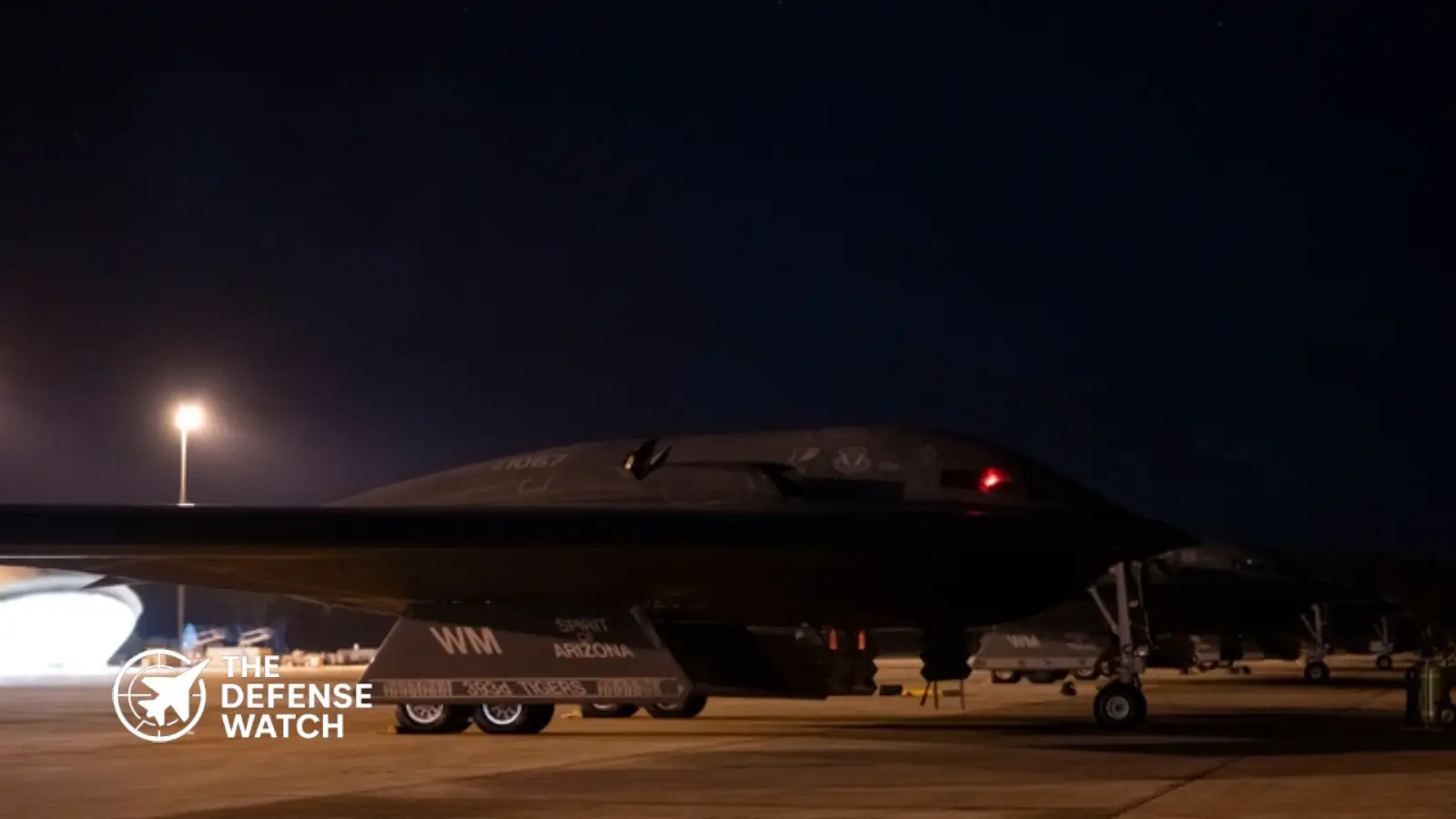
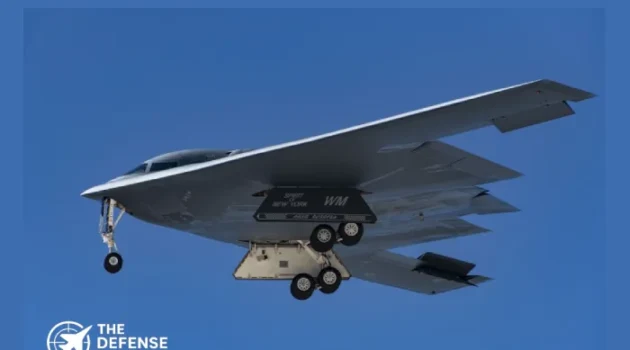
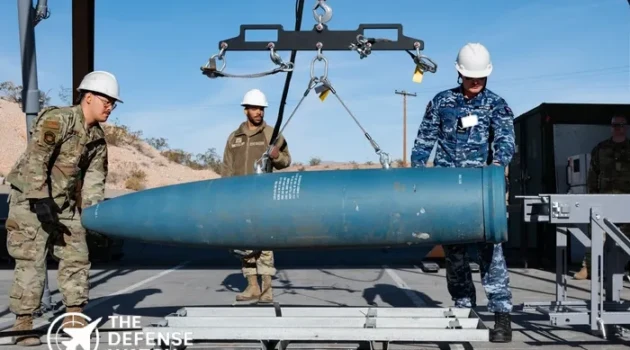
Washington provided what Jerusalem could not: the GBU-57A/B Massive Ordnance Penetrator, a 30,000-pound precision-guided bomb designed specifically to defeat hardened underground facilities. Seven B-2 Spirit stealth bombers, each carrying two of those weapons, took off from Whiteman Air Force Base, Missouri, flew a round-trip mission of approximately 6,700 miles, and released 14 MOPs against Fordow and Natanz in a 25-minute window. A guided-missile submarine simultaneously launched more than two dozen Tomahawk cruise missiles at above-ground processing infrastructure at Isfahan.
That single night fundamentally altered the trajectory of Iranian nuclear ambitions — and set off a chain of events that culminated in a broader regional war now moving toward a formal diplomatic settlement.
¦ KEY FACTS AT A GLANCE- The U.S. conducted Operation Midnight Hammer on June 22, 2025, deploying seven B-2 Spirit stealth bombers and a guided-missile submarine against three Iranian nuclear sites: Fordow, Natanz, and Isfahan.
- Fourteen GBU-57 Massive Ordnance Penetrator bunker-buster bombs were dropped in a 25-minute engagement window between 2:10 and 2:35 a.m. local time — the largest single use of that weapon in history.
- Iran retaliated the following day, firing 14 ballistic missiles at U.S. forces at Al Udeid Air Base in Qatar — causing no casualties. Full-scale conflict resumed on February 28, 2026.
- The IAEA confirmed “enormous damage” to all three sites. U.S. officials assessed Iran’s nuclear program set back by roughly two years; a leaked DIA report put the figure at only a few months.
- As of June 19, 2026, the U.S. and Iran have signed a memorandum of understanding. A 60-day negotiating window is open on nuclear stockpile disposition, sanctions relief, and the Strait of Hormuz.
The Three Targets: What the U.S. Hit and Why
Fordow Fuel Enrichment Plant
Fordow sits beneath a mountain near the holy city of Qom, with centrifuge halls estimated at 80 to 90 meters of rock and reinforced concrete overhead. Israeli F-35s and F-15s could not penetrate it. The GBU-57 MOP, with its 5,300-pound warhead and hardened penetrating casing, is the only non-nuclear weapon capable of threatening such a facility.
According to the Institute for Science and International Security, commercial satellite imagery following the strikes showed filled-in impact craters and active stabilization efforts around the Fordow perimeter — indicating structural disruption significant enough to halt enrichment operations, but not necessarily complete collapse of all underground halls. The IAEA’s Director General confirmed “a direct kinetic impact” on Fordow and stated that the vibration-sensitive nature of advanced centrifuges meant “very significant damage is expected to have occurred.”
(adsbygoogle = window.adsbygoogle || []).push({});Natanz Nuclear Facility
Natanz, Iran’s flagship uranium enrichment complex, received two MOP strikes on June 22 targeting its underground halls — following earlier Israeli strikes on above-ground power transformers and generator buildings. The combination of Israeli precision targeting of surface infrastructure and American deep-penetration munitions against underground centrifuge cascades created a layered denial effect that neither partner could have achieved independently.
U.S. officials assessed Natanz as “destroyed.” Israeli intelligence was more cautious, assessing damage as severe but the overall nuclear program as not fully eliminated.
Isfahan Nuclear Technology Center
The Isfahan complex, which handles uranium conversion rather than enrichment, presented a different challenge: its critical infrastructure was largely above ground. Tomahawk cruise missiles from a submerged U.S. Navy platform struck processing buildings at Isfahan, ending conversion activities and cutting off feed material for whatever enrichment capacity might eventually be restored at the other sites.
(adsbygoogle = window.adsbygoogle || []).push({});Iran’s Response: Escalation, Ceasefire, and the 2026 War
Iran’s immediate retaliatory strike on June 23, 2025, targeted Al Udeid Air Base in Qatar with 14 ballistic missiles. The attack caused no U.S. casualties. President Trump, in an unusual diplomatic move, publicly thanked Tehran for providing advance notification through back-channel communications — a signal that neither side initially sought full-scale conflict.
A ceasefire was announced on June 24. However, the strategic landscape deteriorated through the remainder of 2025 and into early 2026. Iran’s economy entered freefall, its currency collapsing under the weight of pre-existing sanctions, new Treasury Department designations targeting oil shipping networks, and the physical destruction of energy-adjacent infrastructure. Domestic protests, suppressed by force, further undermined regime legitimacy.
On February 28, 2026, following the failure of diplomatic talks and a U.S.-Israeli decision to resume pressure, coordinated strikes eliminated Supreme Leader Ali Khamenei. Iran responded by closing the Strait of Hormuz, triggering a global energy shock and a U.S. naval blockade beginning April 13, 2026.
Pakistan brokered a ceasefire on April 8, 2026. The blockade continued in parallel as leverage. After further escalation in May — including U.S. strikes on Iranian military sites in southern Iran and Tehran following Iranian targeting of U.S. warships — a memorandum of understanding was announced on June 14, 2026, and formally signed on June 19, 2026.
What the MOU Covers: The June 19, 2026 Deal
The June 2026 memorandum of understanding opens a 60-day negotiating window covering the core issues driving the conflict. Per reporting by NPR and the Center for Strategic and International Studies, the primary agenda items include:
Iran’s nuclear stockpile. Iran holds approximately 440.9 kilograms of uranium enriched to 60% purity — a short technical step from the 90% threshold required for weapons-grade material, per IAEA data. The disposition of this stockpile is the first and most contentious issue on the table. In an interview with The New York Times, President Trump indicated Iran may be permitted low-level enrichment under a new framework, walking back previous demands for complete dismantlement.
Sanctions relief and frozen assets. Iran is seeking access to billions of dollars in frozen overseas assets and a rollback of economic sanctions — the same incentive structure that anchored the 2015 JCPOA. The U.S. Treasury imposed additional sanctions on Iran’s military oil sales arm even as deal language was being finalized, signaling continued economic pressure as a negotiating instrument.
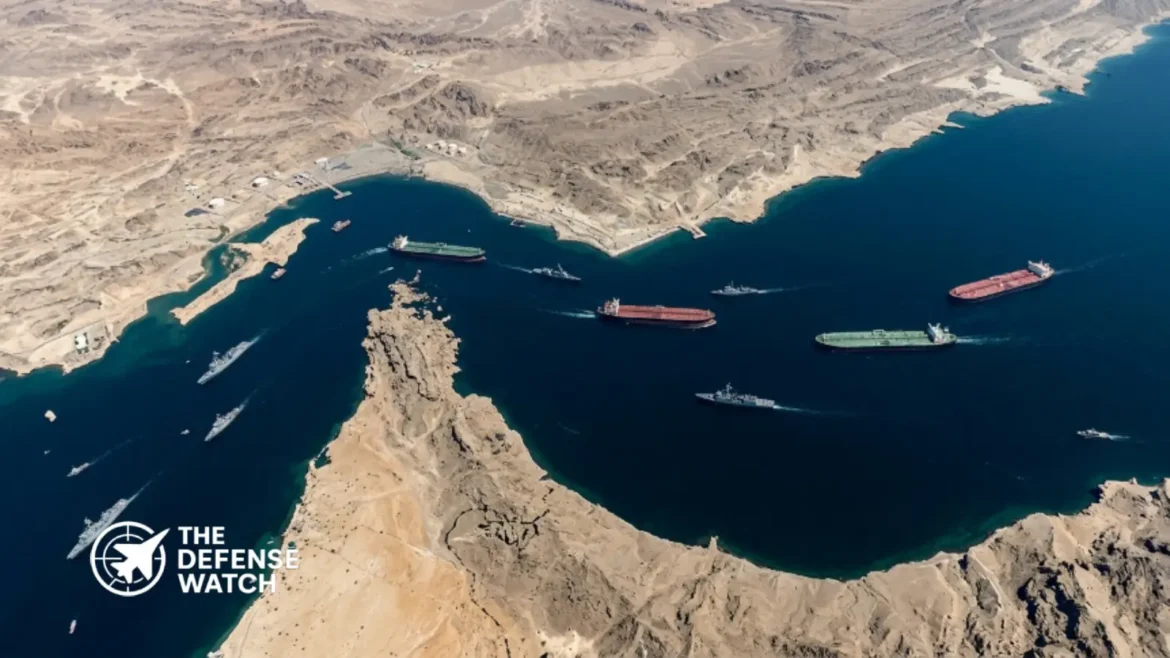
Strait of Hormuz. Freedom of navigation through the strait — through which roughly 20% of global seaborne oil transits — is a foundational demand. Iran used Hormuz closure as its primary economic retaliatory lever; the U.S. naval blockade was the counter-lever. Reopening must be formalized and verifiable under any durable settlement.
atOptions = { ‘key’ : ‘e7d18db8b7513fb2a224cf4c3f18bbf0’, ‘format’ : ‘iframe’, ‘height’ : 90, ‘width’ : 728, ‘params’ : {} };Analysis: What the Strikes Achieved — and What They Did Not
The U.S. bombing of Iran in June 2025 was the most consequential American military strike since the 2003 invasion of Iraq. Whether it achieved its stated objective — the destruction or severe degradation of Iran’s nuclear program — remains genuinely contested across intelligence agencies and independent technical bodies.
The divergence is significant. U.S. officials claimed the strikes set Iran’s weapons timeline back roughly two years. A leaked Defense Intelligence Agency preliminary report assessed the setback at only a few months, arguing Iran had pre-positioned much of its enriched uranium stockpile before the attacks. CIA Director John Ratcliffe subsequently disputed that assessment, claiming new intelligence revealed damage requiring years to remediate. The IAEA, occupying the most credible analytical position, stated only that the sites “suffered enormous damage” — declining to quantify rebuild timelines.
What the strikes definitively did not achieve was the permanent elimination of Iranian nuclear ambitions. Iran’s centrifuge expertise, its scientific talent pool, and its institutional knowledge of weapons design cannot be destroyed by conventional munitions. The Bulletin of the Atomic Scientists noted this directly in its post-strike assessment: any military-only approach imposes a delay, not a termination.
The strategic trade-off is equally difficult to score. The strikes triggered a regional war that inflicted genuine costs on Iran — economic collapse, the death of the Supreme Leader, and isolation from Gulf Arab states, several of which were subjected to Iranian retaliatory missile barrages. But those same strikes also foreclosed the possibility of a negotiated resolution to the nuclear file at a moment when indirect talks had already been underway.
What Washington ultimately purchased was time — measured in months or years depending on which intelligence assessment one credits — at the cost of a regional conflict, a global energy disruption, and a diplomatic process that now must resolve, under ceasefire conditions, the same nuclear file the bombs failed to permanently close.
The Road Ahead: 60 Days That Define the Outcome
The June 19, 2026 MOU sets the clock for a 60-day negotiating sprint. CSIS analysts note that the technical complexity of Iran’s nuclear file — the last successful comprehensive agreement took two years to negotiate, even under favorable conditions — makes a durable deal within that window extremely difficult.
Tehran has signaled it will resist full dismantlement demands and will attempt to play for time, calculating that President Trump faces political constraints in resuming military operations ahead of November midterm elections. Washington’s continued imposition of Treasury sanctions alongside deal discussions suggests the administration intends to maintain maximum economic pressure even while negotiating — a strategy with precedent but significant risks of collapse.
The Strait of Hormuz remains the most immediate variable. Any breakdown in talks that returns Iran to Hormuz closure tactics would trigger another oil price shock and potentially another round of military confrontation. That mutual deterrence is currently the strongest argument for the deal’s durability.
FAQs
{ “@context”: “https://schema.org”, “@type”: “ClaimReview”, “url”: “https://thedefensewatch.com/middle-east-defense-security/did-us-bomb-iran-operation-midnight-hammer-2026/”, “claimReviewed”: “The United States military bombed Iran under a classified mission named Operation Midnight Hammer.”, “itemReviewed”: { “@type”: “Claim”, “author”: { “@type”: “Organization”, “name”: “Social Media Rumors (TikTok & X)” }, “datePublished”: “2026-06-17” }, “reviewRating”: { “@type”: “Rating”, “ratingValue”: “1”, “bestRating”: “5”, “worstRating”: “1”, “alternateName”: “False / Unverified Social Media Rumor” }, “author”: { “@type”: “NewsMediaOrganization”, “name”: “The Defense Watch”, “url”: “https://thedefensewatch.com/” } }When exactly did the U.S. bomb Iran?The primary U.S. strike, Operation Midnight Hammer, occurred on June 22, 2025. Additional U.S. strikes on Iranian military targets were conducted on May 7, 2026, during the 2026 Iran war.
What weapons did the U.S. use to bomb Iran?Seven B-2 Spirit stealth bombers dropped 14 GBU-57 Massive Ordnance Penetrator bunker-buster bombs against Fordow and Natanz. A U.S. Navy guided-missile submarine launched more than two dozen Tomahawk cruise missiles against Isfahan. The operation involved over 125 aircraft in total.
Did the U.S. destroy Iran’s nuclear program?Significant damage was confirmed at all three targeted facilities. U.S. officials assessed a two-year setback; a leaked DIA report suggested only a few months; the IAEA confirmed “enormous damage.” Iran’s scientific expertise and enrichment knowledge cannot be destroyed by conventional munitions, making a permanent elimination impossible through military means alone.
Is the U.S. still at war with Iran?As of June 19, 2026, a ceasefire is in place and a memorandum of understanding has been signed. A 60-day window of formal negotiations is open. The conflict has not formally ended, and the U.S. continues to impose economic sanctions on Iran in parallel with diplomatic engagement.
What is the current status of Iran’s nuclear stockpile?Per IAEA reporting, Iran holds approximately 440.9 kilograms of uranium enriched to 60% purity. The disposition of this stockpile is the primary issue under negotiation in the June 2026 MOU framework.
Did Iran retaliate for the U.S. bombing?Yes. Iran launched 14 ballistic missiles at Al Udeid Air Base in Qatar on June 23, 2025, causing no casualties. Iran subsequently closed the Strait of Hormuz, launched strikes on U.S. forces and regional allies across the Gulf, and targeted U.S. warships, triggering the broader 2026 Iran war.
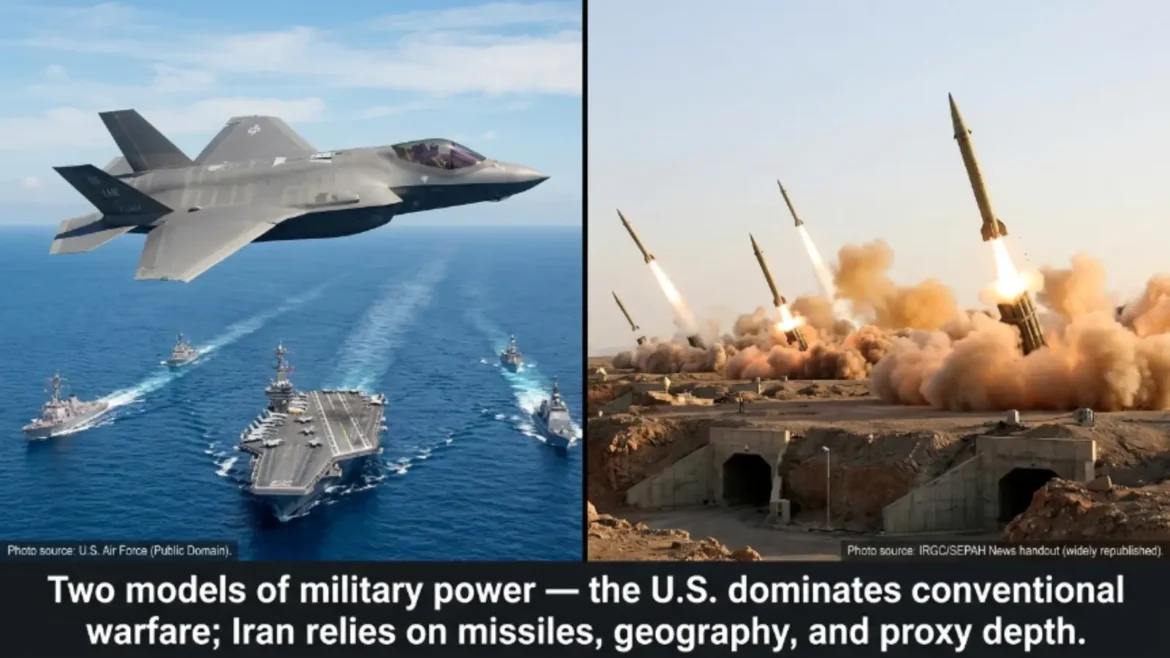
The United States fields the most powerful military force in human history. Iran fields the most capable asymmetric force in the Middle East. As active hostilities and ceasefire negotiations run in parallel through May 2026, this breakdown of US vs Iran military power examines what each side actually brings to the fight — and why the outcome of this conflict is not simply a function of who has the larger defense budget.
- The United States ranks #1 in global military power.
- Operation Epic Fury launched on February 28, 2026 — U.S. and Israeli forces struck nuclear infrastructure, missile production sites, and the compound of Supreme Leader Ali Khamenei, who was killed in the strikes.
- Iran possesses the largest ballistic missile arsenal in the Middle East — over 3,000 missiles — representing its primary strategic equalizer against U.S. air dominance.
- A fragile ceasefire has been in place since April 8, 2026, brokered by Pakistan — but both sides have violated it, and Strait of Hormuz clashes continued as recently as May 8, 2026.
- Trump called Iran’s latest counterproposal, submitted May 10, 2026, “TOTALLY UNACCEPTABLE” — leaving the conflict’s diplomatic resolution deeply uncertain.
US vs Iran War: Who Would Win? A 2026 Military Power Breakdown
The question of who would win a US vs Iran war is no longer entirely theoretical. Since late February 2026, American and Iranian forces have been engaged in a real — if constrained — military confrontation, with Operation Epic Fury reshaping the strategic landscape of the Middle East. As Pakistan-mediated ceasefire talks stall and the Strait of Hormuz remains a live flashpoint, this comparison of US and Iran military power in 2026 carries immediate operational relevance. Raw numbers tell part of the story. Context, doctrine, and geography tell the rest.
Where the Two Forces Stand in 2026
According to GlobalFirepower’s annually updated 2026 rankings, the United States holds a Power Index score of 0.0741 — ranking first among 145 nations — while Iran scores 0.3199, placing it 16th globally. That gap, however, compresses significantly when the analysis shifts from global force projection to regional conflict dynamics.
The U.S. military operates on a global scale with a worldwide network of bases, while Iran focuses its considerable resources on regional influence in the Middle East. This is not merely a structural difference — it is the defining strategic divergence between the two militaries, shaping every domain from air power to naval posture to cyber operations.
Air Power: The United States Holds Decisive Superiority
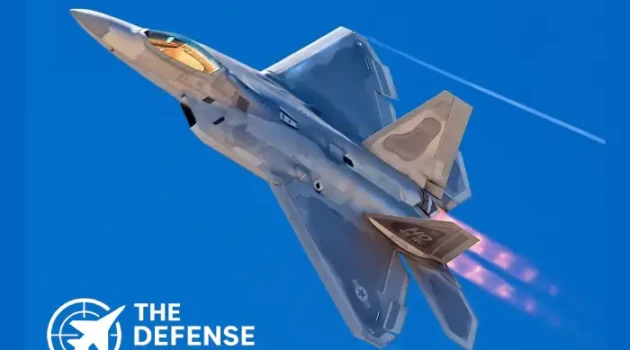
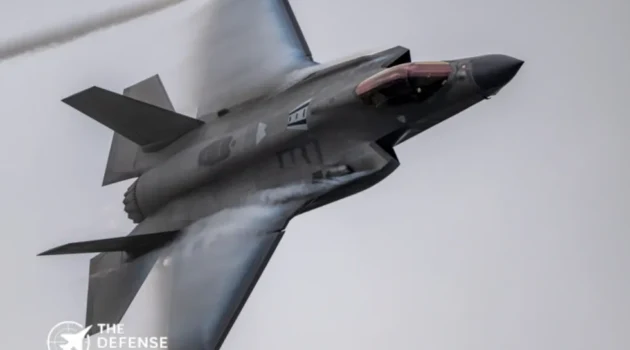
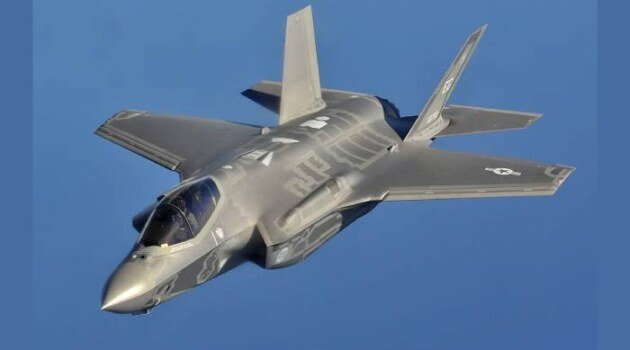
The air power gap is arguably the most decisive asymmetry in any US vs Iran military comparison. The United States operates approximately 13,300 aircraft — including 5th-generation F-22 and F-35 stealth fighters — while Iran’s air force fields roughly 500 aircraft, many of which date to Shah-era purchases from the 1970s.
The 2025 conflict with Israel provided a live demonstration of just how severe that gap is. A senior Iran analyst at the International Crisis Group noted following the June 2025 war that “Iran’s air defenses are no match for the US and Israeli air power.” Earlier, Israeli strikes in October 2024 reportedly destroyed most of Iran’s air defense network, including nearly all of its advanced S-300 systems, long-range surface-to-air batteries, and detection radars.
Iran has attempted to compensate through Russian and Chinese partnerships. China has transferred offensive drones, loitering munitions, and air-defense systems — including variants of the HQ-16 and HQ-17 surface-to-air missile families — while Beijing has also reportedly supplied rocket fuel chemicals sufficient to power hundreds of mid-range ballistic missiles. These transfers meaningfully extended Iran’s strike capabilities but did not close the fundamental air superiority gap.
Iran’s Real Equalizer: Missiles, Drones, and Underground Arsenals
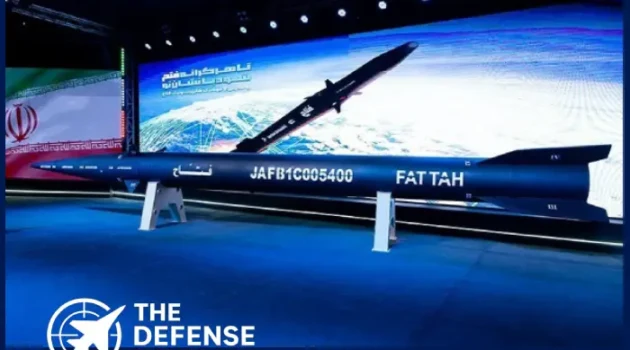
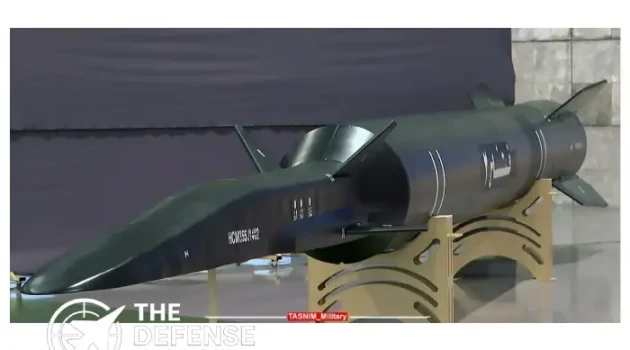
Where Iran genuinely narrows the power differential is in its missile and drone programs. Iran holds the largest ballistic missile arsenal in the Middle East — over 3,000 missiles — and the geographic proximity of U.S. regional bases means those weapons do not require intercontinental range to carry strategic significance.
The Islamic Revolutionary Guard Corps (IRGC) has built extensive “missile cities” deep underground to survive airstrikes, and Iran is surrounded by the Zagros and Alborz mountain ranges, which act as massive natural barriers limiting viable land invasion routes to a narrow few. This combination of hardened infrastructure and challenging terrain makes Iran one of the most difficult military targets in the world — as U.S. planners discovered firsthand during Operation Epic Fury.
Iranian drone doctrine has also evolved considerably. Tehran has developed and deployed large swarms of one-way attack drones — the Shahed family being the most notable — and has supplied these systems to proxy forces across the region, creating a distributed, resilient strike capability that no single air campaign can easily eliminate.
The Proxy Network: Iran’s Strategic Depth
No honest assessment of Iran military power in 2026 can ignore its proxy network, which functions as a force multiplier across at least seven countries. Hezbollah, Iran’s premier proxy, operates as a state-within-a-state in Lebanon with its own military command structure, social services apparatus, and a substantial missile arsenal. Even after Israel’s sustained targeting of Hezbollah leadership — including the killing of Secretary-General Hassan Nasrallah in September 2024 — the organization reconstituted command authority and rebuilt combat capability under successor Naim Qassem.
Iran has increasingly relied on a dual strategy combining foreign-backed military capability with an entrenched proxy network across the Middle East. When Operation Epic Fury struck Iran’s homeland on February 28, the proxy response was near-simultaneous — demonstrating that Tehran’s strategic depth is not simply a deterrent but an active operational instrument.
The Foundation for Defense of Democracies documented in February 2026 that Israeli forces were still killing Hezbollah operatives actively rebuilding military infrastructure south of the Litani River just days before Operation Epic Fury was launched — evidence that the proxy network’s regenerative capacity presents a durable challenge that kinetic strikes alone cannot resolve.
Naval Warfare and the Strait of Hormuz
The Strait of Hormuz remains the single most consequential chokepoint in the conflict. Iran’s three Kilo-class submarines — purchased from Russia in the 1990s — are diesel-electric boats that are exceptionally quiet when operating on battery power in shallow Gulf waters, creating a submarine threat that U.S. anti-submarine warfare assets cannot dismiss. Iran’s fast-attack craft, missile corvettes, and mine-laying capabilities are purpose-built for Hormuz warfare, not blue-water competition with U.S. carrier groups.
The consequences have been severe. By March 10, 2026, only 15 ships made it through the Strait of Hormuz before the United States imposed a naval blockade. Iran subsequently closed the Strait to all foreign shipping and captured several foreign-flagged vessels. The economic disruption has been global — and this is precisely the leverage Iran calculated it could exercise even against a vastly superior conventional adversary.
The 2026 Conflict: What the Fighting Has Revealed
The theoretical has become operational. On February 28, 2026, U.S. and Israeli forces struck targets across Tehran, Isfahan, Qom, Karaj, and Kermanshah — targeting nuclear infrastructure, missile production facilities, and the compound of Supreme Leader Ali Khamenei, who was killed in the strikes. Iran responded with missile and drone strikes against Israel, U.S. bases, and allied countries in the Middle East, while closing the Strait of Hormuz.
In the wider regional escalation, Qatar was targeted by over 200 missiles and drones, Saudi Arabia absorbed at least 38 missiles and 435 drones, and Jordan was struck by a combined 204 missiles and drones. The scale of Iran’s retaliatory salvo underscored that its missile arsenal, while degraded, retained significant operational reach even after sustained strikes on production facilities.
A fragile ceasefire, brokered by Pakistan, took hold on April 8, 2026. But as of May 11, 2026, the diplomatic picture remains deeply uncertain. The U.S. sent Iran a 14-point proposal requiring Tehran to halt all uranium enrichment for at least 12 years and surrender its estimated 440kg stockpile of uranium enriched to 60 percent. Iran’s counterproposal, submitted May 10, focused on ending regional hostilities, maritime security in the Gulf, nuclear negotiations, and sanctions relief. Trump immediately called the response “TOTALLY UNACCEPTABLE.”
Analytical Assessment: Who Would “Win”?
The honest answer to the us vs iran war question is that the framing itself requires qualification. The United States would win any conventional, force-on-force engagement by a large margin — the combination of 5th-generation airpower, carrier strike groups, precision munitions, and global logistics creates an asymmetry that Iran’s military planners have never sought to overcome on those terms.
What Iran has instead built is a military designed to make winning costly, protracted, and strategically ambiguous. Iran’s doctrine is built around imposing costs rather than winning pitched battles, with an asymmetric framework honed across decades of preparation against a technologically superior adversary. The 2026 conflict has validated this approach: U.S. and Israeli forces struck Iran’s nuclear program and killed its supreme leader, yet the proxy network endures, the Strait of Hormuz remains contested, and diplomatic resolution has proven elusive.
Victory in a conventional sense — full territorial control, elimination of Iran’s military capacity, regime replacement — would require a ground campaign that no senior U.S. military planner has publicly advocated. The mountains, the missile cities, the proxy depth, and the global economic consequences of a prolonged Hormuz closure all counsel against that option. What the 2026 conflict has demonstrated, in operational terms, is that the U.S. can decisively degrade Iran’s conventional and nuclear infrastructure — but that degrading and defeating are not the same thing.
FAQs
Who would win a direct US vs Iran conventional war in 2026?The United States holds an overwhelming conventional military advantage across air power, naval capability, and precision strike. In a force-on-force confrontation, the U.S. would dominate. However, Iran’s missile arsenal, geography, and proxy networks ensure that “winning” would come at considerable cost and strategic complexity.
What is Iran’s biggest military strength against the U.S.?Iran’s ballistic missile arsenal — the largest in the Middle East with over 3,000 missiles — combined with its proxy network spanning Lebanon, Yemen, Iraq, and Syria, and its ability to disrupt the Strait of Hormuz, represent its most effective strategic tools against a superior adversary.
Has the US already fought Iran in 2026?Yes. Operation Epic Fury on February 28, 2026 saw U.S. and Israeli forces strike nuclear and missile sites across Iran. A ceasefire brokered by Pakistan took effect on April 8, though both sides have continued to violate it, including naval clashes in the Strait of Hormuz as recently as May 8, 2026.
How does Iran’s air force compare to the United States?There is no realistic comparison. The U.S. operates approximately 13,300 aircraft including F-22 and F-35 stealth fighters. Iran’s fleet of roughly 500 aircraft includes many aging Shah-era platforms. Iran’s air defenses were also heavily degraded in 2024 and 2025 Israeli strikes.
Can Iran close the Strait of Hormuz against the U.S. Navy?Iran cannot permanently seal the Strait against U.S. naval power, but it can significantly disrupt traffic in the short to medium term using mines, fast-attack craft, shore-based anti-ship missiles, and submarines — as demonstrated in March 2026 when shipping through the Strait was reduced to 15 vessels per day.

Iran–Israel Ceasefire 2026: A Fragile Halt in a Transformed Middle East
The Iran–Israel ceasefire reached in April 2026 is less a resolution than a heavily armed pause — one where both sides maintain active blockades, continue proxy engagements, and remain fundamentally divided on the core issue that triggered the conflict: Iran’s nuclear program. What began as a Pakistan-mediated two-week truce on April 8 has since been extended by President Trump, complicated by a failed round of high-stakes talks in Islamabad, and strained by a US naval blockade that Tehran calls a pretext for war. For defense analysts tracking the Iran–Israel ceasefire news cycle, the question is no longer whether the truce will hold indefinitely — it is what shape any eventual collapse or deal will take.
(adsbygoogle = window.adsbygoogle || []).push({});| KEY FACTS AT A GLANCE- A US–Iran ceasefire brokered by Pakistan took effect on April 8, 2026, halting 40 days of US–Israeli airstrikes on Iran.
- The Islamabad Talks (April 11–12) ended without a deal after 21 hours of negotiations, with Iran’s nuclear program the central unresolved issue.
- The US imposed a naval blockade on Iranian ports on April 13 following the collapse of talks, while the ceasefire technically remains in effect.
- Lebanon was explicitly excluded from the US–Iran ceasefire framework; a separate Israel–Lebanon truce was announced on April 16 and extended for three weeks on April 23.
- As of early May 2026, the US has presented Iran with a 14-point proposal requiring a halt to uranium enrichment for at least 12 years; Iran is still reviewing it.
How the Ceasefire Came About: From Airstrikes to Islamabad
The War That Preceded It
On February 28, 2026, Israel and the United States launched airstrikes against Iran, killing its Supreme Leader and many other officials, destroying a large number of military and government targets, and killing civilians. The assault followed months of escalating pressure. On March 6, President Trump had said that only Iran’s “unconditional surrender” would be acceptable and said the US would attack Iranian energy infrastructure and bridges if a deal was not reached; he set deadlines of March 21, then March 23, then April 7 for a deal.
With those deadlines expiring and international alarm growing, Pakistan stepped in.
Pakistan’s Mediation and the April 8 Truce
On April 8, 2026, the United States and Iran agreed to a two-week ceasefire in the 2026 Iran war, mediated by Pakistan. The announcement from Pakistani Prime Minister Shehbaz Sharif declared the truce effective immediately and, in his initial post, claimed it included Lebanon — a point that immediately became a flashpoint. A two-week ceasefire between the United States and Iran halted 40 days of US–Israeli attacks on Iran that had pushed the region to the brink of a wider war.
(adsbygoogle = window.adsbygoogle || []).push({});The ceasefire framework carried several key conditions. The framework calls for an immediate halt to hostilities, the reopening of the Strait of Hormuz, and a 15–20-day period of negotiations between Iran and the US. Phase two of the framework envisioned a 45-day structured negotiation window targeting a permanent settlement.
What the Ceasefire Terms Actually Require
The agreement — to the extent it has been clarified — is a phased framework rather than a binding treaty. Here is what each side is expected to deliver:
What Iran Must Do
- Immediately halt all offensive military operations against US and Israeli forces
- Reopen the Strait of Hormuz to unrestricted international shipping
- Commit — as part of any final deal — to halting its pursuit of nuclear weapons
What the US Has Signaled in Return
- A pause on airstrikes against Iranian territory
- Willingness to ease sanctions conditionally, tied to Iranian compliance
- Potential release of frozen Iranian assets, including a reported $6 billion, as part of a final deal
The Lebanon Dispute
One of the most immediate fractures in the ceasefire narrative involves Lebanon. Iran is pushing for a broader regional ceasefire, including an end to fighting involving its allies, such as Hezbollah in Lebanon. While Israeli Prime Minister Benjamin Netanyahu has expressed support for Washington’s decision to suspend the strikes on Iran, he said the ceasefire will not extend to Israel’s ongoing military operations in Lebanon. Trump later added that Lebanon is not included in the ceasefire agreement and that Hezbollah will need to be dealt with.
A separate Israel–Lebanon truce was eventually brokered. The 2026 Israel–Lebanon ceasefire, brokered by the United States, established a 10-day truce intended to halt active fighting and create conditions for further negotiations toward a longer-term settlement. On April 23, US President Donald Trump announced that Israel and Lebanon agreed to a three-week extension of the ceasefire.
The Islamabad Talks: 21 Hours, No Deal
Who Was in the Room
The Islamabad Talks were held in Islamabad, Pakistan, on April 11 and 12, 2026. The 300-member US negotiating team was led by Vice President JD Vance, alongside special envoys Steve Witkoff and Jared Kushner, while the 70-member Iranian team was led by parliamentary speaker Mohammad Bagher Ghalibaf, alongside Foreign Minister Abbas Araghchi. The Pakistani mediating team was led by Prime Minister Shehbaz Sharif, Field Marshal Asim Munir, and Deputy Prime Minister and Foreign Minister Ishaq Dar.
Why They Failed
Both sides reported progress was made but no agreement was reached. The US President said “most points were agreed to, but the only point that really mattered, nuclear, was not.” He described Iran as “unyielding” on the issue. Iran’s Foreign Minister said an agreement was “just inches away” but criticized “maximalist demands” from the US negotiators.
The main unresolved issues reportedly included Iran’s nuclear program and the status of the Strait of Hormuz. While the US side insisted on a phased relief linked to compliance, Iran demanded comprehensive lifting of sanctions and release of assets, including $6 billion in frozen assets, as a precondition to a meaningful deal.
Vance told reporters: “The bad news is that we have not reached an agreement, and I think that’s bad news for Iran much more than it’s bad news for the United States of America.
The Naval Blockade: A War Tool Wrapped in Ceasefire Rhetoric
What makes the current Iran–Israel ceasefire situation analytically unusual is that the US imposed a de facto economic siege even as the truce nominally held. The United States imposed a naval blockade on Iran following the failure of the Islamabad Talks to end the war. Iran said it will view the entry of military vessels near the strait as a breach of the ceasefire and will respond accordingly.
(adsbygoogle = window.adsbygoogle || []).push({});The Strait of Hormuz remains the central pressure point. The war has caused a global energy crisis as Iran has put a chokehold on the Strait of Hormuz, through which about 20 percent of the world’s oil and gas supplies pass. Neither side has removed their blockades.
The USS Spruance incident underscores how close the situation is to renewed armed conflict. President Trump announced that the US had attacked the Iran-flagged cargo ship Touska after it attempted to breach the US naval blockade of Iran, blowing a hole in its engine room and taking the ship into custody.
The Nuclear Flashpoint: America’s Red Line, Iran’s Sovereign Right
The nuclear question is, by every metric, the hardest gap to bridge.
According to US media reports, Washington sent Iran a 14-point document. Under its proposals, Iran would be required to agree not to develop a nuclear weapon and halt all enrichment of uranium for at least 12 years. It would also be required to hand over an estimated 440 kg of uranium, which it has enriched to 60 percent. In return, the US would gradually lift sanctions and release billions of dollars in frozen Iranian assets and withdraw its naval blockade of Iranian ports.
Tehran’s position is fundamentally different in framing. Iranians are saying that, at this stage, they are not negotiating their nuclear programme; it is only about ending the war on all fronts. Iran also insists it requires direct UN Security Council guarantees against renewed strikes before entering substantive nuclear negotiations.
(adsbygoogle = window.adsbygoogle || []).push({});Analyst Negar Mortazavi said Tehran may be willing to show greater flexibility on its nuclear programme once the conflict ends, though she added that Iran is unlikely to agree to hand over its enriched uranium directly to the US. Mortazavi told Al Jazeera that Iran believes negotiations with the Trump administration require “time and patience.
What Israel Wants — and What It Won’t Accept
Israel’s position adds a third layer of complexity to an already fraught diplomatic framework. Israeli Prime Minister Benjamin Netanyahu has made clear that the ceasefire with Iran does not constrain Israeli military objectives. Netanyahu said that despite the conditional ceasefire in April, “we still have goals to complete”, and that these would be completed either through diplomacy or by other means.
As the talks were under way in Islamabad, Netanyahu said his country’s military campaign against Iran was not over: “Israel under my leadership will continue to fight Iran’s terror regime and its proxies.” Israel also rejected any Lebanon ceasefire that left Hezbollah intact.
This creates a structural problem for US diplomacy: Washington is simultaneously serving as Iran’s negotiating counterpart and as Israel’s principal military sponsor — a dual role that Iranian negotiators cite as a core reason for their distrust of the process.
Analysis: Can This Ceasefire Hold?
TheDefenseWatch Assessment: The April 8 ceasefire is best understood as a diplomatic scaffold — just sturdy enough to prevent immediate military escalation, but too structurally incomplete to bear the weight of a final settlement. Several factors suggest the truce’s durability is being tested daily rather than consolidated.
First, the absence of a neutral monitoring mechanism is glaring. Unlike the November 2024 Lebanon ceasefire — which at least nominally had US and French oversight — the Iran truce has no third-party verification body. This means accusations of violations by both Tehran and Washington carry equal rhetorical weight with no arbiter to adjudicate them.
Second, the sequencing problem is real. The US wants nuclear concessions before sanctions relief; Iran wants sanctions relief and security guarantees before nuclear talks. This chicken-and-egg dynamic destroyed the JCPOA revival process between 2021 and 2022, and there is little structural reason to believe it has been resolved.
Third, Israel’s operational independence remains the wildcard that no US–Iran framework can fully contain. As long as Israeli strikes on Hezbollah continue, Tehran will maintain that the ceasefire is being violated in spirit — regardless of what any formal agreement says about Lebanon’s exclusion.
(adsbygoogle = window.adsbygoogle || []).push({});The most realistic near-term scenario is a continued “armed ceasefire” — both sides avoiding direct strikes on each other’s territory while maintaining economic and proxy pressure. A comprehensive peace deal, one that resolves the nuclear file, the Strait of Hormuz, sanctions, and the proxy network, remains months to years away at minimum.
What Comes Next: Key Milestones to Watch
- Iran’s response to the US 14-point proposal — Tehran is currently reviewing the document; its reply will set the tone for whether a second round of talks is even feasible.
- Strait of Hormuz status — The standoff between the US naval blockade and Iranian restrictions on shipping remains the most likely flashpoint for renewed hostilities.
- A second Islamabad round — Iran’s UN envoy has said he believes negotiations will be held in Islamabad once the United States ends its naval blockade. Washington has shown no sign of lifting it.
- The Lebanon variable — Progress on Israel–Hezbollah disarmament talks will directly affect whether Iran re-enters substantive nuclear negotiations or holds firm on its preconditions.
- Internal Iranian cohesion — US officials have suspected there is a significant divide between Iran’s negotiating team and the country’s military leaders in the Islamic Revolutionary Guard Corps, leading to questions about who can ultimately sign off on a deal.
FAQs
Did Iran formally agree to a ceasefire with Israel in 2026?The ceasefire of April 8, 2026 was technically agreed between the United States and Iran, with Pakistan as mediator. Israel was not a direct signatory. Iran and Israel do not have formal diplomatic relations, and the truce was structured as a US–Iran bilateral halt to hostilities, with Israeli operations in Lebanon addressed through a separate, subsequent agreement.
What were the main terms of the Iran–Israel ceasefire?The core terms included an immediate halt to US–Israeli airstrikes on Iranian territory, Iran’s commitment to reopen the Strait of Hormuz, and a structured negotiation window aimed at a permanent settlement. Iran’s nuclear program and sanctions relief were designated for Phase 2 discussions.
Why did the Islamabad Talks fail?The talks collapsed primarily over Iran’s nuclear program. The US demanded Iran commit to halting all uranium enrichment and surrender its enriched stockpile; Iran insisted this was a precondition it would not discuss until the war formally ended and US sanctions were lifted.
Is the ceasefire still in effect as of May 2026?Technically, yes — but it is being violated in practice. Both sides have engaged in naval confrontations in the Strait of Hormuz, the US naval blockade of Iranian ports remains active, and Israeli strikes on Hezbollah in Lebanon have continued despite Iranian protests.
What is the Strait of Hormuz and why does it matter?The Strait of Hormuz is a narrow waterway between Iran and Oman through which roughly 20 percent of the world’s oil and gas supplies transit. Iran’s blockade of the strait triggered a global energy crisis, and its reopening is a core US demand in any permanent settlement.